#361 Poor Knight’s Pudding with Raspberries

This is the third and final dessert on the theme of the classic pud pain perdu(for all three click thislink). The others were recipes from 1420 and 1937, whereas this one is Jane Grigson’s adaptation of her grandmother’s way of using up left-over raspberry jam sandwiches. Here’s what she says on the subject:

Before the last war, when tea was an occasion for enjoyment and not for guilt, we often used to have home-made raspberry jam sandwiches at my grandmother’s house. There were always too many – raspberry jam being her favourite – and next day they would appear as a pudding, having been fried in butter. I always thought, and still do think, that their latter end was more glorious than their debut.

This is also the second and last of the recipes involving raspberries. I do wish Jane had written more as they are my favourite fruit and I had been looking forward to this one for quite a while: raspberries, cream and fried bread. What could there possibly be not to like about that?

This recipe serves four – but it can be increased or decreased as appropriate.

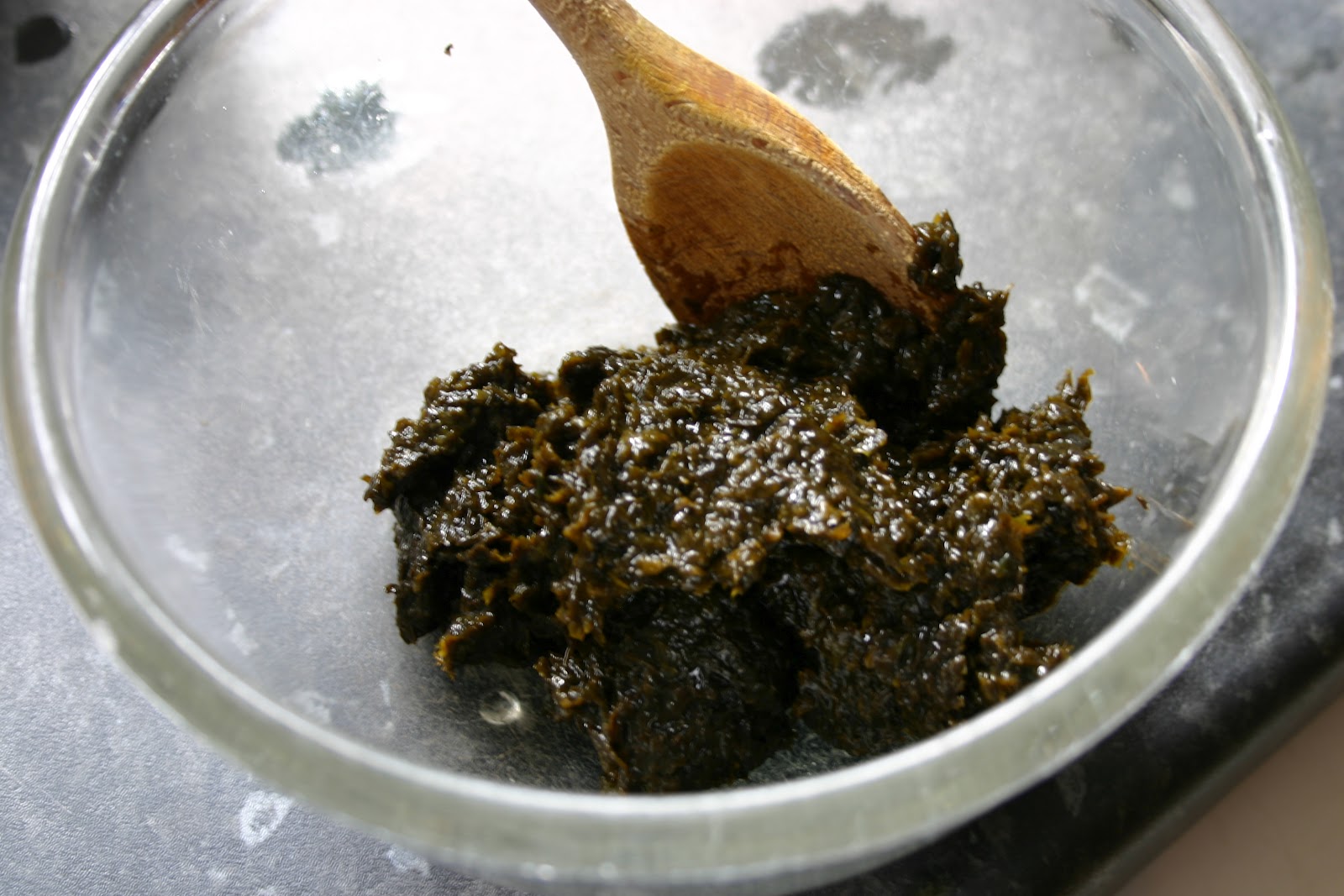
First of all you need to get your raspberries ready: place a pound of the delicious darlings in a bowl and sprinkle them with 4 ounces of icing sugar and ½ a teaspoon of ground cinnamon. Leave them to exude their juices; I left them overnight in the fridge.

Whip up 6 ounces of whipping cream (or half-and-hald single and double cream) and a tablespoon of caster sugar. Next, cut 8 slices of white bread and cut off the crusts if you like and fry them in clarified butter. To make this, Jane suggests melting 6 ounces of butterin a small saucepan before passing it through a sieve into your frying pan. Fry the bread to a golden brown.
 
On a plate, place a slice of fried bread, then some raspberries with their juice, then a second slice of bread and finally a nice, healthy blob of cream.


#381 Poor Knight’s Pudding with Raspberries. This was absolute heaven! The sweet-tart raspberries where made so delicious with their seasoning of cinnamon. Obviously with all that butter and cream it is not for dieters, but a portion does count as one of your five fruit and veg, so it’s not all bad. A perfect pud: 10/10.

#360 Apple Sauce I

This is the third of four different apple sauces in English Food. I have had to wait to cook this one as it requires a quince.

Quince are an ancient fruit, related to apples and pears, that is not seen around too much these days as they have fallen out of favour somewhat and also have a very short season. They have also suffered because of the terrible wet weather we’ve had this year.

Apple sauce should not be reserved just for roast pork, by the way, use it with sausages, black pudding, chicken, turkey, goose or game. It is a surprisingly versatile condiment.

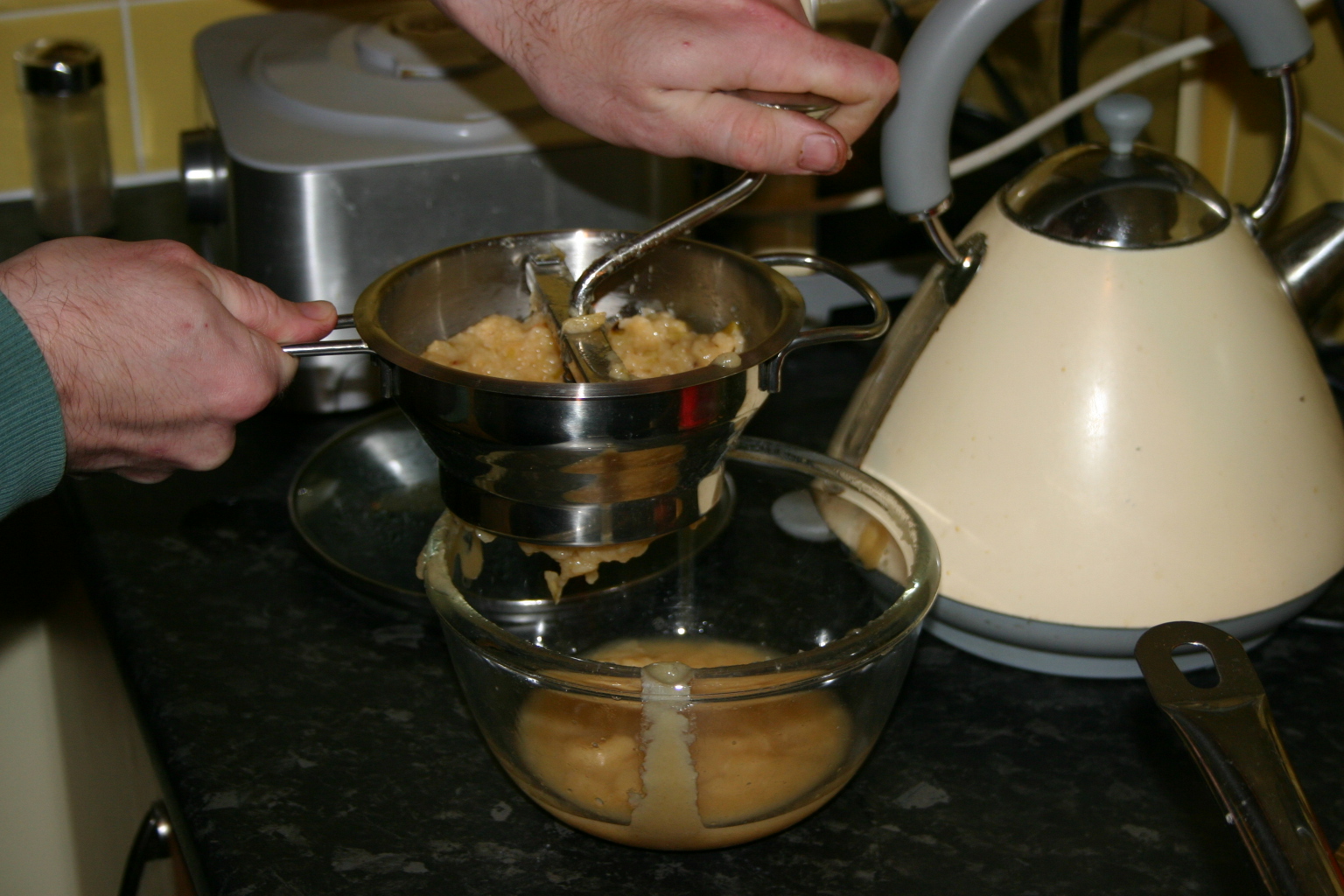
Chop up 8 ounces of Bramley’s seedling apples (those in North America, use Mackintosh apples) and slice one ‘small or moderate quince’. You don’t need to peel or core the fruit, but I would scrub off the naturally-occurring fluff from the skin of the quince, should it have some. Place in a pan along with ¼ pint of water, a heaped tablespoon of sugar (omit if using Mackintosh apples) and a pared strip of lemon peel. Cover and simmer until a puply, then pass through a sieve or mouli-legumes to remove peel &c.

Put back on the heat and stir until it thickens up; you don’t want it ‘sloppy and wet’ as Griggers says. Stir in one ounce of butter and give the finished sauce a healthy seasoning of black pepper.

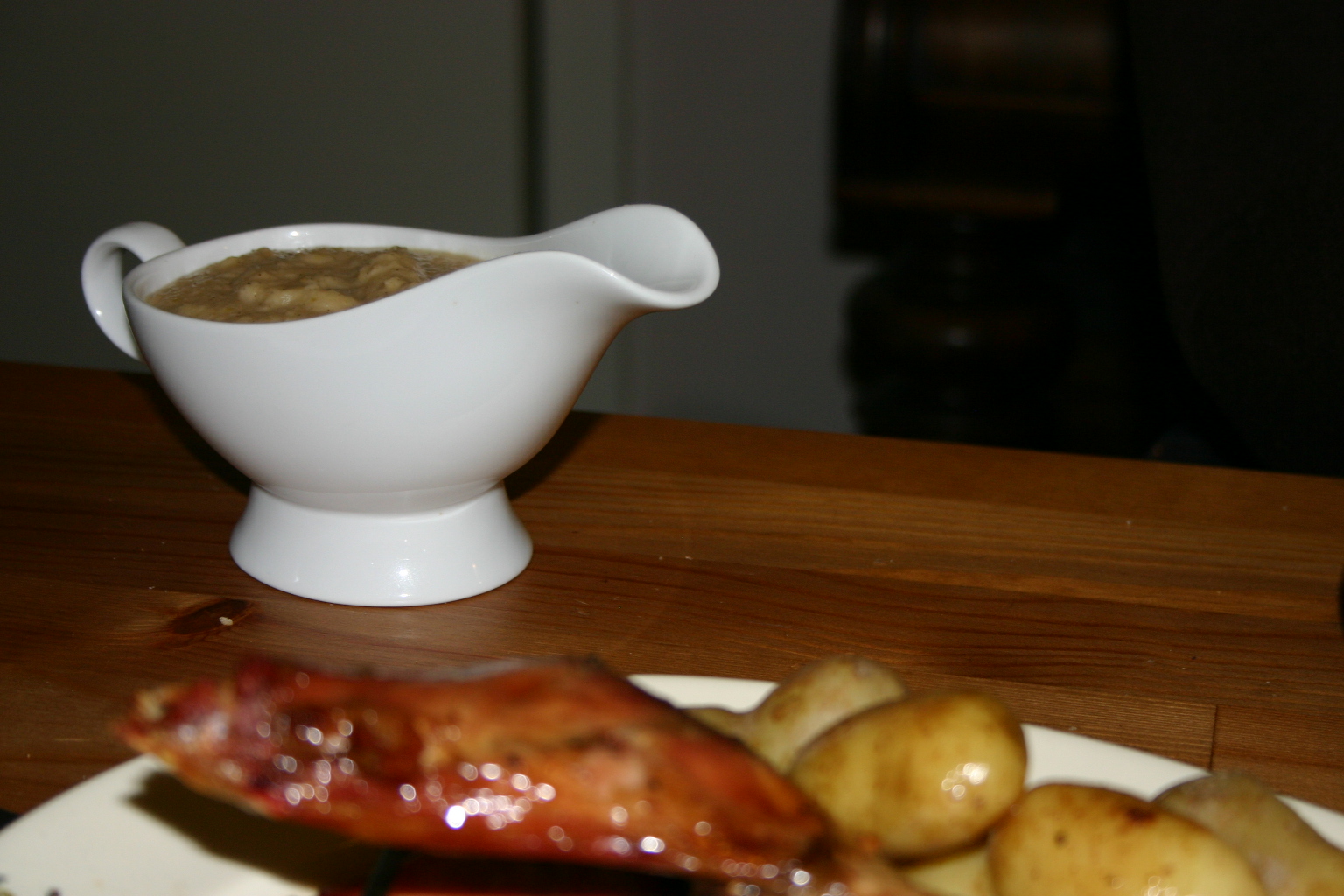
#360 Apple Sauce I. I liked this one very much and ate it with some rabbit which it complemented very well. The quince mellowed the Bramley’s, making them much less tart. Tres bon. 7.5/10.
 

#359 Rabbit

Clarrisa Dickson-Wright was on the telly yesterday as part of the BBC2 series The Great British Food Revival where various chefs and food writers highlight British foods that have fallen out of favour and are in danger of falling completely out of use. Needless to say, I approve. Ms Dickson-Wright’s food of choice was the humble rabbit.

Why has it fallen out of favour? There are two main reasons really – there’s the ‘Fluffy Bunny Brigade’ as Clarissa calls them that couldn’t possibly eat something fluffy and cute. This opinion is fine if you are vegetarian or vegan. Otherwise it’s a great double-standard. Another reason is the association with myxomatosis virus – a deadly bug that killed off 99% of them. It’s under control now, but mud sticks.

I think there are other reasons too: rabbit is thought of as poor people’s food, and people also have a problem with eating wild animals. Well the bottom line is that rabbits are a huge pest (they are not indigenous to the UK) and need to be controlled. In fact they are one of only two official game species, along with wood pigeon, that do not have a hunting season. We are over-run and they must be killed in order to manage the countryside efficiently.

It is for this reason that they are relatively cheap, and because they are wild they are truly organic and free-range and low fat too.

I coincidently cooked a rabbit recipe from English Food the other day. It’s less of a recipe and more of a suggestion really with very sparse instruction. Here’s the full entry:

Wild Rabbit

roast: 1 hour, mark 6, 200C (400⁰F)

serve with: see hare [redcurrant jelly, port wine sauces…]

Here’s what I did to roast the rabbit:

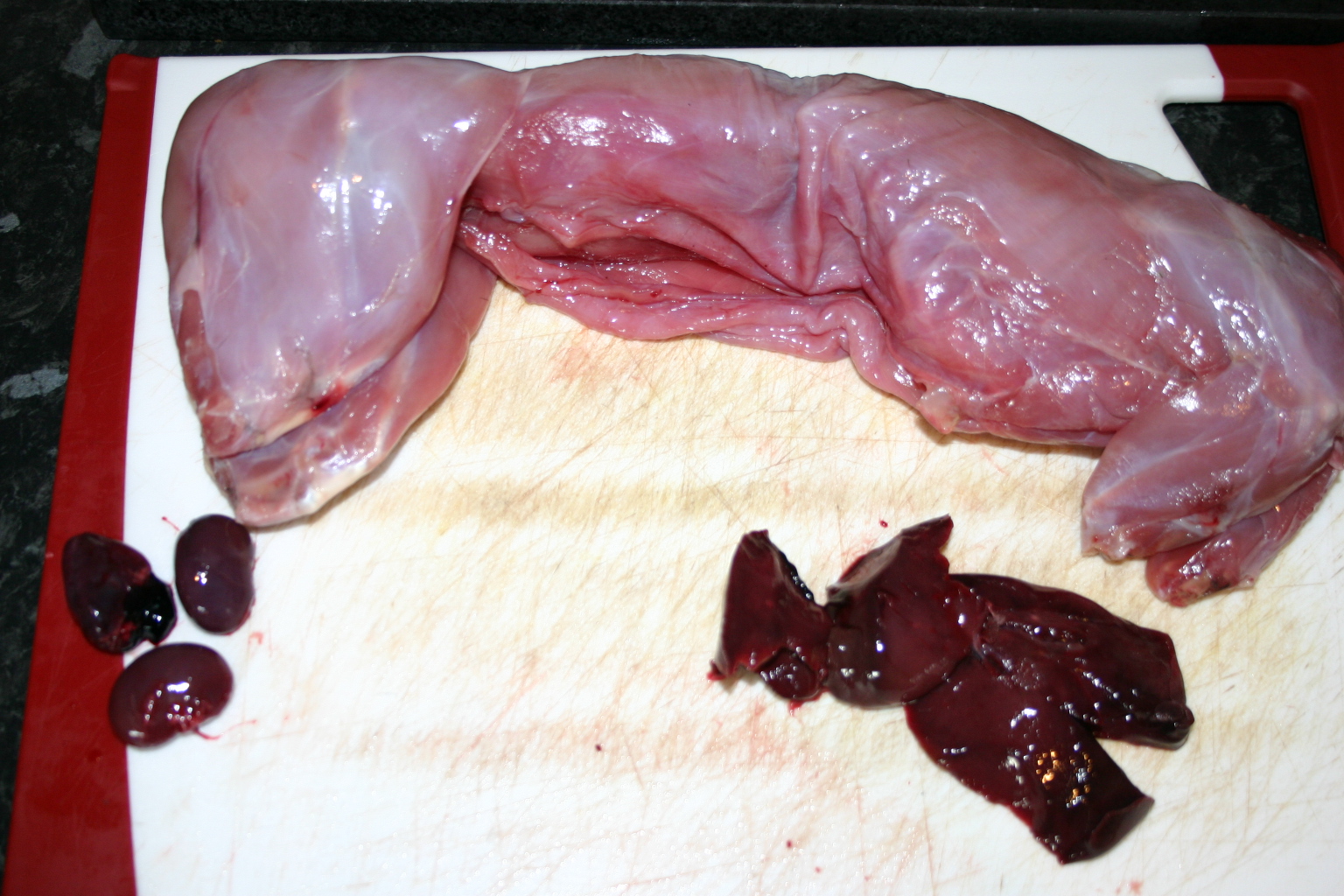
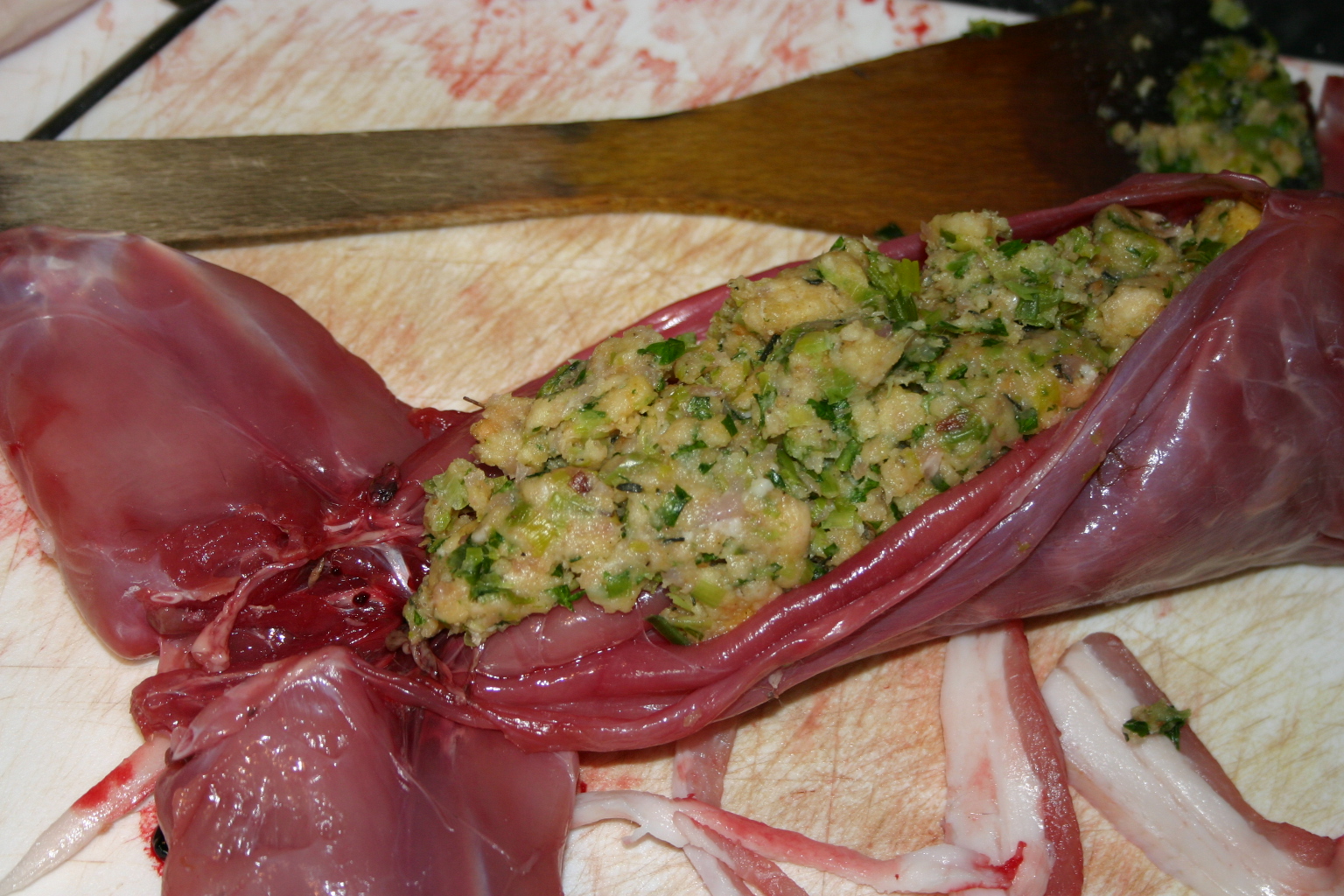
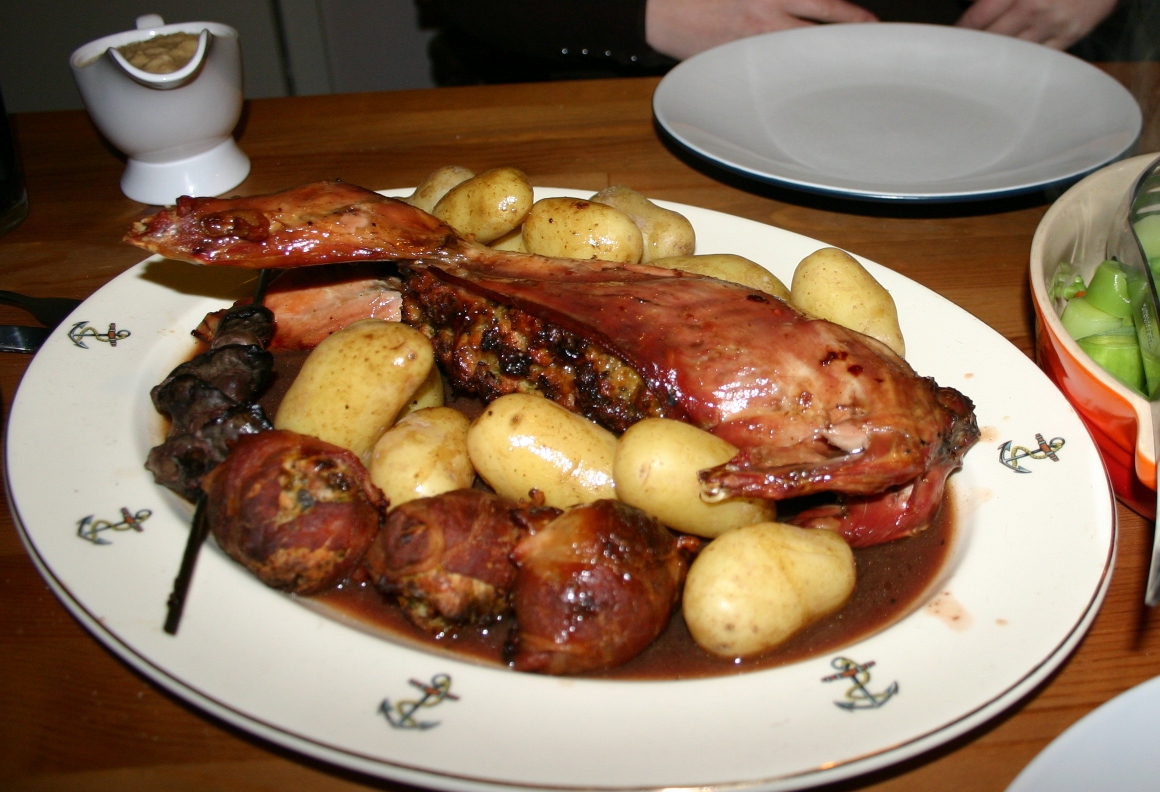
First up is to prepare your rabbit – you should find inside the kidneys, liver, heart and lungs. Remove those. If you like you can chop the liver and use in the stuffing. Instead, I made a little offal kebab from the heart, kidneys and liver. Then I larded the rabbit’s legs, loins and saddle with some thin slices of back fat. You can buy a special larding needle for this job but I used a skewer (it was a bit of a nightmare so I have bought myself a needle for next time). I then seasoned it inside and out and loosely stuffed it with the herb stuffing (see herefor the entry for that) before placing it in a roasting tin with a jacket of back fat. You could use streaky bacon if you’d prefer.

Then it was straight into the preheated oven for an hour.

I had some stuffing left over so I rolled that into small balls and wrapped them in some smoked bacon. I popped those in for the final half hour until brown and crisp.

When the hour was up, I took the rabbit out of the oven and let it rest on a serving plate and covered it with foil. I then got to work on making some gravy. I put the roasting tin on the heat and deglazed it with a splash of red wine and then some chicken stock and a tablespoon of redcurrant jelly. After it reduced and started to thicken, I took it off the heat and whisked in a couple of knobs of butter to thicken it further and give the sauce a nice shine.

Hey-presto! A roast rabbit!

#359 Rabbit. Well I enjoyed preparing this one and it did look like something from a medieval feast when it was finished. The flavour was good, though it was on the dry side; my rabbit was a young one I think and perhaps could have done with 45 minutes. Nevertheless, a tasty and fun meal to eat, though not quite as good as the rabbit pie. It did make delicious soup the next day though! 6.5/10.

#358 Bloater Paste

The thought of eating fish paste may make people shudder, people would think differently if this recipe were named smoked fish pâté, I feel. However we are not French so fish paste it remains. Perhaps people think back to those nasty cheap homogenised pots of meat and fish paste from their childhood. If you make your own it is a very different creature and I am sure this one will be same.

The other thing that may put one off from this recipe is the name of the fish in question – the bloater. It’s not the most delicious sounding fish is it? There have been several bloater recipes and this is the final one, but if you are not in the know a bloater is in fact a cured herring. The cure is very similar to that of the kipper and the only real difference is that bloaters are cured completely whole giving them a more gamy flavour than a kipper. Because they are intact they bloat as they smoke, hence the name.

This is a nice straight-forward easy affair. Start by gutting your bloaters, removing any membranes from the cavity. I had just one, but was lucky to find two nice fat roes inside within so I reserved those and tossed the rest of the innards in the bin.

Pour boiling water over your fish and roes; the skin will curl and the body of the fish will noticeably tense and plump up. Leave for around 10 minutes to poach in the water. Remove the skin and flake the flesh, being careful to pick out any bones, don’t worry too much about the very thin hair bones, they will not be noticed.
 
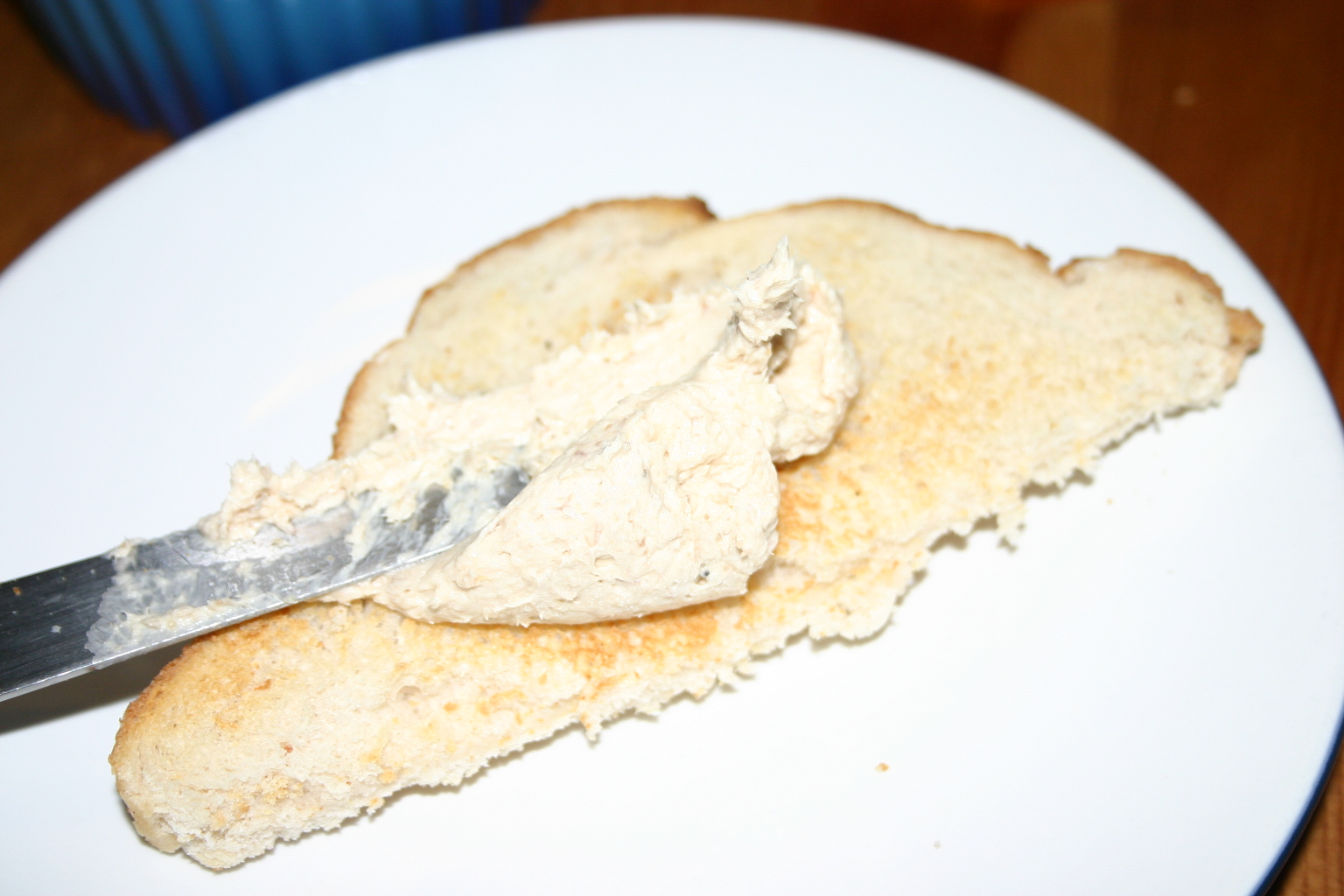
Don’t forget to fish out the roes, should you have any. Weigh the fish and place in a food processor along with its equal weight in softened butter. Whizz up until you have a spreadable consistency you like. Season with ground black pepper, lemon juice and a little salt. Serve with hot toast.

You get quite a lot of paste – I got two 250 ml pots from just the one bloater. Not bad at all I reckon.

#358 Bloater Paste. This was delicious and light – the butter helped whip the bloater into a wonderful consistency and the lemon juice really accentuated the fish’s own natural piquancy. Very good. 7.5/10.

#357 Comfrey Leaf Fritters

I have had the foraging bug of late so I thought I would try and make these fritters that appear to been lost to history. According to Jane Grigson, the 18th century writer Hannah Glasse gave a recipe for these fritters that use the plant comfrey. Oddly, I couldn’t find the original recipe anywhere – I found clary fritters and a recipe using comfrey roots – hey ho.

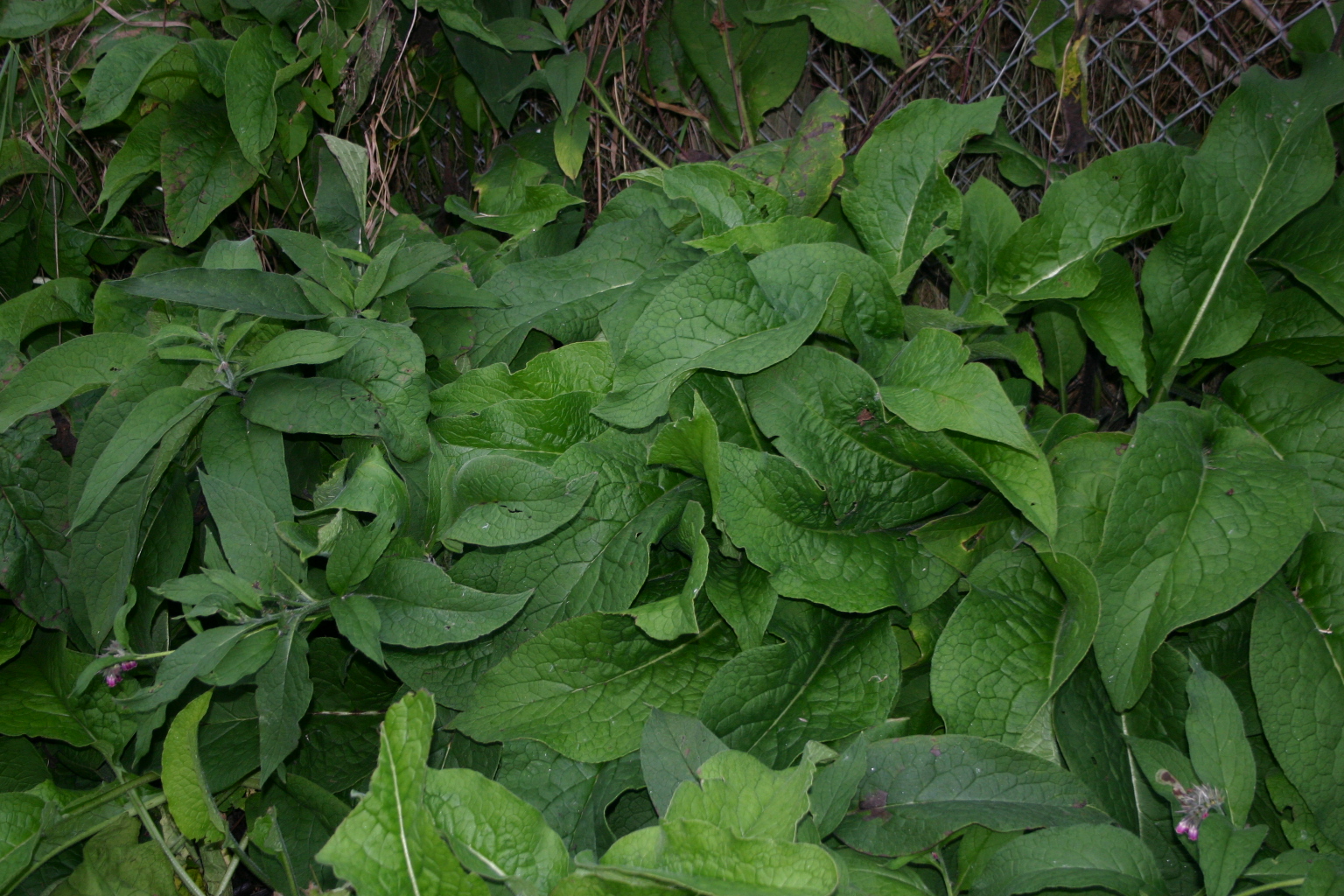
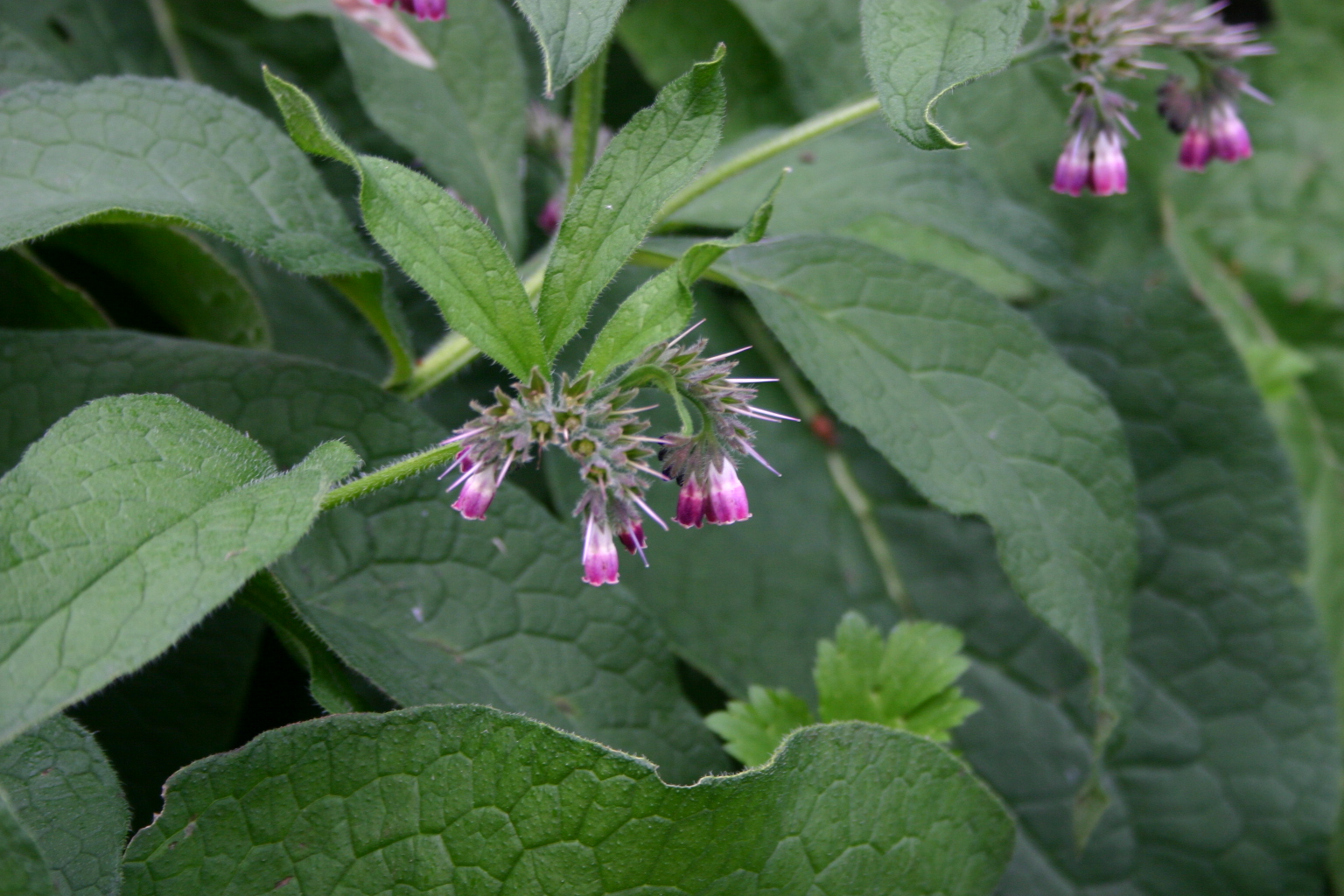
Comfrey is a relatively common plant found in ditches or beside hedgerows and river banks all over Europe. There are several species, but the most common in Britain is common comfrey with the Latin name Symphytum officinale, in case you want to find it in a field guide. They are quite easy to spot though: they have large broad leaves that taper to a point and the plant forms a bushy conical shape as it grows higher with younger, smaller leaves. The flowers are either white or purple, are small and arranged in little lines of about seven spikey blooms (though I didn’t count). The leave themselves are covered in slightly rough hairs that are very slightly irritating if the leaves are large.

One thing to point out, and I only found this out after eating them, is that comfrey leaves are a little poisonous and shouldn’t be eaten in large amounts, nor should they be eaten if you have liver problems. You have been warned.

Collect some large comfrey leaves that still have a fresh green colour; the large warty dark green ones don’t look very wholesome to me. Take them home, wash and drain them then remove their stalks. Depending what you are serving with them, you will need one or two leaves per person, more if you are using the smaller tender leaves.

Meanwhile make the batter by mixing together 5 ounces of flour and a pinch of salt in a bowl. Whisk in a tablespoon of oil or melted butter and up to ½ pint of warm water to form a batter the consistency of double cream. The warm water will help thicken the batter a little. Lastly, whisk an egg whiteuntil stiff and fold into the batter.

Heat up some oil in a pan ready to deep fry the leaves. You know you’re at the correct temperature when a small cube of bread browns in about 45 seconds. Dip the leaves in the batter and fry on both sides until the batter is crisp and golden brown, around 4 minutes in all. Don’t be tempted to overcrowd the pan – the leaves will stick together and the whole thing will take much longer to cook. Drain on kitchen paper and season.
I took a photo but can’t seem to find it now. Whoops!
#357 Comfrey Leaf Fritters. I really liked these, though probably for the wrong reasons; the thin comfrey leaves were beautifully tender but essentially completely tasteless! The batter however was absolutely delicious – brown and crisp and bubbly and quite possibly the best batter recipe I have ever used. I’m going to give it 5.5/10 though because the star of the show should have been the comfrey, but it was just simply a vehicle for the divine batter.

#356 Salmon in its own Juices

It used to be associated with fine dining and the upper-middle classes, but today whole salmon is such great value in Britain today. The reason for this switch is the shift in focus within the fishing industry from wild to farmed salmon. Salmon farmers get a bit of a bad press: they are blamed for polluting our seashores and are accused of producing a low quality product that lacks the fullness of flavour and firm texture that wild salmon are prized for. Like all farmers, there are good and bad and it is very hard to know which are which. However if you are going to a reputable fishmonger they should be able to inform you about the farm; plus, of course, the price of the fish will be a good indication of the quality of the farm.
Scottish fishermen spear salmon as they leap upriver

If you do see any wild Atlantic salmon and you can afford it, buy it and cook it simply like in this recipe. I know this is not the sustainable thing to do, but if current research is correct, the wild salmon population in the United Kingdom has gone past the point of no return and it will become extinct sadly soon. It is past saving; sad but true. It is a world away from the pre-industrial age where salmon was so common in the River Mersey that they were used as pig feed!

This is such an unbelievably easy dish to make you would be a fool not to try it:

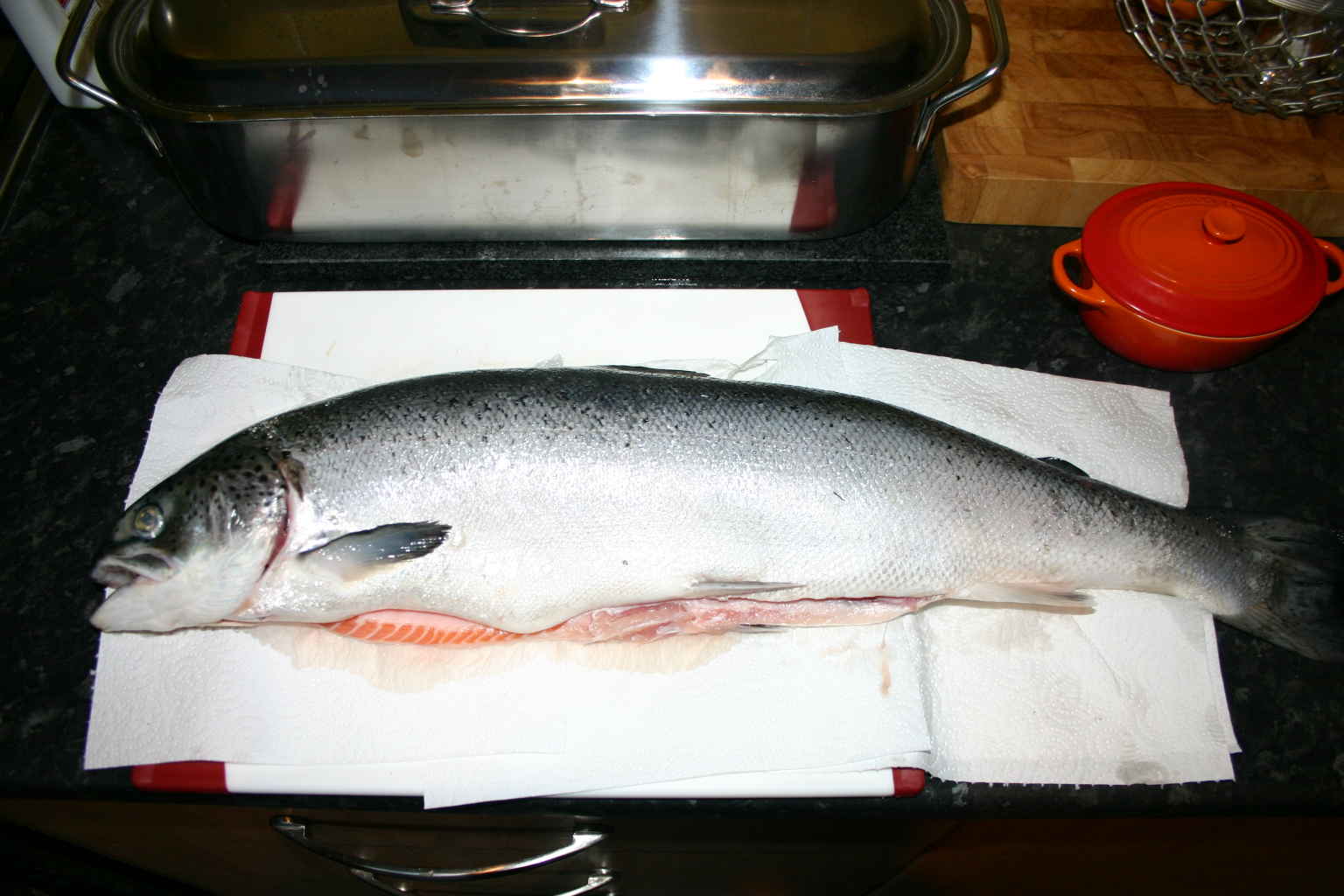
Get yourself a nice bright-eyed, firm fleshed whole salmon, ask your fishmonger to descale and gut it if he hasn’t already done so already.

At home give it a rinse inside and out and pat it dry. Unroll a piece of foil that is quite a bit larger than the salmon and smear it with butter, salt and pepper. Butter and the season the fish on both sides as well as within. Lay it on the buttered foil and lay another sheet of buttered and seasoned foil on top. Wrap it up to make a spacious parcel. If you want to serve the fish cold, rather than hot, use olive oilrather than butter.

Now you have two options: you can cook the salmon in a fish kettle or the oven.

For the fish kettle: To eat it hot, lay the wrapped salmon on the rack and place it in the kettle. If the salmon is too large for the kettle (as mine was) behead the fish and wrap the head up separately. Place it over two hobs, cover it with ‘tepid water’ and slowly bring to a simmer. Let it simmer gently for five minutes, then turn off the heat and let it sit in the water for 15 minutes more, then remove and unwrap. If you want to serve it cold, bring the water to a boil and then turn off the heat and allow the salmon to cool in the water.

For the oven: To eat it hot bake in the oven at 180C (350F) for 50-60 minutes. If you doubt how long you should keep it in the oven, the fish is best served a little undercooked. However, this method ensures that the fish never dries out so worry about it leaving it cooking to long. To eat cold, put the fishy parcel on a baking tray and bake for an hour at 150C (300F) if under five pounds, if over bake for 12 minutes per pound.

Unwrap your fish and place it on a serving dish and get to work on making it look pretty.

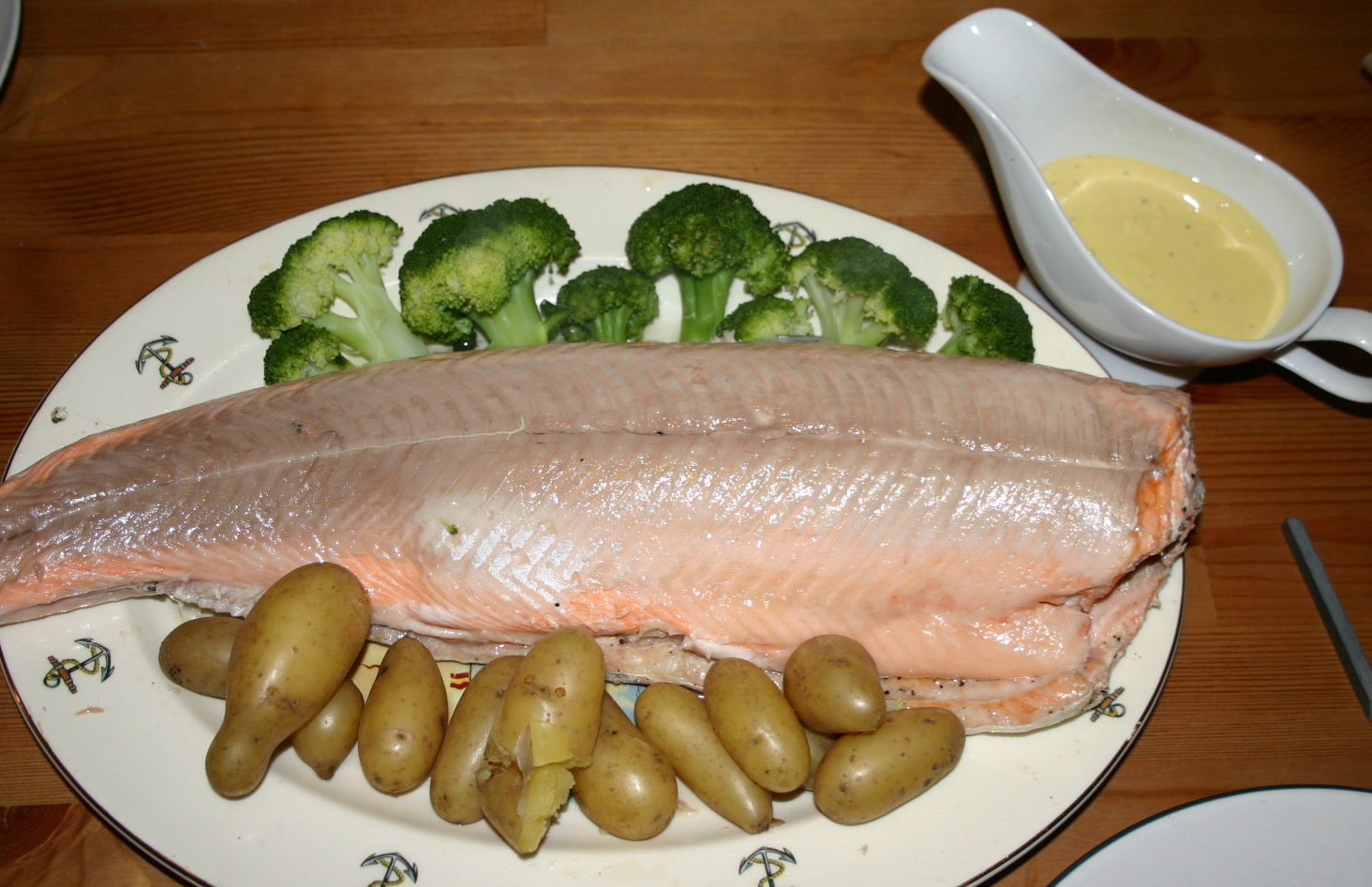
You have an easy job if you are serving it hot because all you have to do is remove the skin and add a bit more salt and pepper. Make a hollandaise sauce by first boiling down any juices to a concentrated stock to use as the base to it. Check out this link if you want to use Jane Grigson’s own recipe for hollandaise sauce (though I think Gary Rhodes’s is the best and most fool-proof recipe).

If you are serving the fish cold for a buffet, you can get creative with the decoration. Skin it and remove the thin layer of brown meat if you like – though Griggers does say that she finds it ‘far too delicious to discard’. If you are used to cooking fish, you could try and remove the fillets take out the bones and then replace it. Adding cucumber scales to the fish used to be a common way to present a fish cooked like this, but I think it is best left alone. If you removed the head lay it down in front of the body and hide the join with ‘a ruffle of mayonnaise’. For Jane’s mayonnaise recipe click this link.

#356 Salmon in its own Juices. I served the salmon hot with hollandaise as suggested and some simple boiled vegetables. I thought this was delicious in its simplicity: essentially just salmon, butter, salt and pepper. The fish was moist and flaked off the bone whilst still yielding plenty of moisture. The hollandaise too was delicious, flavoured with those delicious concentrated juices. Excellent stuff! 9/10.

#355 Devilled Herring or Mackerel

When I was in America there was one part of English Food I had to almost ignore: the Saltwater Fish section of the Fish chapter. This is because the seas surrounding the USA and the UK contain different species of fish. Mackerel and herring were particularly difficult to get hold of and when they were around they had been imported from Spain!

I thought I would get going with this simple recipe where the herring or mackerel are painted with a spicy mixture (the ‘devil’) and grilled. Devilling was a popular way of livening up almost any kind of food that really caught on during the Victorian and Edwardian eras. If you are not used to cooking fish, this would be a great place to start I think.

This recipe serves six, but it can easily be scaled up or down.

Get yourself 6 fresh herring or mackerel and ask the butcher to clean them reserving any roes should they have them. Roes are usually found around February time so there were none for me!

At home preheat the grill, then rinse the fish inside and out, pat them dry and make several diagonal cuts down the sides of each one then get to work on that devil. Mix together 3 tablespoons of Dijon mustard, 2 teaspoons of sunflower or groundnut oil, ¼ teaspoon of Cayenne pepper and a good pinch or two of salt.
 
Using a brush, paint both sides of the fish with the devil. If you do have roes, paint them too and slip them inside the fishes’ cavities. Roll them in dry breadcrumbs(you’ll need about 3 ½ ounces), then sprinkle with around 3 ½ fluid ounces of melted butter.

Line your grill pan with foil and the fish on it. Grill 6 minutes one side, then 6 minutes on the other, basting every now and again. The skin should blister and begin to blacken. Serve hot with lemon wedges and some sprigs of parsley.

#355 Devilled Herring or Mackerel. This was very good; the fish was perfectly cooked and the skin had gone nice and crispy. However, there was no way near enough of the devil mixture on the fish, in fact I hardly noticed it. If you try the recipe, I would double the amount of mustard and Cayenne pepper at least, or perhaps exchange the Dijon mustard for hot English mustard. Very succulent fish, but there was nothing devilish, and so because of this I am going to give it 5.5/10.

#354 Passion Fruit Curd

Well there goes the Great British Summertime, but don’t worry our Griggers is at hand to give us a little bit of tropical sunshine with this rather unusual fruit curd recipe. She must have been rather ahead her time with this one – I think the first time I ever saw a passion fruit in a greengrocer’s shop it was around 1990. I love fruit curd and am always on the lookout for new recipes – especially for the stall. Jane does suggest giving all sort of fruits a go; raspberries, gooseberries, apricots – knock yourselves out, she says (I paraphrase).

This curd is unusual in that it is made in the same way as custard:

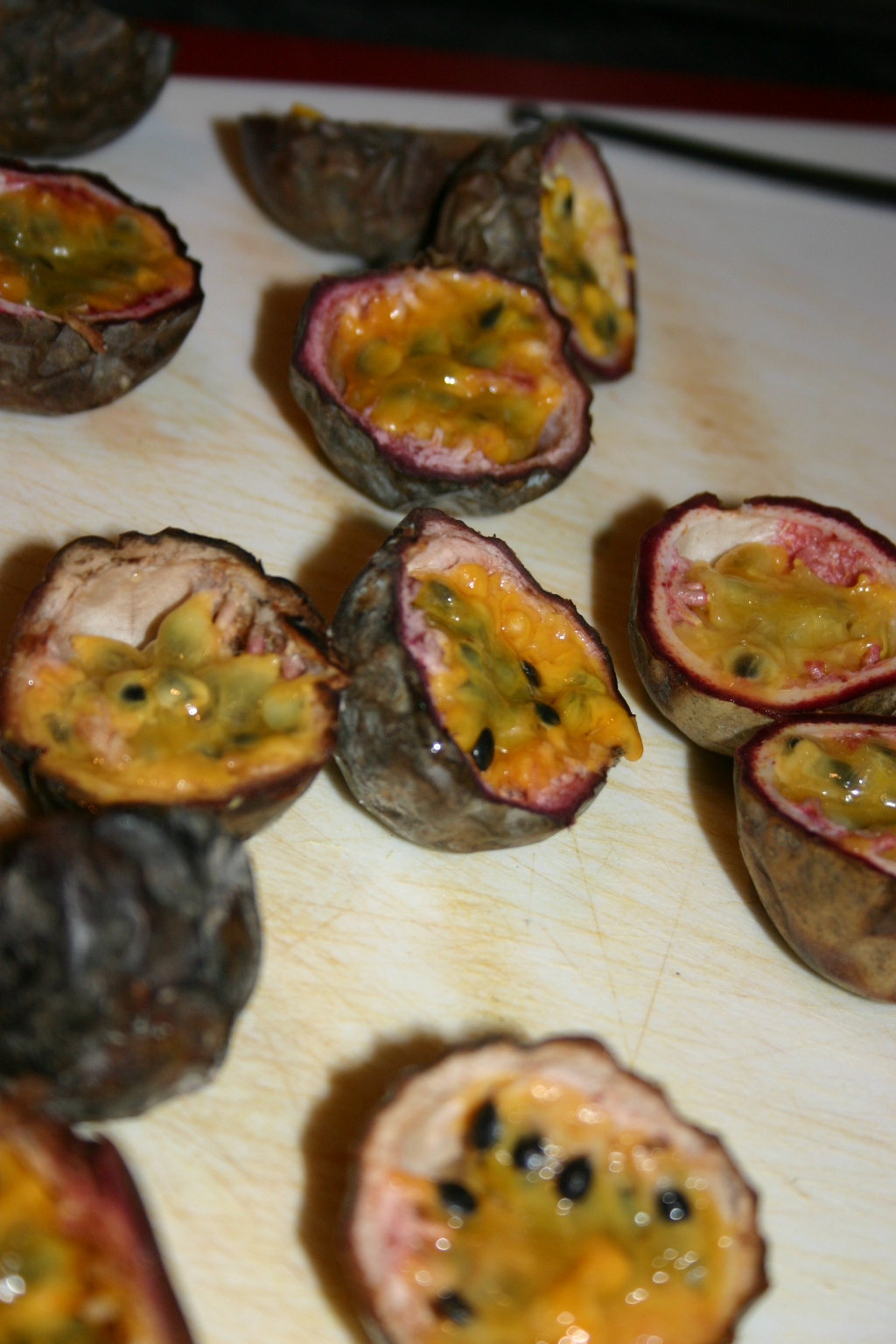
You will need 4 large, 6 medium, or – in my case – 8 small passion fruit. Halve them and scoop out the pulp, seeds and all, into a small saucepan. Stir in 4 ounces of sugar and 4 ounces of slightly salted butter that has been cut into cubes over a low heat. Meanwhile, beat 3 large eggs (or 2 large eggsand 2 egg yolks) well in a bowl. When the sugar has dissolved and the butter melted, turn up the heat until it boils then tip it into eggs , furiously whisking to prevent the egg from curdling. Pour the custardy mixture back into the pan and stir over a low heat until it becomes quite thick. If you want to err on the side of caution use a double boiler or a glass bowl over simmering water. I found you don’t need it for this recipe, though I did use a thermometer so that I could get the curd as thick as possible without it curdling – you want a temperature of 78C (though Jane gives a temperature of 80⁰C, but I always find this too high for curds).

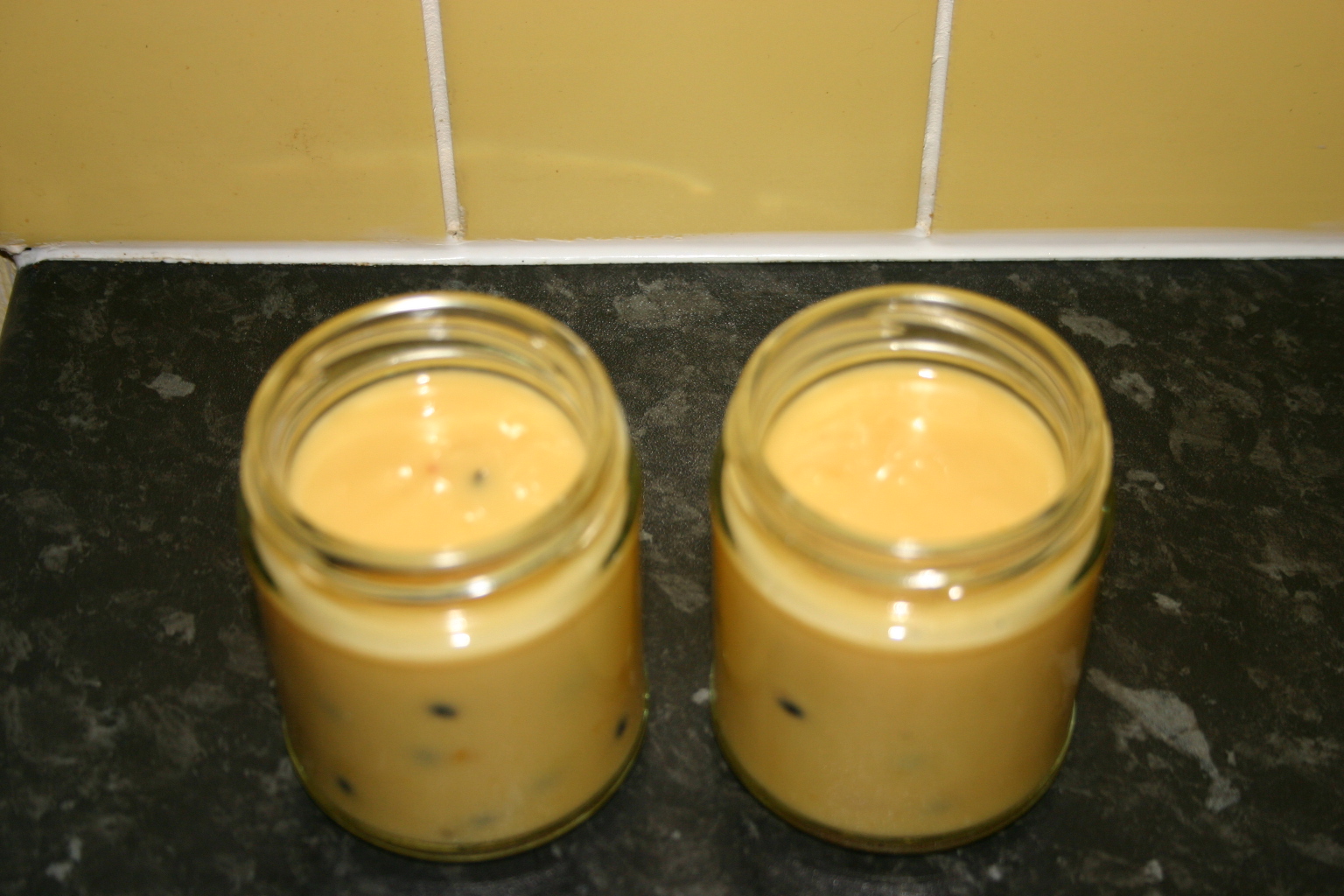
Remove from the heat, but mind you still keep on stirring it – the residual heat of the pan may still curdle it – then pass it through a sieve, making sure you work all of the curd out. Stir in a few of the seeds and add a tablespoon or so of lime juice to sharpen it a little. Pot into sterilised jars, let them cool then seal them. It will fill two 200 ml jars.

#354 Passion Fruit Curd. This was a strange one and no mistake. The flavour of cooked passion fruit is rather different to fresh – it’s weirdly not unlike fresh bread, and it took rather a while to get used to it. I ate it on toast, but I reckon it would have been a fantastic filling to a sponge cake. Also, they coordinated very well with my kitchen decor. 6.5/10.

#353 Roast Rack of Lamb with Laverbread

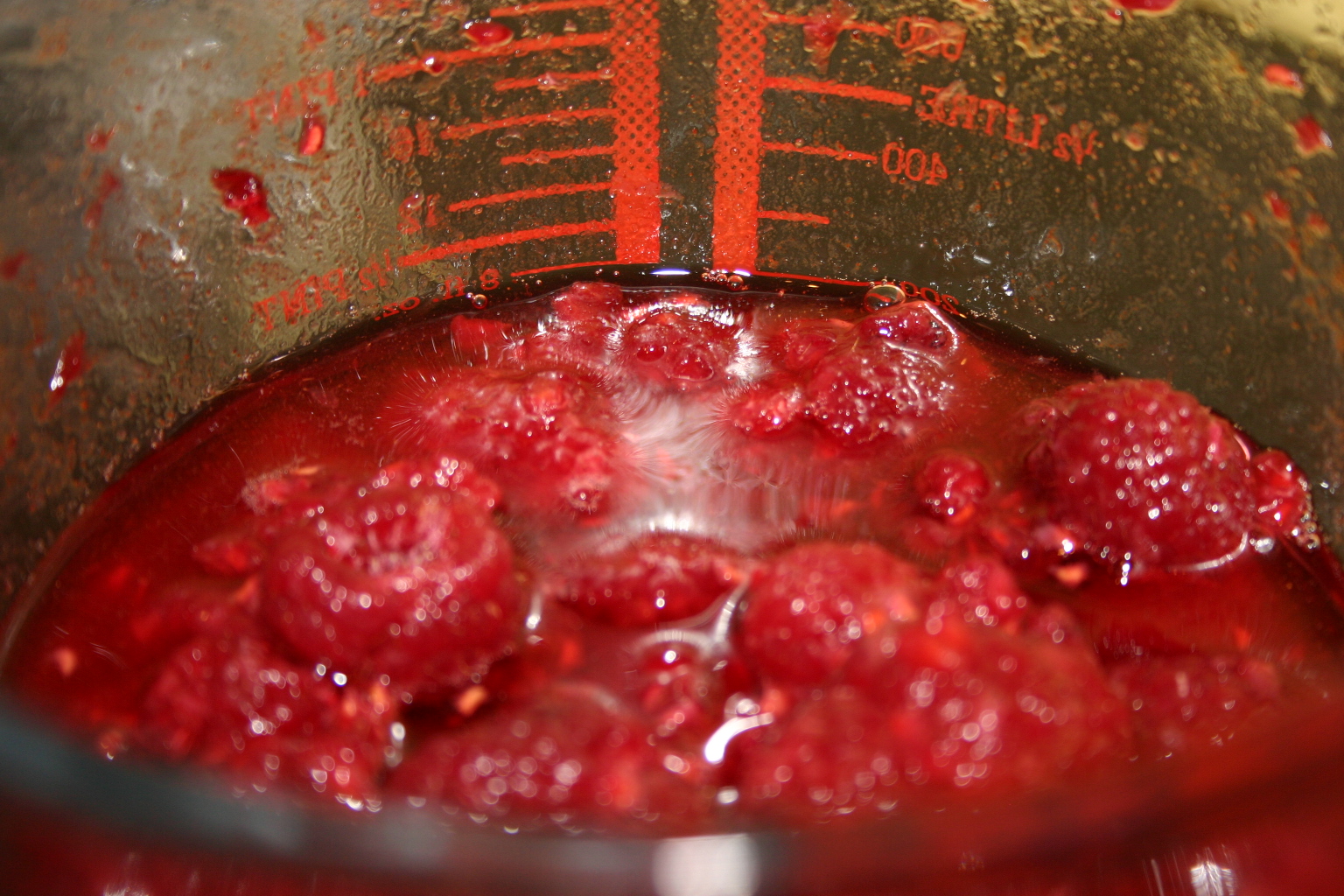
A second post involving the Welsh speciality laverbread; a deep green gelatinous sauce made from well-stewed seaweed known locally as laver (see the previous post). I still had some left over for this recipe which I made for my friend Charlotte – a veteran of my cooking, poor woman – as it was her birthday and luckily she requested lamb.

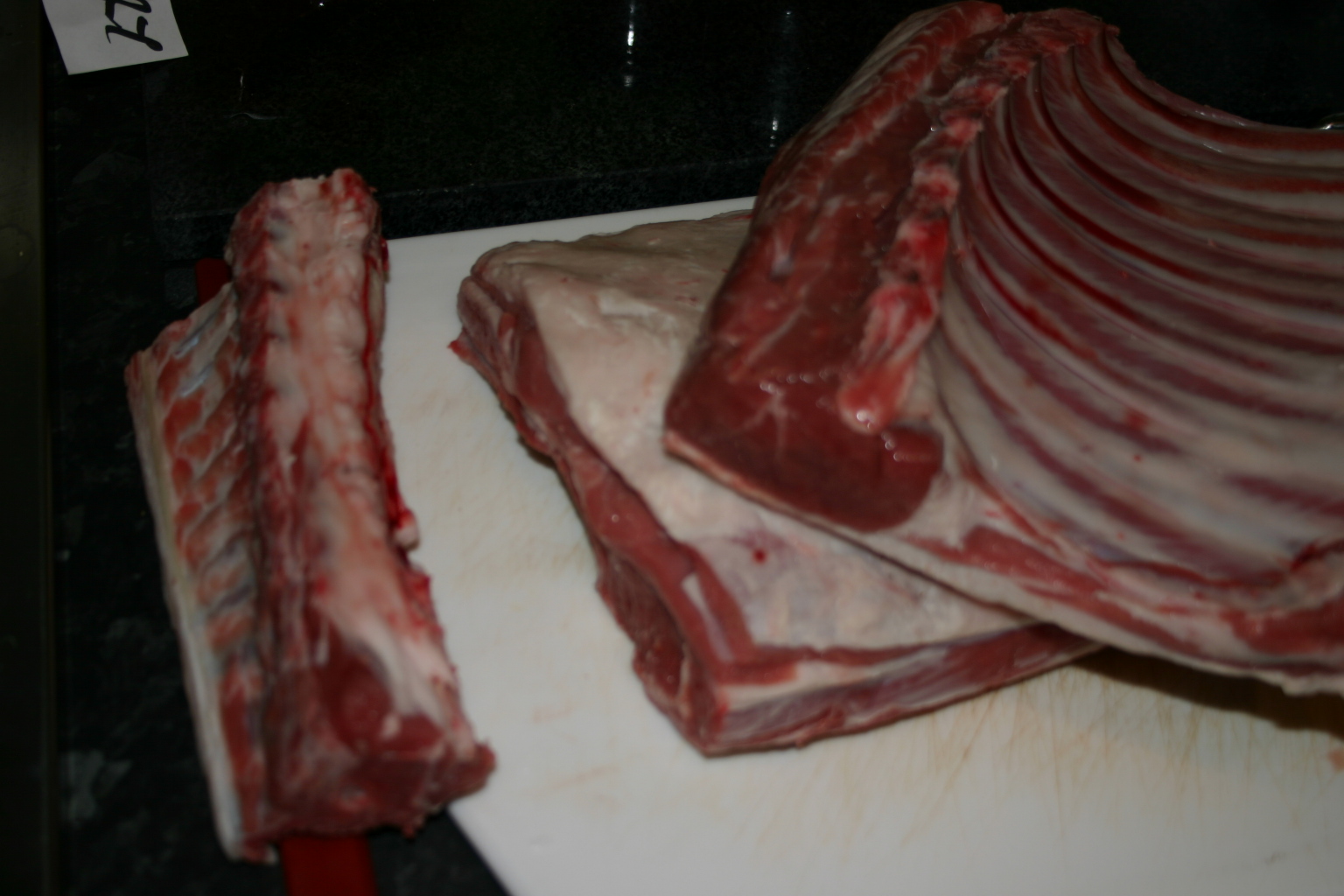
This is a recipe that I couldn’t do when I was in America because what you don’t want are nice pre-butchered racks, but a whole best end of neck. This is the upper part of the back and ribs that sequesters the beautifully tender lamb cutlets. If you can, wait until the lamb are a little older; these muscles don’t do much work so they don’t have as much flavour as, say, leg. Older animals have worked a bit longer so there is some make up in the flavour department. Also, they’re much bigger so you get more meat in your best end of neck.

Anyways, ask the butcher for one best end of neck, then ask him (or her) to split it down the centre, removing the backbone. Take the meat home, including the bones that he removed and you paid for!

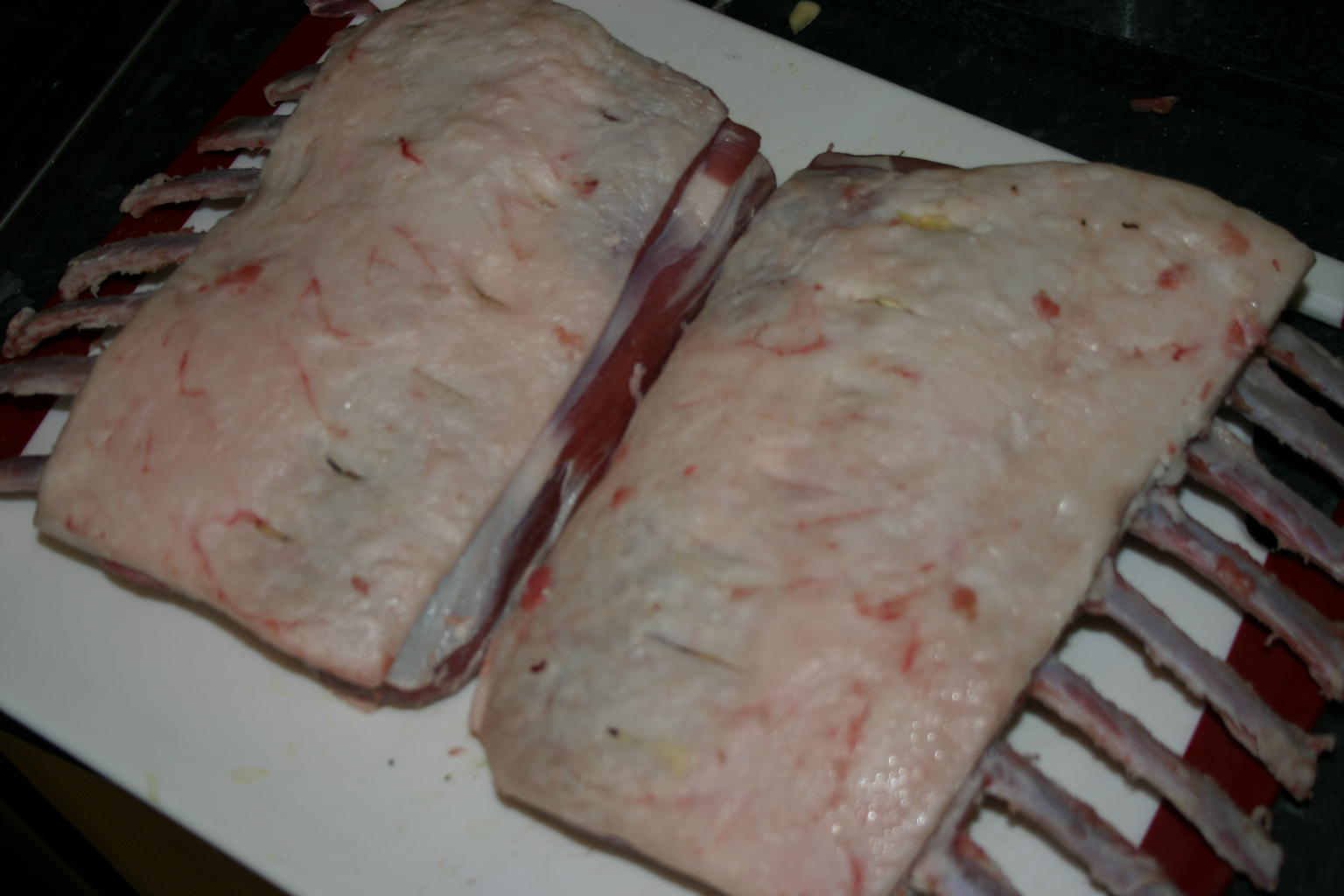
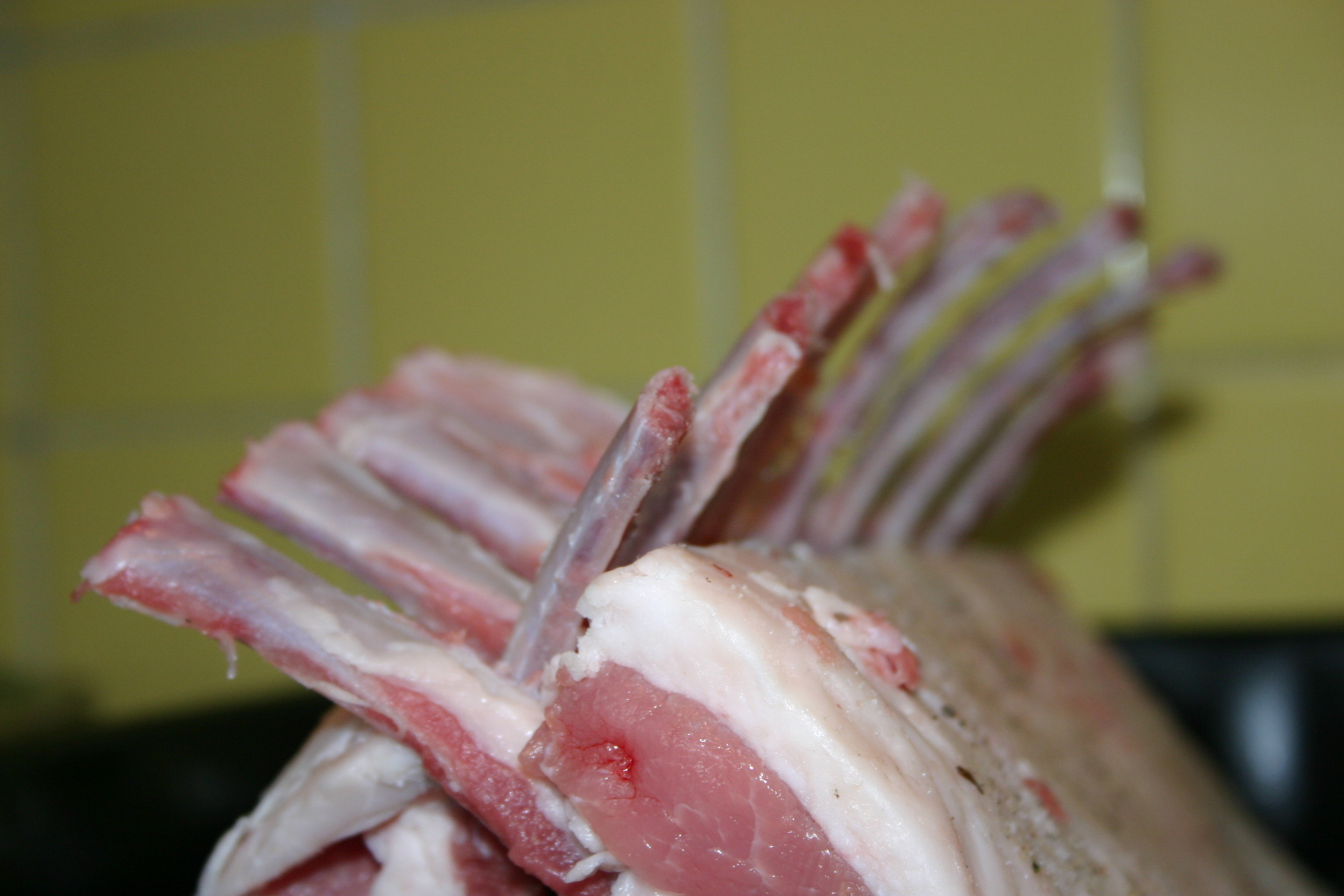
Now prepare the lamb ready for roasting by cutting away any fat and meat from the ribs, don’t go too far down – maybe and inch and a half at the wider end and an inch at the thin end.


You should end up with two racks that can be propped up against each other with bones interlacing like fingers. Now take a clove of garlic and slice it thinly. Make holes down the fatty sides of the racks with a very sharp pointy knife and slot a sliver of garlic in each one. Season the lamb all over and put it in a roasting tin so that the ribs criss-cross.


Cover the exposed bones with a piece of foil so that they do not burn. Roast the lamb for 45 minutes at 220C (425F) for pink lamb, going up to 60 minutes for well-done (though cooking it well done would be a travesty in my humble opinion).

Next, make the gravy by first making a lamb stock from the bones and trimmings (this bit can be done well in advance). Add them to a saucepan with a carrot and a tomato both roughly chopped, a pint of beef stock and some salt and pepper. Bring to a simmer and let it tick away for a couple of hours or more if you can. Pass through a sieve and cool. Remove the floating fat and return to the pan with a glass of white wine or vermouth. Reduce until you get a well-flavoured stock. Lastly, slake a tablespoon of cornflour with a little cold water and stir into the stock to produce a nice gravy.

When the lamb is ready, take it out of the oven and cover with foil and let it rest whilst you make the laverbread sauce. Melt 3 ounces of butter in a saucepan and add a pound of laverbread. When hot, stir I the juice of 1 lemonand 2 oranges. Season with salt and pepper.

Place the lamb in the centre of a serving dish, pouring any juices in the gravy. Pour the sauce around the edges of the lamb and then decorate with thinly sliced oranges.

#353 Roast Rack of Lamb with Laverbread. Well the meat (which I cooked pink) was absolutely delicious, tender and well-flavoured. I wasn’t sure about the laverbread at first – it not being cut by the bland oatmeal like in the previous recipe – but I soon got used to it. The taste is very strong, but when eaten with the lamb you can see why they are eaten together so often. The gravy too was excellent; mild and not in the slightest bit greasy as lamb gravy can so often be. 9/10


#352 Laverbread and Bacon

A couple of weekends ago, Hugh and I popped down to Swansea for a wedding. It is a very nice city, with a very nice market. Whilst there I was very keen to get hold of some Welsh laverbread; there are a few recipes that use it so I bought a couple of tubs. I am always keen to try new foods and I had never eaten laverbread; always excited to see another species added to my list!
Laverbread does not contain any bread, but is in fact a species of seaweed found on the rocky seashore of Wales and is rarely seen outside of the borders. It is however, available online pretty easily if you’re not in or near Wales.
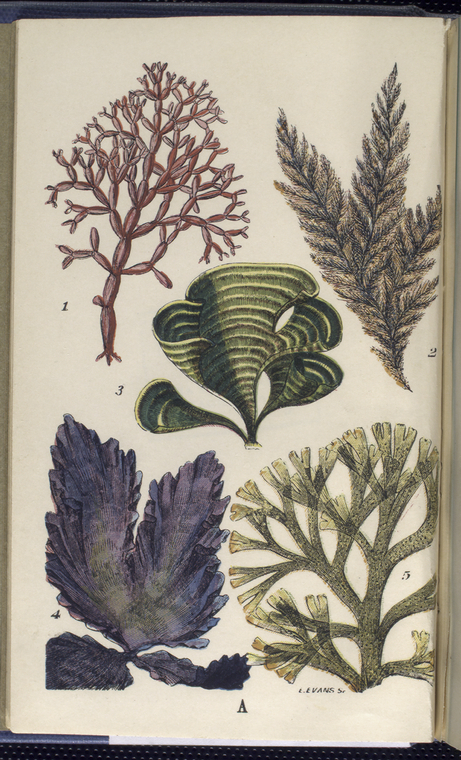
Plate from an unknown book – laver is number 4
 
According to my Traditional Welsh Recipes teatowel, to make laverbread, you need wash your laver (the algae Porphyra laciniata) and, without any additional water, simmer it until it becomes dark green gelatinous pulp – about 4 hours. Drain the leaves and chop them, adding salt to taste; and there you have it, laverbread, or bara lawr as the Welsh call it. Laverbread is traditionally fried in small balls or patties in bacon fat. It doesn’t take long because the laverbread is already cooked.
 
There are several seaweed based recipes in English Food, I have already covered one using the seaweed dulse, yet no one in England really eats it, and the tradition is slowly dying in the two remaining seaweed-eating nations in the British Isles: Wales and Ireland. In the past everyone used to eat it, but like many foods labelled ‘peasant food’ a stigma was, and still is, attached. It is strange that in most other countries people are so enthusiastic about their peasant foods – they are the comfort foods! – yet most of us turn our noses up at them.
Didn’t mean to get into a lecture there, but whatever falls out of brain ends up on the post. Anyways, as a rookie to the ways of laverbread and how to cook it, it went for this simple recipe that would hopefully be a good introduction.
Take a pound of prepared laverbread and mix in enough fine oatmeal to make soft, coherent dough. Roll into balls and flatten slightly. Fry in bacon fatfor a few minutes per side or until nice and golden brown.
 
Serve with bacon in a mixed grill or a fried breakfast. I did something a little healthier and used the bacon I fried to flavour vegetable soup, and used the laverbread patties almost as dumplings.
#352 Laverbread and Bacon. Well I have to say I was impressed with the laverbread. I was subtly flavoured with iodine just as mussels and oysters are, but there was no fishiness to it. If I was living in Wales, laverbread and bacon would definitely be on my Sunday breakfast list. 7/10.