#380 Gooseberry Sauce for Mackerel

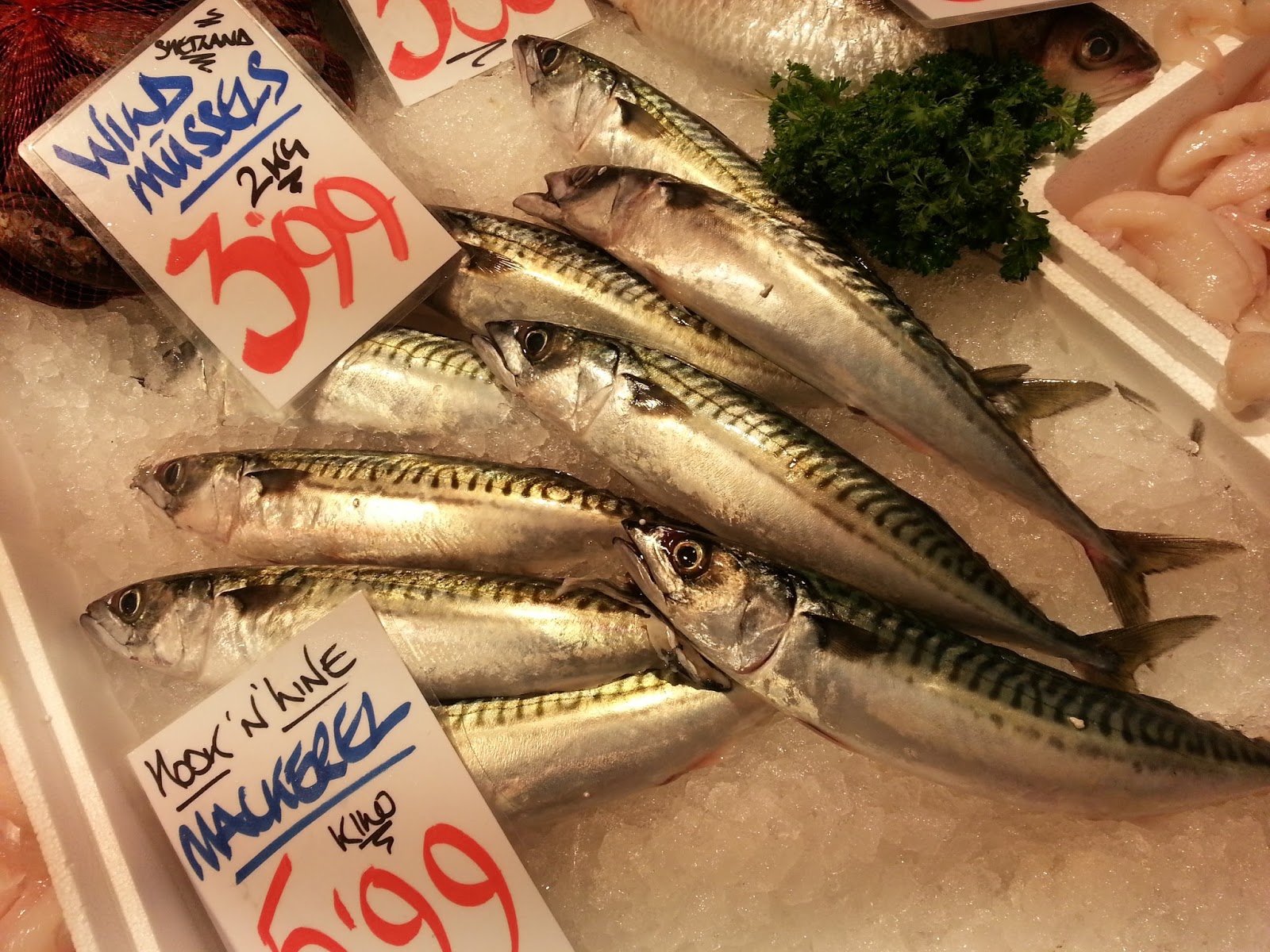
After the rather wet start to the summer, I was beginning to think that this year’s gooseberries were never going to arrive. Then we had that glorious stint of hot weather. Now we have so many gooseberries and other soft fruit, we barely know what to do with them. Well here’s one thing, just as mackerel is in season. I like Jane’s introduction to this recipe:
On May 26th, 1796, Parson Woodforde [we have met him in the blog before, see here] and his neice, Nancy, had for their dinner ‘a couple of maccerel boiled and stewed gooseberries and a leg of mutton roasted’. In other years, they were not so lucky; the gooseberries did not always ripen for the arrival of the first spring mackerel.
Ms Grigson’s recipe is a very simple one indeed:
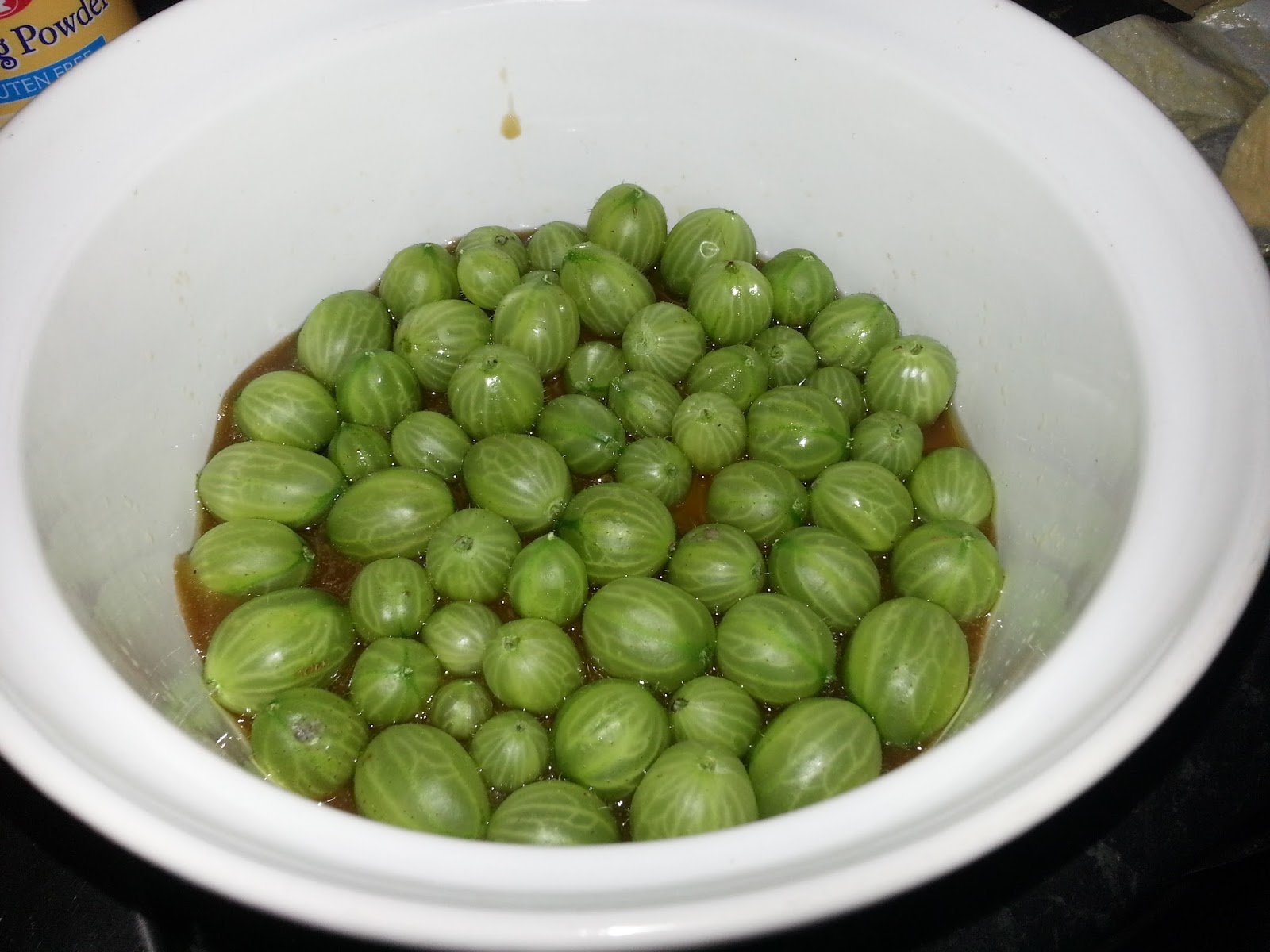
Begin by topping and tailing 8 ounces of gooseberries and then melt an ounce of butter in a pan. Add the gooseberries, cover with a lid and cook until soft. I love how they go from vivid green to an almost straw-yellow when heated.
Use your wooden spoon to crush the berries on the side of the pan to form a rough purée, you could, if you are so inclined, pass them through a sieve to produce a smooth sauce. I don’t see the point in these things normally; it’s not like gooseberry seeds are particularly offensive.
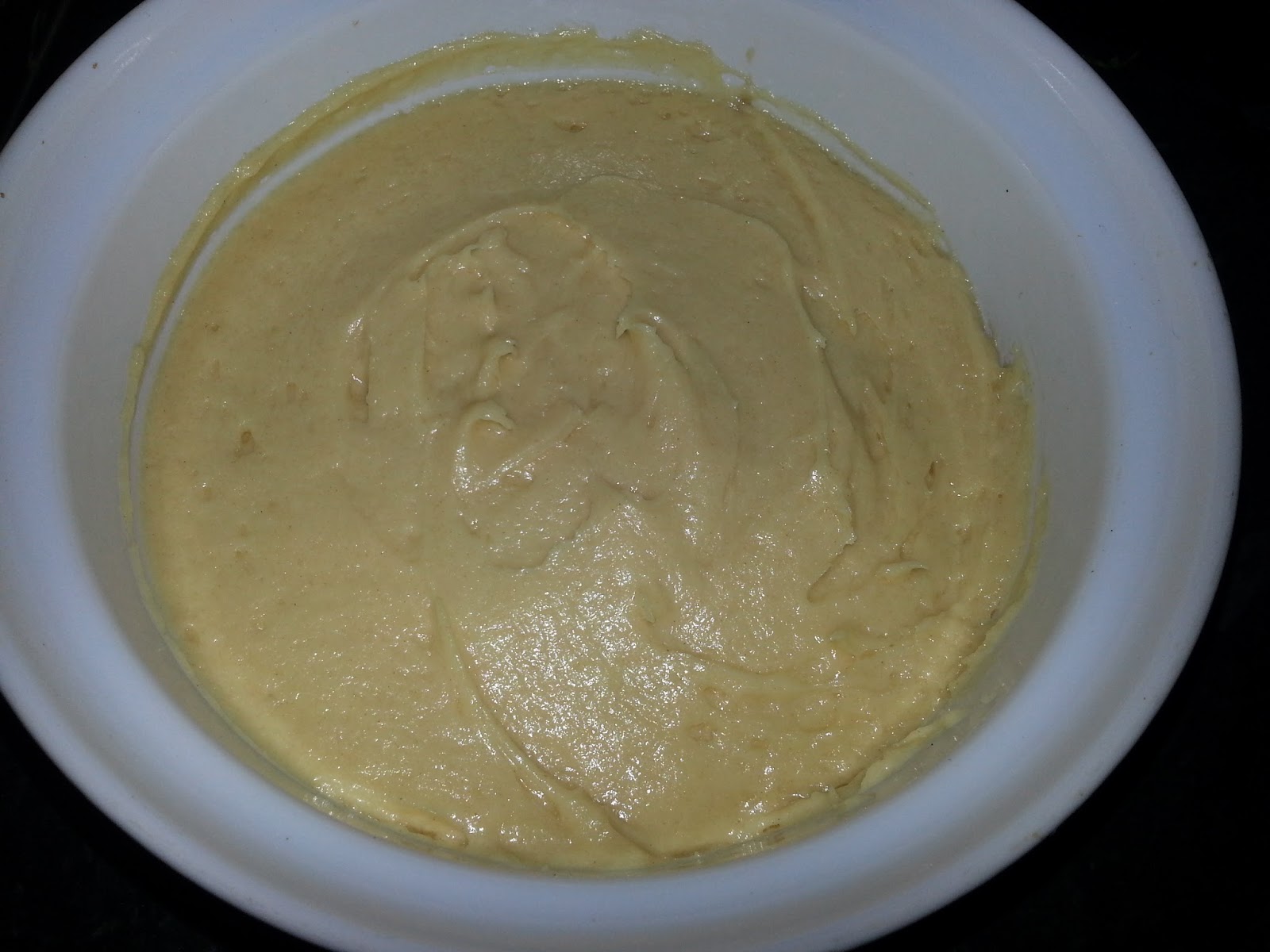
The tart flavour of the gooseberries is cut with either ¼ pint of double creamor béchamel sauce. I went for the latter for health’s and money’s sake. Taste the sauce and add a little sugar, if needed, don’t make it sweet like an apple sauce for pork.
That’s it! Very simple and not just for mackerel either, but other oily fish, roast duck, pork, lamb, veal and – no surprises – goose.
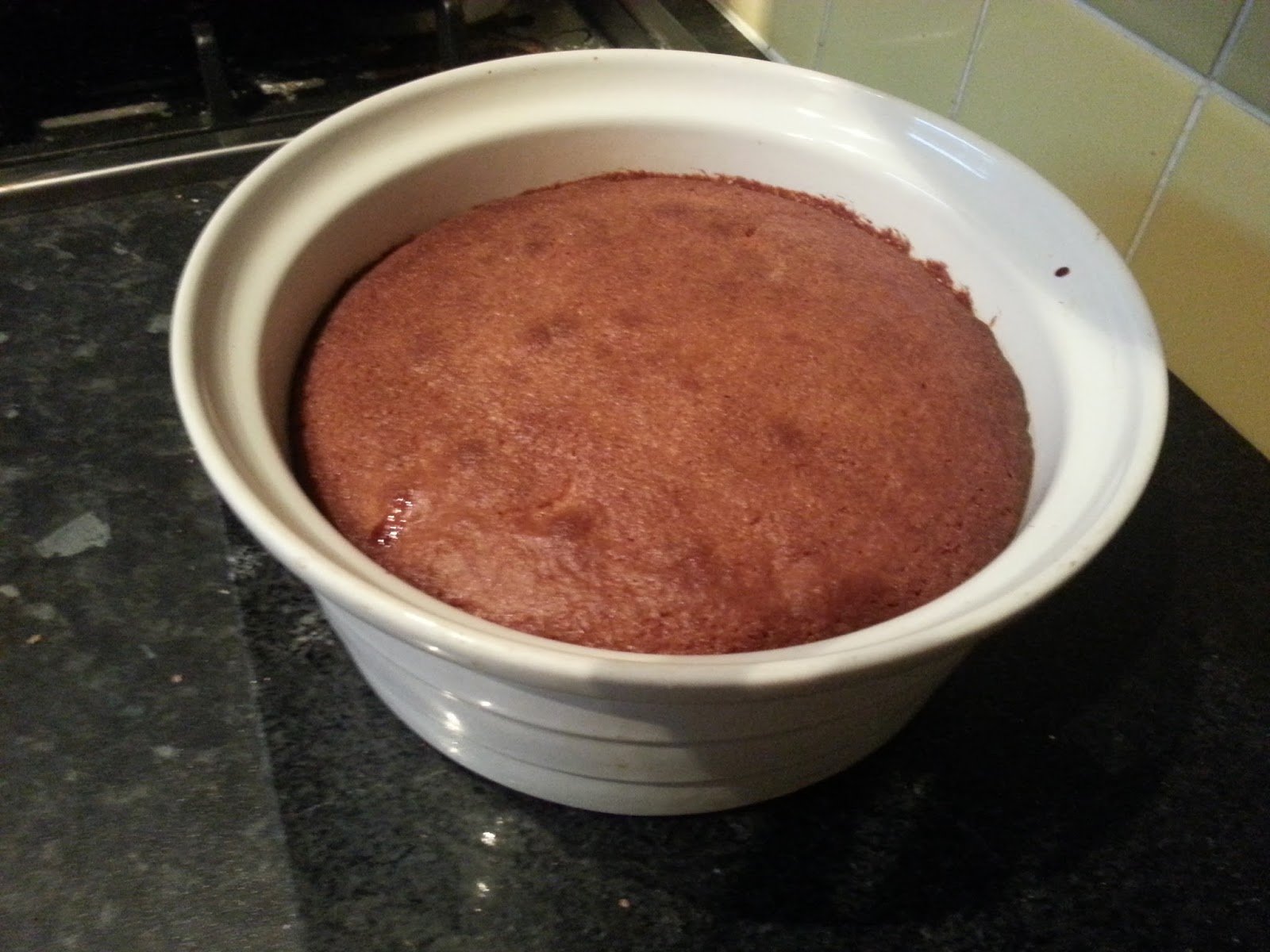
#380 Gooseberry Sauce for Mackerel. A triumph of good, simple cooking. The creaminess of the béchamel did a great job of wrapping its way around those tart gooseberries, so much so that only a pinch of sugar was required. I could eat it all on its no problem! 8.5/10

#379 Kidneys in their Fat

Another recipe from English Food that appeared at my pop-up restaurant last month. These kidneys were served alongside fried sweetbreads as an accompaniment to a roast saddle of lamb. The idea here being a way of introducing some offal into the meal, but making it an optional extra so that anyone that was squeamish did not have try it. I must say that they went down very well, with most of the guests opting to ‘excavate’ their own pink kidneys from their crispy fat. A brave lot they indeed were.

This recipe is close to Jane’s heart: ‘[A]lmost the first dish I learnt to cook on arriving in Wiltshire…[it] was a particular favourite of my husband’s.’

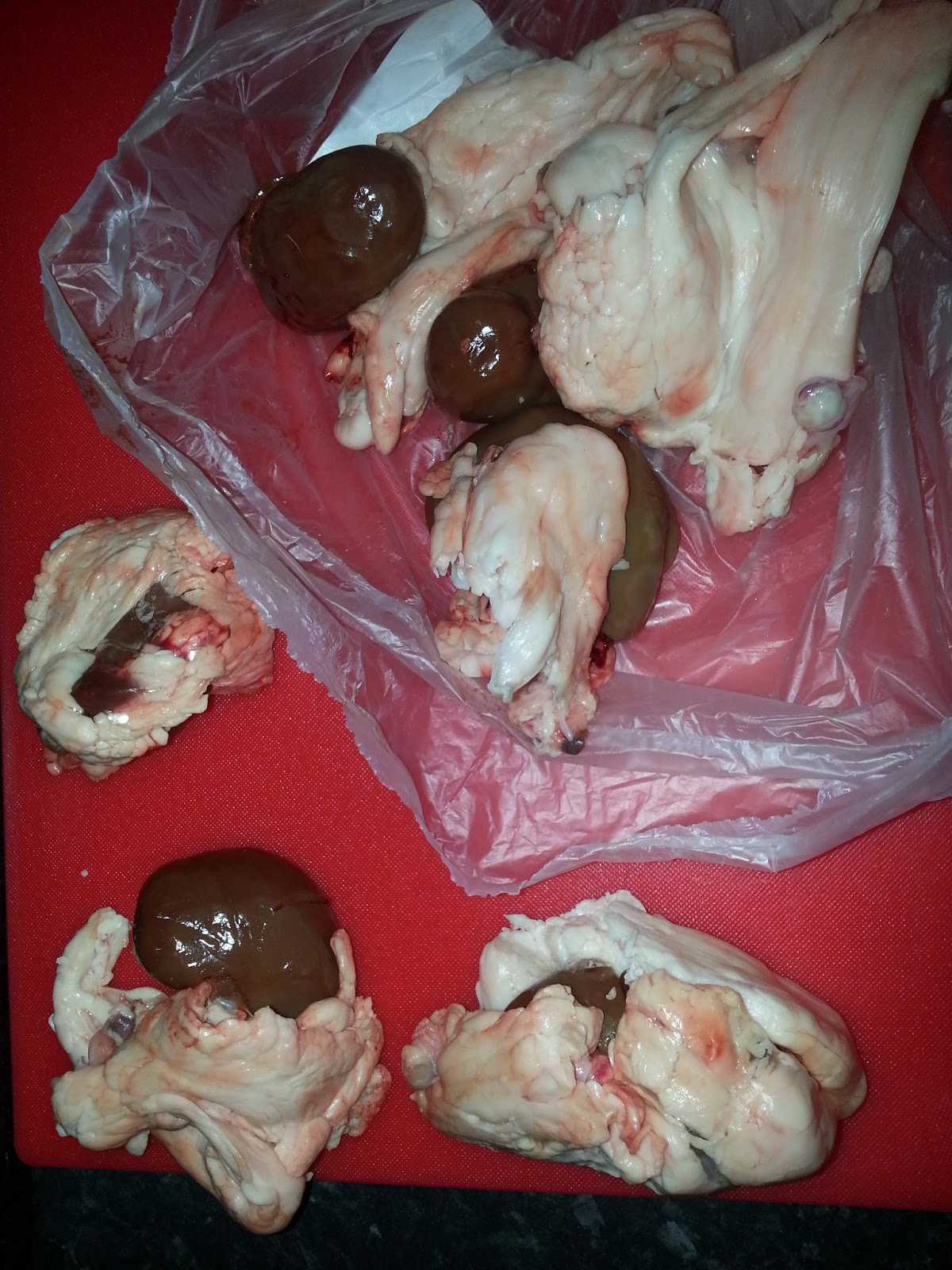
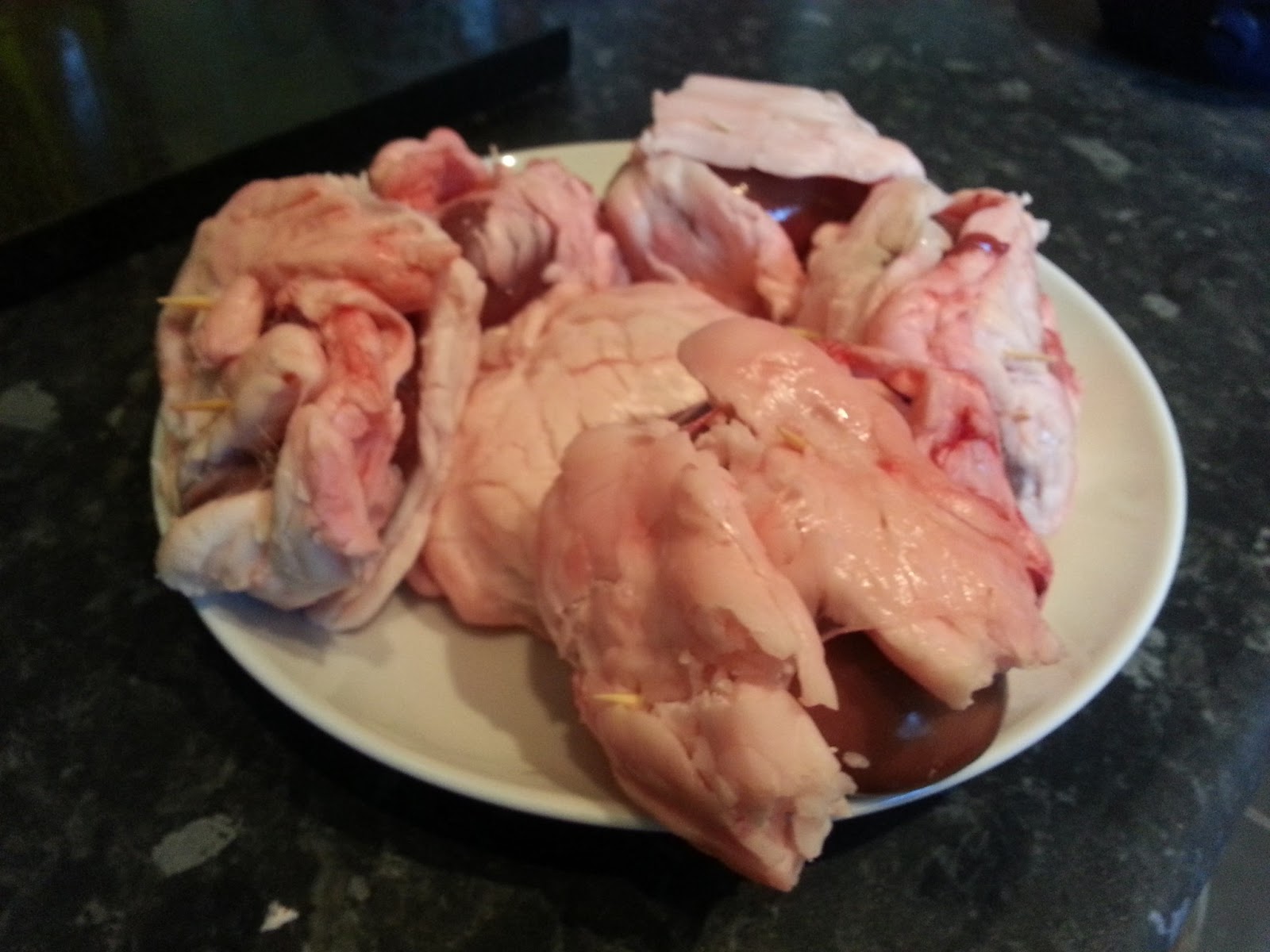
This is a very simple recipe. Ask your butcher for kidneys still covered in their suet, when you arrive home trim away any big chunks so that the kidneys are covered with about half an inch of fat. It won’t completely encase them, so when it comes to roasting them, make sure any bare kidney faces downwards, or use the fatty trimmings and cocktail sticks to cover the gaps.
Arrange the kidneys on a wire rack over a roasting tin and bake them in a hot oven – 230⁰C – for 20 to 30 minutes. Check them after 15 though. The perfect kidney will be hot and pink, so if still a little too red and bloody, leave for a few more minutes. For some stupid reason, I forgot to take in picture of the pink kidneys within. Sorry folks!

Serve the kidneys straight away with roast lamb, or as a first course with brown bread and mustard.

#379 Kidneys in their Fat. As an offal fan, I was really looking forward to this one. When done perperly, the kidneys are mild, sweet and juicy, it is only when overcooked that they take on that mealy texture and overly-metallic tang. The trouble is that there is such a tiny window between cooked to perfection to overdone. If you get it on the button, however, they are a simple and delicious treat 8.5/10

#378 Elizabeth David’s Potted Crab

This recipe I tried a couple of months ago and thought it so good, it should make an appearance as the fish course in my pop-up restaurant earlier in the month. The recipe has been lifted from a pamphlet by Elizabeth David called English Potted Meats and Fish Pastes. You can find the pamphlet in her anthology An Omelette and a Glass of Wine (a book any interested cook worth their salt should own). Ms David honourably adapted old recipes and updated them for the contemporary population. They still hold up today, I take some pride in taking up her baton – via Jane Grigson – albeit on a small scale, in showing that these dishes need to be brought back and celebrated. They are so different from the nasty little pots found on our supermarket shelves.

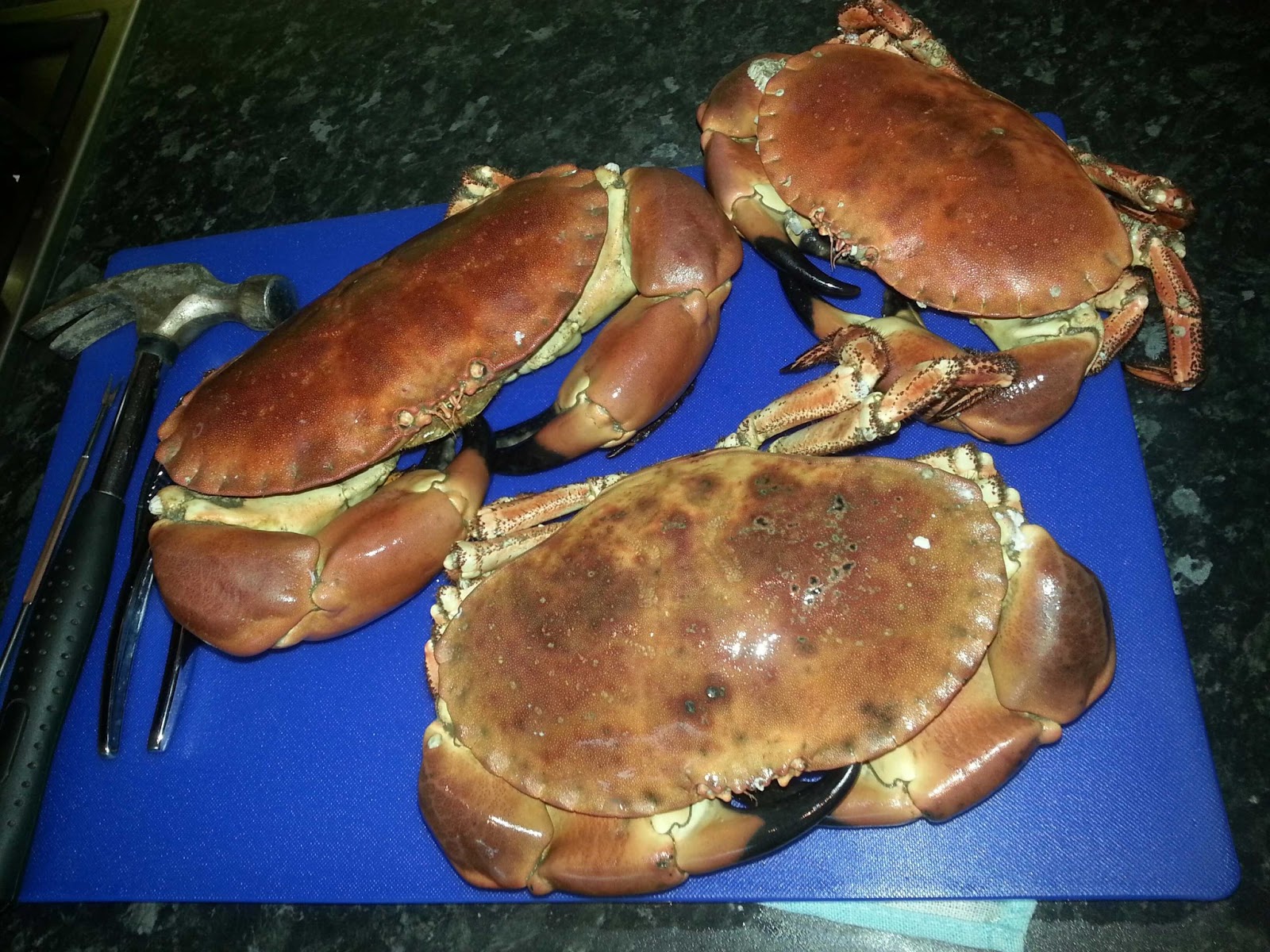
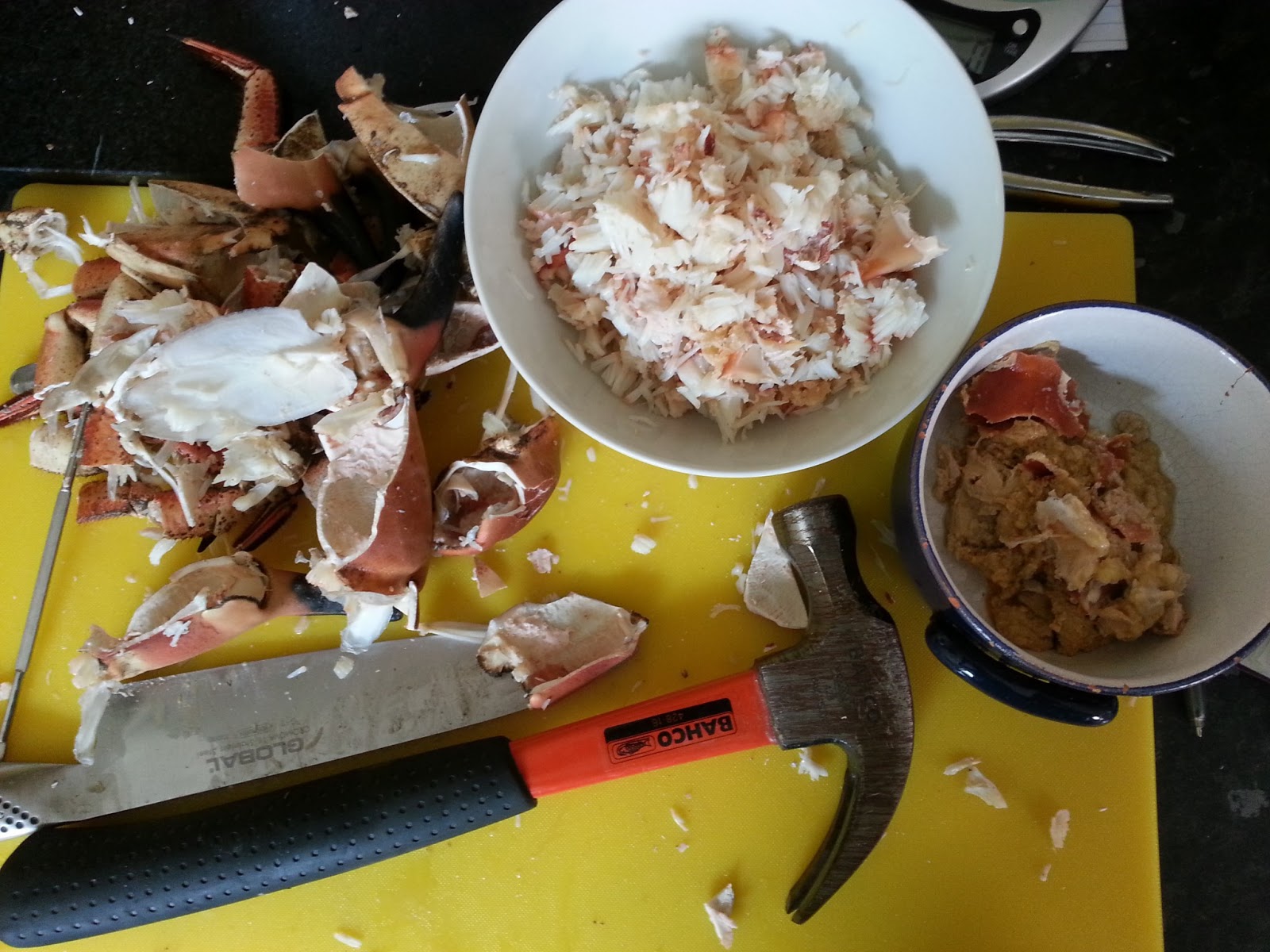
For this recipe you need to start with a large 2 pound crab– ask your fishmonger in advance to bagsy you a large, hefty-clawed male for you. If such a thing is not available, buy 2 smaller hen crabs. At home, dip into your toolbox for a hammer and root out your lobster tools (or alternatively a nutcracker and skewer) and get to work picking and scooping the meat from the crab, keeping the brown meat in separate pots from the white. It’s worth mentioning that you can buy the tubs of pre-picked crabmeat, but the result will not be anywhere near as delicious.

 
How do you pick a crab of its meat? This excellent walk-through guide from Channel 4 is very good. One day I’ll write my own, if I ever get round to it!

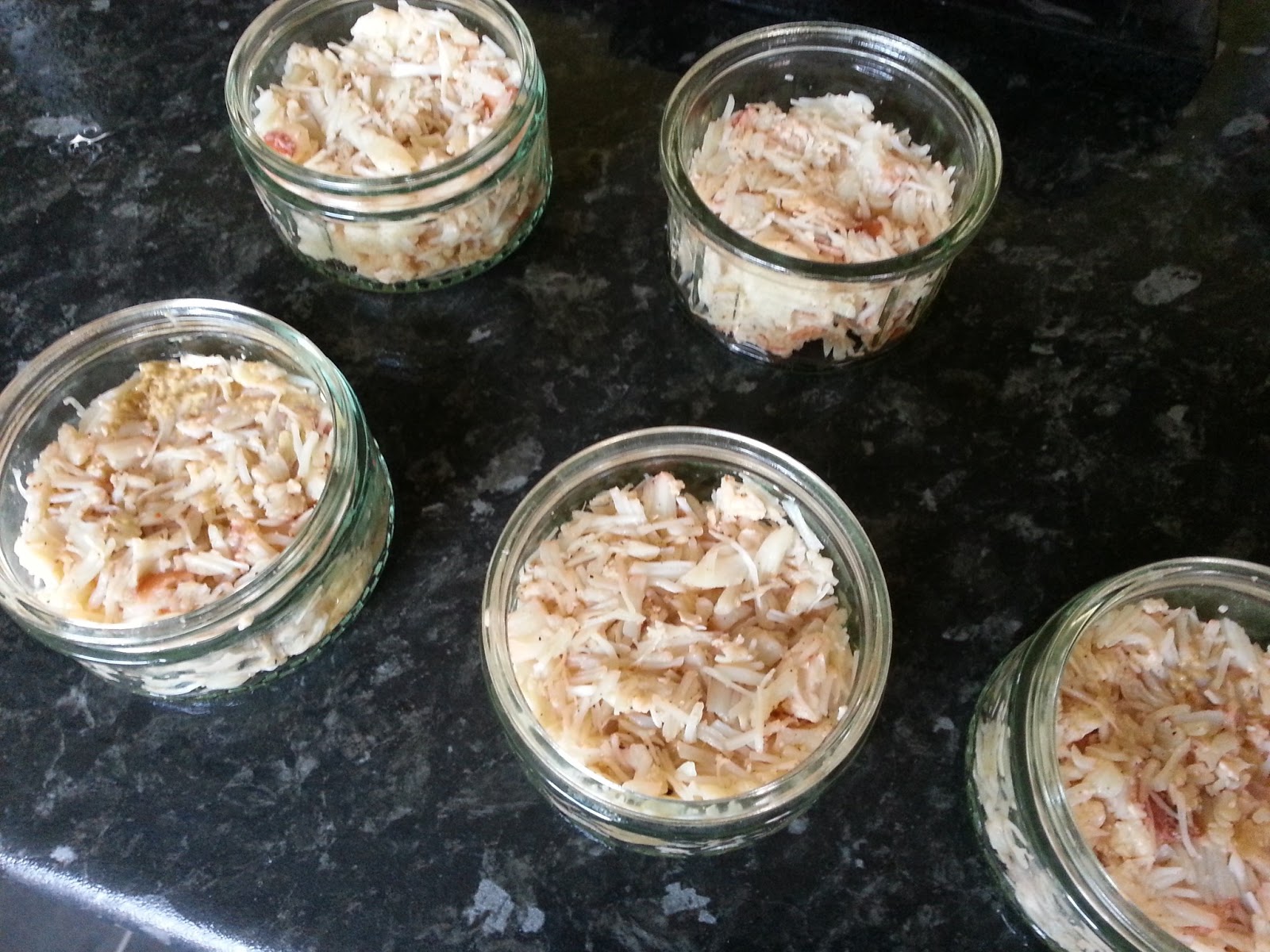
Season the crab meats with salt, black pepper, mace, nutmeg and Cayenne pepper, as well as a good squeeze of lemon juice. Now layer up the two meats in a single mould such a stoneware pot, or several smaller ones. Start with half of the white meat, then the brown and then the remainder of the white. Pack it down firmly and pour over melted slightly-salted butter; you will need around half a pound of butter altogether. Griggers here recommends Lurpak, which eats much better in this sort of dish.

 
Bake in a ban Marie at 150⁰C for 25-30 minutes. Remove and pour over some clarified butter. Allow to cool and store in the fridge covered with foil or clingfilm. If you put a good thick layer of butter over the crab, it will keep for several days. Don’t forget to take it out of the fridge a few hours before you want to eat it.

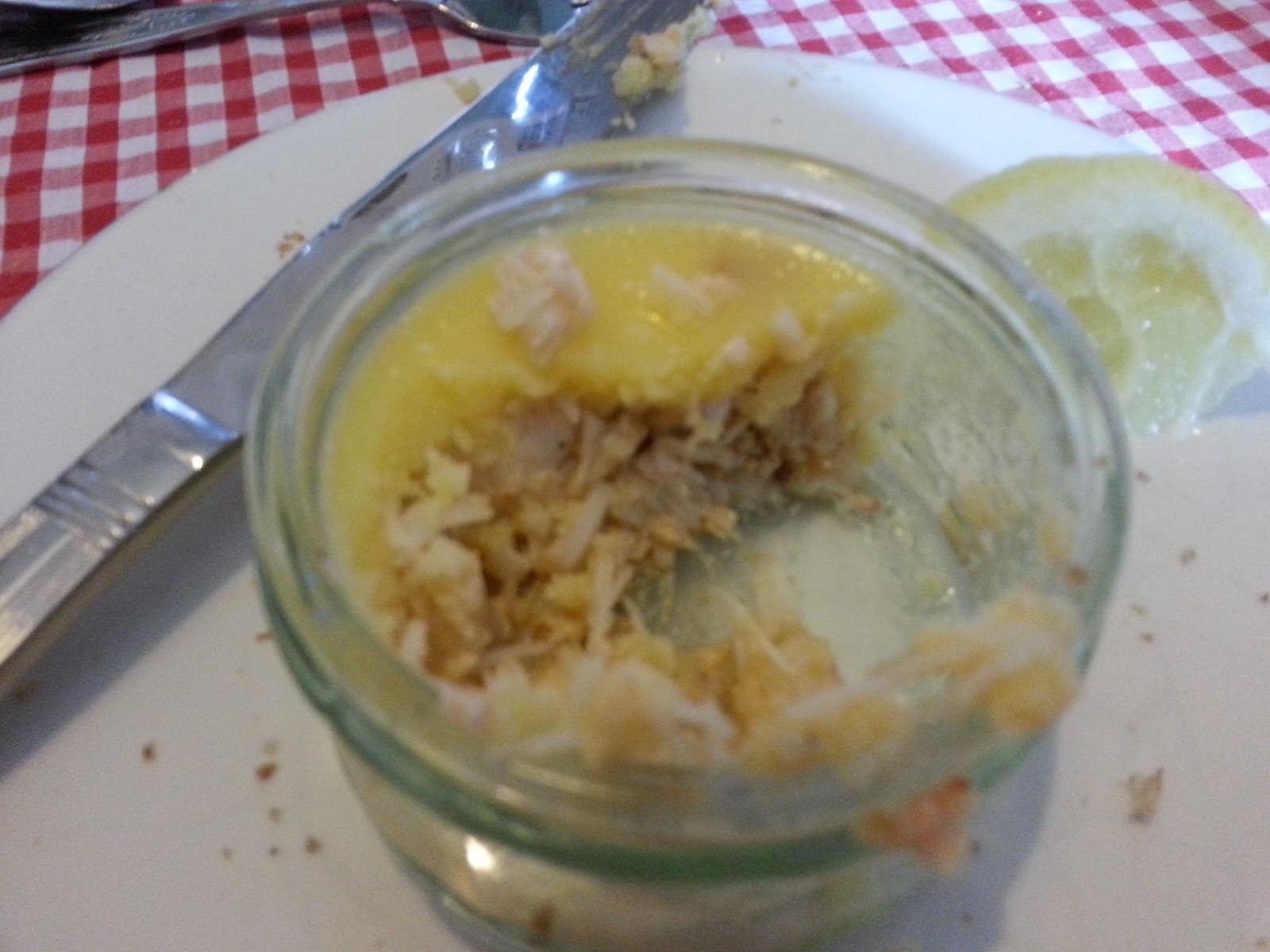
I served the potted crab simply with spelt bread and a lemon wedge.

#378 Elizabeth David’s Potted Crab. Absolutely delicious, the rich butter and creamy crab meat are suitably sharpened by the warming spices and lemon juice. This must be the best of the potted meat and fish dishes in the book and I cannot sing its praises high enough. 10/10
 

#377 Brandy Snaps

An English classic, one of which I have never made; I’ve eaten plenty of them of course, but never really bothered about going the whole hog and piping cream into them. Fearing I was a becoming a biscuit heathen I did a little research and found that in many parts of England, especially the south and London, people ate them on their own as large rounds, rather than the familiar cigarette shapes where they called them ‘jumbles’. Phew.

Don’t fear the brandy snap, it turns out they are not as difficult to make as people say, though a little patience is required for the first few before you get into your stride: too hot and they tear (and burn!), too cool and they cannot be shaped and break. Do them one at a time and if the others get too cool, pop them back in the oven for a few seconds to soften again. No probs!

This recipe makes up to 36 brandy snaps – that seems a lot, but they keep for weeks in an air-tight box.

To begin, melt together 4 ounces each of butter, golden syrup and granulated sugar in a saucepan. Mix until everything has melted and is smooth, but be careful not to let it boil. Take off the heat and when ‘barely tepid’ mix in 4 ounces of plain flour, a pinch of salt, 2 teaspoons of ground ginger, a teaspoon of lemon juice and 2 teaspoons of brandy. This seems like a paltry amount of brandy but it really does make a difference to the flavour.

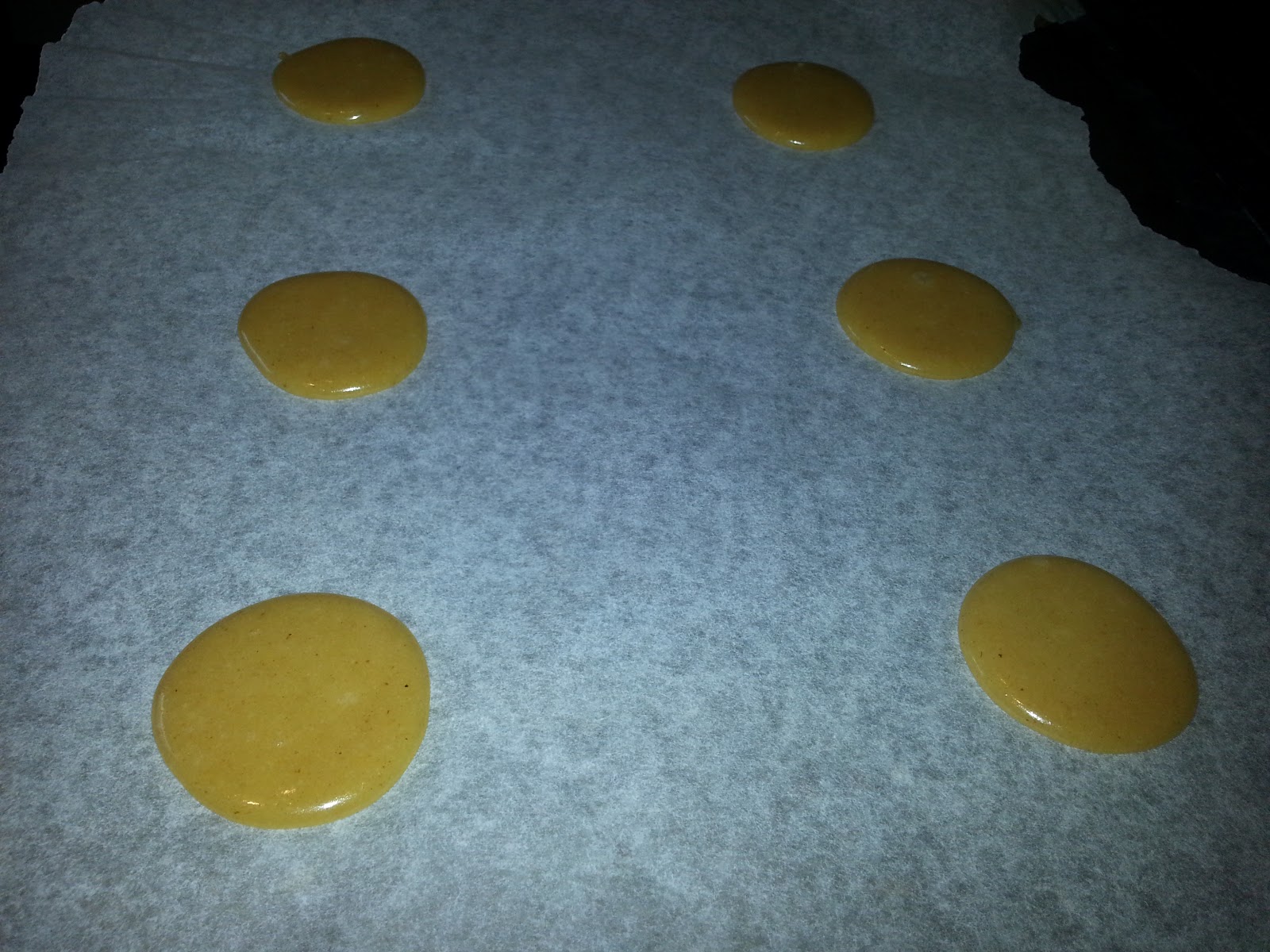
Preheat the oven to 200⁰C (400⁰F) whilst you get on with spooning out the mixture onto baking sheets. The best thing to do here is to cover two large baking sheets with greaseproof paper and to spoon out sparsely teaspoons of the mixture; these things really spread so you’ll only want 4 or 6 spoonsful per sheet. Make sure your spoons are small, equal in size and neat; I found that using a melon-baller helped here.

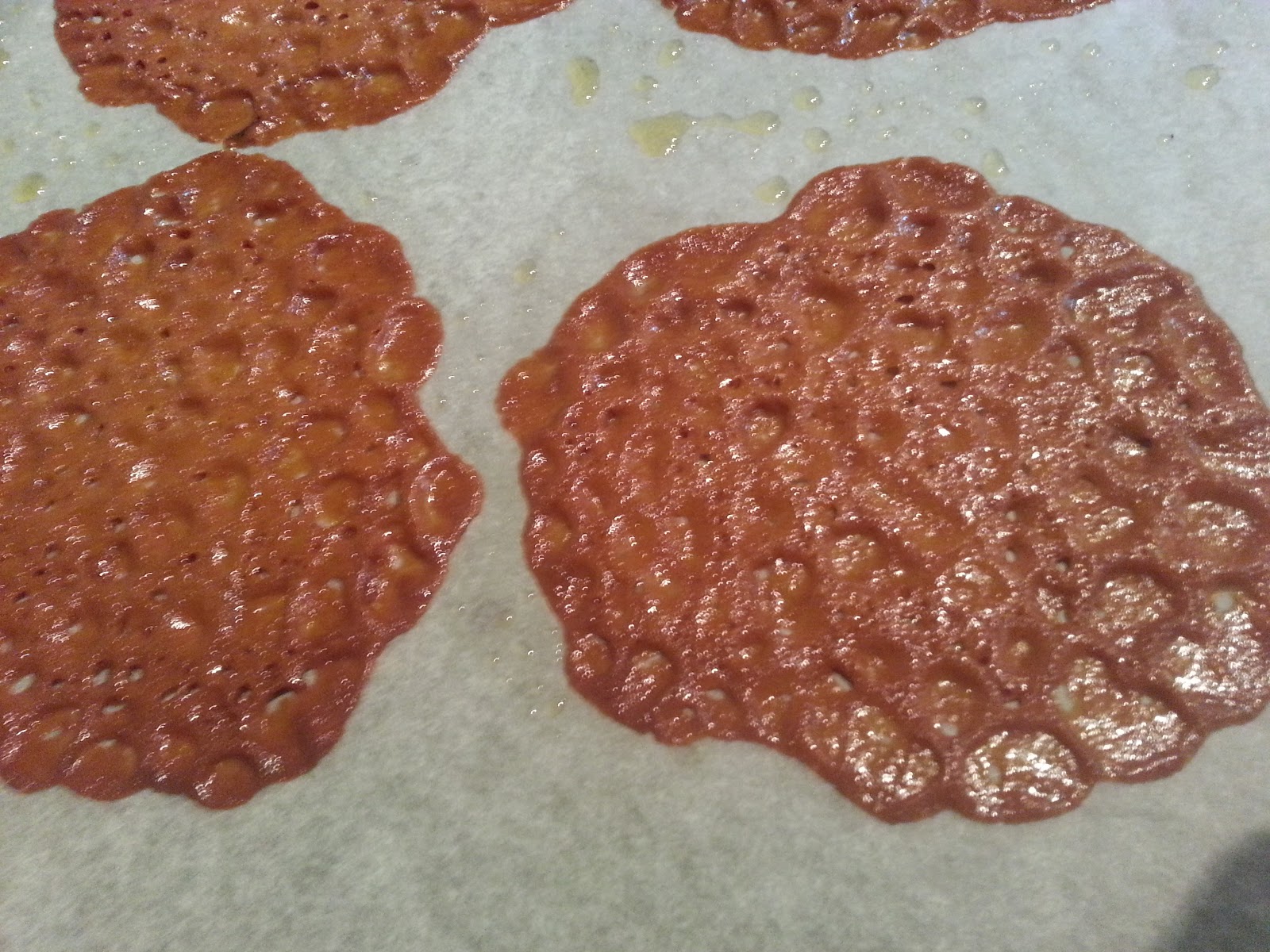
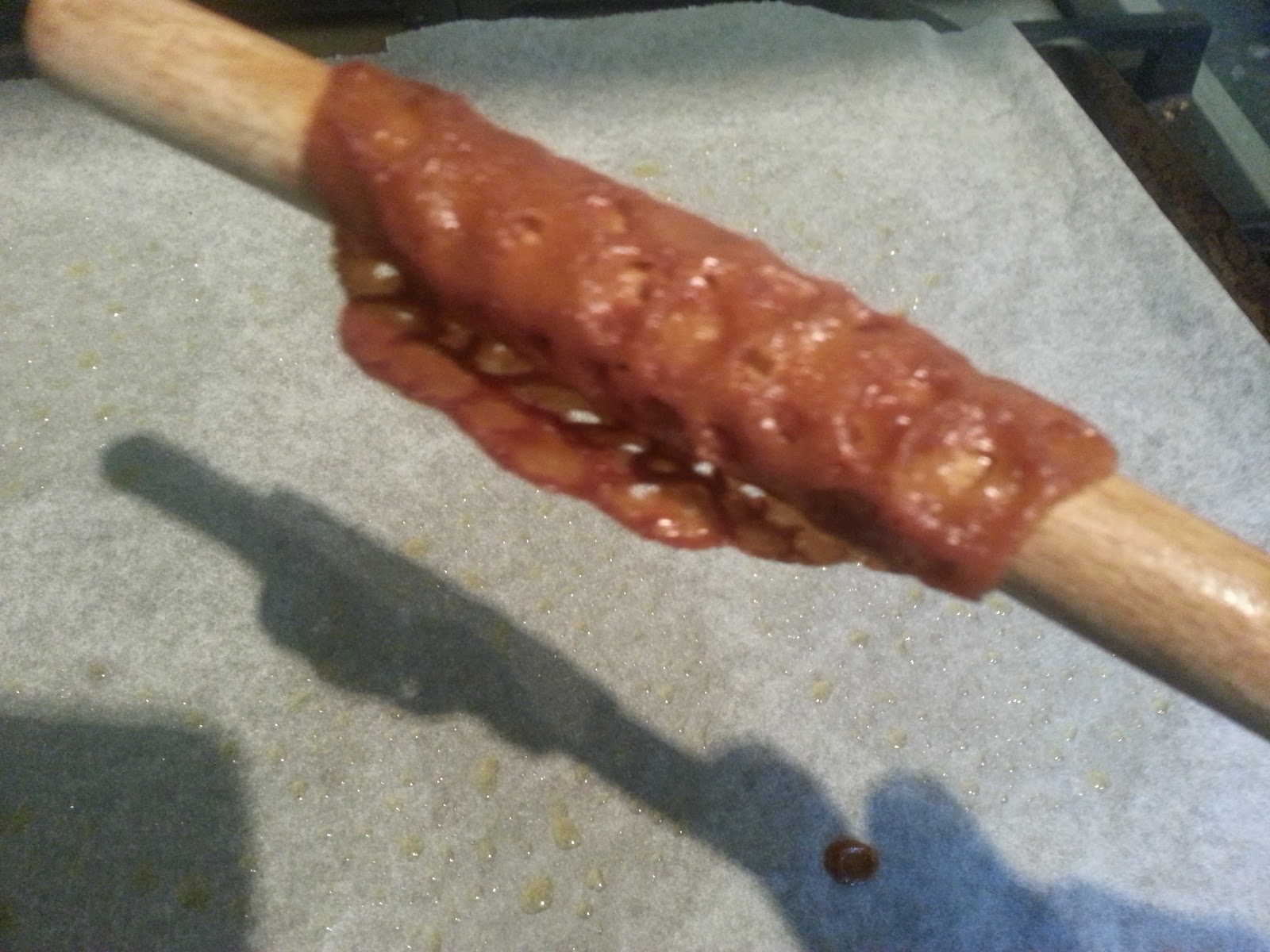
Bake them for about 8 minutes until they have spread, darkened and bubbled up. Remove from the oven and let them cool a little before shaping. For the classic cigarette shape lift one of the paper using a palette knife – if it tears then it is too hot – and lie it across the handle of a wooden spoon and fold it over. Slip it off and do the next one; if too cool pop back in the oven. To make basket shapes, lie the brandy snap over the base of a jam jar.

If you want to fill the brandy snaps, whip up ½ a pint of double cream and pipe the cream inside. There’s no need to sweeten the cream here as the snaps themselves are so sweet.

#377 Brandy Snaps. These were absolutely delicious – crisp, slightly spiced caramels that cracked satisfyingly into bland cream (Bland is not always bad!). Lovely, and so much better than bought. Go make some! 9/10


#376 Eliza Acton’s Sole Stewed in Cream

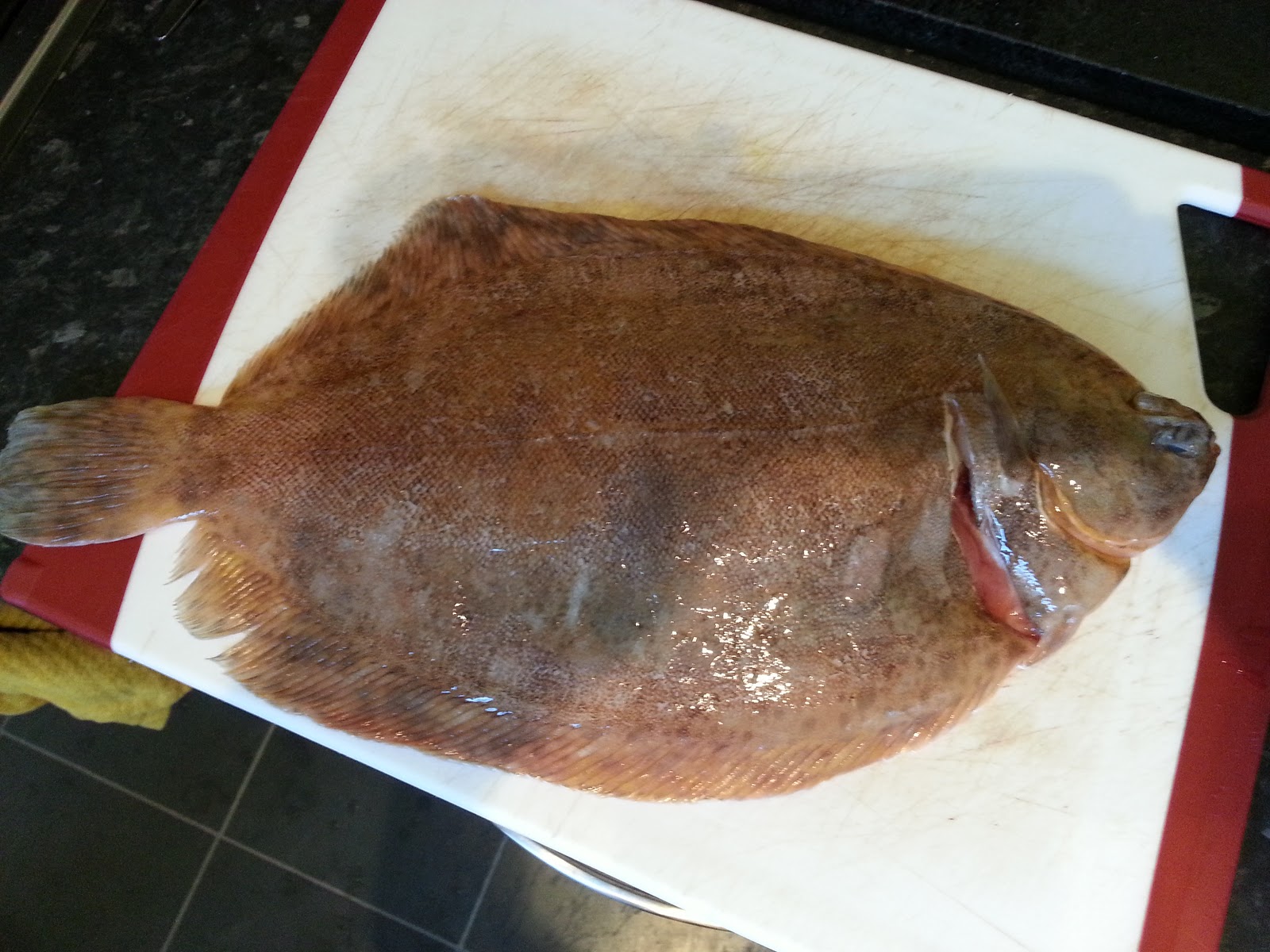
Eliza Acton (1799-1859) was a cook and poet. She was the first person write a cook book for normal folk like you and I, all the previous ones were written for the housekeepers and kitchen staff that ran houses and stately homes. Eliza was also the first to include cooking times and ingredients lists in her recipes. Years later Mrs Beeton based her much more popular book on Acton’s writings. Cheeky!

This recipe comes from her famous book Modern Cookery, for Modern Families published in 1860. Old that it is, its simplicity seems quite modern to me; there are very few ingredients, just sole, salt, cream, mace, Cayenne pepper and lemon juice, and it was designed to show off the excellent flavour of a delicate fish.

If you can’t get hold of sole, use any other flat or white fish like brill, turbot, cod, haddock, pollack etc., though they will need to be cooked for longer.

Her recipe starts: Prepare some very fresh middling soles with exceeding nicety…

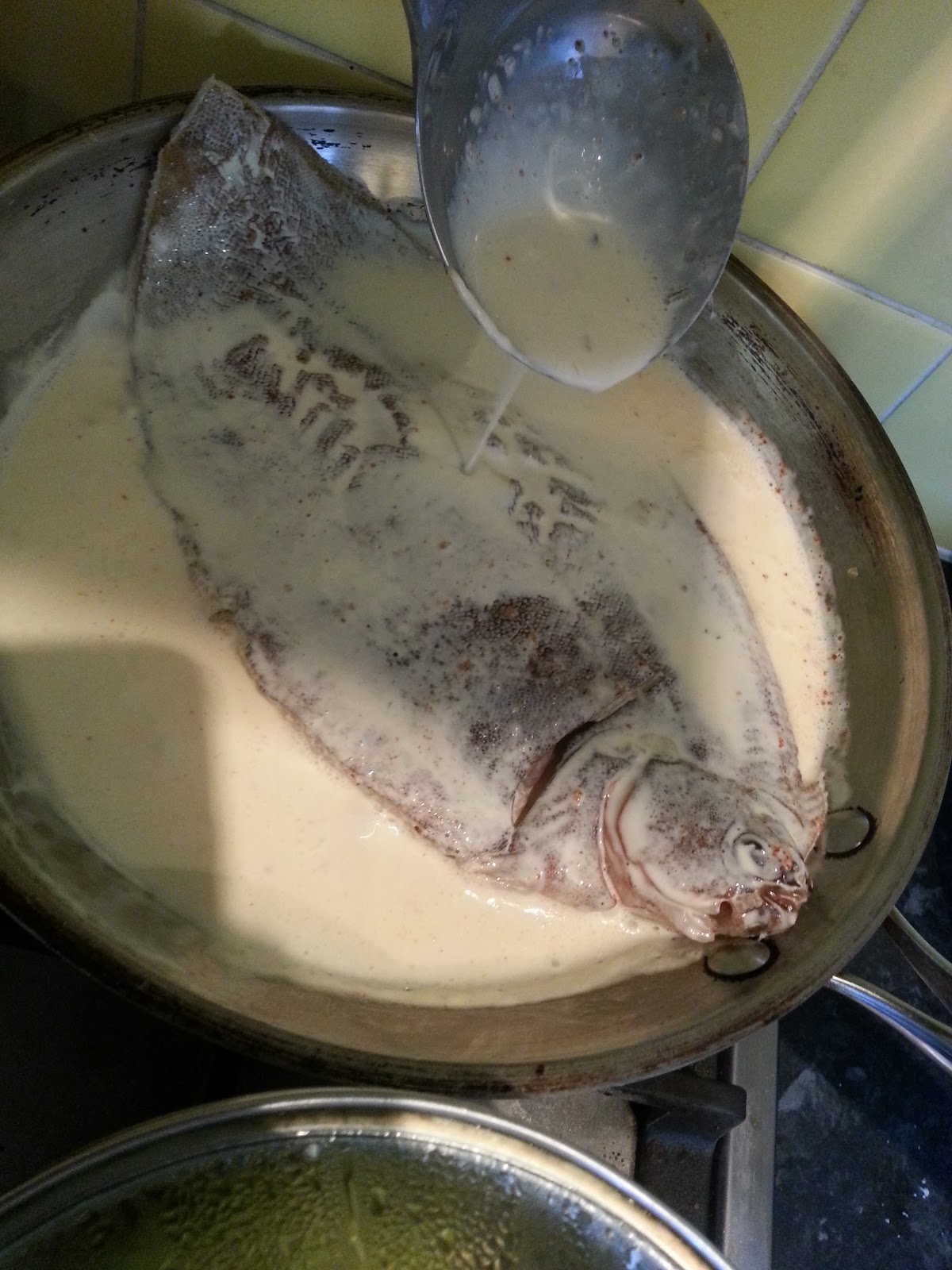
Ask the butcher to gut and scale a nice sole. At home, prepare it by trimming off the fins and place it in a close-fitting dish or pan. Pour around it boiling water that almost covers it, plus a teaspoon of salt, then let it simmer for just two minutes. Carefully pour away the water and pour in some cream so that it goes half way up the fish. Bring to a simmer and baste the fish with the hot cream until cooked through. This takes only four or five minutes, but if the cream thickens too much, let it down with some of the cooking liquid or some water.

Remove the sole to a serving dish and finish the cream sauce by adding some saltand a little ground mace and Cayenne pepper. Lift the sauce with a squeeze of lemon juice – a little under half a lemon did for me.

Pour the sauce over the fish and serve with boiled potatoes and some blanched and buttered cucumber dice, says Jane, though I expect it would work very well with a green salad or some quickly-steamed asparagus spears.
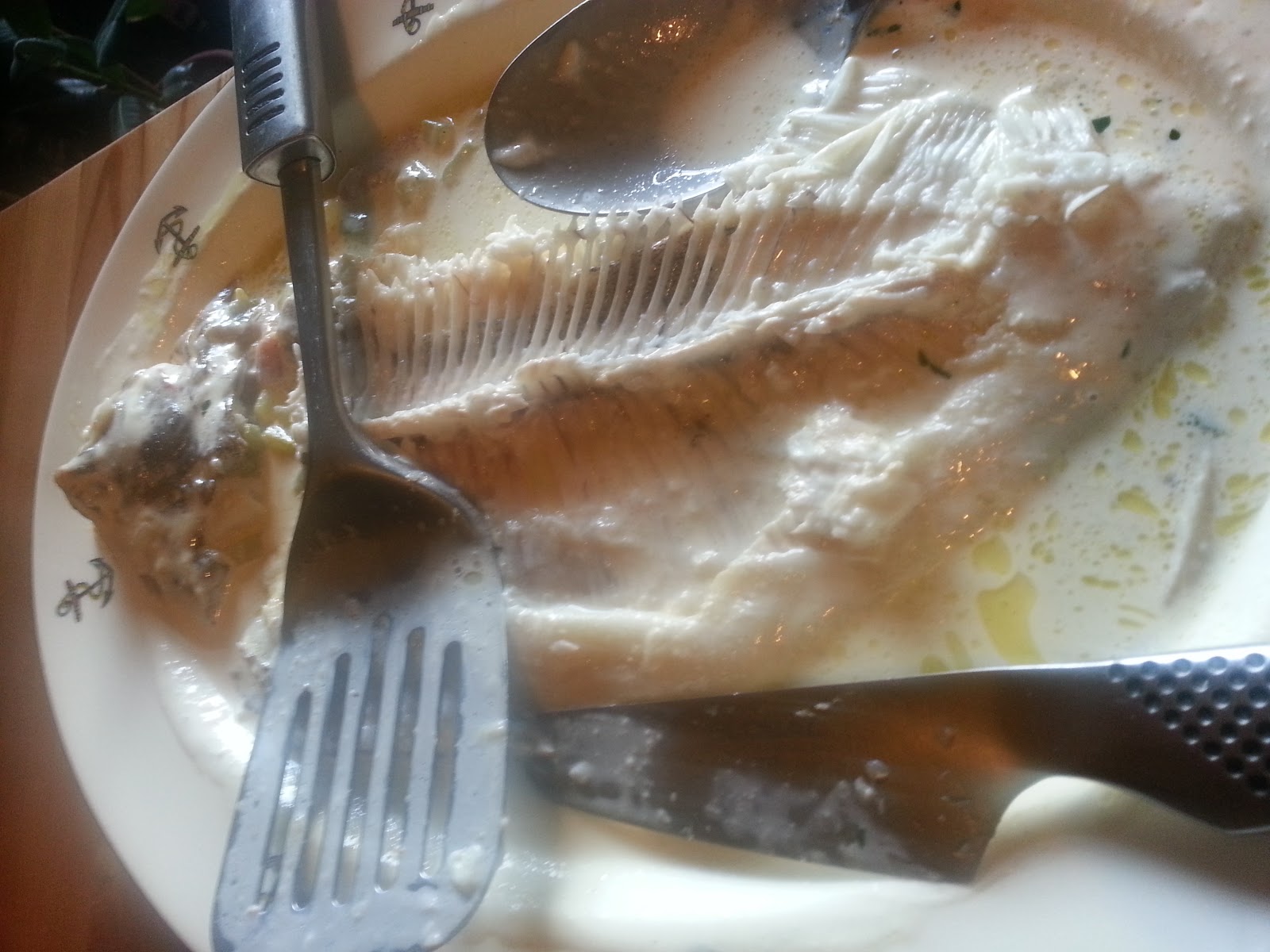
#376 Eliza Acton’s Sole Stewed in Cream. I loved this. The fish was lovely and moist and it flaked away from the bone very easily. The sauce was not as rich as you might expect, and its mild creaminess complemented the fish very well. There was also the added bonus of finding a large and handsome roe within the sole which also ate very well. Very good and very simple 8/10

#375 Boiled Silverside of Beef

 
Here’s a nice simple recipe that really shows off simple English cooking at its best. When I first started cooking boiled meats for the blog, it was always a disaster because the meat was tough and all of its flavour seemed to just dissipate away. It is for these very shortfallings that English food is viewed as bland and boiled to death. Here a joint of beef is ‘boiled’ with plenty of stock veg and spices, but really ‘boiled’ is the wrong word to use entirely because it’s poached rather than boiled. The most you want the water to be doing is giving off the odd tiny bubble and gurgle, a temperature of about 80⁰C. As soon as I realised this error, boiled meats have been coming out tender and delicately-flavoured, so I was looking forward to this nice, light recipe that seemed perfect for early spring.

It’s worth giving a few more pointers for perfect boiled meats: First, use a closely-fitting pot so that the vegetables can lend maximum flavour and so the meat juices don’t become too dilute. Second, use the best ingredients you can afford because it makes a world of difference to the finished dish. Try and get meat that has been hung properly by a real butcher, that pink nonsense you buy in the supermarket will simply not do. Lastly, season, season, season! Simple cooking like this depends on a good seasoning of salt and black pepper.

Although this recipe uses a piece of fresh meat, it is really a footnote to #161 Boiled Salt Beef & Dumplings and so appears in the Cured Meats part of the Meat, Poultry & Game chapter and not the Beef & Veal section.

Once you have your silverside of beef, you need to calculate the cooking time which I described in #150 How to Cure Meat in Brine.
 
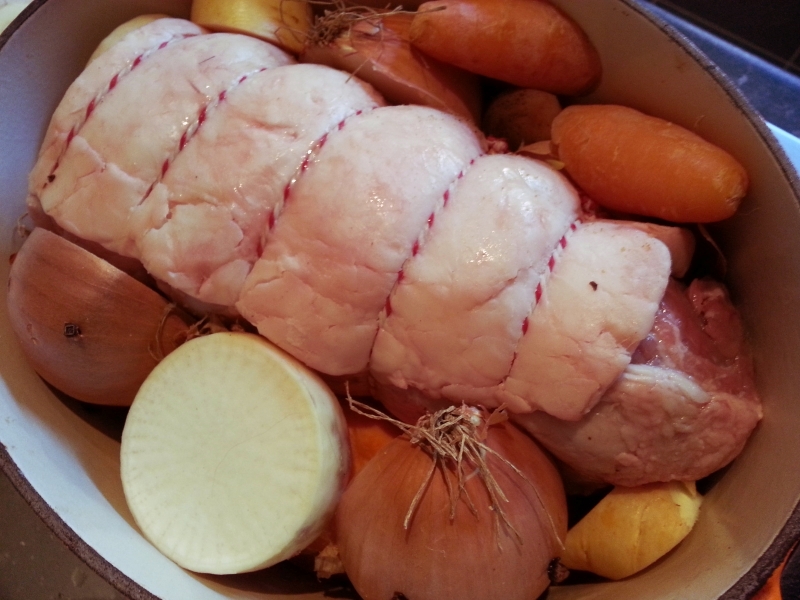
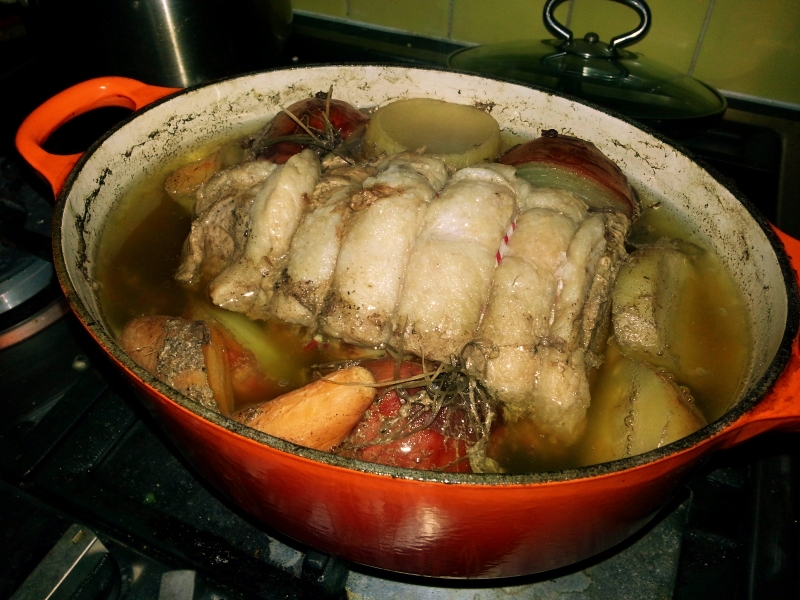
Put the beef into its close-fitting pot along with the vegetables and spices from #161 Boiled Salt Beef & Dumplings, which were: 2 large unpeeled onions studded with 8 cloves, 2 blades of mace, a small bit of nutmeg and plenty of black pepper. However, seeing as this meat is fresh meat and not strongly-flavoured cured meat, it will need a bit of a helping hand, so add also a parsnip, a carrot and a piece of turnip gives some extra flavour. Cover with water, bring slowly to a gurgle and simmer gently until cooked.
When ready, carve slices and serve with boiled potatoes, carrots and horseradish sauce. Although Jane doesn’t say it, I also added a couple of ladlefuls of the cooking broth to produce a meal not unlike #98 Cawl [which appears to have not been proof-read before posting].
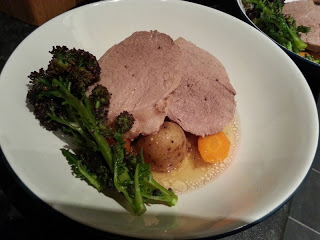
#375 Boiled Silverside of Beef. I knew Griggers wouldn’t let me down on this one! It was beautifully and subtly flavoured with the sweet vegetables and meat itself was so tender. It really makes a great alternative to a roast on a summery Sunday. I reheated the next day and the broth was even better flavoured. Any broth left over makes ‘beautiful soup, says Lady Jane. 8/10

#374 Pease Pudding

Pease pudding is one of the oldest dishes, and most popular, in English history. The main ingredient in pease pudding is of course peas. The pea is one of our oldest cultivated crops mainly because it thrives in temperate climates and is quick to grow, and therefore, to select. Its easy-to-grow nature meant that it was good food for the poor where the poor were often forced to eat ground and dried peasemealformed into loaves and baked like bread.

The etymology of the words pease and peas is interesting: the word originates from the Greek word pison, which became pisum in Latin, crops up in Old English as pise and then changes its spelling to pease. Oddly, the word peasewas mistaken as a pleural and was therefore shortened to pea.

Pease pudding made up of dried, cooked and puréed peas enriched and flavoured with things like butter, eggs or onions. It used to be boiled in a well-floured pudding cloth, giving it the classic cannonball shape; and it wasn’t boiled simply in water alone, but with a piece of salt pork, ham or bacon, with which it would be served. It later would be boiled or steamed in a pudding basin, which is much more convenient, though I am sure the original way of cooking it in the ham stock would have produced a much more delicious meal. I love this pamphlet showing just how versatile pease pudding can be – pease pudding vol-au-vent anybody?
Before pease pudding there was pease pottage, which was essentially a thick soup made from pease and water, flavoured with scraps of meat and vegetables.

So, pease pudding was popular because it was cheap and plentiful. It was often made at the beginning of the week and eaten over the successive days, hence the old rhyme:

                                Pease pudding hot!
                                Pease pudding cold!
                                Pease pudding in the pot
Nine day’s old!

Jane suggests frying it up another day.

To make pease pudding, you first of all need to simmer a pound of dried green peas– whole or split, it doesn’t really matter – in enough water to just cover them until soft and tender. The times here can vary greatly – about 45 minutes to an hour for split peas, at least 2 hours for whole peas. It also worth mentioning that the age of the peas will affect the cooking time – old peas may need soaking overnight in water with a teaspoon of bicarbonate of soda. If you do soak them overnight, drain away the liquid they were soaked in before cooking in fresh water.

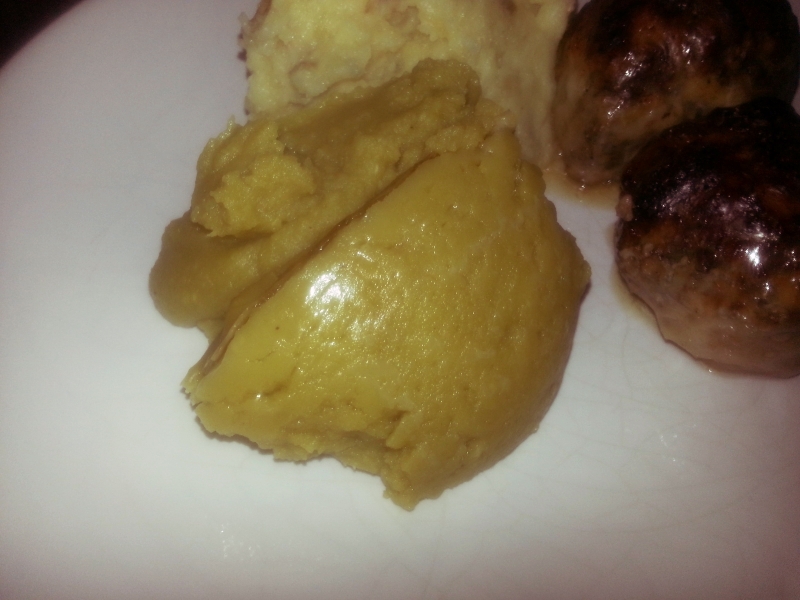
When the peas are tender, drain away any liquid and then pass them through a mouli-legumesor sieve and stir 2 ounces of butterand one beaten egg into the resulting purée. Season well with saltand pepper and spoon the lot into a generously buttered 2 pint pudding basin. Pop the lid on, or make a lid from buttered foil or cloth tied with string. Steam for an hour, then turn it out if you like, and serve with boiled bacon or salt pork or, as I did, with #373 Faggots and Peas.

#374 Pease Pudding. This was a most successful dish – the pease were sweet and well-flavoured. Plus I managed to eat it over the space of several days just like the song! It was best when I fried slices of it in lard so that a good crust formed and ate it with some left-over faggots. I shall do this again. 7/10

#373 Faggots and Peas

In case you are worried here a faggot is in fact a pork meatball and not a homosexual. The word faggot actually comes from the old Norman fagot, which was a bundle of sticks tied up with string. Coal also came in faggots. Here, the pork meat is bundled in a piece of caul fat which also acts as a permanent basting.

It’s worth mentioning that the derogatory meaning of faggot has not fully infiltrated the United Kingdom from the USA; whenever my Dad called me a ‘bad-tempered faggot-face’ when I was being a wingey child (which was probably often), he wasn’tmeaning I had the face of camp man. Or maybe he was…

I didn’t think faggots are that popular these days, but on a recent trip to Swansea, I noticed that every single butcher in the market sold them. They are also still very popular in the black country. It is still possible to buy Mr Brain’s faggots in onion gravy in supermarkets, but they apparently bear little resemblance to proper faggots; though I have to say, I had never eaten or cooked them before.

Faggots were invented as a way of using up all the offcuts and offal from butchers’ pig carcasses, they contain some breadcrumbs to both absorb some of the fat and to ‘cut’ the strong offal flavours. They have been dubbed Britain’s first take-away fast food by some, because faggots were sold at the end of the day for hungry workers to pick up on their way home after a hard day’s graft.

Two things that might put you off making/eating faggots are the offal and the caul fat, but don’t let it; offal cuts are very delicious. The strange lacy caul fat looks a bit strange at first, but it crisps up nicely on top as the faggots brown in the oven. It’s not hard to get caul fat; your local butcher should have some, and it should be very cheap or even free, though you may need to give them a bit of notice. Jane says that to get caul ‘you will need to go to a small family butcher, preferably an older man, who really understands meat’. To use it, just soak it in water so that it can unfurl and be much easier to handle.
Caul fat

As you can tell by the title of this post, faggots are traditionally served with peas. Good Lady Grigson suggests #4 Green Peas in the summer and #295 Purée of Dried Peas with Green Peppercorns in the winter, but I wanted to serve it with a classic pease pudding (but you’ll have to wait for the next post for that recipe).

These faggots are made using pork belly and pig’s liver, but you can use any offal such as heart or kidney. Likewise, you could exchange the pork belly for another cut – just be careful to either use a fatty cut or add some streaky bacon to increase the fat content.

Here’s how to make this ‘good-tempered dish’:

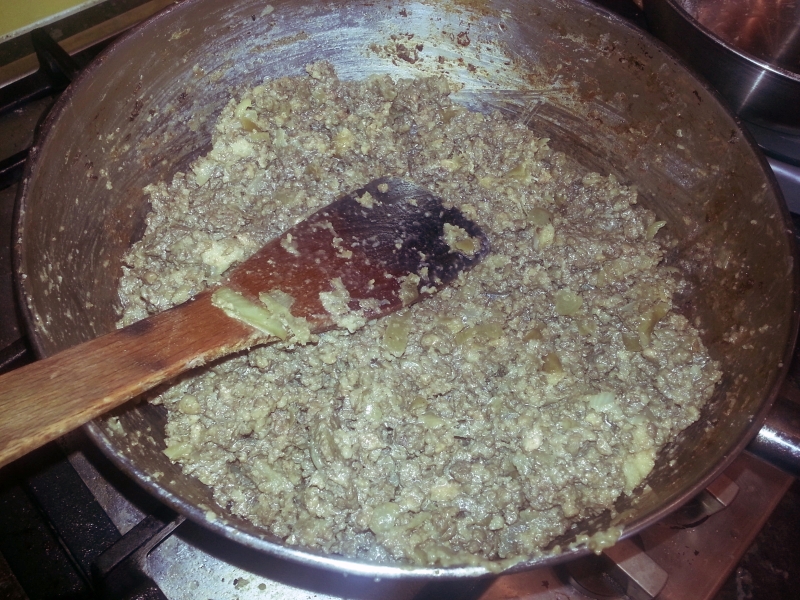
Mince (or ask your butcher to mince) one pound of pig’s liver and 10 ounces of belly of pork and toss into a frying pan along with two chopped onionsand a chopped clove of garlic and cook them gently for about half an hour.
 
Try to not allow the meat or onions to take on any brown colour. Strain off the juices into a bowl and set them aside. Mix the meaty mixture with four chopped sage leaves (or a teaspoon of dried sage), half a teaspoon of ground mace, two medium eggs and enough breadcrumbsto make ‘a firm, easy-to-handle mixture’. I used four ounces. Have a taste of the mixture and season appropriately with saltand pepper.

Form the mixture into balls weighing two ounces apiece, then spread out the soaked caul fat and cut it into approximate five inch square pieces. Wrap each meatball in the pieces of caul fat and arrange them in a shallow baking dish.
 
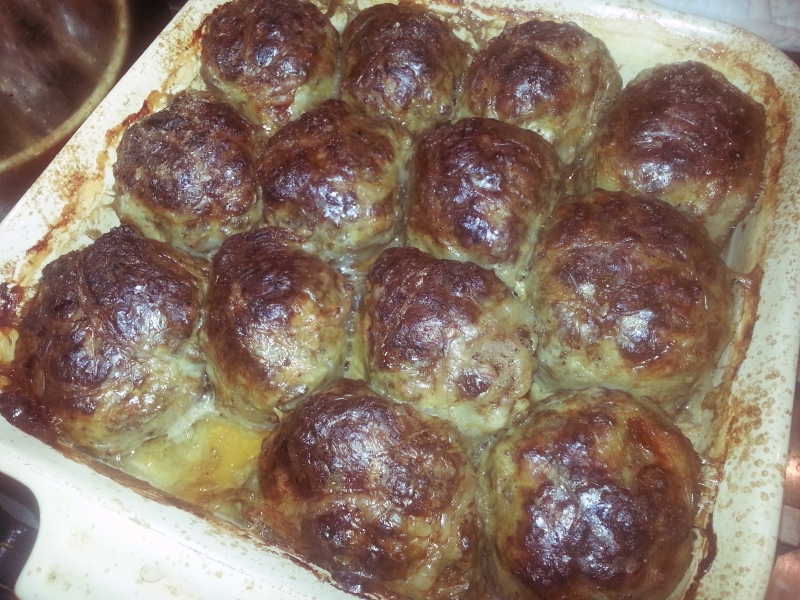
Pour in a quarter of a pint of pork, beef or veal stock and bake for 40 to 60 minutes. Twenty minutes or so before the end of the cooking time strain the cooking juices into the reserved liquor from earlier and stand the bowl in a larger bowl filled with ice cubes so that the fat quickly rises to the top and can be skimmed off. Return the liquid to the cooking faggots 5 minutes for the final five minutes of cooking.

 
#373 Faggots and Peas. These were very good – the texture of the faggots were quite mealy due to the liver in there and the mace gave them a real taste of haggis. I would definitely give these a go again, but perhaps with some other offal cuts. 7.5/10

#372 Creamed Roe Tart

Here’s the second of three herring or mackerel roe dishes from the Saltwater Fish part of the FishChapter. I loved the first one, #159 Creamed Roe Loaves, and it was a revelation as I had never tried them before, so I was looking forward to this.
Soft roes, sometimes called milts, are essentially a kind of fish offal that are very much out of fashion these days. Soft roes are the male reproductive glands; in other words, the sperm of male fish (in contrast, females have hard roes). Gone are the days when fishmongers had a tray of them kept aside, saved from the gutting of the mackerel and herring. My fishmonger did have some frozen away, so you should ask yours as you never know. Of course if you are buying several fish at the same time, you can ask the fishmonger to put the roes aside for you and then you would have yourself an extra meal, or at least, a garnish – you have paid for them after all!
I served this tart as a starter.
Start off by making (or – heaven forbid! – buy) an 8 or 9 inch blind-baked shortcrust pastry case. I made my own from 6 ounces of plain flour, 1 ½ ounces each of salted butter and lard and a beaten egg.
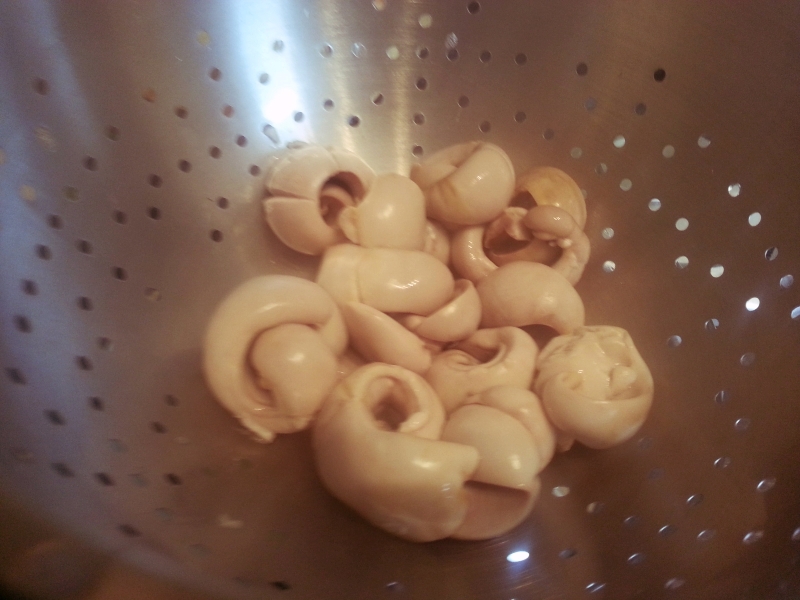
Next, gently fry 4 ounces of sliced mushrooms in an ounce of butter. While they fry, prepare the custardy roe filling. Start by pouring boiling hot water from the kettle over 8 ounces of soft herring or mackerel roes and watch them curl up like giant snails. Leave for 3 or 4 minutes to poach.
Drain the roes and put them into a food processor along with 2eggs and ¼ pint of soured cream. Blitz, taste and season with salt, black pepper, Cayenne pepper and lemon juice.  If you don’t have a food processor, pass the roes through a sieve and stir into the remaining ingredients.
Scatter the mushrooms over the pastry base and pour in the roe custard. Place in an oven preheated to 190⁰C (375⁰F) and bake – it says in the book – for 35 to 40 minutes. ‘Serve hot or warm with a tomato salad.’
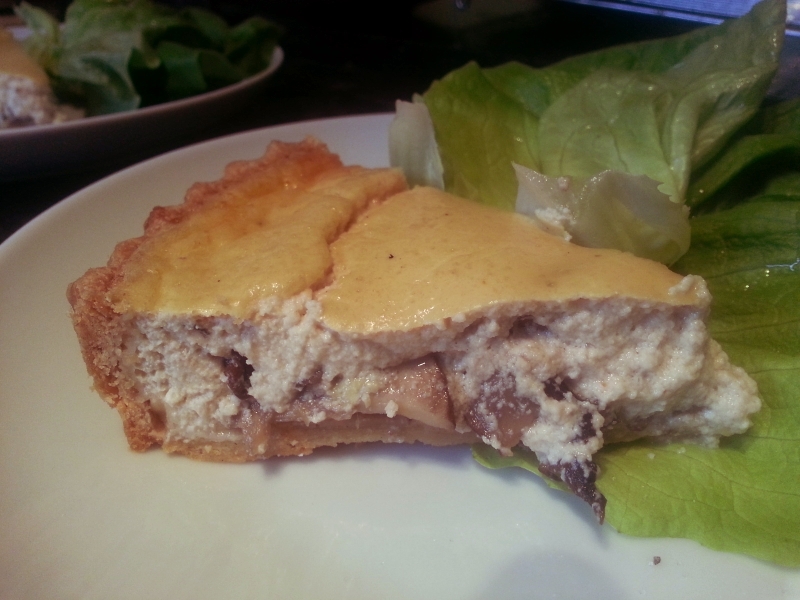
#372 Soft Roe Tart. I liked this one, though nowhere near as much as#159 Creamed Roe Loaves that I cooked, it seems, an age ago. The mushrooms were nice but I think the custard needed less soured cream and more normal cream in my opinion and the cooking time was way, way off. I checked the tart after 25 minutes and it was over-cooked, so that was a little annoying. It’s good job roes are cheap! 6.5/10.
 

#371 Oatcakes

I love an oatcake – in fact I love oats in general, they are my favourite of the cereals.

You may think that Jane Grigson is taking liberties (and she has done this many times already) by including a Scottish recipe in a book of English Food, but you would be mistaken. Oats were the main cereal crop for the most of northern England as well as parts of Wales too; wheat was for the rich and oats and barley for the poor. In Scotland, oats were the only cereal that would grow, so oats have become more synonymous there than in England or Wales.

The best thing I found out was that an oatfield fell victim  to a crop circle in 1676 – the first ever recording of one! The woodcut below shows that people assumed it was the work of the devil, rather than men from outer space.


To make true Scottish oatcakes, you need some specialist equipment (the recipes themselves hardly differ); a spurtle, which is a wooden stick used to for stirring and mixing and it looks a bit like Harry Potter’s wand; a special rolling pin called a bannock-stick that leaves a criss-cross pattern on the rolled out dough; a spathe, a special piece of equipment that is used to move the oatcakes from board to girdle that is heart-shaped with a long handle; then there is the banna-rack, a toaster used to dry the oatcakes.  I do own a spurtle, but the other pieces of equipment are rather more tricky to get hold of.
You can make oatcakes large or small, leave them whole (bannocks) or cut into quarters (farls). Here endeth today’s Scottish vocab lesson. I found this wealth of information in a great book that I picked up in a second-hand bookshop in Inverness last year. It is called The Scots Kitchen: Its Lore & Recipes by F. Marian McNeill and it’s well worth getting hold of a copy.

Oatcakes are somewhere between a pancake and a biscuit, but appear in the Pancakes & Griddle/Girdlecakes  section of the Teatimechapter and not the Biscuitspart. I think I would classify them as a biscuit even though they are cooked on a girdle because they’re so crisp; after their initial cooking , they would be dried out in front of the fire and then stored in a meal-chest or girnel covered in oats. We use Tupperware today of course.

I made these oatcakes to take up with me on a visit to my friend Frances who lives in an amazing 17th century house in the Lake District. In her instructions, Jane says to ‘toast lightly before the fire before serving them’, and Frances’s house is not short on proper roaring fires as you can see by the photo below.

Mix together 4 ounces of medium oatmeal with 4 ounces of plain flour and a level teaspoon of salt, then rub in 2 ounces of lard, dripping or poultry fat(vegetarians can, of course, use hard vegetable fat, but be careful to buy some not made from hydrogenated fats). Mix in enough cold water to make a soft dough. Roll out thinly on a ‘oatmeal-strewn board’ and cut out circles using a scone cutter.
 
To attain really thin oatcakes, Jane suggests slapping them ‘between your oatmealy hands. I tried this but it was difficult. I found it much easier to roll and cut out circles, then rolling the circles separately on the board. They weren’t perfectly circular, but they were very thin and crisp. The mixture made me 16 good-sized oatcakes.
 
Before you griddle to oatcakes make a glaze by beating together an egg with a tablespoon of milk and a teaspoon of sugar.

Heat up an ungreased griddle or other suitable heavy-based pan. When hot, place the oatcakes on the griddle and paint them immediately with the glaze. Let them cook through – you know this is happening because the glaze dries and goes shiny when they’re done. There is no need to turn them.
 
Cool on a wire rack and store in an airtight container and toast them dry in front of a lovely fire, or failing that back on the griddle or in the oven.

We ate them fresh from the fire with butter spread on them.

#371 Oatcakes. These were very good indeed, they were good and salty and the slightly sweet glaze counteracted it perefectly. Most importantly the almost too-heavy seasoning brought out the lovely toasted oatiness – I think it is important to say that I used organic oats, and I am sure that this made a difference because it really was a hit of oat flavour. I loved how they all curved and curled as they cooked too. Very good 8/10