#157 Gooseberry Fool

Technically the first of the British soft summer fruits, the gooseberry is one of my all-time favourites. It seems to have gone out of favour these days and quite tricky to track down. I suppose it’s because you have to top and tail them and cook them before you eat then. It’s big shame though. It seems that some people don’t even know what gooseberries are, seeing as one woman in the greengrocers told the lady on the till that there was “something wrong with your grapes, ‘cos they’re all hairy”. I despair sometimes, I really do. Oh well, if you come across some and don’t know what to do with them, start of by making a fool. If you don’t find any, you can substitute any soft fruit for the gooseberries and still have something delicious.

This was enough for three:

Top and tail 8 ounces of gooseberries, place them in a pan with an ounce of butter, cover and cook them gently. Once the gooseberries turn a yellow-ish colour and have softened – around 5 minutes – crush then with a wooden spoon and/or a fork. Try to avoid making them too pureed and mushy; you still want a bit of bite. Now add sugar, not too much as the fruit is supposed to remain a little tart, however, this is all down to personal preference. Allow to cool. Now whip ¼ pint of double cream and fold in the gooseberries and spoon into serving dishes. Grigson suggests serving with an almond biscuit (I didn’t)


#157 Gooseberry Fool – 8/10. This is my kind of pudding; small, yet perfectly-formed, I love stewed fruit and cream (or custard) of any type, but gooseberries especially and they are such a short-lived treat that you need to show them off as best – and as simply – as you can.

#156 Cheshire Pork and Apple Pie

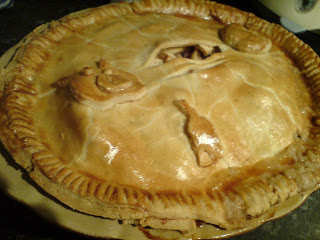
I bought a nice new pie dish last week, so I thought I’d Christen it with a nice big pie for Sunday dinner. I decided upon this Cheshire Pork and Apple Pie because it needed to be pretty quick to do (no cooking of the filling beforehand) as I had to be in the lab in the morning. Plus there was a load of Cox’s Pippins in Unicorn in Chorlton – apparently the last of the stored apples from the previous autumn.

This is a very traditional pie – essentially meat stewed in liquid (in this case cider) under a pastry crust, and comes from Hannah Glasse. It is a little odd in that it has a double crust; I’d have no problems with it if it was cooked in a thick sauce. Surely the pastry lining the pie dish will just turn into a soggy mess? To pre-empt this, I used a previous trick of The Grigson – to place a baking sheet in the oven as it heats, so that when the dish is placed on it, the underside quickly cooks.

First of all make some shortcrust pastry using 10 ounces of plain flour and use two-thirds of it to line a 2 ½ pint capacity pie dish.

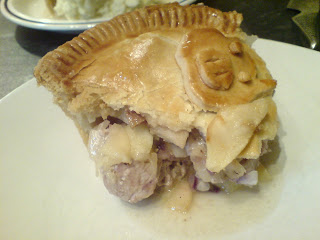
To make the filling you need to prepare your pork – you need 2 pounds of boned pork loin. Cut off the rind and trim away the fat with a sharp knife, then slice the loin and chop into chunks. Next peel, core and slice around 12 ounces of Cox’s orange pippins. Then mix 8 ounces of chopped onion together with 4 chopped rashers of cured, unsmoked bacon. Now layer the ingredients in the pie dish: half of the pork, then half of the apples, scatter them with some brown sugar and then sprinkle over half of the onion-bacon mixture. Season each layer with salt and pepper plus some grated nutmeg. Repeat with the remainder in the same fashion. Dot the top with around 2 ounces of butter and then pour on ¼ pint of dry cider. Cover with the remaining pastry sealing and glazing it with beaten egg. Make some fancy pastry decorations if you fancy. Bake for 20 minutes at 220°C, and then turn the oven down to 160°C for a further 45 minutes. Jane doesn’t indicate what to serve with it, but I went with mustard mash and some asparagus.

Check out the arts & crafts spectacular atop the pie!

Oink!

#156 Cheshire Pork and Apple Pie – after much deliberation on this one, I give it 5/10. I think it was pretty average – I wasn’t sure about the amount of liquid in the pie, which after my efforts to prevent it, still made the pastry soggy. I think, it could be easily improved, however by making a roux with the butter and some extra flour and using the cider to make a sauce. I think it would have made this okay effort into a very hearty one that would stick to your ribs, as we say in Yorkshire!

#155 Welsh Rabbit (Rarebit)

Apparently it is incorrect to call a Welsh rabbit a rarebit, it is a “false etymological refinement”. There are, in fact, three types of rabbit: Welsh, English and Scottish. The Welsh is the classic, but I can’t find anywhere that states it was the original rabbit, though people assume it is. I suppose it’s one of those dishes that have just been around for a long, long time. Also I have no idea why they are called rabbits, but there are theories abound. One is that the Welsh peasants of yore were not allowed to eat rabbits caught in hunts by the nobles, so they substituted it for cheese (which has, of course, always been a popular staple in Wales). That’ll do me.

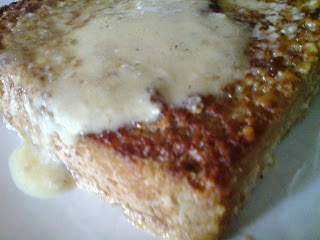
These days we are used to a very thick cheese topping piled on our toast for Welsh rabbit, but traditionally it was meant to be quite liquid so it soaked into the toast whilst it grilled.

For 2 slices of toast

Toast two thick slices of toast. Meanwhile gently melt 4 ounces of good grated Cheddar (or Lancashire or Double Gloucester) with 3 tablespoons of ale (or milk). Stir until the mixture becomes a thick, liquid cream. Add an ounce of butter to the melted cheese, alongside some salt and pepper and some mustard. Taste and add more seasoning or mustard if you like. Place the toast in a heat-proof dish and pour the cheese mixture over it. Place under a very hot grill until the cheese toasts nicely and develops brown spots.


#155 Welsh Rabbit – 6.5/10. It may not look as nice as a more modern Welsh rarebit, but how could toasted cheese and mustard possible taste bad? It was quite unusual having the runny cheese soaked up into the bread, so although it was delicious, I think I prefer the cheese to be stacked on top, with an egg yolk include plus a bit of Worcester sauce. That said, I did hit the spot! I think I could eat some form of cheese on toast every day if I let myself.

#154 Mrs Raffald’s Bacon and Egg Pie

I’ve cooked some recipes by Elizabeth Raffald before and they’ve come out well each time – there’s a potted history of her life in Salford in Greater Manchester in this earlier post. It comes from her book The Experienced Housekeeper, and I must try and get hol of a copy (if it still exists)

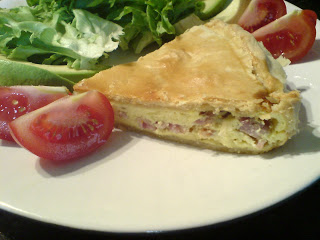
Technically this bacon and egg pie can be made any time of year, but I thought it seemed perfect for this time of year, served warm with a salad. The English bacon and egg pie seems to have gone out of favour, with people preferring quiches with roasted vegetables etc. added these days. Well, I love bacon and egg pie – in fact it was my second favourite school dinner (spam fritters came first) – and I think it deserves a come-back. It’s great for picnicking too, I reckon, due to its double pastry crust. I would advise to make this pie only with proper free-range farm eggs (surprisingly cheap in delis and fishmongers and the like) and good dry-cured bacon, it’s well worth spending a bit more money for what is, overall, a pretty cheap recipe.

Preheat the oven to 220°C. Place a baking tray on the shelf that the pie will be cooked on (important for later!)

Start off by making some shortcrust pastry with 8 ounces of flour (or more, or less, depending upon how thick you like it). Use two-thirds of it to line a flan dish; Griggers doesn’t give sizes, but an 8 inch one was perfect. Chop 8 ounces of smoked streaky bacon and sprinkle it over the pastry base. Next, whisk up 4 large (or 6 medium) eggs and pour out a little of the mixture into a ramekin for later. Beat the eggs along with ½ pint of crème fraiche and some salt and pepper. Pour the custard into the pie dish and roll out the remaining pastry to form a lid, using some of the reserved egg to glue it on. Trim excess pastry and paint more egg over the top so that it glazes nicely in the oven. Bake for 15 minutes on the hot baking tray (it stops the base from going soggy), then lower the heat to 170°C for another 30 minutes. Serve warm with a salad.


#154 Mrs Raffald’s Bacon and Egg Pie – 9/10. This did not disappoint! I must admit I was unsure about not blind baking the pastry first, but it worked a treat. The inclusion of crème fraiche over cream or milk plus good quality eggs and bacon are the key to it though – so don’t skimp. The pie was ten times better than the one I used to get at school, yet it brought back all the memories at the same time. Bring on the spam fritters!

#153 Mocha Cake

This recipe contains absolutely no seasonal produce whatsoever. I’m not even sure it has any nutritional value either. This bizarre pudding was greatly loved in the Grigson household, particularly at birthdays and it seems to be some odd post-war version of a tiramisu: fresh coffee replaced by instant (fine by me), cream and cream cheese replaced by butter, sugar and ground almonds, and coffee liqueur replaced with sherry. It harks back, I think, to World War II where ‘mock’ foods were commonly made, e.g. mock cream, mock apricot tart, mock mayonnaise. They usually involved whipped margarine or lard. I know the apricot tart used carrots as its substitute.

Jane Grigson also mentions how good the French are (were?) at coming up with new and exciting puddings using boudoir biscuits. However, this one’s not French, it’s English, and was originally published in the Daily Telegraph. Alarm bells should have started ringing at that point…

Makes enough for 8–10 people:

Begin by creaming together 4 ounces of lightly salted butter with 4 ounces of vanilla sugar, once fluffy, beat in a large egg yolk. Next, measure out ¼ pint of milk and 4 ounces of ground almonds. Incorporate these into the creamed butter and sugar by adding alternately, a little at a time. Now slake a generous teaspoon of instant coffee in 2 teaspoons of boiling water and mix that in. Give it a taste – add more coffee if you like.

Now pour another ¼ pint of milk into a bowl along with a glass of dry sherry. Dip boudoir biscuits in the milk, but don’t let them soak, and arrange them in the bottom of a shallow oblong or oval dish. Now spread a quarter of the almond mixture over those. Repeat so that you have a total of 4 biscuit layers and 4 creamy layers. Make sure that you put cream over the sides so that all biscuits are covered. Cover with toasted slivered almonds and glace fruits if you like.

It’s hard to believe, but this tasted worse than it looked

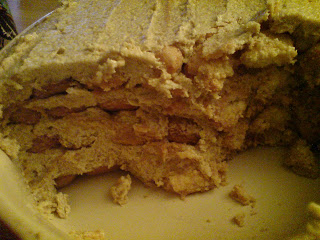
#153 Mocha Cake – 2/10. Not precisely inedible, but just so unbelievably sweet and sickly. I have no idea why the Grigson clan like this pudding so much. There amount of sugar put my teeth on edge, and I may have woken up the next morning diabetic. The pudding was left out for a few days and was still okay to eat (it was slightly better in fact as the biscuits had gone soggier), no fly or microbe seemed to have touched it. I think that it may remain perfectly preserved for ever more due to its humongous sugar content.

Flaming June

Well May seemed to fly by in a hazy blur, I’m surprised I got so many recipes done and typed-up for the blog (though there is one pending, and it’s very special). I was pretty pleased that managed to stick with seasonal produce. I’ve found – or should I say, Butters has found – a very good seasonal guide: The River Cottage Seasonal Food Guide. If you don’t know anything about River Cottage, then look at their site. Headed by Hugh Fearnley-Whittingstall, they are championing self-sufficiency on whatever scale you can manage. The good thing is that their guide includes wild food. Anyways, here’s the list for flaming June – again, not all appear in English Food, but all is here for completeness:

Vegetables:
Asparagus, broad beans, carrots, cauliflower, lettuce, peas (including sugar snap, purslane, radishes, rocket, sorrel, watercress.

Fruit:
Cherries (European), gooseberries, rhubarb, strawberries.

Wild greens and herbs:
Broom buds, horseradish, sea spinach, wild fennel.

Wild flowers and fruits:
Elderflowers

Fungi and nuts:
Pignuts, St George’s mushrooms.

Fish and shellfish:
Black bream, spider crab, signal crayfish, cuttlefish, mackerel, pollack, salmon (wild), sea bass, sea trout, river trout.

Game:
Wood pigeon.

So that’s the list – I’ll see what I can do. The big highlights for me are gooseberries and strawberries. Keep an eye out for me folks for anything on the list you find, especially gooseberries since no bugger seems to sell them anymore!

#152 Glazed Turnips

To go with the glazed ham, Lady Grigson suggests glazed vegetables – glazed onions or turnips. I thought I’d do turnips as it has a recipe in its own right in English Food. It’s very easy and will go with any roast meat. Grigson suggests eating it with duck as well as ham.

Peel 2 pounds of young summer turnips – don’t go for the big ones, they are fit only for cattle, apparently! Cut them into 1 centimetre dice (about 1/3 of an inch) and blanche them in boiling water for 5 minutes, after which they should be just tender. Once done, drain them and add them to a pan that already hot and contain 2 ounces of butter. Toss the turnips over in the butter and then add a tablespoon of sugar. Cook on a moderate heat until they begin to caramelise. Sprinkle in some chopped parsley, give them a final stir and serve. Couldn’t be easier.


#152 Glazed Turnips – 5.5/10. I find it hard to get too excited about turnips; I’m a swede man myself. That said, I think this is the best method for eating them as a vegetable in their own right, and they certainly went very well with the ham. So overall, good, but there are better vegetables out there that don’t need to be played around with to make nice!

#151 To Cook Salt Pork or Hams: Part 1 – To Eat Hot

After a 5 day wait, the pork I had put in the brine tub was ready for cooking. Jane outlines three different ways to cook your salt pork or ham if you want to serve it hot, but they all start with the same process: simmering in water with stock vegetables.

The first thing to do is to rinse your joint and weight it on some scales. Place the joint in a heavy casserole or stockpot, cover it with cool water and let it come to a boil slowly. Let it simmer for 5 minutes and taste the water – if it’s too salty throw the water away and start again (though it was fine when I tasted mine). For hams up to 4 pounds (2 kilos), cook for 30 minutes to the pound (1 hour to the kilo) plus an extra 30 minutes. However, this can be reduced if the joint is slim. To improve the flavour of the ham, add some stock vegetables: carrot, onion, leek, turnip, that kind of thing. They also flavour the stock with which delicious soups can be made – like this one.

It now depends on how you want to serve your ham:
1. Simply boiled – easy-peasy! Serve it with whatever vegetables or salad you like.

2. Encased in pastry – yes, you heard correctly! Remove before the final hour; encase it in thick pastry, glaze with egg and bake in a moderate-hot oven for an hour.

3. Glaze it. This the one I went for. Remove the ham half an hour before the end of cooking and remove the skin. Criss-cross the fat with a sharp knife and stud the crosses with cloves. Then make a glaze:

Sorry about the shit picture – I’m sure I took a better one than this!

Mix together a tablespoon of French mustard, one of double cream and one of either brown sugar, marmalade or apricot jam (or anything else sweet you like), next mix in a teaspoon of ground cinnamon or cloves. Spread this mixture all over the fat. Place in a roasting tin, add a ladleful of the stock to the bottom to stop any glaze from catching if it falls, and bake for 30 minutes at 190°C. When done, remove and let it rest before carving.

To accompany it, make a sauce with the pan juices by boiling them up with some cream, white wine or fortified wine, depending on the glaze you used. I went for cream as I used dark brown sugar.

Serve with seasonal vegetables and glazed onions, Grigson says. However, she also says that glazed turnips go well too. So I made those, plus boiled potatoes and peas.

#151 – To Cook Salt Pork and Hams: Part 1 – To Eat Hot: 7/10. I really enjoyed this – the ham cure was beautifully seasoned and salty and the spiced sticky sugar glaze complimented it perfectly. It was a little dry though, but I have a feeling that I cooked a little too long in the stock though as it was a slim piece of meat. That said, it was still delicious and we all polished it off quick-smart. I think that with a bit of practise at this kind of thing, the scores will quickly creep up to the high 8s, 9s or 10s!

#150 How to Cure Meat in Brine

Well here we are – 150 recipes in. I didn’t realise I was at this milestone until yesterday – unfortunately it’s not some magnificent feast, in fact it’s really a recipe as such, and I can’t really give it a rating (at least not yet).

Jane Grigson has quite a few recipes that require salting and brining, so I thought I’d better start to get to grips with this completely ignored section of the book, by making roast ham from start to finish as the best way for me to get started, though I’ll discuss that in a separate post – this one is just concerned with brining generally.

I’ve been doing a bit of reading on the subject of brining and it seems a bit of a lost art – there’s not much information about the history of it or how to do your own curing by the method. Obviously it’s gone out of favour to some degree because it is a method of preservation first and foremost, and now with frozen and refrigerated meats on tap these days we don’t have to do such things. However, brining also lends good flavour – we all like good ham, gammon or salt beef – so you would think it popular (seeing as it’s easy too). The thing is that it is time-consuming, and we can all just pick some up ready brined or ready roasted meat, but one thing I read was that for many wet-cured meats, the wet-cure part of the process is missed out! These days they are cured with nitrating bacteria – nitrates help preserve things – resulting a lack of flavour. I’m certainly not insinuating that this method is ubiquitous, but I reckon most supermarkets (and many butchers) use it.

Brine contains three magic ingredients that help preserve meat: salt, sugar and saltpetre. The first two do so because they are in huge quantities in the brine, and can affect the normal osmotic pressures of cells – both animal and microbe. Salts and sugar enter the cells, and water rushes out in an attempt to equal the concentrations inside and outside of the cells. This results in the death of the microbes and the preservation of the meat. Saltpetre (or potassium nitrate) is antibacterial and also gives the meat a pleasing pink colour (it is what makes corned beef so pink, for example). Aside from these three ingredients there are several herbs and spices that improve the flavour of the meat.

FYI: In days of yore, saltpetre was produced by pouring stale urine to huge haystacks where it would drain and crystallise. Yum!!

To make the brine, start off by cleaning a tub or bucket with a close-fitting lid and a plate that will comfortably fit inside with soda crystals. I used a six litre Tupperware tub with a handle. Do not use a metal tub as it may react with the salt or saltpetre. Allow them to drip dry. Whilst you’re waiting for that, make the brine: To a large stockpot or similar add 5 pints of water, 12 ounces each of sea salt and brown sugar and an ounce of saltpetre. This is the basic mixture, but now you need some aromatics (all of which are optional): 1 level teaspoon of juniper berries, a small piece of grated nutmeg, a bay leaf, 3 sprigs of thyme, a level teaspoon of black peppercorns and 4 cloves, Grigson says, but anything you like in that goes with the meat you are brining. Bring to a rapid boil and skim off any scum should there be any. Allow to cool in the pot. Once cool, strain it into your cleaned tub. Place in the joint of meat and keep it submerged in the brine with the plate you washed earlier. Place in a cool cupboard or pantry – though don’t allow it to go below 4°C. The length of time it sits there now depends upon the type of meat and the reason you are brining it (see your recipe, or below, for guidelines). When it is done remove with some clean tongs.

The brine won’t last indefinitely – it may grow mould on it’s surface, which some people say just to skim off. The reason is; the amount of salt depletes every time you use it. For a corrective dose, boil 1 ¾ pints of water with 7 ounces each of salt and sugar and a heaped dessertspoon of juniper berries. Let it cool and add it to the skimmed brine. You could of course just make more from scratch.

Pork leg joint magically being tranfomed into ham

Brining times:
To convert shoulder or leg of pork into ham, or for pork loin: 3 to 10 days
Pig trotters and halved heads: 24 hours
Small tongues (e.g. pig): 36-48 hours
Large tongues (e.g. ox): 5 days
Duck (minus giblets): 36-48 hours
Beef silverside or brisket: 7-10 days
Lamb or mutton shoulder, leg and loin: 7-10 days.

The meat needs to be cooked by boiling – check the cooking water is not too salty after about 5 minutes cooking. If it is change the water and start again. If it’s okay, then add your stock vegetables or whatever the recipe requires.

However, if you are making a roast joint for Sunday lunch, try popping the joint in brine overnight to season it.

So there you have it – hopefully all works out and it doesn’t taste completely foul. My fingers are crossed that it ends up being worth the effort.

#149 Broad Town Mince Pie

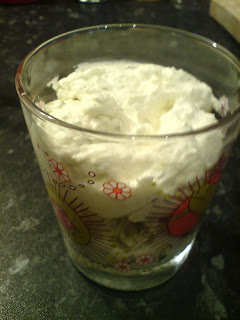
This recipe is not seasonal at all, but I remembered it whilst having a look through my cupboards and came across the last half jar of mincemeat I made at Christmas. After having a peek inside and a quick taste, a realised that everything was still perfectly preserved – in fact it was a lot nicer with much better developed flavours. I consulted the book and lo! and behold! I had all the ingredients to make it. If you have half a jar of mincemeat in your cupboard and don’t know what to do with it, make this easy pud. It is very Christmassy with first its layer of boozy mincemeat and then a layer sweet almonds. I can find no reference to what this pudding has to do with Broad Town.


Make a quantity of shortcrust pastry using 8 ounces of flour and both lard and butter (I am now a total covert to adding lard to pastry…unless I’m cooking for vegetarians that is). Line an 8 inch tart tin with two-thirds of it and spread the half-jar of mincemeat evenly over the pastry base. Now make the almond layer – mix together 4 ounces each of caster sugar and ground almonds, then an ounce of melted butter, 2 egg yolks (one if large) and 2 tablespoons of cream. Dollop and spread the mixture best you can and cover the pie with the remaining pastry, brush with egg white and sprinkle with sugar. Bake for 15 minutes at 220°C, then turn the oven down and bake for a further 30 minutes at 180-190°C. Serve it hot or warm with cream – or, if it is near Christmastime, then add some brandy butter.

#149 Broad Town Mince Pie – 6/10. Good, but rich, pudding that is useful for doing away with the endings of a jar of mincemeat. I actually found I enjoyed it a lot more once cold the next day. Not a bad dessert, but it didn’t get any juices flowing; and it’s certainly not better than a good old mince pie.