#307 Mashed Potato with Dulse

Nobody really eats dulse, or any other seaweed, in England these days, though they used to. It is a pity because I do like the stuff. It seems to be popular still in Ireland though; my friend Evelyn often brings back a bag of it whenever she visits home and I like to steal a few pieces.

Dulse had been eaten for over one thousand years in North-Western Europe, the ancient Celtic Warriors of old ate dulse as they were marching and during the seventeenth century, and British sailors used it to prevent scurvy (although it was actually originally used as an alternative to chewing tobacco).
Its popularity in Ireland as well as Scotland led to dulse becoming liked in the USA too when they immigrated over the pond, although none of my American friends seem to have heard of it.
The Dulse Gatherers by Willaim Marshall Brown, 1863-1936

The dulse industry has obviously died a bit of a death in England and the rest of the UK and Ireland compared to days of yore. Charles Dickens, writing in 1858, reminisces about childhood holidays in Aberdeen where there were often over a dozen ‘dulse-wives’ selling dulse:

[O]f all the figures on the Castlegate, none where more picturesque than the dulse-wives. They sat in a row on little wooden stools, with their wicker creels placed before them on the granite paving stones. Dressed in clean white mutches, or caps, with silk-hankerchiefs spread over their breasts, and blue stuff wrappers and petticoats, the ruddy and sonsie dulse-women looked the types of health and strength… Many a time, where my whole weekly income was a halfpenny, a Friday’s bawbee, I have expended it on dulse, in preference to apples, pears, blackberries, cranberries, strawberries, wild peas and sugar-sticks.
He recalls a conversation:
A young one would say: “Come to me, bonnie laddie, and I’ll gie ye mair for yer bawbee than any o’ them.”
An old one would say: “Come to me, bonnie laddie, and I’ll tell what like yer wife will be.”
“Yer dinner ken yerself.”
“Hoot aye – I ken brawly: she’ll hae a head and feet, an mou’, and eyen, and may be a nose, and will be as auld as me, if she lives as lang.”
“Aye: but ye gie me very little dulse for my bawbee.”
“Aye,” replies the honest woman, adding another handful, “but sic a wife is weel worth mair siller.”
The dulse-wives exploded into laughter, when the woman suggested some one like herself, as the ideal wife which youth is doomed always to pursue and never to attain.
Oh! those dulse-wives.

Anyway, enough prattle, time for the recipe:
It could be easier, really. First, scrub and then boil some potatoes in their skins without adding any salt. Remove the skins and mash them. Next, crumble the dried dulse and fry it in olive oil – you’ll need a quarter of an ounce of dulse for every pound of potatoes used. This takes just a few seconds. Add the oil and dulse to the spuds and mix, mashing in some extra olive oil if need be.
Serve with lamb (as I did), beef, chicken or fish.
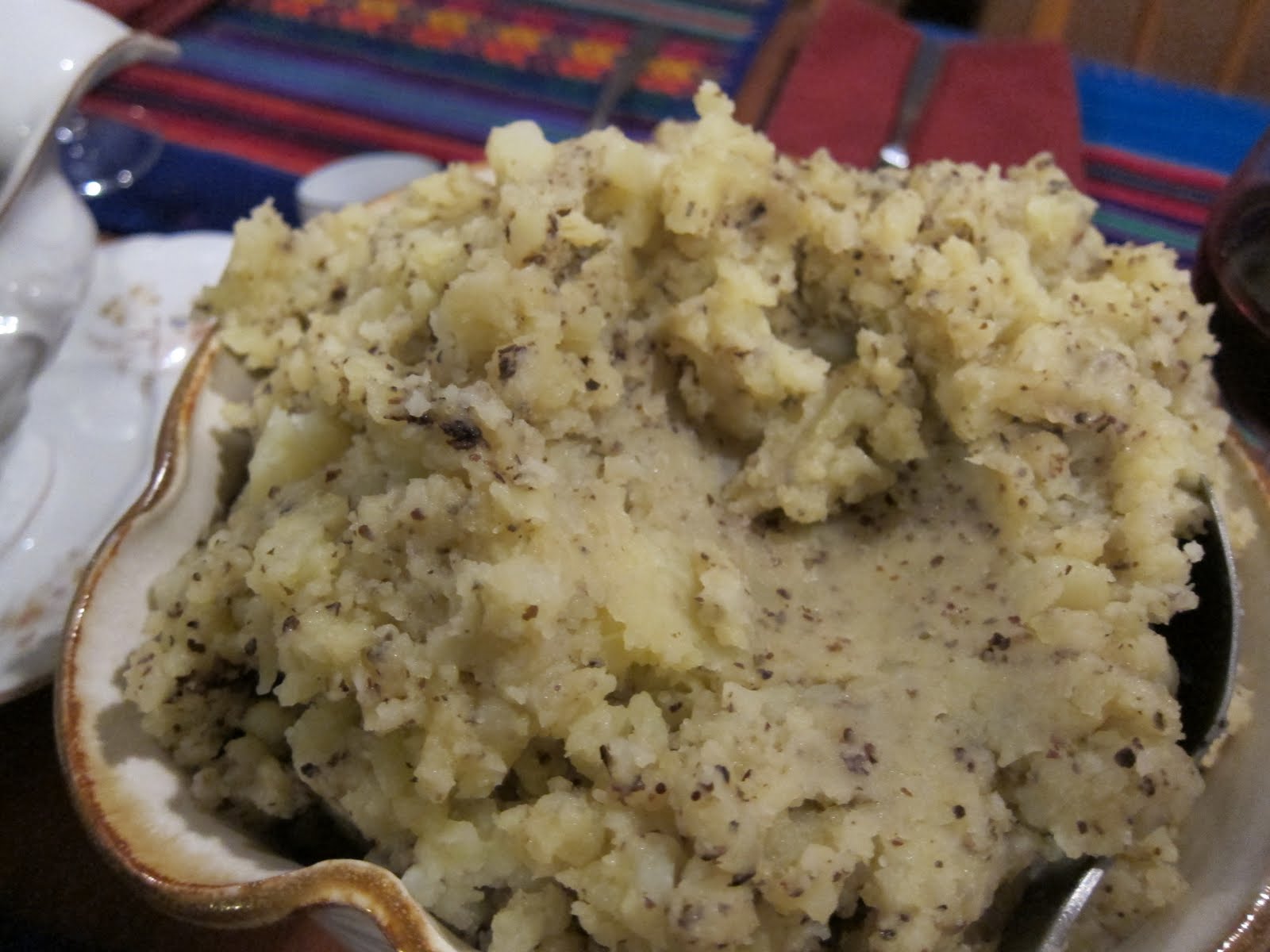
#307 Mashed Potato with Dulse. Well this was good mash, but there wasn’t much flavour of dulse in there. It did give the potatoes an attractive green colour though. I thought it strange that the recipe asked for olive oil rather than butter – olive oil was not used that much when English Food was first written in 1974. It would have been most likely found in chemist’s shops, where it was used to remove ear wax. 5/10

#295 Purée of Dried Peas with Green Peppercorns

A rather upmarket version of that Northern English speciality, mushy peas. There is an infamous incident of the MP (now Lord!) Peter Mandelson visiting his constituency canvassing for votes, where he walked into a fish and chip shop and asked for ‘some of that guacamole’. The ponce. Unfortunately, after a little research, I found on the website of that evil news rag, The Daily Mail, that it is in fact a myth and it ever happened. Shame. But why should the truth get in the way of a good story, eh?

Peter Mandelson getting hit by what appears to be a purée of dried peas

The pea has been popular in Europe for donkeys years – settlements in France dating back to the third millennium BC have been discovered with the remains of pea pods. Dried peas, go back to Roman times; in fact, they were preferred over fresh. Also, luckily for us, the pea became a very common garden vegetable, and Gregor Mendel, the garden-loving Austrian monk, spotted patterns in the variation between pea plants he was breeding and came up with the first theory of genetics. He wasn’t recognised during his lifetime. So often is the way.

Gregor Mendel, Father of Genetics and pea-fancier

This recipe isn’t really to go with your fish and chips (though omit the peppercorns and it will be perfect), it is to go with duck and pork. I took this as an excuse to get a nice rib roasting joint from Harrison Hog Farms, a great farm here in Houston that really looks after its very English-looking pig breeds. So if you go to a Houston farmer’s market andyou spot them, give them a try as their pork is excellent.

What makes this recipe posh is the pickled green peppercorns. They’re not something that you’ll find in the supermarket, but they’re pretty easy to get hold of in delicatessens.

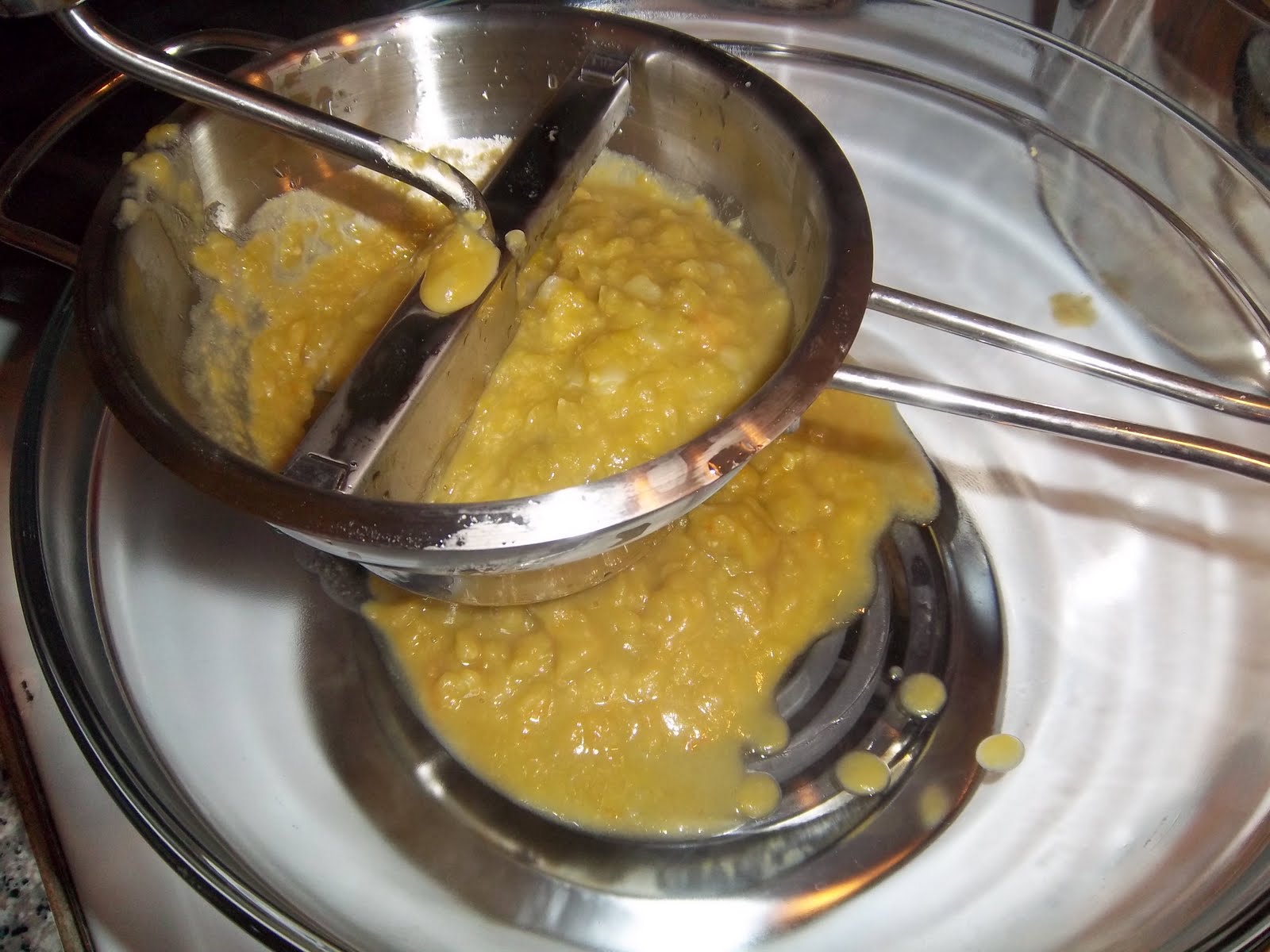
Right then, to make this purée, put a pound of dried split peas in a large saucepan along with a chopped carrot and a chopped onion plus a bouquet garni (I went for parsley, bay leaves, sage leaves, thyme and rosemary in mine). Cover well with water, bring to a boil and cover and simmer until cooked – around 45 minutes. On no account add salt, it makes the peas hard and they won’t cook. This is speaking from personal experience. Fish out the bouquet garni and pass the peas through a mouli-legumes in a bowl (you can use a potato-masher if you want but a blender would make it far too smooth).

Now stir in a large knob of butter and season well with salt (at least a teaspoon) and some sugar. Lastly, mix in a tablespoon of pickled green peppercorns as well as one to two teaspoons of the juice from the can. Easy.

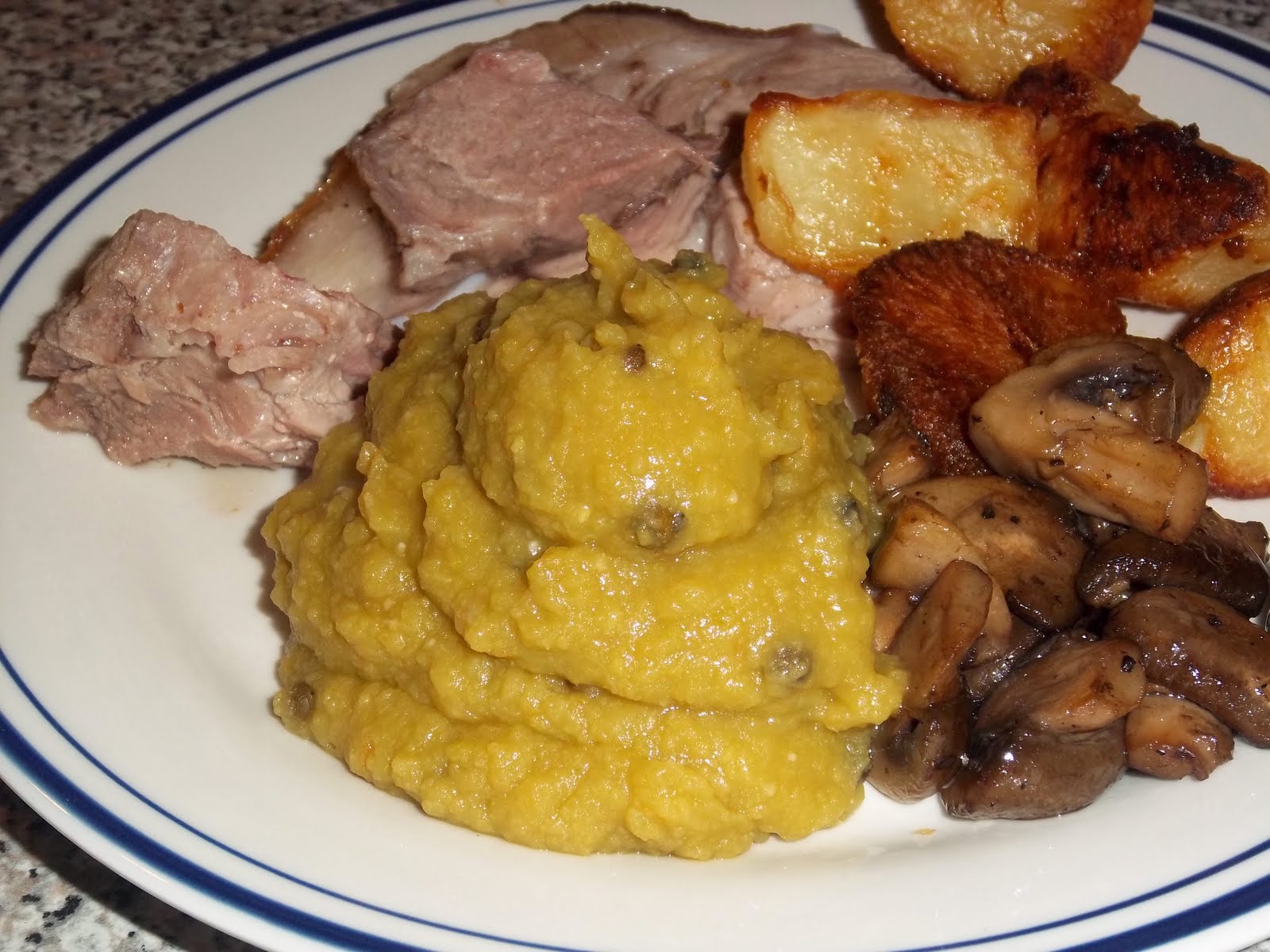
#295 Purée of Dried Peas with Green Peppercorns. This one of the best recipes from the Vegetables chapter of the book. Really delicious and much better than the bought mushy peas you find in cans, and – dare I say it – the chippy! The addition of the bouquet garni and the simple stock veg really lifted it, and the pickled peppercorns were great, little exploding pods of subtle spiciness that transformed a vegetable side dish into the main event. 9/10.

#288 Leek Pie

I beseech you heartily, scurvy, lousy knave, at my desires, and my requests, and my petitions, to eat, look you, this leek: because, look you, you do not love it, nor your affections and your appetites and your digestions doo’s not agree with it, I would desire you to eat it….if you can mock a leek, you can eat a leek.

William Shakespeare, Henry V

 I like to get a bit of Shakespeare in whenever I can.

There’ll be no mocking of leeks on this blog. They are one of my favourites, though I don’t really eat them that often. The main reason, I think, is that no matter how much I wash them before preparing them, there is always some grit – invisible to the naked eye – that ends up in the final dish. I’m always so thorough too. Hey-ho, a bit of dirt is fine. In fact there’s an old Yorkshire saying: tha’s got to eat a peck o’muck before you die. Indeed.

Here’s a pie that sounds great – leeks, cream and bacon in pastry. Nothing can be bad about this one, with or without grit.

I assumed that this recipe was a Welsh one, but no, variations of it are found across Britain and France. Grigson doesn’t say that much about it, other than in France onion and flour are added to the filling, so technically this is the French version, but let’s not split hairs.

To make the pie, you’ll need to buy or make some shortcrust or puff pastry. I made some shortcrust. You’ll need to make a shortcrust that uses 10 ounces of flour and five of fat; I did eight and four respectively and only just managed to get away with it.

To make the filling, chop and onion and cook it in an ounce of butter until soft and golden. Meanwhile, trim, wash and chop a pound of leeks. Slice the green part thinly, as it is quite tough and takes longer to cook than the white part. Add the leeks to the onions along with two ounces more of butter. Season with salt and pepper. It’s important to add the salt at this point as it draws the liquid from the leeks, concentrating their flavour.

When softened and mushy, turn off the heat and add four ounces of chopped back bacon. Now measure four ounces of double or clotted cream – weight, not volume – and beat in a teaspoon of flour. Pour this over the leeks and bacon and allow to cool.


Roll out two thirds of your pastry and line a nine inch tart tin. Add the filling and roll out a lid with the remaining pastry, using beaten egg as a glue. Crimp the edges and ‘decorate in restrained manner’. I just made some fluting around the edge. Brush with egg and make a hole in the centre so the steam can escape. Bake for 15 minutes at 220°C (425°F) or until the pastry is nice and brown, then turn the heat down to 180°C (350°F) for another twenty to thirty minutes.


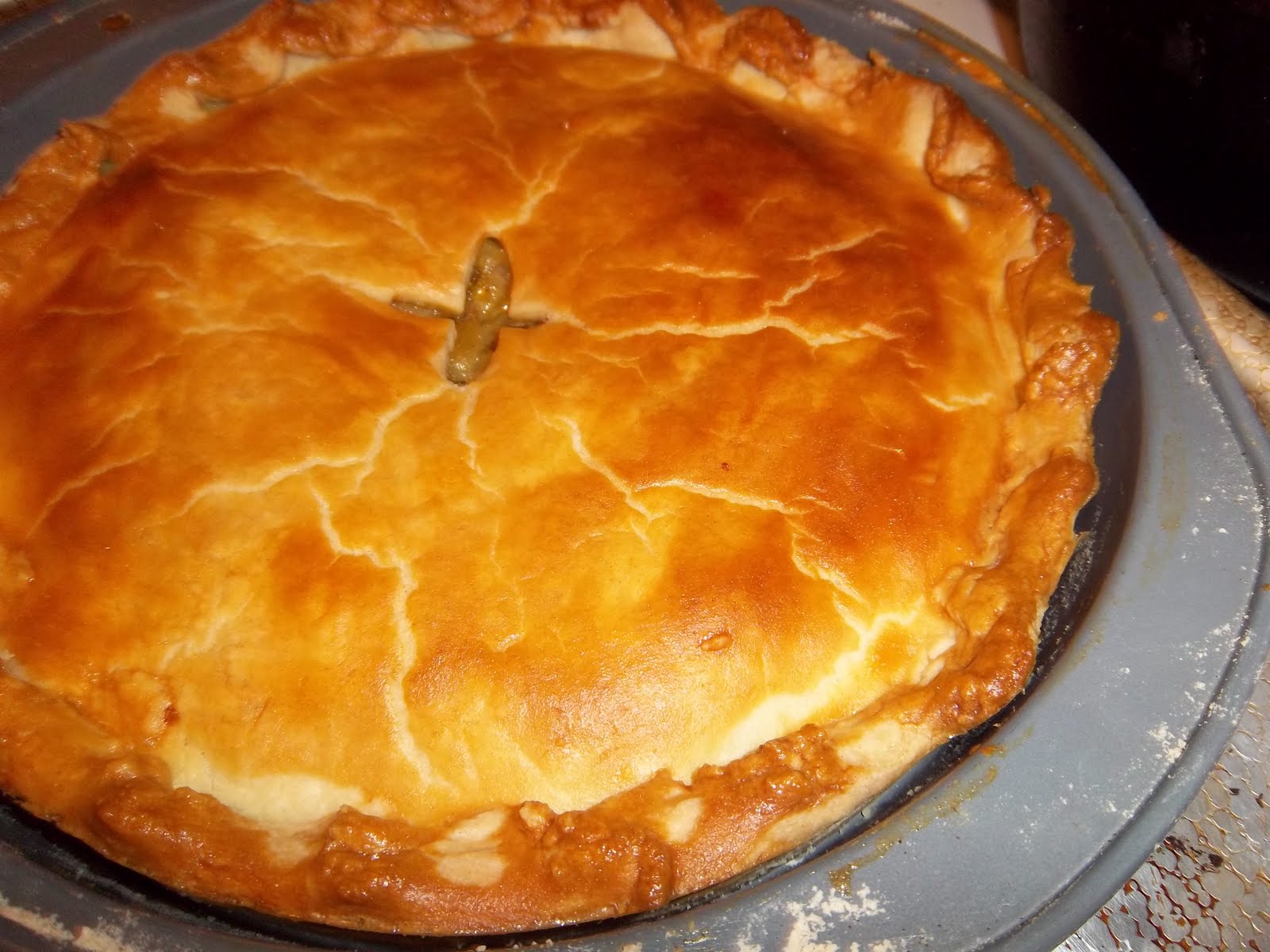
#288 Leek Pie. What a great pie! The filling became a rich and delicious mush with subtle onion and leek flavour. The secret to this – as with so many of the best in English Food – is the that are just a few ingredients cooked slowly over a low heat with a good amount of seasoning. It was just as delicious cold as it was hot. One of the best recipes thus far I’d say. Go and cook it! 9.5/10.


#285 Creamed Parsnips

Parsnips don’t seem to be that popular in America, at least compared to Britain. In the USA, carrots and sweet potatoes are much more favoured as a sweet-starchy vegetable. In Europe, parsnips have been cultivated since Roman times, and although in the UK, the wild parsnip is quite a common plant, it has rather pathetic roots,and isn’t worthwhile eating. The parsnips eaten in Britain are therefore not indigenous. They were probably brought over around AD55 during the Roman invasion. The Romans used parsnips in desserts because of their sweet and chestnutty flavour, weirdly, parsnips are used in a cake in English Food that is based upon the recipe for an American carrot cake. Ah, the circle of life.
The European wild parsnip

Creamed parsnips can be served alongside some roast meat, or on their own with toast or in pastry cases as a supper dish, says Griggers. I had them for supper.
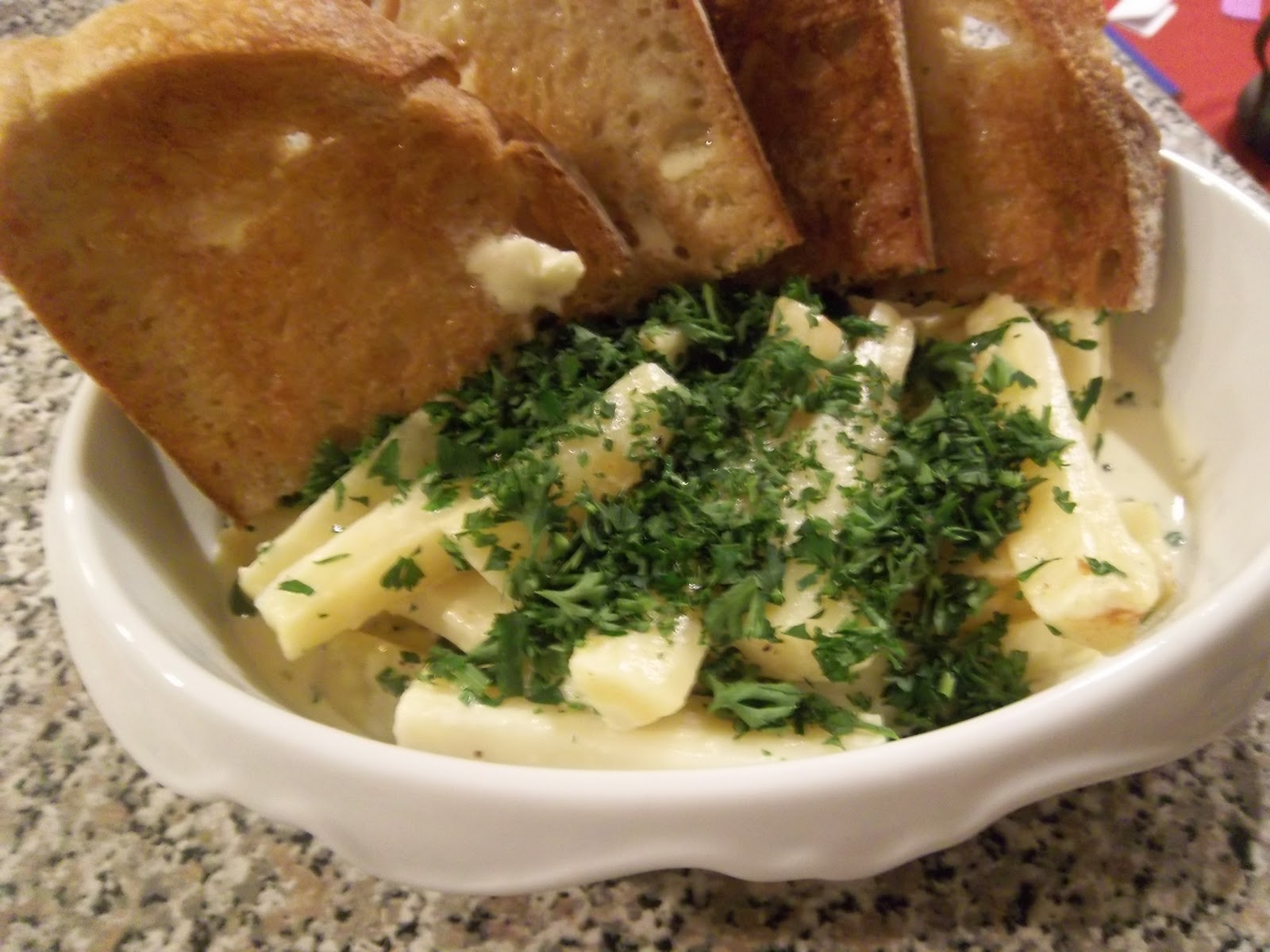
Peel, top, tail and quarter a pound and-a-half of parsnips. Remove any woody parts, if the parsnips are large and cut them into batons. Plunge them into boiling, salted water and allow to cook until tender – between five and ten minutes, depending upon the size of you batons. Drain and return to the heat. Stir in a quarter of a pint of double cream (or half-and half double and single). Heat through, season with salt and pepper and stir in some finely chopped parsley. Serve hot.
#285 Creamed Parsnips. Ah the simple things are the best, innit? These were delicious and not at all heavy – the parsley lifted the whole thing, preventing the dish becoming sickly. The creamy sauce and the carby parsnips themselves made the supper feel quite substantial. A hidden, simple gem. 8/10.


#263 Stuffed Tomatoes

A quickie, this one…
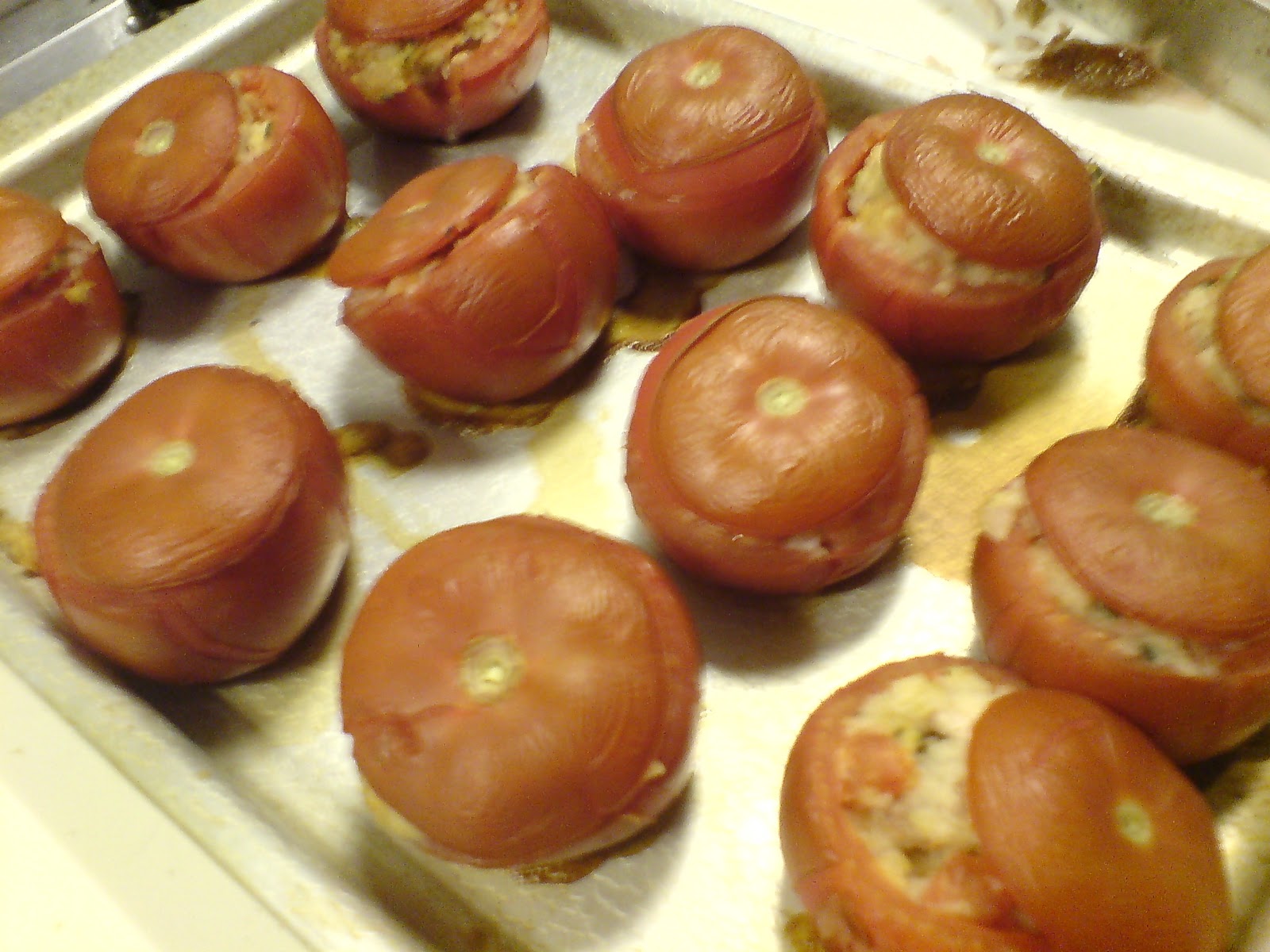
So as I mentioned in my last post I made a couple of vegetable sides from English Food for Joan and Dave’s Thanksgiving party. That is not to say that these recipes from the Vegetables chapter are in any way vegetarian and these stuffed tomatoes are no exception. They are pretty easy to do aswell. Take twelve tomatoes and cut off their tops. Scoop out their centres and chop them up, removing any seeds first. Turn the tomatoes upside down to drain. Meanwhile, make a batch of herb stuffing – I’ve made it before as a recipe in its own right (get it here) and add the chopped centres to the mixture. Spoon them into the tomatoes and replace their little hats. Place on a baking sheet cook alongside whatever you might be having for dinner. In our case it was, of course, turkey. The temperature doesn’t really matter; just don’t leave them in so long that they just collapse. Griggers reckons that they would go well with lamb too.
#263 Stuffed Tomatoes. I liked these, though I’m not sure if everyone agreed. The stuffing was good though wasn’t as flavoursome as the last time I made it, but it was still good and did compliment the tomatoes. The tomatoes here are very good though – they actually taste of tomatoes and aren’t just the green chlorosed lumps we typically find in British supermarkets. 6/10.

#262 Chestnuts as a Vegetable

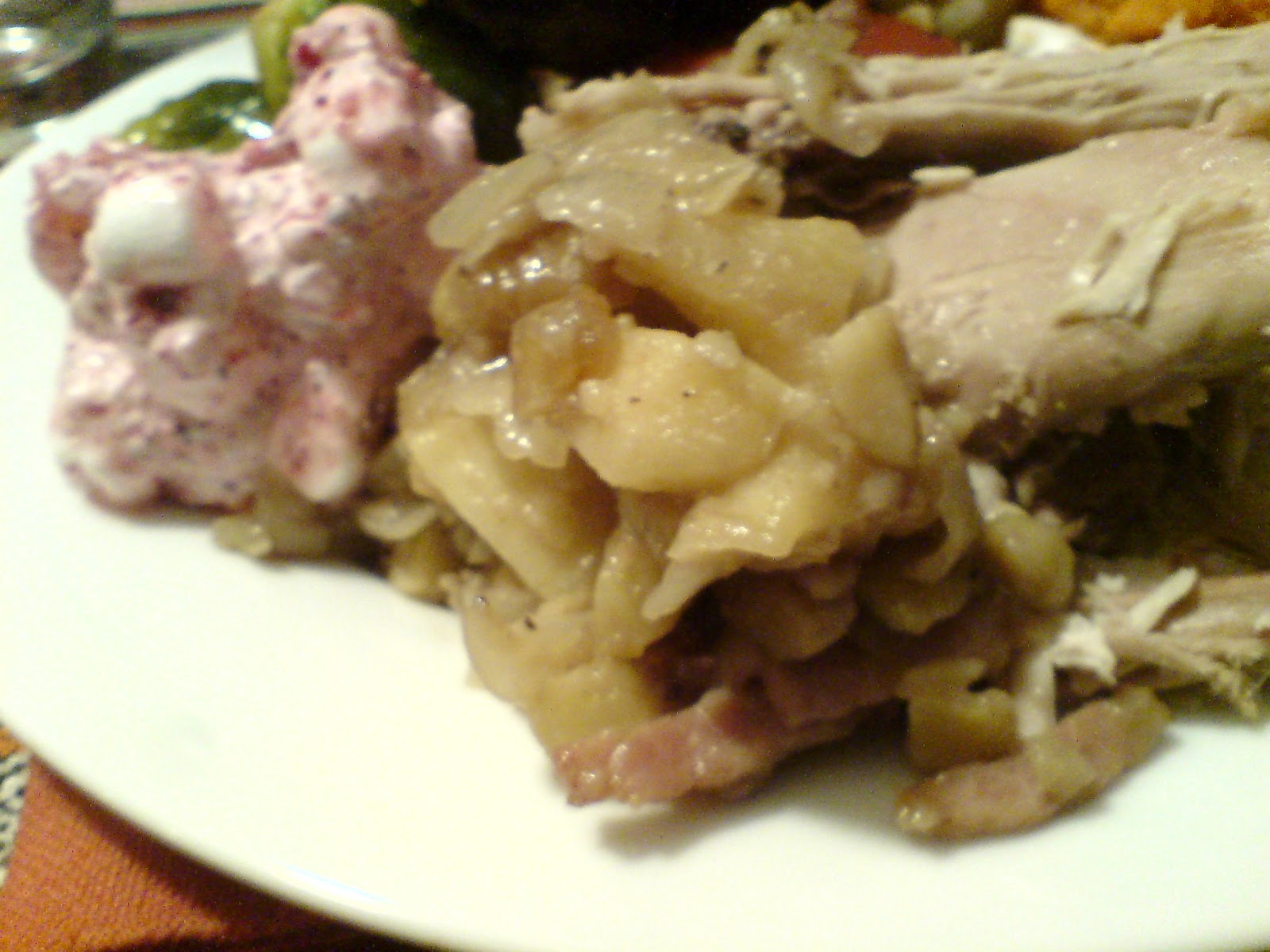
Yesterday was Thanksgiving Day here in the US and Joan and Dave (my bosses) very kindly invited round to their house for the feast (check out Joan’s blog here). As it is was my first ever Thanksgiving dinner I was very excited about the fayre that would be there to feast upon. I was not disappointed: roast turkey and cranberries I knew would feature, but there was also loads of other New World things too: mashed potatoes, sweet potatoes plus exciting stuffings and good old Brussels sprouts. In fact it wasn’t that far removed from the British Christmas Dinner, so I was on reasonably familiar territory. The only exception being the mashed sweet potato with melted marshmallows on the top: I am not used to this merging of the sweet and savory in such brazen fashion!
Attending the dinner gave me the perfect  excuse to cook some of the vegetable sides from the Vegetable chapter; not something I often do when I’m cooking a meal from the book as they are sometimes complicated and add rather a lot more stress to the occasion.
Chestnuts as a Vegetable seemed the appropriate choice for the time of year, plus I could make it in advance the night before.  Griggers doesn’t mention anything about the recipe: just a list of ingredients and a method. I assume it is there because we don’t use them as a vegetable anymore and expect she wants us to start doing it again.  But should we?
You will need a pound of chestnuts for this recipe. Begin by nicking each chestnut end to end and plunge them into boiling water for 10 minutes. Drain them and quickly peel them by holding one in a dishcloth or oven glove and using your other hand, remove the shell and skin with a small knife. This is easier said than done; the skin came off just where skin meets back-of-thumbnail. It hurt. I would take Joan’s advice and buy chestnuts that have already been peeled. Anyways, next gently fry a chopped onion and a finely chopped clove of garlic in two ounces of butter, cover the pan and cook until they are soft and transparent. Meanwhile, cut two ounces of bacon rashers cut into strips – use any bacon you like; I used maple-smoked. Also, peel, core and chop two Cox’s pippin apples (these are not around in the US, so I used Granny Smiths as they seemed appropriately tart). Try to not allow anything to burn or brown. Turn up the heat in the pan and add the bacon, a couple of minutes later add the apple. Fry until they soften. Finally chop the chestnuts into chunky pieces and add them along with a good seasoning of salt and pepper. Cook until the mixture begins to meld together.
You don’t have to serve this with just turkey – it will go well with pork, salt pork or veal.
#262 Chestnuts as a Vegetable. I wasn’t sure about this at first, but I decided in the end that I liked it. I was unsure because I tasted it on its own. However, when it was eaten with some turkey and gravy etc, it really worked. We may not use them as a vegetable anymore, I suspect because the preparation is so tricky, time-consuming and sore! But now that tinned or vacuum-packed chestnuts are easy to get, they really should be brought back – they are part of our food heritage after all. Sweet chestnuts have been actively cultivated since Roman times and can be found not just peeled, but candied and ground into flour. They are absolutely delicious roasted under the grill or by the fire, but let’s try something different this year, hm? 7.5/10

#261 Parsnip and Shellfish Salad

Don’t let it ever be said that I don’t like a warm salad. Though I rarely make them, I don’t know why. Britain is not big on its salads really, though America definitely knows what it’s doing. This sort of food is perfect for this time of year – light and fresh, yet warming. Grigson doesn’t mention where this recipe comes from or how old it is and there’s nothing on the Internet regarding it in its historical sense.
This salad is pretty easy to do: quarter some parsnips, cut them into chunky spears and simmer in salted water for around five minutes until tender. Drain. Stir in some salad dressing (I did the one from English Food, though exchanged the sugar for honey). Add some shellfish (prawns or lobster) or some chunky meaty white fish like monkfish – I went for the prawns as I had them already. Arrange some lettuce on a plate and add the parsnips and shellfish. I used an iceberg lettuce, which has developed a stigma for being a bit crap, but I really like them; sweet and crisp (and cheap!). Scatter with chopped chives and parsley.
#261 Parsnip and Shellfish Salad. This was an excellent and easy to prepare salad. The warm parsnips acted like little sponges to the salad dressing and the sweet prawns complimented the earthy flavour of the parsnips. A very good 10 minute dinner. 8/10.

#256 Buttered Squashes

An old-fashioned recipe this one and it comes from a book called The Accomplisht Cook, or the Art and Mystery of Cooking by Robert May. It was published in 1660. To put this in context, King Charles II was on the throne after the country had briefly been de-royalled by the big old puritan misery-guts Oliver Cromwell.

Robert May himself was from a family of chefs, but obviously wanted to tell the common man how to cook; at least via rich home owners. In those days, you see, the lady of the house would have presented the head cook/chef with such a book to use. Assuming they could read. Read more about him and his book here.

Anyways, this is a very good recipe to do in the autumn because a large variety of squashes are available. This recipe can be used with ‘gourds, pompions, cucumbers and musk melons’, i.e. any soft or hard squash. The squashes are first baked in the oven at 190⁰C until tender; the length of time will depend upon the size of the squash. If the skin is very thick, it would be better to simmer it, says Griggers. I used some quite small squashes and decided to bake them.

Meanwhile prepare the stuffing for the squashes. You need to chop some onion and apples in the ratio of 1:2. The original recipe suggests using Cox’s Orange Pippins. These are not available so I used Granny Smith apples as they are quite tart. Place them in a casserole dish along with a decent knob (or knobs) of butter. Cover and bake in the oven alongside the squashes.

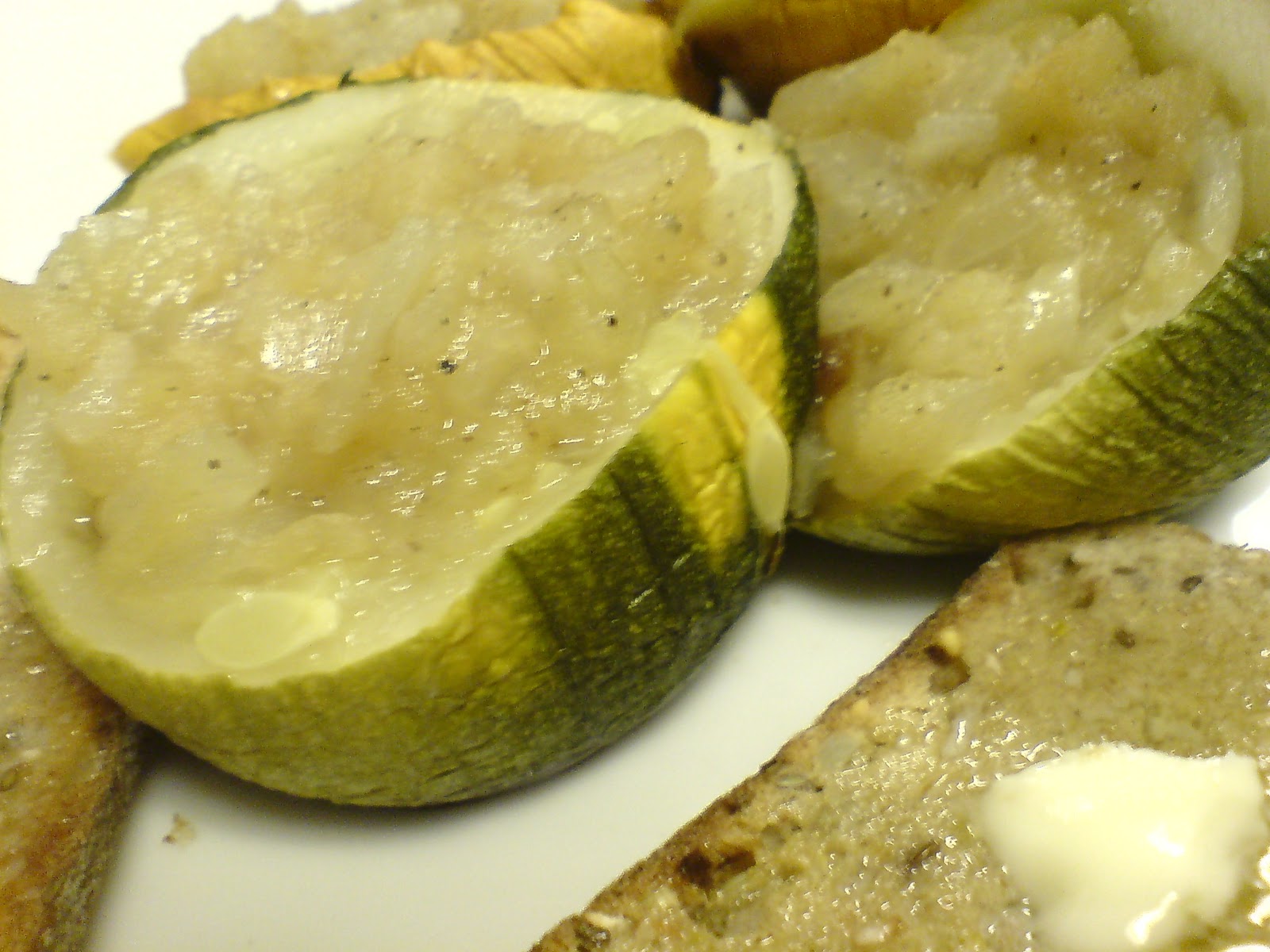
When the squashes are done, cut in half and scoop out the seeds and keep warm while you deal with the filling. Mash the apples and onions together and season with sugar, salt and black pepper. Fill the squash halves generously and return the whole thing to the oven for a short time to give it time to dry out a little. Serve with hot buttered toast.

#256 Buttered Squashes. I must admit I have been putting off many of the recipes in the Vegetables chapter because they seem too much of a faff to make and don’t necessarily look that tasty. This was one of them, but how wrong I was. The squashes were tender and slightly earthy in flavour which stood up very well against the sweet-sharp onion and apple filling. A big surprise that was a great supper dish, but would make a very nice first course or a good addition to some roast pork I reckon. 7/10

#220 Carrots in 1599

These days we take the humble carrot for granted and treat it as a bog-standard, perhaps boring, veg to have with our meat and two veg – particularly beef. In the Sixteenth Century, however, things were obviously very different for us commoners and carrots were a blessing. Europe in 1599 was ravaged with bubonic plague and many people had to live off their own land. Wheat was not something you can grow in large enough amounts to sustain one’s own family and the extent of the poverty in those times meant few could afford it. Therefore people took to growing root vegetables – and the carrot was very popular as it was relatively easy to grow. There is a species of wild carrot that grows in Britain and Europe, but the cultivated carrot actually most likely arrived from Afghanistan.

Drama King: Billy-Bobs Shakespeare

Just so you know (and to put things into a historical perspective), in 1599 Queen Elizabeth I was on the throne, the first performance of Julius Caesar by William Shakespeare went down well at the Globe Theatre in London and Oliver Cromwell – the future Lord Protector of England – was born.

A blast from the past? Carrots in 1599

For this entry, Jane recounts a section from the book Profitable Instructions for the Manuring, Sowing and planting of Kitchin Gardens by Richard Gardiner which was first published in 1499. He essentially makes suggestions as how to make good use of carrots: ‘carrots roots are boiled with [salted] beef…a few carrots do save one quarter of beef in the eating of whole beef…carrots of red colours are desired of many to make dainty salads…[they] make those pottage good, for the use of the common sort…carrots well boiled and buttered is a good dish for hungry or good stomachs’. Carrots also give ‘good nourishment to all people…therefore sow carrots in your gardens, and humbly praise God for them, as for a singular and great blessing’.

I particularly liked the phrase ‘carrots well boiled and buttered is a good dish for hungry or good stomachs’, so that is what I did to go with the jugged hare. It’s good to know that some things don’t change.

#220 Carrots in 1599. I’m not actually going to give a score for this as it’s not really a proper recipe (i.e. a total cop-out). However, I think it really highlights that we take much of our food for granted – not that there is anything wrong with that – and that people in other counties or times past view things in such a different and sometimes inspiring ways.

#196 Mange Tout Salad with Chicken Liver and Bacon

The starter to the dinner party. The problem with dinner parties is that unless you’re careful, you end up stressed out in the kitchen cooking away and not seeing or speaking to anyone. This warm salad seemed just the job, as long as everything was prepped beforehand; it takes only minutes to make. This recipe looked simple and very tasty indeed – anything with chicken livers and fried bread always gets my vote. I also like that in this recipe appears in the Vegetables chapter of the book!

FYI: although liver is both delicious and cheap – be warned of potential poisoning through an overdose of vitamin A. However, this only really applies to polar bear, seal and husky liver. But you have been warned, so don’t come crying to me when you’ve got serious hypervitaminosis.


This recipe serves four to six people:

Briefly boil 12 ounces of mange tout in salted water; just two minutes will do it. Don’t put a lid on (the same goes for any green vegetable) as it keeps them crisp and gives them a vibrant green colour. Drain them and keep them warm in a bowl in a low oven. Now cut six rashers of streaky bacon into strips and fry them in a little sunflower oil until crisp, remove, drain, add more oil, then fry 24 (ish; let’s no get too pernickety) bread cubes in the oil. When golden brown, drain and keep them and the bacon warm. Make a simple vinaigrette from some sunflower or hazelnut oil and some white wine vinegar. Use a ratio you prefer, though Griggers suggests 3:2 oil to vinegar. Stir this into the mange tout. Now fry the chicken livers: you need six – cube them and remove any gristly bits and gall bladders should there be any. Fry them quickly and briefly – they should be a little bit pink inside. Remove them from the heat. Carefully stir in the bacon and liver and serve straight away.

#196 Mange Tout Salad with Chicken Liver and Bacon. This was delicious. The salty and fatty bacon and rich metallic liver were perfectly balanced with the bland and sweet mange tout. The crispy croutons add extra textures too. I really love these simple recipes in the book (you’re not always sure which ones they are going to be). Minimum effort, maximum reward. Brilliant stuff 8.5/10