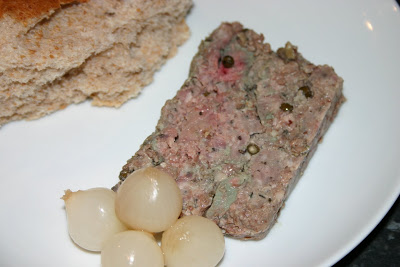
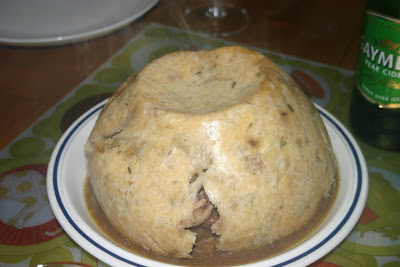
#322 To Make a Goose Pye

What do you get for the person who has everything at Christmas? A giant pie of course. This goose ‘pye’ consists of an ox tongue within a chicken within a goose within a hot-water crust, so it’s not for the faint-hearted.

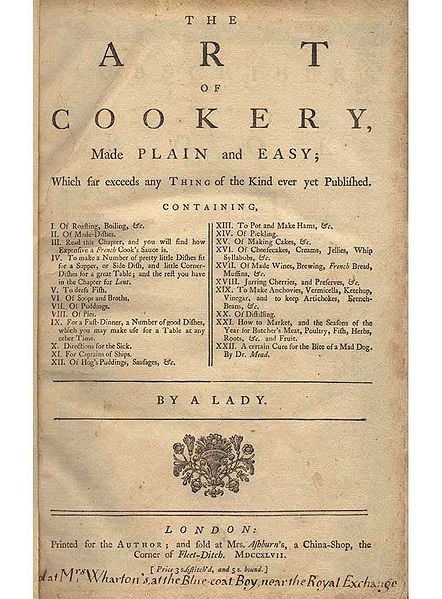
Great big pies like this were often given as gifts at Christmas time. The many meats were covered in a nice thick crust, not just because it tastes good, but also to help preserve and protect them – after all, these pyes were travelling by horse and carriage! These days, it is best as ‘a splendid centre-piece for a party’. Indeed, that the was the reason why I made it – my bosses Dave and Joan were hosting a Christmas party, and my fellow workmates are quite enthusiastic about the blog so I knew they’d all be up for this pye. Personally, I have always wanted to do this recipe – these crazy recipes are the reason why I love doing this blog. It comes from Hannah Glasse’s classic 1774 book Art of Cookery:

Half a peck of flour will make the walls of a goose pie…Raise your crust just big enough to hold a large goose; first have a pickled dried tongue boiled tender enough to peel, cut off the root, bone a goose and a large fowl; take half a quarter of an ounce of mace beat fine, a large teaspoon of beaten pepper, three teaspoons of salt; mix all together, season your goose and fowl with it, then lay the fowl in the goose, and the tongue in the fowl, and the goose in the same form as if whole. Put half a pound of butter on the top, and lay on the lid. This pie is delicious, either hot or cold, and will keep a great while. A slice of this pie cut down across makes a pretty little side-dish for supper.
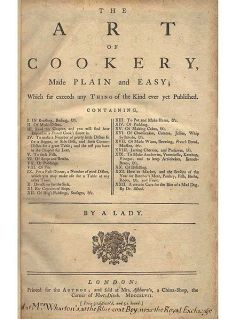
Griggers kindly converts all the quantities into modern-day terms – less flour can be used (unless you are having it sent somewhere by horse!) and birds are rather larger nowadays. Good old Griggers. It is certainly the most extravagant recipe I have done thus far and possibly the most complicated; the recipe itself is quite straight-forward, but it requires a boned goose and a boned chicken, something that I had to do myself. Would the effort be worth it..?

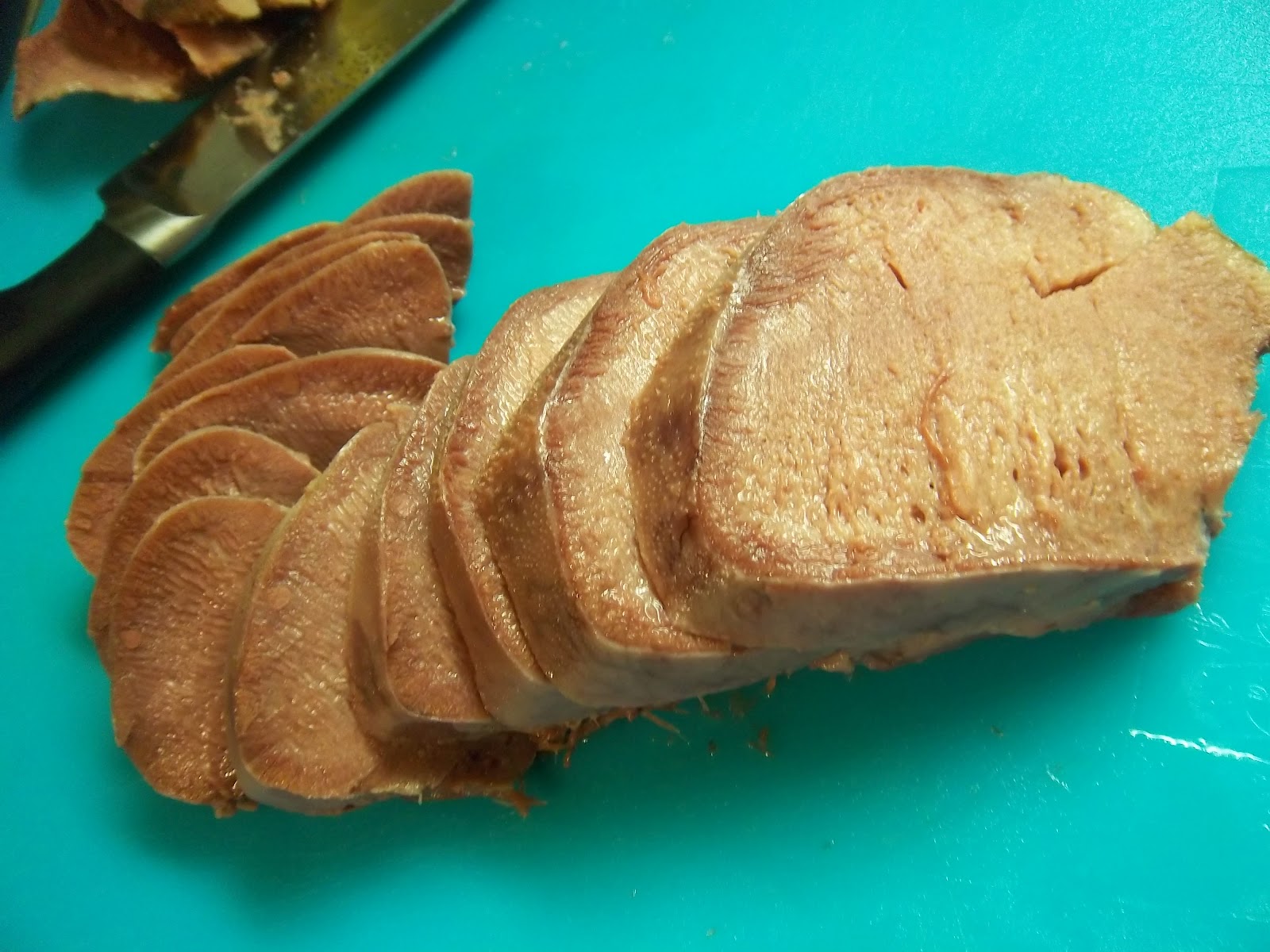
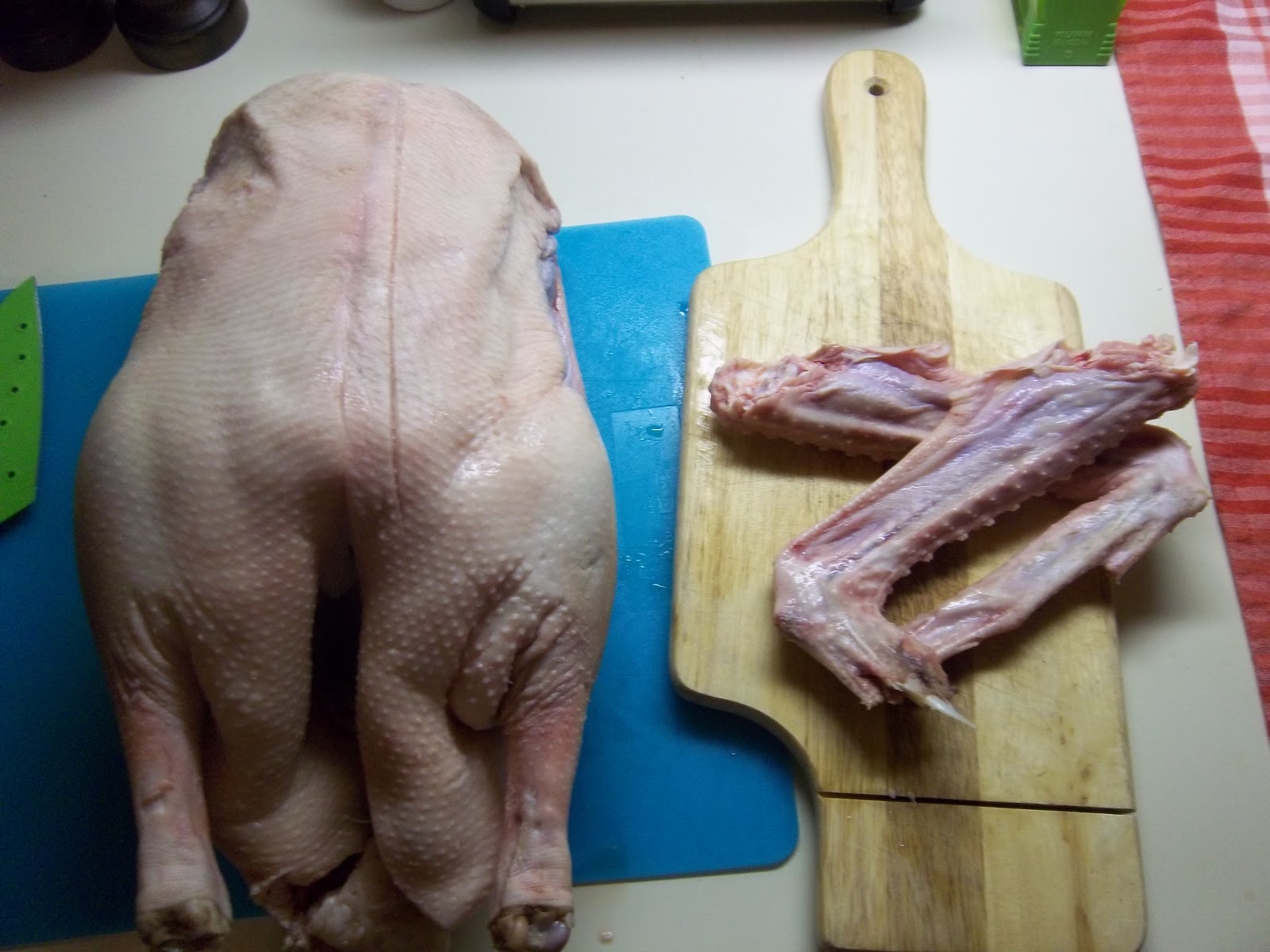
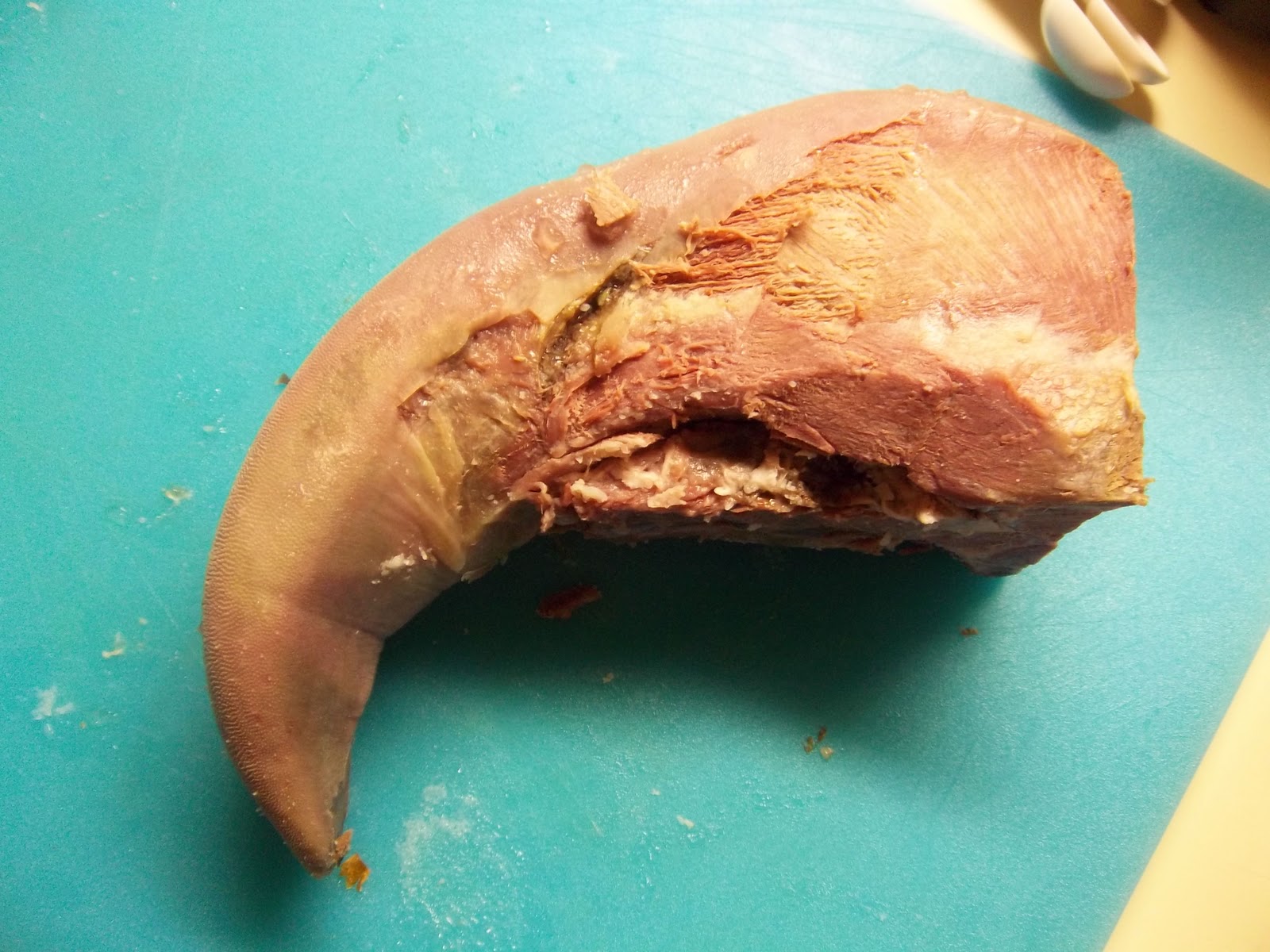
There is a certain amount of preparation required if you are to do this from scratch. The first thing is to pickle an ox tongue in brine (see here for instructions) and cook it (see the recipe here for making pressed tongue; there is no need to press it). You need 2 ½ pounds of cooked tongue, so start with one that weighs at least 3 pounds. Next is the birds: you need a 10 pound goose and a 5 pound chicken. If you can, ask the butcher to bone them for you, if that is not possible, try doing it yourself – all you need is a bit of patience and some good sharp knives. I followed the method on this website for boning a chicken, but had to change the instructions somewhat for the goose as it is much trickier than a little chicken. So here’s a little digression as I give you my version…

Boning a bird is actually quite easy – what you are essentially doing is undressing the meat from the skeleton of the fowl. As you can imagine, it is a little gory.

First thing to do is to cut off the wing-tips and then to peel the skin away from the shoulders and cut through the joints.

Next, pull on the wing bone and scrape the meat from it as you go, turning the wing inside out. Repeat with the other shoulder joint.
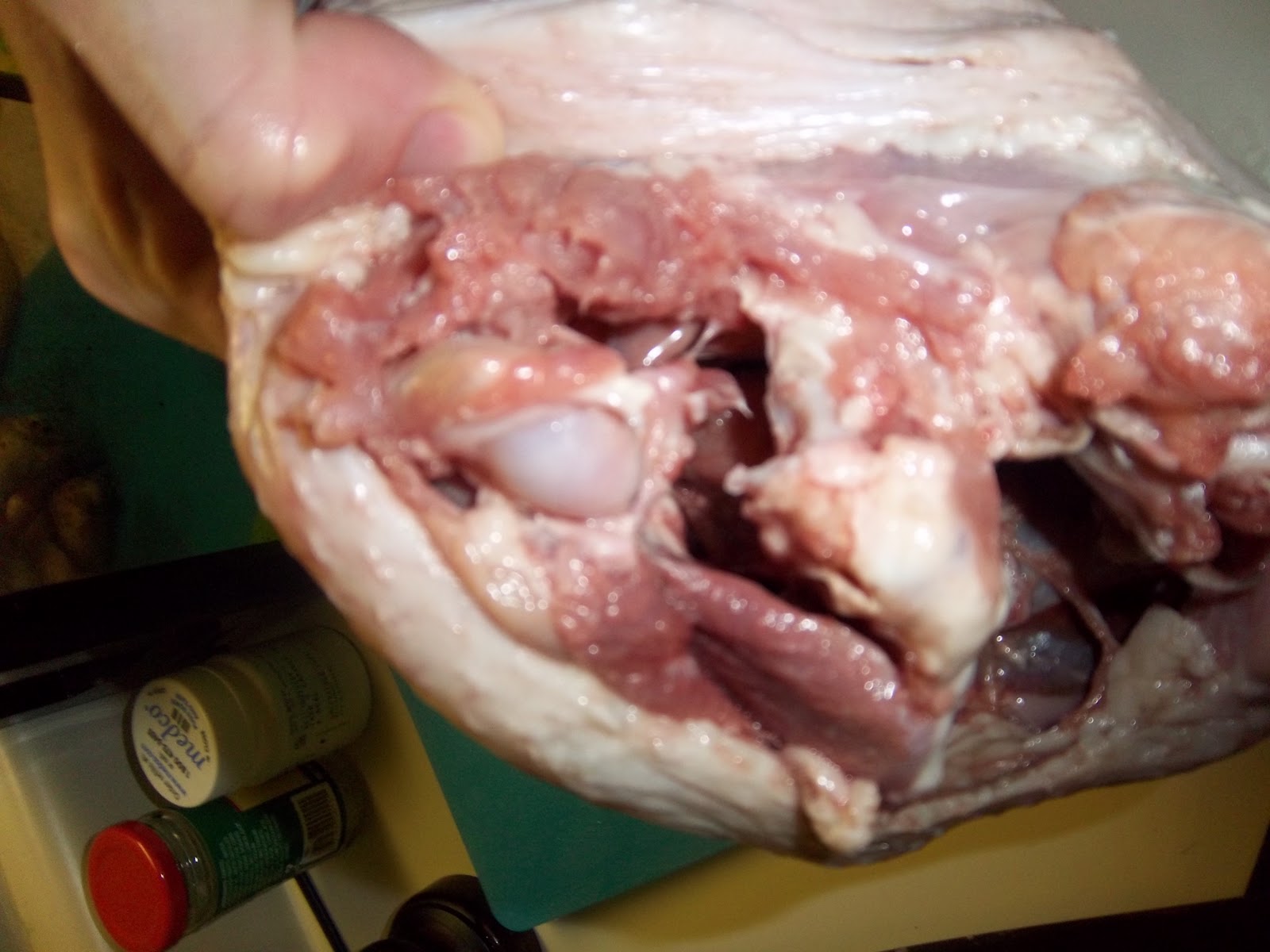
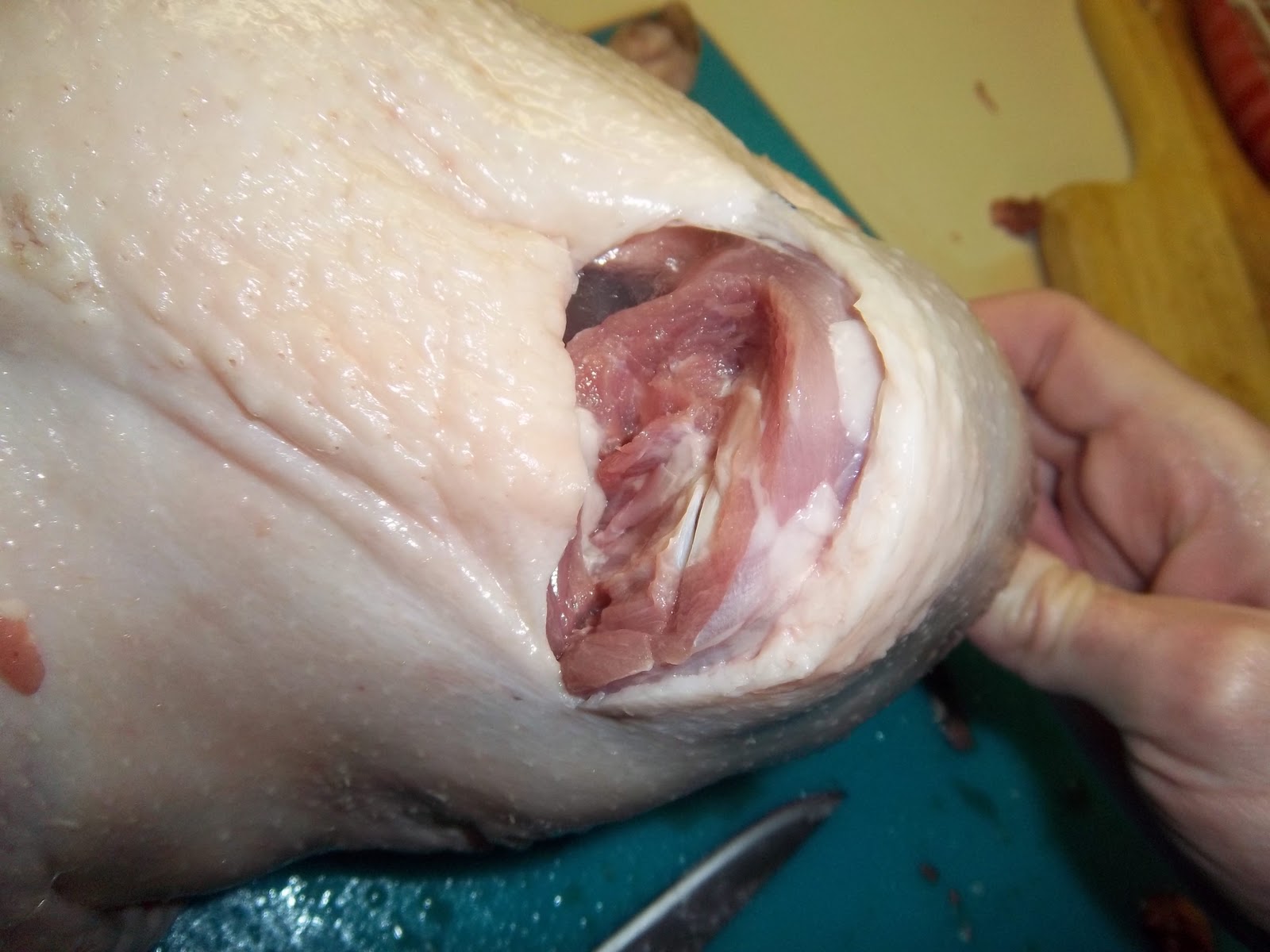
Now remove the wishbone from the top of the breasts and start cutting the meat away from the ribcage, pulling the meat back. Keep doing this around the whole of the body. When you are about half-way down, sit the bird up and let the meat hang down by its own weight. When you get to the hips, you need to pop the femur out of its socket, then continue until the whole of the carcass is removed from the bird. You can then remove the leg bones in very much the same way as the shoulder and wing bones. Getting through that socket is very tricky with a large bird like a goose because of the large joint and large amount of fat surrounding it – to get around this, I flexed the knee joint and cut through that so I could scrape the meat off the bones from the direction of the knee.
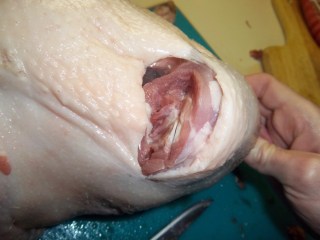
When the leg bones have been removed, all you have to do is turn the bird outside in. Don’t forget to turn the bones, trimmings and giblets into stock.

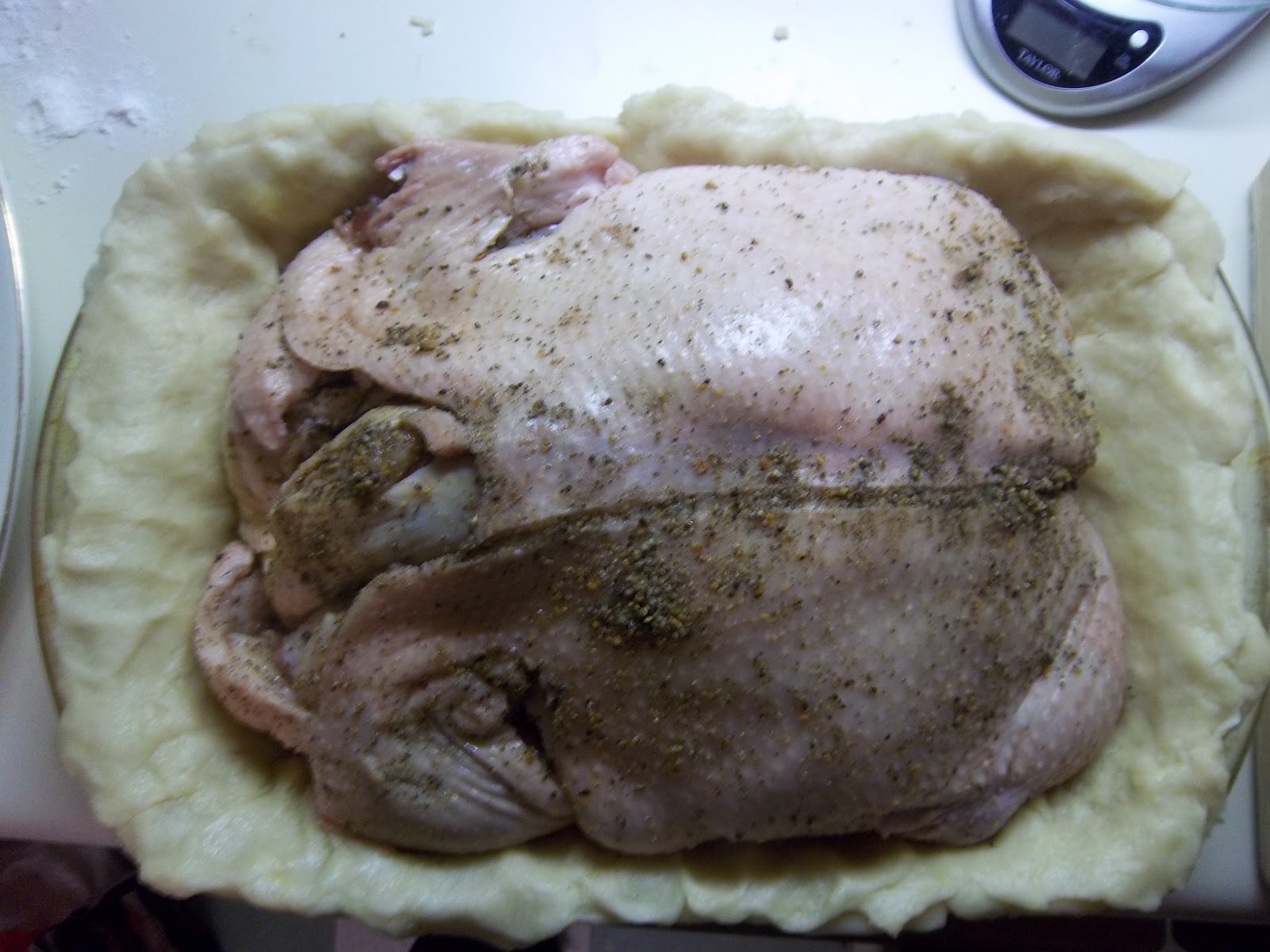
So, you have your tongue and you have your birds, next you need to get working on the hot-water crust. You need to make a crust using 3 pounds of flour. I’ve blogged about hot-water pastry before, so follow this link. I made it in 3 batches – the first I used to form the base. I made lots of smallish pastry balls to cover the inside of a glass roaster measuring about 12” x 9” x 2” and pressed them out to make a single layer that overlapped the edges of it.

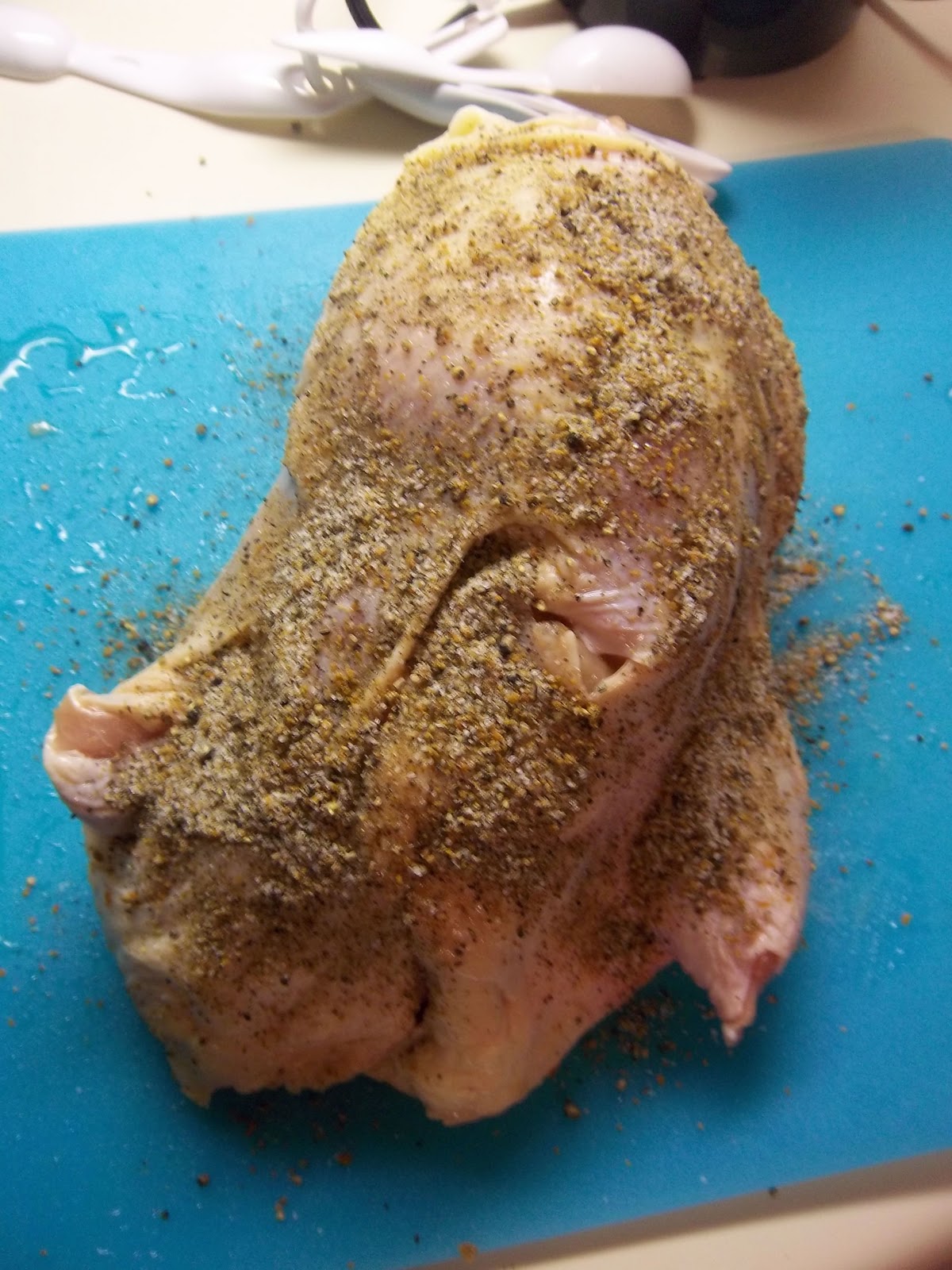
Next, mix together ¼ ounce of ground mace, 2 heaped teaspoons of ground black pepper and 5 rounded teaspoons of sea salt.

Now place the tongue in the chicken and rub in around a third of the spice mix into the chicken…

before gingerly wrapping fitting inside the goose. Place the goose in the pie and rub in the remainder of the spice and salt mix.

Lastly, smear two ounces of butter over the top of the goose.

Now roll out the rest of the pastry and cover the top of the pie, using some water as a glue. It is quite tricky to pick up such a large piece of pastry without it breaking – so use a rolling-pin and wrap it around it and unfurl it atop the pie. Crimp the edges, trim and decorate with the trimmings. Brush with beaten egg and make a central hole for the steam to escape.

Place it on a baking tray and bake the pie at 220°C (425°F) for 20 minutes and then turn the heat down to 180°C (350°F) and bake for another 2 hours. If the pie is browning too much, cover it with brown paper to protect it. If the pie bubbles ferociously, then turn down the heat again to 140-150°C (275-300°F). Loads of fat comes out the central hole, hence the precaution of the baking tray. I had to empty it twice during the whole process. I reserved it for making roast potatoes in the future, of course.

If you are wanting to serve it cold, then like most cold pies, it is best to make it a couple of days in advance so that the flavours can develop.

#322 To Make a Goose Pye. What a spectacle this pye was – especially when sliced up. I expected it to be rather macabre, but it wasn’t. It was indeed a ‘pretty little side dish’. The meat inside was wonderfully moist and a good jelly had formed inside without the need for jellied stock. Some people were a little suspicious of the tongue, but everyone seemed to like it. The only problem – though others disagreed – was that it was rather under-seasoned for me; with an extra 50 per cent salt, pepper and mace, this very, very good pye would have been excellent. 8.5/10

#320 Steak, Kidney and Oyster Pie

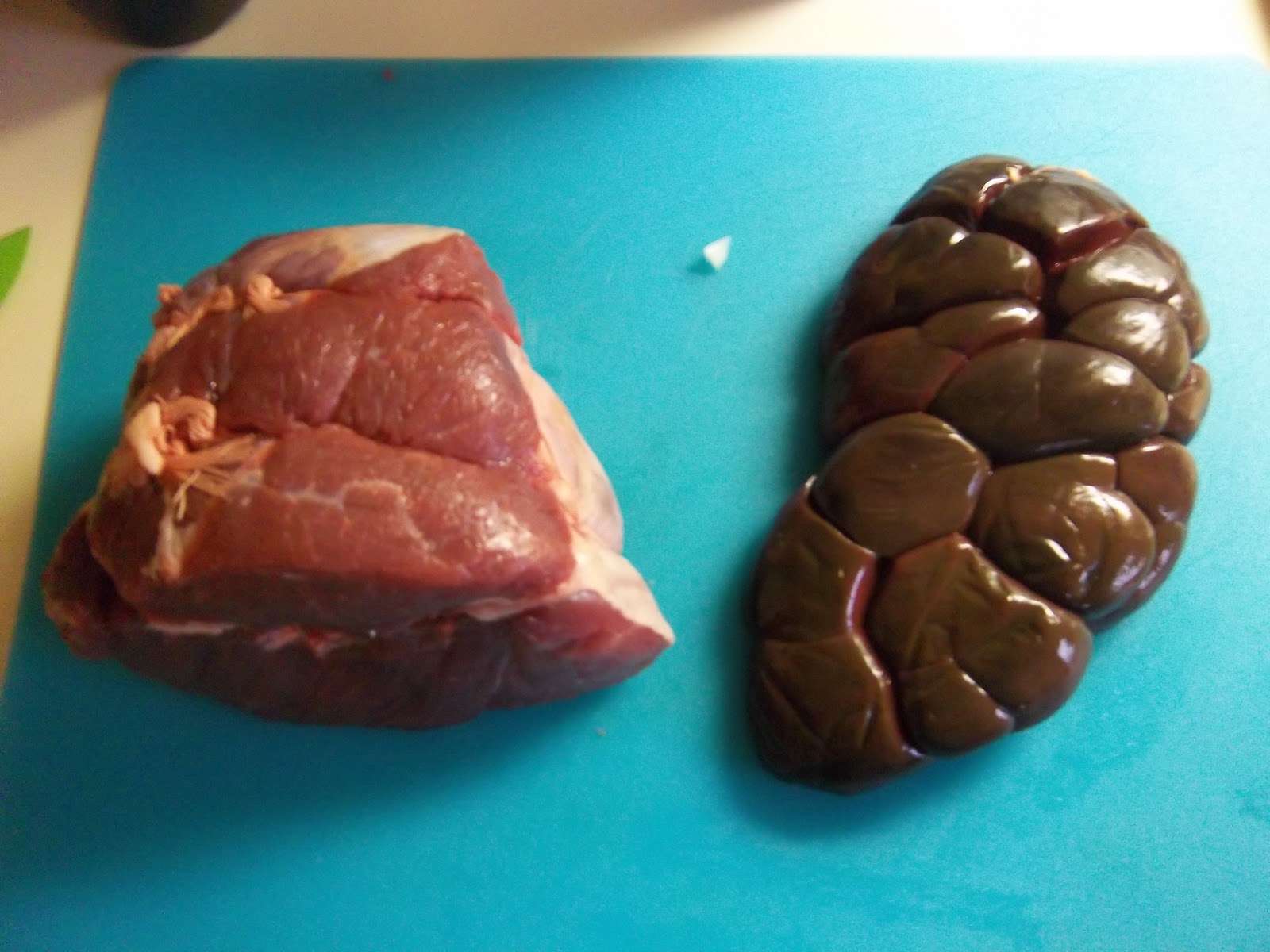
A while ago I made an extremely similar recipe – steak, kidney and oyster pudding. A seminal English dish that I had saved for the landmark 200th recipe. This pie essentially follows the same history (and recipe) as the pudding – the combination of the three main ingredients seems to start with Mrs Beeton. I have found similar recipes going back further like oyster pie, beef-steak and oyster pie, veal and oyster pie and calves’ foot and kidney pie. I could go on, but I shan’t, I think you get the message. The pudding was delicious so there was no way this could be a fail…

+
=
It is worth mentioning my supplier for the beef again – I got it from Missouri Grass Fed Beef, the boss, Jeremy, gave my the kidney for nothing as well! Good man.
This pie uses exactly the same filling as the pudding, so click the link here to find out how to make it; it’s pretty straight-forward stuff. The important thing to note is to check how much and how watery the gravy is before you add the oysters – if there is alot, strain the gravy and boil it down until it darkens and thickens. You need to make it thicker that you would think, because you add oyster liquor to it when it has cooled.
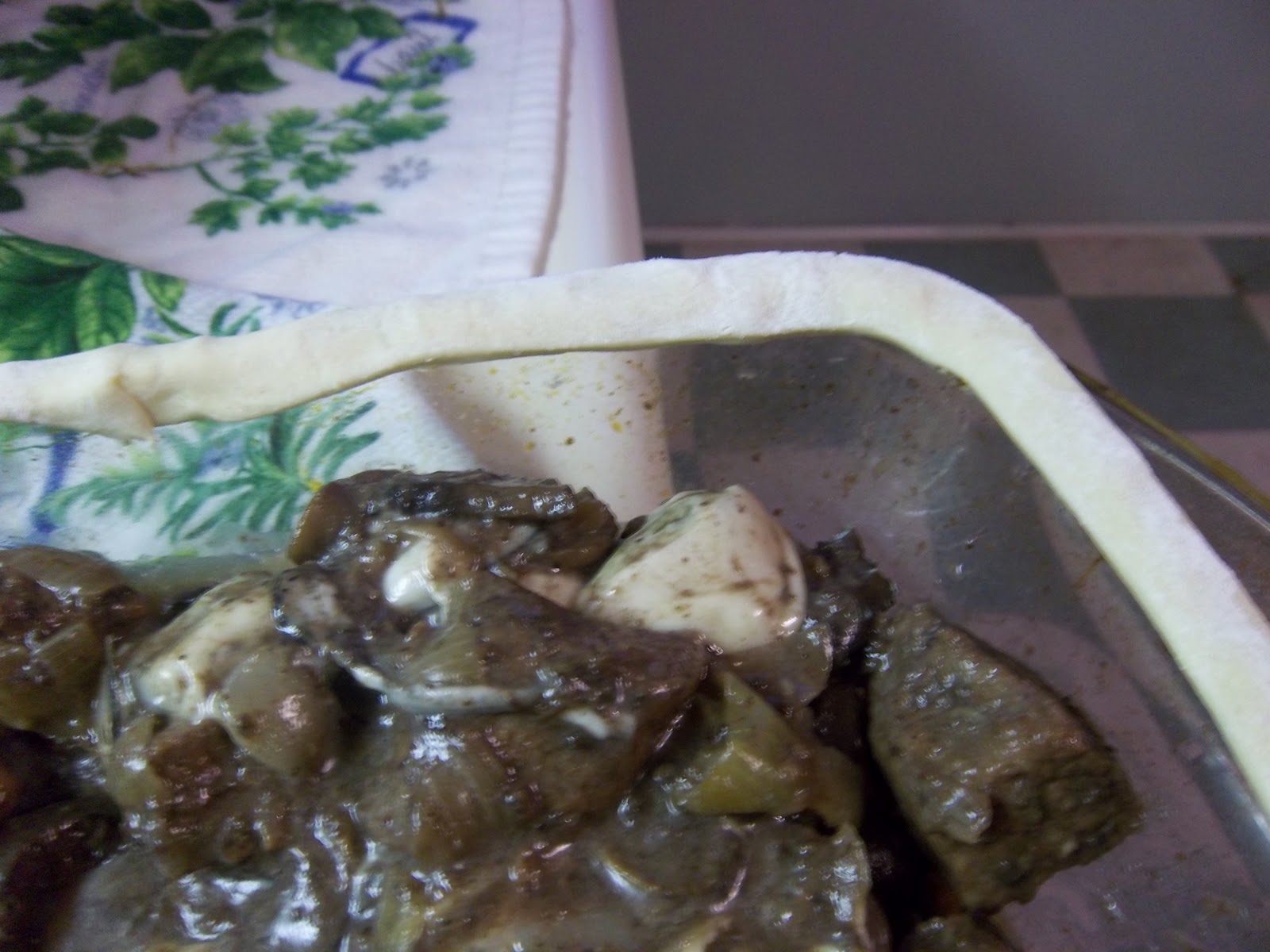
Put the cold filling in a pie dish and get the pastry ready. You can use either puff or shortcrust pastry for the pie. I went for puff. Roll the pastry out and cut strips of pastry about half an inch wide to cover the rim of the pie dish, using water as glue. Griggers says to let the strips hang inwards a little to prevent hot filling from leaking out.
Brush the pastry rim with more water and cover the pie. Crimp down the edges so that the pastry is well-secured. Then Jane says to scallop the edges if you have shortcrust pastry or nick the pastry if puff pastry, after that make a central hole and a leaf design from any trimmings. I hardly had any trimmings left as I didn’t really have enough pastry. Lastly, make a pastry rose with a stem and fit it loosely into the central hole, then give the whole thing an egg glaze.
Bake for around 45 minutes at 220-230⁰C (425-450⁰F).
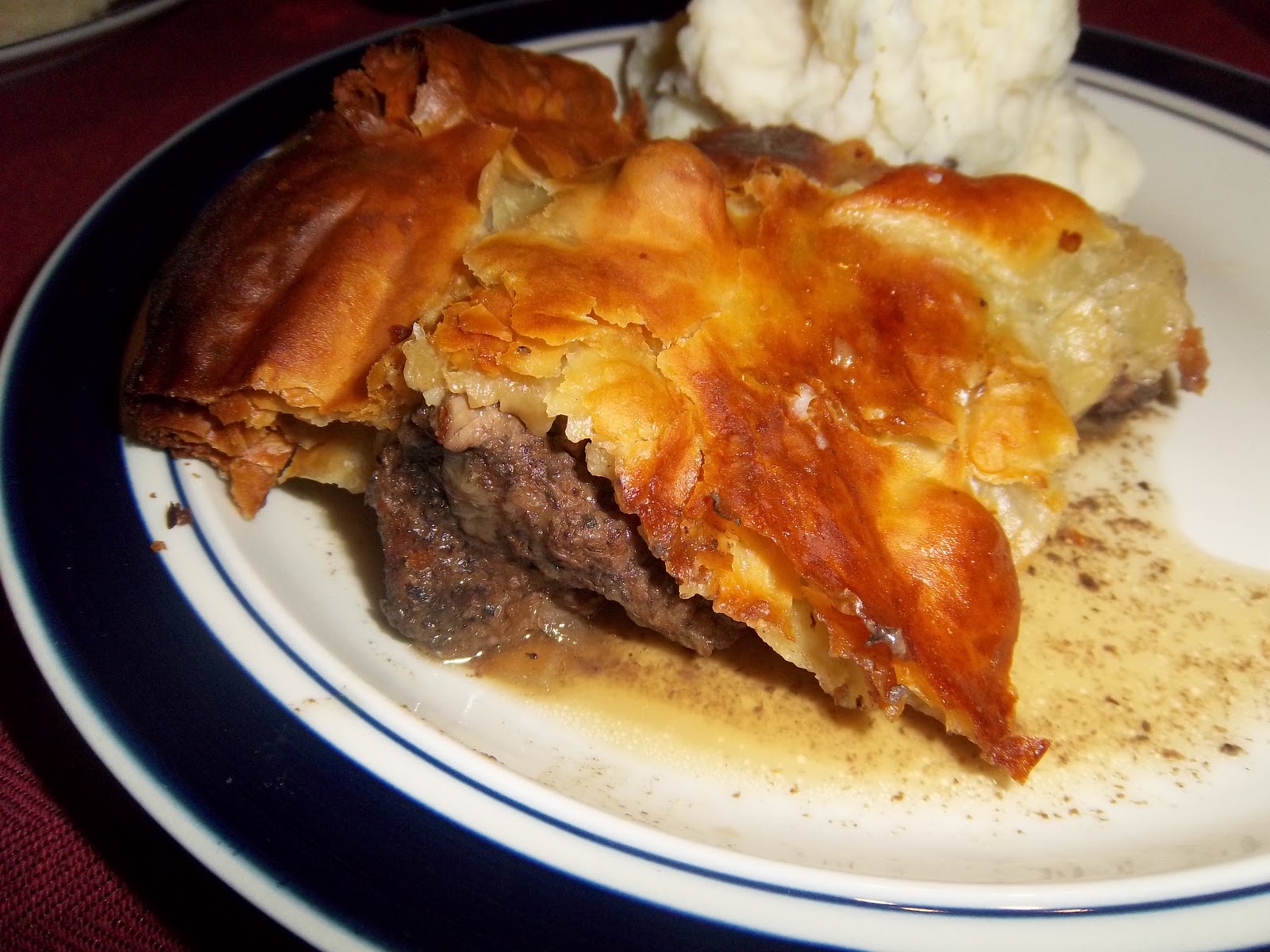
#320 Steak, Kidney and Oyster Pie – well I already knew this was going to be good seeing as I have essentially made this before, but just to reiterate: absolutely amazing. The combination of rich wine gravy, the metallic kidney and the creamy iodine finish of the oysters is fantastic. Mrs Beeton should be made a saint! 9/10.

#319 Marrow-Bones

If you are looking for a historical recipe that goes far far back, you would find it hard to do better than some nice marrow bones. In fact, this one goes so far back it predates humans themselves. We humans belong to the genus Homo – we are Homo sapiens – and there have been over a dozen now extinct Homo species discovered. Palaeontologists have found very good evidence that individuals of the genus Homo were making tools for extracting the nutritious bone marrow from the prey animals they hunted. To give a little perspective, Homo sapiens arose around 200 000 years ago, so this behaviour has been around for ten times as long as we, as a species, have been on this planet. Crazy shit, man.

It is hypothesised that the ability of these intelligent creatures to crack open the bones of animals, helped snowball the evolution of their intelligence, increasing the size of their brains and the complexity of their tools over evolutionary time. Eventually the invention of controlled fire came about during the early stone age. Here, early humans and Neanderthals learnt to roast bones as well as other things like seeds to make foods easier to digest and more palatable. Go back 7 700 years, and late stone age man was taking part in large-scale hunting, butchering, cooking and feasting – according to the findings at an archaeological site in Holland. What was the apparent favourite? Bone marrow of course!
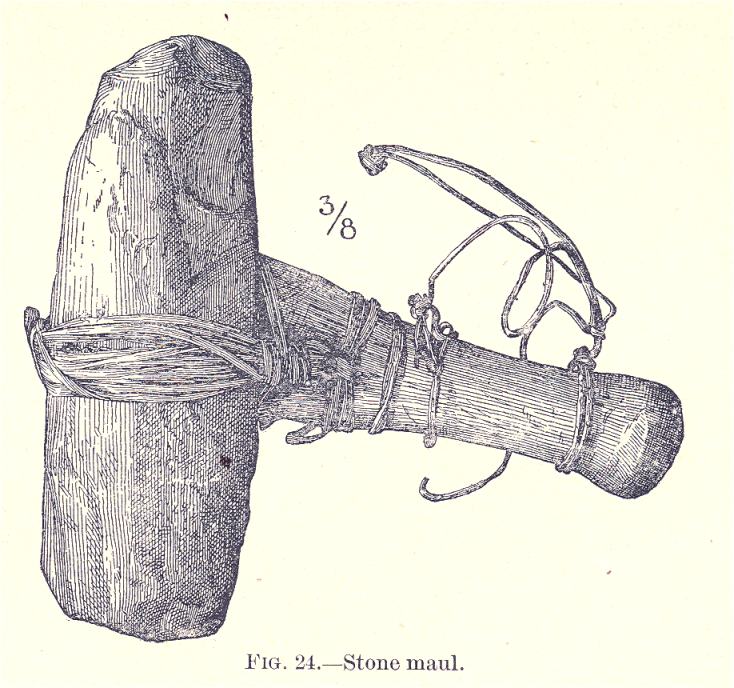
Stone mauls like this were used to crack open marrow bones.
Many have been found in Alaska, Canada and Australia
The bone marrow was prized because it contained a huge amount of energy in the form of fat, which allowed them to spend a larger portion of energy to brain production, fuelling the evolution of brain size itself. These days bone marrow is only fit for dogs it seems, and yet if you go back a century or two, bone marrow is a pretty common ingredient. Grigson points out that Queen Victoria herself dined on bone marrow on toast every single day. That said, these forgotten cuts are getting attention once more; the excellent nose-to-tail chef Fergus Henderson’s signature dish is roasted marrow bone.
Queen Victora obviously put away a few too many marrow bones!
I managed to get some marrow bones from an excellent farmer in Missouri called Jeremy Parker who sells top-quality grass-fed beef (a big deal in America). His company is called Missouri Grass Fed Beef (here’s the link) and if you get the chance, get hold of some. I met him at the local farmers’ market and he very kindly cut me some bones right from the centre of the leg bones. It is sometimes possible to buy the marrow already extracted, but it usually costs a fortune.
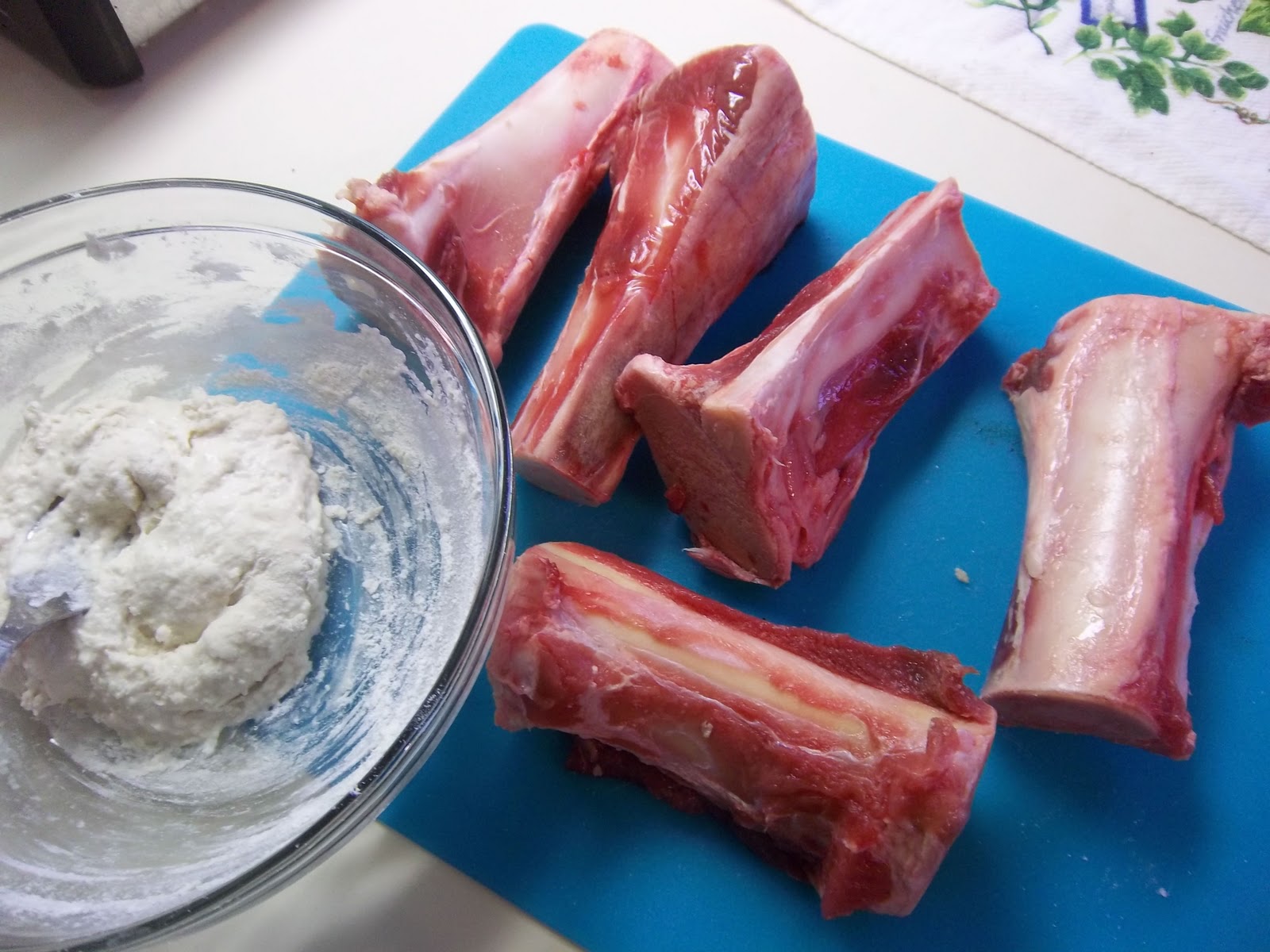
If you want to have a go at cooking your own bone marrow, you will need one centre-cut piece of marrow bone per person between four and six inches long.
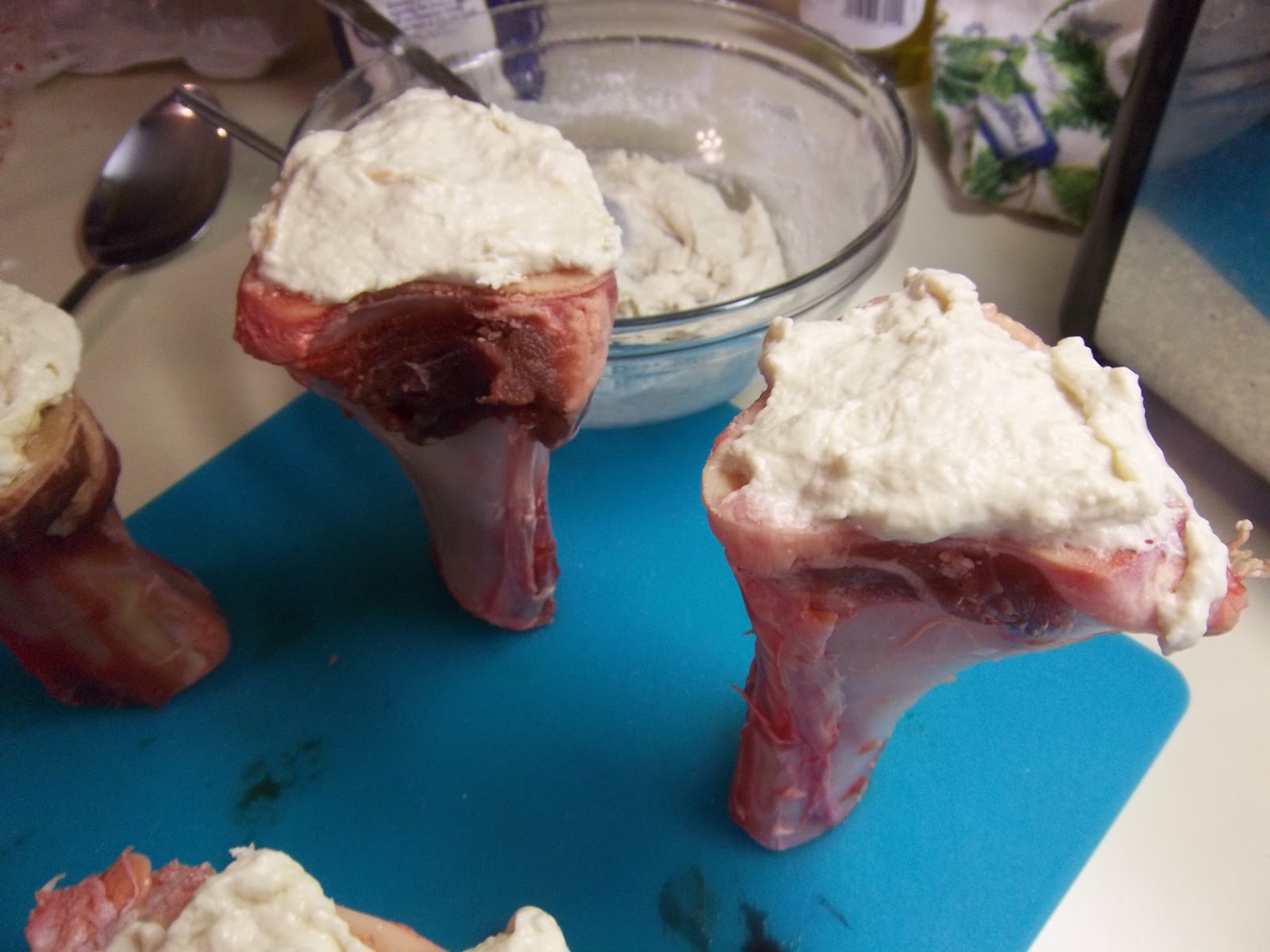
Make a thick paste of water and flour to cover the end of the bones and wrap the ends tightly in foil. The paste cooks and forms a barrier, preventing the marrow from leaking out.
Next, tightly wrap the entire bone in more foil and stand them up in a suitable cooking vessel such as a deep stockpot or fish kettle. Add water to at least half way up the bones and bring to a boil before turning the heat down to a good simmer. Cook for two hours, and remove the foil, peeling off the dough-plugs from the ends. Serve stood upright on a plate with slices of dry toast to spread the marrow on.
All you need is a little salt to sprinkle over. If you are the posh type you can buy some marrow spoons to eke out the marrow. We used teaspoons and lobster scoops instead, but skewers and knives would probably work too.
#319 Marrow-Bones. My goodness, these were so delicious. The marrow was extremely soft and well-flavoured. You could tell the marrow was massively high in fat – it seems to almost effervesce in the mouth. It was extremely satisfying to dig in with various implements to extract all the goodness. I now understand why this was the most sought-after part of the animal. I also now know that no dog of mine will be getting the marrow bone! 9/10.

#317 Skuets

This is an old recipe made up of sweetbreads, bacon and mushrooms grilled on skewers. Indeed, the work skuet is a corruption of the word skewer. The recipe first pops up in the literature in The Compleat Housewife by E Smith (a Lady) first published in 1729. Here’s her recipe from the 1753 edition:

Take fine, long, and slender skewers; then cut veal sweet-breads into pieces like dice, and some fine bacon into thin square bits; so season them with forc’d-meat, and then spit them on the skewers, a bit of sweet-bread, and a bit of bacon, till all is on; roast them, and lay them round a fricasy of sheep’s-tongues.

Chef to kings: Antoine Carême

Forced meat is simply meat mixed with other ingredients to ‘force’ it to go further. I made forcemeat balls a while back (click here for the post). The recipe given here is a jazzed-up version from French chef Antoine Carême’s 1833 book L’art de la cuisine franҫaise au dix-neuvième siècle. According to Grigson, he praises it as an excellent English dish. Jane suspects he found out about it when he lived and worked in London as the Prince Regent’s chef. The changes he made were simple: lose the forcemeat, add some nice mushrooms and serve with bread sauce (see here for recipe) as well as some crunchy browned breadcrumbs.

Sweetbreads are not the easiest of cuts to get hold of these days: I remember speaking to a butcher in Houston who said he came by them sometimes, but if I wanted some, I would have to buy a whole ten pound tray. I was tempted but declined. What if I didn’t like them? Well I am glad I didn’t because I spotted a pack of frozen calves’ sweetbreads in Whole Foods whilst buying some other bits and bobs. I do love that shop.


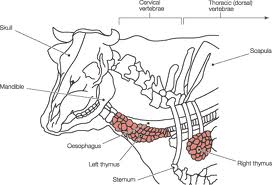
For those that are not aware, sweetbreads are a type of offal and come from the thyroid gland, situated around the throat, of either calves or lambs. The thyroid, or thymus, gland produces the hormone thyroxin which is involved in the proper regulation of metabolism. Hyperthyroidism is a common disease where the sufferer produces too much, causing very high metabolism and, as a consequence, is rather skinny. I had a cat with it once. Other glandular organs are also sold as sweetbreads such as the pancreas, the sublingual glands of the tongue, the parotid gland of the cheek and also the testicles, though ‘throat’ sweetbreads are by far the commonest. Why are they called sweetbreads? Well, they are sweet because they taste richer and sweeter compared to meat, and they are bread because the old English word for flesh is bræd. I assume the bread that we get in loaves carries the name it does because Jesus said bread was his flesh during the Last Supper (I’m surprised he didn’t put anyone off).

Diagram showing the position of the thyroid, or thymus, glands

Sweetbreads were once very, very popular, but have now died a death. Though, like many of the old forgotten cuts of meat, there is a slight resurgence. I had never eaten them, but certainly wasn’t nervous about eating a big gland; I just always worry that the reason people don’t choose to eat them anymore is because they taste bad.

This recipe makes enough for four people:


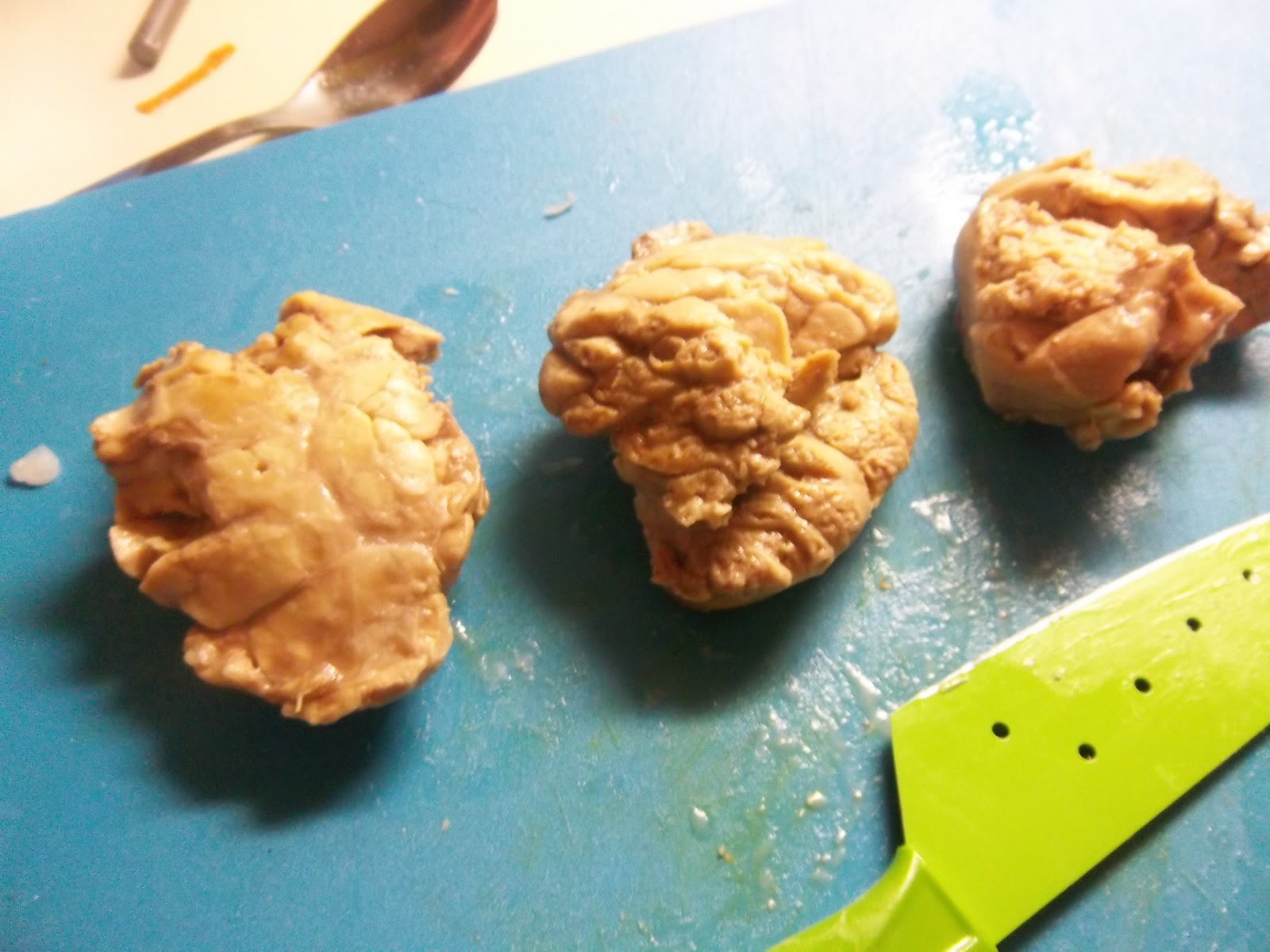
Begin by preparing a pound of veal or lamb sweetbreads. To do this, dissolve a tablespoon of salt in some water and soak them for around an hour. Rinse them, place in a saucepan and cover with chicken or veal stock and mix in a couple of teaspoons of either lemon juice or wine vinegar. Bring to a boil and allow them to simmer until they go from pale pink to a whitish opaqueness.

In the case of veal sweetbreads, this took about 15 minutes. Remove the sweetbreads and allow to cool a little before removing any membranes or gristly bits. You must be careful here – Jane makes a point of mentioning this and she was right – don’t let too much of the sweetbread come away with the membranes. If using lamb sweetbreads, be extra careful, as you’ll end up with nothing! Press the sweetbreads by pressing a plate on them until they cool.

Turn the grill on to a medium heat. Whilst it warms up you can construct your skuets: cut the sweetbreads into chunks – 12 good sized cubes is best – cut around 8 rashers of streaky bacon to square shapes and brush any dirt from 16 medium-sized mushrooms. Take a skewer and add a mushroom, some bacon, a piece of sweetbread, a bit of bacon, a mushroom etc. I used four mushrooms and three pieces of sweetbread per skewer each separated with some bacon. Make four skuets in all.

Brush them with melted butter and grill them, turning occasionally for about 15 minutes. Whilst they are cooking, fry some breadcrumbs in butter until brown and crisp.

Serve with some of the browned crumbs and bread sauce as well as some nice vegetables.

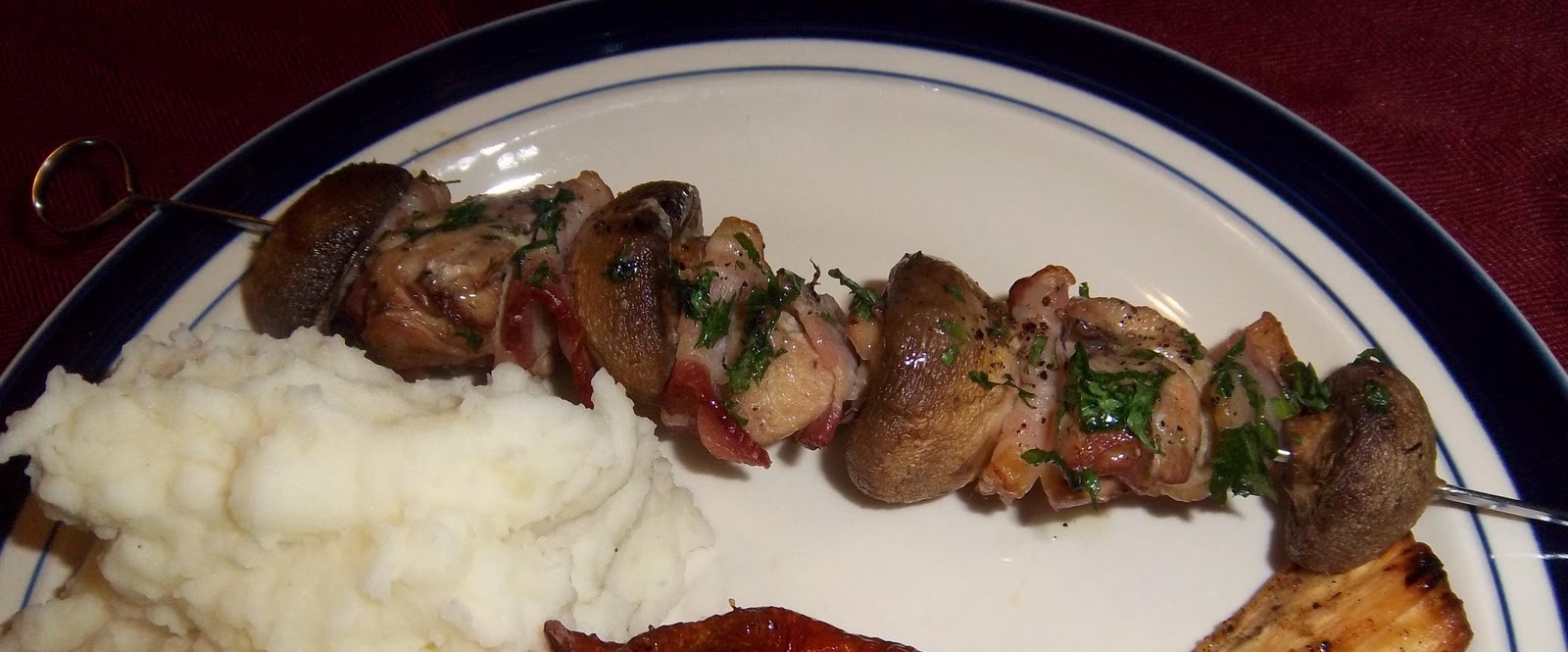
#317 Skuets. What a revelation these turned out to be. A really good meal and the sweetbreads were by no means gross. They were very tender and sweet, and tasted faintly of oysters. I put this down to the fact there must be a lot of iodine in sweetbreads as it is required for them to function properly. The salty bacon and the juicy grilled mushrooms complemented it very well. The crumbs lent a nice bit of crunch and bread sauce is always welcome in my book. All-in-all a very good meal. 8.5/10
#296 Tongue and Mushroom Crumble

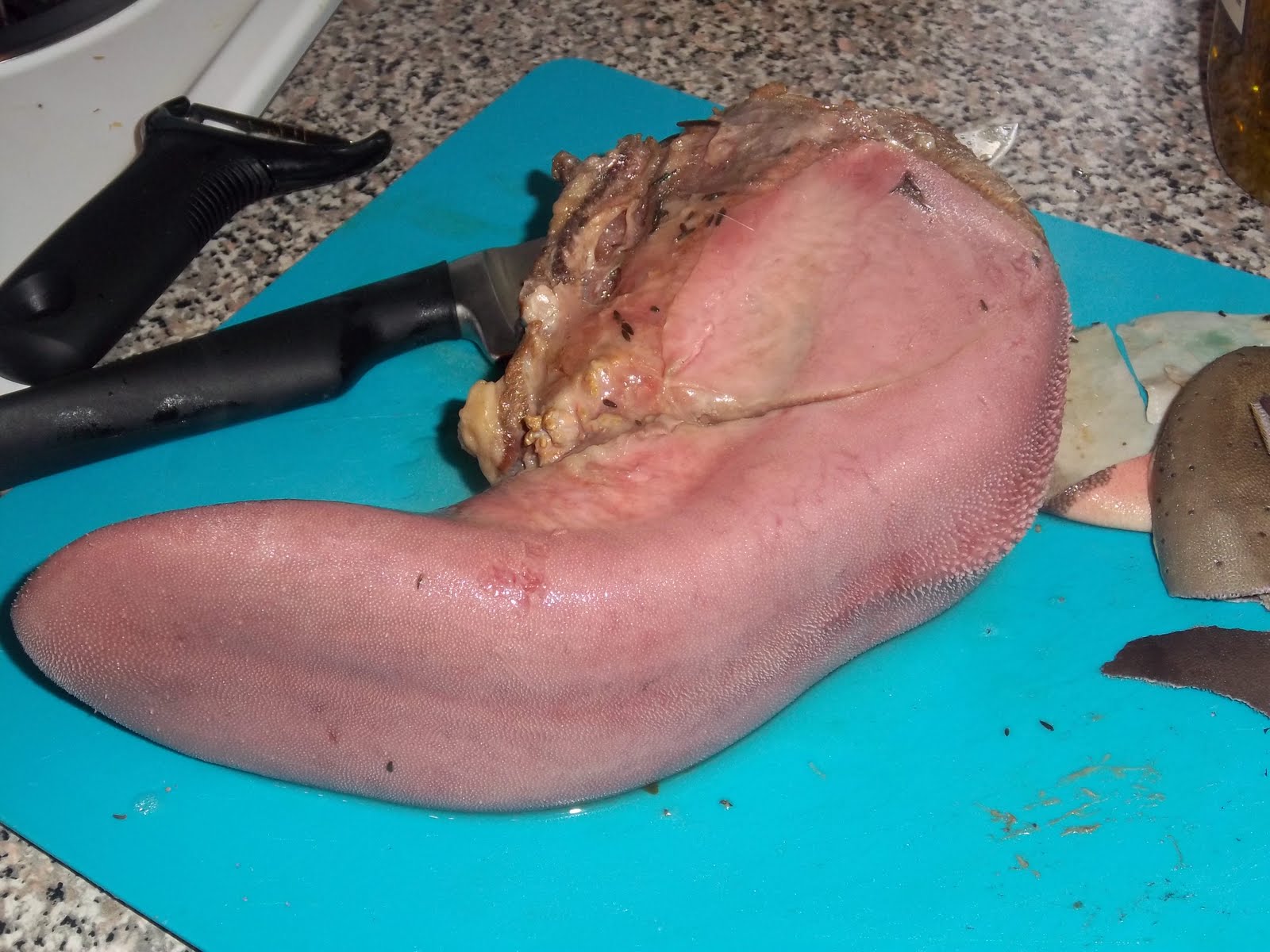
Around fifteen minutes after deciding to cook all the recipes in English Food, I had a first proper look through the good book. It was then I realised that some of the recipes were pretty bizarre, and this one stood out; I had not eaten tongue then, but now I have done a couple of tongue-based recipes so I wasn’t squeamish. Though a tongue crumble is still a bit weird. I made this and took it round to a small gathering of friends to try. There were mixed attitudes…

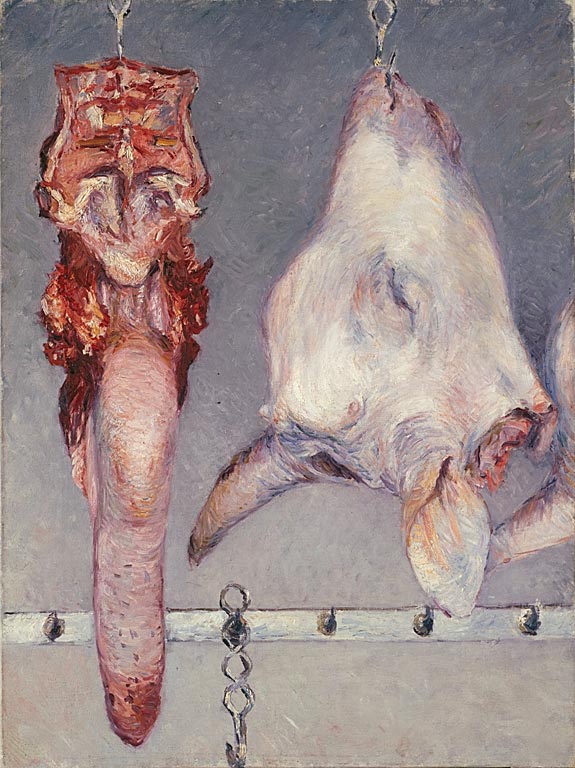
There’s not much of an introduction to this recipe – Griggers says nothing about it in the book and after an internet search, I was also none the wiser. Recipes did crop up, but there was, alas, no background or history to it. Here’s a nice painting with an ox tongue in it though:

Calf’s Head and Ox Tongue by Gastave Caillebotte, 1882

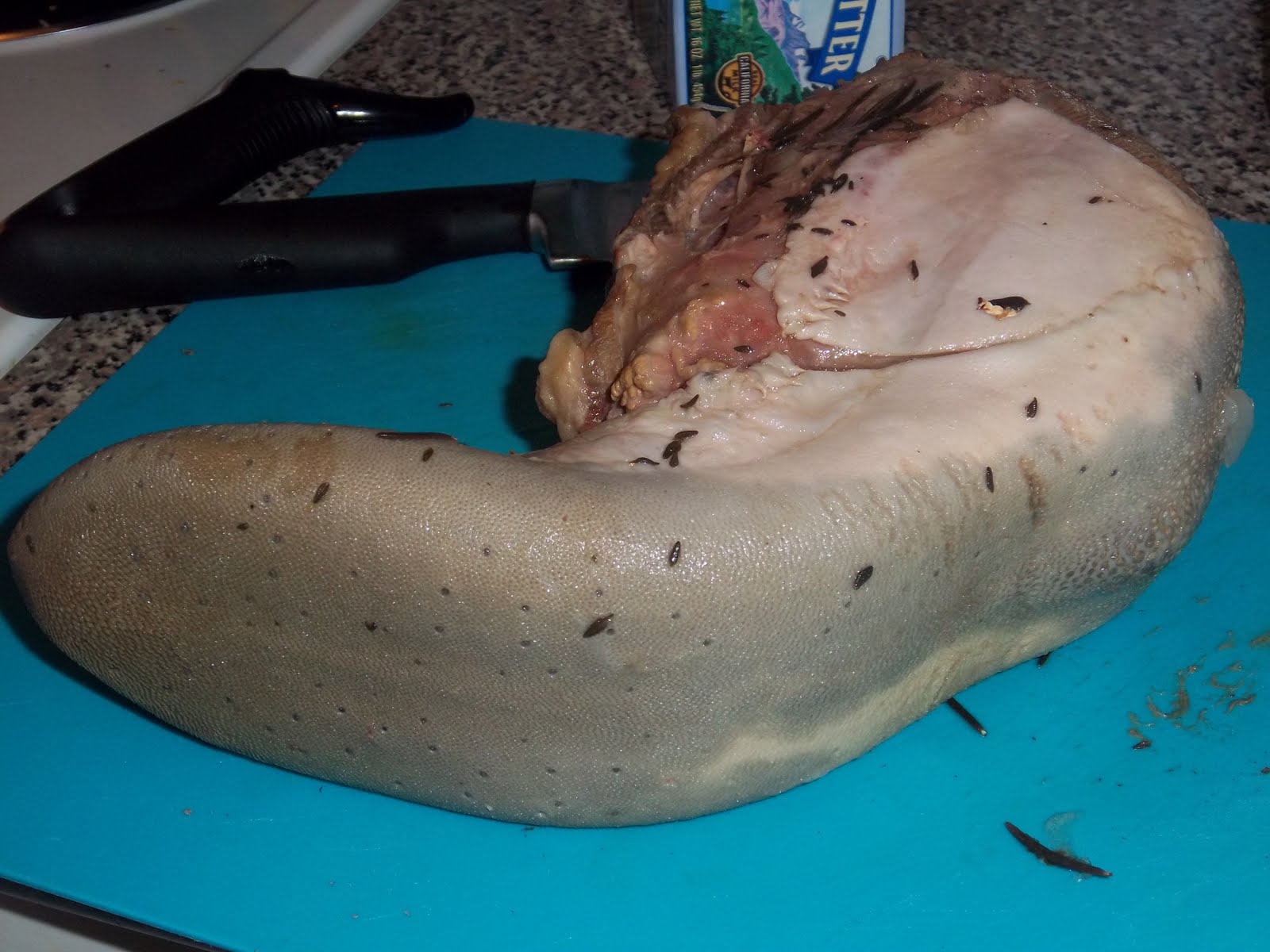
To make the dish, you need to start with pickled tongue weighing around 3 ½ pounds – you can use any tongue you like: ox, calf or pig (I went with ox). You can pickle them yourself (look here for a post that fills you in on this) or get them pre-brined by the butcher. The tongues should be just lightly brined, so if you are doing your own, just leave them in the brine for a day or two. If it’s from the butcher’s shop, you’d be best to soak the tongue(s) overnight in cold water as they may have been in his brine crock for quite a while.

Place the tongue(s) in a stockpot along with a chopped onion and carrot, a bouquet garni and half a pint of dry cider. Top up with water to just cover. Bring slowly to the boil, skim if you need to, and simmer very gently until cooked – this could be one hour for pig, 90 minutes to two hours for calf and three hours for ox. You can tell a tongue is ready if a skewer goes in without much resistance. Don’t worry if you cook it too long, as long as the water was barely simmering, the tongue will still be moist, this because tongue is a fatty meat, around 70% fat in fact.

Take the tongue out of the pot, but keep the stock, let the tongue cool slightly so you can peel the skin off and cut away the sinew from the blunt end. There are some quite large blood vessels and sinew running along the underside of a tongue, so turn it over and cut that away too.

Now slice the tongue, removing any more gristle as you go – there is none as you approach half way. Arrange the tongue on the bottom of a buttered ovenproof dish. Next cook down 4 ounces of sliced mushrooms in one ounce of butter and scatter them over the tongue. Whilst they are cooking, finely chop a medium onion and cook it gently in two ounces of butter – cover the pan so it doesn’t brown. Once softened, stir in a rounded dessertspoon on plain flour and let it cook for a couple of minutes. Whisk in 6 tablespoons of dry white wine. It will instantly thicken. Thin it out with some of the stock until you have a sauce the consistency of thin gravy. Cook for a few minutes, adding more stock should the sauce become too thick, season and pour it over the tongue and mushrooms.

Next, make the topping by making some fresh white breadcrumbs using a blender. Griggers says to use 1 ½ ounces of bread, but you may need more. Sprinkle this over the tongue and sauce and bake in an oven preheated to 190°C (375°F) until all is bubbling. Because everything has been cooked already, it is just a heat-through that’s required, so it can all be made in advance.

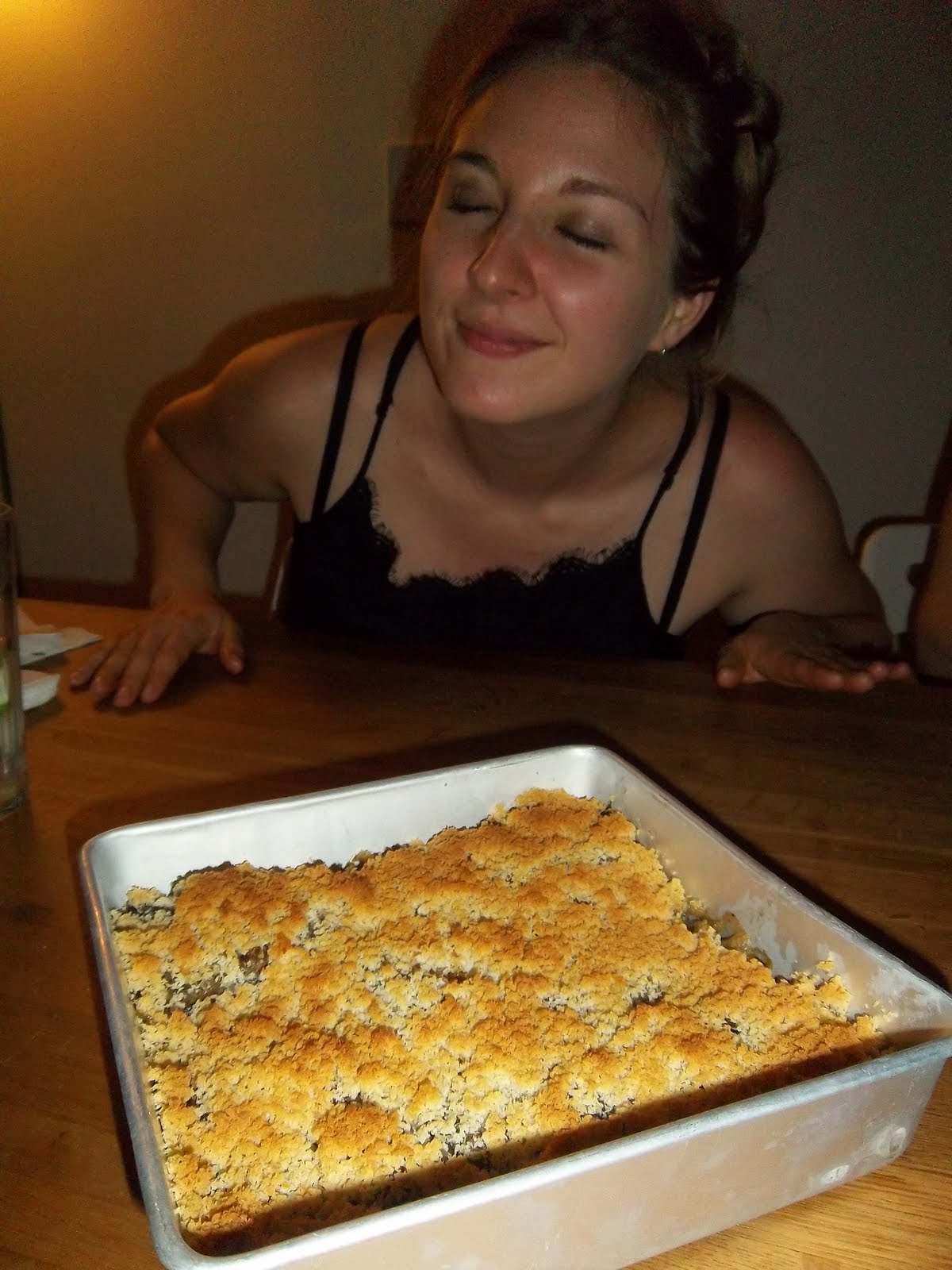
Hannah gets a good lungful of tongue.
That sounded less gross in my brain than when read out loud.

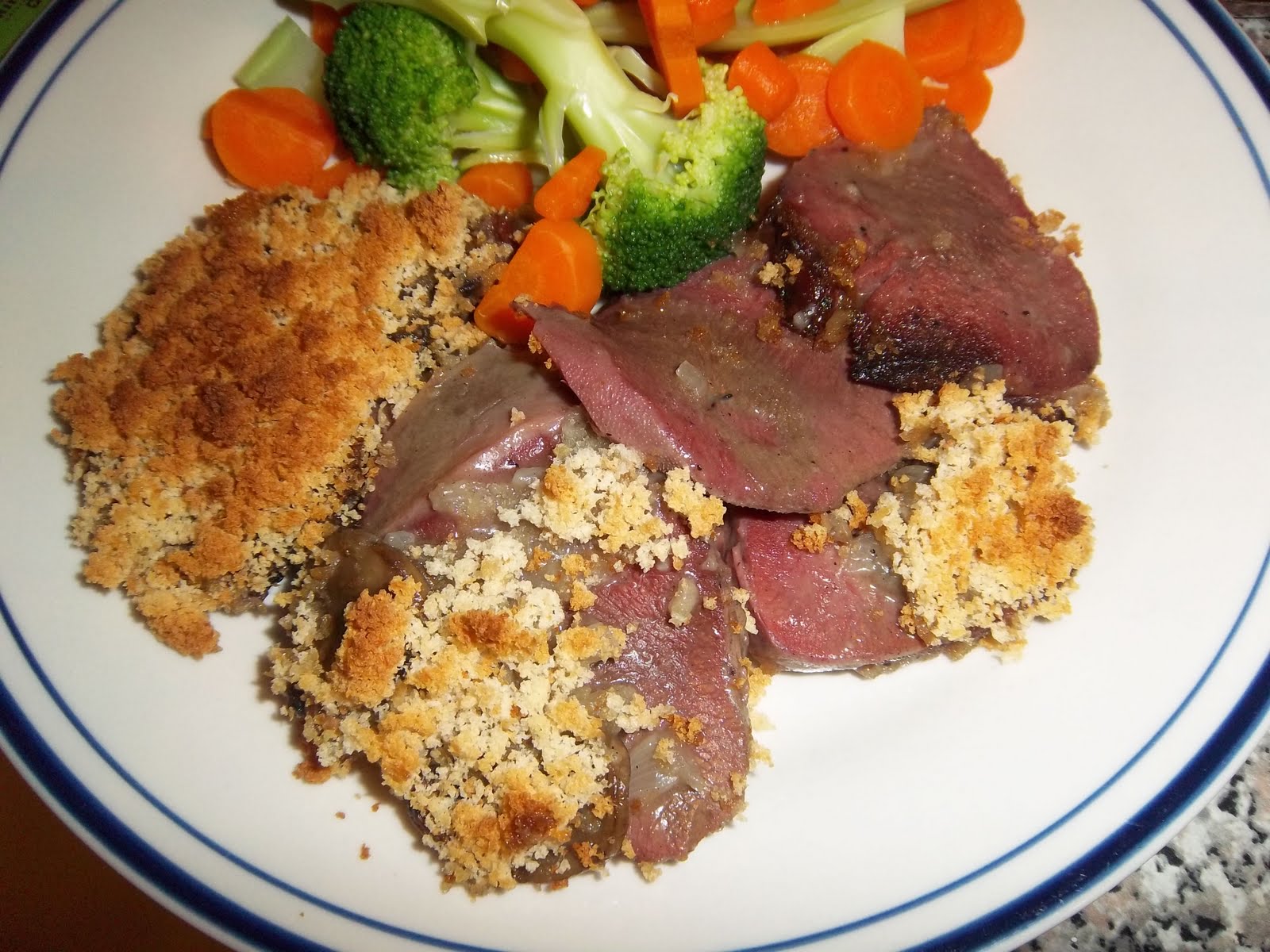
#296 Tongue and Mushroom Crumble. Like most of the weird recipes in the book, this savoury crumble was pretty good. The corned tongue was very tender indeed and well flavoured too, and the mushroom lent an earthiness that always goes well with anything beefy. Much, much better than I expected 6.5/10.

#214 Meat Souffle

A quickie. I knew that we would have plenty of leftover Bradenham ham from Christmas so I knocked this one up. Follow the recipe for the cheese soufflé but use half the amount of cheese and fold about 8 ounces of chopped ham into it. Alternatively, soften a couple of ounces of onions in butter and add 8 ounces of blanched, minced sweetbreads or cooked brains if you like your offal. You might not wish to include cheese though. Make sure you add some herbs too.


#214 Meat Soufflé. The best way to use up some leftover ham, I reckon. The cheese- ham combo is a classic. The salty-sweet ham and cheese and the creamy egg were perfect. If you’ve never made a soufflé before have a go, they are not as scary as people make out. 8.5/10.

#210 Coarse Chicken Liver Pate

Hello there Grigsoners! I have had a brief hiatus from blogging of late – life has simply gotten in the way. I shall spare you the boring details. December has not been the productive month I hoped, but I did make this pâté. It was intended for the Evolution Group’s Christmas Party, but I was rather ill on the day and therefore had to eat this over several days afterwards. No mean feat seeing as it serves eight.

If you are thinking of having some pâté this Christmas, try making this one. The best thing about it is that you can make it around three days before you want to eat it. I am not going to make the glaringly obvious point that pâté is not English.

Start off by removing the gall bladders and stringy bits from 8 ounces of chicken livers. Keep aside half of the nicest looking ones and pass the rest through a mincer along with a small onion, a small clove of garlic and two rashers of streaky bacon. To the minced mixture, mix in 8 to 12 ounces of sausagemeat (the best thing to do is buy good sausages and peel them), a pinch each of thyme and oregano, some salt and some black and Cayenne peppers, plus 2 tablespoons each of sherry and brandy and a tablespoon of drained green peppercorns. When all is mixed in well, you can start putting the thing together in layers in an ovenproof pot, though you should taste the mixture first to check for seasoning (it sounds foul, but it really isn’t that bad). Start with some of the mixture, then half the reserved livers, then more mix, the rest of the livers, and a final layer of mixture. Cover with some back fat or pork skin and place in a roasting tin and pour in some boiling water. Place it in the oven for 45 minutes at 180⁰C, or until the pâté starts to come away from the edges of the pot. Once half cool, place some light weights on top and leave for two or three days before serving with toast or ‘good bread’.


#210 Coarse Chicken Liver Pâté. This was delicious and couldn’t get enough of it. I happy munched my way through the whole thing over four days. The herbs were delicate in flavour and complimented the creamy livers well. The booze made it sweet and moist, but the peppercorns made the whole thing sublime. A really delicious recipe – never buy your pâté again and have a go at this one! 8.5/10
#200 Steak, Kidney and Oyster Pudding

As promised, a dish that is more English that roast beef and Yorkshire puddings, at least I think so anyway. It may be because I’m a Northerner, but I also think (and I could be wrong here) that although it is very English, it hasn’t travelled to other countries as well as, say, roast beef. In other words, it’s a sort of hidden gem. I have been saving this one for number 200 for a while, though I did change my mind a fair few times.

The seemingly unusual ingredient here is, of course, the oysters. The recipe is surprisingly recent: it appears as a steak pudding in a book by Eliza Acton in 1845 and the kidney turns up in Mrs Beeton’s Household Management nearly fifteen years later. In those days folks living near the coasts were falling over oysters – they diminished however due to a combination of an increased population eating them and the increased pollution created by all those extra people. No one wants a shitty oyster. However, before this, they were cheap and the preferred alternative to the very pricey mushrooms that the posh gentry would have enjoyed. It was only since around the Second World War that mushrooms have been cultivated on a large scale, before that they acquired by foraging: limited and very seasonal. Of course, these days it is the mushrooms that are ten-a-penny, and the oysters that break the bank. That said, native oysters are in season at the moment and the ones I bought from Out of the Blue in Chorlton were just sixty pence each.

This pudding is a pretty posh all-out one; giant, full of rump steak, red wine and extra beef stock plus both mushrooms and oysters:

To begin, make the filling: cut two pounds of trimmed rump steak into one inch cubes and then slice a pound of ox kidney (or veal, if you’re being really posh), removing any fat or gristly bits on the way. Toss these in two tablespoons of seasoned flour. Chop a large onion and fry it gently in two ounces of butter until nicely softened, remove with a slotted spoon, turn up the heat and then hard fry the beef and kidney. When brown transfer to a casserole dish (or, if you have a cast-iron one that goes on the hob you can keep it all in there. Deglaze the pan (or casserole dish) with either a pint of beef stock, or half-and-half stock and red wine. Now slice 8 ounces of mushrooms and fry them in an ounce of butter. Add these along with the cooked onions and a bouquet garni to the meat. Cover with a lid and cook in the oven for 1 ½ hours at 140-150⁰C. You can do all this the day before if need be.

Next, open the oysters: Griggers suggests 18-24 oysters, though makes them an optional ingredient for the pudding. I went for a dozen as I didn’t want to go bonkers with the spending. Add them, plus their liquor to the meat. I’ve written about opening oysters before.

To make the suet pastry, use a knife to mix together 10 ounces of self-raising flour, a teaspoon of baking powder, ¼ teaspoon of salt, ground white pepper, ¼ teaspoon of thyme and 5 ounces of chopped fresh suet (use the packet stuff if you can’t get hold of it). Now add cold water little by little to the mix, stirring with the knife. Use the minimum amount of water that will bring the pastry together, using your hands towards the end. If it seems too wet, add more flour. There’s enough pastry to line a three pint pudding basin, so roll it out in a circle large enough and remove a quarter of it (you’ll use this later). This’ll make it easy to line the basin – use water as glue to stick down the ‘hem’. Spoon in the mixture and then roll out the reserved quarter into a circle to make the lid. Place this on top and fold any surplus edging over it and glue it with more water. Secure the lid if using a plastic basin, or cover with buttered, pleated foil secured with string. Place in a steamer and cook for one and a half hours; don’t let it boil dry. Turn it out onto a plate and serve immediately.


#200 Steak, Kidney and Oyster Pudding. The poshest pudding in the world! It was very, very good though. The beef and kidneys were very tender and the gravy was good and rich. The real revelation was the oysters – at first I wasn’t very sure about them, but it was a taste that was acquired very quickly. They provided a mysterious iodine tang to the whole thing. The original surf ‘n’ turf! The only thing I would change is the amount of pastry – there was barely enough to line the basin, making it split open when it was turned out! 9/10.

Warm Lamb’s Fry Salad

Well #200 was now upon me, so I got a few folks round to join me in scoffing it. The trouble was I couldn’t do starter from the book – otherwise that would be the big 200, and I didn’t want some little starter to be it. However, I decided that the food would have a theme: offal. All three courses would have some offal as part of it. You see, I knew that I had some lamb’s fries in the freezer that I bought a while ago from the Cheshire Smokehouse and this seemed like the perfect time to cook them. After a little internet research, I found that they weren’t that difficult to cook, it seemed that you could treat them the same as scallops. I decided on a warm salad. I just hoped they weren’t awful, and that people weren’t going to be squeamish.

It has been a while since I put one of my own recipes on here…

For six:

Heat some cooking oil in a frying pan until nice and hot. Throw in two cloves of garlic and a good pinch of chilli flakes. As soon as the garlic starts to brown, throw in seven sliced and previously seasoned lamb’s fries. Quickly stir fry them for around two or three minutes only, and then season with more salt and pepper if required plus a little sugar and a squeeze of lemon juice. Stir through some dressed spinach leaves and serve immediately. I forgot to take a picture. Oopsey!

The lamb’s fries were okay – very tender and rather bland. It was quite difficult to get excited by them. I think I’d would rather have had something bizarre and shocking, than something that was just okay. At least everyone that came can say they’ve tried them. And I can say that when I do testicles, they melt in your mouth! (F’nar!)

#193 Kidney Soup

Kidney Soup was apparently a kitchen standby in households of times past – particularly in Scotland. Indeed, this recipe is taken from Florence B. Jack’s book Cookery for Every Household. Ms Jack was the principal of the Edinburgh School of Domestic Arts, and very austere she was too.

Now I know it sounds weird, but this is a classic recipe that is also cheap – cheap because it’s main ingredient is kidney, of course. We are being told that offal and the cheaper cuts of meats are suddenly becoming popular due to the recession, but I have not seen any evidence of really from the people that I speak to (though I have in butcher’s shop windows). When saying I’ve been doing this recipe, there has been nothing but pulled faces and dry retching (the only exception being Anthea – frequent blog commenter – she ate it often as a child). I must admit, however, that as much as I love kidneys, I wasn’t quite sure about eating them in soup. However, this book is full of surprises.

To start with you need a whole ox kidney; cut away any fat and gristly bits and cut up the kidney into small pieces. Brown it in an ounce and a half of butter or dripping in a large saucepan along with a sliced onion. Pour over four pints of beef stock and stir, adding some salt. Bring the stock to a boil and skim any scum that rises to the top. Add a bouquet garni and some spices: 20 peppercorns, a blade of mace and a quarter teaspoon of celery seeds. Tie the bouquet and spices in a piece of muslin first. Simmer for 3 to 4 hours, covered on the hob or in the oven.

When ready, skim any fat from the surface and strain the soup. As with most soups and stews its best let it cool down completely – overnight is best – so that you be sure of getting rid of all the fat. Pick out the bits of kidney and give them a rinse. Heat up the soup again and add an ounce of flour that has first been slaked in a tablespoon of mushroom ketchup. (The recipe doesn’t actually say what kind of ketchup, but with this being beef, mushroom or tomato are the best to use.) let the soup thicken slightly and add the kidney pieces. Finally season with more salt and pepper if required, plus some lemon or orange juice and a dash of sherry to add complexity of the flavour.

FYI: the kidneys were thought to be the part of the body concerned with conscience and reflection. Apparently, God would inspect the kidneys to see how good someone had been. In fact, one kidney was responsible for good thoughts, the other evil. The Latin word renes, is used to describe anything of the kidney (e.g. renal), but also is the root word for reins too. So there you go; a choice nugget of factoid for you there.


#193 Kidney Soup. This was a really delicious soup! I loved it the slightly spiced beef consommé was light and tasty and complimented the strong metallic gamey taste of the kidneys. It requires a bit for forethought to make it, but it is worth it I reckon. Cheap, tasty and good for you. 6.5/10.