#147 Devilled Chicken Livers

A cheap treat. I love chicken livers, yet so many people seem to turn their noses up at them – I suppose it’s because it’s offal and folks are squeamish. It is silly though, since they are the main ingredient in pate. Any road, any local butcher should sell them very cheaply – I bought 250 grams for about £1.20 and they were prepared too, which reduced the amount of faffage later. If you buy them – do check they have had their bitter green fall bladders removed or the food will be ruined. This recipe appealed to me because of its simplicity, but also because of its ‘devilled’ (i.e., spiced) nature – a very Victorian way of cooking things (eggs and kidneys spring to mind). Devilling seems to be having a resurgence recently – the day after I cooked this, some chef on The Great British Menu competition that’s being shown on the BBC cooked devilled crab claws. Hopefully it will get popular again.

Have a go at this – it’s enough for 4 people as a starter.

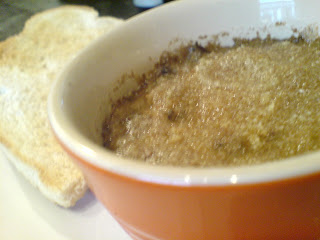
Finely chop a medium-sized onion and fry it in 2 ounces of clarified butter gently. Whilst you wait for the onions to soften, chop up 8 ounces of chicken livers roughly, raise the heat and fry the livers quickly, do this for only 2 minutes, 3 at the most. This is why clarified butter is required – it doesn’t burn when you heat it as the ‘butter solids’ have been decantered off. I made my own by melting some butter gently, skimming off any scum from the top and decanting and solids away that had sunk to the bottom. Take the livers off the heat and add 2 teaspoons each of Worcester sauce and Dijon mustard, Cayenne pepper, 3 tablespoons of breadcrumbs, ¼ pint of whipping or double cream, and finally some salt and black pepper. Mix well and check your seasonings. If you like you devil a spicy one add more – I did! Divide between 3 or 4 ramekins and sprinkle with more breadcrumbs and melted butter. Bake at 190°C for 15 minutes and serve with toast.


#147 Devilled Chicken Livers – 9.5/10. I may change this to a 10/10 as it was a perfect starter. Absolutely delicious – the devil was fiery yet it was perfectly tempered with the cream and breadcrumbs. The big strong flavours had no chance of drowning out the rich creamy chicken livers. Brilliant stuff. I haven’t stopped thinking about since I made them, and my stomach is rumbling as I type. This is definitely a Grigson classic!

#128 Woodcock

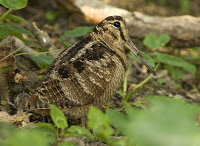
Here’s something I wasn’t sure I’d ever actually get to cook! The woodcock is Britain’s smallest game bird – it’s very well camouflaged and hides away in scrub and hedgerows, and is quite uncommon. All this adds up to a meat you don’t see everyday. However, I was the Frost the Butcher in Chorlton buying some mutton for a pie, when I saw a huge standing freezer full of game saw the typical stuff – venison, rabbit, pigeon and there – tucked away on the bottom shelf – a brace of woodcock. Obviously I snapped them up, only to find they were 15 quid each! I bought just the one, natch.


Finding the woodcock was exciting, as I am now officially a food geek – however I was feeling a little trepidation; this is definitely the first really extreme thing I’ve made from the cook book. Woodcock is considered a delicacy not just because it’s so hard to get hold of, but also because pretty much the whole thing is eaten. Essentially, the bird is roasted rare, whole and completely intact (except the eyes are removed and it is plucked) and trussed with its own beak. The trail of the bird (i.e. the guts, liver etc) is spread on fried bread and the head is split in two so that you can use the beak of one half to prize out the brain from the other.

Woodcock trussed with its own beak

Here’s what to do if you happen upon this little birdie:

Preheat your oven to 220°C. Start off by trussing the bird with it’s beak by spearing the thighs to keep them closed up together. Season the breasts and cover liberally with butter so it doesn’t dry out. Place on a small roasting tin and cook for 18-20 minutes. Whilst that is happening, fry one slice of white bread per bird gently in butter, placing it under the woodcock(s) for the final 5 minutes of cooking. When the time is up, remove the bread and place on a warmed plate and allow the bird to rest for 5 or 10 minutes in the pan. Next, using a knife and/or spoon scoop out the trail (everything except the gizzard – which is actually hard to get to, so it’s unlikely you’ll accidently scoop it out). Spread the trail on the toast. Cut off the head and cut it in half lengthways so that you can use the beak to remove the brain from the halves. You can serve the bird whole or remove the breasts if you like.

The final dish

#128 Woodcock. How on Earth am I going to score this one!? Eating the innards of a bird wasn’t something I was going to relish – but I did relish the idea of eating something very traditional but very out-of-favour. From that point of view – an excitement rating – 10/10. Flavour-wise, the breast meat was very gamey indeed – the smaller the bird, the stronger the flavour – it was so rich that it would have been more than enough for one person. The thigh meat was horrible though – just tasted of dead animal. Bizarrely, the best bit was the trail on toast. The intestines were very soft and there was nothing chewy, though it took some courage to make the first bite. Turns out it tastes a bit like Marmite. Very nice. The brain didn’t really taste as strong as the trail, but was soft and slightly greasy in texture; it appealed to my sudden manly bloodlust though. So overall, it is a high scorer, but not too high – I don’t want to give it loads of marks because of the novelty, so on flavour alone, I reckon it’s worthy of 6/10.

#115 Lancashire Hotpot

Last week I took the afternoon off work to go shopping with Butters to Cheshire Oaks to spend money I don’t have. One of the main reasons I wanted to go was Butters had been told that there was a Le Crueset shop there. I love Le Crueset stuff but it is tres expensive, so I had a total geek boner about going to the factory outlet shop.

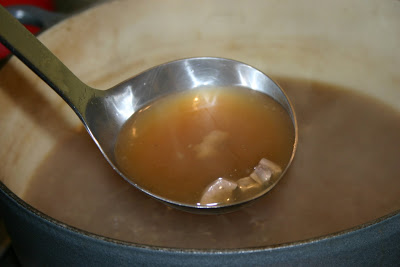
After about an hour of decision-making, I went for a large round casserole and a big mixing jug. With the casserole I knew exactly how I was going to christen it – with a Lancashire Hotpot. I’ve had hotpots before, but in the form of ready meals, which, if I remember, had tomato in it. Real Lancashire hotpot is very simple – one of those dishes involving lots of sliced potatoes and onions that seem to come in an amazing variety. It’s also rather like an Irish stew.

It looked nicer in real…

FYI: Lancashire Hotpots were traditionally made in large, deep dark glazed brown pots that were given to the baker to put in his oven whilst people went to work so they collect on their way back.

FYI2: Although hotpot usually contains potato, onion, lamb and kidneys, people have put in black pudding, sweetbreads, mushrooms and oysters. So if you have any of those to hand pop them in.

This is enough for 6 people:

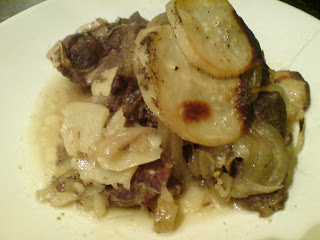
Start off by thinly slicing a pound of onions and 2 pounds of peeled potatoes. Next trim any large bits of fat from best end of neck lamb chops; you’ll need between 8 and 12 depending upon thickness. When at the butches try to get about 6 lamb’s kidneys. Depending on your butcher, they may or may not be prepared – make sure the tough outer membrane has been peeled away, and slice in half lengthways and cut out their central tough, white centres. Layer up the potatoes, then onions, then meat and offal, seasoning as you go. Make sure you leave enough spuds so you can arrange them nicely on the top. Pour enough water to reach halfway up the pot and then brush the potatoes with some melted butter. Place the lid on the casserole and bake at 200-240ºC for 30 minutes, and then turn the oven down to 140ºC for about 2-2 ½ hours. Take the lid of for the final 30-45 minutes so that the top can crisp up. Serve with boiled or pickled red cabbage.

#115 Lancashire Hotpot – 6.5/10. Very nice and hearty grub that is simple yet effective. Not used to cooking with lamb, but am loving how simple this is. Also I’d forgotten how nice kidneys are – I’ve not had them in years. It’s definitely something I’d make again, but it would have to contain something more than just lamb. Plus it’s very cheap – the meat came to £6 at the butchers in the Arndale Centre. Bargain!

A New Venture?

Well, well, well, it HAS been a while hasn’t it!? I cannot apologise enough readers, but I have had what can only be described as ‘personal problems’ of late and therefore not been blogging, or indeed cooking. Neil Cooks Grigson is not the place to talk about them however, sufficed to stay I shall be doing many more meals for one…

Anyway, in order to do some of the more interesting and challenging dishes in the book, I have decided on a new venture: The Grigson Kitchen. The idea being I make a nice two or three course meal for a few friends at least once a month and we all go Dutch on the bill. What do we think readers? A good idea? I’m going to start with Lee, Evelyn and her chap Ed. Evelyn is, however, extremely picky about her food, but had kindly picked out several recipes she likes the sound of. I think I am going to start off by doing some salt beef from scratch – I managed to find a seller of saltpetre on ebay which is probably cut with rat poison or something, but we’ll see. It does, however, take a month to pickle/brine/cure/whatever the right adjective is, so I need to do something else in the mean time.

One of the meals, I think, should be offal-based. So if you are in Manchester and fancy a meal that is slightly bizarre drop me a message; I’m hardly going to roast marrow bones for myself now am I?

Can’t Cook…Won’t Cook…

There are several ingredients in English Food that I have assumed that I won’t be able to cook, at least not in England. But watching television last night, it seems I can.

The Supersizers Go… Is a series showing off the eating habits of the English through the ages and last night they went Victorian. The presenters are a bit self-indulgent but it’s good mindless TV. Giles Coren and Sue Perkins tucked into giant game pies, calf’s ears, jellies, plum duffs, bad curries, croquettes, offal, offal and offal. It seems that English really food comes into its own here – many of Jane Grigson’s recipes are very similar to the dishes cooked then; in fact it was her daughter, Sophie that did the cooking. The main ingredients were butter and brandy, it seems, but it was all very restrained and frugal. Unless your very rich, or it was Christmas.

FYI: The Christmas as we know it now was invented in the Victorian era, courtesy of Queen Victoria, Prince Albert and Charles Dickens

One of things that really surprised me was the amount of game that our presenters were allowed to eat. One of the dishes contained snipe – I assumed that there are too rare to shoot these days, but obviously not. Searching on the web, I find that all the game birds that Jane Grigson lists in the game section of the tome are still legal game, including ptarmigan and wigeon. The other big surprise was that one meal’s centrepiece was a boiled calf’s head with the brain served in a garlic butter sauce. I thought that due to the BSE crisis, bovine brains couldn’t be eaten any more. It seems that I am wrong. It also seems that they taste vile. It also seems that I will be able to do the calf brain recipes. Damn.

On Channel 4 later that evening was Gordon Ramsay’s effort, The F-Word. I’m never sure whether I like the programme, yet I seem to watch it every week. This week he was fishing for elvers – baby eels – in Somerset. There is one recipe that uses elves in English Food, and I thought, as I have studied eels and elvers in the past that because elves numbers had dropped by 98 percent it would no longer be legal to fish for them, that they would be protected or something. Well, you have to have a special licence, but you can fish for them. If you want to buy them, they’ll set you back up to £525 a kilo. It took him 4 hours to collect enough for three measly portions. I know that the reason for the drop in numbers is not known, but surely fishing the remaining few is not going to help. I know I won’t be a part of it.

So it seems that there isn’t anything I can’t cook, but some things I won’t.

#34 Black Pudding, #35 White Pudding…

Ok, I know I didn’t slave over a hot bucket of pig’s blood and offal to make this stuff, but it great food and the Grigson does make a point of mentioning where to buy good puddings and how they should be eaten. Bury, in Alongshore, UK is the best place to get them (and it’s where I got mine). They are made in horseshoe shapes and are not as firm as those in long sausages that you slice, which I think is very important. They are also in ‘natural casing’, i.e. intestine. You don’t eat the casing, but I think it’s much better this way – there is less waste, and I’m all up for that. People should eat more offal. Of what I’ve eaten, it’s really tasty. It’s also very low in fat and very high in nutrients. I think that calves’ liver is as nice as steak. Anyway for those that are not aware, black pudding is made from pig’s blood, fat, oatmeal and herbs and spices. This mixture is then boiled in the natural casing. Jane suggests eating it fried with mashed potato, bacon, fried chopped apple and a blob of mustard.

I’d never had white pudding before, and I had to wonder: ‘What on earth is in it?’. I mentioned it to friends, who also had no idea. It’s very similar to black pudding, but contains pork meat and suet instead of blood. It’s not as spicy as black pudding either.

Grigson suggests eating it with bacon, so I combined the two to produce an extremely meaty tea! It’s all good though, I think, because I’m going to the gym alot at the moment and need my protein, and it’s offal and therefore less wasteful. Oh I am so holier-than-thou these days…

#34 Black Pudding: 8/10. I’d not had black pudding as a teatime meal, always as part of a full-English breakfast, and I have to say it was wonderful – the apple and mustard cut though the salty streaky bacon and soft, stodgy black pudding. Yum!

#35 White Pudding:7/10. Very tasty indeed! Soft in the centre and crispy on the outside. Much more subtle than black pudding, but a change to normal sausages. More please!