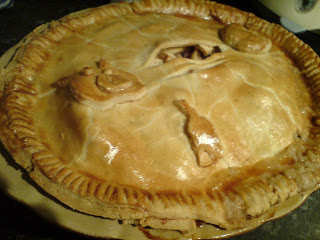
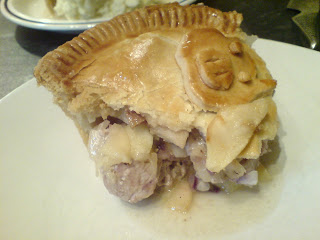
#312 Pork Pie

Provocative of indigestion as that pie may seem to you, it was put together by a lovely cousin at Melton Mowbray, whose fair hands are equally skilful in rendering a sonata of Beethoven, or in compounding the gastronomic mysteries of the kitchen.”
Excerpt from Dialogues of the Living – Table Talk by J Hollingshead,
appearing in The Train magazine, 1857

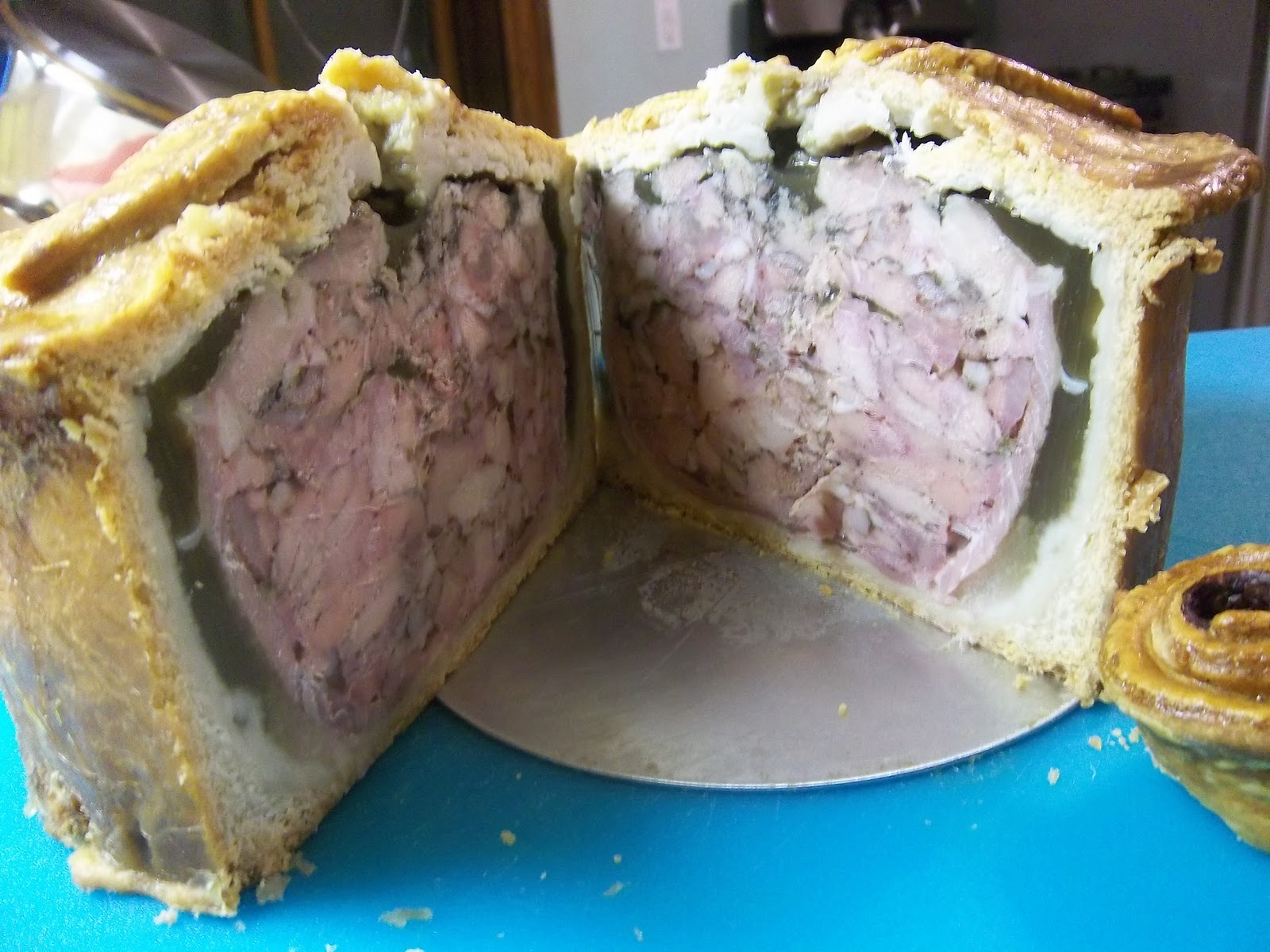
The pork pie is the ultimate raised pie in England and the best come from Melton Mowbray in Leicestershire, a very old English town, founded around the 8th Century. The Melton Mowbray hand-raised pork pie attained Protected Geographical Indication status in 2008 – this means that only pies made within Melton Mowbray can proudly bare the town’s name. If you buy a pork pie that doesn’t bear the name, then it is not the real-deal. Unfortunately, Cornwall missed the boat in getting their pasties recognized by the EU, so a Cornish pasty can proudly bear the Cornish name, when it was actually baked in Milton Keynes or whatever.
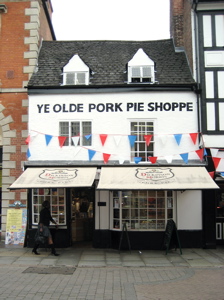
The Olde Pork Pie Shoppe –
the best place to buy a proper Melton Mowbray pork pie

So what makes a Melton Mowbray pork pie special, other than the location it was made in? Well, first they should be hand-raised, second the pork inside should be uncured and the bacon unsmoked. There is also a secret ingredient: anchovy essence. Anchovy essence is not widely available these days, but it is possible to find it. In America, you’ll have to order some from Amazon. You could cheat of course by using some nam pla – Thai fish sauce. There is no difference between them at all. Don’t be put off by this, the sauce gives the meat a delicious seasoning. In fact it is quite common to use anchovies in this way with lamb, and oysters are great in a steak and kidney pudding. We have stopped combining our fish and meat these days, yet have no issue when we eat them together when we order dishes from a Far Eastern restaurant. Strange.

The main difficulty for anyone who may want to attempt this recipe in the USA is not finding the anchovy essence – oh no – it is the unsmoked bacon that is the tricky customer. I hunted high and low for it when I was in Houston, but I never found wet-cured, unsmoked back bacon. I assumed that if I wanted to make a pie whilst living in the States, I would simply have to wet cure my own. However, at a Farmer’s Market in Chicago, I happened upon a stall selling not only unsmoked back bacon, but also traditional British sausages. The stall is run by an English chap, who coincidentally comes from Leeds too, called Nicholas Spencer. Check out his website here. He said he’ll be doing mail order soon, so I am looking forward to that.


Anyways, if you want to have a go at making your own traditional pork pie you need to get planning! It is quite an effort, though very good fun. I’ve already posted about making raised pies. In brief (with links) you need to get three things ready: hot water pastry for the raised crust, a jellied stock, and the filling itself. I’ll provide you with the recipe for the pork pie filling here…
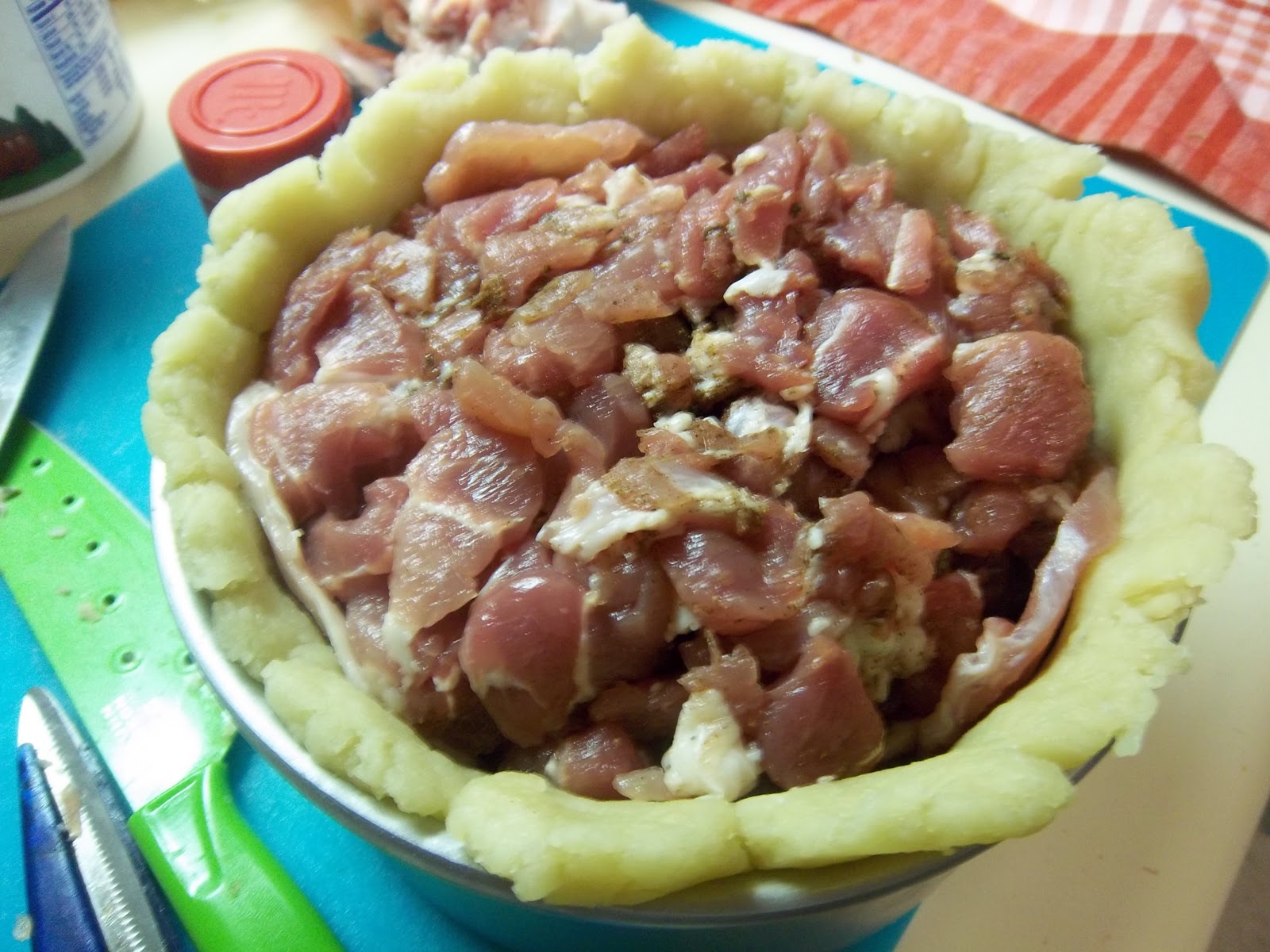
First of all prepare the pork. You will need two pounds altogether  – boned weight. You need a cut of pork that is around one-quarter fat, so go for shoulder, leg or ribs. Make sure you get the bones form the butcher so you can use them in your jellied stock. Also at the butchers, get yourself an eight ounce pack of unsmoked back bacon. When you get home, chop the meat. Keep the best bits chunky, in around a centimetre dice, the other bits, chop finely. This is a bit of an effort, but it is this chopping – rather than mincing – that gives you the proper texture. Also, chop up two rashers of the bacon. Into a bowl, put in your chopped meat and mix in the following: a teaspoon of chopped sage, a teaspoon of anchovy essence and half a teaspoon each of ground cinnamon, nutmeg and allspice. Lastly, season well with salt and pepper. If you want to check the seasoning is correct, take a small amount of the mixture and fry it. Taste and correct accordingly.
When it comes to putting the pie together, use the remaining bacon to line the raised pie crust, add the mixture, packing it in well.

Cover with a pastry lid and finish it off, following the method in the raised pies post.

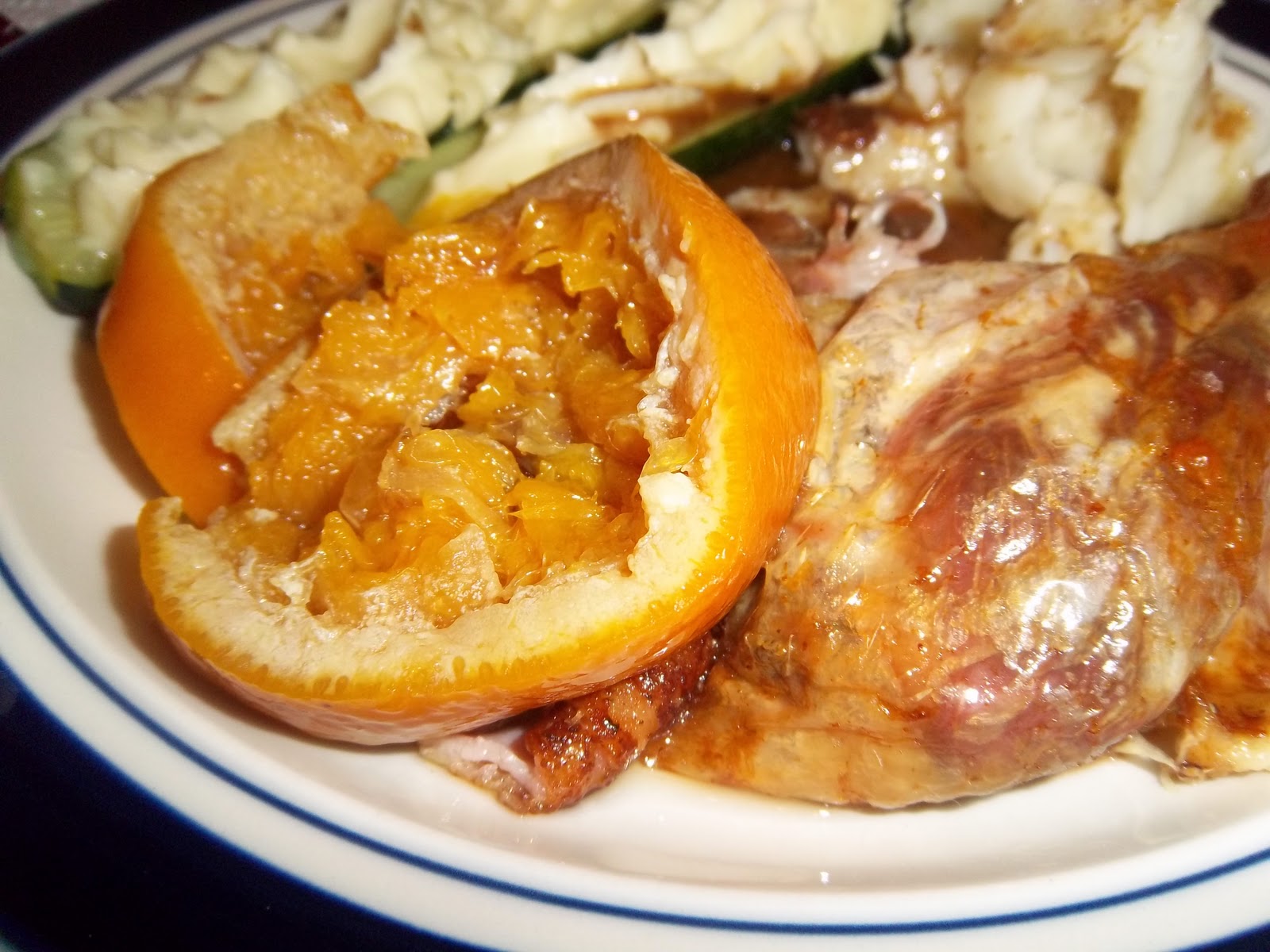
What should one eat with a pork pie? These pies are great for buffets and picnics, so eat whatever you are serving at your buffet or picnic… Personally, I like some nice brown HP sauce or maybe tomato sauce. Some like to warm the pies and have them with mushy peas. I have been eating mine with the preserved spiced oranges I recently cracked open – a really good combination that.

#312 Pork Pie. It seems you can never be let down by these raised pies. This one was great: the mild herbs and spices gave  the meat a subtly complex flavour. The idea of a cold meat pie feaked a few people out at work, and  suppose the jelly is something you either love or hate. I have been eating the pie slowly over the last few days, and it seems to get better as it ages. Very good, not quite as delicious as the Veal, Ham and Egg Pie, but still pretty tasty. 8/10.
#294 Preserved Spiced Oranges (Part II)

Do you remember that time I lived in Texas? It seems like an age away, but it was only three months ago that I packed up my stuff and headed for Missouri. I remember gingerly packing my tins and bottles of various foods, hoping they wouldn’t get broken in the move. Amongst them were the jars of the Preserved Spiced Oranges I made in Maytime. I decided it was about time to try them. I admit I was putting them off rather – the last orange-based recipe was Soyer’s Orange Salad, which basically slices of raw orange sat in brandy, and it shall not be made again.
Anyways, these orange slices are to be served with hot or cold pork, duck, ham – I expect goose too. I decided roast a duck to mark the occasion of opening up a jar of these oranges. Oddly, there is no recipe for roast duck in English Food. Therefore, as it is an omission, I shall be adding my own recipe to the other blog (and here is the link). Though it is worth mentioning that I used a bit of the syrup from the jar to flavour my gravy. Grigson also mentions that the leftover syrup makes a great sauce for duck.
#294 Preserved Orange Slices. Well I do wish I hadn’t left trying these for so long, for they were delicious! The oranges had become very tender, without any bitterness at all. They were wonderfully warmingly sweet with the now well-infused cinnamon, cloves and mace. All that sugar and spice was cut beautifully by the white wine vinegar. Good work, Griggers! 8.5/10.

#296 Tongue and Mushroom Crumble

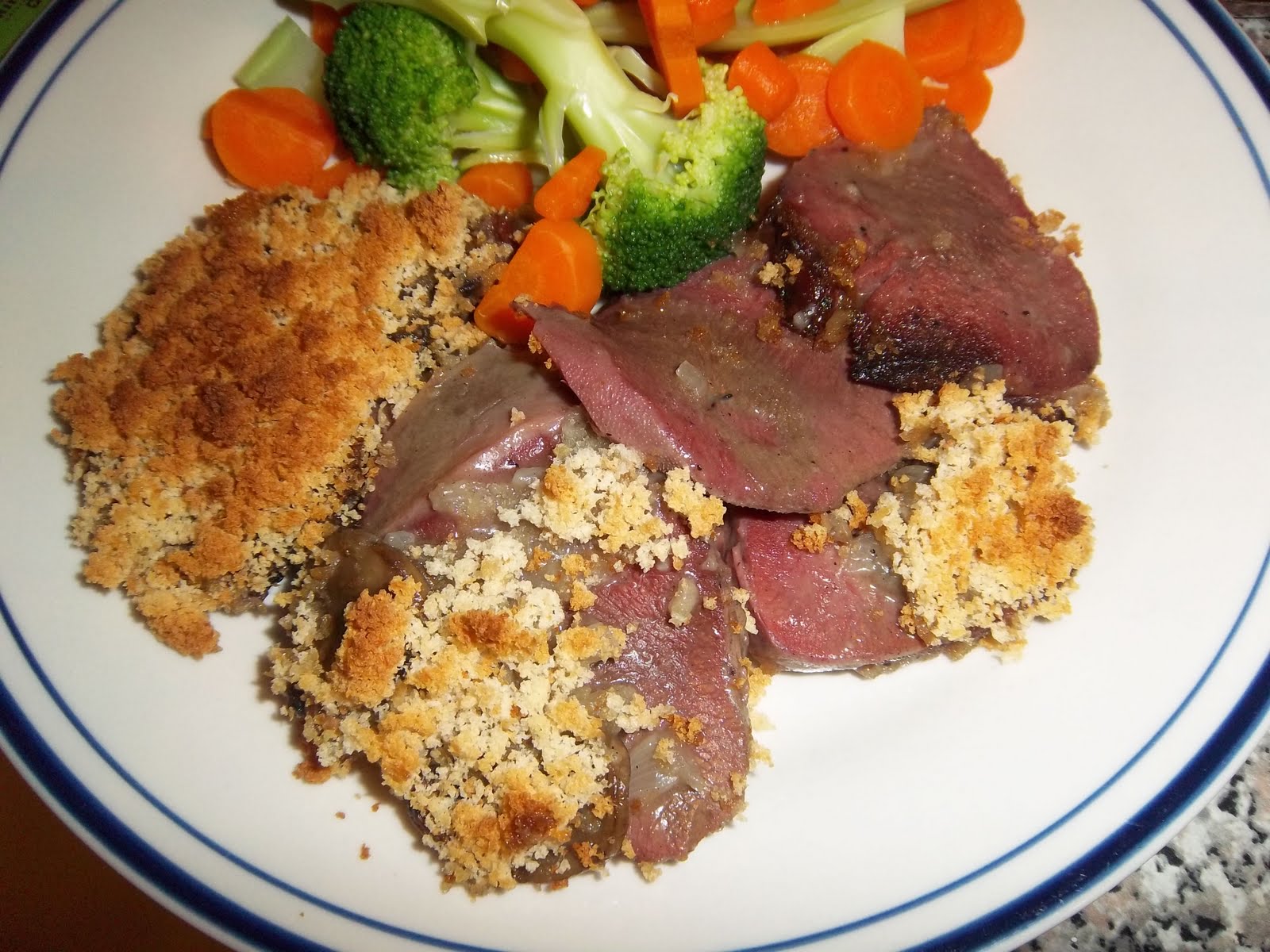
Around fifteen minutes after deciding to cook all the recipes in English Food, I had a first proper look through the good book. It was then I realised that some of the recipes were pretty bizarre, and this one stood out; I had not eaten tongue then, but now I have done a couple of tongue-based recipes so I wasn’t squeamish. Though a tongue crumble is still a bit weird. I made this and took it round to a small gathering of friends to try. There were mixed attitudes…

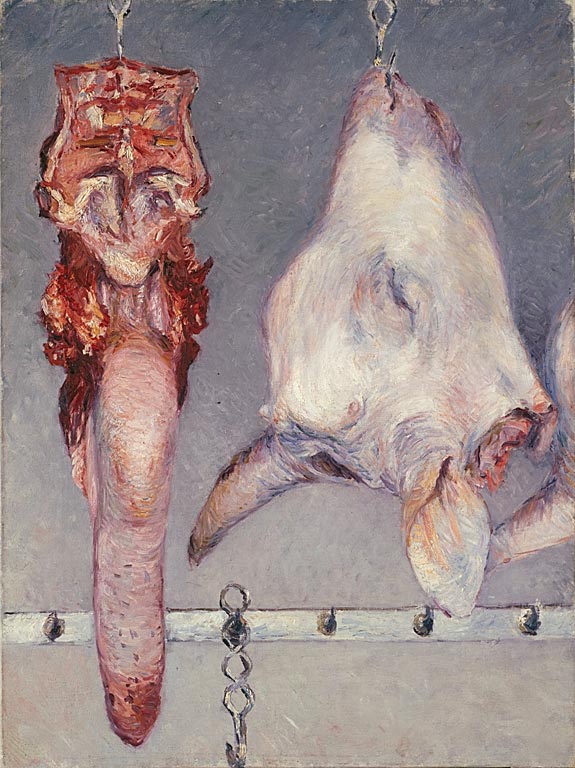
There’s not much of an introduction to this recipe – Griggers says nothing about it in the book and after an internet search, I was also none the wiser. Recipes did crop up, but there was, alas, no background or history to it. Here’s a nice painting with an ox tongue in it though:

Calf’s Head and Ox Tongue by Gastave Caillebotte, 1882

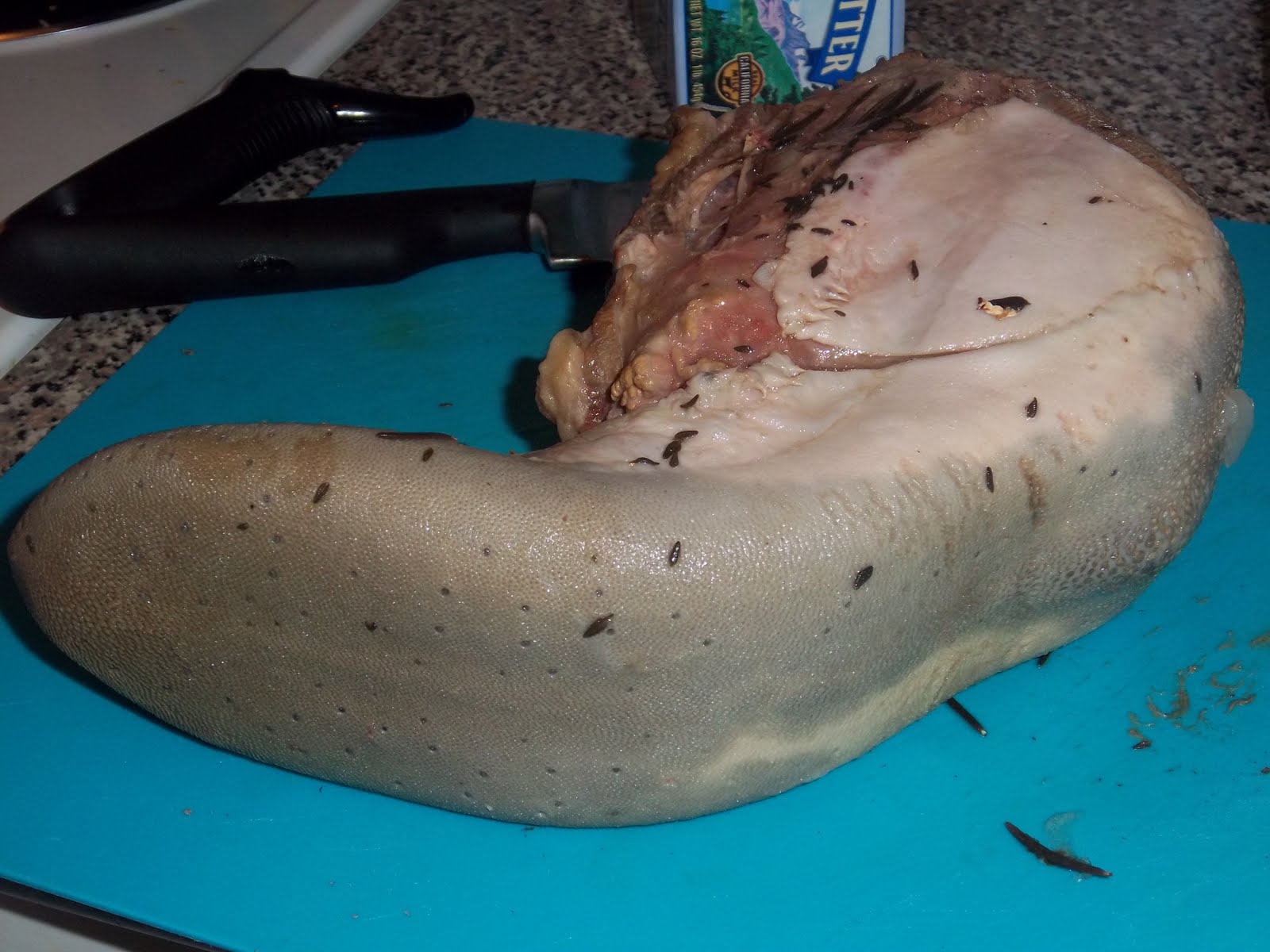
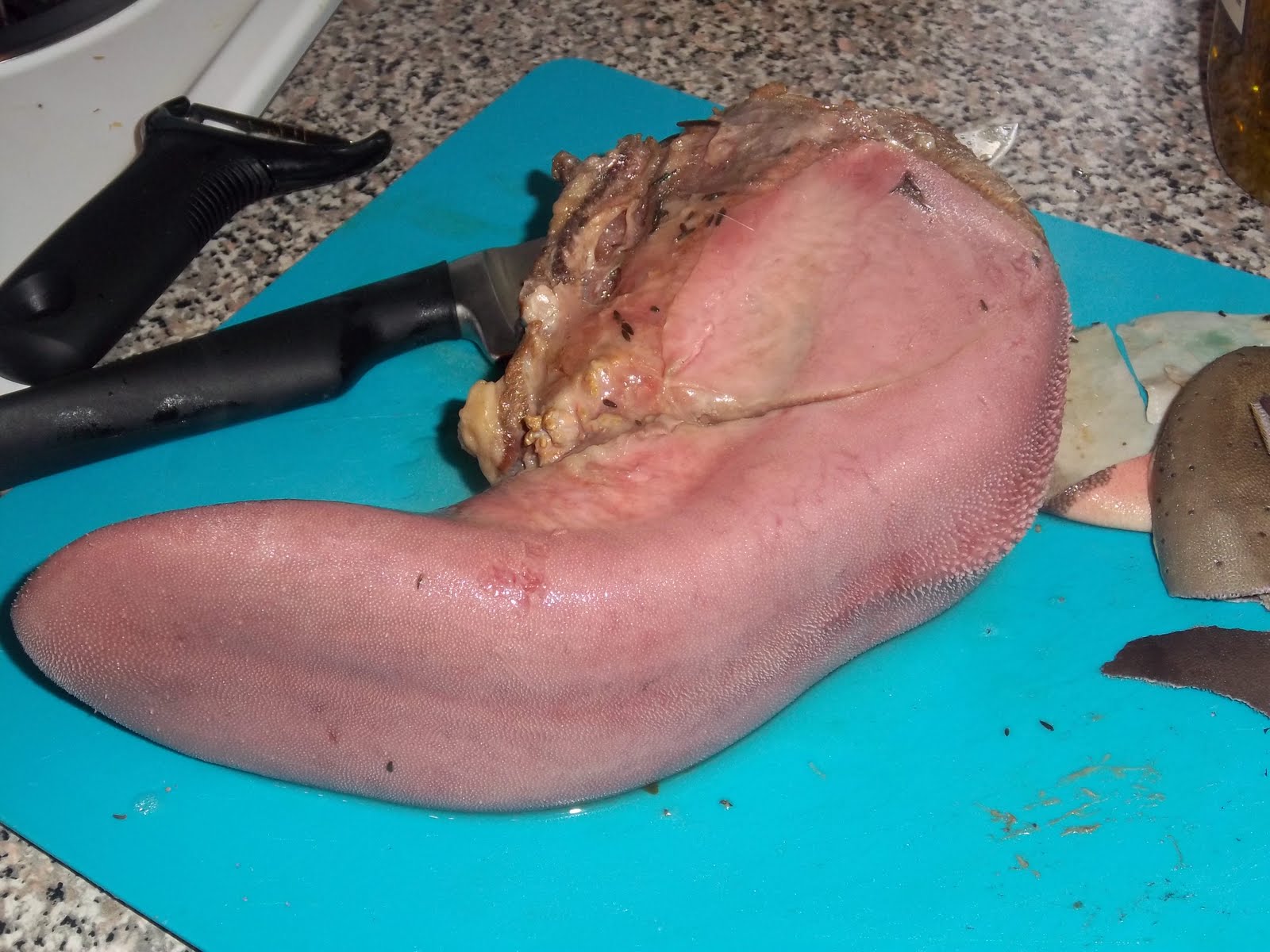
To make the dish, you need to start with pickled tongue weighing around 3 ½ pounds – you can use any tongue you like: ox, calf or pig (I went with ox). You can pickle them yourself (look here for a post that fills you in on this) or get them pre-brined by the butcher. The tongues should be just lightly brined, so if you are doing your own, just leave them in the brine for a day or two. If it’s from the butcher’s shop, you’d be best to soak the tongue(s) overnight in cold water as they may have been in his brine crock for quite a while.

Place the tongue(s) in a stockpot along with a chopped onion and carrot, a bouquet garni and half a pint of dry cider. Top up with water to just cover. Bring slowly to the boil, skim if you need to, and simmer very gently until cooked – this could be one hour for pig, 90 minutes to two hours for calf and three hours for ox. You can tell a tongue is ready if a skewer goes in without much resistance. Don’t worry if you cook it too long, as long as the water was barely simmering, the tongue will still be moist, this because tongue is a fatty meat, around 70% fat in fact.

Take the tongue out of the pot, but keep the stock, let the tongue cool slightly so you can peel the skin off and cut away the sinew from the blunt end. There are some quite large blood vessels and sinew running along the underside of a tongue, so turn it over and cut that away too.

Now slice the tongue, removing any more gristle as you go – there is none as you approach half way. Arrange the tongue on the bottom of a buttered ovenproof dish. Next cook down 4 ounces of sliced mushrooms in one ounce of butter and scatter them over the tongue. Whilst they are cooking, finely chop a medium onion and cook it gently in two ounces of butter – cover the pan so it doesn’t brown. Once softened, stir in a rounded dessertspoon on plain flour and let it cook for a couple of minutes. Whisk in 6 tablespoons of dry white wine. It will instantly thicken. Thin it out with some of the stock until you have a sauce the consistency of thin gravy. Cook for a few minutes, adding more stock should the sauce become too thick, season and pour it over the tongue and mushrooms.

Next, make the topping by making some fresh white breadcrumbs using a blender. Griggers says to use 1 ½ ounces of bread, but you may need more. Sprinkle this over the tongue and sauce and bake in an oven preheated to 190°C (375°F) until all is bubbling. Because everything has been cooked already, it is just a heat-through that’s required, so it can all be made in advance.

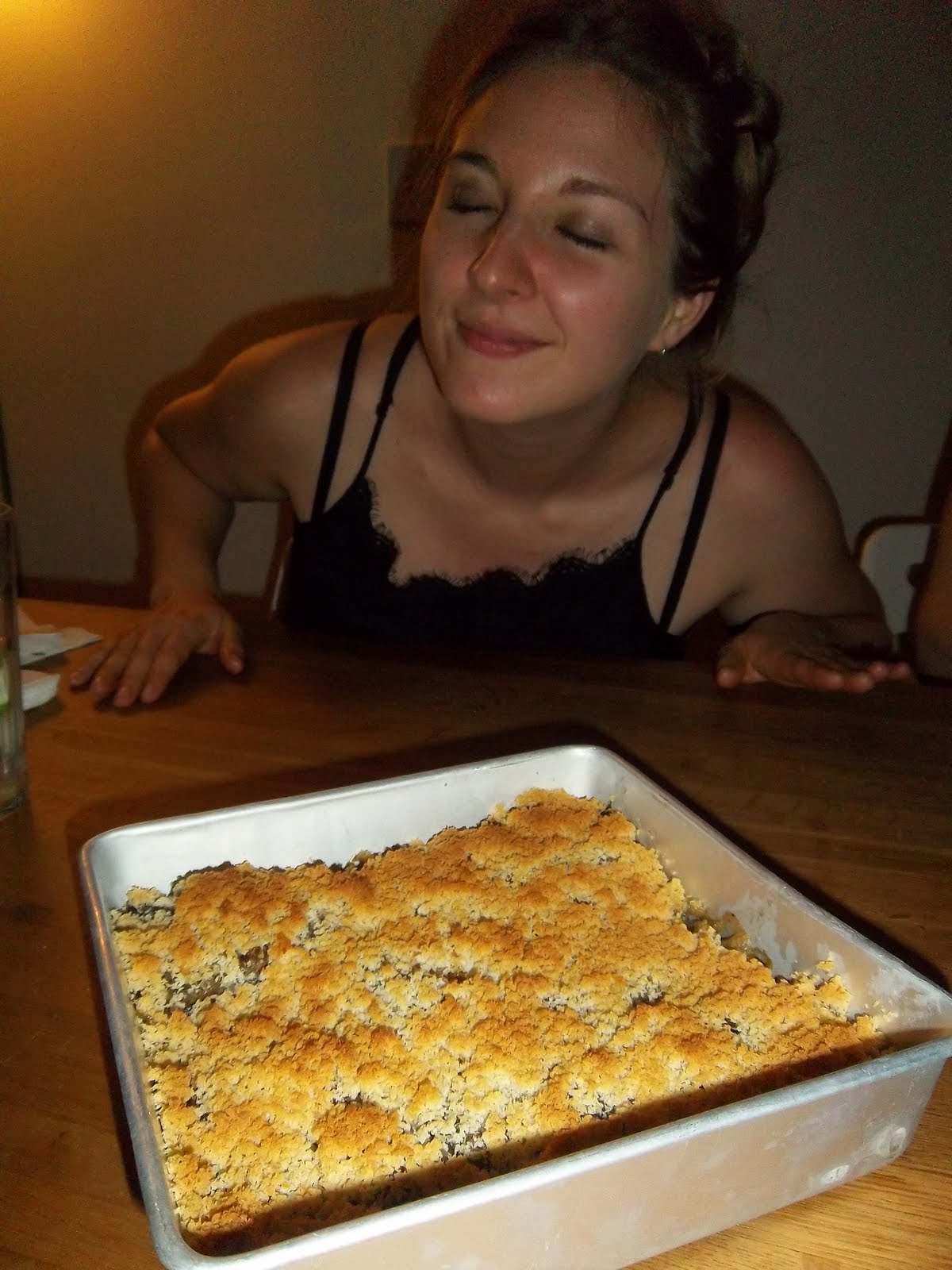
Hannah gets a good lungful of tongue.
That sounded less gross in my brain than when read out loud.

#296 Tongue and Mushroom Crumble. Like most of the weird recipes in the book, this savoury crumble was pretty good. The corned tongue was very tender indeed and well flavoured too, and the mushroom lent an earthiness that always goes well with anything beefy. Much, much better than I expected 6.5/10.

#295 Purée of Dried Peas with Green Peppercorns

A rather upmarket version of that Northern English speciality, mushy peas. There is an infamous incident of the MP (now Lord!) Peter Mandelson visiting his constituency canvassing for votes, where he walked into a fish and chip shop and asked for ‘some of that guacamole’. The ponce. Unfortunately, after a little research, I found on the website of that evil news rag, The Daily Mail, that it is in fact a myth and it ever happened. Shame. But why should the truth get in the way of a good story, eh?

Peter Mandelson getting hit by what appears to be a purée of dried peas

The pea has been popular in Europe for donkeys years – settlements in France dating back to the third millennium BC have been discovered with the remains of pea pods. Dried peas, go back to Roman times; in fact, they were preferred over fresh. Also, luckily for us, the pea became a very common garden vegetable, and Gregor Mendel, the garden-loving Austrian monk, spotted patterns in the variation between pea plants he was breeding and came up with the first theory of genetics. He wasn’t recognised during his lifetime. So often is the way.

Gregor Mendel, Father of Genetics and pea-fancier

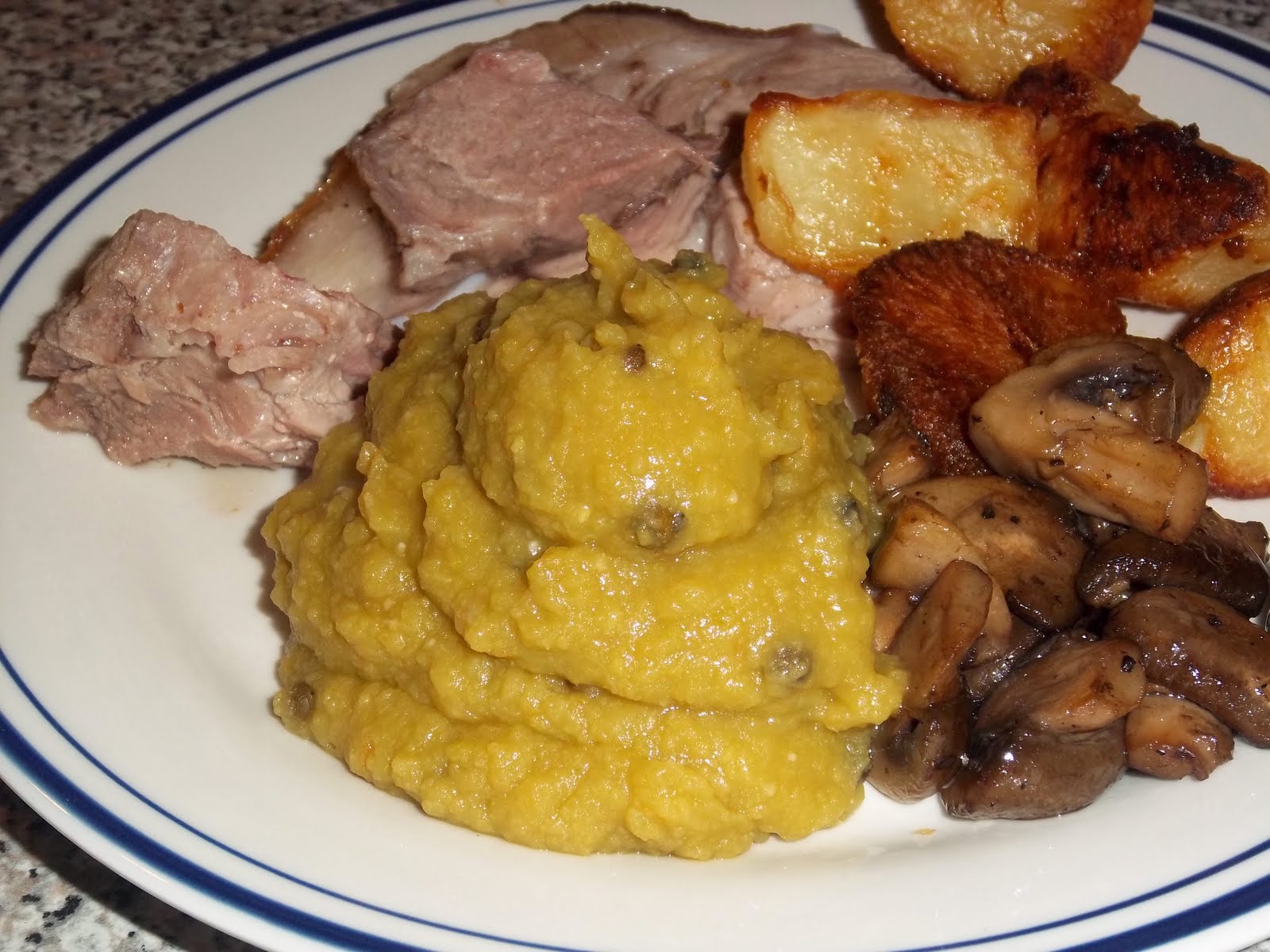
This recipe isn’t really to go with your fish and chips (though omit the peppercorns and it will be perfect), it is to go with duck and pork. I took this as an excuse to get a nice rib roasting joint from Harrison Hog Farms, a great farm here in Houston that really looks after its very English-looking pig breeds. So if you go to a Houston farmer’s market andyou spot them, give them a try as their pork is excellent.

What makes this recipe posh is the pickled green peppercorns. They’re not something that you’ll find in the supermarket, but they’re pretty easy to get hold of in delicatessens.

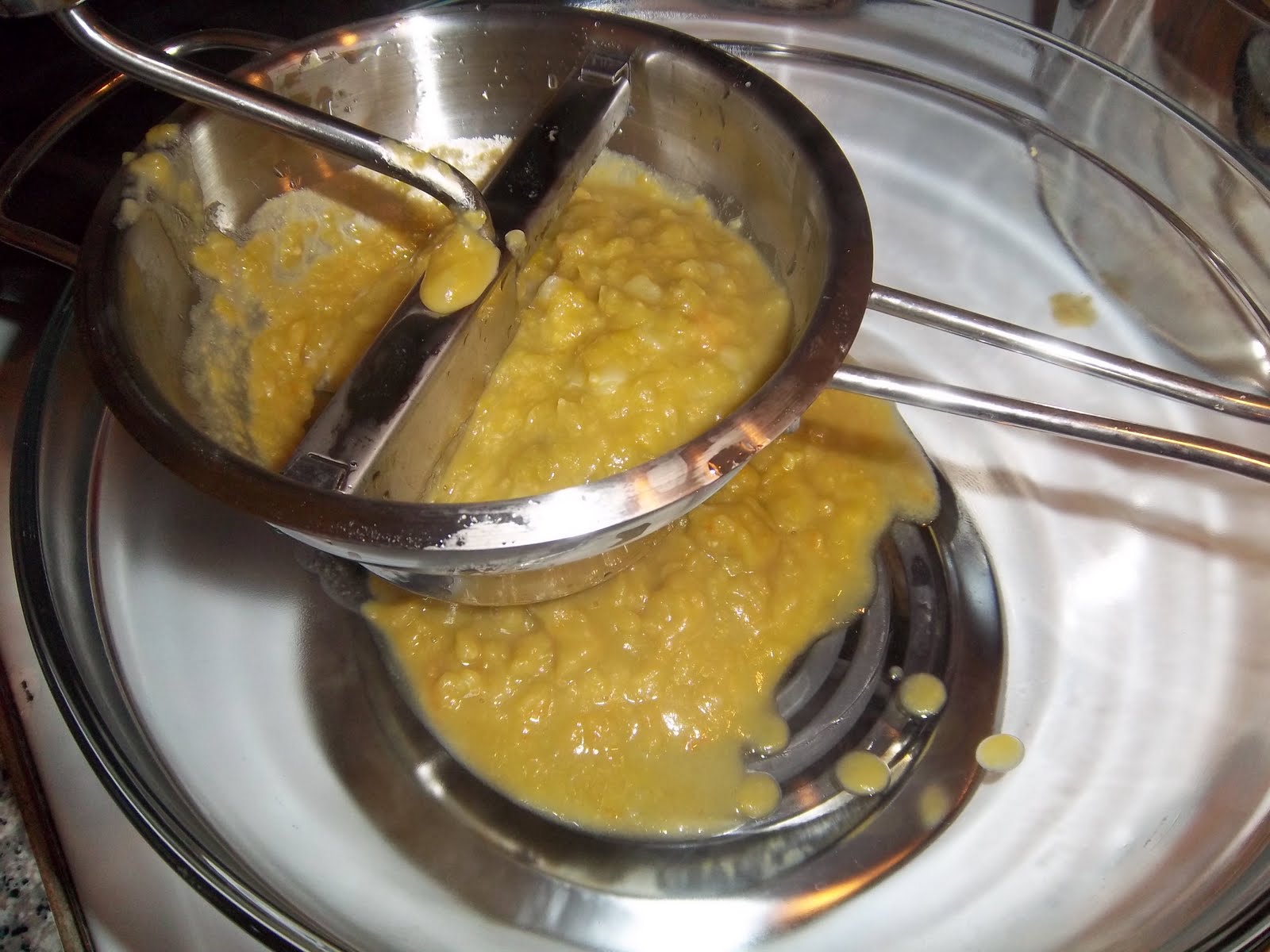
Right then, to make this purée, put a pound of dried split peas in a large saucepan along with a chopped carrot and a chopped onion plus a bouquet garni (I went for parsley, bay leaves, sage leaves, thyme and rosemary in mine). Cover well with water, bring to a boil and cover and simmer until cooked – around 45 minutes. On no account add salt, it makes the peas hard and they won’t cook. This is speaking from personal experience. Fish out the bouquet garni and pass the peas through a mouli-legumes in a bowl (you can use a potato-masher if you want but a blender would make it far too smooth).

Now stir in a large knob of butter and season well with salt (at least a teaspoon) and some sugar. Lastly, mix in a tablespoon of pickled green peppercorns as well as one to two teaspoons of the juice from the can. Easy.

#295 Purée of Dried Peas with Green Peppercorns. This one of the best recipes from the Vegetables chapter of the book. Really delicious and much better than the bought mushy peas you find in cans, and – dare I say it – the chippy! The addition of the bouquet garni and the simple stock veg really lifted it, and the pickled peppercorns were great, little exploding pods of subtle spiciness that transformed a vegetable side dish into the main event. 9/10.

#294 Preserved Orange Slices (part 1)

These oranges are flavoured with a heady mix of cinnamon, mace and cloves; quite a wintery combination, I suppose. In Victorian times, the orange was the most prized Christmas gift and British children would have waited with baited breath to get their hands on them. This did not apply to Irish children though – a little earlier in history, William of Orange’s extreme anti-Catholic laws were so unpopular that the Irish people made a declaration that no orange tree would ever be planted in Irish soil.

William III of Orange (aka ‘King Billy’ by Irish Protestants)
In Europe, the best oranges have always come from Spain, and so it is no surprise that the first orange plantation in America was also Spanish. It was, of course, in Florida and it was built in 1579. After a few years of settlement, orange trees were discovered all over the forests, causing the surprised Spanish settlers to conclude that the orange must have been native to America! It turned out to not be the case – Native Americans had been stealing oranges and spitting the pips as they ate them.

I had been planning on doing these preserved oranges for a while as they are an accompaniment to pork and duck, my two new favourite meats, thanks to recent recipes here in the blog. I’ve only just gotten round to making them because a spice required for the recipe is mace – in the form of blades. Tricky, as supermarkets don’t stock them. However, now I have a car I could pop to The Heights area of Houston and visit Penzey’s spices. What a great shop! Every spice and spice blend you could ever need. Luckily, there is a store in St Louis, so I can keep myself stocked up when I move there. My favourite bit was Granny’s Kitchen which had all the baking spices.

Anyway, enough waffle. Here’s the recipe…

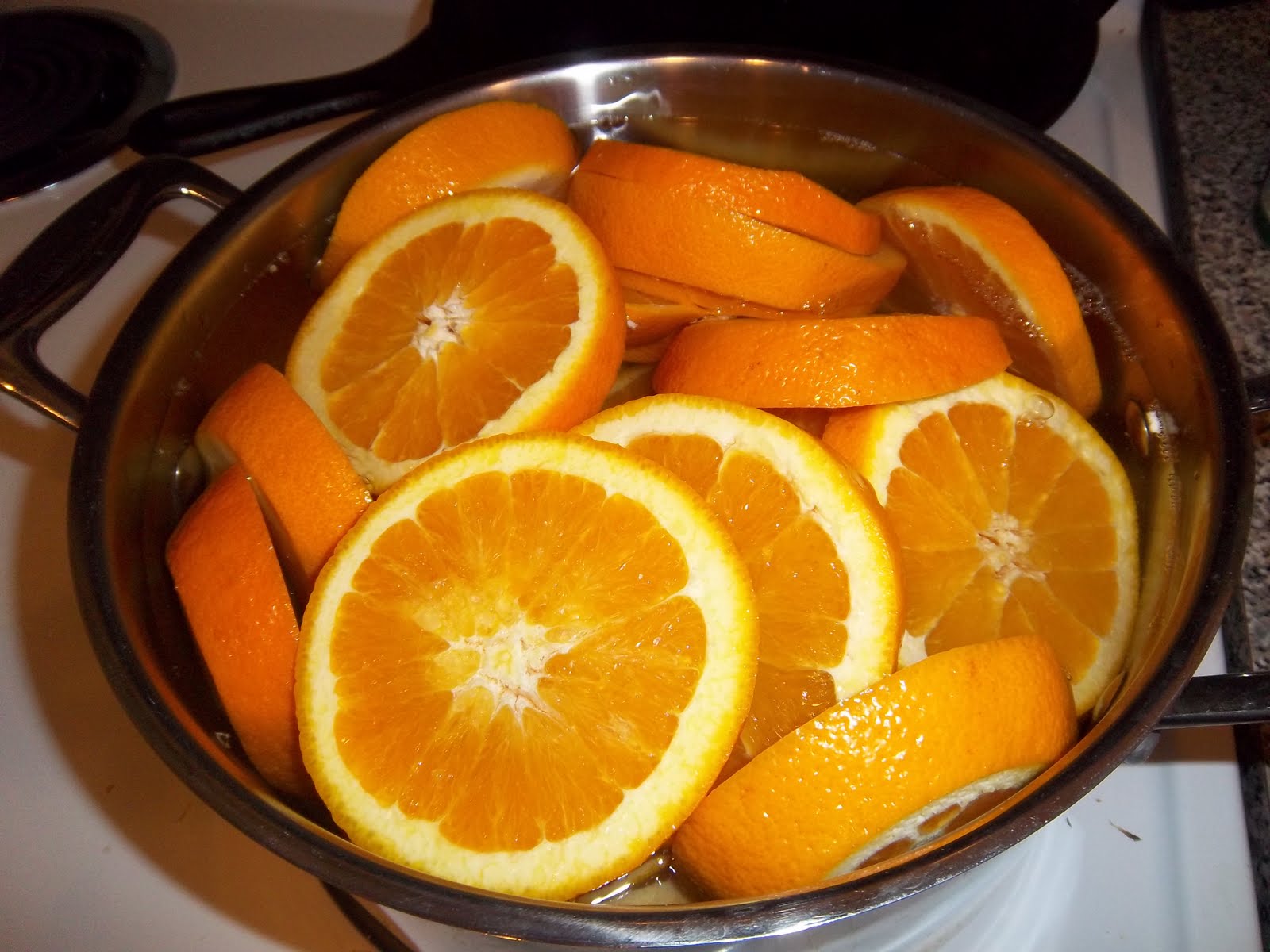
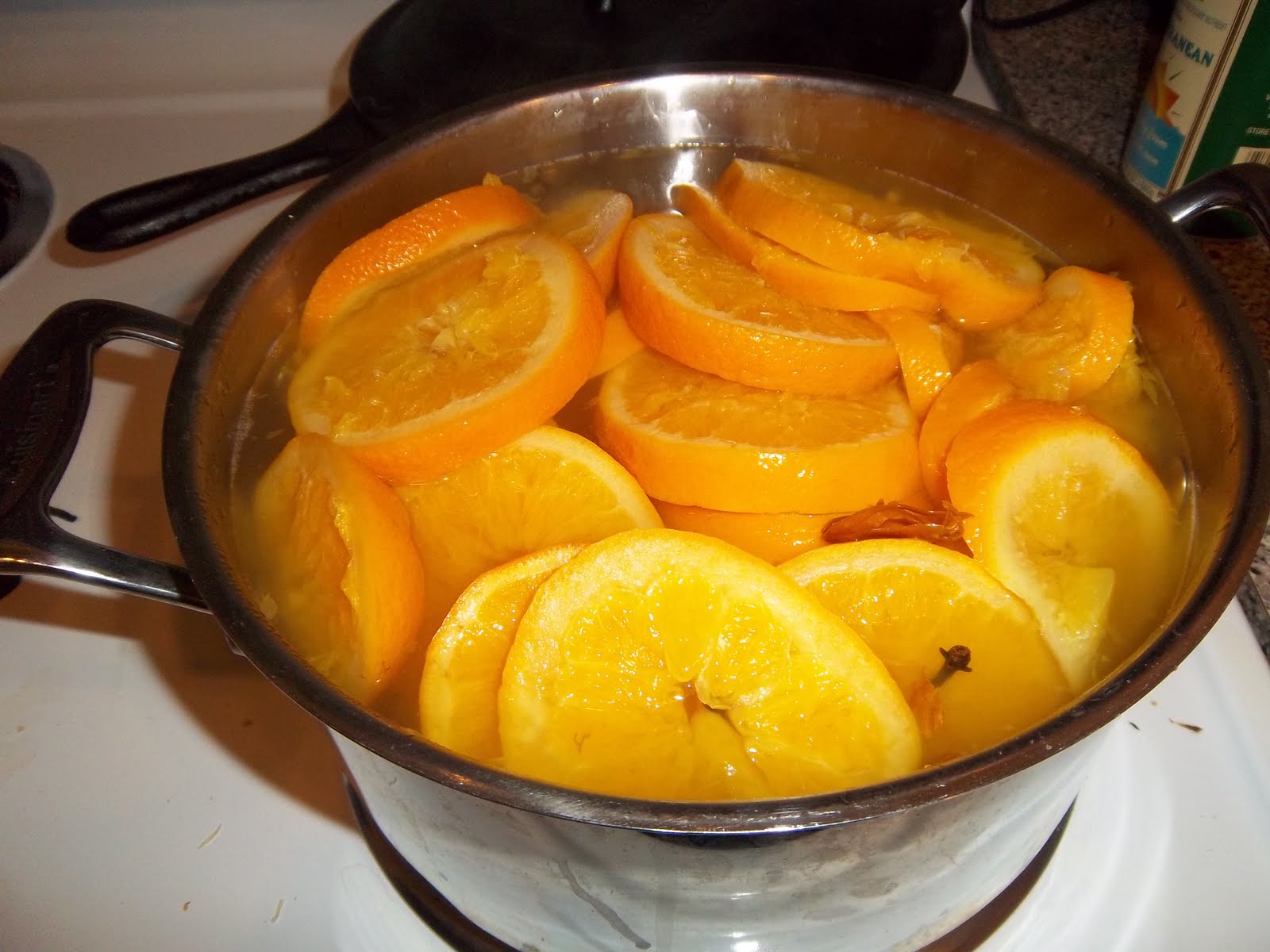
Begin by slicing 10 large oranges – keep them thick, about a centimetre is good – place them in a large pan and cover them with water.

Bring to a boil, cover and simmer gently for 30 to 40 minutes until the peel has softened. Don’t stir the oranges around as they will break up. Meanwhile, in another pan, dissolve 2 ½ pounds of granulated sugar in a pint of white wine vinegar. Add 1 ½ sticks cinnamon, a heaped teaspoon of cloves and 6 blades of mace to the vinegar syrup and boil for a total of 3 or 4 minutes.

When the oranges are done, drain them, reserving the orange liquor. Return the oranges to their pan and pour over the syrup to cover – if there isn’t enough, use some of the orange liquor. Cover, bring to simmering point and cook gently for a further 25 to 30 minutes.

Take off the heat and leave for 24 hours. Next day, pot in sterilised jars. Top up with syrup over the next or two, should they need to be. Here’s the catch though folks: you now have to leave them for at least 6 weeks to mature! When the time is up, they can be served with hot or cold pork, ham or duck. The syrup also makes a good sauce for duck too. Apparently.

#294 Preserved Orange Slices. Well we shall have to have a bit of patience over these. It’s strange to think that when they are ready, I’ll be living in St Louis. I can say that the syrup is delicious though. Look here for the results.

#290 Roast Pork with Crackling and Baked Apples


Man’s relationship with pigs goes back several thousand years. Acorn-eating wild boar were slowly tamed in European forests to become the slightly tamer proto-pig utilized by the Spanish, French and Greece. Swineherds had the unlucky job of attempting manage the unruly pigs. Modern pigs are not quite as wild as their forbearers, but do apparently revert to their feral behaviour quite readily. So beware.

Galen, the medical pioneer of the Roman era, enjoyed a bit of pork like his fellow Romans. What is odd is that he thought it tasted of human flesh. Whether this was a hunch or whether it was knowledge from experience, I do not know. He is correct though, the cannibals of the South Sea Islands, called the various explorers and pioneers they caught and ate longpigs due to their flavour.

The pig is famed for it versatility and pretty much all the animal can be used, and it is the pig that is the focal animal in Fergus Henderson’s wonderful nose-to-tail restaurant, St John in London (check out the blog here). I’ve never managed to get there unfortunately, but one day I shall! For any nose-to-tail fans out there, the ultimate delicacy must be Pliny’s personal favourite, the vulva of a sow who had aborted her first litter, according to Maguelonne Toussaint-Samat in her amazing book A History of Food.

This dish was cooked on my recent trip to England, where Hugh somehow managed to buy a massive shoulder of pork for £1.50. Absolute bargain. He’s a good bargain-hunter; in fact, he’s known for it! I pounced upon the opportunity to roast it the Grigson way which includes baked apples as well as a glaze to go over the crackling. I imagine a sweet glaze would go down well with Texans going by this sign I spotted at the rodeo:

It’s worth mentioning that it is best to buy the largest joint you can afford, the meat will be much more moist and tender in a large joint than a small one. This particularly applies to pork that benefits from a good blast of heat and then a slower roast on a lower hear than say, beef.

As mentioned I used shoulder here, but you can use leg or loin. If the meat has a bone in it, ask the butcher to remove it but ask to keep it. Also ask him to score the rind, every centimetre or so. You can do it yourself with a razor-blade. Make sure that the rind is nice and dry and season the joint all over. You can, leave it overnight in the brine tub, but if you do this, you won’t get the crackling. Seeing that the crackling is the best bit, I wouldn’t recommend it. If you have bones, pop them in a saucepan with a chopped carrot, a peeled onion studded with three cloves and a bouquet garni. Cover with water and allow it to simmer for three or four hours. Strain and reduce to ¾ of a pint. If there was no bone, use some pork or vegetable stock and simmer for just an hour.

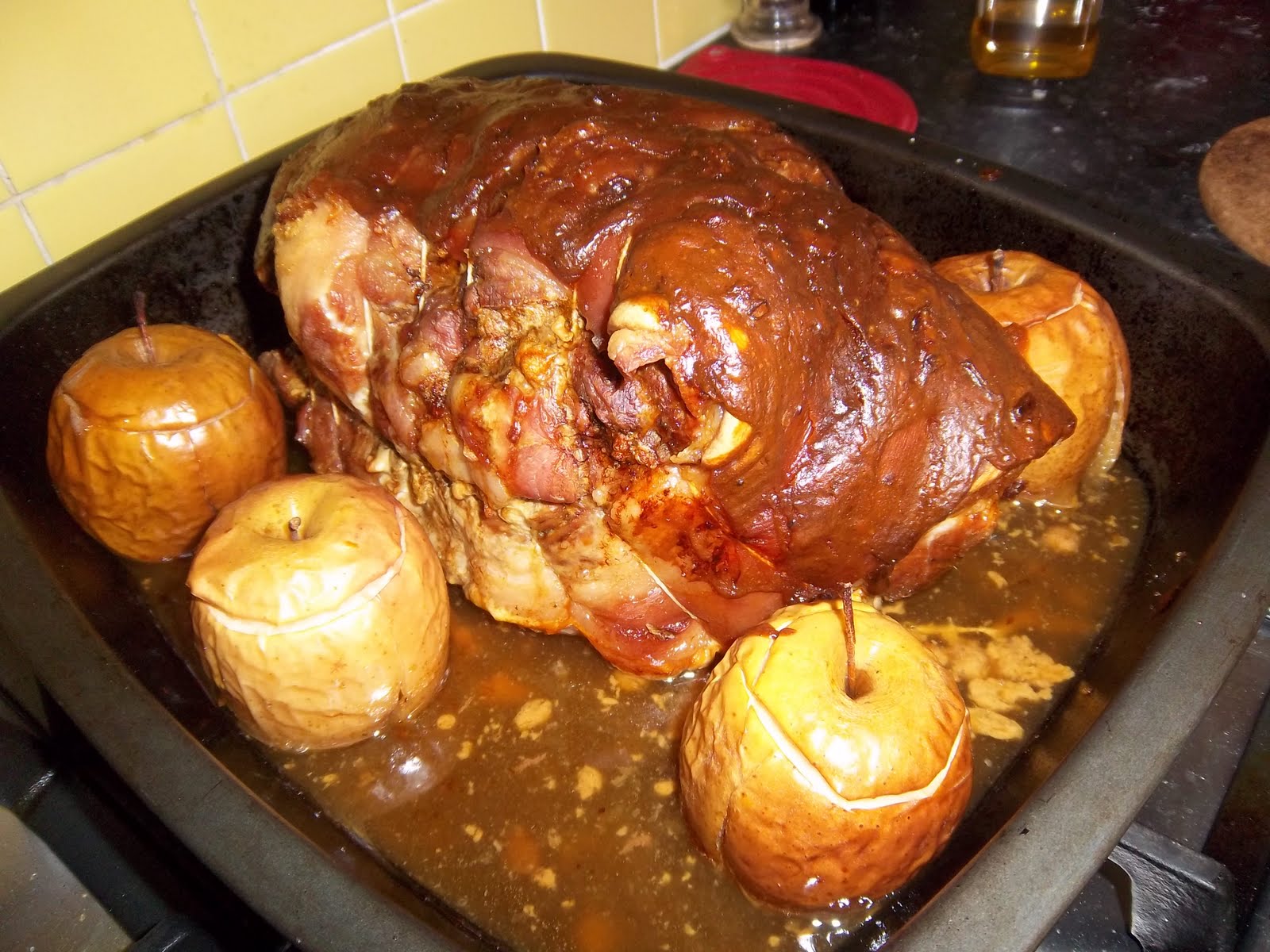
Heat the oven to 220°C (425°F) and rub the skin of the joint with some oil and sprinkle with some salt. Cook for 35 minutes to the pound (1 ¼ hours to the kilo). Place in the oven and turn the temperature down after 20 minutes to 160°C (325°F). An hour before the end of the cooking time, prepare the apples. You need one per person, and use Cox’s Orange Pippins if in season. If not, use Braeburn or Mackintosh. Score a circle close to the tops of the apples, to prevent the skins bursting and nestle them around the joint. If you don’t want baked apples make an apple sauce.

Next prepare the glaze. Melt a tablespoon of redcurrant jelly in a pan and mix in a tablespoon of French mustard as well as half a tablespoon each of cream and soft brown sugar. Paint the glaze all over the crackling in the final half hour of cooking.

When ready, remove the joint from the oven and let it rest for at least 20 minutes. While you are waiting, make the gravy. Melt an ounce of butter in a pan and when it goes a nutty brown colour, stir in a tablespoon of flour. Whisk in the stock and add any meat juices from the roasting pan.

Voila!

#290 Roast Pork with Crackling and Baked Apples. I have eaten roast pork many times, but never actually cooked, but I can honestly say that this was the best roast pork I’ve ever had from a domestic oven. It was so tender, it took no effort to slice and the glazed crackling was half crispy, half chewy and almost toffee-like. The baked apples were a revelation. An absolutely fantastic roast dinner! 9/10.

#279 Apple Sauce II

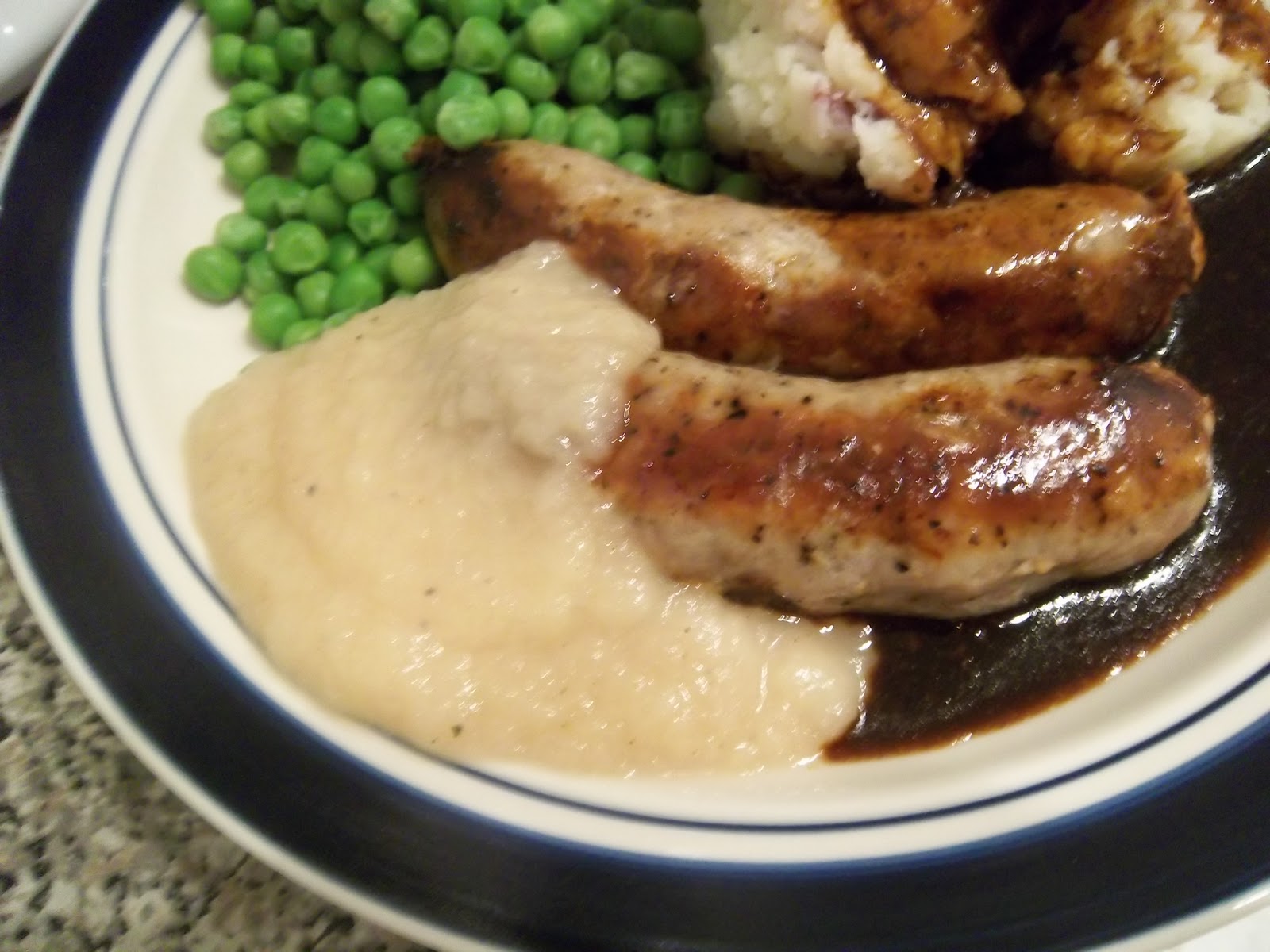
I still had sausages left over from Harrison Hog Farm – I ate half of them with Crempog Las and wanted to the give the rest the Grigson treatment. I could have gone with toad-in-the-hole or something, but I’d done that already. Luckily I spotted this apple sauce recipe which can be served with sausages (as well as pork, salt pork, duck and goose). What made me want to do this recipe is that allows one use sausage as the meat in a Sunday dinner rather than a roast meat which can be a pain to do if there is a lot going on in the day. So it’s good old sausage and mash for dinner.
The recipe asks for Cox’s Orange Pippins, Laxtons or James Grieve apples. These are not available in America (as far as I know), and so for any Northern Americans amongst us (and I know there are several), go for Mackintosh apples instead – they have the tart mealiness of a Cox’s Pippin.
There are several apple sauce recipes in English Food and I have now hit a bit of a brick wall – the remaining recipes all use Bramley’s seedlings which can’t be found in the USA, and I haven’t been able to find an appropriate alternative. If anyone has any suggestions, let me know!
Roughly chop 12 ounces of apples – no need to peel or core them. Add them to a saucepan along with a strip of lemon peel and 3 ounces of water (by weight!). Cover and simmer until soft. Pass them through a sieve into a bowl, forcing the apple flesh through to produce a smooth puree. Return to the saucepan and simmer quite briskly until the puree thickens and starts to spit and bubble a little. Stir in an ounce of butter and season with pepper and a little salt, but only if the butter was unsalted.

#279 Apple Sauce II. A slightly strange sauce this. I liked the fact it was unsweetened – bought apple sauces are far too sweet I think and they don’t always do a good job of cutting through the rich, greasy meat it’s usually served with. The butter enriched it but didn’t make the whole thing sickly like I expected. A good sauce, but nothing to write home home about! 5.5/10.

#265 To Cook Salt Pork and Hams, Part II: to Eat Cold

Living in Texas means that there a lot of Mexican people (seeing as Texas was once part of Mexico, until the USA nicked it). Many Mexicans mean much pork is eaten. In England we eat loads of ham and bacon and sausage, but we’re not very exciting when it comes to other ways of eating it. Indeed this is reflected in English Food: there are just 8 pork recipes in the Meat chapter, yet there are loads of pork in the cured meat section. This is one of them of course – there is a whole variety of pork cuts that are familiar and unfamiliar to me. I saw a small leg and though it would be great to make my own salt pork seeing as I have the brine tub on the go at the moment. I have already done similar things from the book, like the Bradenham ham and the hot salt pork.
Noone seems to cure anything in England anymore – I can understand it of course, but brining meats is much more common here in the US – the Thanksgiving turkey got a good brining the night before from Joan last month. However if there is a cheap leg or loin going spare at the supermarket or butcher, it would be put to good use by being added to the brine tub rather than the freezer until it’s is needed.
You can use leg or loin for this. I have already gone through how to prepare and boil the salt pork or ham in a previous post. When it is cooked remove from the stock and allow it to drain and cool down enough for you to remove the skin without scolding yourself. If the meat has been deboned, then it needs to be wrapped in cling-film and pressed overnight (as I did). Toast some breadcrumbs and press them into the meat. This will be easier if the meat is still warm, though if you had to press it, there is no open than to do it when it is cold. Keep the whole thing wrapped up in clingfilm or greaseproof paper in the fridge and slice it up thinly for salads and sandwiches.
It’s important to remember that when you make these hams, you get a delicious ham stock. Use it to make some pea and ham soup (recipe here).
#265 To Cook Salt Pork and Hams, Part II: to Eat Cold. I think I must be getting better at these things because the salt pork was very moist and nicely salted. The trick seems to be to have the merest simmer when cooking it – in fact I turned the heat off completely for the final half hour; the cooking liquor was hot enough to continue to cooking process. I have been shaving bits of and eating it with mustard, pickles and sourdough bread. Very good! 7.5/10

#262 Chestnuts as a Vegetable

Yesterday was Thanksgiving Day here in the US and Joan and Dave (my bosses) very kindly invited round to their house for the feast (check out Joan’s blog here). As it is was my first ever Thanksgiving dinner I was very excited about the fayre that would be there to feast upon. I was not disappointed: roast turkey and cranberries I knew would feature, but there was also loads of other New World things too: mashed potatoes, sweet potatoes plus exciting stuffings and good old Brussels sprouts. In fact it wasn’t that far removed from the British Christmas Dinner, so I was on reasonably familiar territory. The only exception being the mashed sweet potato with melted marshmallows on the top: I am not used to this merging of the sweet and savory in such brazen fashion!
Attending the dinner gave me the perfect  excuse to cook some of the vegetable sides from the Vegetable chapter; not something I often do when I’m cooking a meal from the book as they are sometimes complicated and add rather a lot more stress to the occasion.
Chestnuts as a Vegetable seemed the appropriate choice for the time of year, plus I could make it in advance the night before.  Griggers doesn’t mention anything about the recipe: just a list of ingredients and a method. I assume it is there because we don’t use them as a vegetable anymore and expect she wants us to start doing it again.  But should we?
You will need a pound of chestnuts for this recipe. Begin by nicking each chestnut end to end and plunge them into boiling water for 10 minutes. Drain them and quickly peel them by holding one in a dishcloth or oven glove and using your other hand, remove the shell and skin with a small knife. This is easier said than done; the skin came off just where skin meets back-of-thumbnail. It hurt. I would take Joan’s advice and buy chestnuts that have already been peeled. Anyways, next gently fry a chopped onion and a finely chopped clove of garlic in two ounces of butter, cover the pan and cook until they are soft and transparent. Meanwhile, cut two ounces of bacon rashers cut into strips – use any bacon you like; I used maple-smoked. Also, peel, core and chop two Cox’s pippin apples (these are not around in the US, so I used Granny Smiths as they seemed appropriately tart). Try to not allow anything to burn or brown. Turn up the heat in the pan and add the bacon, a couple of minutes later add the apple. Fry until they soften. Finally chop the chestnuts into chunky pieces and add them along with a good seasoning of salt and pepper. Cook until the mixture begins to meld together.
You don’t have to serve this with just turkey – it will go well with pork, salt pork or veal.
#262 Chestnuts as a Vegetable. I wasn’t sure about this at first, but I decided in the end that I liked it. I was unsure because I tasted it on its own. However, when it was eaten with some turkey and gravy etc, it really worked. We may not use them as a vegetable anymore, I suspect because the preparation is so tricky, time-consuming and sore! But now that tinned or vacuum-packed chestnuts are easy to get, they really should be brought back – they are part of our food heritage after all. Sweet chestnuts have been actively cultivated since Roman times and can be found not just peeled, but candied and ground into flour. They are absolutely delicious roasted under the grill or by the fire, but let’s try something different this year, hm? 7.5/10

#156 Cheshire Pork and Apple Pie

I bought a nice new pie dish last week, so I thought I’d Christen it with a nice big pie for Sunday dinner. I decided upon this Cheshire Pork and Apple Pie because it needed to be pretty quick to do (no cooking of the filling beforehand) as I had to be in the lab in the morning. Plus there was a load of Cox’s Pippins in Unicorn in Chorlton – apparently the last of the stored apples from the previous autumn.

This is a very traditional pie – essentially meat stewed in liquid (in this case cider) under a pastry crust, and comes from Hannah Glasse. It is a little odd in that it has a double crust; I’d have no problems with it if it was cooked in a thick sauce. Surely the pastry lining the pie dish will just turn into a soggy mess? To pre-empt this, I used a previous trick of The Grigson – to place a baking sheet in the oven as it heats, so that when the dish is placed on it, the underside quickly cooks.

First of all make some shortcrust pastry using 10 ounces of plain flour and use two-thirds of it to line a 2 ½ pint capacity pie dish.

To make the filling you need to prepare your pork – you need 2 pounds of boned pork loin. Cut off the rind and trim away the fat with a sharp knife, then slice the loin and chop into chunks. Next peel, core and slice around 12 ounces of Cox’s orange pippins. Then mix 8 ounces of chopped onion together with 4 chopped rashers of cured, unsmoked bacon. Now layer the ingredients in the pie dish: half of the pork, then half of the apples, scatter them with some brown sugar and then sprinkle over half of the onion-bacon mixture. Season each layer with salt and pepper plus some grated nutmeg. Repeat with the remainder in the same fashion. Dot the top with around 2 ounces of butter and then pour on ¼ pint of dry cider. Cover with the remaining pastry sealing and glazing it with beaten egg. Make some fancy pastry decorations if you fancy. Bake for 20 minutes at 220°C, and then turn the oven down to 160°C for a further 45 minutes. Jane doesn’t indicate what to serve with it, but I went with mustard mash and some asparagus.

Check out the arts & crafts spectacular atop the pie!

Oink!

#156 Cheshire Pork and Apple Pie – after much deliberation on this one, I give it 5/10. I think it was pretty average – I wasn’t sure about the amount of liquid in the pie, which after my efforts to prevent it, still made the pastry soggy. I think, it could be easily improved, however by making a roux with the butter and some extra flour and using the cider to make a sauce. I think it would have made this okay effort into a very hearty one that would stick to your ribs, as we say in Yorkshire!