#164 Sorrel with Eggs

It’s always exciting trying a new food, and this one – sorrel – is completely new to me, even though it is a common part of many a British meadow’s flora. At least that’s what the foragers’ books keep on telling me. I’ve kept my eyes open and only found the quite similar, though inedible, dock leaf when I’ve been on the look-out. So, I was very lucky to happen up some at the Unicorn grocery whilst I wasn’t looking for it. It’s good really, because now I know what it looks like and tastes like I’m much more likely to see it in the grassland in the future.

Sorrel is one of our forgotten vegetables, and was once part of every garden as it grew happily in the early Spring when the store of over-wintered fruit and vegetables had run out, but the new springtime plants were not yet laden with their bounties. Famine time. These days of, course, we have no gap to fill in the food year and so it has gone out of favour. Another reason for its decline in popularity is that, because of its acidic zingy sharpness, it was used a lemon substitute and is therefore required no longer. It’s very easy to grow – I shall be growing some next year, for sure. Here’s a nice article about it from The Telegraph.

This recipe uses pureed sorrel that takes seconds to make, so if you find any, either in the meadow or the greengrocers, try this to get you started. It serves six, but you can decrease the amounts if you don’t have enough sorrel (or people!).

First boil six eggs for 6 minutes exactly (unless they are large, then boil for 7), this will achieve a boiled egg with well-cooked whites but still squidgy yolks. Whilst they are boiling, prepare 8 ounces of sorrel by rinsing, draining and removing the stalks just as for spinach. Add the leaves to a saucepan that’s over a moderate heat, after a few seconds it will reduce to a dark green puree, then add salt and pepper and 3 ounces of butter. Keep warm. Now fry six slices of bread in butter or oil until crisp, and cut into triangles (12 altogether). Now arrange the ingredients in a bowl or serving plate: sorrel first, then the eggs (whole or halved) and then the fried bread. Finally decorate with orange wedges (which I forgot to do!).
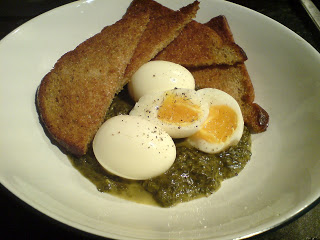

#164 Sorrel with Eggs – 7/10. I really enjoyed this usual and forgotten vegetable. The flavour was intense and was tempered well with the oily bread and creamy yolks of the eggs; it could be best described as lemon but with a strange astringency, like that of green rhubarb or raw gooseberries. It would be delicious with fish I expect. This is the only recipe that uses sorrel in English Food, but I am on the look out for other recipes elsewhere.
#146 Asparagus with Melted Butter

Does anyone know if Britain has had an asparagus shortage this year? I’ve looked high and low for days and not found any from the UK, most are from Peru and the nearest were from Catalan. Then, I happened upon some in Asda of all places. I love asparagus, but refuse to eat the important stuff – aside from its flavor, the reason it’s special is because it is such a short-lived treat. I don’t want to eat it all year round. Griggers didn’t agree, it seems, and scoffed it whenever she could get her mitts on some.

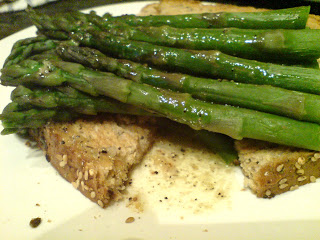
There’s no other way of enjoying this excellent vegetable – simply steamed with butter. The only addition I’ve made is a serving it on a slice of toast to turn this from a starter to light supper dish.


You will need at least 10 stalks per person – or more if you have those delicate thin fronds. Trim away the woody ends by cutting or snapping them off and tie the stalks up with string. Stand the asparagus in a saucepan with an inch of boiling water seasoned with salt and pepper. Cover the pan (or make a dome with foil if your pan is not deep) and simmer until tender and cooked – anywhere between 10 and 20 minutes depending on thickness. Alternatively, cook them in an asparagus kettle or steam them. Meanwhile melt an ounce of butter for every serving and season it with salt, pepper and a squeeze of lemon juice. Lay the asparagus on a plate and pour over the butter or serve it in a separate jug.

FYI: Asparagus is famous for producing smelly wee – though some people haven’t made this observation. This isn’t because their urine hasn’t taken on the smell, but that they lack the specific receptor in the nose that detects it. It is all down to one particular recessive allele of a gene – if you have both copies of the allele, you won’t be able to smell your sticky asparagus wee – but everyone else will! Nice.

#146 Asparagus with Melted Butter – 9.5/10. This is pretty hard to beat – the bitter-sweet asparagus with the rich salty and tart lemon butter are a marriage made in heaven. I could eat this forever.

#124 Celery with Cream

I commented earlier how nice it was to have leek tarts because the leek is so under-used as a vegetable in its own right. Well, another vegetable that fits into the same category is celery. Apparently celery was introduced in the Seventeenth Century, but was used first used as a cooked vegetable in the Eighteenth. It’s hard to imagine that bitter celery would be good on it’s own, but Griggers reckons it’s delicious. We shall see. This dish also completes my main course for the Eighteenth Century Feast.

Wash and trim 2 heads of celery and cut them into 3 inch lengths. Plunge them into boiling water for 10-15minutes until they are tender. Drain and return to the pan. Beat two egg yolks and ¼ pint of double cream together along with some seasoning. Stir this into the celery over a low heat until the sauce thickens. Serve straight away.


#124 Celery with Cream – 3.5/10. Not foul or inedible, just weird. That is the best I can sum this up as. I’m not sure that celery is palatable cooked this way – Braised celery, I know, is a good way to eat it as an individual vegetable, but not this one I’m afraid. I’ll stick to cauliflower cheese in future!

#38 Broad Bean Soup

After spotting the broad beans in Unicorn, I made (#38) Broad Bean Soup. A simple affair: soften an onion in butter, add water, a little chopped parsley, the beans, salt, pepper, and a little sugar and simmer until cooked. Then liquidise in a blender and add a few tablespoons of cream. Serve with a crouton!

This was a lovely fresh tasting soup – it’s certainly letting me know that Spring has arrived; even though the weather outside is AWFUL! I normally make soups with stock and thought that it would be quite bland. The best thing about it, however was the fact I could serve the soup up in the new le Creuset mini soup terrines that I bought…

FYI: the broad bean, or fava bean, is native to Africa and Northwest Asia, but has been cultivated in Europe since around the Sixth Century BC. Also, raw broad beans contain vicine, which can induce haemolytic anaemia in patients with glucose-6-phosphate dehydrogenase phosphate deficiency. So do say I didn’t warn you!

#38 Broad Bean Soup: 6.5/10. A lovely fresh soup, but I prefer more substantial soups, however it would be great as a first course.

Vegetable Soup

This is my vegetable soup, which I admit is pretty good. I always make a great load of it and freeze what I don’t eat. It’s very good for you, easy to make and pretty substantial for a soup containing no big meaty bits! The Grigson also does one that contains lots of meat! I must admit I make mine with chicken stock, but I also make it with vegetable stock and it’s almost as good. It difficult to stick to an exact recipe, because it throw in whatever I have, plus the time of year has a great effect. I think that there are certain ingredients that are a must, however, such as potato, onion, garlic, carrot, i.e. basic stock vegetables. That said if you miss a couple out it’s also fine. I would say try and use as many of them as possible. All should be clear in the recipe. The rest of the vegetables can then be added at the appropriate time – roots straight after the stock has come to a simmer, and greens towards the end. The choice of herbs is your own, but I like the classics – thyme, parsley, pepper and mint. Any stalks and leaves you don’t use, freeze. I freeze all my fresh herbs and spices – chillies, herbs, ginger, etc etc…

I think that some protein is required so I always add some red lentils, which thicken the soup slightly, and a can of beans – any will do, use your favourite.

For some tips on what to put in your bouquet garni, have a look at http://en.wikipedia.org/wiki/Bouquet_garni. I find that those little bags you get with washing tablets work quite well!

You will need:
2 tbs olive oil, or butter
bouquet garni – made from a very generous sprig of thyme, parsley stalks, mint stalks
2 litres of chicken or vegetable stock
2 tbs of red lentils
salt and pepper

As many of the following basic vegetables as possible:
1 onion, chopped
1 medium-sized potato, diced
3 cloves of garlic, chopped
1-2 carrots, diced
1-2 sticks celery, diced
1 leek, sliced – use as much of the green parts as possible. Slice it finely though as it can be tough

2 or 3 root veg, diced appropriately, as some take longer to cook than others e.g. turnips, a small swede, parsnip
1 or 2 greens, thinly sliced e.g. 1/4 white cabbage, kale, peas (don’t slice those, obv.!)
1 can of cooked beans
2 tbs each parsley and mint
more salt and pepper, if required

What to do:

  1. Fry the stock vegetables in the oil gently for a few minutes, when they start to soften, season and add the bouquet garni. (Tie the herbs with a piece of string, or put in a muslin bag). Continue to fry for about 10 minutes – don’t let the vegetables colour, though.
  2. Add the stock and bring to the boil, add the lentils, then allow to simmer for 5 minutes.
  3. Add the root vegetables and simmer until tender – around 15 minutes.
  4. Add the greens, beans and herbs and allow to simmers for 5 more minutes.
  5. Removed the bouquet garni and check the seasoning.

Recipes 2-4 – Glamorgan Sausages, Olde Worlde Mushrooms and Peas

I’ve been away from a computer for a few days – I still don’t have the internet at home and I had to go back to Leeds at the weekend because my brother Ady and his good lady wife Nads had a little boy called Harry. He’s the cutest and I’m NOT biased! Now I’ve got some catching up to do. The hat trick meal went quite well although I did get a little flustered and rushed through the making of the Glamorgan sausages – they were far too big and didn’t cook through properly. They were also a bit well done – au creole I should say – because I lost concentration when dishing up. However, they can be done well in advance, so next time I’ll be better prepared. They’re a definite veggie alternative. Doing them in the food processor makes light work of it too – although be careful, I’ve sustained my first injury on one of the blades! The fricassey of mushrooms was brilliant; the taste and aroma of the mace and nutmeg were warming and so very Medieval! The Grigson talks about the English way to cook (#4) green peas – i.e. with mint and sugar in with the water – as the only way to do them yet I had never actually eaten them this way. Well, I certainly agree and it will now be the only way I shall cook peas in the future!
For the Glamorgan sausages:

Start by mixing together 5 ounces of grated Caerphilly or Cheddar cheese, 4ounces of fresh white breadcrumbs, 2 tablespoons of finely –chopped leek or spring onion and a generous tablespoon of chopped parsley. You can quicken the whole process by simply reducing those ingredients into breadcrumbs in food processor. Now mix in 3 egg yolks, half a teaspoon of thyme, a level teaspoon each of salt and mustard powder and some pepper. Bring the mixture together and form into around 12 small sausages. Dip each one in egg white and then coat in some dried breadcrumbs. Fry gently in oil or lard until golden.

The recipe for ‘A White Fricassey of Mushrooms’ comes from Hannah Glasse and I shall simply quote it as Griggers has done:

“Take a Quart of Fresh Mushrooms, make them clean, put them into a Sauce-pan, with three spoonfuls [tablespoons] of Water and three of Milk, and a very little Salt, set them on a quick Fire and let them boil up three Times; then take them off, grate in a little Nutmeg, put in a little beaten Mace, half a Pint of thick Cream, a Piece of butter rolled well in Flour, put it all together into the Sauce-pan, and Mushrooms all together, shake the Sauce-pan well all the Time. When it is fine and thick, dish them up; be careful they don’t curdle [ don’t let them boil]. You may stir the Sauce-pan carefully with a Spoon all the time.”

The peas were simply a cop out: make sure you boil them with plenty of salt, sugar and mint!

Here’s what Greg reckons:
“13th Sept: Glamorgan sausages, mushroom fricasee, minty peas, new potatoes. As a combo it works really well. The mushrooms are creamy, reminded me of the really nice chicken supreme we used to get at school, the peas are sweet n fresh, the sausages are comforting stodge, sits together a treat. The mace was most exciting , looks like pork scratchings, smells like sarsaparilla, gives the mushrooms an exotic little edge. I’d put more in than she says, it could take it. The peas were lovely, could eat a huge bowl by themselves, it’s not quite the same as just having peas with mint sauce either, you get all the sweetness first and a rush of mintiness last, totally moreish. Sausages were grand but recipe said make 12, which the monkey reduced to 4, bit of an error as they were not quite done through so still a bit leeky. The cheese will never fully melt anyway as it’s not fatty. Potatoes perfect complement. Sausages: 3. Mushrooms: 4 (my fave). Peas: 4. (I’m saving 5 for something amazing!)”

My personal ratings are:
#2 Glamorgan sausages: 3/5 – next time I’ll do them better and hopefully they’ll graduate up to 4/5!
#3 A Fricassey of Mushrooms: 4.5/5 – a brilliant way to serve mushrooms as a veg with a Sunday roast.
#4 Green Peas: 4.5/5 – quintessential English delight