
This is the last recipe in the Griddle Cakes & Pancakes part of the Teatimechapter – and it was one I have been looking forward to; I am from the West Riding of Yorkshire (a place called Pudsey, which is nestled between Leeds and Bradford), but I had never heard of Yorkshire oatcakes or ‘riddle bread’ until I thumbed through English Food. In Jane’s introduction she described a letter from one of her readers who complained of the difficulties of purchasing oats in Liverpool. The reader, who was from Yorkshire originally, really missed her riddle bread and wished she could get hold of some. How odd that in the 1970s people could not buy oats in the North of England!? It’s the one cereal crop that loves bleak and damp climes and was grown in abundance in Lancashire, Yorkshire and the rest of Northern England and Scotland.
Oats are considered a superfood these days and are widely available, though fine oatmeal is required in this recipe, which can be tricky to get hold of. I wonder if this was what Jane’s Liverpool writer was after. You are unlikely to find it in supermarkets, but some health food shops might stock it. I found some online at a reasonable price.
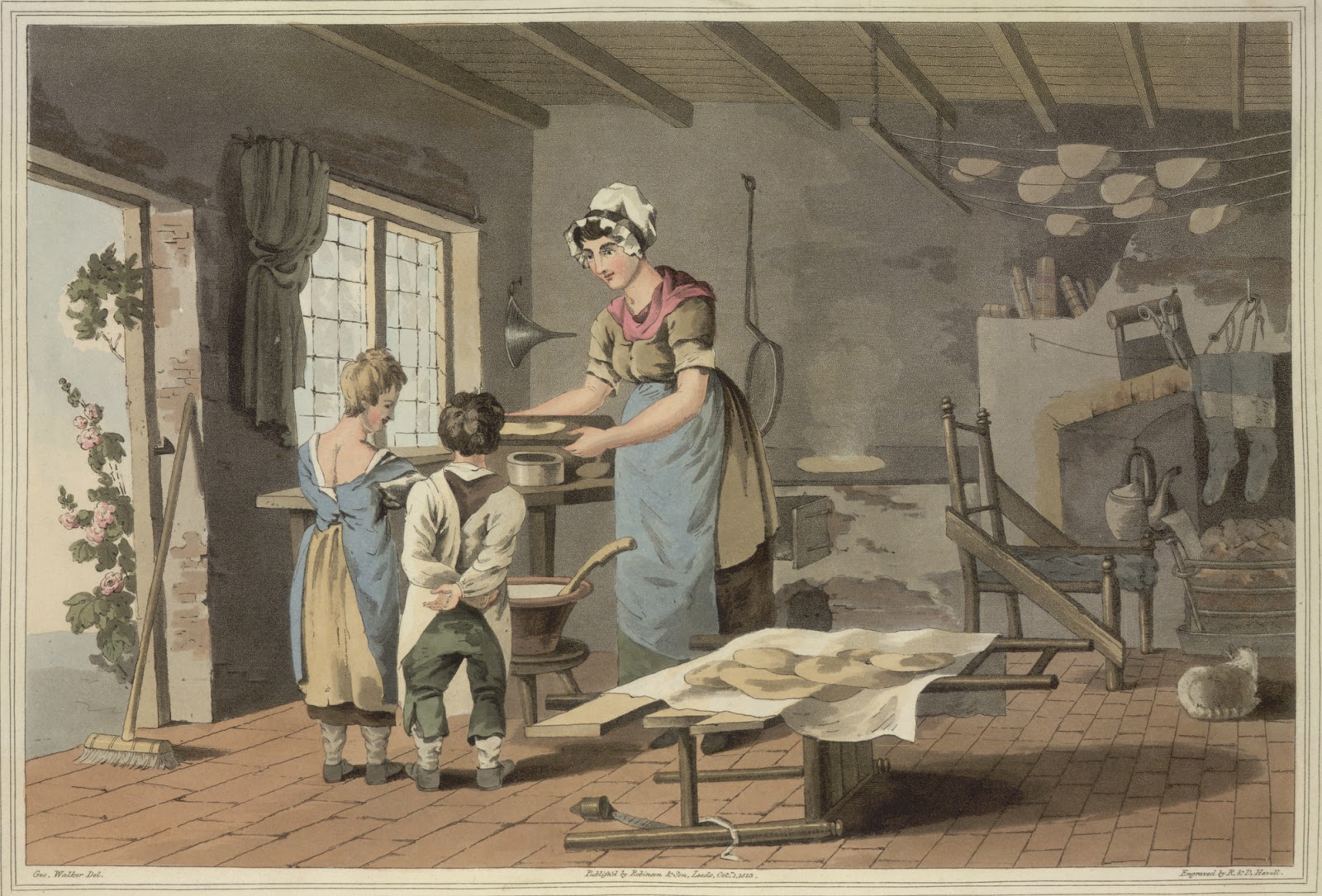
I am a huge fan of oats in all forms (however, see below) and really love the Derbyshire oatcake: a large soft, slightly rubbery disc that can be eaten like a pancake, rolled up dripping with butter and sugar. I assumed riddle bread would be the same, but no.
Jane gives detailed instructions on how to make the riddle bread, according to her it made from a batter of fine oatmeal, yeast, salt and water which is quickly ladled and flung in strips across a hot bakestone (or bakstone, if you want to use proper dialect). This produces a pancake with a smooth underside and a bumpy upper side ‘riddled’ with holes. The strips would be hung up before the fire in a wickerwork basket called a creel, or in a kitchen so that they could dry out and be sprinkled into soup. As often with these traditional recipes, it is hard to picture what the technique used actually is, so I cross referenced. Jane usually credits her sources, and she found out about this method in a very good book called Good Things in England, written by Florence White in the 1920s, but there was no extra information to be gleaned.
The odd thing is I cannot find another method for making this riddle bread that matches Jane and Florence’s description. All other sources describe a batter that is shaken upon a chequerboard-like griddle to spread it out and hasten the cooking process, similar to the process of riddling corn, hence ‘riddle’ bread. They could be eaten straight away with plenty of butter like a crumpet or pikelet. This seemed a much easier way of doing things, but, alas, I have to follow Jane’s instruction, so here goes:
With a fork, cream half an ounce of fresh yeast in a little just-warm water and allow to froth. As you wait, mix together in a bowl a pound of fine oatmeal and a ‘scant’ teaspoon ofsalt. When it has attained a decent head, tip into the oatmeal and whisk in enough warm water to make a batter the thickness of double cream.
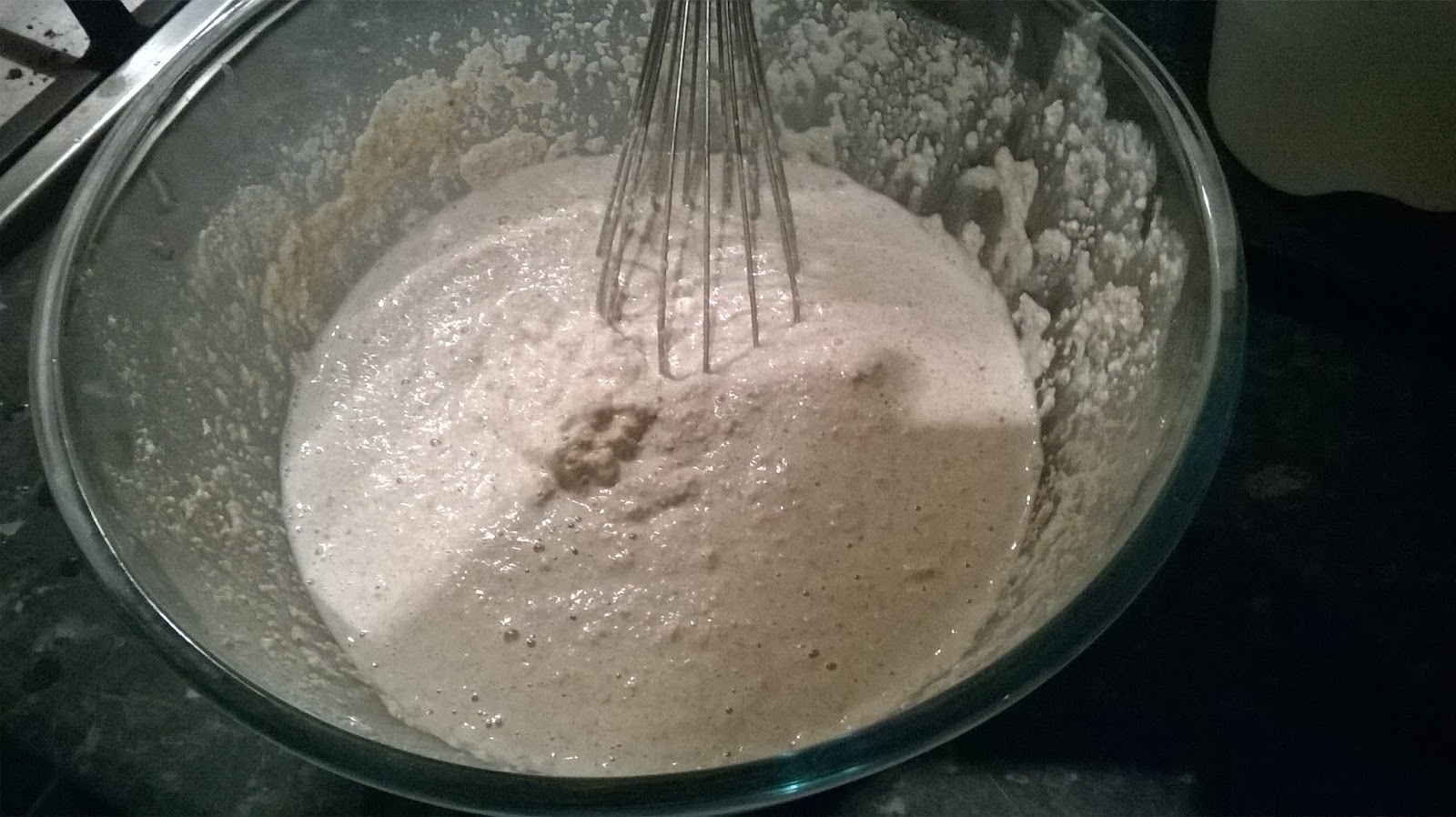
Get a cast iron bakestone or griddle on the heat and brush with very little oilor lard. Test the heat with a drop of batter; if it puffs up quickly, it is hot enough. Cast a ladleful of the batter across the bakestone in one swift stroke (this may require a few test flings). If you have the heat of the stone right, it will bubble up all around the edges.

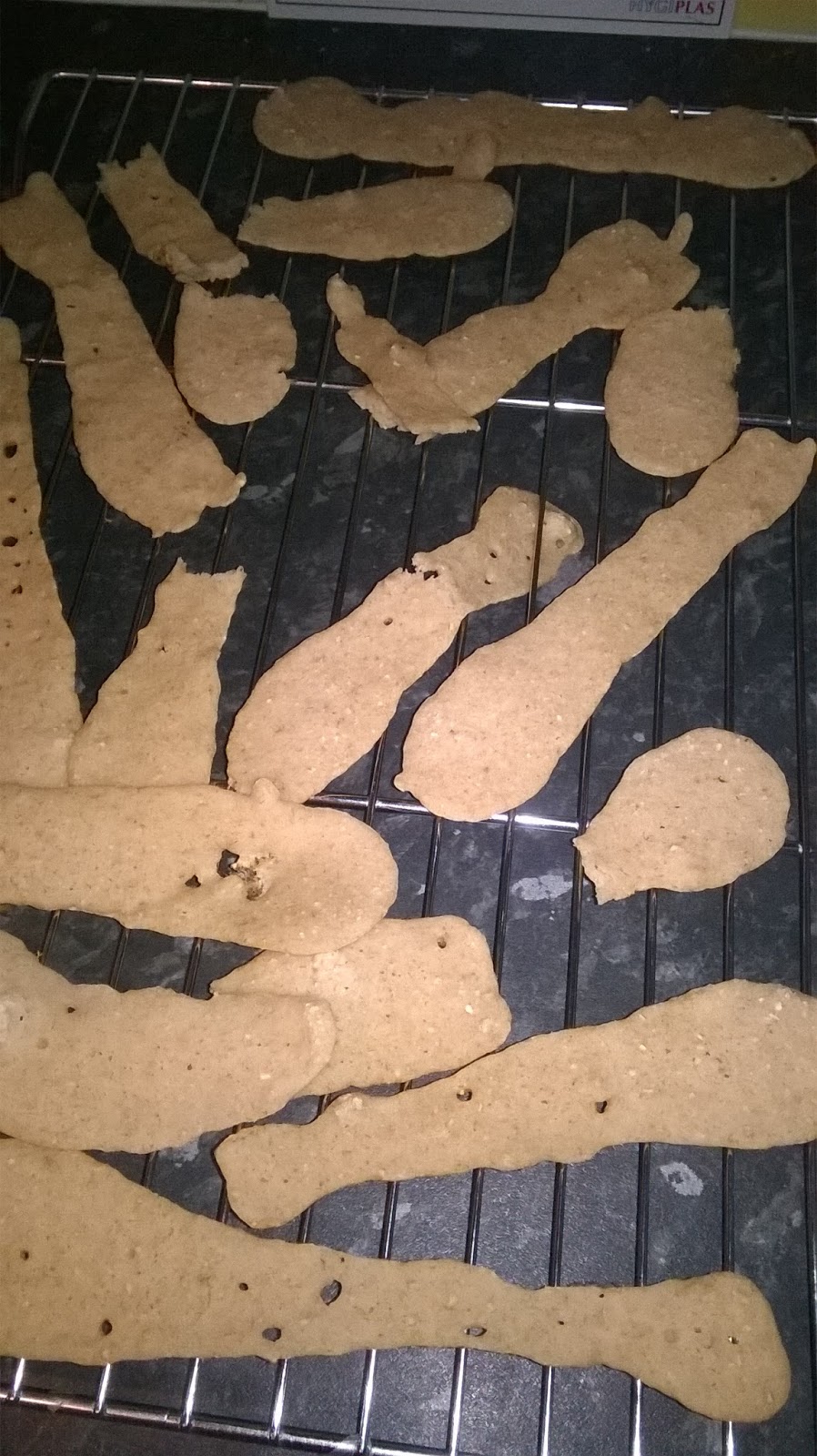
Once the top has lost its rawness, it can be removed and dried out. Jane suggests doing this on string or clothes rails. I found this impossible to do; the lack of gluten in the oats made somewhat brittle pancakes. Instead, I just placed them on drying racks in the oven on a very low heat until dry.
Now the little strips of riddle bread ‘can be used for soups, fish, fowl, cheese, butter, or any other kind of meat in place of any other kind of bread or biscuit.’ My strips were withered sploshes, I’m sure, compared to the foot long ones prepared in bakeries of yore.
 Neil Cooks Grigson
Thank you for making these oatcakes, and you did it correctly with good results, so no worries there. A couple of things might restore your faith in your own ability and tastebuds. First, modern equipment will produce a smaller oatcake or haverbread, so they might be a bit thicker than formerly. Second, I know you found them dull in flavour, and the 2/10 I thought a bit harsh, because they’re not really meant to taste of much anyway. They won’t taste of anything these days because the methods of harvesting oats done nowadays is not conducive to developing the flavour of oats. (I refer here to the former practice of cutting of oats green, by scythe, and storing them in stooks, where the sugars in the oats would help to develop the flavour particular to oats.) (Also, Steel cut is not a useful addition epthet to oats, it is meaningless. What else would one cut the plant with? Glass? Sharp stones?). Thirdly. The flavour of the oatcake is not meant to intrude too much. So, Salt goes well with oats, provided that the next addition is dairy, so butter, or milk. That inherent sweetness from milk or butter, produces a more satisfactory eating experience, in both oatcakes and porridge (made with water).
Oatcake making in Lancashire (on the West Riding border) must have come to a complete end in the 1980s. There was a long feature on BBC Look North from Manchester in the 1970s, showing them being made, and being eaten. They looked like yours, but might well have been thinner too. They were an accompaniment to “Stew”.
This “Stew” was not a hot dish, but a kind of terrine and was made by stewing all the red meat that at one time, was sold as “offal”, but wasn’t actually offal. This included Shin beef, bits of oxtail, clod, and sticking. All bagged up, and then with bones and other chewy bits, the whole was boiled on a very low light for several hours (possibly days) and then the resulting “stew” was ladled into small bowls, or small pyrex dishes, and left to set. There was probably also some cowheel in there. The only seasoning was salt (plenty) and white pepper.
The oatcake was referred to as “Hard” and the resulting “dish” called “Stew and Hard”, pronounced “Stew an’ ‘ard”. It was a favourite of many, and sold sometimes in pubs. The stew would be eaten in slices or so, on the oatcake, the oatcake being broken to fulfil that purpose. The taste was in the soldified stew, and the oatcake provided an agreeable texture to it, and was a good carbohydrate too.
For the oatcake to be broken up into “soup”, this was a separate thing, and existed in different forms, over different parts of Great Britain. Mostly, I know of this being done in North Wales where “Brwas Bara Ceirch” was a farm labourers’ dish, and to eat it, the oatcake was toasted hard, and brought to have black and brown parts on it. This was then crumbled into a bowl, and then with salt and hot water added, was a kind of savoury meal, and was popular. It was very much NOT “cuisine” (and neither was “Stew and Hard”); it was food to sustain the working man and woman doing a physical hard labour, it was Poor Man’s Grub, and just something that has been lost to time. People have tried to revive it, but they expect it to taste like food does now, or they have a “new take” on it. Not really the way to do it. The main flavours were salt, and “burnt bits” for the “Brwas” (Brewis) so really, a kind of manufactured Umami flavour; and for the stew and hard, again, the main flavour would be salt, a little white pepper, and probably, some raw onions sliced in vinegar, or some pickled whole shallots, so again, it’s an umami flavour.
Where the Brwas Bara Ceirch might be washed down with tea, the Stew and Hard would be washed down with beer, and likely eaten in a pub, but maybe at home also.
Scottish oatcakes are a totally different matter, as are Staffordshire ones also. I hope that this is of interest to you, and I hope that you might find time to make some “stew” and let it go cold, and set, and slice it, and eat that with your oatcake, or riddle bread, or add more salt, and spread with butter, and eat, or eat with a good salty cheese, maybe these days, Greek Feta is closer to the saltiness that used to exist in our own white cheeses.
I did enjoy your excellent article very much, and you didn’t do anything wrong, but the knowledge is a hair’s breadth from being completely lost, so now you have the whole jigsaw! Best wishes, Michael
LikeLike
Thank you for this wonderful comment! Since I wrote this post, I have much improved my traditional cooking techniques and have done much more research into this recently, but I have yet to write it up. It might form part of my next book (if the proposal is successful) where I look at recently forgotten foods and food-making techniques, so this information is invaluable. Are you a maker of these oatcakes yourself, or are you descriptions from memory? I’d love to know more!
Thanks again, Neil.
LikeLiked by 1 person