#292 Isle of Man Salt Duck


After returning from my little trip back to England and Ireland, I wanted to cook something that evoked some memories of it whilst all was still fresh in my mind. There are no Irish recipes in English Food, but there are a couple of Manx recipes (if you are from the Isle of Man, you are Manx). When Hugh and I flew the short distance from Belfast to Liverpool, we looked out the window and he told me about the bits of coastline and other features, and of course the Isle of Man was pointed out, looking surprisingly small. I’ve never managed to go to the Isle of Man, but it looked very pretty from the air.

This is apparently a traditional Manx cured meat dish, but I did a quick internet search and could find any references to it at all, so I can’t give you any background information I’m afraid, Grigsoners. The cure is very simple to do; you simply have to pack coarse sea salt inside and outside of a duck 24-hours before you want to cook it. I assume in the days when this was done for actual preservation of meat, rather than for flavour, the duck could have been cured for several days or weeks. When you are ready to cook it, brush off the salt, rinsing off any tricky to remove bits and place in a pot with enough water to barely cover it.
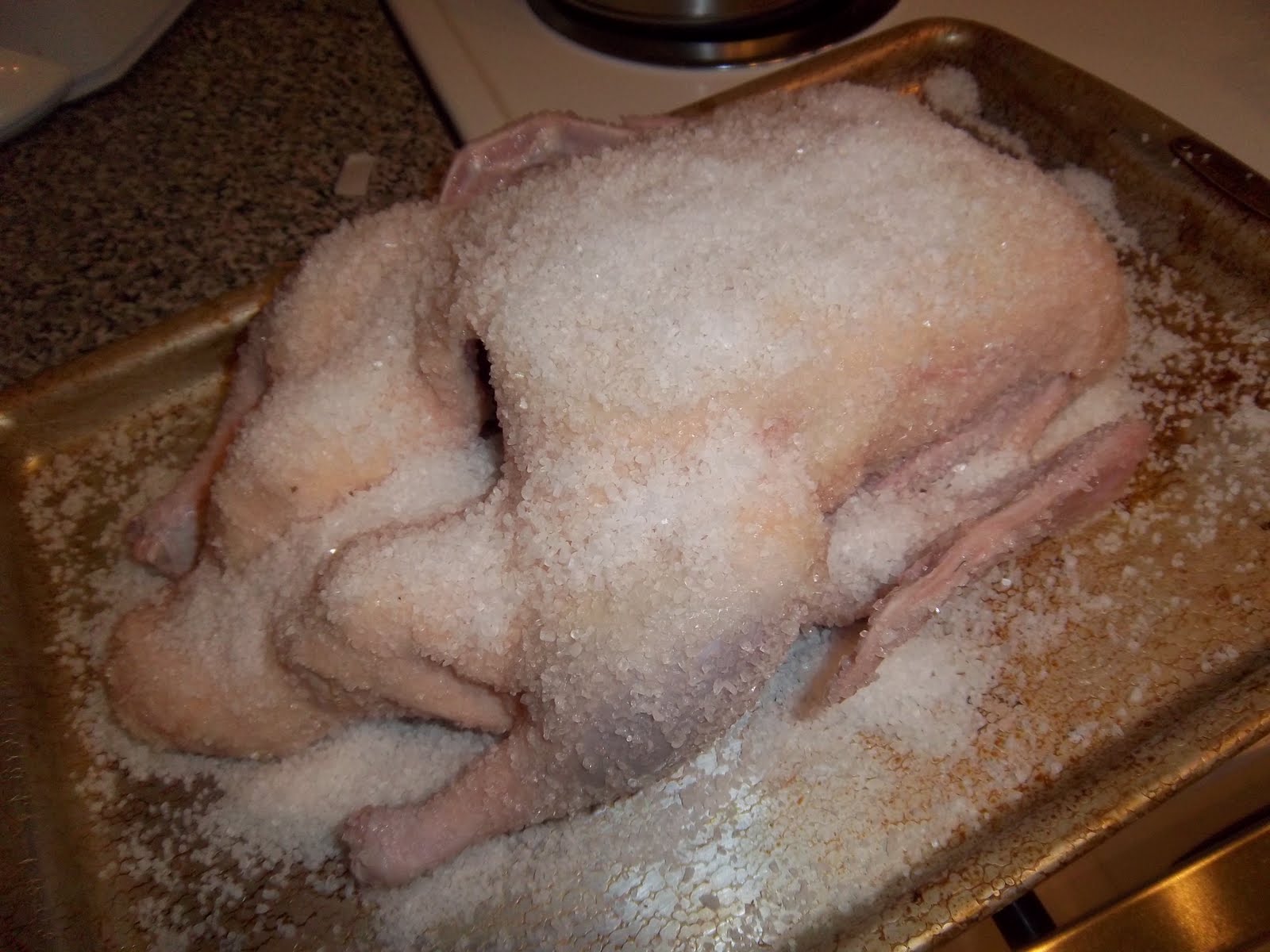
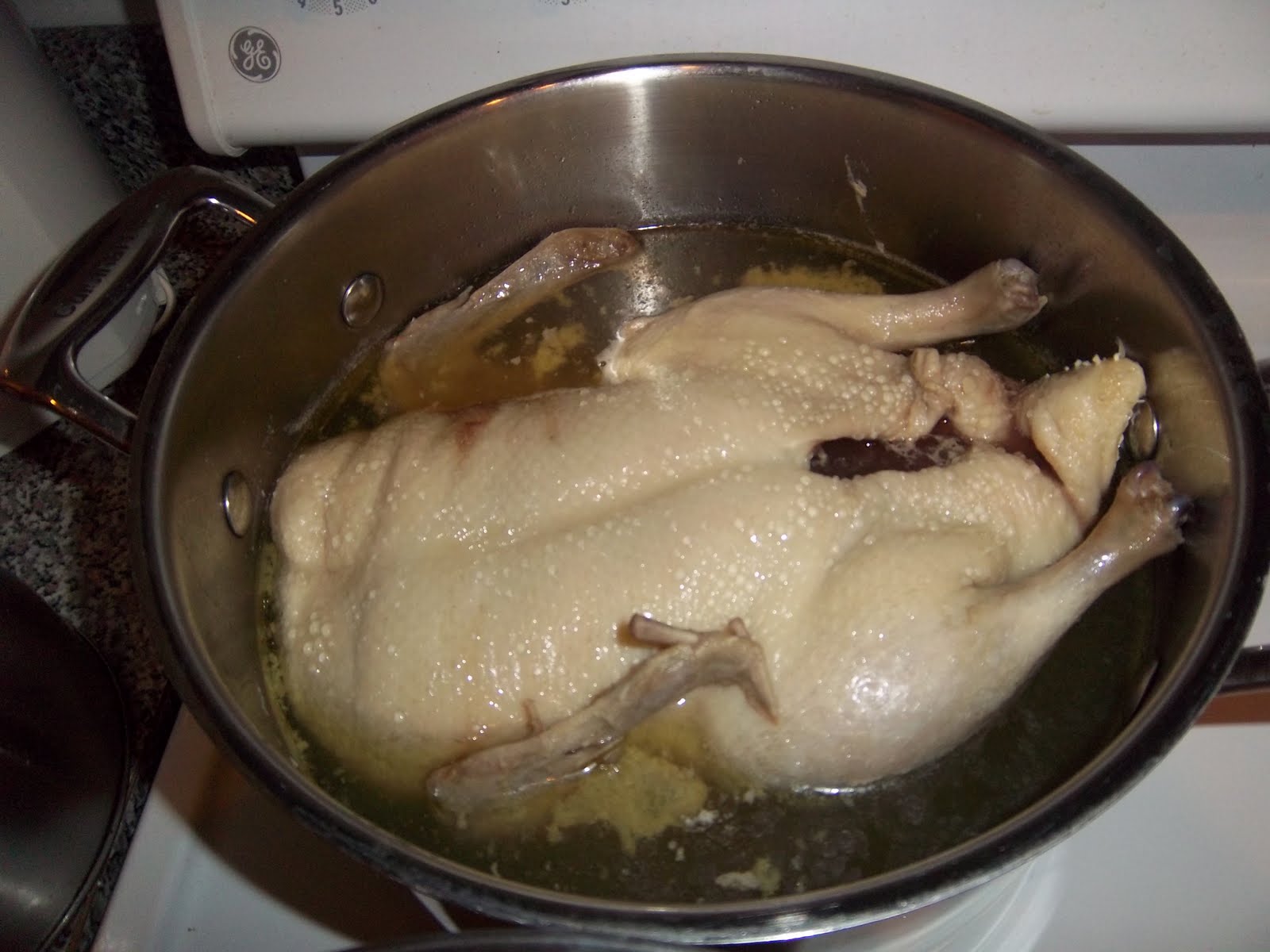
Cover, bring to a simmer and let it happily gurgle away for between an hour and ninety minutes, depending on the size. I am always worried about doing the boiled meat recipes in the book, I always think they are going to come out insipid and boring, especially in this case as there was no call for any stock vegetables or seasoning with spices. I invited my friends Danny and Eric around to sample the delights – hoping it would taste okay…
If you like, you can cure your duck in brine instead – check out the recipe and instructions on brining meat here.

While the duck is simmering away gently, you can be getting on with the accompaniments: an onion sauce and colcannon (an Irish invention of potatoes and either cabbage or kale mashed together).

For the onion sauce, chop four large onions and add them to a pan with just enough water to cover them, season, cover with a lid, and allow them to simmer for fifteen minutes. Drain them over a bowl, so that the cooking liquor is saved. Add half a pint of milk and just under a pint of the liquor to the pan along with half an ounce of butter and bring to a simmer. Measure two level tablespoons of cornflour and slake it with a little more cold milk and whisk it into the hot sauce; it will thicken instantly. Simmer for a few more minutes so that the cornflour can cook out. Add the onions back to the pan and season with plenty of salt and pepper – very important here to season it very well – plus the grated rind of a lemon. Add more liquor or milk if it becomes too thick. This sauce can be (and was!) made in advance – make sure you keep it covered with a lid or some cling film to prevent a skin from forming if you do.

For the colcannon, boil equal amounts of potato and kale or cabbage together in a pan. Drain, and mash with butter and salt and pepper. If you are feeling extravagant, add a little blob of cream.
When the duck is cooked, make sure you let it rest for about twenty minutes before you carve it.
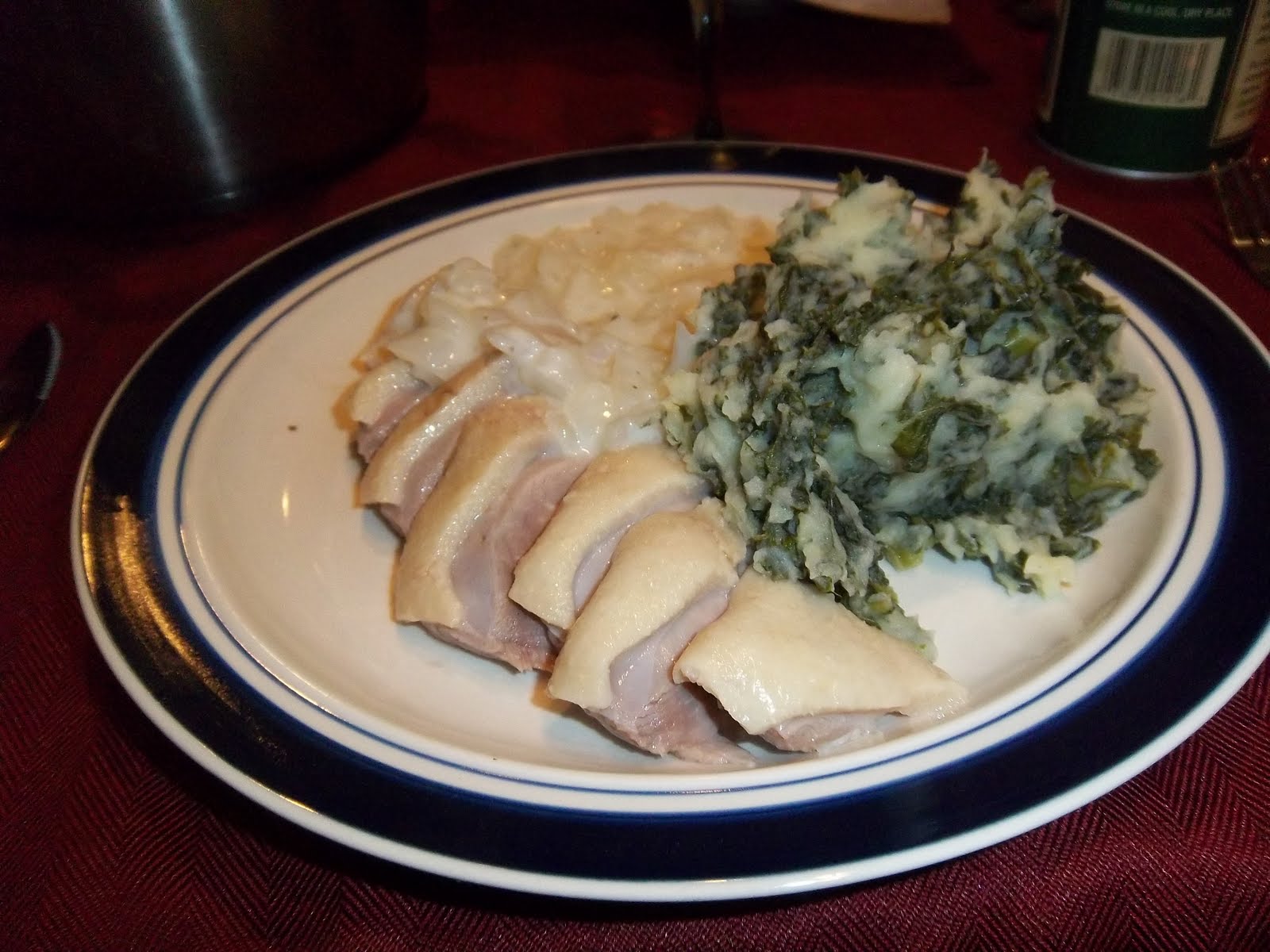
#292 Isle of Man Salt Duck. I must admit, when the duck was taken out of pan to rest, it did not look that appetizing with its podgy fat and no hint of colour. I’m used to eating roast duck. However, when I cut inside, there was the most tender duck meat within. It was salty, but not overpoweringly. It also had very subtle flavour too, as did the onion sauce, which I expected to be terribly strong. Instead, it was light and very good for a spring or summer meal. The colcannon was a great accompaniment too. This kind of good, but bland food, really requires heavy seasoning, otherwise it is in danger of becoming tasteless pap. This was not tasteless pap however: 7/10.


#291 Burnt Cream or Crème Brulée

Often considered a French dessert, Crème Brulée was thought to have come out if the kitchens of Trinity College, Cambridge via the sister of a librarian there, others think from an Undergraduate from Aberdeenshire in the 1860s. When the student graduated, so did the pudding and it became a favourite of the college. This is all nonsense because a recipe can be found in The Experienced English Housekeeper by Elizabeth Raffauld which was published in 1769 (I have a facsimile of it). Grigson gives three recipes for it – the first, from the librarian who called it a Crème Brulée, the second and third – both dating earlier – called it Burnt Cream. Jane Grigson got a bee in her bonnet about whether the dessert had French or English origins. Where did Raffauld get her recipe from? It is a question that cannot answered, it seems, as the two nations’ cuisines are overlapped and interwoven so much since the Norman conquest of 1066. She did find a sixteenth century English manuscript with a recipe for burnt cream though, which was written around the time that Charles II came back to England after returning from exile in France.

I did this pudding whilst I was in England to go after the roast pork. I’d been wanting to do it for a while, as it is a pud I really enjoy, but mainly I just wanted to get the blowtorch out and melt the sugar. I’d never done it and it has always looked such a satisfying thing to do. None of the receipts ask for a blowtorch, but rather a very hot grill or ‘salamander’, as overhead grills were called in days of yore.

There are three recipes given by Jane, I went with the first, which was also her favourite, from a 1909 book called The Ocklye Cookery Book by Eleanor L. Jenkinson:

Place the yolks of six eggs in a bowl and bring a pint of double cream to the boil and let it boil for a full half-minute. Quickly whisk the hot cream into the eggs and return the mixture to the pan. Cook on the very low heat until the cream thickens somewhat – it should coat the back of your wooden spoon. I then sweetened it with a little sugar and added some extra flavor with some orange-flower water (lifted from Raffauld’s recipe). Don’t cook for too long or on too high a heat, as the eggs will scramble. If you think the eggs have scrambled, pass the whole lot through a sieve. Pour the custard into a shallow dish and let it chill in the fridge for as long as possible – overnight, if possible. If not possible (as it wasn’t for me), place it in the freezer as soon as it has cooled down to set. To burn the cream, scatter it with a thin, even layer of caster sugar and pop it under a very hot grill until it turn to a lovely melted caramel. Or use a blowtorch. Put it back in the fridge to harden.

For the sake of completion, here are the other two recipes:

From Domestic Cookery by a lady (Maria Rundell), 1848

Boil a pint of cream with a stick of cinnamon, and some lemon peel; take it off the fire, and pour it very slowly into the yolks of four eggs, stirring until half cold; sweeten, and take out the spice, etc.; pour it into the dish; when cold, strew white powdered sugar over, and brown it with a salamander.

From The Experienced English Housekeeper by Elizabeth Raffauld, 1769

Boil a pint of cream with sugar, and a little lemon peel shred fine, then beat the yolks of six and whites of four eggs separately; when your cream is cooled, put in your eggs, with a spoonful of orange-flower water, and one of fine flour, set it over the fire, keep stirring it till it is thick, put it into a dish; when it is cold sift a quarter of a pound of sugar all over, hold a hot salamander over it till it is very brown, and looks like a glass plate put over your cream.

#291 Burnt Cream or Crème Brulée. ‘The best of all English puddings‘ says Griggers. Well I’m not sure of that, but it was pretty good. The cream tasted very light due to the heady perfume of the orange-flower water and the crackling caramel was satisfying to smash and delicious to eat. It wasn’t quite as thick as I expected to be. We all dug in with spoons, not bothering with bowls. I expect several of us now have herpes. Overall, a pretty good recipe – I think I will try it again with the lemon and cinnamon flavourings from the 1848 recipe. 6.5/10

#290 Roast Pork with Crackling and Baked Apples


Man’s relationship with pigs goes back several thousand years. Acorn-eating wild boar were slowly tamed in European forests to become the slightly tamer proto-pig utilized by the Spanish, French and Greece. Swineherds had the unlucky job of attempting manage the unruly pigs. Modern pigs are not quite as wild as their forbearers, but do apparently revert to their feral behaviour quite readily. So beware.

Galen, the medical pioneer of the Roman era, enjoyed a bit of pork like his fellow Romans. What is odd is that he thought it tasted of human flesh. Whether this was a hunch or whether it was knowledge from experience, I do not know. He is correct though, the cannibals of the South Sea Islands, called the various explorers and pioneers they caught and ate longpigs due to their flavour.

The pig is famed for it versatility and pretty much all the animal can be used, and it is the pig that is the focal animal in Fergus Henderson’s wonderful nose-to-tail restaurant, St John in London (check out the blog here). I’ve never managed to get there unfortunately, but one day I shall! For any nose-to-tail fans out there, the ultimate delicacy must be Pliny’s personal favourite, the vulva of a sow who had aborted her first litter, according to Maguelonne Toussaint-Samat in her amazing book A History of Food.

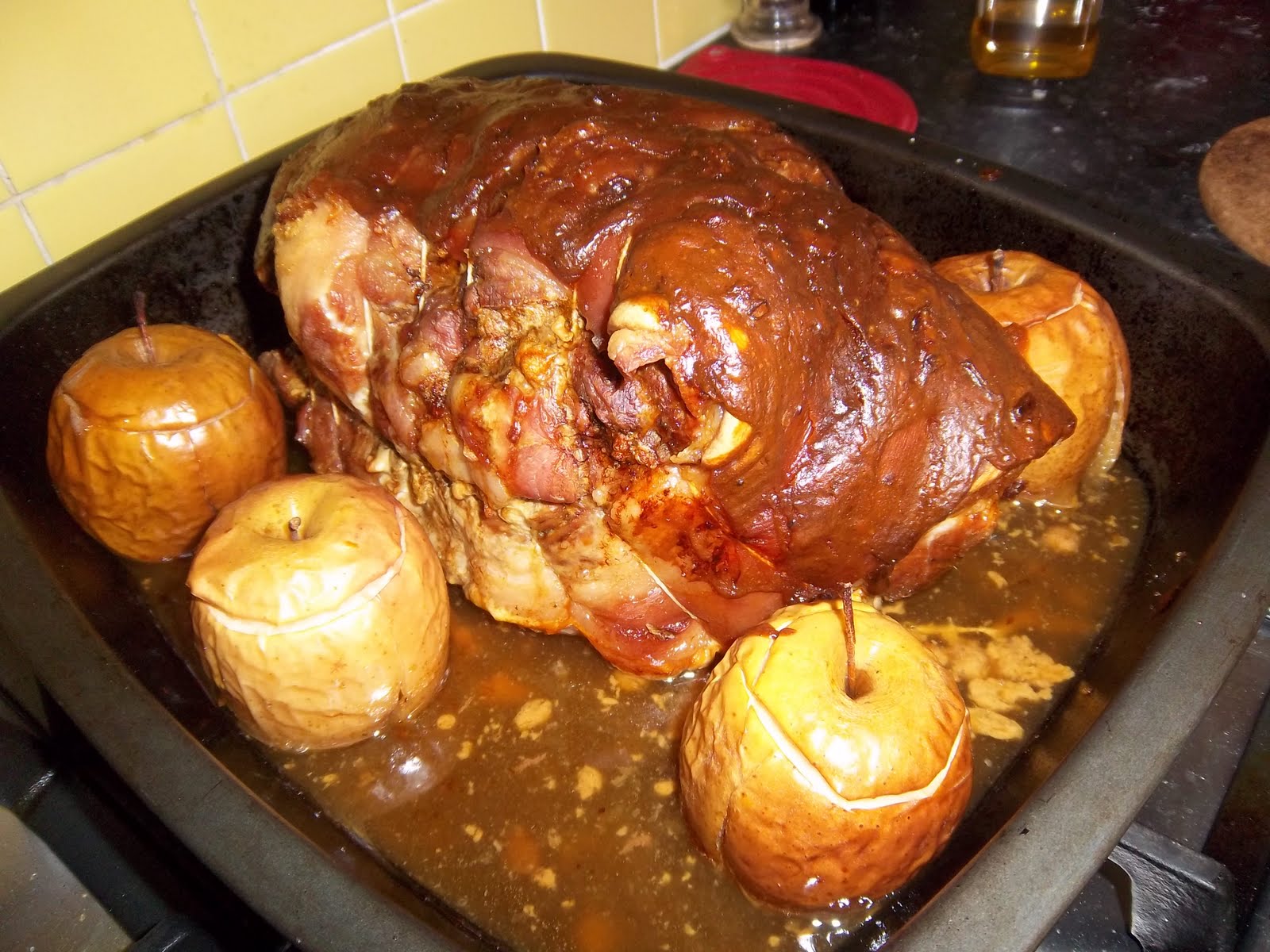
This dish was cooked on my recent trip to England, where Hugh somehow managed to buy a massive shoulder of pork for £1.50. Absolute bargain. He’s a good bargain-hunter; in fact, he’s known for it! I pounced upon the opportunity to roast it the Grigson way which includes baked apples as well as a glaze to go over the crackling. I imagine a sweet glaze would go down well with Texans going by this sign I spotted at the rodeo:

It’s worth mentioning that it is best to buy the largest joint you can afford, the meat will be much more moist and tender in a large joint than a small one. This particularly applies to pork that benefits from a good blast of heat and then a slower roast on a lower hear than say, beef.

As mentioned I used shoulder here, but you can use leg or loin. If the meat has a bone in it, ask the butcher to remove it but ask to keep it. Also ask him to score the rind, every centimetre or so. You can do it yourself with a razor-blade. Make sure that the rind is nice and dry and season the joint all over. You can, leave it overnight in the brine tub, but if you do this, you won’t get the crackling. Seeing that the crackling is the best bit, I wouldn’t recommend it. If you have bones, pop them in a saucepan with a chopped carrot, a peeled onion studded with three cloves and a bouquet garni. Cover with water and allow it to simmer for three or four hours. Strain and reduce to ¾ of a pint. If there was no bone, use some pork or vegetable stock and simmer for just an hour.

Heat the oven to 220°C (425°F) and rub the skin of the joint with some oil and sprinkle with some salt. Cook for 35 minutes to the pound (1 ¼ hours to the kilo). Place in the oven and turn the temperature down after 20 minutes to 160°C (325°F). An hour before the end of the cooking time, prepare the apples. You need one per person, and use Cox’s Orange Pippins if in season. If not, use Braeburn or Mackintosh. Score a circle close to the tops of the apples, to prevent the skins bursting and nestle them around the joint. If you don’t want baked apples make an apple sauce.

Next prepare the glaze. Melt a tablespoon of redcurrant jelly in a pan and mix in a tablespoon of French mustard as well as half a tablespoon each of cream and soft brown sugar. Paint the glaze all over the crackling in the final half hour of cooking.

When ready, remove the joint from the oven and let it rest for at least 20 minutes. While you are waiting, make the gravy. Melt an ounce of butter in a pan and when it goes a nutty brown colour, stir in a tablespoon of flour. Whisk in the stock and add any meat juices from the roasting pan.

Voila!

#290 Roast Pork with Crackling and Baked Apples. I have eaten roast pork many times, but never actually cooked, but I can honestly say that this was the best roast pork I’ve ever had from a domestic oven. It was so tender, it took no effort to slice and the glazed crackling was half crispy, half chewy and almost toffee-like. The baked apples were a revelation. An absolutely fantastic roast dinner! 9/10.

#289 Quail

And the LORD spake unto Moses, saying,
I have heard the murmurings of the children of Israel: speak unto them, saying, At even ye shall eat flesh, and in the morning ye shall be filled with bread; and ye shall know that I am the LORD your God.
And it came to pass, that at even the quails came up, and covered the camp: and in the morning the dew lay round about the host.

Exodus 16:11-13

As you can see, eating quail has gone back a good few years. You don’t see them very much in the UK these days; I’ve perhaps seen them twice at Farmers’ Markets. The USA, however, is chock-full of tricky-to-find ingredients to help me with this blinking blog project.

Although classified as a game bird, quails are farmed these days as they’re not very common, and it is now illegal to kill them, so if you hear one chirping away in a nearby field, let it be.

People in the Middle Ages certainly did not let them be, because they loved them. Actually they ate everything it seems. Here’s a list I found of their favourite game: quail (natch), partridge, pheasant, hare, rabbit….ok thus far, all Grigson recipes, but then… rook, crow, raven, lark, sparrow, capercaillie, peacock, stork, heron, swan, crane and bittern. Phew! A certain Alfred Gottschalk says on the matter: ‘It is wonderful that the stomach of man can profit by all manner of birds, and yet there are some of them that even starving dogs would not eat.’ Quite.

Griggers doesn’t give that much detail on how to cook them, in fact this is the whole recipe: ‘…they can be browned in butter and braised with a little stock, port wine and orange peel.’

So that is exactly what I did. They were browned in a cast-iron casserole and covered in a quarter of a pint of chicken stock and a good slug of port, along with some salt and pepper and some pared orange peel and popped them in a 160°C (325°F) for 20 minutes. I then took them out to rest and used a beurre manie (i.e equal weights and butter and flour mashed together) to thicken it. I served it not with the usual game accoutrements (bread sauce, game chips etc), but mashed potatoes and some wilted spinach.

#289 Quail. One of the mildest of the game birds, pale-fleshed and light to eat. It’s difficult to keep these tiny moist so quick cooking is required. The port wine and orange gravy was delicious and didn’t overpower the birds. These smaller game are good, but I think I prefer the stronger birds like pheasant and pigeon. I did enjoy feeling all medieval having an entire animal sat on my plate, so just for that it was worth cooking them. 6.5/10.

#288 Leek Pie

I beseech you heartily, scurvy, lousy knave, at my desires, and my requests, and my petitions, to eat, look you, this leek: because, look you, you do not love it, nor your affections and your appetites and your digestions doo’s not agree with it, I would desire you to eat it….if you can mock a leek, you can eat a leek.

William Shakespeare, Henry V

 I like to get a bit of Shakespeare in whenever I can.

There’ll be no mocking of leeks on this blog. They are one of my favourites, though I don’t really eat them that often. The main reason, I think, is that no matter how much I wash them before preparing them, there is always some grit – invisible to the naked eye – that ends up in the final dish. I’m always so thorough too. Hey-ho, a bit of dirt is fine. In fact there’s an old Yorkshire saying: tha’s got to eat a peck o’muck before you die. Indeed.

Here’s a pie that sounds great – leeks, cream and bacon in pastry. Nothing can be bad about this one, with or without grit.

I assumed that this recipe was a Welsh one, but no, variations of it are found across Britain and France. Grigson doesn’t say that much about it, other than in France onion and flour are added to the filling, so technically this is the French version, but let’s not split hairs.

To make the pie, you’ll need to buy or make some shortcrust or puff pastry. I made some shortcrust. You’ll need to make a shortcrust that uses 10 ounces of flour and five of fat; I did eight and four respectively and only just managed to get away with it.

To make the filling, chop and onion and cook it in an ounce of butter until soft and golden. Meanwhile, trim, wash and chop a pound of leeks. Slice the green part thinly, as it is quite tough and takes longer to cook than the white part. Add the leeks to the onions along with two ounces more of butter. Season with salt and pepper. It’s important to add the salt at this point as it draws the liquid from the leeks, concentrating their flavour.

When softened and mushy, turn off the heat and add four ounces of chopped back bacon. Now measure four ounces of double or clotted cream – weight, not volume – and beat in a teaspoon of flour. Pour this over the leeks and bacon and allow to cool.


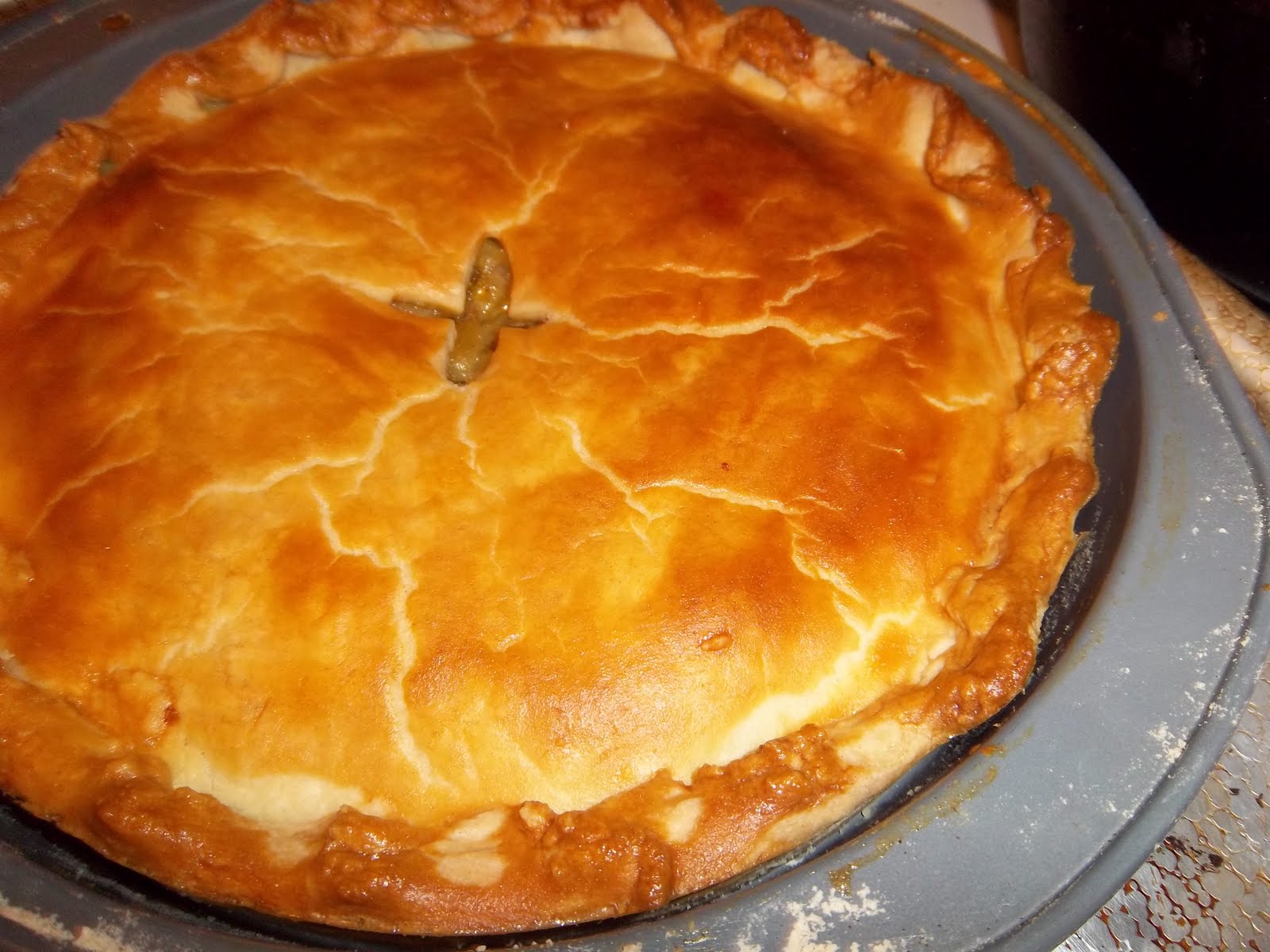
Roll out two thirds of your pastry and line a nine inch tart tin. Add the filling and roll out a lid with the remaining pastry, using beaten egg as a glue. Crimp the edges and ‘decorate in restrained manner’. I just made some fluting around the edge. Brush with egg and make a hole in the centre so the steam can escape. Bake for 15 minutes at 220°C (425°F) or until the pastry is nice and brown, then turn the heat down to 180°C (350°F) for another twenty to thirty minutes.


#288 Leek Pie. What a great pie! The filling became a rich and delicious mush with subtle onion and leek flavour. The secret to this – as with so many of the best in English Food – is the that are just a few ingredients cooked slowly over a low heat with a good amount of seasoning. It was just as delicious cold as it was hot. One of the best recipes thus far I’d say. Go and cook it! 9.5/10.


#287 Scotch Woodcock

Here’s a quickie that was a popular savoury in Victorian times in the same vein as Locket’s savoury and Gloucester ale and cheese. None of them are really eaten these days, though most of the time they are very tasty (though also very rich; no wonder everybody had gout). Although such savouries were served at the end of a meal in those days, it is is perfect for a first course or as a light lunch these days, I reckon.
It doesn’t contain any actual woodcock, of course, but is basically anchovies and eggs on toast – the fish and eggs being a substitute for the prized game bird. Just like how Welsh Rabbit is really cheese and bread instead of the delicious meaty mammal.
This recipe makes six woodcocks:
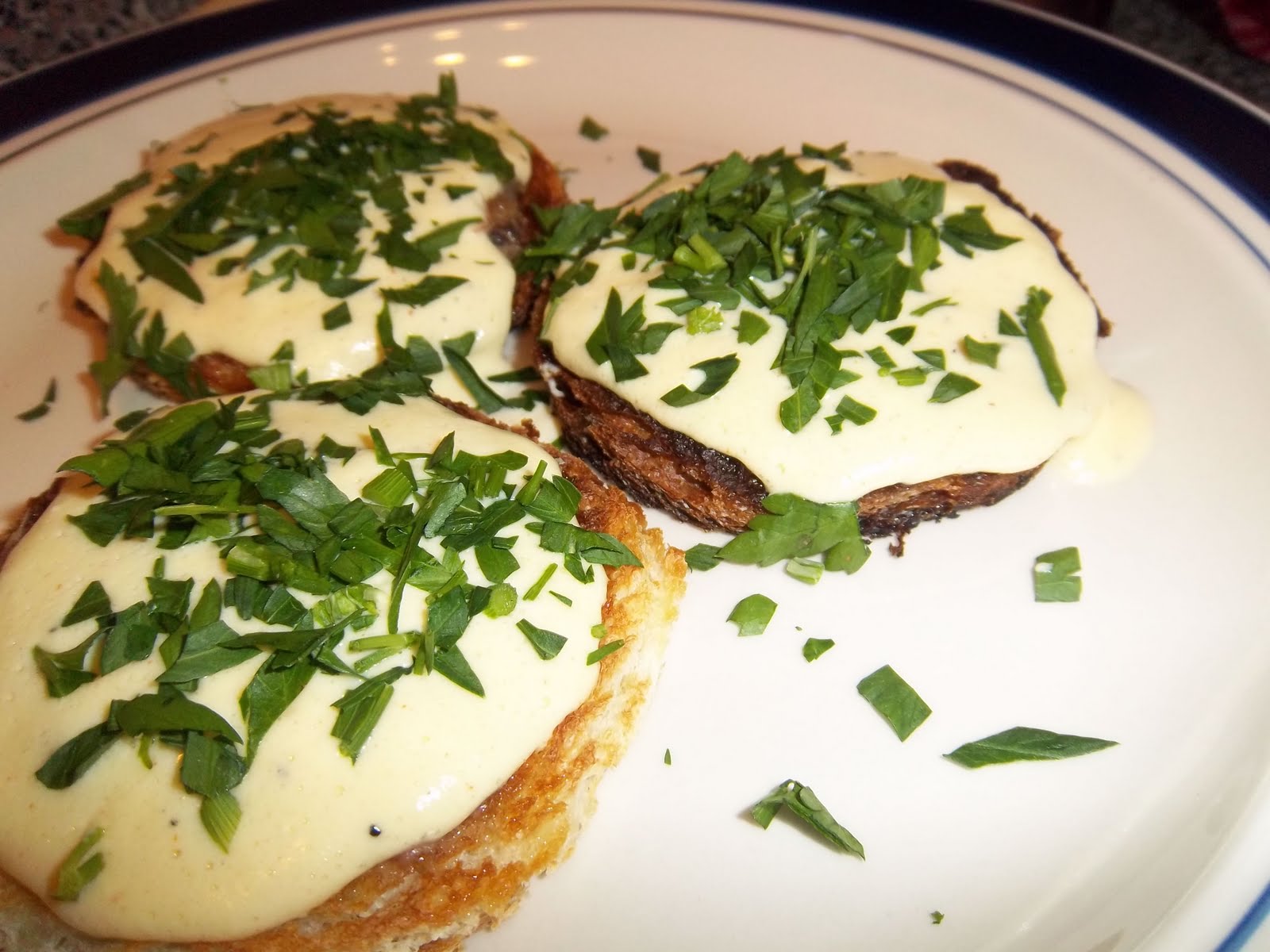
Start by draining a tin of anchovies before mashing them with two ounces of butter. Next, get the toast ready – cut circles out of six slices of bread and toast them on both sides. Spread with butter and then the anchovy mixture. Keep warm whilst you make the eggy sauce. In a saucepan, add two egg yolks to half a pint of whipping or double cream. Beat the yolks and add pepper a little salt and a good pinch of Cayenne. Stir over a moderate heat until the sauce thickens. Spoon over the anchovies, add a flourish of chopped parsley and serve it forth. If you don’t fancy making the thickened cream sauce, make some softly scrambled eggs made with a bit of cream instead.
#287 Scotch Woodcock. Previous anchovy-based recipes in this blog have ranged from the most delicious to the worst and most bizarre. This one however can join the ranks of the delicious. The intense saltiness of the anchovies was balanced very well with the bland creamy sauce. Very, very good. I ended up eating three and it gave me stomach ache. Hey-ho, you’ve to take the rough with the smooth in life aintcha? Tres bon, 8/10.

#286 Candied Peel

From the odds and sods part of the last chapter of the book this one. I’ve never been particularly moved to make candied peel because I usually bake cakes on a whim and don’t really consider thinking ahead and making the chopped peel required for fruit cakes et cetera. This has all changed now I am in the United States of America. If you buy candied fruit for your cakes here they will not only contain citrus peel but also invariably a good proportion of glace cherries and pineapple. Now don’t get all tetchy America; I’m not dissing your candied fruits. Sheesh! In fact I prefer your version, but it’s just not English now, is it? And that simply will not do for the purposes of my blog.
This recipe uses the peel of two grapefruit or one ‘large, fine’ pomelo (you can get these at Asian supermarkets pretty easily) or four oranges. Slash the skins and remove the peel, pith and all. I suppose it’s a good way of using up the peel of citrus fruits instead of just throwing them away. I suppose you can follow this recipe and candy pretty much anything you like. Lemons would work. Or citrus slices. I once saw loads of whole candied fruits like plums and peaches and things like that for sale in Harrods at extortionate prices.
Back in Tudor times, people went crazy for candied fruits and it is during these times when recipes for mince pies and Christmas pudding were borne. This was due to the sudden supply of sugar from sugar cane from the West Indies. A very popular dish at the time was sweet custard tart with candied fruits and candied fish! The fools. Plus, to have black teeth was very much the rage; this meant you could afford to plenty of sugar!
Once you have removed the peels, boil them, covered, for a good fifteen minutes. Drain them and repeat this process once, twice, or thrice again until the peel is tender and the bitterness is ‘at a palatable level’. Now drain them and let them cool.
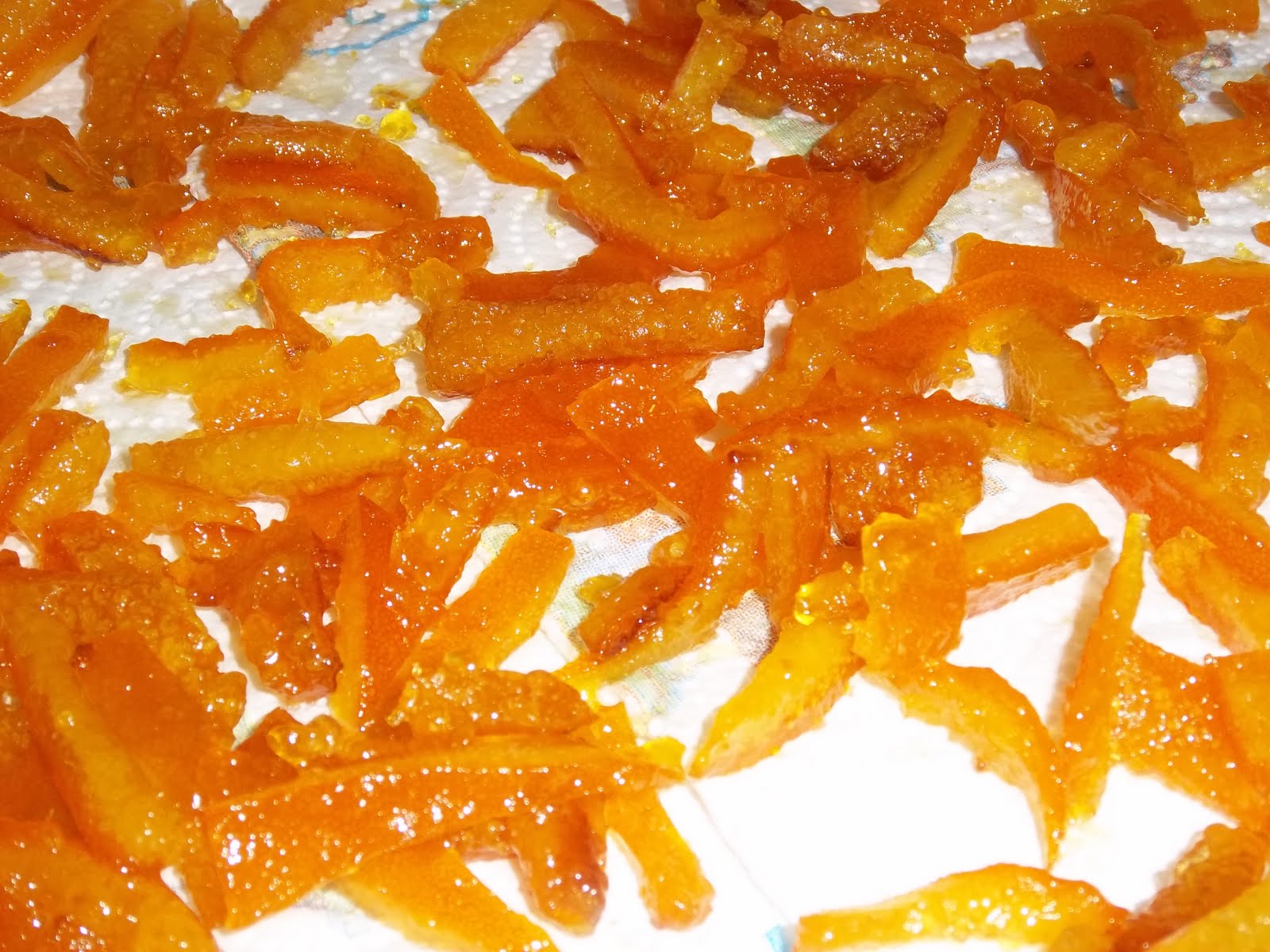
 Now either leave them as they are or cut into strips. You can use the strips as an after dinner sweetmeat if you like. If so cut them into nice neat long rectangles if you want to do that. Dissolve ten ounces of white sugar in a quarter of a pint of water in a saucepan over a medium heat. Bring to the boil and add the peel. Boil steadily, stirring occasionally until all the syrup has been absorbed. This takes around half an hour.
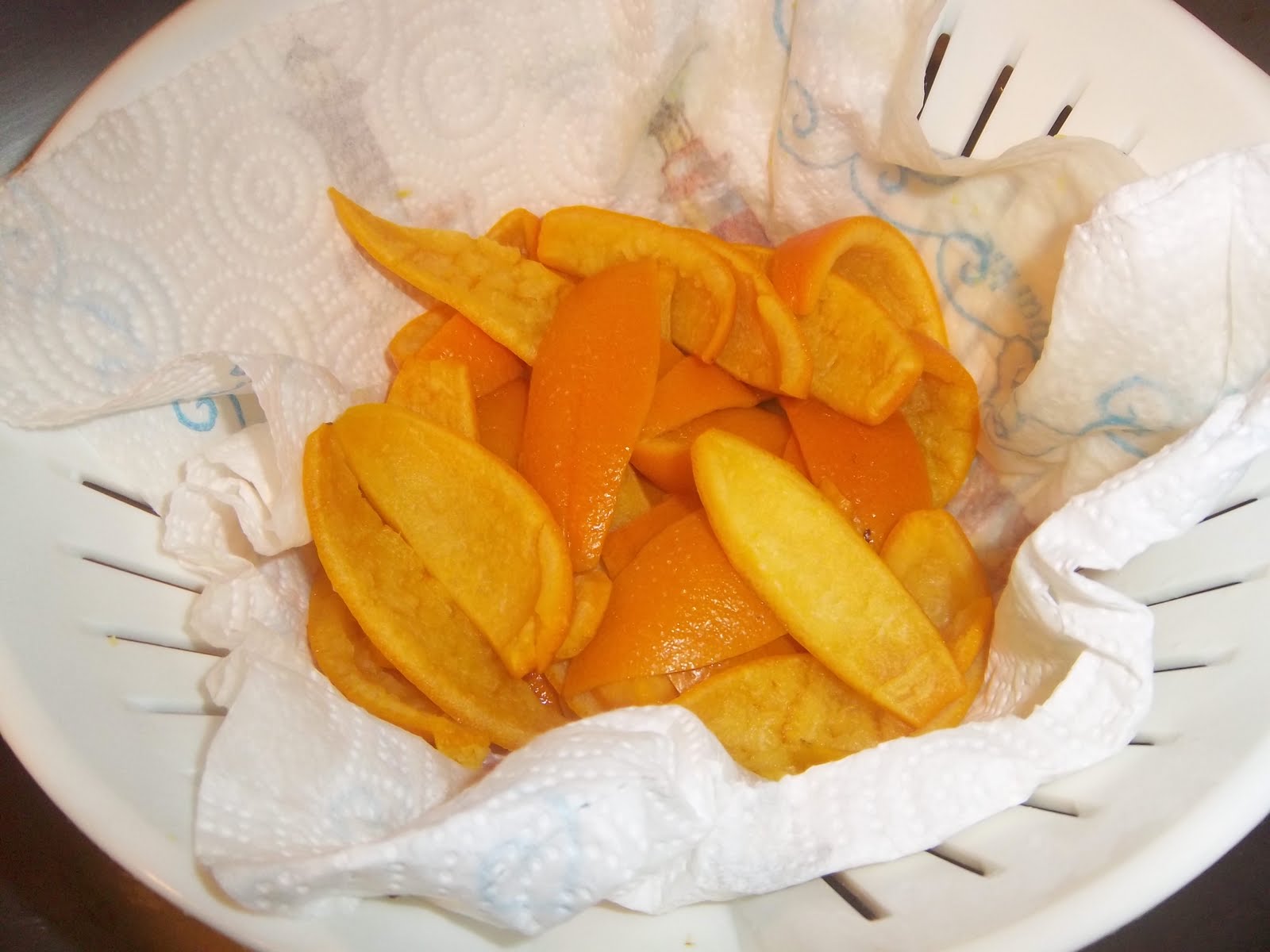
Now drain the peel in a metal sieve and then leave to cool, spread out on kitchen paper.
Keep them in an airtight tub and chop whenever required for cakes. You can roll them in some more sugar or dip them in melted chocolate to serve with coffee if you like.
#286 Candied Peel. I quite enjoyed making these – quite a therapeutic process; just right for a Sunday afternoon activity. Easy too – I was expecting it to be tricky. I was imagining a spluttering tub of boiling sugar and third degree burns, but it was all quite tame. I haven’t used them for anything yet, but I did have a taste and they were very, very good. Very sweet of course, but still had lots of zesty zing left in there and a million miles away from the bought stuff. What shall I candy next? Suggestions below please! 8/10.

#285 Creamed Parsnips

Parsnips don’t seem to be that popular in America, at least compared to Britain. In the USA, carrots and sweet potatoes are much more favoured as a sweet-starchy vegetable. In Europe, parsnips have been cultivated since Roman times, and although in the UK, the wild parsnip is quite a common plant, it has rather pathetic roots,and isn’t worthwhile eating. The parsnips eaten in Britain are therefore not indigenous. They were probably brought over around AD55 during the Roman invasion. The Romans used parsnips in desserts because of their sweet and chestnutty flavour, weirdly, parsnips are used in a cake in English Food that is based upon the recipe for an American carrot cake. Ah, the circle of life.
The European wild parsnip

Creamed parsnips can be served alongside some roast meat, or on their own with toast or in pastry cases as a supper dish, says Griggers. I had them for supper.
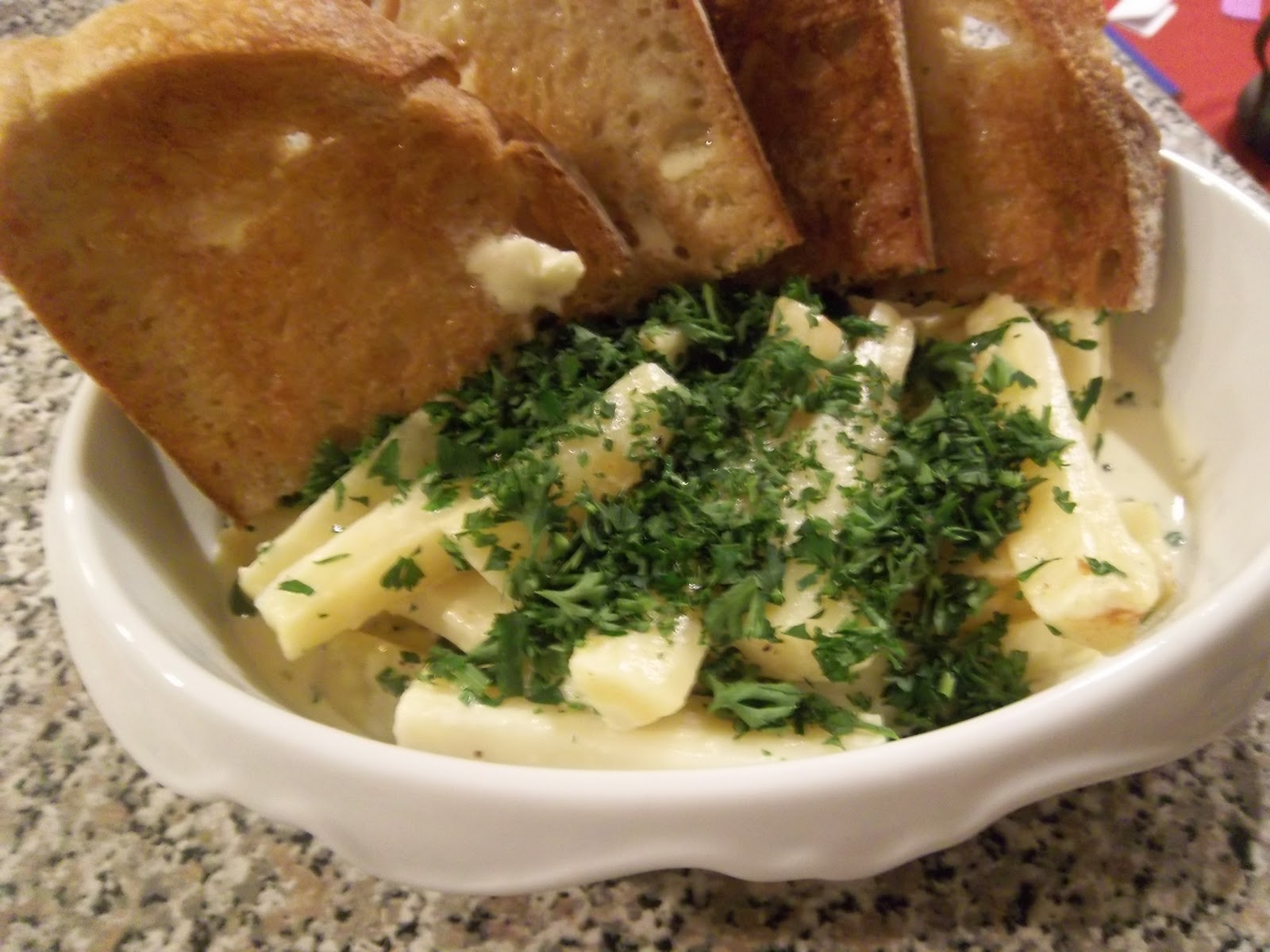
Peel, top, tail and quarter a pound and-a-half of parsnips. Remove any woody parts, if the parsnips are large and cut them into batons. Plunge them into boiling, salted water and allow to cook until tender – between five and ten minutes, depending upon the size of you batons. Drain and return to the heat. Stir in a quarter of a pint of double cream (or half-and half double and single). Heat through, season with salt and pepper and stir in some finely chopped parsley. Serve hot.
#285 Creamed Parsnips. Ah the simple things are the best, innit? These were delicious and not at all heavy – the parsley lifted the whole thing, preventing the dish becoming sickly. The creamy sauce and the carby parsnips themselves made the supper feel quite substantial. A hidden, simple gem. 8/10.


#284 Veal, Ham and Egg Pie

Okie dokie, so the last two posts have all been on the subject of raised pies. The first one explained how to bake and construct one, and the second explain how to make the jellied stock. Now it is time for an actual filling to complete the full recipe.
This is the first of several fillings for raised pies from the book, and I must admit that I have been putting off making one in case it was a disaster. In the end it was a delight to make.
I chose this recipe because it seemed the most basic, with the easiest ingredients to get hold of; the nearby Central Market sells a range of veal cuts, which are usually tricky to get hold of. Strangely enough, the tricky item to get hold of was the unsmoked and raw ham, gammon or bacon. I searched high and low for it, but to no avail. Luckily, I am now pretty good in the kitchen these days and knew I could cure my own ham overnight in the brine tub I now have sitting at the back of the fridge ready to leap into action whenever I need an emergency curing. I bought a bit of pork loin as it is the leanest cut.
So, to make the filling you will need to hard boil and shell four eggs. Whilst they are bubbling away, get the meats ready: cut up 1 ½ pounds of ‘pie veal’ (I took this to mean cuts for casserole, like shoulder) along with 12 ounces of unsmoked bacon, ham or gammon. You want chunks around a centimetre in size. Add the grated rind of a lemon, a tablespoon of chopped fresh parsley, a teaspoon of dried thyme. Mix these together well with a decent  amount of seasoning. Pack half of the mixture in the pastry-lined mould. Place the eggs inside and then the remaining filling (see the raised pie post for pics of this). Then bake as described in the raised pie post.
#284 Veal, Ham and Egg Pie. Whew! This pie pretty much took me a whole Sunday to make. It was worth it though. The filling was wonderfully light and fresh tasting due to the herbs and lemon and the meat flavour was quite subtle, the whole thing kept moist by the jellied stock. The pastry was crisp and tasty too – hot water pastry is so easy, I can’t believe I put it off for so long. I brought it into work for people to try and it seemed to go down pretty well and I’ve been eating it through the week. There’s one slice left know, and I already miss it. Cannot wait to try the next one. I think i have found my calling as an artisan pie-maker extraordinaire! An excellent pie! 8.5/10 (I’m not marking it higher, in case the others are even more delicious!).

#283 Jellied Stock

If you are going to attempt to make a raised pie, then you need to make a jellied stock. The jelly in these pies is either loved or hated. Many people can’t stomach the thought of savoury jelly I think and either have to pick it out or avoid eating these delicious pies altogether. The jellied stock is very important though. The meat inside is cooked for a long time and can dry out a little – some water escapes through the hole in the top and some is absorbed by the pastry. The stock soaks into the meat, making it nice and juicy again and it fills any gaps made by the shrinking contents.
So here’s the recipe. You could, of course, just use some stock and gelatine, but that would be cheating!
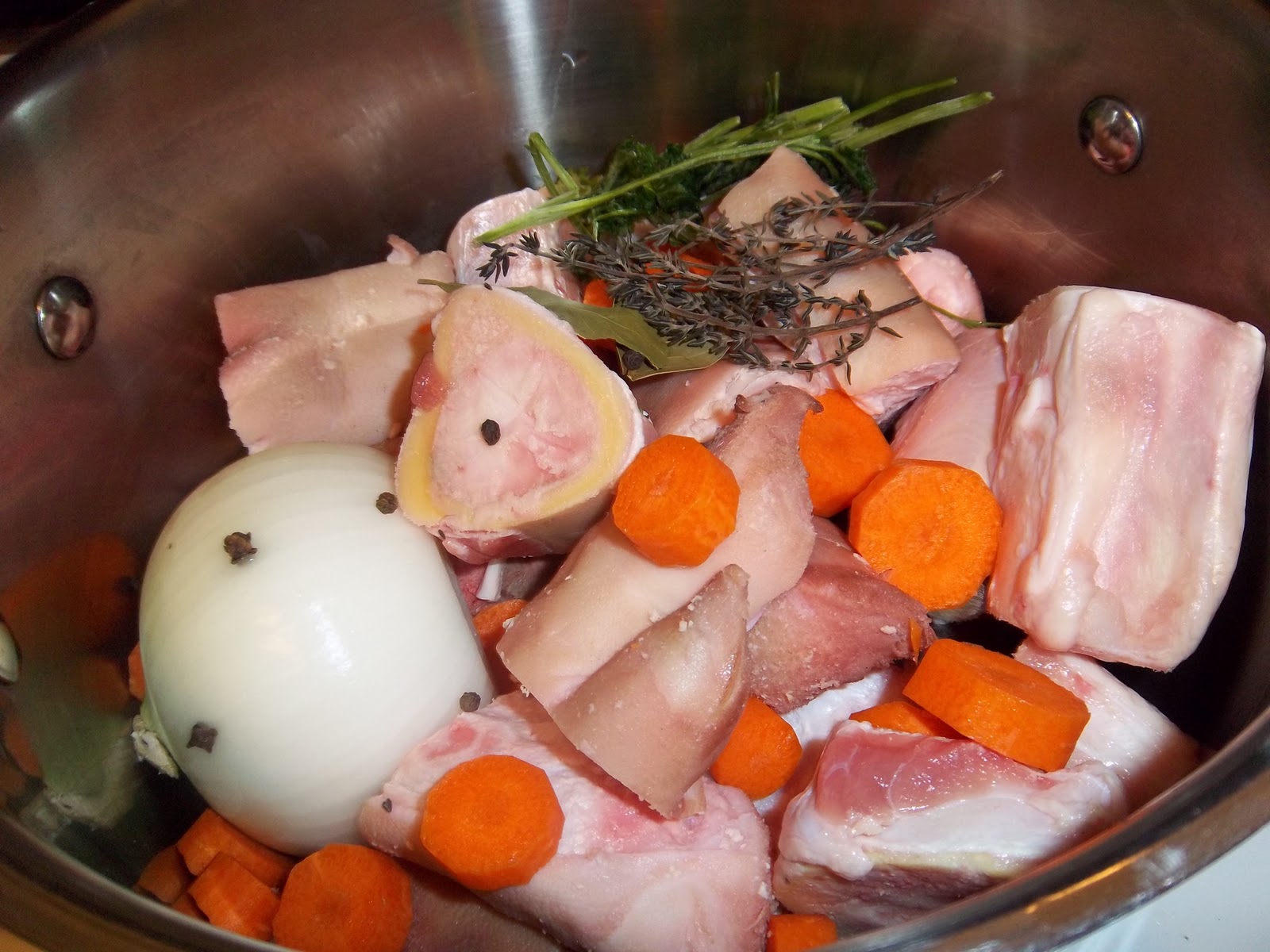
First you need some bones that will release alot of gelatine, so use either two pig’s trotters or a veal knuckle – ask the butcher to cut them into several pieces for you. To these, add any bones you may have left over when you prepared the fillings. You’ll also need a sliced large carrot, a medium onion studded with three cloves, a bouquet garni and twelve black peppercorns. Place all of these in a big stockpot.

From this…
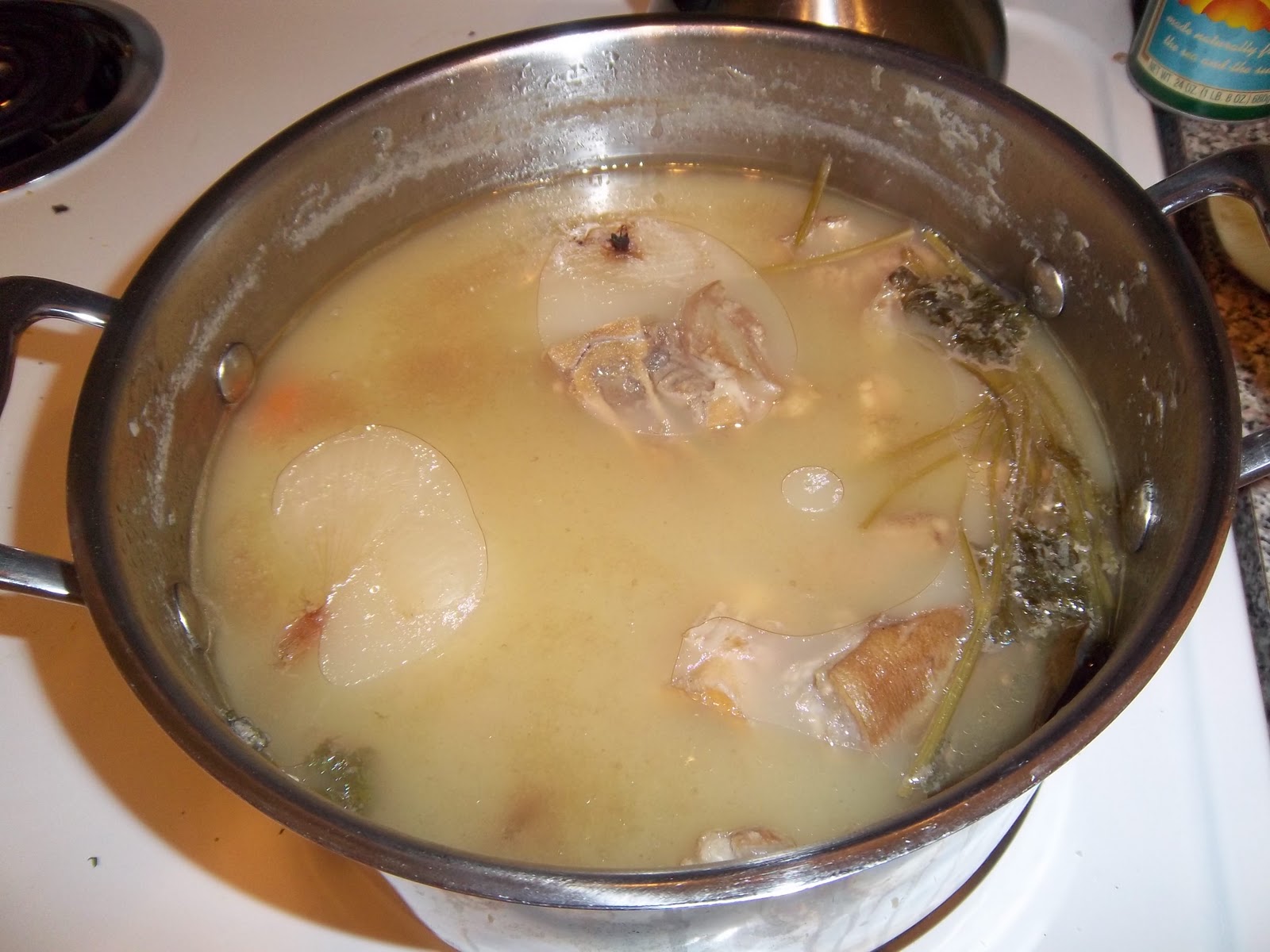
Now add four to five pints of water, bring to the boil, skim off any scum and cover and simmer for three to four hours.

…to this…
Strain the stock through some muslin into a clean pan and boil it down until it is a concentrated ¾ of a pint. Season it with some salt and more pepper if required. The stock is now ready to be funnelled or poured into the raised pie (see here for instructions).

…to this!

#283 Jellied Stock. I won’t write a review for this as it’s not a dish in itself, but I will say that it was a very satisfying process; condensing that big set of ingredients into the viscous well-flavoured stock. Made me feel like a real baker.