#254 Gloucestershire Cheese and Ale

After a slow few months, it is time to get Neil Cooks Grigson up and running again. I’m settling in here in Texas now, which means I’m getting more than a little homesick. What better way is there to get over it than making some nice English foods?

I was a bit hungover this morning so this recipe I hoped would be the perfect cure: carbs, fat and salt plus the hair of the dog, the perfect combination. The cheese required for this is single or double Gloucester. Good cheeses are hard to find in Houston – typical American cheeses are not the best and anything I considered proper (i.e. European) are pretty expensive and/or difficult to find. However I did find an excellent shop which is set out like a big market called the Epicurean Market. There’s a few of them in Houston and they sell a lot of European foods. So finding places like this is great for my blog.

This recipe is quick and easy and full of delicious calories:

Start by slicing some double or single Gloucester cheese thinly and arrange them in a small ovenproof dish. Spread some good mustard over the top – Griggers suggests Tewksbury wholegrain, but any piquant wholegrain will be good – and then pour over enough ale to just cover the cheese. Bake in a moderate oven until the whole things melts and becomes a sauce. Meanwhile, toast some wholemeal or granary bread, arrange on a plate and then moisten with a little warmed ale. Lastly spoon over the melted cheese and serve with a glass of ale.
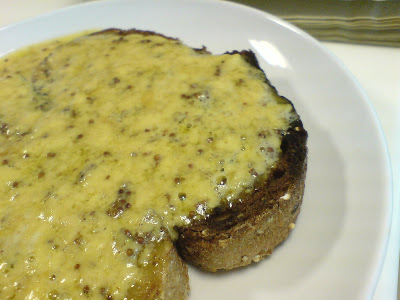

#254 Gloucestershire Cheese and Ale. A good traditional cheesy dish very similar to those served in Gentlemen’s Clubs in Edwardian times. Very rich but the mustard and bitter ale helped to cut through the cheese. I was right in that it really helped to sort out my hangover too! 7.5/10
#253 Payn Pur-Dew (1420)

I haven’t done a historical recipe for a while, so I thought that my first recipe in this new country should be an old English one. It comes from the French pain perdu, which means lost bread, in other words smothered bread. It’s a French recipe but it obviously goes very far back in English history as this recipe proves. It’s from 1420 and is transcribed straight from the source, although Griggers doesn’t say what the source is! To put this into historical context, Henry V is the King of England and so he will have indulged himself on these in banquets; indeed, the inclusion of sugar in the recipe made it very regal. In the fifteenth century, honey would have been used as a sweetener. Eventually this dessert morphed into Poor Knight’s of Windsor – of which there are two recipes in English Food and I will try and do them soon so we can compare and contrast. Anyways, here is the recipe:

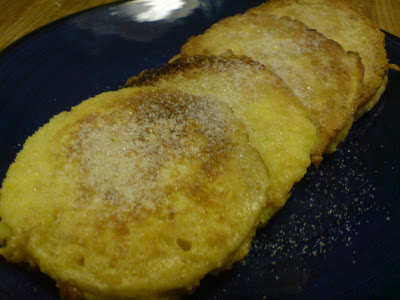
Take fair yolks of eggs, and separate them from the white, and drawn them through a strainer, and take salt [a pinch] and cast thereto; then take fair bread, and cut in round slices; then take fair butter that is clarified, or else fresh grease, and put in a pot, and make hot; then take and wet well the slices in the yolks, and put them in a pan, and so fry them up; but be ware of them cleaving to the pan; and when it is fried, lay them on a dish, and lay plenty of sugar thereon, and then serve forth.


I used clarified butter – not sure what is meant by grease, I suppose the author meant lard or dripping. It is important to clarify the butter, otherwise it and the bread will burn. The word fair in the recipe means fresh; so the quality of ingredients was important in medieval times just as nowadays. Griggers suggests using brioche should you have it. I didn’t.

FYI: Payn per-dew is also called French toast sometimes, but in the north of England I know it as ‘eggy bread’ and it is not just the yolks but the whole egg plus some milk is used. Slices are fried in a little oil and eaten with a scraping of tomato sauce or brown sauce and is certainly not a pudding!

#253 Payn Pur-Dew (1420). A simple and historical recipe that is a wee bit bland by our modern tastes. I think that in the 1420s it would have been an exciting dish, but I prefer it made with the whole egg and some milk to make it less rich and serve as a savoury rather than a sweet. It might have been better with syrup or honey on it instead; something with a bit of heady flavour. So, all-in-all it was okay, but not amazing. 4/10.

Grigson goes Stateside!

Well here I am in Houston, Texas. Now how the bloody hell did that happen? This was not part of the plan. I’ve been here three weeks and am starting to settle in, though I’ve not had much of a chance to eat a load of the Texan cuisine yet, except for the odd burger and a delicious Mexican meal. My terrible memory means I have forgotten the name of the dishes I ate. I will take more notice in future.

Just because I’m in the USA and that it is so very, very hot will not stop me from carrying on the blog of course and serving up wintery food, I just may need to some help from my American buddies on here. I couldn’t bring over any of my cooking equipment, so I am going to have to be very basic in the recipes that I do, at least for the time being. That said, I am staying at my bosses’ house at the minute which has the best stocked kitchen I’ve seen for a good while, so I might try and do a few things before I move into my new apartment in the Midtown area of the city.

I don’t know how successful this will be, but I will try and feed some poor unsuspecting Yanks some delicious (and not so delicious) English grub.

Also, I haven’t seen a single cowboy yet. What’s that about?

#252 Bloater and Potato Salad

This dish gets right away from the high-tea image and shows how delicious bloaters can be at the beginning of a dinner party’ says Griggers. I wasn’t aware they had that image. These days, I suppose, they have no image at all seeing as they are rarely eaten. Indeed, these had to be ordered, like many of the fish in this book, online at The Fish Society. This is a simple dish and actually probably more suitable as a buffet item… With this recipe, I managed to use up all the fish in my freezer before the move to Houston. Indeed, any recipe after this one will have been done in America. I wonder how successful I will be!?

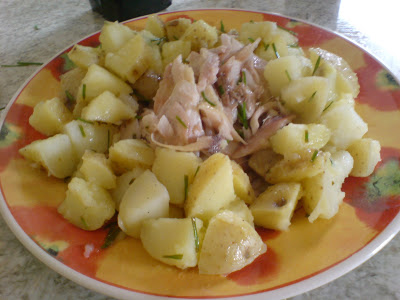
First prepare three bloaters by removing the skin and removing the fillets. Bloaters are already cooked, but if removing them from the bone is a problem, immerse them in boiling water and leave for a few minutes. Flake the fish or cut it up and put in the centre of a serving dish. Cut up a pound of boiled, waxy potatoes and mix in a vinaigrette. Griggers suggests this one: 5 tablespoons olive oil to one of lemon juice, plus salt, pepper, sugar and a heaped tablespoon of chopped chives. Reserve a tablespoon of it to pour over the fish. Now arrange the potatoes around the fish in an artistic manner and serve.


#252 Bloater and Potato Salad. Not the most exciting meal. The bloaters were very nice, as were the lemony potatoes, but it didn’t feel like a complete course. It would have been much nicer with additional dishes too I think. Could do better, Lady Jane: 5/10

#251 Fried Eel with Fried Parsley

I was very impressed when I discovered that The Fish Society sold freshwater eels that they had caught and killed themselves, before freezing them for my convenience. Regular readers will know the stress trauma faced the last time I cooked eels (in both delivery and preparation). The eel population in the UK and Ireland has dropped in recent years, but nowhere near as much as the elver population. I have blogged about this before, but it is becoming increasing clear, especially for Britain that it’s not a good idea to eat adult freshwater eel either now. However, it is not illegal to fish for them, so if taken in small numbers (and who eats eels these days!?) they should be okay. I don’t know what the situation is in the USA though. Are both eels and elvers available here..?

Anyway, enough of my rantings here is the recipe:

This recipe serves four people.

First, you need to prepare your eel; a two-pounder is required here. It needs to be skinned and then cut into three inch pieces. If it has been portioned already, but not skinned, you can either leave it on or fry the pieces skin-side-down in very hot oil for a few seconds. This makes the skin easy to peel off without cooking the eel itself. Next, coat the eel in seasoned flour and fry gently in 4 ounces of clarified butter until browned and the meat comes away from the bones easily. This took me about 7 minutes, but this will depend upon thickness. Next, prepare a lemon-butter sauce by melting 6 ounces of slightly salted butter in a saucepan and adding lemon juice to taste (I used a whole one). Put the eel onto a serving dish and keep warm. Now fry the parsley stalks. Start by heating up oil in a saucepan and fry around 12 parsley sprigs for a few seconds until crisp. Be careful here: the oil will splatter so just fry 3 or 4 at a time. Serve with some lemon-butter sauce poured over the eel, with extra in a jug, and the parsley sprinkled over it.


#251 Fried Eel with Fried Parsley. I have to admit, eel is a tasty fish and cooked this way really shows off it mild, yet delicious flavour. The fried parsley too was very good; like a grassy version of crispy seaweed you get from the Chinese take away! The only problem was the lemon butter – it just made the eel taste greasy. I think tastes have changed somewhat these days, and I think that a lemon mayonnaise would suit it better. However, still a pretty good recipe. 7.5/10.

#250 Oeufs Mollets Christophe

Well I was hoping to do a really special 250th recipe, but due to my busy schedule I didn’t get round to it. Instead what I had to do was try and empty my freezer of as many things as possible before I left for Texas, which meant a lot of fish after my big order from The Fish Society (an excellent website, by the way). So it is quite bizarre that this little landmark recipe has to have the least English name! The ingredients are very English and despite the French name, the dish was created by an Englishman called Christopher Snow. The exciting thing about this recipe, is the inclusion of the smoked cod’s roe – quite a cheap ingredient, but tricky to find, and one I’ve never eaten before. It looked quite scary and alien-esque in its packet and I wasn’t sure about it, but it is part of the fun of this experiment. Plus none of the meat or fish has been bad thus far….

This is a very easy dish to prepare as there is hardly any cooking required at all. The recipe serves four, but it can be easily increased or decreased in ratios for any number:

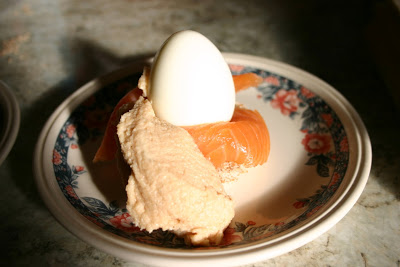
Start off by boiling four large eggs; Griggers is very precise about this, so listen good. Place the eggs into already boiling water and leave for precisely six minutes (seven if they are extra large eggs). Remove and run under the cold water to cool them down. Meanwhile, cut four slices of wholemeal bread and cut them into circles, removing a smaller circle from the centre and butter them and then place them in the centre of a plate. Now prepare the roe: peel away the skin of a four ounce roe and beat the pink centre with four tablespoons of double cream until thick, this should only take thirty seconds and then season with black pepper. Peel the cool eggs and wrap a piece of smoked salmon around each one and place it in the little brown bread stand you have made. Lastly, spoon the roe sauce over the egg (this is quite tricky as it is quite thick, so I did a quenelle instead, pretty posh, eh?).


#250 Oeufs Mollets Christophe. “Occasionally when one goes out for a meal, some dish appears which is so delicious and simple that one is angry not have thought of it oneself” says the Grigson. Well I wouldn’t go that far, but it was pretty good. The eggs were cooked to perfection using her method – the yolks were still runny and creamy and complemented the smoked salmon very well (a classic combination, of course). The smoked cod’s roe was really delicious too, rich and heady with natural hot smoke, the only problem was that it was so very rich and it needed some lemon juice to cut through it, I think. That or just less of it. I think with a little alteration, this could be really excellent. 7/10.

#249 Isle of Wight Pudding

Oh it HAS been a while, hasn’t it? I have been so very busy with getting ready for my move to Houston, I haven’t had the time to tell you all about the food I’ve been cooking. I have arrived in Texas now, by the way but haven’t really had much of a chance to explore the place, in fact I still have a bit of jet-lag. I shall fill you in about Houston soon, I’m sure.

Back in England it is blackberry season and those brambles that are so annoying and prickly for the rest of the year finally earn their keep. This recipe uses them, and so it was a great chance to try something that isn’t blackberry and apple pie (nice though it is). I made this in Derby visiting Simon and Rachel and the farm they are trying to set up as a cooperative eventually. They also keep bees and I used some of their delicious honey for this recipe too. If it isn’t blackberry season any soft fruit will do.


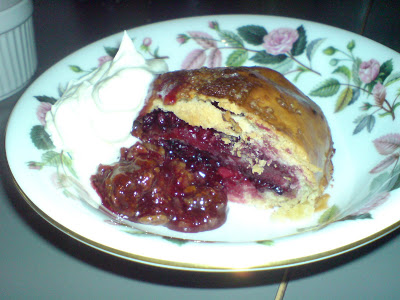
First make a shortcrust pastry with 8 ounces of flour and 4 of fat (butter, lard, or a mixture) plus cold water and roll it out into an oblong shape. Spread 4 fluid ounces of runny honey over the pastry and then sprinkle 8 ounces of blackberries over it. Roll up the dough so that it makes a sort-of Swiss roll, tucking the pastry under at the edges. Place in a small ovenproof dish and pour over 4 fluid ounces of single cream. Bake at 200⁰C for 45 minutes. Serve with thick cream.

#249 Isle of Wight Pudding. A really good pud this one, and cheap too! The best thing about it was that the juices from the berries plus the honey and cream heat up to form a delicious toffee sauce. The top goes very dark and forms a good crust, though it doesn’t make the dessert look very pretty. Give it a go – quick and simple. 7/10

#248 Mazarines

I had made a savoury snack for the party and so I thought I’d make something sweet. These are strange little biscuits, or perhaps cakes. I’m not sure which. They appear in the Cakes and Tarts section, but look like biscuits. For some reason, this is important. Anyways, the name of these sweetmeats are a mystery, probably invented in honour of either the Duchesse de Mazarin who lived in Chelsea for a bit, or Cardinal Mazarin of France.

First, the pastry: Cream together 2 ounces of butter with a tablespoon of caster sugar, then beat in an egg yolk, before mixing in 4 ounces of flour and an ounce of ground almonds (use your hands to bring it all together). Roll it out into strips about 2 inches wide, lay on greaseproof paper turning up the edges ready for the filling.

For the filling: Start by spreading some apricot jam down the lengths of the strips. Next, beat 2 egg whites until stiff and fold in 4 ounces of caster sugar, 2 ounces of flaked almonds and a tablespoon of grated plain chocolate. Pour into a saucepan and boil, stirring as you go so that it doesn’t catch. Spoon the mixture onto the strips – a tricky endeavour. Bake at 180⁰C for 45 minutes, allow to cool and then cut on the diagonal.


#247 Mazarines. These were also a disappointment. The pastry was very dry and crumbly and the filling was so unbelievably sweet. Annoyingly, they were nigh on impossible to cut without them breaking up. Not impressed. If were Cardinal Mazarin or the Duchesse de Mazarin, I’d be well pissed-off that these efforts were created in my honour! 2.5/10

#247 Anchovy Matchsticks

I had a few friends round for my 33rd birthday last week and thought it would be a good excuse to do some of the finger foods in the book. This is a slightly strange one and the anchovy-based recipes have been pretty hit-and-miss. I couldn’t really see anything that was hit about this recipe: anchovies, boiled eggs and cream. However, I’ve been surprised more times than disappointed doing this blog….

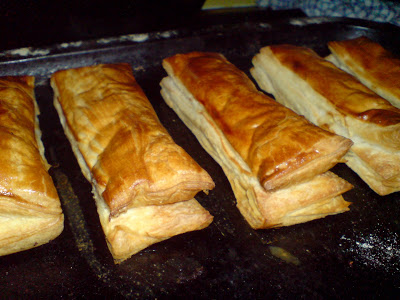
To make your very own anchovy matchsticks, start off by rolling out 8 ounces of puff pastry into two rectangles thinly. Place anchovy fillets in rows, spacing them around 1 ½ inches apart on one piece of pastry. Next, make the egg filling: mash together 2 hard-boiled eggs with a tablespoon of cream and a little salt and pepper. Carefully add a stripe of egg over the fillets, before painting egg wash over the gaps and placing the other piece of pastry over that. Press down and cut into ‘matchsticks’. Glaze with more egg and bake in the oven at 220⁰C for 15-20 minutes. Serve hot.


#247 Anchovy Matchsticks. These were absolutely vile. The combinations of the hot boiled egg and salty fish made my stomach turn. Horrible, horrible, horrible. 1/10

#246 Pike

The Freshwater Fish chapter of English Food has been the most difficult part of the book to source ingredients for. You can’t just walk into a fishmonger and ask for a fillet of pike or whatever. Fish are sold by the crate and no-one eats enough these days for it to be worth the fishmonger buying it, salmon and trout excepted. It’s probably not a bad idea – the fish in our rivers and lakes seem so finite compared to sea fish, so if folks got a taste for them they would be fished into extinction. That said, there are shit-loads of pike in our rivers, so why not pop down to one and fish one of the buggers out.


Who would have thought pike vs. cormorant would have turned out like this?

Jane Grigson was a fan of pike, as were the French who used to farm the scary fanged fish. Actually they’re quite beautiful with their green tiger stripes. I got two fine fillets from The Fish Society, and I suggest you have a look there if you fancy having a go at trying pike, or any other difficult-to-get-hold-of fish. This is what Griggers reckons you should do with it:

Fillet the fish and remove the pin bones (of which there are many) before marinating in some sherry and Madeira wine. After an hour or so, drain the fillets and coat them in seasoned flour and fry in oil and butter until golden and crisp. Serve with a lightly-curried velouté flavoured with the marinade juices. I used, half an ounces each of flour and butter for the roux and then half a pint of fish stock plus half a teaspoon of mild curry powder. Add some cream too if you like.


#246 Pike. This was really delicious – a firm, meaty and mildly sweet fish. Also, it wasn’t in the least ‘muddy’ tasting as we keep getting told freshwater fish tastes like. I would definitely recommend this if you can get hold of it. The sauce was pretty good too. If you see it in a restaurant, order it. 7.5/10