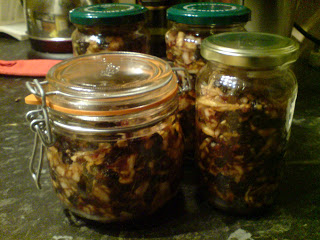
#93 Mayonnaise

I want to clock up some Grigson recipes so that the 100th is something exciting before Christmas with a hare, otherwise it’ll be something boring like Welsh rarebit or something. The first of these is mayonnaise. Surprised it’s in there, really; I know we all use it, but it’s not English. Who am I to judge? Apparently, in 1861 Mrs Beeton, took it as read that mayonnaise was well established here. Funnily enough, I’ve never actually made my own mayonnaise and only ever bought it from the supermarket and wasn’t sure what to expect. If you haven’t, have a go – it’s dead easy. I don’t know what the fuss is about getting the yolks and oil to emulsify and not split; just don’t rush it, and you’ll be fine…

Beat 3 egg yolks with a whisk along with a teaspoon of Dijon mustard (English is way too strong for this) and a dash of lemon juice or white wine vinegar. When they start to thicken slowly add ½ pint of groundnut or olive oil (I actually used both at a ratio of about 4:1). Add the oil drop by drop as you whisk at first. If you’re wrist begins to ache take a little rest. You can be braver with the oil as you get to the half way mark. When all is added, season with salt and pepper and extra lemon or vinegar if needed. Easy!


FYI: No-one is really sure of the origin of the name – there are two theories; first, says Larousse Gastronomique, is that it is a popular corruption of moyeunaise, derived from the very old French word moyeu, which means yolk of egg. Or it came from mayennaise after Charles de Lorraine, duke of Mayenne, famous for taking the time to eat his chicken with cold sauce before being defeated in the Battle of Arques. What a trouper. I prefer the second story.

#93 Mayonnaise – 6/10. Not disappointed as such, but unprepared, I think the right word might be. Home-made mayonnaise is absolutely nothing like shop-bought. They are incomparable. This mayonnaise was rich and slightly bitter in flavour and not good when I dipped my finger in to check for seasoning. However, when I tried it out on my favourite sandwich – mature Cheddar, picked beetroot and mayonnaise, I changed my mind and thought it was very good. I just think I’m too used to the bland old Hellman’s to be a convert…Is that wrong?
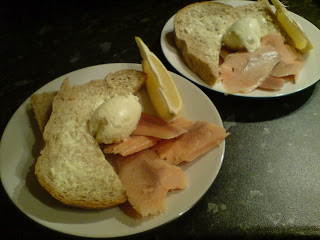
#92 Smoked Trout

I bought some smoked trout from the Port of Lancaster Smoke House’s stall at Hoghton Farmers’ Market and was keen to try it. I was a little unsure about it, I have to say, as I’m not a huge fan of smoked salmon, and assumed it was going to be rather similar. Jane does say in English ooh, however, that smoking trout is the best way to eat it these days, as the trout you’re buying is (almost) sure to be farmed and therefore insipid in flavour. Smoking simply rescues it. I must admit, it have had trout before, and found it quite bland. It’s not everyday you see high-quality smoked trout so I snapped it up. The way to eat it, according to Griggers is very simple; a nice, quick light lunch or starter:

Make a horseradish cream with lightly whipped double cream and fresh or creamed horseradish to taste, plus a little sugar and lemon juice. Serve a fillet of trout per person, with a buttered slice of brown bread, a lemon wedge and some of the horseradish cream on the side.


FYI: if you buy fresh horseradish, don’t grate and freeze it to use later. I used frozen for this and there was absolutely no taste it. I have no idea why! I recommend you use creamed horseradish for this as you won’t need much of it.

#92 Smoked Trout – 7.5/10. Very tasty indeed; a pleasing cross somewhere between smoked mackerel and salmon. Everything went so very well together – the bread, lemon and cream. It’s a shame the cream didn’t taste of horseradish! Oh well, you live and learn – everyday’s a school day…

The Merchant of Hoghton

We had planned a big group outing to Hoghton Tower Farmers’ Market; me, Charlotte, Kate , Pete, Ange, Chris and their wee baby Evan. It’s to be found in Preston, Lancashire, and Ange has been raving about it for ages. I had my shopping budget of £35 and was hoping to fill the freezer with exciting stuff; in particular game.


We arrived slightly hungover from the night before and were immediately impressed – lots of stall selling absolutely everything! The range of meat and game was excellent, as was the cheeses, veg, pies, cakes and everything you could ever wish for.

For my 35 notes I came away with:
1. Smoked trout fillets
2. A hare
3. A brace of partridge
4. Smoked, cured streaky bacon
5. Pigeon and pea pie
6. Mutton pie
7. Corned beef pie
8. Chocolate-covered crystallised ginger
9. Banana Tea Loaf
10. Chocolate cake

Not bad I reckon. I’m particularly interested in the hare – there are a few recipes in English Food, and I’m thinking about cooking it as the 100th dish as it is fast approaching and I need something unusual and impressive. I was going to do an elaborate Victorian pheasant dish, but you need pheasant giblets and you need to order those apparently. The hand-raised mutton pie was the pie-highlight for me, I have to say, and it has gotten me enthused to cook some mutton dishes too.

Choosing my game.

We also had an ace laugh which is just what I needed, the best bit being me and Charlotte tasting some extra-mature Lancashire blue cheese…

Charlotte: This is really good.

Me: Really creamy, nice after taste. It tastes a bit like sick; but in a good way.

Charlotte: Yeah, not your own sick.

(Pause)

Charlotte: Err..like somebody else’s….?

(Hilarity ensues)

Ange’s Celtic aggression comes out at the mere weilding of sprouts.

#91 Spicy Prawns

What makes these English, I do not know; other than a sort of nod to Maharajah days maybe. Anyways, I bought a huge bag of tiger prawns from W H Lung, the Oriental Cash and Carry near where I work for when I made Phat Thai for me and Butters at the weekend. I had loads left over, so I looked through the book and saw Spicy Prawns. I had all the ingredients in and it takes very little time to make. If you have spices at home, it’s a good one to do.

BTW: if you don’t, buy some spices in – they’re cheap as long as you don’t buy Schwartz spices; they are ridiculously overpriced. Go to an Asian supermarket. If you live in Manchester, Unicorn sells good value, organic spices. Also, buy your spices whole and grind them as you need them – the flavour is much better. Use a pestle and mortar, or as I do, a coffee grinder.

For two:
Peel (if you need to) and devein 8 ounces of raw tiger prawns. To devein, cut down the back of the prawn and remove the black vein running along its length. (FYI: it isn’t a vein, but the digestive tract and the black is the mud and God-knows-what else they’ve scoffed). Make a spice mix of ½ teaspoon of paprika, ½ a teaspoon of ground cumin, a ¼ teaspoon of ground ginger and a pinch of cayenne pepper, plus some salt. Heat a couple of tablespoons of olive oil in a pan and fry two chopped cloves of garlic. When they start to turn golden add the spice mix and fry for a minute. This is very important when cooking any spice – you need to fry them in oil at the start, otherwise they taste bland and raw. Add the prawns and fry for another two minutes, stirring them around so they get evenly cooked. Lastly, throw in a good few tablespoons of coriander leaves and cook for one more minute. Serve immediately.

Grigson says to serve with crusty bread or with saffron rice garnished with toasted pine kernels and fried onion slices. I went for the latter as you can see. To make saffron rice, you need to sprinkle in ¼ teaspoon of saffron strands to the rice when it is cooking. Use Basmati rice, fry it in oil for a minute before adding boiling water and some salt. The ratio by volume of rice:water is 1:2. Add the water, stir once, cover, and leave it on the lowest possible flame until all the water has been absorbed. Let it stand for a few minutes and fluff up with a fork. Perfect rice, every time!

FYI: I usually don’t eat prawns, but have fallen off the wagon recently. If you eat alot of them, try and cut down. Those that are fished are trawled up with huge trawlers that kill everything in their path. For every tonne of prawns fished, ten tonnes of sea life dies. If you buy farmed, it is not much better; most farms are built on mangrove swamps – a habitat we are already losing at a rate of knots. When I’m done cooking the Grigson recipes with prawns, I’m going only have prawns at special treats.

#91 Spicy Prawns – 7/10. Very tasty and quick to do. Brilliant if you can’t be bothered cooking but want something proper. The prawns were ready in the time it took to cook the rice. The oily spices were just right – very intense, but didn’t mask the subtle flavour of the prawns. The saffron rice helped this thing along with it’s slightly musky-sweet flavour. Of course, this is even easier if you just have it with bread. Great stuff!

#90 Sussex Pond Pudding

The Sussex Pond Pudding. It is widely considered the best of the suet steamed puddings (or the best pudding full-stop). So good in fact, that Grigson doesn’t bother putting any other ones it; where’s Spotted Dick and jam roly-poly, please lady?? (To go off subject for a second; I’ve noticed a few glaring omissions from English Food, and am compiling a list, but it includes fish and chips, fish pie, scouse, spam fritters and stargazey pie amongst others, plus I can’t find a recipe for custard! I intend to fill in these gaps with the blog, and an unofficial Third Edition will then exist…). Anyway, Sussex Pond Pudding is essentially a suet crust filled with a whole lemon plus butter and sugar. When you turn it out, it bursts open and a moat of lemony sauce surrounds it. It’s very easy to make unless you’re Heston Blumenthal – it’s very unhealthy too, of course, but we don’t eat these everyday. I agree with Heston though – these sorts of puddings are going out of fashion in Britain, and it’s a shame. They’re easy to do and only require time to steam, so a check every 45 minutes to see if the steamer’s not boiled dry is all the work you need to do. The recipe serves 4 to 6 – it’s very rich. Serve with custard – real or packet, it don’t matter! I’ll give you the recipe I used for a proper Crème Anglaise at some point…


Start off by liberally buttering a 2 ½ pint pudding basin. Then make the suet pastry (the easiest pastry to make): Mix together 8 ounces of self-raising flour with four of chopped, fresh suet (you can, of course use the packet kind – even the vegetarian suet if you like, but fresh definitely give the best flavour, and it’s a lot cheaper!). Using a knife mix in enough half-and-half water/milk mixture to make a soft, but not tacky dough (about half a pint-ish). Roll this out into a large circle and cut-out a quarter. Pick up the dough and line the basin with it and press down the edges so that there will be no leakage. Next, cut up around three ounces of unsalted butter and place it in the bottom of the basin and pour over the same of sugar. Then, spear a large, unwaxed lemon several times with a skewer – this is very important, there will be no lemon sauce otherwise! Place the lemon on top of the butter and sugar and using equal amounts of more butter and sugar fill in any gaps around the lemon. With the remaining pastry roll out a circle and make a lid, again pressing down the edges to make a seal – use water as a glue. Steam for 3 to 4 hours. Turn it out and make sure everyone gets a bit of lemon – it should be soft enough to eat.

#90 Sussex Pond Pudding – 9.5/10. Absolutely divine! The centre turns into a sort of lemon curd, and the suet pastry goes beautifully crisp, golden and crunchy. Butters and I did chicken out of eating the lemon skin, but the lemon centre was a lovely sour-sweet mush. Is it the best suet pudding? Possibly. We should all try and make an effort and bring this sort of food back – it’s cheap, easy and gorgeous (you are what you eat, after all!). It’s proper Sunday lunch fair, but goes well with the Thai food I made for Butters and me due to the lemoniness.

#89 Steamed Ginger Pudding

My new ‘mate’ Butters came round on Saturday, so an evening of scoffing food, watching crap telly and playing computer games, amongst other activities was planned. Totally un-in-keeping with this project, I decided to do a Thai meal, so earlier in the day, I went into Manchester’s China Town with my chum Stuart for supplies. As you may, or may not, know I’m an old hand at Thai, Indian and most other popular Asian cookery and the point of this blog was to teach myself English cookery, but Stuart can’t cook for toffee and since Thai food is probably the place to start – as long as you can chop and read, you can cook Thai – the trip was really to help him get going, but also Butters (same nickname as me! What’s THAT about?) likes East Asian food, so I thought I’d cook some too. I made a fragrant tofu and tomato soup for starters and then a red curry. For pudding, however, I thought I’d do a Grigson but try to pick a dessert that fit the meal, so I went for a steamed ginger pudding. It contains that spicy-sweet stem ginger, that you get in jars. Brilliant. I love steam puddings, they’re da shit…

Start off by buttering a one pint pudding bowl. Then, cream together 3 ounces of butter with two of sugar, beat in a large egg, 4 ounces of self-raising flour, 4 ounces of chopped stem ginger, along with a tablespoon of ginger syrup from the jar and ¼ teaspoon of ground ginger. The dough should be quite soft, so if not add a little milk to loosen it up slightly. Put in the pudding basin and cover well (if you don’t have a plastic one with lid, use a sheet of foil with a pleat in it, secured with an elastic band). Steam this for two hours. I put it on just before I started making the main.


Turn the pudding out onto a plate if you like – always impressive. Serve with custard, cream, or with this sherry sauce given by Griggers (leave out the sherry and you get a thin, frothy custard sauce):

Whisk together two large egg yolks, half a tablespoon of sugar and ¼ pint of sherry in a bowl or basin. Place the basin over a pan of just-simmering water and whisk until the sauce thickens and becomes frothy, adding the cream slowly as you go. Unlike custard, this can’t be made in advance so make sure your guests don’t mind you disappearing for 10 minutes between courses.

#89 Steamed Ginger Pudding – 7/10. I fooking LOVE puddings. Plus a ginger pudding really is an English classic, and now that it’s autumn, there shall be many more. Really they all score at least 9 for me, but I reckon there are better ones to come, such as – in many people’s opinion – the ultimate: Sussex Pond Pudding. I may do that one next. The sherry sauce was odd though, the strong sherry flavour didn’t drown out the ginger flavour of the pudding, but I think I would’ve preferred good old custard, so I give that a 5/10 – nice, but won’t make it again…

But, all-in-all the evening was a total success, and Butters and I had an ace evening. I am planning the next one already…

#88 Richard Boston’s Guinness Christmas Pudding

The second part of the traditional festivities: a home-made Christmas Pudding. Don’t know why I’m making it as it seems the whole world despises them, including Jane Grigson, herself. But like she says, English Food wouldn’t be a book on English Food without it included. It’s very easy to make, but requires a huge amount of steaming time; you have to steam them now, and again on the day. The mixture makes five pints’ worth, so I went for two two-pint basins and a one-pint. I’ve had to do mine in lots rather than all at once, so had to guess at the steaming times a bit, but I’ll talk about that when we get to it…

The recipe is not unlike that for the mincemeat; it’s just a question of mixing everything together in the order given. Use your hands to mix it up – it’s a lot easier than using a wooden spoon. Also, you can’t over-stir it, so get everyone in to give it mix. If I remember rightly, to get good luck, thirteen people have to mix it clockwise with their spoon and make a wish before you steam it (if you believe in that sort of stuff). Dry ingredients first: 10 ounces of fresh breadcrumbs, 8 of soft brown sugar, 8 of currants, 10 of chopped raisins, 8 of sultanas, 2 of dried mixed peel, 10 of shredded suet (the packet kind!), plus ½ teaspoon of salt and a teaspoon of mixed spice. Now mix in the grated zest of a lemon, a dessertspoon of lemon juice, 2 large, beaten eggs, ¼ pint of milk and a 300ml bottle of Guinness. Divide this between your pudding basins, that have been well-buttered (I’ve bought some of those plastic ones with proper lids so you don’t to bother with foil tops covered with tea towels, etc.). Add a sixpence if you want. Now for the first steaming…If you can fit them in one, then steam for 7 ½ hours – yes you heard me – SEVEN-AND-A-HALF!! If not, a bit of guess-work is required – did the 2 pint ones for four hours, and the 1 pint for three. Don’t know if it’s worked, we will just have to find out on Christmas Day! To store them, either keep them covered in a cool place or freeze them.

Before steaming.

Yes I know they look bad in this state,

but they looked like proper puds when I’d done cooking ’em.

FYI: like mincemeat, the Christmas Pud was created as way of preserving meat, and the earliest recipe goes back to 1420, but it wasn’t until the Victorians turned it into a proper dessert, did it become the familiar round shape topped with brandt butter, holly and flaming brandy. The stirring and steaming, traditionally occurred on ‘Stir-Up Sunday’, which was the first Sunday of Advent.

BTW in case you were wondering, Richard Boston was a food writer for The Guardian newspaper.

#87 Mrs Beeton’s Traditional Mincemeat

Christmas is coming, and I am going traditional on your ass. First thing to be made is Mrs Beeton’s Traditional Mincemeat. According to Griggers it is better than any modern mincemeat. The main difference is that there is proper fresh suet and actual meat in it. She reckons that when she makes this recipe, the mince pies get eaten double-quick. Well we’ll see. Getting hold of fresh suet is easy, the butcher in Levenshulme sold me 2 and-a-half pounds of it for only a quid! Bargain! Also, I got the chance to use the mincer attachment for my Kitchen Aid for the first time; it was very good, and now I intend to mince everything. I like a good mince, I do (but you probably knew that already…). I haven’t had the chance to eat any yet, but it’s very easy to make, as long as you have the ability to stir.

The amounts are quite big in the recipe, so I’m giving you what I did which is half of Good Lady Beeton’s instructions:

Mix together 8 ounces of seedless raisins, 12 ounces of currants, 6 ounces of minced, lean rump steak, 12 ounces of fresh, chopped suet, 8 ounces of dark brown sugar, 1 ½ ounces of dried mixed peel, ¼ grated nutmeg, 12 ounces of apples that have been peeled, cored, and grated and the zest and juice of half a lemon. When all has been incorporated, mix in 2 ½ fluid ounces of brandy. Spoon the mincemeat into sterilized jars. (To sterilise jars, place jars and lids in oven set to 110°C for 35 minutes). This recipe made enough for four big jars. Leave for at least two weeks…


FYI: Mincemeat recipes go back as far as the Fifteenth Century, and pretty much any meat was used for mincemeat – Sixteenth Century recipes use heart or mutton and bone marrow instead of suet. It’s probably one of the few surviving Elizabethan dishes still made today.

…to be continued.

#86 Walnut Cake

We all went up to Cumbria to visit Frances and James last weekend. It was also Dean’s birthday, so I thought I’d make a cake. On asking him what cake he’d like, he said ‘anything, as long as it’s not from that bloody book of yours’. Well that’s just lovely, isn’t it? I think he’s expecting brains and gonads in every recipe. After giving many alternative suggestions and turning them down, he eventually went for a walnut cake. Where did I find a recipe? You know! It’s a good cake too, for a walnut cake – the icing is a complete faff though. If you can’t be bothered to do the icing, do butter cream instead.

For the cake:
Cream together 5 ounces of butter with 6 ounces of sugar; beat in 2 beaten eggs, then 8 ounces of sifted self-raising flour, 3 ounces of coarsely chopped walnuts and 4 dessertspoons of milk. Lastly, add half a teaspoon of vanilla essence (or use vanilla sugar instead of normal sugar). Line an 8 inch cake tin, add the mixture and bake for 1 to 1 ¼ hours at 180°C. Test with a skewer, and when ready turn out onto a cake rack and allow to cool.

For the icing:
A bit tricky this bit…Stir a ¼ of a pint of water and a pound of sugar lumps in a pan under a low heat until the sugar gas dissolved. Raise the heat and add a generous pinch of cream of tartar. Boil the syrup until it has reached the soft-ball stage which is 120°C; easy if you have a sugar thermometer, which I don’t. Alternatively, as it boils, carefully remove a teaspoon-full of syrup and drop it into small cold water. Fish out the blob of sugar, and if it is soft but can form a ball between your fingers, you are done. You mustn’t stir the syrup as it boils; this reduces the temperature, causing the sugar to crystallise, resulting in total disaster. It takes a few minutes, so in the meantime, whisk two egg whites until stiff in an electric mixer, and when the syrup is ready pour it into the egg whites with the electric mixer on full-whack. Keep mixing until it has nearly set and then add a teaspoon of vanilla essence. You should have a lovely smooth meringue icing. Spread this over the cooled cake with a palette knife and decorate with some walnut halves.

It is very important to wait until the icing has nearly set – I didn’t and it went everywhere!

Not a wedding hat, but in fact, a cake.

#86 Walnut Cake – 6.5/10. Certainly an above-average cake as far as walnut cakes go. Not normally a big fan really. I think it may have been nicer with some coffee-flavoured butter cream instead of the posh icing, but that’s just me.

#85 Caramelised Cox’s Orange Pippins

I wanted to do a quick and easy dessert for when Paddy came round and didn’t really have time for baking or anything requiring too much time or effort, being the busy bee that I am. (#85) Caramelised Cox’s Orange Pippins fit the bill perfectly; a hot dessert that can be made in 5 minutes. That’s what we like.

I love Cox’s Orange Pippins; they’re my second favourite apple after the russet. You can’t beat an English apple in autumn. I don’t really buy them the rest of the year when they’re not in season and all you can buy are shipped over from France or whatever. I think they’ve had a resurgence over the last couple of years as I’ve spotted both varieties in supermarkets. If you can’t get hold of Cox’s Orange Pippins, I suppose you could use any eating apple, but these are the best eaters for cooking with.


Peel and core one apple per person top and tail them and cut into three thickish rounds. Fry the apples on a low to medium heat in butter until they start picking up a faint golden colour. Whilst that’s happening make some cinnamon sugar; one tablespoon of sugar to one teaspoon of cinnamon. I found that this was enough for two apples, but you put on whatever amount you like. When the apples are ready, sprinkle over the sugar. Keep the apples turning over every 30 seconds or so and you should magically end up with a nice sweet glaze covering them. It’s important not to have the heat too high, so be careful. Serve them immediately with a dollop of clotted cream. Piece of piss!

#85 Caramelised Cox’s Orange Pippins: 8/10. Sweet, sticky, fattening and delicious. Also, it’s one of your five fresh fruit and veg portions for the day. It’s a no-lose situation. Bravo Griggers; you’ve done it again, lady!