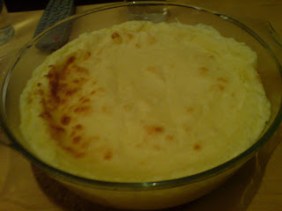
#84 Shepherd’s Pie

The second of the classics I’m trying to work through. Spoilt for choice for the next one. Thinking maybe a Lancashire Hotpot. Any suggestions, let me know. Anyways, my old mate Paddy was staying over, and he asked for a Shepherd’s Pie, and a Shepherd’s Pie, he got. According to Grigson, you can use either lamb or beef – I always thought that a Shepherd’s Pie contained lamb and a Cottage Pie had beef. We went for beef on Paddy’s request, as it’s the least fatty. One ingredient I found though – white wine. Never heard of that in a Shepherd’s pie, and I must admit I had reservations.

Chop a large onion and three cloves of garlic and stew them until soft in 3 tablespoons of oil. Raise the heat under the hob and add a pound of minced beef (or lamb), stir until browned. Next add a tablespoon of tomato puree, a ¼ of a pint of white wine, and ¼ of a pint of beef stock, keeping a few tablespoons in reserve. Slake 3 heaped teaspoons of cornflour in the reserved stock and add this to the beef. Season well with salt, and very well with pepper. I don’t understand it when people say that they don’t add salt when they’re cooking; it just all tastes so bland. Plus I don’t add anywhere near as must as the pre-made supermarket meals. Rant over. Simmer this for about 10 minutes and spoon off any surplus fat. Whilst simmering, boil 2 to 2 ½ pounds of potatoes (Grigson says boil them in their skins, but I skim-read the recipe and didn’t spot that sentence and peeled mine). Mash the spuds with 3 ounces of butter and up to ½ pint of milk (depending upon how sloppy you like it). Season the potato well too, readers. Pour the meat into a casserole dish and pile on the potatoes. Run a fork through the top so as to add texture to the spuds and so they crisp up nicely. Sprinkle over an ounce of grated Cheddar and a tablespoon of grated Parmesan. Bake for 10 minutes at 200ºC, and then turn the oven down to 180ºC and bake for a further 45 minutes.
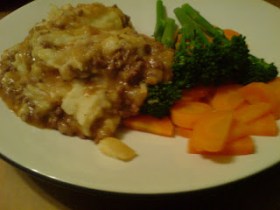
Stodge-a-rama

#84 Shepherd’s Pie 8.5/10. The secret ingredient of a Shepherd’s Pie, it seems, is white wine. It enriches the whole thing without making it too rich, as red wine would do. It’s a bit frivolous, I know, but you could swap the wine for more stock if you liked.


#83 Almond Fingers

The almond finger. A Mr Kipling favourite I think. I recently decided, since there is no such thing as a bad cake, that if I am to avoid a severe sugar and carbohydrate addiction that I should never buy a cake again; if I want one, I’ll just have to bloody-well bake one meself. I remember liking these as a student, and my Mum used to make them when I was little, so I thought I’d give Grigger’s recipe a go. Griggers reckons that the difference between the flavour of the commercial ones and the home-made. Also, I was off to my mate Stuarty’s flat, and thought it would be nice to bring round something home-baked. People don’t do that kind of thing these days do they? We had a grand old night playing Guitar Hero and getting sloshed.


The recipe is in two stages: First of all you need to make a sweet pastry for the base. Cream together 4 ounces of softened butter and 3 heaped tablespoons of icing sugar. Next, beat in an egg, then a tablespoon of lemon juice, and 8 ounces of plain flour. Wrap the pastry in cling film and let it rest in the fridge for an hour, or the freezer for 20 minutes if rushed for time, as I was. Roll out the pastry into a lined 7 x 11 inch Swiss roll tin. Don’t worry if it breaks up – sugary pastry always does – just fill in any holes with spare bits. Lastly, spread a thin layer of apricot jam over the pastry and phase one is complete!

Now make the filling: Cream together 5 ounces of softened butter with the same weight of vanilla sugar (make your own), beat in 2 eggs, then a heaped tablespoon of flour, 4 ounces of ground almonds and lastly, 2 tablespoons of dark rum. Spread this evenly over the sweet pastry and sprinkle over 2 ounces of slivered almonds. Bake at 180ºC for 35-40 minutes.

#83 Almond Fingers. 7.5/10. Jane was right; much better than any bought nonsense. The whole remains very moist, almost like a cookie. I feel that I was a bit too tipsy to appreciate it, I hear Stuart was still eating them a couple of days after, so they can’t have been bad.

#82 Toad-in-the-Hole

Very sorry for the recent few weeks being blog-lite. However folks, this doesn’t mean I’ve not been cooking, just been rather busy with work, plus I have become rather a social butterfly of late. Anyways, I have decided to go through the book and do some of the proper classics. So first up is (#82) Toad-in-the-Hole. I do love it. You have to make sure you get decent sausages. I was mant to get mine from the butchers in Levenshulme or Chorlton, but ran out of time as I worked late, and had to go to blinking Asda. However, did find some organic pork sausages in natural casing, which were very good. Didn’t think I’d be recommending Asda on here, bearing in mind their animal-rights record. I cooked it for John, who – shock horror – had never had it before! That’s the Irish for you.

Makes four servings:

First of all make some Yorkshire pudding batter. I usually do this by eye, but followed Grigger’s measurements which do turn out well. Mix 8 ounces of plain flour with a pinch of salt in a bowl. Make a well in the centre and break 3 eggs into it. Make up a pint of half-milk, half-water and add about a third of it to the flour and eggs. Whisk this into a thick paste – adding only some of the liquid at the beginning should prevent lumps. Keep adding the liquid until the batter is the consistency of double cream. Leave to rest.

Meanwhile, preheat the oven to 220ºC and then brown a pound of sausages in an ounce of lard in a frying pan; you’re not cooking them through, just getting two decent brown stripes along their lengths. Strain the fat into a large roasting pan and pour a thin layer of batter and bake in the oven until set – about 5 minutes. Place the sausages on top of the set batter and pour over the rest. Bake for 35 minutes. The batter should rise up and be a nice golden brown. Serve with some veg and onion gravy.


#82 Toad-in-the-Hole: 9/10. I love this kind of food. Can’t go wrong with this kind of food. If for some reason you have never had it before, simply go and make it right now. You have a recipe. It’s very easy. The only thing I ask is that you buy good sausages and make onion gravy to go with it, otherwise it’s just not the same.

#81 Northumbrian Wholemeal Scones

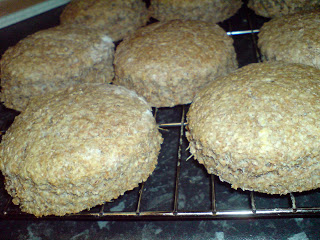
Another venture into yeast cookery. This one uses fresh yeast; a new one on me. It’s much better than the dried stuff. Also, I have a giant bag of stone-ground flour left over from Doris Grant’s Loaf the other month, and what with the credit crunch and the whole of the Western World going into liquidisation, it’s best I try to be a bit frugal. Also, I have finished the no carb diet I was on, and so the other reason I went for this recipe is that it uses proper organic brown flour with all the bits and wheatgerm and everything inside, and that must be better than white bread. In fact, my house is a white carb-free zone from now on (unless it’s in a recipe for the blog, natch). Oh, I bought the yeast from the Barbakan deli in Chorlton – an excellent bakery, probably the best in Manchester – for only 20p per 100 grams. I thought I may as well use what the best use. I hear that supermarkets with bakeries within will give you it for free.

I have no idea what make these scones particularly Northumbrian. Ideas anyone?


Here’s what to do…

Makes about 12 scones.

Mix 1 ½ pounds of stone-ground wholemeal flour with a teaspoon of salt, rub in 2 ounces of chilled lard (I used hands here rather than the mixer for a change) and make a well in the middle. Mix ¼ pint of milk with ¼ pint of boiling water and pour about a teacup full of it into dish or small bowl and stir in a tablespoon of golden syrup. Fork in an ounce of fresh yeast into the syrup mixture and allow it to froth up. This is much quicker than the dried stuff, it took only 10 minutes in my cold kitchen! Tip it into the flour along with the rest of the water-milk mixture. Be careful though, don’t add it all at once; you need a ‘soft but not sloppy dough’ says Griggers. I actually needed a little more. Put some clingfilm over the top of the bowl so it doesn’t dry out and let the Sacchromyces do its work until the dough as doubled in size. Roll out the dough, keeping it fairly thick, and cut out rounds with a scone cutter. Place scones on a baking tray, cover again and allow to prove. When they’ve risen again, brush them with milk and bake for 15-20 minutes at 220ºC.

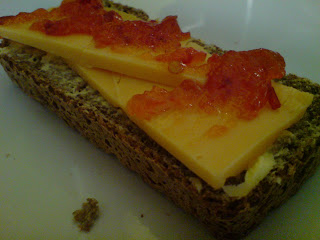
#81 Northumbrian Wholemeal Scones – 7/10. Griggers suggests eating them hot with butter and honey. And so right she is. Bloody marvellous. They are just as good as normal scones. They’re not sweet, but a lovely malty flavour instead. I also had some the next day for a quick tea – split two and grilled them with cheese on. I’ve frozen the rest to keep me in a constant supply.

#80 Oxtail Soup

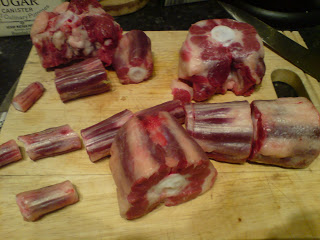
My favourite soup; at least when it comes to tinned Heinz variety. I have made it before, but it was quite an elaborate recipe with loads of ingredients. This one is more basic. It is very tasty, but heed Jane’s advice: don’t buy a skinny little oxtail. I asked for the biggest one they had. However, if you are not reasonably surprised by the size of your butcher’s oxtail, err on the side of caution and buy two. I didn’t do that, and so the flavour was perhaps not as rich as it could have been. It was remedied however, by adding some of that beef stock concentrate, but I did feel like a bit of a cheat! Ask the butcher to chop up the tail and trim the fat off.

I got the oxtails from W H Frost in Chorlton – a very good butcher. I chatted to the man briefly and he mentioned that he could pretty much get anything I want in as long as I order it in plenty of time. Good man! The butcher in Levenshulme is good for the basics, but it’s nice to see there’s somewhere I can get the weird and (not so) wonderful stuff.

I would recommend to giving it a try. If you’re not used to strange cuts or offal, then this is the place to start. It’s not particularly gory and the meat is pleasantly beefy. However, you need to start it the day before you want to eat it.

From this….

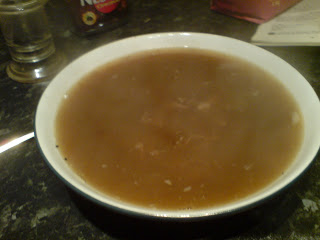
…to this!

The day before:
Start off by removing any surplus fat from the tail that the butcher didn’t quite get rid of. Chop three stalks of celery, stud an onion with three cloves and slice a small turnip and a carrot. Next, melt 2 ounces of butter in a large pan and brown the meat and vegetables. This takes about 10 minutes as there’s quite a lot of stuff in the pan. Don’t be coy; have the heat quite high, as you don’t want the vegetables to stew. Give a stir now and again. Meanwhile make a bouquet garni – I used 2 bay leaves, a sprig of thyme some parsley stalk (all fresh, but kept in the freezer). When sufficiently browned, add the bouquet along with 4 pints of water and a teaspoon of peppercorns and season with salt. Bring to the boil, cover and simmer gently until the meat is coming away from the bones. This took around four hours. Strain the beefy stock you have created into a bowl and allow to cool. You can discard the veg, but I ate them! The final job is to pick the meat from the bones and plop the meaty chunks back into the soup. Refrigerate the soup over night.

On the day:
Much easier! You’ve done the hard work. Using a spoon, skim off the fat that has risen to the surface and solidified. Reheat the soup to simmering point and add 5 tablespoons of port. This makes all the difference. Don’t dare miss it out. Check the seasoning, you can be pretty bold I reckon. If it is not beefy enough, cheat as I did and add a small amount of stock concentrate.


#80 Oxtail Soup – 7.5/10. Even though I cheated, it is still a beautiful soup. The simple combination of a well-flavoured stock, chunky beef and the sweet port wine is addictive!

#79 Carrot and Hazelnut Cake

Right. I promise that October shall be much more eventful in the world of The Grigson than September. It was my turn to do the cake for Evolution Group at University, so I’ve been given a good kick up the arse.

A favourite of the group is carrot cake, and there is a recipe in English Food – though it’s very different to the American carrot cake. It’s made without using fat, like a Genoese spoge to make it light and has the added bonus of having hazelnuts in it. Couldn’t resist not sandwiching it with American-style cream cheese filling.

FYI: Carrots have been used for desserts quite a lot in England. Mrs. Beeton had a sweet, chewy carrot tart in her book; it was revived as mock apricot tart during rationing in the Second World War, if I remember rightly (not that I was in WWII, you understand).

Separate four eggs and add to the yolks to the bowl of a food mixer along with 4 ounces of caster sugar. Whisk them together until pale and frothy. This takes a while so meanwhile finely grate 4 ounces of carrots and blitz 2 ounces of toasted hazelnuts in a food processor (or, heaven-forbid, chop them by hand!). Fold these into the eggy mixture along with 4 ounces of sifted, plain flour. Next, whisk the egg whites until stiff. Slaken the mixture by stirring in a third of the whites and then fold in the rest. Spoon the mixture into two greased and papered 9 inch cake tins and bake at 190ºC for anywhere between 15 and 25 minutes. They’re ready when the sponge springs back pressed lightly. Cool on wire racks.

To make the filling, beat together 8 ounces of full-fat soft cheese with 5 ounces of softened unsalted butter, once incorporated, beat in 4 tablespoons of icing sugar and a teaspoon of vanilla extract. Use this to sandwich the cakes together. Dust the whole thing with icing sugar, if you please.


#79 Carrot and Hazelnut Cake – 8/10. A success. Every seemed to like it. Much less dense than a typical carrot cake. I could only have a tiny wee sliver since I’m meant to be on a carb-free week this week, but I had to taste it for the blog, didn’t I!?

One year (and a bit) young…

Just having a little look at the blog and realised I missed the 1st anniversary of Neil Cooks Grigson! What a complete pillock!! Looking back, the 1st entry was written on September 11th; how could I forget that.

That said, I’m very pleased that I’ve managed to keep it up this long. I’m still very eager to keep ploughing through them and very happy that so many people seem to be looking at the blog – whod’ve thunk it!? I’m glad I was talked into it. So cheers to everyone who’s taken part, cheers for reading and cheers to everyone who has commented thus far. Year 2 will be better, I feel!

All I need to do is get off my lilly-white ass and get cooking somthing; maybe I’ll do something tonight..?

#78 Doris Grant’s Loaf

I was “working from home” the other day and therefore needed to procrastinate heavily; been making a poster for the Faculty of Life Science Research Symposium and though there’d be fewer distractions at home where there’s the internet, telly and the kitchen. I thought I’d have another stab at bread recipe and the last one was very nice, but I rushed it rather. Then I remembered Doris Grant’s Loaf – I had bought some stone-ground wholemeal flour specifically for the recipe, but had totally forgotten about it. I’m trying to get fit at the moment and so trying to cut down on white carbs, so this one was right up my street, plus Griggers says that as long as you can read and measure you can make this bread as it requires no kneading. I’m not too sure about that, but it is easy and certainly a welcome change.

Add 1 ½ level tablespoons of dried yeast to 1 ½ rounded teaspoons of dark Barbados sugar (you can use honey, but I like burnt liquorice taste you get off molasses) and whisk in 1 ½ tablespoons of blood-heat water in a small bowl. Leave yeast to active and foam, which takes 20-30 minutes. I found that placing the bowl in a larger one filled with warm water sped the whole process up. While that’s happening weight out 1 ½ pounds of stone-ground wholemeal flour into a large bowl and mix in a teaspoon of salt. If (like me) you don’t have somewhere warm like an airing-cupboard, but the flour in an over at the lowest temperature possible and let it warm through. When the yeast is ready, make a well in the flour and pour in the frothy mixture and slowly pour in one pint of blood-heat water, mixing thoroughly with your hands (no need for mixers, here!). The dough should be quite sticky, though you may find you don’t need all the water. Split the mixture between a large and a small loaf tin that have been greased and allow the dough to rise for about 45 minutes (I put it back in the still-warm oven). Bake for 40 minutes at 200°C.


FYI: Doris Grant was a very popular post-war cook and suggested this recipe as an alternative to the ‘national loaf’, which I can imagine flaccid and tasteless (though probably no way near as bad as our standard supermarket loaves these days).

#78 Doris Grant’s Loaf – 8/10. On my first slice, I thought I’d messed it up as it is not a light fluffy loaf, but quite heavy and mealy like soda bread. After another slice, I was hooked, and managed to eat most it to myself! Griggers suggests slicing it thinly with smoked salmon, but I’m not really a fan, so I had butter, farmhouse Cheddar and chilli jam. Go out and make this!!

A New Venture?

Well, well, well, it HAS been a while hasn’t it!? I cannot apologise enough readers, but I have had what can only be described as ‘personal problems’ of late and therefore not been blogging, or indeed cooking. Neil Cooks Grigson is not the place to talk about them however, sufficed to stay I shall be doing many more meals for one…

Anyway, in order to do some of the more interesting and challenging dishes in the book, I have decided on a new venture: The Grigson Kitchen. The idea being I make a nice two or three course meal for a few friends at least once a month and we all go Dutch on the bill. What do we think readers? A good idea? I’m going to start with Lee, Evelyn and her chap Ed. Evelyn is, however, extremely picky about her food, but had kindly picked out several recipes she likes the sound of. I think I am going to start off by doing some salt beef from scratch – I managed to find a seller of saltpetre on ebay which is probably cut with rat poison or something, but we’ll see. It does, however, take a month to pickle/brine/cure/whatever the right adjective is, so I need to do something else in the mean time.

One of the meals, I think, should be offal-based. So if you are in Manchester and fancy a meal that is slightly bizarre drop me a message; I’m hardly going to roast marrow bones for myself now am I?

#77 Baked Semolina Pudding

Semolina pudding is probably what most people think of when looking back at the school dinners they detested. I don’t know why people hate it so much – I love it. I almost lived off it as an undergraduate. Griggers herself detested it. It’s all very odd. Anyway, I needed a cheap pudding to go with the cheap dinner – all I had to buy was semolina and milk, everything else I had in. Scanning the recipe, I realise why Griggers liked her recipe; it’s nothing like a normal semolina pudding at all! It is for this reason that you should try it. If you normally hate it, you’ll like this version; it’s more like a soufflé. Weird.

Start by measuring out 1 ½ pints of milk, and use a little of it to mix into 2 ounces of semolina so that a paste is formed. Bring the rest of the milk, 2 tablespoons of sugar and a split vanilla pod slowly to the boil. When boiling, tip in the milk and whisk vigorously to avoid any lumps and return to the pan to simmer gently for 10 minutes. Take it off the heat and stir in two egg yolks and then fold in two stiffly beaten egg whites. Pour the whole lot into a buttered ovenproof dish (leave the vanilla pod in) and bake at 190°C for 15-20 minutes until the pudding has set and it had gone brown on top.


FYI: Semolina means ‘part-milled’ in Italian as it is produced from the partly ground Durum wheat the Italians use to make pasta.

#77 Baked Semolina Pudding – 5.5/10. I liked the dessert; an odd mix of traditional semolina pud and, as I said, a soufflé. The only problem I had with it, is that it wasn’t sweet enough – 2 tablespoons ain’t enough, Sister. I think I would add an extra tablespoon of sugar and sprinkle some on top too for good measure.