#425 The Prize-Winning Chinese Yorkshire Pudding

I don’t know why it’s taken me so long to get around to this one – it should have been low-hanging fruit really…
This recipe is the second of two Yorkshire pudding recipes in English Food; the first (#181 Yorkshire Pudding) was a bit of a disappointment, cooked in the early days of the blog when my skills were not quite a good as today. This one supposedly produces a huge, light and crisp pudding which “swell[s] to the height of a coronation crown.” Hmm, we’ll see about that!
The recipe comes from a Mr Tin Sung Chan a Hong Kong chef who skilfully beat five other British chefs at their own game in the ‘Great Yorkshire Pudding Contest’ which took place in the great Yorkshire city of Leeds circa 1970.
As we all know, there is nothing more British than roast beef and Yorkshire pudding, and Yorkshire folk have naturally become very proud of their pud; it is certainly the most famous food in the Yorkshireman’s edible arsenal. Unfortunately, the pride is a little misplaced because there is nothing particularly Yorkshire about it. Batter puddings have been cooked around the country for centuries (and not always with beef either). The first recipe for such a pudding appears in the 1737 publication called The Whole Duty of Women where it was called a dripping pudding. However, a few decades later, in The Experienced English Housekeeper, we see it called Yorkshire pudding for the first time. 
In Yorkshire – like many things – the Yorkshire pudding is associated with thriftiness where is not customarily served with the roast but as a starter with gravy; the idea being that the family filled up on cheap pudding and therefore ate less meat!
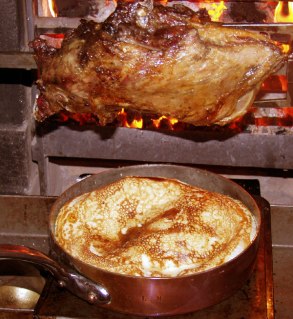
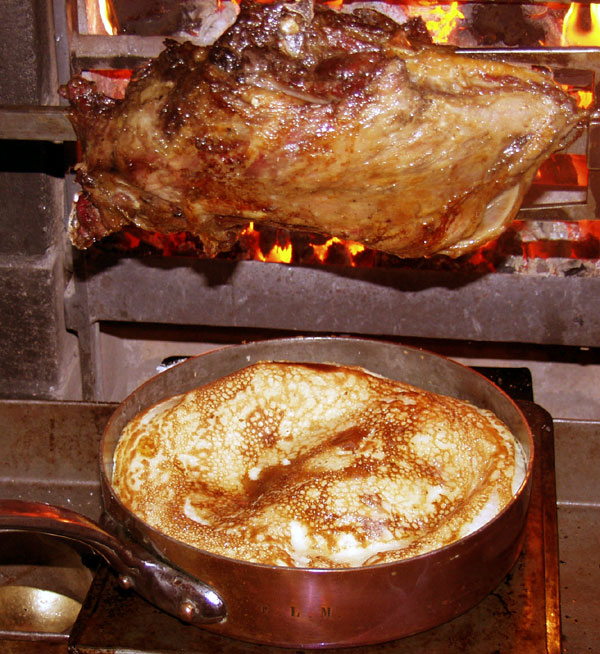
A batter pudding made in the traditional way under spit-roasted meat (source: historicfood.com)


The traditional way to cook a Yorkshire pudding was to lay a large tin called a dripping pan beneath the roasting meat so that it could heat up and catch some meat fat. Once a good layer of it had formed, the batter was quickly tipped into the pan. All of this could happen underneath a spit-roasted joint or within an proper oven (something to consider next time you cook a roast, perhaps..?).
One of the biggest points of conjecture between cooks is the method of cooking – just how does one ensure a good rise? I have had many arguments. What are the proportions? Plain or strong flour? Beef dripping or sunflower oil and just how hot should it be? For how long should you beat the batter and for how long should it rest? How much batter should be used and should it be chilled or at room temperature?
With all this fuss and debate, it is good to see that this recipe is pretty straight-forward:
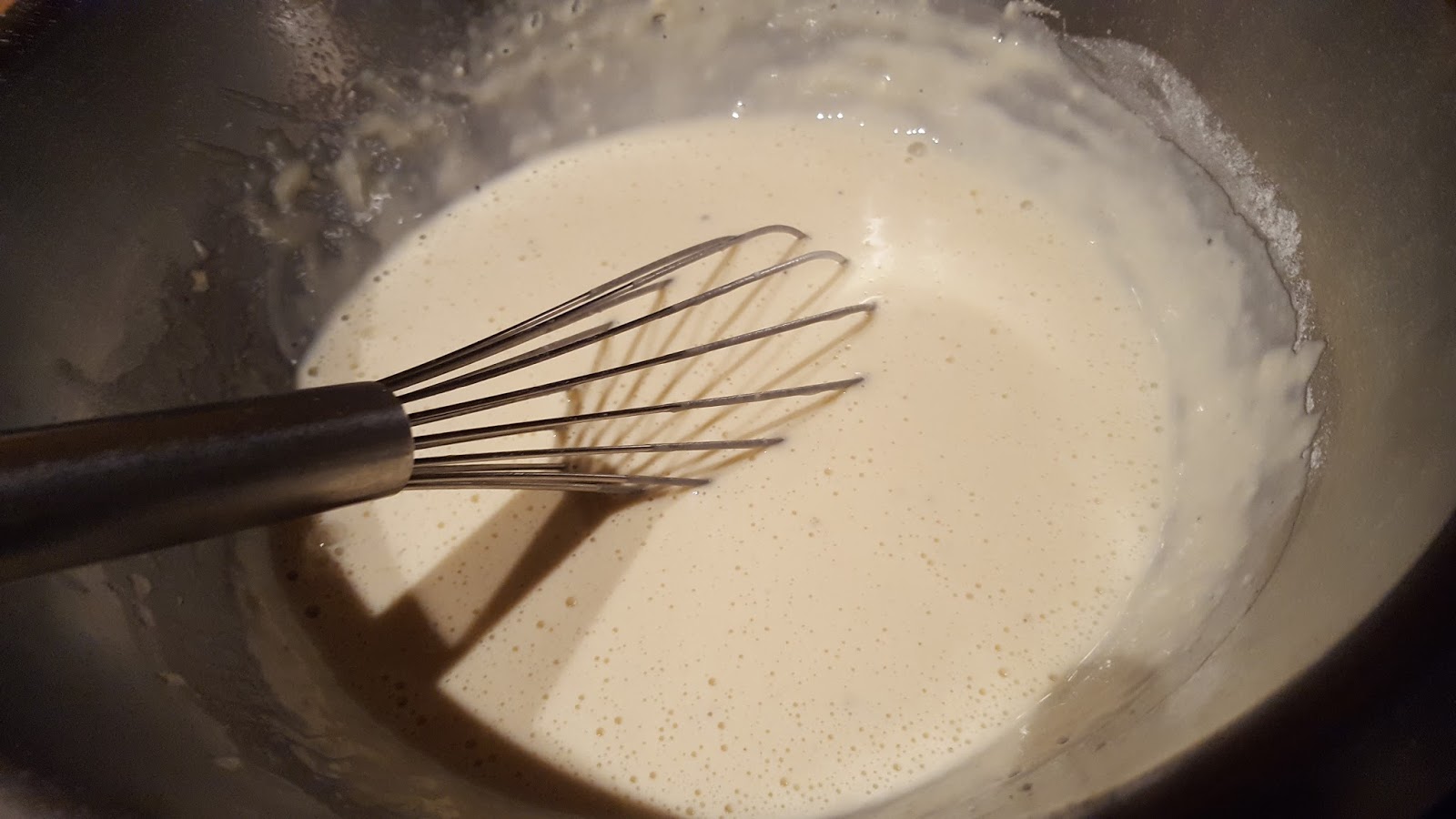
In a bowl beat together half a pint of milk (I went for whole milk), four eggs, a scant half-teaspoon of salt, a little black pepper and half a teaspoon of tai luk sauce*. Let the mixture stand for 15 minutes and heat the oven up to 230°C. 
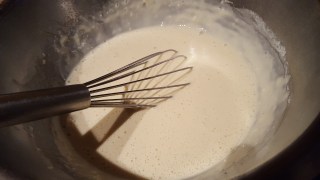

In another bowl sift eight ounces of plain flour. Make a well in the centre and pour in around a third of the milky mixture. Beat in with a whisk. Pour in the next third and whisk until smooth and then the last of it, beating again. This technique of adding the liquid in stages should give you a nice lump-free batter.
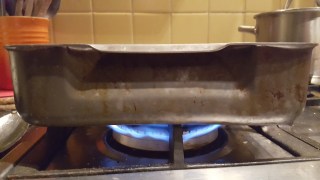
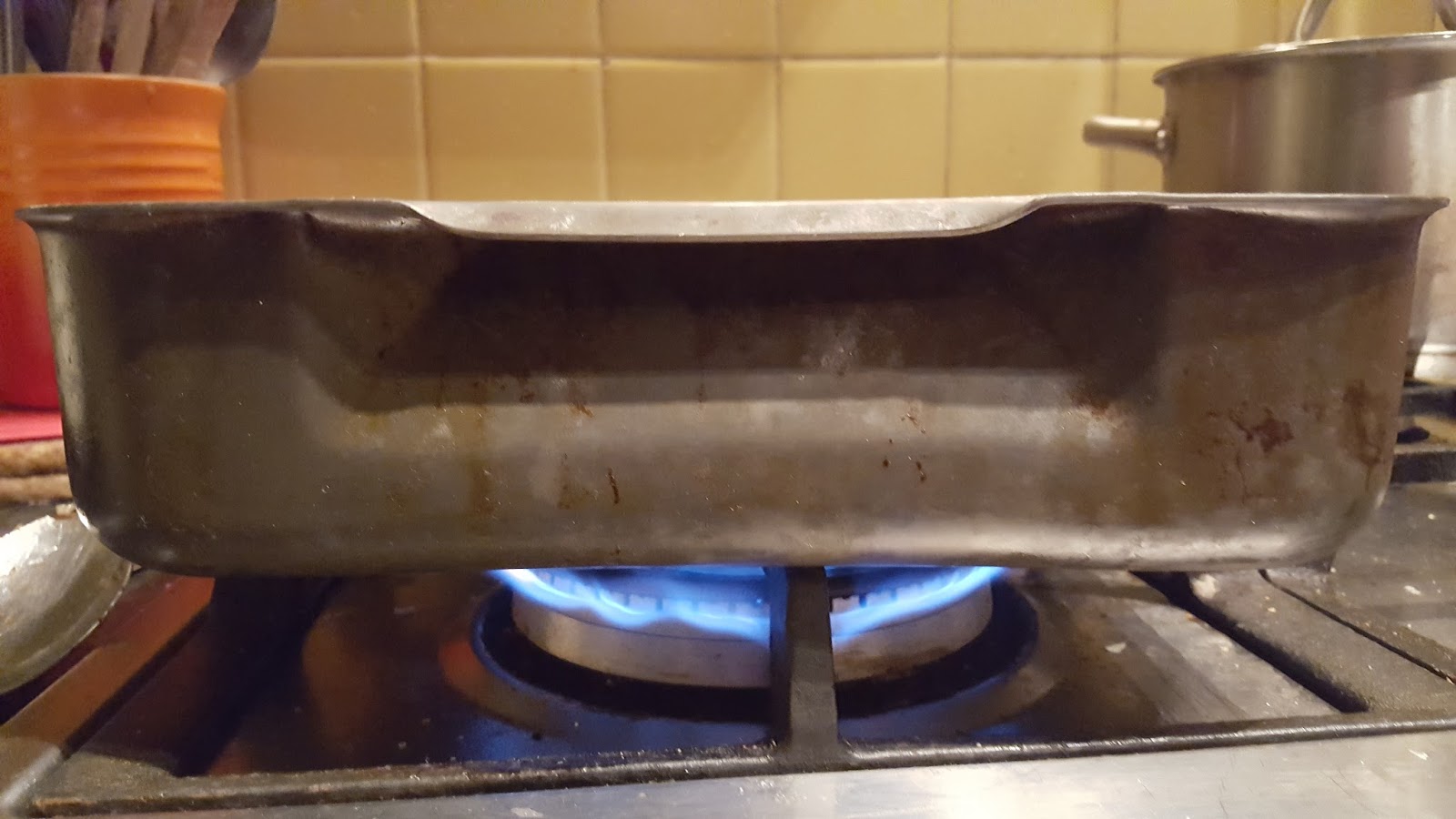
If you’ve just roasted a joint of meat, pour the dripping fat into a clean roasting tin. Alternatively, add your own lard, dripping or oil and heat in the oven or hob. Once good and hot, pour in the batter and pop in the oven for precisely 20 minutes and 52.2 seconds.
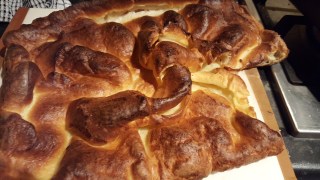
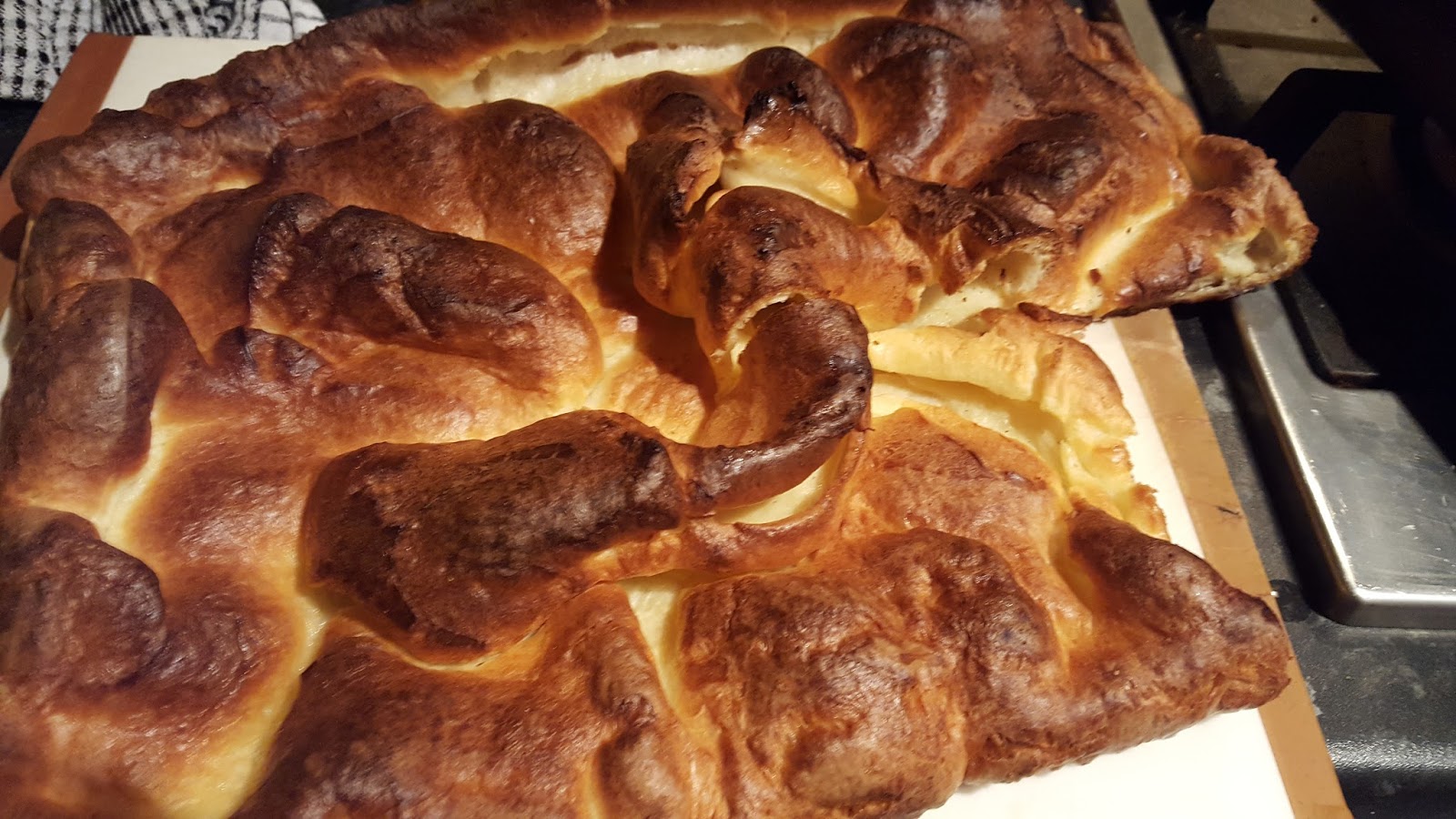
#425 The Prize-Winning Chinese Yorkshire Pudding 6/10. This was an okay Yorkshire pudding, but it certainly did not ‘swell to the height of a coronation crown’! I reckon my own recipe is pretty good and definitely beats it…unless of course, there is a nifty trick or two the Chinese chef did not divulge. (By the way, my current recipe is different to the one I posted on the blog many years ago, I need to update it I feel.)

*which does not exist: ‘For years’, says Jane, ‘I puzzled over tai luk sauce, asking at Chinese groceries without success. Then an enterprising niece found what seems to be the answer: her request for tai lukwas greeted with much laughter: apparently it means ‘mainland’, i.e. ‘mainland China’. So tai luk was a kind of secret-ingredient joke, an amiable joke at the expense of Yorkshire patriotism.’

Neil Cooks Grigson is 10!

Blimey! What a milestone to reach with the blog – I can barely believe that I am still writing entries for it. I know they are rather infrequent now, and I am really trying to spend more time writing, but starting this blog a decade ago unwittingly made me a bit of a busy bee today.

Four-hundred and twenty-four recipes in means I only have 26 more to cook so there is light at the end of the tunnel.

I started the blog back in 2007 because I had just began my PhD in evolutionary biology at The University of Manchester; I knew I’d have to do a lot of writing, so a blog seemed like a good idea. Having never heard of Julie & Julia, I thought cooking a whole cookbook was a pretty original idea.

Those first few posts are rather badly written as I had never done any of this sort of thing before, but I soon settled into a style and found I really enjoyed the history side of things, hence starting the second blog British Food: A History.

So much has happened from the blog it is startling! If I had known the potential of writing a blog I might have chickened out.

I’ve started a food business, The Buttery, from market stall via a pop-up restaurant in my own house  to a restaurant with my business husband Brian Shields, founded a community market in Levenshulme, Manchester, come second in a Telegraph cookery competition for bloggers and Radio 4’s The Food Programme and been nominated for a Manchester Food & Drink Award. More recently I’ve been working on an episode of a history programme with Channel 4 as well as my first paid writing jobs. The restaurant is also going to be expanding in the next year: wait til you hear about that!!

All of this is because of Jane Grigson; none of this would have happened had I not forced myself to cook dishes containing ingredients such as brains, eels, sweetbreads, quince and the like. Jane opened me up to exciting and scholarly food writing and a whole unknown world of exciting British food. She is also an excellent teacher.

I’m going to try my best to work through the remaining recipes, some of which I have no excuse for not trying yet. I promise to pull my finger out. A bit, at least.

Finally, of course, I wouldn’t be writing blog entries if you good people didn’t read them and send such great comments.

So many thanks to all of you and to Jane herself, because without you I wouldn’t be on this unexpected journey!

#424 Chilled Mange Tout Creams

Here’s a straight-forward recipe from the book that I have never gotten around to cooking, mainly because it sounded like it might be a bit boring. These days, however, I reckon I can spot a good subtle recipe, and thought I should give it a go. It’s one that requires careful seasoning as the only ingredient with flavour is the mange tout peas; not the strongest of flavours and served chilled too! You’ve got to use the salt, pepper, sugar and lemon juice in this recipe with a little abandon to pull this one off.

The first edition of English Food was written in the 1970s and this recipe is very much a thing of its time. Jane calls these creams, but they are basically a savoury mousse, the only other savoury mousse I have made from the book was the disastrous #313 Jellied Eel Mousse with Watercress SauceI cooked back in St. Louis in 2011.
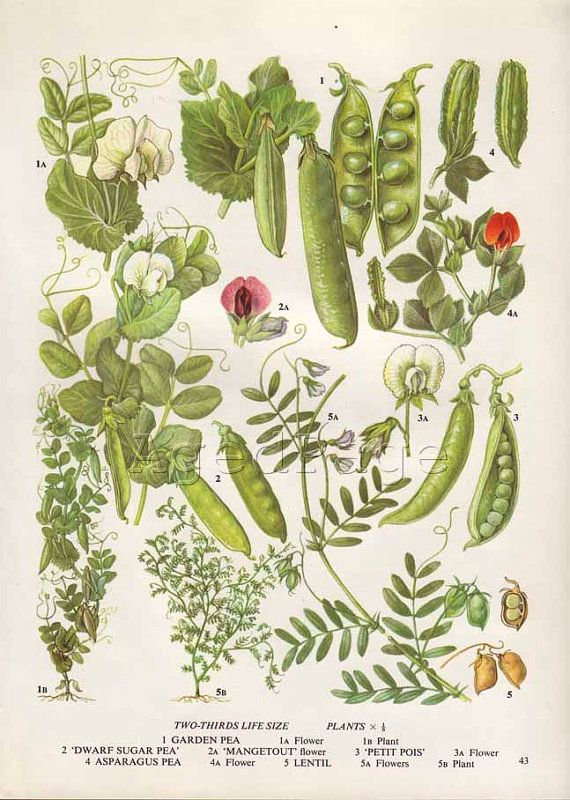
A colour plate of the range of pea cultivars, including mangetout just below centre (New Oxford Book of Food Plants)
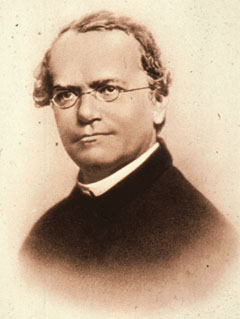
In the ‘70s the mange tout was quite an exciting new vegetable, though they were old hat to gardeners. A mange tout (or snow pea, as it is called in the USA) is a regular pea that has been bred so that the pod is much less tough than usual, so that the normally flavoursome but inedible pod can be eaten. The pea has been loved by gardeners because of the diversity of variants that can be easily produced, and it is worth mentioning a particularly important pea gardener, Gregor Mendel, the father of modern genetics.
Gregor Mendel
The monk bred mange tout peas and noticed, simply by looking at traits – and the proportions of the traits – passed down from parent plants to their progeny. He looked at traits such as dwarfism, seed colour and seed texture. He concluded that factors (i.e. genes) were passed down from parents, these factors came in different versions, called alleles. For example, seed texture came in two forms, smooth and wrinkled. One seemed to be dominant over the other, so which two versions of the gene an individual had determined how it looked (its phenotype). For more on this click here.

Scientists in the 1920s combined his findings with Darwin’s theory of evolution by natural selection, to come up with the Modern Synthesis, providing us with a framework for thinking about genes, selection and evolution.

Ok, enough science waffle, back to the cooking…

You’ll need a pound of topped and tailed mange tout for this recipe. Keep aside a quarter of the peas and put the rest in a saucepan containing half a pint of boiling water along with two teaspoons of finely chopped spring onion green (later the recipe requires gelatine, if using powdered gelatine, keep a few tablespoons of the cooking liquid aside for dissolving it in). 


When the peas are tender, liquidise the whole lot and push through a fine sieve, pushing the pulp through with a ladle.

Dissolve one 11g sachet of powdered gelatine in the remainder of the hot liquid and stir into the puree. If using leaf gelatine, use the appropriate number of leaves according to the pack; factoring in that there will be eight fluid ounces of cream added later.

Season well with salt, sugar, pepper and lemon juice – it’s best to slightly over season here as the flavours will be less pronounced once chilled. Pop it in the fridge and chill until it has the consistency of egg white. Take it out and fold in eight fluid ounces of double or whipping cream, whipped until floppy. 


Next, fold in two egg whites that have been beaten until stiff. For maximum lightness, use a metal spoon for this task.

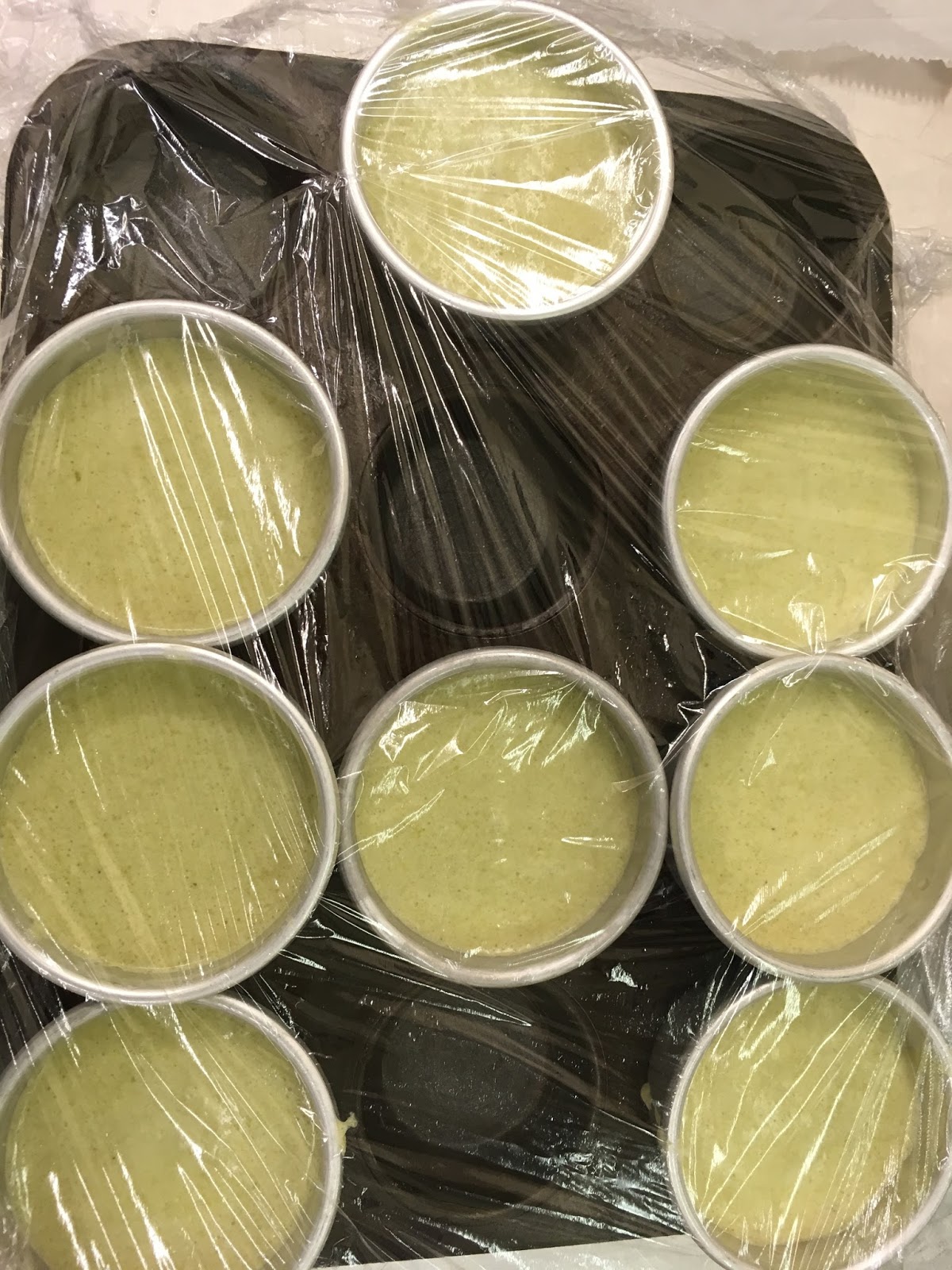
Jane says to pour the mixture into sixteen moulds, but I poured it into eight moulds, to make easier for service. Cover, pop in the fridge, and the mousse set overnight. It should keep four or five days, so you can make this well in advance.

Blanch the remaining mange tout in boiling water for two minutes, drain and plunge into iced water.

To turn the moulds out, dip them in boiling water and invert into plates, or use a blowtorch. Decorate with the blanched mange tout in an appropriately artistic fashion. Serve with Melba toast.

#424 Chilled Mange Tout Creams. These were great – light and refreshing and perfect this time of year – I put them on the menu as Mange Tout Mousse, seeing as that is what I made. They didn’t sell! I think the word moussemaybe made them sound like they were on the naff side of retro; should have kept Jane’s name for them. All that said, I would say to give them a go. It has made me think that mousses need a bit of a comeback. I give it a solid 7.5/10.

NB: You could use lots of different vegetables for this dish if you don’t like peas. Just make sure you only blanch the vegetables to the point of just becoming tender, you want them as fresh-tasting as possible. Asparagus, carrot and red pepper spring to mind.

7.4: Biscuits – completed!

So, I have completed another section of English Food! The Biscuits section of the Teatime chapter was quite short with only nine relatively easy recipes; yet it has taken me all this time to bake them!
That said, it’s a surprise that it is so short, as there is a great tradition of biscuit-making with many diverse regional recipes. Jane reckoned that biscuits are one of the few successes of the manufacturing industry, meaning folk are more reluctant to bake them today. She’s probably right, and I expect it is why the section is so short.

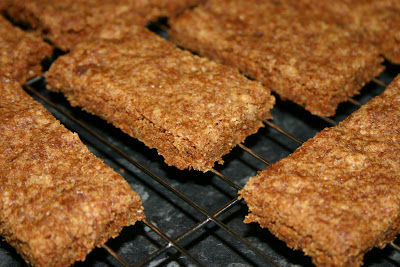
Grasmere Gingerbread II
Biscuits come in essentially two forms in Britain: sweet and savoury, the latter more often called crackers. They all have a common ancestor: the ship’s biscuit. A hard, dry rusk that could survive long journeys at sea without spoiling. They were boring, but provided sustenance, often crumbled into broth or hot drinks; our love today for dunking our biscuits into tea and coffee is a throwback to this.
The original biscuits were made from breadcrumbs, reformed and baked in cooling bread ovens (biscuit literally means ‘twice-baked’). Biscuits began to get rather more interesting during the times of the Crusades where the laying down of the spice trading routes, brought not only spices but also sugar (then considered a spice) to Britain. More upmarket biscuits were a mixture of honey and fresh breadcrumbs and were highly-spiced – a Mediæval recipe is included in the book and very good it is too.
But it is descendants of the hard and dry ship’s biscuits that have survived  – Grasmere gingerbread, shortbread, digestives, Rich Tea, Hob Nobs, cream crackers, Ritz crackers, Nice biscuits are all based on them! The list is almost endless.

Cheese and Oat Biscuits
Perhaps it is not the most exciting part of the book, but I there are some real gems in here. I have used  Jane’s recipes for Shortcakesand Grasmere Gingerbread since I first started The Buttery, and the excellent Brandy Snaps were used as part of the dessert in my very first pop-up restaurant. I’ve not found better recipes to this day.
Biscuits are much easier to make than cakes or breads, so if you haven’t done much baking, they are probably a good place to start – though they do have to be watched as they do catch easily.

Making Brandy Snaps
All the recipes in the section are listed below as they appear in the book with hyperlinks and the score I gave them out of ten. The section scores an average of 7.6, the second best mean score so far; the recipes were perhaps not particularly exciting but they were reliable

#423 Mediaeval Gingerbread

Here’s a recipe from English Food I have been meaning to make for a while but never have gotten around to until now. I love nothing more than having a go at making these very old recipes – a true window into the past. I can think of no other way than experiencing history. It doesn’t even matter if it tastes good! Quite often some of them have become part of our repertoire at The Buttery, but will this one?
This is an interesting case – mediaeval gingerbread doesn’t resemble modern gingerbreads (like #174 Grasmere Gingerbread I) or even ginger cakes like parkin or Jane’s Ginger Cake (#53). It’s literally ginger and bread mixed with honey and some other spices, so it turns out that this gingerbread is the predecessor of treacle tart too! (I’m sure if I tried hard enough I could produce some kind of family tree of food.)

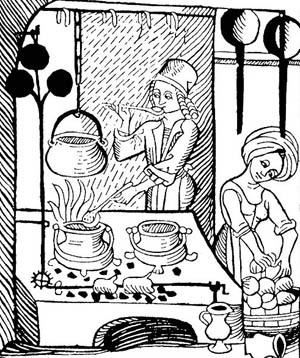
Mediaeval woodcut, c. 1485
Jane doesn’t give the original recipe, though I have managed to track it down; it’s from an undated medical manuscript known catchily as BL MS Sloane 121, thought to be late fourteenth or early fifteenth century. Many of these Early and Middle English recipes are difficult to decipher, but this one isn’t too tricky:
To make gingerbrede. Take goode honye & clarefie it on the fere, & take fayre paynemayn or wastel brede & grate it, & caste it into the boylenge hony, & stere it well togyderfast with a sklyse that it bren not to the vessel. & then take it doun and put therin ginger, longe pepere & saundres, & tempere it up with thin hands; & than put hem to a flatt boyste & strawe theron suger, & pick therin clowes rounde aboute by the egge and in the mydes, yf it plece you, &c.
Today there is no need to clarify honey, so that step can be missed out, but then it is simply a case of heating up honey and adding some spices; ginger, long pepper (a very common spice then, which has been superseded these days by peppercorns) and sanders (heated and powdered sandalwood) for colour. Stir these in making sure nothing gets burnt, then shape onto a flat tray. Extra sugar can be scattered over and it can be decorated around the edge and middle with cloves. Often gingerbread would be decorated with gold leaf. Other spices used include saffron, cinnamon, galangal, nutmeg, mace and cardamom.
Oddly, Jane found some recipes for gingerbread that do not contain ginger! This could be a mistake by the scribe (these manuscripts predate the printing press so were all handwritten) or it could be that gingerbread became a word for any spiced honey-bread mixture. Jane flags up the point the point that in some European countries the gingerbread used to make gingerbread houses don’t contain ginger!
Jane’s method:
I made some gingerbread…and found you needed about 1 oz of breadcrumbs to one heaped dessertspoonful of honey…Some kind of colouring was needed, because the mixture would have been too pale without it: I used powdered saffron. By stirring the crumbs into the very hot honey, I made a thick paste which could easily be handled and moulded into shape, like almond paste. When the cake was cool, we ate it in slices…
She doesn’t actually say which spices she used, but it seems she used ground ginger, cinnamon and black pepper as in the original recipe. She doesn’t give any proportions of spice either.
My method:
I used the fact that this mediaeval gingerbread was the precursor to the treacle tart, and made a honey-ginger tart.

900g honey

1 tbs ground ginger
2 tsp mixed spice
½ tsp ground black pepper
½ tsp ground cardamom
pinch saffron
zest and juice of 1 lemon (optional, see below)
325g stale breadcrumbs
a 10-inch blind-baked sweet pastry case
To save yourself from a horrible sticky mess, measure the honey straight into your saucepan and warm it gently. Add the spices, crumbling in the saffron and stir in with a wooden spoon. 


Give the mixture a taste, if you want to add more spice, you can; if it tastes far too sweet add the juice and zest of a lemon. Pour in the breadcrumbs and stir thouroughly.

If you want, you can pour this mixture into a lined tin, even better pour it into the pastry case. Either way, bake the mixture for around 20 minutes in a low oven, around 150⁰C to help it firm up. You can then let it cool and cut up appropriately. If the top looks a bit pale and boring – as mine did – quickly brown it with a blowtorch.

We were quite impressed with the result and put it on the menu with a nicely-placed blob of Frangelico flavoured sweet cream.

#423 Mediaeval Gingerbread. It’s always good to find these excellent ancient recipes, especially when it produces something delicious. For our modern tastes, it definitely needed a bit of lemon, and only really needed the ginger, ground mixed spice and black pepper; the saffron and cardamom were a bit unnecessary. Anyway, a lovely peek into our mediaeval past, 8/10.

#422 Peppered Redcurrant Jelly

This is the last fruit jelly recipe in the book, and I’ve become somewhat of a seasoned jelly maker, making up my own recipes and these days cooking them up at The Buttery to go with meat and cheese platters, roast meats and the like. This is the second of two redcurrant jelly recipes from English Food.

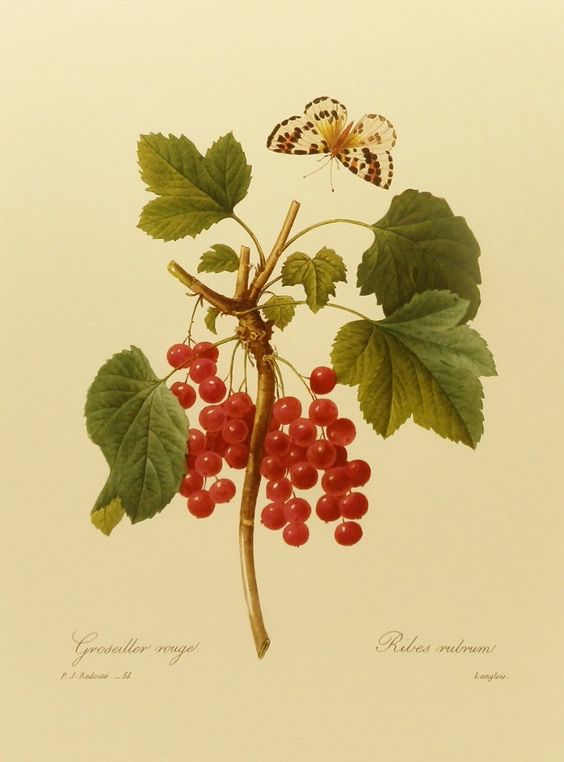
Redcurrant jelly is considered a rather niche preserved, being served with rich meats such as lamb, venison and other game, or as an ingredient in Cumberland Sauce, but it is versatile; I like it with cheese.

Redcurrant jelly is very much the preserve of the gardener – the delicate berries do not transport well and have a short shelf life, which is why they are expensive to buy fresh. On a recent walk around nearby Chorlton Meadows I found dozens of sprays of ruby-red currants growing out of sight beneath a huge mass of thick brambles. Typically in these situations, I brought neither bag nor tub and so I ate them straight from the bush until acid reflux began. It was a shame really, as I could have made a huge amount of jelly. Hey-ho, I’ll remember this secret spot next year.

Our cultivated redcurrants are actually made up of three distinct species, and the less common whitecurrant is simply a variety of redcurrant that has lost the ability to produce the distinctive red pigment. There is also a pinkcurrant.

Country houses and kitchen gardens particularly in the 18th Century, grew vast amounts of red and white currants; their pectin-rich and tart juice used as a base for dozens of other preserves and sauces. I have never made whitecurrant jelly, and I wonder why one doesn’t see it anywhere?

This redcurrant jelly is enriched with red wine and contains cracked black peppercorns, I imagine it would work just as well using whitecurrants and white wine.

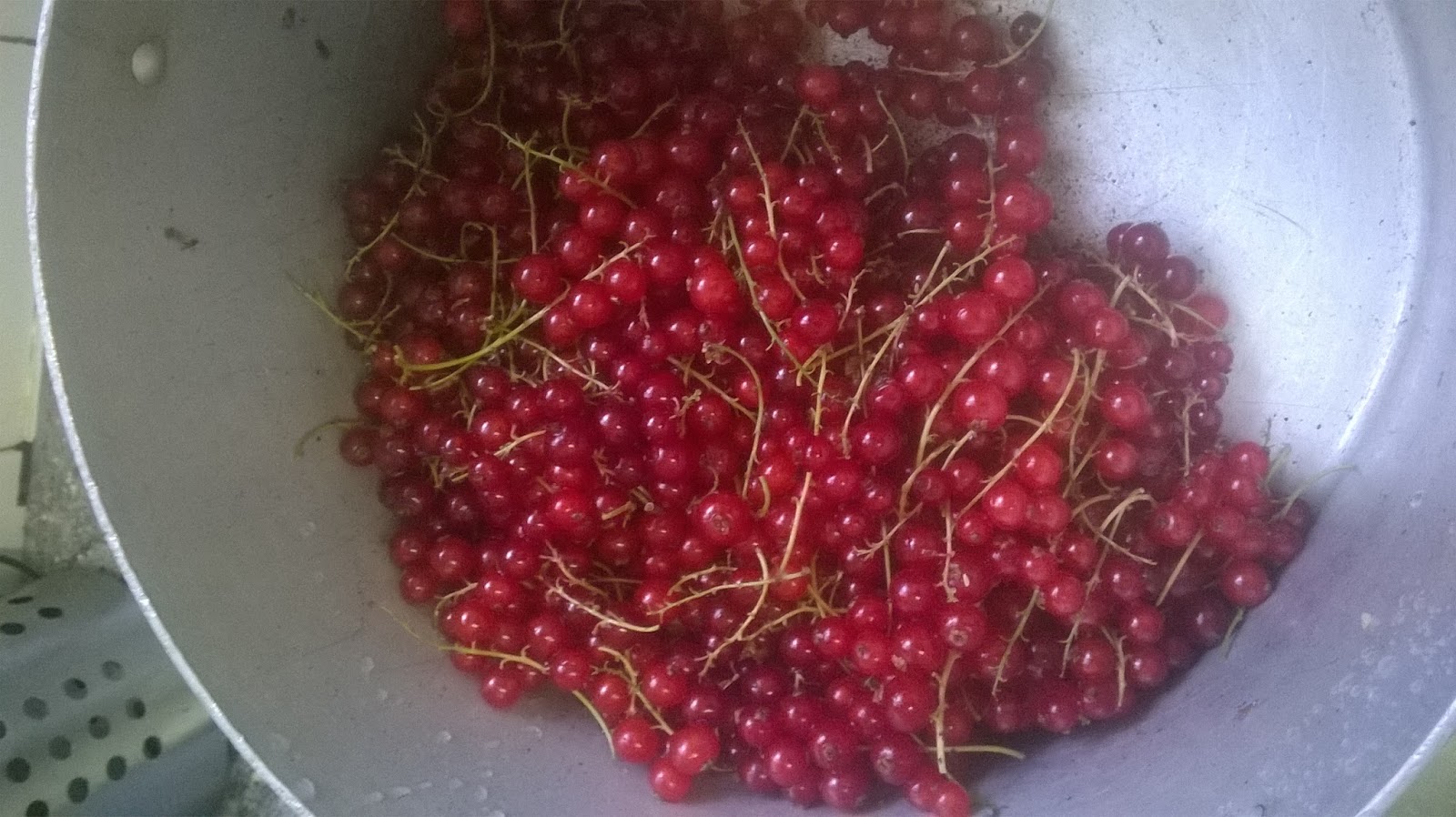
This recipe can be easily scaled up or down, depending on how many redcurrants you have, and the great thing about making a jelly is you don’t have to go through the rigmarole of stripping the berries from their stalks as they all get left behind during straining.

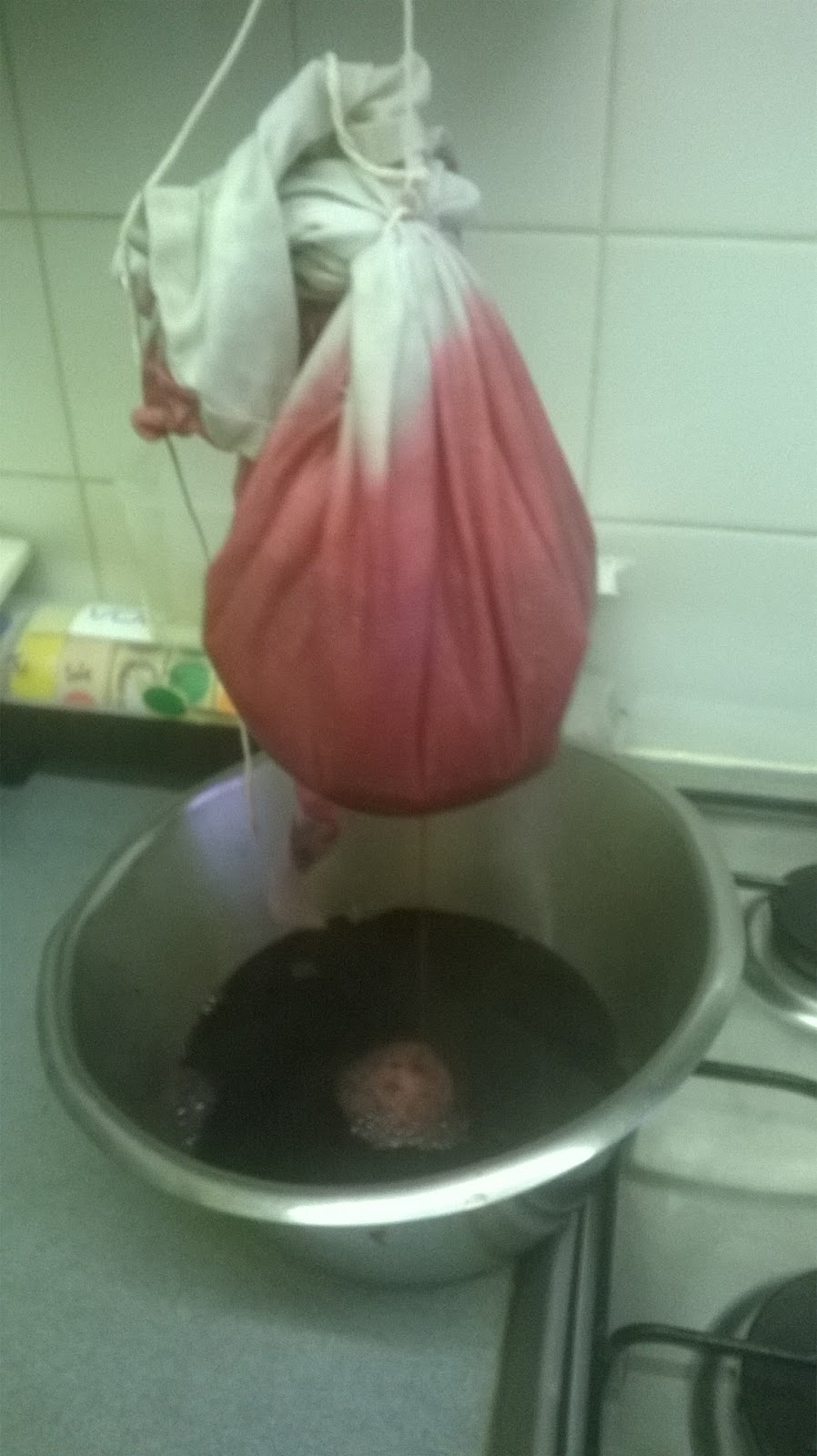
Put three pounds of redcurrants in a saucepan. To this, add around 2 ¼ pints of liquid; between 8 and 16 fluid ounces of it should be red wine, the remainder water. Bring to a boil and simmer until the currants are soft and pulpy. Pass through a jelly sieve or bag and allow to drip overnight.

Next day, place the juice in a saucepan or preserving pan with three pounds of granulated sugar. Put over a medium heat and stir with a wooden spoon until the sugar has dissolved. Remove the spoon and turn the heat up so that the fruity syrup boils enthusiastically. At this point put a saucer in the freezer so you can test for a set later.

After 15-20 minutes boiling, test to see if the jelly has set. There are two ways: (1) use a thermometer, pectin gels set at 105⁰C; (2) the wrinkle test where a few drops of jelly on a cold saucer cool and wrinkle when you scrape them with a finger. I usually do both to be on the safe side. If the jelly isn’t set, boil for another 10 minutes and retest.

Finally, roughly grind about a teaspoon of black peppercorns using a pestle and mortar and stir in right at the end of cooking. Allow to sit for 15-20 minutes before potting in hot, sterilised jars.

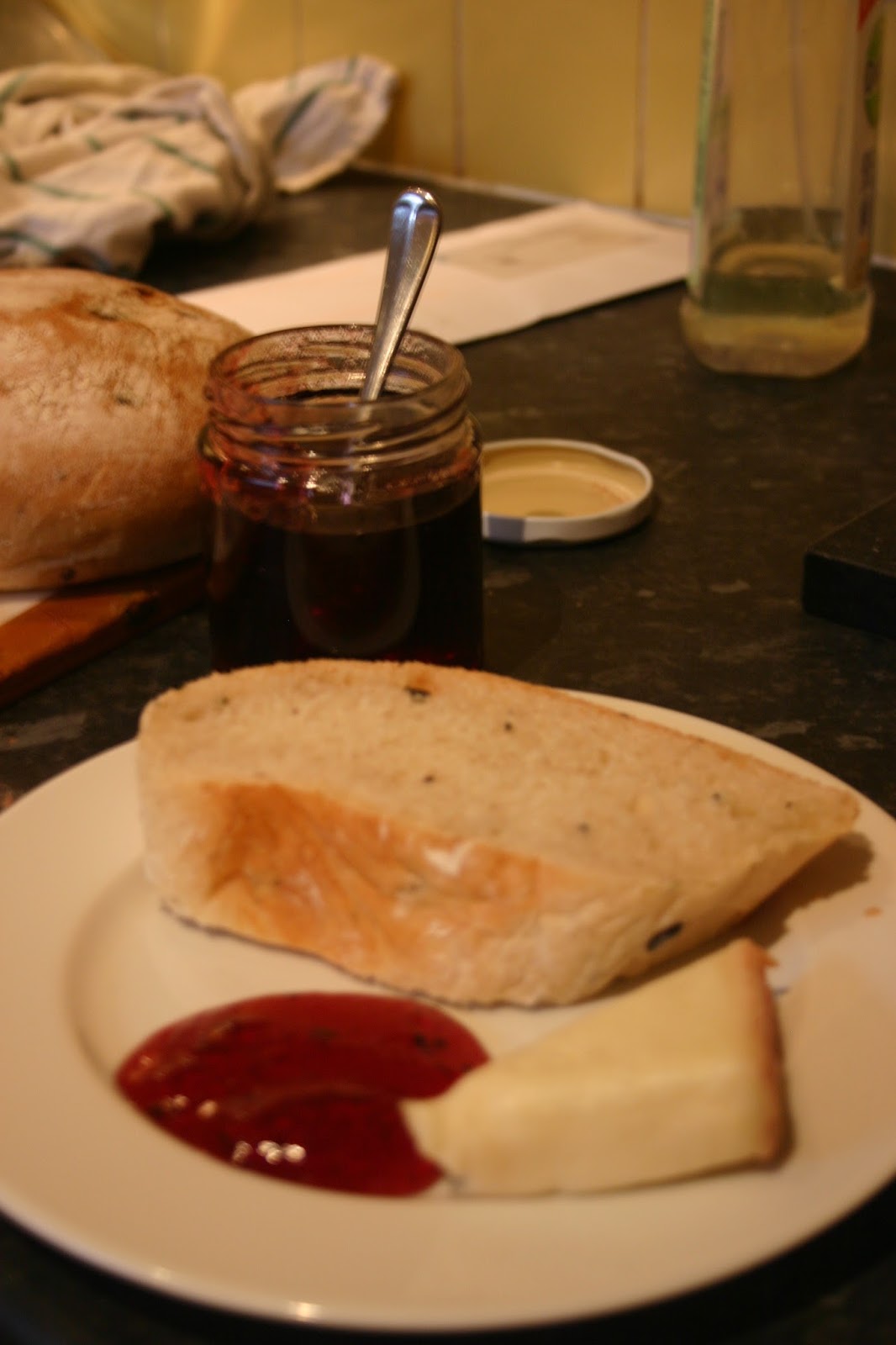
#422 Peppered Redcurrant Jelly. This is a delicious jelly, spiked with rough spicy peppercorns giving it both interesting flavour and texture. The red wine doesn’t make it too rich, as you might expect it to, so be generous with it. I am going to use it for some future lamb dishes I think, though I did try a little sample with some good cheese, butter and bread. Very good, 8/10.

#421 Scallops with Cheese Sauce

This is a Manx recipe, and Manx recipes have not gone down too well in the past (#390 Isle of Man Herring Pie) stands out as particularly bad, but this one sounded pretty promising. Fish and cheese don’t always work well together, but there are those outstanding exceptions such as cod or lobster with mornay sauce, so there’s hope.
This recipe comes from Suzanne Woolley’s book My Grandmother’s Cookery Book, 50 Manx Recipes, and according to her, scallops are called tanrogen, which actually was ‘the name given to the scallop shell when it was filled with cod oil to provide a lamp for the fishermen. A rush which quickly soaked up the oil, was used for the wick’. I absolutely love happening upon these little forgotten glimpses of past lives. I might even give this it a go, though I might use a different oil…
In Ms Woolley’s grandmother’s day scallops were obviously ten a penny as this recipe requires 18 scallops for six people. As I couldn’t get a remortgage, I just bought enough scallops for a couple of people and adjusted the amounts accordingly.
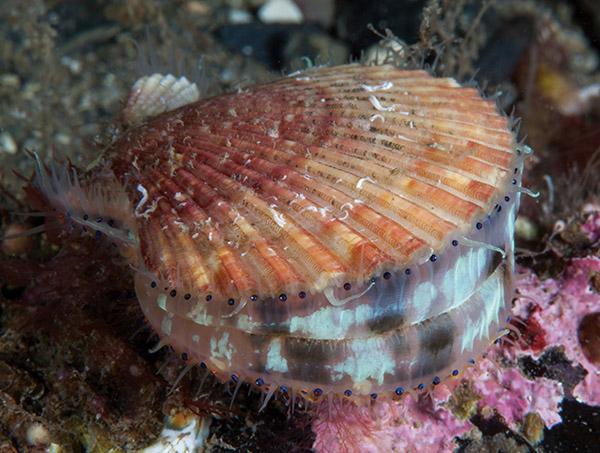
A smiling scallop with its many tiny black eyes (from divernet.com)

When you go to the fishmonger to collect your eighteen scallops, first check that have been sustainably caught (if they have not, go to another fishmongers), then buy six scallop shells. Make sure you get the concave sides to the shells and not the flat sides.

Trim away any untidy parts to the scallops and remove the corals, setting them to one side. Slice each scallop in half so that there are 36 discs in all.
Next, add to a wide pan a quarter of a pint of fish stock, a quartered onion, a bay leaf and some salt and pepper. Bring to a simmer, add the scallops and allow to tick away very gently for five minutes, then add the corals and simmer for a further five minutes.
Towards the end of the cooking time, make a sauce by melting an ounce of butterin a saucepan and stirring in an ounce of flourto make a roux. Cook for a couple of minutes stirring occasionally. Strain away the scallop cooking liquor and beat it into the roux. Keep the scallops warm. Make the sauce a little less thick by adding a little milk. Simmer for ten minutes and then add an ounce of grated Cheddar cheese and a couple of tablespoons of double cream. Check the seasoning, adding more cream if you like.
Arrange six halves of scallop into each scallop shell along with three corals and pour the sauce over each one. Sprinkle each with a little more grated Cheddar and brown very well under the grill.
Jane suggests piping the edges of the shells with mashed potato or lining the shells with pastry and baking them beforehand. I did neither and simply ate mine with crusty bread.
#421 Scallops with Cheese Sauce. At last, a Manx recipe I liked! It had to happen at some point, I suppose. It worked just as well as I thought it would; lovely tender-sweet scallops in a sharp and creamy sauce. The only thing I could think of to improve it would be to add some breadcrumbs fried in butter to the cheese before grilling to add some texture. I made the sauce a little too thin, but that’s easily remedied 8/10.

Chapter 2: Cheese & Egg Dishes – Completed!

Eggs and cheese have been a mainstay of British eating for centuries, making up many a large family meal, bar snack or savoury. They are enjoyed by rich and poor alike and the recipes of this second chapter of English Food are cast by Jane with a very wide net: light soufflés, omelettes (which are as English as they are French, by the way), patés that use up cheesy odds and ends and rich savouries enjoyed by ladies.

Cheesemaking and dairy farming used to be a vital part of British food culture; but when Jane was writing English Food, the masses were having to buy most of their cheese plastic wrapped in perfect squares in supermarkets. Of course we still do now, but the cheese aisles are now teeming with real cheeses too, made traditionally and coming from all over Europe. Parmesan cheese is no longer found ground and dried and smelling of socks and tasting of nought; the real McCoy can be found almost anywhere.

In the 1980s cheesemaking was having a comeback – traditional methods were being used, including the use of unpasteurised milk. Those who liked proper food propelled what was quite a niche market of micro-made cheeses right back into the forefront, eventually landing on our supermarket shelves in large amounts several decades later.

Gloucester Ale & Cheese
We all shop in supermarkets, I certainly don’t pretend otherwise, but nothing can be better than buying your cheese from a proper cheese shop or stall. Manchester folk: my two favourites are The Cheese Hamlet in Didsbury and Winter Tarn. Winter Tarn is a Cumbrian company that seeks out the best British cheeses and travels around the north of England selling those cheeses in little markets, and they pop up at Levenshulme Market every week.

Whether it’s farmhouse Cheddar, double Gloucester, Cornish Yarg or Stinking Bishop you’re after, British cheeses have never been better, but for the best, then as now, you must look beyond the refrigeration section of your local Tesco.

In the 1970s and 80s, our eggs were in a right old state – there was intense over-crowding and the chickens were fed a meal made from the carcasses of dead birds. Quality of life, and egg, was very low, and because of the sheer number of chickens in one place, it didn’t take long for disease to spread. In this case it was the bacterium Salmonella enteriditis (SE) that killed many chickens and quite a few humans too. Coupling this with the fact that eggs from different ‘farms’ and of different ages were being mixed up together, the source of an outbreak couldn’t be found readily.

Pickled Eggs

All this was addressed by the British government in the 1990s – chickens are now vaccinated against SE and with the introduction of the Lion Quality code, which allows each individual egg to be easily traced back to its origin, outbreaks could be tackled swiftly. Only one percent of eggs get contaminated nowadays, and even then the number of bacterial cells averages out at around 10 per egg – so you’d have to be pretty unlucky to become ill.

Seftons
personally, only go for free range; I feel far too guilty about the conditions they have to endure and I can’t bring myself to buy anything less. The best eggs are those you can get from farmers’ markets, and are usually pretty cheap too.

This chapter contains recipes that have become a mainstay of my cooking. Of greatest note, is that special combination of cheese and egg, the soufflé, and Jane’s recipe is a very good and versatile one. You just can’t beat it, and they are not anywhere as tricky to make as you might think. There are Glamorgan sausages too (who needs a nasty vegetarian sausage when you can have these!?) and an 18th Century bacon and egg pie that transported me right back to my Primary School dinner hall.

A Fricassee of Eggs

There have been lows too, one recipe in this chapter has achieved my only zero score so far. The English Rarebit was disgusting: toast soggy with hot red wine, topped with congealed cheese. What were they thinking!?

As usual, here are all the recipes listed as they appear in the book with links to each post on the blog with their score. It turned out to be a pretty average chapter with a mean score of 6.7 (and median and mode of 7.0).

#420 A Fricassee of Eggs

Cooking recipes from English Food by Jane Grigson, has essentially got me where I am today – she’s taught me to cook a wide variety of foods and she has passed on to me a huge interest in British cooking and its forgotten food, and its food that has now a bad name.

Now I have – along with Mr Brian Shields – opened my little restaurant called The Buttery,I am constantly using Jane’s recipes for inspiration for our menus. We have recently started a brunch menu and I spotted this recipe from Chapter 2: Cheese & Egg Dishes. It actually comes from Hannah Glasse, who wrote many a great recipe, and is – unsurprisingly – one of Jane’s most common sources in Engish Food (click here for all the Hannah Glasse recipes cooked in the book thus far). I was looking for something similar to Eggs Benedict, but with British roots. I hoped this recipe would be it.

Jane has made a few adjustments to the original recipe; a dish of boiled eggs in a creamy sauce, her keen sense of Georgian ingredients helps us achieve a final plate of food that is as historically accurate as possible. The devil is in the detail. We also see some her characteristically evocative writing:

In the days before pasteurisation, cream rapidly developed a sharp tang, which is why I used a mixture of double and soured cream…The lovely richness of the sauce suggests an idyllic countryside, cows in a pasture with summer flowers, and a steady sound of bees. An interesting thing is that one still finds it in Normandy and the Sarthe, served with trout and other fine fish, or with boiled chickens and rice.

Not all of the Hannah Glasse recipes have been well received, one – #230 English Rabbit – has achieved the only zero score in the book! However, others have gone down a storm (#366 A Fine Way to Pot a Tongue, springs to mind).

This fricassee of eggs serves eight as a first course, but can easily be scaled up or down.

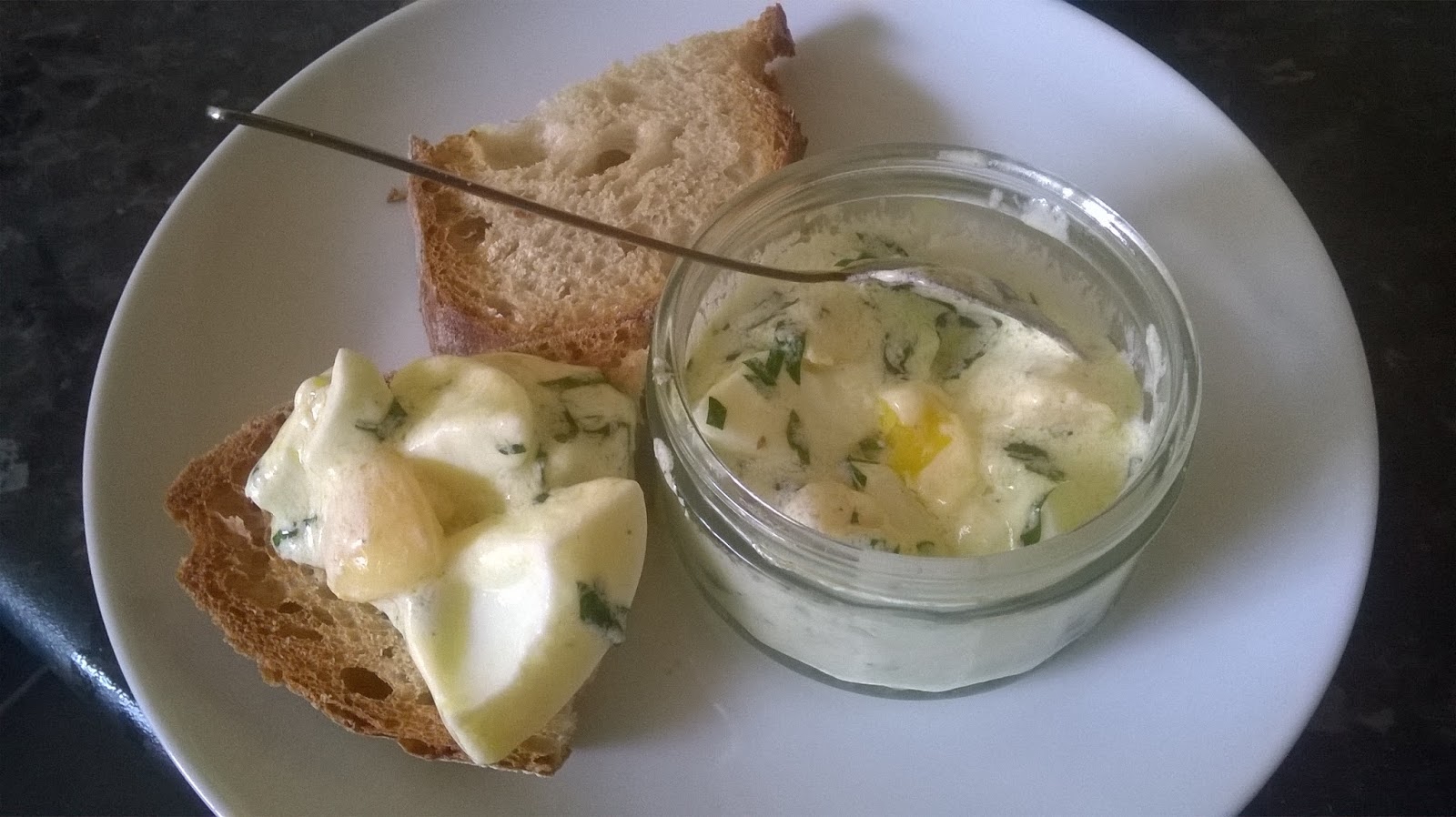
Take eight large eggs and boil them for eight minutes in boiling water. Remove with a slotted spoon and run under the cold tap so that they can be peeled without burning your dainty pinkies. Cut them into quarters and arrange them nicely in eight small ramekins.

As the eggs are boiling chop up eight sprigs of parsley and melt six ounces of slightly salted butter – Jane gets specific here – in an eight inch frying pan. As it begins to foam, add a quarter pint each of double creamand soured cream. Mix well with a wooden spoon for a couple of minutes and allow the mixture to bubble and evaporate. A thick sauce will form. Quickly stir in the parsley and pour over the eggs. Have ready some triangles of toastand serve and ‘eat immediately’.

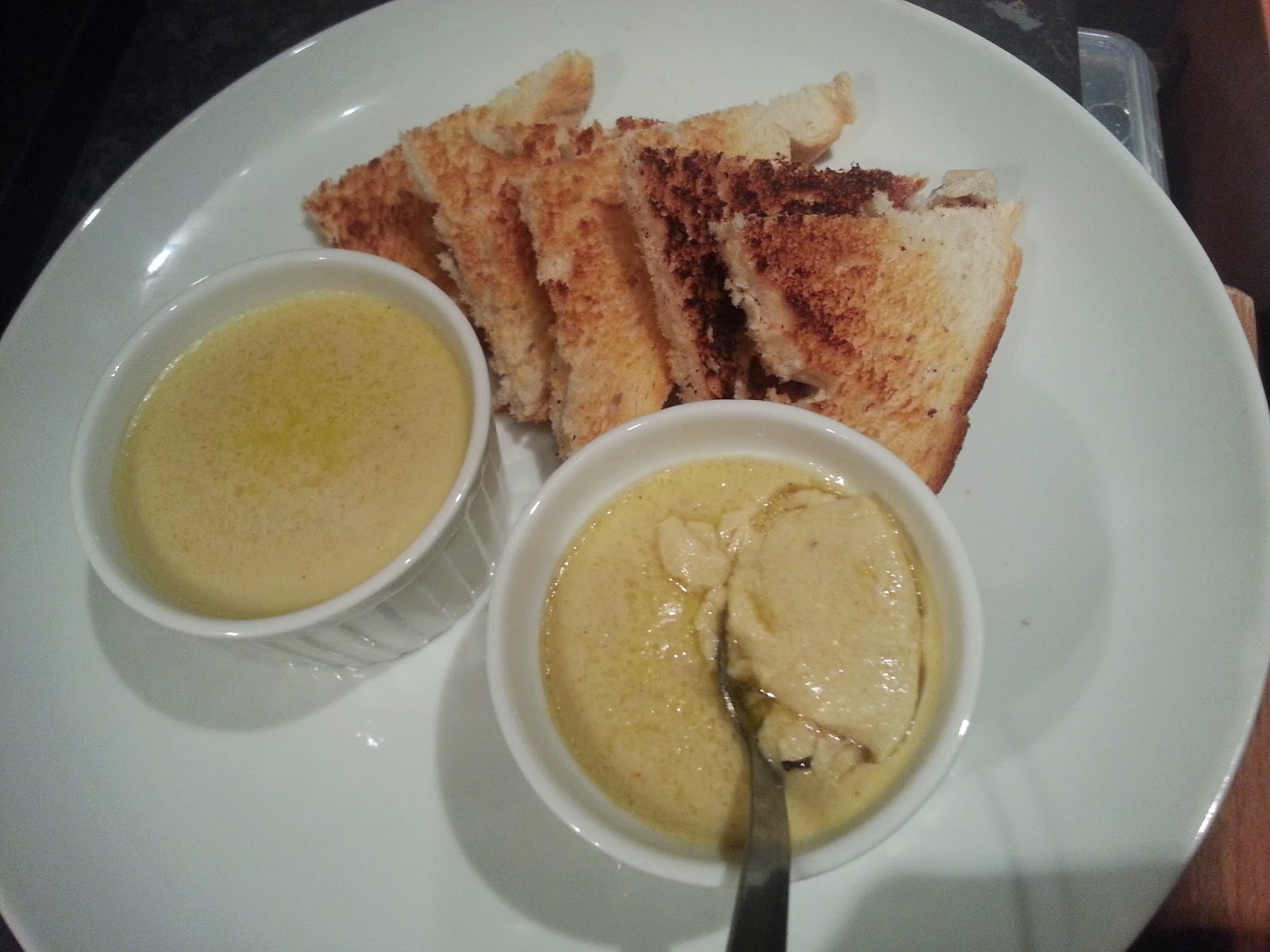
#420 A Fricassee of Eggs. Considering the vast amount of butter and cream in this dish, it tasted quite light, the sour cream cutting through the richness. The sauce was a tricky thing as it kept splitting whenever I stopped stirring. I think a half-teaspoon of cornflour could have been used to make it more stable. I think that it could have been improved with the addition of some cooked mushrooms nestled in amongst the eggs before the sauce was poured over them. If the sauce wasn’t so difficult to work with, it might have been a benefit to grill them and get some nice colour on the top as one might do with a hollandaise. I think I prefer eggs au cocotte as a lighter starter for a meal (in fact that is what I ended up putting on my brunch menu). 6/10

7.1 Bread – Completed!

So with the baking of #419 Cobb’s Bath Buns I’ve completed the Breadsection of the Teatime chapter, and it has been a mixed bag. Looking back over the posts, very few have stuck in my mind; in fact I don’t even remember cooking some of them! I have no recollection of #81 Northumbrian Wholemeal Scones, for example. What is strange is that I seem to score the recipes quite highly. I think it was just the novelty of baking bread creating bias; for the first time my house was being filled with the smell of freshly-baked bread, and I was getting to taste real bread made with fresh yeast. Even if it was a slightly stodgy, under kneaded doorstop.
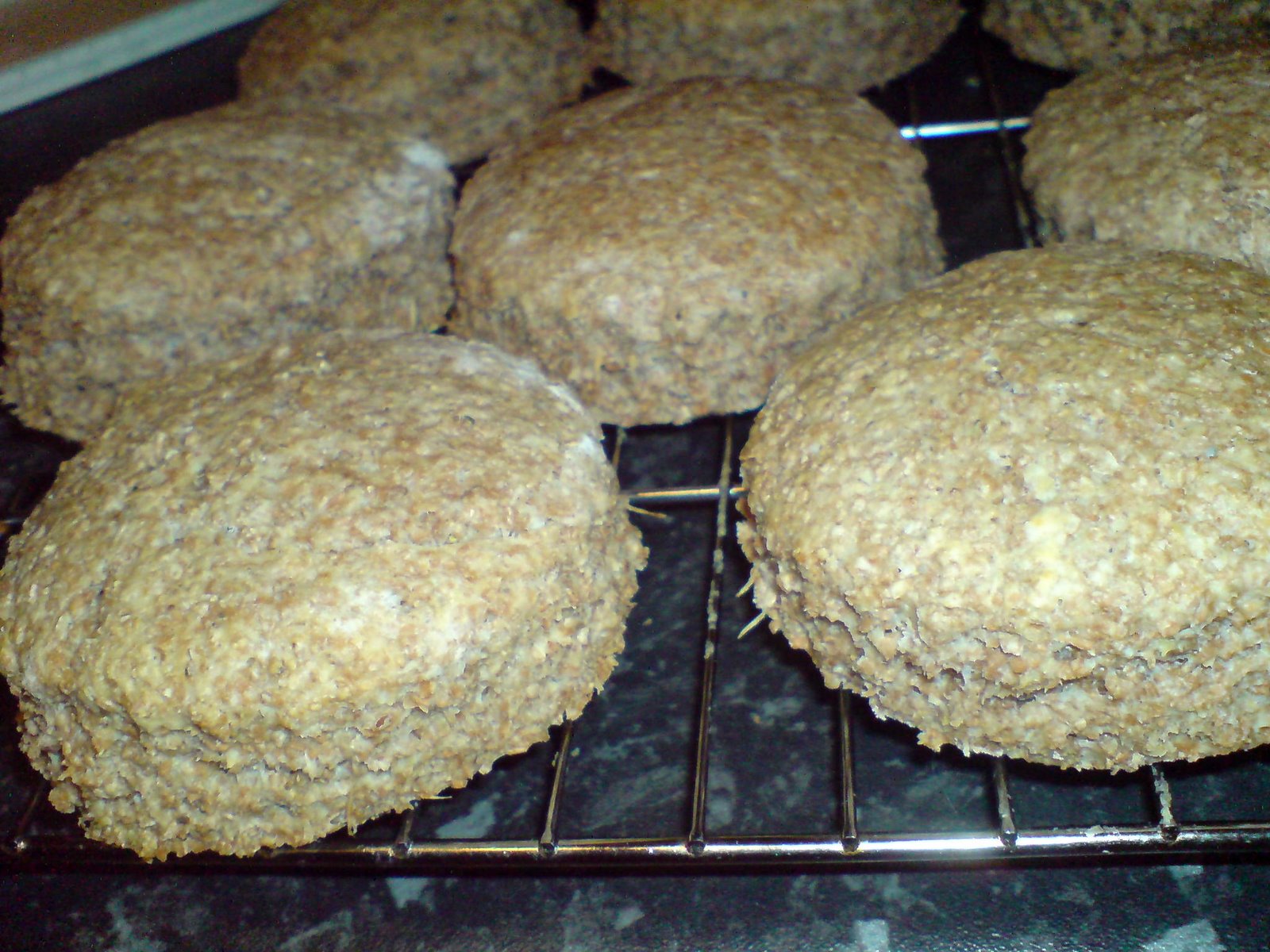
The totally forgettable Wholemeal Scones

Jane doesn’t give much advice to the total novice and assumes we have an idea of the bread-making process. When she does give advice, it is wrong; for #53 Electric Dough Hook Bread, she advises us to mix the dough only briefly. This does not create a good, fluffy loaf, though I was impressed at the time.
Electric Dough Hook Bread
 

 However, it is Jane’s writing that provides such detail about the history of the recipes, one cannot resist getting interested, so I bought Elizabeth David’s tome, English Bread & Yeast Cookery, which again, got me hooked even more so. After baking many of her recipes, I was still finding the bread I was making not quite up to scratch. It was simply practise that got me there – trial and error, and getting used to the feel of dough that had been kneaded sufficiently to produce a good, light loaf. The penny dropped for me whilst I was living in Saint Louis. Only then, did I realise that some of the recipes work very well, but others really do not.

The real star of the chapter is the #224 Basic Bun Dough recipe which can be used to make #370 Chelsea Buns and (my personal favourite) #370 Chelsea Buns. #104 Wiltshire Lardy Cake piqued my interest and I worked on Jane’s recipe to produce one that works well for me, appearing on a pop-up restaurant menu as part of a dessert. I feel I really need to revisit others of the same ilk such as #227 Wigs and #274 Saffron Cake from Cornwall.

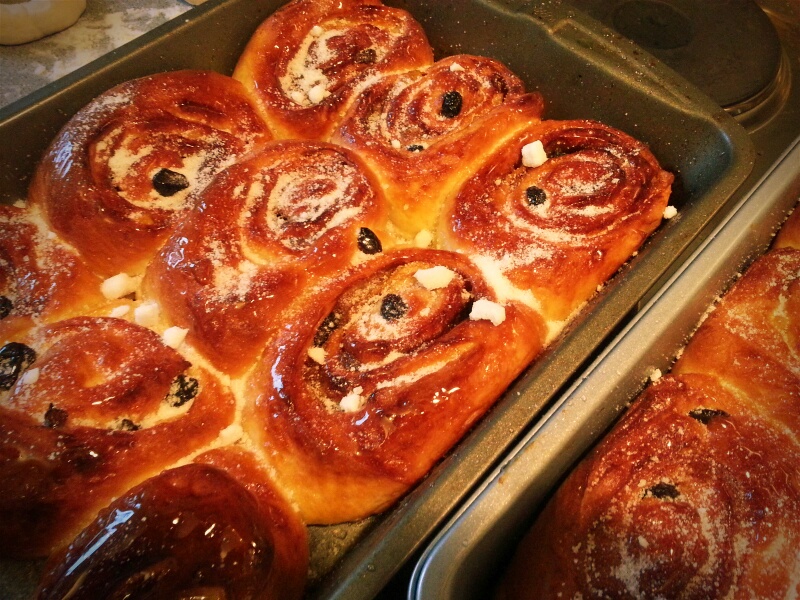
The winning recipe – Chelsea Buns
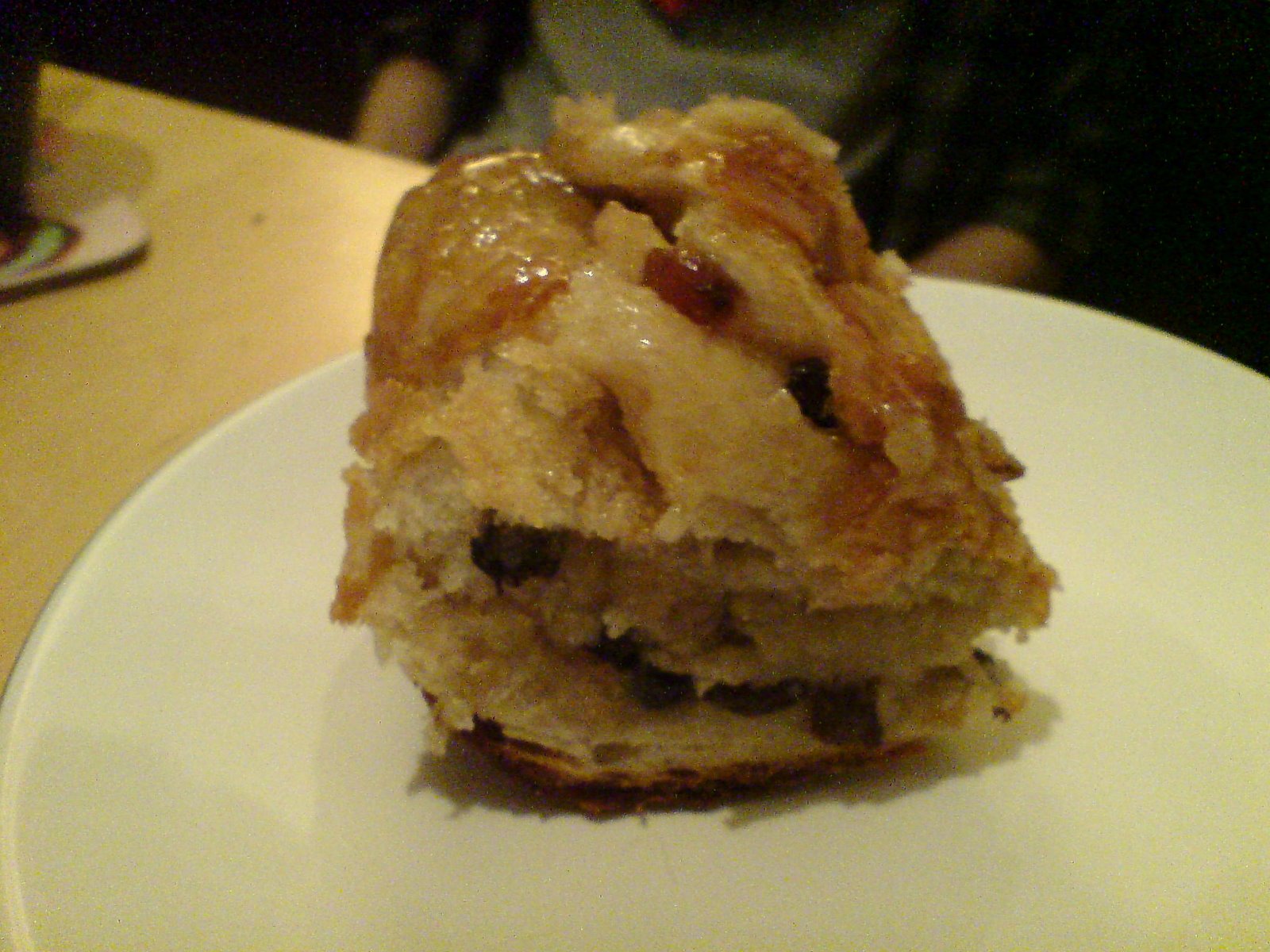
Recipes that simply do not work are #401 Plum Bread and #419 Cobb’s Bath Buns.

Now you may think I am being critical – perhaps over critical – of my food goddess, but over and above what I think of the recipes within this part of the book, the end result is a chap who can now bake bread, knows what good bread is, and who will never, ever, buy a plastic-wrapped Chorleywood supermarket loaf ever again. Surely this is the point?

Wiltshire Lardy Cake
Here’s the full list of recipes as they appear in the book with their scores. The Bread recipes averaged out with a mean score of 6.9.