#230 English Rabbit (1747)

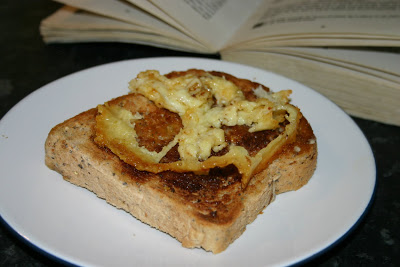
There was a few dregs of red wine left over the other morning after a few drinkies the previous evening, not something that regularly happens in my house, and this presented me with the opportunity to try this strange recipe. I’ve already done Welsh and Scottish rarebits/rabbits and now I can complete the set. The English rabbit (like the Scottish) was invented in response to the Welsh rabbit. Apparently, this is the best we as a nation could come up with (at least according to Hannah Glasse):

Toast a slice of bread brown on both sides, they lay it in a place before the fire, pour a glass of red wine over it, and let it soak the wine up; then cut some cheese very thin, and lay it very thick over the bread, and put it in a tin oven before the fire, and it will be toasted and brown’d presently. Serve it away hot.


I simply made some toast but it in a ovenproof dish, sprinkled some red wine over it, piled on the slivers of cheese and grilled it. I serve it with a wee salad dressed with olive oil and balsamic vinegar.

#230 English Rabbit (1747). This was without doubt the worst Grigson I have done so far. Even worse than the Mallards of Death and the rice cake. I actually thought I was going to be sick. The hot wine and soggy bread was bizarre. Adding salad really was just like polishing a turd, as we say in England. Absolutely disgusting 0/10.

#229 Vegetable Souffle

A quick one this one.

I made this vegetable soufflé for my mates Stuart and Jamie when they popped round to watch a DVD and have a few drinks. Stuart is a vegetarian and has never had a soufflé, which I find unbelievable as they appear often as the veggie option on menus. It’s like being vegetarian and saying you never had a mushroom risotto! I’ve not added a photo – there’s been a few soufflés now and they all seem to look the same.

Anyways, to make it, soften some onion and a garlic clove in some butter and add to it some cooked, pureed vegetables, about 7 ounces – spinach would work well. I went for mushrooms; I didn’t puree them, instead I diced them and softened them in the pan with the onions. Now follow the method for the cheese soufflé, though I used half the amount of cheese in it. Fold the vegetables into the mixture before adding the whisked egg whites.

#229 Vegetable Soufflé. These soufflés have all been great thus far. The mushroom and cheese combination is a great one; happily marrying the rich creamy salty tang of the Cheddar with the earthy mushrooms. Very good. 8.5/10

#214 Meat Souffle

A quickie. I knew that we would have plenty of leftover Bradenham ham from Christmas so I knocked this one up. Follow the recipe for the cheese soufflé but use half the amount of cheese and fold about 8 ounces of chopped ham into it. Alternatively, soften a couple of ounces of onions in butter and add 8 ounces of blanched, minced sweetbreads or cooked brains if you like your offal. You might not wish to include cheese though. Make sure you add some herbs too.


#214 Meat Soufflé. The best way to use up some leftover ham, I reckon. The cheese- ham combo is a classic. The salty-sweet ham and cheese and the creamy egg were perfect. If you’ve never made a soufflé before have a go, they are not as scary as people make out. 8.5/10.

#183 Scotch Rabbit/Rarebit (1749)

The second of the three rabbits/rarebits that appear in English Food (the third being English of course). After the appearance of Welsh rabbit in the early eighteenth century, and its subsequent popularity, meant that it diversified. Griggers finds this recipe in Hannah Glasse’s 1747 book Art of Cookery. Scotch rabbit seems much easier (and cheaper, natch) as the only ingredients are cheese, toast and butter. The recipe is in fact just lifted directly out of her book, so that is what I’ll do:

Toast a piece of bread nicely on both sides, butter it, cut a slice of cheese about as big as the bread, toast it on both sides, and lay it on the bread.

Easy? Let’s go through it again:
Toast a piece of bread nicely on both sides, butter it. Check.
…cut a slice of cheese about as big as the bread… Yep, good, done that.
…toast it on both sides… Say what now? How the hell are you meant to toast a piece of cheese on both sides!?

This is what I did: I cut the cut and laid it on a piece of buttered grease-proof paper in the hope it could grill it and turn it over. This was not the case as you can see by the photo!


#183 Scotch Rabbit (Rarebit) – 2/10. What a pathetic sight it was. The cheese just stuck to the paper and ended up a big mess. What I don’t understand is that normal good-old cheese on toast is better, tastier and above all easy to make. There is no wonder at all why the Scotch rabbit never took off.

#168 Smoked Fish Souffle

This one is just a quickie: With the bit of smoked trout Butters and me had left over from our trip to the Cheshire Smokehouse, rather than just scoff it au naturelle, I made this smoked fish trout. The recipe is exactly the same as the cheese soufflé I did a wee while ago, the only difference is that the cheese is omitted from the mixture and flakes of up to 8 ounces of any smoked fish you like are folded in after the egg whites are incorporated. The soufflé is topped with a tablespoon each of Parmesan cheese and breadcrumbs for a good crunch.

#168 Smoked Fish Soufflé – I gave the cheese soufflé high marks and this was good – if not, better – so I reckon it’s a 9/10. This soufflé recipe is really good – the egg and smoked fish combination in this case really was sublime; the perfect way to use up any off-cuts or leftovers. Brilliant stuff.

P.S. No photo! My stupid camera takes pictures and then they aren’t there when I come to view them.

#155 Welsh Rabbit (Rarebit)

Apparently it is incorrect to call a Welsh rabbit a rarebit, it is a “false etymological refinement”. There are, in fact, three types of rabbit: Welsh, English and Scottish. The Welsh is the classic, but I can’t find anywhere that states it was the original rabbit, though people assume it is. I suppose it’s one of those dishes that have just been around for a long, long time. Also I have no idea why they are called rabbits, but there are theories abound. One is that the Welsh peasants of yore were not allowed to eat rabbits caught in hunts by the nobles, so they substituted it for cheese (which has, of course, always been a popular staple in Wales). That’ll do me.

These days we are used to a very thick cheese topping piled on our toast for Welsh rabbit, but traditionally it was meant to be quite liquid so it soaked into the toast whilst it grilled.

For 2 slices of toast

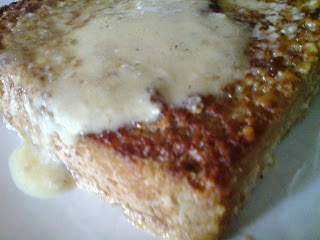
Toast two thick slices of toast. Meanwhile gently melt 4 ounces of good grated Cheddar (or Lancashire or Double Gloucester) with 3 tablespoons of ale (or milk). Stir until the mixture becomes a thick, liquid cream. Add an ounce of butter to the melted cheese, alongside some salt and pepper and some mustard. Taste and add more seasoning or mustard if you like. Place the toast in a heat-proof dish and pour the cheese mixture over it. Place under a very hot grill until the cheese toasts nicely and develops brown spots.


#155 Welsh Rabbit – 6.5/10. It may not look as nice as a more modern Welsh rarebit, but how could toasted cheese and mustard possible taste bad? It was quite unusual having the runny cheese soaked up into the bread, so although it was delicious, I think I prefer the cheese to be stacked on top, with an egg yolk include plus a bit of Worcester sauce. That said, I did hit the spot! I think I could eat some form of cheese on toast every day if I let myself.

#154 Mrs Raffald’s Bacon and Egg Pie

I’ve cooked some recipes by Elizabeth Raffald before and they’ve come out well each time – there’s a potted history of her life in Salford in Greater Manchester in this earlier post. It comes from her book The Experienced Housekeeper, and I must try and get hol of a copy (if it still exists)

Technically this bacon and egg pie can be made any time of year, but I thought it seemed perfect for this time of year, served warm with a salad. The English bacon and egg pie seems to have gone out of favour, with people preferring quiches with roasted vegetables etc. added these days. Well, I love bacon and egg pie – in fact it was my second favourite school dinner (spam fritters came first) – and I think it deserves a come-back. It’s great for picnicking too, I reckon, due to its double pastry crust. I would advise to make this pie only with proper free-range farm eggs (surprisingly cheap in delis and fishmongers and the like) and good dry-cured bacon, it’s well worth spending a bit more money for what is, overall, a pretty cheap recipe.

Preheat the oven to 220°C. Place a baking tray on the shelf that the pie will be cooked on (important for later!)

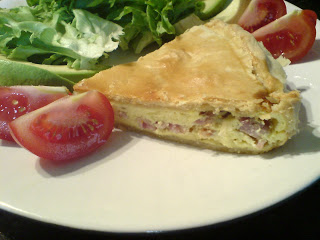
Start off by making some shortcrust pastry with 8 ounces of flour (or more, or less, depending upon how thick you like it). Use two-thirds of it to line a flan dish; Griggers doesn’t give sizes, but an 8 inch one was perfect. Chop 8 ounces of smoked streaky bacon and sprinkle it over the pastry base. Next, whisk up 4 large (or 6 medium) eggs and pour out a little of the mixture into a ramekin for later. Beat the eggs along with ½ pint of crème fraiche and some salt and pepper. Pour the custard into the pie dish and roll out the remaining pastry to form a lid, using some of the reserved egg to glue it on. Trim excess pastry and paint more egg over the top so that it glazes nicely in the oven. Bake for 15 minutes on the hot baking tray (it stops the base from going soggy), then lower the heat to 170°C for another 30 minutes. Serve warm with a salad.


#154 Mrs Raffald’s Bacon and Egg Pie – 9/10. This did not disappoint! I must admit I was unsure about not blind baking the pastry first, but it worked a treat. The inclusion of crème fraiche over cream or milk plus good quality eggs and bacon are the key to it though – so don’t skimp. The pie was ten times better than the one I used to get at school, yet it brought back all the memories at the same time. Bring on the spam fritters!

#138 Cheese Souffle

For the last few weeks, I’ve been dreaming about soufflés – I don’t know why but I had a real hankering. I hope I’m not pregnant. Luckily for me Lady Grigson always obliges – there are loads of soufflé recipes in English Food. Obviously the soufflé does not have English roots, but up until recently, they were pretty popular – particularly in the 1970s and 1980s when English Food was written. They do have a bit of a reputation for being tricky little devils – I had only cooked one once before when I was about 10 – I remember it completely sinking, but being delicious.

I like one comment Jane makes about soufflés when they are ready to come out of the oven:
…it is better to have everyone sat at table. In a properly trained household, the cry of ‘Souffle!’ should have the same effect of assembly as ‘Fire!’

We loves her.

FYI: the soufflé was invented in the late eighteenth century – around 1782, but the first recipes didn’t not appear until 1813, when several were published in Louis Ude’s The French Cook of 1813. The idea being they were cheap as they are essentially just eggs and air with some kind of flavouring so they were a good meal the common man.


This cheese soufflé feeds between 2 and 4 people depending upon how greedy they are. There’s a couple of stages, but they’re pretty straight-forward and not as tricky as people seem to make out:

First of all make sure you have a soufflé dish (or similar) that has a capacity of around 2 ½ pints and grease it with butter, then preheat the oven to 200°C. Next, heat ½ pint of milk to just below boiling point and melt 2 ounces of butter in another (decent-sized) saucepan and add 1 ½ ounces of flour to it. Allow to cook for a minute, take off the heat, and add the boiling milk. Whisk well to form a smooth sauce and then incorporate 4 large egg yolks, one at a time. Mix in 3 ounces of Cheddar (or Lancashire) cheese and season with salt, pepper and Cayenne (which I forgot!). Put back on a low heat and stir until all is nice and smooth. Easy-peasy thus far.

Next, whisk 5 large egg whites together with a pinch of salt until they reach the stiff-peak stage – you should be able to upturn the bowl without any of the contents to fall out. Take a tablespoon of the whites and mix it in to the cheesy sauce to slacken the mixture, then tip in the rest, folding the whites in carefully with a metal spoon until incorporated. You need to do this with minimal stirring, so don’t worry if there’s a few specks of white knocking around. Stir in a tablespoon of grated Parmesan cheese and pour/spoon the mixture into the soufflé dish. Lastly, sprinkle over another tablespoon of Parmesan and a tablespoon of stale breadcrumbs. Bake for 30 minutes – do not on any account open the oven door until the time is up. Serve straight out of the oven with a nice green salad.

#138 Cheese Soufflé – 8.5/10. This was really nice, and definitely English – just like Chicken Tikka Masala become part of our cuisine more recently. The top was very crisp and the centre was just cooked and extremely light. We wolfed it down. Bring on the other ones, I say – but which to do next..? You have to make sure everything is ready – salad dressed, plates laid out etc – otherwise as it does collapse, but I have to say, not that much. All I have to say is – give it a go if you’ve never made one, it’s no way near as tricky as I thought it would be.

#75 Lockets Savoury

Now that it is late summer many English orchard fruits are at their best. This recipe uses pears, and it’s very important to use good ripe ones; if you do buy those rock hard types that can be used as blunt weapons, just let them ripen on a sunny windowsill. I don’t really eat that many pears, and certainly don’t cook with them often; I’m not sure why because I really like their sweet aromatic flavour. If you are like me and haven’t cooked with pears, then start with this one as it’s very simple yet effective – basically pears and Stilton cheese on toast. Why it is called Lockets Savoury I have no idea.

This recipe is for one person, so just multiply up depending on how many you need:

Start by toasting two slices of white bread and cutting off the crusts. Place the toast in a baking dish. Rinse some water cress and place it over the toast in a good layer. Peel, core and thinly sliced a pear (I used Comice) and place the slices on top of the watercress – no need to be neat! Finally thinly slice 2 ounces of Stilton cheese and place it evenly over the slices. Bake for 10 minutes at 175°C, and grate plenty of black pepper on top before serving.

#75 Lockets Savoury – 6.5/10. A delicious and quick dinner or tea. Warming the pars makes them even more aromatic and sweet than usual, which contrasts beautifully with the Stilton, plus the toast and watercress remain intact and don’t go soggy. However, I wonder how much better it is than just some pears, Stilton, salad and some good biscuits. There’s not much in it I reckon.

#73 Lady Shaftesbury’s Toasted Cheese

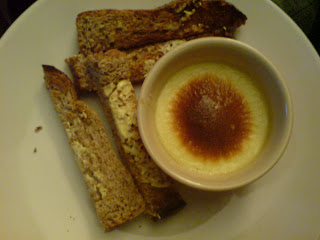
I thought that I’d completely run out of vegetarian recipes until I spotted a whole section in the ‘Cheese and Egg Dishes’ chapter of English Food. This is a dish that I know was popular in Victorian/Edwardian times in Gentleman’s Clubs and the like; it’s essentially a rarebit, but ‘deconstructed’, as trendy chefs would say nowadays. You get a pot of melted cheese and toast soldiers to dip in it. Be warned: this dish comes with a warning from Jane Grigson herself, ‘The quantities seem tiny, but this kind of dish should be eaten in small quantities; unless your family have stomachs of iron, toasted cheese can cause indigestion and nightmares.’ Whatever Griggers. The recipe is supposed to serve 6, but me, Greg and Joff ate the lot.

I do have to warn you, you DO get nightmares: I had totally trippy repetitive dreams all night and hardly got a wink of sleep, and Greg said he had nightmares and anxiety dreams, yet I heard him laughing in his sleep! Weird. I think I’ll conduct a scientific experiment in the future – there’s about six more of this kind of recipe; I’ll get people round, we’ll eat them all, score them, and then keep a dream diary. Thus proving the old wives’ tale as rock-solid fact!

Anyway, here’s the recipe. Divide it between however many people you want. Monitor your dream s though! And don’t eat if prone to sleepwalking.


In a saucepan, gently melt 2 ounces of butter, then, keeping the heat quite low, mix in 7 ounces of good grated Farmhouse Cheddar cheese, 6 tablespoons of cream, 2 large egg yolks, plus salt and pepper. Whilst stirring, get the grill nice and hot and toast a slice of brown bread, which should be buttered afterwards and cut into soldiers. When all the cheese has melted into a thick gloop, pour into ramekins and grill until the tops are browned. Serve immediately with the toast.

#73 Lady Shaftesbury’s Toasted Cheese: 8/10. Really delicious and simple to do. Although, by Jane’s standard, we have iron stomachs, a third is still only a little bit, but and is definitely enough to fill you up. I daren’t work out the amount of calories and saturated fat in this. Oh well, I’ll double my efforts at the gym.