#176 Samphire

I came across some marsh samphire in the fishmongers the other week – I had been looking for it previously and thought I would have to go to extreme lengths to get hold of it – I bought it, just in case I never came across it again. Luckily, Griggers mentions in English Food that samphire can be successfully frozen by blanching briefly and then popping into the freezer.

Samphire grows on the salty soil near the sea, and marsh samphire grows in salt marshes. The word samphire is a corruption of the French Saint Pierre, the patron saint of fishermen. He was obviously looking after them by providing the coastal veg. Samphire comes/came under several names: sea asparagus, glasswort (it was used in glass production), crab grass and frog grass. Keep a look out for it when you are near the sea – rock samphire grows well on Dover cliffs, but collecting it is a precarious activity – ‘a dreadful trade’, according to Shakespeare in King Lear. Best stick to the marshes, if you want to try and collect your own.

Samphire is dealt with in two ways: pickling or boiling. Boiled samphire is generally served as a vegetable with fish or lamb or with a hollandaise sauce (which I did, along with some pan-fried sea bass). To do this, boil rapidly in unsalted water until tender, this should be just five minutes. Drain and serve.
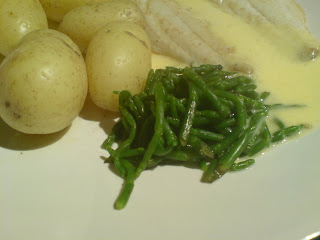

#176 Samphire. 5/10. It seems that the blanching and freezing technique is not as successful as indicated by Griggers; they were unfortunately left all soggy and not at all crisp and tender. The flavour however, was good; salty and sweet with a mild taste of ocean ozone. I think that I shall try it again but without freezing it this time.

#172 Cucumber Ragout

I chose this unusual recipe as the accompaniment to roast chicken – Griggers really bigs this “delicious” and “piquant” dish up and suggests eating it with chicken, veal or lamb. I had never eaten cucumber as a cooked vegetable before and was not feeling too hopeful about it (she bigged up the Mocha Cake and that was total crap!). However, a quick look in Larousse Gastronomique showed me that we English are missing out on something – there are loads of cooked cucumber recipes! Still dubious, I made it in advance so that if it did become watery pap, I could cook some peas and carrots to go with the chicken!

FYI: the word ragoût can mean two things: a stew (usually poultry or meat), or something usually a bit boring, tarted up into something delicious (from the French ragoûter, to revive the taste), which generally applies to vegetables, particularly if you are French.

Peel and slice two cucumbers and brown them in a wide saucepan with some butter. In a separate pan, brown two medium onions and brown those in some butter too. Place them to a saucepan and add 8 tablespoons of chicken stock and 3 tablespoons of dry white wine. Cover the pan and simmer until the cucumber is tender. Mash together 2 rounded teaspoons each of flour and butter and add it bit by bit into the cucumber mixture until it thickens into a sauce. Season well with salt, pepper and ground mace.

#172 Cucumber Ragoût. A revelation. I can’t believe how transformed the cucumber becomes once it is cooked. It is like an extra-tasty courgette. Why on Earth do we not as a nation cook with cucumbers? The same I suppose goes with lettuce, which is used extensively in French and Italian cookery. I say we should try and revive it. Give it a go, you shall not be disappointed.

#164 Sorrel with Eggs

It’s always exciting trying a new food, and this one – sorrel – is completely new to me, even though it is a common part of many a British meadow’s flora. At least that’s what the foragers’ books keep on telling me. I’ve kept my eyes open and only found the quite similar, though inedible, dock leaf when I’ve been on the look-out. So, I was very lucky to happen up some at the Unicorn grocery whilst I wasn’t looking for it. It’s good really, because now I know what it looks like and tastes like I’m much more likely to see it in the grassland in the future.

Sorrel is one of our forgotten vegetables, and was once part of every garden as it grew happily in the early Spring when the store of over-wintered fruit and vegetables had run out, but the new springtime plants were not yet laden with their bounties. Famine time. These days of, course, we have no gap to fill in the food year and so it has gone out of favour. Another reason for its decline in popularity is that, because of its acidic zingy sharpness, it was used a lemon substitute and is therefore required no longer. It’s very easy to grow – I shall be growing some next year, for sure. Here’s a nice article about it from The Telegraph.

This recipe uses pureed sorrel that takes seconds to make, so if you find any, either in the meadow or the greengrocers, try this to get you started. It serves six, but you can decrease the amounts if you don’t have enough sorrel (or people!).

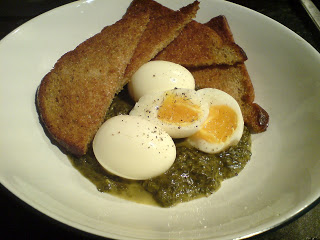
First boil six eggs for 6 minutes exactly (unless they are large, then boil for 7), this will achieve a boiled egg with well-cooked whites but still squidgy yolks. Whilst they are boiling, prepare 8 ounces of sorrel by rinsing, draining and removing the stalks just as for spinach. Add the leaves to a saucepan that’s over a moderate heat, after a few seconds it will reduce to a dark green puree, then add salt and pepper and 3 ounces of butter. Keep warm. Now fry six slices of bread in butter or oil until crisp, and cut into triangles (12 altogether). Now arrange the ingredients in a bowl or serving plate: sorrel first, then the eggs (whole or halved) and then the fried bread. Finally decorate with orange wedges (which I forgot to do!).


#164 Sorrel with Eggs – 7/10. I really enjoyed this usual and forgotten vegetable. The flavour was intense and was tempered well with the oily bread and creamy yolks of the eggs; it could be best described as lemon but with a strange astringency, like that of green rhubarb or raw gooseberries. It would be delicious with fish I expect. This is the only recipe that uses sorrel in English Food, but I am on the look out for other recipes elsewhere.

#152 Glazed Turnips

To go with the glazed ham, Lady Grigson suggests glazed vegetables – glazed onions or turnips. I thought I’d do turnips as it has a recipe in its own right in English Food. It’s very easy and will go with any roast meat. Grigson suggests eating it with duck as well as ham.

Peel 2 pounds of young summer turnips – don’t go for the big ones, they are fit only for cattle, apparently! Cut them into 1 centimetre dice (about 1/3 of an inch) and blanche them in boiling water for 5 minutes, after which they should be just tender. Once done, drain them and add them to a pan that already hot and contain 2 ounces of butter. Toss the turnips over in the butter and then add a tablespoon of sugar. Cook on a moderate heat until they begin to caramelise. Sprinkle in some chopped parsley, give them a final stir and serve. Couldn’t be easier.


#152 Glazed Turnips – 5.5/10. I find it hard to get too excited about turnips; I’m a swede man myself. That said, I think this is the best method for eating them as a vegetable in their own right, and they certainly went very well with the ham. So overall, good, but there are better vegetables out there that don’t need to be played around with to make nice!

#146 Asparagus with Melted Butter

Does anyone know if Britain has had an asparagus shortage this year? I’ve looked high and low for days and not found any from the UK, most are from Peru and the nearest were from Catalan. Then, I happened upon some in Asda of all places. I love asparagus, but refuse to eat the important stuff – aside from its flavor, the reason it’s special is because it is such a short-lived treat. I don’t want to eat it all year round. Griggers didn’t agree, it seems, and scoffed it whenever she could get her mitts on some.

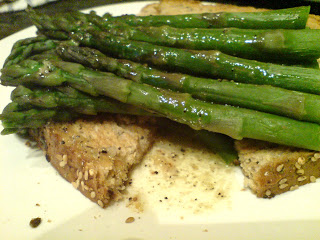
There’s no other way of enjoying this excellent vegetable – simply steamed with butter. The only addition I’ve made is a serving it on a slice of toast to turn this from a starter to light supper dish.


You will need at least 10 stalks per person – or more if you have those delicate thin fronds. Trim away the woody ends by cutting or snapping them off and tie the stalks up with string. Stand the asparagus in a saucepan with an inch of boiling water seasoned with salt and pepper. Cover the pan (or make a dome with foil if your pan is not deep) and simmer until tender and cooked – anywhere between 10 and 20 minutes depending on thickness. Alternatively, cook them in an asparagus kettle or steam them. Meanwhile melt an ounce of butter for every serving and season it with salt, pepper and a squeeze of lemon juice. Lay the asparagus on a plate and pour over the butter or serve it in a separate jug.

FYI: Asparagus is famous for producing smelly wee – though some people haven’t made this observation. This isn’t because their urine hasn’t taken on the smell, but that they lack the specific receptor in the nose that detects it. It is all down to one particular recessive allele of a gene – if you have both copies of the allele, you won’t be able to smell your sticky asparagus wee – but everyone else will! Nice.

#146 Asparagus with Melted Butter – 9.5/10. This is pretty hard to beat – the bitter-sweet asparagus with the rich salty and tart lemon butter are a marriage made in heaven. I could eat this forever.

#134 Mushrooms, or the Pearls of the Field

The male cook/chef that seems to appear often in English Food is one Alexis Soyer – he wrote a book called Shilling Cookery for the People in 1854. I’ve done one of his recipes before (reproduced in English Food) using oranges. This one is a method of doing good service to a large field mushroom, should you find one, as I did in Asda the other day. I thought I’d quote what he says about this dish straight from English Food as the language is brilliant, though the people for whom he was writing probably thought he was a right old ponce:

“Being in Devonshire, at the end of September and walking across the fields before breakfast to a small farmhouse, I found three very fine mushrooms, which I thought would be a treat, but on arriving at the house I found it had no oven, a bad gridiron and a smoky coal fire. Necessity, they say, is the mother of Invention, I immediately applied to our grand and universal mamma, how should I dress my precious mushrooms, when a gentle whisper came to my ear…”

This is what he did:
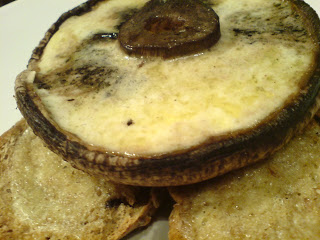
Place the mushroom on a round, or rounds of toast, depending on size, that have been spread with clotted cream (I had some left from the junket I made the other day). Have the mushroom stalk side up and spread that with more cream. Season well and place in inverted Pyrex dish over it and bake in a hot oven (200°C) for 30 minutes. He used a glass tumbler – to prevent the smoke spoiling the flavour of his precious mushrooms. It’s a good method, as it does keep all the mushroom juices in.


He goes on to say:
“The sight when the glass is removed, is most inviting, its whiteness rivals the everlasting snows of Mont Blanc, and the taste is worthy of Lucullus. Vitellius would never have dined without it; Apicius would never have gone to Greece to seek for crawfish; and had he only half the fortune left when he committed suicide, he would have preferred to have left proud Rome and retire to some villa or cottage to enjoy such an enticing dish.”

OK…

#134 Mushrooms, or the Pearl of the Fields – 8/10. I have to say, although he talks a load of nonsense, he knows how a treat a mushroom fairly. This simple supper dish is maybe the best way to show off the earthy flavour of those large meaty, juicy field/Portabello mushrooms. The clotted cream soaked into the crispy bread and also formed a rich sauce in the cap. Brilliant.

#124 Celery with Cream

I commented earlier how nice it was to have leek tarts because the leek is so under-used as a vegetable in its own right. Well, another vegetable that fits into the same category is celery. Apparently celery was introduced in the Seventeenth Century, but was used first used as a cooked vegetable in the Eighteenth. It’s hard to imagine that bitter celery would be good on it’s own, but Griggers reckons it’s delicious. We shall see. This dish also completes my main course for the Eighteenth Century Feast.

Wash and trim 2 heads of celery and cut them into 3 inch lengths. Plunge them into boiling water for 10-15minutes until they are tender. Drain and return to the pan. Beat two egg yolks and ¼ pint of double cream together along with some seasoning. Stir this into the celery over a low heat until the sauce thickens. Serve straight away.


#124 Celery with Cream – 3.5/10. Not foul or inedible, just weird. That is the best I can sum this up as. I’m not sure that celery is palatable cooked this way – Braised celery, I know, is a good way to eat it as an individual vegetable, but not this one I’m afraid. I’ll stick to cauliflower cheese in future!

#121 Little Leek Tarts

The first thing to get ready was the Little Leek Tarts. These seemed very simple to make – a leek puree baked in puff pastry (bought, I might add) plus a bit of salad of my own doing. I imagined them to be quite contemporary actually – many restaurants seem to have some kind of tart as a starter these days.

This recipe makes between 12 and 24 tarts, depending how much filling you put in each one:

Begin by trimming and cleaning some leeks – you need 2 pounds trimmed weight (this may seem a lot, but they melt down and concentrate). Chop them up and add them to a heavy-based pan that has 2 generous ounces of butter melted in it. Cover the pan tightly and allow to stew slowly for about 10 or 15minutes. Check inside and stir – the leek should not have changed colour, just reduced in volume. Cook for a further 10-15 minutes with the lid off so that the leeks lose their wetness. This is important to concentrate the flavour. Whilst this is happening cut out circles of puff pastry to line small tart tins and heat the oven to 220°C. Liquidise the leeks and season with salt and pepper and stir through a couple of tablespoons of double cream. Divide the mixture out between the pastry cases and sprinkle a teaspoon of grated Cheddar or Wensleydale cheese over them. Bake for 15-20 minutes and serve immediately. To look a bit more swish, I added rocket that had been dressed with a simple vinaigrette.


In reality, we made them first, but actually baked them when everyone arrived and the pheasants had finished cooking.

FYI: the leek became the national ‘flower’ of Wales after a Welsh King called Cadwaladr (c. 633–682) apparently ordered his soldiers to wear them on their helmets in a battle against the Saxons that took place in a leek field! This story is probably nonsense, but the best ones usually are…

#121 Little Leek Tarts – 8.5/10. Absolutely delicious! So often are leeks just used as a stock or soup vegetable; this recipe let them shine. The leek puree was light but creamy and went very well with the rich pastry. The only problem (and it was my problem, not the recipes) was that it was very slightly gritty – I obviously rushed the rinsing of a few of the leeks. Oopsey! Oh well, I have learned from my errors and have therefore become a better person because of it. Whatever.

#111 Jerusalem Artichoke and Shellfish Salad

With the Jerusalem artichokes I bought in Unicorn, I thought I’d do Butters and I a nice swish, yet healthy, salad. For some reason this salad is in the Vegetables chapter; I didn’t realise that prawns and scallops were in the vegetable kingdom. But there you go. Facetiousness aside, I love shellfish and certainly don’t cook enough of it. I particularly like scallops – they’re so pricey though; a fiver for three line-caught ones! (I’d feel too guilty buying the dredged-up ones.)


These amounts make enough for two as a main course, or 4 for a starter or side dish:

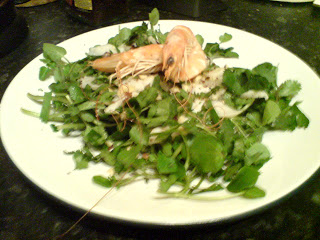
Start off by boiling 4 large Jerusalem artichokes in their skins in boiling salted water along with a2 tablespoons of lemon juice. When tender, peel the skin off with your fingers and cut them in neat slices and put in a dish. Mix together 4 tablespoons of vegetable or hazelnut oil with 1 to 2 tablespoons of white wine vinegar. Season it well and pour over the still warm artichokes. Give them a gentle stir and allow to cool. Gently grill three scallops that have been brushed with a little oil – just a couple of minutes per side until they have firmed up. Stab them with a skewer if you’re worried they’re not hot all the way through. Allow them to cool and cut in half, then slice down to make thin semi-circles. Next, peel four large cooked prawns, leaving the heads on for presentation purposes. Finally, arrange some watercress in bowls and artistically place the Jerusalem artichokes and scallops on top of the leaves and scatter with chopped coriander and a tablespoon of chopped roasted hazelnuts; and then place the expertly peeled prawns on top of those.

#111 Jerusalem Artichoke and Shellfish Salad – 6/10. A tasty salad, that really brought out the earthy flavour of Jerusalem artichokes. However, the subtle sweet flavour of the scallops was lost, which was a bit of a shame. I reckon you could make it without them and still have a good dish.

#76 Teisen Nionod (Welsh Onion Cake)

If you are on a budget, this dish is certainly for you – it contains, basically, onions, potatoes, butter, salt and pepper. There are variations on the dish that include other ingredients, but essentially that’s it. Don’t be put off by it, it’s very tasty indeed and hearty too if you serve it with bread or roast meat. Greg and Joff were coming round so I thought it was a fine reason to do some recipes. This one is very much like the Pan Aggie/Haggerty that I made ages ago. I’ll give the version I did, but supply you with the additional bits and bobs you can add.

Start off by slicing 2 pounds of peeled potatoes with a food processor or mandolin. Put the slices in a bowl of cold water to rinse the starchiness away and dry them on a clean tea-towel. Next, slice a pound of onions into thin rings, do this by hand though as they cook quicker than potatoes and don’t need to be super-thin. Grease and line a baking dish with foil (if you want to turn out the ‘cake’ at the end), and start layering the potato followed by the onions. Season and add small pats of butter between each layer, repeat as many times as possible, but make sure you finish with a layer of potato; all-in-all aim to use 3 to 4 ounces of butter. Then, melt a final ounce of butter and pour it over. This is the basic dish, but I added a small (150ml) pot of cream and six tablespoons of water to it so that it was a sort of potato Dauphiniose. Cover with another layer of foil and bake for 1 ½ hours at 180°C, removing the foil in the last half hour, so the potatoes crisp up. Turn out onto a large serving dish if you like, and serve with bread.


You could add a quarter of a pint of beef stock instead of cream. Pickles go very well with it if you are not using cream in the dish. You could even place a small joint of lamb on top of the vegetables – though add only a little stock and use only the melted butter. Skim off any excess fat before serving it up.

#76 Teisen Nionod (Welsh Onion Cake) – 8/10. This is definitely one the best dishes so far. It’s easy and cheap and delicious. There are many variation of this dish it seems – Tyneside, Wales and Yorkshire all have their variation on essentially the same recipe – and each time I cook them I’m always surprise how tasty they are. Go and cook it – plus, with the credit crunch and all, you’ll be doing your bank balance a favour!