#342 Halibut with Anchovies

It’s always nice to add an extra species of animal or plant to my list of foods I have eaten. Halibut is reasonably pricey so I have typically avoided them in the fishmonger’s shop. They are also beasts – the largest flatfish to be found in European waters. Check out this one caught off the west coast of Iceland in 2010:

It weighed an impressive 34 stones (that’s 476 pounds, or 220 kilos)!

This recipe is from the Polish novelist Joseph Conrad’s wife. She was and Englishwoman called Jessie George, who obviously had a flair for cookery. She wrote a book called A Handbook of Cookery for a Small House, and I assume (for Grigson doesn’t say) that it is this volume from which the recipe comes.

The recipe includes an unusual ingredient – Patum Peperium, otherwise known as Gentleman’s Relish. It is a highly spiced potted anchovy spread, and was a Victorian invention – click here for a link to the other blog for more information on this delicious savory.

This will serve 3 or 4 people, depending upon the size of your piece of halibut, which should weigh between 1 and 1 ½ pounds. Try and get hold of a steak, if you can only get fillets buy two pieces and sit them on top of each other. Make the spiced butter by mashing together 4 ounces of softened butter and a very generous heaped teaspoon of Patum Peperium and smear it over the halibut, including the underside. Sprinkle over 6 tablespoons of white breadcrumbs and bake in the oven for 30 minutes at 190⁰C (375⁰F) until the breadcrumbs have browned.

In the meantime make the tomato sauce that accompanies the fish. Peel 8 ounces of tomatoes by cutting through the skins in a cross shape on their undersides. Place in a jug and pour over boiling water. After 1 or 2 minutes, remove the tomatoes and the skin should be easy to peel away. Chop the tomatoes and cook them in a saucepan with a good sized knob of butter. Gently cook until the juices are reduced to just 3 or 4 tablespoons. Season with a teaspoon of Worcester sauce and some salt, pepper and sugar.

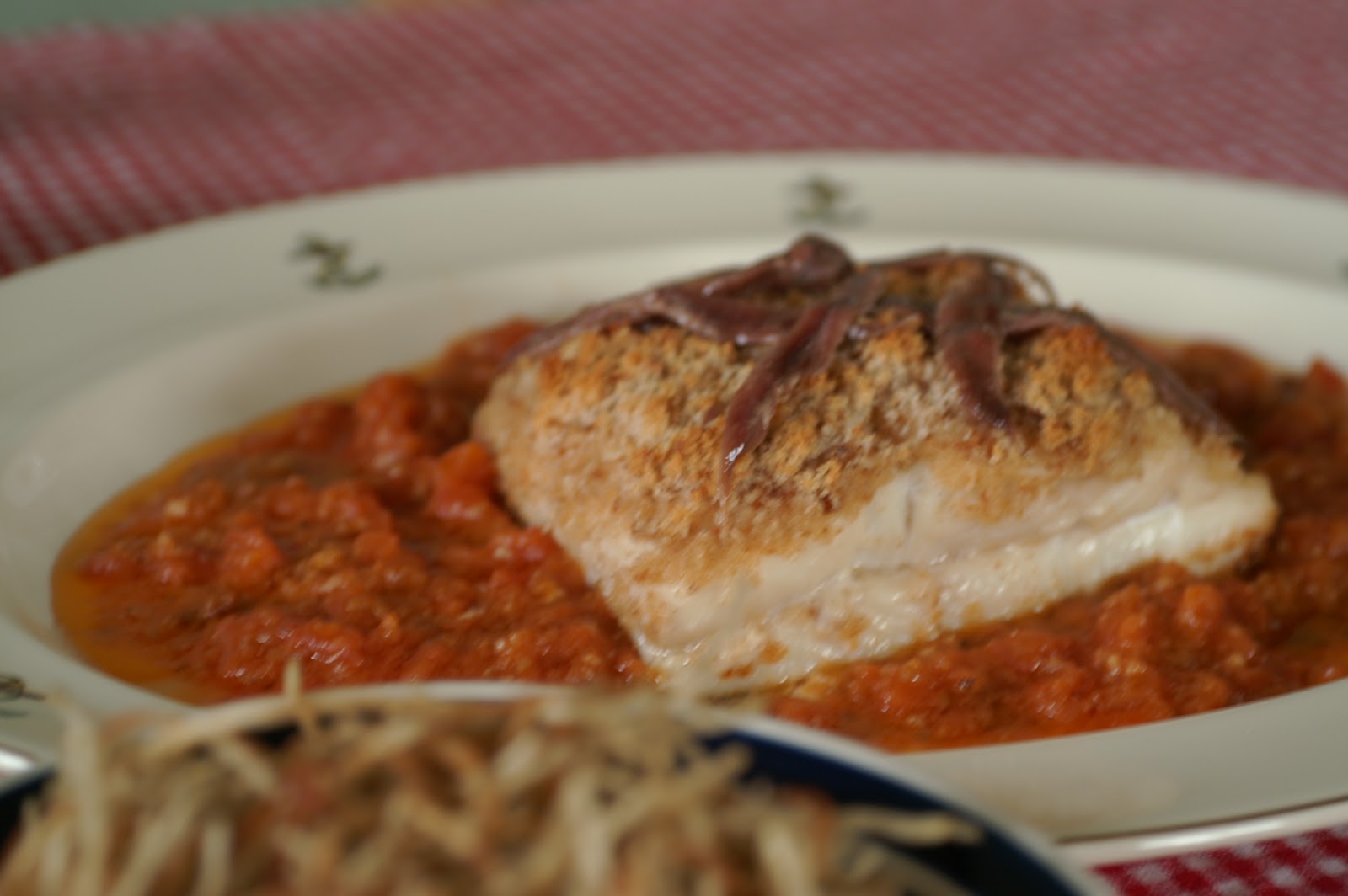
Remove the fish from the oven and place on a serving dish, pour the buttery juices into the sauce and spoon it around the fish. Finally, add 6 split anchovy fillets and place on top of the fish in a criss-cross pattern.
Jane suggests serving with matchstick potatoes. She does not let us know how to make them, but luckily I knew anyway: peel some potatoes and cut into 2 or 3 millimetre matchsticks – julienne as the French say – use a food processor or Chinese mandolin to do this (if you don’t have one, then don’t even bother and boil some potatoes in their skins instead). Plunge the potatoes into a roomy bowl of water so you can rinse away the start. Then drain them in a sieve.

Heat up some cooking oil such as sunflower or groundnut. When a piece of bread goes nice and brown in about 30 seconds, it is hot enough to add the potatoes in batches. Fry for 2 or 3 minutes until golden brown, around 180⁰C if you have an electric deep fat fryer or cooking thermometer, then drain on kitchen towels. Salt and serve.

#342 Halibut with Anchovies. What a delicious dish! The fish was firm, flaky and moist and the butter was seasoned with just the right amount of the Patum Peperium. The tomato sauce was rich yet fresh; a great meal for a summer’s evening. 8.5/10.
#302 Caveach of Sole

I decided that I needed to get back into doing some proper cooking now that I have a new stove in my new apartment. I invited some people around from work and their various spouses and kids. It is pretty hot here in St Louis at the moment so I needed to choose a recipe that was nice and summery and not all hot and stodgy. It needed to be buffet-style as there would be eight of us in all and I can only fit four around my little table. It also needed to be one that is prepared in advance so I wouldn’t be rushing around in the 35°C heat on the day. I don’t ask for much do I? Oh, and it also couldn’t be weird. My options for this kind of food are rather limited in the book now, but I happily found this one that seemed fresh and clean and rather Mediterranean in style.

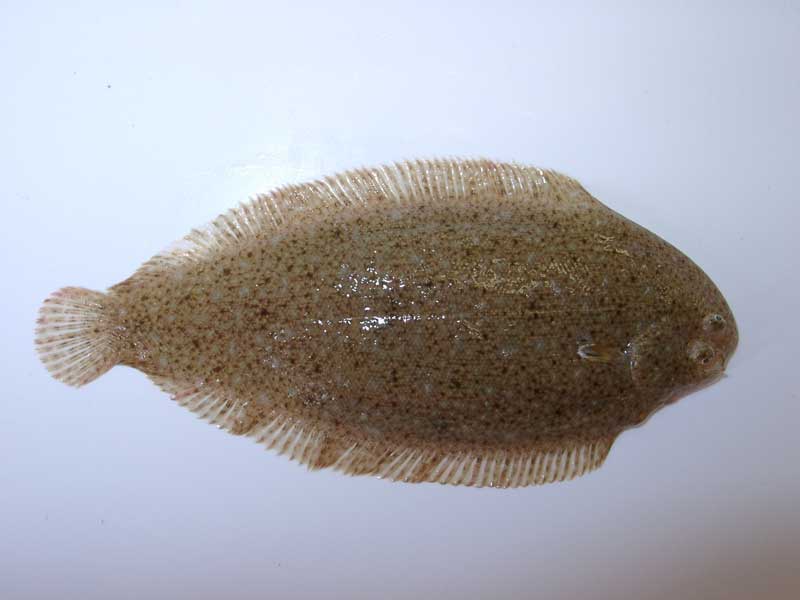
The sole lies on its side on the sea bed to camouflage itself.
Over time, natural selection has reacted to this by moving one eye
so that they both sit on one side of the head.

The word caveach refers to a method of preserving fish by cooking and then pickling it and comes from the Spanish escabeche. I did a little research on the preservation method and could only find books from the early-to-mid nineteenth century that mention it in any detail; though it seemed popular in both Britain and America at that time. The recipe below is more of a dinner party adaptation where the fish is only left for a few hours to pickle and isn’t intended as a preservation method at all. You can caveach any fish you like – the most popular seemed to be mackerel, herring and sardine, presumable because they were the cheapest and most common seafish at that time.

It is also nice to cook a receipt from the Seawater Fish section of the book – options are limited in America because there are different species of fish found commonly in their waters compared to European waters. However there is some common ground and the newly-discovered and very excellent grocery store Straub’s has a great selection of fish and meat as well as some other tricky-to-find ingredients, so I’ll be using them quite frequently during my time here in Missouri.

First of all prepare your sole fillets – you’ll need eight in all. Flatten them a little with a rolling pin, season with salt and pepper and fry them quickly in a little olive oil so that they brown a little. Cut them into thirds and arrange the pieces on a serving dish. Slice a medium red onion thinly and scatter over the fish along with the thinly sliced pared rind of a lemon and a couple of bay leaves cut in two. Next mix together seven fluid ounces of olive oil with three tablespoons of white wine vinegar and pour over the fish. Season again with salt, pepper and some Cayenne pepper too. Cover and refrigerate for at least a few hours, but preferable over night. When it is time to serve, scatter over some chopped herbsparsley, coriander or chervil are suggested by Griggers. I went with coriander. Serve with bread and butter and a salad.

#302 Caveach of Sole. This was everything I had hoped it would be – fresh, clean and slightly piquant. The delicately flavoured sole was not overwhelmed at all by the onions and the mild seasoning. A very good recipe this one – and simple too. I think I am going to try it with other, cheaper fish in the USA like tilapia or catfish. Any fish would work I reckon. A dinner-party stalwart this one will be, I feel. 8/10.

#218 Whitebait

Aye up, Grigsoners! I’ve been a bit slack with the blog recently as I have been working all hours over the last week or so. However, I have not been slack in the kitchen as I have a few recipes to tell you all about. Hopefully I’ll get them written over the next few days.

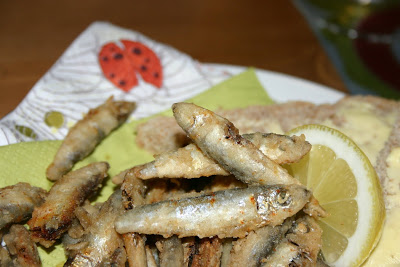
I cooked for some mates last week and managed four Grigsons in one evening. Pretty good going, I reckon. I’m trying to empty the freezer as I have accrued a lot of food during the autumn so things were designed around whatever I found in the deep depths of it. I found the whitebait and had completely forgotten I had bought them. I love whitebait but have never cooked them, though it was all straight-forward enough. It’s funny, but I never really thought of whitebait as an English food, I think this is because I always see it on European restaurant menus. It does have a bit of a history though; according to the Grigson there were whitebait parties held in Dagenham, London to celebrate some land draining system being built. Anyways, William Pitt (the Prime Minister at the time) was invited to one party and loved them so much he held whitebait parties at the close of each parliamentary season. So there you go. Don’t say I don’t educate you all!


To fry your own whitebait, allow them to defrost (if frozen, obv), then rinse them in some milk and allow to drain for a bit. Heat up some deep oil to around 200⁰C. Meanwhile put some seasoned flour in a large freezer bag, place the whitebait inside, seal and give it all a good shake so that they are all nicely covered. Shake off excess and fry in batches for just a minute or two. Drain and season well with salt and Cayenne pepper. Serve the little fish with brown bread and butter and some lemon wedges.

#218 Whitebait. Absolutely delicious and much better than what I’ve had done in restaurants. The flour and milk formed a light, crisp batter keeping the fish nice and soft within. Lemon and brown bread were the perfect accompaniment too. A cheap and delicious treat – go make! 8.5/10.

#159 Creamed Roe Loaves

Here at Grigson Towers, we don’t like to let anything go to waste, and our tasty fishes are certainly something that should be at treated with a huge amount of respect. So do your bit by making your mackerel (or herring) go further by asking your friendly fishmonger to fish out the fishes’ roes when he guts them. After all you have paid for them anyway.

There’s quite a few roe recipes in English Food and I’ve tried them, so I thought I’d better get started. This one seemed straight-forward and is very similar (and cheaper!) to the oyster loaves recipe, so I was sort of on familiar ground. The good thing about this recipe is that you can reduce the amounts accordingly depending upon how many roes you have – in fact I only had enough to make one!

FYI: In case you didn’t know (and don’t let this put you off) the soft roe of a fish is the sperm, and therefore from a male fish. They’ve gone out of favour, with some fishmongers just throwing them away instead of selling them! Another thing we need to try and bring back, people!

Prepare 8 small rolls of bread just like for the oyster loaves. To make the filling, soften 3 shallots or 3 tablespoons of onion in butter over a low heat. Add ½ pint of double cream and cook until it thickens. Cut the roes into one centimetre cubes and place them in the cream and allow them to poach gently – this only takes a few minutes. Add parsley and chives and season with salt, black pepper and Cayenne pepper, plus a squeeze of lemon juice to cut through the creaminess. Spoon the mixture into the hollow loaves and serve immediately.

#159 Creamed Roe Loaves – 7.5/10. I really enjoyed my first foray into roe gastronomy, though a dated dish, you could modernise it easily by serving it on toast instead, or something. They are very soft and have a very delicate flavour. Try them, don’t fear the fish sperm – you’ll like the flavour and texture – and, after all, you’ll happily eat fish eggs (or bird eggs), so what’s the difference?

#158 Gooseberry Stuffing for Mackerel

Apart from Britain and the Netherlands, gooseberries are not grown and eaten in large numbers. This is because they’re not a particularly popular fruit for desserts. However, they are often served with mackerel as in this traditional English recipe. It seems to be a combination that has gone out of favour these days – I’ve certainly never eaten them with fish, though I have has tuna and rhubarb before and that was lovely, so I’ve high hopes for this one.

This makes enough stuffing for 4 mackerel:

Top and tail 8 ounces of gooseberries and cook them gently in ½ an ounce of butter until they just begin to soften and pop. Mash them with the back of a wooden spoon, and when luke warm add another 1 ½ ounces of butter and 4 tablespoons of breadcrumbs. Season them up with salt, and both black and Cayenne pepper, plus a little sugar if the gooseberries are too tart (they need quite a lot of tartness, to cut through the oily mackerel).

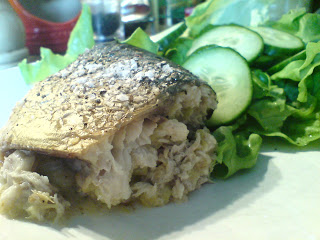
Bone the mackerel, or ask your fishmonger to do it (if you want to do it yourself – and it is very easy – follow this link for instructions) and divide the mixture up between them. Place them in a buttered ovenproof dish and season the skin with salt and pepper. Bake for 30 minutes at 190⁰C. I served them with salad.


#158 Gooseberry Stuffing for Mackerel – 8/10. This was a taste sensation. The piquant gooseberry stuffing cuts through the rich oily mackerel so well. This really is a recipe that needs a resurgence. Now is the perfect time to make it people – both gooseberries and mackerel are in season. Isn’t it funny how things that are in season at the same time, seem to go so well together? It’s almost as though God planted them all there for us. Unfortunately, I’m too old to still believe in God, so I assume that there’s a better explanation.

#141 Warm Skate Salad with Shaun Hill’s Dressing

Another fish dish. Skate is one of my favourite fish and liked the idea of having it in warm salad – perfect for this time of year when the weather is often bright and sunny but will a chill still in the air. Classically, skate is poached or fried and served with either a beurre noisette or capers, so I thought having it in strips with warm vinaigrette would be a new thing that might jazz up this tasty, though bland, fish.

Start off by preparing your skate wings (one per person). Rinse each one under the tap or soak in a change or two of water – take heed of this advice, this gets rid of the taste of ammonia found in fresh skate. I didn’t know this, even though I’ve cooked it many times, it’s never been ponged of ammonia. However, this time it was different (for one of us anyway!). Dry the wings and fry them in a little olive oil until cooked through – a few minutes a side, you can tell they’re cooked as the flesh starts to raise itself up from the cartilaginous bones. Whilst you are waiting, wash and dry some green salad leaves (I used watercress to be seasonal) and place a pile of them in the centre of each plate.

Now make the dressing. Set up a bowl over some simmering water. Add three tablespoons of fish stock and around 6 tablespoons of olive oil to the bowl. Chop up a handful of parsley leaves with a shallot and a small clove of garlic. Add this and season with salt, pepper and lemon juice.

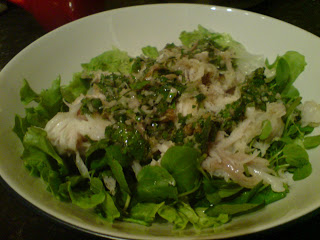
Remove the cooked skate from the pan and strip the meat of the wings with a fork. Pile the stripped fish on the salad leaves and sprinkle the whole thing with the dressing. Do this for each plate. Serve immediately.


FYI: Shaun Hill is still a chef, working at The Walnut Tree Inn in Wales. Here’s an article about him.

#141 Warm Skate Salad with Shaun Hill’s Dressing – 5/10. What a weird dish this turned out to be. None of the ingredients were bad , they just didn’t do together. The skate was nice and moist and gelatinous, but it’s delicate flavour was completely drowned out by the dressing with its strong garlic, shallot and olive flavours –delicious that it was. The ammonia was a cause for concern – it obviously doesn’t happen every time one cooks it, otherwise I’d have noticed before, but it’s worth bearing in mind in the future. Overall, I prefer my skate the old-fashioned way… Skate was very popular, but recipes like this won’t be doing it many favours in making it popular again.

#133 Welsh Supper Herrings

After the creamy and rich oyster loaves last night, I thought I’d go for something a little bit more fresh-tasting and the Welsh Supper Herrings seemed to fit the bill. I chose herring because, like oysters, I’d never knowingly tried them except, of course, in the form of kippers. Herring are quite cheap as are most of the other ingredients so it didn’t break the bank. The odd ingredient here is the Bramley apple, but apparently it’s a traditional thing, herring and apple. First I’d heard.

Gut, clean, descale, behead and fillet a pound of herring – ask your fishmonger to do this, I tried to fillet them myself and was reasonably successful but was a bit of a ballache. Now mix an ounce of softened butter with a tablespoon of mustard made up from mustard powder (Why? Because Griggers says so, that’s why). Spread the butter over the cut side of the fish fillets and roll them up.

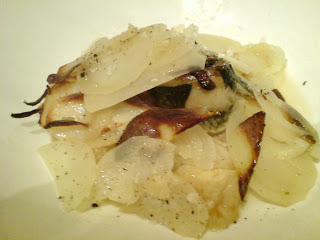
Next get to work on peeling and then finely slicing a pound and a half of firm potatoes – Jane recommends using a mandolin for this. Please, please, please be very careful here – I managed to slice a piece of my thumb off doing this last night so watch out. You have been warned. Don’t go suing me if you open a vein… Plunge the potatoes into boiling salted water for a minute she says – though I would do them for 2 or maybe even three (see below). Then slice a large onion and two Bramley (or other cooking) apples that have been peeled and cored. No need for the mandolin for those. Use a little more softened butter to grease a pie dish and make a layer using half the potatoes, then half the apples and half the onions, seasoning as you go with salt and pepper. Next, the rolled up herring fillets and sprinkle them with half a teaspoon of dried sage (Why not fresh? Because Griggers says so, that’s why). Then add the remaining apple, onion and potato, adding a brief painting on of melted butter to the last layer of spuds. Pour boiling water so it comes around half way up the dish. Bake for around half an hour until the potatoes are cooked.


#133 Welsh Supper Herrings – 3.5/10. Not sure if this was a bad dish or a bad recipe for a good dish. The potatoes, apples and onions were very nice – the apples especially lifted it, but the potatoes were not cooked after half an hour even though I blanched them in the boiling water. They were done after an hour, but unfortunately this meant that the herrings had cooked down into a mush not unlike cat food. So pretty disappointing seeing as I almost sacrificed a digit for it. Hey-ho, such is the nature of this undertaking…