#303 Cornish Charter Pie


In Jane Grigson’s book Good Things, she quotes from the diary of a Parson Woodforde, a Norfolk clergyman who obviously liked his food. He wrote in his dairy on the 13th of July that “[we] had for Dinner some Pyke and fried Soals, a nice Piece of boiled Beef, Ham and a Couple of Fowls, Peas and Beans, a green Goose rosted, Gooseberry Pies, Currant Tarts, the Charter, hung Beef scraped &c…”. All recognisable as nice food typical of the British Isles at that time, except, that is, for The Charter. “Was it [a] sweet or [a] savoury? Was it in fact even food at all?” she asks. Then, apparently on another occasion at the Parson’s brother’s, an incident occurred where a very naughty dog snook into the cellar and snarfed down The Charter all to itself. It was, at least, food, but dogs will eat pretty much anything, so the type of food isn’t possible to deduce.

My friend Katie has a dog that ate an entire chocolate cake once – fully iced as well. What happened to that cheeky dog’s bowels is not fit for a description in a food blog.

Parson Woodforde 1740-1803

Anyways, the editor of the Parson’s diary assumed it was some kind of custard. It wasn’t until Griggers stumbled upon the book A few choice recipes by Sarah Lindsay (a Lady) from 1883, who gives a recipe for a Charter Pie, saying it is a Cornish recipe and the filling is of chicken in cream. It’s a shame that Jane had no internet in her time; it would have made her life so much easier as I found this little fact on GoogleBooks pretty quick-smart.
Upon doing a quick recipe search on the internet, I found a few versions of the recipe, but they didn’t really give any more background to the pie. I did notice that one website listed it as American cuisine, so it must’ve been taken over the Atlantic at some point and survived there for a good few generations.

Anyways, I thought this pie would go down for my dinner party-cum-buffet that I had last weekend. The Meat Pies & Puddings section of the book has been rather hit and miss, so I did worry that would be a bit crap. Jane does big it up, and it does appear also in Good Things, so for it to occur twice in her writing, it must be good…

The recipe asks for two three pound chickens that have been jointed, so you can imagine that it is a decent sized pie, so make sure that you make enough shortcrust pastry to cover a large, shallow pie dish. The recipe specifies a rich shortcrust pastry too, so make it with at least five ounces of salted butter (and therefore ten ounces of plain flour), an egg yolk and some ice-cold water to bind.

Whilst your pastry is resting in the fridge, chop a large onion and soften it in two ounces of butter. Remove the onions from the pan and spread them on the base of a wide, shallow pie dish or tray. Toss your chicken pieces in seasoned flour, turn up the heat in your pan, add a two more ounces of butter and fry the chicken pieces until they are a nice golden brown. Do not crowd the pan, so cook in two or three batches if you need to. Arrange the chicken pieces tightly together in a single layer on top of the onions.
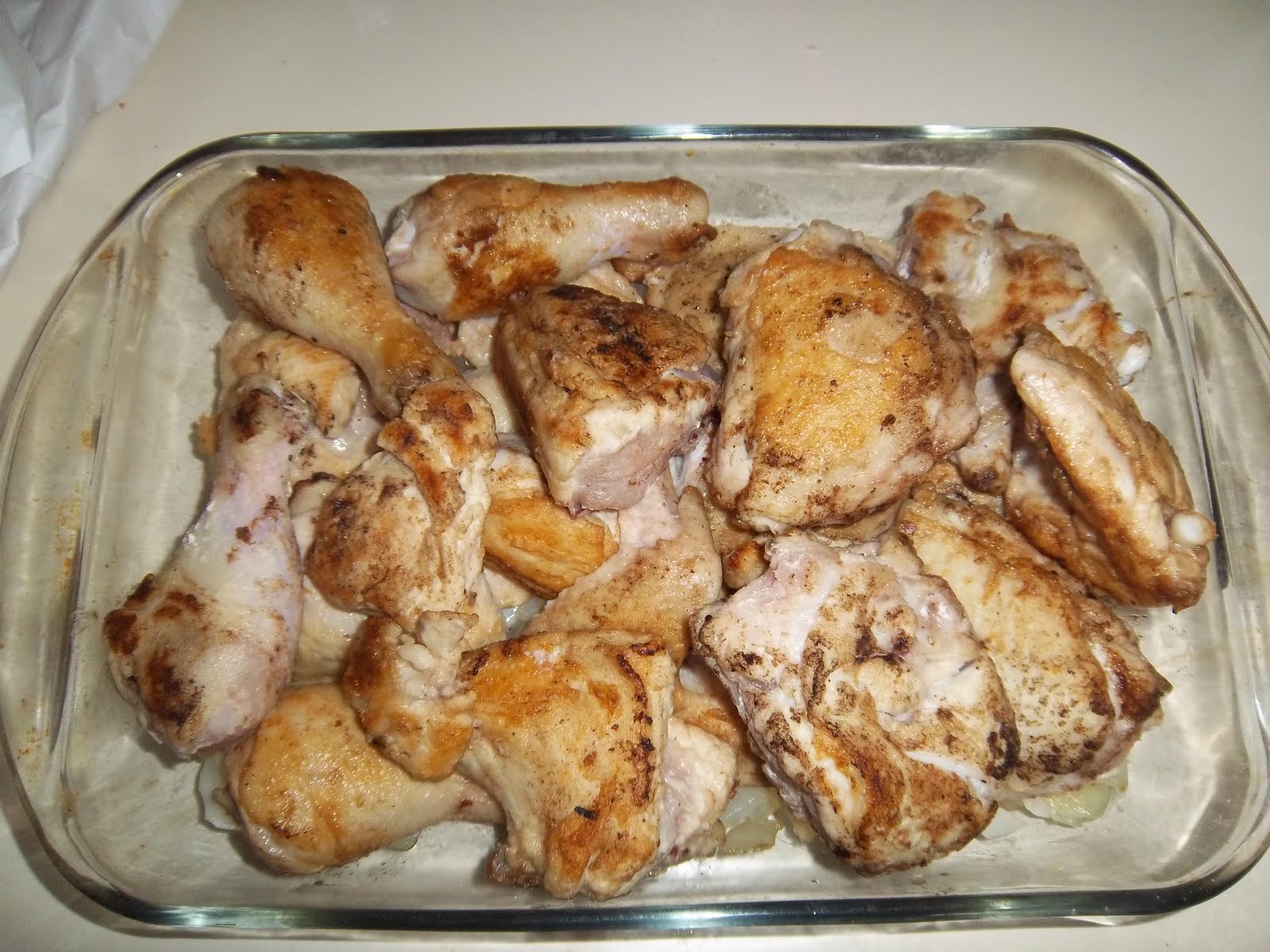
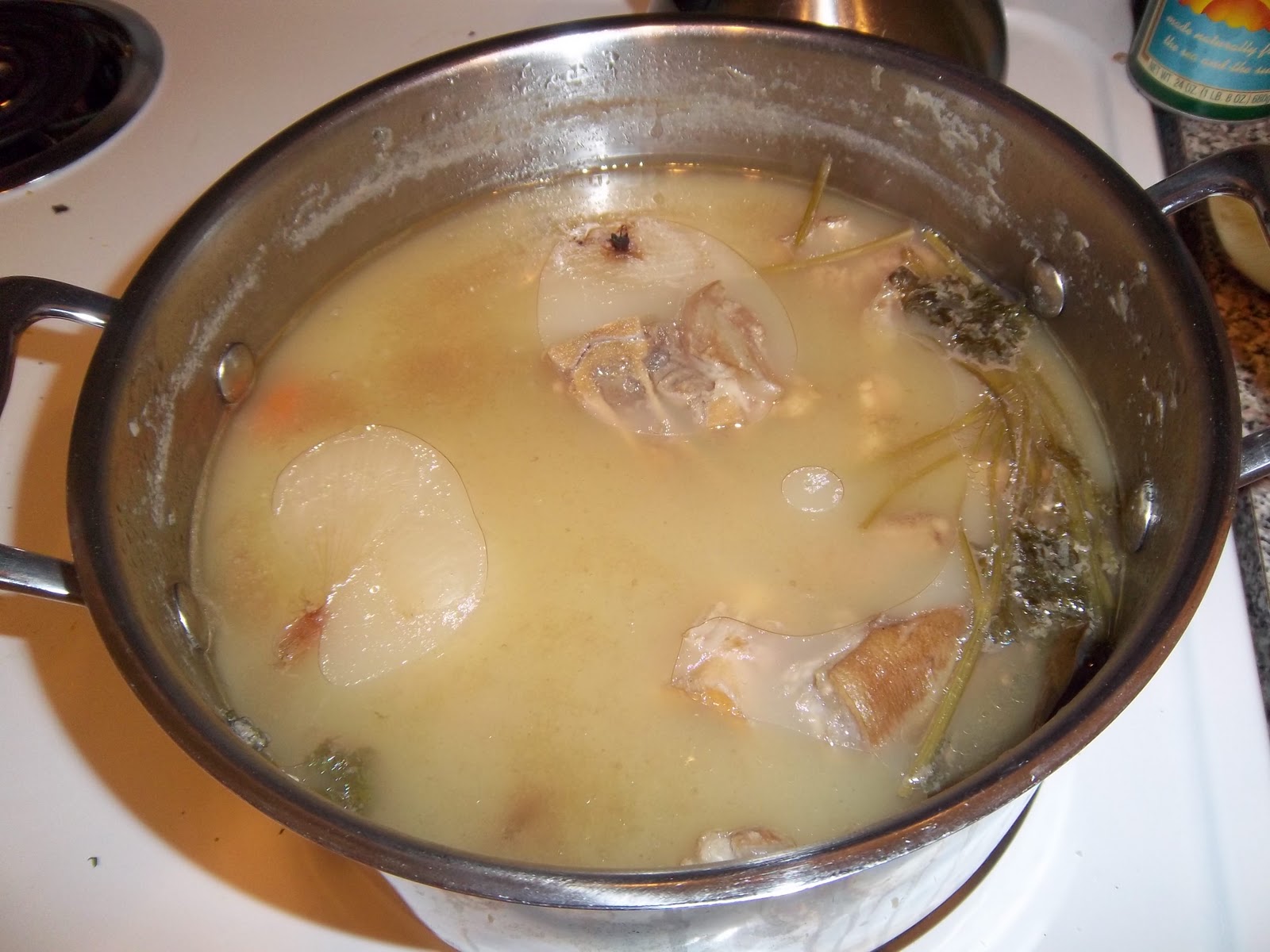
Next, chop a leek or six spring onions alongside a nice large bunch of parsley. Place in a saucepan and cover with a quarter of a pint each of milk and single cream (that’s coffee cream for any Americans). Bring to a boil and simmer for two or three minutes. Pour this mixture over the chicken and season very, very well with salt and pepper.

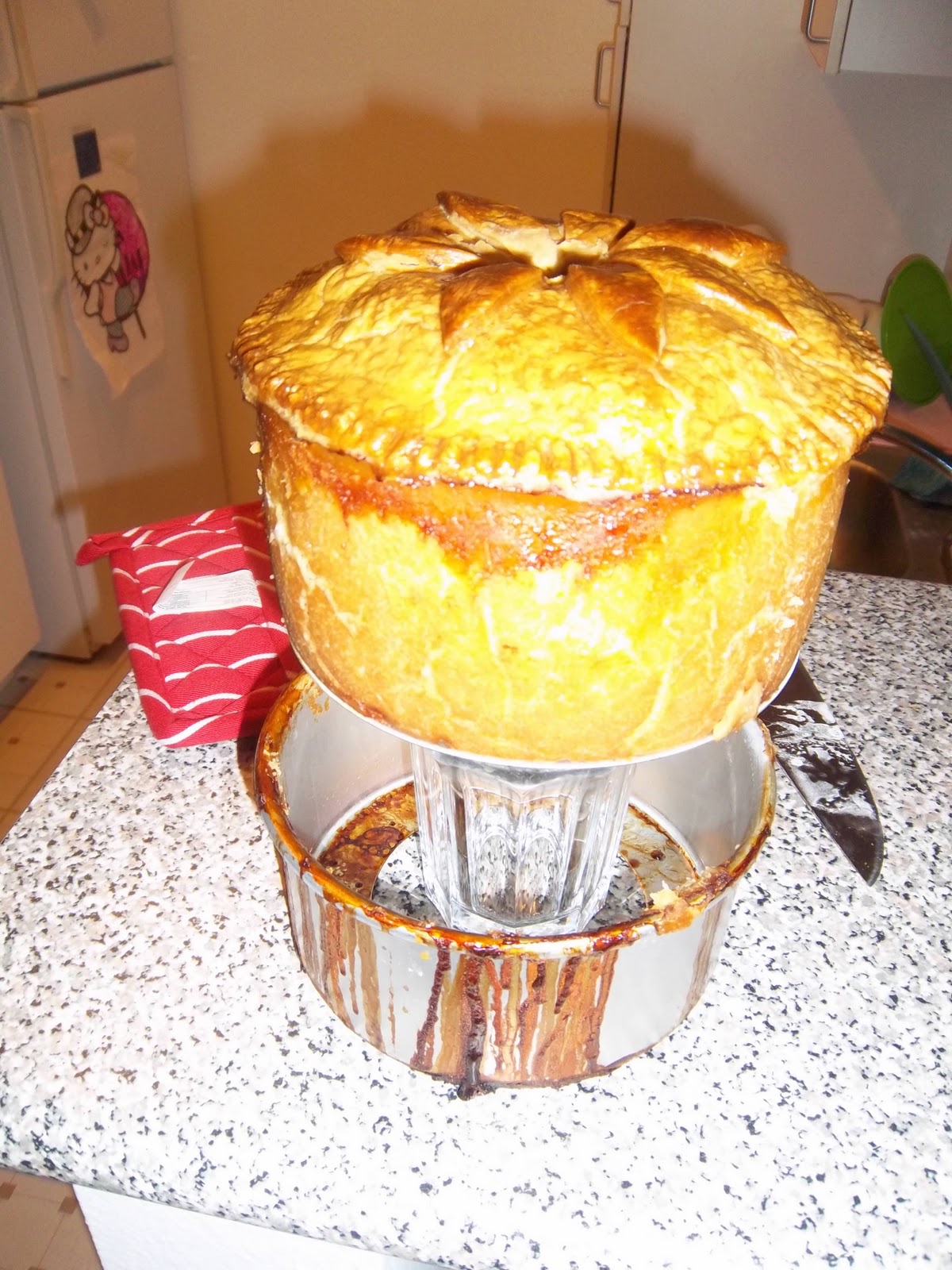
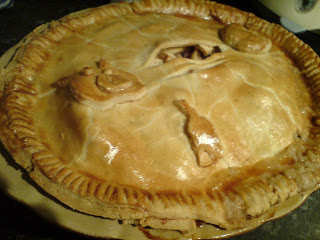
Roll out your pastry and cover the pie, using some beaten egg as a seal. Make a hole in the centre of the pie large enough to fit a kitchen funnel. Jane then asks us to make a pastry rose to fit on top of it that also has a hole (so the steam can still escape). Decorate with more pastry if you like. Brush the pastry with more beaten egg. Bake at 220-230°C (425-450°F) for the first twenty minutes and then lower the heat to 180°C (350°F) for the remainder of the cooking time – an hour should do it.

Just before the pie is ready, bring half a pint of double cream to the boil, so that when it is cooked, you can take the pie from out of the oven, remove the pastry rose and pour in, with the aid of your funnel, the hot cream. Then replace your rose.

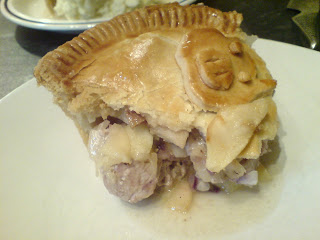
The pastry is good hot or cold, says Jane. It went for just warm so that the sauce would thicken almost becoming jelly (a benefit of using chicken on the bone, rather than just the meat cut into pieces).

This is perhaps a good point to mention the proper English way of serving up a pie like this. Using a knife, cut away the piece of pastry you would like to serve and place it on the side of the pie. Next, spoon out the filling onto the plate and perch the pastry on top of it. Do not go digging straight in there with your spoon messing up the pastry and getting all mixed up with the filling. This is a deadly sin at the Buttery residence and you will be thrown out should you attempt it.
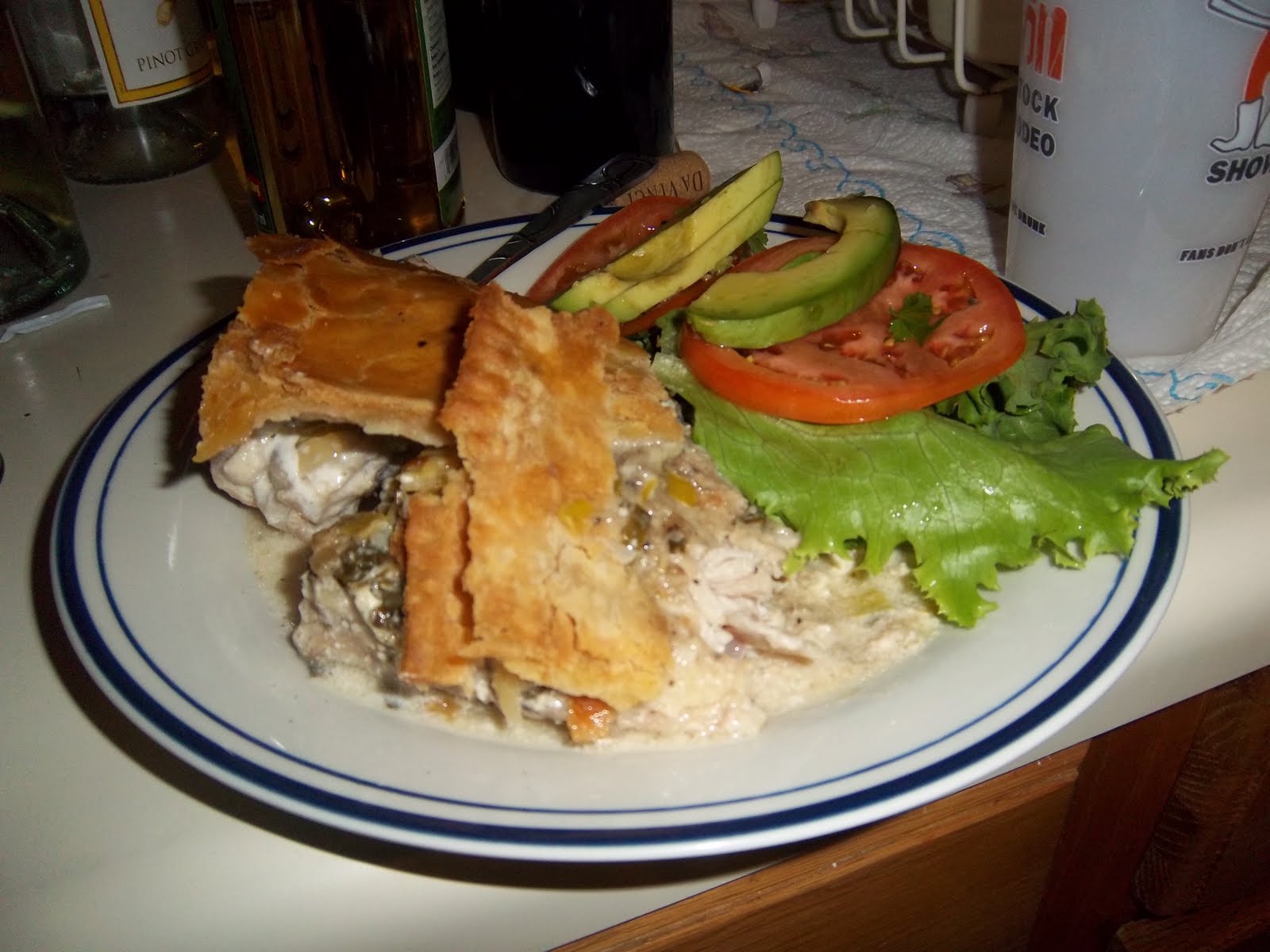
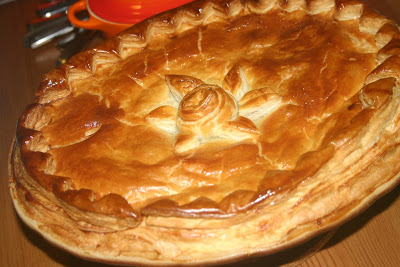
#303 Cornish Charter Pie. What a great pie! The ingredients made a thick creamy chicken soup that is delicious in itself and the chicken was wonderfully tender from being cooked in all that milk and cream. Much better than the last chicken pie from the book, which was insipid by comparison. This will be my staple recipe for chicken pie in the future (unless anyone has one that can beat it). 8.5/10.

#284 Veal, Ham and Egg Pie

Okie dokie, so the last two posts have all been on the subject of raised pies. The first one explained how to bake and construct one, and the second explain how to make the jellied stock. Now it is time for an actual filling to complete the full recipe.
This is the first of several fillings for raised pies from the book, and I must admit that I have been putting off making one in case it was a disaster. In the end it was a delight to make.
I chose this recipe because it seemed the most basic, with the easiest ingredients to get hold of; the nearby Central Market sells a range of veal cuts, which are usually tricky to get hold of. Strangely enough, the tricky item to get hold of was the unsmoked and raw ham, gammon or bacon. I searched high and low for it, but to no avail. Luckily, I am now pretty good in the kitchen these days and knew I could cure my own ham overnight in the brine tub I now have sitting at the back of the fridge ready to leap into action whenever I need an emergency curing. I bought a bit of pork loin as it is the leanest cut.
So, to make the filling you will need to hard boil and shell four eggs. Whilst they are bubbling away, get the meats ready: cut up 1 ½ pounds of ‘pie veal’ (I took this to mean cuts for casserole, like shoulder) along with 12 ounces of unsmoked bacon, ham or gammon. You want chunks around a centimetre in size. Add the grated rind of a lemon, a tablespoon of chopped fresh parsley, a teaspoon of dried thyme. Mix these together well with a decent  amount of seasoning. Pack half of the mixture in the pastry-lined mould. Place the eggs inside and then the remaining filling (see the raised pie post for pics of this). Then bake as described in the raised pie post.
#284 Veal, Ham and Egg Pie. Whew! This pie pretty much took me a whole Sunday to make. It was worth it though. The filling was wonderfully light and fresh tasting due to the herbs and lemon and the meat flavour was quite subtle, the whole thing kept moist by the jellied stock. The pastry was crisp and tasty too – hot water pastry is so easy, I can’t believe I put it off for so long. I brought it into work for people to try and it seemed to go down pretty well and I’ve been eating it through the week. There’s one slice left know, and I already miss it. Cannot wait to try the next one. I think i have found my calling as an artisan pie-maker extraordinaire! An excellent pie! 8.5/10 (I’m not marking it higher, in case the others are even more delicious!).

#283 Jellied Stock

If you are going to attempt to make a raised pie, then you need to make a jellied stock. The jelly in these pies is either loved or hated. Many people can’t stomach the thought of savoury jelly I think and either have to pick it out or avoid eating these delicious pies altogether. The jellied stock is very important though. The meat inside is cooked for a long time and can dry out a little – some water escapes through the hole in the top and some is absorbed by the pastry. The stock soaks into the meat, making it nice and juicy again and it fills any gaps made by the shrinking contents.
So here’s the recipe. You could, of course, just use some stock and gelatine, but that would be cheating!
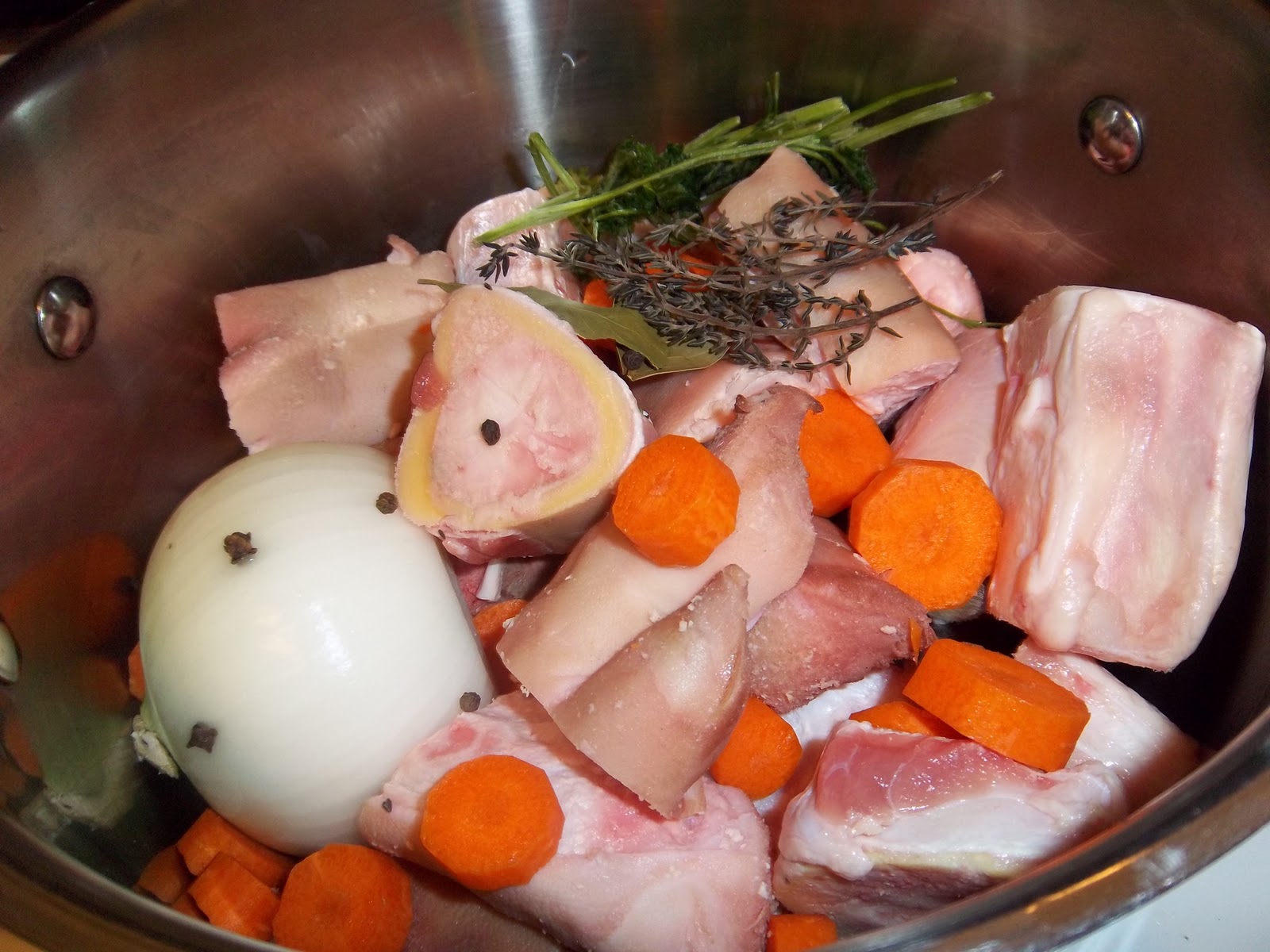
First you need some bones that will release alot of gelatine, so use either two pig’s trotters or a veal knuckle – ask the butcher to cut them into several pieces for you. To these, add any bones you may have left over when you prepared the fillings. You’ll also need a sliced large carrot, a medium onion studded with three cloves, a bouquet garni and twelve black peppercorns. Place all of these in a big stockpot.

From this…
Now add four to five pints of water, bring to the boil, skim off any scum and cover and simmer for three to four hours.

…to this…
Strain the stock through some muslin into a clean pan and boil it down until it is a concentrated ¾ of a pint. Season it with some salt and more pepper if required. The stock is now ready to be funnelled or poured into the raised pie (see here for instructions).

…to this!

#283 Jellied Stock. I won’t write a review for this as it’s not a dish in itself, but I will say that it was a very satisfying process; condensing that big set of ingredients into the viscous well-flavoured stock. Made me feel like a real baker.

#282 Raised Pies

Is there anyone who doesn’t like a pie made with hot-water pastry? Everyone, I say, from the Mayor of Melton Mowbray to, er, Sweeney Todd. Oh, except for vegetarians. They’re so quintessentially English and I’ve not seen anything remotely close here in Texas. I must admit I’ve been putting off making these pies – I’d never made one before and I knew that it would take a lot of time, and presumably, effort. However, I felt I was ready – and so I should be because there are several to do in this book so I need the practice. Hopefully I’ll get it right first time.
So, for those of you not in the know, a raised pie is a pie made from pastry using boiling water and lard, unlike shortcrust pastry that is kept as cold as possible. Hot water pastry achieves a putty-like consistency that allows the pie mould or tin to be moulded and raised up the sides of the tin, rather than rolled. The hot water makes the pastry very absorbent too; you need this as the filling cooks and releases juices. Normal pastry that contains butter would just turn into a sloppy mess. Raised pies became crazily over-the-top in the seventeenth and eighteenth centuries. Elizabeth Raffald’s receipt for a Yorkshire Goose Pie gives the following instructions:
Take a large fat goose, split it down the back and take all the bones out. Bone a turkey and two ducks the same way, season them very well with pepper and salt, with six woodcocks
You don’t get pies like that in Yorkshire nowadays, I can tell you. Imagine the meat sweats you’d get from a slice of that!
The raised pie hasn’t quite fallen out of favour in Britain these days – I’m sure Melton Mowbray pork pies are as popular as ever, but that’s all you generally see now. The book proffers more, and I shall be adding them as I go. The basics are: Pork Pie; Veal, Ham and Egg Pie; Raised Mutton Pies; and Game, Chicken or Rabbit Pie. They all have the same basic parts: the pastry, the jellied stock and the filling itself.
It all seems a bit complicated, but it’s not really. In this post I’ll deal with the construction and baking of the pie. The jellied stock and the fillings can have their own posts (these are coming in the next day or two).
Begin by making the hot water pastry. Bring a third of a pint of water and six ounces of lard to the boil. In the meantime, weigh out a pound of flour and place in a bowl with half a teaspoon of salt. When boiling, tip the water and fat into the flour and mix quickly – electric beaters are the best for this, but don’t use a high speed as the pastry won’t bind properly. To enrich this pastry add an egg, or a tablespoon of icing sugar. Cover the dough and leave until it cools enough to handle, but don’t let it cool down completely. Take three-quarters of the pastry and put it in a six or seven inch cake tin with removable base. You can buy fancy hinged raised pie moulds – they are quite expensive though, but they are beautiful (see this link). Quickly, but carefully, mould the pie by gently pushing the pastry up the sides of the mould or tin until it overlaps the lip, making sure there are no holes or tears. If it just flops down, then it is too hot. Wait five minutes and try again.
If you want to make small pies, you can mould the pastry around the outside of a wide rolling pin or a jam jar. This method is required for the mutton pies. This is alot trickier apparently. So unless you can avoid it, do the big pie.
Now you can start on the jellied stock and prepare your pie filling. Pack the filling well into the raised crust.
…if it mounds up above the rim, so much the better.
Roll out a lid with the remaining pastry and fix in place with a little beaten egg, making a hole in the centre for steam to escape. Decorate the pie with leaves and roses using pastry trimmings. It’s strange that savoury pies have the ornate decorations in England and that the sweet ones are left plain. I don’t know why this is. Anyway…. Brush the lid with more egg (don’t throw unused egg away, you’ll need it later).
Bake in the oven for half an hour at 200°C (400°F) to colour the top, and then lower the temperature to 160°C (325°F) for two hours for large pies and just one hour for small pies – you need this time for the meat to cook and become tender. Watch the pie doesn’t brown too much though – if it needs a little protection, cover with some brown or wax paper. Remove it from the oven and leave it to cool for thirty minutes before removing it from its mould very carefully. Brush the sides with beaten egg and return it to the oven for a final half an hour to brown and crisp up.
Whilst the pie cooked, the meat shrank, so the gaps need filling with the jelled stock. This can be carefully poured through the hole in the lid, or better using a small funnel. Let the pie cool and eat the next day. The pie will keep for days wrapped in wax paper and kept somewhere cool.
Phew!
#282 Raised Pies. It won’t write a review for this recipe – I’ll save that for the fillings. However, it is worth saying that although making a pie like this is no mean feat, it is worth having a go. I had such fun pottering about the kitchen making my first riased pie (the Veal, Ham and Egg Pie). But then, I am a great big geek. Anyway, hopefully I have inspired you to give it a go, if not at least appreciate how much effort goes into these beautiful and delicious artisan pies.

#241 Venison (or Game) Pie or Pasty

It’s pretty much the end of the game season now and so to see it off for another year, I thought a delicious venison pie was in order. I love venison, but for some reason have never cooked with it so I thought a pie would be the place to start. It’s a nice easy pie to make and the filling can be made well ahead of time. The really good thing about it was specific instruction of producing some ornate pastry work for the top. I don’t know why the name of the recipe is a pie or pasty, because there’s no instruction for making this into a pasty.

Start off by turning some pieces of shoulder venison or game in flour that has been seasoned with salt, pepper and mace. You’ll need three pounds of venison for other game for this. Brown the venison in two ounces of butter in a cast-iron casserole. Now add 4 ounces of chopped onion, ¼ pint of red wine plus enough beef or game stock to cover the meat. Bring to a simmer and cook gently until done, says Griggers. This might not be useful for those – like me – that have never cooked venison; I placed it in an oven heated to 150⁰C for two hours. In the case of game on the bone, it is cooked when you can take the meat easily from the bone. Melt two more ounces of butter in a saucepan and add a tablespoon of flour and cook to form a roux, strain some of the sauce into the pan and simmer for five minutes before mixing it back into the pie filling mixture. Check for seasoning. Pour the mixture into a pie dish and cover with puff pastry. Make a hole in the centre surrounded with a pastry rose plus some other nice ornate patterns, as is traditional, using egg to glue any bits on. Lastly brush to whole thing with more egg to make a nice glaze. Delicious hot or cold, says Jane.


#241 Venison Pie. This was a great pie! The meat was deliciously tender and gamey and the gravy dark and rich; a pie to warm your cockles. However, it was not delicious cold as the gravy was all congealed and it was a bit like dog food. Doing the pastry was great fun too (if you are a massive geek, like me) 7.5/10.

#233 Devonshire Squab Pie

Here’s a slightly odd recipe, as a many from Devonshire appear to be. This squab pie contains no squabs (i.e. baby pigeons), but lamb instead. It is a mystery how it got its name – Griggers suggests that the meat has changed over the years, but the name has stuck. That’ll do for me. This is a simple enough pie to make, though the ingredients are odd: lamb, apples, prunes, spices all topped off with a dollop of clotted cream. Hmmm.

This is easy to make; a simple case of layering up ingredients in a deep pie dish. Start off by removing the meat from a whole best end of neck of lamb. If this seems too much of a chore, just buy about 1 ½ pounds of neck fillet from the butcher instead. Now peel, core and slice two pounds of dessert apples – Cox’s pippins are Jane’s suggestion, but russets and braeburns to well in these sorts of things too – slice two medium onions thinly and chop around 16 prunes. Next, mix a level teaspoon of ground allspice and cinnamon along with half a grated nutmeg in a ramekin or small cup. Layer up the meat, onions, apples and prunes, seasoning the layers with the spices and salt and black pepper as you go. Now pour over a quarter of a pint of lamb stock (use the bones from the best end of neck to make it, otherwise a stock cube!). Cover with a nice thick layer of shortcrust pastry, brush with egg and bake for 30 minutes at 200⁰C, and then turn down the oven to 160⁰C and bake for a further 45 minutes. Serve with clotted cream.


#233 Devonshire Squab Pie. This pie did not turn out to be as weird as expected. You could identify each ingredient in it, and they all stood out whilst complimenting each other very well. However, I think the pie would have been much improved had the lamb been coated in flour and browned a little first so that the flavour was more intense and a thick gravy produced. Several of these pies seem to have very runny sauces. Obviously tastes have changed. The big surprise was that the clotted cream went very well. Although it did make me feel like I was eating my main and pudding all at the same time. A good recipe that could be very easily improved. 6/10.

#209 Chicken and Leek Pie from Wales

During this rubbish weather (God, I am so English – all I do is talk about the weather) there is nothing like a good pie. The Farmers Market in Manchester Piccadilly Gardens just happened to be on as I was walking through and I saw a stall selling some very nice free range farm chickens and so I snapped one up. I then consulted the book for chicken recipes and decided on this. It seemed a little bit like the pork and apple pie I did a while ago in that there is no gravy or sauce per se but runny juices instead. I was slightly concerned about this as it was a major short-falling in the pork pie. Anyways, I have cook everything in this book whether I like it or not.

It is best to start this pie the day before you want to cook it, or at least in the morning. Start by placing a roasting or boiling chicken in a close-fitting pan along with a quartered, unpeeled onion, two tablespoons of chopped celery (a stalk, in other words), a bouquet garni and some salt and pepper. Place a close fitting lid on top, bring to a boil and simmer until cooked. The cooking time will be dependent upon the type of chicken you have – around 45 minutes for roasters, and at least an hour for boilers. Let the chicken cool in the stock (leave overnight if you want). Remove it and strip the carcass, cutting the meat into nice chunks. Skim the stock – if it seems a bit bland, add more seasoning or return the bones to the pot and simmer again. You could also reduce the stock after straining it too.


Arrange the pieces of chicken in a pie dish along with 4 ounces of sliced ox tongue that has been cut up. Next, wash, trim and slice a load of leeks – Griggers says eight in all, but I reckon that that it all depends on the size of your pie dish. Either way, blanch them for two minutes in salted water before draining and adding to the pie dish. Chop two tablespoons of parsley and sprinkle that over and then ladle the stock over the lot until it comes up about half way up the chicken and veg. Season well. Cover with shortcrust pastry (the amount will depend on the dimensions of your pie dish). To make sure you get a good seal, when you roll it out cut a strip of pastry and glue it around the rim of the dish with some beaten egg. Brush glued pastry with more egg and lay the pastry over. Press it down, make a central hole and brush the top with egg. Bake at 230⁰C for 20 minutes, then turn the oven down to 180-190⁰C for another 20. Allow to cool a little before you eat it. It had it with mash and peas.

#209 Chicken and Leek Pie from Wales. This was a really good pie – the stock was very flavoursome and ensured the chicken remained very moist. I’m not sure what the point of the tongue was though. It is also very nice cold – the stock cools to become a nice, rich jelly; though that kind of thing is not to everybody’s taste. Give it a crack! 7/10.

#200 Steak, Kidney and Oyster Pudding

As promised, a dish that is more English that roast beef and Yorkshire puddings, at least I think so anyway. It may be because I’m a Northerner, but I also think (and I could be wrong here) that although it is very English, it hasn’t travelled to other countries as well as, say, roast beef. In other words, it’s a sort of hidden gem. I have been saving this one for number 200 for a while, though I did change my mind a fair few times.

The seemingly unusual ingredient here is, of course, the oysters. The recipe is surprisingly recent: it appears as a steak pudding in a book by Eliza Acton in 1845 and the kidney turns up in Mrs Beeton’s Household Management nearly fifteen years later. In those days folks living near the coasts were falling over oysters – they diminished however due to a combination of an increased population eating them and the increased pollution created by all those extra people. No one wants a shitty oyster. However, before this, they were cheap and the preferred alternative to the very pricey mushrooms that the posh gentry would have enjoyed. It was only since around the Second World War that mushrooms have been cultivated on a large scale, before that they acquired by foraging: limited and very seasonal. Of course, these days it is the mushrooms that are ten-a-penny, and the oysters that break the bank. That said, native oysters are in season at the moment and the ones I bought from Out of the Blue in Chorlton were just sixty pence each.

This pudding is a pretty posh all-out one; giant, full of rump steak, red wine and extra beef stock plus both mushrooms and oysters:

To begin, make the filling: cut two pounds of trimmed rump steak into one inch cubes and then slice a pound of ox kidney (or veal, if you’re being really posh), removing any fat or gristly bits on the way. Toss these in two tablespoons of seasoned flour. Chop a large onion and fry it gently in two ounces of butter until nicely softened, remove with a slotted spoon, turn up the heat and then hard fry the beef and kidney. When brown transfer to a casserole dish (or, if you have a cast-iron one that goes on the hob you can keep it all in there. Deglaze the pan (or casserole dish) with either a pint of beef stock, or half-and-half stock and red wine. Now slice 8 ounces of mushrooms and fry them in an ounce of butter. Add these along with the cooked onions and a bouquet garni to the meat. Cover with a lid and cook in the oven for 1 ½ hours at 140-150⁰C. You can do all this the day before if need be.

Next, open the oysters: Griggers suggests 18-24 oysters, though makes them an optional ingredient for the pudding. I went for a dozen as I didn’t want to go bonkers with the spending. Add them, plus their liquor to the meat. I’ve written about opening oysters before.

To make the suet pastry, use a knife to mix together 10 ounces of self-raising flour, a teaspoon of baking powder, ¼ teaspoon of salt, ground white pepper, ¼ teaspoon of thyme and 5 ounces of chopped fresh suet (use the packet stuff if you can’t get hold of it). Now add cold water little by little to the mix, stirring with the knife. Use the minimum amount of water that will bring the pastry together, using your hands towards the end. If it seems too wet, add more flour. There’s enough pastry to line a three pint pudding basin, so roll it out in a circle large enough and remove a quarter of it (you’ll use this later). This’ll make it easy to line the basin – use water as glue to stick down the ‘hem’. Spoon in the mixture and then roll out the reserved quarter into a circle to make the lid. Place this on top and fold any surplus edging over it and glue it with more water. Secure the lid if using a plastic basin, or cover with buttered, pleated foil secured with string. Place in a steamer and cook for one and a half hours; don’t let it boil dry. Turn it out onto a plate and serve immediately.


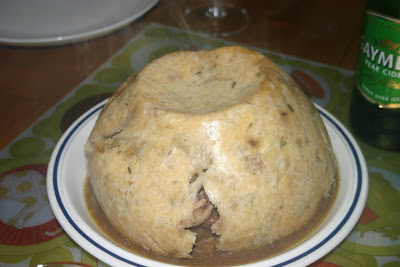
#200 Steak, Kidney and Oyster Pudding. The poshest pudding in the world! It was very, very good though. The beef and kidneys were very tender and the gravy was good and rich. The real revelation was the oysters – at first I wasn’t very sure about them, but it was a taste that was acquired very quickly. They provided a mysterious iodine tang to the whole thing. The original surf ‘n’ turf! The only thing I would change is the amount of pastry – there was barely enough to line the basin, making it split open when it was turned out! 9/10.

#156 Cheshire Pork and Apple Pie

I bought a nice new pie dish last week, so I thought I’d Christen it with a nice big pie for Sunday dinner. I decided upon this Cheshire Pork and Apple Pie because it needed to be pretty quick to do (no cooking of the filling beforehand) as I had to be in the lab in the morning. Plus there was a load of Cox’s Pippins in Unicorn in Chorlton – apparently the last of the stored apples from the previous autumn.

This is a very traditional pie – essentially meat stewed in liquid (in this case cider) under a pastry crust, and comes from Hannah Glasse. It is a little odd in that it has a double crust; I’d have no problems with it if it was cooked in a thick sauce. Surely the pastry lining the pie dish will just turn into a soggy mess? To pre-empt this, I used a previous trick of The Grigson – to place a baking sheet in the oven as it heats, so that when the dish is placed on it, the underside quickly cooks.

First of all make some shortcrust pastry using 10 ounces of plain flour and use two-thirds of it to line a 2 ½ pint capacity pie dish.

To make the filling you need to prepare your pork – you need 2 pounds of boned pork loin. Cut off the rind and trim away the fat with a sharp knife, then slice the loin and chop into chunks. Next peel, core and slice around 12 ounces of Cox’s orange pippins. Then mix 8 ounces of chopped onion together with 4 chopped rashers of cured, unsmoked bacon. Now layer the ingredients in the pie dish: half of the pork, then half of the apples, scatter them with some brown sugar and then sprinkle over half of the onion-bacon mixture. Season each layer with salt and pepper plus some grated nutmeg. Repeat with the remainder in the same fashion. Dot the top with around 2 ounces of butter and then pour on ¼ pint of dry cider. Cover with the remaining pastry sealing and glazing it with beaten egg. Make some fancy pastry decorations if you fancy. Bake for 20 minutes at 220°C, and then turn the oven down to 160°C for a further 45 minutes. Jane doesn’t indicate what to serve with it, but I went with mustard mash and some asparagus.

Check out the arts & crafts spectacular atop the pie!

Oink!

#156 Cheshire Pork and Apple Pie – after much deliberation on this one, I give it 5/10. I think it was pretty average – I wasn’t sure about the amount of liquid in the pie, which after my efforts to prevent it, still made the pastry soggy. I think, it could be easily improved, however by making a roux with the butter and some extra flour and using the cider to make a sauce. I think it would have made this okay effort into a very hearty one that would stick to your ribs, as we say in Yorkshire!

#129 Dartmouth Pie

It was British Pie Week the other week – and I admit I was a bit tardy making a pie in time but better late than never, innit. The trouble was choosing a pie to make, after a quick flick through I went for this Dartmouth Pie (FYI: Dartmouth is in Devon, SW England). There’s two reasons for this; the meat in it is mutton and after the mutton broth and Lancashire hotpot I made I’ve really got into cooking with it. Secondly, the pie itself is interesting. It’s one of the very few survivors of medieval cuisine; they loved their meat mixed with fruit, sugar and spices. Traditionally, minced mutton is used, but you can use venison or chuck steak. The recipe in English Food is an updated version of this dish containing cubed mutton rather than minced – apart from that is not too far from the proper original one as far as I can see.


This pie serves four, but is quite rich so you could get away with five or six:

Trim some cubed shoulder of mutton well so that you end up with a pound of it in weight. Next, make a spice mix using a teaspoon each of black peppercorns and coriander seed, ½ a teaspoon each of ground mace and ground allspice and an inch length of cinnamon stick. Grind all the spices down – I use a coffee grinder for such things, if you don’t have one use a pestle and mortar. Salt the meat and brown it using 2 ounces of beef dripping in a pan that is ovenproof. Add the spices and fry them gently for a couple of minutes. Add 8 ounces of sliced onions and 1 ½ teaspoons of flour and give it good mix around. Add ½ pint of beef stock (Griggers says you can also use veal or venison stock; oh la-dee-dah!). Now the sweet element – stir in 2 ounces each of dried prunes, apricots and raisins; and to counteract the sweetness the juice and rind of a Seville orange (or, alternatively, a sweet orange plus lemon juice). She doesn’t say whether you chop up the rind or just add it to take out later. I chopped it up like you would for marmalade, but it did make the resulting sauce slightly too bitter; this was resolved by the addition of some sugar to taste later. Bring the mixture a simmer, cover and bake in a low oven – 140°C – for 2 hours (or more if you like). Taste and check for seasoning, transfer to a small pie dish and allow to cool; skimming any fat away that may appear.

Make a shortcrust pastry using 8 ounces of flour, 4 ounces of fat (I used half-lard, half-butter), salt and milk to bind. Cover the dish as normal and decorate the pie with the trimmings. Butters and I had fun making apricots, leaves and a wee sheep to go on it. Brush with beaten egg as a glaze and bake for 25-40 minutes at 220°C until the pastry is cooked and golden brown.

Check out the artwork

#129 Dartmouth Pie – 7.5/10. A very good pie indeed. Very sweet and rich but went brilliantly with some relatively bland mash and minty peas. The medieval flavours were not alien – I can see why this one survived (and others where fish is used instead of mutton didn’t). As I’ve mentioned before, the secret is the slow-cooking; the resulting meat was so tender, you hardly had to chew and the fruit had become a dark bitter-sweet mush. Lovely. If I owned a restaurant, I’d have it on the menu!