#366 A Fine Way to Pot a Tongue

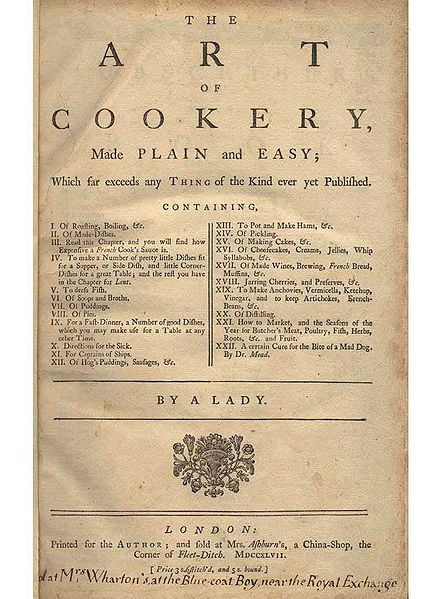
Jane Grigson gives this recipe no introduction or explanation, but one can tell from the title that this was an old recipe. It consists of a tongue inside a boned chicken that covered in butter and baked. After a quick sift through the cookbooks, I found that it is adapted from a recipe of Hannah Glasse’s that appears in the 1774 book The Art of Cookery, and the original is a little more ostentatious:

‘Take a dried tongue, boil it till it is tender, the peel it; take a large fowl, bone it; a goose, and bone it…Put the tongue into the fowl; then season the goose, and fill the goose with the fowl and tongue, and the goose will look as if whole. Lay it in a pan that will just hold it, melt fresh butter enough to cover it, send it to the oven, and bake it an hour and a half…this will keep a great while, eats fine, and looks beautiful. When you cut it, it must be cut cross-ways down through, and looks very pretty…’


It resembles recipe #322To Make a Goose Pye.


Here’s Jane’s recipe (in my words):

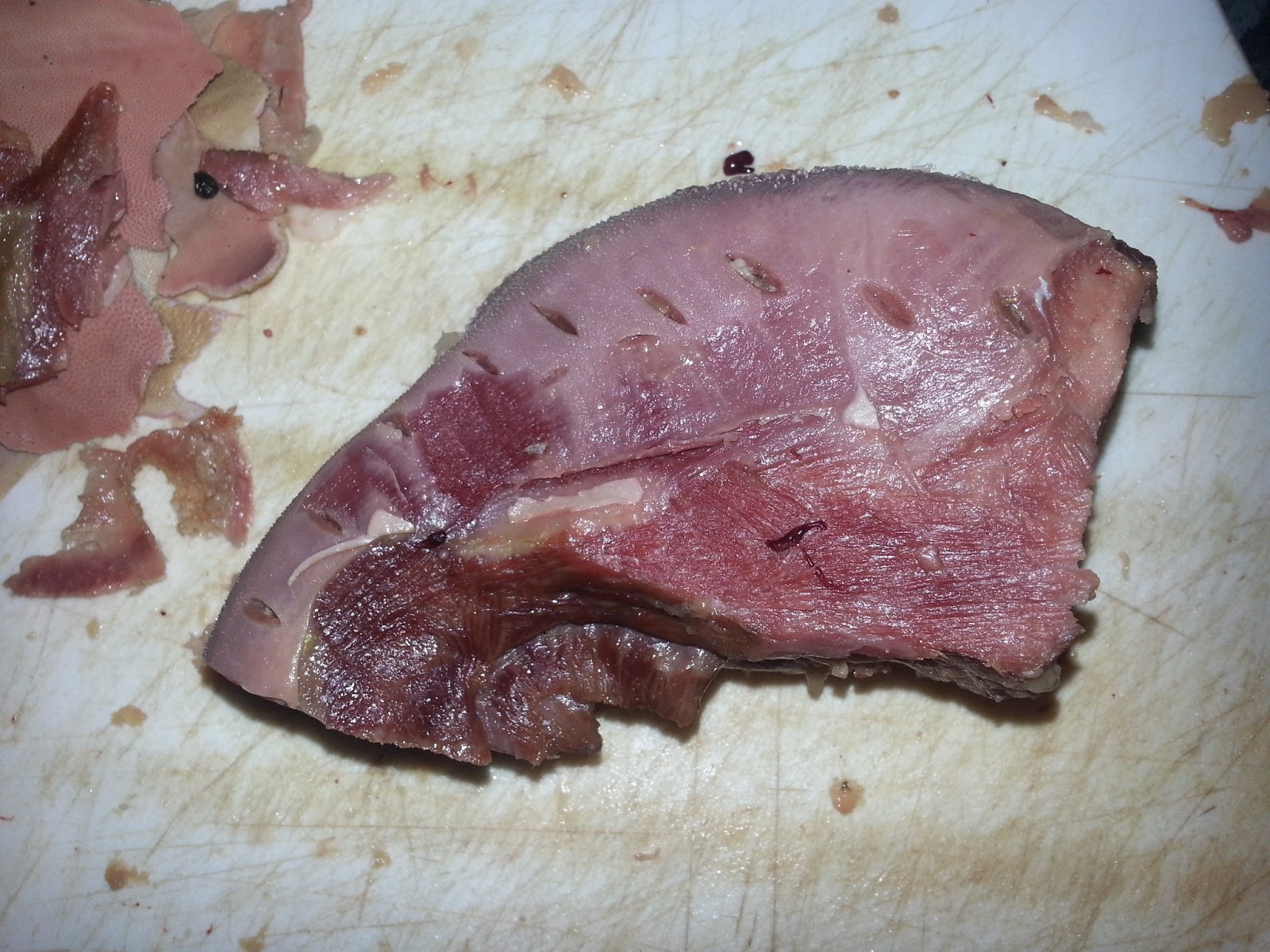
First of all you need to tackle your pickled ox tongue – you can buy these from your butcher pretty cheaply as I did this time, but you might want to have a go. I usually do this but the butcher didn’t have any fresh (which is understandable seeing as very few people buy them nowadays). Have a look at the post #150 How to Cure Meat in Brine for some guidance on this. Once pickled, you need to poach your tongue for 2 to 3 hours and then peel it. You don’t need to press it or anything, but see #258 Boiled Ox Tongue: To Serve Coldand #331 Boiled Ox Tongue: To Serve Hotfor more information on this.
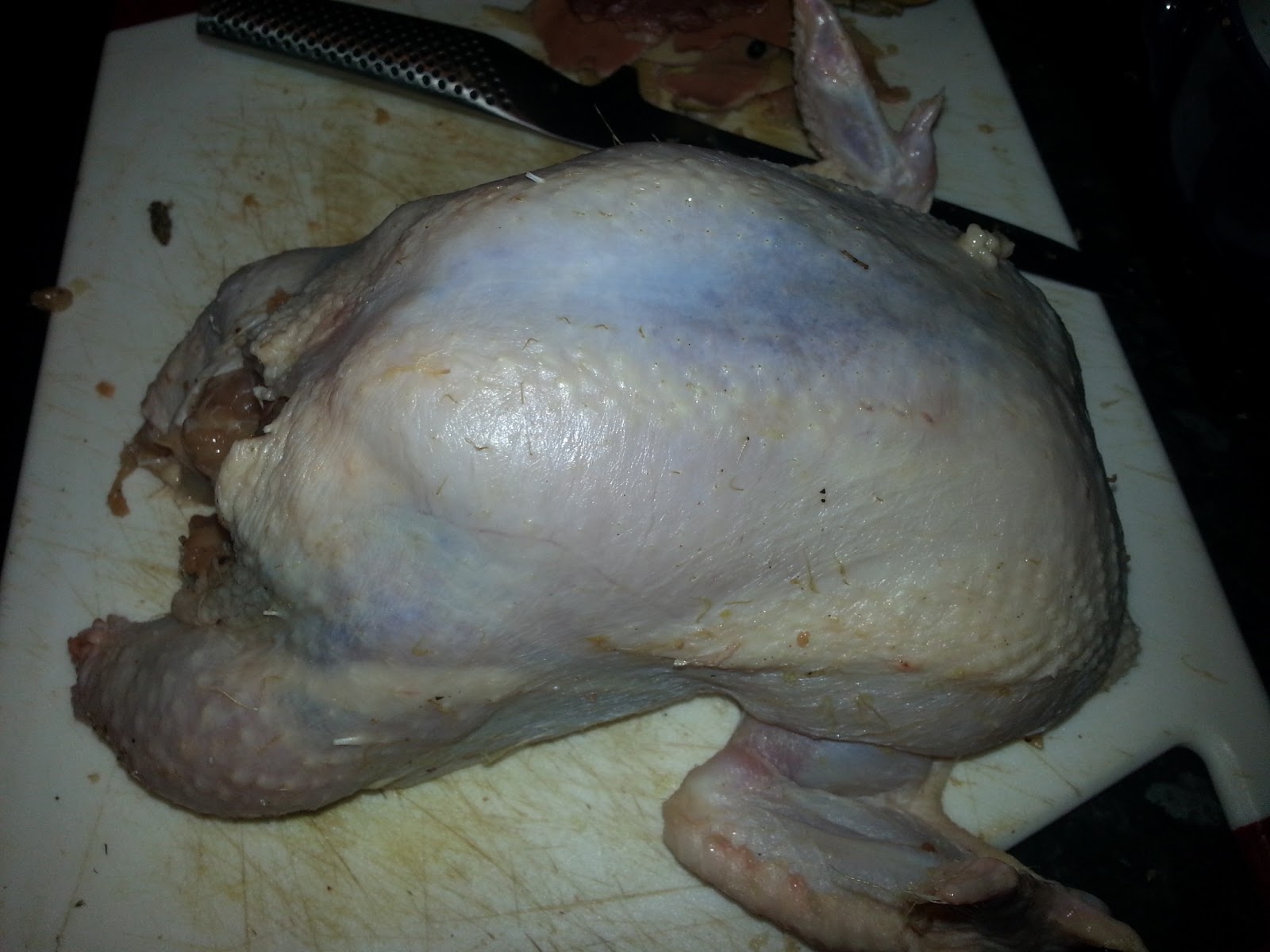
Next, bone a 5 to 7 pound chicken. This isn’t as difficult as you think. I’ve given instructions already on how to do this in the post #322 To Make a Goose Pye. In fact this is easier because the chicken can be first split down the back with poultry shears or a hefty knife. Of course, you could ask your butcher to do it – you might have to flutter your eyelashes a little though!
Now trim your tongue, cutting off the root to remove gristle and the front portion of the tongue so that it will fit snugly within the cavity of the bird.

Before you fit it, make a spice mix from the following: a teaspoon each of ground black pepper, ground mace and ground cloves plus ½ a freshly-grated nutmeg and a level dessert spoon of sea salt.

Flip the bird over with the cut side facing you and rub in around two-thirds of the spice mix into the cavity, then place the tongue inside and wrap it in the chicken. Quickly but carefully turn the bird over to produce a surprisingly normal-looking chicken. Pop it into a close-fitting ovenproof casserole dish and rub in the remainder of the spices.


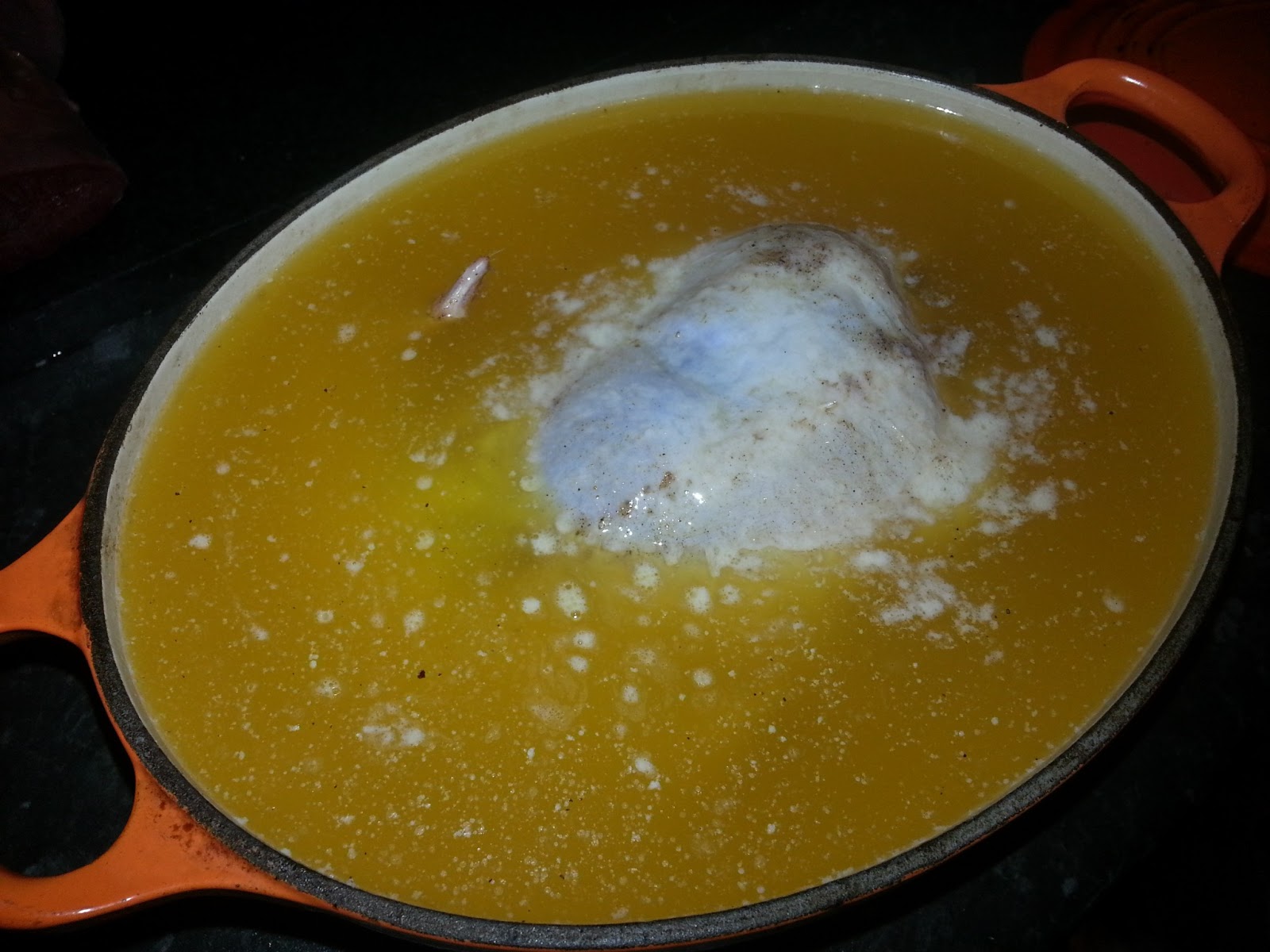
Now get on with gently melting the butter – the amount you need will depend upon how well the chicken fits into its pot. I needed four 250g packets of butter in all – that’s 2 ¼ pounds approximately. Once melted, pour it over the chicken so that it just covers it.


Pop on  a lid and bake at 200⁰C (400⁰F); if your casserole is very full, as mine was, it’s a good idea to put a roasting tin on the floor of the oven as the butter will bubble hard. When it is bubbling and boiling, turn the heat down to 180⁰C (350⁰C) and bake until cooked through. After 45 minutes see if the chicken is cooked: use either a meat thermometer (the meat should be a temperature of 73⁰C, that’s 163⁰F) or a skewer and check for any pink juices. If it’s not quite done, bake for another 10 minutes before checking again.
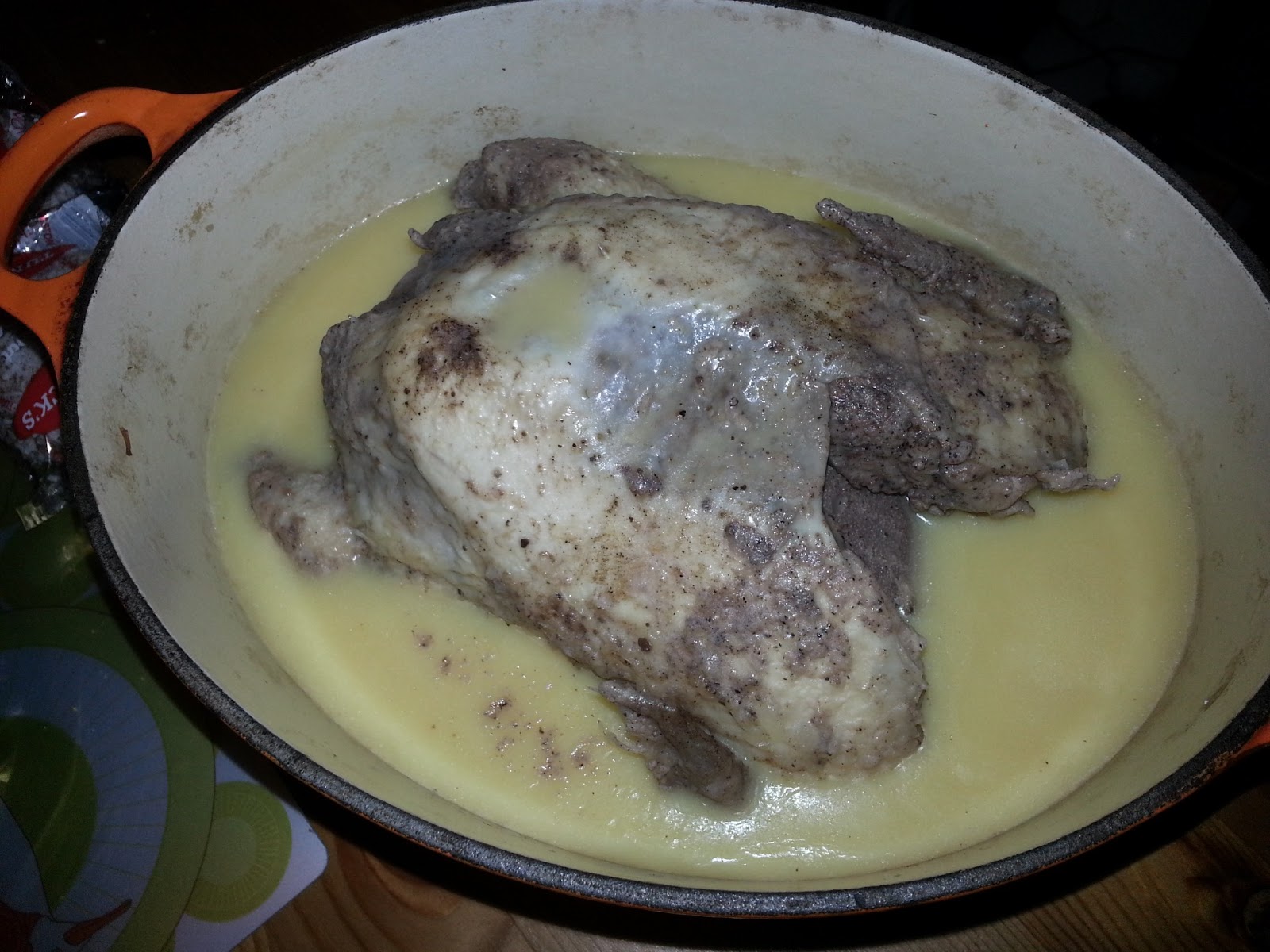
When cooked, gingerly take the chicken out so it can drain on a rack and pour the butter and meat juices into a bowl. Let everything cool before boiling the butter up in a pan – however, make sure none of the juices go in. Put the chicken back in its pot and tip over the butter.


You need to leave chicken for at least 36 hours before slicing it and eating with wholemeal bread spread with the spiced butter. If you want to leave it longer than 36 hours,  add more butter to fully cover the chicken.
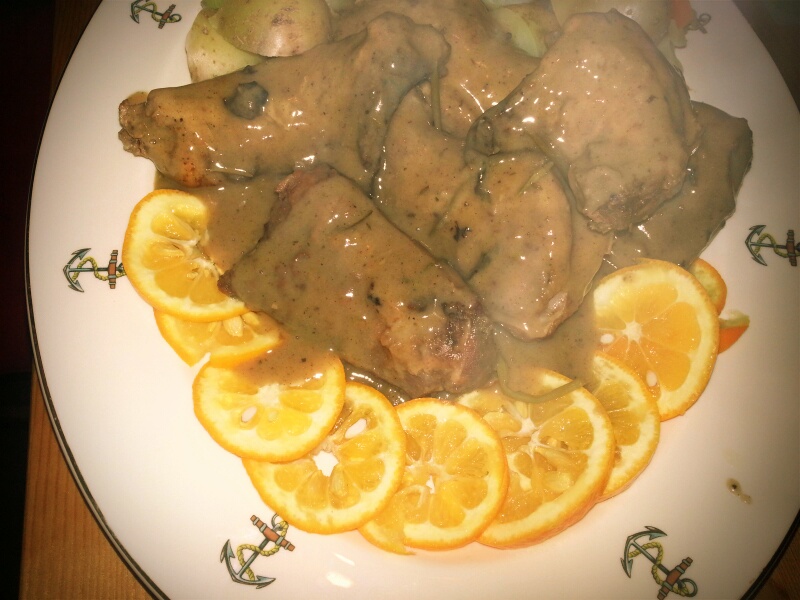
#366 A Fine Way to Pot a Tongue… and what a fine way it was indeed!  The tongue was salty and tender with blander spiced chicken that actually balanced it very well. The spiced butter was unbelievably tasty. Three cheers for Hannah Glasse! 9/10


#365 Roast Venison with Norwegian Goat’s Cheese Sauce

Venison is, of course, the king of all game, though being a wild animal, you do get a lot of variation in the tenderness of meat; it can be wonderfully tender or tough as old boots. A good roasting joint for venison is haunch as it is a more tender cut. To tenderise further it is advised to marinade any joint for at least 24 hours.
Colonel Smith Grasping the Hind Legs of a Stag,
Unknown Artist c.1650
It may be the king of game, but many recoil in horror at the thought of eating deer, perhaps it is a little too noble; even when farmed meat was heavily rationed during World War II, many people still would not eat or buy it, even though game wasn’t rationed at all! Well it is important to know that we would still have to cull many hundreds every year as they decimate forests by eating away the bark from trees. Deer (fortunately for us, unfortunately for them) have to be managed; now what a waste it would be if they were just all incinerated! A similar thing goes on in some African countries where elephant conservation has been a little too effective.
I have eaten venison many times, but I had never roasted it myself, so I was very glad that Jane walks you through the whole process; she, in turn, taking advice from a lady called Anne Willan who wrote a book called The Complete Guide to Cookery.
That said, there seems to be a major typo or two in this recipe and I can’t work out for sure what it is supposed to say; apparently this serves up to 2, yet a 5 pound joint is required. Now I like my food, but even 5 pounds – or indeed 2 ½ pounds – of meat in a sitting is bit too much. Look closer and, according to the recipe, the metric equivalent of 5 pounds is ½ a kilo, which is approximately one pound. How many does it serve? Up to 2? 12? 20? what!? If anyone has an earlier reprint or edition, have a quick look and see what it says and then leave me a little comment. I thank you in advance.
I made this for Christmas dinner #2 in Manchester, and I took the recipe to mean 5 pounds and not half a kilogram. I managed to get a second dinner the next day as well as several rounds of venison sandwiches and 5 pies for the freezer – that beats turkey leftovers any day.
Well it is up to you to decide how many this serves, but reckon it’s about 10 people as venison is a rich meat (as is the sauce).
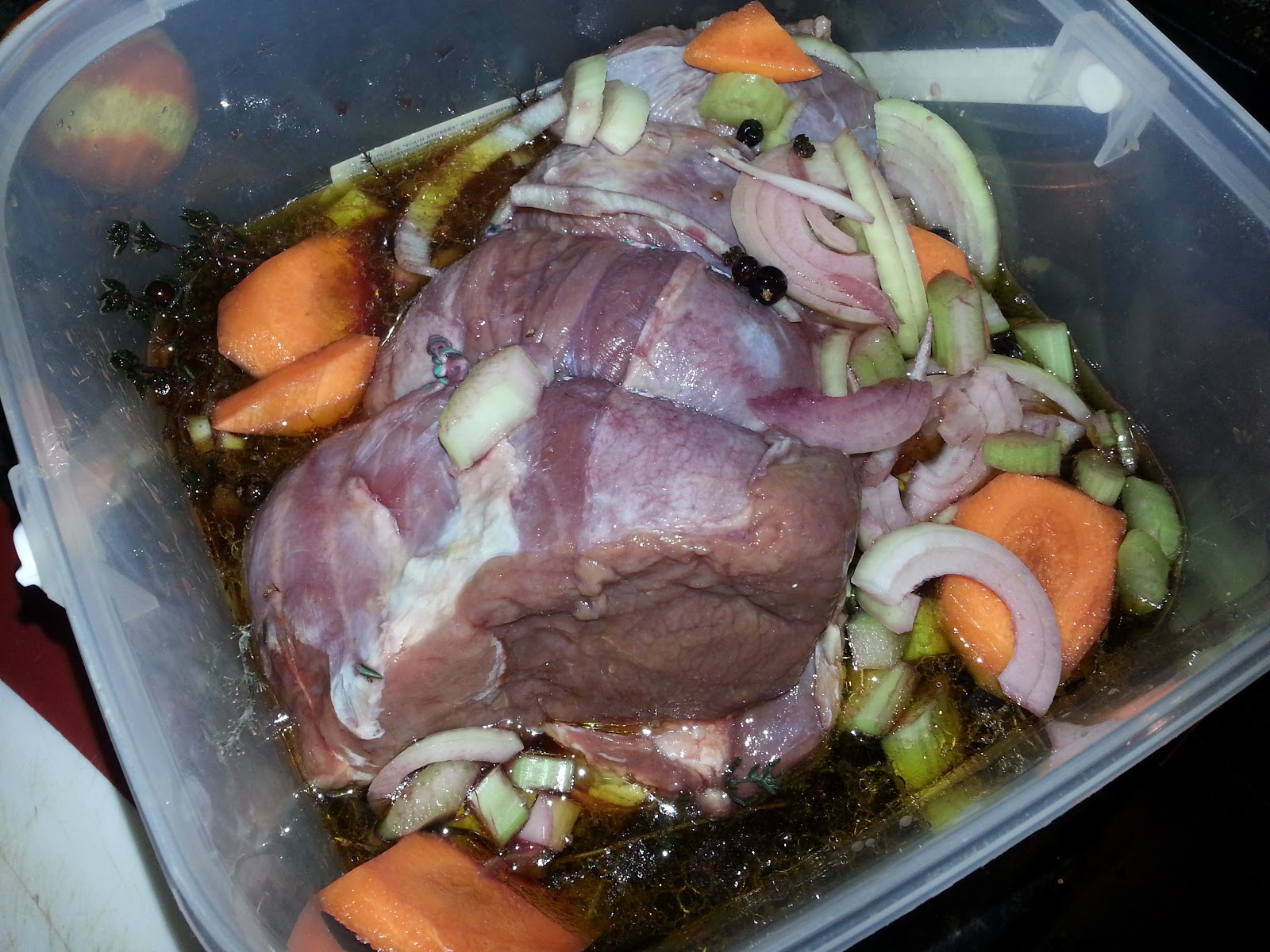
The first thing to do is marinade your five pounds of venison, the amount of time depends on the size of your joint and if your deer was truly wild or ‘farmed’. If truly wild and/or large, a cooked marinade is required, if small or farmed – and therefore already quite tender – an uncooked marinade. The joint can sit in the uncooked marinade for around 24 hours, and in the cooked marinade up to 3 days. For me, time was an issue so it went for the uncooked marinade.
To make the uncooked marinade slice up a carrot, two onions and a stick of celeryand place in a bowl or tub along with a bottle of red wine – ‘respectable and decent rather than glorious’ – four fluid ounces of red wine vinegar, a bouquet garni, a dozen of both peppercorns(lightly crushed) and allspice berries, and finally four fluid ounces of olive oil.
For the cooked marinade, stew the veg in half the olive oil and then add the rest of the ingredients mentioned above and then simmer for 20 minutes before stirring in the rest of the oil. Allow to cool.
After the meat has marinated in its marinade sufficiently, it’s time to roast it. First, preheat the oven to 220⁰C (425⁰F) then remove the meat from the marinade and pat it dry; the meat should feel wonderfully tender and it should have picked up a wonderful purple hue from its soaking in all that red wine. Don’t throw away the marinade.
Calculate the cooking time: you need to allow 10 to 15 minutes per pound for rare meat or 18 minutes per pound for pink medium meat. I won’t give you the time for well-done – you don’t deserve to eat this beast you are going to cremate it! Spread the joint liberally with butter; the lean meat needs all the help it can get to prevent it drying out. Indeed, I went a bit further by wrapping the buttered joint in caul fat. Place the meat on a rack over a roasting tin and pop it in the oven.
After 15 minutes, pour 8 fluid ounces of the marinade and 4 fluid ounces of beefor game stock into the roasting tin and turn down the heat to 180⁰C (350⁰F) for the remainder of the roasting time. Baste it regularly and add extra marinade or stock should the pan become dry. You can, if you fancy, spread 2 generous tablespoons of soured cream over the joint when the heat is turned down.
If you want to be precise about your cooking you can test the temperature with a thermometer: you want a temperature of 51⁰C (125⁰F) for rare and a temperature of 60⁰C for medium-cooked meat. When ready, keep the meat warm, covered in foil to rest for at least 30 minutes whilst you get on the making the cheese sauce.
When I first saw this recipe I thought that Lady Grigson had gone a little too far by including a Norwegian cheese in one of her recipes; however after tasting the cheese in question – gjetost – I was instantly converted. In short, to make it, goat’s cheese goes through a similar process that sweetened condensed milk goes through when it is boiled to produce caramel. The resulting cheese is a rich brown cheese that is a sweet as it is sharp. I got hold of some at Cheese Hamlet, Didsbury, Manchester, but you can get it on the internet very easily.
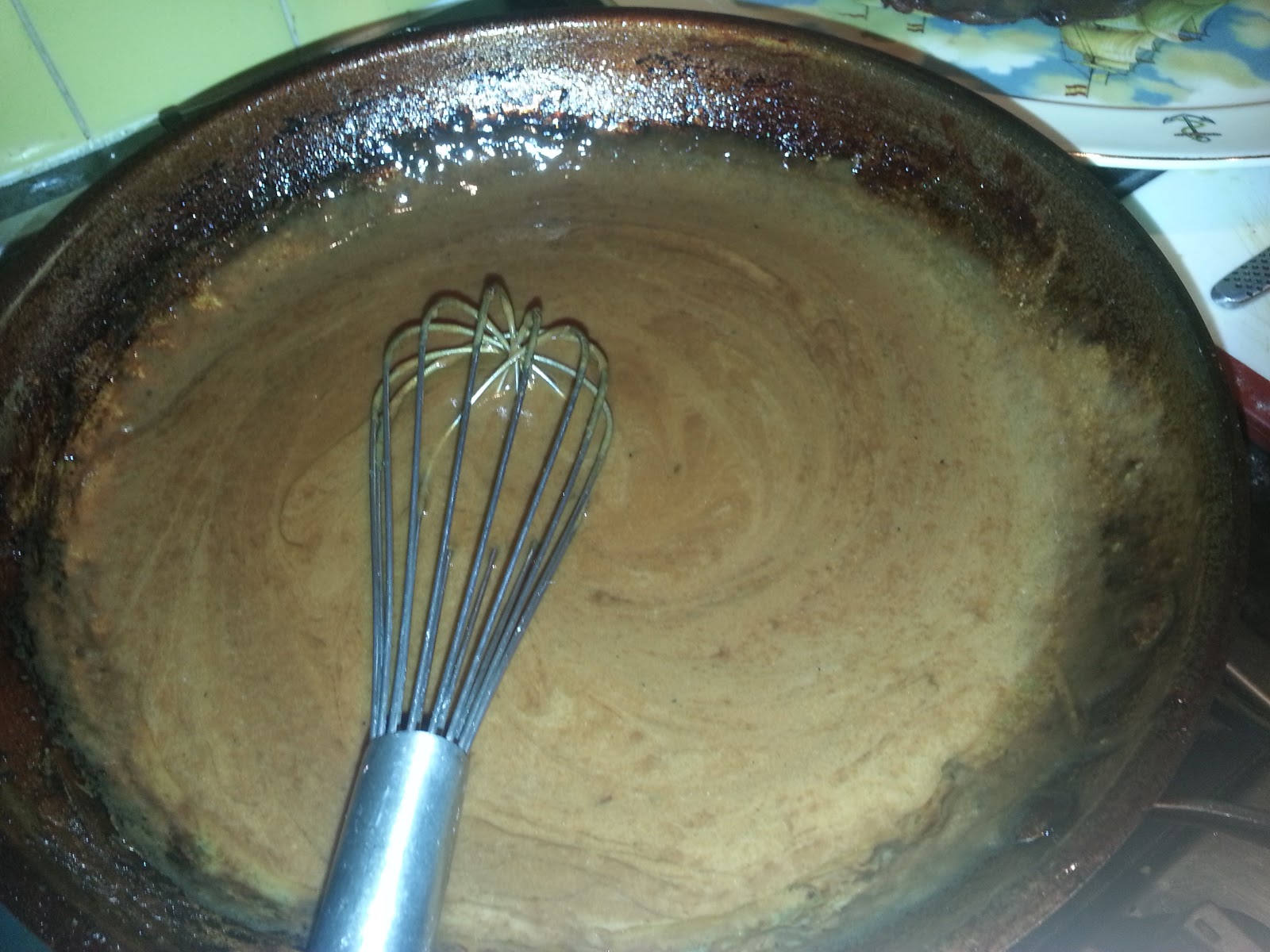
Carefully skim the roasting juices of their fat and pour them into a pan along with 8 fluid ounces of beef or game stock, boil and reduce to a good concentrated state, add more of the reserved marinade so that you really concentrate flavour – “it should be really strong” says Jane. Stir in 8 fluid ounces of crème fraîche or 4 fluid ounces each of double and soured cream and then season with the gjetost cheese and rowan jelly or peppered redcurrant jelly (or indeed normal redcurrant jelly well-seasoned with black pepper). Cut a little under an ounce of the cheese into thin slices and melt into the sauce, then the jelly. Taste and add more of either if you like and season with salt and pepper. You are left with a brown, sticky, richly-flavoured sauce.
Put the joint on a serving dish and cover it with some sauce before carving it. Serve the rest of the sauce in a separate jug or sauceboat.
#365 Roast Venison with Norwegian Goat’s Cheese Sauce. This was a most delicious recipe – the haunch of venison was beautifully tender with just the right amount of gaminess; you can see that the marinade had really done its work. I was worried that the strong, thick, dark brown sauce would over-power things, but it went so, so well. Now large joints of venison are not exactly what you are likely to be roasting for Sunday dinner, but if you do happen upon one and buy it, then this is the one recipe to try! 9.5/10.
 

#363 Widgeon and Teal

Yet another game recipe – I am trying to get through as many as I canbefore the end of the game season!
Widgeon

I have already cooked mallard a couple of times and happening upon some teal in the butcher allowed me to try a new type of duck, which is a very hansome little dabbling duck (I cooked widgeon for the previous post Braised Wild Duck with Apricot Stuffing). This now just leaves snipe and ptarmigan and I’ll have eaten all the legal game species in Britain.
Teal
 

As for many of the recipes in this section, Jane provides but mere guidance. Here’s the recipe as given in English Food:

Widgeon and Teal

(see Mallard)

roast: 10-25 minutes, mark 7, 220⁰C (425⁰F)

inside: liver mashed with butter, parsley and lemon

serve with: as wild duck [I assume she means mallard here]. On fried bread put under the bird at the end of roasting

The cooking time here is rather vague because of the size difference between the two types of duck.; teal is the smallest duck in Britain and widgeon is of a middling size. I roasted the teal for 15 minutes and stuffed them only with only seasoned butter. There was a thin layer of fat covering the breasts so I merely smeared them with more softened butter. Annoyingly, I forgot to fry the bread. I made a gravy from the juices by whisking a tablespoon of flour into them along with some chicken stock added in stages and a spoonful of redcurrant jelly.

#363 Widgeon and Teal. I am getting such a taste for game these days. These little teal were great – dark-fleshed but not too gamy. There is also something very satisfying about having a whole bird sat on your dinner plate; positively medieval. 8/10

#362 Braised Wild Duck with Apricot Stuffing

Gadwall ducks
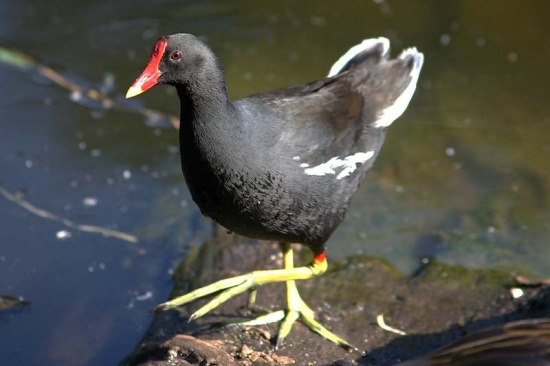
This recipe requires a couple of wild ducks – any will do, Jane does not give specifics. There are only three kinds to choose from – mallard, widgeon and teal – this was not always the case, there used to be many legal game species of duck and waterfowl. The list includes shovelers, gadwalls, pintail ducks, shelducks, mergansers, swans, cygnets and moorhens. Some of those species are still shot for food in other European countries.  
Moorhen
 Iwent for widgeon, which is of a middling size with each feeding one to two people. I had never eaten widgeon before and was looking forward to it after the delicious mallard recipe I cooked last Christmas (#323 Salmi of Game). The widgeon is a relatively common duck, though being much less gregarious than the ubiquitous mallard they are easily overlooked as they hang around in the centre of the lake alone or in small flocks. If you are using the tiny teal, I would use three or maybe four for this recipe.

Widgeon

Inside the ducks there is a stuffing made with dried apricots from the Middle East. These are not the typical squidgy ones found alongside the currants and raisins in the grocers; they are tiny and whole and dried completely solid with their stones intact. They can be found in any good Asian grocer’s shop.

Once you have procured your ducks and apricots you can get going…

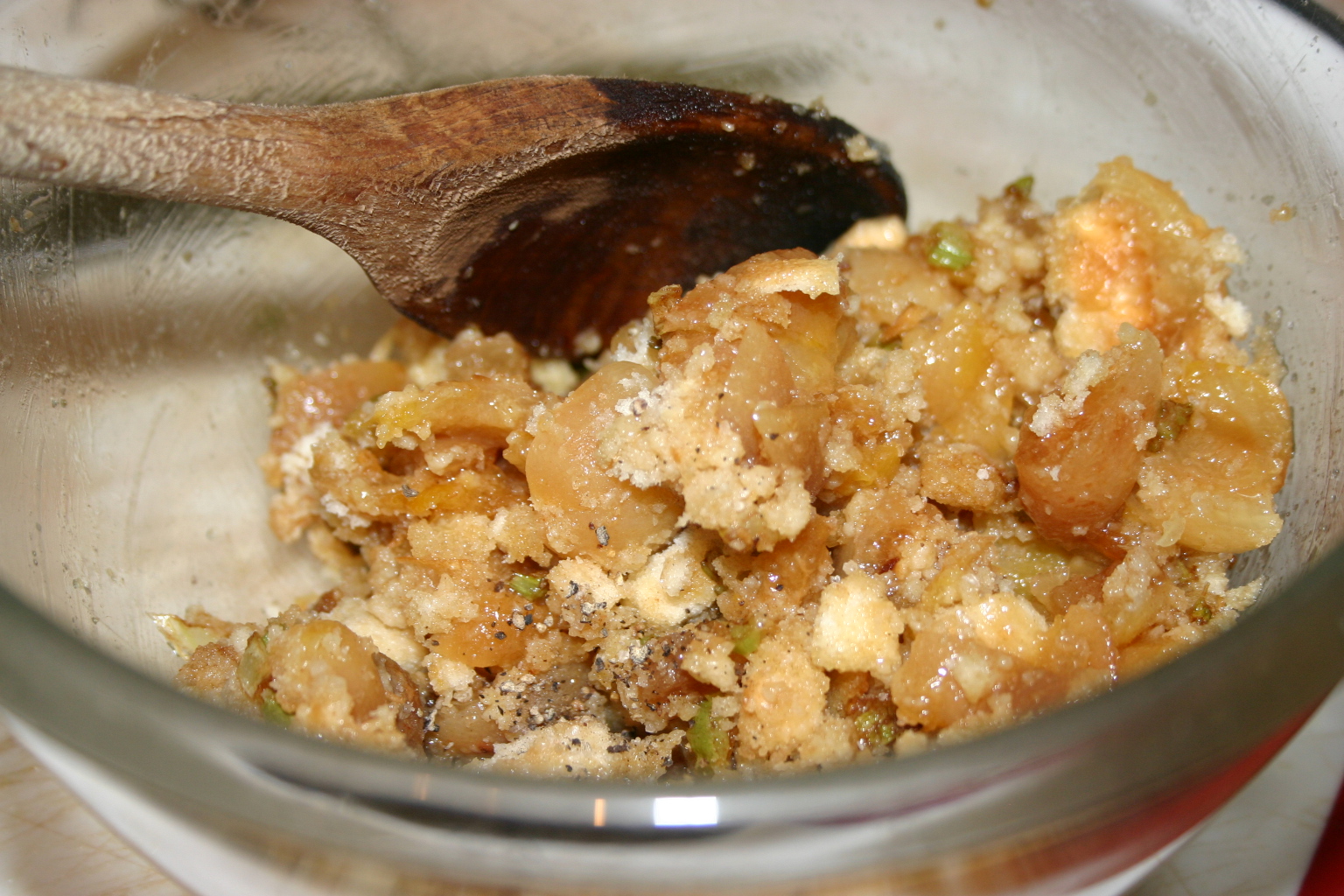
The night before you want to cook your duck, soak three ounces of dried apricots in water. To make the stuffing, remove the stones and roughly chop the flesh of the apricots before cracking the stones to get to the kernels*. Next finely chop enough celery stalksto yield two healthy tablespoons worth and fry it gently in two ounces of butter for about 10 minutes until almost tender. Mix the celery and butter into the apricots along with two ounces of breadcrumbs made from slightly stale bread. Season well with salt and pepper and loosely stuff two wild ducks with this mixture.

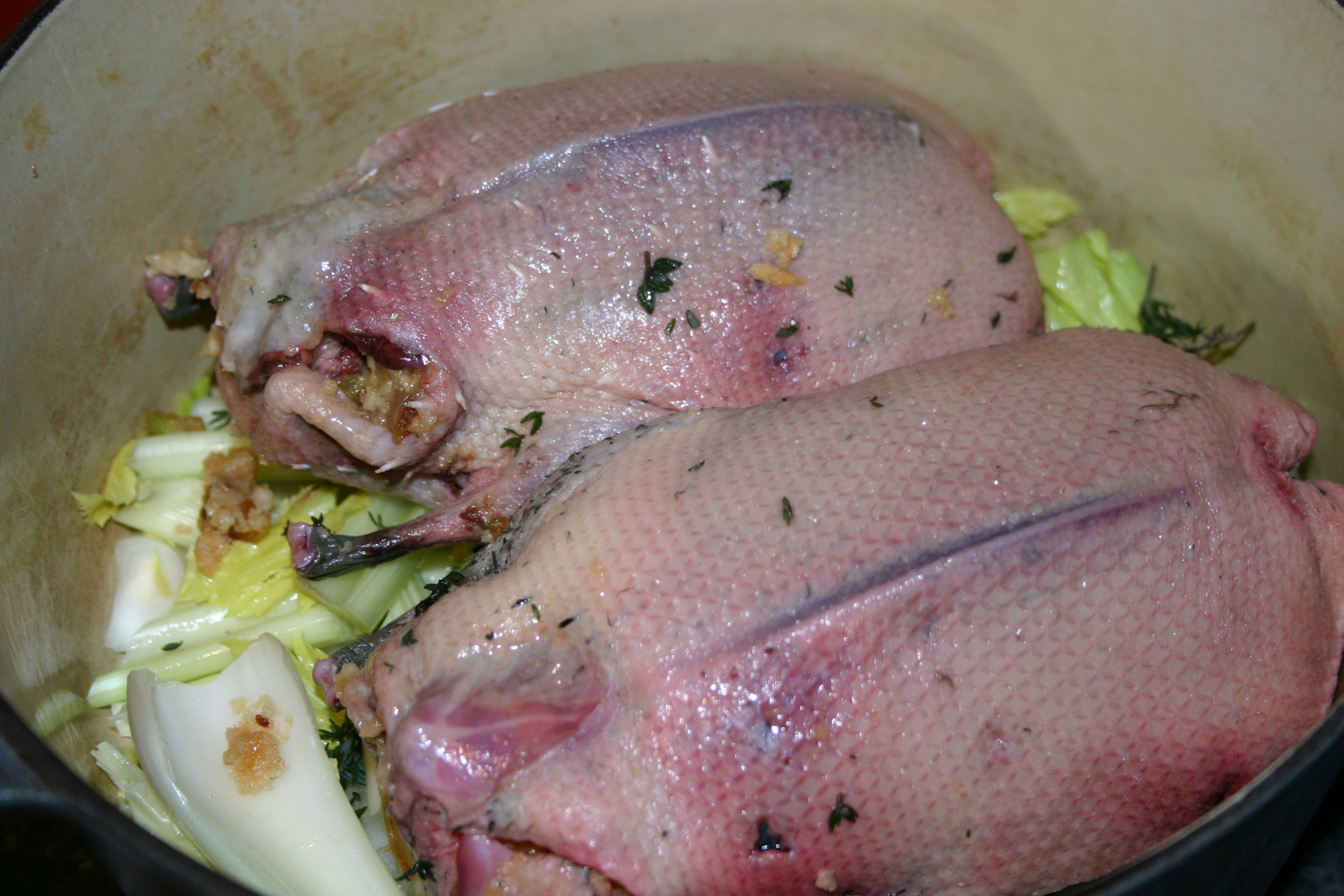
Next prepare the ducks’ cooking vessel for braising by placing half a sliced onion, half a teaspoon of thyme leaves and three stalks of celery in the bottom of a deep casserole dish. Jane is quite specific that the celery stalks must from the heart of the head of celery. Place the duck on top and pour in enough boiling water to come about half an inch up the side of the ducks. Pop the lid on and cook in a ‘slow oven’ (about 160⁰C, or 325⁰F) for about an hour. Check to see if you need to top up the water, then cook for a further 30 minutes.

When the duck is ready, remove it and place it on a warm serving plate. Strain the liquor into a saucepan and reduce it to produce a good, well-flavoured sauce. Season and thicken by mashing together a tablespoon of flour with an ounce of butter. Whisk in small knobs of this mixture until the sauce is of the desired thickness. If you like a tablespoon of bitter orange marmalade or redcurrant jelly can be dissolved in the sauce.

Pour some of the sauce over and around the ducks, serving the remainder of it in a jug or sauce boat.

#362 Braised Wild Duck with Apricot Stuffing. I enjoyed the duck and the sauce very much; the braising kept the duck tender and moist and produced a wonderfully flavoured stock. The apricot stuffing was ok, but a little insipid. I think I would have preferred make a forcemeat or sausage meat stuffing that could have been made into balls to surround the ducks. Still, very good, 7/10.

#359 Rabbit

Clarrisa Dickson-Wright was on the telly yesterday as part of the BBC2 series The Great British Food Revival where various chefs and food writers highlight British foods that have fallen out of favour and are in danger of falling completely out of use. Needless to say, I approve. Ms Dickson-Wright’s food of choice was the humble rabbit.

Why has it fallen out of favour? There are two main reasons really – there’s the ‘Fluffy Bunny Brigade’ as Clarissa calls them that couldn’t possibly eat something fluffy and cute. This opinion is fine if you are vegetarian or vegan. Otherwise it’s a great double-standard. Another reason is the association with myxomatosis virus – a deadly bug that killed off 99% of them. It’s under control now, but mud sticks.

I think there are other reasons too: rabbit is thought of as poor people’s food, and people also have a problem with eating wild animals. Well the bottom line is that rabbits are a huge pest (they are not indigenous to the UK) and need to be controlled. In fact they are one of only two official game species, along with wood pigeon, that do not have a hunting season. We are over-run and they must be killed in order to manage the countryside efficiently.

It is for this reason that they are relatively cheap, and because they are wild they are truly organic and free-range and low fat too.

I coincidently cooked a rabbit recipe from English Food the other day. It’s less of a recipe and more of a suggestion really with very sparse instruction. Here’s the full entry:

Wild Rabbit

roast: 1 hour, mark 6, 200C (400⁰F)

serve with: see hare [redcurrant jelly, port wine sauces…]

Here’s what I did to roast the rabbit:

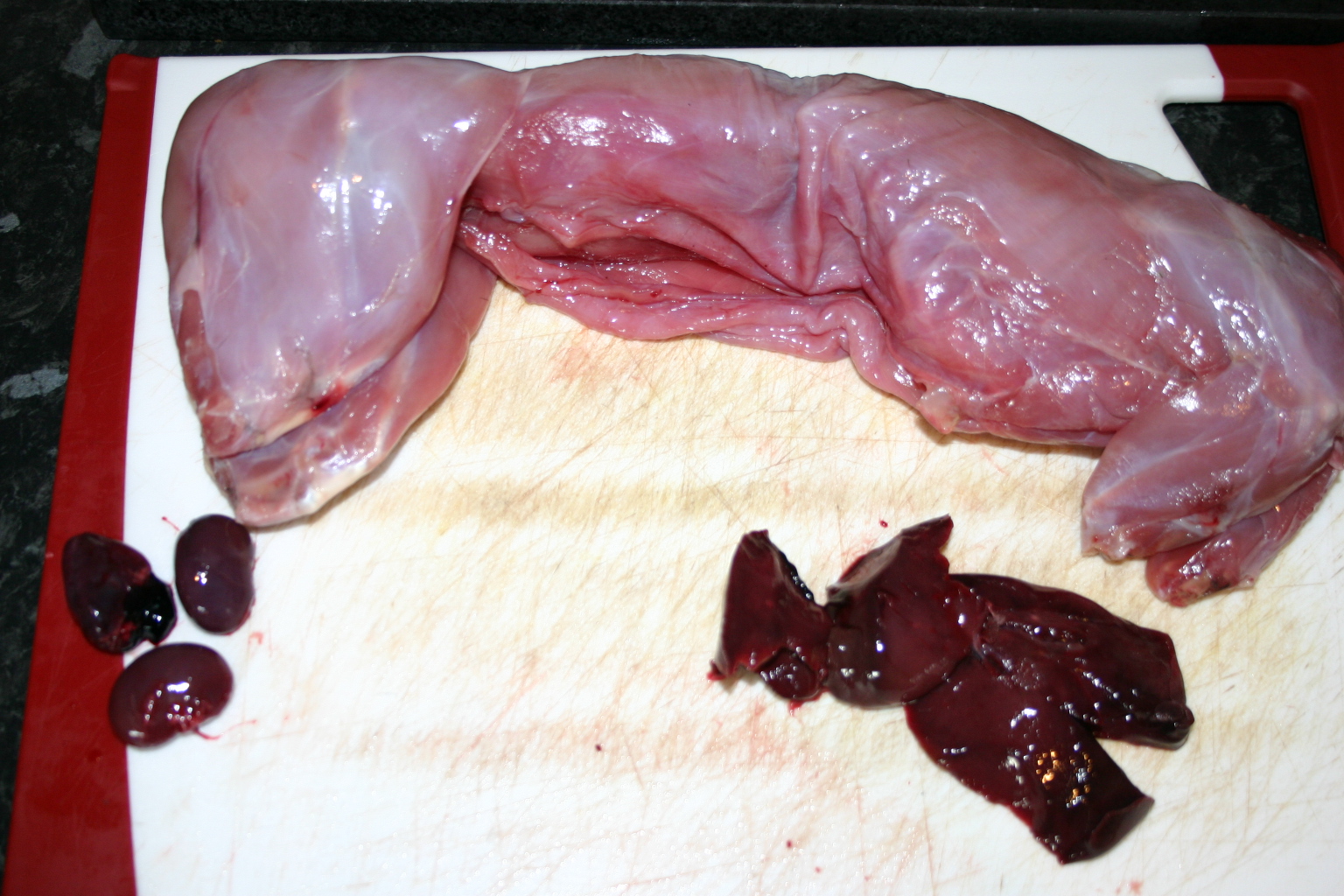
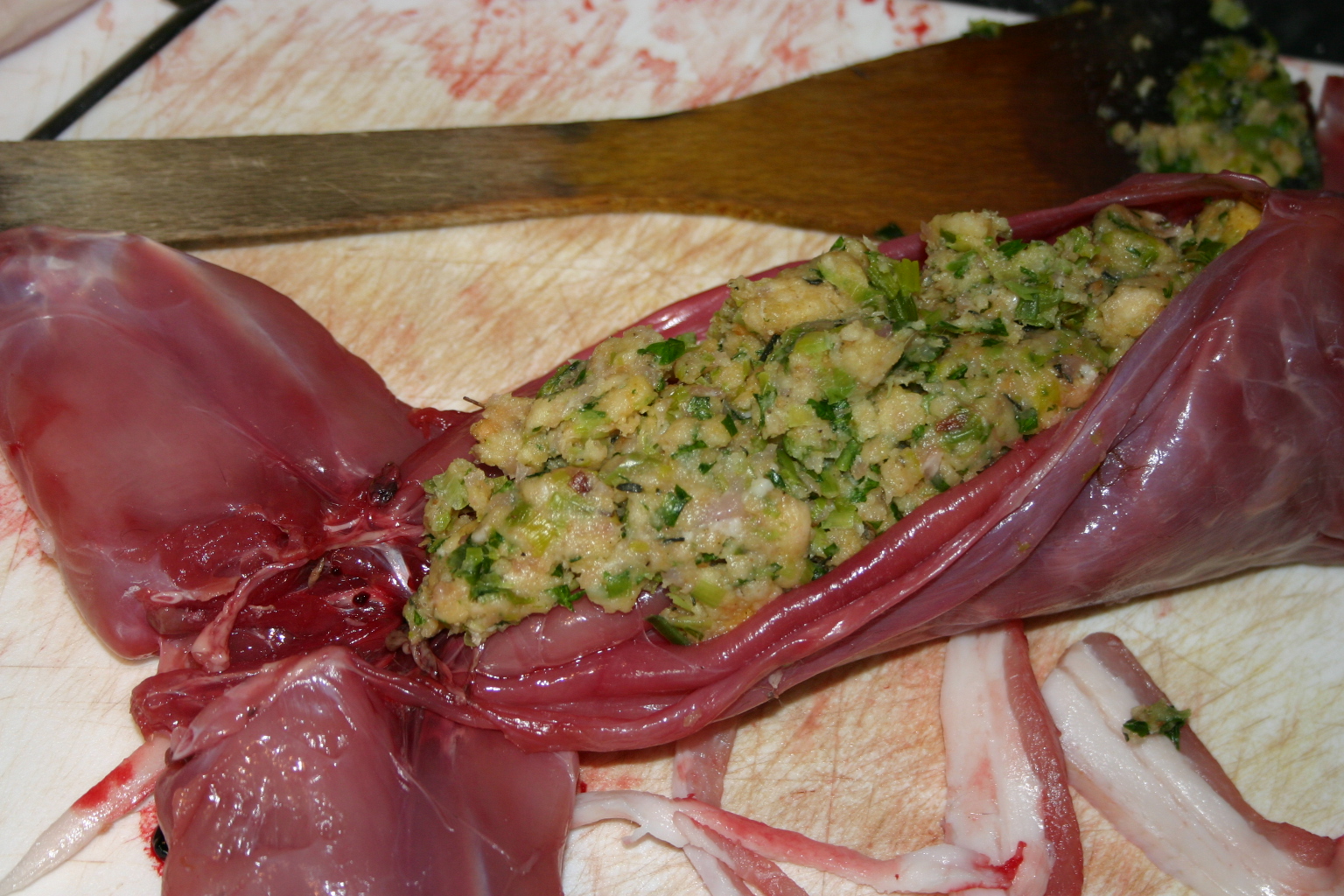
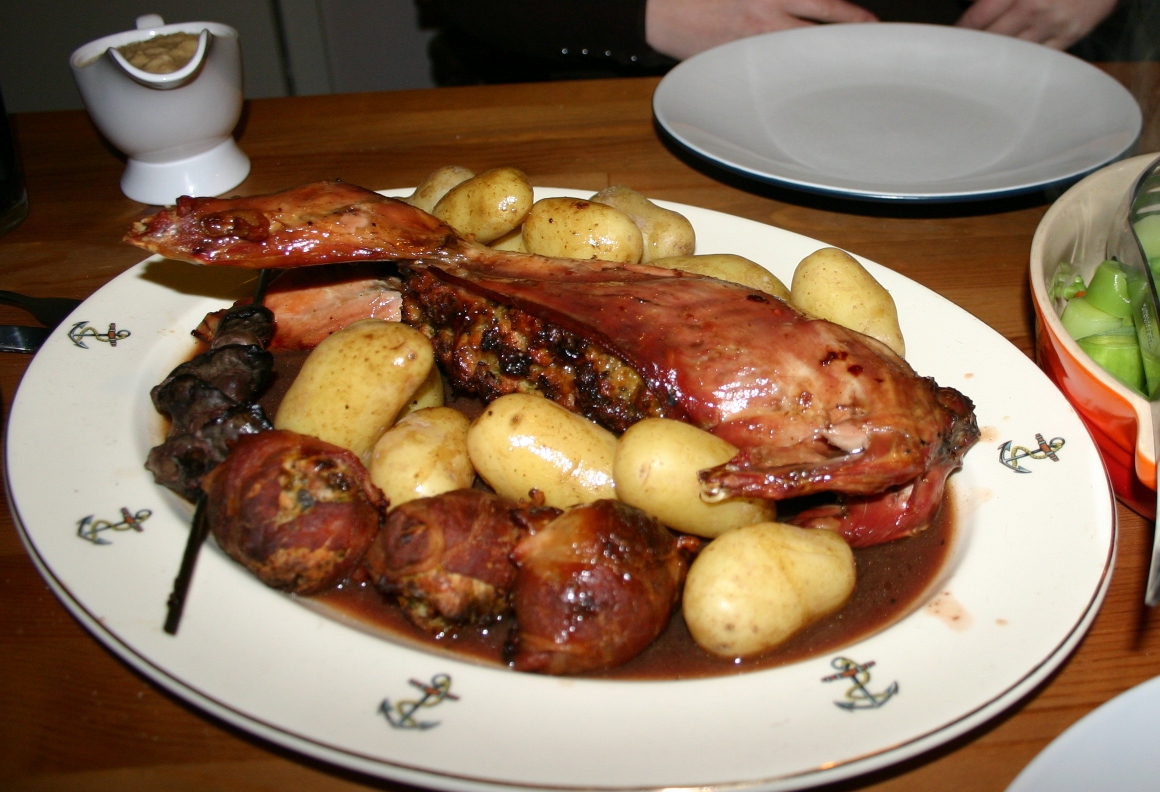
First up is to prepare your rabbit – you should find inside the kidneys, liver, heart and lungs. Remove those. If you like you can chop the liver and use in the stuffing. Instead, I made a little offal kebab from the heart, kidneys and liver. Then I larded the rabbit’s legs, loins and saddle with some thin slices of back fat. You can buy a special larding needle for this job but I used a skewer (it was a bit of a nightmare so I have bought myself a needle for next time). I then seasoned it inside and out and loosely stuffed it with the herb stuffing (see herefor the entry for that) before placing it in a roasting tin with a jacket of back fat. You could use streaky bacon if you’d prefer.

Then it was straight into the preheated oven for an hour.

I had some stuffing left over so I rolled that into small balls and wrapped them in some smoked bacon. I popped those in for the final half hour until brown and crisp.

When the hour was up, I took the rabbit out of the oven and let it rest on a serving plate and covered it with foil. I then got to work on making some gravy. I put the roasting tin on the heat and deglazed it with a splash of red wine and then some chicken stock and a tablespoon of redcurrant jelly. After it reduced and started to thicken, I took it off the heat and whisked in a couple of knobs of butter to thicken it further and give the sauce a nice shine.

Hey-presto! A roast rabbit!

#359 Rabbit. Well I enjoyed preparing this one and it did look like something from a medieval feast when it was finished. The flavour was good, though it was on the dry side; my rabbit was a young one I think and perhaps could have done with 45 minutes. Nevertheless, a tasty and fun meal to eat, though not quite as good as the rabbit pie. It did make delicious soup the next day though! 6.5/10.

#353 Roast Rack of Lamb with Laverbread

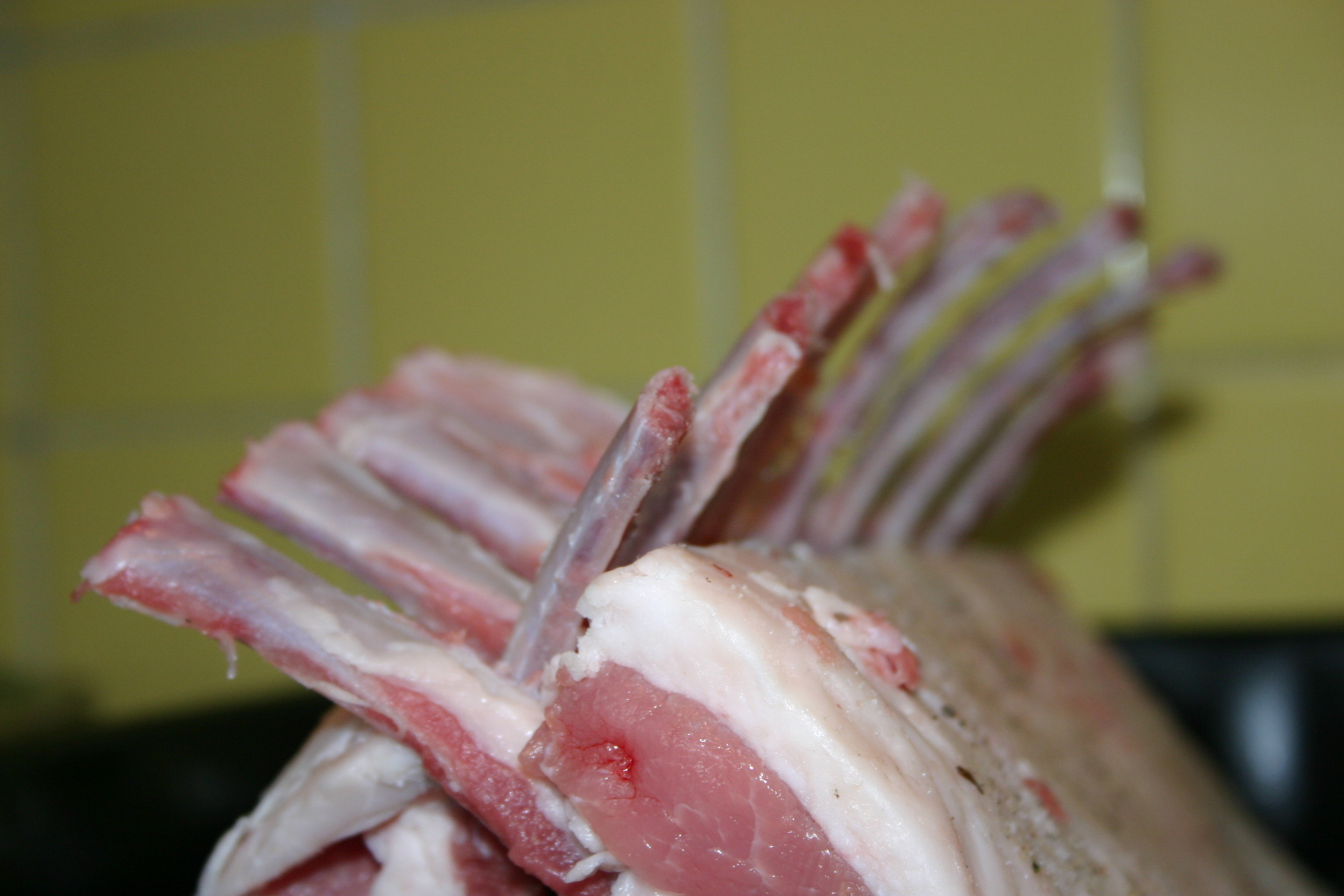
A second post involving the Welsh speciality laverbread; a deep green gelatinous sauce made from well-stewed seaweed known locally as laver (see the previous post). I still had some left over for this recipe which I made for my friend Charlotte – a veteran of my cooking, poor woman – as it was her birthday and luckily she requested lamb.

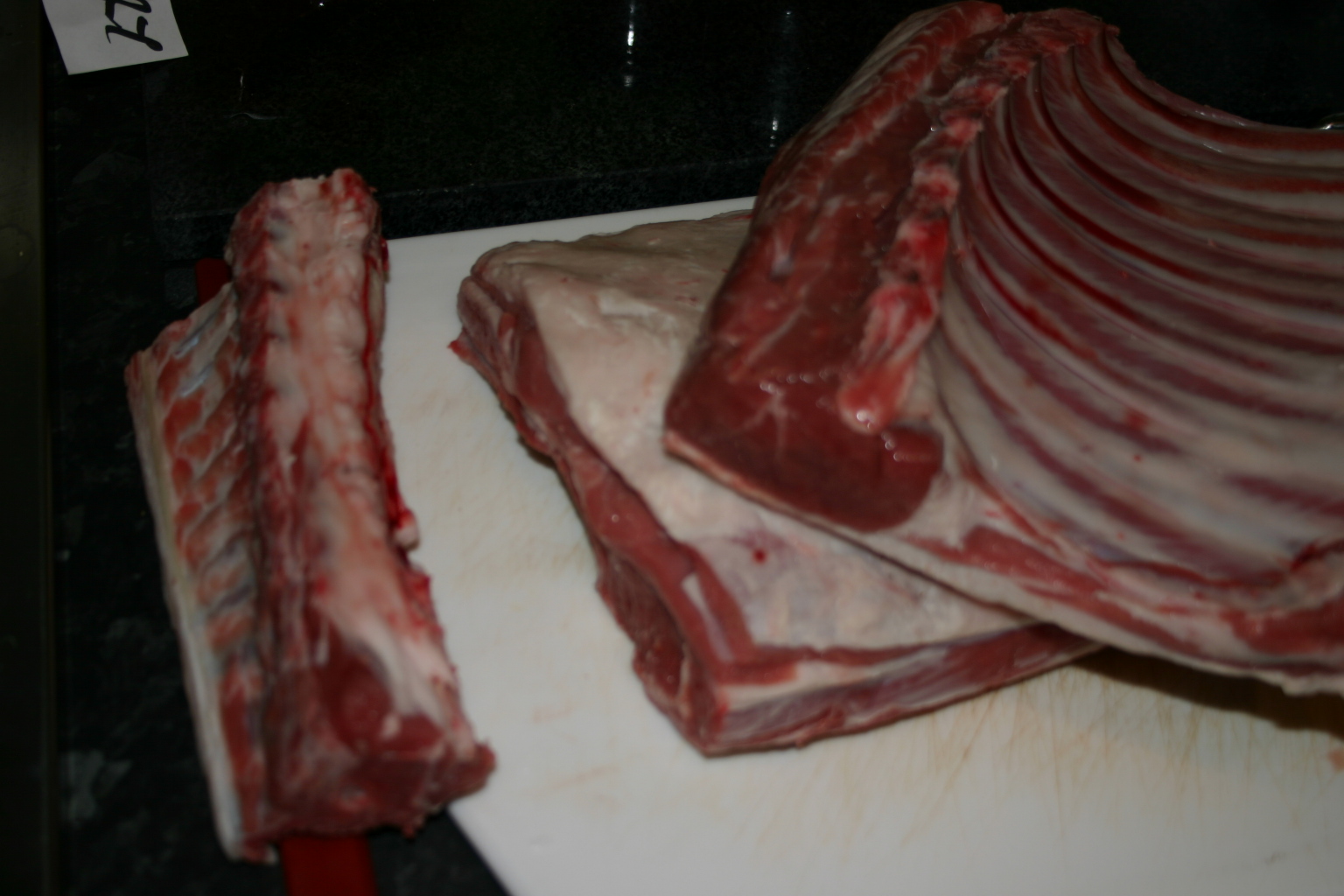
This is a recipe that I couldn’t do when I was in America because what you don’t want are nice pre-butchered racks, but a whole best end of neck. This is the upper part of the back and ribs that sequesters the beautifully tender lamb cutlets. If you can, wait until the lamb are a little older; these muscles don’t do much work so they don’t have as much flavour as, say, leg. Older animals have worked a bit longer so there is some make up in the flavour department. Also, they’re much bigger so you get more meat in your best end of neck.

Anyways, ask the butcher for one best end of neck, then ask him (or her) to split it down the centre, removing the backbone. Take the meat home, including the bones that he removed and you paid for!

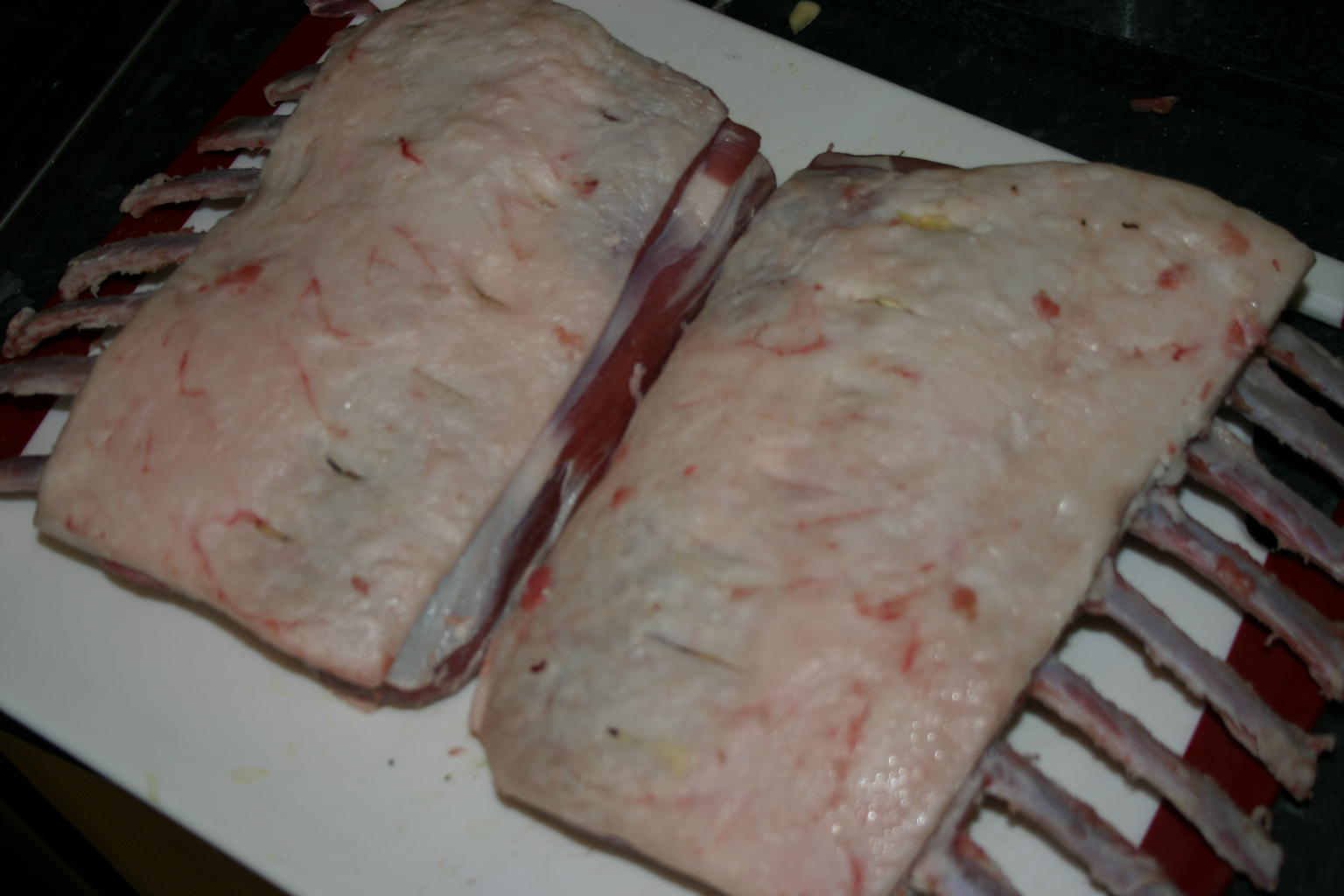
Now prepare the lamb ready for roasting by cutting away any fat and meat from the ribs, don’t go too far down – maybe and inch and a half at the wider end and an inch at the thin end.


You should end up with two racks that can be propped up against each other with bones interlacing like fingers. Now take a clove of garlic and slice it thinly. Make holes down the fatty sides of the racks with a very sharp pointy knife and slot a sliver of garlic in each one. Season the lamb all over and put it in a roasting tin so that the ribs criss-cross.


Cover the exposed bones with a piece of foil so that they do not burn. Roast the lamb for 45 minutes at 220C (425F) for pink lamb, going up to 60 minutes for well-done (though cooking it well done would be a travesty in my humble opinion).

Next, make the gravy by first making a lamb stock from the bones and trimmings (this bit can be done well in advance). Add them to a saucepan with a carrot and a tomato both roughly chopped, a pint of beef stock and some salt and pepper. Bring to a simmer and let it tick away for a couple of hours or more if you can. Pass through a sieve and cool. Remove the floating fat and return to the pan with a glass of white wine or vermouth. Reduce until you get a well-flavoured stock. Lastly, slake a tablespoon of cornflour with a little cold water and stir into the stock to produce a nice gravy.

When the lamb is ready, take it out of the oven and cover with foil and let it rest whilst you make the laverbread sauce. Melt 3 ounces of butter in a saucepan and add a pound of laverbread. When hot, stir I the juice of 1 lemonand 2 oranges. Season with salt and pepper.

Place the lamb in the centre of a serving dish, pouring any juices in the gravy. Pour the sauce around the edges of the lamb and then decorate with thinly sliced oranges.

#353 Roast Rack of Lamb with Laverbread. Well the meat (which I cooked pink) was absolutely delicious, tender and well-flavoured. I wasn’t sure about the laverbread at first – it not being cut by the bland oatmeal like in the previous recipe – but I soon got used to it. The taste is very strong, but when eaten with the lamb you can see why they are eaten together so often. The gravy too was excellent; mild and not in the slightest bit greasy as lamb gravy can so often be. 9/10


#348 Veal Rolls


Here’s a quickie from the Beef & Veal section of the Meat chapter and I shall Jane Grigson herself tell us what to do for this one:


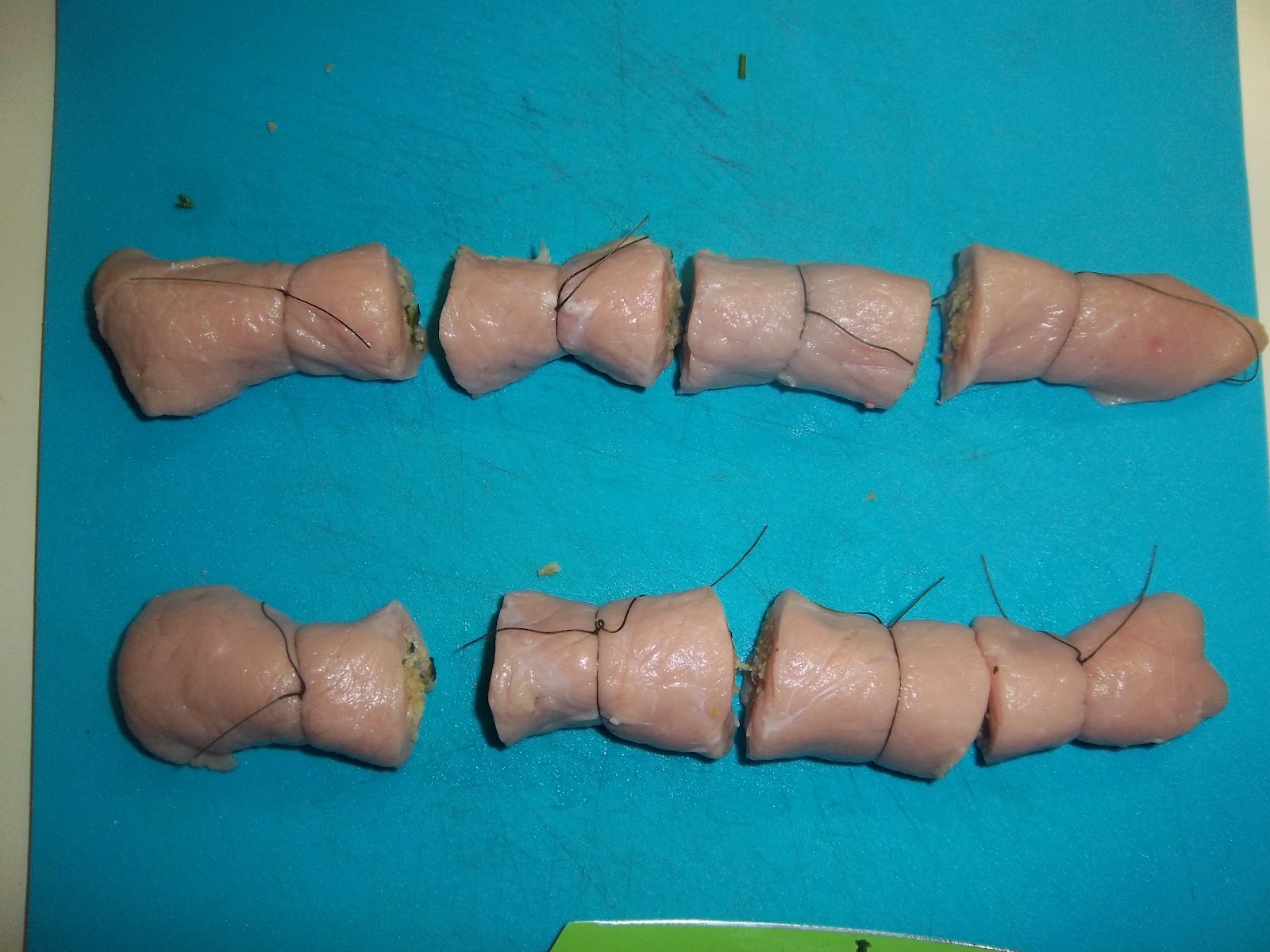
Allow one large, thin, escalope of veal for each person. Spread it with a thick layer of parsley and lemon stuffing, or herb stuffing and roll it up starting with one of the long sides.

Tie it with thread in three or four places, then cut into three or four pieces.

Brush each piece with beaten egg, dip it into flour and string it on a skewer, one skewer for each person. Grill for 20-30 minutes, preferably on a spit, basting them from time to time with melted butter. Serve them with fried mushrooms and lemon quarters.

#348 Veal Rolls. Well these were a little fiddly to make but not infuriatingly so. I used the parsley and lemon stuffing as I hadn’t made it for a while and I thought it would suit the hot weather we’re having here in St Louis. As much as I like veal, I didn’t find this really worked. I tried to keep the rolls basted and evenly-cooked under the grill, but the whole thing turned out a little dry. I would much have preferred to have had the escalope fried in some butter with stuffing baked in an ovenproof dish served separately. The mushrooms were good though! 4/10

#340 Veal (or Lamb) Cutlets

Here’s a simple recipe from the Beef & Veal section of the Meat, Poultry & Game chapter. I am trying to get through all of the veal recipes before I move back to England later this year; it’s not because it is cheaper here, it’s just that it is much easier to get hold of.
A cutlet is a chop (rib) from the best end of neck, just above the shoulders. I went for veal, though they were called ‘Tomahawk Chops’ in the shop, I don’t know that’s typical in the US or not. Anyways, it’s a very tender cut of meat that needs very little cooking, what is nicely done here is the meat is breadcrumbed so it is protected from direct heat, keeping it juicy, but with a crunch. Jane says that the thickest the cutlets should be is an inch. You need one cutlet per person (or two, or even three, if doing lamb). Jane also mentions that boned loin can be used, but the slices should be half an inch, maximum. That’s us told.
You need some breadcrumbs first: I use a blender for that job and then scatter them over a baking tray and let them dry out in a cool oven. If the bits are too big, you can always give them a very quick whizz in the blender again. Mind you don’t turn them into dust though. Take the meat out of the fridge so it can warm up to room temperature.
To the breadcrumbs add some grated lemon zest and finely-chopped herbs: parsley, thyme, marjoram and my new favourite herb, winter savory. Coat the cutlets in flour, patting off the excess, then into some beatenegg and then into the herby crumbs.
Heat some clarified butter in a heavy-based frying pan and fry gently on both sides. The amount of time depends on the thickness of the meat and how ‘done’ you want it to be. I did inch-thick cutlets, cooking them around 3 or 4 minutes a side. The crispy crumb protects the meat, so if you do accidentally cook the meat right through, it won’t be dry.
When cooked, take out the cutlets and let them rest while you get on with the job of making a sauce: on a medium heat, stir 2 teaspoons of flour into the pan juices and then whisk in ½ pint of stock– veal, lamb or chicken, it’s up to you – simmer for a little under 10 minutes to cook out the flour. Take it off the heat and then whisk in a good-sized knob of butter. Taste the sauce and add salt, pepper and lemon juice to taste. “The sauce should be well seasoned, and not too copious or thick”, says Jane.
“Lemon quarters, mushrooms, watercress, a few boiled potatoes, are the right kind of setting for a meat cooked in this way”. I did the same, though I swapped watercress for broccoli. I think you always need something on your plate, perhaps that’s why she included watercress.
#340 Veal (or Lamb) Cutlets. These were great; everything was all very subtly-flavoured so the slightly piquant lemon and herbs didn’t mask the wonderfully tender veal. What else can I say? Great stuff. 8/10.

#339 Hindle Wakes

Where do I start with this one?

Hindle Wakes is a cold chicken dish for buffets and the like and has a long history. It is essentially a chicken stuffed with a prune mixture, simmered in a stock made of vinegar and water, cooled and smothered with a lemon sauce. Other variations include simmering in lemon juice stock and roasting the stuffed bird as a hot dish, which sounds much nicer.

The origin of the dish is obscure; some think it originally came over to England – Lancashire to be precise – from Flemish weaver immigrants in the 1330s. Others (including Jane) think it is a typical English medieval recipe; it being heavy on the herbs and dried fruit is suggestive, but I cannot find anything similar in my old facsimiles. I suppose it will remain a mystery.
Did the Flemish bring Hindle Wakes to North-East England?

The name Hindle Wakes is equally strange. Several modern cook books say that it comes from the name of the Lancashire town of Hindle Wakes. This all sounds good until you check an atlas and find there is no such place as Hindle Wakes in Britain, never mind Lancashire. A friend of Jane Grigson’s reckons that the name is a bastardisation of Hen de la Wake. “No etymologist would support a folk explanation of this kind”, says Jane.

I find no mention of the phrase Hindle Wakes in literature searches until the late 1910s where there is suddenly a glut of them because in 1912 a playwright called Stanley Houghton wrote a play entitled Hindle Wakes which was set in the imaginary Lancashire town Hindle where wakes would occur at certain times of the year. A wake in this context means the lookouts people would set up the night before a large church festival at their parish, presumably to catch thieves. How it got attached to this strange dish I do not know.
It’s still going strong…

Anyway, on with the rather long recipe…

For the stuffing:

Soak one pound of unstoned prunes in water or tea overnight. The next day remove the stones from the prunes, setting the neatest third aside for later. Now you need to crack the prune stones to get to the almond-scented kernels. I have found the best way to do this is to place around a dozen stones in a freezer bag, squeeze the air out, seal it and then crack the stones sharply with a hammer. This stops the sticky stones and precious kernels from pinging around the kitchen. Chop the kernels and the rest of the prunes and put in a bowl along with: 8 ounces of slightly stale breadcrumbs; four ounces of chopped fresh beef suet; and half a teaspoon each of finely chopped sage, parsley, marjoram and thyme. Mix them well with your hand and season withsalt, pepper, a tablespoon of brown sugar and one or two tablespoons of malt vinegar. Mix again.

Stuff a five to six pound roasting or boiling chicken (you could also use a capon) both inside the body cavity and the neck. Using cocktail sticks, close the two ends of the bird. I found that I could only fit in around half of the stuffing so I rolled the remainder into balls and froze them for future dinners.

To cook the fowl:

Put the bird in a good-sized stock pot that will fit it reasonably closely and add the following ingredients: 2 level tablespoons of salt, a stick of celery, one large unpeeled onion studded with three cloves, a bay leaf, four parsley springs, four thyme sprigs, six tablespoons malt vinegar and a tablespoon of soft dark brown sugar. Add around 6 pints of water – you can leave an inch or so of chicken above the water if it’s a roaster; you’ll need to cover completely if a boiler.

Bring slowly to a boil, skimming any scum that may rise to the top. Cover the pot and simmer the chicken very gently for between 1 ½ and 3 ½ hours “according to its antiquity”. Mine was done after 1 ½ hours. It is very important you cook the chicken on a very low simmer indeed; scalding might be a better word to describe the water, you should only see the barest of gulps and bubbles.

When cooked, remove from the stock and allow to cool, covered with a layer of foil. You’ll need the stock for the sauce, so don’t chuck it away…

For the sauce:

In a small saucepan, mix together five fluid ounces of double (heavy) cream, the juice and grated zest of a lemonand a seasoning of white pepper. Bring to a boil and let it simmer for five minutes or so. In another saucepan, make a roux by melting ½ ounce of butterand when it had finished sizzling stir in a healthy tablespoon of flour. Cook for a couple of minutes. Whisk in five fluid ounces of milkand half a pint of the stock. Simmer for twenty minutes until the sauce is very thick (I couldn’t get the sauce to go thick even after thirty minutes). Season with more salt and white pepper if needed, then cool covered to stop a skin from forming.

To arrange the dish:

Place the fully-cooled chicken on “a wire rack over some greaseproof paper. Reheat the sauce slightly – it will be solid when cold – so that you can spread it right over the chicken smoothly and evenly. Use a palette knife…” says Grigson. This was impossible for me with the rather runny sauce, so I just put the chicken straight on the serving plate and used a knife to spread the sauce over the chicken. Next, surround the chicken with around eight ounces of thinly sliced ham. Cut a lemon into halves and cut into thin slices. Arrange the slices around the chicken along with the reserved prunes. Finally, a couple of herbs: take a large bunch of parsley and stick it in both ends of the chicken, then scatter with some chive stalks.

#339 Hindle Wakes. What a monster I created! It looked like a cross between something from Fannie Cradock’s 1970s repertoire and the centrepiece to a medieval feast. I have to say, once sliced up it didn’t look too bad. The chicken was cooked to a turn – I think the vinegar in the stock help to tenderise it – and it went wonderfully well with the lemon sauce and prunes that were dotted around the bird. The cold stuffing was rather stodgy though. Mid-way through the recipe for this “superb buffet dish”, Jane does mention that she makes a stuffing from just prunes, kernels and herbs, as the traditional stuffing is too heavy. I felt like it was eating a dish that should have been hot but had cooled down. It’s a tricky one to grade due to the mix of sublime and ridiculous. I’ll sit on the fence with a 5/10.

#338 Beefsteak Stewed with Oysters

This is the third and final recipe that uses the classic combination of beef and oysters. I was so dubious about it at first but now I relish and look forward to recipes like this. This one is a simple stew that is easy to prepare and uses few ingredients. It probably was at its peak of popularity in Victorian times – I have mentioned before a few times how oysters were so cheap they were used as a seasoning. The final product isn’t overly fishy as one might expect.

This will feed between 3 and 5 people depending upon greediness.

Start with your oysters; you need to prepare 18 of the buggers. However, this is only if you are using the small British ones, if you are using the large Pacific or Atlantic ones, you can get away with half or even a third of the amount. Luckily, being in the USA at the moment it is pretty easy to find the little bivalves pre-shucked in tubs in their own liquor. If you can’t get hold of the pre-shucked kind, I hear you can easily open them by putting them flat side up in the freezer and when the oysters fall asleep they open up. I have never tested this so it may all be nonsense. However you get your oysters, make sure you drain them well through a sieve and keep the liquor.

Next, the beefsteak – any kind ‘will do for this recipe, from chuck to rump’ – you need 1 ½ pounds in all. Cut it into large neat pieces and season well with salt and pepper. Melt 2 ounces of butterin a large deep pan with a lid and brown the beef, in batches if necessary. Once that job is done, add around ½ pint of water and the oyster liquor. Cover, bring to a simmer and cook until tender between one hour and 90 minutes depending on the cut of meat.

Whilst it gently bubbles away, mash together ½ ounce of butter with a rounded teaspoon of flour.  When the meat is ready, add 2 ounces of port and stir the butter and flour mixture in small knobs until the sauce thickens. You might not want to add it all. I like a sauce on the thick side so I did. Don’t let the sauce boil hard though. Next add the oysters – if large, cut into two or three pieces – and season with salt and pepper. Heat the oysters through for a couple of minutes – no longer, or they’ll be rubbery.

‘Serve very hot’, says Griggers, with triangles of bread fried in butter‘tucked around the sides’.

#338 Beefsteak Stewed with Oysters. I love this combination so much! What a shame there are no more recipes left like this. The water had become a rich but not overpowering sauce that goes so well with the iodine-scented oysters. The fried bread was a great contrast in texture and the recipe is so easy and quick compared to a pie or pudding too. It is such a shame that oysters are so expensive. I am wondering if mussels could be used as a substitute. This one is going to remain a staple whilst I am in the USA where oysters are cheap! 10/10.