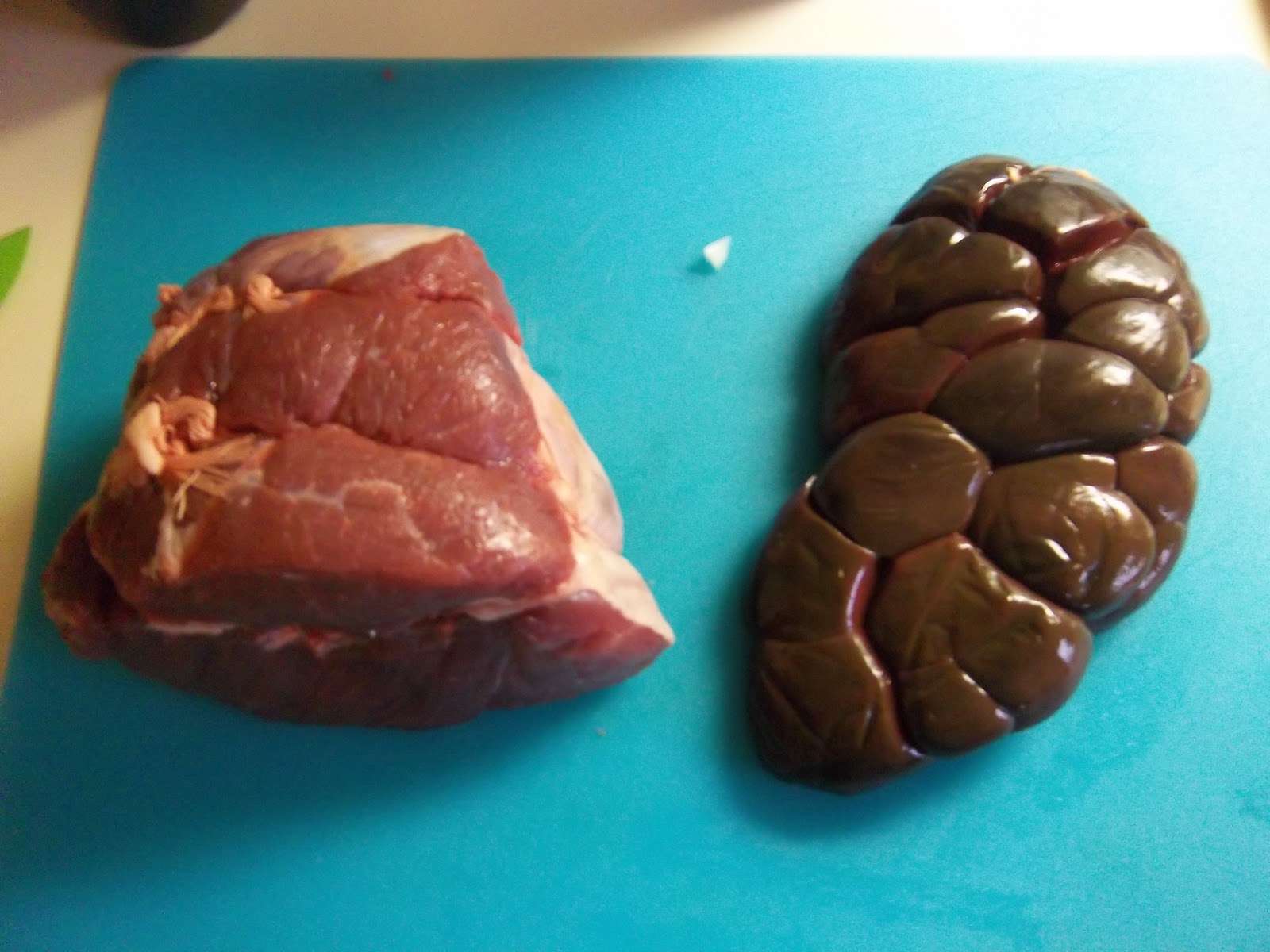
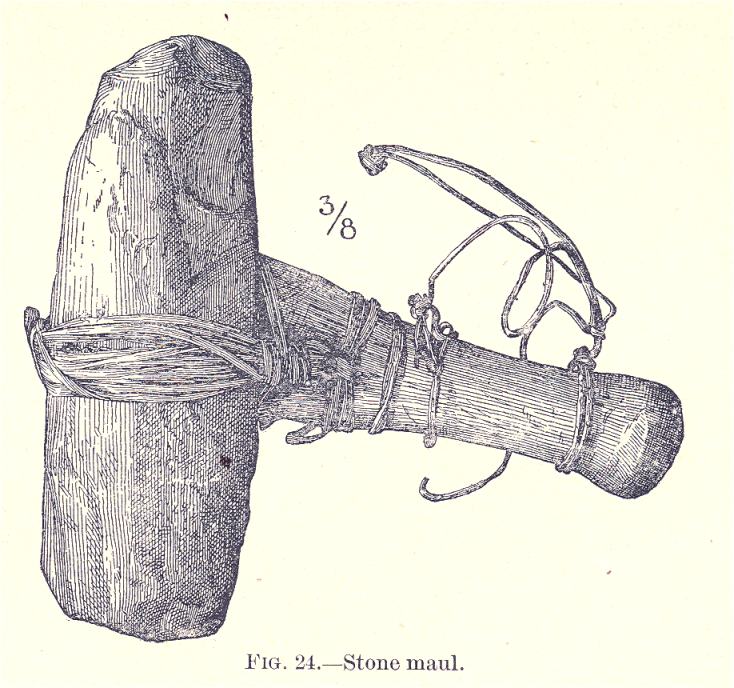
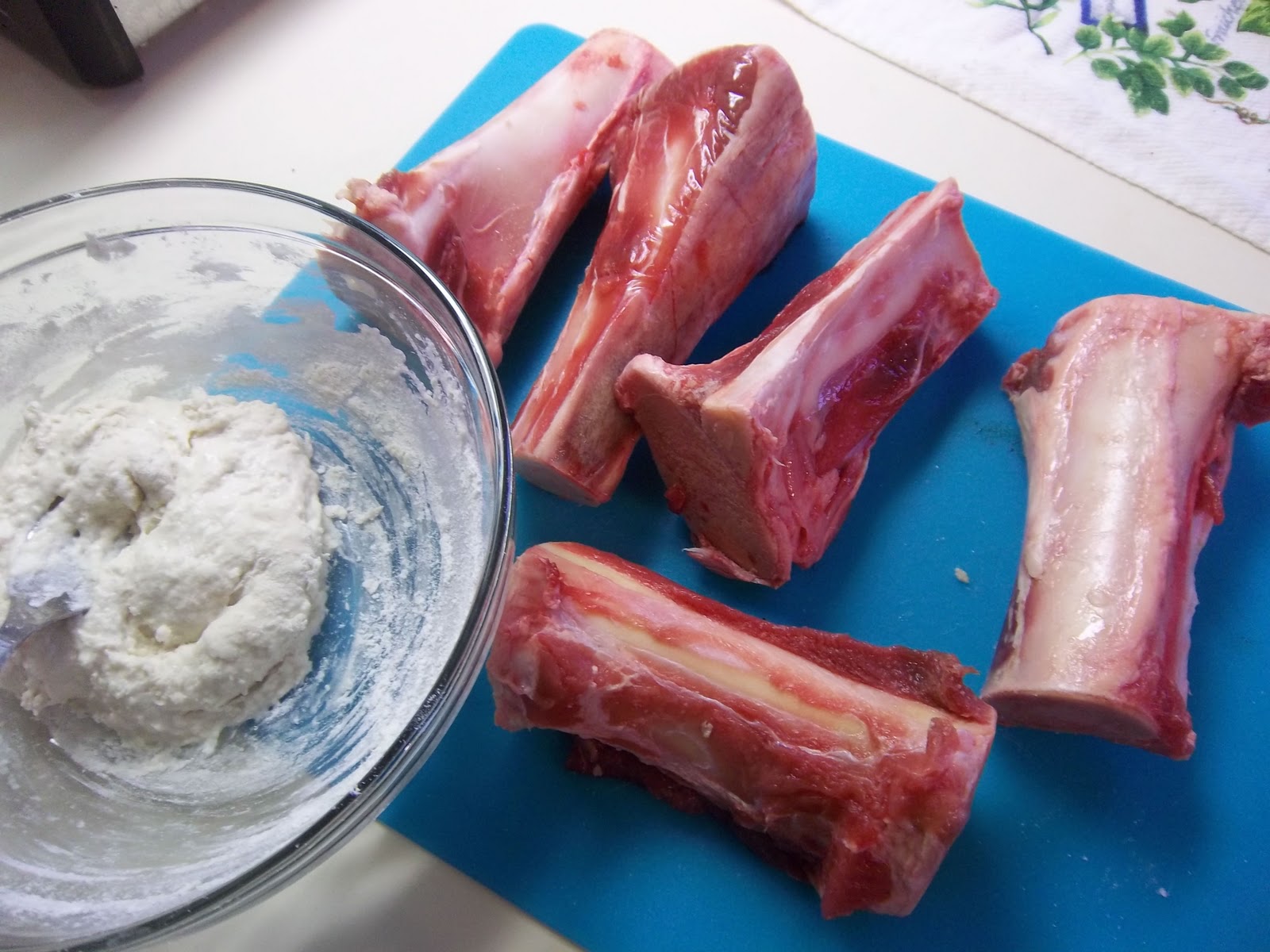
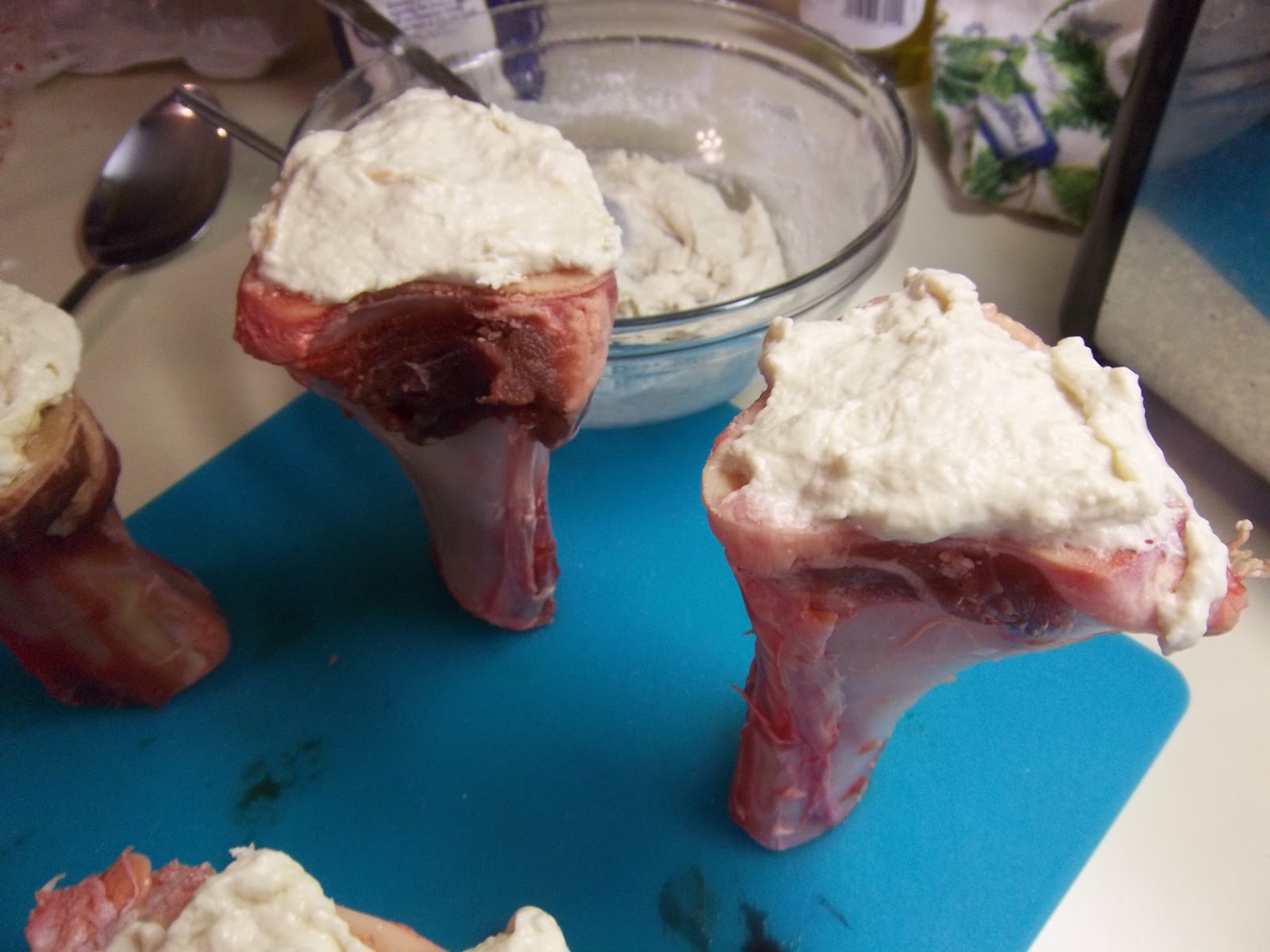
If you are looking for a historical recipe that goes far far back, you would find it hard to do better than some nice marrow bones. In fact, this one goes so far back it predates humans themselves. We humans belong to the genus Homo – we are Homo sapiens – and there have been over a dozen now extinct Homo species discovered. Palaeontologists have found very good evidence that individuals of the genus Homo were making tools for extracting the nutritious bone marrow from the prey animals they hunted. To give a little perspective, Homo sapiens arose around 200 000 years ago, so this behaviour has been around for ten times as long as we, as a species, have been on this planet. Crazy shit, man.
Tag: 5: Meat Poultry and Game
#317 Skuets
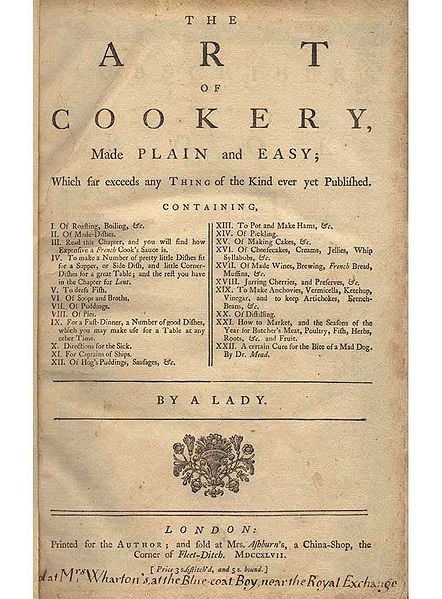
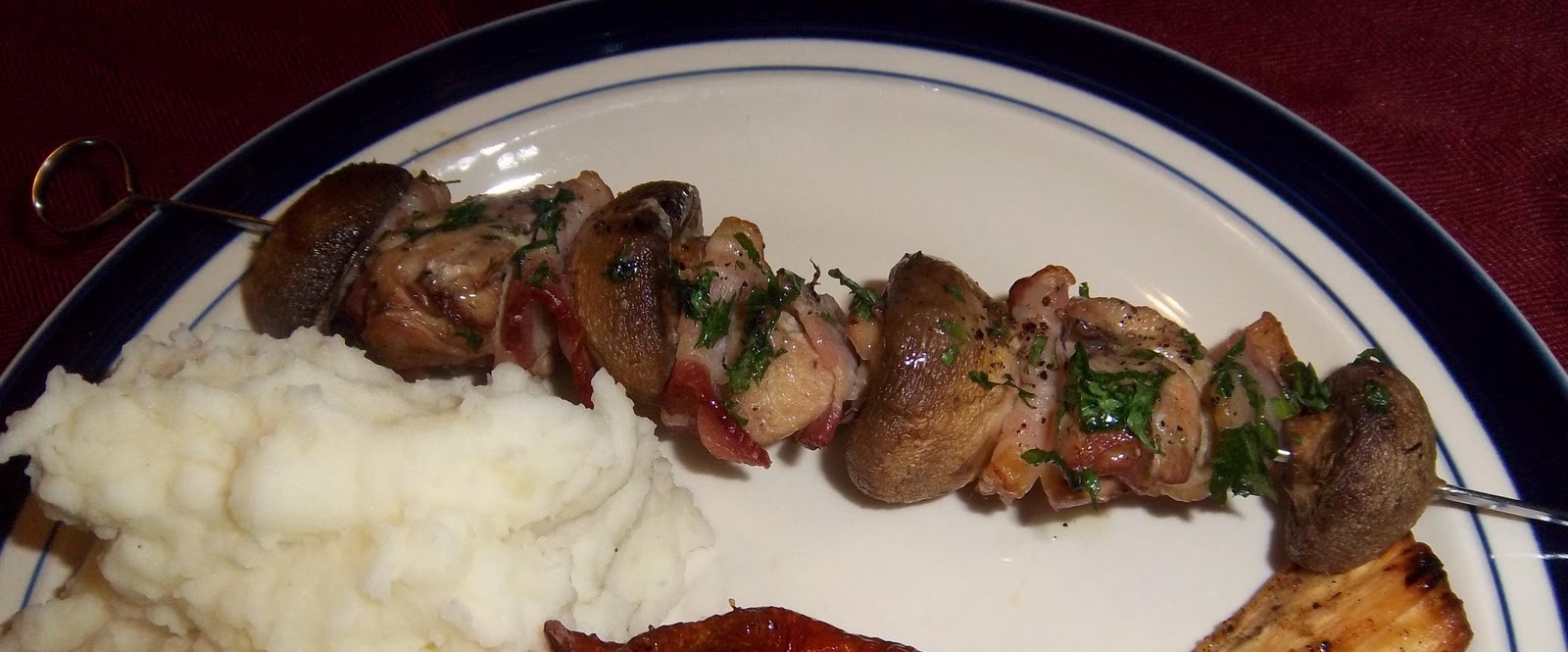
This is an old recipe made up of sweetbreads, bacon and mushrooms grilled on skewers. Indeed, the work skuet is a corruption of the word skewer. The recipe first pops up in the literature in The Compleat Housewife by E Smith (a Lady) first published in 1729. Here’s her recipe from the 1753 edition:
Forced meat is simply meat mixed with other ingredients to ‘force’ it to go further. I made forcemeat balls a while back (click here for the post). The recipe given here is a jazzed-up version from French chef Antoine Carême’s 1833 book L’art de la cuisine franҫaise au dix-neuvième siècle. According to Grigson, he praises it as an excellent English dish. Jane suspects he found out about it when he lived and worked in London as the Prince Regent’s chef. The changes he made were simple: lose the forcemeat, add some nice mushrooms and serve with bread sauce (see here for recipe) as well as some crunchy browned breadcrumbs.
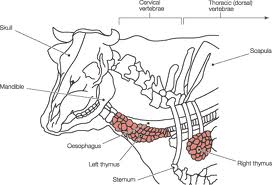
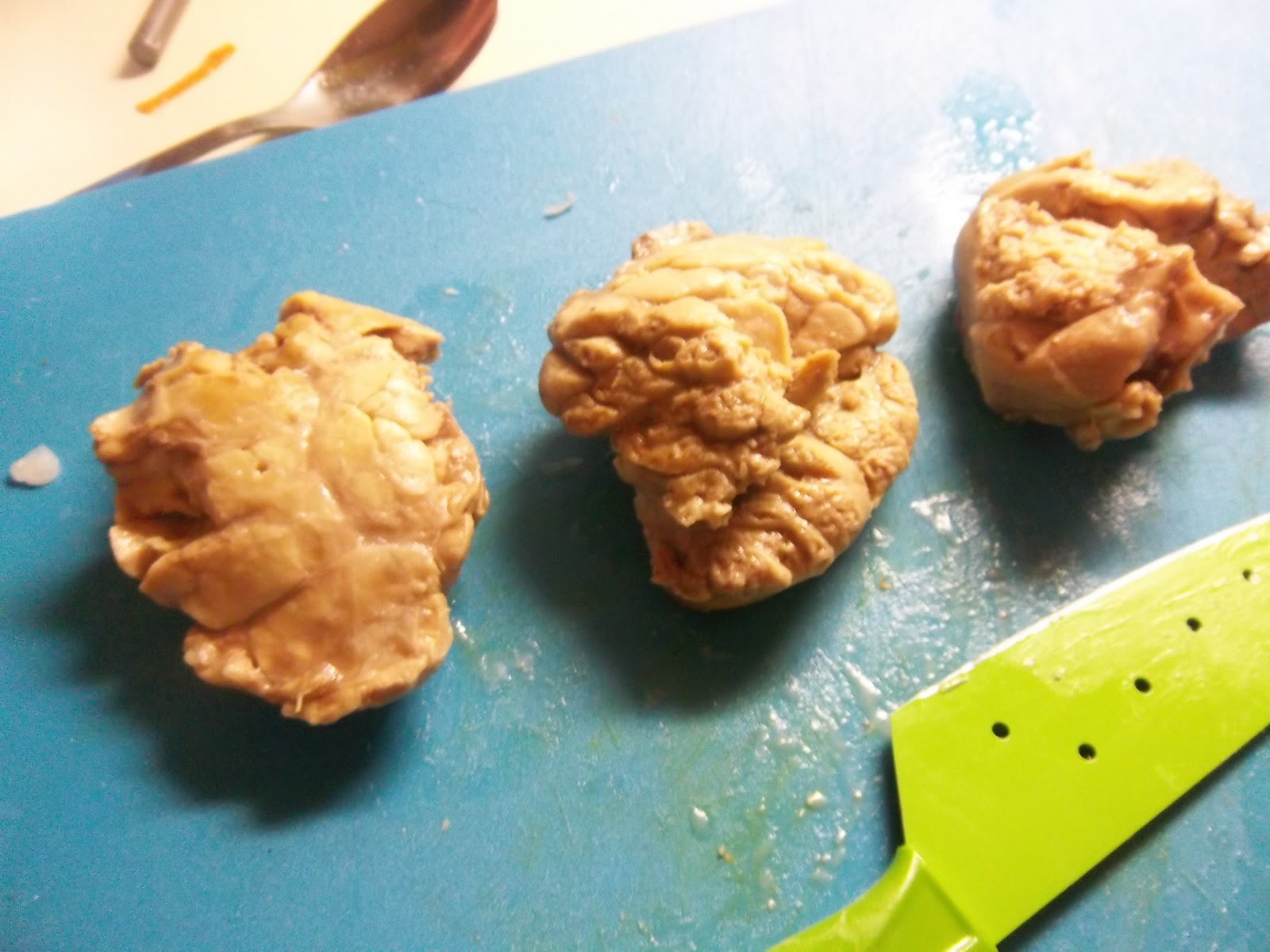
For those that are not aware, sweetbreads are a type of offal and come from the thyroid gland, situated around the throat, of either calves or lambs. The thyroid, or thymus, gland produces the hormone thyroxin which is involved in the proper regulation of metabolism. Hyperthyroidism is a common disease where the sufferer produces too much, causing very high metabolism and, as a consequence, is rather skinny. I had a cat with it once. Other glandular organs are also sold as sweetbreads such as the pancreas, the sublingual glands of the tongue, the parotid gland of the cheek and also the testicles, though ‘throat’ sweetbreads are by far the commonest. Why are they called sweetbreads? Well, they are sweet because they taste richer and sweeter compared to meat, and they are bread because the old English word for flesh is bræd. I assume the bread that we get in loaves carries the name it does because Jesus said bread was his flesh during the Last Supper (I’m surprised he didn’t put anyone off).
Sweetbreads were once very, very popular, but have now died a death. Though, like many of the old forgotten cuts of meat, there is a slight resurgence. I had never eaten them, but certainly wasn’t nervous about eating a big gland; I just always worry that the reason people don’t choose to eat them anymore is because they taste bad.
Begin by preparing a pound of veal or lamb sweetbreads. To do this, dissolve a tablespoon of salt in some water and soak them for around an hour. Rinse them, place in a saucepan and cover with chicken or veal stock and mix in a couple of teaspoons of either lemon juice or wine vinegar. Bring to a boil and allow them to simmer until they go from pale pink to a whitish opaqueness.
In the case of veal sweetbreads, this took about 15 minutes. Remove the sweetbreads and allow to cool a little before removing any membranes or gristly bits. You must be careful here – Jane makes a point of mentioning this and she was right – don’t let too much of the sweetbread come away with the membranes. If using lamb sweetbreads, be extra careful, as you’ll end up with nothing! Press the sweetbreads by pressing a plate on them until they cool.
Turn the grill on to a medium heat. Whilst it warms up you can construct your skuets: cut the sweetbreads into chunks – 12 good sized cubes is best – cut around 8 rashers of streaky bacon to square shapes and brush any dirt from 16 medium-sized mushrooms. Take a skewer and add a mushroom, some bacon, a piece of sweetbread, a bit of bacon, a mushroom etc. I used four mushrooms and three pieces of sweetbread per skewer each separated with some bacon. Make four skuets in all.
Brush them with melted butter and grill them, turning occasionally for about 15 minutes. Whilst they are cooking, fry some breadcrumbs in butter until brown and crisp.
#314 Boiled Turkey with Celery Sauce
Thanksgiving Day is just around the corner here in the USA so I thought the next two posts will have a Thanksgiving theme. I knew that there would be little chance of replacing the turkey on the day, but I wondered if cooking it in a different way might be possible. Plus if anyone reads this near Christmas, they might want to give it a go.
This is a classic: ‘A favourite dish of the Victorians and quite rightly so, because it is delicious – mild without insipidity’, says Jane. In fact, that is all she says on the dish. Boiling turkey was a popular way of cooking fowl, perhaps because it takes little time to cook; two hours maximum for a 15 pound turkey. I hoped it would make it deliciously juicy and tender. I did worry, however, that boiling it would sap what little flavour a turkey has even at the best of times.
The earliest recipe for boiled turkey with celery sauce I could find goes back to 1777 – it appears in a book by Charlotte Mason called The Lady’s Assistant to Regulating and Supplying her Table… (the full title is much longer than this!). More familiar contemporaries, Hannah Glasse and Elizabeth Raffald, also give recipes. Here’s a top-tip from Raffald:
“Let your turkey have no meat the day before you kill it. When you are going to kill it give it a spoonful of alegar [malt vinegar], it will make it white and eat tender.”
So there you go.
I didn’t expect the recipe to go back much further as the turkey, being from the New World, would have entered Europe until the late fifteenth century at the earliest. However, I was wrong – it was celery that was the latecomer in England, appearing in the middle of the seventeenth century. Strangely, the earliest recorded mention of the turkey in Europe was in an account book from 1385; Phillippe of Burgundy enjoyed a roast turkey in one of his luxurious banquets. How on earth did it get there, I wonder?
Why we call these birds turkeys has always troubled me – after all they aren’t from Turkey. Nobody is sure, but it seems that the first English turkeys were brought to Britain by travelling merchants that had been given the gift of the birds after eating some whilst on a business trip to Turkey. So somehow the birds came from the New World, via Turkey, all before the New World was even discovered!
So if you fancy having a change from roast turkey, but want to keep to tradition give this recipe go:
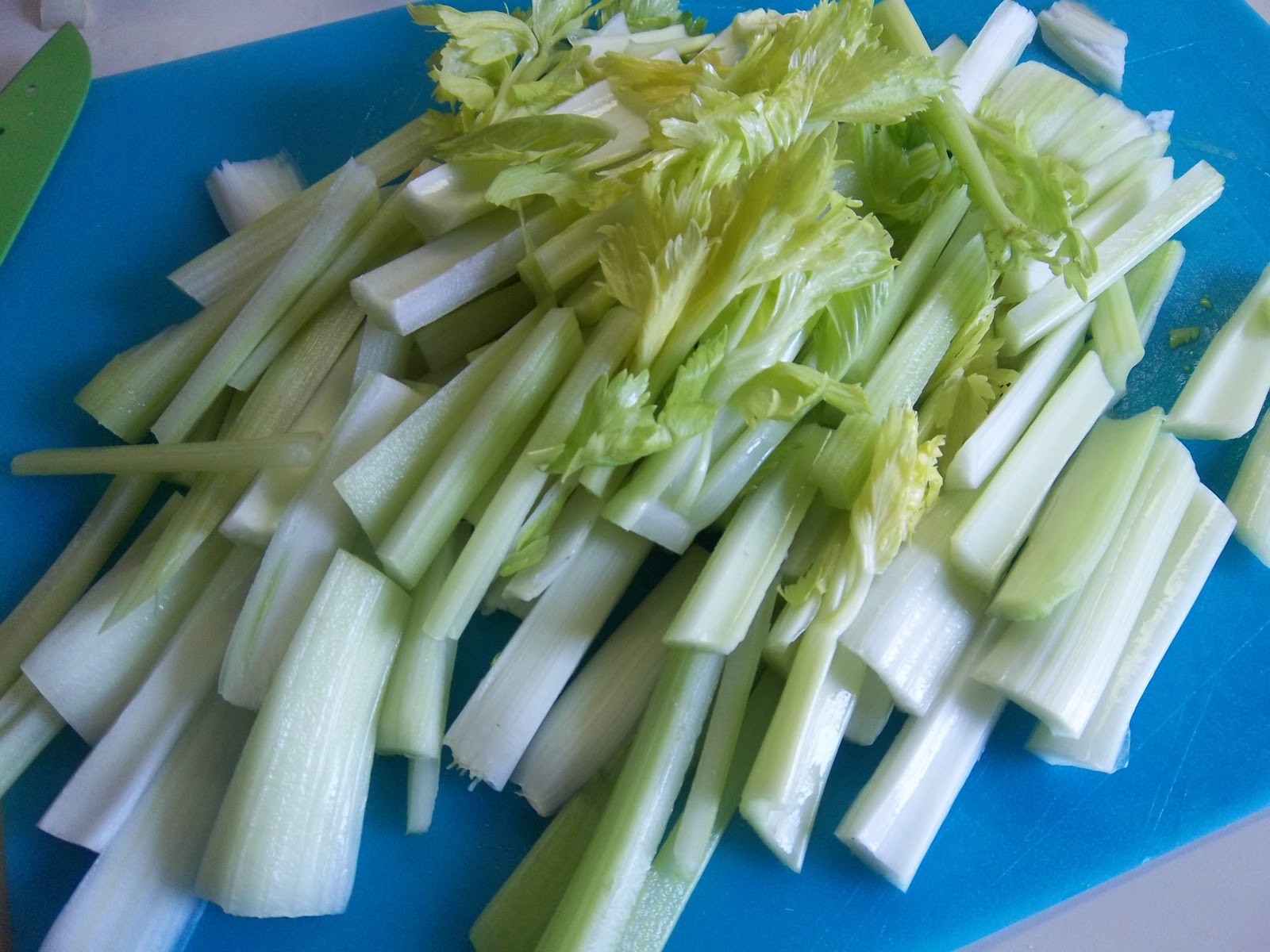
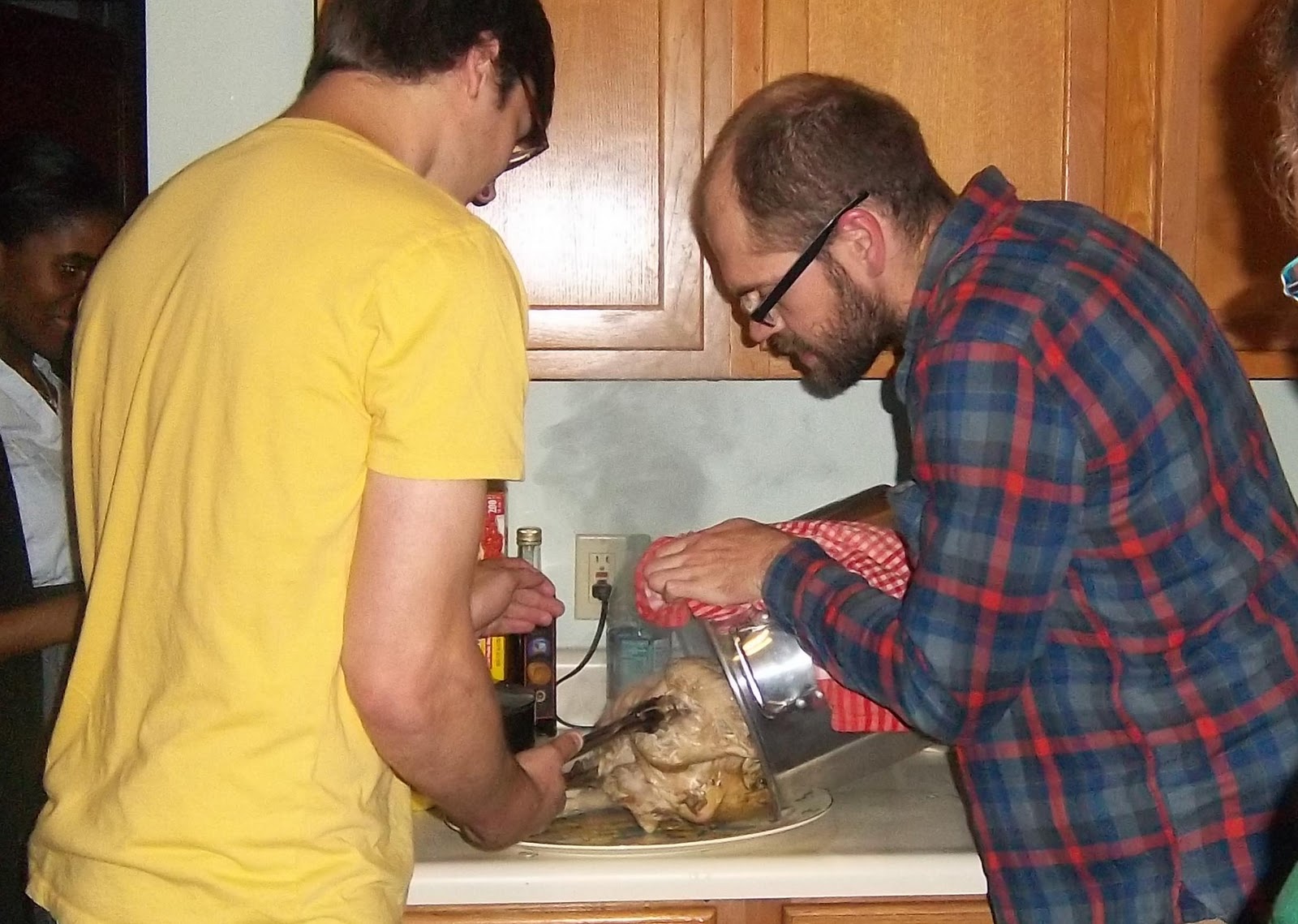
The first thing you need to do is to get hold of a pot large enough to fit your turkey breast-side down. You need a turkey that weighs up to 15 pounds. Once your turkey is nestled in its pot, tuck in the following vegetables and aromatics: 4 sliced, medium carrots; a sliced, peeled turnip; a sliced stick of celery; three whole, unpeeled onions, each studded with three cloves; 15 crushed peppercorns; two bay leaves; 4 thyme sprigs; a bunch of parsley stalks; and a heaped tablespoon of salt. Then, add enough cold water to only just cover the legs.
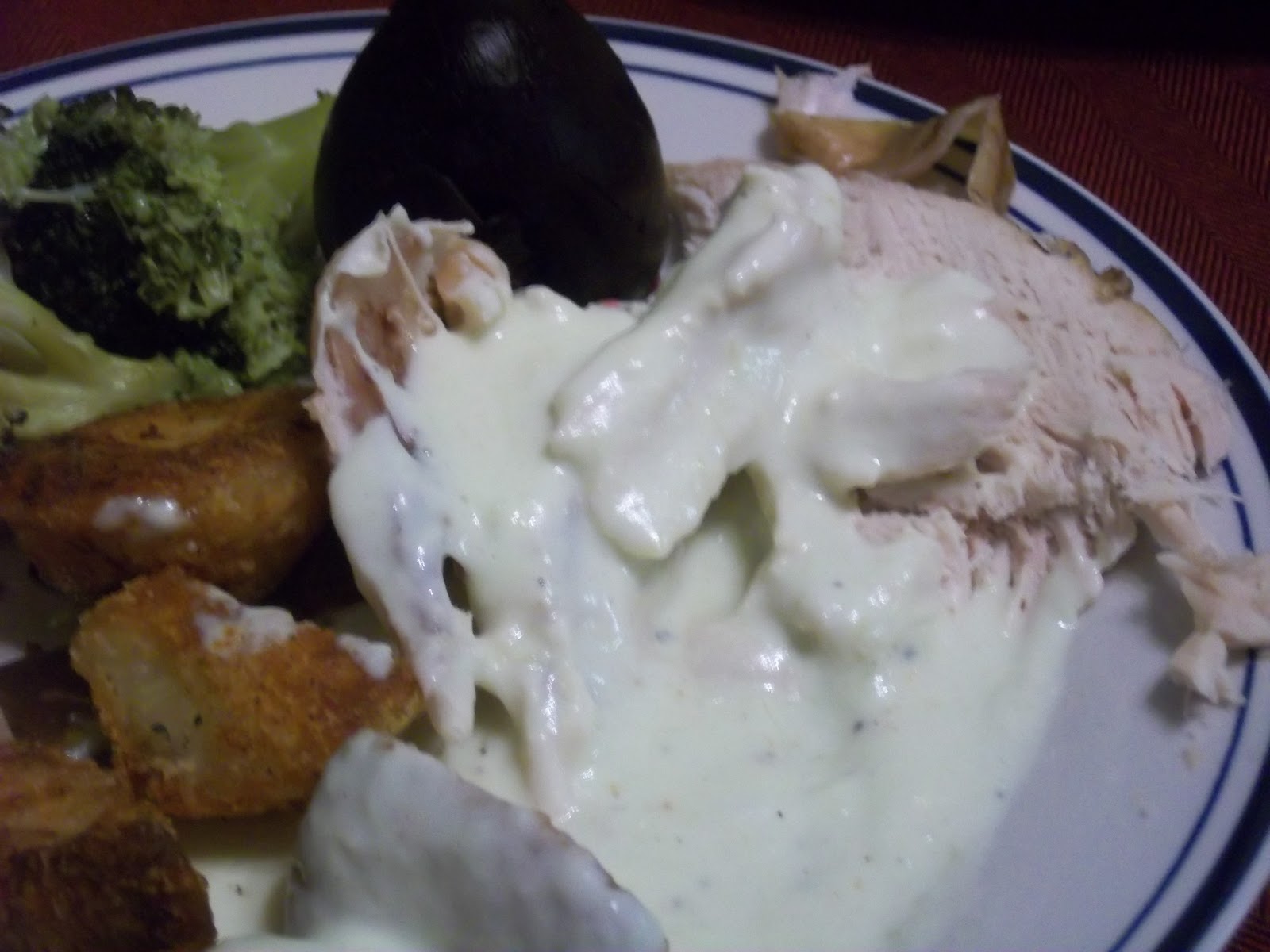
#314 Boiled Turkey with Celery Sauce. Well I have to say it was very good: the meat was tender, though the breast still managed to be a little dry. The leg meat was perfect though – in fact it was the best leg meat I have eaten on a turkey. The celery sauce too was good, and Griggers was right when she said it was a ‘mild’ dish. I was good and homely food, perfect from the autumn and winter months, though I have to admit, I did miss the roasted taste and the crispy skin. Still very good though. 7/10.
#312 Pork Pie
appearing in The Train magazine, 1857
The pork pie is the ultimate raised pie in England and the best come from Melton Mowbray in Leicestershire, a very old English town, founded around the 8th Century. The Melton Mowbray hand-raised pork pie attained Protected Geographical Indication status in 2008 – this means that only pies made within Melton Mowbray can proudly bare the town’s name. If you buy a pork pie that doesn’t bear the name, then it is not the real-deal. Unfortunately, Cornwall missed the boat in getting their pasties recognized by the EU, so a Cornish pasty can proudly bear the Cornish name, when it was actually baked in Milton Keynes or whatever.
The main difficulty for anyone who may want to attempt this recipe in the USA is not finding the anchovy essence – oh no – it is the unsmoked bacon that is the tricky customer. I hunted high and low for it when I was in Houston, but I never found wet-cured, unsmoked back bacon. I assumed that if I wanted to make a pie whilst living in the States, I would simply have to wet cure my own. However, at a Farmer’s Market in Chicago, I happened upon a stall selling not only unsmoked back bacon, but also traditional British sausages. The stall is run by an English chap, who coincidentally comes from Leeds too, called Nicholas Spencer. Check out his website here. He said he’ll be doing mail order soon, so I am looking forward to that.
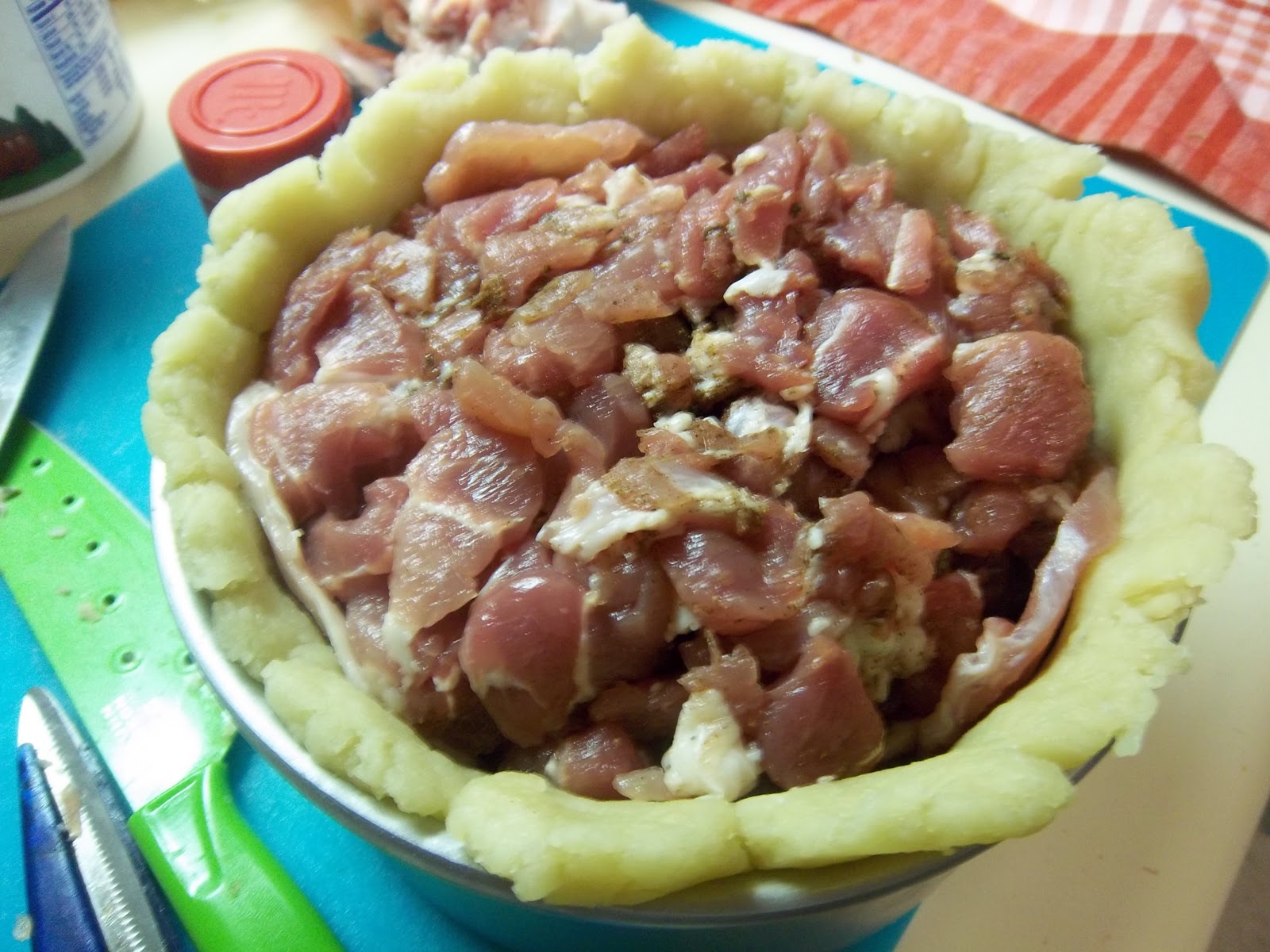
Anyways, if you want to have a go at making your own traditional pork pie you need to get planning! It is quite an effort, though very good fun. I’ve already posted about making raised pies. In brief (with links) you need to get three things ready: hot water pastry for the raised crust, a jellied stock, and the filling itself. I’ll provide you with the recipe for the pork pie filling here…
Cover with a pastry lid and finish it off, following the method in the raised pies post.
What should one eat with a pork pie? These pies are great for buffets and picnics, so eat whatever you are serving at your buffet or picnic… Personally, I like some nice brown HP sauce or maybe tomato sauce. Some like to warm the pies and have them with mushy peas. I have been eating mine with the preserved spiced oranges I recently cracked open – a really good combination that.
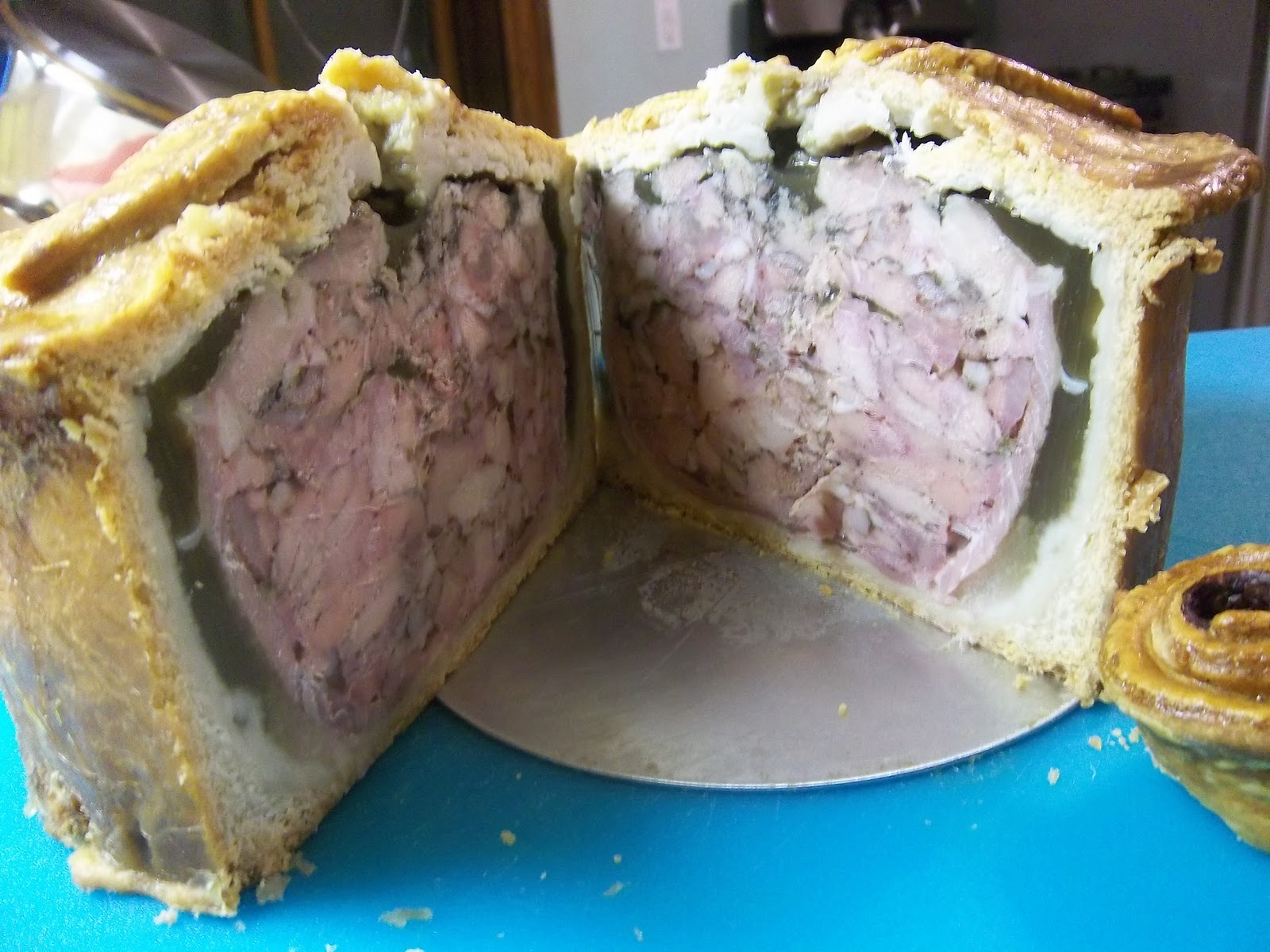
#312 Pork Pie. It seems you can never be let down by these raised pies. This one was great: the mild herbs and spices gave the meat a subtly complex flavour. The idea of a cold meat pie feaked a few people out at work, and suppose the jelly is something you either love or hate. I have been eating the pie slowly over the last few days, and it seems to get better as it ages. Very good, not quite as delicious as the Veal, Ham and Egg Pie, but still pretty tasty. 8/10.
#305 Guard of Honour
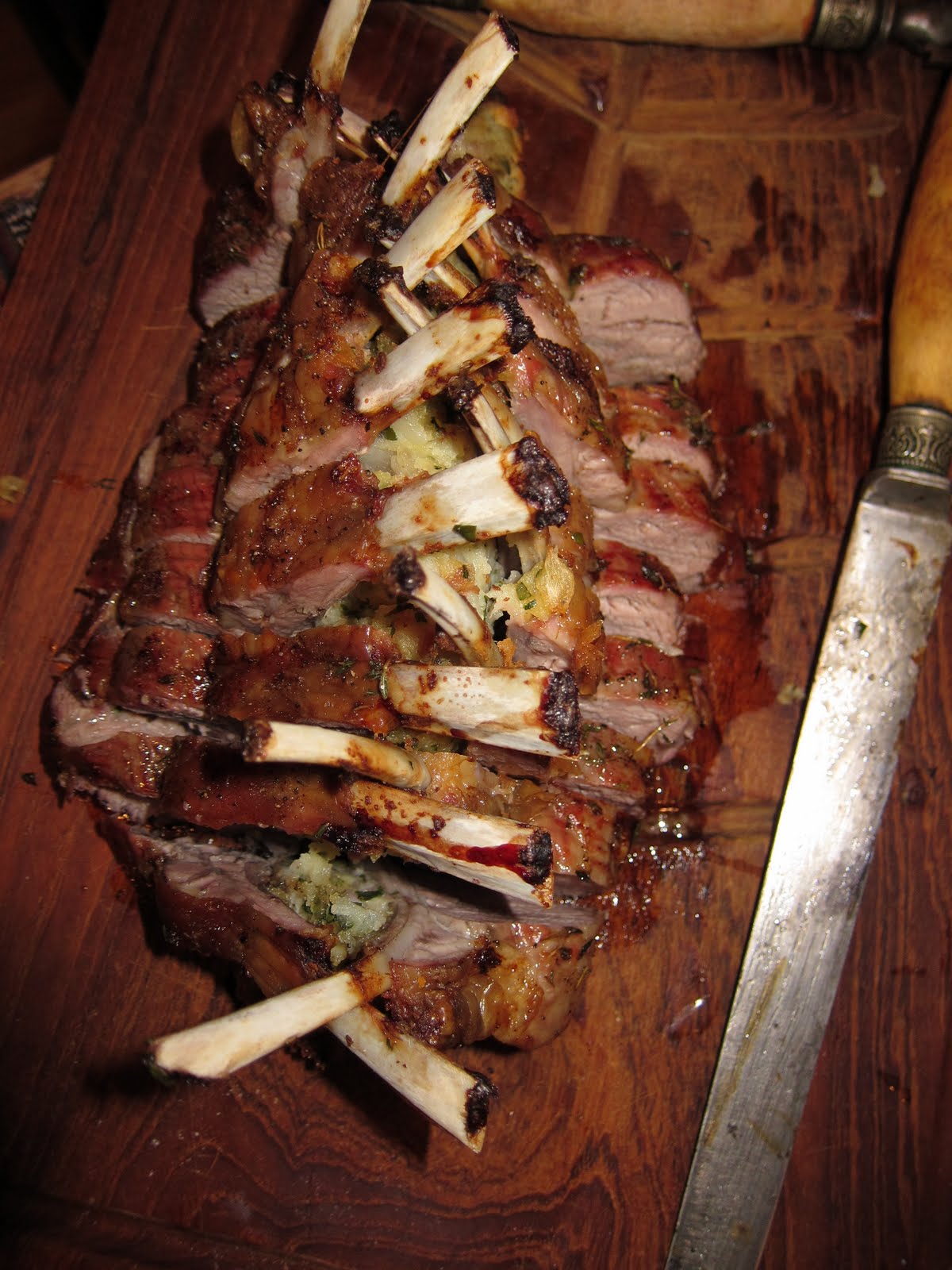
For the meaty part of the dinner party I mentioned a couple of posts ago, I thought I would attempt a Guard of Honour. For those of you not in the know, a Guard of Honour is an attractive way of presenting roast rack of lamb by taking two racks and sitting them upon a roasting tray so the rib bones ‘bristle like a military row of crossed stakes’. The Guard can then be stuffed if you like. Jane likes, as this recipe includes the herb stuffing that I have made a few times now.
I did a little research on this dish, assuming it would be a very old one, but was surprised to find that I could only find relatively contemporary recipes, with none cropping up even in the nineteenth century. Odd.
Griggers recommends buying a whole best end of neck of lamb and to ask the butcher to split it in two down the backbone and to get it chined between each rib so that you can carve the joint easily later. To chine is to cut the backbone. If this wasn’t done, you’d have some thick bits of bone to wrestle with. Ask him to leave on the long bones of the ribs. This part is a rather difficult thing to achieve in America for a couple of reasons. First, the joint called a best end of neck means nothing and second, lamb is generally imported from New Zealand and pre-butchered, at least in part. It’s quite easy though to get hold of a couple of matching racks and to simply not have the extra-long bones.
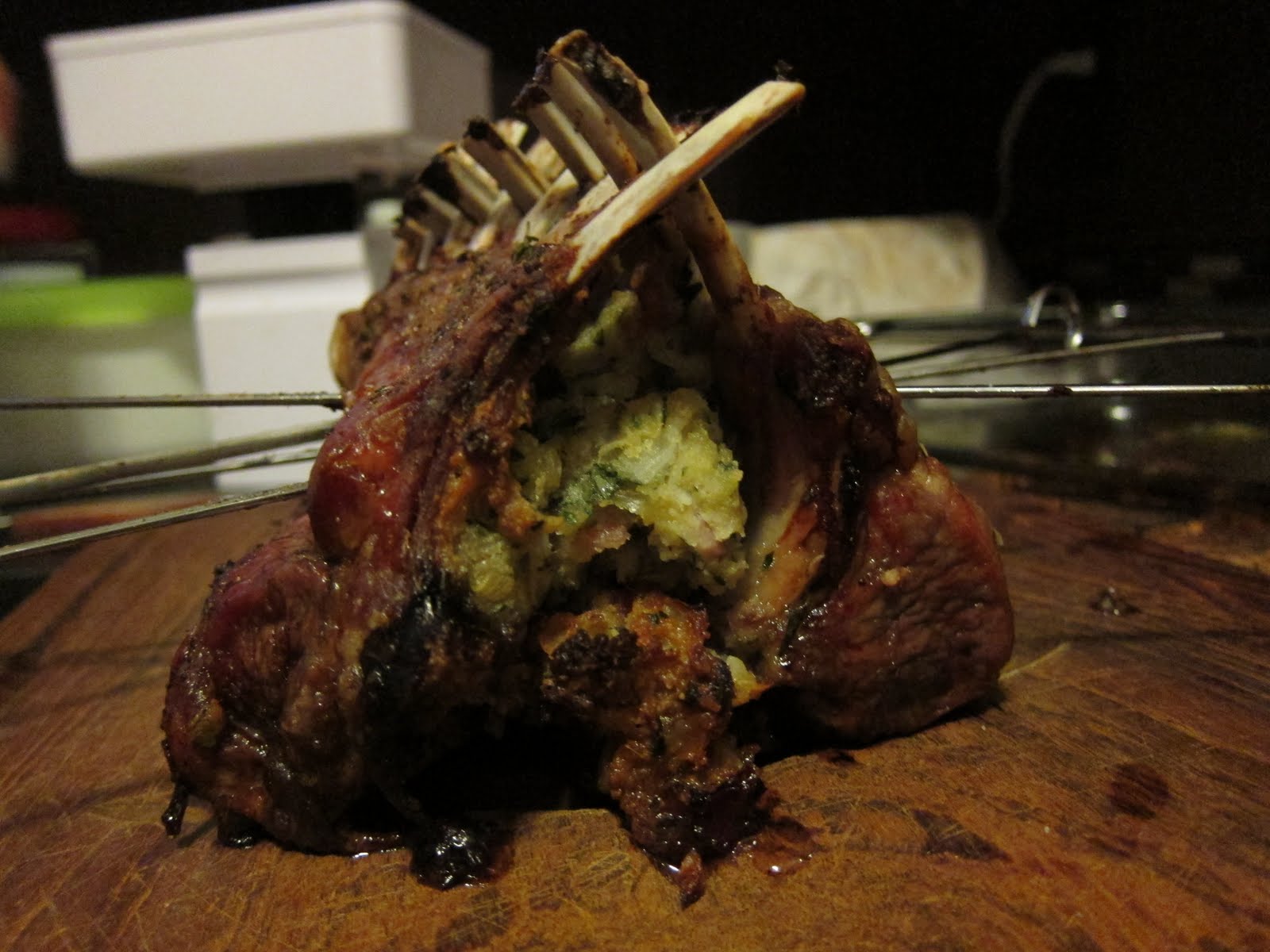
To make a Guard of Honour, take your two racks of lamb and scrape the skin and fat from the very thin part of the chops to expose the bones, then score the fat on the chops and rub in salt, pepper and rosemary or thyme into it (I went with thyme). Stand the joints up and allow the ribs to cross over each other. Fix them in place with skewers. The cavity within can then be filled with herb stuffing. I found the easiest way to do this was to turn the joint upside down, opening it up, so that the most stuffing possible could be added. (Thanks for taking the photos, Joan!)
Turn it the right way up and press the sides together gently, scraping away any escaped bit of stuffing. Check the security of your skewers and place on a roasting tin.
Roast in a preheated oven for 1 ½ hours at 190°C (375°F). Note that this means that the meat will be well-done.
The meat can be carved, after a period of resting, nice and neatly, giving two chops per person.
Serve your roast lamb with any of the trimmings Jane suggests here. She does mention that the stuffed tomatoes recipe goes very well with Guard of Honour, but I wanted to do other things…
#305 Guard of Honour. I really liked this. I did make it because I was in the mood for lamb. Usually I like my lamb pink, but the delicious herb stuffing helped to keep the well-done meat moist and flavourful. I must admit it wasn’t quite as impressive as it should have been because I couldn’t give the precise instructions to the butcher in the preparation of the joint. I think I shall do some of the more tricky lamb recipes back in Blighty. This is only a little complaint of course and the recipe was very good indeed. 8.5/10
#303 Cornish Charter Pie
In Jane Grigson’s book Good Things, she quotes from the diary of a Parson Woodforde, a Norfolk clergyman who obviously liked his food. He wrote in his dairy on the 13th of July that “[we] had for Dinner some Pyke and fried Soals, a nice Piece of boiled Beef, Ham and a Couple of Fowls, Peas and Beans, a green Goose rosted, Gooseberry Pies, Currant Tarts, the Charter, hung Beef scraped &c…”. All recognisable as nice food typical of the British Isles at that time, except, that is, for The Charter. “Was it [a] sweet or [a] savoury? Was it in fact even food at all?” she asks. Then, apparently on another occasion at the Parson’s brother’s, an incident occurred where a very naughty dog snook into the cellar and snarfed down The Charter all to itself. It was, at least, food, but dogs will eat pretty much anything, so the type of food isn’t possible to deduce.
My friend Katie has a dog that ate an entire chocolate cake once – fully iced as well. What happened to that cheeky dog’s bowels is not fit for a description in a food blog.
Anyways, the editor of the Parson’s diary assumed it was some kind of custard. It wasn’t until Griggers stumbled upon the book A few choice recipes by Sarah Lindsay (a Lady) from 1883, who gives a recipe for a Charter Pie, saying it is a Cornish recipe and the filling is of chicken in cream. It’s a shame that Jane had no internet in her time; it would have made her life so much easier as I found this little fact on GoogleBooks pretty quick-smart.
Upon doing a quick recipe search on the internet, I found a few versions of the recipe, but they didn’t really give any more background to the pie. I did notice that one website listed it as American cuisine, so it must’ve been taken over the Atlantic at some point and survived there for a good few generations.
Anyways, I thought this pie would go down for my dinner party-cum-buffet that I had last weekend. The Meat Pies & Puddings section of the book has been rather hit and miss, so I did worry that would be a bit crap. Jane does big it up, and it does appear also in Good Things, so for it to occur twice in her writing, it must be good…
The recipe asks for two three pound chickens that have been jointed, so you can imagine that it is a decent sized pie, so make sure that you make enough shortcrust pastry to cover a large, shallow pie dish. The recipe specifies a rich shortcrust pastry too, so make it with at least five ounces of salted butter (and therefore ten ounces of plain flour), an egg yolk and some ice-cold water to bind.
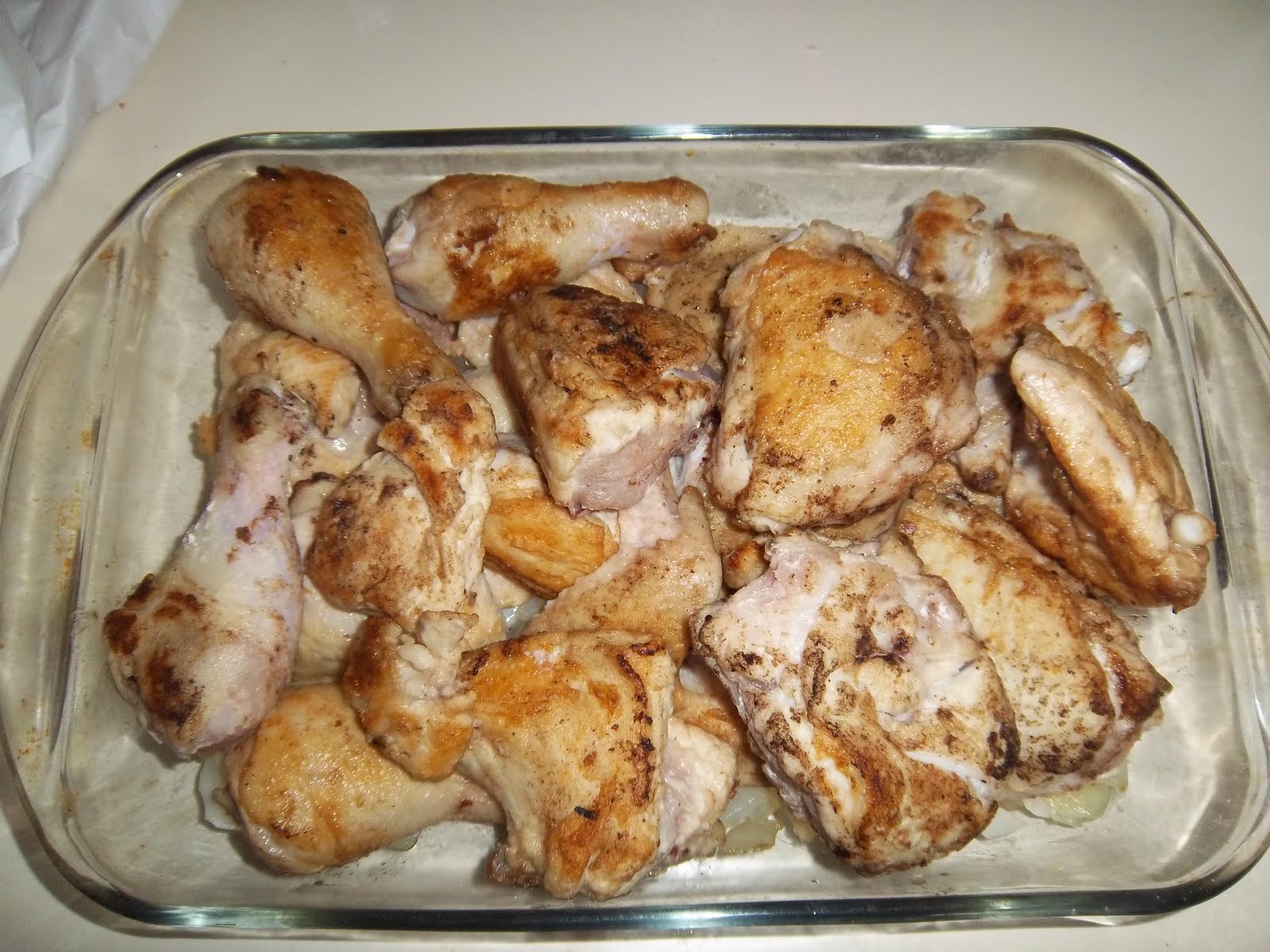
Whilst your pastry is resting in the fridge, chop a large onion and soften it in two ounces of butter. Remove the onions from the pan and spread them on the base of a wide, shallow pie dish or tray. Toss your chicken pieces in seasoned flour, turn up the heat in your pan, add a two more ounces of butter and fry the chicken pieces until they are a nice golden brown. Do not crowd the pan, so cook in two or three batches if you need to. Arrange the chicken pieces tightly together in a single layer on top of the onions.
Next, chop a leek or six spring onions alongside a nice large bunch of parsley. Place in a saucepan and cover with a quarter of a pint each of milk and single cream (that’s coffee cream for any Americans). Bring to a boil and simmer for two or three minutes. Pour this mixture over the chicken and season very, very well with salt and pepper.
Roll out your pastry and cover the pie, using some beaten egg as a seal. Make a hole in the centre of the pie large enough to fit a kitchen funnel. Jane then asks us to make a pastry rose to fit on top of it that also has a hole (so the steam can still escape). Decorate with more pastry if you like. Brush the pastry with more beaten egg. Bake at 220-230°C (425-450°F) for the first twenty minutes and then lower the heat to 180°C (350°F) for the remainder of the cooking time – an hour should do it.
Just before the pie is ready, bring half a pint of double cream to the boil, so that when it is cooked, you can take the pie from out of the oven, remove the pastry rose and pour in, with the aid of your funnel, the hot cream. Then replace your rose.
The pastry is good hot or cold, says Jane. It went for just warm so that the sauce would thicken almost becoming jelly (a benefit of using chicken on the bone, rather than just the meat cut into pieces).
This is perhaps a good point to mention the proper English way of serving up a pie like this. Using a knife, cut away the piece of pastry you would like to serve and place it on the side of the pie. Next, spoon out the filling onto the plate and perch the pastry on top of it. Do not go digging straight in there with your spoon messing up the pastry and getting all mixed up with the filling. This is a deadly sin at the Buttery residence and you will be thrown out should you attempt it.
#303 Cornish Charter Pie. What a great pie! The ingredients made a thick creamy chicken soup that is delicious in itself and the chicken was wonderfully tender from being cooked in all that milk and cream. Much better than the last chicken pie from the book, which was insipid by comparison. This will be my staple recipe for chicken pie in the future (unless anyone has one that can beat it). 8.5/10.
#299 Leg of Lamb Stuffed with Crab
For the 300th recipe I got a few people round to mine for a little dinner party. Number 300 would hopefully be impressive and I wanted to do something for #299 that would be impressive too and this recipe certainly sounded the part. I also wanted something that dated in the eighteenth or nineteenth centuries, again to match receipt 300.
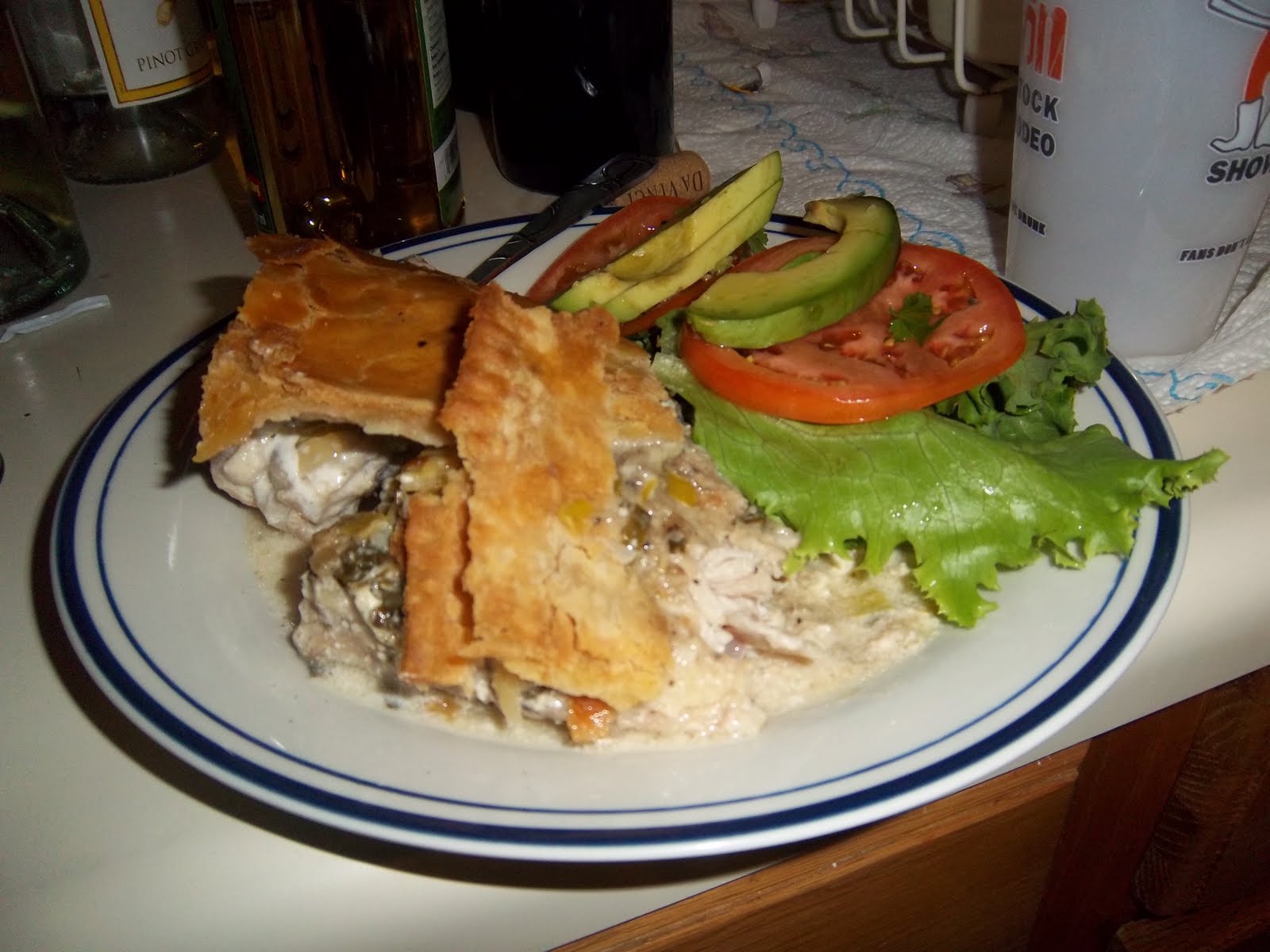
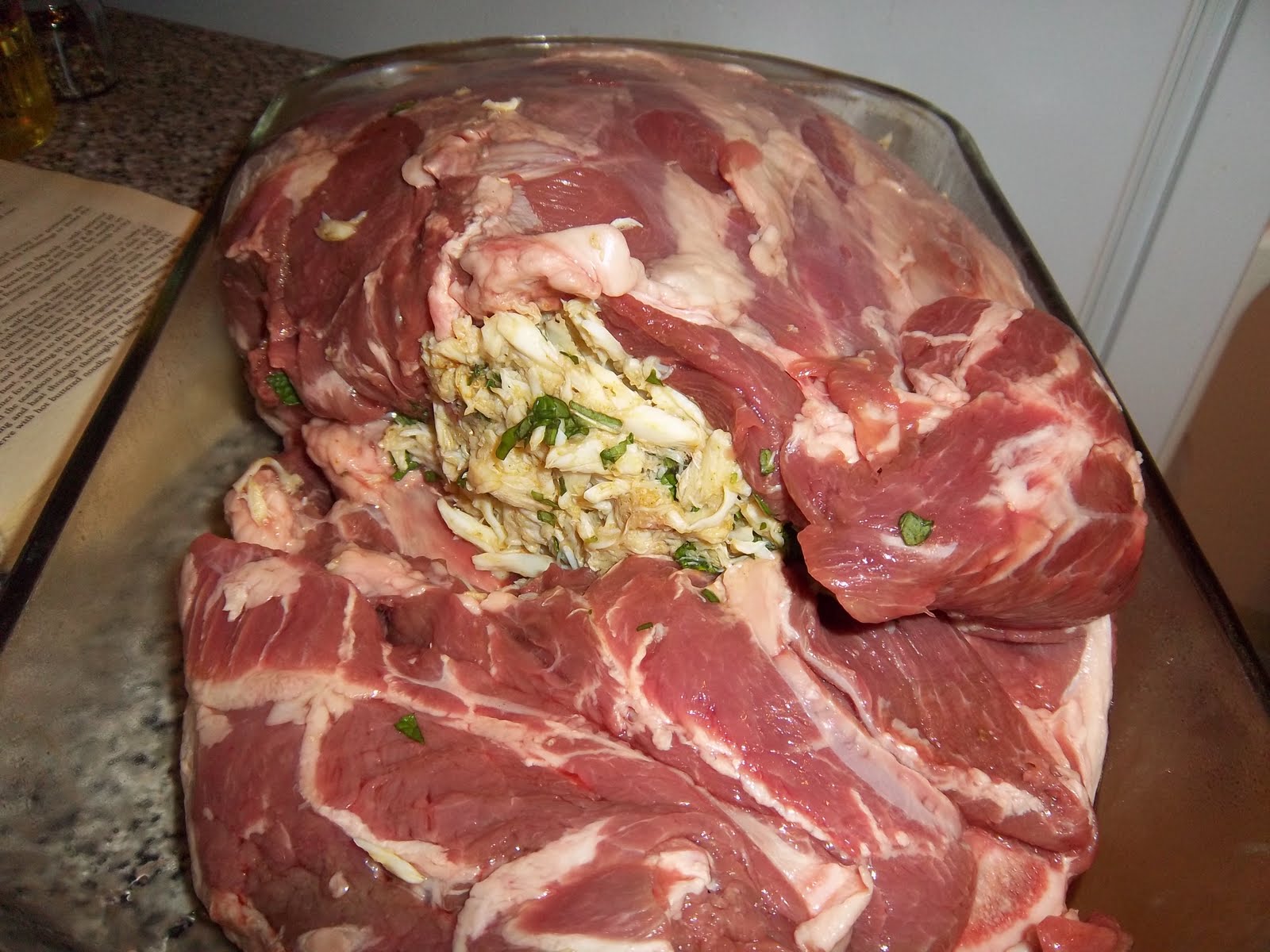
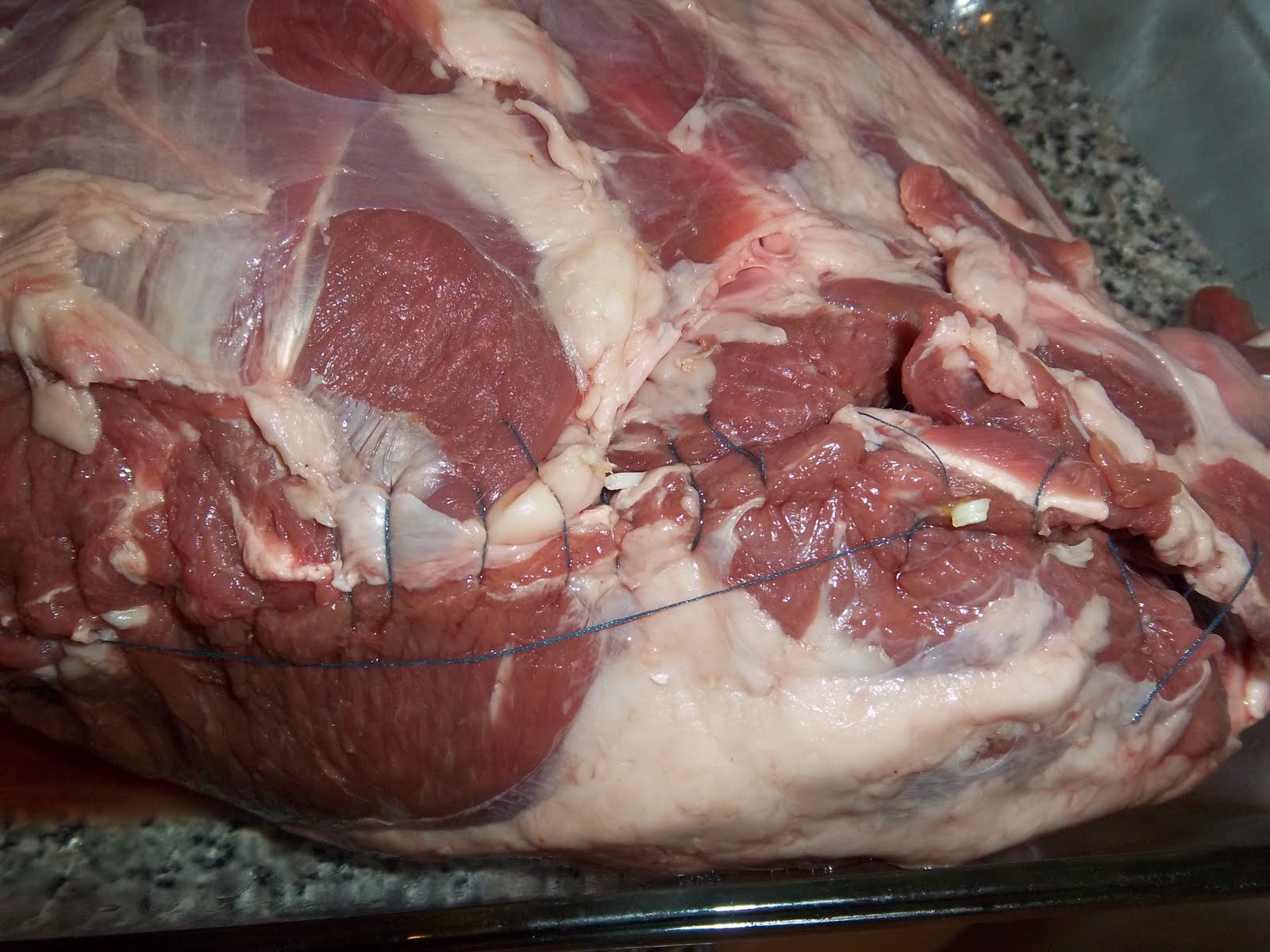
A recipe for a leg of lamb stuffed with ‘a forcemeat containing the meat of a crab or lobster … [with] a little grated lemon peel, and nutmeg‘, appeared in The London Art of Cookery by John Farley (1811), so it has a decent history, though this kind of food has very much fallen out favour in England. However, one particular chef gave it a breath of new life in the 1970s. A chap called Guy Mouilleron came up with the recipe that appears in English Food and therefore here in the blog, after some French chefs who were working in London were having a right good-old laugh at the English’s eating habits. “Fancy” one of them said “they even eat lamb with crab!” Chef Mouilleron thought it sounded like a good idea and conjured up a recipe. It’s funny that every British (and Irish!) person I’ve spoken to about this recipe has thought it just a bizarre as those French chefs.
There’s no need to be freaked by this combination though, says Jane, meat was often ‘piqued’ with fish all the time to give it extra flavour; the idea is not to impart a fishy flavour though, but a mysterious deliciousness. This is true as I already knew after one the great recipes from the blog – steak, kidney and oyster pudding. Meats are also cooked with anchovies a lot too, especially lamb and that cornerstone of English cuisine, the Melton Mowbray pork pie. It seems these things are being lost because of the Englishman’s squeamishness of all things fishy in general.
It is strange to me that Americans – or, at least, Houstonians – don’t really eat that much lamb and getting hold of a full, large leg of lamb with the bone in isn’t really possible in Houston’s otherwise comprehensive supermarket meat sections. However, I did manage to get hold of one very easily from the very good Pete’s Fine Meats on Richmond Avenue.
The recipe also calls for crab meat of course. You can boil your own (see here for instructions) or buy one preboiled. Do not, says Griggers, buy frozen meat as it had lost most of its flavour. However, here in America, where folks like seafood, it is very easy to get hold of freshly picked crab meat in supermarkets, so if you are in the USA, there is no need for you to sit and spend thirty minutes picking the meat from a crab’s carapace. God bless America for making the recipe a little easier for yours truly.
If you fancy the idea of this combination, here’s how to make it:
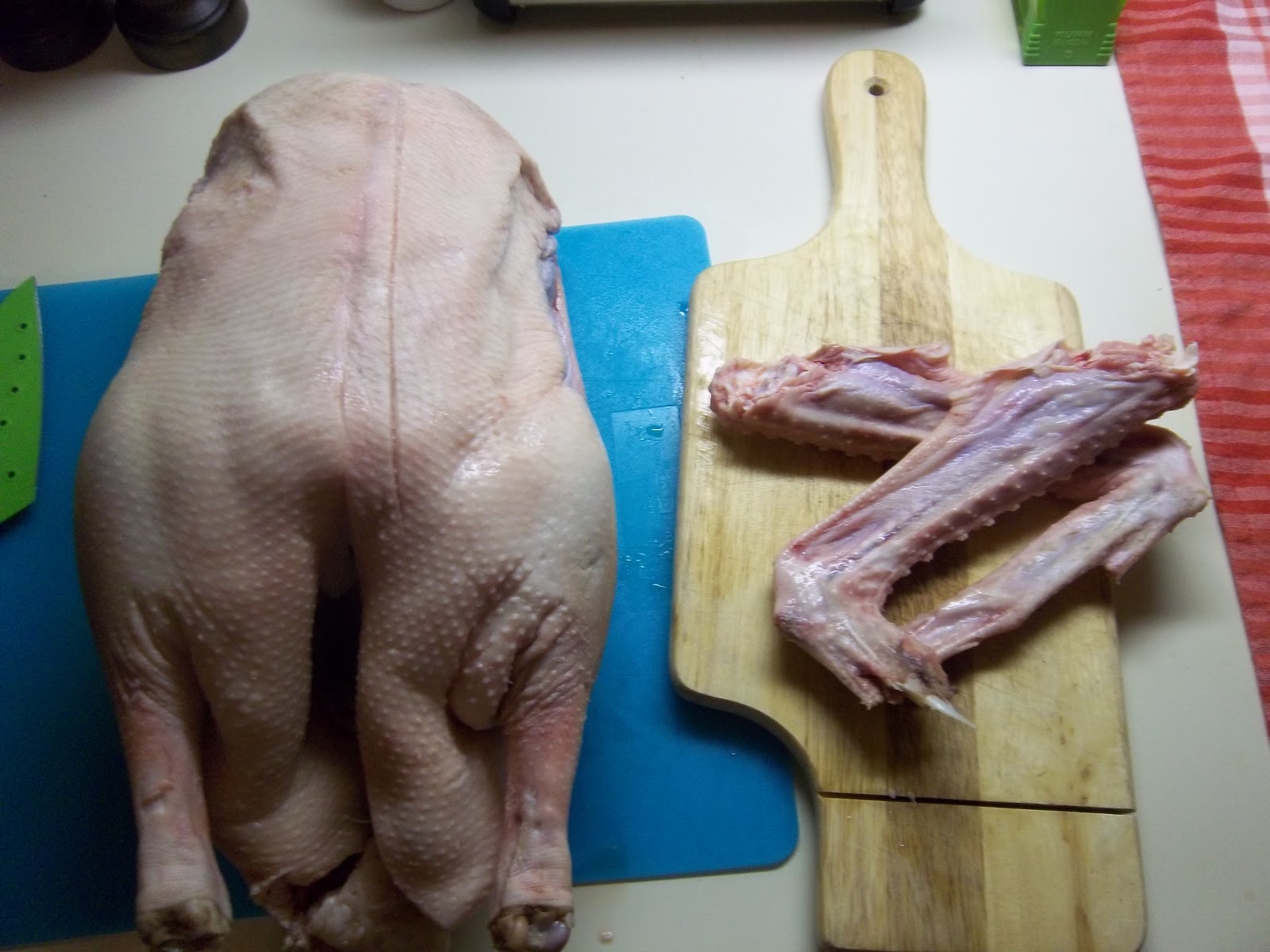
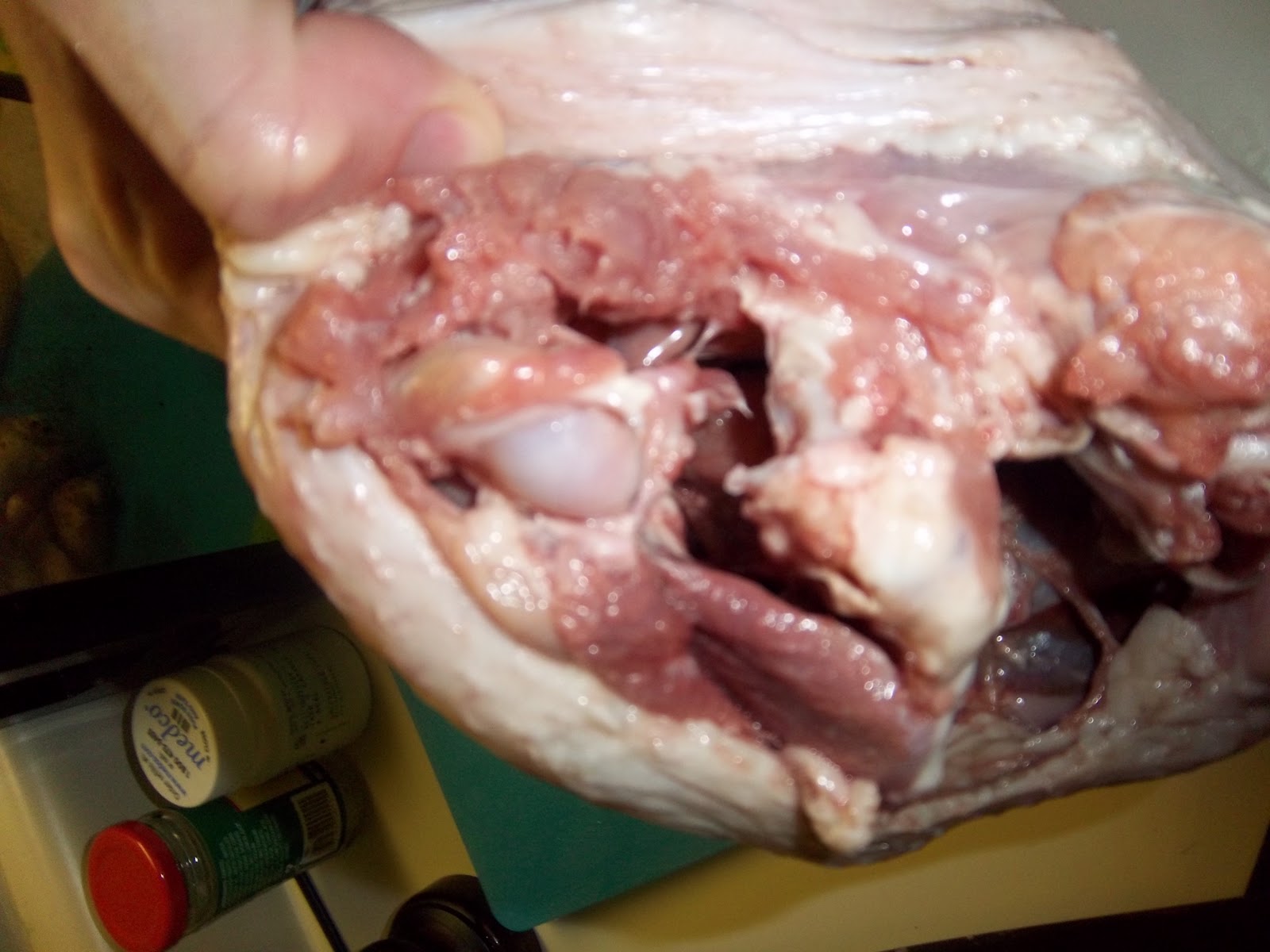
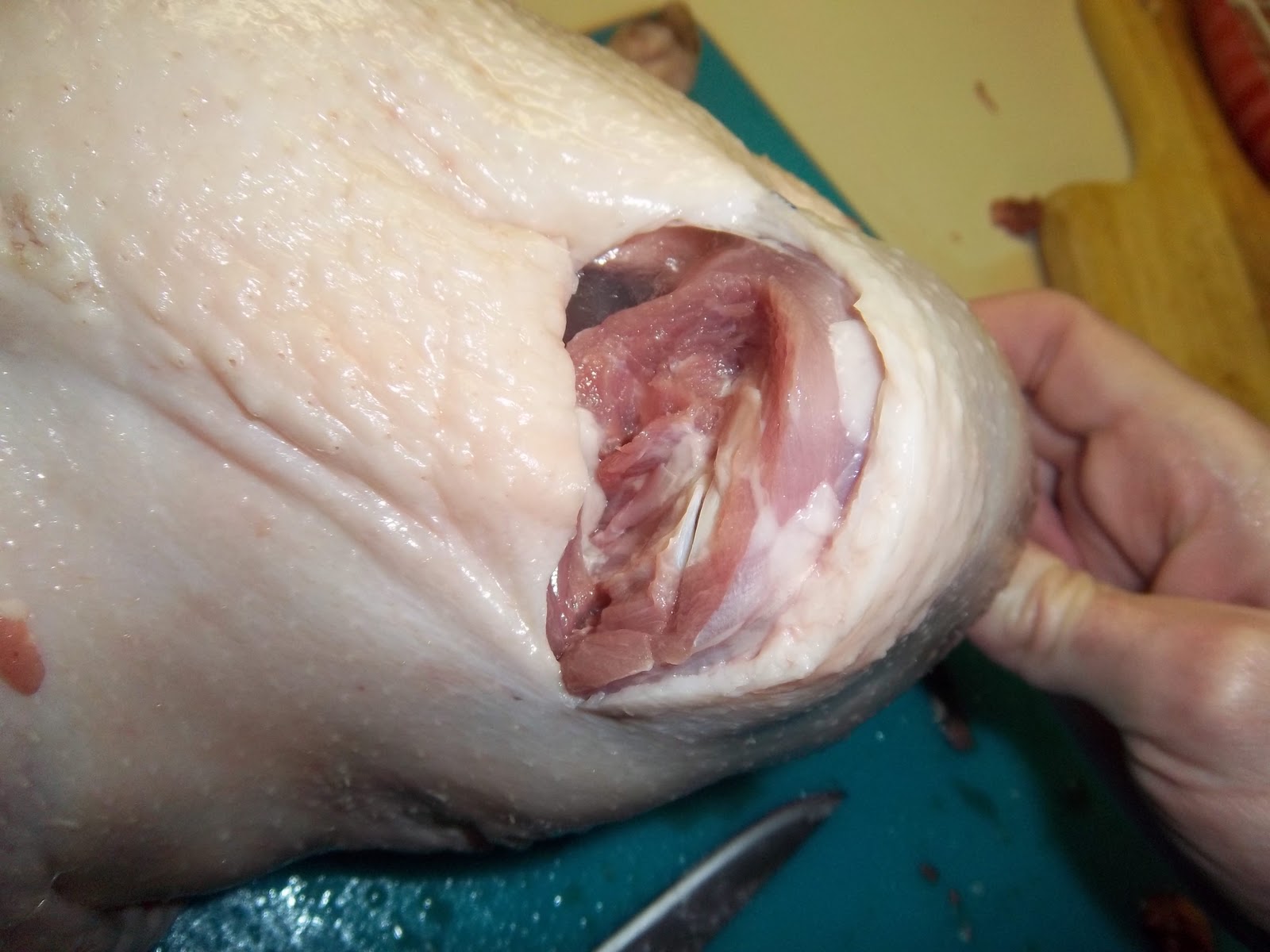
Start off by tunnel-boning a large leg of lamb. This is not that difficult to do – I followed the instructions here and it took just five or ten minutes to do. Use the bones to make half a pint of lamb stock (see here for recipe). Season the inside and outside of your leg.
#298 Pulled and Devilled Turkey, Chicken or Pheasant
“One of the most delicious dishes of eighteenth-century cooking, indeed one of the best of all English dishes“, says Griggers. That’s quite a statement. The idea behind this receipt is that it uses up that left-over Christmas or Thanksgiving turkey “with the glory it deserves“. It is nowhere near either of those two holidays, but in the receipt a roast or boiled chicken or a brace of roast pheasants can be used, and I must admit it does seem like a good dish for summertime as it is serve with bread and salad rather than stodgy potatoes and vegetables. Plus I was in the mood for some nice chicken. Perfect for hot, hot Houston eating, I reckoned. I made this for some friends to try – Danny, Eric and a Neil Cooks Grigson virgin, Jahnavi.
The turkey, chicken or pheasant is both pulled and devilled because the brown meat (i.e. leg and thigh) and the white meat (i.e. breast) are treated differently, with the brown getting a spicy marinade – the devil! – and the while meat being pulled apart into thready pieces the “thickness of a large quill” and cooked in a buttery-cream sauce presumably to temper the spicy devilled meat. Though this is an old recipe, I could find no information on it, though the inclusion of the mango chutney and the Cayenne pepper suggests an early Indian influence on English cuisine.
Although there is the big #300 coming up, this recipe marks the mid-way point through the leviathan of a chapter – the meat section. I’ve not done half as many of the strange or tricky ones that I have intended, but expect some when I move to St Louis later this month. I won’t have much of an option soon, as that’s all will be left to do!
Here’s what you do:
First prepare the appropriate fowl for the dish:
Roast turkey, you’ll need a leg (slightly underdone, if possible) and around a pound of cooked breast meat.
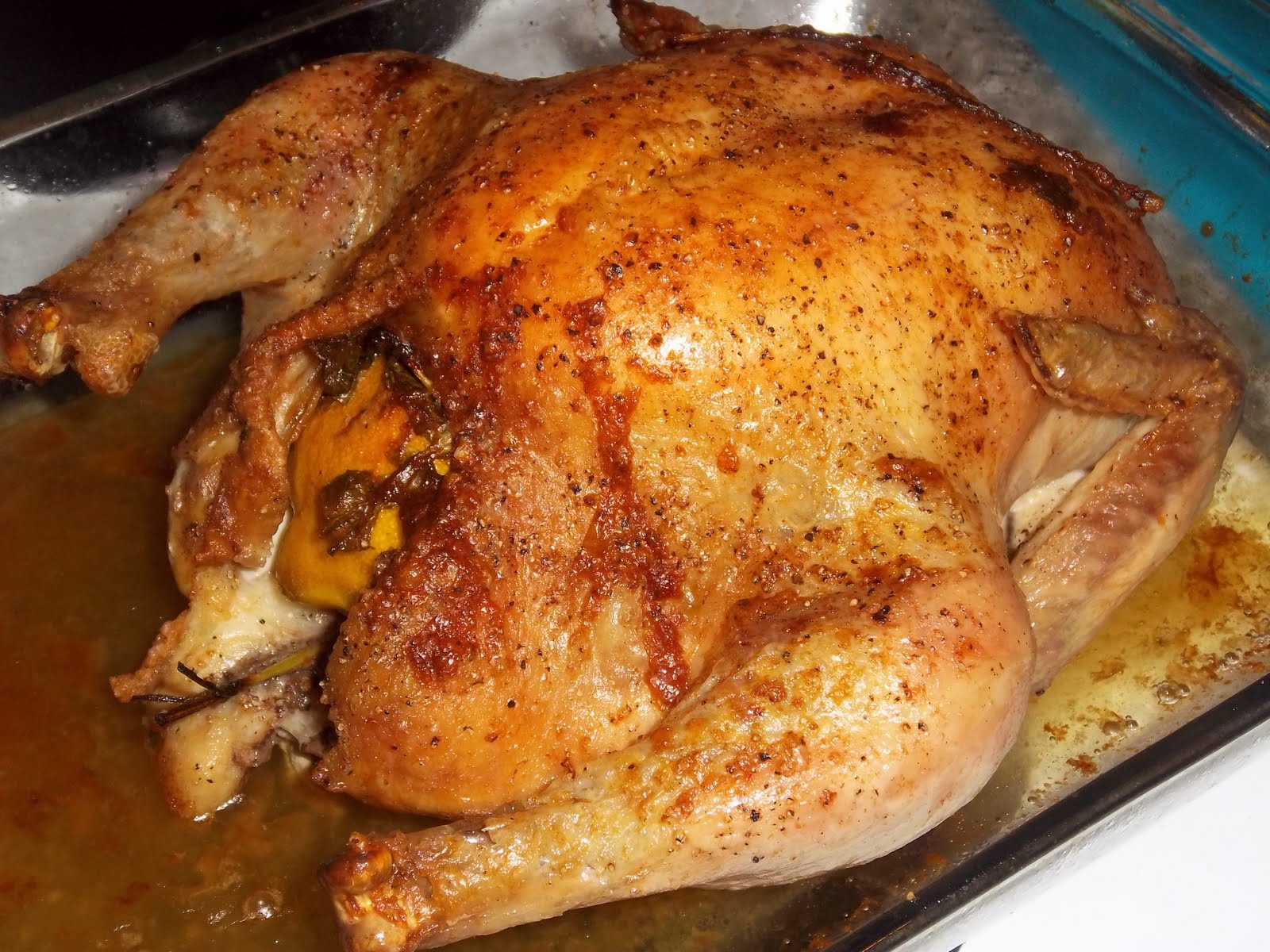
For chicken, you can use a boiled or roasted one, but try and undercook it. I did roast chicken and just missed off the final twenty minutes of cooking time.
For pheasants, a brace of either stewed or roasted ones will suffice!
Take the brown meat from the leg bones, keeping the pieces quite large and make some good, deep slashes in the meat. Now make a devil sauce by mixing together a rounded tablespoon each of Dijon mustard and mango chutney, a tablespoon of Worcester sauce or half a teaspoon of anchovy essence (I went with the former), a quarter teaspoon of Cayenne pepper, a little salt and two tablespoons of corn – or some other flavourless – oil. Pour this over the brown meat, making sure you work it into the slashes you made. The easiest way is to do all of this inside one of those zip-lock freezer bags. Let the meat marinade for a few hours, though I wouldn’t leave the chicken more than two as it is the most bland of the three birds here; pheasant or turkey could easily take four or five though, I reckon. Now lay the devilled meat on a baking tray and grill it under a high heat until it turns a delicious dark brown colour. Keep it warm.
Whilst the devil does its work, get on with the pulled part of the dish. Pull the breast meat apart with your fingers and set aside. For the pulled sauce, melt seven ounces of butter in a wide pan and then add half a pint of double cream. Bring to a boil and let it bubble for a couple of minutes before adding the breast meat plus any bits of jelly, then season with salt, pepper and lemon juice. Lastly, stir in some chopped parsley. Spoon into the centre of a serving dish or plate and place the devilled bits around the outside.
Eat with bread and a salad.
#298 Pulled and Devilled Turkey, Chicken or Pheasant. Griggers really built this one up, and I have to say that it more than lived up to expectations. The devilled bits were deliciously spicy and salty and were perfectly complimented by the creamy and surprisingly light pulled sauce. Definitely the best recipe from the Poultry section so far, but then what can be bad about spice, butter and cream? That’s the three major food groups, isn’t it? I can’t wait for Christmas now, I’m going to get an extra-large turkey just so this can be made the next day, and it is infinitely better than turkey a sandwich, that’s for sure! 9.5/10.
#296 Tongue and Mushroom Crumble
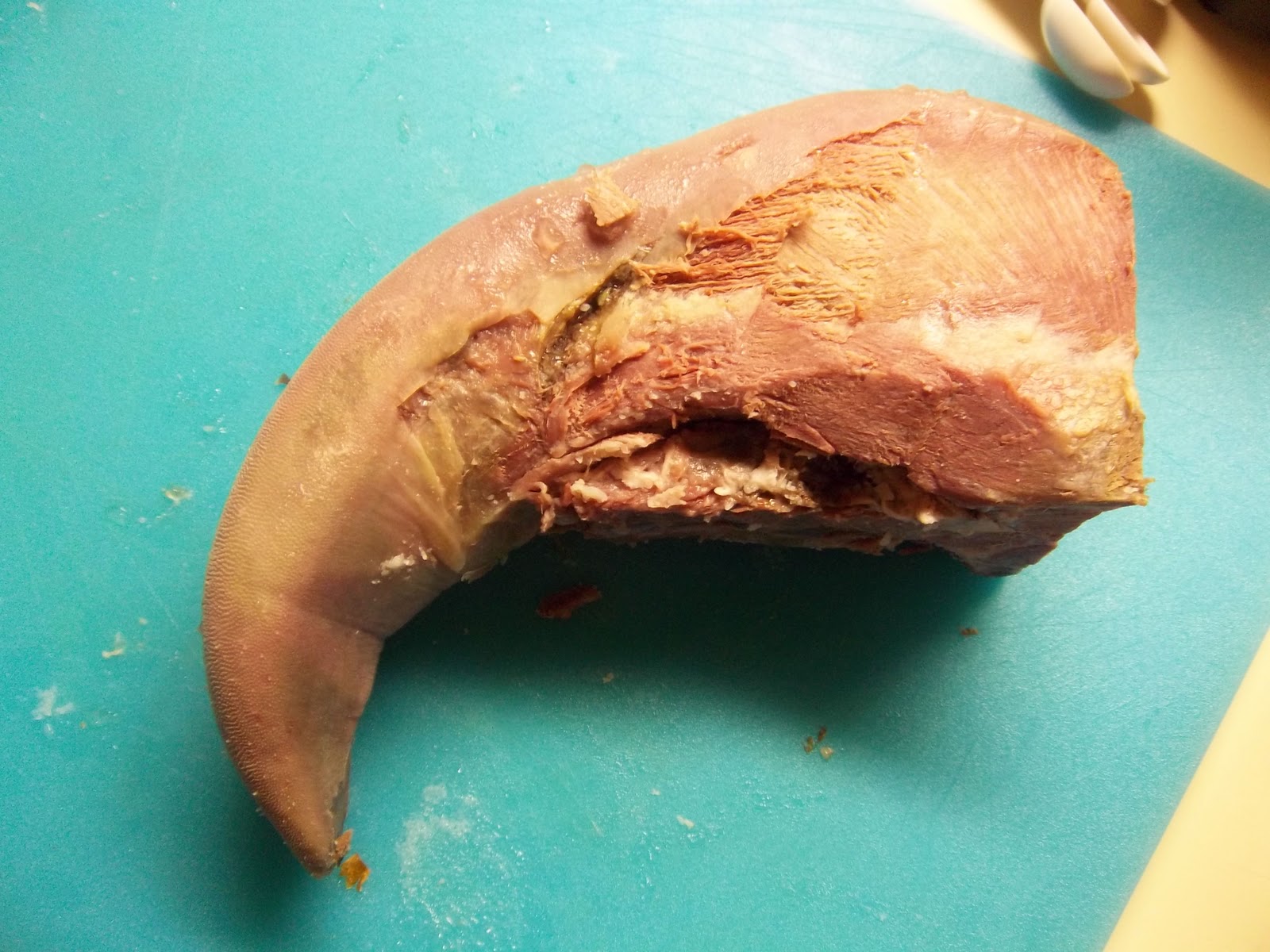
Around fifteen minutes after deciding to cook all the recipes in English Food, I had a first proper look through the good book. It was then I realised that some of the recipes were pretty bizarre, and this one stood out; I had not eaten tongue then, but now I have done a couple of tongue-based recipes so I wasn’t squeamish. Though a tongue crumble is still a bit weird. I made this and took it round to a small gathering of friends to try. There were mixed attitudes…
There’s not much of an introduction to this recipe – Griggers says nothing about it in the book and after an internet search, I was also none the wiser. Recipes did crop up, but there was, alas, no background or history to it. Here’s a nice painting with an ox tongue in it though:
To make the dish, you need to start with pickled tongue weighing around 3 ½ pounds – you can use any tongue you like: ox, calf or pig (I went with ox). You can pickle them yourself (look here for a post that fills you in on this) or get them pre-brined by the butcher. The tongues should be just lightly brined, so if you are doing your own, just leave them in the brine for a day or two. If it’s from the butcher’s shop, you’d be best to soak the tongue(s) overnight in cold water as they may have been in his brine crock for quite a while.
Place the tongue(s) in a stockpot along with a chopped onion and carrot, a bouquet garni and half a pint of dry cider. Top up with water to just cover. Bring slowly to the boil, skim if you need to, and simmer very gently until cooked – this could be one hour for pig, 90 minutes to two hours for calf and three hours for ox. You can tell a tongue is ready if a skewer goes in without much resistance. Don’t worry if you cook it too long, as long as the water was barely simmering, the tongue will still be moist, this because tongue is a fatty meat, around 70% fat in fact.
Take the tongue out of the pot, but keep the stock, let the tongue cool slightly so you can peel the skin off and cut away the sinew from the blunt end. There are some quite large blood vessels and sinew running along the underside of a tongue, so turn it over and cut that away too.
Now slice the tongue, removing any more gristle as you go – there is none as you approach half way. Arrange the tongue on the bottom of a buttered ovenproof dish. Next cook down 4 ounces of sliced mushrooms in one ounce of butter and scatter them over the tongue. Whilst they are cooking, finely chop a medium onion and cook it gently in two ounces of butter – cover the pan so it doesn’t brown. Once softened, stir in a rounded dessertspoon on plain flour and let it cook for a couple of minutes. Whisk in 6 tablespoons of dry white wine. It will instantly thicken. Thin it out with some of the stock until you have a sauce the consistency of thin gravy. Cook for a few minutes, adding more stock should the sauce become too thick, season and pour it over the tongue and mushrooms.
Next, make the topping by making some fresh white breadcrumbs using a blender. Griggers says to use 1 ½ ounces of bread, but you may need more. Sprinkle this over the tongue and sauce and bake in an oven preheated to 190°C (375°F) until all is bubbling. Because everything has been cooked already, it is just a heat-through that’s required, so it can all be made in advance.
#292 Isle of Man Salt Duck
After returning from my little trip back to England and Ireland, I wanted to cook something that evoked some memories of it whilst all was still fresh in my mind. There are no Irish recipes in English Food, but there are a couple of Manx recipes (if you are from the Isle of Man, you are Manx). When Hugh and I flew the short distance from Belfast to Liverpool, we looked out the window and he told me about the bits of coastline and other features, and of course the Isle of Man was pointed out, looking surprisingly small. I’ve never managed to go to the Isle of Man, but it looked very pretty from the air.
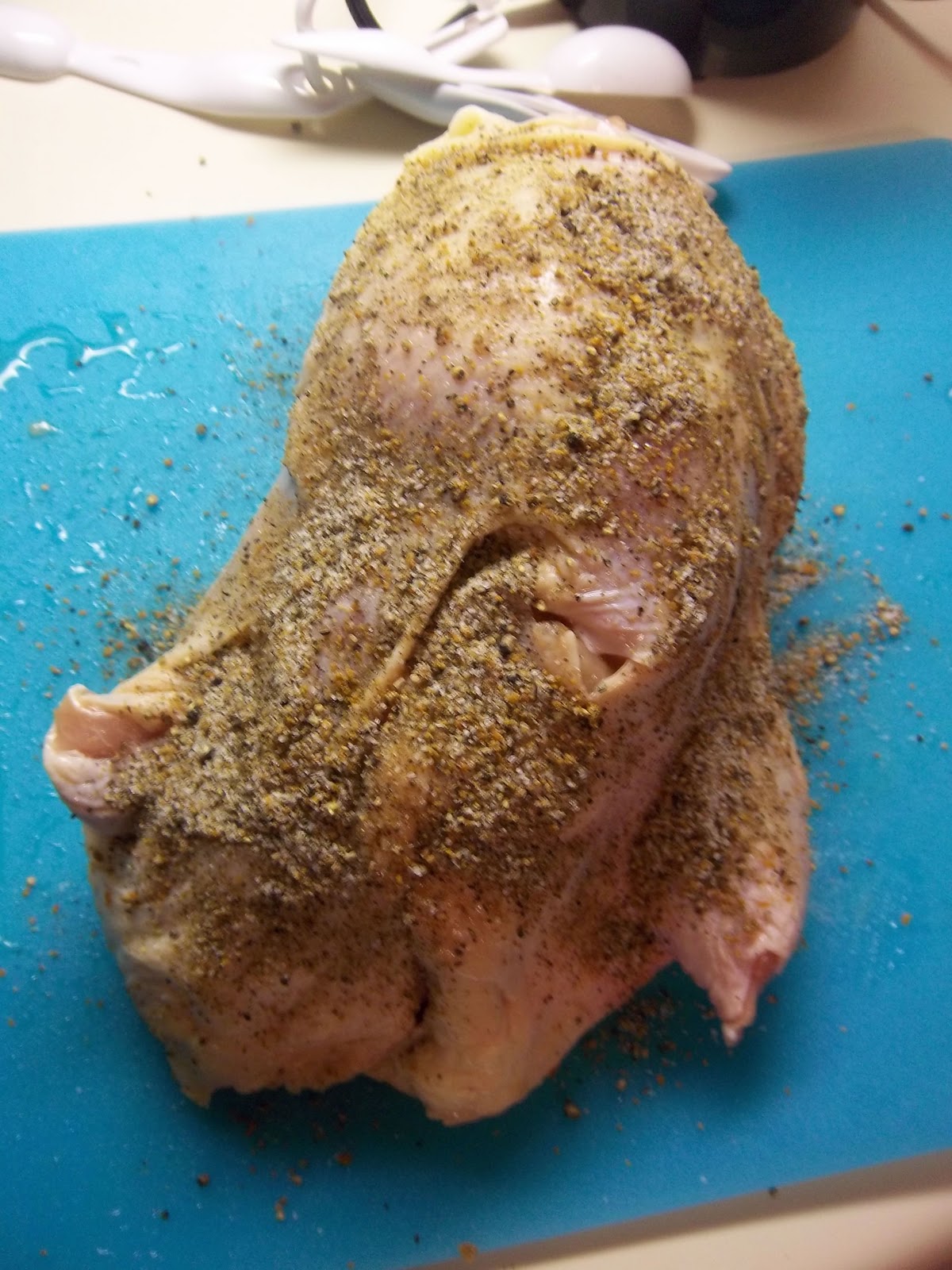
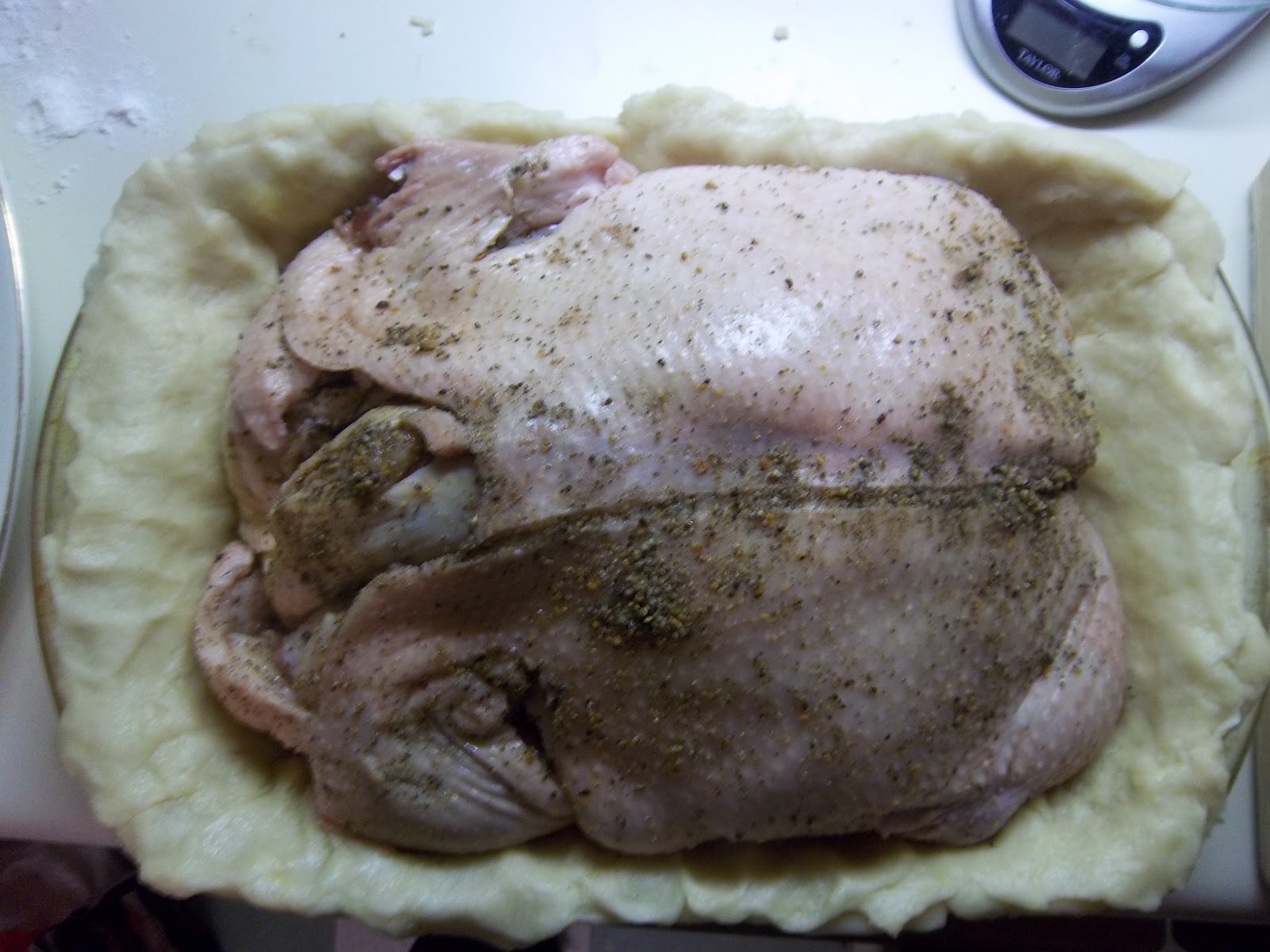
This is apparently a traditional Manx cured meat dish, but I did a quick internet search and could find any references to it at all, so I can’t give you any background information I’m afraid, Grigsoners. The cure is very simple to do; you simply have to pack coarse sea salt inside and outside of a duck 24-hours before you want to cook it. I assume in the days when this was done for actual preservation of meat, rather than for flavour, the duck could have been cured for several days or weeks. When you are ready to cook it, brush off the salt, rinsing off any tricky to remove bits and place in a pot with enough water to barely cover it.
Cover, bring to a simmer and let it happily gurgle away for between an hour and ninety minutes, depending on the size. I am always worried about doing the boiled meat recipes in the book, I always think they are going to come out insipid and boring, especially in this case as there was no call for any stock vegetables or seasoning with spices. I invited my friends Danny and Eric around to sample the delights – hoping it would taste okay…
If you like, you can cure your duck in brine instead – check out the recipe and instructions on brining meat here.
While the duck is simmering away gently, you can be getting on with the accompaniments: an onion sauce and colcannon (an Irish invention of potatoes and either cabbage or kale mashed together).
For the onion sauce, chop four large onions and add them to a pan with just enough water to cover them, season, cover with a lid, and allow them to simmer for fifteen minutes. Drain them over a bowl, so that the cooking liquor is saved. Add half a pint of milk and just under a pint of the liquor to the pan along with half an ounce of butter and bring to a simmer. Measure two level tablespoons of cornflour and slake it with a little more cold milk and whisk it into the hot sauce; it will thicken instantly. Simmer for a few more minutes so that the cornflour can cook out. Add the onions back to the pan and season with plenty of salt and pepper – very important here to season it very well – plus the grated rind of a lemon. Add more liquor or milk if it becomes too thick. This sauce can be (and was!) made in advance – make sure you keep it covered with a lid or some cling film to prevent a skin from forming if you do.
For the colcannon, boil equal amounts of potato and kale or cabbage together in a pan. Drain, and mash with butter and salt and pepper. If you are feeling extravagant, add a little blob of cream.
When the duck is cooked, make sure you let it rest for about twenty minutes before you carve it.
#292 Isle of Man Salt Duck. I must admit, when the duck was taken out of pan to rest, it did not look that appetizing with its podgy fat and no hint of colour. I’m used to eating roast duck. However, when I cut inside, there was the most tender duck meat within. It was salty, but not overpoweringly. It also had very subtle flavour too, as did the onion sauce, which I expected to be terribly strong. Instead, it was light and very good for a spring or summer meal. The colcannon was a great accompaniment too. This kind of good, but bland food, really requires heavy seasoning, otherwise it is in danger of becoming tasteless pap. This was not tasteless pap however: 7/10.