#259 Banbury Cakes

There has been previous debate and discussion here on Neil Cooks Grigson on the what makes a Chorley cake different from an Eccles cake. It wasn’t really solved, but I thought that an Eccles cake was made with shortcrust pastry and the Chorley was made with puff pastry. It seems that coming in from leftfield to further confuse us is the Banbury cake. Which is what I thought was a Chorley cake. As far as I can see the only difference is maybe that there are more species in it as well as a touch of rum. Does anyone know the differences between the three?

Banbury cakes certainly go way, way back – Griggers found a recipes for them in a book called The English Hus-wife, written in 1615. Hus-wife: what a great word. I’m going to start using it in conversation.

Anyways. In the EEB department of Rice Uiversity we had a Thanksgiving dinner and we were all asked to bring something in for it. These little cakes seemed like the perfect thing to make for a buffet – no need for slicing or even plates. I’m always slightly nervous of making recipes from the book for these kinds of things in case the recipe is God-awful – like previous bad experiences like the Whim-Wham, English Rarebit, the Rice Cake or the Mocha Cake.

First of all, melt two ounces of butter in a saucepan. Remove from the heat and add four ounces of currants (or if you live in America, raisins!), an ounce of candied chopped peel, two ounces of sugar, ½ a teaspoon each of ground allspice and nutmeg as well as ¼ teaspoon of ground cinnamon and a tablespoon of rum. Allow to cool.

While you’re waiting, roll out some puff pastry thinly and cut seven inch wide circles. Put a spoonful in the centre of the circle in line about five inches long, drawing and folding in the pastry, pinching in the edges. Turn them over and flatten them slightly with the rolling-pin so that you have oval shaped cake. Make three slashes over the top, brush with egg white and then sprinkle with sugar. Bake for 15 minutes at 220°C (425°F). Allow to cool on racks.

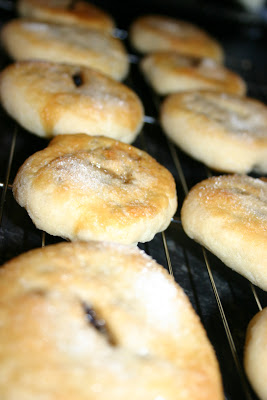
#259 Banbury Cakes. These were very good indeed and they went down well at the thanksgiving dinner which was good, where I got the chance to shamelessly plug the blog. I think I prefer these to the Eccles cakes too, though there isn’t much in it. I scoffed down two as soon as they were cool, which wasn’t good as I was meant to be off wheat at the moment. One thing led to another and I ended up drinking wheat beer and eating a giant pizza in Late Nite Pie. Oh dear. 7.5/10.
#231 Seed Cake

In my humble opinion, one of the most therapeutic things one can do is spend a few hours baking in the kitchen. Last Saturday I definitely needed therapy – stupid Microsoft wiped a load of my work; I shall not go into the boring details. Baking this cake helped me a bit; though in all honesty, getting completely pissed later on that night helped rather more.

This recipe is a variation on the basic pound cake (see here) and there have been a few of these baked by yours truly (see here). Pound cakes are very easy to make – they’re an all-in-one batter recipe, so not technique is atually required. I would advise you to use a hand mixer over any other type of mixer, which produces a better, lighter cake. Follow the recipe for the pound cake and just add a dessertspoon of caraway seeds. Easy.


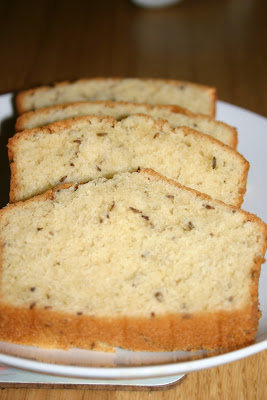
#231 Seed Cake. The best of the pound cakes thus far. Not necessarily because it’s the best recipe, but because I think I’m getting better at making cakes. This was deliciously moist and didn’t need any buttercream or anything. The caraway seeds went very crispy inside. To ensure a good cake, I should say again that you should use a hand mixer and that you should also put a dish of water in the bottom of your oven if it is a fan-assisted one to prevent the cake drying out. Anyways, a great cake 7/10.

#226 Eccles Cakes

This time of year there is no seasonal fruit, except for champagne rhubarb, and so we have to turn to stored apples and pears or dried fruits. Some people don’t like dried fruits, but I am a definite fan, and thought an attempt at the classic Eccles cake was well overdue. There has been a bit of a disagreement in the house as to whether the recipe in English Food is actually a true Eccles cake or not – Charlotte reckons it should be made with puff pastry and Griggers (and me!) reckons a lard shortcrust pastry. A quick look in the Dairy Book of British Food gives an extra point to Charlotte. Does anyone know the true answer? Give me your opinions on this one please! I’d hope it is a lard-based answer as that seems more Northern English to me. Griggers says that if it made with puff pastry, you have a Banbury cake, which is Southern English. Oh well, we may never know.

Makes 10-12 cakes.

First of all, make some pastry using 4 ounces of lard and 8 ounces of plain flour. While it rests in the fridge make the filling: melt together an ounce of butter with 2 ounces of caster sugar, then stir in 4 ounces of currants, an ounce of candied peel, plus half a teaspoon each of ground nutmeg and allspice. Leave to cool. Roll out the pastry and cut out circles around four inches in diameter. Place a spoon of the currant mixture in the centre and bring in the pastry by its edges so that you can pinch them together. Turn the cake over and gently roll them to flatten them slightly. Make a hole in the centre, brush with a little egg white and sprinkle with caster sugar. Bake at 220⁰C for about 15 minutes. Cool on a rack.


#226 Eccles Cakes. Whether they are true Eccles cakes or not, these were delicious. The filling was rich, but wasn’t too sweet and I liked the spice element (which I thought wasn’t in an Eccles cake). It also reminded me how good lard shortcrust pastry is. If you’ve never tried one – give it a go. 7/10.

#160 Rice Cake

Every Wednesday at work, one of us tries to make a cake and bring it in so we can all get together for a chat; something we rarely get to do. We have been a bit slack as a department recently, so I thought I’d make one. This seemed perfect, I had all the ingredients in, it seemed a little unusual, but basically a normal cake mixture, so great stuff… I expected this cake to be a real hidden gem – Jane Grigson write quite a lengthy entry on this cake and she says that she was easily converted from the ‘traditional’ flour-based cake.

Here’s how to make a rice cake:

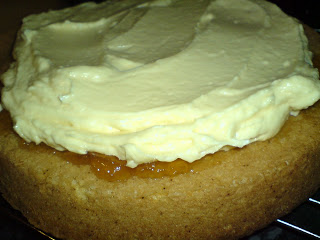
Cream 4 ounces of butter with 8 ounces of caster sugar and beat in three eggs one at a time. Stir in 8 ounces of rice flour and the grated zest of a lemon. Pour the mixture into a greased and floured 7 inch cake tin and bake at 180⁰C for anywhere between 50 minutes and an hour and a half. Jane doesn’t say to fill it with anything, so I used raspberry jam and Butter Cream I.

The world’s most boring cake:

you saw it here first!

#160 Rice Cake – 2/10. Totally crap! It was so bad I didn’t even bother taking it into work. The cake was so hard and dry, there was no spongy texture as there was no raising agent or gluten there. Also, because of the lack of gluten, the grains of flour remained granular. Bad, bad, bad! Its only saving grace was the jam and butter cream, and I did the butter cream wrong!!

#136-137 Sponge Cake II and Butter Cream I

April has not been a bumper Grigson month like March was. This is due to the fact I am uber-busy with my PhD work at the minute, plus I’m doing the tiling in the kitchen too which does not help. No indeedy. Anyways, enough of the excuses… A kick up the arse came from the fact I had to provide a cake for the Dictyostelium group lab meeting, so I thought I’d do something straightforward – a sponge cake with butter cream. Great stuff; they have separate recipes in the book, so it would be two Grigsons with one stone. There are two recipes for sponge cakes and two for butter cream in English Food and I have already attempted one of each (see here and here), although in a funny order as you can see – this is because the Butter Cream I required a sugar thermometer, which I didn’t have at the time.

Ok, here’s the cake recipe. A word of advice though before I carry on – do not attempt this cake unless you have either an electric mixer or a very strong wanking hand…

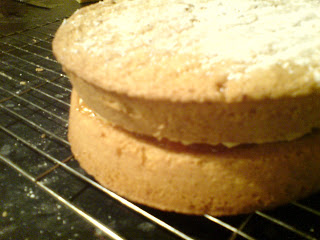
Start off by whisking three whole eggs together with 6 ounces of caster sugar until light and frothy – this took 10 minutes using the Kitchen Aid on full whack. Stop when the eggs have reached the ribbon stage. Whilst you are waiting for that to happen, heat the oven to 190°C and grease and lightly flour two 7 inch sandwich tins. Also, gently melt 2 ounces of slightly salted butter with two tablespoons of water. Once melted, leave to cool until at least tepid. When the eggs are whisked, gently stir in the butter. Now fold in 4 ounces of self-raising flour by sieving a small amount in at a time and gently folding it in with a metal spoon to prevent the air bubbles from popping. Divide between the two sandwich tins and bake for 15-20 minutes until cooked – use a skewer, or whatever, you know the drill. Cool on a wire rack. Griggers says jam and cream is the best, or a nice butter cream, like this one…

The butter cream can be made whilst you are waiting for the cake to cook – especially if it takes two attempts to get the bugger right!


Melt 4 ounces of caster sugar and a tablespoon or two of water in a small saucepan. Once dissolved, raise the heat and boil it until it reached the ‘soft crack’ stack, or 135°C. Be careful here: use a very small pan – too large and the sugar overheats too easily becoming a caramel, which will ruin the whole thing. Whilst it is heating up, put two egg yolks into a bowl and lightly whisk them. When the sugar is ready vigorously beat it into the eggs with a whisk. The mixture thickens up as the yolks are cooked by the hot sugar. When just tepid, beat in 4 ounces of unsalted butter in small amounts until it is all amalgamated. Once cool, you can add all sots of flavourings – I went with some vanilla, but Griggers recommends plain chocolate or a tablespoon of slaked coffee granules. Just go crazy, kids!

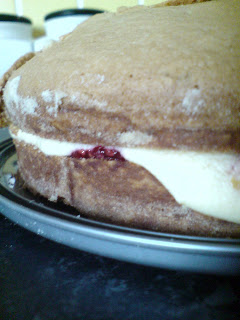
#136 Sponge Cake II – 9/10. When Griggers this recipe is foolproof, she did not say it was foolproof and brilliant. The sponge extremely light and not at all rubbery like the usual Genoese sponge on account (I assume) the addition of the melted butter. This is the best sponge cake recipe I have used. Excellent – go make it right now!


#137 Butter Cream I – also 9/10. Griggers totally slagged-off the half-butter (or even margarine, heaven forbid!), half-icing sugar as essentially awful. Having a soft spot for that type of butter cream I was keen to see the difference. The difference is huge – I know it is a bit of a faff using the sugar thermometer etc., but it is well worth it. Once you’ve tried it, ladies and gents, you’ll never go back…

#135 Butterscotch Cake

I was a little bored on Tuesday evening so I thought I’d bake a nice cake for Cake Wednesday at work. I knew there had been no takers this week with it being close to Easter. Plus I’ve not made a normal cake for ages. This one is a variation on the pound cake – I’ve made them before (here is the blog entry) so I won’t go through it. The only difference is that caster sugar is substituted for soft dark brown sugar which gives it a richer, denser molasses flavour. The exciting thing being the butterscotch icing – I’d bought a sugar thermometer recently and not used it yet. I went a bit wrong with icing. Because I was in a rush, I heated it too rapidly before the sugar dissolved properly. Plus I accidentally heated it to the firm ball rather than the soft ball stage, which meant it went a bit too stiff. Hey-ho. If you try it, remember that slow and steady wins the race here. A little practise is required I feel. Any hints and tips are happily accepted!


For the icing (do as I say, not as I do…):

Slowly heat 6 ounces of soft dark brown sugar, an ounce of butter and two tablespoons of double cream until everything had dissolved. Now raise the heat and boil until the sugar reaches the soft ball stage using a sugar thermometer (turn the heat off as it approaches the temperature, as it keeps on a-rising!). Allow to cool until ‘tepid’ and beat. I’m not sure what it’s meant to turn into, but mine was a very stiff blob of sugar. I managed to spread it over the cake top with a wet palette knife and everything looked okay.

FYI: In case you were thinking that butterscotch doesn’t sound very English, but rather Scottish, you would be a fool (as I was). Scotch is a ye olde English word for score as proper butterscotch is hard and needs to be scored before it is broken.

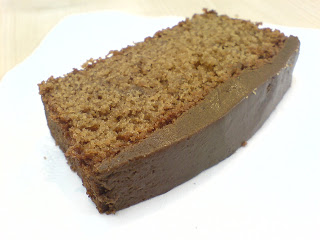
#135 Butterscotch Cake – 6.5/10. I liked the cake as it was piled with dark brown sugar, so it could not be bad, but it was a little dry. I have a feeling that it was overcooked though – I still haven’t got to grips with the old fan oven and sponge cakes. I remember getting a handy hint from Anthea (a sometimes commenter on the blog) that you should put a some boiling water in a roasting tin and place it in the bottom of the oven to stop it drying the cake out. Needless to say, I forgot to. Oh well. The butterscotch topping was very sweet and very tasty, even though it didn’t quite turn out as expected…

#120 Mr Frost’s Chocolate Cake

This one is a piece of piss to make and comes from a chap who owns (or, I presume owned now, as this book is quite old) a restaurant in Cirencester. Griggers likes it as it’s a nice classy version of chocolate cornflake or Rice Krispie cakes (though try my Mum’s recipe).

For this you need chocolate (plain or dark or a mixture), butter, nuts (any type – I used almonds and hazelnuts which are essential, you could use walnuts but peanuts are “right out”) and digestive biscuits. Weight out equal amounts of chocolate, butter and digestives and half the total weight of nuts. Roast the nuts for about 25 minutes in a low oven and remove any skins by rubbing them with a cloth, then chop roughly. Melt the butter and chocolate over a low heat. Keep an eye on them whilst you chop up the biscuits into small squares – don’t worry if there’s loads of crumbs, this is a good thing. Once the chocolate and butter have melted, mix in the nuts and biscuits. Pour into a lined tin so that it’s about a finger thick and cool in the fridge. Cut the cake into squares or fingers and keep cool.


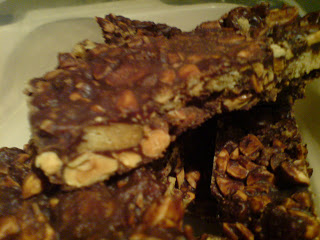
#120 Mr Frost’s Chocolate Cake – 6/10. Good old Mr Frost. The Grigson was right in that this is much better than crappy old cornflake cakes. It could’ve been improved with a few sultanas, but the good thing about this is that you can add whatever you fancy – crystallised ginger would be good, or marshmallows maybe.

#118 Banana Tea Loaf

It was my turn to make a cake for the Evolutionary Biology department’s Wednesday Cake Day, and as there are many a non-Briton in the department I thought I’d do something very English – a tea loaf. Tea loaves are great for several reasons; they taste nice and are lovely and moist, you can make them in advance (in fact they taste nicer if you do leave them); you put butter on the sliced loaf, and they are very easy to make. This one is particularly easy as there is no creaming of butter or anything like that to do.

First, sieve 8 ounces of self-raising flour, ¾ level teaspoon of mixed spice, ½ a teaspoon of salt and 4 ounces of caster sugar into a mixing bowl. Chop 4 ounces of butter into small pieces and add it to the flour along with one tablespoon of honey, 4 ounces of sultanas, 3 ounces of glace cherries, 3 ounces of blanched almonds or walnuts (or a mixture). Now the wet ingredients: 1 pound of mashed ripe bananas, 2 eggs and the juice of a lemon. Once mixed together nicely, turn the mixture out into a buttered 9 inch loaf tin and bake of an hour at 180ºC and then half an hour at 160ºC. Allow to cool on a wire rack and store in an air-tight container.


#118 Banana Tea Loaf – 8.5/10. Marvellous! This is quite a hefty tea loaf and I didn’t think our wee group would get through it, but we made light work of it. The addition of the cherries and nuts made it a little Seventies-looking and I thought would make it overly rich, but it wasn’t the case. Very, very good – thinking about when I’ll make the next one!

#86 Walnut Cake

We all went up to Cumbria to visit Frances and James last weekend. It was also Dean’s birthday, so I thought I’d make a cake. On asking him what cake he’d like, he said ‘anything, as long as it’s not from that bloody book of yours’. Well that’s just lovely, isn’t it? I think he’s expecting brains and gonads in every recipe. After giving many alternative suggestions and turning them down, he eventually went for a walnut cake. Where did I find a recipe? You know! It’s a good cake too, for a walnut cake – the icing is a complete faff though. If you can’t be bothered to do the icing, do butter cream instead.

For the cake:
Cream together 5 ounces of butter with 6 ounces of sugar; beat in 2 beaten eggs, then 8 ounces of sifted self-raising flour, 3 ounces of coarsely chopped walnuts and 4 dessertspoons of milk. Lastly, add half a teaspoon of vanilla essence (or use vanilla sugar instead of normal sugar). Line an 8 inch cake tin, add the mixture and bake for 1 to 1 ¼ hours at 180°C. Test with a skewer, and when ready turn out onto a cake rack and allow to cool.

For the icing:
A bit tricky this bit…Stir a ¼ of a pint of water and a pound of sugar lumps in a pan under a low heat until the sugar gas dissolved. Raise the heat and add a generous pinch of cream of tartar. Boil the syrup until it has reached the soft-ball stage which is 120°C; easy if you have a sugar thermometer, which I don’t. Alternatively, as it boils, carefully remove a teaspoon-full of syrup and drop it into small cold water. Fish out the blob of sugar, and if it is soft but can form a ball between your fingers, you are done. You mustn’t stir the syrup as it boils; this reduces the temperature, causing the sugar to crystallise, resulting in total disaster. It takes a few minutes, so in the meantime, whisk two egg whites until stiff in an electric mixer, and when the syrup is ready pour it into the egg whites with the electric mixer on full-whack. Keep mixing until it has nearly set and then add a teaspoon of vanilla essence. You should have a lovely smooth meringue icing. Spread this over the cooled cake with a palette knife and decorate with some walnut halves.

It is very important to wait until the icing has nearly set – I didn’t and it went everywhere!

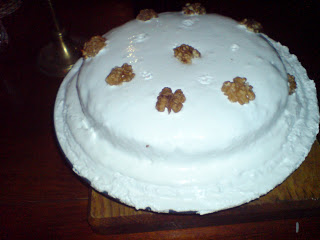
Not a wedding hat, but in fact, a cake.

#86 Walnut Cake – 6.5/10. Certainly an above-average cake as far as walnut cakes go. Not normally a big fan really. I think it may have been nicer with some coffee-flavoured butter cream instead of the posh icing, but that’s just me.

#83 Almond Fingers

The almond finger. A Mr Kipling favourite I think. I recently decided, since there is no such thing as a bad cake, that if I am to avoid a severe sugar and carbohydrate addiction that I should never buy a cake again; if I want one, I’ll just have to bloody-well bake one meself. I remember liking these as a student, and my Mum used to make them when I was little, so I thought I’d give Grigger’s recipe a go. Griggers reckons that the difference between the flavour of the commercial ones and the home-made. Also, I was off to my mate Stuarty’s flat, and thought it would be nice to bring round something home-baked. People don’t do that kind of thing these days do they? We had a grand old night playing Guitar Hero and getting sloshed.


The recipe is in two stages: First of all you need to make a sweet pastry for the base. Cream together 4 ounces of softened butter and 3 heaped tablespoons of icing sugar. Next, beat in an egg, then a tablespoon of lemon juice, and 8 ounces of plain flour. Wrap the pastry in cling film and let it rest in the fridge for an hour, or the freezer for 20 minutes if rushed for time, as I was. Roll out the pastry into a lined 7 x 11 inch Swiss roll tin. Don’t worry if it breaks up – sugary pastry always does – just fill in any holes with spare bits. Lastly, spread a thin layer of apricot jam over the pastry and phase one is complete!

Now make the filling: Cream together 5 ounces of softened butter with the same weight of vanilla sugar (make your own), beat in 2 eggs, then a heaped tablespoon of flour, 4 ounces of ground almonds and lastly, 2 tablespoons of dark rum. Spread this evenly over the sweet pastry and sprinkle over 2 ounces of slivered almonds. Bake at 180ºC for 35-40 minutes.

#83 Almond Fingers. 7.5/10. Jane was right; much better than any bought nonsense. The whole remains very moist, almost like a cookie. I feel that I was a bit too tipsy to appreciate it, I hear Stuart was still eating them a couple of days after, so they can’t have been bad.