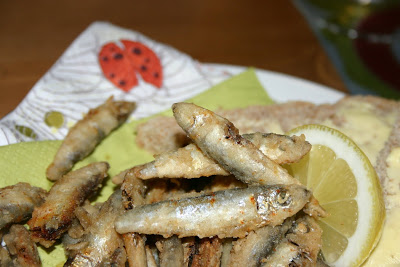
#261 Parsnip and Shellfish Salad

Don’t let it ever be said that I don’t like a warm salad. Though I rarely make them, I don’t know why. Britain is not big on its salads really, though America definitely knows what it’s doing. This sort of food is perfect for this time of year – light and fresh, yet warming. Grigson doesn’t mention where this recipe comes from or how old it is and there’s nothing on the Internet regarding it in its historical sense.
This salad is pretty easy to do: quarter some parsnips, cut them into chunky spears and simmer in salted water for around five minutes until tender. Drain. Stir in some salad dressing (I did the one from English Food, though exchanged the sugar for honey). Add some shellfish (prawns or lobster) or some chunky meaty white fish like monkfish – I went for the prawns as I had them already. Arrange some lettuce on a plate and add the parsnips and shellfish. I used an iceberg lettuce, which has developed a stigma for being a bit crap, but I really like them; sweet and crisp (and cheap!). Scatter with chopped chives and parsley.
#261 Parsnip and Shellfish Salad. This was an excellent and easy to prepare salad. The warm parsnips acted like little sponges to the salad dressing and the sweet prawns complimented the earthy flavour of the parsnips. A very good 10 minute dinner. 8/10.

#251 Fried Eel with Fried Parsley

I was very impressed when I discovered that The Fish Society sold freshwater eels that they had caught and killed themselves, before freezing them for my convenience. Regular readers will know the stress trauma faced the last time I cooked eels (in both delivery and preparation). The eel population in the UK and Ireland has dropped in recent years, but nowhere near as much as the elver population. I have blogged about this before, but it is becoming increasing clear, especially for Britain that it’s not a good idea to eat adult freshwater eel either now. However, it is not illegal to fish for them, so if taken in small numbers (and who eats eels these days!?) they should be okay. I don’t know what the situation is in the USA though. Are both eels and elvers available here..?

Anyway, enough of my rantings here is the recipe:

This recipe serves four people.

First, you need to prepare your eel; a two-pounder is required here. It needs to be skinned and then cut into three inch pieces. If it has been portioned already, but not skinned, you can either leave it on or fry the pieces skin-side-down in very hot oil for a few seconds. This makes the skin easy to peel off without cooking the eel itself. Next, coat the eel in seasoned flour and fry gently in 4 ounces of clarified butter until browned and the meat comes away from the bones easily. This took me about 7 minutes, but this will depend upon thickness. Next, prepare a lemon-butter sauce by melting 6 ounces of slightly salted butter in a saucepan and adding lemon juice to taste (I used a whole one). Put the eel onto a serving dish and keep warm. Now fry the parsley stalks. Start by heating up oil in a saucepan and fry around 12 parsley sprigs for a few seconds until crisp. Be careful here: the oil will splatter so just fry 3 or 4 at a time. Serve with some lemon-butter sauce poured over the eel, with extra in a jug, and the parsley sprinkled over it.


#251 Fried Eel with Fried Parsley. I have to admit, eel is a tasty fish and cooked this way really shows off it mild, yet delicious flavour. The fried parsley too was very good; like a grassy version of crispy seaweed you get from the Chinese take away! The only problem was the lemon butter – it just made the eel taste greasy. I think tastes have changed somewhat these days, and I think that a lemon mayonnaise would suit it better. However, still a pretty good recipe. 7.5/10.

#246 Pike

The Freshwater Fish chapter of English Food has been the most difficult part of the book to source ingredients for. You can’t just walk into a fishmonger and ask for a fillet of pike or whatever. Fish are sold by the crate and no-one eats enough these days for it to be worth the fishmonger buying it, salmon and trout excepted. It’s probably not a bad idea – the fish in our rivers and lakes seem so finite compared to sea fish, so if folks got a taste for them they would be fished into extinction. That said, there are shit-loads of pike in our rivers, so why not pop down to one and fish one of the buggers out.


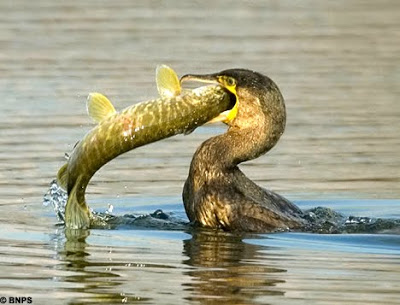
Who would have thought pike vs. cormorant would have turned out like this?

Jane Grigson was a fan of pike, as were the French who used to farm the scary fanged fish. Actually they’re quite beautiful with their green tiger stripes. I got two fine fillets from The Fish Society, and I suggest you have a look there if you fancy having a go at trying pike, or any other difficult-to-get-hold-of fish. This is what Griggers reckons you should do with it:

Fillet the fish and remove the pin bones (of which there are many) before marinating in some sherry and Madeira wine. After an hour or so, drain the fillets and coat them in seasoned flour and fry in oil and butter until golden and crisp. Serve with a lightly-curried velouté flavoured with the marinade juices. I used, half an ounces each of flour and butter for the roux and then half a pint of fish stock plus half a teaspoon of mild curry powder. Add some cream too if you like.


#246 Pike. This was really delicious – a firm, meaty and mildly sweet fish. Also, it wasn’t in the least ‘muddy’ tasting as we keep getting told freshwater fish tastes like. I would definitely recommend this if you can get hold of it. The sauce was pretty good too. If you see it in a restaurant, order it. 7.5/10

#240 Smoked Sprats (and #232 Pickled Eggs revisited)

‘An inexpensive luxury’, says Jane Grigson of smoked sprats. That sentence should be now changed to: ‘An expensive luxury’. How times have changed. I’m not sure why smoked sprats aren’t more widely available because fresh sprats certainly are, so it’s not like they are hard to come by. The only place I’ve seen them is The Fish Society’s website. You eat smoked sprats whole, rather like whitebait, the difference of course, is that they are quite a lot bigger than tiny whitebait.

Anyways, my friends Simon and Rachel came over to visit after their super-amazing trip around South America. They blogged it, natch, have a look-see at it here. I thought smoked sprats would make a great starter. Because my friend Stuart – a staunch vegetarian – came along too so I served some pickled eggs, remember them? Have a look here to see they were made.

To cook the sprats, simply grill them and serve them with lemon wedges and brown bread and butter. To eat them, pull off their heads and tails and eat. If that seems a little too much, you can remove the fillets from each side with your thumb.


#240 Smoked Sprats. I really liked these alot. The problem of bones/guts was, in the end, a non-issue. The bones were just the right side of not being too crunchy or sharp. They were quite strongly smoked, but also sweet in flavour and not over-powering like some cured fishes can be. If you see some, be sure to give them a go. 8.5/10

#232 Pickled Eggs. These were also very good – they required a little wait for the viengar to work its pickling magic, but were worth it. If you’ve had vile pub pickled eggs, don’t be put off by these. the white wine vinegar made them very subltly sharp and the chillies in the pickling liquor lent a decent spicy-punch to them. 7/10.

#238 Grilled Bloaters

For all you heathens out there today is Good Friday. Which, of course, means that Jesus got killed or some such other scrape. I am obviously in the heathen camp. Anyway, the point of all this is one should eat fish on Good Friday. I assume this is because we are at the end of the 40-day fast we have all been on and fish was always allowed on fast days. These rules were bent rather a lot in days of yore: ducks, geese and beaver were all added to the list. So as it is Good Friday, here’s a fish recipe with some of the fish I had delivered from The Fish Society.

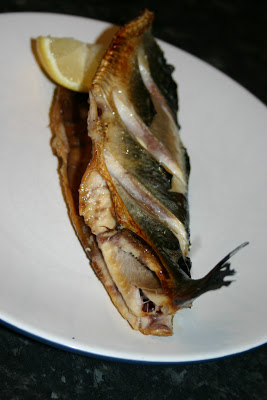
Bloaters are cured herrings, like kippers, only the cure is much more subtle. They are also gamier because they are cured whole and ungutted, causing them to bloat as they hot cure in the smokehouse. I’ve never had bloaters before, and was looking forward to trying them. This recipe seemed to most appropriate to begin with as I would get to taste pure unadulterated bloater.

The bloater before prep

Start by getting your grill very hot. Whilst you are waiting for it to hot up, gut the bloater by cutting down its belly, this is not a horrible experience as they are quite dry. If there are any roes Griggers says to keep them for another dish. Now cut the head off and make slashes down both flanks of the fish and spread over with softened butter. Now simply grill for three minutes per side so that the skins go all bubbly and crispy. Serve immediately with brown bread and butter and a lemon wedge.


#238 Grilled Bloaters. These were very nice indeed. The cure as expected was much more subtle and less salty than kippers, which meant you could eat more; always a good thing in my book. They are also much less fishy and pungent, so I am surprised that they have gone out of favour somewhat as they are much less of an acquired taste than kippers. Anywho, if you have never tried them (and few have) this is definitely the best place to start. 7/10

#235 Lisanne’s Chicken with Mussels

We don’t know who Lisanne was/is, other than she was a mate of Griggers and that she made this recipe up on a whim whilst in France. The reason that it appears in English Food is that it is rather reminiscent of the old English recipes of cooking oysters with chicken. I have already done the steak, kidney and oyster pudding with great success, but the thought of a eating a chicken stuffed with mussels a little odd – and don’t forget the last mussel recipe I did was very odd. However, as we have discovered along the way, this damn book is full of surprises, so we shall see…

You need to get hold of a chicken that weighs around four or five pounds as well as a nice bag of fresh, live mussels that weighs around three or four pounds.

Begin by browning the chicken all over in some olive oil along with a large chopped onion and a chopped carrot in a flame-proof casserole. Add a bouquet garni (see here for some suggestions as to what you should put in it) and a quarter of a pint of dry white wine. Bring to a steady simmer and cook for 45 minutes. Meanwhile, open around two-thirds of the mussels in a very hot pan using another quarter pint of wine. Any mussels that remain closed should be discarded, Griggers says.* Pluck the mussels from their shells and carefully stuff them into the cavity of the now half-cooked chicken. Strain the cooking liquor from the mussels into the dish and tuck the remainder of the mussels all around the chicken. Season and cook for a further 30-45 minutes.
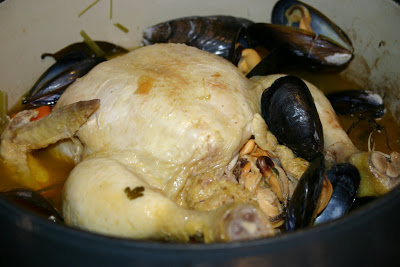

When the chicken is ready, remove it to a serving dish, scatter the mussels around it, and scatter chopped parsley all over it. Skim and strain the sauce into a sauceboat and eat with good bread – no vegetables required says Giggers, just a green salad to follow.

#235 Lisanne’s Chicken with Mussels. I must say I was very dubious about this one and continued to be dubious a few mouthfuls later. However, I put that down to the novel flavour combination because I soon realised it was very good! The chicken was beautifully succulent and the mussels tender, though cooking them this was gives the eater a real strong mussel-hit, but if you like your seafood, then certainly give this a go. The sauce made by the cooking liquor was divine. 7.5/10

*FYI: According to the telly programme QI, this is absolute nonsense and it is Jane Grigson who is to blame for this myth. The first mention of chucking out your un-opened mussels appears in Jane Grigson’s Fish Book and people have followed this advice evermore. However, there is actually no evidence that unopened mussels will poison you – in fact, you just as likely to be poisoned by a live mussel than a dead one. That said, I still chucked out my unopened ones!

#234 Smoked Eel

If you have a nice little independent butcher or fishmonger it’s always worth having a quick nosey to see if they have anything different in. I did this at Out of the Blue – probably the best fishmonger in the North-West, at least when it comes to getting hold of weird and wonderful ingredients like the freshwater eel from a few months ago. Well, this time there was freshwater eel on the shelves in abundance, at least in its smoked form.

There are a few smokehouses that smoke eels in Britain, though the eels themselves are usually brought over from Holland and the surrounding countries due to the fact that are fewer of the beasties to found in British rivers.


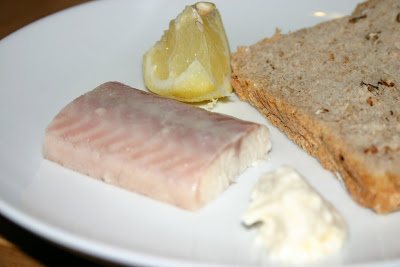
This is not a recipe, but really a suggestion by Griggers as to the best way to appreciate smoked eel. As a starter, give each person a three inch section of eel fillet along with some good brown or rye bread and butter, a lemon wedge and perhaps some horseradish sauce. That’s it. Enjoy.

#234 Smoked Eel. A true delicacy; and the best way to treat a delicacy is to eat it in the simplest way possible. The flesh was sweet, succulent and firm, not the soft and slightly gelatinous consistency of smoked salmon which I can find rather off-putting. Don’t be squeamish and get it down yer. Fab stuff 8/10.

#223 Marion Jones’s Green Fish Soup

Here’s a relatively straight-forward recipe – there’s not many left to attempt that are quick and easy, everything else is either bizarre, labour-intensive or both. Not be put off by the name – there are no green fish in it – it is just white fish, the green colour coming from broccoli. FYI: Marion Jones does/did co-own a restaurant in Malvern; I know nothing else about her. She must’ve been a mate of Jane’s.

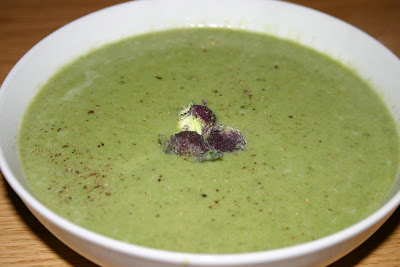
Begin by sweating a sliced medium onion and a small sliced leek in an ounce of butter. Be careful not to let it colour. When soft, add an ounce of flour and stir for a few minutes so that the flour cooks out a little. Pour in 1 ¾ of fish stock that has been flavoured with nutmeg and fennel (crush a few fennel seeds up and grate some nutmeg in, if using fish stock cubes) and simmer for 10 minutes, then add a pound of skinned white fish fillets – cod, haddock, whiting, hake, etc. – and simmer for a further minute. Allow to cool a little before blending it. While the stock cooks, trim 13 ounces of broccoli – you can use sprouting broccoli or the more readily available calabrese broccoli – and boil in salted water until just tender. As soon as they are cooked, drain them and refresh them in cold water to give them a vivid green colour. Make sure you reserve the cooking water. Add the cooked broccoli and blend again, thinning the soup with the reserved cooking liquor. If you want to be posh, pass it through a sieve. Season with salt and pepper, and stir through some cream if you like.


#223 Marion Jones’s Green Fish Soup. This was an okay recipe, but nothing to shout about. It tasted a bit like those Findus boil in the bag cod in parsley sauce from 1970s and 80s. Remember them? The white fish and broccoli combination work well as they have a certain complementary sweetness. I wouldn’t make it again, but I would eat it if someone else cooked it for me 5/10.

#218 Whitebait

Aye up, Grigsoners! I’ve been a bit slack with the blog recently as I have been working all hours over the last week or so. However, I have not been slack in the kitchen as I have a few recipes to tell you all about. Hopefully I’ll get them written over the next few days.

I cooked for some mates last week and managed four Grigsons in one evening. Pretty good going, I reckon. I’m trying to empty the freezer as I have accrued a lot of food during the autumn so things were designed around whatever I found in the deep depths of it. I found the whitebait and had completely forgotten I had bought them. I love whitebait but have never cooked them, though it was all straight-forward enough. It’s funny, but I never really thought of whitebait as an English food, I think this is because I always see it on European restaurant menus. It does have a bit of a history though; according to the Grigson there were whitebait parties held in Dagenham, London to celebrate some land draining system being built. Anyways, William Pitt (the Prime Minister at the time) was invited to one party and loved them so much he held whitebait parties at the close of each parliamentary season. So there you go. Don’t say I don’t educate you all!


To fry your own whitebait, allow them to defrost (if frozen, obv), then rinse them in some milk and allow to drain for a bit. Heat up some deep oil to around 200⁰C. Meanwhile put some seasoned flour in a large freezer bag, place the whitebait inside, seal and give it all a good shake so that they are all nicely covered. Shake off excess and fry in batches for just a minute or two. Drain and season well with salt and Cayenne pepper. Serve the little fish with brown bread and butter and some lemon wedges.

#218 Whitebait. Absolutely delicious and much better than what I’ve had done in restaurants. The flour and milk formed a light, crisp batter keeping the fish nice and soft within. Lemon and brown bread were the perfect accompaniment too. A cheap and delicious treat – go make! 8.5/10.

#195 Canapes a la Creme

The entrée for the dinner party. It’s one of those recipes that I’ve never got round to because – frankly – it’s never really seemed that interesting and a bit of a rigmarole to produce (there quite a few of these!). Grigson says that they are “[a] fine mixture of hot, rich, piquant and cold.” I don’t really know why this recipe is in English Food, I’m sure that there are other canapés in book Savouries à la Mode by Mrs de Salis she could’ve nabbed. Perhaps she chose this one because the ingredients are quite English. Anyways, here is the method, if you want to try and make some for yourself:

Cut some white bread in centimetre thick slices. Cut out circles and fry them in butter. Grigson doesn’t say how large they should be – I used a highball glass. Next put anchovy fillets on each slice – she says three, but that seemed excessive to me for the size of fried bread I’d cut out, so just added one. Finally add a spoonful of cold clotted cream to each canapé and serve straight away.

The canapes in production

#195 Canapés à la Crème. 3/10. They weren’t vile – all of the ingredients that go to produce this are among my favourite foods – they were just odd and uninspiring. There was not too much fattiness from the fried bread and cream, and the anchovies were too much (it’s a good job I didn’t add three!). I think they could’ve been improved if a cream cheese or crème fraiche mixed with chives as suggested on the night had been used rather than clotted cream. Still, they were easier to make than I thought – particularly when I had my army of sous chefs with me! Cheers guys.