#216 Orange Sauce for Duck and Game

This is a sauce for any game and requires two things from The Freezer of Delights that have been sat there for a while: game carcasses for a game stock (see here for recipe) and two Seville oranges. It is very important that you save and bones and carcasses from your meat for stock-making at a later date. It is, of course, even more important that actually used the bloody things once you’ve saved them. I served this with the Mallards of Death.

Melt 1 ½ ounces of butter in a small saucepan and stir in a rounded tablespoon of flour. Stir and cook until the roux becomes golden brown. Now whisk in ¾ of a pint of game stock, bring to a boil, and then simmer for around 20 minutes. Whilst it is cooking away gently, pare thinly the rinds of two Seville oranges and slice them as thinly as possible (you can use an orange and a lemon if you can’t get Seville oranges). Add the rind along with the juice of the oranges to the sauce and cook for a further 3 or 4 minutes. Add up to a tablespoon of sugar and four tablespoons of port, plus the skimmed roasting juices from the meat. That’s it! Easy.


#216 Orange Sauce for Duck and Game. A really good sauce this one; tangy, bitter, fruity, rich and a lovely red-brown colour with just the right amount of freshness and tang to cut through the very strong meat. If you don’t like bitter foods, use a normal orange and a lemon and perhaps less pared rind. 7/10.

#215 Mallard

As mentioned, the freezer is being emptied of its long-sequestered goodies. First up is this roast mallard. I also found a couple of Seville oranges in there too so I thought I’d do a classic orange sauce too (see the next post, when I get round to writing it!).

I had never tried mallard before but I love duck so I was looking forward to this, I have to say. I took them out of the freezer and allowed them to defrost overnight. On preparing them I found that they smelt pretty – er – ripe, which was a wee bit concerning, but I continued. The instructions are very straight forward if you want to tackle roast mallard: inside the bird, put in some butter, seasoning and herbs; outside, season with salt and pepper. You don’t need any butter or back fat to protect the birds as they have a layer of fat anyway. According to Jane, they should be roasted rare, so they only require 30 minutes at 200⁰C. When ready, allow to rest for fifteen minutes, carve and serve. I did game chips (see the entry on roast pheasant) and Savoy cabbage along with an orange sauce as suggested by the lady herself. You could make a gravy from the juices and a spoonful of bitter marmalade or an orange salad.

The fowl stench of death

#215 Mallard. These birds were definitely over-hung. They smelt and tasted of death and had gone well past the gamey stage. As I have frame of reference, I’m not sure if they naturally taste like that anyway. I doubt it though. Char and Clive seemed to find this okay, but it was rather too much for me and I couldn’t face a leg. That said, the hanging made the meat very tender and succulent. The next day the kitchen smelt like dead and rotting animals. 3.5/10.

FYI: the hanging of meat – in particular game – is required for the meat to become tender and tasty. Whether it is 28 days for beef, or just 2 to 3 days for small game. Pheasant, for example, is tough and pretty tasteless before hanging. However, people cross the line between well-hung and rotten. Brillat-Savarin – the Eighteenth century gastronome and lawyer – didn’t consider pheasant to be fit for consumption until it was “in a state of complete purification”, according to Larousse Gastronomique.

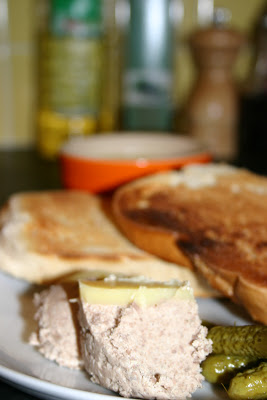
#205 Potted Tongue

There are several recipes in English Food that involve tongue; a bit of the animal now much ignored by most, including me. It’s one of the few things I’ve never tried, so I thought I should make sure my first foray into tongue cookery a simple one. Potting is nice and easy as long as you have a food processor or blender, plus I always need sandwich fillings for work. It uses eight ounces of cooked tongue – this can be calf’s or ox tongue, pickled or fresh. The calf’s tongue that I got from Winter Tarn was exactly eight ounces in weight after it had been cooked and trimmed. However, if tongue is not your bag then you can use beef, salt beef, venison or any other game.

Chop the calf’s tongue and place in a blender or food processor – use a blender for a smooth finish, a food processor for a slightly coarse one – along with four or five ounces of clarified butter, some salt, pepper and mace (if you are potting a different meat, you could use a different spice or even a couple anchovy fillets). Blend until the right consistency and place in pots, making sure you pack them down well and leave flat surface. Pour more clarified butter over to form a seal.


#205 Potted Tongue. In Yorkshire, potted beef is still quite popular, but for me, the tongue did not work quite as well as I’d hoped. The tongue tasted okay when it had been cooked, but perhaps stronger tasting cured ox tongue would have been more appropriate. Oh well, never mind – you can’t win ‘em all. 4/10.

How to Make Game Stock

This is a recipe for a good game stock – it is a modified version of one that appears in Lindsey Bareham’s very excellent book A Celebration of Soup. If you have some game carcasses left over from a meal, turn them into stock – you can either freeze the stock, or the carcasses, for whenever you need them. You don’t need many either – I managed to make a pint of good stock from a single woodcock carcass.
The amount of vegetables and spices etc indicated here will do for up to 4 small birds or 2 larger ones. You may want to increase or decrease the amount of water added though – don’t forget, you can reduce a stock so you can be quite liberal with the water. If you want to make more, you can just increase the ingredients.

First chop the carcass(es) and place them in an ovenproof casserole dish and roast them in the oven for 20 minutes at 200⁰C. Remove them and add a little wine – red or white is fine – or a little water to deglaze the dish. Add some chopped stock vegetables: a carrot, an onion, a celery stick, 2 tomatoes and one or two cloves of garlic. Return to the oven for a further 5 to 10 minutes. Now add a spring of rosemary, a bay leaf, five or six peppercorns and between one and two pints of water, depending on the amount of stock you want. It also depends on the birds being used – small partridges, woodcock or grouse produce a stronger stock than, say, pheasant. The stock needs to be cooked uncovered for at least two hours very gently; you can do this on the hob or in a low oven. Strain the stock, reduce if required, season with salt, then skim after it has been allowed to cool. Easy peasy.

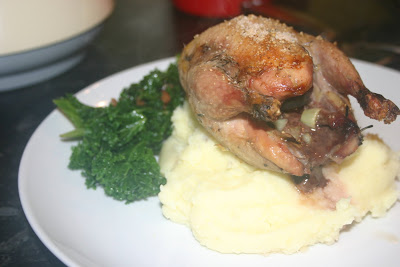
#203 Partridge

One of the good things about my favourite fishmonger, Out of the Blue, is that – like any good fishmonger – they supply game during the season. It’s very well priced there and I picked up a couple of partridges for just £2.50 each. Great stuff. I’ve already done a stewed partridge recipe from the book. As well as specific recipes, Griggers goes through each game species with some advice on how to cook them. Here is what she says about partridge:

Roast: 30 minutes, 220⁰C;
Inside: chopped liver, chopped onion and butter, mushrooms chopped and stewed in butter;
Serve with: bread sauce, etc as for pheasant (see this recipe);
Braised: with chestnuts and cabbage and white wine (see this recipe).

So roast them I did. I filled them with onion and butter (the fillings used for game are there more to prevent them drying out than anything else, really). Before roasting I did make sure they were well-seasoned. To serve I thought I’d add some mashed potatoes – the bland creaminess goes well with strong metallic-scented game – and some kale with fried bacon lardons stirred through them. Lastly I made a sweet rich sauce from half a pint of strongly-flavoured game stock made from a woodcock carcass (see next entry, if I pull my finger out and write it!), a tablespoon of redcurrant jelly and the deglazed juices from the roasting pan (I used some port do to the deglazing).


#203 Partridge – 6/10. I liked the partridge, the leg meat was very gamey and the breast meat milder; a good combination. I am assuming that they were our own indigenous grey partridges because of their small size and strong flavour (there are two species in the UK, the other being the slightly larger and introduced red-legged partridge). There was a surprisingly large amount of meat on these little birds and one was certainly enough per one person. I would certainly recommend trying them if you haven’t before, though I’d go for the braised recipe rather than this roasted one.

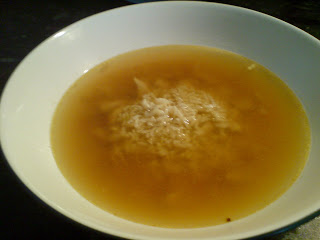
#165 Indian Soup

A soup “with a lively freshness and a spicy flavour” says Jane, just the ticket for a summer soup, it is also a thrifty soup as it requires left-over boiled rice and left over chicken bones and meat, of which I had both from the chicken curry I had made the previous night. It is basically an Indian-style version of chicken noodle soup and is, of course, about as Indian as Prince Phillip, but this is the 1970s so we shall allow it. Anyway, who cares as long as it tastes nice; and I had high hopes for it after the disappointing mulligatawny soup I had cooked previously.

To start, bring 3 pints of beef stock, 2 large sliced onions, a large Bramley apple, a tablespoon of desiccated coconut, 2 teaspoons of curry powder and the bones from a chicken or game carcass (minus meat scraps) to the boil and simmer for an hour. There is no need to peel or core the apple, because the stock is then strained through muslin into another pan. The resulting cloudy stock now needs to be made clear – this is a two-stage process. First, use kitchen paper to blot off any fat that may have risen to the top; secondly, put over a moderate heat and whisk in two egg whites. Keep whisking for a few minutes and then leave to simmer for five more without stirring. The idea here is that as the egg whites cook they mop up any solids that make the soup cloudy. When ready, strain again; the result should be a lovely golden-brown and clear broth. Season it well with salt and both black and Cayenne peppers, plus a squeeze of lemon juice. Finally, add a few tablespoons of boiled basmati rice and the shredded scraps of meat.


#165 Indian Soup. Well, Griggers was right – it is a delicious soup, clear, spicy and fruity with a lovely tart finish supplied by the lemon and Bramley apple. It would make a perfect starter to a meal – not too filling and interesting in its flavours. However, it is a bit of a faff – it’s not something that can be thrown together and liquidised at the end of cooking, and although tasty, I’m not sure if it’s worth the effort (making a clear consommé is a tricky business). After weighting up the pros and cons, I’ll give it 6.5/10.

FYI: a simpler way to clarify a stock is to freeze it and to let it strain through muslin slowly overnight in the fridge. Obviously you need to remember to make the stock a couple of days before you want to use it, but it’s very easy indeed! It also gives a more clear stock too in my experience.

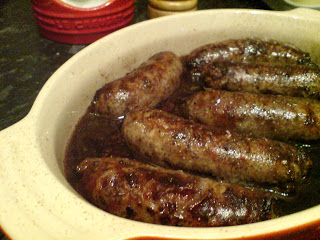
#148 Venison Sausages

Contrary to what you may think; I am not a big meat eater – I’m just not picky! However, I’ve been having a hankering for meat recently, not sure why. Anyways, at the butcher, I spotted some venison sausages that looked very fine indeed so I bought them. They turned out to be from Lyme Park not too far away from me in the Peak District, so the old food miles were happily reduced. Venison sausages are available pretty much anywhere, but a word of warning people – venison from supermarkets probably won’t be British. Supermarket venison usually comes from big deer farms in New Zealand. It’s not bad meat; it’s just flown a long way! Buy yours from your local butcher to get local venison.

This is what the Lady Grigson says to do with your venison sausages:

Fry them in lard or oil very quickly so that they develop nice dark stripes and arrange them closely in a shallow oven dish. Pour in enough red wine to come half-way up the sausages and season them. Bake in a hot oven – 200°C – for 15 minutes. Serve them with mashed potato and some seasonal greens – she says Brussels sprouts and chestnuts, but as it’s Maytime, I plumped for green beans. Pour a little of seasoned wine over the sausages if you like.


#148 Venison Sausages – 7/10. A great way to cook special sausages of any kind I reckon. I’m not giving an excellent score because the venison sausages were good, but not the best ones I’ve ever had. However, the red wine did improve the flavour a lot. The most important thing was that it scratched my red meat itch. The best thing about the whole thing was the fried mashed potato sandwiches I made the morning after. You must try it – fry patties of left-over mash in lard until a crispy crust develops, turn them over and put them in a buttie with brown sauce.

#130 Boiled Wild Rabbit with Onion Sauce

Tis the end of the game season here in Old Blighty; though any game fans out there needn’t panic as rabbit is available all year round. This is due to the fact that they are evil vermin and should be ‘disappeared’. They were introduced by the Romans and by the Normans as farm animals, the little critters escaped and we were overrun. I am assuming they outcompeted the hares, causing their numbers to drop. So shoot away – even if you don’t want to eat them. You will be doing a service to the country.

FYI: Easter bunnies do not refer to rabbits, but hares, as it is they who display their ‘mad’ March behaviour. Rabbits are similar and much more common and so have been mis-named. If you spot anyone making this minor error, be annoying and pull them up on it and then do your best smug face to infuriate them further

Anyway, I’d never eaten wild rabbit and had had farmed only the once and totally cocked it up, but since I am loving the game thus far in English Food I knew I’d like this one. Only wild rabbit will do here, people, if you can’t get wild rabbit use duck instead. What also interested me was the huge amount of onions required for this recipe – it’s very rare that onions are used as a vegetable. It’s another Eighteenth Century dish. If you got your rabbit whole and intact, you should use the jaw bones and stick them in the rabbit’s eyes and fill its mouth with myrtle or barberries. Whatever they are.

Here goes…

For 4.

Truss your wild rabbit (or duck) with string, place it in a pan, cover with water, add a bouquet garni (I used parsley, bay, thyme, rosemary and some pared orange rind) and some salt and pepper then bring it to the boil and simmer ‘until done’. Having no frame of reference here, meant checking every now and again. Apparently, younger lithe rabbits cook quicker than old gnarly ones, so check every half an hour after the first hour is up. Once simmering, get to work on peeling 2 to 3 pounds of onions. Pop them in whole along with the rabbit after half an hour and take them out after another half an hour. Now chop them up – a boiled onion is a slippery customer, so be careful with them knife. Fry the onions in 4 ounces of butter until golden in colour, add 4 tablespoons of double cream and season with salt, pepper and nutmeg.

Remove the cooked rabbit and let it rest for a little while and then cut up into serving pieces – two rear legs, two fore legs and the saddle cut into 3 pieces. Arrange on a serving dish and smother with the sauce. Serve with spinach and potatoes as instructed by Griggers herself (I did mash).
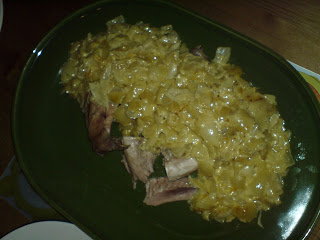

#130 Boiled Wild Rabbit with Onion Sauce – 5/10. Not sure if I liked this. It wasn’t vile, as I finished my meal, but wild rabbit has an unusual flavour that is pungent and slightly unappetising. Butters said it tasted like sewage. Weirdly, he wasn’t far away with that description. In fact reading ahead to other rabbit recipes, Griggers herself says that rabbit needs strong flavours to balance its ‘rank flavour.’ This begs the question: if I don’t like it, should I cook the other recipes? They all ask for wild rabbit, however, it is only this recipe that absolutely requires wild, so maybe I should try farmed next time. Not sure. Slightly disappointed that I dislike something – I pride myself in not being a fussy eater. Anyways, the onion sauce was lovely and rich and creamy – loved that. Perhaps using a duck would have been better all round.

#128 Woodcock

Here’s something I wasn’t sure I’d ever actually get to cook! The woodcock is Britain’s smallest game bird – it’s very well camouflaged and hides away in scrub and hedgerows, and is quite uncommon. All this adds up to a meat you don’t see everyday. However, I was the Frost the Butcher in Chorlton buying some mutton for a pie, when I saw a huge standing freezer full of game saw the typical stuff – venison, rabbit, pigeon and there – tucked away on the bottom shelf – a brace of woodcock. Obviously I snapped them up, only to find they were 15 quid each! I bought just the one, natch.


Finding the woodcock was exciting, as I am now officially a food geek – however I was feeling a little trepidation; this is definitely the first really extreme thing I’ve made from the cook book. Woodcock is considered a delicacy not just because it’s so hard to get hold of, but also because pretty much the whole thing is eaten. Essentially, the bird is roasted rare, whole and completely intact (except the eyes are removed and it is plucked) and trussed with its own beak. The trail of the bird (i.e. the guts, liver etc) is spread on fried bread and the head is split in two so that you can use the beak of one half to prize out the brain from the other.

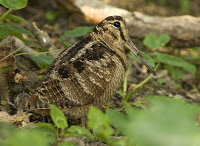
Woodcock trussed with its own beak

Here’s what to do if you happen upon this little birdie:

Preheat your oven to 220°C. Start off by trussing the bird with it’s beak by spearing the thighs to keep them closed up together. Season the breasts and cover liberally with butter so it doesn’t dry out. Place on a small roasting tin and cook for 18-20 minutes. Whilst that is happening, fry one slice of white bread per bird gently in butter, placing it under the woodcock(s) for the final 5 minutes of cooking. When the time is up, remove the bread and place on a warmed plate and allow the bird to rest for 5 or 10 minutes in the pan. Next, using a knife and/or spoon scoop out the trail (everything except the gizzard – which is actually hard to get to, so it’s unlikely you’ll accidently scoop it out). Spread the trail on the toast. Cut off the head and cut it in half lengthways so that you can use the beak to remove the brain from the halves. You can serve the bird whole or remove the breasts if you like.

The final dish

#128 Woodcock. How on Earth am I going to score this one!? Eating the innards of a bird wasn’t something I was going to relish – but I did relish the idea of eating something very traditional but very out-of-favour. From that point of view – an excitement rating – 10/10. Flavour-wise, the breast meat was very gamey indeed – the smaller the bird, the stronger the flavour – it was so rich that it would have been more than enough for one person. The thigh meat was horrible though – just tasted of dead animal. Bizarrely, the best bit was the trail on toast. The intestines were very soft and there was nothing chewy, though it took some courage to make the first bite. Turns out it tastes a bit like Marmite. Very nice. The brain didn’t really taste as strong as the trail, but was soft and slightly greasy in texture; it appealed to my sudden manly bloodlust though. So overall, it is a high scorer, but not too high – I don’t want to give it loads of marks because of the novelty, so on flavour alone, I reckon it’s worthy of 6/10.

Pheasant and Celery Broth

There was no way I was throwing out the carcasses of the roast pheasants, so I did my research and came up with this soup which used up all the celery trimmings and unused potatoes from the game chips too. I also found pigeon carcasses in the freezer, so I added them in. The idea here is that you can use any poultry or game bird carcasses as long as you’ve got enough of them. The point is to use whatever left over vegetables you’ve got, so I’ve not given amounts – I even chucked in the leftover cooked peas and beans that hadn’t been eaten right at the end.

You will need…
Carcasses of 2 pheasant, cut up (or 1 chicken, turkey or several smaller game birds, etc, etc)
4 pints of water
Bouquet garni
5 peppercorns
1 teaspoon salt
Stock vegetables/trimmings – i.e. celery, onion, leek etc. all roughly chopped
1 pint of light beef stock
4 ounces of pearl barley
Sliced/cubed broth vegetables – potatoes, carrots, etc
4 or 5 sticks of celery, sliced or cubed

What to do…
Place the carcasses into a large saucepan or stockpot with the water, the bouquet garni, the peppercorns, salt and the stock vegetables. Bring to the boil, cover tightly and simmer for 2 to 2 ½ hours. Strain the stock and return it to the pan and add the barley, beef stock, celery and the other stock vegetables and simmer for a further hour. Whilst you are waiting, pick any meat from the carcasses and put them in with broth at the end. Check the seasoning. Serve with buttered brown bread.