#433 Stuffed Pork Tenderloin


I hardly ever buy or eat prime cuts these days, going instead for the underused bits and bobs of cows, sheep and pigs, so it’s nice to have the excuse to indulge myself for this blog entry. The tenderloin is the fillet cut of a pig and runs down the length of the spine. These fillet cuts are very tender because the muscle controls the posture of the animal and is not used in high stress activities such as locomotion, toughening it up.

The pork tenderloin is less used in English cookery compared to its cow and sheep equivalents, but I think it is the best value of the three, they are pretty substantial, cheaper by the pound and not as prone to drying out in the cooking process these days now that British pork can officially be served medium.

Jane reckons that the best way to eat this cut is to roast or braise it, so here is her recipe which also involves ham and bacon! A porky trinity and no mistake. There’s also the unusual inclusion of crumbly Lancashire cheese. Pork, ham, bacon and cheese; that’s all of the major food groups, right?
Take two pork tenderloins and trim away any fat and sinew with a sharp knife, should there be any, then slit them lengthways, but not all the way through, so that you can open them out. Now beat them with a tenderiser or a rolling pin until they are much wider and flatter.
Next prepare the ingredients for the stuffing: take two large slices of ham and shred them finely, thinly slice three ounces of Lancashire cheese, then blanch eight sage leaves in boiling water for one minute, then half them. If you prefer, you could strip some thyme leaves and use those instead of the thyme, the bonus there being that no blanching is required.

Scatter the two opened tenderloins with the ham, then the cheese and sage (or thyme). Close and then tie with string and brown them quickly in a little butter.
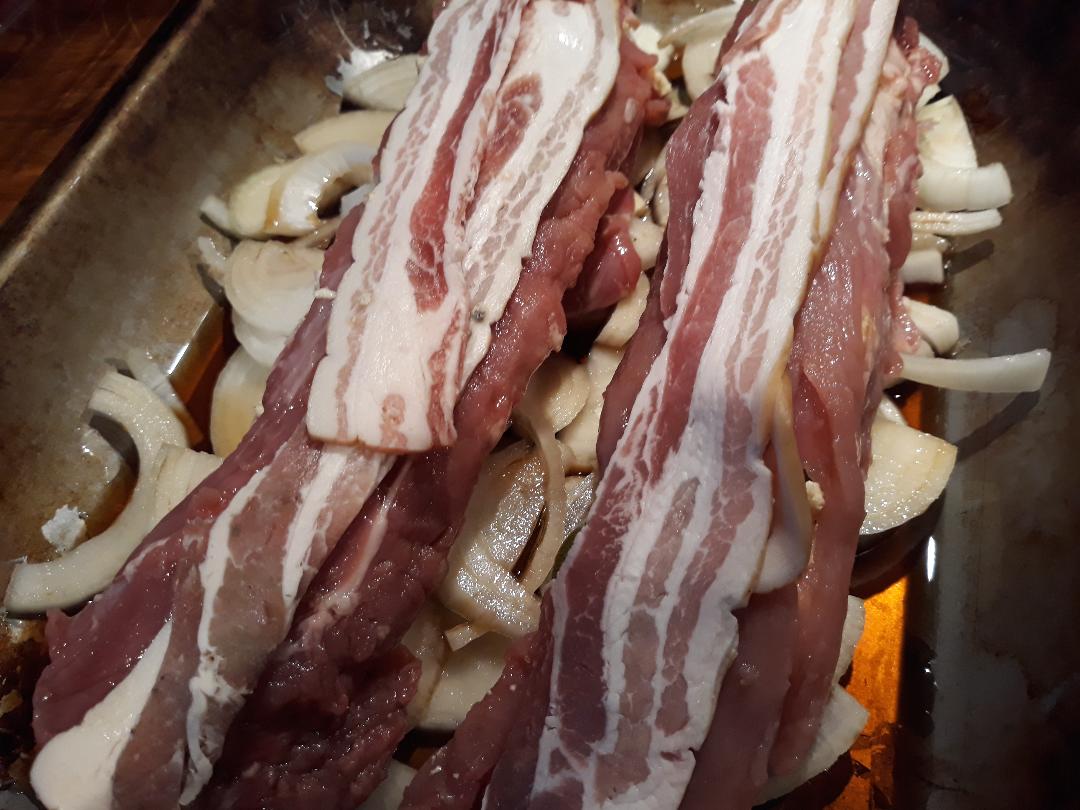
Now, slice two large onions and scatter them on the base of an ovenproof dish and lie the tenderloins on top. Adorn them with two rashers of streaky bacon each, then pour over a quarter of a pint of brown sherry, Madeira or port.


Roast for 45 minutes at 190C.

Remove the tenderloins and keep them warm. Strain the juices and reduce them in a pan if you wish – I found there was no need, but it did need a seasoning with salt and pepper.
Remove the string from the tenderloins and serve immediately with the sauce and some seasonal vegetables.


#433 Stuffed Pork Tenderloins. Well this was a good one, though I did mess up a little bit as I forgot to beat out the tenderloins, and to tie them, AND to brown them in butter. Nevertheless, it was still delicious, though a little dry (probably because they weren’t tied up). Oh well, I can’t be expected to be perfect all the time, now can I? I’d certainly recommend you give it a go, though I’d check them after 30-35 minutes to see if they are done. The sauce – like most of Jane’s – was delicious. I give it a solid 7/10.

#432 White Devil Sauce

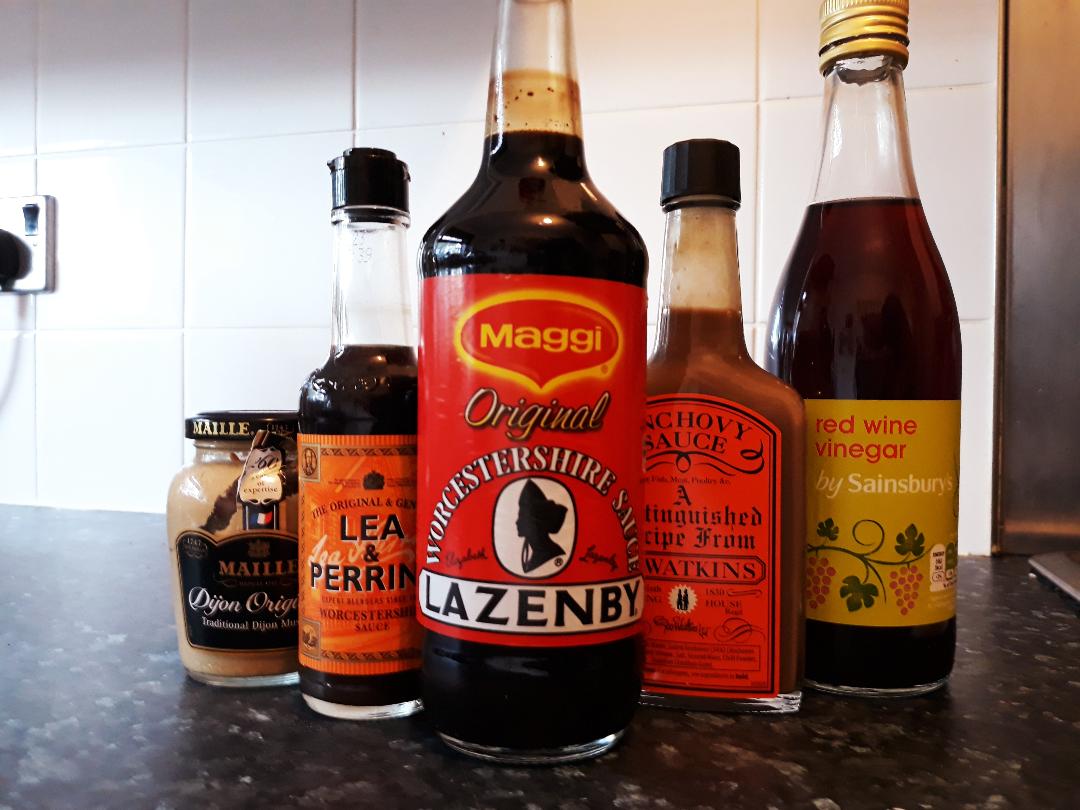
I have made and experimented with many a devil sauce in my time, but this recipe was always annoyingly elusive due to the inclusion of a tricky-to-find ingredient called Harvey’s sauce. Up until the last couple of decades or so, Harvey’s sauce was widely available, but after searching both delis and the internet for years, I gave up. I managed to find recipes for Harvey’s sauce in Victorian cook books, but it was quite an effort and it is required to sit and mature for years before it is ready. The annoying thing is, only half a teaspoon is required to make this devil sauce! However, it used to be so popular in the 19th Century, I didn’t want to omit or substitute it (plus I would be going against the rules of the blog!).

Just a couple of weeks ago I did one final internet search and Bingo! I found what I was looking for. The reason it was so difficult was that it had had a name change. The original company that produced it – Lazenby’s – was bought out by iconic brand Crosse & Blackwell, which, in turn, was partially-bought out by Premier Foods, who sold it as Worcestershire sauce! Although it was no longer for general sale in the UK, it was still very popular in South Africa; and so, a few minutes and a few mouse clicks later I had ordered a bottle and it was getting shipped over to me. All I had to was wait one week for it to arrive.
In the end, Harvey’s sauce does taste pretty similar to Worcestershire sauce, so if you want to make it, just substitute it for the Lee & Perrins.
In a bowl or small jug mix together 1 teaspoon each of French mustard (Dijon or Moutarde de Meaux), anchovy sauce, wine vinegar, salt and sugar, along with ½ teaspoon each of Harvey’s sauce and Worcestershire sauce.
If you are using the sauce cold to go with cold meats, whip ¼ pint of double cream and fold in the above mixture.
Jane suggests spreading the pieces of cold meat with a little more mustard and pour over the sauce using unwhipped cream and pop into a hot oven until everything has heated through and is lightly browned.


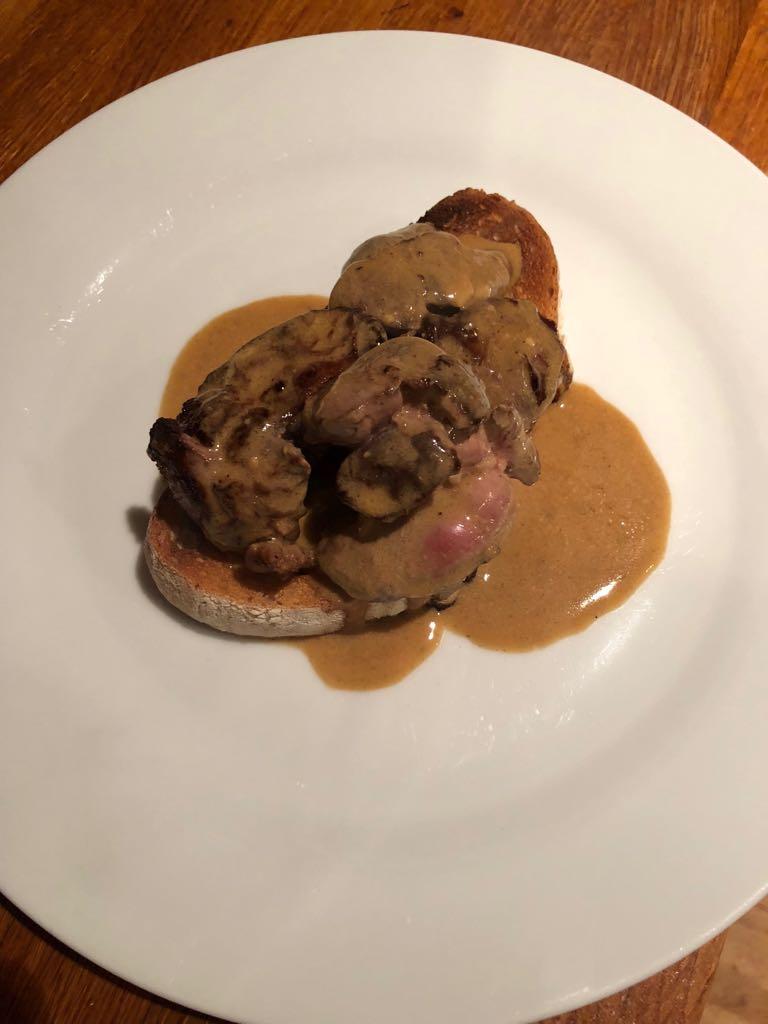
I did neither, instead using the sauce to make devilled chicken livers. For this, get a frying pan or skillet very hot and thrown in a good knob of butter. As soon as the butter stops frothing, place the livers in the pan and leave undisturbed for 2 minutes before turning over and cooking 2 minutes more. Pour over the sauce and turn the livers over in it so that they get a good coating. Have some slices of toast ready and place the livers on top. If necessary, boil down the sauce to an appropriately delicious thickness and pour over the livers. Serve at once.

#432 White Devil Sauce. This was delicious, as devil sauces always are, it was highly seasoned but there wasn’t enough devil in it for my tastes; I think it could have done with either a good pinch of Cayenne pepper or a good slug of Tabasco sauce. That said, it was horsed down, so it still gets a good score! 8/10.

#427 Roast Guineafowl


Guineafowl originate in Africa and were first bred for meat by the Ancient Egyptians and was very popular in the ancient world – there is an infamous Greek dish called mattye where a guineahen would be killed by a knife plunged into its head via the beak. It would then be poached with lots of herbs, and its own chicks! They seemed to fall out of favour for a good while before being reintroduced by the Portuguese in the sixteenth century.

These days, guineafowl are more popular in France than the UK, being a popular ornamental fowl in farms, small holdings and rural households. They double as an excellent guard dog; getting very vocal at any approaching fox or indeed, postman. ‘The first time I saw guineafowl, they were humped along the roof ridge of a French farmhouse’, says Jane in her introduction to this recipe. I have similar memories from my science days when I would go on the annual field trip with the zoology undergraduates of Manchester University to the foothills of the French Alps, where guineafowl would toddle about decoratively with their black-and-white suits, blue combs bobbing, like a little fat harlequin.

I think guineafowl are delicious, they have a mild gamey flavour, lying somewhere between chicken and pheasant. It’s often braised as it has a tendency to dry out when roasted. In this recipe however, dryness is skilfully averted by covering the fowls with bacon or strips of pork back fat and the use of a good sausagemeat stuffing. Because of its gaminess, it is often served with the trimmings associated with roast game, such as game chips, #123 Bread Sauce and #114 Quince Jelly. See #122 Roast Pheasant for more on the subject.

Get hold of two guineafowl, both weighing 1 ½ to 2 pounds. Sit them on the board to get to room temperature as you get on with the stuffing.

Remove the skin from four ounces of good quality sausages (go to butcher who makes his or her own or make your own: see #415 Cumberland Sausages). Break up the meat and add the rest of the ingredients: a heaped tablespoon of breadcrumbs, one tablespoon each of brandy and port, a heaped tablespoon of chopped parsley, a crushed clove of garlicand salt and pepper.  If you are lucky enough to find fowl with their giblets, find the liver, remove the gall, chop and add to the stuffing.

Mix everything well but keep things quite loose – you don’t want to compress the stuffing, as it will turn out stodgy. Divide it loosely between the two birds.

Now prepare the birds themselves by laying six rashers of unsmoked streaky bacon over the breasts and legs. This stops the birds from drying out in the oven. Again, buy good quality dry-cured bacon, not the cheap stuff that shrinks shedding its added water as white milky froth. Instead of bacon, you could use thin slices of pork back fat; it’s certainly cheaper, and it probably keeps the birds more moist, but doesn’t taste half as good. Pros and cons innit?

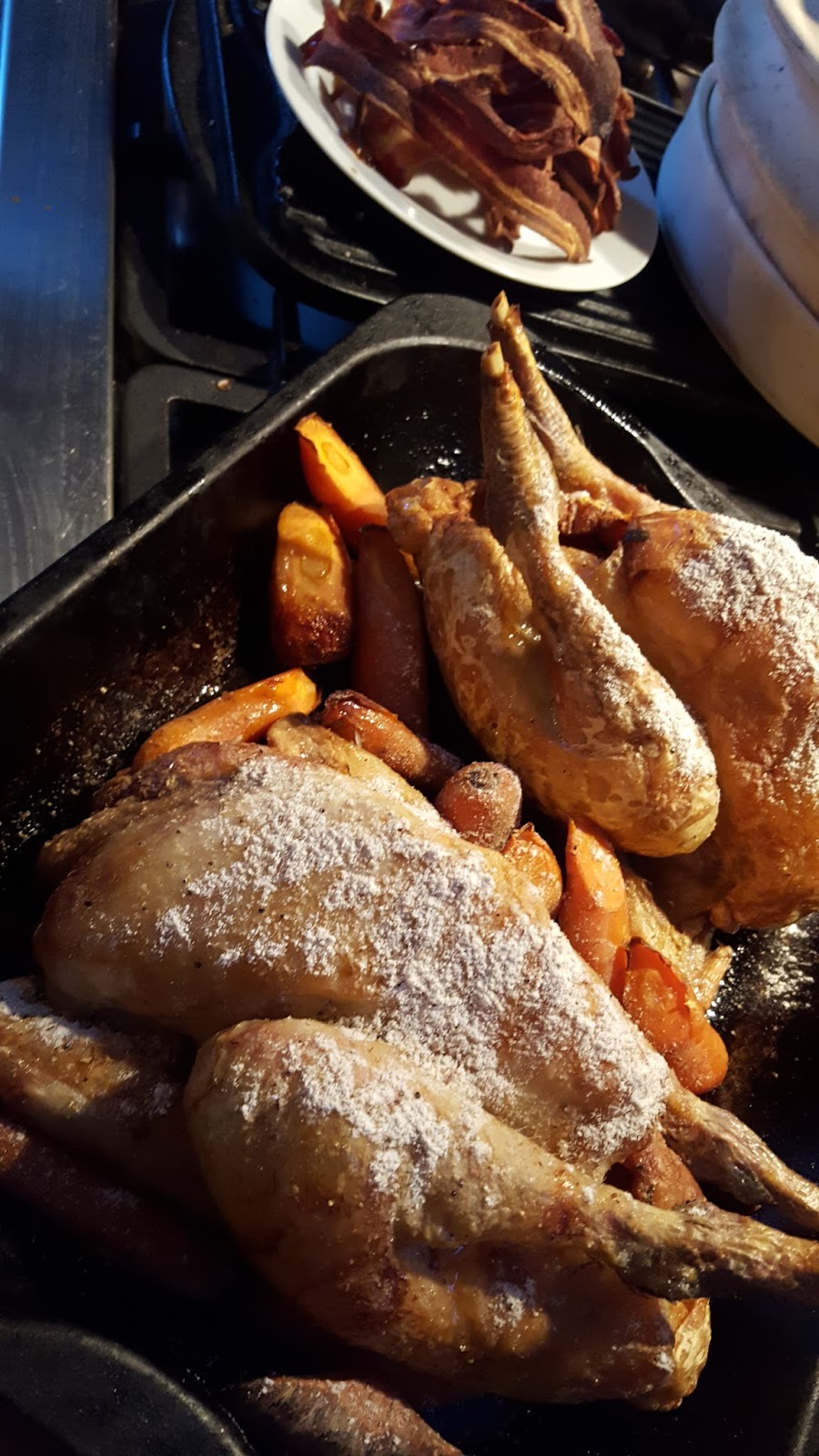
Put them in a roasting tray and pop them in an oven preheated to 220°C. Fifteen minutes later, turn down the heat to 200°C, and leave the birds roasting for 30 minutes. At this point, remove them from the oven, take off their little porky jackets and dust them with well-seasoned flour. Baste and pop back into the oven for a final 10 to 15 minutes.

Remove the birds and keep them under foil on a board whilst you make the gravy in the tin they were roasted.

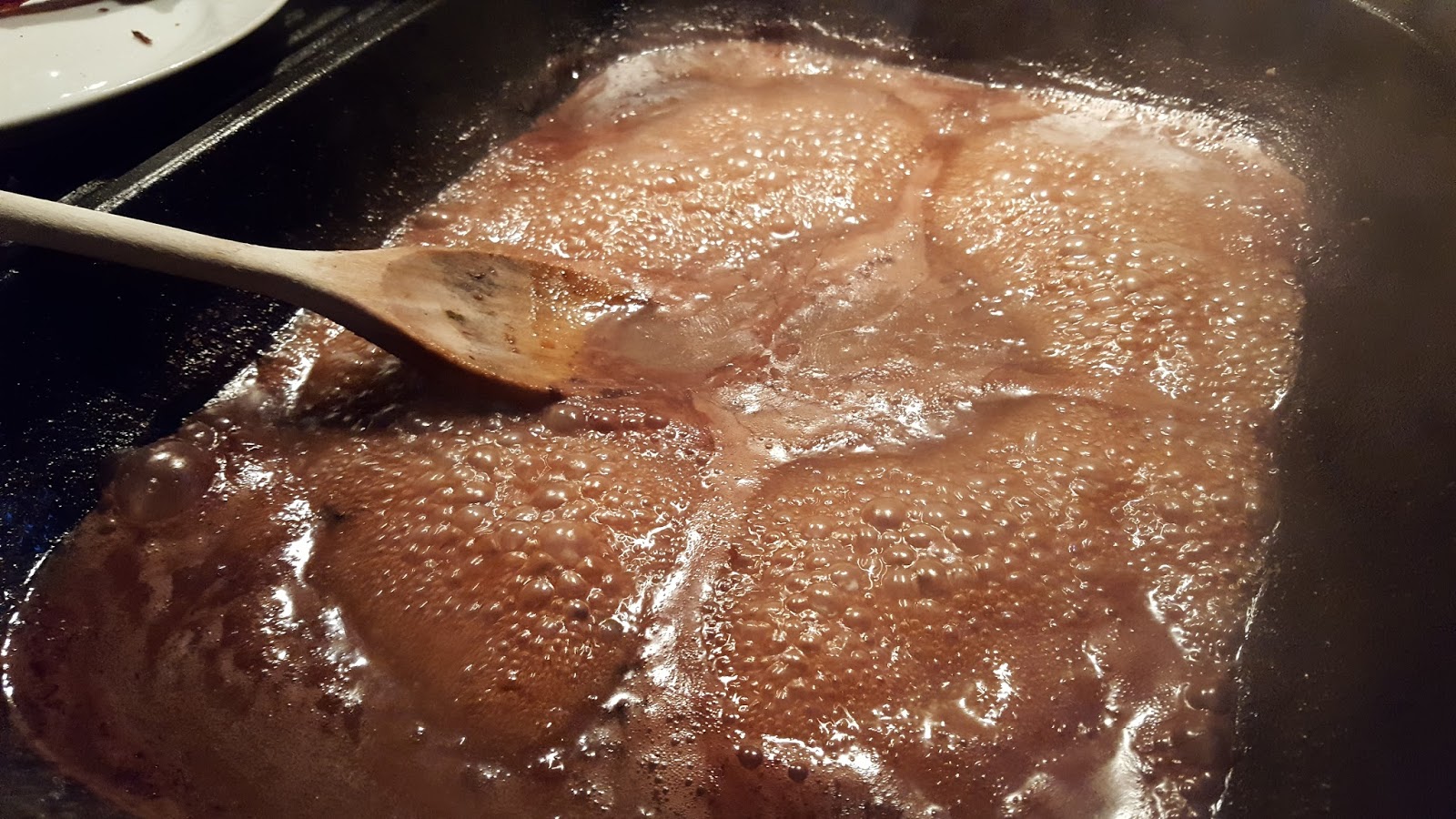
Get the roasting tin over a medium heat and pour in a glass of port (2 to 3 fluid ounces, approx.). Use a wooden spoon to scrape the delicious dark-brown almost burned bits from base of the tin. Add ½ pint of stock – again, if there were giblets in the birds, you could make giblet stock, otherwise use chicken stock. Reduce this mixture down until you have a small volume of intensely-flavoured gravy. Don’t strain it and lose all those nice burnt bits!

Carve the guineafowl and serve with the gravy and bacon. Jane recommends serving it with #262 Chestnuts as a Vegetable. We served it with the food that was in the house: roast carrots, quinoa and some lovely indigo-dark purple kale.

#427 Roast Guineafowl. I feel so lucky to have things like this just hanging about in the freezer! The cooking method laid out by Jane was spot-on, as she usually is when it comes to roasting (however, see #359 Rabbit and #393 Hare); meat was lovely and moist. The gravy too was delicious, and the stuffing well-seasoned with a good garlic hit, making it taste very un-English; it must be based on a French farcemeat from one of Jane’s many trips to the country. Very, very good: 9/10

#418 Snipe


Sometimes…walking home across a boggy area where heather gave way to rushes and reed grasses, I would be startled by an eerie throbbing, bleating sound rising to a soft fluting crescendo…I have heard it hundreds of times and it never ceases to make the hairs stir on the back of my neck. This beautiful wind music is a cock snipe ‘drumming’…This hauntingly lovely sound…is the first promise of spring.

Clarissa Dickson Wright & Johnny Scott, The Game Cookbook

The snipe is our smallest game bird, and with its shy and secretive nature and dappled brown plumage, it is probably the most difficult of the game birds to shoot. It is for this reason that you won’t come across many of these unless you are a hunter or you know one very well. It’s a good job that they are difficult to hunt because they are considered the most delicious of the game birds! Conservation is always a priority with these indigenous game species, but their elusiveness is almost self-managing, keeping a highly-fluctuating population safe.

Sorry for the massive gap between posts folks, but I’ve only gone and opened up a restaurant! News of this will follow very soon. Needless to say, I’ve been pretty busy, but finally I’m writing up some of my recipe backlog.

Jane’s recipe for roast snipe is brief in the extreme:

Snipe

(August 12 – January 31)

roast: 15 minutes, mark 8, 230⁰C (450⁰F)

inside: as woodcock

serve with: fried bread soaked in cooking juices, spread with trail as woodcock. Plus redcurrant jelly, orange salad, game chips; or simply with lemon quarters and watercress.

Recipes for redcurrant jelly can be found hereand a recipe for game chips makes up part of #122 Roast Pheasants, cooked many moons ago

Woodcock and snipe are pretty much identical except in size, so snipe too can be cooked with their innards or ‘trail’ intact. This is because they defecate when they take off for flight. The trail can be scooped out at table and spread on the slice of toast the bird was cooked on. You can, of course, remove the innards before you roast your snipe, if this notion is repellent to you. I would encourage you to try it, as it is delicious; like gamey Marmite. The heads are also left on, and sliced lengthways so that the brain can be eaten.

It’s worth mentioning, however, the very short hanging time required for birds eaten in this way – anything over 36 hours I find too gamey. I remember well once wretching over the kitchen sink after eating a far too ripe woodcock; delicious gaminess merging into dead, rotten animal all too quickly in these little birds. It’s a glamourous life I lead.

I managed to find some snipe this year at my favourite butchers shop, WH Frost in Chorlton, Manchester. Unfortunately their trails and heads had been removed so I couldn’t roast them in the traditional manner.

I simply seasoned them inside and out and popped a tiny knob of butter into their cavities and onto their breasts with a sprinkling of smoked paprika and roasted them for just 8 minutes at 230⁰C. I served them with some Morrocan-style buckwheat. Not very English, but there you go.


#418 Snipe. Even though I couldn’t cook them in the traditional manner, they were still very delicious birds. I expected them to be stronger in flavour compared to woodcock, but they were actually more delicate. I can see why so many people prize them above all others. Little did I know that when I cooked these, way back in December, they would appear on my Valentine’s Day menu in February! If you see some in your butcher’s shop, snap some up. 8/10.

#416 Cumbrian Tatie Pot

I recently made to visit to my friends in their 18th century house in Mallerstang, Cumbria and have been meaning to bring the ingredients up with me to make this dish. It’s one of those lamb, onion and potato based meals you find in the North of England such as Lancashire Hot Pot and Lobscouse, or indeed Irish stew and Scotch broth. It mysteriously appears in the Meat Pies & Puddings section of the Meat, Poultry & Game Chapter.

Mallerstang is a beautiful, slightly bleak, hamlet close to Kirkby Stephen. It sits at the foot of Wild Boar Fell, and there are the remains of a mediaeval castle which is flanked by the sparkling River Eden. It’s an amazing place that is seemingly trapped in time; I recommend a visit.

Cumbrian Tatie Pot is one of those rare dishes in England that mixes its meats, something more common on Continental Europe. “The recipe in slightly different form appears in various books of Lakeland cookery”, says Jane, “and often the beef is described as ‘optional’ – which it most definitely is not. It makes the character of the dish. So resist the national tendency to leave it out.” You have been told.  I found several recipes on the Internet, and none of themhad beef on their ingredient lists.

“Tatie Pot”, she goes on to say, “is very much a dish of communal eating, at village get-togethers, or at society beanos…There is always a certain rivalry to see whose version is the best.” Well I was driving up for a get-together and it was Cumbrian and it looked like the perfect dish to cook in a kitchen equipped with an Aga. What could possibly go wrong?

The first thing you need to do is get hold of the meat; you’ll need 2 pounds of either scrag end (often called round of lamb/mutton these days) or best end of neck off the bone and 2 pounds of shin of beef. Make sure you ask for the bones as well as some extra ones, if the butcher has some. Whilst you’re in the butcher’s shop get yourself a nice black pudding.

When you get home, use the bones and some stock vegetables and herbs, plus a little wine if you have it, to make a good stock. As I was cooking on an Aga, I could get it simmering on the hot plate before popping it in the cool oven overnight. Here’s a post from the other blog on stock-making, if you’re not used to making them.

Cut the meats into good-sized pieces and coat them in some well-seasoned flourand arrange the pieces in a wide roasting pan. Scatter over the meat six level tablespoons of mixed, dried pulses(e.g. split peas, pearl barley, red lentils). In the original recipe, Jane says to soak them overnight, but with today’s dried pulses there is no need for this step. Chop two large onions and slice the black pudding into half-inch slices and disperse these evenly, tucking the black pudding between pieces of meat. Season.

Next, peel around three pounds of potatoes and quarter them lengthways. Arrange them on top with their rounded sides pointing upwards. Season well.

Skim the stock of fat and warm it up then pour it over so that it comes halfway up the spuds. Bake at 200⁰C for four hours, topping up the stock with more stock or water, so that the potatoes get a good, dark, crunchy top. As I was cooking on an Aga, I put the tatie pot in the hot oven for two hours and then in the cool oven until everything was nicely cooked and unctuous. The hot oven was rather hotter than expected and the potatoes were perhaps a little darker and crunchier than expected, but never mind, this is country cooking.

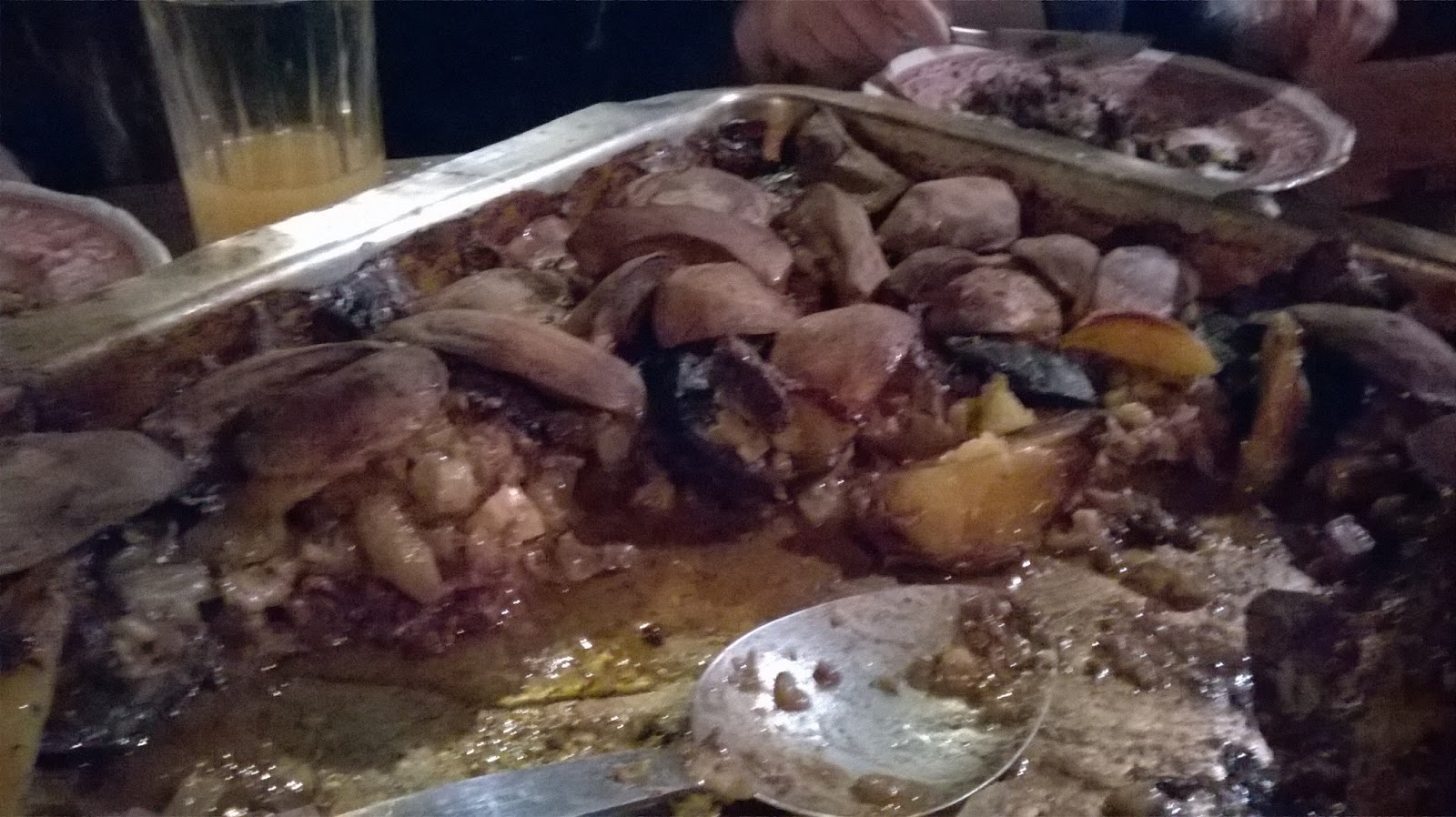
#416 Cumbrian Tatie Pot. Even though those potatoes were a little on the burnt side, they did not detract from the fact this was an absolutely delicious dish. The long and slow cooked meat was as soft as butter, the pulses gave body and nuttiness and it was a delight to discover a piece of melting black pudding every now and again. This is definitely going to appear on a future menu; simple and excellent food that sticks to your ribs: 9.5/10
#415 Cumberland Sausage

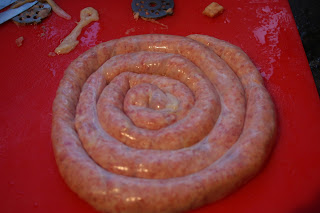
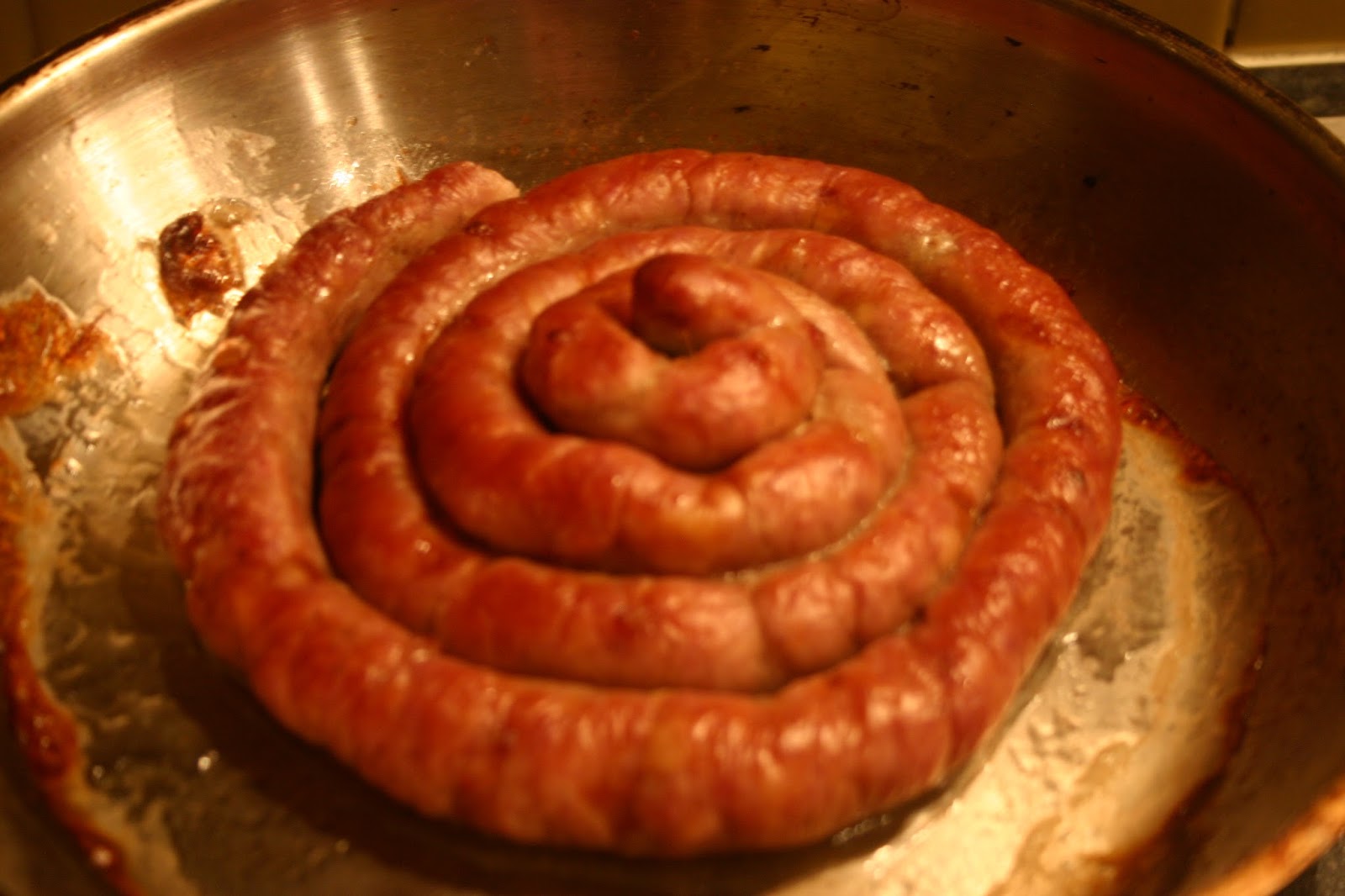
Unlike other sausages, Cumberland sausages are not made into links, but are allowed to form large coils. You can buy whole coils to fry or bake for a family dinner, or buy lengths of it.  In Richard Woodall’s butcher shop in Waberthwaite, he would measure out yards of sausage using two drawing pins stuck on his counter. Amazingly the shop is still going strong over eight generations!

For me, the Cumberland is the quintessential English sausage; highly seasoned with salt, black pepper, herbs and spices. It shouldn’t have much else added to it, other than a little rusk or bread to soak up the fat. They have been made like this for centuries. Indeed, all sausages were made as one long coiled piece, until the addition of links was introduced in the early seventeenth century. The meat should be coarsely chopped or minced, not like your typical bizarre and homogenous cheap supermarket sausages that are ‘a bland, pink disgrace’, as Jane puts it.

A Cumberland ring is fried or baked, often secured in shape with two skewers before cooking.  It is commonly served as part of a breakfast. Jane mentions that at Rothay Manor, it is served with bacon, tomato, fried egg on fried bread, apple, black pudding and mushrooms; surely the breakfast of champions! It can be served with mashed potatoes and peas, or with a stew of green lentils and bacon cooked in red wine.

To make sausages, you need some natural sausage casings, which you can buy very cheaply from any butcher who makes his own sausages. Often he’ll give you them for free. They are very easy to prepare. All you need to do is soak the in cold water for an hour to remove any salt, find an end (this is quite tricky, as they are very long and not too dissimilar to tapeworms!) and carefully fit a funnel into it to rinse out the insides of the skins with more cold water. Once the water as run all the way through, the skins are ready to use, so pop them in the fridge until needed. Any unused skins can be kept in the fridge for four weeks. For these sausages you’ll need hog casings.

First of all, prepare your meat ready for the mincer by cutting the following into strips: one pound of boned shoulder of pork, 6 ounces of pork back fat and half (yes, half!) a rasher of smoked bacon.

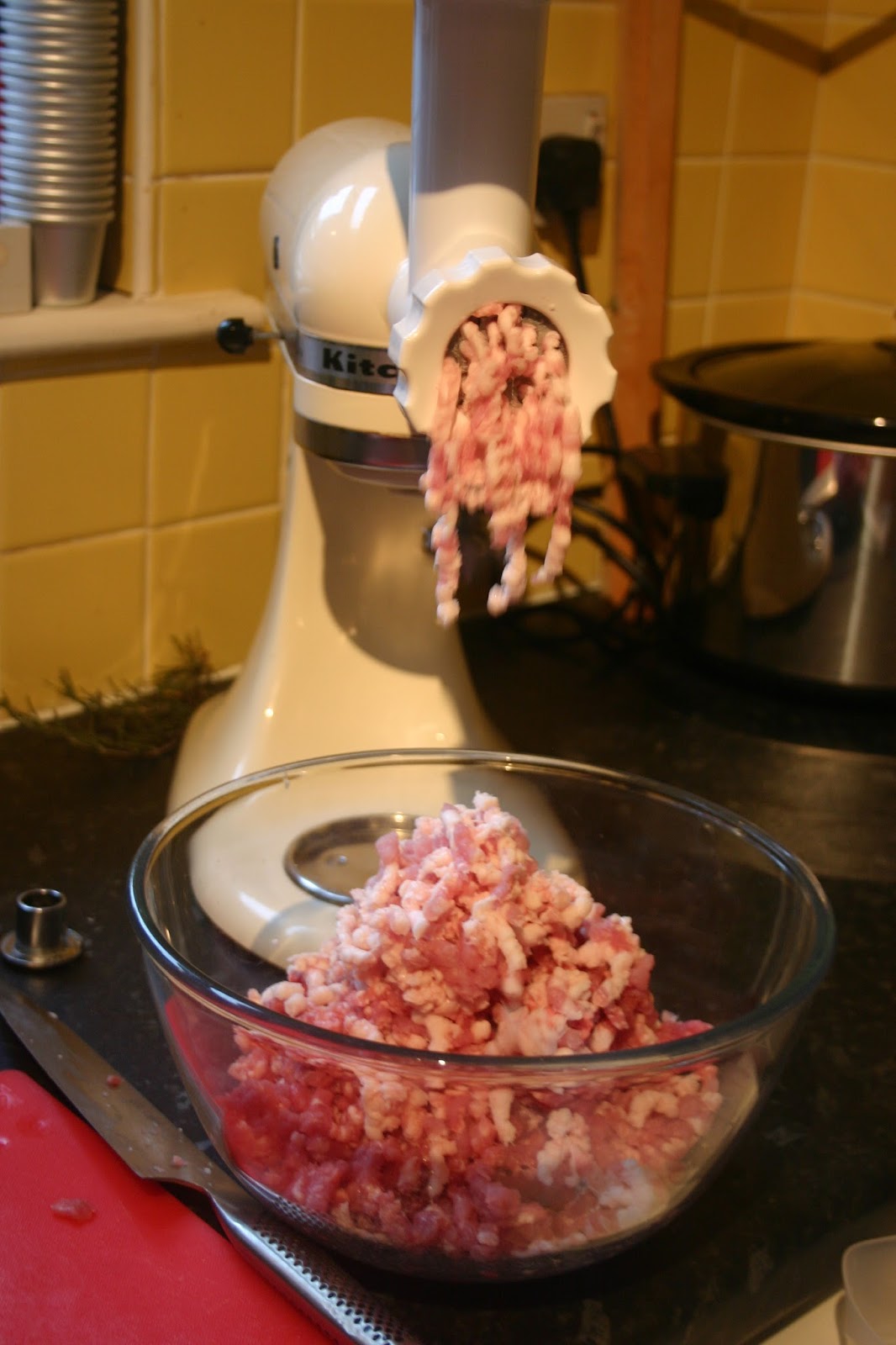
Pass all of these through the mincer using the coarse blade, then again using the medium blade. (I have no medium blade, so just used the coarse one again.)

Using your hands, mix all of these together in a bowl along with an ounce of white breadcrumbsand a quarter teaspoon each of ground nutmegand mace. Season with salt and pepper. I used a teaspoon of salt in all and was pretty heavy on the pepper too. Curiously, Jane does not add any herbs to the mixture, but if you wanted to, dried sage or marjoram are typical.

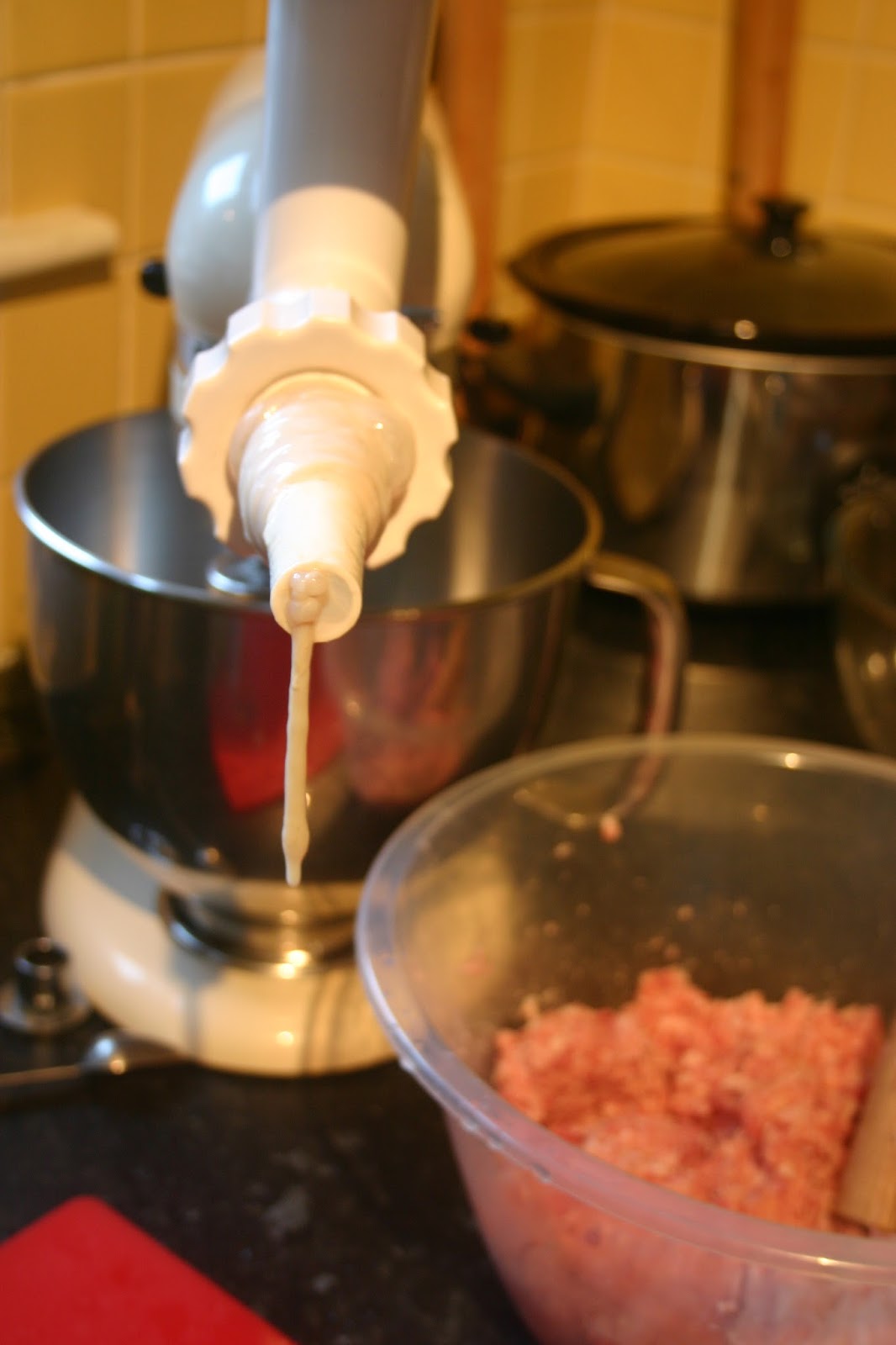
Now it is time for the fun and games: filling the sausage skins. To do this, I used the sausage stuffer attachment for my Kitchen Aid. The amount of sausagemeat made here easily filled a single hog casing (each one is at least 3 yards/metres long, I reckon).

Prepare the sausage skins as described above. Take one and slide it over the funnel of the stuffer, tying a knot in the end. Now feed the sausagemeat through the machine and into the casings. Here, you need to grasp the sausage as it comes out so that it fills the skin properly making no major air bubbles. This is tricky to do if you are simultaneously feeding the machine with sausagemeat, so an extra pair of hands will come in useful.

As you make more and more sausage, let it land upon a plate to form the characteristic coil. When all the meat has been stuffed into the skin, cut and knot it, leaving some slack for expansion when cooking. Chill the sausage overnight (which I forgot to do, in my eagerness, making it rise up in the centre when in the oven).

Now you can fry the sausage in a pan, turning it over at half time. Alternatively, bake in the oven for 30 to 45 minutes at 180⁰C, pricking the skin before it goes in. Of course, you don’t have to cook the whole thing at once; you can cut lengths off it and fry those up instead.

#415 Cumberland Sausage. This was absolutely delicious, and quite simply the best sausage I have ever eaten! With something simple like this, it is all in the seasoning and the half-rasher of bacon worked wonders in that department. Who’d have thunk it, a real bona fide secret ingredient!? This, along with the freshly-ground pepper and the warming mace and nutmeg, made such a winning combination, that I have been making vast amounts of sausages, sometimes for frying up, or sometimes for sausage rolls. I cannot gush any more than this: 10/10

#411 Brains with Curry and Grape Sauce

Brains have never really been that popular in England, often banished to a messy tray, at least that’s when they could be found at all. They’ve made appearances in other British cook books but they are few and far between.

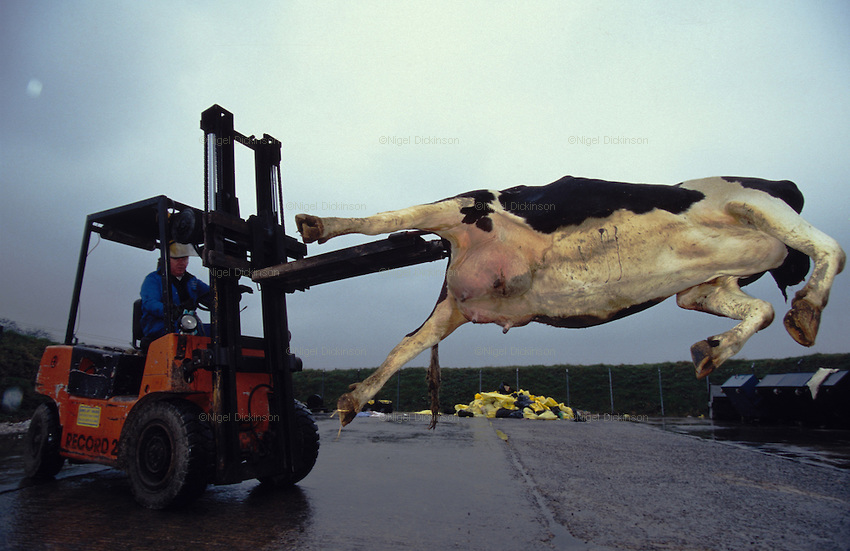
The final nail in the coffin for the brain in British cuisine was surely the BSE or ‘Mad Cow’ crisis of the 1990s where cows were infected by a prion which causes the disease bovine spongiform encephalopathy (BSE). A prion is an infectious protein, and is therefore not alive, and cannot be denatured by regular heat-treatment. It may have been derived from the prion that causes the encephalopathy in sheep known as scrapie, but this link is unclear.

The BSE prion infects the CNS causing the brain to appear spongy under microscopic observation. The symptoms, unsurprisingly, are behavioural: infected individuals become solitary, aggressive and frenetic, they become anorexic and their milk yield drops dramatically. Eventually they lose all coordination. BSE is all-consuming, infecting not the just the CNS but the peripheral nervous system, bone, intestines, placenta and tonsils. It is also found in saliva and excrement, and can sit in the soil perfectly viable for years. I remember watching the pictures of the wretched stumbling beasts on the television news in shock and in horror as they were bulldozed into mass burning graves. A total of 4.4 million cattle were killed during the crisis.

The source of the outbreak was the cattle’s feed, where ground up cadavers of sheep and cows were included in their diet. Shockingly, this practise had been going on since the 1920s, so it was just a matter of time before infection spread. In retrospect, it beggars belief that it could ever have been considered a good idea to turn herbivores into not just carnivores, but cannibals

There was of course worry that BSE could be passed onto humans, not just in food but in bovine insulin for diabetics and in bone meal for gardeners. Though bovine-human transmission was possible, there was no real initial evidence to suggest it actually occurred. Nevertheless, in 1996 the EU banned the UK from exporting beef and beef products including semen, embryos, gelatine and fat. Within the UK sales of beef plummeted, the government blaming the media storm. Secretary of State, John Gummer, famously said it was the British public and not the cows that had gone mad. Douglas Hogg, the Minister of Agriculture, was adamant that there was no link between the new variant CJD (Creutzfeldt-Jakob Disease, the equivalent disease in humans). In the Government’s desperation to calm the country and show just how safe British beef was, the Right Honourable Mr Gummer fed his little daughter a beef burger in front of TV cameras. Idiot.

Meanwhile, the World Health Organisation had been collecting data, and reckoned that nv-CJD was probably caused by the BSE prion. Hogg and Gummer had been desperately slow to act, but now the country had to tackle the crisis swiftly.

The most important and easily implemented regulation was the ‘over 30 months rule’, a simple ban on killing cattle for beef older than 30 months. When it came to using any part of the CNS for food, the cattle must be under 12 months old, with the same rule applying to sheep. Pigs are not considered a risk.

Simple rules such as this helped deal with the crisis swiftly. In 1992 there was 37 000 cases of BSE, in 2004 there was just 90. By 2006 the EU beef ban was completely lifted; now the UK is back in line with the rest of the EU

Now with all this behind us, you can get hold of them from a good butcher. Order well in advance though, and expect to have to buy in bulk.

First of all you need to prepare your brains – you’ll need around 1 ½ pounds of calves’ brains, which I reckon to be 2 sets, or thereabouts. For some advice on preparing and poaching brains, see this previous post. For this recipe, poach them in milk, as you’ll need it to make sauce.

Strain the milk into a jug and slice the brains on a large plate. Keep them warm as you get on with the sauce, a cross between a béchamel and a velouté.

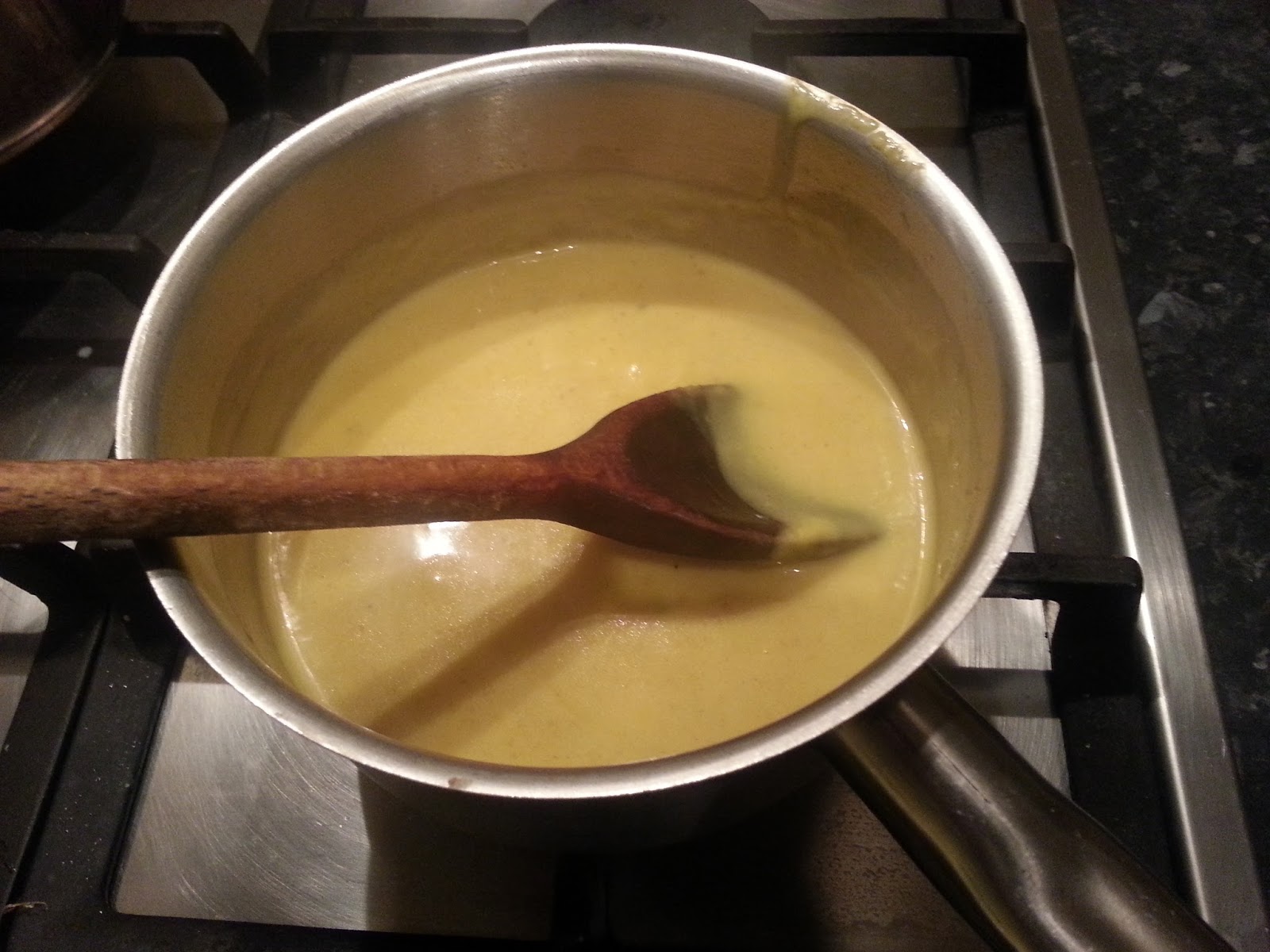
Start by melting an ounce of butter in a saucepan, then stir in a rounded tablespoon of flour and a teaspoon of curry powder. Mix all around in the butter for a couple of minutes, then add ¼ pint of hot chicken stock, adding a little at a time to prevent lumps forming, then add the amount of the milk the brains were poached in. Simmer the sauce gently for 20 minutes, stirring every now and again, then add ¼ pint of double cream


Meanwhile, get on with preparing 8 ounces of peeled grapes. To do this put them in a bowl and pour over boiling water. Let them sit for a few seconds and then strain them. The skin should now peel away with relative ease. When the sauce is ready, season with salt and pepper and tip in the grapes, including any juice. The sauce is now ready, but if it seems a little thick – it should be the thickness of double cream – add a little more stock or milk.

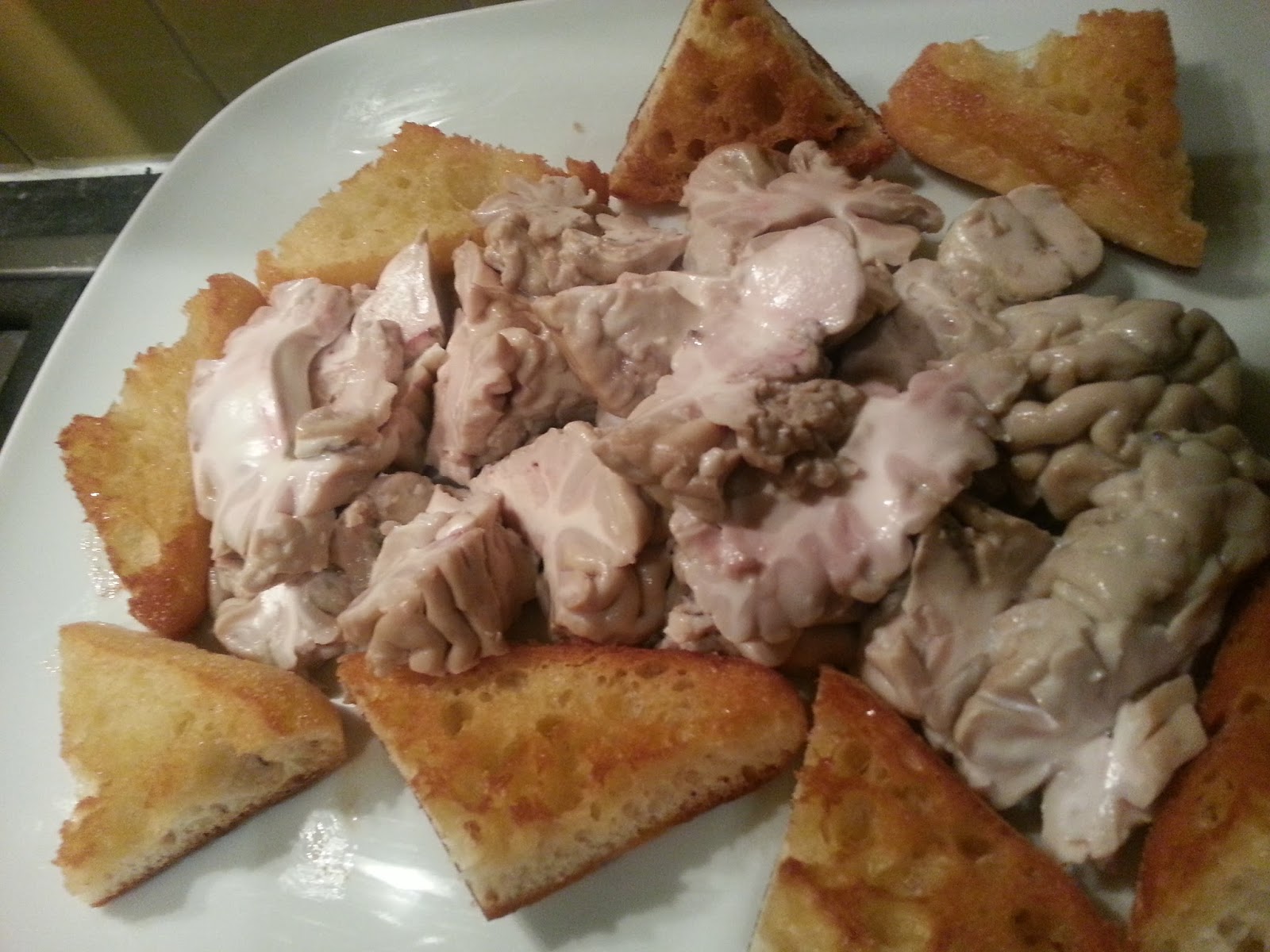
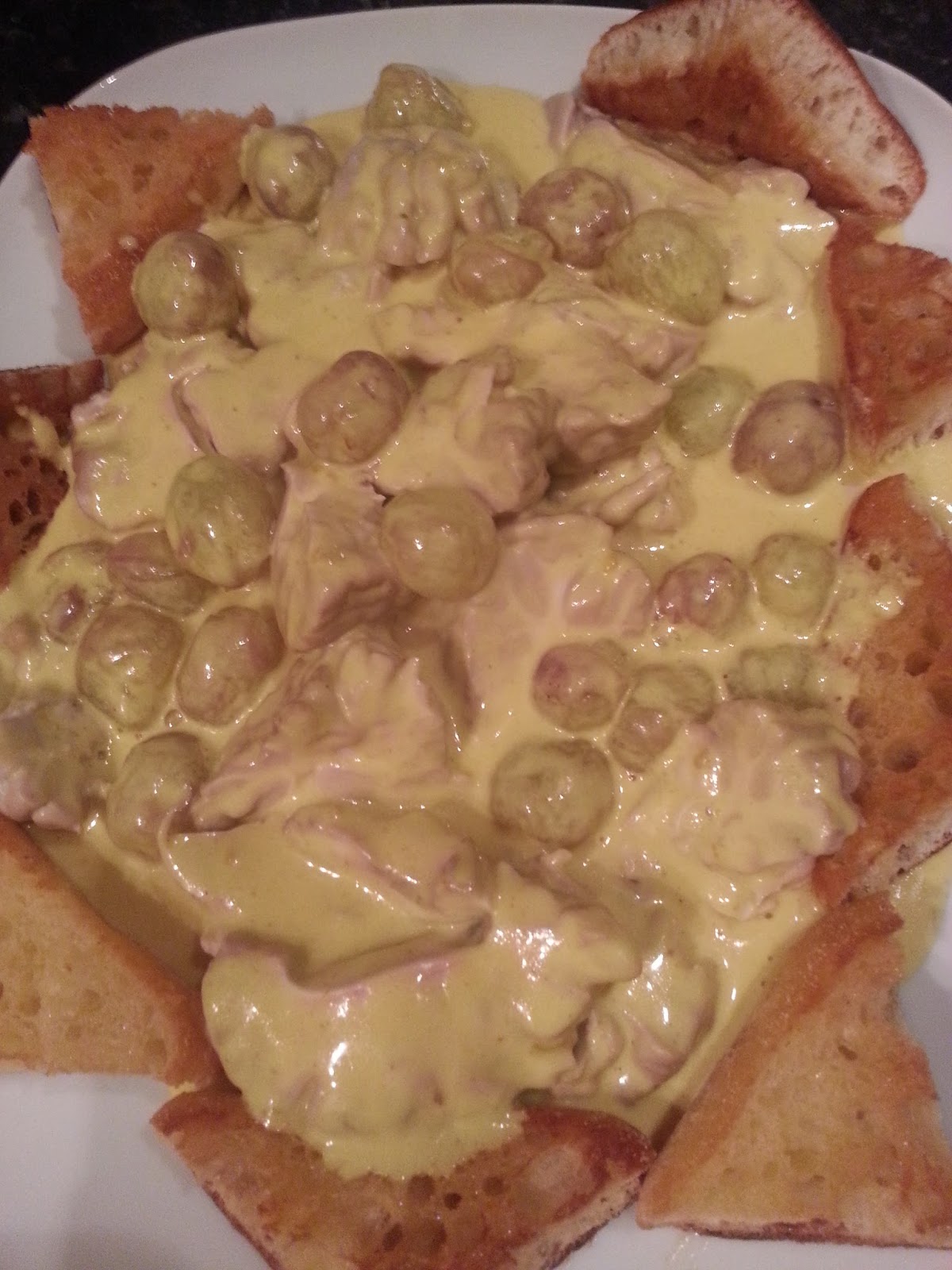
Pour the sauce over the brains and tuck in triangles of bread fried in butter and serve.

#411 Brains with Curry and Grape Sauce. Well I am glad I cooked the other brain recipe first, as this monstrosity would have put me off for life! The sauce was simply horrible; cloying in such a way, that when in the mouth, you couldn’t tell where sauce started and brain finished. The grapes simply did not go with the sauce. Obviously a thing of its time. I enjoyed the fried bread. 1/10.

#410 English Hare Soup

So here we are at the final recipe for the Soupchapter, ending on a blinder that couldn’t be more English, rich with claret and spiced with mace and Cayenne pepper.

I don’t really know why it took me so long to try this one; though rarely found in abundance, hare is not exactly difficult to find in season. Maybe I just kept missing the boat every year. The hare I used in this recipe I picked up from the excellent Northwest Game. So it’s not just the last souprecipe, but the last hare recipe too.

If you want to know more about hares have a look at this previous post.

This recipe comes from Antonin Carême, the legendary French chef, who worked himself from homeless child to probably the most influential cook ever. A genius patissier, he first attracted attention making elaborate edible sculptures to sit in the window of the patisserie. After some proper training he set down working on sauces, coming up with the classification of the four mother sauces, the base of all sauces in French cookery; a system still used to today. He spent quite some time working in Britain and was briefly chef to the Prince Regent. He’s appeared before on the blog, on recipe #317 Skuets, a dish comprised of sweetbreads, bacon and mushrooms cooked on a skewer, served with bread sauce.

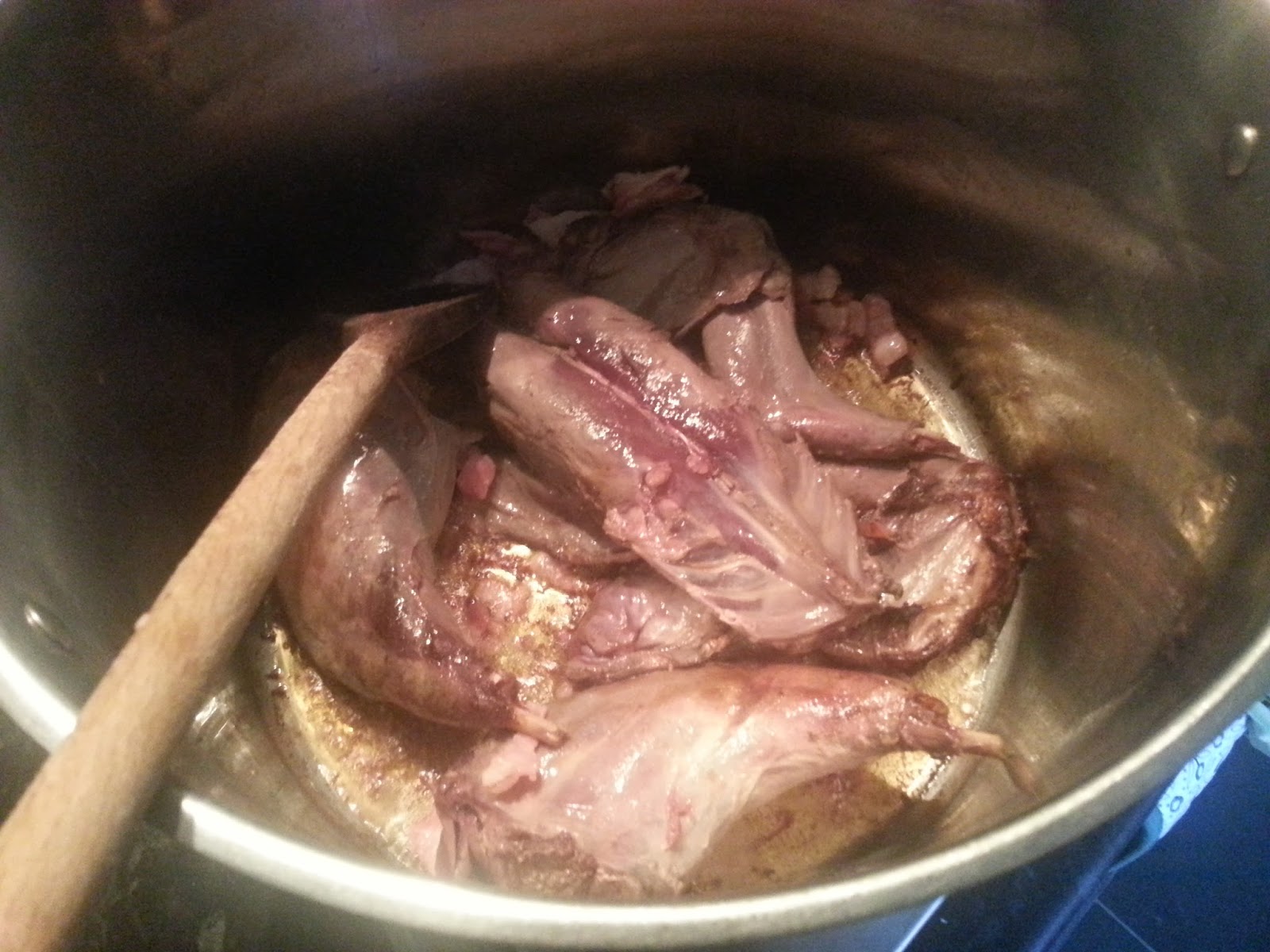
To make the soup, heat 3 ounces of clarified butter in a flameproof casserole or large saucepan and fry until brown either a jointed young hare or the head and forequarters of an older, tougher hare. As it fries, toss in 4 ounces of diced unsmoked bacon or salt belly of pork

Once everything is a delicious brown, add a heaped tablespoon of plain flour, stir to cover the meat before add ½ bottle of red wine or claret and 1 ¾ pints of beef stock or consommé. On a medium heat, let the contents come to a bare simmer. As you wait for that to happen, pop in a large onion studded with a clove, a good pinch of Cayenne pepper, and ½ teaspoon each of ground mace and black pepper. Also toss in a decent bouquet garni, embellished with extra springs of parsley, rosemary and marjoram.

Simmer everything together very gently until the meat is tender and comes away from the bone easily. This can be anywhere between 1 ½ to 3 hours, depending on the vintage of the hare. Pass the soup through a strainer and fish out the joints, stripping the meat from the bone and cutting it into neat pieces. Salvage any pieces of the bacon and salt pork too. ‘Discard the remaining debris’, says Jane.

Return the strained soup to a cleaned pan, season with salt, and add 8 ounces of small mushrooms. Let them simmer for a few minutes before adding the hare meat and cured pork. If you like, add a tablespoon of redcurrant jelly.

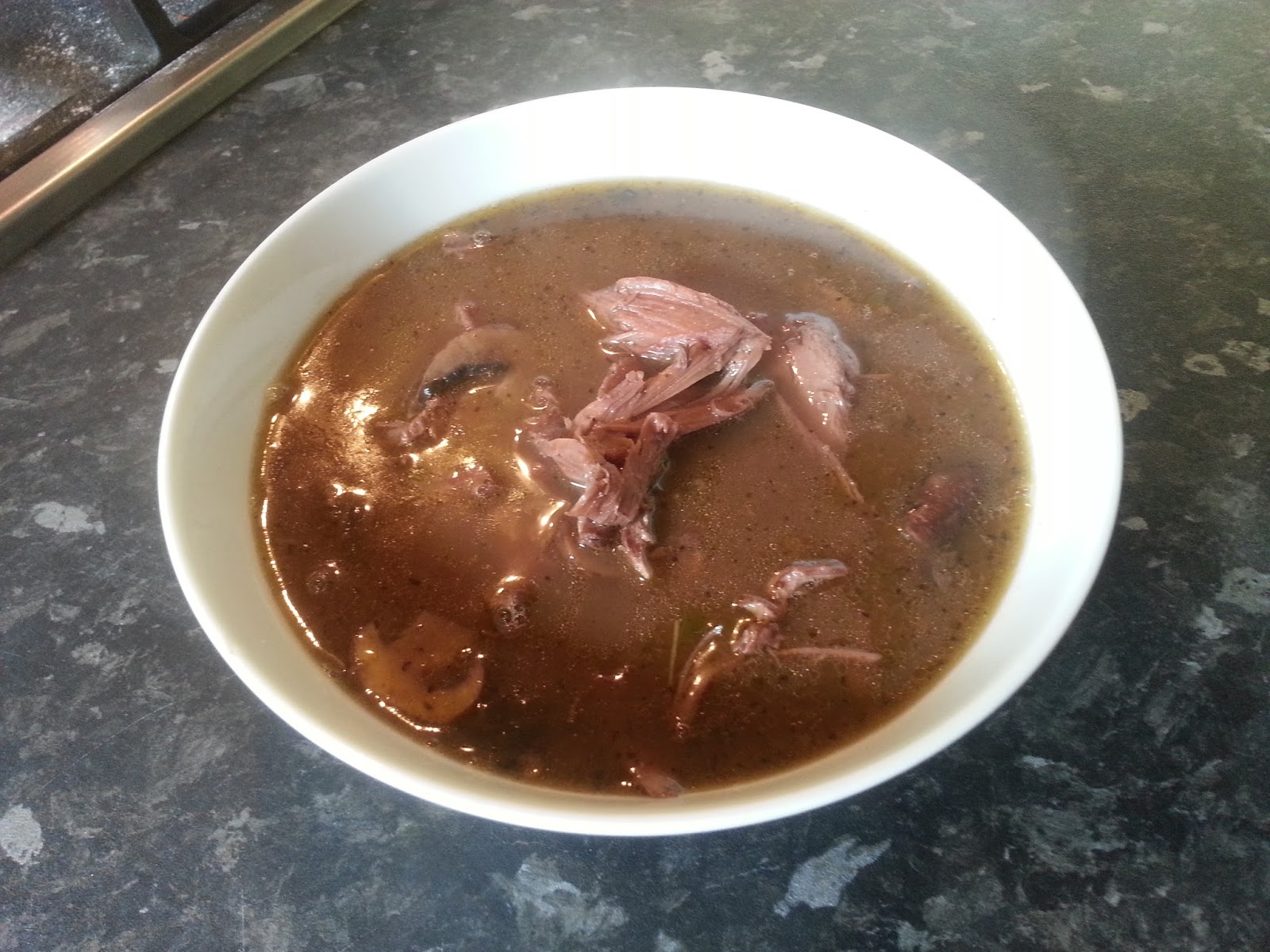
#410 English Hare Soup. I think if I had cooked this soup at the beginning of this project, I wouldn’t have been able to take the gaminess of this dish. However, after eating my through several game recipes and species, I am a real convert to it and couldn’t recommend this soup highly enough (except perhaps to the uninitiated). It was beautifully rich – too rich as a starter – and I ate it over several days, where it became more and more delicious with every reheating. It’s a style of cooking game that has fallen out of favour recently, where game appears in more familiar settings such as burgers or warm salads. There’s nothing wrong with that of course, as it introduces a new generation of people to the wonders of game. Anyway, I digress. A great soup for a great evening in front of a roaring fire. 9/10.
#409 Calf’s Brains with Black Butter

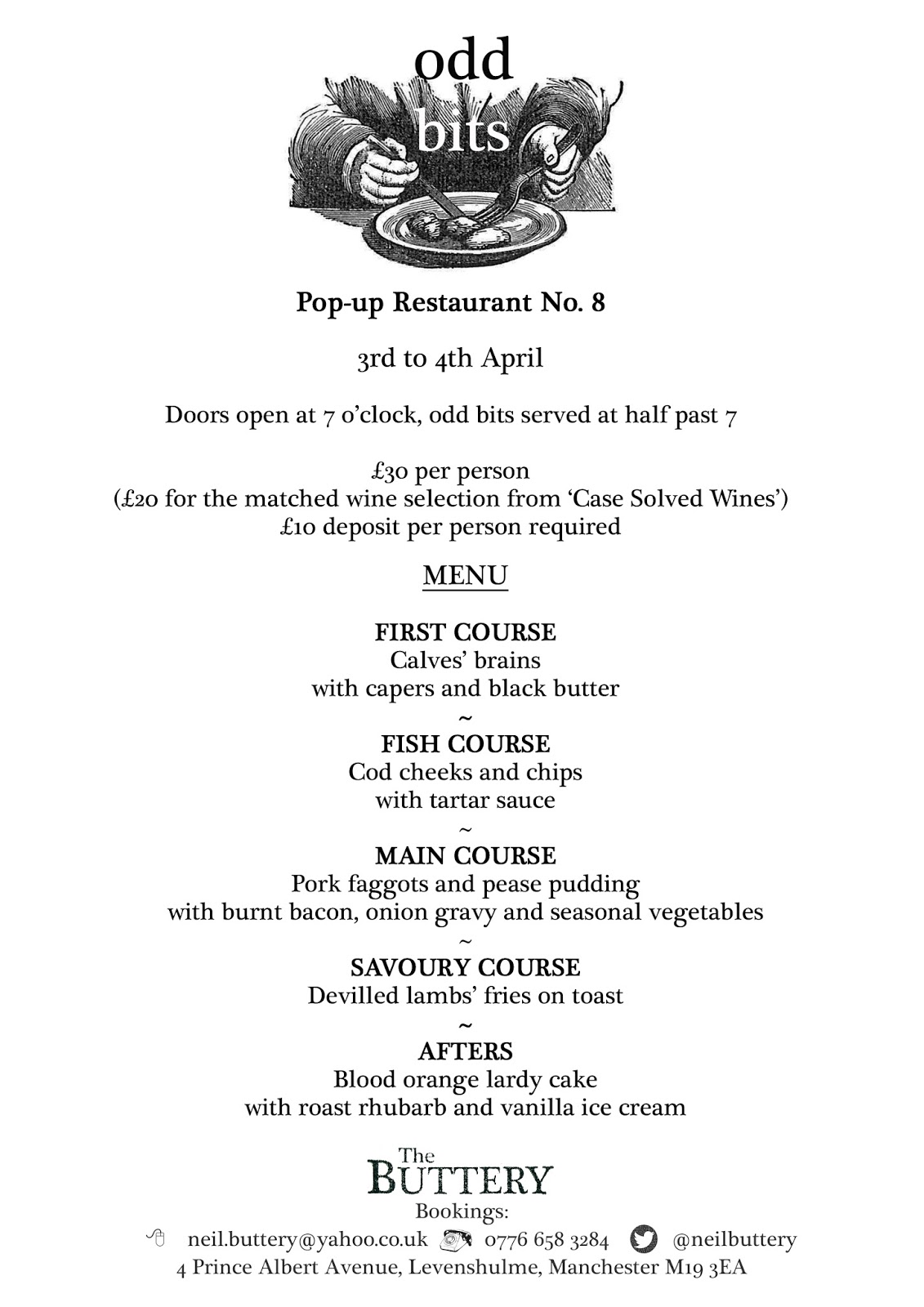
Many years ago when I began this blog, I winced in fear at prospect of eating brains but after scoffing sweetbreads, wood cock intestines, lamb’s head and jellied eel mousse, the prospect has become an exciting one. The only reason it’s taken me such a long time to cook the brain recipes in this book that you have to order a huge box of them – it’s how butchers buy them from their suppliers and they’re not going to be able to sell the rest of them after you have bought the one or two you need for your recipe. Of course, these days I do my pop up restaurants and so thought it’s about time they appeared on the menu. When it comes to recipe-testing, I always look to Jane first, so I cooked the two brain recipes in quite quick succession.

If you want to try and cook calves’ brains yourself, find a good butcher and ask for a box of brains. You’ll probably receive ten in all, but give him plenty of notice as it could take a couple of weeks for him to get his hands on them.

Before I go on with the recipe, a few words on the preparation of brains:

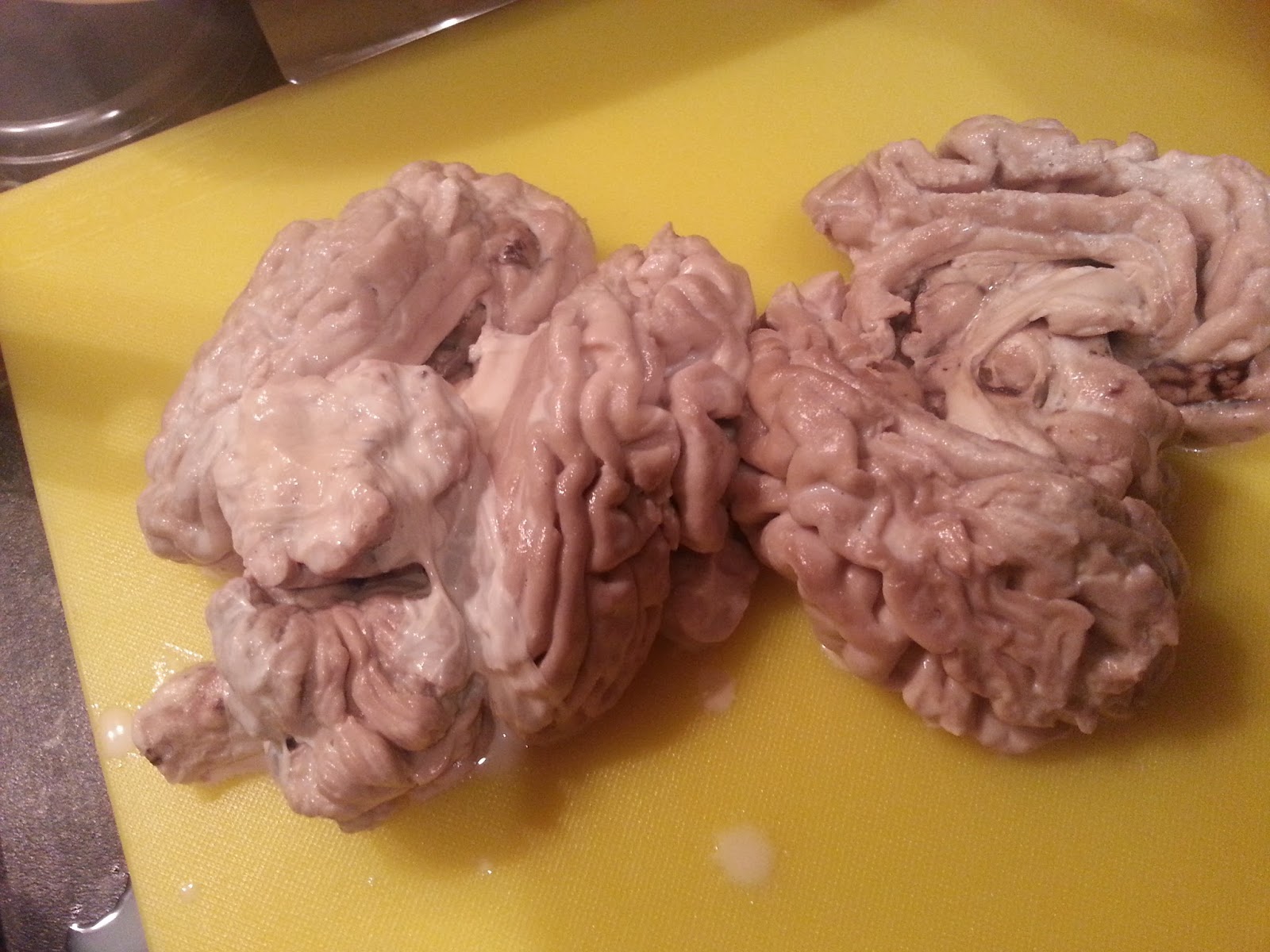
First, you need to get them ready for the pot by removing any pieces of bone and then gently peeling away the thin membranous network of blood vessels that surround the brain. To do this, you need to soak the brains in salted water for a few hours in the fridge, preferably overnight. This toughens up the membrane so that it peels without breaking so easily. This is a little fiddly to do, but you soon get the knack. You might find it easier to do it under a running tap. Large calves’ brains are difficult to hold in one hand, so cut them in half. Better have two, neat hemispheres than a dropped, destroyed whole. With a little perseverance, you should end up with a nice, milky-white very delicate brain ready for the next stage.

The prepped brains can now be very gently poached in milk for five minutes so they get nice firm (if going by Jane’s exact words, but a good court-bouillon is a good other option), then cut up appropriately.

For this recipe you’ll need 1 ½ pounds of calves’ brains (about two) that have been poached in milk and cut in slices about 1/3” thick.

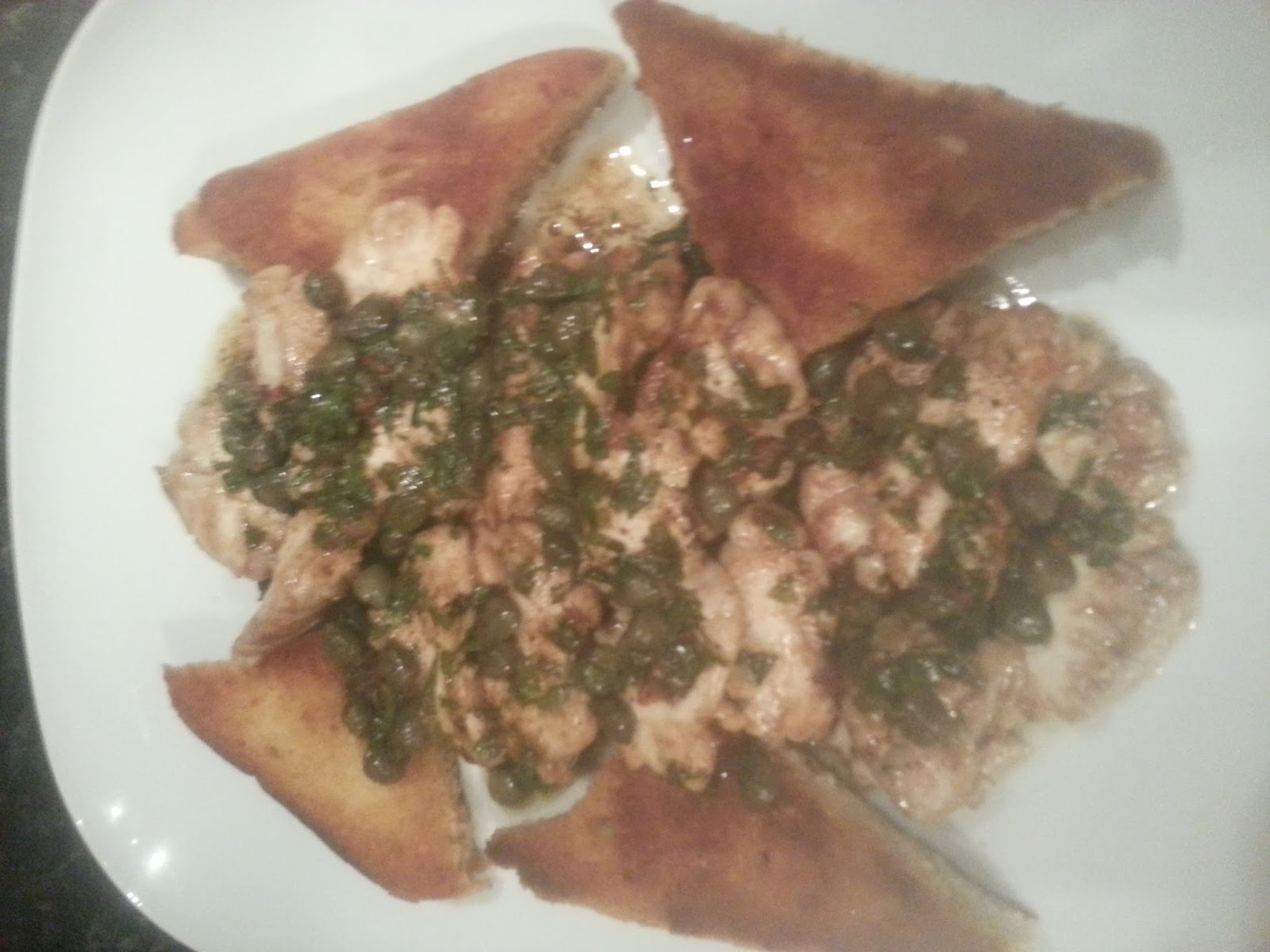
Swiftly fry them in some butter over a quite high heat so that the brain browns nicely, whilst they remain nice and soft inside. Keep them warm in the oven as you make the sauce by first melting a good 3 or 4 ounces of butter. Soon it will start to sizzle and froth, but then it will go silent. This is the point at which all of the water has boiled away and the butter solids will soon start to change colour. Timing is critical now; ready yourself with 1 ½ tablespoons of white wine vinegar and wait for the pale solids to turn to a deep golden brown. As soon as they do, take the pan off the heat and pour in the vinegar, swirling the pan as you go. Add a heaped tablespoon of capers and level tablespoon of parsley and season with salt and pepper.

Jane suggests serving the sliced brains on a bed of cooked spinach with the sauce spooned over the top, surrounded by triangles of bread that have been fried in butter. 

The photographs are not really doing the process justice. I really need a better camera!

#409 Calf’s Brains with Black Butter. Well I must say this was absolutely delicious! The soft and slightly-sweet brains were contrasted excellently against the fried bread, and the piquant sauce provided the dish with plenty of oomph, which bland brains need I think. I cooked an adapted version of this for a pop up restaurant by making it into a warm salad; every single plate came back clean. What a shame they have gone out of favour these days, perhaps now that the shadow of BSE no longer looms too darkly, they will begin to sneak back into our butchers’ shops again? Get your hands on some and have a go; fun to cook with, and a true gastronomic experience! 9/10

#405 Capon, Goose or Turkey Neck Pudding / Poddyng of Capoun Necke (1430)

Here’s a recipe that I’ve been dying to do since I first picked up Jane Grigson’s tome and, at Christmastime, I finally got the chance to cook it (yes, I am THAT behind on writing my posts!).

The main problem, you see, is getting hold of the neck of a turkey, goose or capon. It’s not the neck muscle that’s needed; that would be easy! All I’d have to do is rummage inside the giblets bag and pull the neck out. This recipe requires the neck skin – all of it, from the base of the neck, right up to the beak. In other words, I needed a fowl with its head still on.

The trouble is, it is very tricky to get one. I have three very good butchers close to me and none of them could get me a turkey with its head on! These birds are plucked and gutted mechanically these days, and the butcher doesn’t have to do a thing when he receives them.

To get a bird with its head on, you have to know a farmer or keep them yourself. Luckily for me Dalesbread Finest Meats, who attend Chorlton Market with me (3rd Saturday of the month!), farm and sell their own meat, including turkey and geese. No problem, they say.

This recipe comes from an early Fifteenth Century manuscript, jazzily called Harleian MS.279. Here’s the original recipe:

Poddyng of Capoun necke.—Take Percely, gysour, & þe leuer of þe herte, & perboyle in fayre water; þan choppe hem smal, & put raw ȝolkys of Eyroun .ij. or .iij. þer-to, & choppe for-with. Take Maces & Clowes, & put þer-to, & Safroun, & a lytil pouder Pepir, & Salt; & fille hym vppe & sew hym, & lay him a-long on þe capon Bakke, & prycke hym þer-on, and roste hym, & serue forth.

Essentially, it’s the skin of the neck wrapped around some spiced offal to produce some kind of hybrid between a sausage and a meatloaf.

This is Jane’s somewhat modified version of that recipe.

First job on the list is to get the neck skin removed from the bird. To do this, get yourself a pair of good, sharp scissors. Three incisions is all you need to make, and the first is around the base of the neck, as low as you can without exposing the breast. Next, cut around the neck end, close to the beak. Lastly, cut straight up the length of the neck, so that you can remove the skin in one piece.

This sounds easy. It is not.

Okay, now for the filling. Get yourself a good-sized mixing bowl and break up 8 ounces of sausagemeat and mix into it a good tablespoon of finely chopped parsley and a couple of egg yolks. Season with salt, pepper, mace and cloves. If you like add a pinch of saffron that has first been soaked in a tablespoon of hot water.

Lay the neck skin flat on a work surface and spread half of the mixture over it. Cut the liver of your bird into three pieces and arrange these in a line going down the centre then spread the remainder of the filling over the top of that. Pull the edges of the neck skin around, wrapping the filling up, turning it over and tucking it in. Pop it into a loaf tin.

This sounds easy. It is not.

I could not get the skin to wrap around the sausagemeat, nowhere near in fact. I tried my best, but it ended up essentially a meat loaf with some skin draped over it.

Bake at 180⁰C for 45 minutes. Cool and leave in the fridge so that the flavours can permeate. Slice and eat like a pâté.

#405 Capon, Goose or Turkey Neck Pudding / Poddyng of Capoun Necke (1430). This was both a disaster and a success at the same time. There was far too much filling for the neck, so as the ‘pudding’ baked the skin shrank, leaving a wrinkled line of neck flap. However, the filling was absolutely delicious! The liver was good and creamy and those mediaeval spices complemented the meaty, rich filling. All pâtés should have cloves and mace added to them, I reckon. Even though the neck ended up being completely superfluous, it’s still a high scorer. 7/10

This terrible photo doesn’t show it at it’s best!