#353 Roast Rack of Lamb with Laverbread

A second post involving the Welsh speciality laverbread; a deep green gelatinous sauce made from well-stewed seaweed known locally as laver (see the previous post). I still had some left over for this recipe which I made for my friend Charlotte – a veteran of my cooking, poor woman – as it was her birthday and luckily she requested lamb.

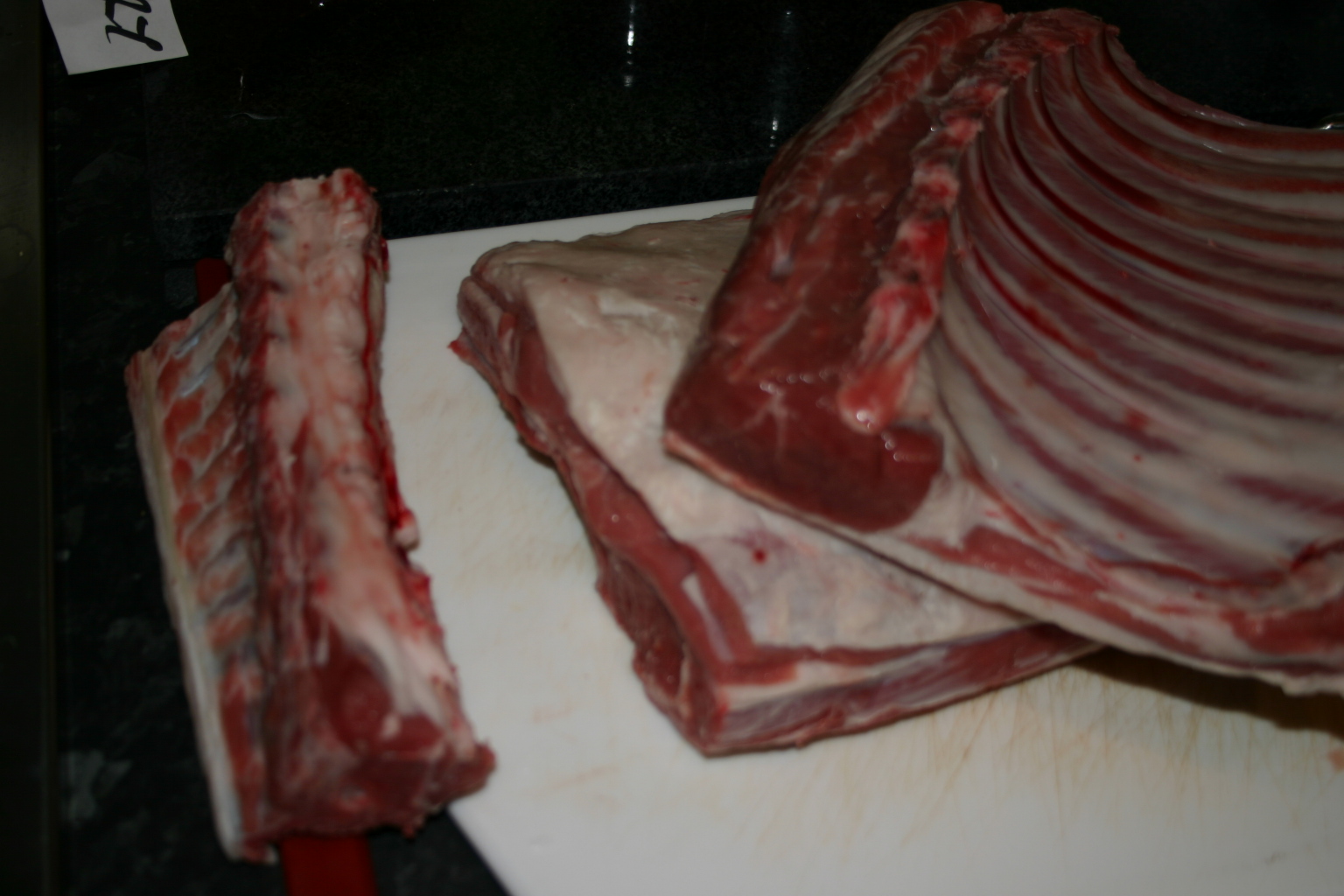
This is a recipe that I couldn’t do when I was in America because what you don’t want are nice pre-butchered racks, but a whole best end of neck. This is the upper part of the back and ribs that sequesters the beautifully tender lamb cutlets. If you can, wait until the lamb are a little older; these muscles don’t do much work so they don’t have as much flavour as, say, leg. Older animals have worked a bit longer so there is some make up in the flavour department. Also, they’re much bigger so you get more meat in your best end of neck.

Anyways, ask the butcher for one best end of neck, then ask him (or her) to split it down the centre, removing the backbone. Take the meat home, including the bones that he removed and you paid for!

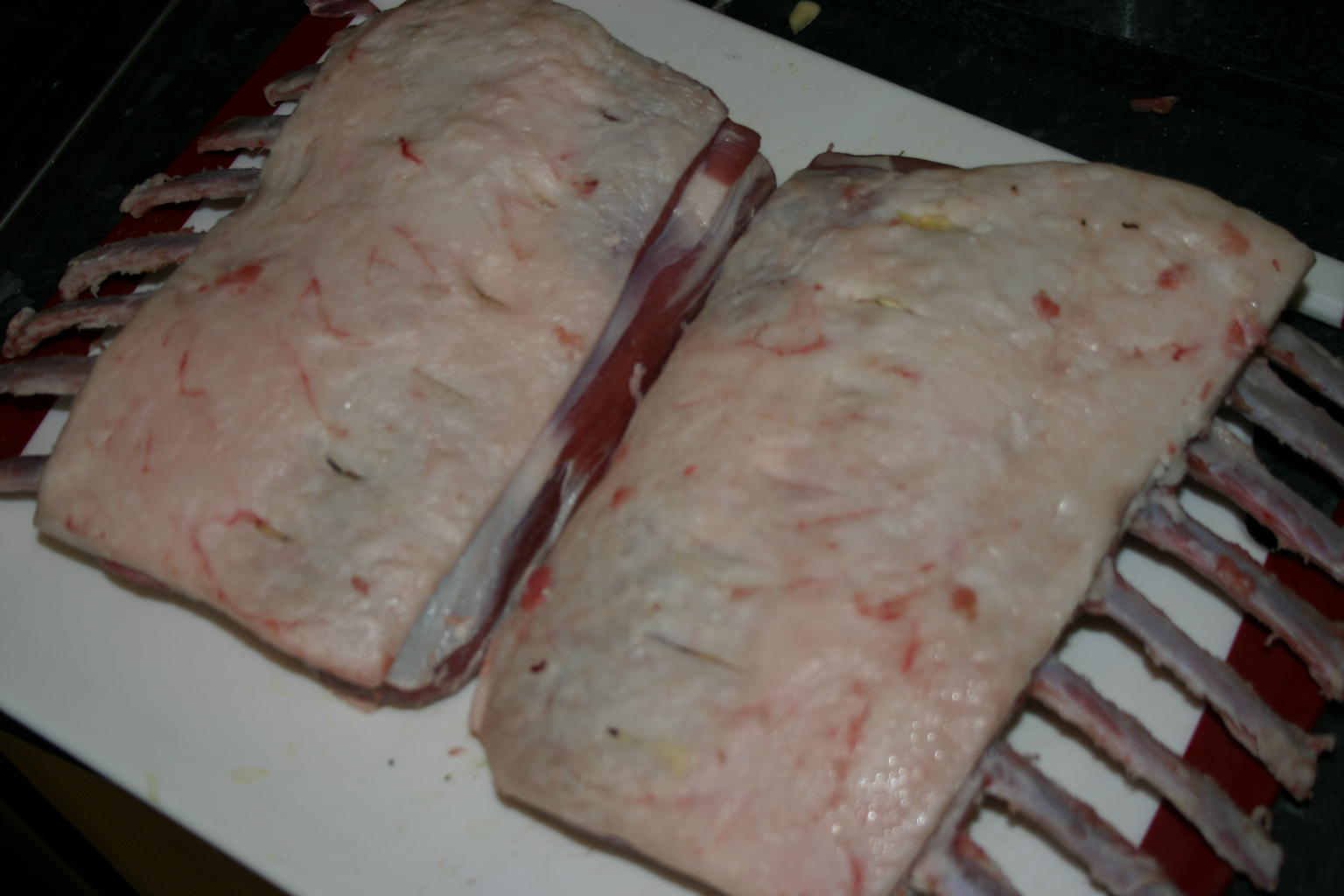
Now prepare the lamb ready for roasting by cutting away any fat and meat from the ribs, don’t go too far down – maybe and inch and a half at the wider end and an inch at the thin end.


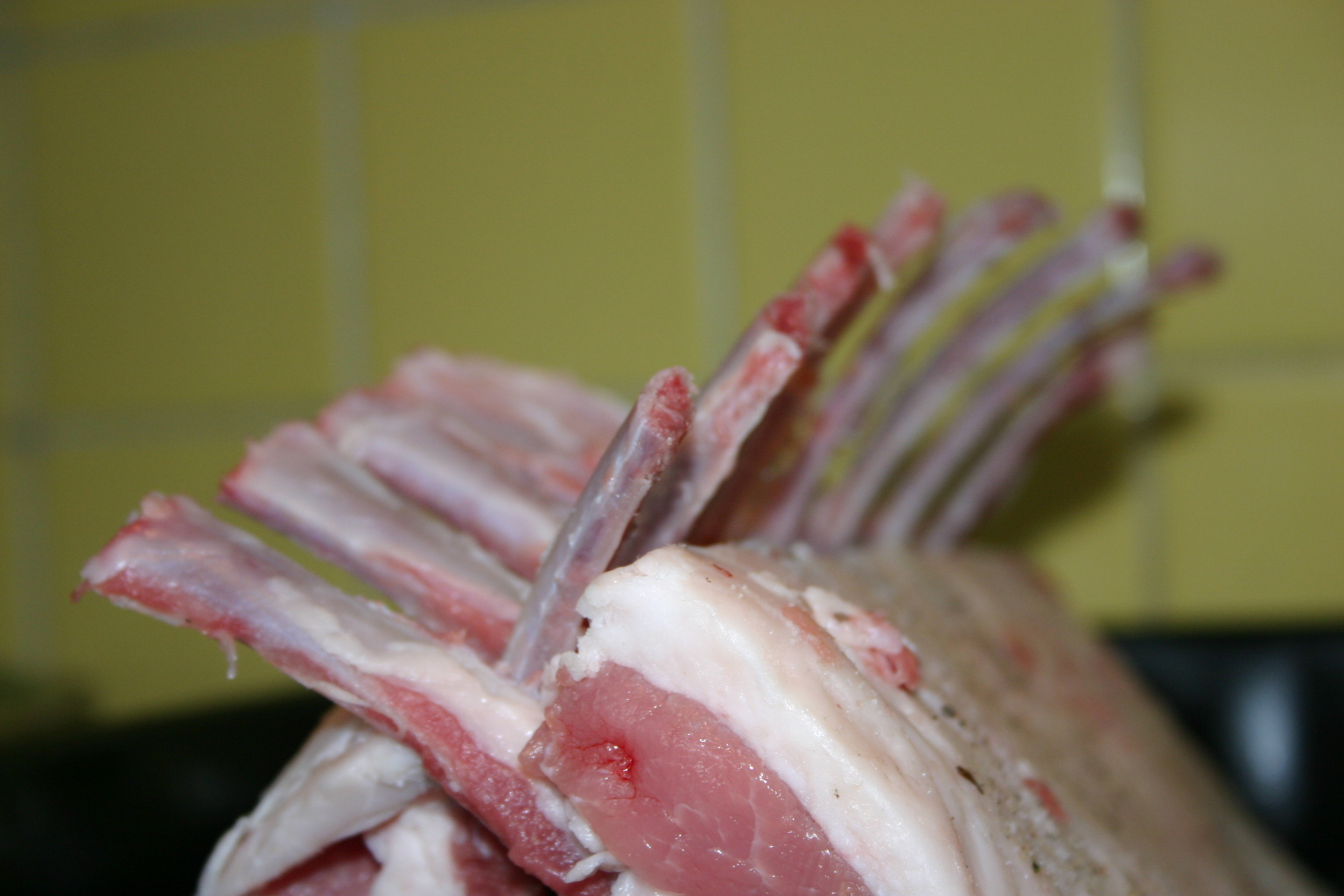
You should end up with two racks that can be propped up against each other with bones interlacing like fingers. Now take a clove of garlic and slice it thinly. Make holes down the fatty sides of the racks with a very sharp pointy knife and slot a sliver of garlic in each one. Season the lamb all over and put it in a roasting tin so that the ribs criss-cross.


Cover the exposed bones with a piece of foil so that they do not burn. Roast the lamb for 45 minutes at 220C (425F) for pink lamb, going up to 60 minutes for well-done (though cooking it well done would be a travesty in my humble opinion).

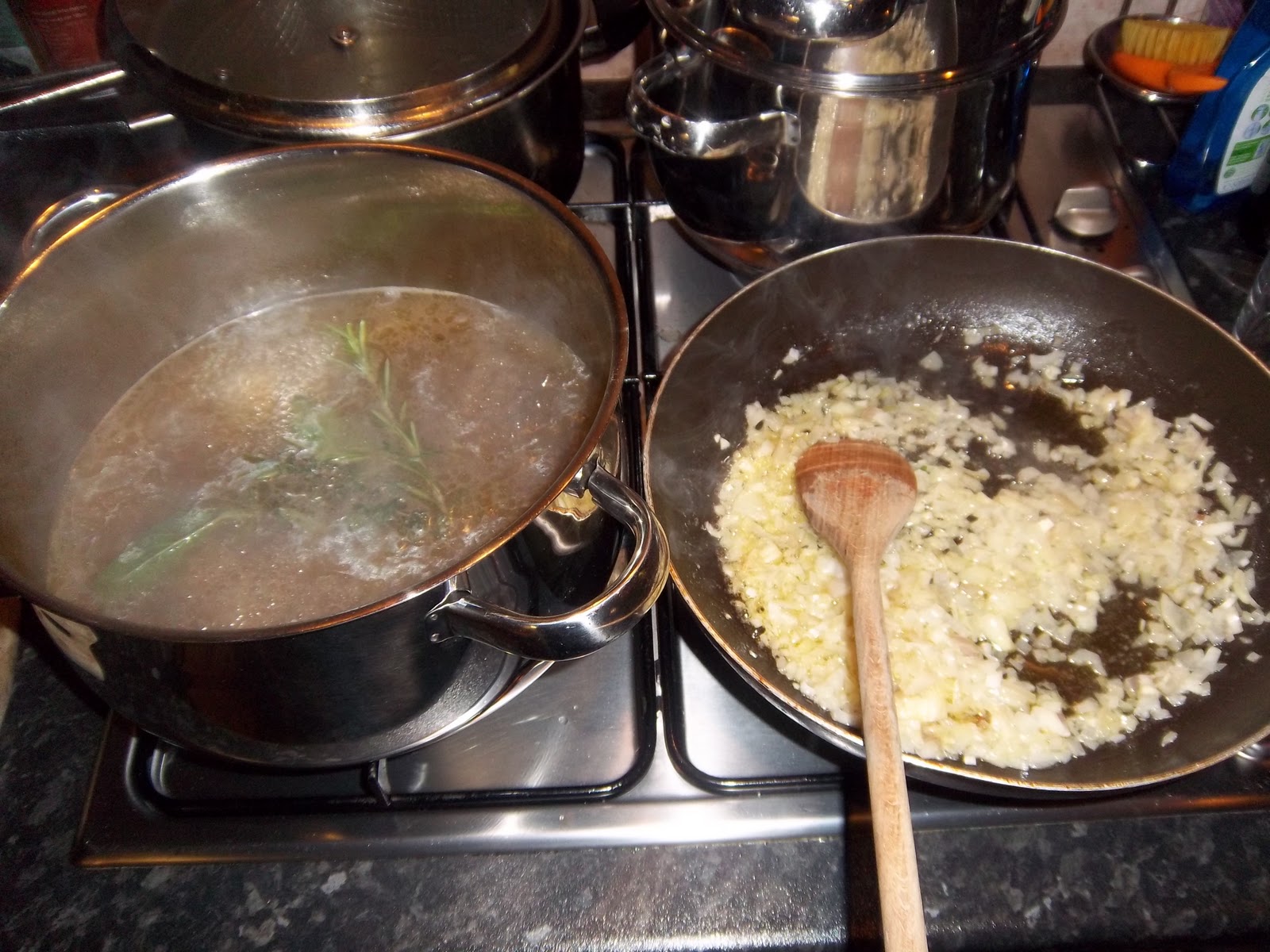
Next, make the gravy by first making a lamb stock from the bones and trimmings (this bit can be done well in advance). Add them to a saucepan with a carrot and a tomato both roughly chopped, a pint of beef stock and some salt and pepper. Bring to a simmer and let it tick away for a couple of hours or more if you can. Pass through a sieve and cool. Remove the floating fat and return to the pan with a glass of white wine or vermouth. Reduce until you get a well-flavoured stock. Lastly, slake a tablespoon of cornflour with a little cold water and stir into the stock to produce a nice gravy.

When the lamb is ready, take it out of the oven and cover with foil and let it rest whilst you make the laverbread sauce. Melt 3 ounces of butter in a saucepan and add a pound of laverbread. When hot, stir I the juice of 1 lemonand 2 oranges. Season with salt and pepper.

Place the lamb in the centre of a serving dish, pouring any juices in the gravy. Pour the sauce around the edges of the lamb and then decorate with thinly sliced oranges.

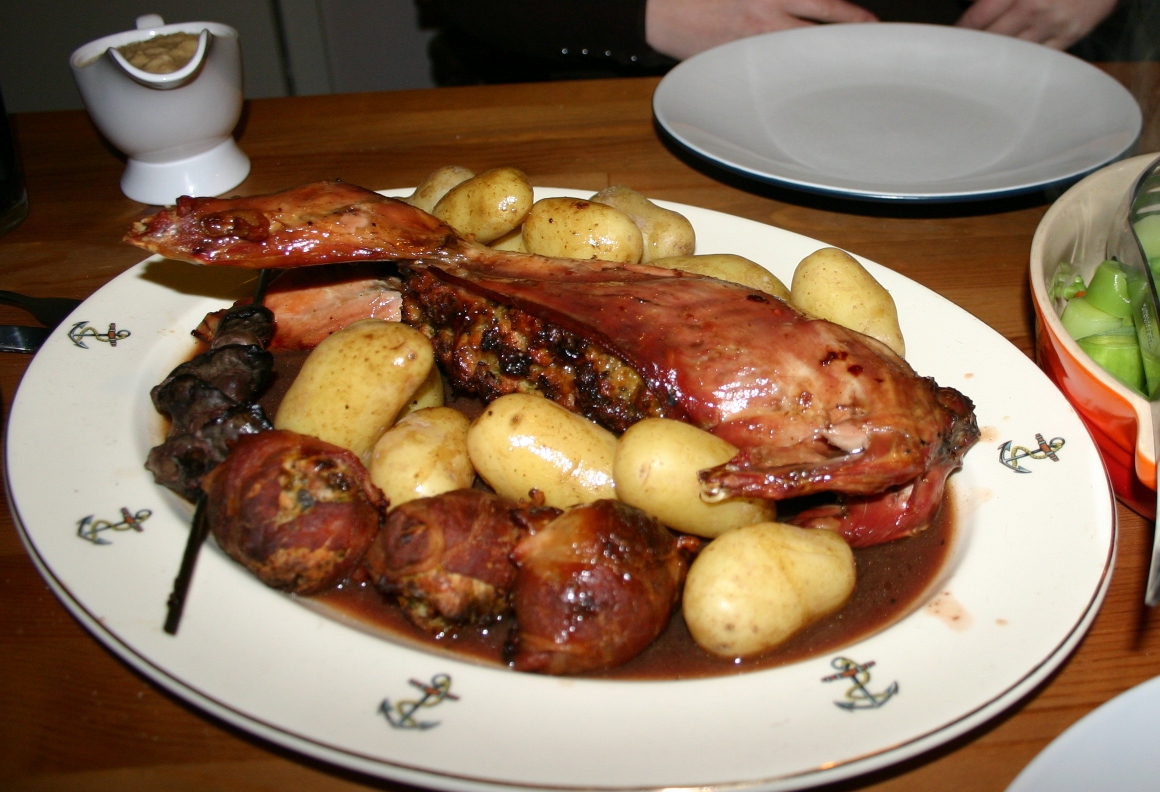
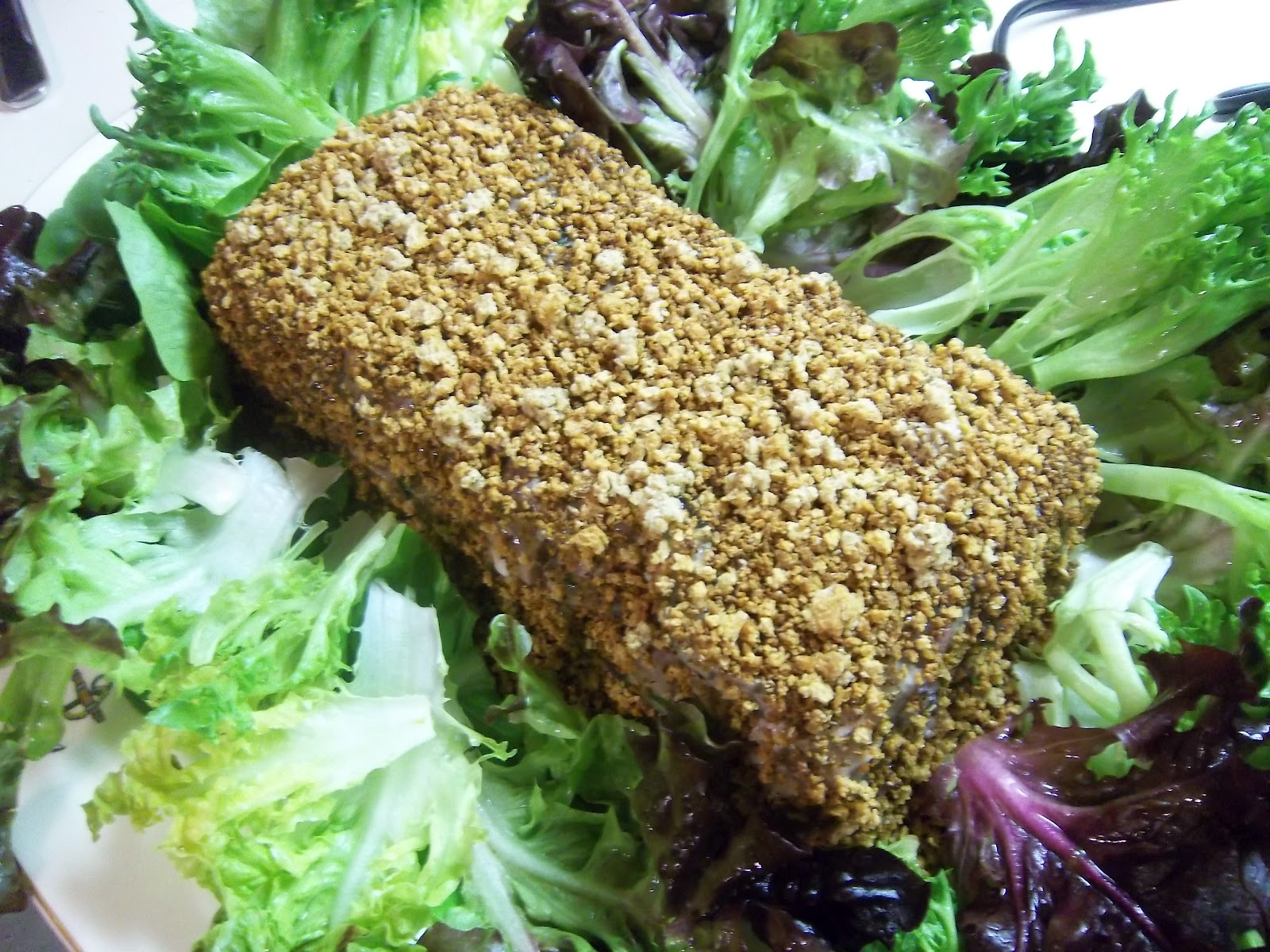
#353 Roast Rack of Lamb with Laverbread. Well the meat (which I cooked pink) was absolutely delicious, tender and well-flavoured. I wasn’t sure about the laverbread at first – it not being cut by the bland oatmeal like in the previous recipe – but I soon got used to it. The taste is very strong, but when eaten with the lamb you can see why they are eaten together so often. The gravy too was excellent; mild and not in the slightest bit greasy as lamb gravy can so often be. 9/10


#340 Veal (or Lamb) Cutlets

Here’s a simple recipe from the Beef & Veal section of the Meat, Poultry & Game chapter. I am trying to get through all of the veal recipes before I move back to England later this year; it’s not because it is cheaper here, it’s just that it is much easier to get hold of.
A cutlet is a chop (rib) from the best end of neck, just above the shoulders. I went for veal, though they were called ‘Tomahawk Chops’ in the shop, I don’t know that’s typical in the US or not. Anyways, it’s a very tender cut of meat that needs very little cooking, what is nicely done here is the meat is breadcrumbed so it is protected from direct heat, keeping it juicy, but with a crunch. Jane says that the thickest the cutlets should be is an inch. You need one cutlet per person (or two, or even three, if doing lamb). Jane also mentions that boned loin can be used, but the slices should be half an inch, maximum. That’s us told.
You need some breadcrumbs first: I use a blender for that job and then scatter them over a baking tray and let them dry out in a cool oven. If the bits are too big, you can always give them a very quick whizz in the blender again. Mind you don’t turn them into dust though. Take the meat out of the fridge so it can warm up to room temperature.
To the breadcrumbs add some grated lemon zest and finely-chopped herbs: parsley, thyme, marjoram and my new favourite herb, winter savory. Coat the cutlets in flour, patting off the excess, then into some beatenegg and then into the herby crumbs.
Heat some clarified butter in a heavy-based frying pan and fry gently on both sides. The amount of time depends on the thickness of the meat and how ‘done’ you want it to be. I did inch-thick cutlets, cooking them around 3 or 4 minutes a side. The crispy crumb protects the meat, so if you do accidentally cook the meat right through, it won’t be dry.
When cooked, take out the cutlets and let them rest while you get on with the job of making a sauce: on a medium heat, stir 2 teaspoons of flour into the pan juices and then whisk in ½ pint of stock– veal, lamb or chicken, it’s up to you – simmer for a little under 10 minutes to cook out the flour. Take it off the heat and then whisk in a good-sized knob of butter. Taste the sauce and add salt, pepper and lemon juice to taste. “The sauce should be well seasoned, and not too copious or thick”, says Jane.
“Lemon quarters, mushrooms, watercress, a few boiled potatoes, are the right kind of setting for a meat cooked in this way”. I did the same, though I swapped watercress for broccoli. I think you always need something on your plate, perhaps that’s why she included watercress.
#340 Veal (or Lamb) Cutlets. These were great; everything was all very subtly-flavoured so the slightly piquant lemon and herbs didn’t mask the wonderfully tender veal. What else can I say? Great stuff. 8/10.

#336 Brawn or Headcheese

At Christmas time, be careful of your fame,
See the old tenant’s table did the same;
Then if you would send up the brawner head,
Sweet rosemary and bays around it spread.
William King, Art of Cookery 1709

Brawn, which is also known as headcheese or pork cheese, is essentially a terrine made from the head meat of a pig. All European countries have their recipes for it and appeared sometime during the Middle Ages as a peasant food where the head would be boiled to make a soup. Not that many people seem to eat brawn anymore in Britain, but it seems pretty popular still in America, maybe because of the influence of so many European countries there.
Sports Fan: Queen Elizabeth I
In 1571 Queen Elizabeth I breakfasted on “brawn, mustard and malmsey” on one of her Twelfth Days, so it had obviously reached higher status since its invention. It might interest you to know that after her breakfast in the hall, she watched some hounds kill a fox and a cat beneath the fire for sport and later, during the Twelfth Night play, a fox was let loose so that it could be chased by dogs.
The word headcheese baffled me a little. Where does it come from? Obviously, brawn is nothing like cheese in appearance or taste, but then  I found this recipe from The Compleat City and Country Cook by Charles Carter, dating back to 1732 which seems to solve the mystery:

A Hog’s Head Cheese Fashion.
You must bone it and lay it to cleanse twenty-four Hours in Water and Salt, and scrape it well and white; lay Salt on the Inside, to the Thickness of a Crown-piece and boil it very tender; then lay it in a Cheese-Press, cover it with a Cloth, and when cold it will be like a Cheese; you may souse it.
Brawn is a great thing to make ahead of time for a meal, but beware you don’t make it too soon; most of the references I found to headcheese concerned food poisoning. The problem with jellied stocks is that they are the perfect food for microbes; indeed we essentially use stock in the laboratory to grow many microbes. You don’t want to use brawn, or any kind of stock more than three days since it was last boiled.
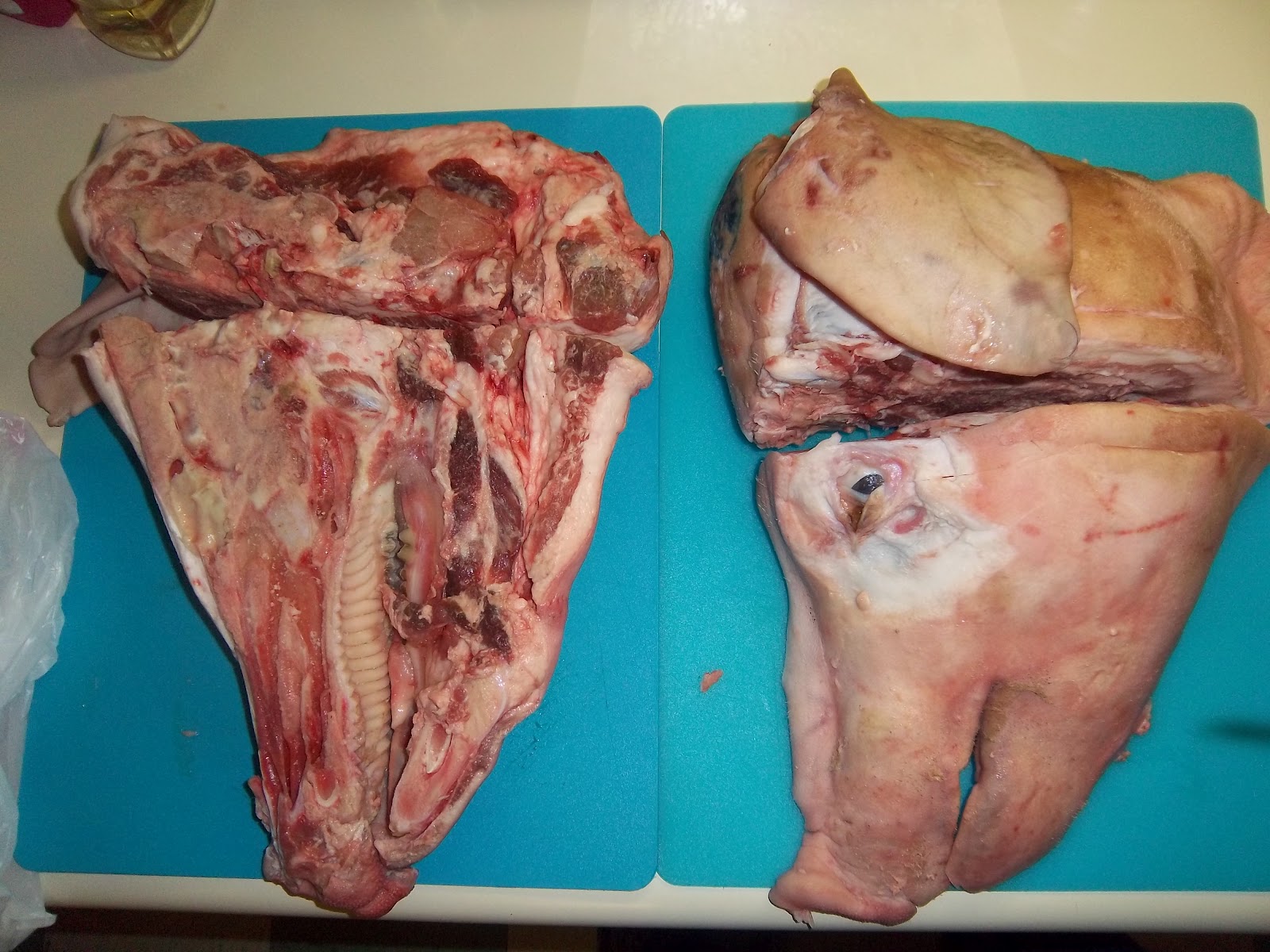
First of all you need to order half a pig’s head from the butcher, you want the tongue too, but not the brains. Ask him to chop the head into two or three pieces for you (I learned my lesson when attempting to chop that lamb’s head in twain with a now blunt meat-cleaver and a hammer a month or two ago). Whilst you are there get yourself two good lengthy pig’s trotters and ask him to chop those in two aswell. Lastly, you need a pound of shin of beef with the shin bone too.
Bundle your meaty horde back home and if you can put the pig bits (not the cow bits) in the brine tub for a day, or at least an evening. See this post right here if you want to try and make your own brine.
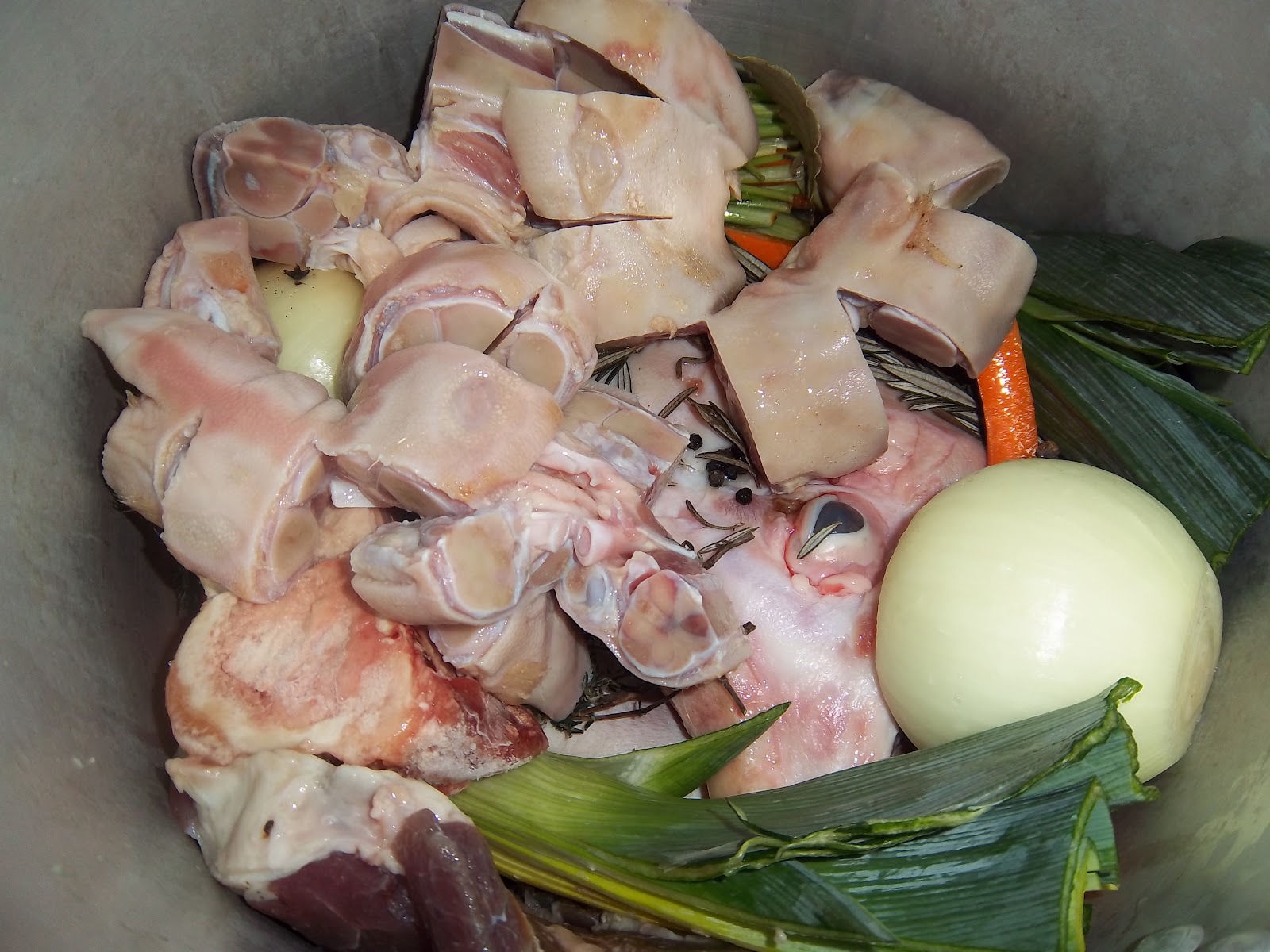
Place the meat in a large stockpot, cover with water and slowly bring to a boil. This slow rate of temperature increase is important in order to achieve a nice, clear jelly because the albumin proteins are let out from the meat at a steady rate, which becomes grey scum that floats to the top. Fast boiling makes a murky, grey stock. Skim the grey scum until it runs white and then add the stock vegetables and aromatics: 2 chopped cloves of garlic, a good sized bouquet garni, 10 black peppercorns, 2 tablespoons of red or white wine vinegar, a teaspoon of salt, 2 onions that have both been studded with 2 cloves, 2 quartered peeled carrots and 2 leeks that have been split lengthways. Phew! Bring back to the boil, then cover and simmer very gently for 2 to 2 ½ hours.
When the meat is tender and can be parted from the bones, extract the head and get on with the task of rifling through the head to find all the meat. When cooked, this is not the gory task it may sound. Leave the stock simmering as you do this, adding back any bones to the pot as go along. You should find a good amount of meat with a good variety of colours and textures. Chop the meat into good-sized pieces and cover, adding a ladleful of stock so they don’t dry out.
Strain the stock through a sieve lined with muslin into another pan and reduce the stock to concentrate both the flavour and the gelatine extracted from the bones. Put the meat back in the pan with the stock and simmer for 20 minutes. Season with more salt, if required, and a squeeze of lemon juice. Meanwhile boil three eggs and chop some parsley, chives and chervil.
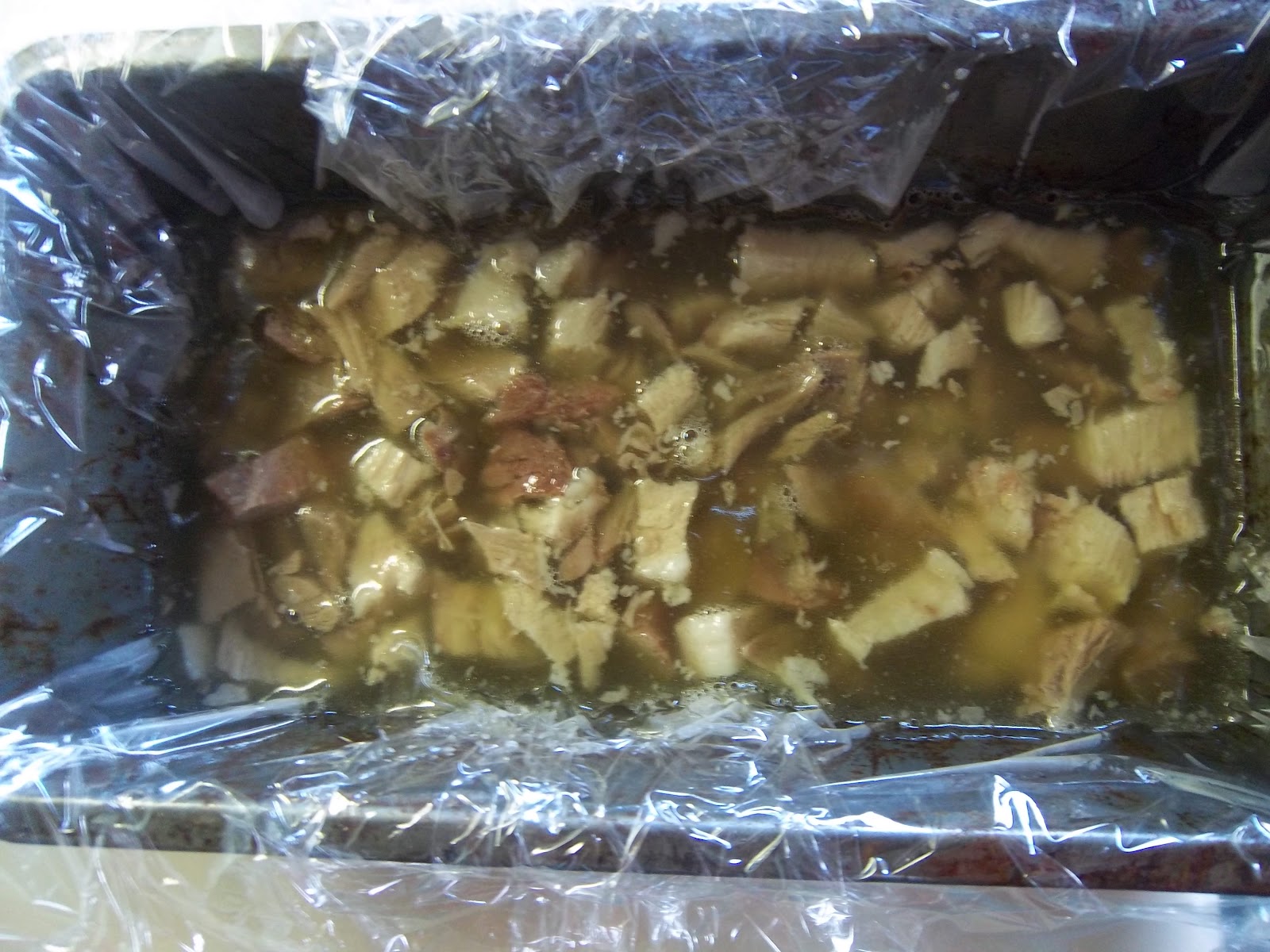
Now it is time to assemble the whole thing. Start by lining a loaf tin with some cling film – you don’t have to do this step, but it will make it easier when it comes to turning out the brawn onto a serving plate. Next, spoon in stock and meat until you have filled up to just under half way.
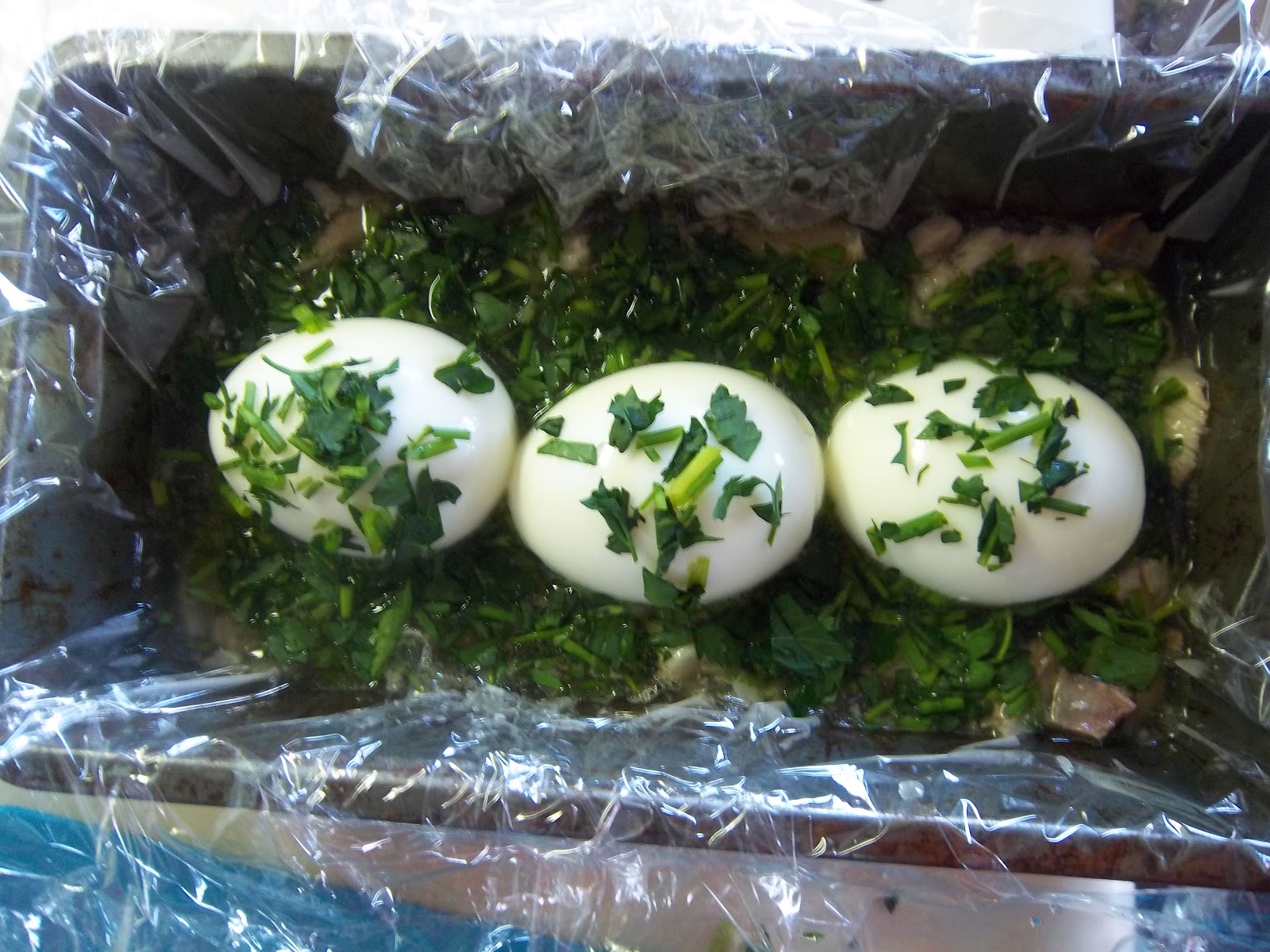
You need a good balance of jelly and meat, our Grigson says: ‘you don’t want the brawn to look mean. On the other hand, if the meat is too solidly packed, the brawn becomes too heavy to be enjoyable.’ Sprinkle in half the herbs and line up your hard-boiled eggs.
Sprinkle over the remainder of the herbs and fill the tin with more stock and meat. Let it cool and then set it fully in the fridge, covered with more cling film. When it is time to serve the brawn, turn it out onto a serving plate and press onto it brown, toasted breadcrumbs.
Serve with wholemeal or rye bread and butter, mustard and salad. Alternatively, swap the bread and butter for some mashed potatoes. I went with the bread option as I couldn’t imagine cold jellied meat with mashed potatoes to be in any way delicious.
#336 Brawn or Headcheese. I have to admit when I turned it out onto the plate it looked like a giant slab of dog food. However, I was pleasantly surprised. The meat was very flavourful and tender and the jelly, very soft, was very nicely flavoured with the infused flavour of the herbs. As much as I enjoyed it, I’d much prefer a nice simple paté as a starter, nevertheless, I reckon it deserves  7/10.

#324 Grouse

I had heard this year was a good one for grouse, so as they were cheap I ordered a brace from Bentley’s, the local butcher in Pudsey, my home town. I had never cooked or eaten grouse before and was excited about adding yet another species to the list.
In Britain, game season begins on the ‘Glorious Twelfth’ of August, and it is the grouse that are shot from that day. Another bird joins them too – the tiny snipe. It is the grouse that is held the most highly among the game shooters however, for the game eaters consider it the best of all the game birds.
The grouse is not a single species; there are four in the British Isles. If you order grouse from your game butcher, then you will almost definitely be getting red grouse, the most common of the four.
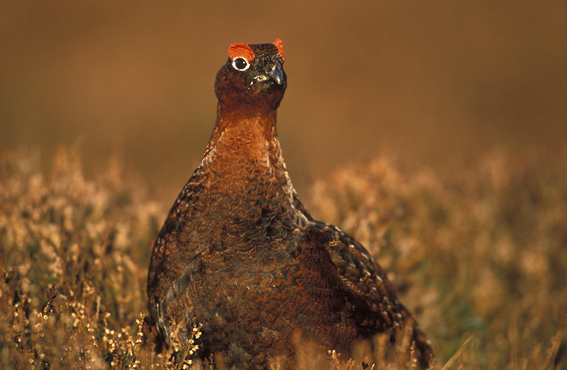
The very beautiful red grouse
There are also the much rarer black grouse, ptarmigan and capercaillie. Of these, only the ptarmigan is still hunted, though in very small numbers, and there is a recipe for it in English Food, though I don’t expect to ever find one and cook it.
Male capercailles are rare, majestic and aggressive
and off the menu these days.
Grouse, like most game species, are very lean, which is great if you are wanting to cut down on your fat intake. The problem with this is that the meat can dry out very easily and so you need to protect the bird by encasing it in fat or bacon. You can also lard the bird with bacon fat or pork back fat. These measures are pretty easy to take, so cooking grouse is pretty straight-forward.
One grouse will serve one or two people.
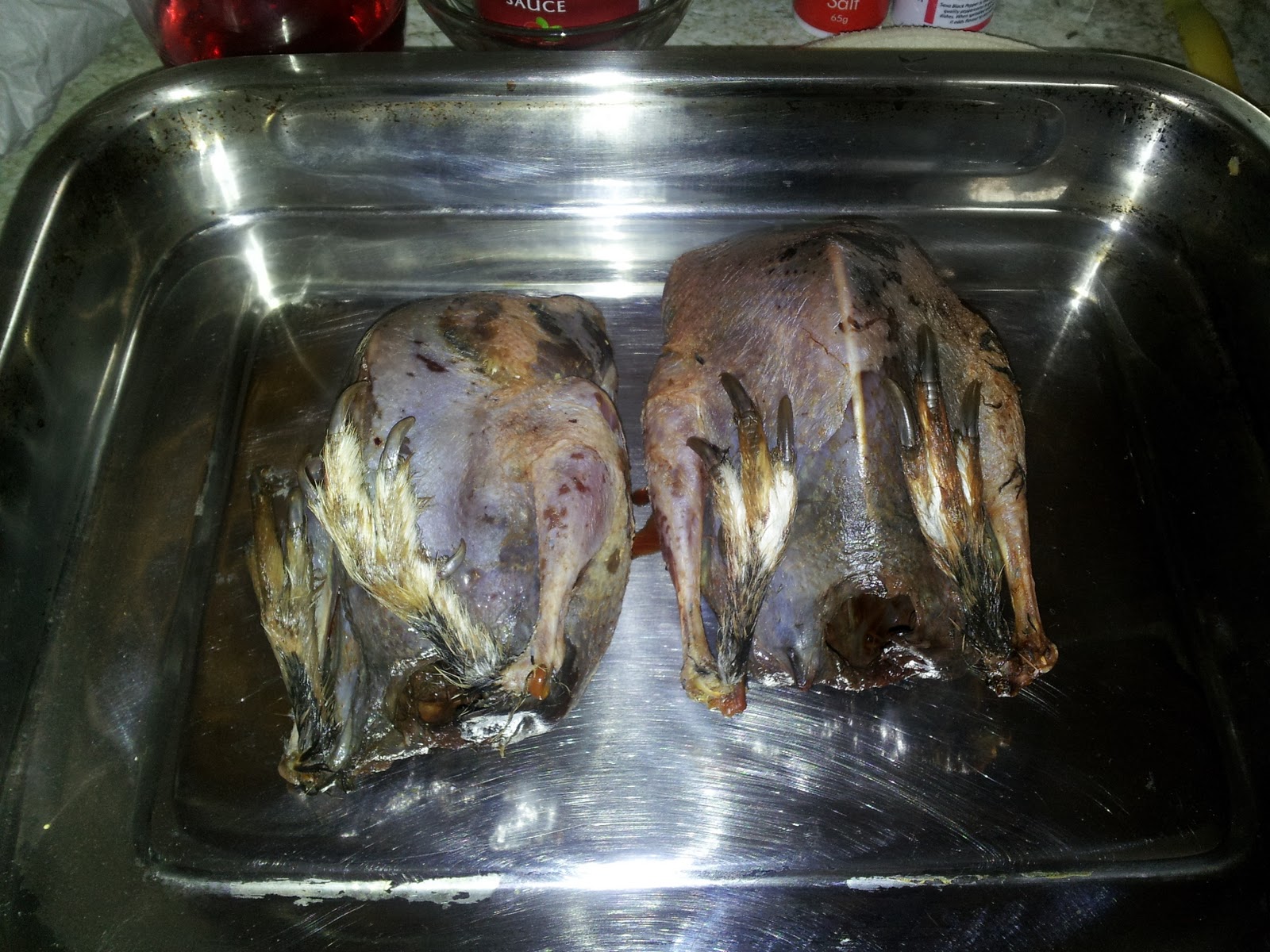
Preheat the oven to 190C (375F). Take your grouse and give them a rinse under some water and pat them dry. Season inside and out with salt and pepper and stuff the bird with some seasonal fruit. This depends upon the month you are eating the grouse; Griggers suggests bananas, wild raspberries, cranberries and peeled and seeded grapes. I went with banana.

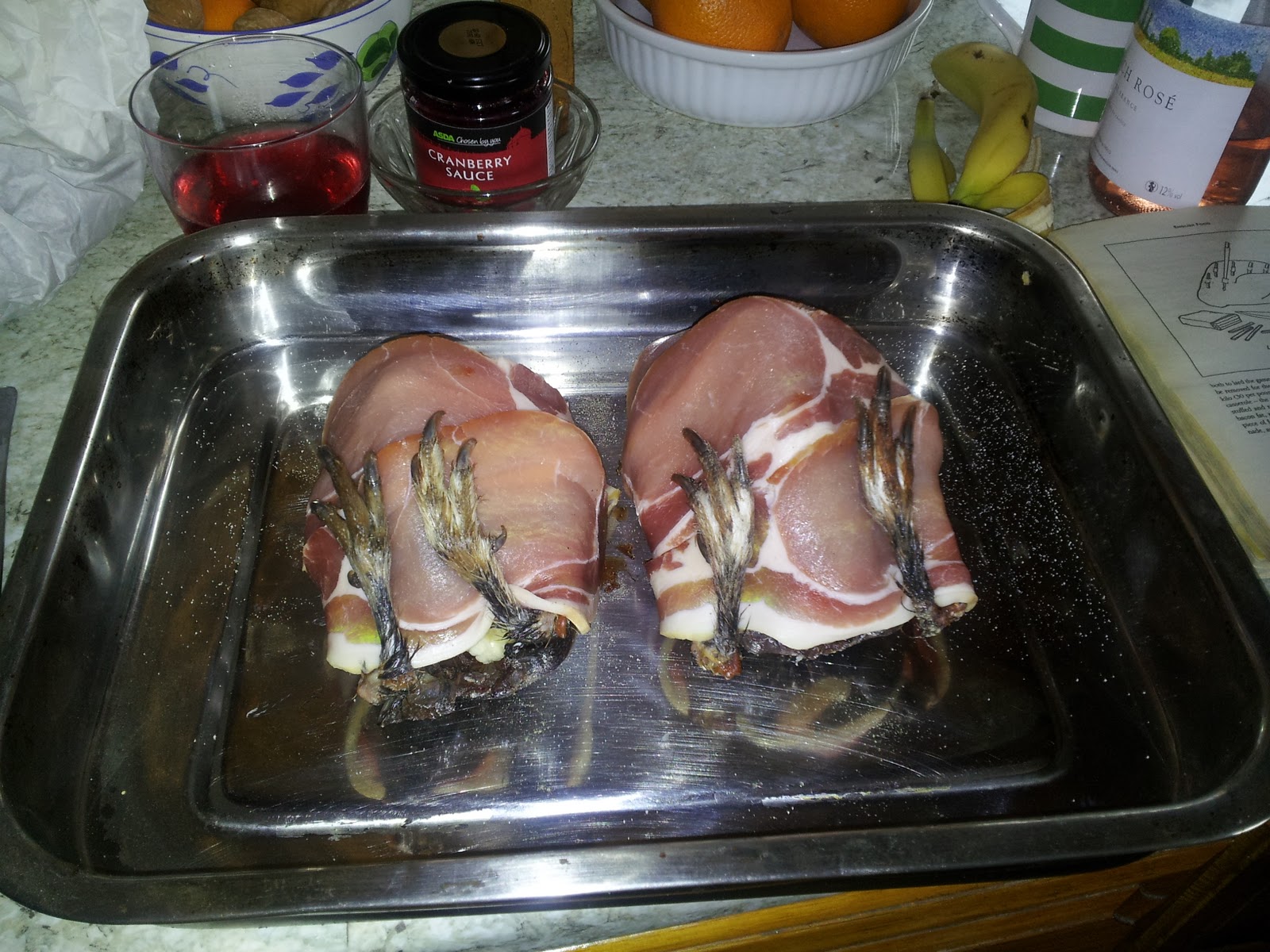
Cover the birds with vine leaves if you can get them. This is not necessary, so don’t worry if you can’t find any (I couldn’t). Next, cover the birds in jackets made of either bacon rashers or a sheet of pork back fat.

I went with bacon here as it could be served up alongside the grouse.

Roast for 35-45 minutes and allow to rest under some foil for around 20 minutes.

You can serve whatever you like with the grouse, but it is typically eaten with the typical game accompaniments like bread sauce, game chips and a tart jelly such as rowanberry. I went with some mashed potato and a couple of veg, myself.

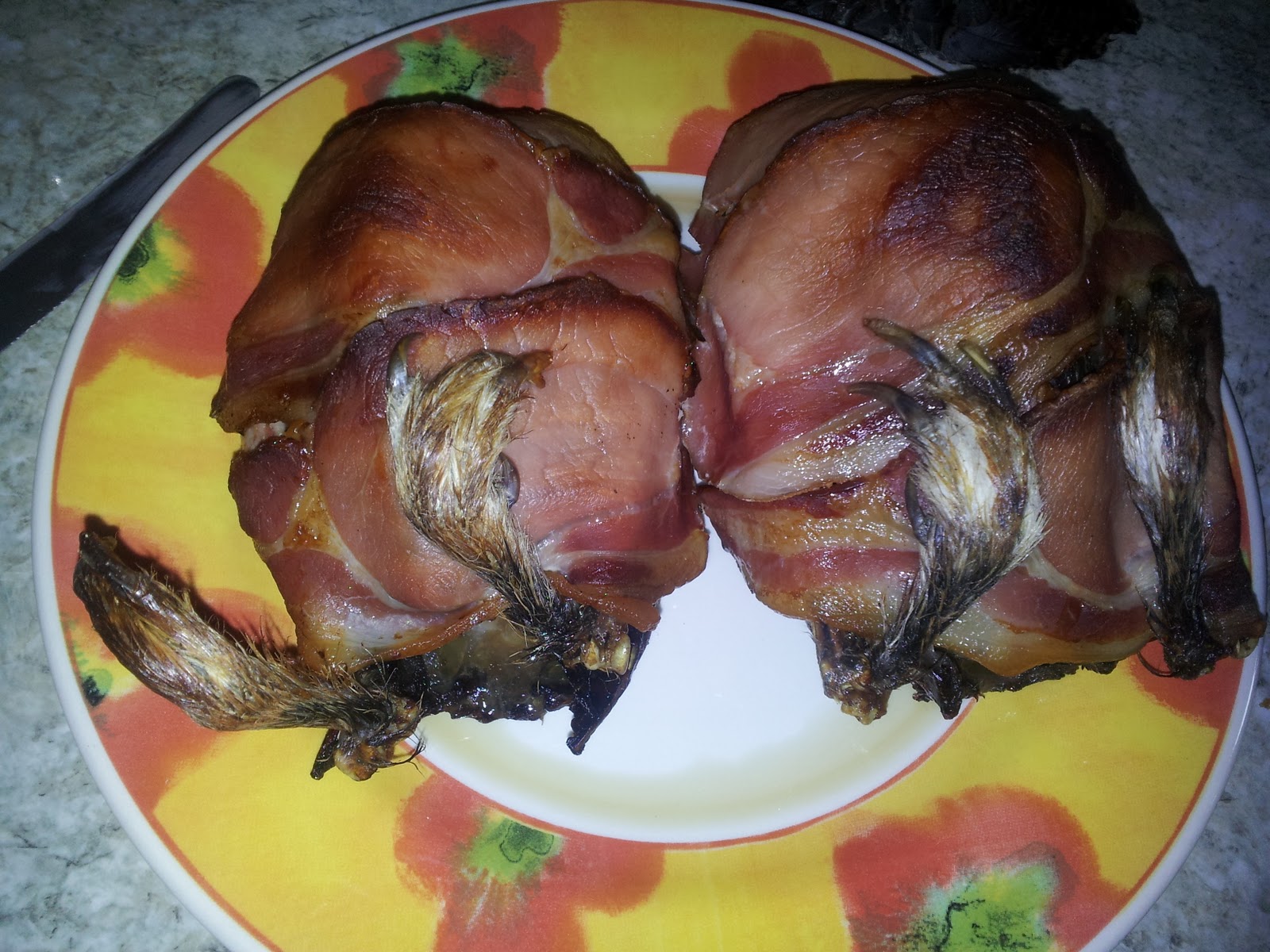
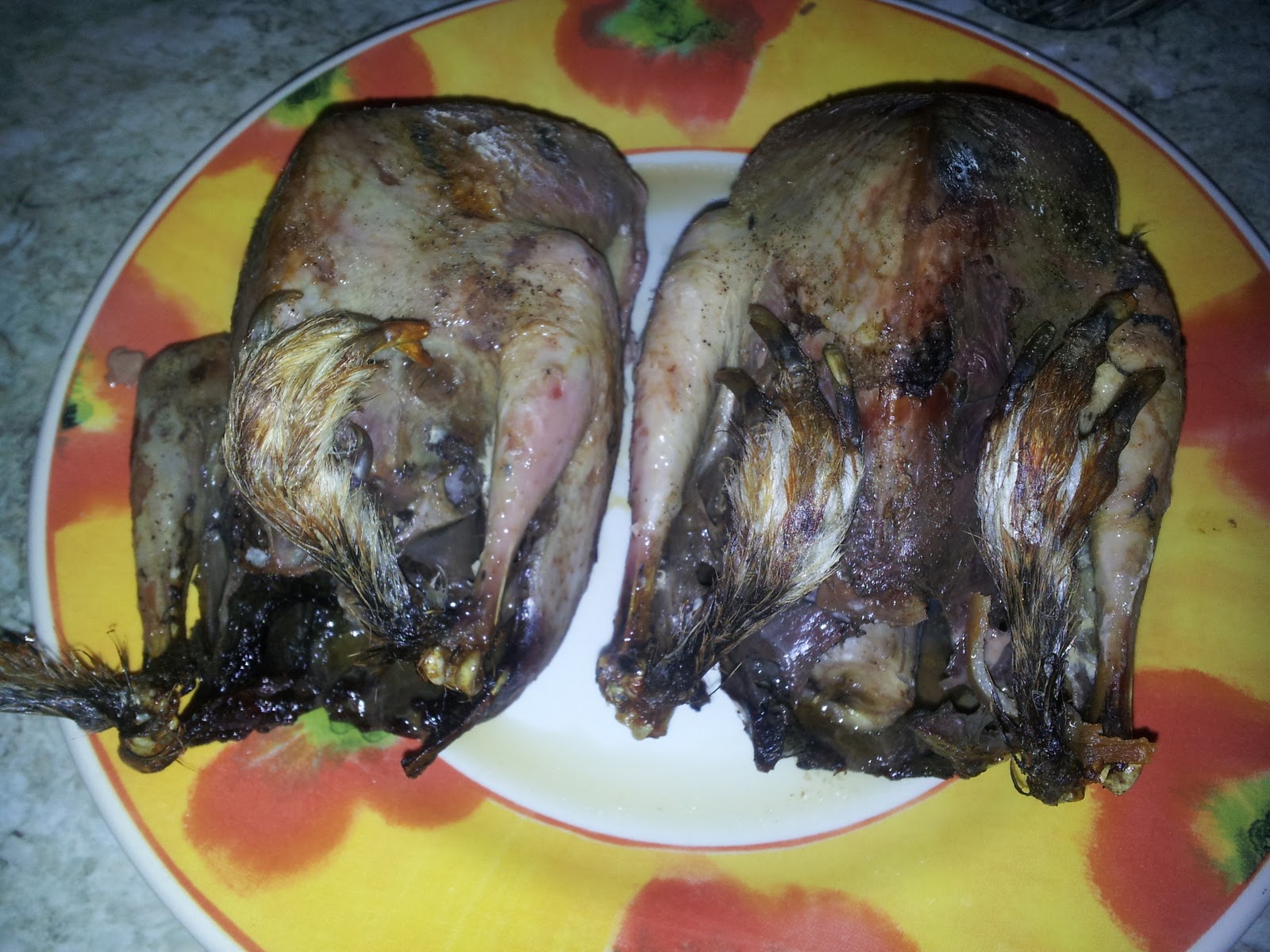
#324 Grouse. This was an extremely gamey bird that was almost overpowering for me. I am not sure if it had been overhung like the mallards from a few years ago as I have no frame of reference. However, if the meat was eaten with something relatively bland like the mash, then it was good. I would like to try it again whenever I can to see if was a little too ripe, as it were. They did look very impressive with their little hairy feet sticking up, though it seemed to freak some people out. As soon as the feet were removed, the legs suddenly became drumsticks and could be dealt by squeamish minds more easily. A difficult one to score as I don’t think I saw this game bird’s full potential, but I must go with what I had on the day: 3.5/10

#323 Salmi of Game (or Duck, or Fish)

A salmi, also known as salmis, salomine and salomene is essentially a posh game stew and is an abbreviation of salmagundi which started life in France as a meat ragoût. A salmi, rather than being any meat, should be made using game birds that are partly-cooked, and then finished off in a rich sauce made from their bones, though domesticated birds like capon and Guinea fowl are commonly used. Jane Grigson complains that more often than not, salmi is made from leftover game meat and then offered at high prices in high-end restaurants. ‘Don’t be deceived’, she says, ‘[i]t is exactly what would have been eaten by Chaucer, or his son, at the court of Henry IV, or by that granddaughter of his, Alice, Duchess of Suffolk, at her manor at Ewelme.’ Grigson mentions the food eaten at the court of Henry IV a few times in English Food: giving recipes for quince comfits and ‘a coronation doucet’.

The dish originally came from medieval France and game wasn’t necessary, as this recipe shows that Grigson found dating from 1430 that uses fish:
Salomene:
Take good wine, and good powder, and bread crumpled, and sugar and boil it together; then take trout, roach, perch, or carp, or all these together, and make them clean, and after roast them on a griddle; then hew them in gobbets [chunks]; when they be cooked, dry them in oil a little, then cast them in the bruet [the sauce] and when you dress it, take mace, cloves, cubebs, gilliflowers; and cast them on top, and serve forth.

Cubebs are a type of pepper (latin name: Piper cubeba) that you can still buy from specialists, gilliflowers are a very fragrant species of carnation and ‘powder’ refers to a mixture of ground spices.

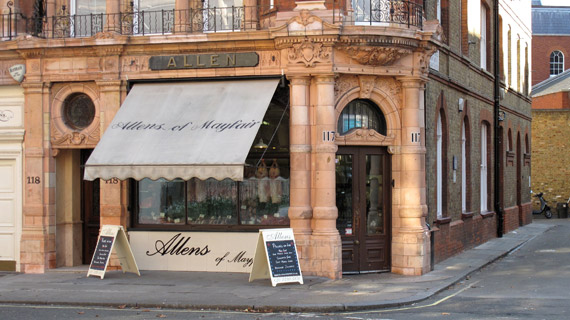
I have been eager to cook a couple of game recipes whilst I am over in England for Christmas, and seeing as I was in London, I thought I would visit the very excellent butcher Allen’s of Mayfair – an amazing place that consists of a central circular butcher’s block surrounded by the meat hanging up around it. I felt as though I had walked into a scene from a Dickens novel. I bought a couple of mallards and used those for the salmi.

Roast your game birds rare, cut the meat from the carcass into neat ‘gobbets’.

Use the carcasses to make ¾ pint of game stock. Melt 2 ounces of butter in a pan and cook 3 chopped shallots until soft and golden. Now stir in a heaped tablespoon of flour and whisk in the hot stock a third at a time to prevent lumps forming.

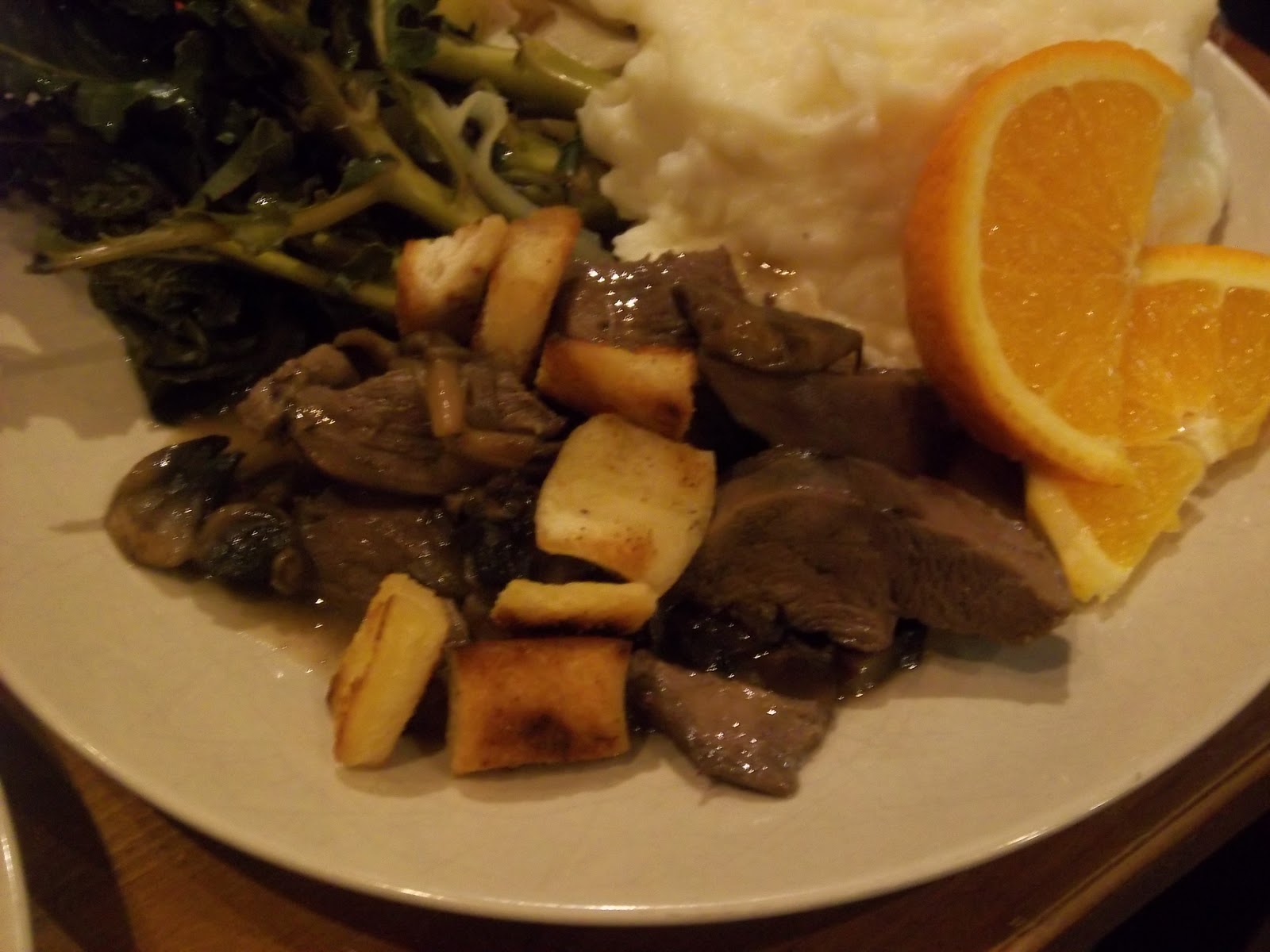
Add a bouquet garni and a pared strip of orange peel (Seville oranges would be great if you can get them) and simmer for 20 minutes, to make a thick sauce. Pass the sauce through a sieve and add ¼ pint of red or white wine and 4 ounces of mushrooms that have been fried in butter. Season with salt, pepper and lemon juice. Simmer for a further 5 minutes, then add the game and simmer very gently again for 10 more minutes. Add a little cayenne pepper. Serve with orange wedges and croûtons fried in butter.

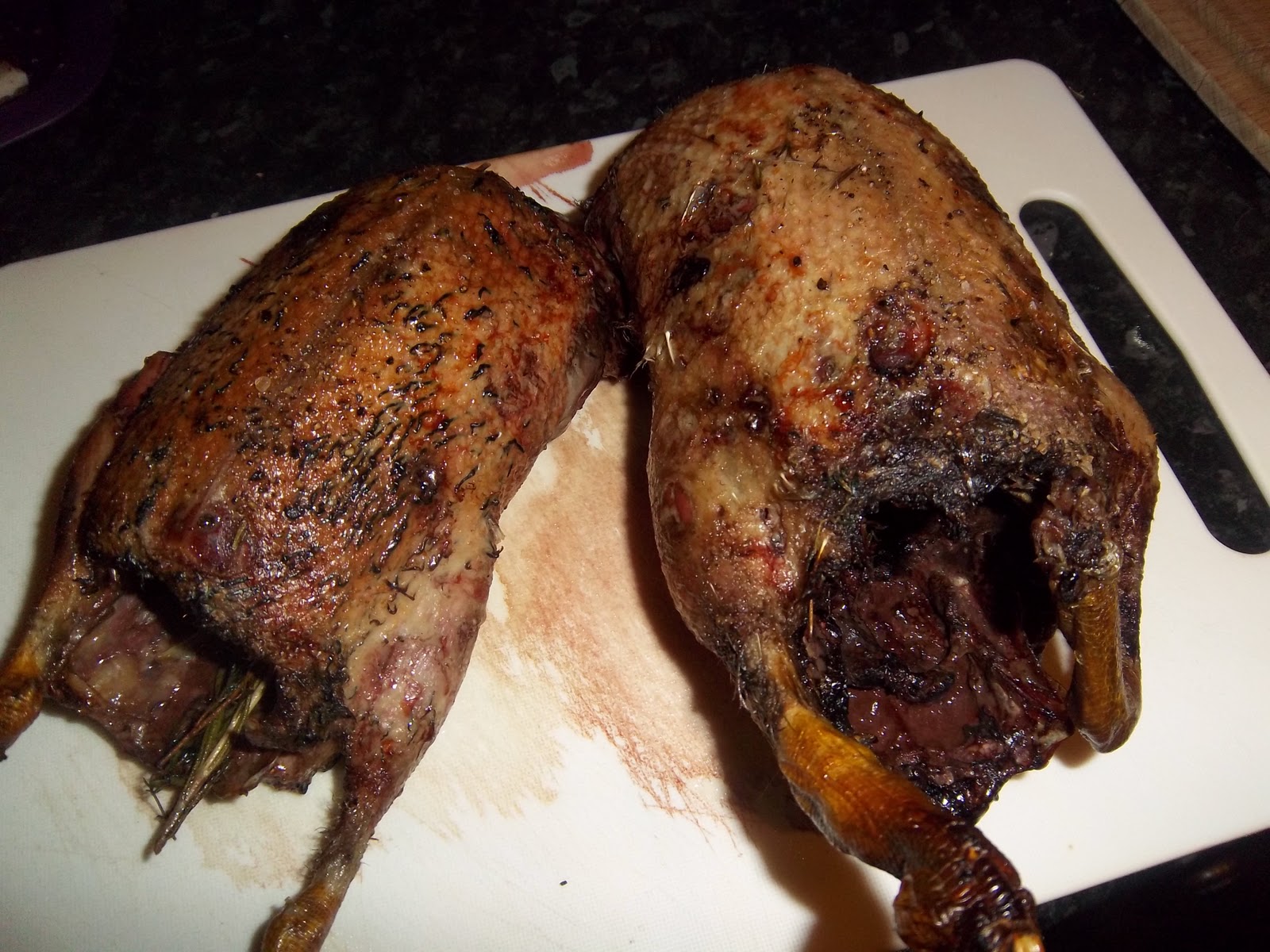
#323 Salmi of Game (or Duck, or Fish). I must admit that I was a little worried about eating mallard – the last time I cooked them it was pretty grim (see here). I needn’t have worried though, it seems that the previous mallards had been overhung because this salmi of mallard was delicious. The meat was beautifully tender and surprisingly mild in its gaminess considering how dark the flesh was. The sauce too was wonderfully rich and silky. Plus the inclusion of orange wedges for squeezing was inspired. Tres bon! 9/10.

#299 Leg of Lamb Stuffed with Crab


For the 300th recipe I got a few people round to mine for a little dinner party. Number 300 would hopefully be impressive and I wanted to do something for #299 that would be impressive too and this recipe certainly sounded the part. I also wanted something that dated in the eighteenth or nineteenth centuries, again to match receipt 300.

A recipe for a leg of lamb stuffed with ‘a forcemeat containing the meat of a crab or lobster … [with] a little grated lemon peel, and nutmeg‘, appeared in The London Art of Cookery by John Farley (1811), so it has a decent history, though this kind of food has very much fallen out favour in England. However, one particular chef gave it a breath of new life in the 1970s. A chap called Guy Mouilleron came up with the recipe that appears in English Food and therefore here in the blog, after some French chefs who were working in London were having a right good-old laugh at the English’s eating habits. “Fancy” one of them said “they even eat lamb with crab!” Chef Mouilleron thought it sounded like a good idea and conjured up a recipe. It’s funny that every British (and Irish!) person I’ve spoken to about this recipe has thought it just a bizarre as those French chefs.

There’s no need to be freaked by this combination though, says Jane, meat was often ‘piqued’ with fish all the time to give it extra flavour; the idea is not to impart a fishy flavour though, but a mysterious deliciousness. This is true as I already knew after one the great recipes from the blog – steak, kidney and oyster pudding. Meats are also cooked with anchovies a lot too, especially lamb and that cornerstone of English cuisine, the Melton Mowbray pork pie. It seems these things are being lost because of the Englishman’s squeamishness of all things fishy in general.

It is strange to me that Americans – or, at least, Houstonians – don’t really eat that much lamb and getting hold of a full, large leg of lamb with the bone in isn’t really possible in Houston’s otherwise comprehensive supermarket meat sections. However, I did manage to get hold of one very easily from the very good Pete’s Fine Meats on Richmond Avenue.

Pete’s Fine Meats, Houston TX

The recipe also calls for crab meat of course. You can boil your own (see here for instructions) or buy one preboiled. Do not, says Griggers, buy frozen meat as it had lost most of its flavour. However, here in America, where folks like seafood, it is very easy to get hold of freshly picked crab meat in supermarkets, so if you are in the USA, there is no need for you to sit and spend thirty minutes picking the meat from a crab’s carapace. God bless America for making the recipe a little easier for yours truly.

If you fancy the idea of this combination, here’s how to make it:

Start off by tunnel-boning a large leg of lamb. This is not that difficult to do – I followed the instructions here and it took just five or ten minutes to do. Use the bones to make half a pint of lamb stock (see here for recipe). Season the inside and outside of your leg.

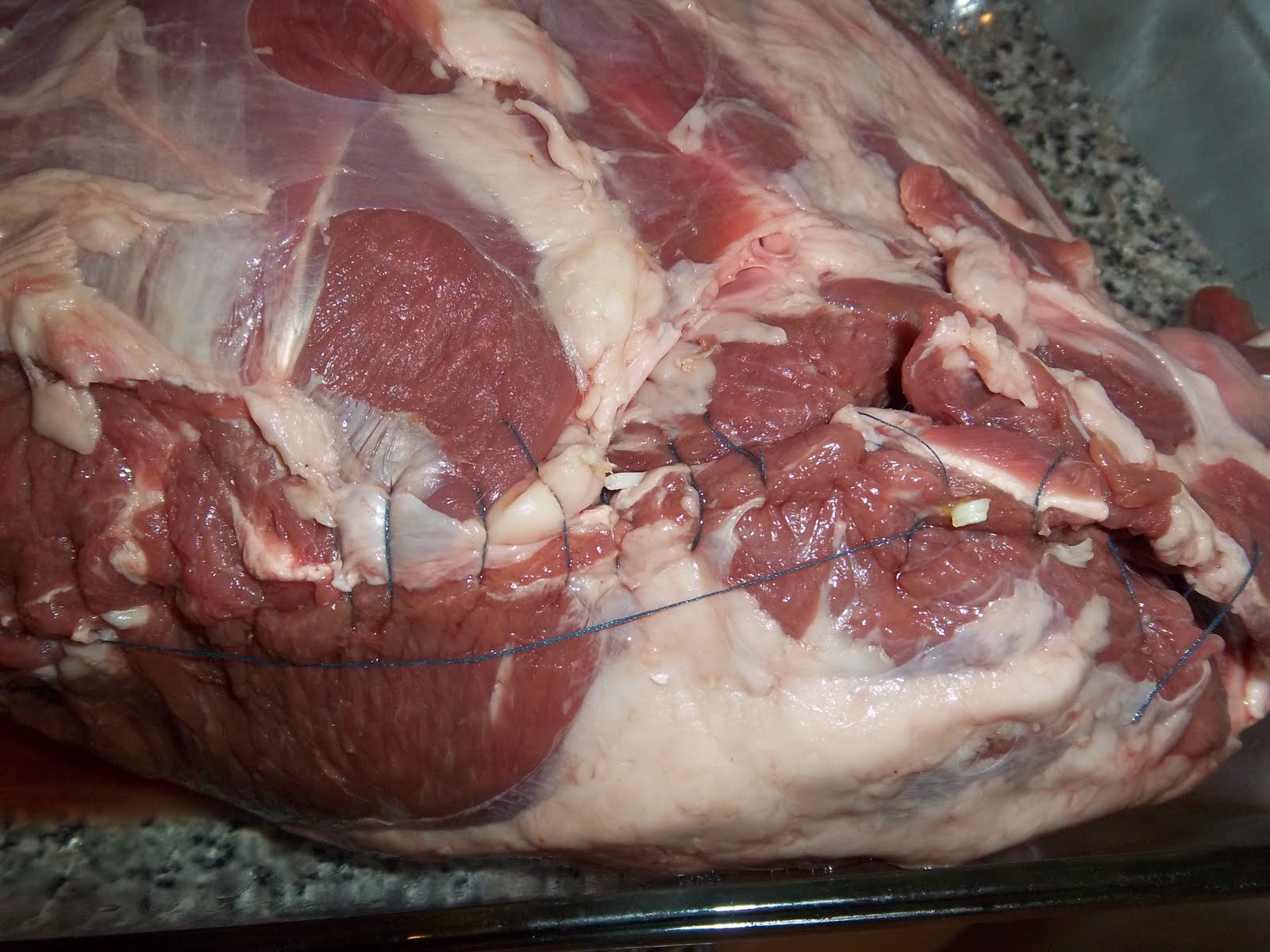
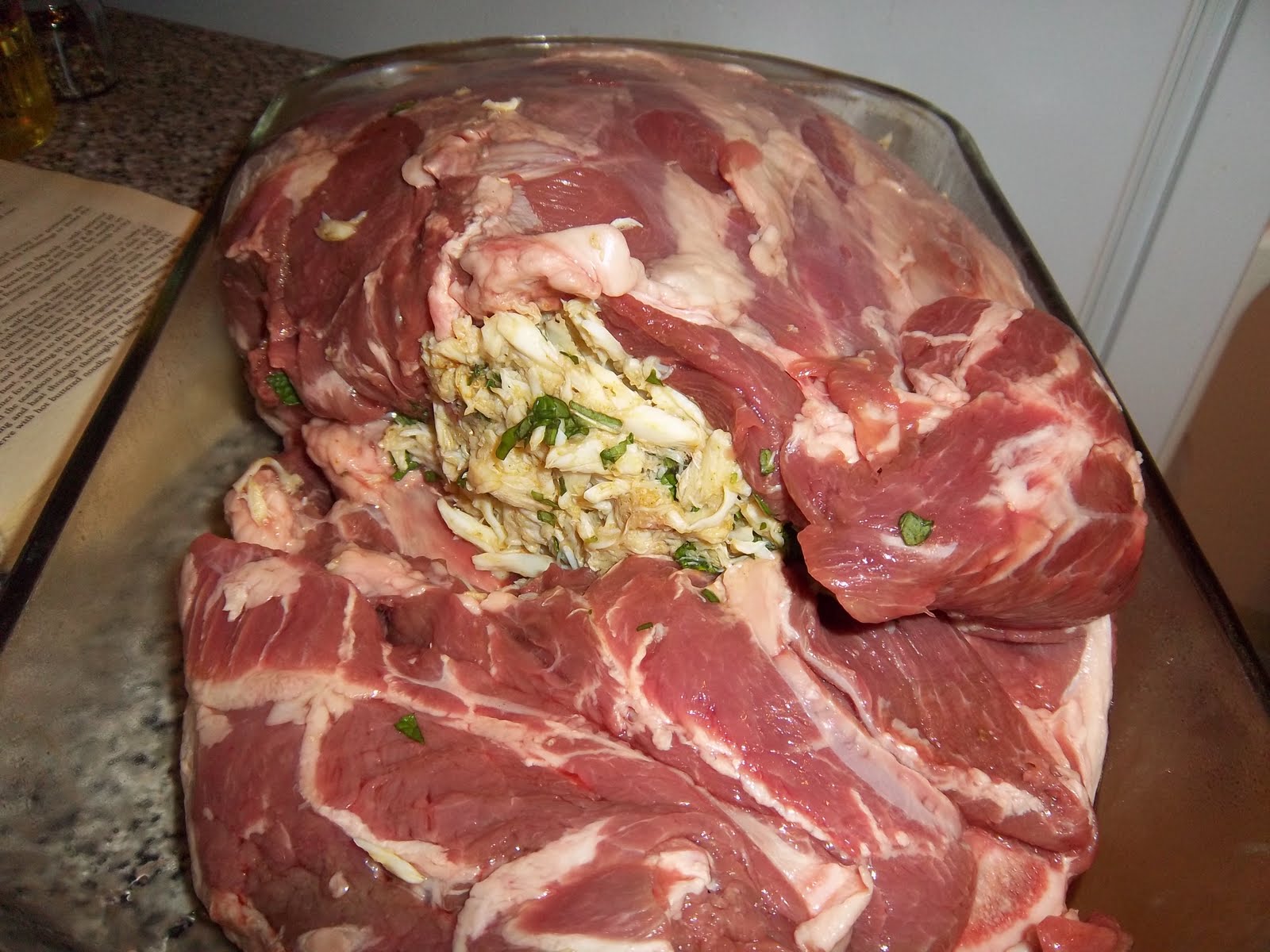
Next, make the stuffing. You need eight to ten ounces of crab meat; either buy it fresh if you can or get hold of a crab weighing around one-and-a-half pounds. To the crab meat, mix in half a teaspoon of curry powder, a tablespoon of fresh mint and three egg yolks. Season with salt and pepper. Stuff the cavity with the crab and sew up the lamb at both ends with a stout needle and some thick thread. All this can be done in advance, of course.
Preheat your oven to 180°C (350°F). Chop equal amounts of onions and carrots, enough to cover the bottom of a roasting tin, as well as a large celery stick. Season well and place the lamb on top. Cover with a double layer of foil (if you have a self-basting tin, you can use that instead) and roast in the oven for two hours. Take the roasting tin out of the oven and place the lamb on another tin and put back in the oven to crisp up.
For the accompanying sauce, put the tin with the vegetables on the hob and bring to a simmer, cooking for five minutes. Now add the lamb stock and half a pint of dry white wine. Make sure you scrape off any of the burnt bits from the surface of the roasting tin. They are the best bits. Strain the sauce into a saucepan, skim away any fat and then stir in a quarter of a pint of double cream and a teaspoon of curry powder.
Place the meat on a large serving dish (don’t forget to take out its stitches!) and surround it by buttered noodles and pour the sauce into a sauce boat. Griggers didn’t say what vegetables to serve with it, so I served green beans, my own personal favourite lamb accompaniment.
#299 Leg of Lamb Stuffed with Crab. Well I wanted something that looked impressive and it this definitely looked the part. The meat was very good as was the minty and fresh tasting stuffing, though the sauce was a little bland. It wasn’t bad or anything, it just didn’t pack the punch that I expected it to. If I were to cook it again, I would simmer that sauce right so it became concentrated before adding the cream and curry powder. My expectations were also raised because the lamb section of the book has been so very good thus far. That said, roast lamb can never be bad in my opinion, so I give it a 7/10.
#290 Roast Pork with Crackling and Baked Apples


Man’s relationship with pigs goes back several thousand years. Acorn-eating wild boar were slowly tamed in European forests to become the slightly tamer proto-pig utilized by the Spanish, French and Greece. Swineherds had the unlucky job of attempting manage the unruly pigs. Modern pigs are not quite as wild as their forbearers, but do apparently revert to their feral behaviour quite readily. So beware.

Galen, the medical pioneer of the Roman era, enjoyed a bit of pork like his fellow Romans. What is odd is that he thought it tasted of human flesh. Whether this was a hunch or whether it was knowledge from experience, I do not know. He is correct though, the cannibals of the South Sea Islands, called the various explorers and pioneers they caught and ate longpigs due to their flavour.

The pig is famed for it versatility and pretty much all the animal can be used, and it is the pig that is the focal animal in Fergus Henderson’s wonderful nose-to-tail restaurant, St John in London (check out the blog here). I’ve never managed to get there unfortunately, but one day I shall! For any nose-to-tail fans out there, the ultimate delicacy must be Pliny’s personal favourite, the vulva of a sow who had aborted her first litter, according to Maguelonne Toussaint-Samat in her amazing book A History of Food.

This dish was cooked on my recent trip to England, where Hugh somehow managed to buy a massive shoulder of pork for £1.50. Absolute bargain. He’s a good bargain-hunter; in fact, he’s known for it! I pounced upon the opportunity to roast it the Grigson way which includes baked apples as well as a glaze to go over the crackling. I imagine a sweet glaze would go down well with Texans going by this sign I spotted at the rodeo:

It’s worth mentioning that it is best to buy the largest joint you can afford, the meat will be much more moist and tender in a large joint than a small one. This particularly applies to pork that benefits from a good blast of heat and then a slower roast on a lower hear than say, beef.

As mentioned I used shoulder here, but you can use leg or loin. If the meat has a bone in it, ask the butcher to remove it but ask to keep it. Also ask him to score the rind, every centimetre or so. You can do it yourself with a razor-blade. Make sure that the rind is nice and dry and season the joint all over. You can, leave it overnight in the brine tub, but if you do this, you won’t get the crackling. Seeing that the crackling is the best bit, I wouldn’t recommend it. If you have bones, pop them in a saucepan with a chopped carrot, a peeled onion studded with three cloves and a bouquet garni. Cover with water and allow it to simmer for three or four hours. Strain and reduce to ¾ of a pint. If there was no bone, use some pork or vegetable stock and simmer for just an hour.

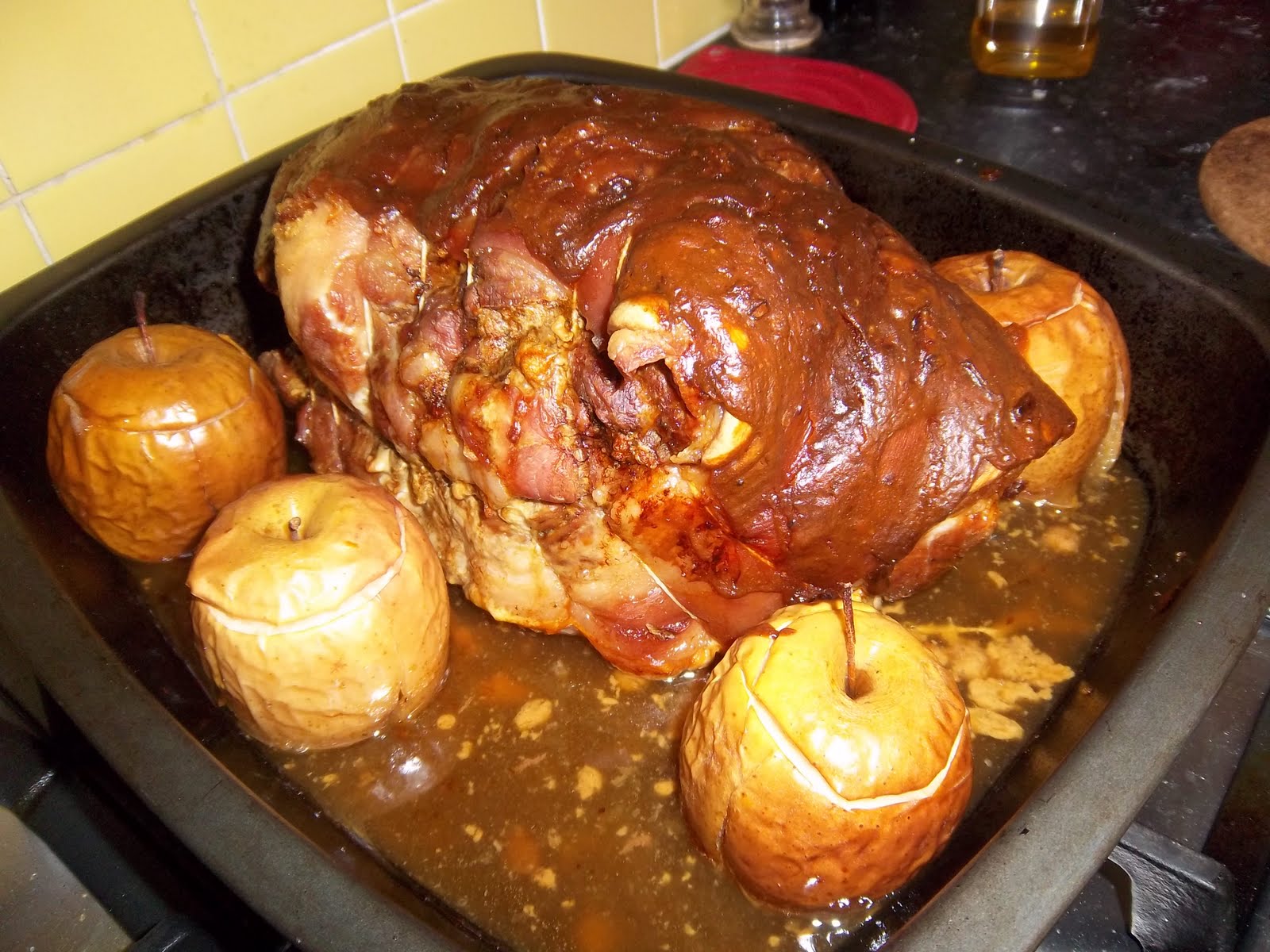
Heat the oven to 220°C (425°F) and rub the skin of the joint with some oil and sprinkle with some salt. Cook for 35 minutes to the pound (1 ¼ hours to the kilo). Place in the oven and turn the temperature down after 20 minutes to 160°C (325°F). An hour before the end of the cooking time, prepare the apples. You need one per person, and use Cox’s Orange Pippins if in season. If not, use Braeburn or Mackintosh. Score a circle close to the tops of the apples, to prevent the skins bursting and nestle them around the joint. If you don’t want baked apples make an apple sauce.

Next prepare the glaze. Melt a tablespoon of redcurrant jelly in a pan and mix in a tablespoon of French mustard as well as half a tablespoon each of cream and soft brown sugar. Paint the glaze all over the crackling in the final half hour of cooking.

When ready, remove the joint from the oven and let it rest for at least 20 minutes. While you are waiting, make the gravy. Melt an ounce of butter in a pan and when it goes a nutty brown colour, stir in a tablespoon of flour. Whisk in the stock and add any meat juices from the roasting pan.

Voila!

#290 Roast Pork with Crackling and Baked Apples. I have eaten roast pork many times, but never actually cooked, but I can honestly say that this was the best roast pork I’ve ever had from a domestic oven. It was so tender, it took no effort to slice and the glazed crackling was half crispy, half chewy and almost toffee-like. The baked apples were a revelation. An absolutely fantastic roast dinner! 9/10.

#243 Spiced Welsh Mutton ‘Ham’

Well hello there! No I haven’t died on you or anything. I’ve just been uber-busy with my thesis writing and hardly had time to do any Grigson-related cookery. Here’s is one that I actually did a couple of weeks ago but haven’t been able to tell you about.

The cured meats from the book have all been pretty successful and this one sounded nice and easy, plus would keep me in butties for the foreseeable future. I wasn’t sure how it was going to turn out because we don’t really cure lamb to make ‘ham’ do we? Unless I’ve been missing something all these years.

Anyway, here’s how to make to your spiced lamb ‘ham’:

First of all select your leg of lamb or mutton – you need one that weights about 6 pounds. Place it in a large pot or tub that has a well-fitting lid and rub it all over in a spiced salt mixture for curing. To make the spiced salt, mix together 4 ounces of dark brown sugar, 8 ounces of sea salt, ½ ounces of saltpetre, an ounce each of crushed black peppercorns and allspice berries, plus a heaped teaspoon of coriander seeds. Make sure you rub it in well, ensuring you get down between meat and bone. Keep it in the tub in a cool place and turn it over every day, rubbing in the juices and spices for 14 days.

Then, rinse any excess spices away from the surface of the leg and place in a large pot and cover with water. Bing slowly to a simmer and cook as gently as possible with the lid on for 3 ½ hours. Let the lamb cool in the water for a couple of hours, remove it and, wrap it in clingfilm or greaseproof paper and let it finish cooling under a weight. It keeps in the fridge for ages as long it is wrapped up or kept in Tupperware. Griggers says that if you have a smokehouse nearby that will let you put the cured but uncooked leg in, then do so! I haven’t, so I didn’t!


#243 Spiced Welsh Mutton ‘Ham’. This was a revelation! I do not know why we don’t cure mutton and lamb anymore. Absolutely delicious. The lamb meat was succulent and flaky just like corned beef and the spices cut through the richness of the fat. Best cured meat so far. 8.5/10

#241 Venison (or Game) Pie or Pasty

It’s pretty much the end of the game season now and so to see it off for another year, I thought a delicious venison pie was in order. I love venison, but for some reason have never cooked with it so I thought a pie would be the place to start. It’s a nice easy pie to make and the filling can be made well ahead of time. The really good thing about it was specific instruction of producing some ornate pastry work for the top. I don’t know why the name of the recipe is a pie or pasty, because there’s no instruction for making this into a pasty.

Start off by turning some pieces of shoulder venison or game in flour that has been seasoned with salt, pepper and mace. You’ll need three pounds of venison for other game for this. Brown the venison in two ounces of butter in a cast-iron casserole. Now add 4 ounces of chopped onion, ¼ pint of red wine plus enough beef or game stock to cover the meat. Bring to a simmer and cook gently until done, says Griggers. This might not be useful for those – like me – that have never cooked venison; I placed it in an oven heated to 150⁰C for two hours. In the case of game on the bone, it is cooked when you can take the meat easily from the bone. Melt two more ounces of butter in a saucepan and add a tablespoon of flour and cook to form a roux, strain some of the sauce into the pan and simmer for five minutes before mixing it back into the pie filling mixture. Check for seasoning. Pour the mixture into a pie dish and cover with puff pastry. Make a hole in the centre surrounded with a pastry rose plus some other nice ornate patterns, as is traditional, using egg to glue any bits on. Lastly brush to whole thing with more egg to make a nice glaze. Delicious hot or cold, says Jane.


#241 Venison Pie. This was a great pie! The meat was deliciously tender and gamey and the gravy dark and rich; a pie to warm your cockles. However, it was not delicious cold as the gravy was all congealed and it was a bit like dog food. Doing the pastry was great fun too (if you are a massive geek, like me) 7.5/10.

#222 Guinea Fowl Braised with Mushrooms

The poultry section of English Food has not been tackled much; I don’t know why, because I’m a big fan of poultry. Anyways, walked through the Arndale Market in Manchester City Centre, I spotted that the butcher had some Guinea fowl – not something you really see these days out of specialist poulterers, so I thought I should snap one up as I had the opportunity (I also bought some corn-fed chickens so that I can address the lack of poultry recipes tackled later).

Guinea fowl is very popular in France, but are not so in Britain these days, though they were once considered very nutritional and perfect food for invalids, so why for a nation of sickly pasty folk, we don’t eat them by the bucketful I don’t know. In Burkina Faso, braised Guinea fowl are given to women that have just given birth. So there you go; prolong your life with a Guinea fowl dinner.

This recipe serves 3 to 4 people: Start by browning a Guinea fowl all over in butter and then placing it in a reasonably tight-fitting casserole dish breast down and dot it with two further ounces of butter. Now finely chop a medium-sized onion and sprinkle it around the sides of the bird and season. Cover tightly with lid or foil and bake for 30 minutes at 190⁰C. Meanwhile, slice 12 ounces of mushrooms and season them with salt, pepper and lemon juice (why Griggers says to do this now, I do not know), and when the 30 minutes is up, turn the fowl breast-side up and tuck the mushrooms in down the sides. Replace the lid and bake for another 40 minutes, taking the lid off for the final ten, so that the Guinea fowl can brown. Allow everything to rest for 20 minutes, then remove the bird and cut into eight pieces: two thighs, two drumsticks and four pieces of breast. Dish them up with the mushrooms and pour over the remaining buttery gravy. Serve with potatoes or bread.

My lens steamed up, sorry!

#222 Guinea Fowl Braised with Mushrooms. This was the first time I’d eaten it, and it did not disappoint. The flesh tasted like a very rich chicken and was a little gamey; so something between a chicken and pheasant (in fact, Griggers says that all Guinea fowl and pheasant recipes are interchangeable). Briasing it in butter made the meat extremely moist and succulent, the slightly earthy mushrooms offsetting it all very well. Great stuff – and easy 8/10.