A woman should never been seen eating and drinking, unless it be lobster and Champagne, the only true feminine and becoming viands.
Lord Byron 1788-1824
A woman should never been seen eating and drinking, unless it be lobster and Champagne, the only true feminine and becoming viands.
Lord Byron 1788-1824
We don’t know who Lisanne was/is, other than she was a mate of Griggers and that she made this recipe up on a whim whilst in France. The reason that it appears in English Food is that it is rather reminiscent of the old English recipes of cooking oysters with chicken. I have already done the steak, kidney and oyster pudding with great success, but the thought of a eating a chicken stuffed with mussels a little odd – and don’t forget the last mussel recipe I did was very odd. However, as we have discovered along the way, this damn book is full of surprises, so we shall see…
You need to get hold of a chicken that weighs around four or five pounds as well as a nice bag of fresh, live mussels that weighs around three or four pounds.
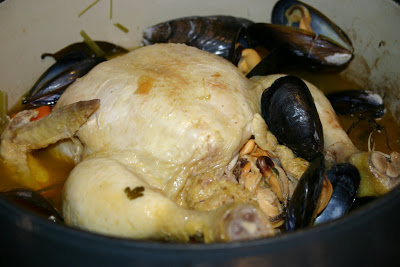
Begin by browning the chicken all over in some olive oil along with a large chopped onion and a chopped carrot in a flame-proof casserole. Add a bouquet garni (see here for some suggestions as to what you should put in it) and a quarter of a pint of dry white wine. Bring to a steady simmer and cook for 45 minutes. Meanwhile, open around two-thirds of the mussels in a very hot pan using another quarter pint of wine. Any mussels that remain closed should be discarded, Griggers says.* Pluck the mussels from their shells and carefully stuff them into the cavity of the now half-cooked chicken. Strain the cooking liquor from the mussels into the dish and tuck the remainder of the mussels all around the chicken. Season and cook for a further 30-45 minutes.

When the chicken is ready, remove it to a serving dish, scatter the mussels around it, and scatter chopped parsley all over it. Skim and strain the sauce into a sauceboat and eat with good bread – no vegetables required says Giggers, just a green salad to follow.
#235 Lisanne’s Chicken with Mussels. I must say I was very dubious about this one and continued to be dubious a few mouthfuls later. However, I put that down to the novel flavour combination because I soon realised it was very good! The chicken was beautifully succulent and the mussels tender, though cooking them this was gives the eater a real strong mussel-hit, but if you like your seafood, then certainly give this a go. The sauce made by the cooking liquor was divine. 7.5/10
*FYI: According to the telly programme QI, this is absolute nonsense and it is Jane Grigson who is to blame for this myth. The first mention of chucking out your un-opened mussels appears in Jane Grigson’s Fish Book and people have followed this advice evermore. However, there is actually no evidence that unopened mussels will poison you – in fact, you just as likely to be poisoned by a live mussel than a dead one. That said, I still chucked out my unopened ones!
In days of yore, we English loved potted meats and fish. You don’t seem to see many potted foodstuffs around these days: though potted beef is still popular in Yorkshire. Pate does not count. This one at first sight seems a bit weird, and perhaps foul, but there are some interesting ingredients in there. One of the great things that Elizabeth David did in the sixties and seventies was introducing us to Mediterranean flavours, and she managed to sneak a few in here: olive oil instead of butter, basil instead of parsley, lime rather than lemon. She transformed our eating habits; along with Grigson, Floyd, et al. of course. It may seem odd these days – all those continental ingredients mashed up in a now-defunct method of preparing meat and fish – but there you go.
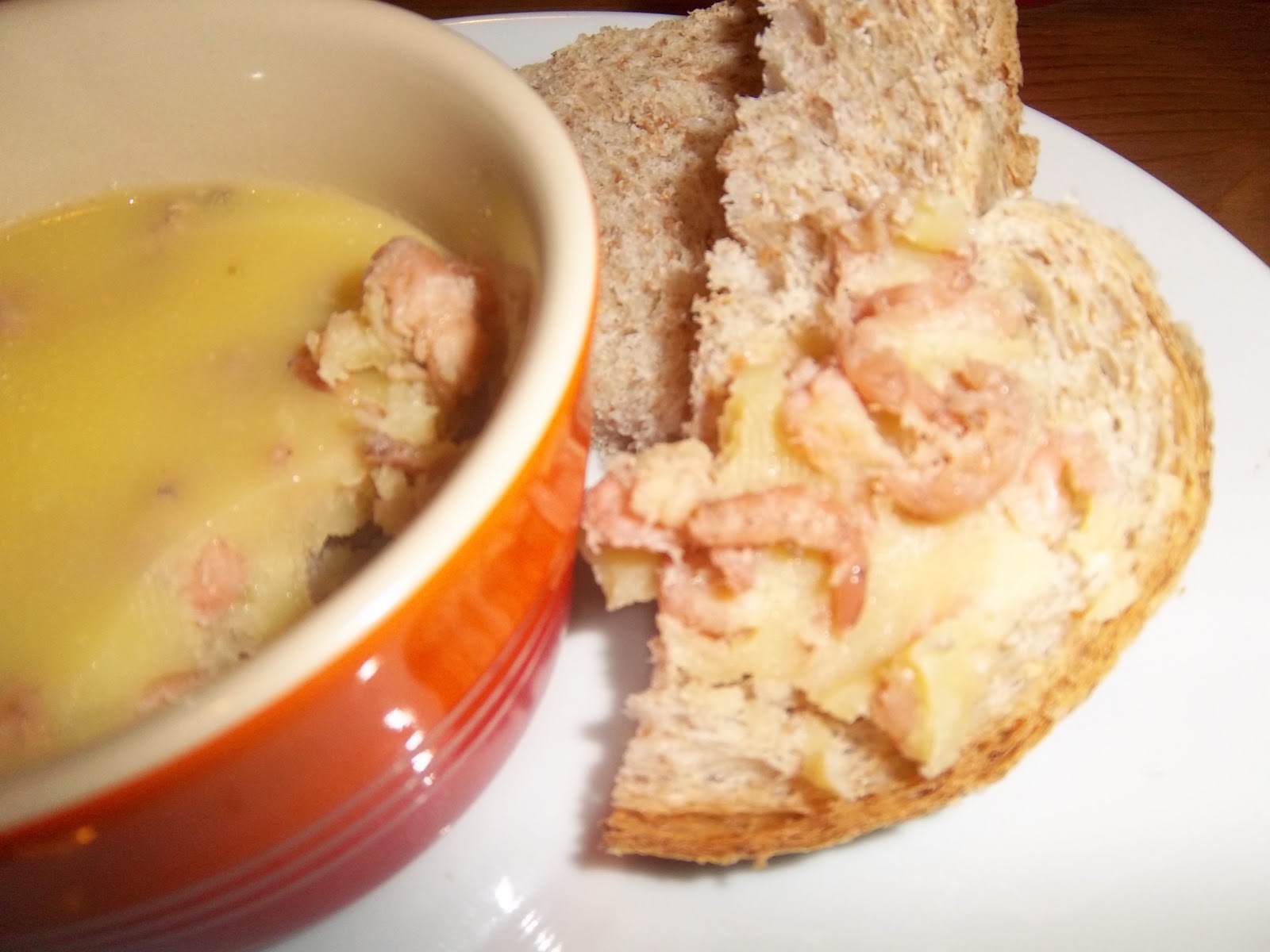
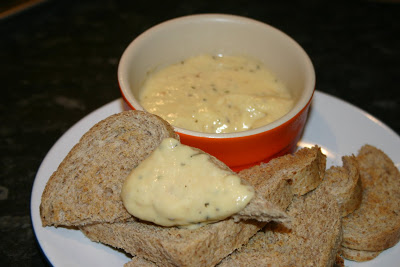
Place eight ounces of cooked, peeled prawns in a blender along with the juice of a lime and around six tablespoons of olive oil – use extra virgin if you have it since as it’s not going to be cooked. Blend until smooth and add half a teaspoon of dried basil and a heaped saltspoon (!) of crushed coriander seeds. Season with a little salt and some Cayenne pepper. Divide between some small ramekins, cover and refrigerate. Serve with hot, thin toast.
By the way, I don’t know the capacity of a saltspoon as I don’t own one, so don’t ask me. Actually, I’d not even heard of one. I guessed and added a quarter of a teaspoon. Also, don’t buy dried basil, as it has no flavour; dry your own in a cool oven for about 20 minutes until crumbly: much better.

#192 Elizabeth David’s Prawn Paste. It may have sounded like horrible soggy fish pap, but this was delicious. The prawns were sweet, the olive oil was fruity and the basil and coriander seeds combined with the lime juice provided a morish tang. Really good – go and make some. 7.5/10.
“People sometimes shudder at the mention of roly-poly puddings” says the Grigson; er, no dear, just the idea of THIS one! Why on Earth is there no jam roly-poly pudding, please!? I’ve been putting off the more weird ones – like this – but they are building up now. I wasn’t looking forward to it, but Griggers really does big this one up. It is cheap though, at least when mussels are in season.
I have only recently been able to pluck up the courage to eat mussels; I’ve always been a bit squeamish with bivalves for some reason. However, I do love mussels now. The Romans loved them too, and they’ve been cultured in France since the late thirteenth century, ever since a shipwrecked Irishman called Patrick Walton was washed up on a French beach and noticed some mussels growing on the fishermen’s nets. I doubt he wrapped them in suet pasty though.
To begin you need to cook your mussels – 48 in all, says Grigson. Scrub them and remove their beards and any parasites. Place them in a hot, wide shallow pan and cover. As soon as the mussels open, take them off the heat. Don’t use any mussels that have not opened. Shell them, reserving any juices, and let them cool. Pass the juices through some muslin into a small pan.
Now make the rest of the stuffing: In a bowl, mix together 3 ounces of finely chopped onion, 2 trimmed and finely chopped leeks, 2 chopped rashers of streaky bacon, 3 tablespoons of chopped parsley and a little salt plus plenty of ground black pepper.
Suet pastry is the easiest pastry to make. Sieve 10 ounces of self-raising flour in a large bowl and mix in a pinch of salt and 5 ounces of shredded suet. Using a knife or your hands, mix in some cold water until a firm and light dough is formed.
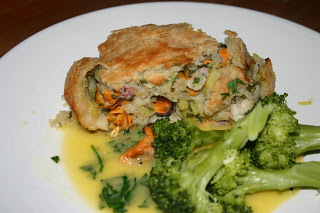
You are now ready to construct the rolypoly pudding. Roll the dough into a rectangle and sprinkle over the leek mixture leaving a centimetre border around three sides, and then evenly sprinkle over the mussels. Brush the edges with water and roll up the pastry starting at the borderless end, lastly press down the sides to prevent any leakage from the sides. Wrap it in a tightly-sealed but baggy foil parcel and steam for two hours on a rack in a self-basting roaster. If you don’t have one – use a normal roaster and make a foil lid as I did. When ready, place in an ovenproof serving dish and crisp it up in the oven for 10 to 15 minutes – careful now, it might collapse (see pic!). Whilst that is happening, make the butter sauce. Boil down the reserved mussel liquor, take it off the heat, and whisk in 4 ounces of chilled, cubed butter, bit by bit. Season well, add some chopped parsley, and it is ready.

#189 Mussel and Leek Rolypoly 4.5/10. I though I liked this in the end, but then I wasn’t sure; it certainly wasn’t awful. I even had seconds. The mussels were soft and sweet, the leeks were cooked nicely and the pastry was crisp. The sauce was good too. I think it was too rich, and I ate too much. An unusual one, but I’m not sure I would recommend it.
I’ve mentioned before that a much ignored chapter in English Food is the Fish chapter (I must tell you what the chapters actually are, so you know where the seemingly random recipes fit). The fish that are in season during May and are in the book are salmon and crab. A quick phone call to Butters to help me decide which fish/crustacean to try first was required – I’ve never cooked with crab other than tinned, and salmon isn’t my favourite. We went for the crab. There’s a few crab recipes but this one seemed relatively straight-forward.
It seems the oceans were a much more plentiful place in the 1970s compared to now (though we knew that already!). The original recipe asks for a boiled crab weighing 2 pounds or one kilogram. Fat chance of that says the fishmonger, however I asked for the biggest one and it wasn’t too far off. It only cost a fiver! I was well happy there – a tiny tin of it cost about 3 quid. Bargin. In fact I noticed the fishmonger was stocked with loads of nice things at the minute…

Butters gets a crab infestation. Again
To make a crab tart, start off by making (or buying) some shortcrust pastry and lining an 8 to 9 inch flan or tart tin with it. Bake the pastry blind in a hot oven – 220°C – for 10-15 minutes. Do this by lining it with greaseproof paper or foil and pouring in some baking beans. For the final couple of minutes remove the beans so that the base can crisp and dry out a little.
Now you have to pay the boiled crab some considerable attention. It’s quite an arduous task but quite satisfyingly so. I won’t go through how to remove the meat here, but I’ll instead send you to this link to Deliaonline, which I followed and it did the job. In fact go to that website if there’s any techniques you want to reference. Once you’ve extracted as much meat as your patience will allow mix the white and brown meats together and season well with sea salt, black or white pepper and Cayenne pepper. Stir in one whole egg and two egg yolks (keep the whites) and 8 fluid ounces of whipping cream. Now add a tablespoon each of Cheddar and Parmesan cheese and stir in. Whisk the two egg whites until firm of peak and fold it into the crab mixture. Pour the whole thing into the case and bake at 220°C for 5 minutes and then turn the heat down to 190°C and bake for a further 25-40 minutes. The tart is ready when it has set and lost its eggy wobbliness.

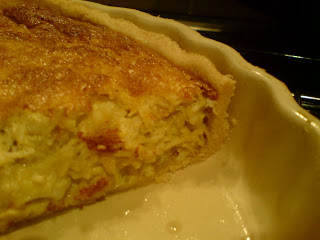
Not the most photogenic of tarts, I know, but tasted lovely.
Griggers says to serve straight away with brown bread and butter, but to be extra-seasonal, I made a quick salad from rocket, sliced radishes, olive oil, lemon juice and salt and pepper. It went very well.
#140 Crab Tart 7/10. I really enjoyed cooking with and then eating crab. The brown meat dissolved into the cream and eggs making it deliciously sweet and moist and the white meat gave the whole thing good texture. The genius of the dish was the whisked egg whites, which lifted to so well. A definite success that really made me feel Spring is finally here! Great stuff.
One of the least-explored chapters in English Food is the Fish chapter. The main reason for this is that I have the least experience of the foods therein. Being English (I won’t say British as Wales, N. Ireland and Scotland may be different) means, generally, the only fish you get to eat is white fish – cod and haddock. Though I love the fish I’ve tried, one thing we have never eaten as a family growing up in Yorkshire is shellfish. The only exception is prawns because my Mum likes them. Because I’ve never really tried the bivalves – cockles etc., I find them tricky to get my head around them – they look like something from a biological specimen jar and do not resemble anything else that might turn up on the dinner table. I felt an inauguration coming on, and “why not” I thought, start at the top, with the king – oysters.
I popped on down to the Arndale Market in Manchester, got some rock oysters for 70p each and an oyster knife for a fiver from the cooks stall. Hopefully I’ll get to use it more than once…
I thought I’d better not go straight in at the deep end with a raw squirming oyster, but instead get there by degrees. First step – oyster cooked and smothered in some kind of sauce with lots of other flavours. Second step – oyster cooked but by itself. Final step – raw oyster. Griggers was there to help, natch, with this recipe straight out of the 1970s:
This recipe is per person, so multiply up depending on how many you’re cooking for:
Begin by heating your oven to 220°C whilst waiting for it to heat up, open 4 oysters with an oyster knife. This can be tricky if using large rock oysters with big gnarly shells, but with a bit of patience it’s quite easy to get the knack for opening them. Give them a rinse and a scrub under the cold tap first and make sure you hold the flat side of the oyster uppermost and with your grasping hand wrapped in a tea towel. Use the knife to prize the hinged back part of the oyster open. Do this over a bowl so you can keep any liquor that escapes – very important for later. I found that placing a sieve lined with some kitchen paper filtered away any sand or cracked bits of shell.
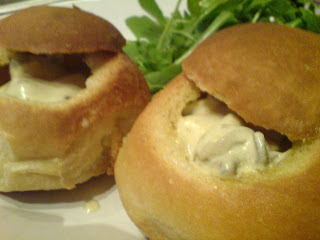
Now hollow out 2 bread rolls by first slicing the top off and then scooping out the centre, making sure you don’t make any holes in the side. Brush the lid and roll inside and out with melted butter – about ½ an ounce – and bake for 10 minutes until crisp and golden.
Meanwhile, melt another ½ ounce of butter in a pan and cook the oysters for around a minute and a half until they are opaque and firm. Remove them and cut them up into two or three pieces. Pour the oyster liquor into the pan along with 2 tablespoons each of double and soured cream, and season with salt, pepper and 3 or 4 drops of Tabasco sauce. Reduce it down to a thick sauce, stirring all the time, and warm the oysters through in the sauce. Check for seasoning. Lastly, divide the mixture between the hollowed bread rolls and serve immediately.

“Feed me, Seymore”
#132 Oyster Loaves – 7.5/10. I really enjoyed this. I’ve heard people say that oysters taste of ‘the sea’, or ‘ozone’ or iodine’; I’ve never been sure what they meant by that, but now I do! The oysters were sweet, rich and very soft and the piquant, yet creamy sauce really worked well. The idea of putting them in a hollowed bread roll might seem a bit naff now, but you could serve on a circle of bread fried gently in butter to make look more with the times. One would make a really good first course. I am very impressed with my first oyster adventure and would definitely encourage anyone who is squeamish about them to give this recipe a try – it simple and not expensive.
FYI: In days of yore, oysters were considered food for the poor and were largely ignored by the posh. They were used as a substitute for mushrooms (hence steak, kidney and oyster pie) in many dishes as they were very rare due to the fact no-one had worked out how to cultivate them. It wasn’t until they became scarce due to loss of habitat and pollution that they were thought to be a delicacy.