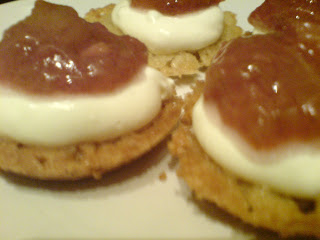
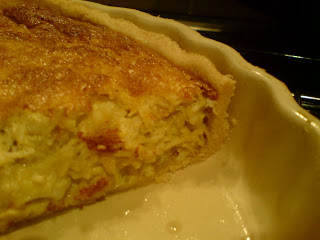
#248 Mazarines

I had made a savoury snack for the party and so I thought I’d make something sweet. These are strange little biscuits, or perhaps cakes. I’m not sure which. They appear in the Cakes and Tarts section, but look like biscuits. For some reason, this is important. Anyways, the name of these sweetmeats are a mystery, probably invented in honour of either the Duchesse de Mazarin who lived in Chelsea for a bit, or Cardinal Mazarin of France.

First, the pastry: Cream together 2 ounces of butter with a tablespoon of caster sugar, then beat in an egg yolk, before mixing in 4 ounces of flour and an ounce of ground almonds (use your hands to bring it all together). Roll it out into strips about 2 inches wide, lay on greaseproof paper turning up the edges ready for the filling.

For the filling: Start by spreading some apricot jam down the lengths of the strips. Next, beat 2 egg whites until stiff and fold in 4 ounces of caster sugar, 2 ounces of flaked almonds and a tablespoon of grated plain chocolate. Pour into a saucepan and boil, stirring as you go so that it doesn’t catch. Spoon the mixture onto the strips – a tricky endeavour. Bake at 180⁰C for 45 minutes, allow to cool and then cut on the diagonal.


#247 Mazarines. These were also a disappointment. The pastry was very dry and crumbly and the filling was so unbelievably sweet. Annoyingly, they were nigh on impossible to cut without them breaking up. Not impressed. If were Cardinal Mazarin or the Duchesse de Mazarin, I’d be well pissed-off that these efforts were created in my honour! 2.5/10
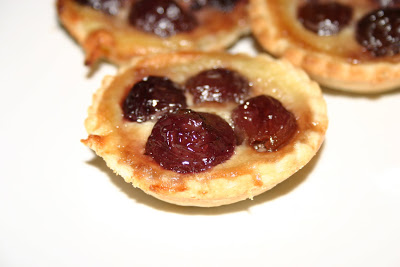
#221 Cherry Tarts

At the end of the summer, I bought a whole crate of cherries for just a few pounds toward the end of the season. Dutifully I stoned them all and froze them and then promptly forgot I ever had them. That was until I looked in the freezer and discovered them again, and since I am trying to use up everything in there, I thought I would make good use of them as a dessert.

Cherry season is pretty much a non-event in Britain these days, unless you live in cherry country – Kent. Almost all the cherries sold in markets and supermarkets are imported and finding home-grown cherries is nigh-on impossible. I certainly could find any here in Manchester.

Cherries have been enjoyed since the times of Ancient Greece, where they were considered only really worth eating raw, where they served as diuretic. In fact there is a detox diet that requires the poor dieter to put away a kilo of cherries a day; I like cherries, but not that much. Cherries did not become popular during – and therefore were only cultivated from – the Middle Ages. It was then that the cherry harvest became a part of European festival and a symbol of all that is good in summertime. Luckily in the day of the domestic deep freeze, we can save our cherries and enjoy them whenever we like, though they best eaten or cooked fresh really.

Anyways, that’s enough schpiel! Try these dainty little cherry tarts – they are essentially mini-clafoutis with a pastry base.

Start by making some sweet shortcrust pastry by rubbing three ounces of flour into five ounces of plain flour and two tablespoons of icing sugar. Bring the dough together with a large egg yolk and a tablespoon of lemon juice. If it is still a little dry, then add some cold water or milk. Allow to rest for at least 30 minutes in the fridge. Meanwhile, stone around a pound and a half cherries. Roll out the pastry thinly – as sweet pastry is very soft, it is worth rolling it out on some cling film of greaseproof paper – cut out 18 circles to line some small tart tins. Place a closely-packed layer of cherries in each little tart and then make the sweetened custard filling: whisk together a quarter of a pint of double cream, two eggs and three ounces of caster sugar. Pour a scant tablespoon of each of the cherry tarts and then bake for 15-20 minutes at 230⁰C until the custard browns and is set. Eat hot or warm.

#221 Cherry Tarts. A good and simple dessert to make, though the frozen cherries were perhaps not as good as fresh ones. Maybe the best to use would be morellos. Mine were a little insipid. That said you can’t go far wrong with the sweet pastry and custard elements to this pud. I’m sure you could use any fruit. I bet some lightly-stewed rhubarb pieces would be delicious. 5.5/10, though with good cherries, it would have been at least an 8/10, I reckon.

#149 Broad Town Mince Pie

This recipe is not seasonal at all, but I remembered it whilst having a look through my cupboards and came across the last half jar of mincemeat I made at Christmas. After having a peek inside and a quick taste, a realised that everything was still perfectly preserved – in fact it was a lot nicer with much better developed flavours. I consulted the book and lo! and behold! I had all the ingredients to make it. If you have half a jar of mincemeat in your cupboard and don’t know what to do with it, make this easy pud. It is very Christmassy with first its layer of boozy mincemeat and then a layer sweet almonds. I can find no reference to what this pudding has to do with Broad Town.


Make a quantity of shortcrust pastry using 8 ounces of flour and both lard and butter (I am now a total covert to adding lard to pastry…unless I’m cooking for vegetarians that is). Line an 8 inch tart tin with two-thirds of it and spread the half-jar of mincemeat evenly over the pastry base. Now make the almond layer – mix together 4 ounces each of caster sugar and ground almonds, then an ounce of melted butter, 2 egg yolks (one if large) and 2 tablespoons of cream. Dollop and spread the mixture best you can and cover the pie with the remaining pastry, brush with egg white and sprinkle with sugar. Bake for 15 minutes at 220°C, then turn the oven down and bake for a further 30 minutes at 180-190°C. Serve it hot or warm with cream – or, if it is near Christmastime, then add some brandy butter.

#149 Broad Town Mince Pie – 6/10. Good, but rich, pudding that is useful for doing away with the endings of a jar of mincemeat. I actually found I enjoyed it a lot more once cold the next day. Not a bad dessert, but it didn’t get any juices flowing; and it’s certainly not better than a good old mince pie.

#142 Ballymaloe Fruit Tarts

As Grigson says in her entry for this recipe – “in no way are these English”. Seeing as they’re obviously Irish; a recipe from a lady called Myrtle Allen who lived/lives in Cork (I wonder if she’s related to Rachel Allen?), but came up with it in France, I’d be inclined to agree. However, as you’ll see if you make them, they seem quintessentially English – the whipped cream, the chewy ground almond base and, most importantly, the use of seasonal fruit. One fruit on my seasonal list for May is rhubarb. However, there’s no rhubarb recipe in the book, at least not specifically rhubarb. This seemed like the only opportunity to use it. You can of course use any fruit: “During the first part of the year, top them with chunks of lightly cooked pink rhubarb, next come gooseberries, then the wild possibilities of the full summer…”.

FYI1: If like me, you love rhubarb, don’t make a habit of eating too much of the green rhubarb as it causes kidney and bladder stones due to the oxalate contained in the green areas – it dissolves in the blood no problems but in large amounts precipitates once it’s been filtered by the kidneys.

FYI2: All of the pink forced rhubarb in Britain comes from West Yorkshire – the rhubarb triangle. It’s a triangle because all farms are located within the triangle that Leeds (my home town), Branford and Wakefield make up. Read about it here.


This is a very easy recipe; summery and light, just right to finish off the skate salad I had made. For the base you need ground almonds, caster sugar and lightly salted butter all in equal amounts. Griggers says 4 ounces of each, but I went for 2 ounces of each seeing as there was just me and Butters to feed. This made 12 little tarts.

Preheat the oven to 180⁰C. Cream together the butter, sugar and almonds and place teaspoonfuls of the mixture into a small tart tin. Bake for 10 minutes, maybe more, maybe less; what happens is magical – the blobs of mixture spread out to form perfect little tart bases that are cooked once they are rimmed with golden brown. Take them out of the tins when they’ve cooled a little bit with a butter knife or a teaspoon and allow to cool and harden on a wire rack. Don’t leave them in there too long or they’ll stick to the tins. Now whisk some cream, and a little sugar if you like, and place a teaspoon of it in the tart case and some of the fruit on top. (For the rhubarb, I stewed it lightly with some sugar and a vanilla pod.)

#142 Ballymaloe Fruit Tarts – 7.5/10. Really simple and delicious. The base is chewy and the topping, light. Even if you don’t bake these sorts of things, have a go at these – you get a lot of return for little effort.

#140 Crab Tart

I’ve mentioned before that a much ignored chapter in English Food is the Fish chapter (I must tell you what the chapters actually are, so you know where the seemingly random recipes fit). The fish that are in season during May and are in the book are salmon and crab. A quick phone call to Butters to help me decide which fish/crustacean to try first was required – I’ve never cooked with crab other than tinned, and salmon isn’t my favourite. We went for the crab. There’s a few crab recipes but this one seemed relatively straight-forward.

It seems the oceans were a much more plentiful place in the 1970s compared to now (though we knew that already!). The original recipe asks for a boiled crab weighing 2 pounds or one kilogram. Fat chance of that says the fishmonger, however I asked for the biggest one and it wasn’t too far off. It only cost a fiver! I was well happy there – a tiny tin of it cost about 3 quid. Bargin. In fact I noticed the fishmonger was stocked with loads of nice things at the minute…

Butters gets a crab infestation. Again

To make a crab tart, start off by making (or buying) some shortcrust pastry and lining an 8 to 9 inch flan or tart tin with it. Bake the pastry blind in a hot oven – 220°C – for 10-15 minutes. Do this by lining it with greaseproof paper or foil and pouring in some baking beans. For the final couple of minutes remove the beans so that the base can crisp and dry out a little.

Now you have to pay the boiled crab some considerable attention. It’s quite an arduous task but quite satisfyingly so. I won’t go through how to remove the meat here, but I’ll instead send you to this link to Deliaonline, which I followed and it did the job. In fact go to that website if there’s any techniques you want to reference. Once you’ve extracted as much meat as your patience will allow mix the white and brown meats together and season well with sea salt, black or white pepper and Cayenne pepper. Stir in one whole egg and two egg yolks (keep the whites) and 8 fluid ounces of whipping cream. Now add a tablespoon each of Cheddar and Parmesan cheese and stir in. Whisk the two egg whites until firm of peak and fold it into the crab mixture. Pour the whole thing into the case and bake at 220°C for 5 minutes and then turn the heat down to 190°C and bake for a further 25-40 minutes. The tart is ready when it has set and lost its eggy wobbliness.

Not the most photogenic of tarts, I know, but tasted lovely.

Griggers says to serve straight away with brown bread and butter, but to be extra-seasonal, I made a quick salad from rocket, sliced radishes, olive oil, lemon juice and salt and pepper. It went very well.

#140 Crab Tart 7/10. I really enjoyed cooking with and then eating crab. The brown meat dissolved into the cream and eggs making it deliciously sweet and moist and the white meat gave the whole thing good texture. The genius of the dish was the whisked egg whites, which lifted to so well. A definite success that really made me feel Spring is finally here! Great stuff.

#121 Little Leek Tarts

The first thing to get ready was the Little Leek Tarts. These seemed very simple to make – a leek puree baked in puff pastry (bought, I might add) plus a bit of salad of my own doing. I imagined them to be quite contemporary actually – many restaurants seem to have some kind of tart as a starter these days.

This recipe makes between 12 and 24 tarts, depending how much filling you put in each one:

Begin by trimming and cleaning some leeks – you need 2 pounds trimmed weight (this may seem a lot, but they melt down and concentrate). Chop them up and add them to a heavy-based pan that has 2 generous ounces of butter melted in it. Cover the pan tightly and allow to stew slowly for about 10 or 15minutes. Check inside and stir – the leek should not have changed colour, just reduced in volume. Cook for a further 10-15 minutes with the lid off so that the leeks lose their wetness. This is important to concentrate the flavour. Whilst this is happening cut out circles of puff pastry to line small tart tins and heat the oven to 220°C. Liquidise the leeks and season with salt and pepper and stir through a couple of tablespoons of double cream. Divide the mixture out between the pastry cases and sprinkle a teaspoon of grated Cheddar or Wensleydale cheese over them. Bake for 15-20 minutes and serve immediately. To look a bit more swish, I added rocket that had been dressed with a simple vinaigrette.


In reality, we made them first, but actually baked them when everyone arrived and the pheasants had finished cooking.

FYI: the leek became the national ‘flower’ of Wales after a Welsh King called Cadwaladr (c. 633–682) apparently ordered his soldiers to wear them on their helmets in a battle against the Saxons that took place in a leek field! This story is probably nonsense, but the best ones usually are…

#121 Little Leek Tarts – 8.5/10. Absolutely delicious! So often are leeks just used as a stock or soup vegetable; this recipe let them shine. The leek puree was light but creamy and went very well with the rich pastry. The only problem (and it was my problem, not the recipes) was that it was very slightly gritty – I obviously rushed the rinsing of a few of the leeks. Oopsey! Oh well, I have learned from my errors and have therefore become a better person because of it. Whatever.

#54 Yorkshire Almond Tart

They say that you are what you eat, and being from Pudsey in Leeds, I suppose that makes me a Yorkshire tart, or something. One of my favourite puds is Yorkshire curd tart, but I’d not heard of a Yorkshire almond tart (if you’ve not heard of a curd tart, go and hunt one down), I had Greg, Joff and my mate from way, way, way back, Lee over for a curry, I had most of the ingredients in, so I thought I’d give it a crack. Have a go; it’s a piece of piss!

Roll out some puff pastry (I bought mine, but there is a recipe for it in English Food; I haven’t plucked up the courage, nor had the spare 5 days or whatever to put aside in order to make it) and line a deep plate, or a pie plate. Whisk up 2 egg yolks, 2 ounces of sugar and the rind and juice of half a lemon in a basin or bowl until creamy. This is not as arduous as it sounds, it happens quickly, I assume because of the citric acid in the lemons stabilising the egg proteins. Add an ounce each of ground almonds and melted butter, and whisk the mixture over simmering water for 8 to 10 minutes, I reckon, until it becomes thicker. Pour the mixture onto the pastry and spread the mixture leaving a good gap at the edges and bake at 190 degrees C for 20 to 30 minutes until golden brown on top. Whilst your waiting for that whisk two egg whites and a pinch of salt until stiff, when the pie is done, spread the egg whites over the top and sprinkle over a tablespoon of sugar and return it to the oven for 10 minutes. Eat warm. Foolishly, I forgot to buy cream.


#54 Yorkshire almond tart – 7.5/10. Very sweet, sticky and yummy! This comes as no surprise being a Yorkshire dish. The filling and eggs collapsed rather, and I’m not sure if it meant to – perhaps next time I’ll add the tablespoon of sugar to the eggs to make a meringue that shouldn’t sink. That said, the pastry was crisp, the almond insides were soft in the centre, but caramelised on top, the eggs were light-ish, and the sugar had formed a very pleasing crust. The only other way it could’ve been improved would be to have a dollop of vanilla ice cream with it.

Sunday Dinner – # 30 and 31

After a Friday night out on the razz and a hangover all Saturday, me and Greg thought we’d do a nice Sunday lunch and get Joff round. We decided to make pretty normal one – pies, gravy, peas, veg , Yorkshire puddings. But we thought the Grigson must have something we could do. Of course, she always delivers; (#30) Carrot and Potato Cake seemed straight-forward and unfussy. Simply fry an onion in butter and stir in 2 or 3 grated carrots along with plenty of salt. Spread half in a cake tin, followed by a pound of thinly-sliced potatoes and then the remaining carrot mixture. Bake in the oven until all has become soft – about 25 minutes. We had a slice of it with our meal and it was a much welcomed addition. The juice from the carrots and the butter made a lovely orange-coloured sweet sauce.

The pudding was an Eighteenth Century-style (#31) Baked Custard Tart. Usually the kind I have is made from eggs, milk, sugar and nutmeg, but this was made from 3/4 pint of single cream boiled with a cinnamon stick and 2 blades of mace. The cream was sieved and added to 2 eggs and 2 egg yolks along with 2 tablespoons of sugar. This was whisked thoroughly and quickly so that it didn’t scramble. Then 2 teaspoons of orange flower water was added, and it was all poured into a blind-baked sweet shortcrust pastry base, a flourish of grated nutmeg added to the surface, and baked on a low/medium heat for about 30 minutes until just set. Can’t wait to get my new kitchen in – hopefully will be starting it at the weekend. Watch this space!

#30 Carrot and Potato Cake – 7/10. An interesting and fuss-free way of making your typical Sunday veg a bit more interesting (and fattening, natch).

#31 Baked Custard Tart – 8/10. Lovely! Very creamy and fragrant. The orange flower water was a perfumed delight! However, I think I do prefer the recipe I know of – there is several recipes similar to this in English Food, so I won’t worry that I’m missing out!

Greg says:
“#31 Baked Custard Tart: 8/10. Woop! Bona to vada your dolly old tart. Me and Joffrey were dry humping over this one. I even gave Pugling a little bit and he made his scratty schnarfing gulp-sound which means ‘I like’. Despite Neil’s misremembering I’m sure this is the only pie of this kind he’s made me and thus is my fave of the breed so far.”