#220 Carrots in 1599

These days we take the humble carrot for granted and treat it as a bog-standard, perhaps boring, veg to have with our meat and two veg – particularly beef. In the Sixteenth Century, however, things were obviously very different for us commoners and carrots were a blessing. Europe in 1599 was ravaged with bubonic plague and many people had to live off their own land. Wheat was not something you can grow in large enough amounts to sustain one’s own family and the extent of the poverty in those times meant few could afford it. Therefore people took to growing root vegetables – and the carrot was very popular as it was relatively easy to grow. There is a species of wild carrot that grows in Britain and Europe, but the cultivated carrot actually most likely arrived from Afghanistan.

Drama King: Billy-Bobs Shakespeare

Just so you know (and to put things into a historical perspective), in 1599 Queen Elizabeth I was on the throne, the first performance of Julius Caesar by William Shakespeare went down well at the Globe Theatre in London and Oliver Cromwell – the future Lord Protector of England – was born.
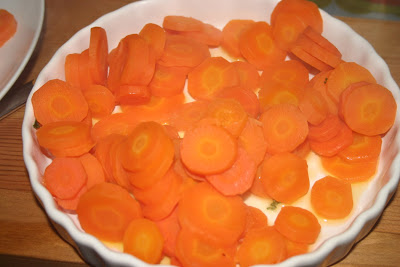
A blast from the past? Carrots in 1599

For this entry, Jane recounts a section from the book Profitable Instructions for the Manuring, Sowing and planting of Kitchin Gardens by Richard Gardiner which was first published in 1499. He essentially makes suggestions as how to make good use of carrots: ‘carrots roots are boiled with [salted] beef…a few carrots do save one quarter of beef in the eating of whole beef…carrots of red colours are desired of many to make dainty salads…[they] make those pottage good, for the use of the common sort…carrots well boiled and buttered is a good dish for hungry or good stomachs’. Carrots also give ‘good nourishment to all people…therefore sow carrots in your gardens, and humbly praise God for them, as for a singular and great blessing’.

I particularly liked the phrase ‘carrots well boiled and buttered is a good dish for hungry or good stomachs’, so that is what I did to go with the jugged hare. It’s good to know that some things don’t change.

#220 Carrots in 1599. I’m not actually going to give a score for this as it’s not really a proper recipe (i.e. a total cop-out). However, I think it really highlights that we take much of our food for granted – not that there is anything wrong with that – and that people in other counties or times past view things in such a different and sometimes inspiring ways.
#219 Jugged Hare

I’d heard of jugged hare before and had always assumed that ‘jugging’ meant that some strange spices were added, but it simply means that it is cooked in the jug. The idea being that the hare can cook away in the jug that is, in turn, in a pan of simmering water. The way of cooking goes back to when people had to cook over their hearths. Jugged hare therefore has gone out of fashion because we make it into a casserole or stew (as in this recipe here) in the oven. I bought the hare from Shaw meats a few months ago and had had it stowed away in the freezer for quite a while, so it was perfect as the main course of my emptying-the-cupboards themed dinner party. Here’s how to jug a hare (or a large rabbit).

First joint your hare, and if you like lard it with some bacon fat or pork back fat. It is wise to do this if the hare is not a youngling. If any blood that drains off, keep it in a bowl (in fact, if you can get the butcher to keep the blood when hanging the hare, even better), rub the hare with salt, black pepper and Cayenne pepper and place the pieces in a large stoneware jug along with an onion that has been studded with three cloves, a bouquet garni (I used, parsley, bay, rosemary and pared lemon peel), and four ounces of butter. Cover with foil and tie securely and tightly with string. Place the jug in a roasting tin half-filled with boiling water, put it on the heat and bring to a simmer and then cook on the hob or in the oven for three hours.

When cooked, remove the pieces and allow them to rest while you make the gravy. Strain the juices (there will be a surprisingly large volume) in a sauce pan and add a quarter of a pint of red wine, a chopped anchovy and a pinch more of Cayenne pepper. Bring to a simmer and thicken: either with a beurre manié made from half an ounce of butter and a tablespoon of flour mashed together and added in knobs, or by adding the blood of the beast (don’t let the sauce boil though, otherwise it’ll will go like pink scrambled eggs). The blood I had reserved was only a small amount so I popped it in at the end. Lastly, add a squeeze of lemon juice. Griggers suggests serving it with fried bread, but I went with game chips (see here), forcemeat balls (see here) kale and ‘Carrots from 1599’ (see the next entry, when I get round to writing it).


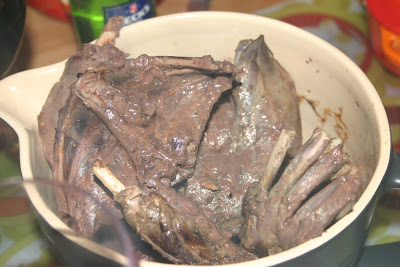
This pic makes the hare look rather unappetising, but it did look good in real life!

#219 Jugged Hare. A really good hearty winter stew this, the hare was very well-flavoured and gamey and the gravy was really delicious – very dark and very rich. Although it was good, it wasn’t as good as the hare stew I did last winter, which had a much more complex flavour. Still, it deserves an above average 6.5/10.

#218 Whitebait

Aye up, Grigsoners! I’ve been a bit slack with the blog recently as I have been working all hours over the last week or so. However, I have not been slack in the kitchen as I have a few recipes to tell you all about. Hopefully I’ll get them written over the next few days.

I cooked for some mates last week and managed four Grigsons in one evening. Pretty good going, I reckon. I’m trying to empty the freezer as I have accrued a lot of food during the autumn so things were designed around whatever I found in the deep depths of it. I found the whitebait and had completely forgotten I had bought them. I love whitebait but have never cooked them, though it was all straight-forward enough. It’s funny, but I never really thought of whitebait as an English food, I think this is because I always see it on European restaurant menus. It does have a bit of a history though; according to the Grigson there were whitebait parties held in Dagenham, London to celebrate some land draining system being built. Anyways, William Pitt (the Prime Minister at the time) was invited to one party and loved them so much he held whitebait parties at the close of each parliamentary season. So there you go. Don’t say I don’t educate you all!


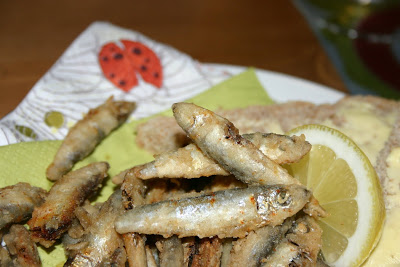
To fry your own whitebait, allow them to defrost (if frozen, obv), then rinse them in some milk and allow to drain for a bit. Heat up some deep oil to around 200⁰C. Meanwhile put some seasoned flour in a large freezer bag, place the whitebait inside, seal and give it all a good shake so that they are all nicely covered. Shake off excess and fry in batches for just a minute or two. Drain and season well with salt and Cayenne pepper. Serve the little fish with brown bread and butter and some lemon wedges.

#218 Whitebait. Absolutely delicious and much better than what I’ve had done in restaurants. The flour and milk formed a light, crisp batter keeping the fish nice and soft within. Lemon and brown bread were the perfect accompaniment too. A cheap and delicious treat – go make! 8.5/10.

#217 Granary Bread with Walnuts

It’s been a while since I’ve done a bread recipe, and I’m definitely out of practise. I chose this one because it seemed suitably wintery, plus it used up flour that has been sat in the cupboard for a while now and I am trying to clear them, as I’ve mentioned previously. (As an aside, does anyone have a recipe that uses rice flour? It’s been sat there since that rubbish rice cake.) The main ingredient is granary flour, though I’m sure you could use wholewheat instead; I used a little stoneground flour left over from the Northumbrian Wholemeal Scones and Doris Grant’s Loaf from yonks ago. Grigson calls granary flour ‘Granary’ flour, because it’s a proprietary blend of malted flour and other nice things from one particular miller, though she doesn’t say who.

Don’t be put off by bread-making, Grigsoners, I really like doing it, and did start to get good at it, and even if it is a bit on the heavy-side, it will taste so much better than bought stuff. I think that it is the yeast flavour. Supermarket bakeries cannot compete – even with your worst effort!
Sift together a pound of ‘Granary’ flour, 4 ounces of strong white bread flour and 2 teaspoons of fine sea salt in the bowl of a food mixer. Add a packet of dried fast-action yeast (I reckon that’s about 2 level teaspoons) and mix well. Using the dough hook, stir in around ½ pint of warm water so that a soft, rough dough forms around the hook. Add two tablespoons of walnut oil and briefly knead, add more flour to make it smooth before placing in an oiled bowl. Cover with clingfilm and allow to ferment in a warm place until it has doubled in bulk. The time could be anywhere between an hour and several hours, depending on where you do this. As I don’t have an airing cupboard, I pop the bowl over the radiator. Knock back the dough (i.e. punch the air out of it) and knead in 4 ounces of roughly chopped walnuts. Now either place in an oiled loaf tin (or tins) or make it into a shape. I decided on a nice big round rustic loaf (i.e. the easiest). Use a very sharp knife and make some slashes on the top of the loaf and, bake in a very hot oven – 230⁰C – until cooked; this will depend upon the shape and size of your loaf, mine took 25 minutes. The way to tell is to tap the bottom – if it sounds hollow, it is done. Cool on a wire rack and eat with cheese, a winter stew or warm with butter and honey, I reckon.


#217 Granary Bread with Walnuts. Definitely the best bread so far – dense and with a good crumb, but not heavy. The flavour of the walnuts and the oil come through well, but are relatively neutral so that it would go equally well with sweet or savoury food. It’s very easy to make, all you need is some patience. Great stuff – a really nice, country loaf that is a little different, yet very classically English. 7.5/10.

#216 Orange Sauce for Duck and Game

This is a sauce for any game and requires two things from The Freezer of Delights that have been sat there for a while: game carcasses for a game stock (see here for recipe) and two Seville oranges. It is very important that you save and bones and carcasses from your meat for stock-making at a later date. It is, of course, even more important that actually used the bloody things once you’ve saved them. I served this with the Mallards of Death.

Melt 1 ½ ounces of butter in a small saucepan and stir in a rounded tablespoon of flour. Stir and cook until the roux becomes golden brown. Now whisk in ¾ of a pint of game stock, bring to a boil, and then simmer for around 20 minutes. Whilst it is cooking away gently, pare thinly the rinds of two Seville oranges and slice them as thinly as possible (you can use an orange and a lemon if you can’t get Seville oranges). Add the rind along with the juice of the oranges to the sauce and cook for a further 3 or 4 minutes. Add up to a tablespoon of sugar and four tablespoons of port, plus the skimmed roasting juices from the meat. That’s it! Easy.


#216 Orange Sauce for Duck and Game. A really good sauce this one; tangy, bitter, fruity, rich and a lovely red-brown colour with just the right amount of freshness and tang to cut through the very strong meat. If you don’t like bitter foods, use a normal orange and a lemon and perhaps less pared rind. 7/10.

#215 Mallard

As mentioned, the freezer is being emptied of its long-sequestered goodies. First up is this roast mallard. I also found a couple of Seville oranges in there too so I thought I’d do a classic orange sauce too (see the next post, when I get round to writing it!).

I had never tried mallard before but I love duck so I was looking forward to this, I have to say. I took them out of the freezer and allowed them to defrost overnight. On preparing them I found that they smelt pretty – er – ripe, which was a wee bit concerning, but I continued. The instructions are very straight forward if you want to tackle roast mallard: inside the bird, put in some butter, seasoning and herbs; outside, season with salt and pepper. You don’t need any butter or back fat to protect the birds as they have a layer of fat anyway. According to Jane, they should be roasted rare, so they only require 30 minutes at 200⁰C. When ready, allow to rest for fifteen minutes, carve and serve. I did game chips (see the entry on roast pheasant) and Savoy cabbage along with an orange sauce as suggested by the lady herself. You could make a gravy from the juices and a spoonful of bitter marmalade or an orange salad.

The fowl stench of death

#215 Mallard. These birds were definitely over-hung. They smelt and tasted of death and had gone well past the gamey stage. As I have frame of reference, I’m not sure if they naturally taste like that anyway. I doubt it though. Char and Clive seemed to find this okay, but it was rather too much for me and I couldn’t face a leg. That said, the hanging made the meat very tender and succulent. The next day the kitchen smelt like dead and rotting animals. 3.5/10.

FYI: the hanging of meat – in particular game – is required for the meat to become tender and tasty. Whether it is 28 days for beef, or just 2 to 3 days for small game. Pheasant, for example, is tough and pretty tasteless before hanging. However, people cross the line between well-hung and rotten. Brillat-Savarin – the Eighteenth century gastronome and lawyer – didn’t consider pheasant to be fit for consumption until it was “in a state of complete purification”, according to Larousse Gastronomique.

Happy New Decade!

Well here we are in a brand-spanking new year, Grigsoners. I hope it is going okay for you so far and that it will continue to do so.

New years and decades mean we think of ways to improve ourselves and this year is no different for me. I have several things that I want to do, but the important one for the blog is to try and empty the cupboards and freezers of all the things I have in store – mallards, hares, bones and carcasses, spice mixes, herbs, cherries, dried apricots and goodness knows what else in the backs of the drawers. I keep buying things – I can’t help it – either in case I need them later, or have bought and used them once and never required them again. I shall report on this, natch.

Here’s my list of seasonal fruit, veg and game as per usual, this time for January of course. It’s getting into the bleak midwinter now so the food shall be hearty.

Vegetables: Jerusalem artichokes, beetroot, Brussels tops and sprouts, cabbages, celery, chicory, endive, spring and winter greens, kale, leeks, onions, parsnips, potatoes, swede.

Fruit: pears, forced rhubarb.

Fungi and nuts: chestnuts.

Fish and shellfish: cockles, cod, crab, mussels, oysters, whiting.

Game: goose, hare, mallard, partridge, pheasant, rabbit, venison, woodpigeon.

#214 Meat Souffle

A quickie. I knew that we would have plenty of leftover Bradenham ham from Christmas so I knocked this one up. Follow the recipe for the cheese soufflé but use half the amount of cheese and fold about 8 ounces of chopped ham into it. Alternatively, soften a couple of ounces of onions in butter and add 8 ounces of blanched, minced sweetbreads or cooked brains if you like your offal. You might not wish to include cheese though. Make sure you add some herbs too.


#214 Meat Soufflé. The best way to use up some leftover ham, I reckon. The cheese- ham combo is a classic. The salty-sweet ham and cheese and the creamy egg were perfect. If you’ve never made a soufflé before have a go, they are not as scary as people make out. 8.5/10.

#213 Boned Roast Sirloin

This Christmas – 2009 – was the year we did not have turkey. This was the first time ever, and I have to say it wasn’t missed (at least not by me, anyway). Instead it was roast pheasant and roast beef, not any roast beef though, but roast sirloin. Griggers says that if you cooking beef for a special occasion and you want to be sure of good beef, go for this cut. She suggests getting it from Harrods, but I didn’t go that far. Instead I went to a very good butcher’s shop in Pudsey, my home town, called Bentley’s. It’s won many an award so I thought I would mention them.

A roasting joint such as this needs little doing to it – place it in a roasting tin and season the fat with saltr and plenty of black pepper. Place in a very hot oven – turn the heat as high as possible and leave for 15 minutes, turn the oven down to 180⁰C and roast for 15 minutes a pound for rare meat. Serve with the usual horseradish etc.


FYI: I bought a meat thermometer so I could be absolutely sure of perfectly cooked meat. I did it medium, though I would have done it rare if it were just me eating it. If you have one then follow these temperatures: up to 60⁰C gives you rare beef, 60-70⁰C gives you medium and 70+⁰C gives you well-done beef.

FYI2: there is a common story about Henry VIII eating loin of beef at a banquet and thought it was so delicious that pronounced it ‘Sir Loin’. This is unfortunately a lot of nonsense, though I wish it were true. This cut of beef got its name is from the French sur loin, meaning above the loin.

#213 Boned Roast Sirloin. This was the best roast beef I’ve ever had in my life! It was as soft as butter and tasty and all the better for adding only salt and pepper. No messing about with extras here. It beat the rib of beef hands down. Absolutely gorgeous. Go cook some next time you have something special to celebrate – this is an order! 10/10

#212 Bradenham Ham

Well here it is, Merry Christmas, everybody’s having fun. Well we are here in Pudsey, Leeds because – as for most of the UK – we are having a proper white Christmas.

Hope all of you are having a good one.

The plan this year is to not have a turkey, but three different meats: ham, beef and pheasant. We all decided as a family to not do turkey, but now the time is here there are some that are having a bit of a complain. Well tough tits – you should have piped up at the time.

So the the first to report is the Bradenham ham from Dukeshill. I actually did this for Christmas Eve dinner and that’s why it is being reported to you good fellows.

Bradenham ham is apparently the best of the dry cured hams – so good in fact that the Queen has it every year herself. It’s quite pricey, but it is Christmas.

The story of the creation of the Bradenham cure is that the Lord of Bradenham invented it in 1781 – so it is pretty old – but his butler took umbrage saying he had invented it and nicked the recipe. What a card. Anyways, he stowed the recipe to Dukeshill and they still make it today. It is dry cured for 3 months in a briny bath of spice, molasses and cochineal of all things.


The hams can be bought whole or in halves. I went for the half ham as the whole one is absolutely huge and I had to buy a huge pan for the half one anyway. Griggers gives instructions for a whole ham so I had to go for the cooking times give by Dukeshill themselves.

Start off by soaking the ham in cold water for 2 days (Griggers reckons four, but since mine is half the size, I went with Dukeshill method. Put the ham in a large pot and cover with water. Add half a jar of mollases and half a hanful of pickling spices (double up, if a whole ham). Bring slowly to a bare simmer and then turn very low on the hob and allow to keep ticking over for 20 minutes per pound.

When done, remove tentatively from the opt and remove the black skin. Cover the sticky fat with breadcrumbs and bake in a medium oven until they go nice and brown. Allow to cool. Serve the ham sliced with nice mustard or Cumberland sauce.

#213 Bradenham Ham. Absolutely delicious; very salty and very sweet. The spices are sublime. When you eat it, your mouth waters. Alot. It may be pricey, but it is worth it. The only problem was that because I bought a half ham, some meat – rather than skin – was exposed to the water and dried out a little. However, anything behind fat or around bone was deliciously moist. If you buy one and you don’t want a whole one, buy an already cooked one instead, I reckon. 8.5/10.

I have more to report over the rest of the festive period. Hope you are all having a great time and eating good food.

FYI: to make your own pickling spice mix use: 2 teaspoons each of black peppercorns, allspice berries, coriander seeds, cloves, mace as well as two dried chillies and two pieces of dried ginger.