#122 Roast Pheasant

The Roast Pheasant was obviously the star of the meal – not just because it is a meat we don’t eat enough of, but also from my point of view because to tick it off I had to do lots of accompanying dishes, so some organisation was required. If you want to have a go, you can have as many of the elements as you wish, though try to do as many as possible as they do go so very well together as a dish. The trickiest part was getting hold of pheasant giblets – however, the nice game butcher at the Farmers’ Market got me them when I asked. Make a point of ordering them as they are routinely thrown away. So, the roast pheasant is made up of five individual parts:

1. The pheasants themselves
2. The game chips
3. The giblet gravy
4. The browned crumbs
5. The bread sauce (dealt with separately as #123).
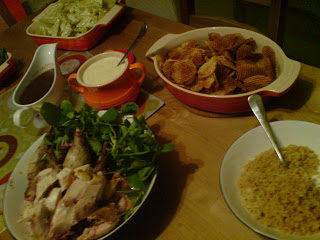

Most of this can be made in advance and reheated, that which is not, is easy and quick to prepare and will not keep you from your guests for very long.

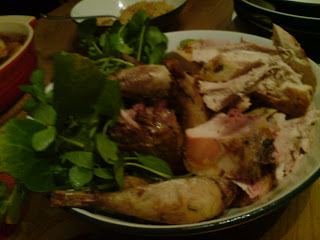
To prepare the brace of pheasants, begin by removing the giblets and setting them aside for later on. Stuff each bird with 2 ounces of butter, plus the liver (make sure you remove the green bitter gall bladder) and a good seasoning with salt and pepper, then lay a thin sheet of back pork fat over them that is large enough to cover the beasts and legs. Secure the back fat by tying string around the pheasants. Place them in a roasting tin and set aside for when you want to roast them – they should be roasted at 190°C for 20 minutes per pound plus an extra 10 minutes. You calculate this for the heaviest bird; in my case 2 pounds, so 50 minutes in all. For the final 10 minutes of cooking, remove the back fat and dust the breasts lightly with seasoned flour. Remove from the oven and allow to rest. I did this just before the guests arrived so that the birds could rest as the leek tarts were cooking. To serve it, I removed the legs, then sliced the breast meat and placed on a bed of watercress.
When the birds were prepared, I started on the gravy: first place the giblets (minus livers) in a saucepan along with a sliced carrot, a sliced onion and a bouquet garni and enough light beef stock to cover everything generously. This was simmered gently for two hours before being finished off later (see below). Next job was to get the game chips sorted. Game chips are basically crisps cut very thinly on a Chinese mandolin using the ridged blade to produce a lattice, or gaufrette, pattern. Peel 1 ½ pounds of firm potatoes. Put the mandolin at its thinnest setting and slice downwards, turning the potato a quarter-turn as you bring it back up to make the next slice to get the lattice effect. Put the chips into a large bowl of water to remove starch and then dry thoroughly. Deep fry in batches at 200°C until golden brown, and drain on kitchen paper and salt them well. This can be re-heated in the oven whenever you need to use them.

Once the starters had been eaten, I put the game chips in the oven and got to work on the buttered crumbs and rest of the giblet gravy. For the crumbs, 3 ounces of stale white breadcrumbs were fried gently for 5 or 10 minutes in 1 ½ ounces of butter until golden. They were placed in a serving dish and kept warm with the game chips. For the gravy, the stock with all the lovely the giblet flavours poured into the roasting tin. The stock was boiled hard and all the nice sticky bits that were found on the bottom of the pan were scraped off. When reduced, a glass of port was added, there was a quick seasoning, and the gravy was strained into a sauce boat.

So that there was a bit of green, also served some peas and green peas, but also Bread Sauce (as instructed) and (#124) Creamed Celery – Grigson says that either celery or mushrooms should be eaten with roast pheasant.

#122 Roast Pheasant – 9.5/10. What a brilliant meal! It was well worth the effort, I cannot fault it in any way really, and will definitely make it again, though maybe not with all the required elements. The pheasant was juicy and just-cooked, the gravy was beautifully rich and luscious, the breadcrumbs provided a nice crunchy texture and the game chips were tasty, some crunchy and some soggy in the gravy and bread sauce. For me, pheasant is the king of the game birds, and after this, it is going to be very difficult to knock it off the top spot.

FYI: to be a bit thrifty, I made soup from the carcasses and left over veg and trimmed celery etc and it was lovely – I’ll put a recipe up for it. I am never chucking out a carcass again!

#121 Little Leek Tarts

The first thing to get ready was the Little Leek Tarts. These seemed very simple to make – a leek puree baked in puff pastry (bought, I might add) plus a bit of salad of my own doing. I imagined them to be quite contemporary actually – many restaurants seem to have some kind of tart as a starter these days.

This recipe makes between 12 and 24 tarts, depending how much filling you put in each one:

Begin by trimming and cleaning some leeks – you need 2 pounds trimmed weight (this may seem a lot, but they melt down and concentrate). Chop them up and add them to a heavy-based pan that has 2 generous ounces of butter melted in it. Cover the pan tightly and allow to stew slowly for about 10 or 15minutes. Check inside and stir – the leek should not have changed colour, just reduced in volume. Cook for a further 10-15 minutes with the lid off so that the leeks lose their wetness. This is important to concentrate the flavour. Whilst this is happening cut out circles of puff pastry to line small tart tins and heat the oven to 220°C. Liquidise the leeks and season with salt and pepper and stir through a couple of tablespoons of double cream. Divide the mixture out between the pastry cases and sprinkle a teaspoon of grated Cheddar or Wensleydale cheese over them. Bake for 15-20 minutes and serve immediately. To look a bit more swish, I added rocket that had been dressed with a simple vinaigrette.


In reality, we made them first, but actually baked them when everyone arrived and the pheasants had finished cooking.

FYI: the leek became the national ‘flower’ of Wales after a Welsh King called Cadwaladr (c. 633–682) apparently ordered his soldiers to wear them on their helmets in a battle against the Saxons that took place in a leek field! This story is probably nonsense, but the best ones usually are…

#121 Little Leek Tarts – 8.5/10. Absolutely delicious! So often are leeks just used as a stock or soup vegetable; this recipe let them shine. The leek puree was light but creamy and went very well with the rich pastry. The only problem (and it was my problem, not the recipes) was that it was very slightly gritty – I obviously rushed the rinsing of a few of the leeks. Oopsey! Oh well, I have learned from my errors and have therefore become a better person because of it. Whatever.

An Eighteenth Century Feast

I’ve got a bit of catching up to do – this weekend was a Grigson frenzy; 5 in one day!! I had been toying with doing a reasonably elaborate meal – and in particular the roast pheasant that appears in the book. It was meant to be the 100th recipe but I couldn’t get hold of pheasant giblets, but look and ye shall find.

So basing a meal around this I came up with a loose theme – the Eighteenth Century. It was quite a time-consuming set of recipes, but none are particularly complex. Plus I had lots of help from my sous chefs Iain (Butters) and Charlotte (Charmolian). Also, in the times of the credit crunch, the whole meal was actually pretty good value, so it won’t burn a hole in your pocket. Anyways, here it is:

~Starter~


Little Leek Tarts served with a rocket salad (the latter, my own addition, obviously)

~Main Course~

Brace of Roasted Pheasants


Served with: Game chips, green vegetables, buttered crumbs and a rich giblet gravy

Accompanied by: Creamed celery and bread sauce

~Dessert~


Whim-Wham


Not a mean feat, but we started well ahead of time so that we never seemed rushed, plus much of this could be made in advance. Paddy, Kate and Pete came over, so there were no heirs and graces and if anything did go wrong it wouldn’t matter (nothing did!). So if you fancy making any elements of this meal, I shall naturally be adding the recipes alongside any wee factoids I may find over the next couple of days.

#120 Mr Frost’s Chocolate Cake

This one is a piece of piss to make and comes from a chap who owns (or, I presume owned now, as this book is quite old) a restaurant in Cirencester. Griggers likes it as it’s a nice classy version of chocolate cornflake or Rice Krispie cakes (though try my Mum’s recipe).

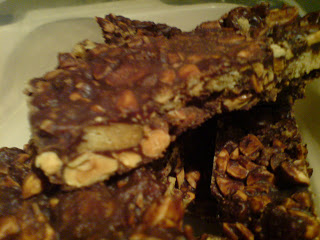
For this you need chocolate (plain or dark or a mixture), butter, nuts (any type – I used almonds and hazelnuts which are essential, you could use walnuts but peanuts are “right out”) and digestive biscuits. Weight out equal amounts of chocolate, butter and digestives and half the total weight of nuts. Roast the nuts for about 25 minutes in a low oven and remove any skins by rubbing them with a cloth, then chop roughly. Melt the butter and chocolate over a low heat. Keep an eye on them whilst you chop up the biscuits into small squares – don’t worry if there’s loads of crumbs, this is a good thing. Once the chocolate and butter have melted, mix in the nuts and biscuits. Pour into a lined tin so that it’s about a finger thick and cool in the fridge. Cut the cake into squares or fingers and keep cool.


#120 Mr Frost’s Chocolate Cake – 6/10. Good old Mr Frost. The Grigson was right in that this is much better than crappy old cornflake cakes. It could’ve been improved with a few sultanas, but the good thing about this is that you can add whatever you fancy – crystallised ginger would be good, or marshmallows maybe.

#119 Gloucester Pancakes

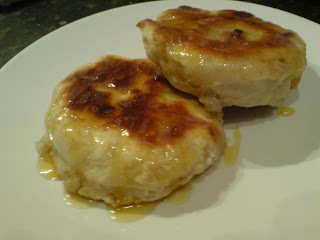
Yesterday was Shrove Tuesday and so to not repeat myself with common or garden crepe style pancakes, I thought I’d be controversial and try a different one. Gloucester pancakes don’t really resemble normal pancakes- they’re more like muffins. A point of note here – we know that Pancake Day exists to use up the fat ready for the onset of Lent, but bloody hell, these contain a LOT of fat – chopped beef and suet AND fried in lard. Oh well, you only live once…

This recipe makes around 8 pancakes:

In a bowl, mix together 6 ounces of flour, a pinch of salt and a teaspoon of baking powder. Then stir in 3 ounces of chopped suet and bind everything together with a beaten egg and some milk to produce a firm dough. Roll out the mixture so that it’s ½ an inch thick and use scone cutters (around 3 ½ inches wide) to cut them out. Fry the pancakes in a little lard on a lowish heat until golden brown – they should rise a little due to the baking powder. Serve hot with plenty of golden syrup.


#119 Gloucester Pancakes – 5/10. Nice, but I probably wouldn’t make them again. In order to turn this around, Charlotte made the Welsh light cakes that we did a few months ago (which I’m thinking about upping to a 10). Yep, I’d definitely rather be in Wales than Gloucester on Pancake Day…

#118 Banana Tea Loaf

It was my turn to make a cake for the Evolutionary Biology department’s Wednesday Cake Day, and as there are many a non-Briton in the department I thought I’d do something very English – a tea loaf. Tea loaves are great for several reasons; they taste nice and are lovely and moist, you can make them in advance (in fact they taste nicer if you do leave them); you put butter on the sliced loaf, and they are very easy to make. This one is particularly easy as there is no creaming of butter or anything like that to do.

First, sieve 8 ounces of self-raising flour, ¾ level teaspoon of mixed spice, ½ a teaspoon of salt and 4 ounces of caster sugar into a mixing bowl. Chop 4 ounces of butter into small pieces and add it to the flour along with one tablespoon of honey, 4 ounces of sultanas, 3 ounces of glace cherries, 3 ounces of blanched almonds or walnuts (or a mixture). Now the wet ingredients: 1 pound of mashed ripe bananas, 2 eggs and the juice of a lemon. Once mixed together nicely, turn the mixture out into a buttered 9 inch loaf tin and bake of an hour at 180ºC and then half an hour at 160ºC. Allow to cool on a wire rack and store in an air-tight container.


#118 Banana Tea Loaf – 8.5/10. Marvellous! This is quite a hefty tea loaf and I didn’t think our wee group would get through it, but we made light work of it. The addition of the cherries and nuts made it a little Seventies-looking and I thought would make it overly rich, but it wasn’t the case. Very, very good – thinking about when I’ll make the next one!

#117 Mrs Borthwick’s Yorkshire Teacakes

Been very busy with work and decorating folks, sorry for being a little slack of late. I have had the chance to do a couple of recipes – trying to do at least ten a month, but not sure if I’ll make it this February…

Being a Yorkshireman I thought I’d make these Yorkshire teacakes. The currant teacake reminds me of my Mum; she’s rather partial, though I didn’t really know that they were particularly Yorkshire, I glad they are. They’re a large sweetened teacake with mixed fruit in them and traditional way to eat them is to slice them crosswise and eat with butter and cheese, though I like them toasted with butter. Each to their own.

Now I’ve started to crack the art of yeast cookery, I’m enjoying bread-making and these are easy – the fruit and sugar hide a multitude of sins – and taste much better than bought stuff. Part of the reason behind this is the use of fresh yeast, which gives a much better flavour than the dried stuff, plus the bread rises much more rapidly I’ve noticed.

Oh, and Mrs Borthwick is some reader of one of Griggers’ columns and sent her this recipe. In case you were wondering.


Anyways, this makes eight large ones:

Sieve together 1 ¼ pounds of strong plain flour, 2 ounces of sugar and a pinch of salt into a big mixing bowl. Rub in an ounce of lard and stir in 3 ½ ounces total of currants and mixed peel (have the ratio according to your taste). Make a deep well in the centre of the flour and crumble in an ounce of fresh yeast and then grate plenty of nutmeg over the whole thing. Next, measure half a pint of room-temperature whole milk and add a quarter pint of boiling water to it. Pour the lot into the well. Do not worry that it looks a horrible mess, it is supposed to. Flick a little flour over the top, cover and leave to bubble in a warm place for 15-20 minutes, or whatever. Mix to form a dough, adding more flour if required, and knead for a few minutes. Divide the dough into eight pieces and knead each again, fold them inwards so they form little plump breadcakes. Put onto greased baking trays and allow to rise again for another 15 minutes. Bake at 220ºC for 30 minutes, turning them over in the final 5 minutes. When ready place on a wire rack and brush with milk to give them a shine.

#117 Mrs Borthwick’s Yorkshire Teacakes. 6.5/10. Really nice teacakes that require minimum effort for pretty good results, though I would add more currants than this recipe I think. I really loving the bread cookery – Hot Cross Buns are a-calling, me-thinks!

#116 Apple and Raisin Pie

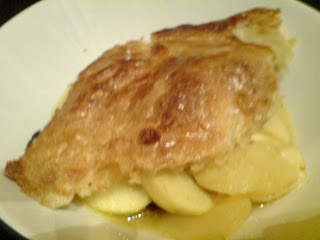
A good honest hotpot deserved a good honest pudding. I wanted a desert-version of a hotpot and went for this apple and raisin pie. This, people, is no ordinary apple pie – it is a buttered apple pie, very popular in the Seventeenth Century. It’s very easy to do, especially if you use bought puff pastry.

Peel, core and quarter 3 ½ pounds of Cox’s Orange Pippin apples and quarters the quarters into six and place in a bowl. Sprinkle over 4 ounces of caster sugar and the grated zest of half a lemon and mix. Melt 4 ounces of unsalted butter in a pan and pour over the apples and lastly 4 ounces of raisins. Mix again and place the apples and buttery juices into a large pie dish. Roll out some puff pastry and cut out a shape large enough to cover the dish. With the trimmings, roll out a thin length of pastry and glue it to the rim with egg white. Then using more egg white glue on the pastry lid and glaze with more egg white. Sprinkle the top with a little sugar and make a slit in the pastry so the steam can escape. Bake in a hot oven – around 220ºC – for 15-20 minutes, and then turn down to 160-180ºC and bake for a further 30-45 minutes until the apples are tender. Serve with lightly whipped cream.


#116 Apple and Raisin Pie – 9.5/10. This is the best apple pie I’ve ever made. The apples were still tart but swimming in a lovely sweet, rich buttery liquor that was the perfect balance. The raisins were very juicy and plump and the pastry crisp. Total genius. Go and make this pie right now, people!

#115 Lancashire Hotpot

Last week I took the afternoon off work to go shopping with Butters to Cheshire Oaks to spend money I don’t have. One of the main reasons I wanted to go was Butters had been told that there was a Le Crueset shop there. I love Le Crueset stuff but it is tres expensive, so I had a total geek boner about going to the factory outlet shop.

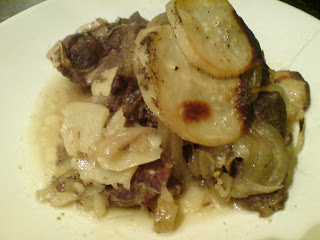
After about an hour of decision-making, I went for a large round casserole and a big mixing jug. With the casserole I knew exactly how I was going to christen it – with a Lancashire Hotpot. I’ve had hotpots before, but in the form of ready meals, which, if I remember, had tomato in it. Real Lancashire hotpot is very simple – one of those dishes involving lots of sliced potatoes and onions that seem to come in an amazing variety. It’s also rather like an Irish stew.

It looked nicer in real…

FYI: Lancashire Hotpots were traditionally made in large, deep dark glazed brown pots that were given to the baker to put in his oven whilst people went to work so they collect on their way back.

FYI2: Although hotpot usually contains potato, onion, lamb and kidneys, people have put in black pudding, sweetbreads, mushrooms and oysters. So if you have any of those to hand pop them in.

This is enough for 6 people:

Start off by thinly slicing a pound of onions and 2 pounds of peeled potatoes. Next trim any large bits of fat from best end of neck lamb chops; you’ll need between 8 and 12 depending upon thickness. When at the butches try to get about 6 lamb’s kidneys. Depending on your butcher, they may or may not be prepared – make sure the tough outer membrane has been peeled away, and slice in half lengthways and cut out their central tough, white centres. Layer up the potatoes, then onions, then meat and offal, seasoning as you go. Make sure you leave enough spuds so you can arrange them nicely on the top. Pour enough water to reach halfway up the pot and then brush the potatoes with some melted butter. Place the lid on the casserole and bake at 200-240ºC for 30 minutes, and then turn the oven down to 140ºC for about 2-2 ½ hours. Take the lid of for the final 30-45 minutes so that the top can crisp up. Serve with boiled or pickled red cabbage.

#115 Lancashire Hotpot – 6.5/10. Very nice and hearty grub that is simple yet effective. Not used to cooking with lamb, but am loving how simple this is. Also I’d forgotten how nice kidneys are – I’ve not had them in years. It’s definitely something I’d make again, but it would have to contain something more than just lamb. Plus it’s very cheap – the meat came to £6 at the butchers in the Arndale Centre. Bargain!

#114 Quince, Medlar, Sorb or Crab Apple Jelly

The quinces I bought the other day were beginning to look a bit sad and I needed to use them up with something. I really like quince, so quince jelly was the obvious choice – making a few jars of this would mean I would still be eating them way beyond their season had ended.

By the way, this recipe can be followed as is but with medlars, sorbs or crab apples, so if you are lucky enough to know where their might be some growing near you try this jelly.

Begin by scrubbing clean your quinces and chop them roughly along with the same weight in Bramley apples. Do not peel or core them – that is where the pectin resides that will set the jelly. Place the fruit in a pan and barely cover them with water. Simmer the fruit until they have become a pulp (I used a potato masher to help the quinces along).

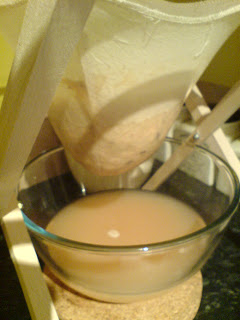
Place the pulp in a jelly bag suspended over a bowl – if you don’t have one, use a muslin-lined sieve instead. Leave the pulp to drip dry – this takes a while, a few hours at least, overnight if you’ve done loads. Measure the volume of liquid and pour into a heavy-based pan and add a pound of sugar for every pint of liquid. Boil this mixture until this has reached setting point (read the recipe for marmalade for more info on this) and pour into sterilised jars.

Quince jelly can be used like any fruit jelly, but is typically an accompaniment to cheeses, game and turkey.


#114 Quince Jelly – 6.5/10. A nice conserve, but I perhaps more apple than I should have, as the quince flavour is not super strong and is sweeter than I’m used to. That said, I used as jam and I think it’ll be a lot better with some game or cheese. Also, the recipe’s very good as I got four jars of jelly from just two quince!