#335 Boiled Capon with Sugar Peas

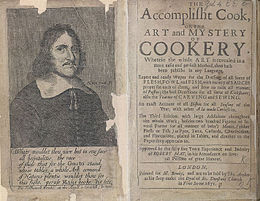
It is always interesting to try a new food, and this 1660 recipe from The Accomplisht Cook by Robert May contains two.

The first is a capon, which is a castrated cockerel. Castration causes the capon to grow fat and large and to develop a different flavour to chicken. There are two ways to castrate, or caponise your cock: the first is to remove the testicles surgically, the other is to do it hormonally using oestrogen implants. You don’t them around very often these days, but a good butcher should be able to order you one. I got mine from Straub’s – there was one just sat there in the freezer section, bold as you like. If you want to caponise your own cockerel, click here for instructions!

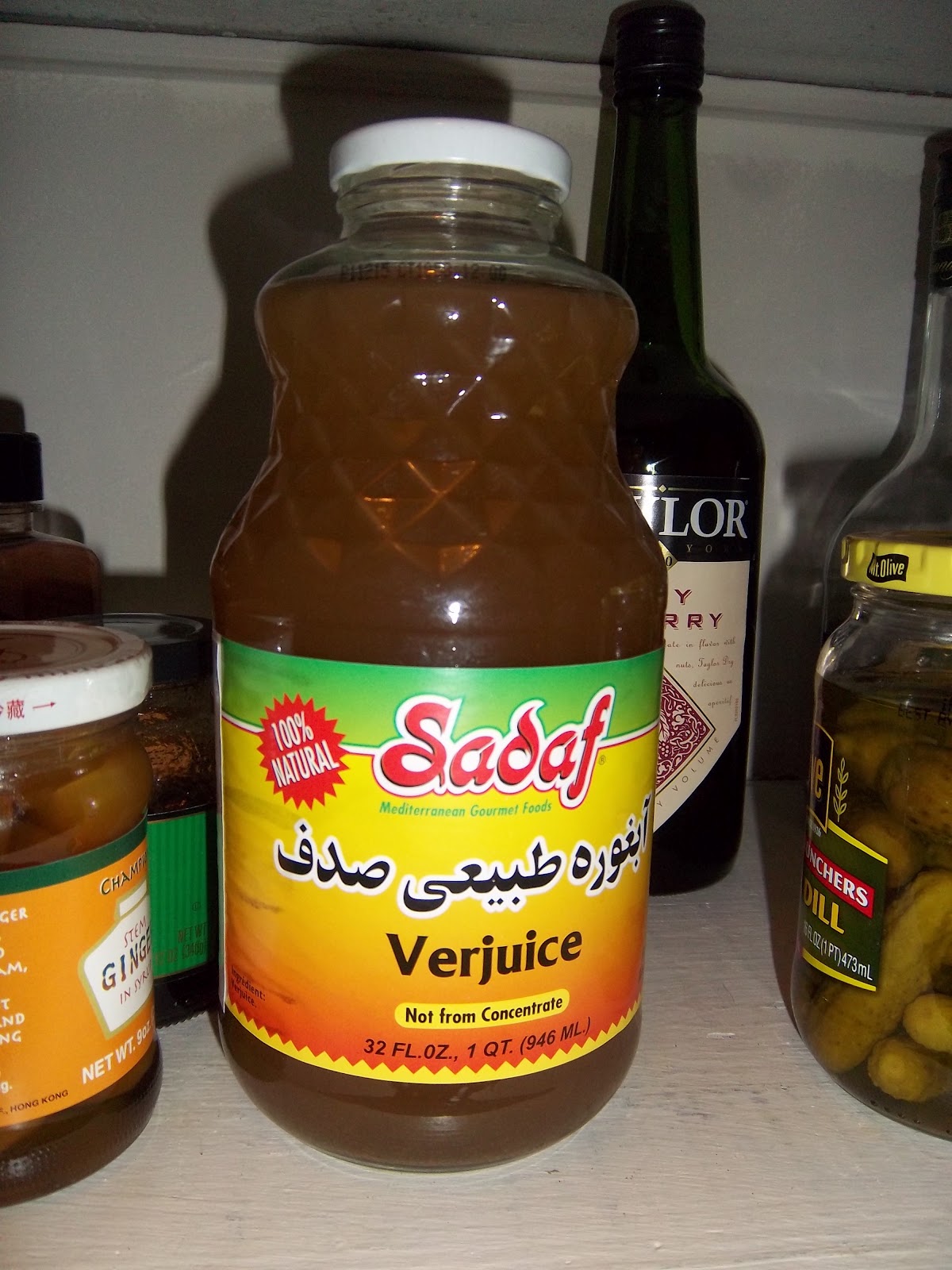
The second new foodstuff is verjuice which is certainly not something you see much these days. Verjuice is made of the juice of either sour apples or sour grapes and was used as an acidulater; lemons were very pricey then, but there was no problem growing sour grapes and apples in Britain! It was particularly popular in the 16th and 17th centuries. I found the verjuice another of my favourites St Louis haunts, Global Foods Market, but I see you can also buy it online.
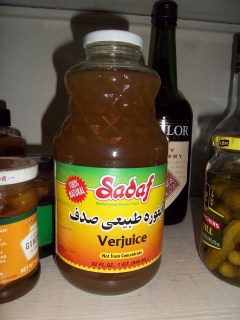
This recipe asks for the capon to be gently simmered just like the turkey with celery sauce I made last November. It is served with a bread sauce that is seasoned with the verjuice and some oyster liquor, though no oysters are actually used in the recipes themselves. I was hoping I could buy some liquor in jars just as you see clam liquor in the supermarkets. I am sure clam juice would be a good substitution, but as I am cooking the recipes as given, I must use oyster. (It turned out well in the end, as it gave me the perfect excuse to make some angels on horseback – look here for my recipe.)
Also served are some crunchy sippets, made from bread, and sugar peas in a buttery sauce. I was quite surprised that sugar peas were even around in the 17th century, I’ve always considered them a recent addition to our grocer’s shops and allotments.

There are 4 elements to this recipe are not particularly complicated, but they do require a little thought…

The Capon
Place a capon, breast down, in a large stockpot with its giblets.
Add water to just about cover the bird and add the stock herbs: thyme, rosemary, parsley and fennel; then add 2 or 3 blades of mace and season well with salt and pepper. Bring to a boil and simmer exceedingly gently until cooked – my 7 pound capon took about 1 ½ hours – the best way to tell it’s done is to spear the thickest part of the thigh and look for pink juices just you would do for a roast turkey or chicken. Remove the capon to a plate, cover it with foil and let it rest for 20 to 30 minutes. On no account throw away the delicious fennel-scented stock. Freeze it in batches and use as needed for soups, &c.

The Bread Sauce
Start getting the sauce ready around 30 minutes before you think the capon will be ready.  Peel two onions and simmer them, covered, in water until they are tender and then blitz them in a processor or blender, or if you want to be old-school, pass them through a sieve or a mouli-legumes. Stir into the onions around four ounces of fresh breadcrumbs and a few ladlespoons of the capon stock so that you have a nice sauce. Use some oyster liquor and verjuice as well as some salt and pepper to season the sauce.

The Sippets
Sippets are fingers or triangles of bread either fried or baked and were very commonly served under meats to soak up the delicious juices. I made fingers with thickly sliced bread and baked them in a 180C (350F) oven until crisp and crunchy, around 20 minutes. These can be done in advance and warmed through in the oven if you like.

The Sugar Peas
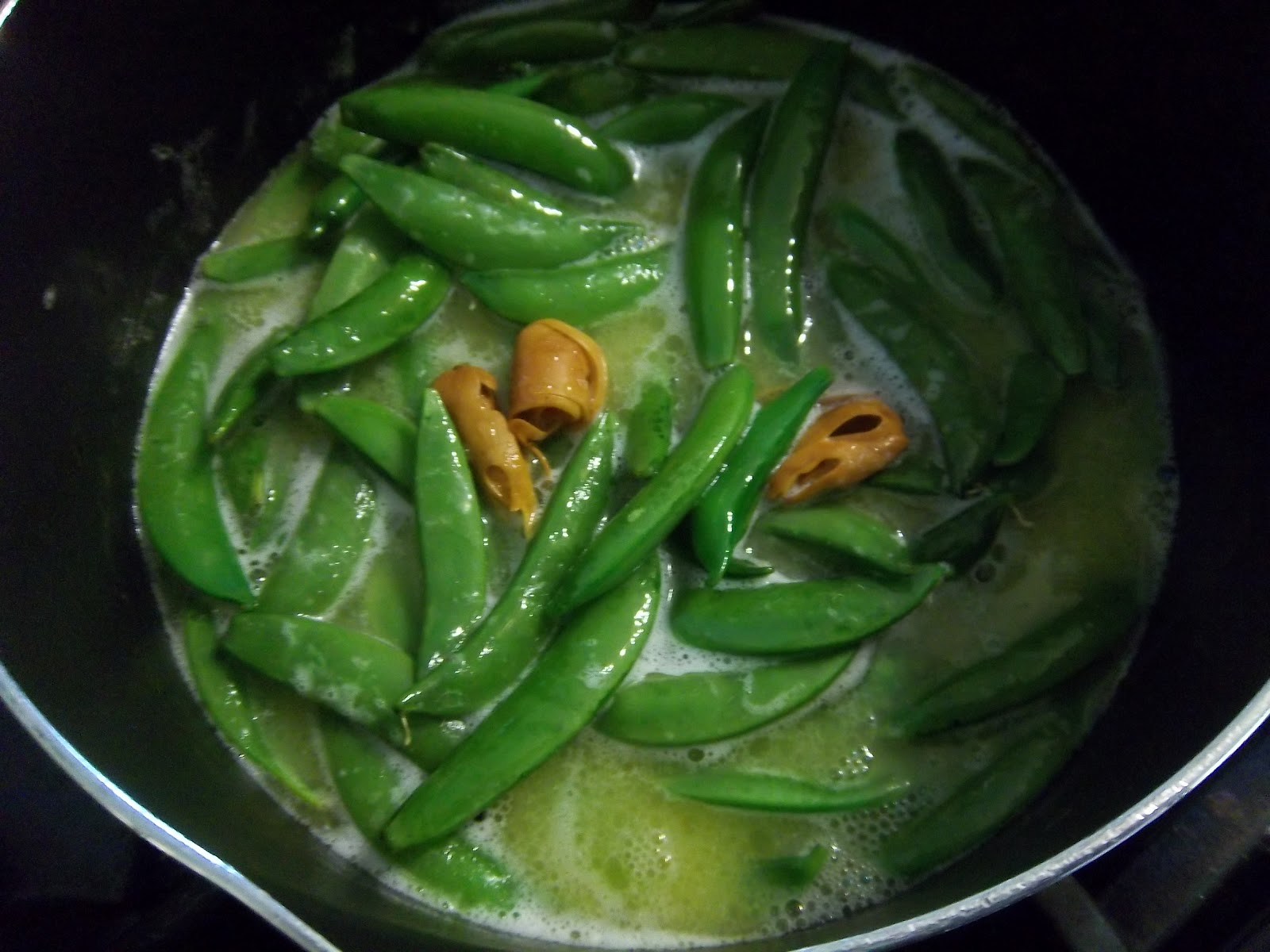
The sugar peas – ‘cods’ – can be prepared whilst the capon is resting. When the cods be but young, string them and pick off the husks. Take 2 or 3 handfuls and but with ½ sweet butter, ¼ pint of water [this equalled 4 fluid ounces back in the day, rather than 5 as it does today in the UK], gross [black] pepper, salt, mace and oil. I used olive oil. Heat all the ingredients aside from the pods in a saucepan, add the pods, cover and stew until tender but with a little bite left in them.
Next, thicken the sauce with 3 or 4 egg yolks that have been beaten with 6 tablespoons of dry sherry (this is one of Jane’s substitutions, the original recipe used sack, a type of sweet ale).

Joint the capon and serve it on the sippets with the peas and their sauce poured over. Serve the bread sauce in a separate bowl or jug.

#335 Boiled Capon with Sugar Peas. After the success of the boiled turkey, I was looking forward to trying this new meat. I was a little disappointed; the meat wasn’t particularly flavourful and it was a little tough. That cockerel must have been doing a lot of strutting around, even without its testicles. As I ate my leftovers over next day or two, I did notice that the flavour of the meat did develop more – it was very turkey-like.  The bread sauce and the peas were very nice however. I think if the capon was swapped for a chicken or turkey, this would be really good. 5.5/10.

#334 Salmagundi for a Middle Dish at Supper

A salmagundi is essentially a rather grand salad which was popular in the 18th Century that has origins in the Elizabethan era. The idea being that the ingredients could be laid out for a ‘Middle Dish’ to produce a large sallet. The Salmagundi originated as a game dish called a salmi (click here for the recipe) popular since Medieval days.

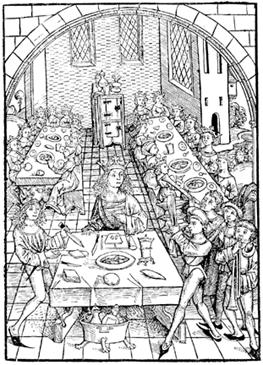
Meals in those days were not served in courses, but all at once, with large dishes in the middle and smaller ones around the outside. The Salmagundi – sometimes spelt as Solomon-Gundy or salamongundi – would be part of a splendid centrepiece, with the meat and salad vegetables in many individual plates, in piles, or layered up. The most important thing about a Salmagundi is that the centre is raised higher than the rest so that upon the apex of the arrangement pickled herrings can sit. For some reason, this recipe appears in the Poultry section of the Meat, Poultry & Game chapter. Seeing as the only necessary ingredient is pickled herring, I would have expected it to be part of the Cured Fish section of the Fish chapter, though chicken or pullet – a castrated hen (can you castrate a hen? You know what I mean) – was ‘one of the most popular salmagundi ingredients’, says Grigson.
Here is one Hannah Glasse recipe that Jane Grigson quotes in English Food, I can’t find the source of it anywhere, Jane doesn’t say where she got it but it’s not in Glasse’s famous Art of Cookery:
In the top plate in the middle, which should stand higher than the rest, take a fine pickled herring, bone it, take off the head, and mince the rest fine. In the other plates round, put the following things in one, pare a cucumber and cut it very thin; in another, apples pared and cut small; in another, an onion peeled and cut small; in another two hard eggs chopped small, the whites in one, and the yolks in another; pickled gherkins in another cut small; in another, celery cut small; in another, pickled red cabbage chopped fine; take some watercresses clean washed and picked, stick them all about and between every plate and saucer, and throw nasturtium flowers about the cresses. You must have oil and vinegar, and lemon to eat with it. If it is prettily set out, it will make a pretty figure in the centre of the table, or you may lay them in heaps in a dish. If you have not the ingredients, set out your plates or saucers with just what you fancy, and in the room of a pickled herring you may mince anchovies.
Hannah Glasse: she was no looker, was she?

Other recipes include many other ingredients such as cold roasted veal, pork, duck, pigeon, oysters, lettuce (cut…as fine as a good big thread), samphire, peas, sorrel, spinach, chopped shallots and lemons, pickles, grated horseradish, a scattering of barberries, figs, oranges and lemons stuck on the top of a sugar loaf. The list goes on…
The secret to a good salmagundi, according to Jane Grigson, is in the layering of flavours, you need a good mixture of sharp, piquant things like the herring or gherkins as well as crisp salad vegetables and bland meats and eggs. The salmagundi often turned into a bit of a disaster, mainly because of the sentence: [I]f you have not the ingredients, set out your plates or saucers with just what you fancy… A housekeeper in a grand 18th Century larder would have had a plethora of wonderful pickled vegetables, preserved meats, plus whatever was growing in the kitchen garden at her disposal; housewives would not, and tended to make it after they’d cleaned-out their pantries. People were just being economical of course, but just what you fancy, does not translate as whatever’s in the back of the cupboard
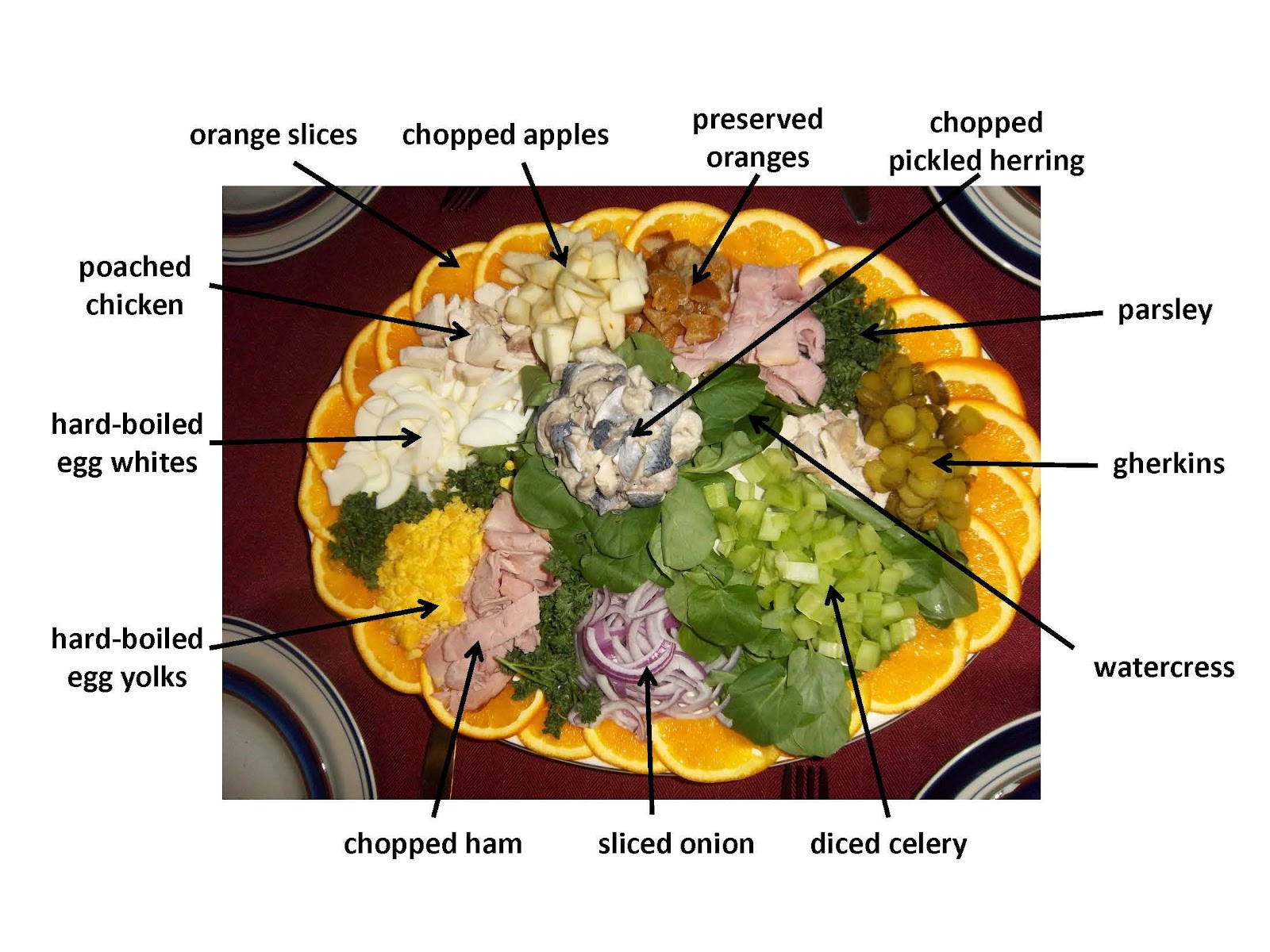
When it came to making a salmagundi of my own I simply tried to take Jane’s advice and make a platter with a good mix of stuff and a decent olive oil and vinegar. I put an upturned bowl in the centre of a serving dish so that my pickled herring would be raised up and got to covering the whole thing in various bits and bobs. Here’s what I did:
#334 Salmagundi for a Middle Dish at Supper. I quite liked putting the salmagundi together and it was quite nice to look at and fun to eat. I think I got a good balance of the crisp, bland and piquant. It certainly made a nice change having an English salad that had a bit of thought put into it because usually they are a little sad. Shall I do it again? I think so – hopefully with a giant sugar loaf in the middle next time. 6.5/10.
#333 Lamb’s Head and Barley, with Brain Sauce

My-oh-my! Where do I start with this one!? It is quite possible the most infamous recipe in the whole book. I must say it didn’t seem as daunting as it did when I first spotted it after I had decided to cook the whole book.
Lamb’s head was once rather popular – in particular during the nineteenth century. According to Grigson, Queen Victoria’s chef was a fan. Why has it that in the last few decades it has just simply disappeared from our food culture? It did hang on in Northern England and Scotland and it was one of Jane Grigson’s favourite meals and she emphasises that it is not “ungenteel…or even savage food”.
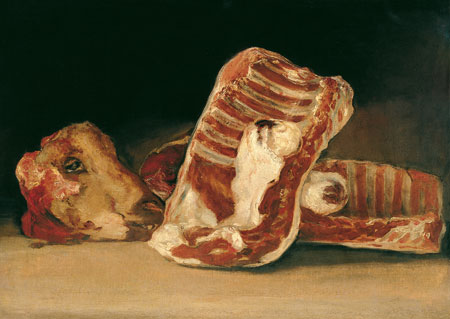
Still Life with Sheep’s Head
by Francisco de Goya (c.1808-12)

Mrs Beeton gives a recipe for leek soup that requires a sheep’s head and also describes how to “dress a sheep’s head” with a very similar recipe to Jane’s, though the barley is replaced with oats (as it is in the Scottish fashion). And if lamb’s head with brain sauce makes your stomach turn, I found a recipe in Elizabeth Raffald’s 1769 book The Experienced English Housekeeper for lamb’s head and purtenances, which, to you and I, are the innards. Calf’s head was also very popular; it was the main ingredient in mock turtle soup, for example. So the heads of sheep, calf and, of course, wild boar have been enjoyed for centuries in pretty well-to-do houses, so they can’t be that bad, can they..?

If you are thinking of cooking this receipt, first of all you need to find somewhere that’ll sell you a lamb’s head. I managed to get hold of one opportunistically at Global Foods in St Louis. There they were, just piled up in the freezer aisle. It is very important that you find an organic or halal butcher, then you can be sure that the animal was fed only what lambs should. The prion that causes scrapie is a concern with lamb that comes from the high-intensive farms, or at least it was. You also need to find some guests willing to eat it. Three brave souls – Anna, Vincent and Michelle – came to certainly the most unusual Sunday dinner I’ve ever had…

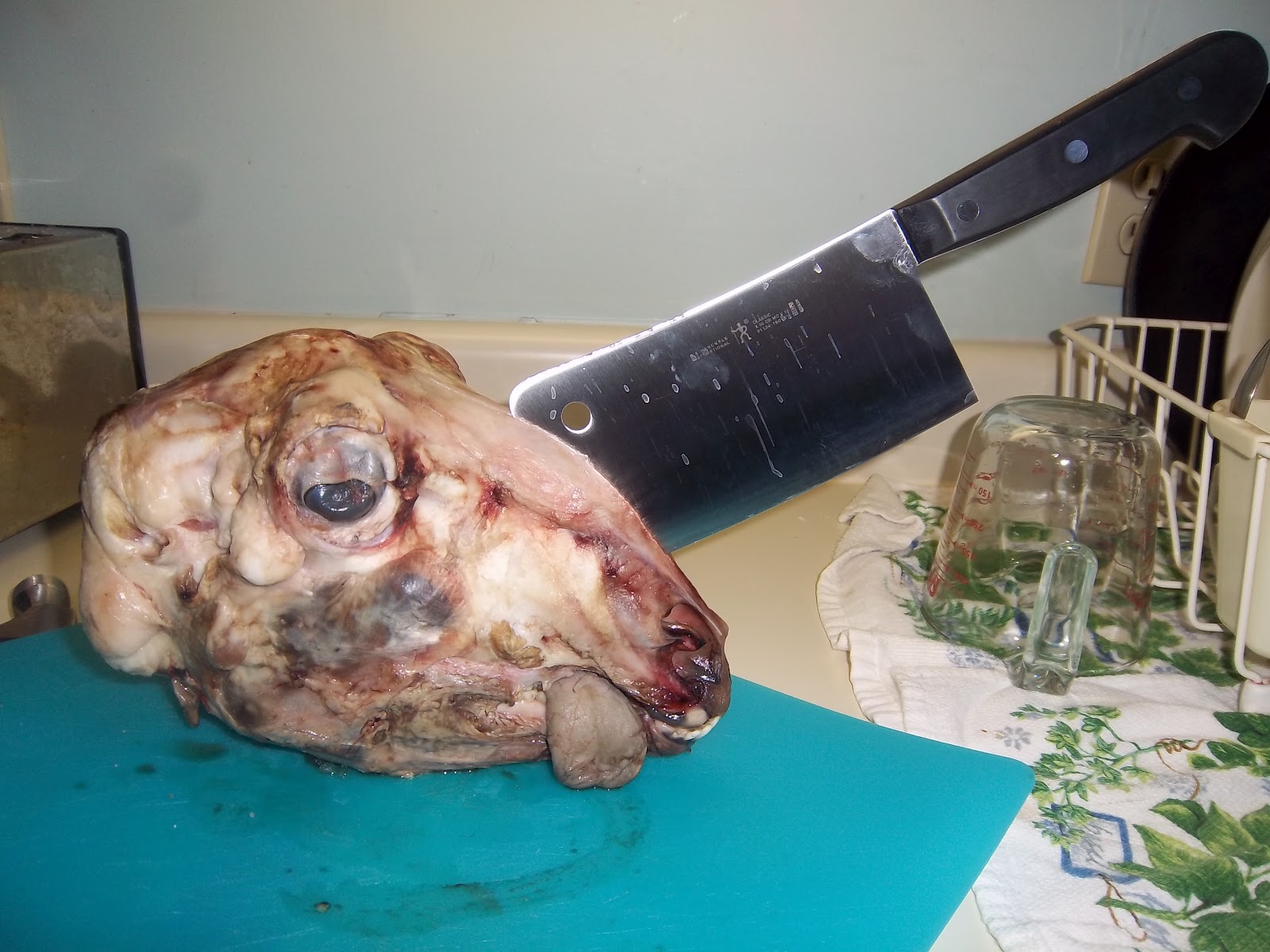
“Ask the butcher to clean and split the head…” starts Jane with this one. I wasn’t lucky enough to have a butcher on hand so I had to do this myself with a meat cleaver and a hammer. It took a fair few whacks and cracks before it split, but I got there in the end. I felt a little like Jack Nicholson in The Shining. Carefully remove the brain and keep it one side, whilst you soak the head in salted water for an hour before rinsing it and placing it in a pot.
Pour enough water to cover and bring to the boil slowly, skimming any grey scum that rises as you go. Now add the following: a bouquet garni that includes a good sprig of winter savory (which was the most difficult ingredient to find!); an onion studded with 3 cloves; 2 carrots and a parsnip, both peeled and halved, a small peeled turnip, a trimmed and cleaned leek, 8 ounces of pearl barley and a good seasoning of salt and pepper – at least a tablespoon of salt is required I would say. Let the broth tick away slowly on a bare simmer for 1 ½ hours.

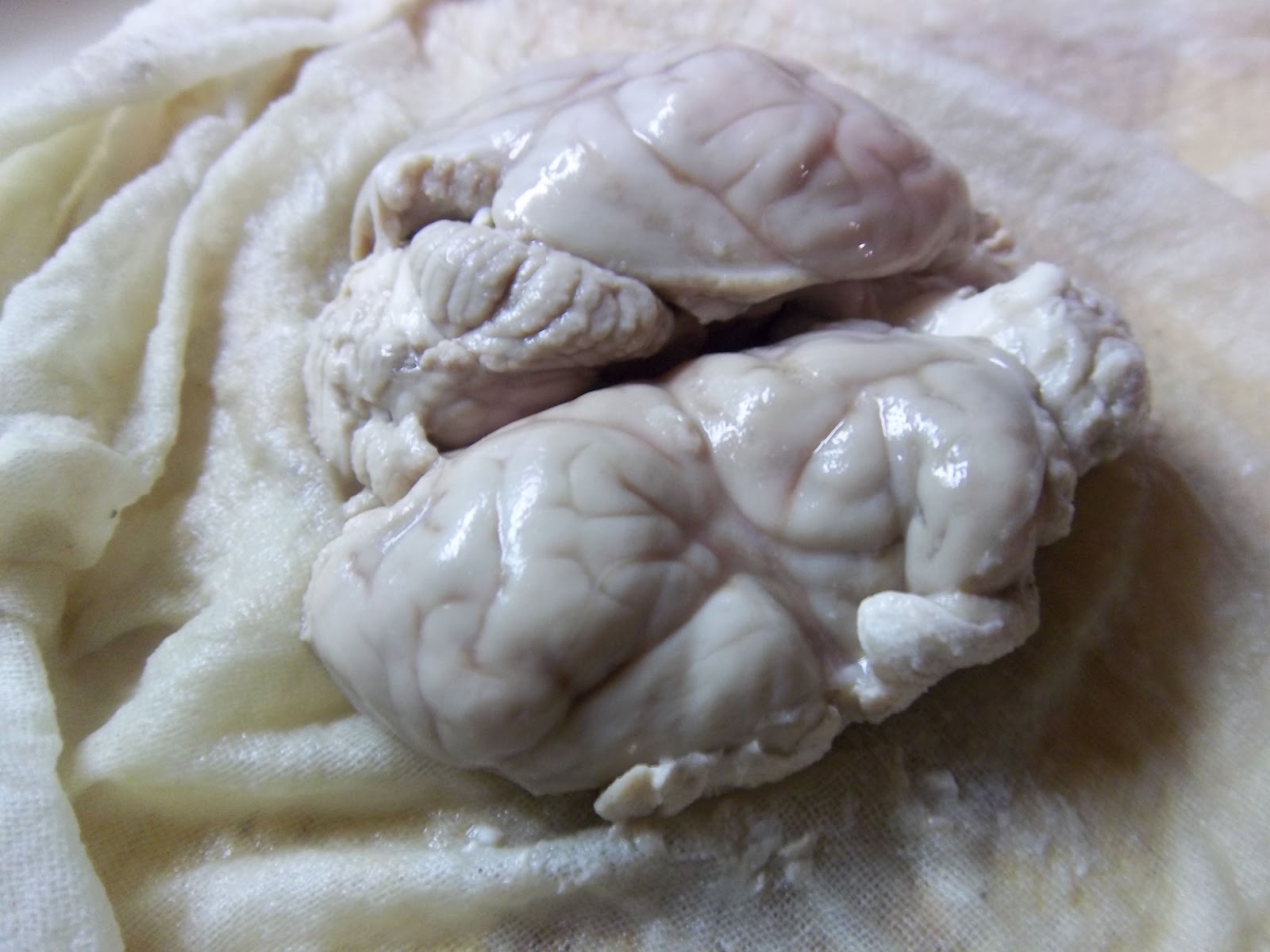
Whilst the broth bubbles, prepare the brain ready for the sauce. Begin by carefully removing the loose membranous net of blood vessels and placing the brain in salted water for 30 minutes. Remove it from its brine onto a square of muslin and tie it up. Place the brain in with the head and let it poach for 10 minutes. The brain will now be cooked and become firm, unwrap it and chop the brain.
It is quite homogenous with no gristly bits, so don’t worry. Now make a simple béchamel sauce by melting an ounce of butter in a saucepan. When it bubbles, stir in an ounce of flour and cook for two minutes before gradually whisking in ¼ pint of milk. Thin the sauce to an appropriate consistency with some lamb stock from the pot and let it simmer for at least 10 minutes, adding more stock if it gets too thick. Stir in the chopped brain and some parsley if you wish. Season and add a squeeze of lemon juice.

When the head is cooked, remove it from the pot and start having a good rummage around to find the meaty bits. I couldn’t find very much to be honest. There were two cheeks containing some good moist meat and the tongue of course. Apart from that, it was slim pickings. I thought perhaps there might be some edible palate as I knew ox palate was popular in the eighteenth century. The only other place I found some was at the base where head meets neck. Anyway, serve up what meat you can extract on a plate or bowl and surround with some of the barley along with some rolled grilled rashers of bacon and some lemon quarters and pour the sauce into a sauceboat.

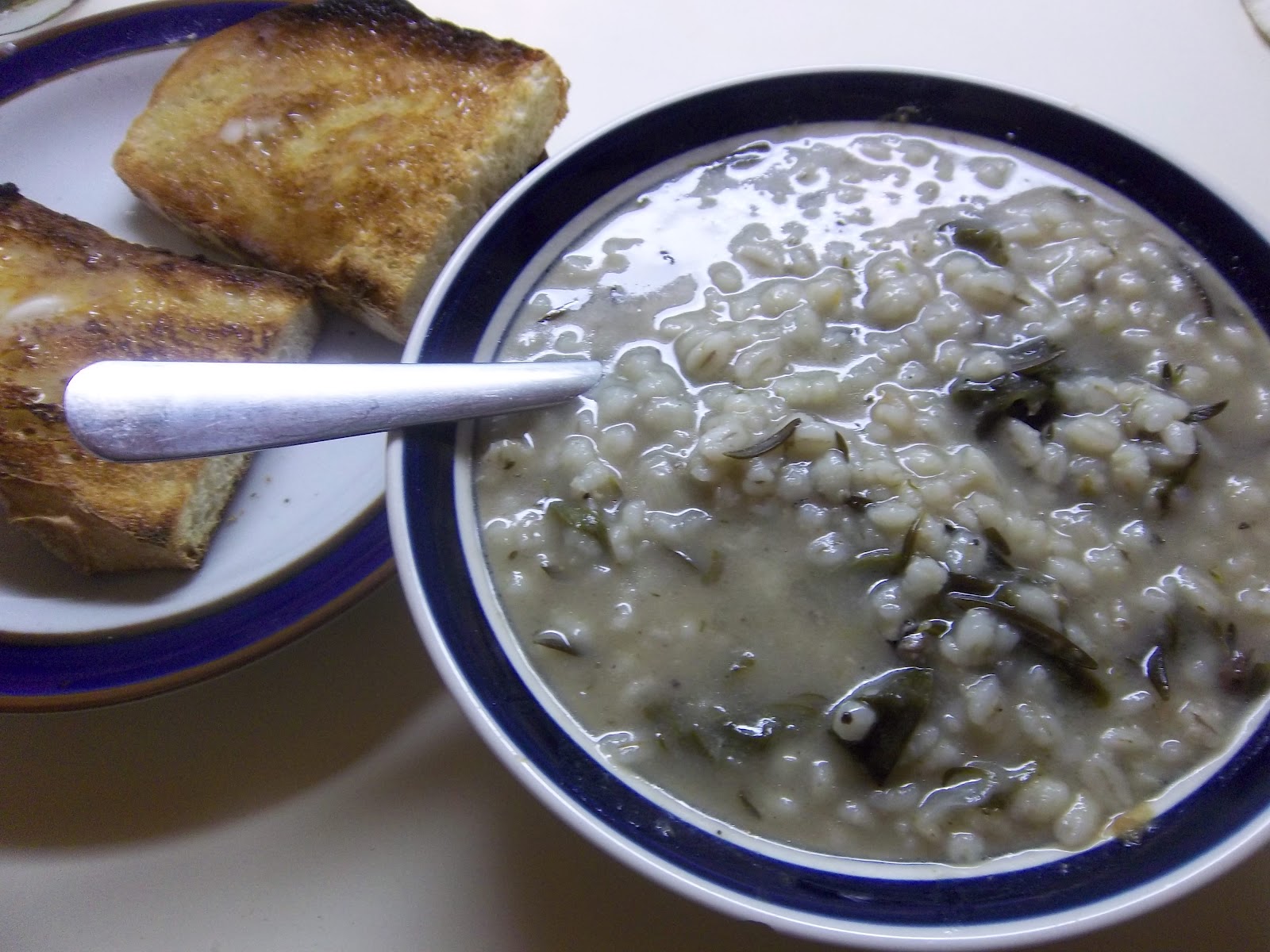
The stock makes “a marvellous soup”. If you want to be in the true peasant style, serve it as the starter. Jane recommends saving it for another meal; “[l]amb soup, then lamb’s head, is too much of a good thing.” I have five tubs of it in my freezer…

#333 Lamb’s Head and Barley, with Brain Sauce. Making this is in no way as macabre as you might expect, except for the part with the cleaver and hammer that is. There was very little meat, but what there was tasted delicious and was very tender and the barley broth was hearty. The brain sauce was also good – the brain itself was tender with a certain firmness that was quite appealing and had a very mild kidney or liver flavour. I think it could have done with a touch of Cayenne pepper. So overall, not bad at all, though the amount of meat was disappointing. The soup left over is delicious but needs a touch of sugar, as lamb and mutton broths often do… 6.5/10.
#332 Cherry, Plum or Damson Sauce

This is a piquant and rich sauce that is traditionally served with game, venison and tongue that seems very Victorian and English to me – there are many others like it such as Cumberland and venison sauce that came most likely from Germany via the kings (and a queen) of the House of Hanover (Georges I to IV, William IV and Victoria). We don’t really eat much of these sorts of sauces anymore, and we shall see if we should bring them back.
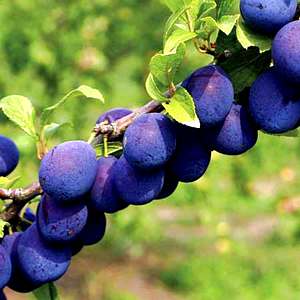
This recipe makes good use of seasonal European fruits: the morello or amarelle cherry (or sour cherry), plums and damsons.
Morello and amarelle cherry trees (Prunus cerasus)are easy to cultivate, and yet it is getting increasingly difficult to find fresh British ones sold at markets, though you can find them frozen or canned pretty easily. The English cherry orchard is a feature of the country declining greatly, mainly because of the competition from cheap imported ones from the Middle East and places like that. The morello cherry was introduced in Britain by the Romans around 50AD and were very popular in Tudor times. Will the English cherry ever return? Because they are so easy to grow and take up little space I shall grow some upon my return to Britain (once I have a garden of course!).

Plums, like the cherry, are of Genus Prunus and there are around 20 species used in several different ways, the species used in Britain is P domestica which is actually a hybrid of two other species. P domestica has been bred into several varieties including my favourite, the greengage.

P domesticus also produced the damson, our third fruit for this recipe. Damsons to me are the most English of all three, though I have never tried them before. I shall have to rectify that.

Here is how to make the sauce, whichever Prunus you lay your hands on.

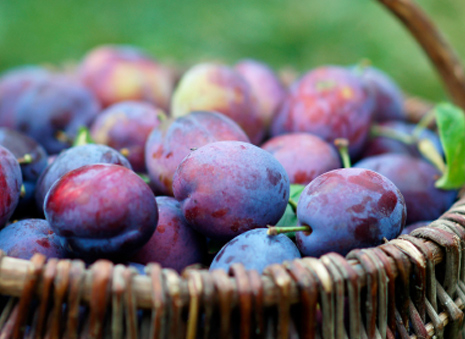
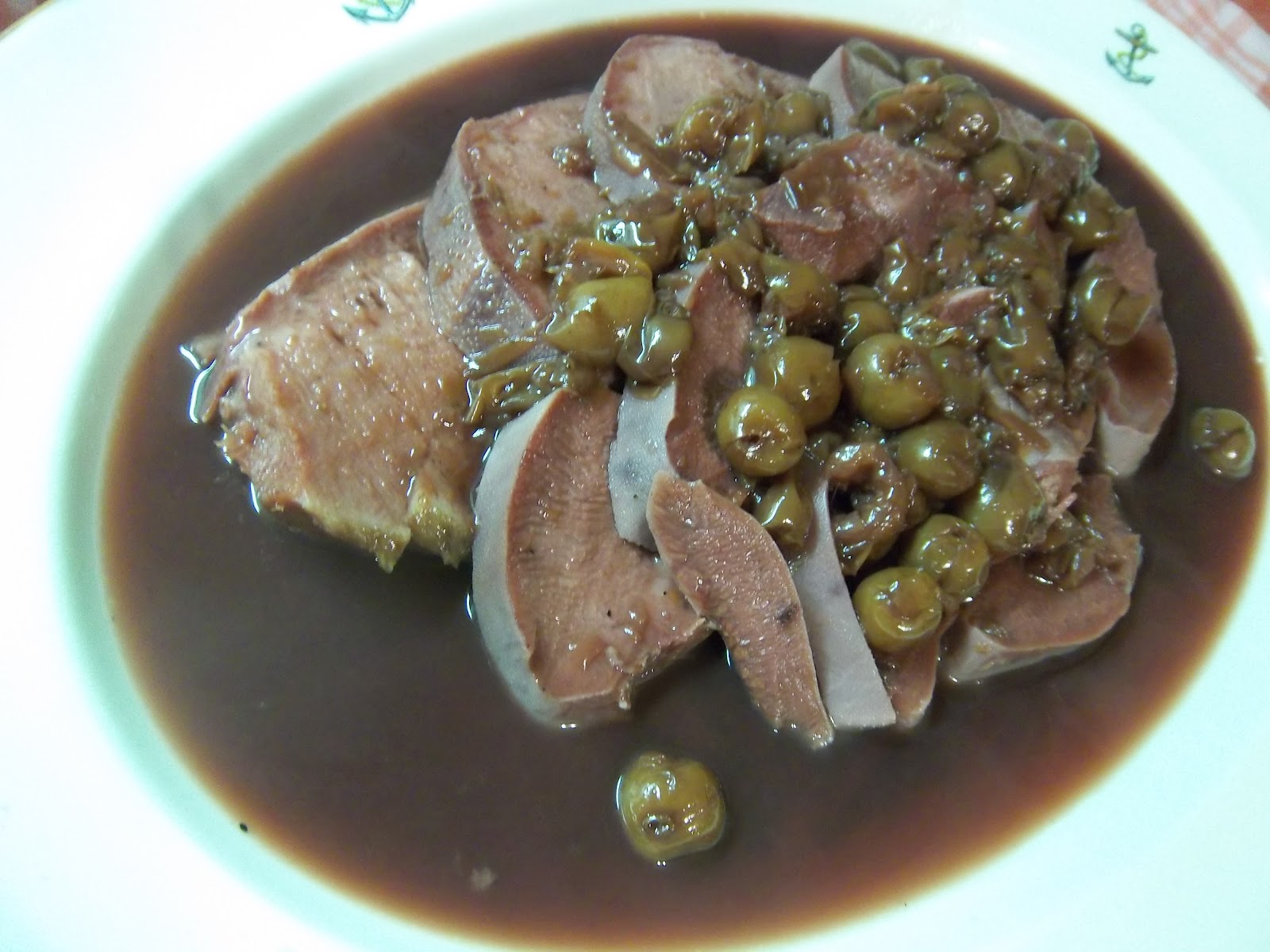
Stone 8 ounces of morello or amarelle cherries, plums or damsons. You can use canned cherries if you want, just make sure they are in water, not syrup. This is what I used. Put the fruit in a saucepan along with ¼ pint each of red wine and port, a tablespoon of sugar, 2 cloves and an inch-long piece of cinnamon. Bring to a boil and simmer for around 10 minutes until the fruit is nice and tender. If you want, you can sieve the damsons or plums if using, but I think it’s better to leave whole. Now add 2 good tablespoons of redcurrant jelly and the juice of 3 oranges and a lemon. Season with black pepper and, off the heat, stir in an ounce of butter. Taste and add more sugar if needed.

I made cherry sauce and served it with hot tongue.
#332 Cherry, Plum or Damson Sauce. I loved this sauce much more than Cumberland sauce. The rich wines and fruit were only just off-set with the sugar, fruit and spice. Very delicious, you could almost eat it on its own. We should certainly bring it back! 8.5/10.

#331 Boiled Ox Tongue: to Serve Hot

I know what Othello needs; more tongue…

There was a time when I would shudder at the thought of eating some tongue, but now because of this blog, I look forward to it. After all it’s just a muscle like any other in the body, and no meat-eater turns their nose up at the muscle bits (although, as an aside, the tongue isn’t like any other muscle in body because it is the only one that isn’t attached at both ends).

In the earlier recipes, I wasn’t so good at boiling meat – I always had too high a flame burning beneath the stockpot. What any meat needs is a nice slow simmer – as slow as possible, the water should be scalding and letting up the tiniest gulping bubbles.

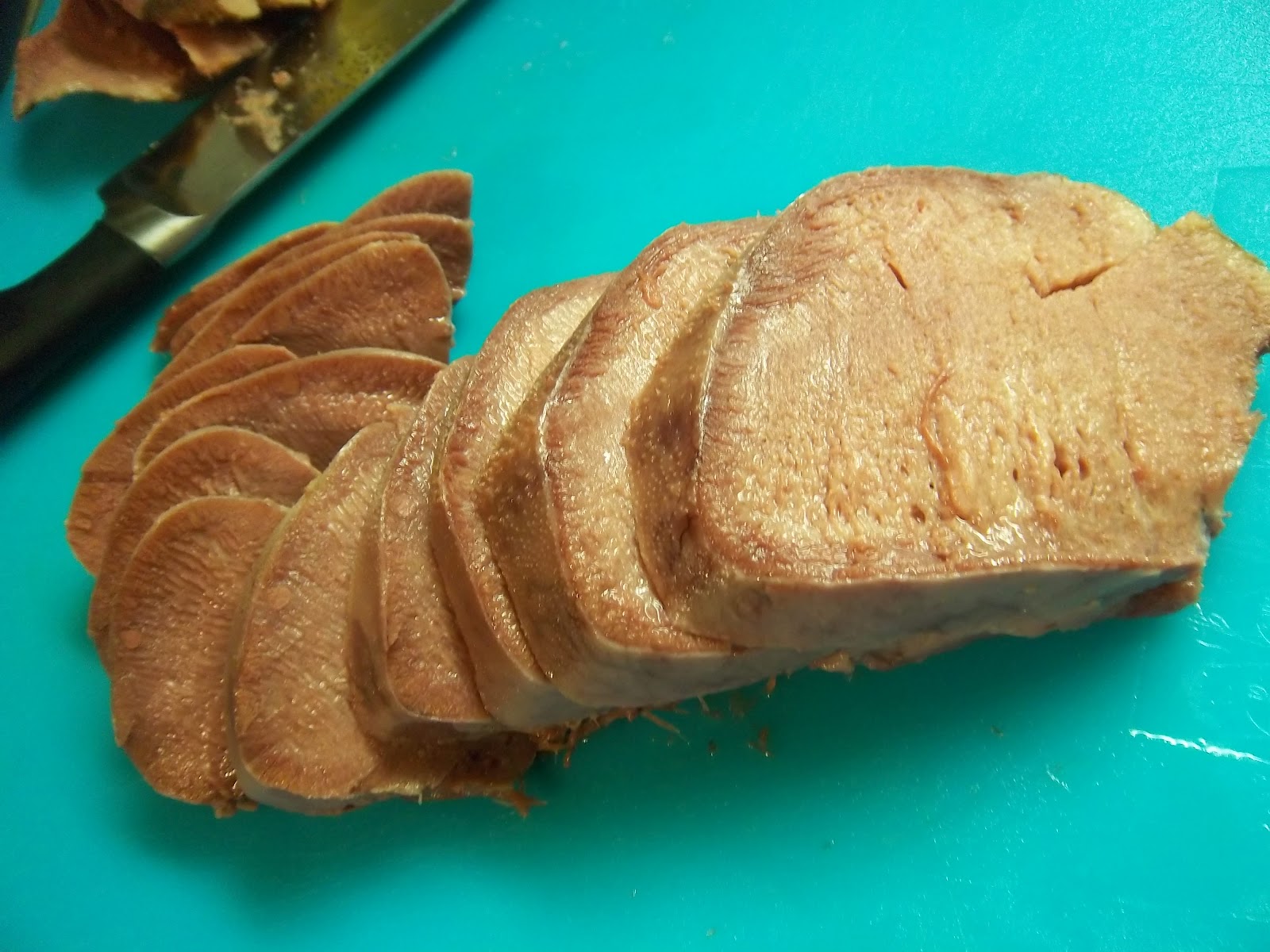
You can buy pre-pickled tongues from any good butcher quite cheaply; when I paid a visit to the butcher back in Manchester, I noticed they were selling them for just £2.50 each! If you want to do it from scratch, I have already written how to pickle an ox tongue (recipe #150) and how to boil and prepare one for Boiled Ox Tongue: to Serve Cold (recipe #258). So all I need to do for this post is tell you what you need to do to eat it hot…

Once it has been skinned and trimmed, Grigson gives her orders: ‘[s]lice the tongue whilst still hot and arrange it decoratively on a large shallow serving dish. Cover with a suitable sauce, boiling hot, place in the oven to heat through for about 10 minutes.

But what sauce? Jane says that the typical English way is to serve Madeira sauce, though strangely she does not give a recipe for it (I shall hunt one down and add it to the other blog in due course…). She does, however, give us an alternative and that is an “unusual” black cherry sauce, but you’ll have to see the next post for that recipe…

#331 Boiled Ox Tongue: to Serve Hot. This has got to be the best tongue recipe so far (there is only one more left) – it was so tender, hardly any chewing was required and the brine give a good, subtle curing. It reminds me of extra-succulent corned beef in fact. I know many turn their noses up at offal, but have a go, it is really good food and I have yet to eat a bit of animals I haven’t liked. 8.5/10.

#330 Leek, Pea or Asparagus Sauce

“We’re well used to tomato sauces”, says Grigson, “I don’t know why we haven’t gone further along the road, using other vegetables in the same kind of way”. This has always confused me; the only tomato sauce I know is either the tomato sauce for pasta or the tomato sauce that comes in bottles as ketchup. The recipe is obviously for neither. I can’t find a tomato sauce recipe that seems even remotely similar – even during the nineteenth century, tomato sauces were made for macaroni, simply stewed with olive oil and garlic and some herbs as we do nowadays.

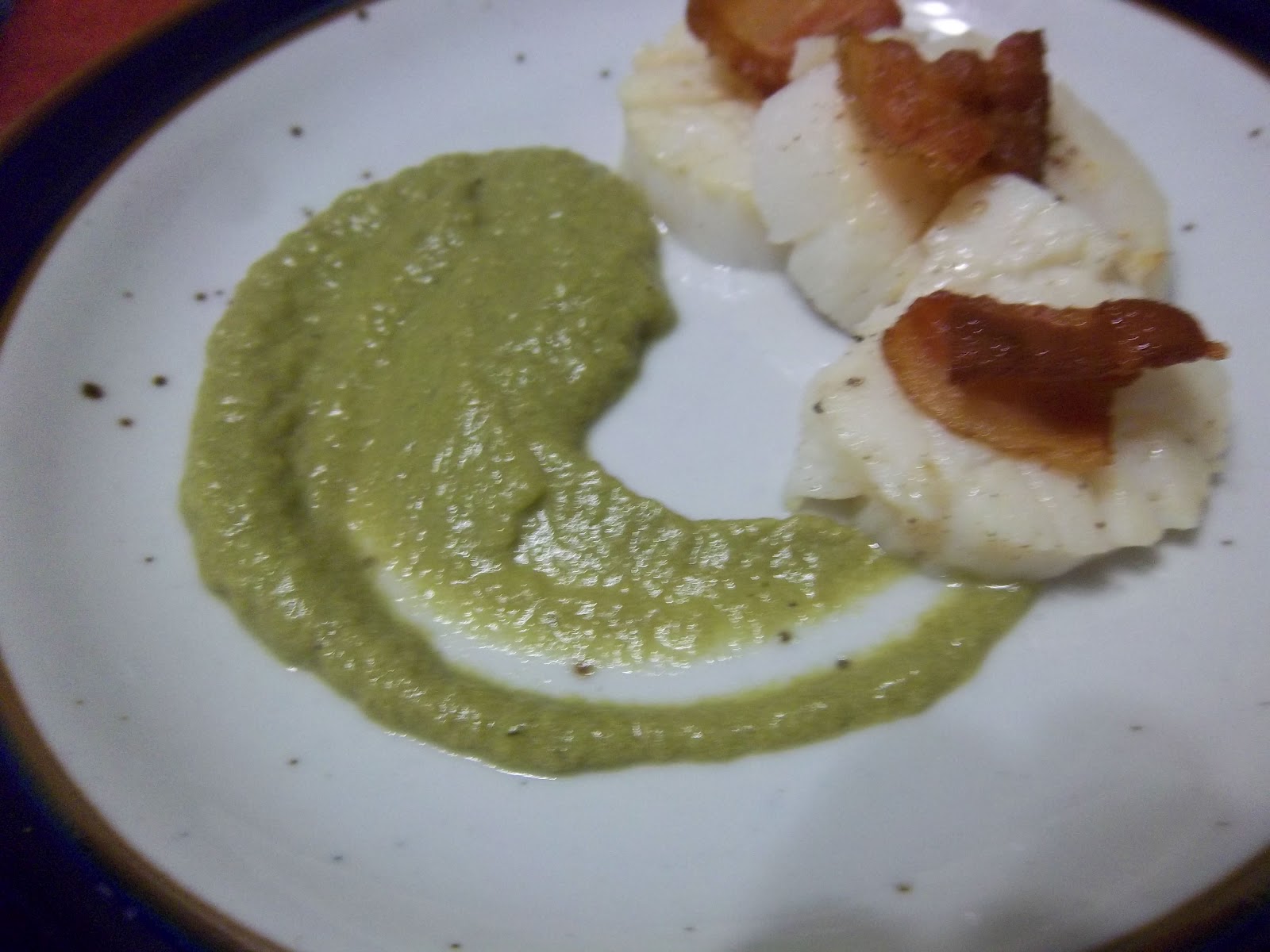
The recipe below is for a thick creamy sauce made from leeks, peas or asparagus – a green vegetable to cover all seasons: leeks for autumn and winter, asparagus for spring and peas for summertime. As it is winter at the moment, I plumped for leeks. But what to serve it with? I eventually came up with the idea of serving the sauce with some seared scallops and some bacon – something which would also work with the peas and asparagus too, I reckon. The sauce is easy to make and can be made in advance and reheated when needed.
First of all prepare your vegetables: wash, trim and chop your leeks or asparagus, or shell your peas. You need 12 ounces prepared weight. Plunge them in ¼ pint of light stock or water. It is important to add salt to the water or stock as it makes the green colour much vivid. Cover and simmer until just tender. Liquidise the vegetables in a blender, or if you are old school a mouli-legumes. Push through a sieve to exclude any woody or fibrous bits (this is especially important with larger asparagus spears). Add around 3 ½ fluid ounces of soured cream, reheat and stir.
Then stir through either 3 tablespoons of clotted cream or unsalted butter. If using butter don’t add it until the last minute. The resulting sauce should be quite thick. Don’t forget to season with salt and pepper.
My attempt at being all cheffy!
#330 Leek, Pea or Asparagus Sauce. Although I wasn’t sure what to do with this sauce, it turned out very well; the leeks were good and sweet, but made piquant by the sour cream. It went very well with the scallops and bacon, so I certainly recommend it for that. Strangely, I reckon it might be good stirred through some pasta with a some Parmesan cheese stirred through it…  7/10

#329 John Evelyn’s Tart of Herbs


John Evelyn was a very influential diarist who left quite a legacy. He was from a well-to-do family in South-East London, but being the second son, had no rights to the estate (unless his brother died without having a son himself). So, to make up for this he decided to become a scholar and travelled France and Italy in search of knowledge during the tumultuous time of the English Civil War. He wrote several books, witnessed the Great Fire of London, and was friends with Christopher Wren and Samuel Pepys. He lived during the reigns of Charles II, James II and William III and Mary II. He was talented landscaper, designing the gardens at Sayes Court, London. He became quite chummy with Charles II and was a founding member of the Royal Society. One of his books, called Sylvia, or a discourse of Forest Trees declared the tragedy befalling the country’s trees that were being felled for fuel to the glass factories. The book was responsible for the planting of millions of trees – quite the modern conservationist!

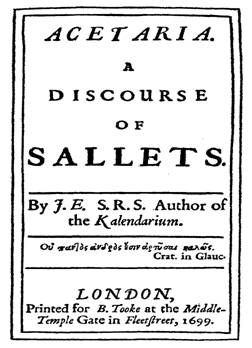
During his later years, he planned to write an encyclopaedia of horticulture, but only got as far as the first chapter. This chapter was published as a book in its own right in 1699, titled Aceteria and it is from this book that this recipe comes:
An Herb-Tart is made thus: Boil fresh Cream or Milk, with a little grated Bread or Naples-Biscuit (which is better) to thicken it; a pretty Quantity of Chervile, Spinach, Beete (or what other Herb you please) being first par-boil’d and chop’d. Then add Macaron, or Almonds beaten to a Paste, a littlesweet Butter, the Yolk of five Eggs, three of the Whites rejected. To these some add Corinths plump’d in Milk, or boil’d therein, Sugar, Spice at Discretion, and stirring it all together over the Fire, bake it in the Tart-Pan.
These sorts of sweet vegetable-based tarts were commonly eaten as a pudding during wintertime when there was no fresh fruit to be had. I had heard of carrots being used in this way, but not spinach! So, with an air of dubiousness I followed the updated version that Jane Grigson provides which surprisingly only contains spinach…
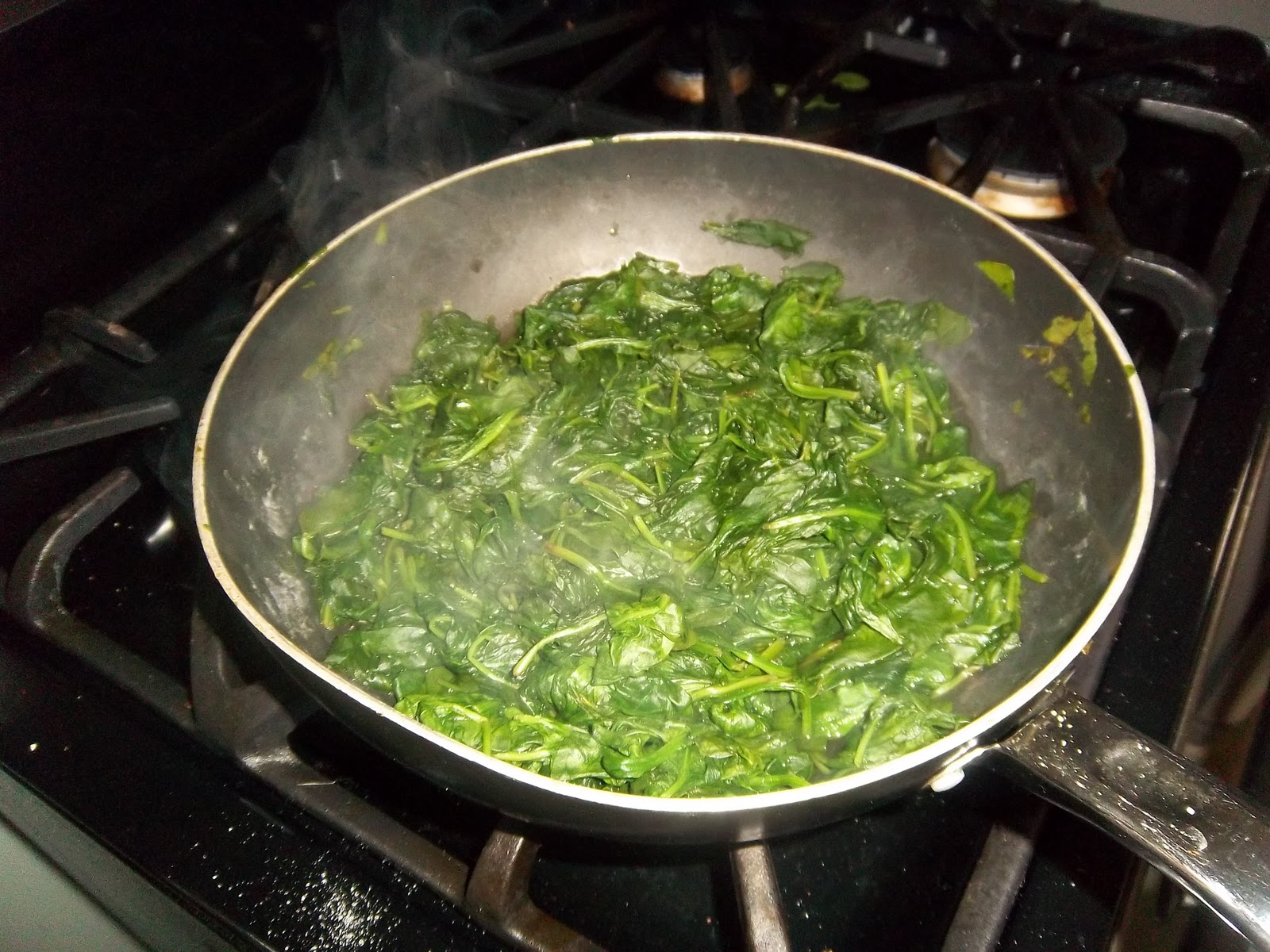
Begin by cooking 2 pounds of spinach in a pan with a little water and salt. Cover the giant pile with a lid and simmer until it collapses – about 5 minutes.
From this…
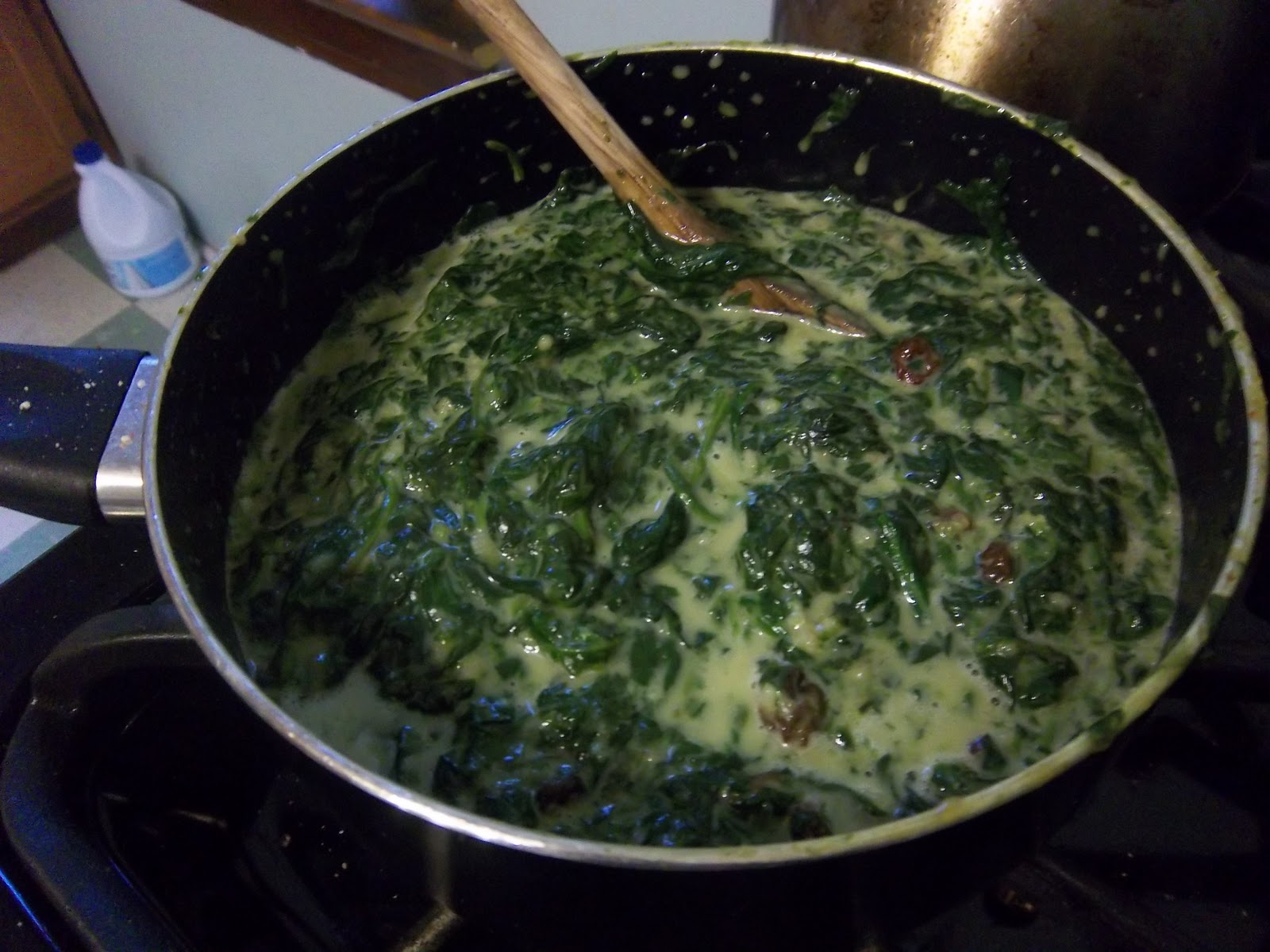
…to this!
Let it cool before draining and squeezing out any liquid, and then chop it.
Mix an ounce of breadcrumbs with ½ pint of single cream in a pan and slowly bring it to the boil. Meanwhile soak 2 ounces of currants or raisins in some warm milk. Into the cream, stir the spinach along with 1 or 2 ounces of macaroon crumbs (for a recipe see here), 2 ounces of butter, 2 whole eggs and two egg yolks, 2 to 3 tablespoons of sugar and the raisins and milk. Stir the green slurry over a low heat until everything is well-incorporated. Add more sugar or macaroon crumbs and grate in some nutmeg to taste.
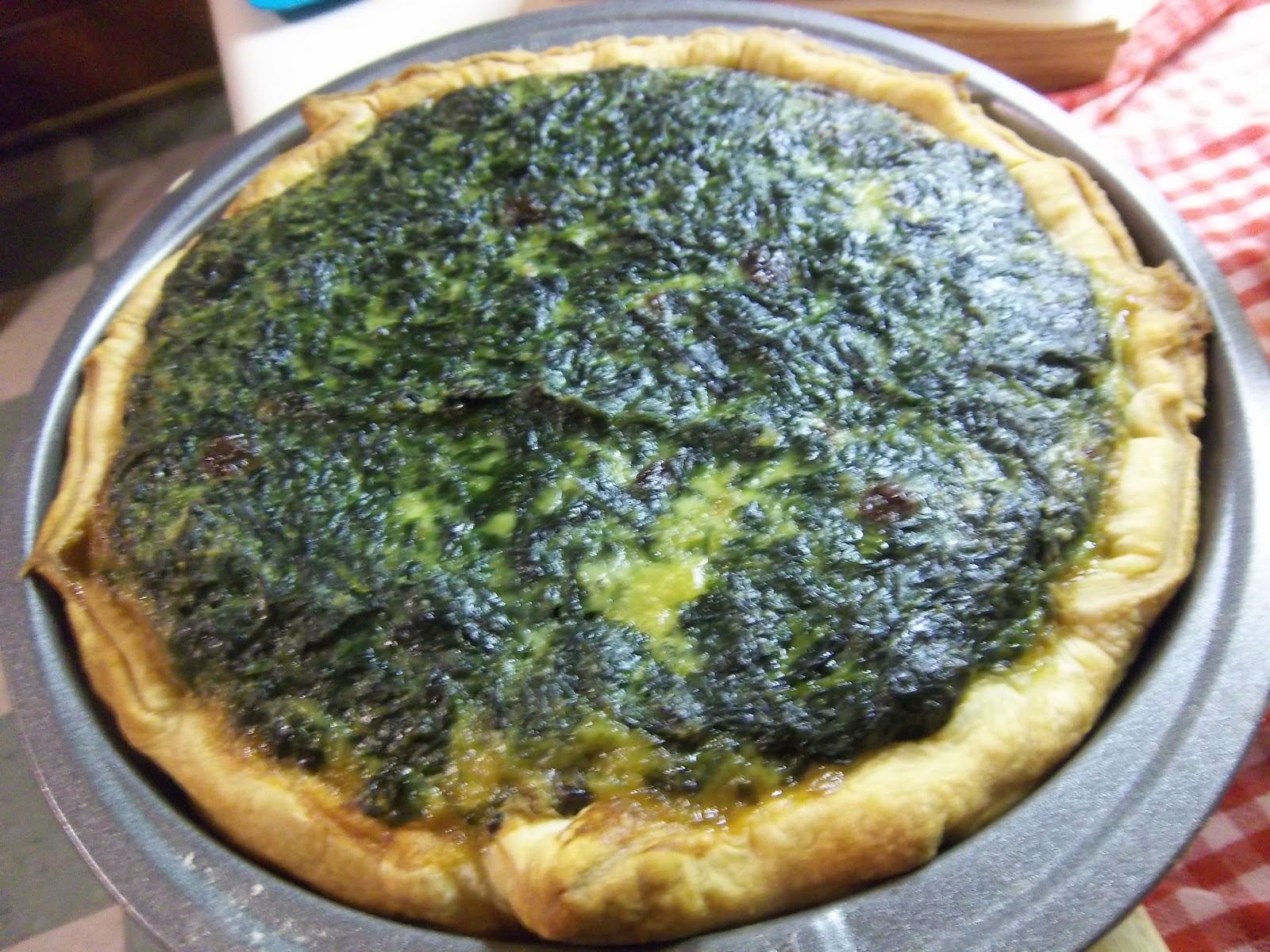
Line a 9 to 10 inch tart tin with some puff pastry and pour in the spinach mixture. Bake for 10 to 15 minutes at 220⁰C (425⁰F) until the pastry has begun the brown, and then turn the heat down to 180⁰C (350⁰F) bake until the filling is set, about 30 to 40 minutes.
This should be eaten hot or warm with some cream for pudding.
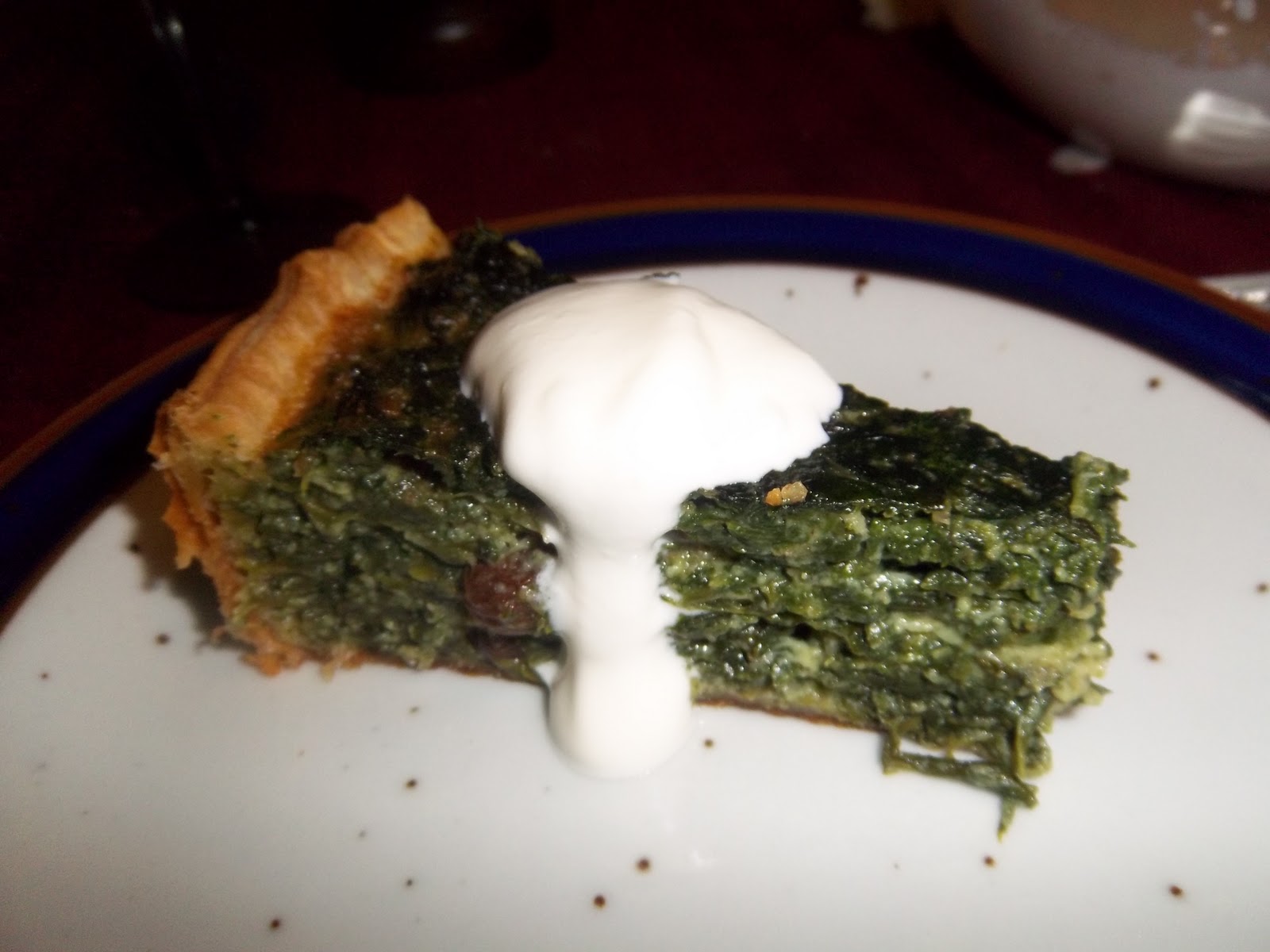
#329 John Evelyn’s Tart of Herbs. Well this was certainly a strange one and I haven’t made up my mind as to whether I liked it or not. There was no attempt at masking the flavor of the spinach, but it did marry surprisingly well with the fruit and other sweet things as well as the nutmeg. Even though everyone ate it quite happily we weren’t sure if it was a dessert, and after my fourth slice, I still wasn’t sure! I think it could be very successfully reproduced as an amuse-bouche or hors d’oeuvre though. An interesting winter-warmer, though maybe not for a pudding course. 7/10.

#328 Salmon in Pastry, with a Herb Sauce

This is a recipe that is inspired by the medieval love of combining fish and candied sweetmeats. Griggers says it is a ‘brave, but entirely successful blend’. We’ll see. Large medieval banquets had to contain dishes with lots of spice; after all how else could you display your vast wealth other than to use that new and exciting new spice, sugar? When first brought to Europe from India, sugar was considered a spice like any other and therefore medicinal. It lost its rank as a spice once it gained popularity as a more general addition to the dinner table; albeit a giant banqueting table.
The addition of the salmon, then, you might feel was also a mark of an ostentatious medieval lord. It is not the case, back in the day, before such things as pollution and overfishing, streams were teeming with fish like salmon. In fact they were so common on the River Mersey that people used to feed them to their pigs! The same, of course, goes for oysters too, and yet we can now buy a pound of sugar for 30 pence. How times have changed.
This dish is very attractive: a nice piece of fish wrapped in pastry with some spices and a nice piquant herb sauce containing some lesser used herbs, and it’s pretty easy to make to boot.
Ask the fishmonger for a 2 ½ pound tail piece of salmon and ask him or her to bone it. If you like, ask them to take off the skin (though I have never seen the point of this). If there isn’t a tail in a single piece, get two filleted tail ends of approximately equal size.
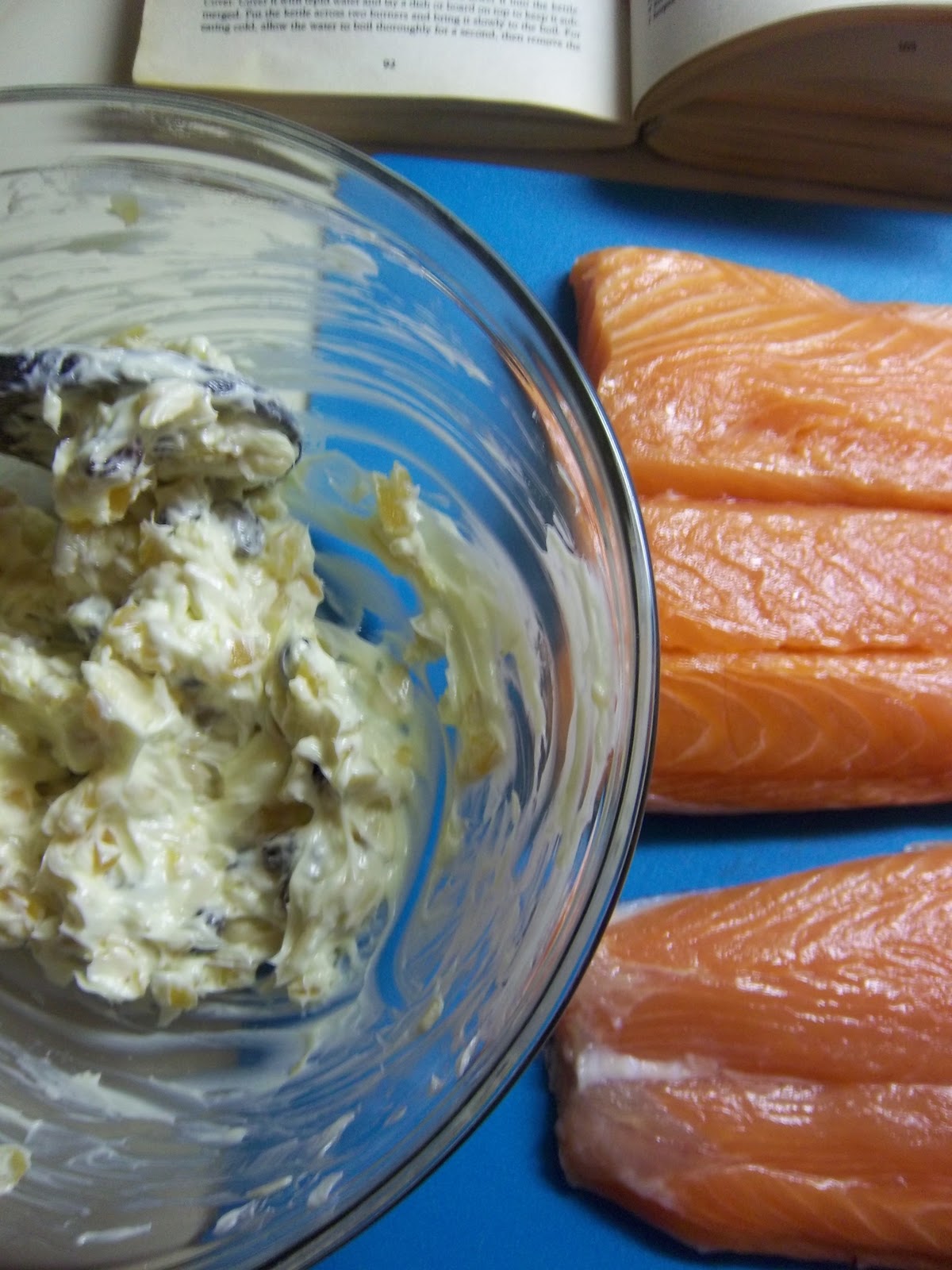
To make the sweet and spicy filling, beat 4 ounces of softened butter with 4 knobs of preserved ginger that have been chopped, a heaped tablespoon of raisins and  a rounded tablespoon of chopped, blanched almonds. Use half of the mixture to sandwich the two pieces of salmon together and then spread the remaining half over the top piece. Season with salt and pepper.
Now you are ready to encase the beast in pastry. Jane suggests using a shortcrust pastry made with 8 ounces of flour and 4 of fat, but I needed a lot more: I used a batch made of 14 ounces of flour and 7 of fat! I must have got a very large 2 ½ pound piece of salmon… Roll out a third of the pastry into a shape larger than the fish and place it on top. Next, roll out the rest and carefully place it over the fish, gluing it together with some beaten egg before trimming the edges and glazing the whole thing. Use the trimmings to ‘make a restrained decoration on top. There were a few small cracks in my pastry, but I hid them most cleverly with some pastry leaves that I placed here and there. I must say, I was quite impressed with my effort. Make 2 or 3 slashes on the top so that steam can escape and bake it for 30 to 35 minutes at 220C (425F).

Whilst the salmon cooks, you can get on with the sauce. Gently fry 2 chopped shallots, a heaped teaspoon of chopped parsley and a teaspoon of mixed chopped tarragon and chervil in 2 ounces of butter. When the shallots have softened, stir in a teaspoon of flour, then ½ pint of single cream (or half single-half double; American readers: heavy whipping cream is the thing to use here). Simmer for around 10 minutes, then season with salt and pepper and a teaspoon of Dijon mustard. Whisk 2 egg yolks with a couple more tablespoons of cream, turn down the heat in the pan and pour in. The sauce will thicken as the yolks start to cook – do not let the sauce boil, or your yolks will scramble. Finally, lift the whole thing by adding a good squeeze of lemon juice.

Place the salmon in its pastry on a hot dish; serve with the sauce in a separate sauceboat.’
#328 Salmon in Pastry, with a Herb Sauce. Another winner from Grigson; the medieval folk of England obviously knew what they were doing, and obviously weren’t all style, no substance. The salmon remained nice and moist and was perfectly cooked and really was complemented by its very sweet and slightly spiced butter basting. My only complaint would be that there wasn’t enough of the filling; I would have added at least an extra half again of the ginger and raisins. The sauce was excellent – creamy, yet light – tarragon and chervil are really delicious herbs that don’t get featured enough. This applies to chervil particularly, which seems to be in season at the moment as it’s cropping all over the place at the minute. A very good dish this one that could be made excellent with some minor changes. 8/10.

#327 Turkey and Hazelnut Soup

There doesn’t seem to be any history to speak of with this recipe, it seems it is just a way to use up the turkey carcass after Christmas or Thanksgiving, perhaps conceived by Jane Grigson herself. In my case, it was a way of using the huge amount of turkey stock I had in the freezer from the boiled turkey recipe. We don’t like waste here in Grigson Towers, so any way of putting any leftovers such as cooking liquors and carcasses are well-received.
It does use some nice wintertime ingredients: hazelnuts are usually in good supply along with the brazils, walnuts and almonds; there’s the fine herb chervil which I have tried and failed to grow myself. They’re a hardy plant and good for growing in autumn and winter. Unless it is me attempting cultivation. It is obviously in season now as I have seen them twice for sale over the last months or so.

This recipe gives calls for raw turkey breast, though some shredded left over leg meat from the roast would do perfectly as a substitute. Likewise, if hazelnuts are not to hand you can use chopped toasted almonds or chestnuts.
This recipe is for 4 to 6 people.

Bring 1 ½ pints of turkey stock to a boil with 8 ounces of raw minced turkey breast. Let it simmer for 3 or 4 minutes. Liquidise the soup and pass it through a sieve back into the pan after you have rinsed it. Jane does not mention what to do with all that turkey breast that won’t pass through the sieve – and there was plenty of it. It seemed a waste so I put some back in as it was still nice and tender.

Take a large egg yolk and 4 ounces of cream (weight, not volume) and whisk them together before adding a ladleful of hot soup to it. Pour in the stock mixture into the pan and stir over a medium heat until the soup thickens. Don’t let the soup boil, unless you want scrambled egg in it. Take the soup off the heat and add some chopped, fresh chervil (dried is allowed if you can’t get fresh), ½ a teaspoon of paprika, 3 ounces of chopped grilled or roasted hazelnuts and 2 ounces of butter. Lastly, season with salt and black pepper.
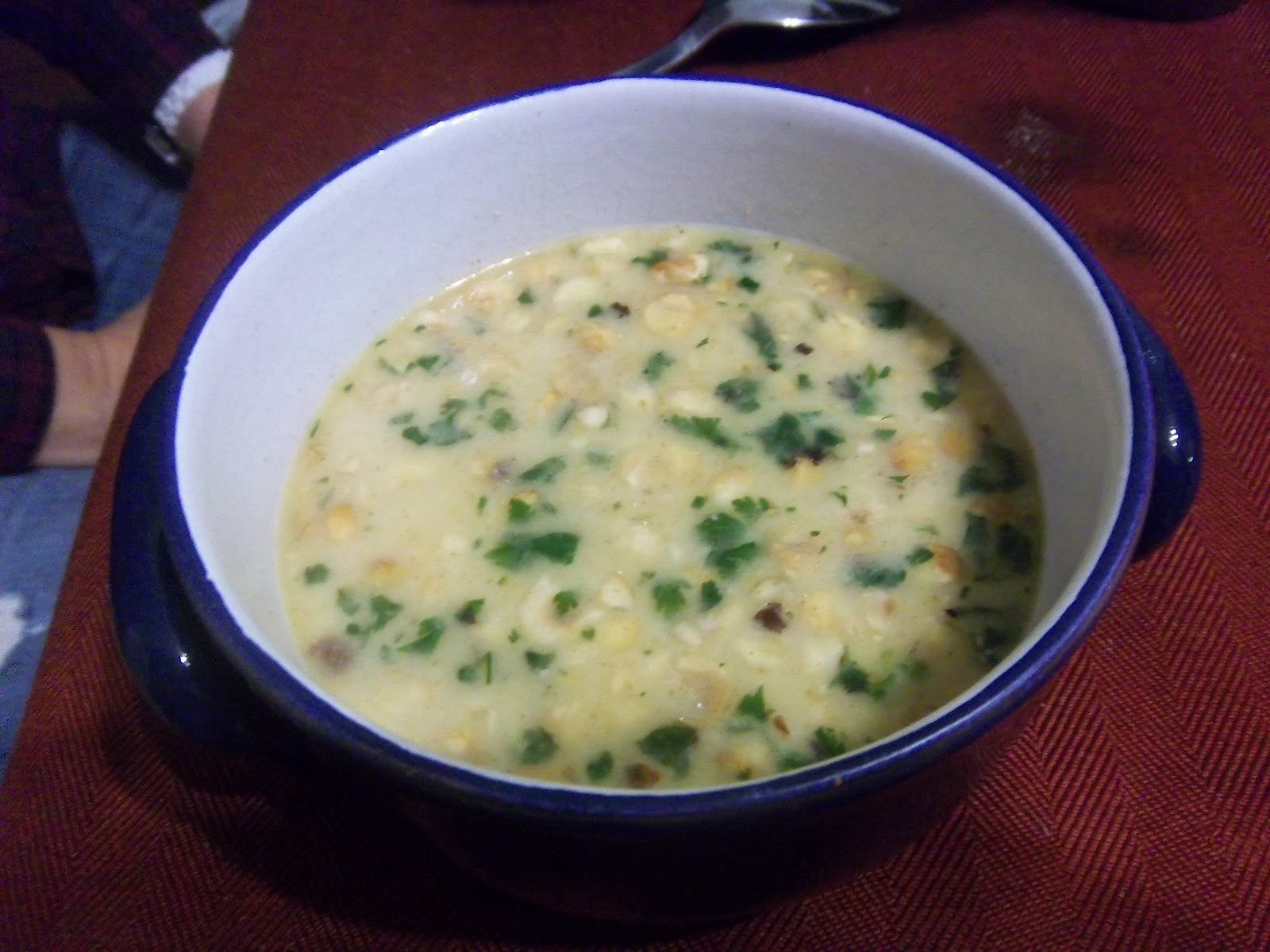
#327 Turkey and Hazelnut Soup. This soup was okay; inoffensive and homely, but rather bland. I imagine that I would like it if I were convalescing after a bout of the ‘flu. Not a bad soup, but certainly not an amazing one either. Next time I have some turkey stock, I shall make a risotto. 5.5/10

#326 John Farley’s Fine Cheesecake

My friends Ashley and Jason were throwing a bit of a party last weekend and it was a pot luck party, where everyone brings some food. We don’t have such things in England, but I shall try and introduce them as they are a great idea. I thought it would be a good opportunity to sneak in a couple of historical desserts from the eighteenth century, so I made the delicious sweetmeat cake and this cheesecake.

When one thinks of cheesecakes, one wouldn’t think of England – there’s plenty in mainland Europe and America of course – yet we have been making them for a quite a while, the Yorkshire curd tart being the most well-known. John Farley’s has some delicious, and very eighteenth century ingredients: sweet macaroons (the almond kind, not the coconut kind), fragrant yet earthy ground almonds and heady rose or orange-flower water. If you can’t find almond (‘French’) macaroons anywhere, here is a recipe. It is a little strange in that it should be served warm; all the cheesecakes I have ever eaten (baked or not) have always been served cold.
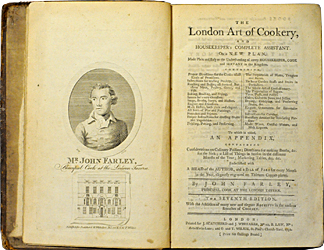
These sorts of puddings were very popular – there are no less than seven cheesecake recipes in Elizabeth Raffald’s 1769 book, The Experienced English Housekeeper.  John Farley’s book The London Art of Cookery was published in 1783 and included eight cheesecakes, with most of the recipes being copied word-for-word from Raffald’s book. The cheeky bleeder. I don’t think that he was trying to pass the recipes off as his own, he was just producing a compendium of recipes suitable for housewives and servants. He wrote it whilst he was head chef at The London Tavern. I think I will try some more of these cheesecake recipes.

To make the cheesecake, begin by lining a 9 inch flan tin with puff or shortcrust pastry. Griggers says that in the eighteenth century puff pastry would have been used, so I went with that so the cheesecake would be as authentic as possible.

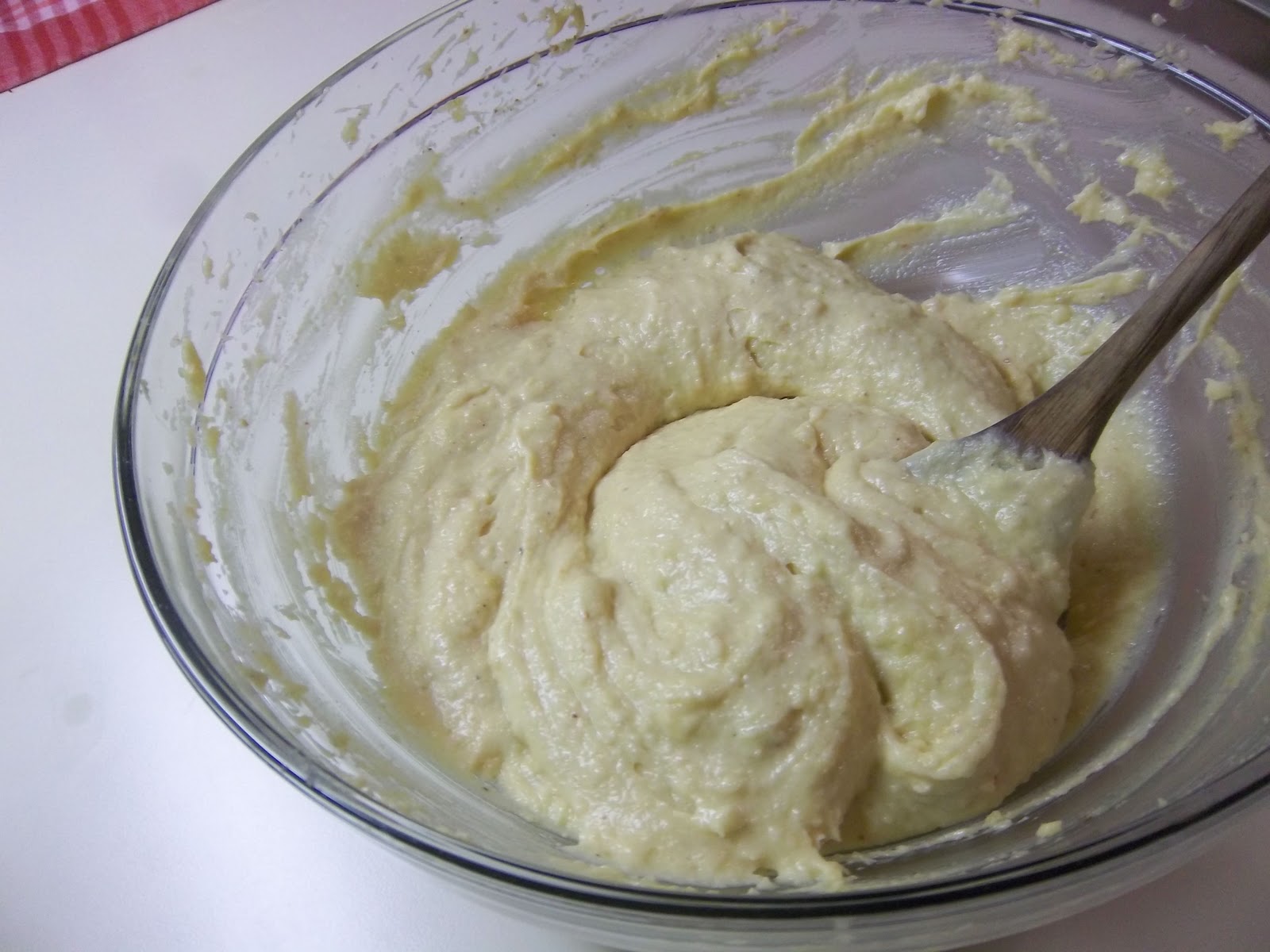
Now beat the filling ingredients together: 8 ounces of full fat cream cheese, 2 big tablespoons of double cream, a tablespoon of orange flower or rose water, 4 large egg yolks, 2 ounces melted slightly salted butter, 3 ounces of crushed macaroon crumbs, 3 ounces of ground almonds, 3 ounces of caster sugar and up to half a freshly ground nutmeg. Whew!

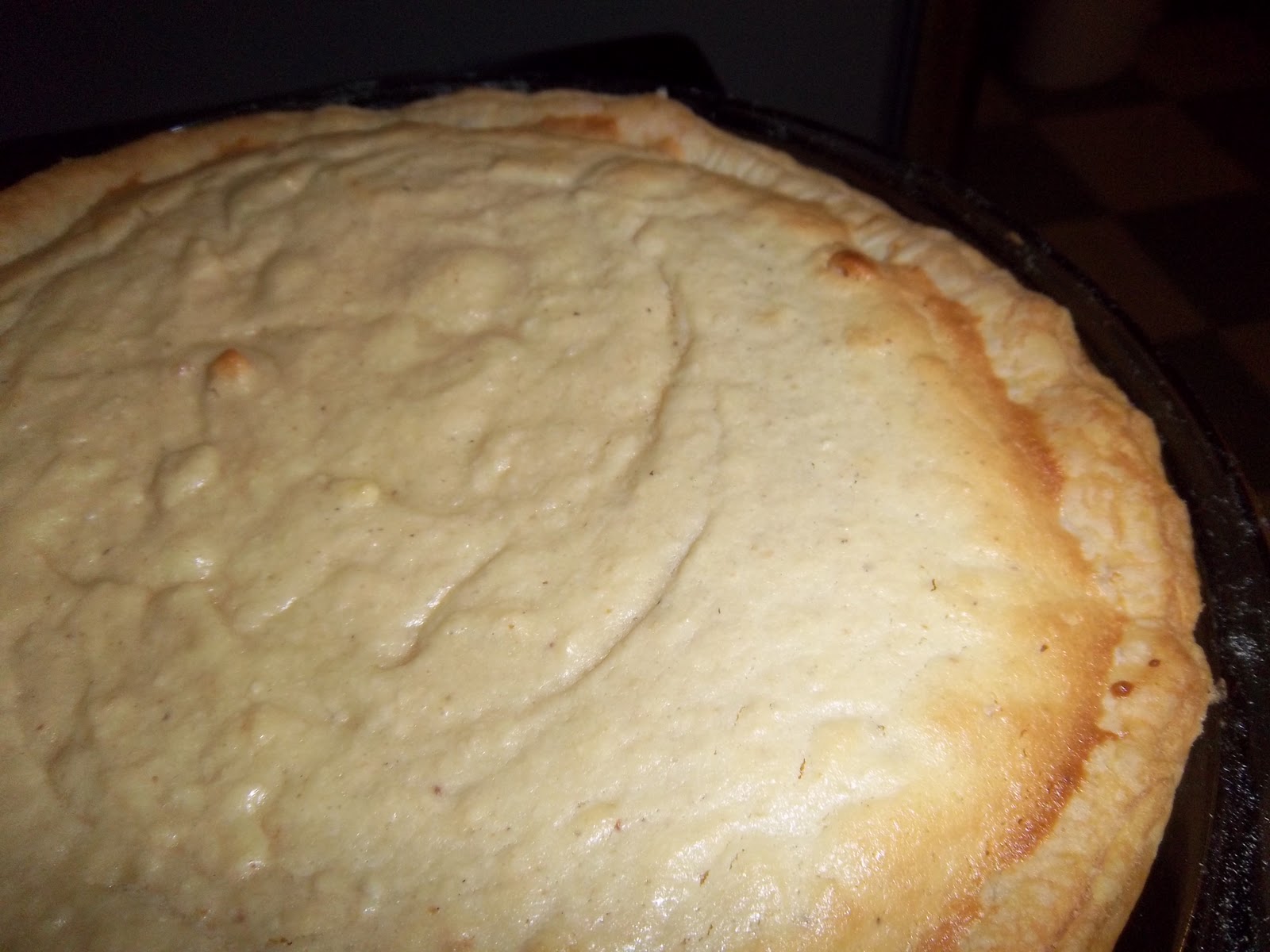
Turn the mixture into the line tart tin and bake at 180C (350F) for 30-40 minutes until the top is nicely browned. Eat the cheesecake hot or warm, with cream.
#326 John Farley’s Fine Cheesecake. It may look a little pale and pasty, but this really was a fine cheesecake indeed! The filling was not of a typical baked cheesecake because of all the almonds and macaroons in there. The cheese flavour was definitely present though as was a hint of perfume from the rose water. It all certainly suited modern tastes. Eating it warm seemed like a strange idea, but it was very good, especially with some cool cream poured over. We need to bring back the English cheesecake! 9/10