#337 Eel Pie

This recipe puts me three-quarters of the way through the book! Who’d have thunk I’d still be ploughing through it!?

The fourth and final eel recipe from the book just in time for Good Friday, hopefully it will be better than the third which was a disaster…

Eel pies or pasties are a food that has a very long history in Britain. Sometimes they were just simply unskinned eels, herbs, spices and water covered with a ‘coffin’ of pastry, probably eaten as a stew rather like water-souchy; the pastry simply serving as a vessel within which to cook the fish. The earliest mention of eel pie I have found comes from an article by A. Peripatetic in a 19th Century periodical called London Society:
East-Farleigh lies in the hundred of Maidston, and was given to the prior and monks of Christ-Church in Canterbury, by Ediva the Queen, mother of the two kings Eadred and Edmund in the year 941, and was…to find the convent with eel-pies.
Eels are associated the most with London and there is a great old proverb that I discovered is used in Shakespeare’s King Lear, which I can really relate to:
Lear:     Oh me, my heart, my rising heart! but down.
Fool:     Cry to it, nuncle, as the cockney did to the eels, when she put
Them i’the paste alive; she rapt ‘em o’the coxcombs with a stick,
And cry’d, Down, wantons, down!

In other words, she  was so squeamish about killing the eels for her pie, she tried to bake them alive, making the whole situation worse and much more stressful than it would have been had she killed them. The first time I made eel I had to do away with them myself and it was pretty distressing (see here).

King Lear and Fool

I’m quite glad to have come to the end of the eel recipes to be honest because I was starting to feel rather guilty about eating a fish whose numbers have been in sharp decline. Anyways, if you do come across an eel for sale you may as well purchase it and turn it into a little piece of history as I did:
The first thing you need to make is the pastry – an unusual one using grated butter and cream that is somewhere between a flaky pastry and a shortcrust.
Place a block of butter in the freezer until it is well-chilled, but not frozen. Meanwhile measure out 6 ounces of flour and mix in a good pinch of salt. Next grate the butter over your kitchen scales until you have 3 ounces and add this to the flour.
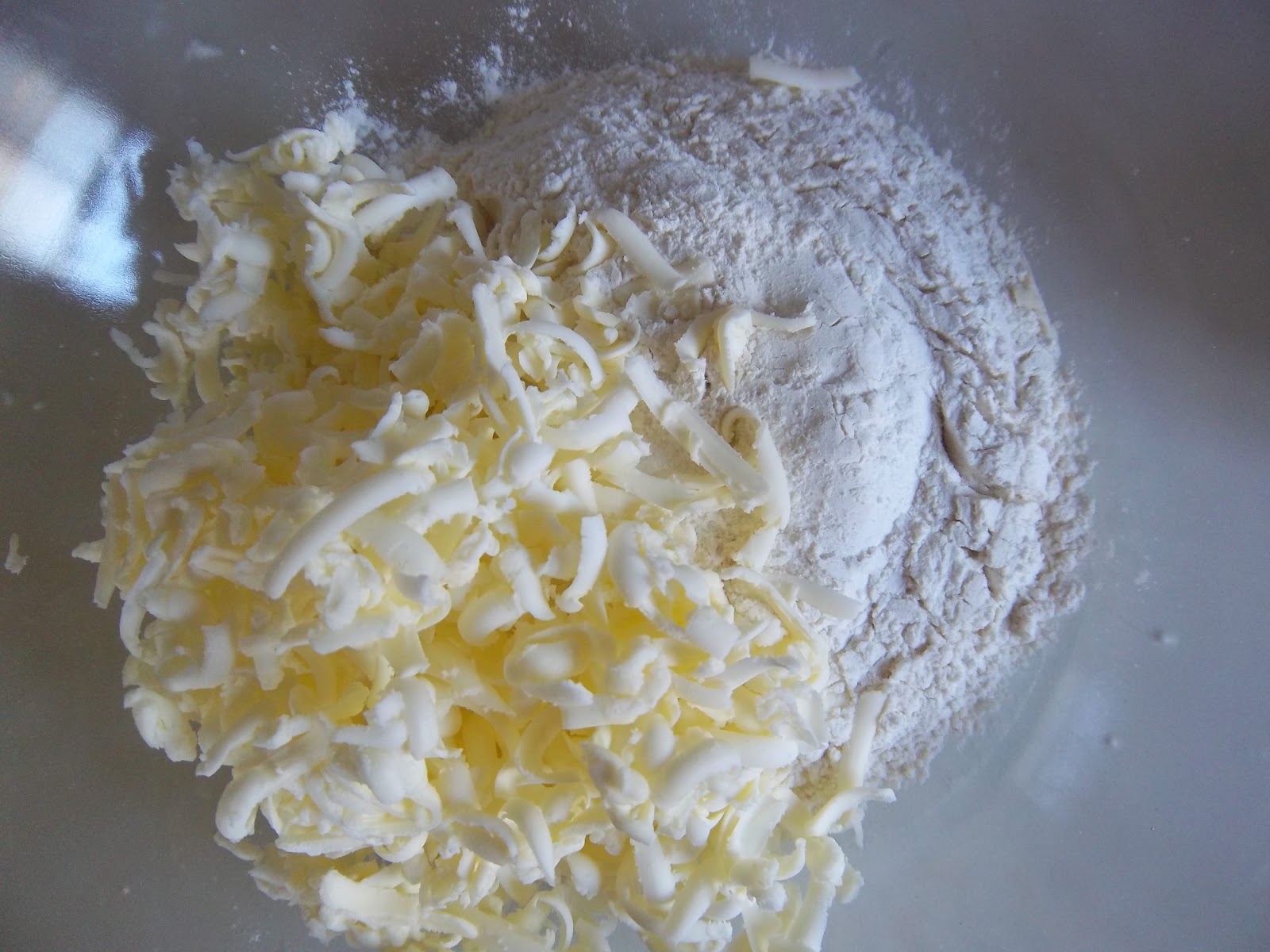
Add enough cream – use either single or soured – or water to form a good soft dough, stirring in your liquid of choice at first with a knife then bringing it together with your hands. I noticed that the flour required more cream than it would have needed if using water. Cover and chill in the fridge for at least an hour. A note to Americans:  Soured cream in the USA is far too thick as an option, so go for something like half-and-half or heavy cream.
Peel and finely chop four shallots and soften them slowly in butter in a wide shallow pan. When cooked, tip them into a shallow pie dish or plate with a capacity of around 2 pints.
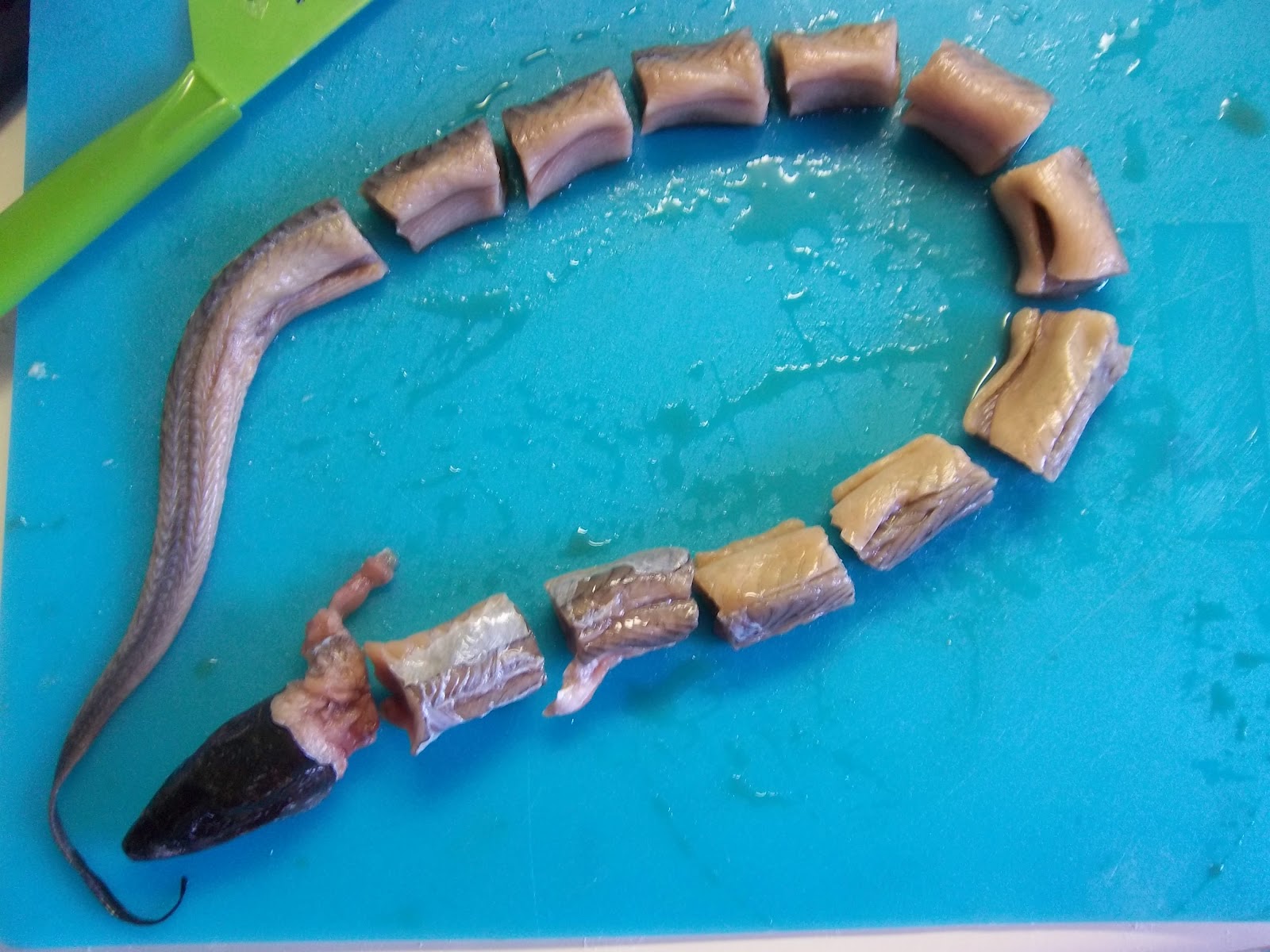
Now prepare the eels, you need 1 ½ pounds altogether (if your eels are alive, have a gander at this post and also this one, for the good it’ll do you). The best way to skin them I have found is to cut around the base of the neck, then hold down the head firmly with a dry cloth and pull the skin off in one long piece with a pair of pliers like a slender stocking. Trim the thin ends of the tails and add them to a pan along with the heads to 18 fluid ounces of chicken or fish stock, and simmer them together for around 20 minutes. In the meantime cut the eels into one inch pieces.
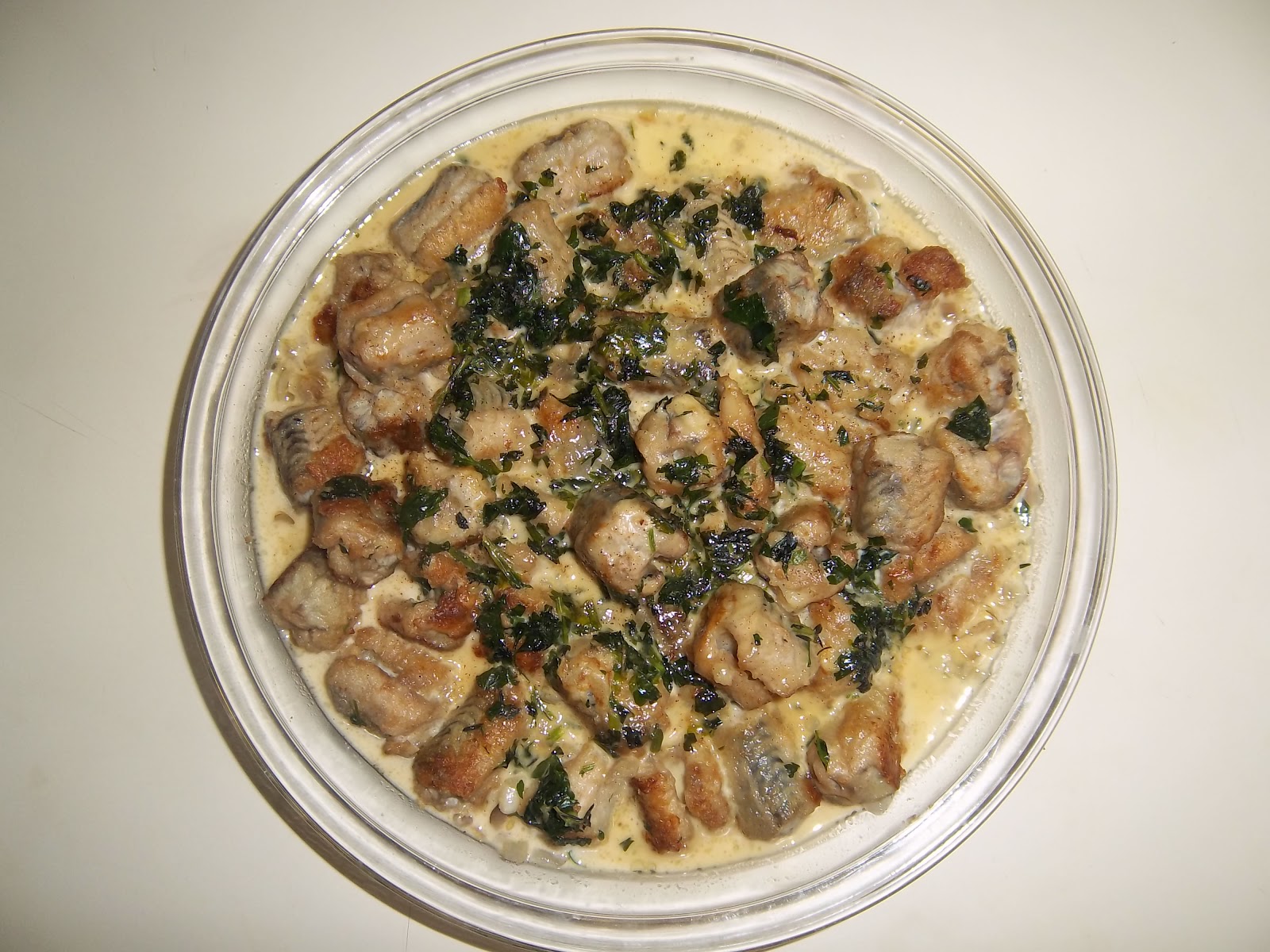
Coat the eel pieces in seasoned flour and fry them, in batches if necessary, browning them well. Add more butter if need be. Scatter the eel pieces over the shallots and deglaze the pan with the eel-flavoured stock, and reduce it by about a half, then add 2 tablespoons of medium dry sherry and 5 fluid ounces of double cream. Boil for 2 more minutes before adding ½ teaspoon of thyme and 3 tablespoons of chopped parsley. Season with salt, pepper and lemon juice. Add a further tablespoon of sherry if you fancy. Pour the sauce over the eels and allow the whole thing to cool.
Peel and slice two hardboiled eggs and scatter them over the eel, then roll out your pastry, gluing it to the rim of the dish with some more cream. Add a hole or a slit for the steam to escape and decorate with the trimmings – I went with a very complex eel motif of my own design. Glaze with cream and bake at 220C (425F) until the pastry has turned an appetising shade of brown – around 10 or 15 minutes, then turn down the heat to 180 (350F) for 20 minutes.
Grigson suggests serving the pie with peas or a chicory salad, though I just went with a mixed salad.
#337 Eel Pie. A very good recipe this one – especially if you are a newcomer to eel. The sauce was nice rich, and the eel tender. The good thing about eel is that it has a very simple anatomy so the bones are fairly easy to find and remove. The sauce was a little too thick and overpowered the delicately-flavoured eel a bit. It deserves a healthy 6.5/10.

#328 Salmon in Pastry, with a Herb Sauce

This is a recipe that is inspired by the medieval love of combining fish and candied sweetmeats. Griggers says it is a ‘brave, but entirely successful blend’. We’ll see. Large medieval banquets had to contain dishes with lots of spice; after all how else could you display your vast wealth other than to use that new and exciting new spice, sugar? When first brought to Europe from India, sugar was considered a spice like any other and therefore medicinal. It lost its rank as a spice once it gained popularity as a more general addition to the dinner table; albeit a giant banqueting table.

The addition of the salmon, then, you might feel was also a mark of an ostentatious medieval lord. It is not the case, back in the day, before such things as pollution and overfishing, streams were teeming with fish like salmon. In fact they were so common on the River Mersey that people used to feed them to their pigs! The same, of course, goes for oysters too, and yet we can now buy a pound of sugar for 30 pence. How times have changed.
This dish is very attractive: a nice piece of fish wrapped in pastry with some spices and a nice piquant herb sauce containing some lesser used herbs, and it’s pretty easy to make to boot.
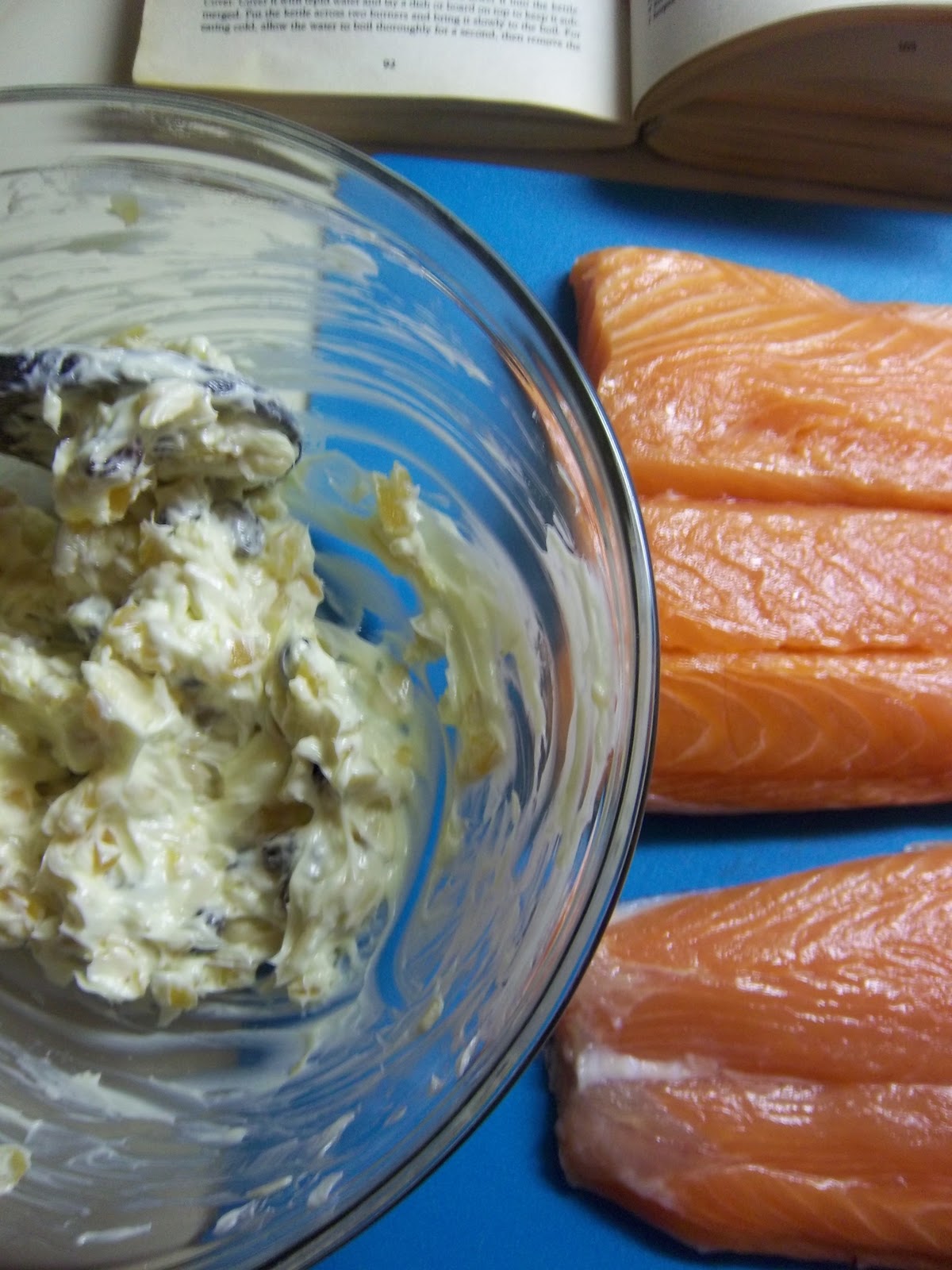
Ask the fishmonger for a 2 ½ pound tail piece of salmon and ask him or her to bone it. If you like, ask them to take off the skin (though I have never seen the point of this). If there isn’t a tail in a single piece, get two filleted tail ends of approximately equal size.
To make the sweet and spicy filling, beat 4 ounces of softened butter with 4 knobs of preserved ginger that have been chopped, a heaped tablespoon of raisins and  a rounded tablespoon of chopped, blanched almonds. Use half of the mixture to sandwich the two pieces of salmon together and then spread the remaining half over the top piece. Season with salt and pepper.
Now you are ready to encase the beast in pastry. Jane suggests using a shortcrust pastry made with 8 ounces of flour and 4 of fat, but I needed a lot more: I used a batch made of 14 ounces of flour and 7 of fat! I must have got a very large 2 ½ pound piece of salmon… Roll out a third of the pastry into a shape larger than the fish and place it on top. Next, roll out the rest and carefully place it over the fish, gluing it together with some beaten egg before trimming the edges and glazing the whole thing. Use the trimmings to ‘make a restrained decoration on top. There were a few small cracks in my pastry, but I hid them most cleverly with some pastry leaves that I placed here and there. I must say, I was quite impressed with my effort. Make 2 or 3 slashes on the top so that steam can escape and bake it for 30 to 35 minutes at 220C (425F).

Whilst the salmon cooks, you can get on with the sauce. Gently fry 2 chopped shallots, a heaped teaspoon of chopped parsley and a teaspoon of mixed chopped tarragon and chervil in 2 ounces of butter. When the shallots have softened, stir in a teaspoon of flour, then ½ pint of single cream (or half single-half double; American readers: heavy whipping cream is the thing to use here). Simmer for around 10 minutes, then season with salt and pepper and a teaspoon of Dijon mustard. Whisk 2 egg yolks with a couple more tablespoons of cream, turn down the heat in the pan and pour in. The sauce will thicken as the yolks start to cook – do not let the sauce boil, or your yolks will scramble. Finally, lift the whole thing by adding a good squeeze of lemon juice.

Place the salmon in its pastry on a hot dish; serve with the sauce in a separate sauceboat.’
#328 Salmon in Pastry, with a Herb Sauce. Another winner from Grigson; the medieval folk of England obviously knew what they were doing, and obviously weren’t all style, no substance. The salmon remained nice and moist and was perfectly cooked and really was complemented by its very sweet and slightly spiced butter basting. My only complaint would be that there wasn’t enough of the filling; I would have added at least an extra half again of the ginger and raisins. The sauce was excellent – creamy, yet light – tarragon and chervil are really delicious herbs that don’t get featured enough. This applies to chervil particularly, which seems to be in season at the moment as it’s cropping all over the place at the minute. A very good dish this one that could be made excellent with some minor changes. 8/10.

#313 Jellied Eel Mousse with Watercress Sauce

This is one of the recipes that when I started this project, really made me shudder. However, as I have cooked a couple of eel recipes, I have discovered that I quite like the slippery critter and it no longer seemed such a challenge. Plus all of the weird recipes thus far have turned out pretty good and I have lost all squeamishness; I have a philosophy that in rich countries people eat things because they taste good, not because they need to simply survive.

This recipe is an update of the famous London dish – jellied eels. I have never tried them before and thought it rather a shame that the classic recipe isn’t in the book. Jellied eel is particularly associated with the East End of London though it was eaten throughout the city and appeared sometime in the eighteenth century. At that time, the Thames was crawling with eels and therefore many, many recipes were created. When eel consumption reached a peak during the Victorian era, the Thames had become pretty disgusting with pollution and there were not many eels around, so they had be imported from Ireland. These days, most Irish eels are exported to Holland.

If you wanted to buy jellied eels in London, you would have had to go to an Eel Pie and Mash House. There not many around – they declined in number from over a hundred after the Second World War to just a handful today. The most famous – and London’s oldest – extant Eel and Pie House is Manze’s in Peckham. I have never been to one of these places, but I shall try my best to frequent Manze’s next time I pop down to London. I doubt if they will ever regain popularity, even though eels have now returned to the River Thames.

Inside Menzie’s (photo from The Guardian)

This is an ‘updated’ recipe from chef Guy Mouilleron, who apparently thought of an eel slithering through a bank of watercress and thought the two might might together. The recipe is outdated; fish mousses are certainly a thing of the 1970s and 1980s; when English Food was first published.

Eels are quite difficult to get hold of, but the massive Asian supermarket in St Louis has farmed live ones – luckily I didn’t have to do away with them as I had to for the first time I cooked an eel dish. There is one more eel dish to do in the book, so I suppose I shall be trying that one soon.

To make the mousse, you need to prepare your eels. You’ll need around 2 ½ pounds of eel altogether. If you can get the fishmonger to skin and fillet them for you, all’s the better. I didn’t have such a luxury, but found it quite easy now that I have had certain amount of experience with eel preparation. First of all, give them a wash and wipe away any slime that may remain on the skin. To skin an eel, you first need to cut through the skin all around its neck, behind the gills. Next, either nail the head to a wooden chopping board or grasp the head with a tea-towel. Now you need to pull on the cut skin and peel the skin off like a stocking. It is quite difficult to get a purchase, so sprinkle the neck liberally with salt to create some much-needed friction. Once skinned, it is pretty easy going after that; gut it, cutting from the head-end to an inch or so past the vent so that the kidneys as well as the other internal organs can be removed. Filleting was a bit tricky – but really it was just like filleting any fish really. Use a sharp knife and cut from the head end to the tail end, pressing down on the fish with your other hand, which creates pressure and makes the cut much easier to make.

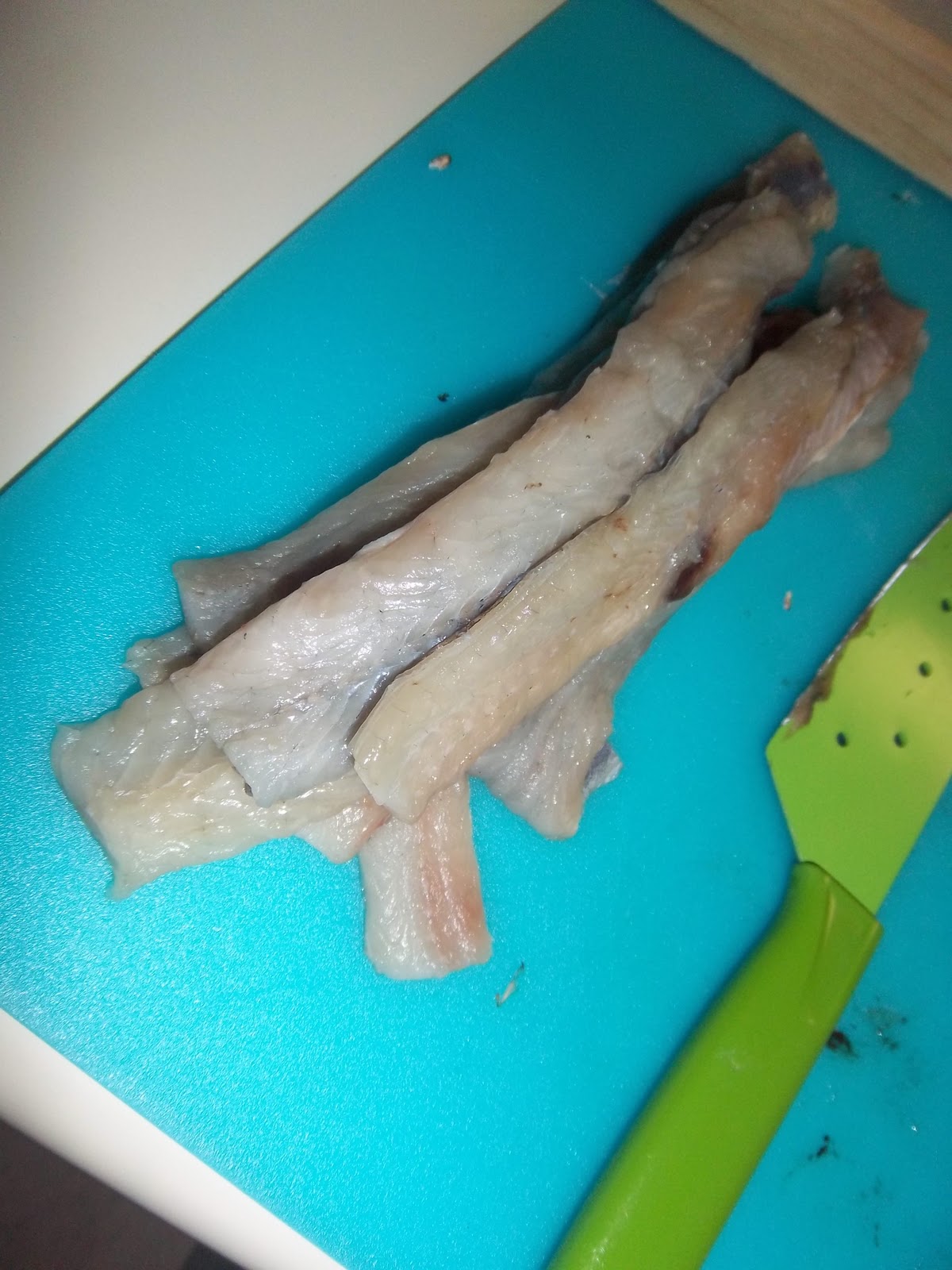
Cut away about a third of the messy parts and use trimmings to make the mousse itself.
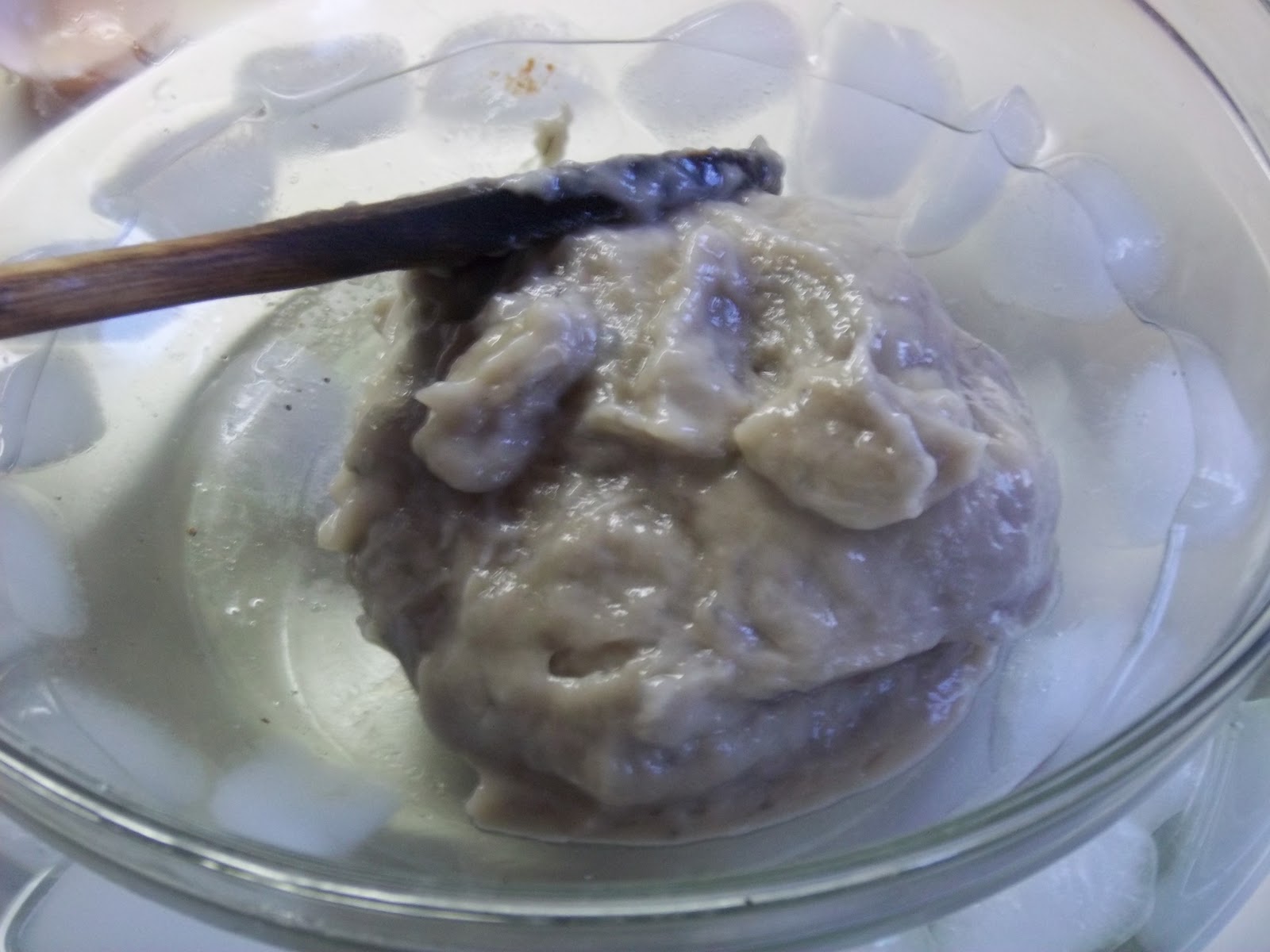
To do this, you need to liquidise them in a blender along with three egg whites. You will produce a rather bad-looking blob of grey matter.
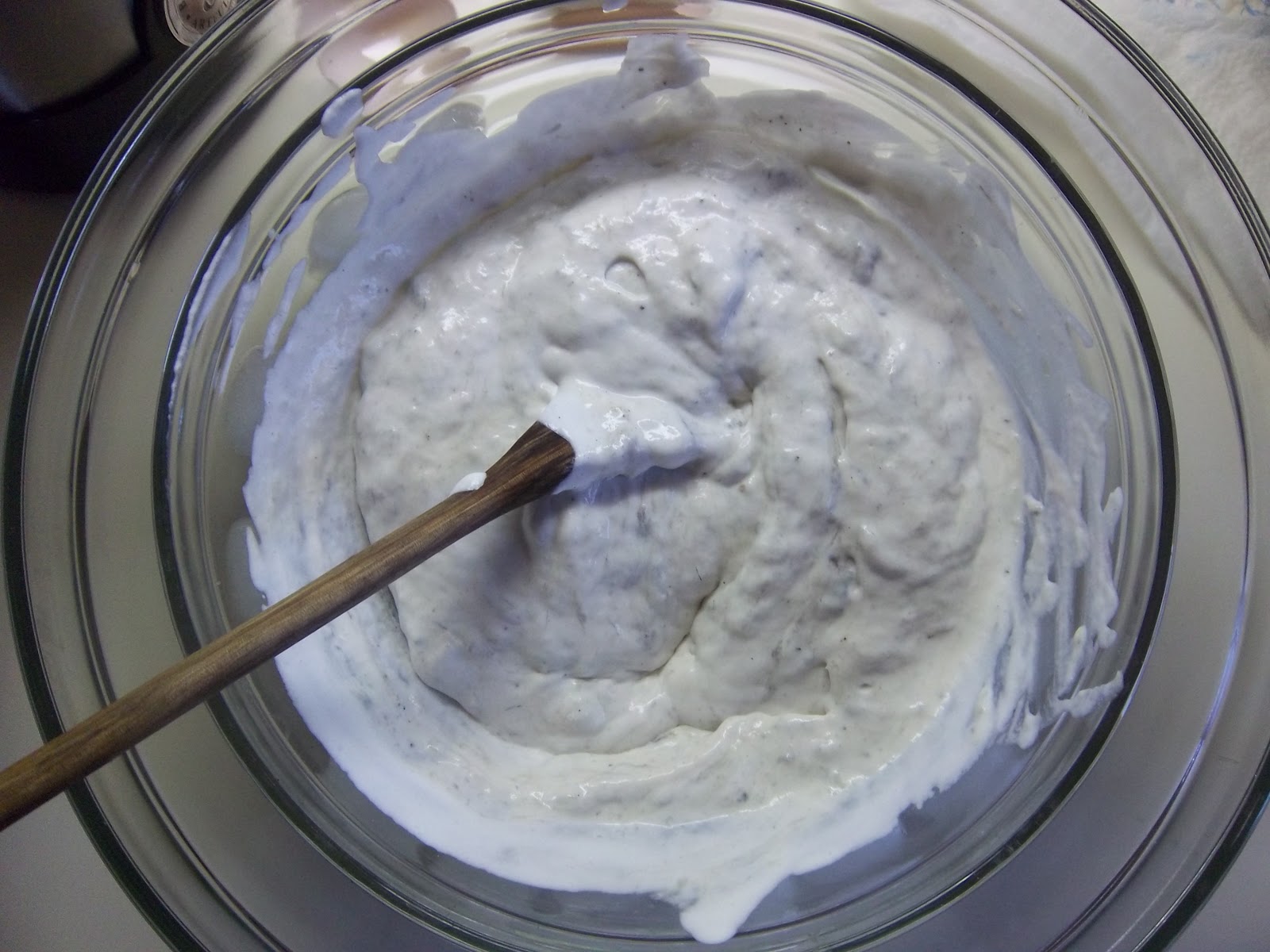
Place it in a bowl that is sitting in iced water. Whip ¾ of a pint of double cream until it is thick, but not stiff, and fold it into the eel mixture slowly. Season the purée and the neat eel pieces with salt, pepper and nutmeg.
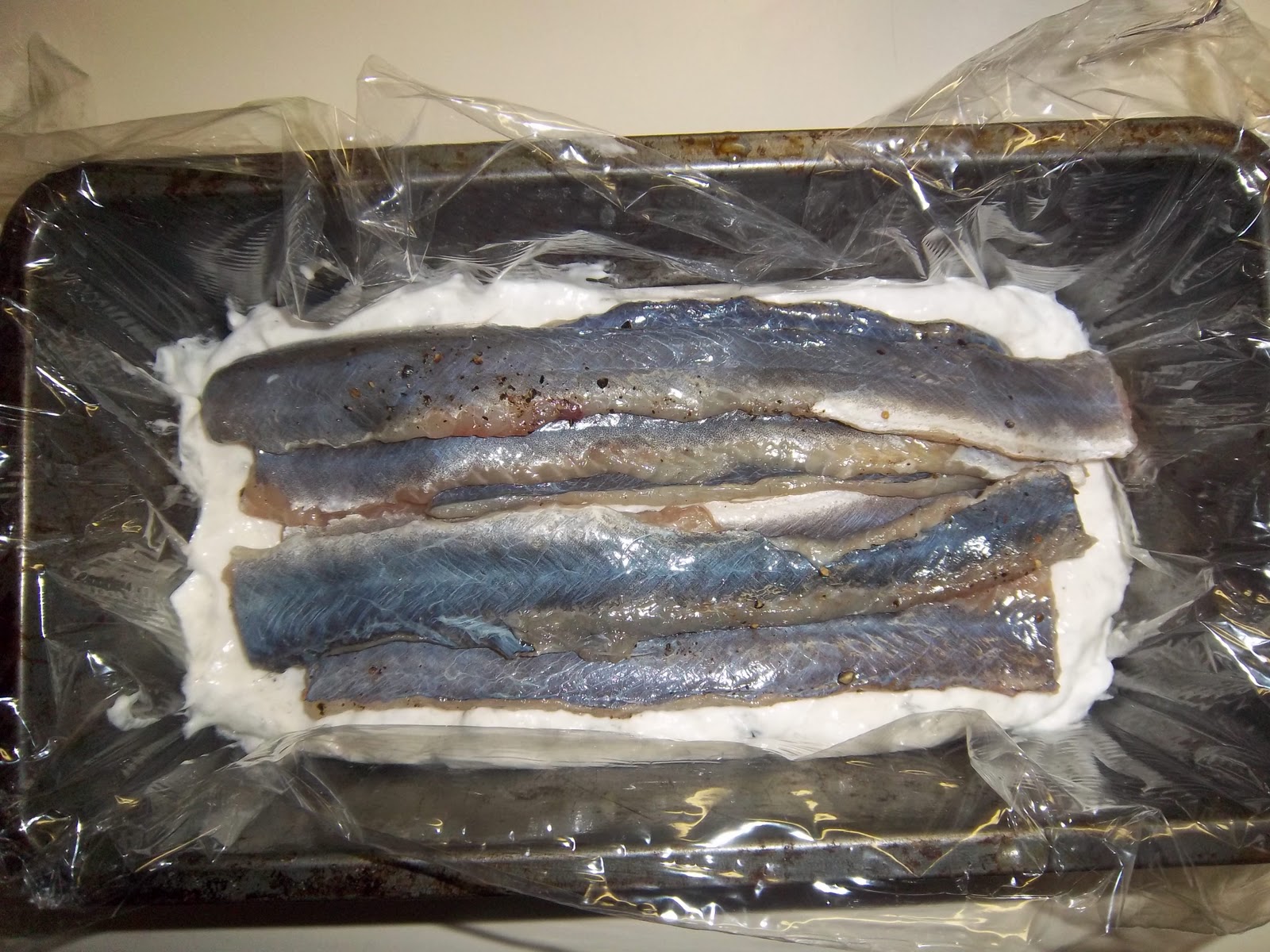
All is prepared now for the construction of the mousse: you need to use a terrine for this, or failing that, a small loaf tin. If you want to turn out the mousse onto a serving dish, it is best to line it with cling film (don’t worry, it won’t melt). Now spread a third of the mixture over the bottom of the terrine and then add half of the eel fillets, then more mixture and so on, until all is used up.

Cover the terrine or tin with a double-layer of foil and then steam it for 1 ¼ hours. I used a fish kettle for this, but if you don’t have something appropriate, you can pop it in a roasting tin containing boiling water and bake it at 160-180C (325-350F). When cold, put it in the fridge overnight.

The next day, make the sauce. You need a good-sized bunch of watercress. From the bunch, pick and reserve enough leaves to make around a tablespoon when chopped. The rest, liquidise in the blender, using the smallest amount of water possible. Pass the watercress slurry through a sieve and add ¼ pint of double cream and whisk it until it thickens. Season and stir through the reserved, chopped leaves. Serve a slice of the mousse with a generous spoonful of the sauce.

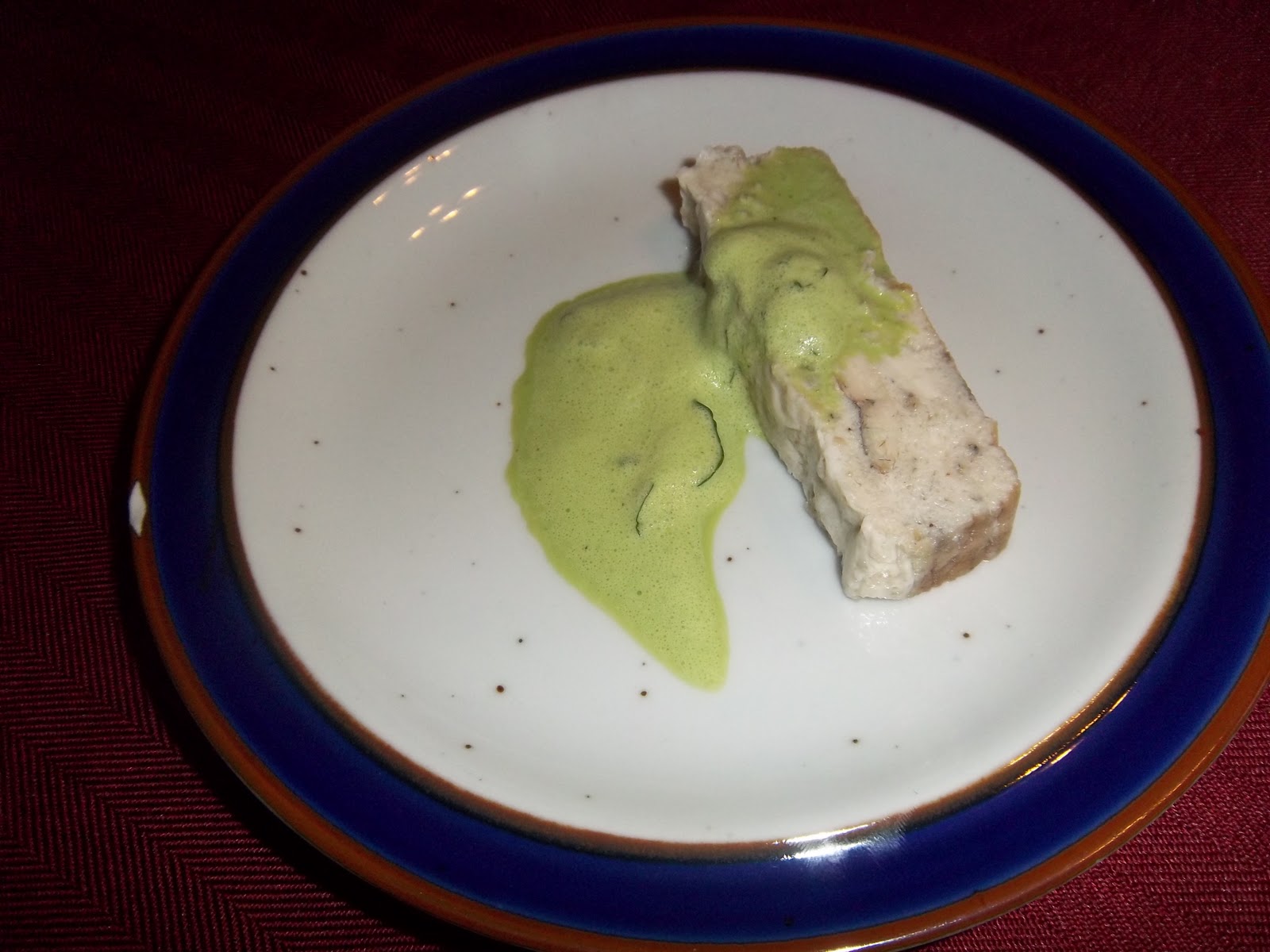
#313 Jellied Eel Mousse with Watercress Sauce. My God, what a sight that one was! It looked like a massive chunk of cat food and the sauce was so garish. The taste of the mousse wasn’t too bad, but the texture seemed so wrong. If it had been eaten warm as a creamy stew, it probably would have been delicious. The mild fish and the grassy watercress did not go together in my opinion. A big shame because was waiting to be surprised by its loveliness. I think I would have been happier with some proper jellied eels. Keep the fish mousse where it belongs: in the past! 2/10

#310 Smoked Mackerel

There are ingredients for recipes in the book that I really thought I wouldn’t be able to find, and one of those is smoked mackerel. Smoked mackerel was a new addition to English cuisine at the time of writing English Food and these days it is quite easy to find in supermarkets. So why is there a problem? Well, Griggers says to keep away from the hot-smoked (i.e. cooked) mackerel as she says it often ends up as mush; no, only cold-smoked mackerel will do. When I lived in Britain, I had no luck finding anywhere that sells it. However, here in Saint Louis, as I was having a walk around Global Foods – a large international food market – what did I happen upon just sat there in the refrigerator as bold as brass? Yes, a large cold-smoked mackerel. It is amazing what you find when you’re not looking. It turns out that cold-smoked mackerel is very popular in Eastern Europe. It obviously didn’t catch on that well in England, though Griggers gets full marks for trying to push it.

Like many recipes in the Cured Fish section of the Fish chapter, this isn’t really a recipe, as there is no cooking involved, it’s really advice on how best to serve it.


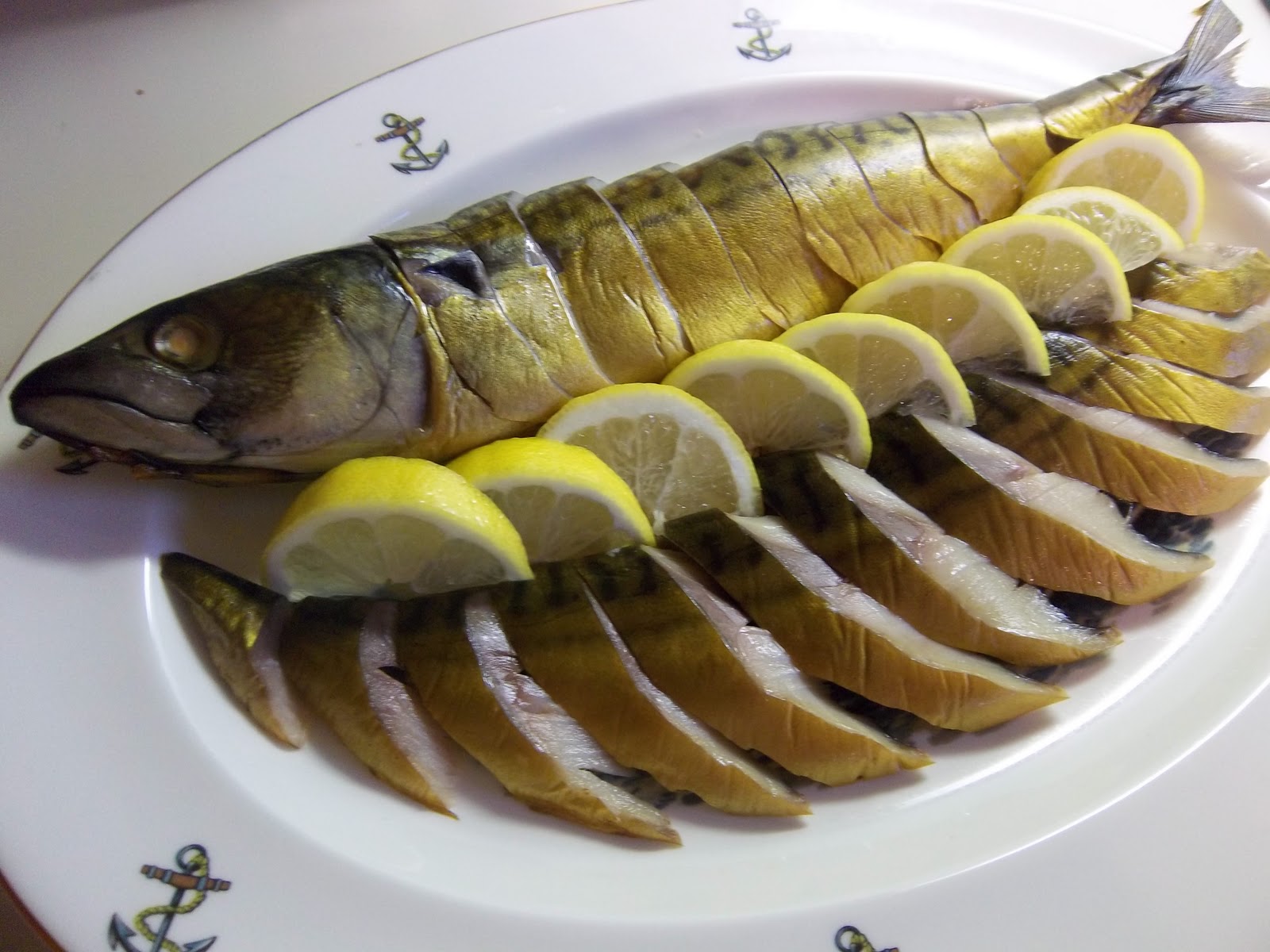
First you need to fillet the fish, removing any bones, and arrange pieces of the fillet on a plate. I was pretty impressed with my presentation here; I’m not very good at that sort of thing normally. She suggests serving the mackerel with lemon quarters and brown bread and butter. Because there was no cooking involved, I felt it was a bit of a cop-out recipe, so I baked some bread myself. Jane also suggests making a gooseberry sauce flavoured with horseradish. There is zero chance of finding gooseberries here in Missouri so I couldn’t do that part, but it was just a suggestion, so I reckon I can let myself off…


#310 Smoked Mackerel. A delicious fish it was, no wonder Grigson wanted to get us all eating it. It was very much like eating smoked sashimi, which is certainly not a bad thing. It was much more firm and flavoursome than smoked salmon, which can often be weirdly gelatinous in its texture. The smoky flavour was excellent and bona fide; it smelled as though it had just been snatched from the smokehouse. I think cold-smoked mackerel might catch on these days; sushi is popular and people are much less likely to turn their noses up at raw (though perfectly-cured) fish. Hopefully it might get a second chance. 7/10.

#304 Water-Souchy

“And lo, Jesus said,
‘Hurry up lads, I am champing at the bit here.'”

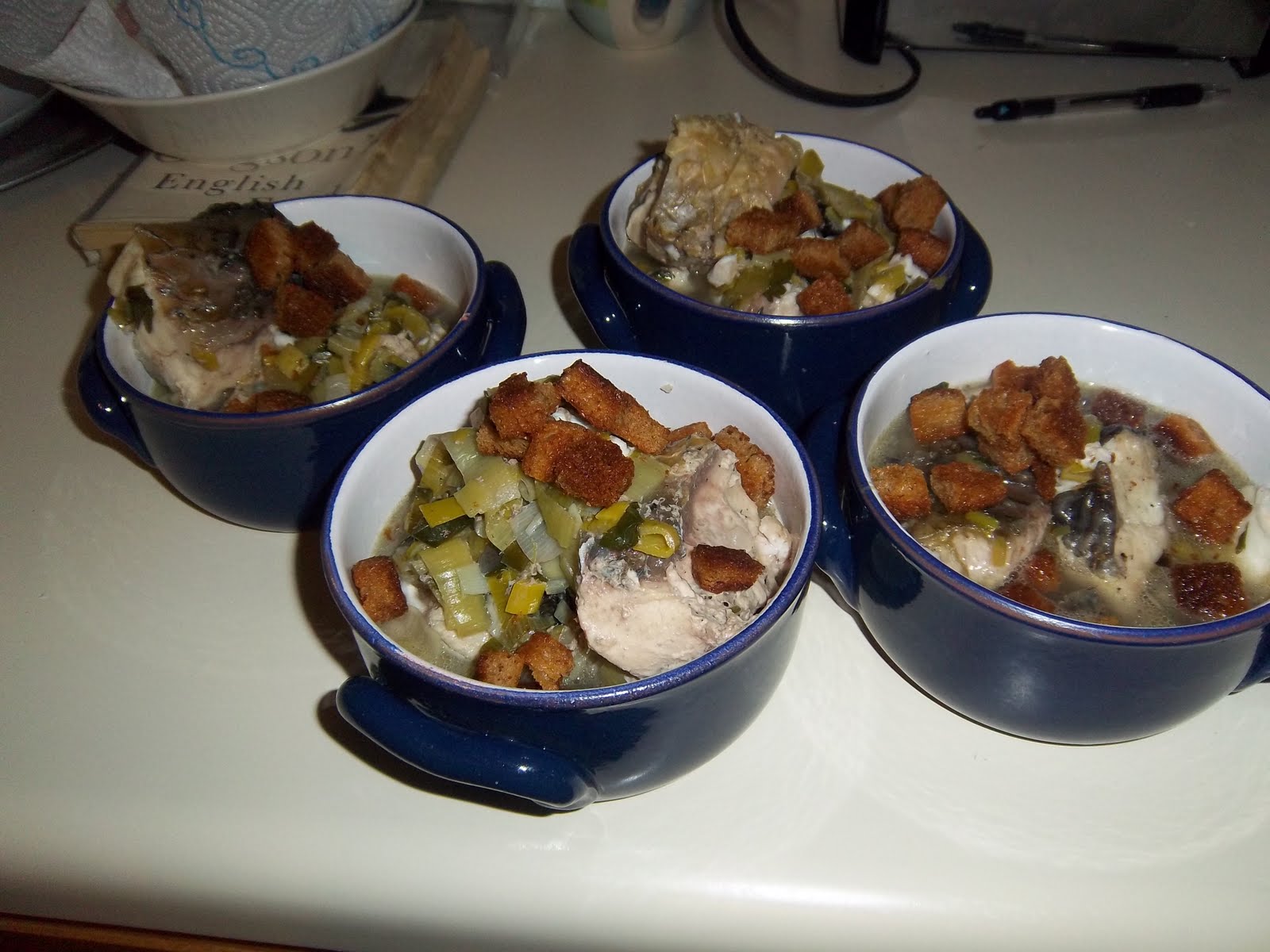
There have been plenty of recipes in English Food that have seemed so unappealing on paper, but have turned out good. This one certainly didn’t sound good – a fish stew made from freshwater fish, a few basic vegetables and water. I think it’s the name that did it for me I think – I imagined a thin, watery, muddy-tasting soup. However, every recipe must be cooked and freshwater fish is a bit of a speciality in America, seeing as most of it is far away from the oceans. It would have been a tricky one to do in England without spending a fortune getting a variety of freshwater fish from the fishmonger, or going out and fishing for the buggers yourself. Here, you can just go to the supermarket and choose from a range.

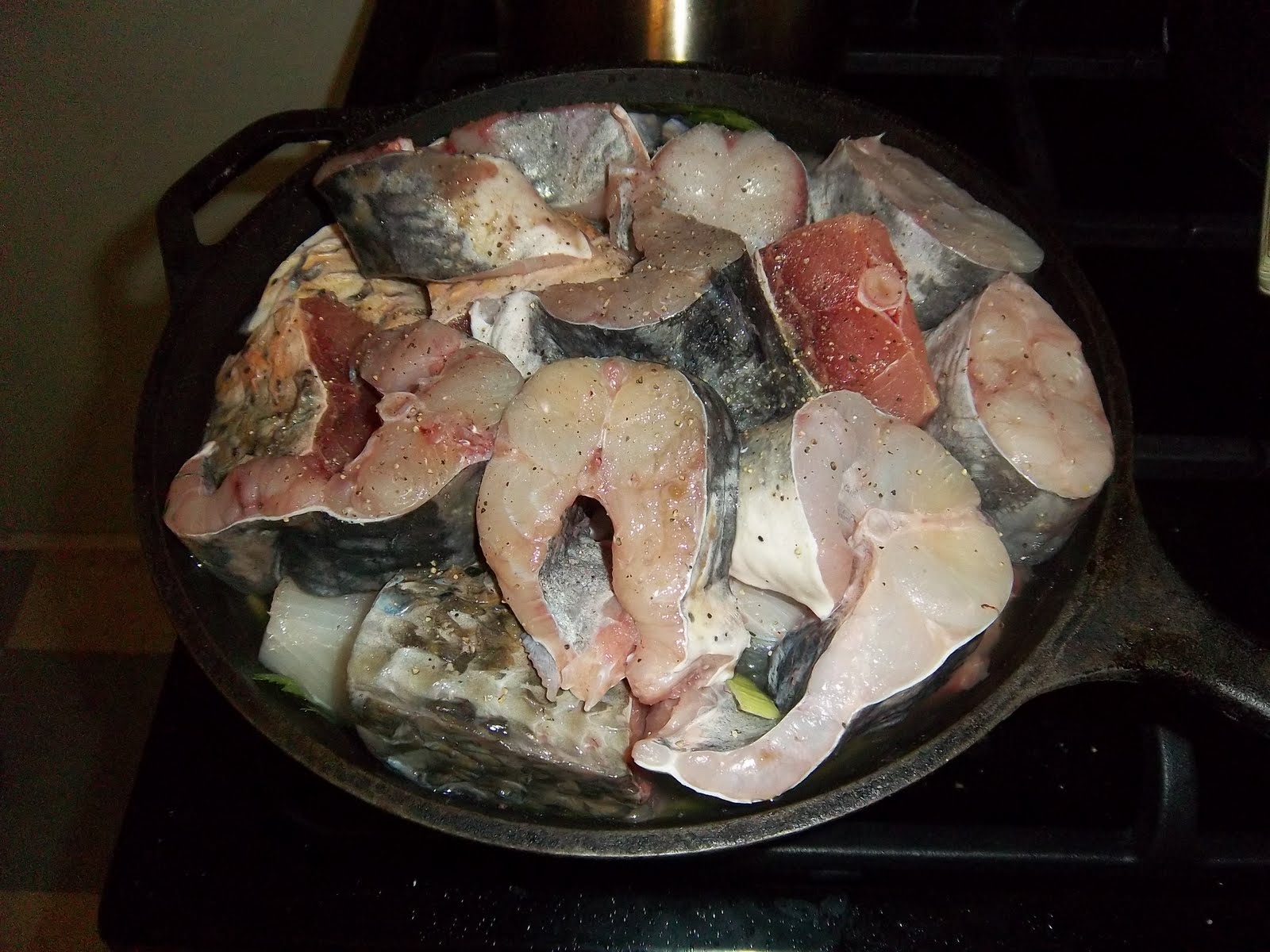
So, water-souchy is a very rustic fish stew made from whatever the angler in the family brought home after a session in his or her waders in an idyllic stream in rural England. Obviously, I am not in England anymore, so I wanted the fish to reflect what I might have caught here on the Mississippi River if I could be arsed to fish there. I had a look in Seafood City, an Asian supermarket on Olive Boulevard in St Louis and bought myself some good fresh carp and catfish. Five pounds of fish are required, and cost me the princely sum of $7.50. Pretty good, I reckon, seeing as I’m rather poor at the moment.

Water-souchy became popular in the seventeenth century and remains so, at least in fishing circles. The word comes from the Dutch waterzootje, and has been described as the bouillabaisse of the Northern Latitudes. According to certain George Augustus Sala, writing in 1895 in Thorough Good Cook, ‘You rarely get it good, save at Greenwich. Why I cannot say‘. Well, it may be to do with the freshness of the fish, says Griggers, the quality of your water-souchy will be diminished if your fish is not perfectly fresh.

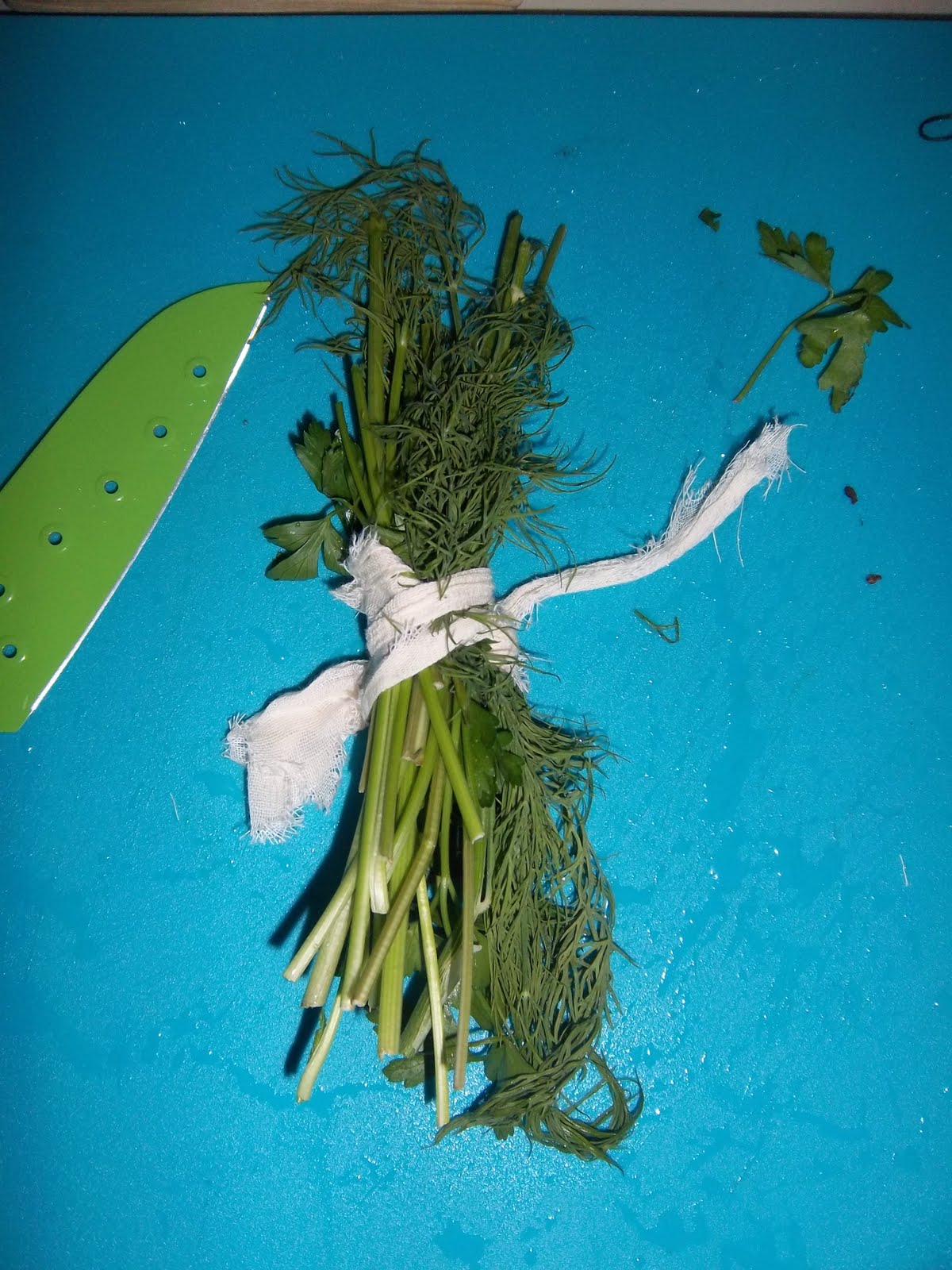
To make this simple stew, start off with five pounds of very fresh scaled and cleaned freshwater fish and cut them up into big chunks – no need to bone or fillet, for it is the bones that produce the stock and flavour the dish. Jane suggests perch or a mixture of fish such as perch, carp, eel &c. In a large saucepan, spread three ounces of butter over the base and cover that with the vegetables and herbs: two cleaned and chopped leeks, two chopped celery sticks, two tablespoons of chopped parsley and a bouquet garni. My bouquet garni was made up of a bay leaf, some parsley stalks, three fronds of dill and a crushed garlic clove all tied up in a bunch.

Season these well with salt and pepper and then place the chunks of fish on top. Season those too. Cover with water, bring to the boil and simmer with the lid on for about twenty minutes until the fish is cooked.

Serve in bowls, sprinkled with some croutons of bread fried in butter. I used stale sourdough bread for this, and they were very good, even if I do say so myself. ‘One eats water souchy with spoon and fork’, according to Mr Robert Pierpoint, writing in 1908. It’s the only way you can eat it really.

#304 Water-Souchy. Well as per usual the bad sounding recipe turns out to not be a dud at all. The stew was well-flavoured with the vegetables, herbs and the fish itself. It is really important to choose a pungent and tart herb like dill for something very simple like this I think as it livens things up no end. The fish was very moist, but the thing we all found a little off-putting was the bones. We are too used to eating neat steaks and filleted pieces of fish, I think; so the best way to improve this recipe, we decided, would be to fillet the fish and use the bones, and herbs to make a stock first, drain it, and then cook the vegetables and fish in the clear broth. Indeed, Eliza Acton suggests the same method in Modern cookery, in all its branches (1845). A good stew scoring 6/10 from me, but I think it could easily upped with some minor changes.

#302 Caveach of Sole

I decided that I needed to get back into doing some proper cooking now that I have a new stove in my new apartment. I invited some people around from work and their various spouses and kids. It is pretty hot here in St Louis at the moment so I needed to choose a recipe that was nice and summery and not all hot and stodgy. It needed to be buffet-style as there would be eight of us in all and I can only fit four around my little table. It also needed to be one that is prepared in advance so I wouldn’t be rushing around in the 35°C heat on the day. I don’t ask for much do I? Oh, and it also couldn’t be weird. My options for this kind of food are rather limited in the book now, but I happily found this one that seemed fresh and clean and rather Mediterranean in style.

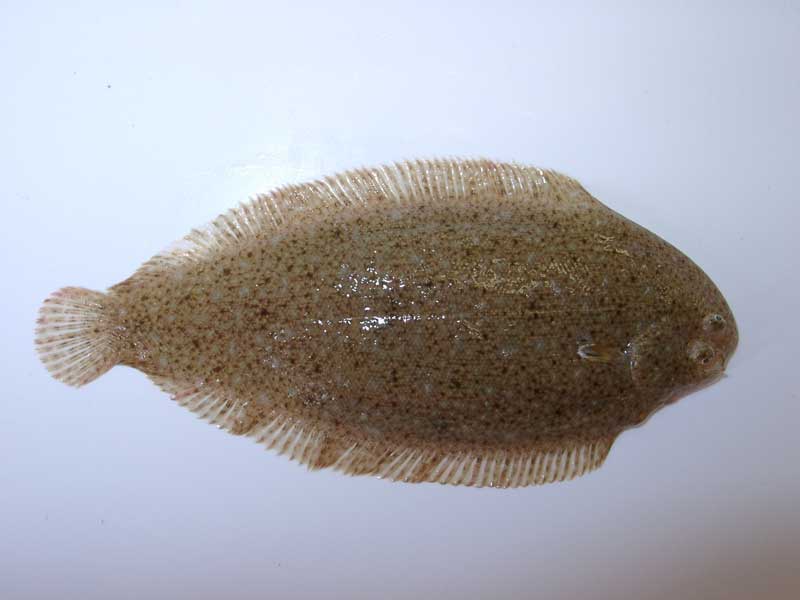
The sole lies on its side on the sea bed to camouflage itself.
Over time, natural selection has reacted to this by moving one eye
so that they both sit on one side of the head.

The word caveach refers to a method of preserving fish by cooking and then pickling it and comes from the Spanish escabeche. I did a little research on the preservation method and could only find books from the early-to-mid nineteenth century that mention it in any detail; though it seemed popular in both Britain and America at that time. The recipe below is more of a dinner party adaptation where the fish is only left for a few hours to pickle and isn’t intended as a preservation method at all. You can caveach any fish you like – the most popular seemed to be mackerel, herring and sardine, presumable because they were the cheapest and most common seafish at that time.

It is also nice to cook a receipt from the Seawater Fish section of the book – options are limited in America because there are different species of fish found commonly in their waters compared to European waters. However there is some common ground and the newly-discovered and very excellent grocery store Straub’s has a great selection of fish and meat as well as some other tricky-to-find ingredients, so I’ll be using them quite frequently during my time here in Missouri.

First of all prepare your sole fillets – you’ll need eight in all. Flatten them a little with a rolling pin, season with salt and pepper and fry them quickly in a little olive oil so that they brown a little. Cut them into thirds and arrange the pieces on a serving dish. Slice a medium red onion thinly and scatter over the fish along with the thinly sliced pared rind of a lemon and a couple of bay leaves cut in two. Next mix together seven fluid ounces of olive oil with three tablespoons of white wine vinegar and pour over the fish. Season again with salt, pepper and some Cayenne pepper too. Cover and refrigerate for at least a few hours, but preferable over night. When it is time to serve, scatter over some chopped herbsparsley, coriander or chervil are suggested by Griggers. I went with coriander. Serve with bread and butter and a salad.

#302 Caveach of Sole. This was everything I had hoped it would be – fresh, clean and slightly piquant. The delicately flavoured sole was not overwhelmed at all by the onions and the mild seasoning. A very good recipe this one – and simple too. I think I am going to try it with other, cheaper fish in the USA like tilapia or catfish. Any fish would work I reckon. A dinner-party stalwart this one will be, I feel. 8/10.

#287 Scotch Woodcock

Here’s a quickie that was a popular savoury in Victorian times in the same vein as Locket’s savoury and Gloucester ale and cheese. None of them are really eaten these days, though most of the time they are very tasty (though also very rich; no wonder everybody had gout). Although such savouries were served at the end of a meal in those days, it is is perfect for a first course or as a light lunch these days, I reckon.
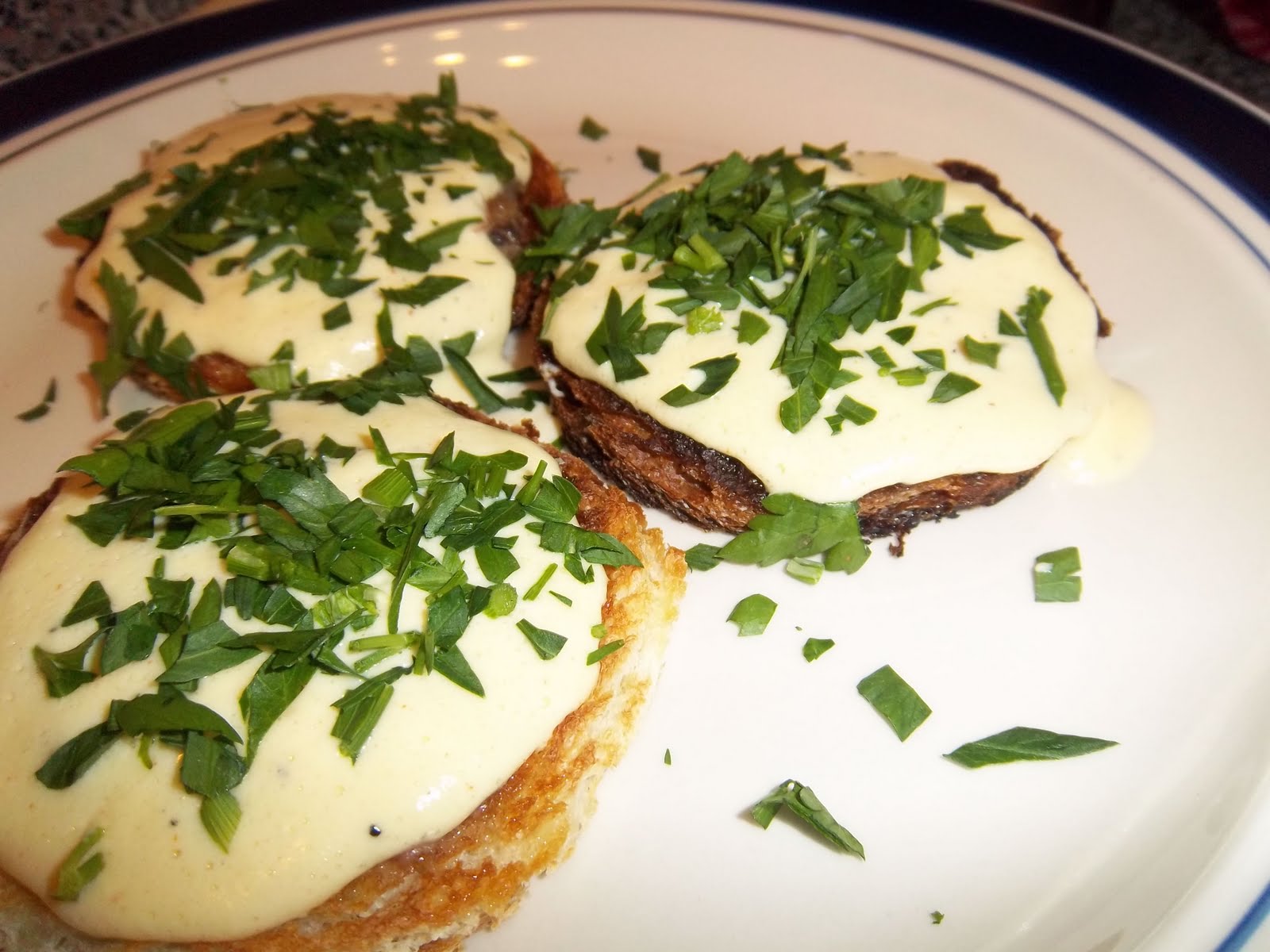
It doesn’t contain any actual woodcock, of course, but is basically anchovies and eggs on toast – the fish and eggs being a substitute for the prized game bird. Just like how Welsh Rabbit is really cheese and bread instead of the delicious meaty mammal.
This recipe makes six woodcocks:
Start by draining a tin of anchovies before mashing them with two ounces of butter. Next, get the toast ready – cut circles out of six slices of bread and toast them on both sides. Spread with butter and then the anchovy mixture. Keep warm whilst you make the eggy sauce. In a saucepan, add two egg yolks to half a pint of whipping or double cream. Beat the yolks and add pepper a little salt and a good pinch of Cayenne. Stir over a moderate heat until the sauce thickens. Spoon over the anchovies, add a flourish of chopped parsley and serve it forth. If you don’t fancy making the thickened cream sauce, make some softly scrambled eggs made with a bit of cream instead.
#287 Scotch Woodcock. Previous anchovy-based recipes in this blog have ranged from the most delicious to the worst and most bizarre. This one however can join the ranks of the delicious. The intense saltiness of the anchovies was balanced very well with the bland creamy sauce. Very, very good. I ended up eating three and it gave me stomach ache. Hey-ho, you’ve to take the rough with the smooth in life aintcha? Tres bon, 8/10.

#281 Scallops with White Wine and Jerusalem Artichokes

If I am going anywhere that is likely to have lots of nice food, I take my copy of now dog-eared English Food along with me in case there is something I don’t expect to see but is required for a recipe. Central Market, the place where I seem to get most of my ingredients from here in Houston, almost always has something unexpected I can use. Today was no exception: I was shopping for some pie ingredients, but also came across some nice Jerusalem artichokes. A quick flick through the book and I found this recipe that combines them with one of my favorite items of seafood, scallops. I was in the mood for treating myself, so I thought this would be a great late lunch dish prefect for these warm days in Houston.
This recipe isn’t one of Jane Grigson’s herself, but from one of her contemporaries and friends Joyce Molyneux, who owned a restaurant called The Carved Angel in Dartmouth. Ms Molyneux adapted the recipe from a recipe she saw for scallop and Jerusalem soup in a book called Four Seasons Cookery Book by a certain Margaret Costa. It’s funny how recipes get changed and passed around, constantly evolving into different dishes.
To make a lunch for four you will need eight large scallops. Remove the corals (should they still be on) and reserve them and cut each scallop into five or six discs. Now trim about twelve ounces of Jerusalem artichokes and cut them into thin matchsticks (keeping trimmings for soup, Griggers says). Fry them gently in two ounces of butter and when nearly tender – about ten minutes – add the scallop discs and four tablespoons of dry white wine. Season with a little salt and pepper. After a minute, add the corals and cook for another two minutes. Don’t overcook – they will become like rubber. Arrange the scallops and artichokes on a warm plate and concentrate any remaining juices, seasoning with more salt and pepper if you like plus some lemon juice. Finally, stir in some chopped parsley and pour over the scallops. I served them with some nice buttered sourdough bread, thinly sliced.
#281 Scallops with White Wine and Jerusalem Artichokes. I loved this. One of the best recipes I’ve done in a while. The earthy artichokes worked so well with the sweet scallops, plus the wine, lemon and parsley really made the whole thing wonderfully fresh tasting. Mopping up the sauce with the bread was the perfect finish. Excellent. 9.5/10.

#271 How To Boil Crabs, Lobsters, Prawns and Shrimps

A woman should never been seen eating and drinking, unless it be lobster and Champagne, the only true feminine and becoming viands.

Lord Byron 1788-1824
A freshly boiled crab or lobster is the most delicious crab or lobster. Apparently. In England, this is not something that commonly happens in a typical household. Like all our meat and fish, the animals that provide us with all that delicious protein are helpfully done away with by burly men in abattoirs, boats or warehouses.  We have lost touch with our food rather and find the idea of killing an animal for food ourselves distasteful. Pretending this doesn’t happen, in my opinion, is the distasteful act.
That said, I am not actually comfortable myself with killing animals, and as any previous reader of the blog will know, killing three eels was most distressing for me. Now it is the turn of some shellfish. This recipe is one that I never did back in England because I simply never saw live crabs and lobsters, prawns or shrimps in fishmongers. Houston, however, is a very different state-of-affairs. There’s live seafood in pretty much any supermarket you walk into here.
The lobster tank in Central Market, Houston
So if you stumble upon a live crab or lobster in the local fishmonger or supermarket here is what to do. Well, as you’ll find out, it maybe isn’t what you are meant to do….
The main point I wanted to get across is that boiling seafood can be humane (or at least no more or less humane than, say, killing a cow with a stun-gun). In English Food, Jane Grigson says that RSPCA guidelines suggest putting the animal in cold salted water and letting the water heat up – apparently when a certain temperature is reached, the creature expires ‘without suffering’. Guidelines have changed rather and nowadays it’s suggested that the little arthropod is popped into the freezer until it falls into a torpor. When plunged into the water, it’s dead before it has a chance to wake up. (The other method is to stab it in the top of the head using a sharp knife and a mallet.)
So, first things first, my mate Danny (who was helping me out with the cooking) got a lobster from Central Market. On the fishmonger chap fishing out the one we chose, I suddenly felt a pang of guilt, so we hurried to my freezer to get it nice and sleepy. Whilst we waited, the salt water into which it was boiled needed to be prepared. The water needs to be very salty. If you can, use sea water, if not dissolve enough sea salt so that the briny solution will bear an egg (this requires a lot of salt). Bring to the boil.
I was informed that the lobster would take 20 minutes or so to fall asleep. This was total nonsense, because 90 minutes later it was still moving around. Shit. By now we’d had a fair few glasses of wine due to the stress. A little later, the lobster seemed pretty inert, so we decided this was the time. Like, I said before, the idea of this post was to do away with some misconceptions about killing seafood in boiling water. So sure I was of this, I filmed the process, so you get a rare glimpse of me in action! Unfortunately things didn’t quite go to plan, and I may have reinforced those misconceptions. Oh dear.
Next time (if there is a next time) I’ll just throw the thing straight in!
Okay, back to the cooking. The cooking time is 15 minutes simmering for the first pound and then an additional 10 minutes for every extra pound.
For shrimp and prawns: 3 minutes for large prawns and for small shrimps, simply let the water come up to the boil again and they’ll be done.
Serve the shellfish simply, says Griggers, with brown bread, butter and lemon wedges.
#171 How to Boil Crabs, Lobsters, Prawns and Shrimps. Well that was an event! Aside from the auto-dismemberment episode, the cooking itself went very well. I split the lobster lengthways, removed the brown meat and used it to make a butter sauce (see next entry, when I write it!), and grilled the lobster with butter briefly. Delicious. 8.5/10.

#268 Potted Shrimps

Hugh and I invited our mates Maartin and Ninja around for some food so I thought it would be the perfect excuse to do a couple of Grigsons. Poor things. For a starter Hugh made some mackerel pate (I should get the recipe from him and put it on here) and I did these potted shrimps. I wanted to cook a recipe that I couldn’t do in America and this is one. I so far haven’t found anywhere in Texas that sells brown shrimp.
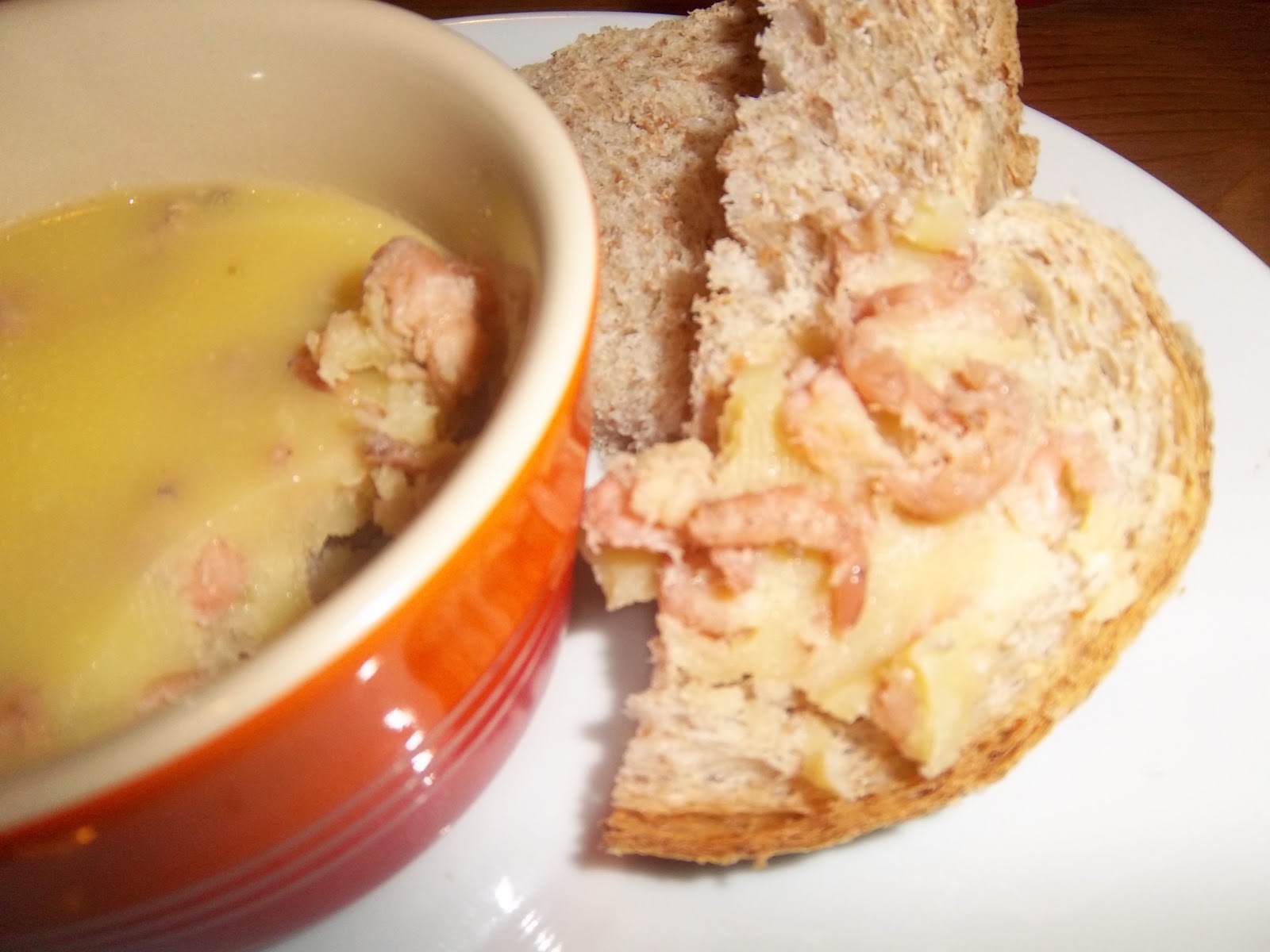
For those of you that don’t know, potted shrimps are a Lancastrian delicacy – they are going out of favour as many traditional foods are these days and, as far as I know, the only place that makes them is a small fishery in Morcambe Bay. They used to be very popular across the whole of the country after Young’s opened a shop selling them in London. The shrimps are fished and boiled on the boat before being dunked in the sea to cool off quickly. As the boat returned to land with its catch, the women and children of the town would be waiting to pot the shrimps.  If you happen upon some brown shrimps, try making them yourself because they are pretty easy to do.
For every pint of shelled shrimps you will need to melt 4 ounces of melted Danish butter along with ¼ teaspoon of powdered mace, a pinch of Cayenne pepper and a grating of nutmeg. Once melted, mix in the shrimps and let them heat through. Pack into pots and cover with clarified butter and then some foil or cling film. Allow to set. Serve spread on brown bread or toast. Piece of piss.
#268 Potted Shrimps. I loved these. The shrimps are sweet and well-flavored and the traditional spices such as mace really complimented them. It’s a shame that mace isn’t used more often these days as it goes so well with fish. 7.5/10.