#192 Elizabeth David’s Prawn Paste

In days of yore, we English loved potted meats and fish. You don’t seem to see many potted foodstuffs around these days: though potted beef is still popular in Yorkshire. Pate does not count. This one at first sight seems a bit weird, and perhaps foul, but there are some interesting ingredients in there. One of the great things that Elizabeth David did in the sixties and seventies was introducing us to Mediterranean flavours, and she managed to sneak a few in here: olive oil instead of butter, basil instead of parsley, lime rather than lemon. She transformed our eating habits; along with Grigson, Floyd, et al. of course. It may seem odd these days – all those continental ingredients mashed up in a now-defunct method of preparing meat and fish – but there you go.

Place eight ounces of cooked, peeled prawns in a blender along with the juice of a lime and around six tablespoons of olive oil – use extra virgin if you have it since as it’s not going to be cooked. Blend until smooth and add half a teaspoon of dried basil and a heaped saltspoon (!) of crushed coriander seeds. Season with a little salt and some Cayenne pepper. Divide between some small ramekins, cover and refrigerate. Serve with hot, thin toast.

By the way, I don’t know the capacity of a saltspoon as I don’t own one, so don’t ask me. Actually, I’d not even heard of one. I guessed and added a quarter of a teaspoon. Also, don’t buy dried basil, as it has no flavour; dry your own in a cool oven for about 20 minutes until crumbly: much better.
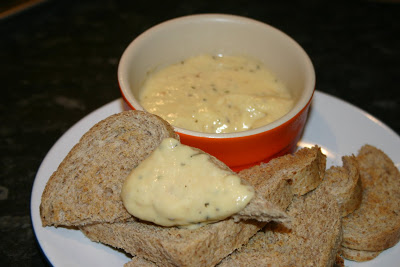

#192 Elizabeth David’s Prawn Paste. It may have sounded like horrible soggy fish pap, but this was delicious. The prawns were sweet, the olive oil was fruity and the basil and coriander seeds combined with the lime juice provided a morish tang. Really good – go and make some. 7.5/10.
#190 Finnan Haddock

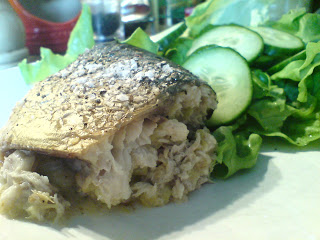
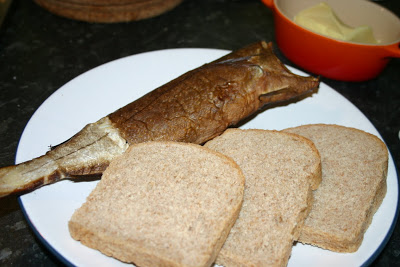
A bit of a cop out this one as it it’s not really a recipe, though it is listed as one in the book. It’s actually more a bit of advice on good eating. There’s many like this in the book. Here, Griggers discusses the dos and don’ts of buying Finnan haddock, which is smoked haddock. We call it Finny haddock in Yorkshire. Findon, or Finnan is a small coastal village near Aberdeen in Scotland. It is there where the proper stuff is made. Griggers warns us of buying those ‘golden fillets’ that are that weird shiny orange colour like cheap sweaty spray-on tan, which I suppose it is but with added smoke flavour. Splarf. My mum used to buy them and they are vastly inferior to the proper stuff. There have been a few recipes so far in the book that has used Finnan haddock, and I think that I have mentioned all this before. However, if you want the really good shit, it is Arbroath that you need to travel to. There, Arbroath smokies are made. As I was in the fishmongers buying some prawns (see a later entry for what I wanted those for) there some were, just lying there. So I bought one, as you have to be opportunistic in this game.

So the recipe? “Heat briefly under the grill or in the oven, and eaten with plenty of butter and bread, or used for kedgeree.” So a brief grilling it was for my little smokie.


#190 Finnan Haddock. If you ever see those little Arbroath smokies in the fishmongers you have to buy some. The flesh was so succulent and sweet due to its protection by the now leathery skin, and the smoke flavour was nothing like anything I’ve tasted before: it was as though it had only just been taken out of the smokehouse and slipped onto my plate. The smoke flavour was sweet and acrid, not unlike a good cigar. Excellent. 8/10. If I catch any of you buying a golden fillet, I will come over personally and poke you in the eye with it.

#189 Mussel and Leek Rolypoly

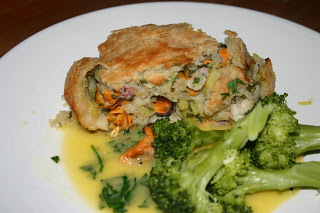
“People sometimes shudder at the mention of roly-poly puddings” says the Grigson; er, no dear, just the idea of THIS one! Why on Earth is there no jam roly-poly pudding, please!? I’ve been putting off the more weird ones – like this – but they are building up now. I wasn’t looking forward to it, but Griggers really does big this one up. It is cheap though, at least when mussels are in season.

I have only recently been able to pluck up the courage to eat mussels; I’ve always been a bit squeamish with bivalves for some reason. However, I do love mussels now. The Romans loved them too, and they’ve been cultured in France since the late thirteenth century, ever since a shipwrecked Irishman called Patrick Walton was washed up on a French beach and noticed some mussels growing on the fishermen’s nets. I doubt he wrapped them in suet pasty though.

To begin you need to cook your mussels – 48 in all, says Grigson. Scrub them and remove their beards and any parasites. Place them in a hot, wide shallow pan and cover. As soon as the mussels open, take them off the heat. Don’t use any mussels that have not opened. Shell them, reserving any juices, and let them cool. Pass the juices through some muslin into a small pan.

Now make the rest of the stuffing: In a bowl, mix together 3 ounces of finely chopped onion, 2 trimmed and finely chopped leeks, 2 chopped rashers of streaky bacon, 3 tablespoons of chopped parsley and a little salt plus plenty of ground black pepper.

Suet pastry is the easiest pastry to make. Sieve 10 ounces of self-raising flour in a large bowl and mix in a pinch of salt and 5 ounces of shredded suet. Using a knife or your hands, mix in some cold water until a firm and light dough is formed.

You are now ready to construct the rolypoly pudding. Roll the dough into a rectangle and sprinkle over the leek mixture leaving a centimetre border around three sides, and then evenly sprinkle over the mussels. Brush the edges with water and roll up the pastry starting at the borderless end, lastly press down the sides to prevent any leakage from the sides. Wrap it in a tightly-sealed but baggy foil parcel and steam for two hours on a rack in a self-basting roaster. If you don’t have one – use a normal roaster and make a foil lid as I did. When ready, place in an ovenproof serving dish and crisp it up in the oven for 10 to 15 minutes – careful now, it might collapse (see pic!). Whilst that is happening, make the butter sauce. Boil down the reserved mussel liquor, take it off the heat, and whisk in 4 ounces of chilled, cubed butter, bit by bit. Season well, add some chopped parsley, and it is ready.


#189 Mussel and Leek Rolypoly 4.5/10. I though I liked this in the end, but then I wasn’t sure; it certainly wasn’t awful. I even had seconds. The mussels were soft and sweet, the leeks were cooked nicely and the pastry was crisp. The sauce was good too. I think it was too rich, and I ate too much. An unusual one, but I’m not sure I would recommend it.

#184 Kedgeree

The thrifty cooking is going well – Charlotte and I having been very shrewd. However, when it comes to Sunday dinnertime, I did want a nice big hearty (and pricey) roast. Instead I went for kedgeree. I don’t recall ever having eaten it before, even though I knew exactly what is required to make it. I had high hopes for it: curry, eggs and Finnan (smoked) haddock. What can’t be good about that!? It used to be a breakfast dish, but these days it’s eaten for dinner or tea.

I have been researching the origins of kedgeree, and there seems to be two differing stories: the Scots reckon that it hails from there, and when the lovely British Empire decided to pop over to Asia and add India to its collection, the Scots brought it over too and the curry element was added. The alternative story is that the dish started in India, but then when colonialists came over, they added the smoked fish. I’m going with the latter story – the best evidence is the etymology of the word: kedgeri is the name of a similar Indian dish containing rice, lentils and eggs.

To make kedgeree, start off by poaching a pound of Finnan haddock in barely simmering water for ten minutes. You can use any good-flavoured cured fish, of course, for example kippers, smoked salmon or bloaters. Meanwhile chop a large onion and fry it in olive oil until it browns. Add a teaspoon of curry paste (I used Madras) and fry for a minute. Remove the fish from the water, remove its skin and flake the flesh, removing any bones. To the pan, stir in six ounces of long grain rice and when translucent add a pint of the poaching water. Cover the pan and let it simmer gently until all the water has been absorbed. Gently stir in the flaked fish along with a large knob of butter. Plate out the kedgeree and decorate with quartered hard-boiled eggs, prawns and chopped parsley. Serve with a lemon wedge and mango chutney.


#184 Kedgeree. This did not disappoint – the food was substantial and well-flavoured, but light. The combination of curry and eggs, and of smoked fish and eggs is great. Plus the extra addition of the lemon, prawns and mango chutney; not something I would normally associate with this dish really makes it special. This is a high-scorer – the only gripe (and it is a minor one) is the use of long grain rice, I am a Basmati man myself; it has a nutty flavour and doesn’t go as stodgy. 8/10.

#169 Salmon Fishcakes

Now that I have decided that smoked salmon is not the work of Satan, I thought that I’d have a crack at some more salmon recipes. This is a good thing seeing as the freshwater fish section of the book is woefully under-represented. Still being a little tentative, I went for these fish cakes that do a great job of padding out some salmon fillets. They are a very old-fashioned style of fish cake – based on a very thick béchamel sauce, not what we are used to at all these days where we would expect chunky fish and potatoes. However, I’ve had the man flu coming on for a while and needed some comforting stodge.

This recipe makes eight to ten fishcakes, depending upon how big you like them.

Begin by poaching a pound of salmon in water that has been seasoned well with salt, pepper, white wine vinegar and some bay leaves. Also, mash 4 ounces of potatoes. Allow these to cool. Meanwhile, you can be making the béchamel sauce: melt 2 ounces of butter in a pan and stir in 3 ounces of plain flour. Cook for a few minutes before gradually stirring in ¾ pint of milk. The sauce will be very thick. Let it cool a little bit, then mash the salmon and stir in the sauce. Also mix in a tablespoon of dill and/or parsley, a squeeze of lemon juice and some salt and pepper. Beat in an egg and the mashed potatoes. Chill the mixture in the fridge and form into cakes; this is quite tricky as the mixture is soft. The best thing to do is to use a tablespoon to scoop out a large amount of it and place it in some prepared breadcrumbs and coat each one. You can place it in the fridge again if you like, but you don’t have to. Fry on a medium heat in a mixture of butter and oil for 4 minutes each side. I served it with lemon wedges and a green salad dressed with another recipe from the book: English salad sauce.

#169 Salmon Fishcakes. A tricky one to score. I enjoyed them – I even went back for seconds, but they were slightly too stodgy, even for me. However, the flavours were very good – not too fishy, nice and herby and delicious a piquant lemon taste. I would make them again, but with some modifications, I think – more potato, crushed rather than mashed; chunky fish rather than mashed…you get the idea. 5/10.

#166 Smoked Salmon

Butters and I went to the Cheshire Smokehouse at the weekend and bought lots of good things: smoked nuts, smoked trout, bacon and – amongst other lovely stuff – smoked salmon. You may be wondering why I’ve left such a simple thing out for so long – it is simply because I don’t like the stuff. It’s one of the problems with this whole plan; what do I do if I don’t like the ingredients? As it happens, I went to Glasgow on a conference earlier in the year and tried some there and it was, unbelievably, okay. So I thought that if I’m to do this I need to try really good salmon, not cheapo crap from a supermarket.

It’s perhaps I little bit of a cop-out citing this as a recipe, but I’m including it anyway. Jane makes a good point about smoked salmon that are worth reiterating and it applies to any food, really: always by the best quality, even if that means you buy less of it; I think that this is particularly applicable to any meat, fish or dairy product.

When you buy your smoked salmon arrange slices on a plate with brown bread and butter and some lemon juice. I added some capers and a little creamed horseradish, otherwise, that’s it. If you have a bought a side of salmon, use the trimmings for scrambled eggs or soufflés.


#166 Smoked Salmon – 7/10. After all these years, it turns out that smoked salmon is nice; I’ve just been eating the rubbish stuff! (Or I have expensive tastes.) It’s a simple concept – salmon, bread, butter and lemon juice, but that is really all you need. What have we learned: buy the best you can afford and do as little as possible to it to get the most out of it. Here endeth the lesson.

#159 Creamed Roe Loaves

Here at Grigson Towers, we don’t like to let anything go to waste, and our tasty fishes are certainly something that should be at treated with a huge amount of respect. So do your bit by making your mackerel (or herring) go further by asking your friendly fishmonger to fish out the fishes’ roes when he guts them. After all you have paid for them anyway.

There’s quite a few roe recipes in English Food and I’ve tried them, so I thought I’d better get started. This one seemed straight-forward and is very similar (and cheaper!) to the oyster loaves recipe, so I was sort of on familiar ground. The good thing about this recipe is that you can reduce the amounts accordingly depending upon how many roes you have – in fact I only had enough to make one!

FYI: In case you didn’t know (and don’t let this put you off) the soft roe of a fish is the sperm, and therefore from a male fish. They’ve gone out of favour, with some fishmongers just throwing them away instead of selling them! Another thing we need to try and bring back, people!

Prepare 8 small rolls of bread just like for the oyster loaves. To make the filling, soften 3 shallots or 3 tablespoons of onion in butter over a low heat. Add ½ pint of double cream and cook until it thickens. Cut the roes into one centimetre cubes and place them in the cream and allow them to poach gently – this only takes a few minutes. Add parsley and chives and season with salt, black pepper and Cayenne pepper, plus a squeeze of lemon juice to cut through the creaminess. Spoon the mixture into the hollow loaves and serve immediately.

#159 Creamed Roe Loaves – 7.5/10. I really enjoyed my first foray into roe gastronomy, though a dated dish, you could modernise it easily by serving it on toast instead, or something. They are very soft and have a very delicate flavour. Try them, don’t fear the fish sperm – you’ll like the flavour and texture – and, after all, you’ll happily eat fish eggs (or bird eggs), so what’s the difference?

#158 Gooseberry Stuffing for Mackerel

Apart from Britain and the Netherlands, gooseberries are not grown and eaten in large numbers. This is because they’re not a particularly popular fruit for desserts. However, they are often served with mackerel as in this traditional English recipe. It seems to be a combination that has gone out of favour these days – I’ve certainly never eaten them with fish, though I have has tuna and rhubarb before and that was lovely, so I’ve high hopes for this one.

This makes enough stuffing for 4 mackerel:

Top and tail 8 ounces of gooseberries and cook them gently in ½ an ounce of butter until they just begin to soften and pop. Mash them with the back of a wooden spoon, and when luke warm add another 1 ½ ounces of butter and 4 tablespoons of breadcrumbs. Season them up with salt, and both black and Cayenne pepper, plus a little sugar if the gooseberries are too tart (they need quite a lot of tartness, to cut through the oily mackerel).

Bone the mackerel, or ask your fishmonger to do it (if you want to do it yourself – and it is very easy – follow this link for instructions) and divide the mixture up between them. Place them in a buttered ovenproof dish and season the skin with salt and pepper. Bake for 30 minutes at 190⁰C. I served them with salad.


#158 Gooseberry Stuffing for Mackerel – 8/10. This was a taste sensation. The piquant gooseberry stuffing cuts through the rich oily mackerel so well. This really is a recipe that needs a resurgence. Now is the perfect time to make it people – both gooseberries and mackerel are in season. Isn’t it funny how things that are in season at the same time, seem to go so well together? It’s almost as though God planted them all there for us. Unfortunately, I’m too old to still believe in God, so I assume that there’s a better explanation.

#141 Warm Skate Salad with Shaun Hill’s Dressing

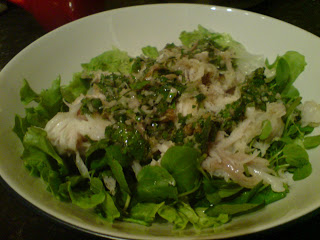
Another fish dish. Skate is one of my favourite fish and liked the idea of having it in warm salad – perfect for this time of year when the weather is often bright and sunny but will a chill still in the air. Classically, skate is poached or fried and served with either a beurre noisette or capers, so I thought having it in strips with warm vinaigrette would be a new thing that might jazz up this tasty, though bland, fish.

Start off by preparing your skate wings (one per person). Rinse each one under the tap or soak in a change or two of water – take heed of this advice, this gets rid of the taste of ammonia found in fresh skate. I didn’t know this, even though I’ve cooked it many times, it’s never been ponged of ammonia. However, this time it was different (for one of us anyway!). Dry the wings and fry them in a little olive oil until cooked through – a few minutes a side, you can tell they’re cooked as the flesh starts to raise itself up from the cartilaginous bones. Whilst you are waiting, wash and dry some green salad leaves (I used watercress to be seasonal) and place a pile of them in the centre of each plate.

Now make the dressing. Set up a bowl over some simmering water. Add three tablespoons of fish stock and around 6 tablespoons of olive oil to the bowl. Chop up a handful of parsley leaves with a shallot and a small clove of garlic. Add this and season with salt, pepper and lemon juice.

Remove the cooked skate from the pan and strip the meat of the wings with a fork. Pile the stripped fish on the salad leaves and sprinkle the whole thing with the dressing. Do this for each plate. Serve immediately.


FYI: Shaun Hill is still a chef, working at The Walnut Tree Inn in Wales. Here’s an article about him.

#141 Warm Skate Salad with Shaun Hill’s Dressing – 5/10. What a weird dish this turned out to be. None of the ingredients were bad , they just didn’t do together. The skate was nice and moist and gelatinous, but it’s delicate flavour was completely drowned out by the dressing with its strong garlic, shallot and olive flavours –delicious that it was. The ammonia was a cause for concern – it obviously doesn’t happen every time one cooks it, otherwise I’d have noticed before, but it’s worth bearing in mind in the future. Overall, I prefer my skate the old-fashioned way… Skate was very popular, but recipes like this won’t be doing it many favours in making it popular again.

#140 Crab Tart

I’ve mentioned before that a much ignored chapter in English Food is the Fish chapter (I must tell you what the chapters actually are, so you know where the seemingly random recipes fit). The fish that are in season during May and are in the book are salmon and crab. A quick phone call to Butters to help me decide which fish/crustacean to try first was required – I’ve never cooked with crab other than tinned, and salmon isn’t my favourite. We went for the crab. There’s a few crab recipes but this one seemed relatively straight-forward.

It seems the oceans were a much more plentiful place in the 1970s compared to now (though we knew that already!). The original recipe asks for a boiled crab weighing 2 pounds or one kilogram. Fat chance of that says the fishmonger, however I asked for the biggest one and it wasn’t too far off. It only cost a fiver! I was well happy there – a tiny tin of it cost about 3 quid. Bargin. In fact I noticed the fishmonger was stocked with loads of nice things at the minute…

Butters gets a crab infestation. Again

To make a crab tart, start off by making (or buying) some shortcrust pastry and lining an 8 to 9 inch flan or tart tin with it. Bake the pastry blind in a hot oven – 220°C – for 10-15 minutes. Do this by lining it with greaseproof paper or foil and pouring in some baking beans. For the final couple of minutes remove the beans so that the base can crisp and dry out a little.

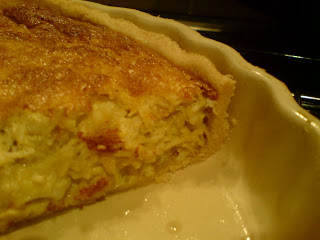
Now you have to pay the boiled crab some considerable attention. It’s quite an arduous task but quite satisfyingly so. I won’t go through how to remove the meat here, but I’ll instead send you to this link to Deliaonline, which I followed and it did the job. In fact go to that website if there’s any techniques you want to reference. Once you’ve extracted as much meat as your patience will allow mix the white and brown meats together and season well with sea salt, black or white pepper and Cayenne pepper. Stir in one whole egg and two egg yolks (keep the whites) and 8 fluid ounces of whipping cream. Now add a tablespoon each of Cheddar and Parmesan cheese and stir in. Whisk the two egg whites until firm of peak and fold it into the crab mixture. Pour the whole thing into the case and bake at 220°C for 5 minutes and then turn the heat down to 190°C and bake for a further 25-40 minutes. The tart is ready when it has set and lost its eggy wobbliness.

Not the most photogenic of tarts, I know, but tasted lovely.

Griggers says to serve straight away with brown bread and butter, but to be extra-seasonal, I made a quick salad from rocket, sliced radishes, olive oil, lemon juice and salt and pepper. It went very well.

#140 Crab Tart 7/10. I really enjoyed cooking with and then eating crab. The brown meat dissolved into the cream and eggs making it deliciously sweet and moist and the white meat gave the whole thing good texture. The genius of the dish was the whisked egg whites, which lifted to so well. A definite success that really made me feel Spring is finally here! Great stuff.