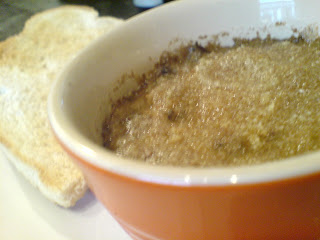
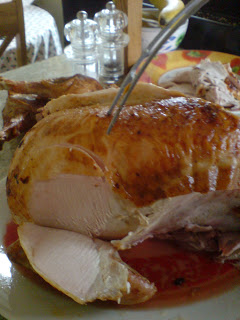
#298 Pulled and Devilled Turkey, Chicken or Pheasant

One of the most delicious dishes of eighteenth-century cooking, indeed one of the best of all English dishes“, says Griggers. That’s quite a statement. The idea behind this receipt is that it uses up that left-over Christmas or Thanksgiving turkey “with the glory it deserves“. It is nowhere near either of those two holidays, but in the receipt a roast or boiled chicken or a brace of roast pheasants can be used, and I must admit it does seem like a good dish for summertime as it is serve with bread and salad rather than stodgy potatoes and vegetables. Plus I was in the mood for some nice chicken. Perfect for hot, hot Houston eating, I reckoned. I made this for some friends to try – Danny, Eric and a Neil Cooks Grigson virgin, Jahnavi.

The turkey, chicken or pheasant is both pulled and devilled because the brown meat (i.e. leg and thigh) and the white meat (i.e. breast) are treated differently, with the brown getting a spicy marinade – the devil! – and the while meat being pulled apart into thready pieces the “thickness of a large quill” and cooked in a buttery-cream sauce presumably to temper the spicy devilled meat. Though this is an old recipe, I could find no information on it, though the inclusion of the mango chutney and the Cayenne pepper suggests an early Indian influence on English cuisine.

The actual devil, if you believe in that sort of thing.
Notice the devil is two-faced – quite literally –
one face in the usual place, the other on his arse

Although there is the big #300 coming up, this recipe marks the mid-way point through the leviathan of a chapter – the meat section. I’ve not done half as many of the strange or tricky ones that I have intended, but expect some when I move to St Louis later this month. I won’t have much of an option soon, as that’s all will be left to do!
Here’s what you do:
First prepare the appropriate fowl for the dish:
Roast turkey, you’ll need a leg (slightly underdone, if possible) and around a pound of cooked breast meat.
For chicken, you can use a boiled or roasted one, but try and undercook it. I did roast chicken and just missed off the final twenty minutes of cooking time.
For pheasants, a brace of either stewed or roasted ones will suffice!
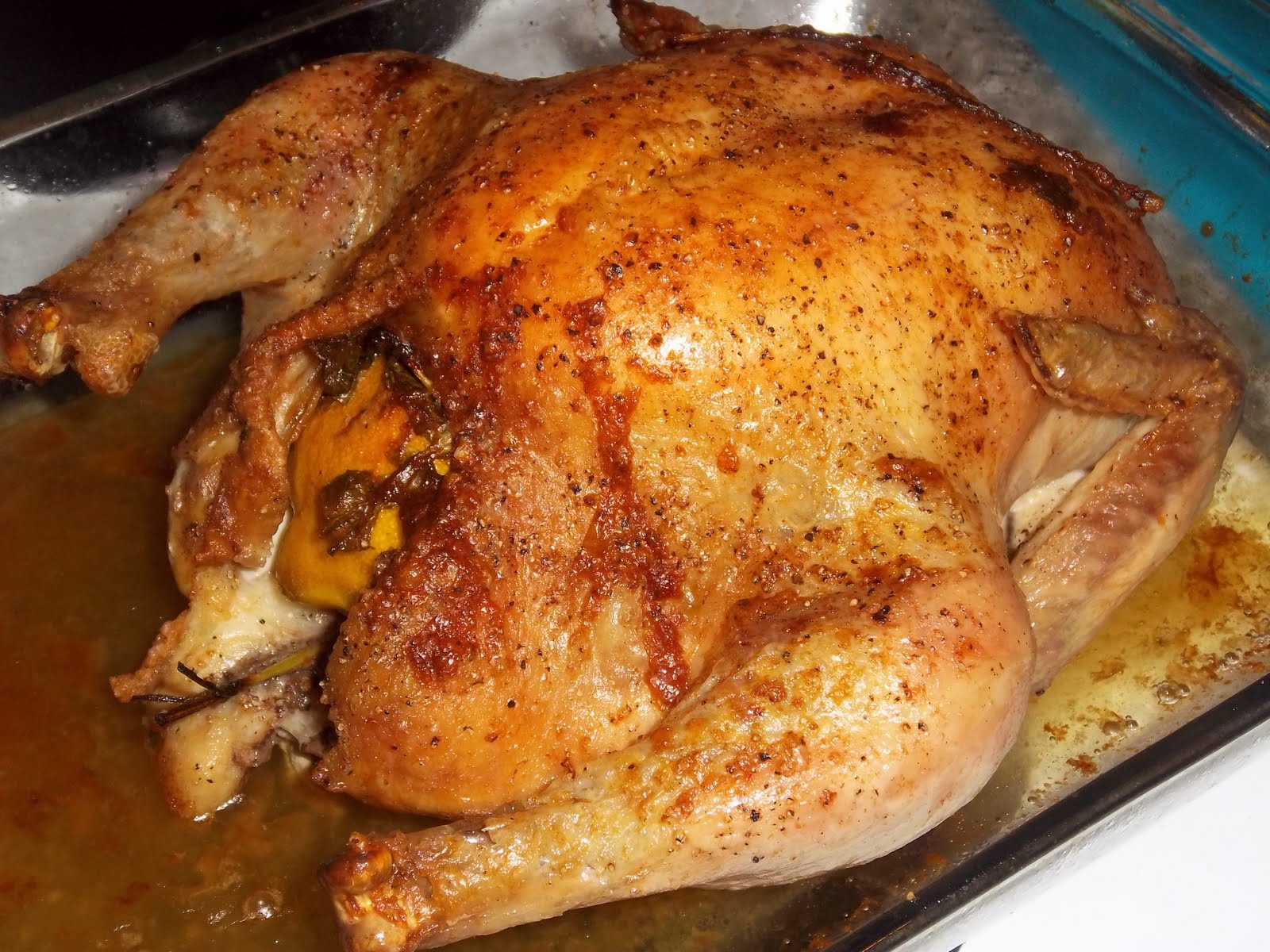
Take the brown meat from the leg bones, keeping the pieces quite large and make some good, deep slashes in the meat. Now make a devil sauce by mixing together a rounded tablespoon each of Dijon mustard and mango chutney, a tablespoon of Worcester sauce or half a teaspoon of anchovy essence (I went with the former), a quarter teaspoon of Cayenne pepper, a little salt and two tablespoons of corn – or some other flavourless – oil. Pour this over the brown meat, making sure you work it into the slashes you made. The easiest way is to do all of this inside one of those zip-lock freezer bags. Let the meat marinade for a few hours, though I wouldn’t leave the chicken more than two as it is the most bland of the three birds here; pheasant or turkey could easily take four or five though, I reckon. Now lay the devilled meat on a baking tray and grill it under a high heat until it turns a delicious dark brown colour. Keep it warm.

Whilst the devil does its work, get on with the pulled part of the dish. Pull the breast meat apart with your fingers and set aside. For the pulled sauce, melt seven ounces of butter in a wide pan and then add half a pint of double cream. Bring to a boil and let it bubble for a couple of minutes before adding the breast meat plus any bits of jelly, then season with salt, pepper and lemon juice. Lastly, stir in some chopped parsley. Spoon into the centre of a serving dish or plate and place the devilled bits around the outside.
Eat with bread and a salad.

#298 Pulled and Devilled Turkey, Chicken or Pheasant. Griggers really built this one up, and I have to say that it more than lived up to expectations. The devilled bits were deliciously spicy and salty and were perfectly complimented by the creamy and surprisingly light pulled sauce. Definitely the best recipe from the Poultry section so far, but then what can be bad about spice, butter and cream? That’s the three major food groups, isn’t it? I can’t wait for Christmas now, I’m going to get an extra-large turkey just so this can be made the next day, and it is infinitely better than turkey a sandwich, that’s for sure! 9.5/10.
#276 Giblet Gravy

It’s such a shame that the art of gravy making has been lost. This gravy is rather posh, containing things like veal and vermouth. You don’t need to add these sorts of things every time you make it, but even basic gravy is so much more delicious than any from a packet. I know it takes more planning and time, but it’s not that difficult really – mainly a bit of simming. I haven’t used gravy granules for a good couple of years now…
I’ve been meaning to do this recipe for ages – but finding chickens with giblets these days is difficult in Britain. The reason being, apparently, that people would keep forgetting to remove the giblets in their little plastic bag from the carcass before roasting it. Idiots ruining things for the rest of us, as per usual! It is also difficult finding veal in Britain too. In America however, it is pretty common. However both chickens with giblets and veal are everywhere. So I invited my friend Danny round for a roast dinner – the first I’ve made since the move over here. I don’t know why I put it off, the heat I suppose. Roast chicken and stuffing (see the next post, when I write it!) with Yorkshire puddings (my recipe here, Grigger’s here) and mashed potatoes are as manna from the Gods as far as I’m concerned. Danny had never had Yorkshire pudding before. What is that about!?
To make the gravy you’ll need a set of turkey giblets or two sets of chicken giblets – Grigson says to not include the liver, but my Mum always used it for hers and it’s good gravy that she makes! – two quartered carrots, one halved onion, either a quarter of a pint of dry white wine or 90 mls of dry white vermouth (I went with the former), a bouquet garni (see here for a post on what should go in a bouquet garni), and eight ounces of casserole veal that has been cut into pieces. Put all these ingredients into a saucepan over a high heat. When the alcohol has boiled up and the giblets and veal has changed colour, add two tomatoes that have been halved plus enough water to just cover things. Season with salt and pepper. Cover and simmer for two hours. Strain the stock.
In another pan, melt and ounce and-a-half of butter and let it cook until it turns a golden brown – a noisette brown as it is called in the trade, a good name because it does change its aroma as well as its colour and a definite nutty smell emanates. This change happens quite quickly so don’t take your eye off it. Now stir in a level tablespoon of plain flour (you can add more if you like a thick, thick gravy). Pour over the hot stock and allow to simmer covered quietly for a further half an hour. Check the seasoning.
If you are making a chicken gravy, add the juices from the roasting pan (as I did). For turkey, pour the fat away and add a glass of Madeira wine to it. Boil it up and serve it separately from the giblet gravy.
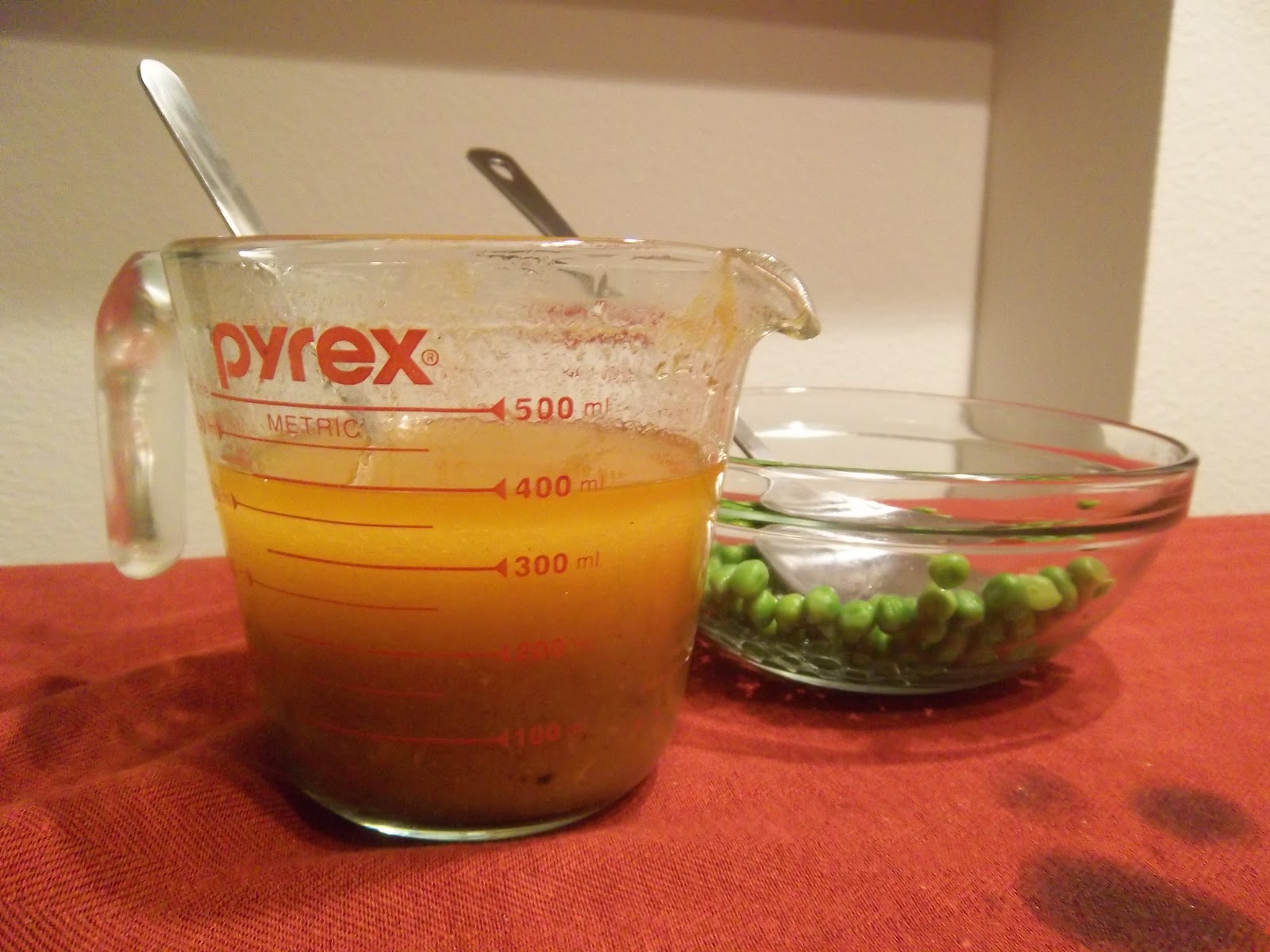
Check out that layer of butter settling out there!
I can’t believe I had no gravy boat; how embarrassing.
#276 Giblet Gravy. This was a long time coming, and it was certainly worth the wait. Rich and satisfying with a good herby flavor from the thyme I added. The best gravy I have ever made that for sure – and definitely the most indulgent. The veal, by the way, didn’t go to waste, I fished them out and serve the chunks with the meal. Waste not, want not! Anyways, an excellent recipe – 9/10.

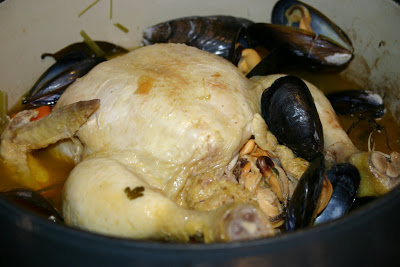
#235 Lisanne’s Chicken with Mussels

We don’t know who Lisanne was/is, other than she was a mate of Griggers and that she made this recipe up on a whim whilst in France. The reason that it appears in English Food is that it is rather reminiscent of the old English recipes of cooking oysters with chicken. I have already done the steak, kidney and oyster pudding with great success, but the thought of a eating a chicken stuffed with mussels a little odd – and don’t forget the last mussel recipe I did was very odd. However, as we have discovered along the way, this damn book is full of surprises, so we shall see…

You need to get hold of a chicken that weighs around four or five pounds as well as a nice bag of fresh, live mussels that weighs around three or four pounds.

Begin by browning the chicken all over in some olive oil along with a large chopped onion and a chopped carrot in a flame-proof casserole. Add a bouquet garni (see here for some suggestions as to what you should put in it) and a quarter of a pint of dry white wine. Bring to a steady simmer and cook for 45 minutes. Meanwhile, open around two-thirds of the mussels in a very hot pan using another quarter pint of wine. Any mussels that remain closed should be discarded, Griggers says.* Pluck the mussels from their shells and carefully stuff them into the cavity of the now half-cooked chicken. Strain the cooking liquor from the mussels into the dish and tuck the remainder of the mussels all around the chicken. Season and cook for a further 30-45 minutes.


When the chicken is ready, remove it to a serving dish, scatter the mussels around it, and scatter chopped parsley all over it. Skim and strain the sauce into a sauceboat and eat with good bread – no vegetables required says Giggers, just a green salad to follow.

#235 Lisanne’s Chicken with Mussels. I must say I was very dubious about this one and continued to be dubious a few mouthfuls later. However, I put that down to the novel flavour combination because I soon realised it was very good! The chicken was beautifully succulent and the mussels tender, though cooking them this was gives the eater a real strong mussel-hit, but if you like your seafood, then certainly give this a go. The sauce made by the cooking liquor was divine. 7.5/10

*FYI: According to the telly programme QI, this is absolute nonsense and it is Jane Grigson who is to blame for this myth. The first mention of chucking out your un-opened mussels appears in Jane Grigson’s Fish Book and people have followed this advice evermore. However, there is actually no evidence that unopened mussels will poison you – in fact, you just as likely to be poisoned by a live mussel than a dead one. That said, I still chucked out my unopened ones!

#225 Cockie-Leekie

And my lords and lieges, let us all to dinner, for the cockie-leekie is a-cooling.”

Sir Walter Scott, to his dinner guests

Cockie-Leekie, or Cock-a-Leekie, is a very Scottish dish, or so I thought. Apparently it turns up in several versions in Scottish and Welsh cook books and a rather complicated recipe in an English cook book where it is called Hindle Wakes. It appears in English food, but I haven’t done it yet.

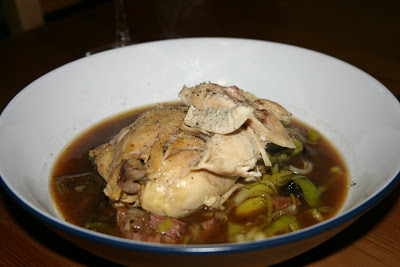
So it is not necessarily exclusively Scottish. It is also not a soup. It’s a good, hearty and simple dish: beef, chicken, leeks and prunes all stewed together. All you need is some slow cooking time. Have a go and make it for a lazy Sunday dinner as I did. It serves at least 6 people:

Start off by placing a two-pound slice of stewing steak in the bottom of a deep stockpot. Cover with water and bring it to a boil slowly, skimming off any scum as it rises to the top. Simmer for an hour and hten season well with salt and pepper. Meanwhile trim three pounds of leeks and tie half of them in a bundle. When the hour is up place them in the pot. Simmer for a further half an hour before adding a whole chicken or capon and sit it on top of the beef (you can use a boiling fowl; if so, add it when you add the leeks). The cockie-leekie now needs to simmer gently for an hour and a half. Twenty minutes before it is ready remove the bundle of leeks and add a pound of prunes. Now slice the remaining leeks up and add those in the final five minutes. Easy.


To serve it, place some beef and a piece of chicken in large bowl and cover with the thick, dark and rich stock. A meal in itself, though I did some boiled new potatoes too.

#225 Cockie-Leekie. Really good food, especially for this time of year when all is miserable and wet outside. This is home-cooking at its simplest and finest. The stock produce from the beef and prunes was lovely and rich, but did not detract from the subtly-flavoured chicken. Really good one this one. 7.5/10.

#222 Guinea Fowl Braised with Mushrooms

The poultry section of English Food has not been tackled much; I don’t know why, because I’m a big fan of poultry. Anyways, walked through the Arndale Market in Manchester City Centre, I spotted that the butcher had some Guinea fowl – not something you really see these days out of specialist poulterers, so I thought I should snap one up as I had the opportunity (I also bought some corn-fed chickens so that I can address the lack of poultry recipes tackled later).

Guinea fowl is very popular in France, but are not so in Britain these days, though they were once considered very nutritional and perfect food for invalids, so why for a nation of sickly pasty folk, we don’t eat them by the bucketful I don’t know. In Burkina Faso, braised Guinea fowl are given to women that have just given birth. So there you go; prolong your life with a Guinea fowl dinner.

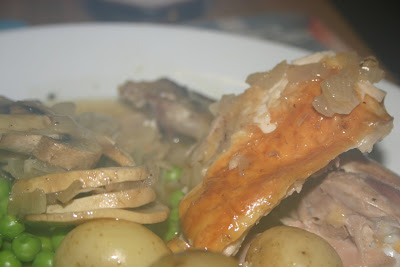
This recipe serves 3 to 4 people: Start by browning a Guinea fowl all over in butter and then placing it in a reasonably tight-fitting casserole dish breast down and dot it with two further ounces of butter. Now finely chop a medium-sized onion and sprinkle it around the sides of the bird and season. Cover tightly with lid or foil and bake for 30 minutes at 190⁰C. Meanwhile, slice 12 ounces of mushrooms and season them with salt, pepper and lemon juice (why Griggers says to do this now, I do not know), and when the 30 minutes is up, turn the fowl breast-side up and tuck the mushrooms in down the sides. Replace the lid and bake for another 40 minutes, taking the lid off for the final ten, so that the Guinea fowl can brown. Allow everything to rest for 20 minutes, then remove the bird and cut into eight pieces: two thighs, two drumsticks and four pieces of breast. Dish them up with the mushrooms and pour over the remaining buttery gravy. Serve with potatoes or bread.

My lens steamed up, sorry!

#222 Guinea Fowl Braised with Mushrooms. This was the first time I’d eaten it, and it did not disappoint. The flesh tasted like a very rich chicken and was a little gamey; so something between a chicken and pheasant (in fact, Griggers says that all Guinea fowl and pheasant recipes are interchangeable). Briasing it in butter made the meat extremely moist and succulent, the slightly earthy mushrooms offsetting it all very well. Great stuff – and easy 8/10.

#210 Coarse Chicken Liver Pate

Hello there Grigsoners! I have had a brief hiatus from blogging of late – life has simply gotten in the way. I shall spare you the boring details. December has not been the productive month I hoped, but I did make this pâté. It was intended for the Evolution Group’s Christmas Party, but I was rather ill on the day and therefore had to eat this over several days afterwards. No mean feat seeing as it serves eight.

If you are thinking of having some pâté this Christmas, try making this one. The best thing about it is that you can make it around three days before you want to eat it. I am not going to make the glaringly obvious point that pâté is not English.

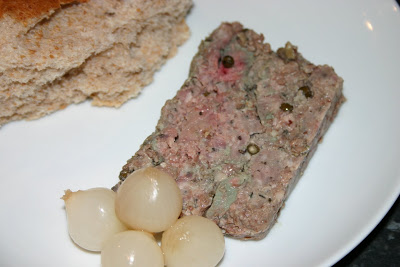
Start off by removing the gall bladders and stringy bits from 8 ounces of chicken livers. Keep aside half of the nicest looking ones and pass the rest through a mincer along with a small onion, a small clove of garlic and two rashers of streaky bacon. To the minced mixture, mix in 8 to 12 ounces of sausagemeat (the best thing to do is buy good sausages and peel them), a pinch each of thyme and oregano, some salt and some black and Cayenne peppers, plus 2 tablespoons each of sherry and brandy and a tablespoon of drained green peppercorns. When all is mixed in well, you can start putting the thing together in layers in an ovenproof pot, though you should taste the mixture first to check for seasoning (it sounds foul, but it really isn’t that bad). Start with some of the mixture, then half the reserved livers, then more mix, the rest of the livers, and a final layer of mixture. Cover with some back fat or pork skin and place in a roasting tin and pour in some boiling water. Place it in the oven for 45 minutes at 180⁰C, or until the pâté starts to come away from the edges of the pot. Once half cool, place some light weights on top and leave for two or three days before serving with toast or ‘good bread’.


#210 Coarse Chicken Liver Pâté. This was delicious and couldn’t get enough of it. I happy munched my way through the whole thing over four days. The herbs were delicate in flavour and complimented the creamy livers well. The booze made it sweet and moist, but the peppercorns made the whole thing sublime. A really delicious recipe – never buy your pâté again and have a go at this one! 8.5/10

#178 Duck with Mint

Attempting the poultry section in English Food has been a paltry effort by me, but I intend to address this, people. I thought I’d start with one of the two duck recipes. This one, where the duck is stewed with a shed-load of mint seemed right up my summery alley. It also has the added bonus of a sauce paloise, which is very similar to a sauce béarnaise (except tarragon is substituted for mint) and uses a hollandaise sauce as its base. Now proficient in hollandaise sauce making, I was eager.

Apparently the French think it is hilarious that we have mint with our lamb, when blinking Johnny Foreigner goes around eating sauce paloise here there and everywhere with their duck! Only joking Frenchies, I loves ya really!

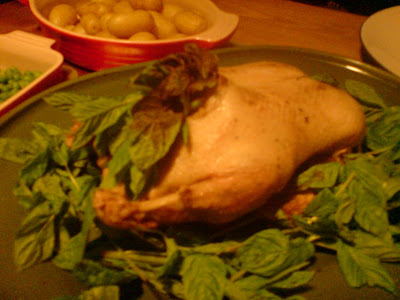
To make this, season a large duck inside and out with salt and pepper before stuffing its cavity with a whole bunch of mint. Next, wrap the duck in a large napkin or double-wrapped muslin. Half fill a large pot with water and add a large quartered carrot, a large onion studded with three cloves and a stick of celery. Bring it to the boil and then place the duck in and leave it to simmer, covered, for 2 ½ hours. When cooked, remove the napkin and place on a serving plate surrouded by mint leaves.

Start making the sauce around half an hour before the cooking time is up: Into a small saucepan add a tablespoon of chopped shallot, two tablespoons of chopped mint, a tablespoon of chopped chervil, a sprig of thyme, a quarter of a bay leaf and four tablespoons each of dry white wine and white wine vinegar, plus a good seasoning of salt and pepper. Boil down this mixture, until it has reduced by two-thirds. Allow to cool. Now place the mixture in a bowl and beat in three large egg yolks. Place the bowl over a pan of simmering water and beat in six ounces of unsalted butter bit by little bit. Season with lemon juice and more salt and pepper if required. Finally, stir through some freshly chopped mint leaves. Pour into a salad boat.

FYI: Chervil is tricky herb to get hold of, so instead of using it you can use the small yellow leaves from the inside of a bunch of celery, they provide a very similar flavour.

#178 Duck with Mint. If you don’t like mint, this is not the recipe for you. However, I love mint and it was just the thing for a summertime Sunday dinner. The duck was tasty, though a little dry, but the rich and tart sauce married with it perfectly well. In fact, the sauce paloise was the star of the show. I think it would go very well with lamb or even fish. The Medieval look of the birs with all the mint leave in and around it, was quite impressive too. Overall, I think this deserves 7.5/10 (though the sauce would be 9/10+ if I was marking it separately).

#147 Devilled Chicken Livers

A cheap treat. I love chicken livers, yet so many people seem to turn their noses up at them – I suppose it’s because it’s offal and folks are squeamish. It is silly though, since they are the main ingredient in pate. Any road, any local butcher should sell them very cheaply – I bought 250 grams for about £1.20 and they were prepared too, which reduced the amount of faffage later. If you buy them – do check they have had their bitter green fall bladders removed or the food will be ruined. This recipe appealed to me because of its simplicity, but also because of its ‘devilled’ (i.e., spiced) nature – a very Victorian way of cooking things (eggs and kidneys spring to mind). Devilling seems to be having a resurgence recently – the day after I cooked this, some chef on The Great British Menu competition that’s being shown on the BBC cooked devilled crab claws. Hopefully it will get popular again.

Have a go at this – it’s enough for 4 people as a starter.

Finely chop a medium-sized onion and fry it in 2 ounces of clarified butter gently. Whilst you wait for the onions to soften, chop up 8 ounces of chicken livers roughly, raise the heat and fry the livers quickly, do this for only 2 minutes, 3 at the most. This is why clarified butter is required – it doesn’t burn when you heat it as the ‘butter solids’ have been decantered off. I made my own by melting some butter gently, skimming off any scum from the top and decanting and solids away that had sunk to the bottom. Take the livers off the heat and add 2 teaspoons each of Worcester sauce and Dijon mustard, Cayenne pepper, 3 tablespoons of breadcrumbs, ¼ pint of whipping or double cream, and finally some salt and black pepper. Mix well and check your seasonings. If you like you devil a spicy one add more – I did! Divide between 3 or 4 ramekins and sprinkle with more breadcrumbs and melted butter. Bake at 190°C for 15 minutes and serve with toast.


#147 Devilled Chicken Livers – 9.5/10. I may change this to a 10/10 as it was a perfect starter. Absolutely delicious – the devil was fiery yet it was perfectly tempered with the cream and breadcrumbs. The big strong flavours had no chance of drowning out the rich creamy chicken livers. Brilliant stuff. I haven’t stopped thinking about since I made them, and my stomach is rumbling as I type. This is definitely a Grigson classic!

#100 Roast Turkey

The one-hundredth recipe had to be the Roast Turkey really didn’t it? It is the centrepiece of the whole dinner, perhaps the day. I bought us a nice free-range one from Frosts in Chorlton. I’m glad I was allowed to do it, as my Mum always panics about the turkey and over-cooks it by about two hours; in fact, over the last few years, she’s taken to over-cooking it the day before! It took some persuasion for us to cook the bird on the day: “Well I’m not getting up at 6 to put it in!”. Obviously, I didn’t get up at 6. I stuffed the turkey as recommended by Griggers with lemon and parsley stuffing. If your Christmas turkey tuned out to be, well, a bit of a turkey, try it this way next year. One doesn’t like to blow one’s own trumpet, but it was the best Christmas turkey we ever had at home; though it wasn’t really down to me, but to Jane Grigson.


The first thing to do is to remove the giblets and stuff the bird. You can stuff the cavity or the neck end, it doesn’t really matter. Next, calculate the cooking time of the turkey: 30 minutes per kilo if it’s below 7 kilos (15 lbs). If you are cooking a monster, add an extra 20 minutes per kilo after that. You must include the weight of any stuffing you’ve used too. Put the turkey on its side on a rack in a roasting pan and smear it all over with 6 ounces of slightly salted butter. Cover with a double layer of foil and cook at 190ºC for the appropriate time. Just under halfway through the cooking time, turn the bird onto its other side, and then in the final half an hour, put it on its back and remove the foil so it can brown nicely. Season with salt and pepper. Baste it a few times, if you like. Allow to sit for at least 20 minutes before you carve it. In fact, we left it for about an hour and it was still juicy and hot, so don’t feel you have to rush or anything. Skim off the fat from the juices in the pan, then make your gravy by boiling up the juices with a quarter of a pint of dry white wine and thicken with flour or gravy browning. Add enough hot vegetable stock to achieve the right thickness.

#100 Roast Turkey – 9.5/10. I love Christmas dinner, so I’m really glad that I did the turkey for the 100th recipe. This is a foolproof methods for doing your Christmas/Thanksgiving bird; succulent, tasty, not in the slightest dry. Bloody marvellous.