#401 Plum Bread

I made this bread (the penultimate recipe in the Breadpart of the Teatime chapter) all the way back last autumn when plums were in season. It has taken me only four months to pull my finger out and tell you about it.

This is a recipe from a book called British Cooking by Theodora Fitzgibbon published all the way back in 1965. I just a quick search of her back catalogue and she has written a huge series of books on British and Irish cookery. (I ordered a load off that evil website that rhymes with Schlamzon, don’t judge me.)

Jane points out that raisins can replace plums out of season. Here’s what to do:

This is an old school recipe and so it starts with an ounce of fresh yeastcreamed in 3 tablespoons of warm milk. Leave it to do its stuff for 10 minutes and in the meantime mix together 8 ounces of strong white flour, 2 tablespoons of sugar and the grated zest of a lemon in a bowl.

Make a well in the centre and plop in a large beaten egg, 2 ounces of melted, but tepid, butter and the yeast. Now mix to form the dough. What Jane does not mention is that this dough is so stiff it couldn’t possibly make a decent loaf of bread. Nevertheless, once the dough is (somehow) kneaded to make a smooth dough, place it in an oiled bowl with some clingfilm over it.

Next stone and chop enough plums to make 8 ounces and knead these into the bread. This was quite simply an impossible task, the dough was so stiff that the plums just squashed and made a pulpy mess. This required the food mixer.
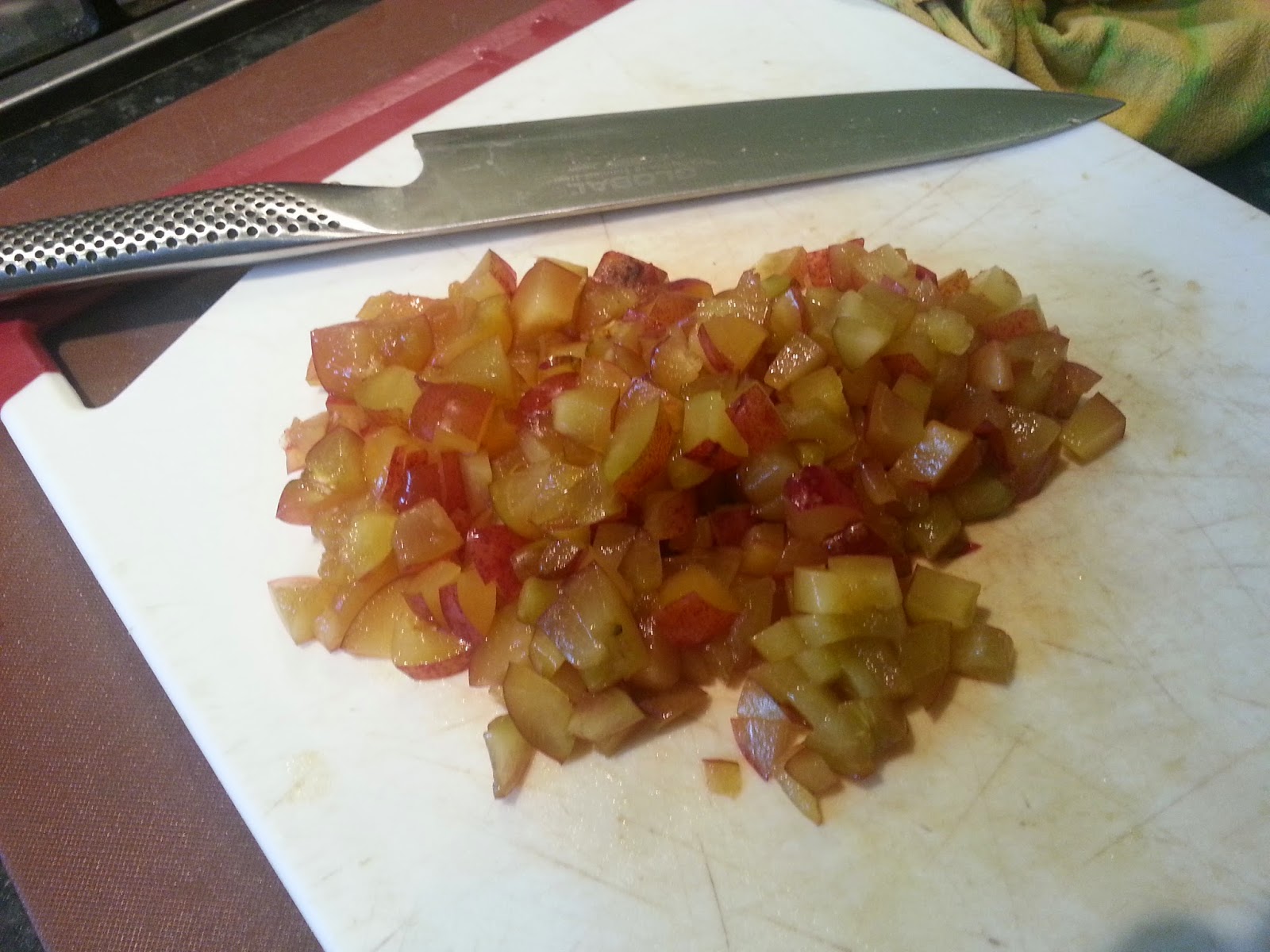
“Mix in the plums, this makes the dough sticky”, says Jane. Well the Kitchen Aid made it into a big old sloppy mess, and I was not feeling hopeful.

Pour this mixture into a buttered and lined 9 inch loaf tin and leave it prove until the dough comes to the top of the tin. Bake for an hour at 190⁰C, remove and see if it sounds hollow, if not, pop it back in for another 15 minutes.

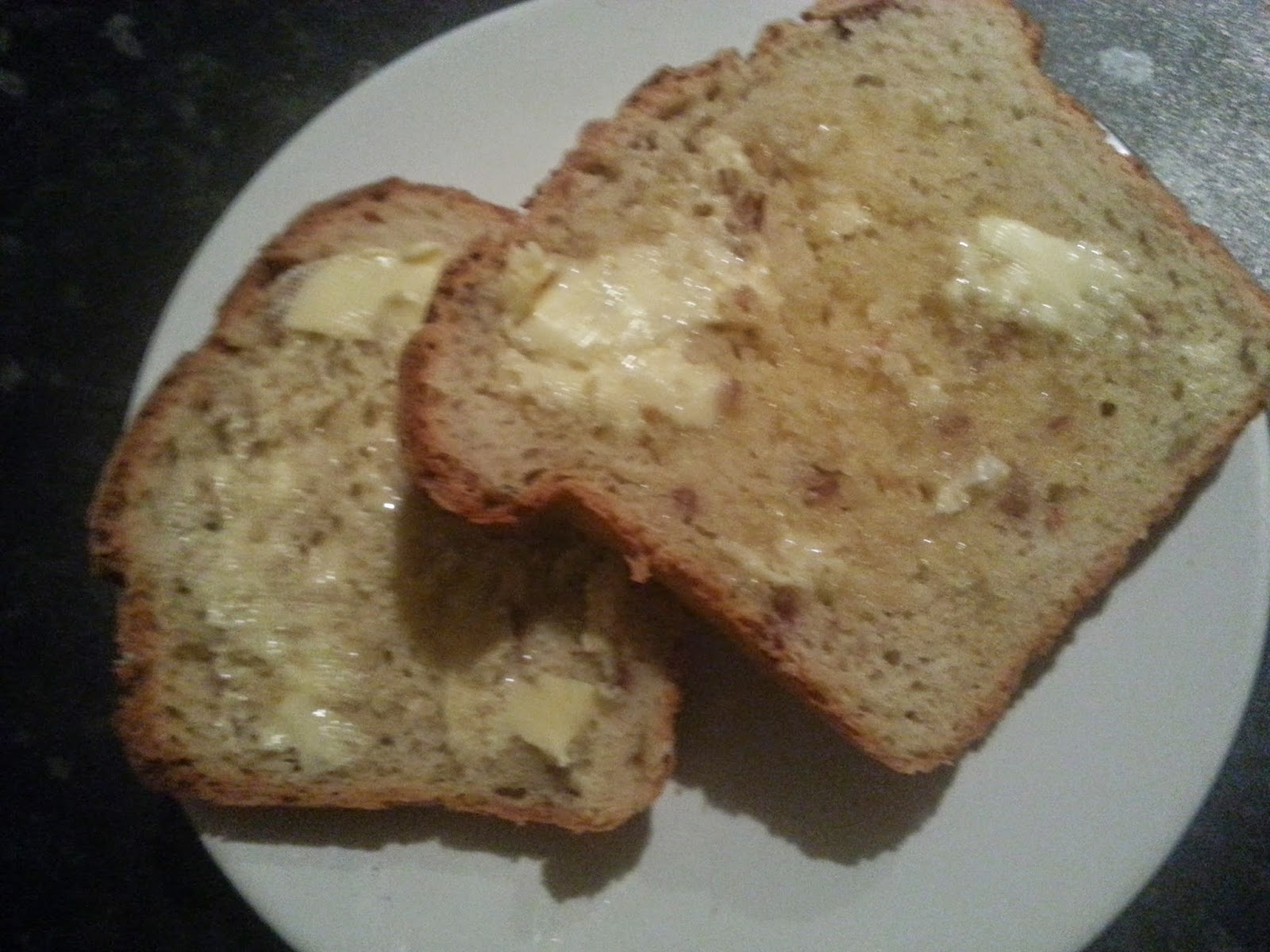
#401 Plum Bread. Of all the hundreds of bread recipes in England, why did Jane pick this one? It was so difficult to make and really was not worth the effort. Although the plums were delicious and sweet, the final bread had a strange sour taste. Its texture was very close and cakey. I am wondering if there was a typo or something somewhere in the recipe (I have spotted quite a few in other recipes). Disappointing and took up far too much of my time. 3/10.

#377 Brandy Snaps

An English classic, one of which I have never made; I’ve eaten plenty of them of course, but never really bothered about going the whole hog and piping cream into them. Fearing I was a becoming a biscuit heathen I did a little research and found that in many parts of England, especially the south and London, people ate them on their own as large rounds, rather than the familiar cigarette shapes where they called them ‘jumbles’. Phew.

Don’t fear the brandy snap, it turns out they are not as difficult to make as people say, though a little patience is required for the first few before you get into your stride: too hot and they tear (and burn!), too cool and they cannot be shaped and break. Do them one at a time and if the others get too cool, pop them back in the oven for a few seconds to soften again. No probs!

This recipe makes up to 36 brandy snaps – that seems a lot, but they keep for weeks in an air-tight box.

To begin, melt together 4 ounces each of butter, golden syrup and granulated sugar in a saucepan. Mix until everything has melted and is smooth, but be careful not to let it boil. Take off the heat and when ‘barely tepid’ mix in 4 ounces of plain flour, a pinch of salt, 2 teaspoons of ground ginger, a teaspoon of lemon juice and 2 teaspoons of brandy. This seems like a paltry amount of brandy but it really does make a difference to the flavour.

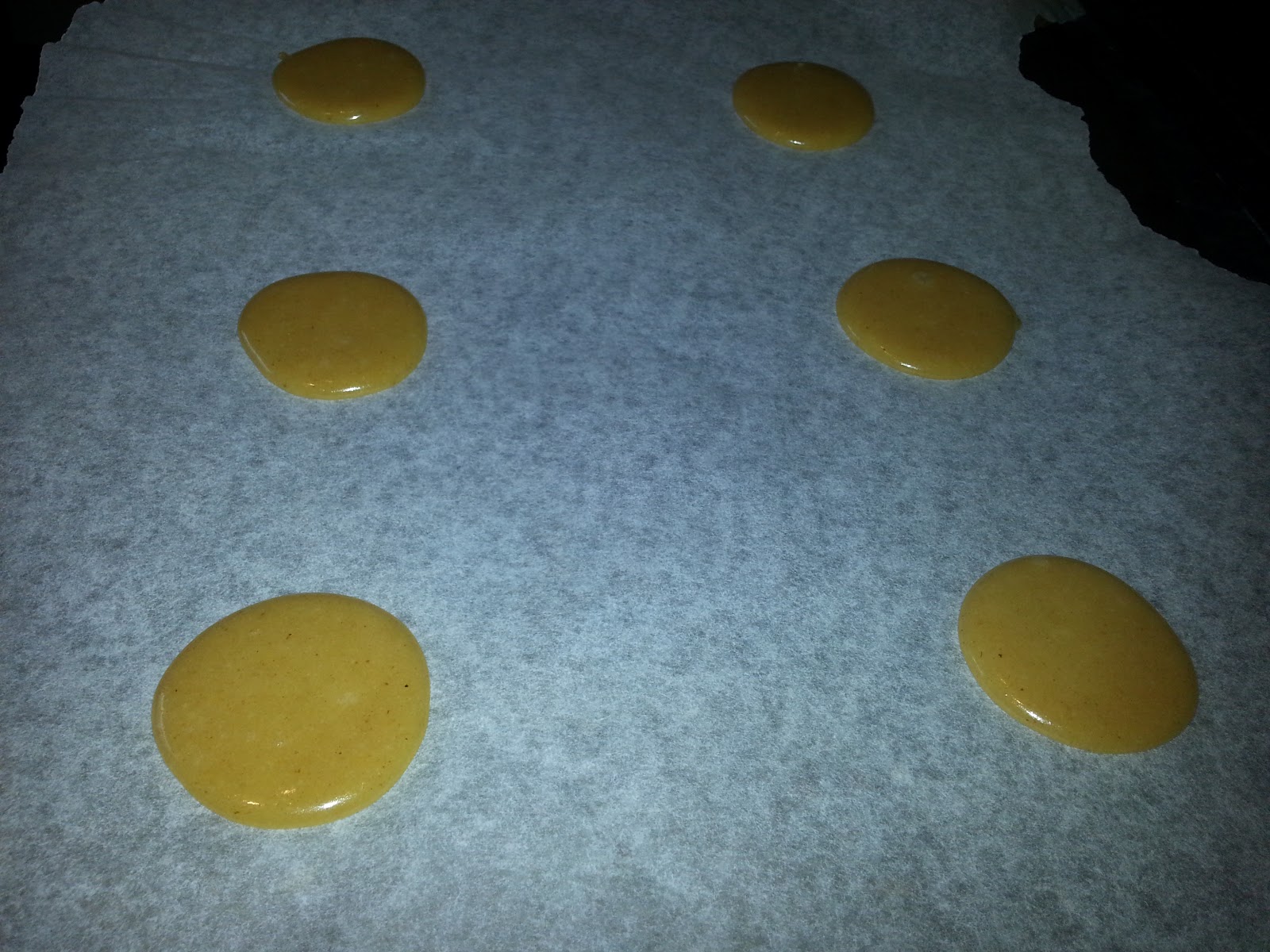
Preheat the oven to 200⁰C (400⁰F) whilst you get on with spooning out the mixture onto baking sheets. The best thing to do here is to cover two large baking sheets with greaseproof paper and to spoon out sparsely teaspoons of the mixture; these things really spread so you’ll only want 4 or 6 spoonsful per sheet. Make sure your spoons are small, equal in size and neat; I found that using a melon-baller helped here.

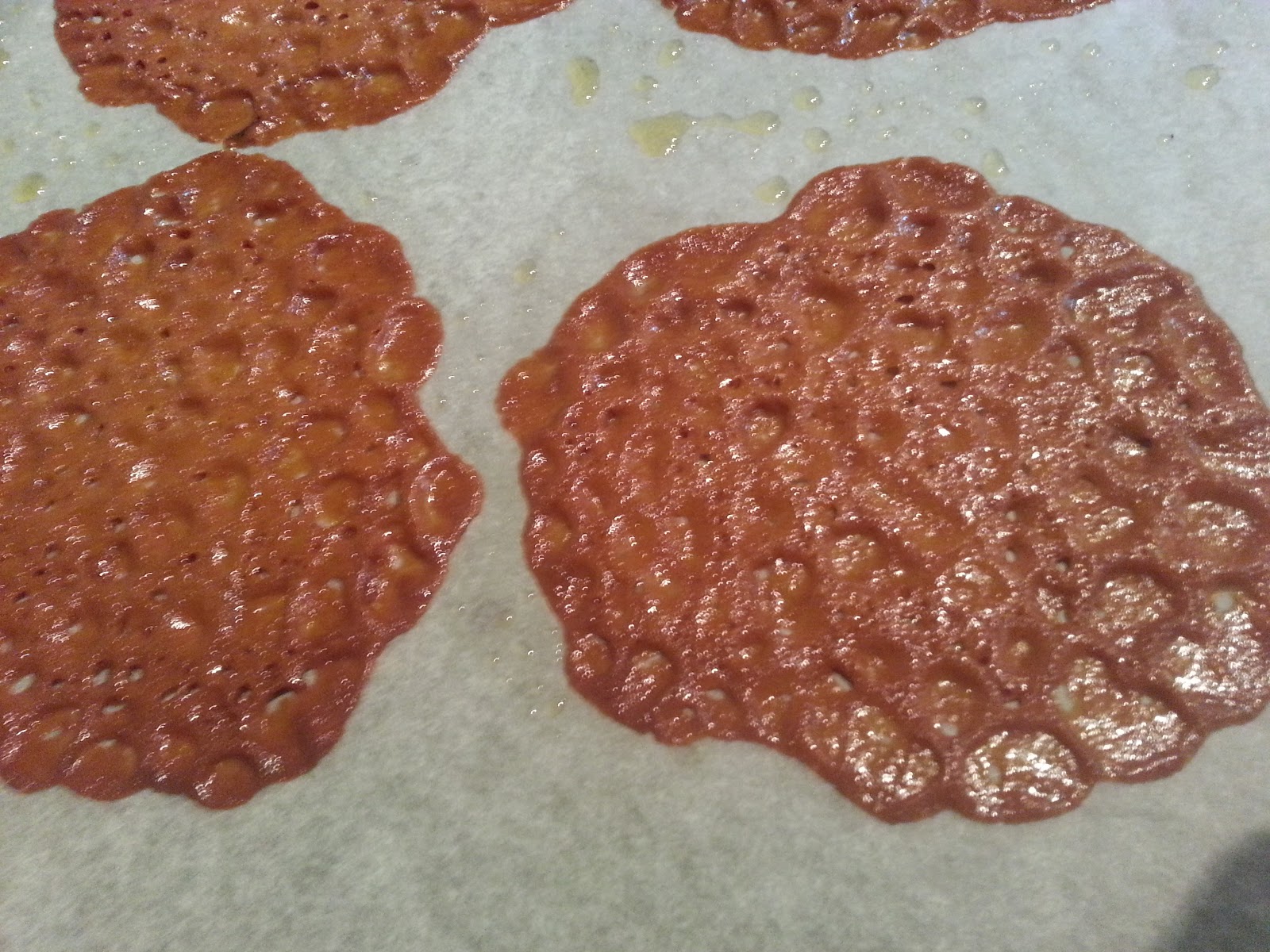
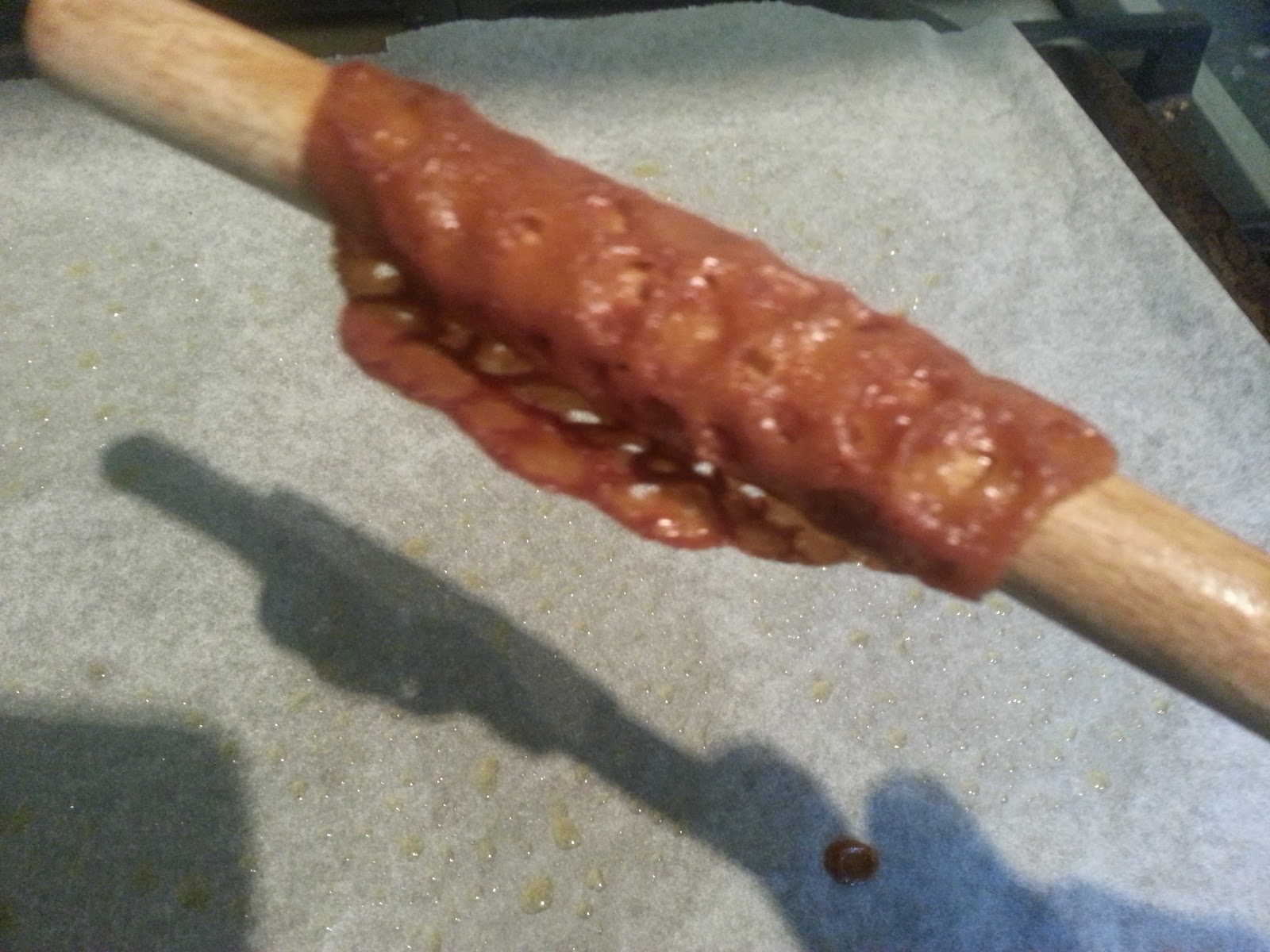
Bake them for about 8 minutes until they have spread, darkened and bubbled up. Remove from the oven and let them cool a little before shaping. For the classic cigarette shape lift one of the paper using a palette knife – if it tears then it is too hot – and lie it across the handle of a wooden spoon and fold it over. Slip it off and do the next one; if too cool pop back in the oven. To make basket shapes, lie the brandy snap over the base of a jam jar.

If you want to fill the brandy snaps, whip up ½ a pint of double cream and pipe the cream inside. There’s no need to sweeten the cream here as the snaps themselves are so sweet.

#377 Brandy Snaps. These were absolutely delicious – crisp, slightly spiced caramels that cracked satisfyingly into bland cream (Bland is not always bad!). Lovely, and so much better than bought. Go make some! 9/10


#371 Oatcakes

I love an oatcake – in fact I love oats in general, they are my favourite of the cereals.

You may think that Jane Grigson is taking liberties (and she has done this many times already) by including a Scottish recipe in a book of English Food, but you would be mistaken. Oats were the main cereal crop for the most of northern England as well as parts of Wales too; wheat was for the rich and oats and barley for the poor. In Scotland, oats were the only cereal that would grow, so oats have become more synonymous there than in England or Wales.

The best thing I found out was that an oatfield fell victim  to a crop circle in 1676 – the first ever recording of one! The woodcut below shows that people assumed it was the work of the devil, rather than men from outer space.


To make true Scottish oatcakes, you need some specialist equipment (the recipes themselves hardly differ); a spurtle, which is a wooden stick used to for stirring and mixing and it looks a bit like Harry Potter’s wand; a special rolling pin called a bannock-stick that leaves a criss-cross pattern on the rolled out dough; a spathe, a special piece of equipment that is used to move the oatcakes from board to girdle that is heart-shaped with a long handle; then there is the banna-rack, a toaster used to dry the oatcakes.  I do own a spurtle, but the other pieces of equipment are rather more tricky to get hold of.
You can make oatcakes large or small, leave them whole (bannocks) or cut into quarters (farls). Here endeth today’s Scottish vocab lesson. I found this wealth of information in a great book that I picked up in a second-hand bookshop in Inverness last year. It is called The Scots Kitchen: Its Lore & Recipes by F. Marian McNeill and it’s well worth getting hold of a copy.

Oatcakes are somewhere between a pancake and a biscuit, but appear in the Pancakes & Griddle/Girdlecakes  section of the Teatimechapter and not the Biscuitspart. I think I would classify them as a biscuit even though they are cooked on a girdle because they’re so crisp; after their initial cooking , they would be dried out in front of the fire and then stored in a meal-chest or girnel covered in oats. We use Tupperware today of course.

I made these oatcakes to take up with me on a visit to my friend Frances who lives in an amazing 17th century house in the Lake District. In her instructions, Jane says to ‘toast lightly before the fire before serving them’, and Frances’s house is not short on proper roaring fires as you can see by the photo below.

Mix together 4 ounces of medium oatmeal with 4 ounces of plain flour and a level teaspoon of salt, then rub in 2 ounces of lard, dripping or poultry fat(vegetarians can, of course, use hard vegetable fat, but be careful to buy some not made from hydrogenated fats). Mix in enough cold water to make a soft dough. Roll out thinly on a ‘oatmeal-strewn board’ and cut out circles using a scone cutter.
 
To attain really thin oatcakes, Jane suggests slapping them ‘between your oatmealy hands. I tried this but it was difficult. I found it much easier to roll and cut out circles, then rolling the circles separately on the board. They weren’t perfectly circular, but they were very thin and crisp. The mixture made me 16 good-sized oatcakes.
 
Before you griddle to oatcakes make a glaze by beating together an egg with a tablespoon of milk and a teaspoon of sugar.

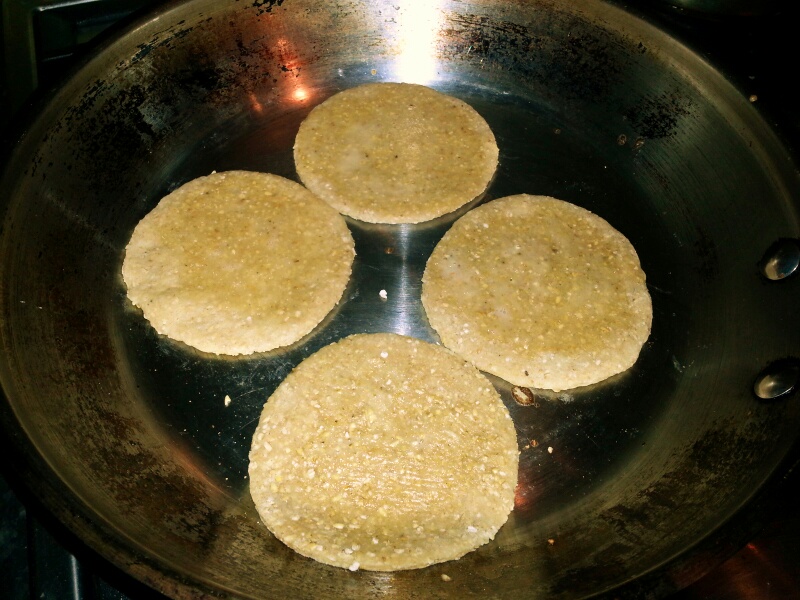
Heat up an ungreased griddle or other suitable heavy-based pan. When hot, place the oatcakes on the griddle and paint them immediately with the glaze. Let them cook through – you know this is happening because the glaze dries and goes shiny when they’re done. There is no need to turn them.
 
Cool on a wire rack and store in an airtight container and toast them dry in front of a lovely fire, or failing that back on the griddle or in the oven.

We ate them fresh from the fire with butter spread on them.

#371 Oatcakes. These were very good indeed, they were good and salty and the slightly sweet glaze counteracted it perefectly. Most importantly the almost too-heavy seasoning brought out the lovely toasted oatiness – I think it is important to say that I used organic oats, and I am sure that this made a difference because it really was a hit of oat flavour. I loved how they all curved and curled as they cooked too. Very good 8/10
 

#370 Chelsea Buns

‘The best of all buns, on account of their buttery melting sweetness, and the fun of uncoiling them as you eat them’
Jane Grigson

Chelsea buns are indeed delicious, and I think I may agree with Ms Grigson that they are indeed the best. Things are often a far cry away from their best when one makes them ourselves. And after all, what is the point of making something at home if it isn’t as good or better than what you can get in the shops?

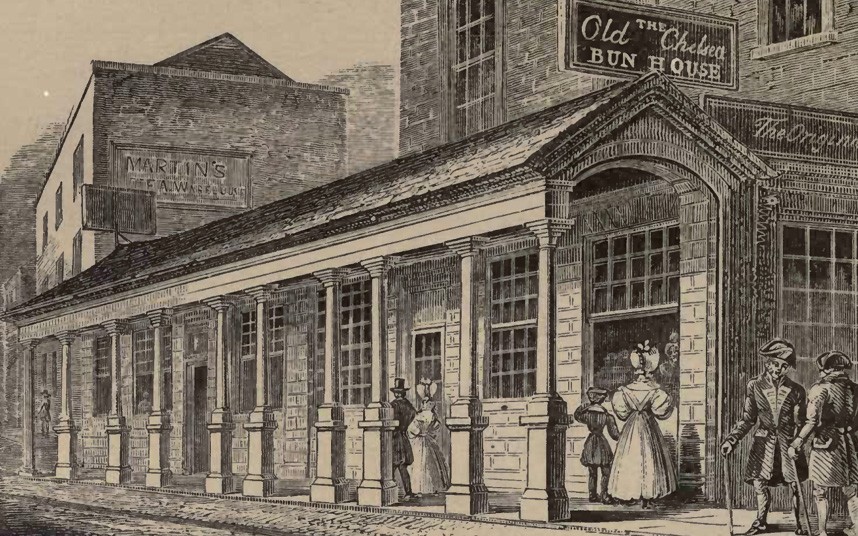
The Chelsea bun is an 18thcentury invention, created in the Old Chelsea Bun House, situated between Chelsea and Pimlico. Curiously, noone is absolutely sure of its exact location, but it is known that Kings George II and III visited often. It finally closed in 1839.
The Old Chelsea Bun House
For those of you not in the know, Chelsea buns are made from coils enriched bread dough filled with butter, dark brown sugar and dried fruit and brushed in a sticky sweet glaze.
To make your own Chelsea buns you will need to prepare a batch of #224 Basic Bun Dough, which I first made many moons ago and is also used to make #237 Hot Cross Buns.
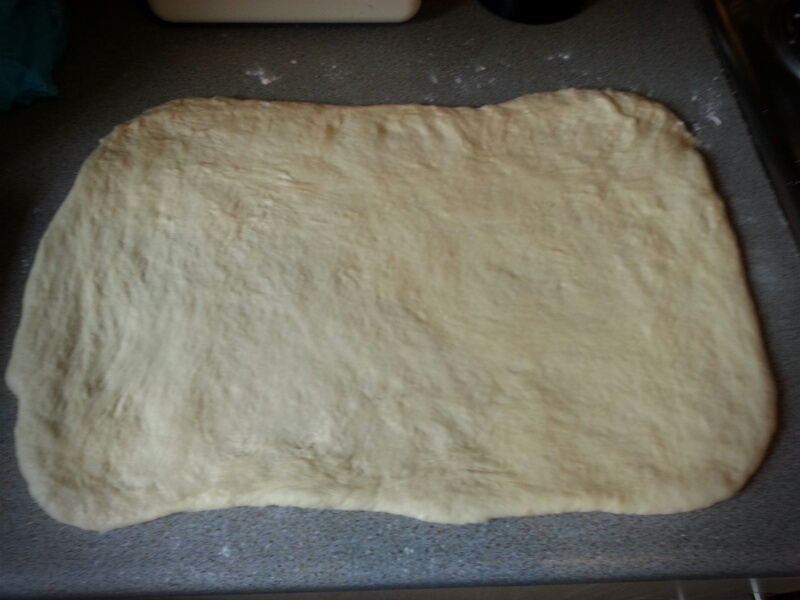
Knock back the dough, stretch and roll it into a rectangle of approximately 12 inches by 18 inches so that it is set out before you like a landscape and not a portrait painting.
 
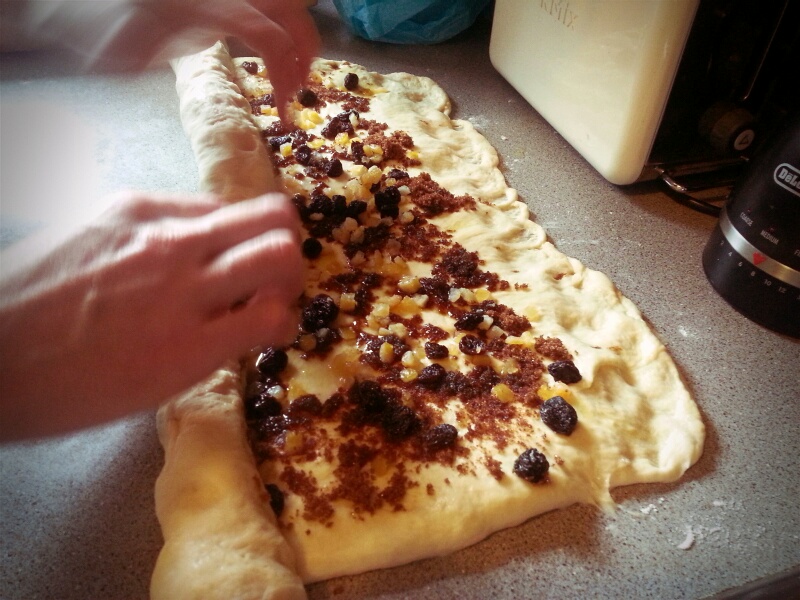
Melt 2 ounces of butter and brush the dough with it, then sprinkle 3 ounces of dark brown sugar evenly over that. Finally, scatter with 3 ounces of raisins and 2 ounces of candied orange peel. Make sure everything goes right up to the edges of your dough. Now start to roll it up; start at one far corner and carefully fold the dough over along the long side.
When you get to the end, go back to the start and start rolling up one section of a time. It needs to be quite a tight roll, so lift the rolled up dough a little to stretch it as you coil it up. Keeps going until it’s all rolled up – it’s quite easy to develop the knack.

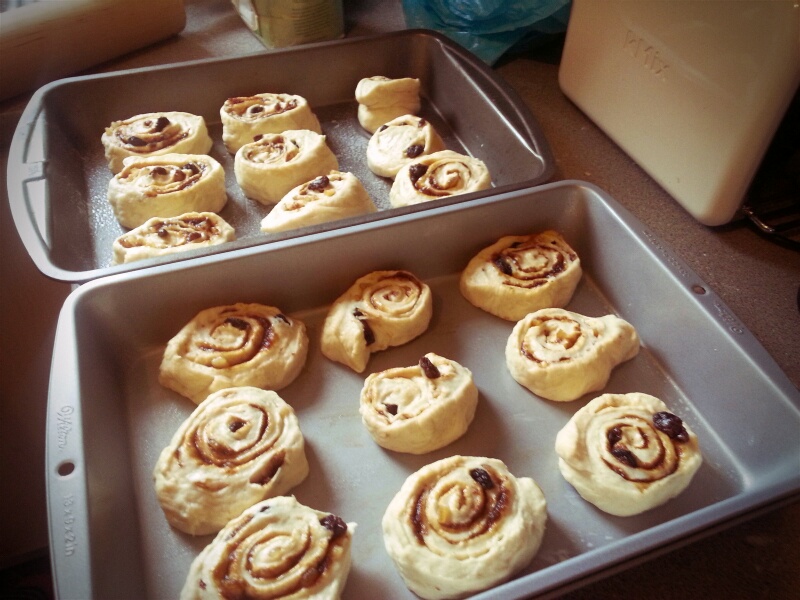
Using a good serrated knife or a dough scraper, neaten the roll by taking off the two ends (these can be rolled up to make little teacakes). Now cut the dough into 18 equal pieces. This is easier than it sounds – first cut it into thirds, then cut those thirds into halves to make 6 pieces, and then cut those small bits into thirds again! Breaking it down like that ensures you get even-sized buns.

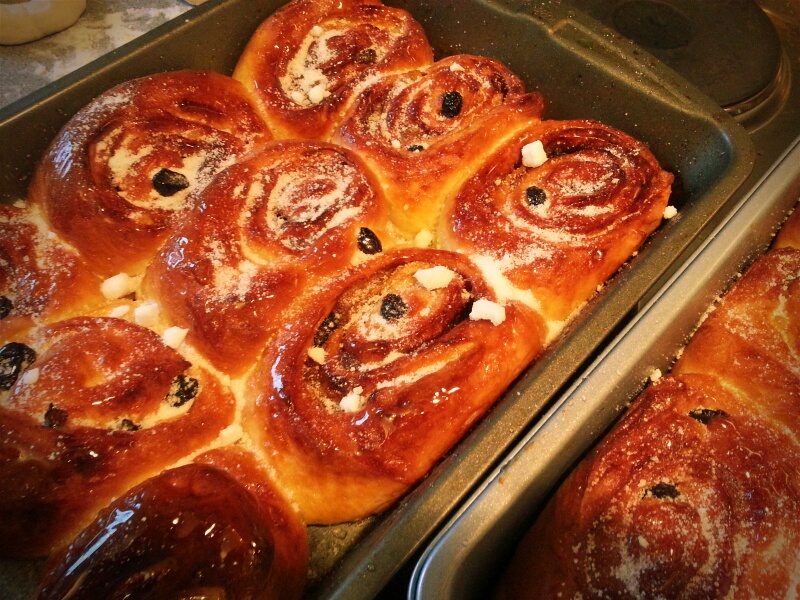
Grease one large or two medium tins and arrange the buns inside, leaving a gap of about half an inch between them and the sides of the tin. Brush with some beaten egg, then cover with a damp cloth so that they can prove for 20 to 30 minutes until the coils are just touching. Bake for 10 to 15 minutes at 230⁰C (450⁰F). While the buns are baking, make a bun wash by boiling together 5 tablespoons of water and 2 ounces of sugar until syrupy. When the buns are ready, the edges will be well-joined and the tops nicely browned. Brush over with the bun wash and sprinkle over some crushed up sugar cubes if liked.

It might be tempting to dive straight into the buns while they are hot, but they do eat better if cold or barely warm.

#370 Chelsea Buns. These were brilliant and better than any you can buy – the dough was light and fluffy, the fruit soft and darkly sweet. Excellent with a cup of tea. Definitely the best bread recipe from the Breadsection so far, and not as tricky to make as you’d think. Go and make some! 10/10.

#346 Pice ar y Maen (Welsh Cakes on the Stone)

The griddle (or girdle) cakes in this book have been a bit mystery to me in that there are a fair few, so they’re obviously greatly-loved, yet they have all been rather dry, often with the raw taste of flour and more like a bit of cooked, badly-made, pastry. The problem is, I don’t really know what they should be like in consistency as I have never eaten one outside of Neil Cooks Grigson, and there is often little guidance from Jane as to how much liquid goes in. This time I am going to add more liquid so that it is more like a biscuit dough to see if this makes a difference.

Pice ar y Maen are traditionally made on St David’s day in Wales, but like the pancakes made on Shrove Tuesday, they’re made all year round too. Apart from the inclusion of the spice mace in the recipe, it’s made up of ingredients that are likely to be in the store cupboard.  

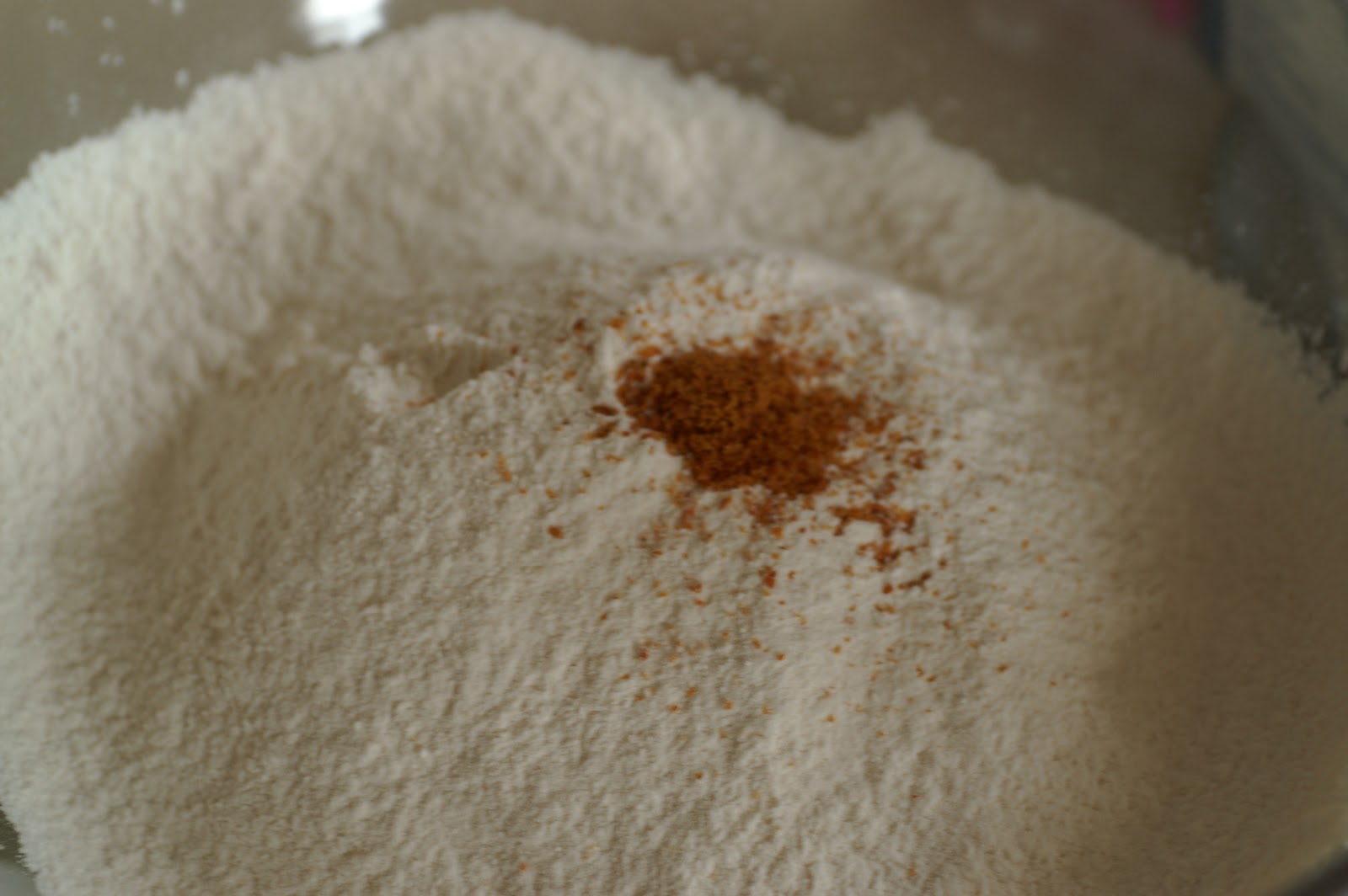
Sift one pound of flour with a teaspoon of baking powder, a good pinch of salt and a teaspoon of ground mace


Next rub in with fingers, pastry blender, mixer or processor 4 ounces each of butter and lard. Stir in 4 ounces of raisins or currantsand 6 ounces of sugar. Now beat in 2 eggs along with a little milk. You need a dough that is soft, but not so much that it falls apart and sticks to the rolling pin and worktop. I prefer to be generous with the liquids.

Strew plenty of flour and roll out thinly – if the dough is too sticky to do this easily, knead in some more flour. Cut out into dinner plate-sized rounds, though I think a 3 inch diameter round works best as they are easier to turn.

Heat a little bit of lard in a heavy-bottomed pan, cook for about 3 minutes per side.

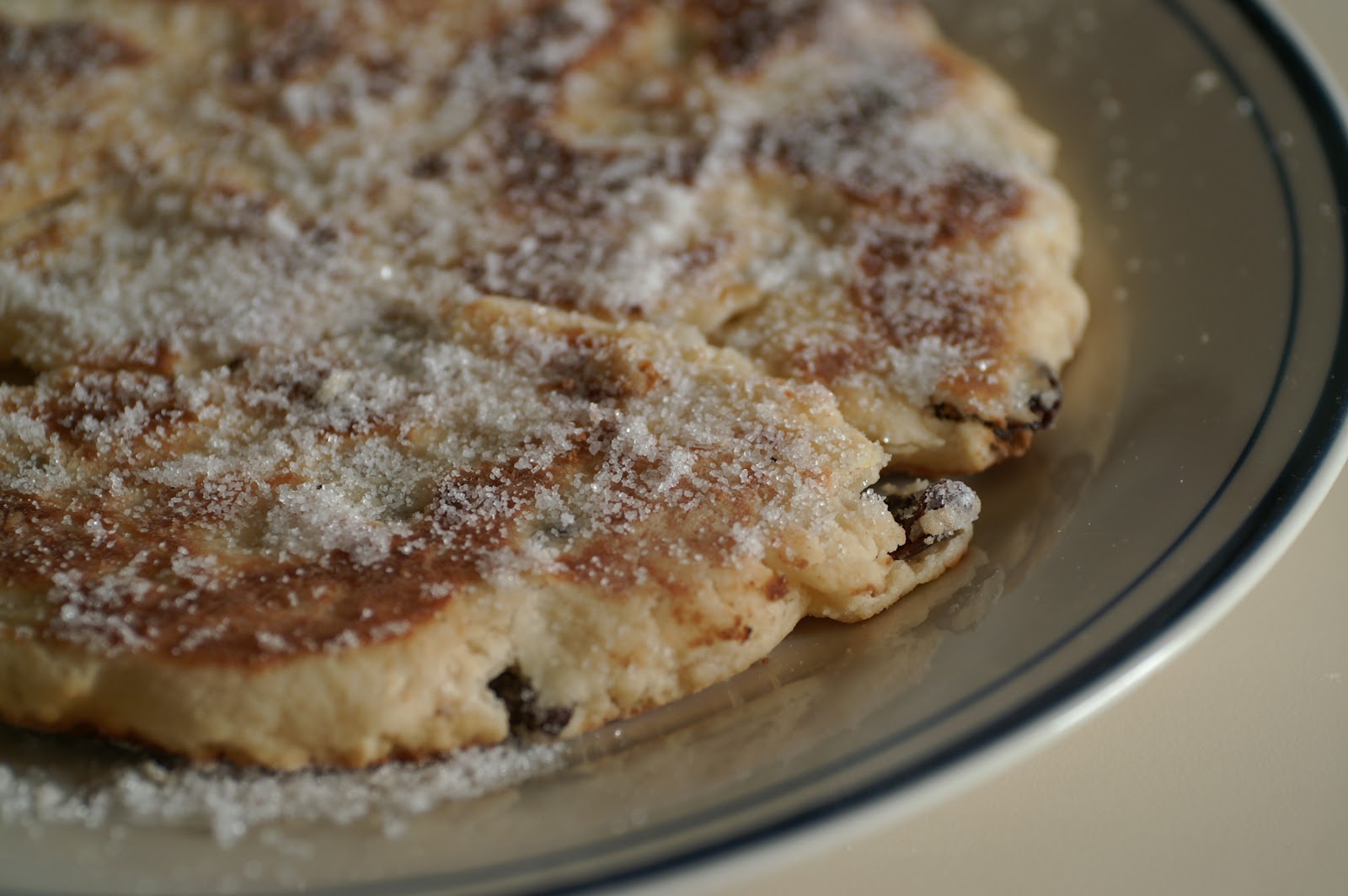
Rather than serving with butter and syrup, Griggers says you should turn them in the extra sugar.

#346 Pice ar y Maen (Welsh Cakes on the Stone). Well I have to say that these have been the best of the griddle/girdle cakes so far – the other ones have been dry (though I think this difference is due to the fact  I have become a better cook).  They were light and a little stodgy – in a good way – they were certainly sweet enough and they sent the delicious aroma of mace into my kitchen as they cooked. Very good, though I did have to add a little butter, I must admit. On the strength of this, I think I need to revisit the other girdle cakes. Very good 8/10.

#308 Walnut Biscuits

The blog has been a little quiet of late because of a combination of business and broken car. This means that I’ve not been able to explore St Louis’s butcher’s shops, markets et cetera anywhere near as much as I’d hoped this month. However, there are still a few simp recipes to do in the book and this is one of them. I had hoped to not do any recipes from the Teatime chapter of the book because I have done so many and there are so many under-represented chapters. However, beggars cannot be choosers, so I made these walnut biscuits that are very similar to the sugar thins I made ages ago. Don’t feel guity about eating a load of these either; walnuts have more antioxidants than any other nut. You might end up a fat little piggy, but you’ll have none of those pesky free radicals aging the skin of your three chins.

Start off by creaming together seven ounces of softened butter with five ounces of caster sugar. Next, beat in a large egg and then eight ounces of self-raising flour and three ounces of chopped walnuts.

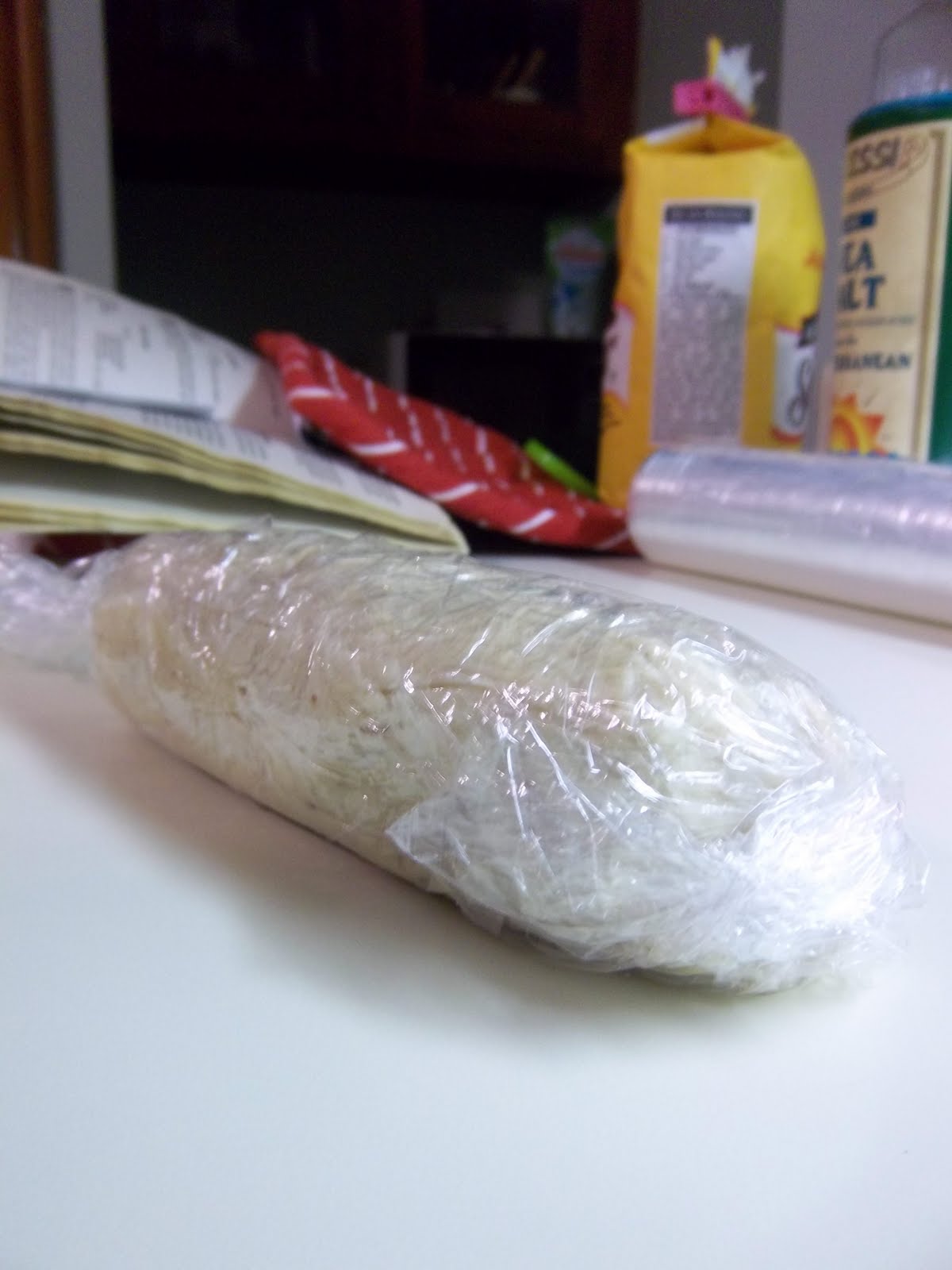
Spoon a third of the mixture onto a rolled out piece of cling film and roll it up tightly to form a sausage shape that is about 2 inches in diameter.

Repeat with the rest of the mixture. Put the sausages of dough in the fridge to harden up over-night. You can freeze them like this too.

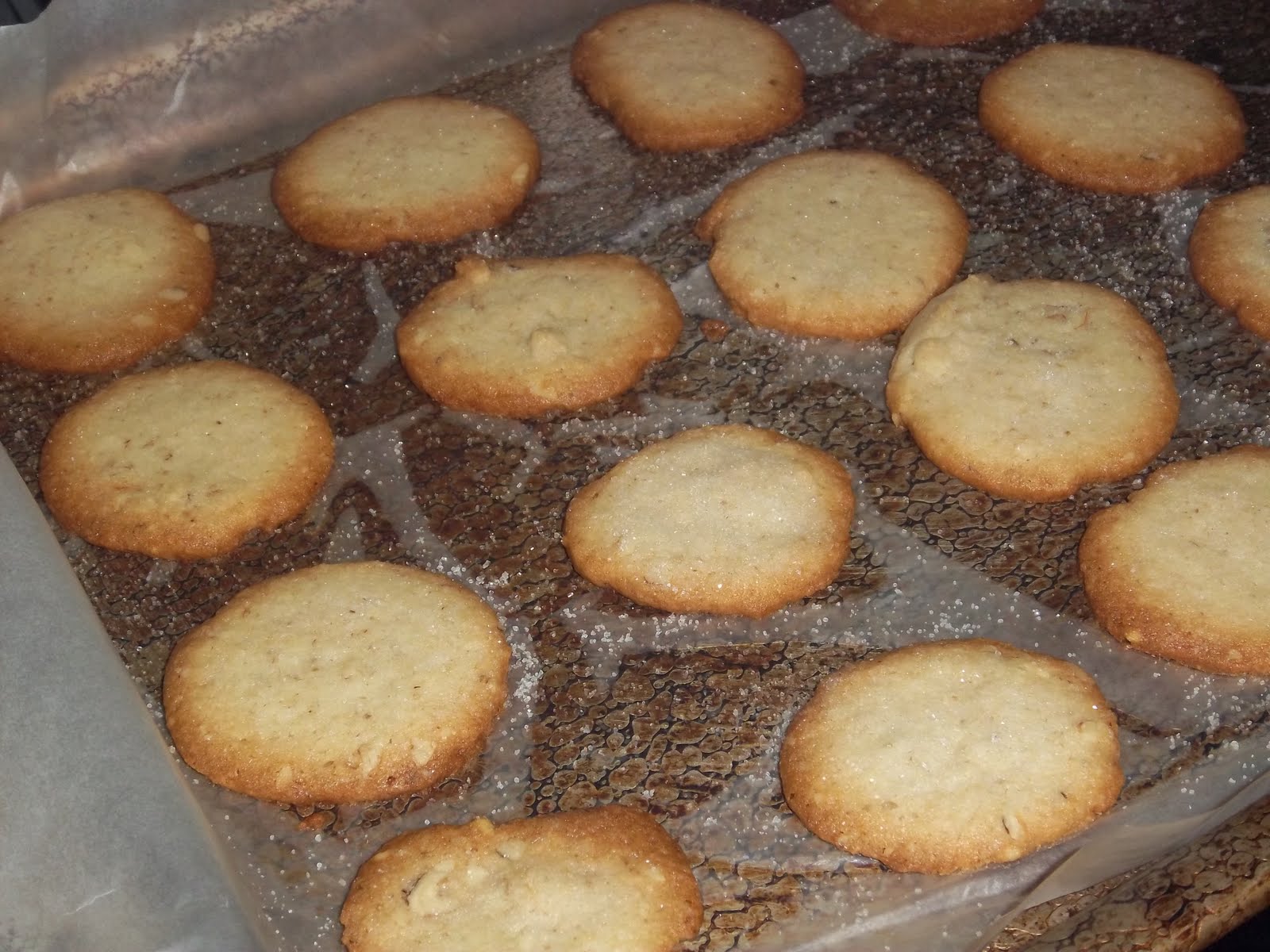
Next day, peel away the cling film and slice up the dough thinly and place on baking sheets. Bake for no more than ten minutes 190°C (375°F).

Griggers reckon they go well with coffee, and I am sure they do, but as I am not allowed to drink coffee anymore (Doc’s orders), it’ll have to be a tea.

#308 Walnut Biscuits. A nice, crisp biscuit that is sweet and crumbly; it certainly would go with unsweetened coffee or tea. The only problem with them is that there weren’t enough walnuts. I would go to four or maybe five ounces of walnuts. 7/10

#280 Welsh Cinnamon Cake

Known as Teisen Sinamon in Welsh, this is a mysterious cake. Griggers doesn’t really give any history behind it in the book. She says that the recipe is by Mrs Bobby Freeman (who has written a book of Welsh cakes and buns). She also says that it’s bit of a pity that chefs don’t make traditional dishes enough in their restaurants anymore. I did find after a little research that is a Victorian recipe – thanks Victorian Recipes of Wales teatowel! I’m not actually sure if it is a cake – it’s more like a giant biscuit with some meringue on top. Quite American really.
I made this cake on request for my mate Chandra’s birthday the other day. I think it went down quite well at work.
Cream four ounces each of butter and sugar in a mixing bowl and then beat in two egg yolks (reserve the whites!). Sift eight ounces of plain flour, a rounded teaspoon of cinnamon and half a teaspoon of baking powder and mix them in stages into the creamed butter and sugar. Knead this mixture together and roll it out to line a nine inch flan tin with a removable base. Actually rolling it out is a total pain in the arse because it breaks up very easily. Instead spread it out over the base of the tin using your knuckles, pushing the dough up the edges and make it neat using the edge of a measuring cup. Bake for 20 minutes at 200°C (that’s 400°F). Remove from the tin and cool on a wire rack. Heat some apricot jam with a little water to make a glaze and paint it thinly over the cake. Remember those two egg whites? Add another one and whisk until the stiff-peak stage. Then add three tablespoons of caster sugar and whisk again until the meringue becomes silky and creamy. Pile into the centre of the cake and make decorative swirls and spikes. Bake again at 180°C (350°C) until the meringue is a nice golden brown – about 10 or 15 minutes. Take out and cool on the rack again.
#280 Welsh Cinnamon Cake. Is it a cake? Is it a cookie? We just don’t know. It was very nice though – plenty of warm cinnamon spice. It was a bit stodgy too, but in a good way. I’m not sure about the meringue topping though. Not a bad one, by any means. 6.5/10.

#278 Crempog Las

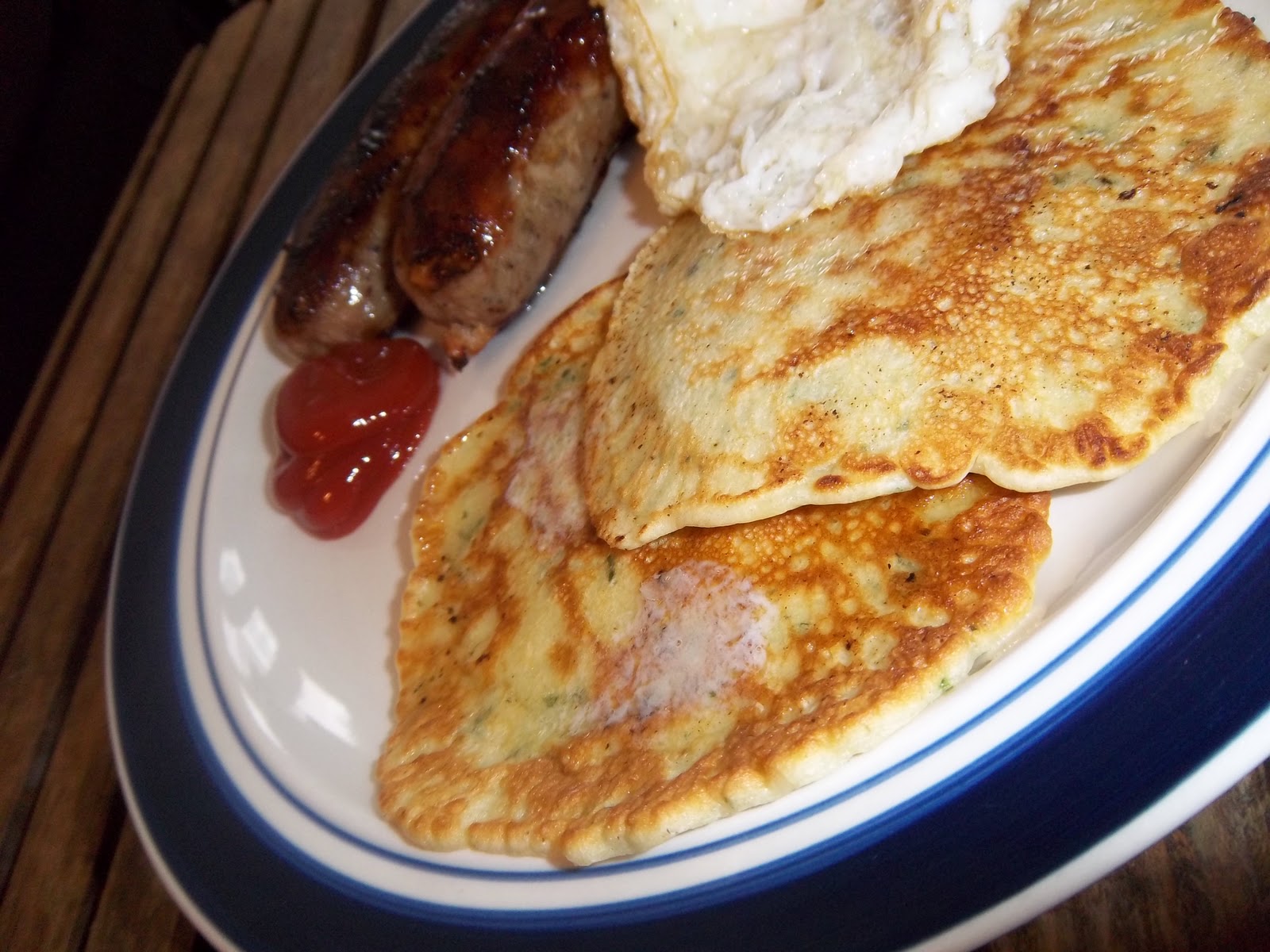
Well Shrove Tuesday is almost here, so I thought I’d provide a pancake recipe from English Food. This one is perhaps a more alternative recipe as it is most definitely savoury rather than sweet, and best served up with sausages, bacon and eggs as a breakfast dish rather than for a Pancake Day evening pig-out. In America, people seem to be having much more fun with their Mardi Gras celebrations…
The Welsh seem much more adept at pancakes than the English and I suppose that’s why there are so many Welsh recipes in the Pancakes and Griddle Cakes section of the Teatime chapter of the book. If they weren’t counted, there would be slim pickings. Crempog Las, by the way, translates as green pancakes in Welsh (check out this site for more information on this dish and other Welsh dishes). I didn’t have high hopes as there has been a bad run of recipes from this section…
The other reason why I wanted to cook these pancakes is that I found a pack of sausages that I bought from Harrison Hog Farms. They have a stall at the Rice University Farmers’ Market and breed pigs that look suspiciously like Gloucester Old Spots; a fine old English breed, so I thought they can’t be bad. Naturally, I put in them in the freezer and promptly forgot about them. Even though I have only been in my Texan apartment for five months, I have managed to almost fill my freezer with bits that I see in shops and left overs like wine, egg whites, breadcrumbs and what-not that I expect one day will come in useful. I decided that it needs emptying. It is for the same reason that later on this week I will be doing oxtail soup.
Anyways, I have wittered on far too much:
Using a whisk, mix together four ounces of plain flour, a large egg, a dessertspoon of finely chopped parsley, a heaped teaspoon of finely chopped shallot and enough milk to make a thick batter. Season with salt and pepper. Fry the pancakes in some oil or grease  over a moderately-high heat until golden brown – two or three minutes a side should do it. That’s it. Serve with butter or as part of a fried breakfast.
#278 Crempog Las. These were delicious! A subtle savouriness from the slightly sweet-acrid shallot and the grassy freshness of parsley made them very morish. I am definitely adding these to my breakfast arsenal. Give them a try, they are so very, very easy. 7.5/10.

#274 Saffron Cake from Cornwall

A man who is stingy with saffron is capable of seducing his own grandmother.” Norman Douglas, 1848-1952
It goes without saying that saffron is a wee bit pricey. Only three tiny stigmas are plucked from each autumn crocus which means that a pound of saffron strands requires up to 75 000 flowers and can cost up to £2500 per pound in the UK and $5000 per pound in the USA. Lucky for us it is very pungent and is only needed in very small amounts. I bought a small packet for about $10 which I have used in a few dishes already like the Fifteenth Century Apple Fritters and the Coronation Doucet. In days of yore, if you wanted to impress your guests and flash your cash a bit, you couldn’t go far wrong by sprinkling some saffron your pottage or whatever. The long-distance trade in saffron goes all the way back to the second millennium BC at least and there has even been a war over it. It was also thought to cure the black plague. For this recipe it takes centre stage, and so it should, I love the stuff though it wouldn’t necessarily lead me to fisticuffs…

The saffron flower
For some reason saffron isn’t used that often in English cuisine – I only really see it pop up in Asian food and in fishy things like paella. However, it has hung on in the form of this bread from Cornwall. I’d not heard of it myself, but it is interesting in that this recipe predates the invention of raising agents such as baking powder, so to make it light, yeast is used. Because it’s fermented, it appears in the bread section of the book rather than the cake section.
The evening before you want to make the cake (actually cakes, as this recipe makes two) put a generous pinch of saffron strands into a few tablespoons of warm water. It will steep and infuse to make a stunning orange-coloured scented water.
Weigh out two pounds of plain flour and eight ounces of sugar then make the leaven. For the leaven, crumble an ounce of fresh yeast into a small bowl. Pour over a quarter of a pint of warm water along with 2 heaped tablespoons from the flour and a heaped teaspoon from the sugar. Whisk everything together and leave to rise and froth up for around half an hour. Mix the sugar and flour together in a bowl and place it in the warming oven for 10 minutes or so. Remove from the oven and mix in half a teaspoon each of nutmeg and cinnamon and a pinch of salt. Now rub in six ounces each of lard and butter. This is quite easy as the flour is warm.
By now the yeast should be metabolising like a crazy thing, so make a well in the centre of the flour and pour it in alongside the saffron liquid and strands plus half a pint of warmed milk. Using your hands, mix everything together to form a dough. Cover with a damp cloth or cling film and allow to rise and double in bulk. The time this takes depends on the temperature of your kitchen.
Knock-back the dough and mix in 8 ounces of mixed dried fruit and 2 ounces of chopped, candied lemon peel and place in two greased loaf tins. Cover again and allow to prove until they have puffed up. Bake in the oven for 40 minutes at 220°C (425°F). Let them cool for a few minutes before taking them out of the tins and placing them on a wire rack.
Jane doesn’t suggest a way to eat the cake but I ate it with some cream cheese and honey.
#274 Saffron Cake From Cornwall – this was rather unusual. The cake was leavened with yeast (was that a tautology?) rather than baking powder which made it rather dense; more a cross between a tea loaf and a scone than a cake. I wasn’t sure about it at first, but it grew on me rather. The saffron flavour came through and I thought it gave the cake slightly anaesthetic properties. I expect if you ate enough you could have a root canal without wincing no problem. I brought it into work where it seemed to go down quite well, which is always nice. People scored it quite highly, but I’m a right stingy marker – 5.5/10.


#270 Mereworth Biscuits

The move back to Houston after almost a month back in England has left me very homesick indeed and definitely in need of some therapy of some kind, especially when Sunday came around. Personally, I find nothing more therapeutic that having a good baking session. Unfortunately, I could not arsed to leave my flat and buy ingredients.  The Teatime chapter of the book has received the most attention out of all the chapters, and I assumed that all the remaining recipes required either ingredients or equipment that I have not yet acquired.  Not so, these little savory biscuits; they are made up of just plain flour, butter, milk and a pinch of salt.
I’d not heard of these before, but they are supposed to be served with butter and cream cheese and that sort of thing. I don’t like to quote big chunks of Jane Grigson’s writings on the blog, but I think this post requires it – her little introduction to this recipe is so evocative that I can’t resist. Enjoy:
We once looked down on the perfect Greek cross of Mereworth Castle through young beech leaves, not long after we had visited the Villa Capra at Vicenza, which stands right up on a dusty hill surrounded by long grass. And here in the spring countryside of Kent was this perfect replica, with the same collected elegance, far below the valley. I should like to see the kitchens of Mereworth, where these biscuits were made in the nineteenth century.”
God, she is good. It’s a shame she is no longer with us. She goes on to tells us that the recipe comes from a book called Choice Recipes by a certain Lady Sarah Lindsay.
Mereworth Castle
This recipe make quite a large number of biscuits, I imagine that the dough will freeze perfectly well like most biscuit doughs do. It’s also a very easy dough to make, so if you’ve never baked before, this could be a good initiation!
Begin by rubbing one ounce of butter into eight ounces of plain flour along with a pinch of salt. Make a well and add some hot milk, bring the dough together adding more hot milk until it becomes firm but soft. Give it a knead. There’s quite a lot of lee-way here, unlike pastry, the hot milk and kneading is supposed to make the dough stretchy and it can take quite a bit of liquid. If it is a little too wet, sprinkle with some more flour. The dough can now be rolled out extremely thinly – make it as thin as possible, so thin you can see the work surface beneath. Cut out two inch circles with a plain biscuit cutter and bake for no more than five minutes at 220°C (450°F) until slightly golden. Some will produce giant bubbles others will not, but they will look beautifully home-made! Keep somewhere airtight as they do go soft very easily.
#270 Mereworth Biscuits. These were quite nice and went well with whatever bit and bobs I found in the fridge to eat with them. I do like cheese and biscuits but rarely ever think to buy them, apart from at Christmastime. These were good, but there are more English savory bikkies that I personally think are better, so I’m going to give them a safe 5/10.