#149 Broad Town Mince Pie

This recipe is not seasonal at all, but I remembered it whilst having a look through my cupboards and came across the last half jar of mincemeat I made at Christmas. After having a peek inside and a quick taste, a realised that everything was still perfectly preserved – in fact it was a lot nicer with much better developed flavours. I consulted the book and lo! and behold! I had all the ingredients to make it. If you have half a jar of mincemeat in your cupboard and don’t know what to do with it, make this easy pud. It is very Christmassy with first its layer of boozy mincemeat and then a layer sweet almonds. I can find no reference to what this pudding has to do with Broad Town.


Make a quantity of shortcrust pastry using 8 ounces of flour and both lard and butter (I am now a total covert to adding lard to pastry…unless I’m cooking for vegetarians that is). Line an 8 inch tart tin with two-thirds of it and spread the half-jar of mincemeat evenly over the pastry base. Now make the almond layer – mix together 4 ounces each of caster sugar and ground almonds, then an ounce of melted butter, 2 egg yolks (one if large) and 2 tablespoons of cream. Dollop and spread the mixture best you can and cover the pie with the remaining pastry, brush with egg white and sprinkle with sugar. Bake for 15 minutes at 220°C, then turn the oven down and bake for a further 30 minutes at 180-190°C. Serve it hot or warm with cream – or, if it is near Christmastime, then add some brandy butter.

#149 Broad Town Mince Pie – 6/10. Good, but rich, pudding that is useful for doing away with the endings of a jar of mincemeat. I actually found I enjoyed it a lot more once cold the next day. Not a bad dessert, but it didn’t get any juices flowing; and it’s certainly not better than a good old mince pie.
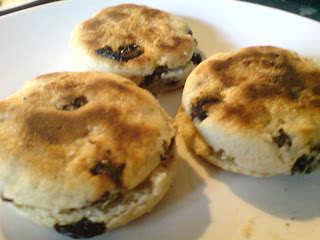
#145 Singin’ Hinnies

This is a teatime treat that I’ve been wanting to make for ages – Griggers really bigs this one up, as does her daughter Sophie. Singin’ Hinnies hail from the North East of England around Newcastle and are regarded one of the best of the griddle cakes, apparently. Everyone, no matter how rich or poor, ate them at teatime or parties. If you were lucky, you’d find a shiny sixpence inside. Health and Safety would have a field day. Singin’ Hinnies sing because of the fat content – the lard and butter make a rapid sizzling noise. The word ‘hinnie’ is a colloquialism meaning honey, a term of endearment equivalent to luv or duck.

To make the Singin’ Hinnies rub 4 ounces of butter and 4 ounces of lard into a pound of flour that has been sifted along with ¼ teaspoon of bicarbonate of soda, ½ a teaspoon of cream of tartar and half a teaspoon of salt. Stir in 6 ounces of currants (or raisins or sultanas) and finally make a firm dough using a little milk (how firm? I don’t know – but mine rather like pastry). Roll out the dough and cut out into rounds of around 2 ½ inches (how thick? again I don’t know, but I did about ½ an inch). Grease a skillet or griddle pan with some lamb fat tat’s been “speared with a fork”. I happened to have some, but if you don’t, I’m sure you could use lard. Cook the cakes until they pick up brown spots, turn them over and cook the other side. When cooked (how long? I don’t know!), open them up and add a small knob of butter to each one and keep them warm in the oven whilst you cook the rest.

#145 Singin’ Hinnies – 4/10. Disappointed with this one. I’m not sure if it was me making them incorrectly, but they were either too dry due to overcooking or too squidgy and raw tasting the middle. The currants prevented them from being inedible as did the glug of maple syrup I added too!

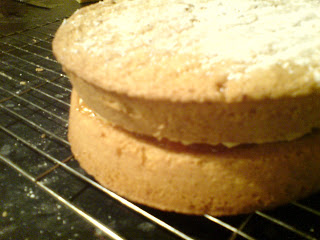
#136-137 Sponge Cake II and Butter Cream I

April has not been a bumper Grigson month like March was. This is due to the fact I am uber-busy with my PhD work at the minute, plus I’m doing the tiling in the kitchen too which does not help. No indeedy. Anyways, enough of the excuses… A kick up the arse came from the fact I had to provide a cake for the Dictyostelium group lab meeting, so I thought I’d do something straightforward – a sponge cake with butter cream. Great stuff; they have separate recipes in the book, so it would be two Grigsons with one stone. There are two recipes for sponge cakes and two for butter cream in English Food and I have already attempted one of each (see here and here), although in a funny order as you can see – this is because the Butter Cream I required a sugar thermometer, which I didn’t have at the time.

Ok, here’s the cake recipe. A word of advice though before I carry on – do not attempt this cake unless you have either an electric mixer or a very strong wanking hand…

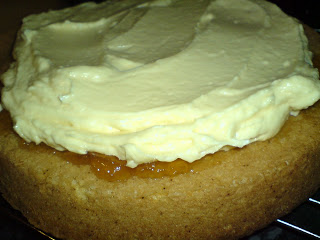
Start off by whisking three whole eggs together with 6 ounces of caster sugar until light and frothy – this took 10 minutes using the Kitchen Aid on full whack. Stop when the eggs have reached the ribbon stage. Whilst you are waiting for that to happen, heat the oven to 190°C and grease and lightly flour two 7 inch sandwich tins. Also, gently melt 2 ounces of slightly salted butter with two tablespoons of water. Once melted, leave to cool until at least tepid. When the eggs are whisked, gently stir in the butter. Now fold in 4 ounces of self-raising flour by sieving a small amount in at a time and gently folding it in with a metal spoon to prevent the air bubbles from popping. Divide between the two sandwich tins and bake for 15-20 minutes until cooked – use a skewer, or whatever, you know the drill. Cool on a wire rack. Griggers says jam and cream is the best, or a nice butter cream, like this one…

The butter cream can be made whilst you are waiting for the cake to cook – especially if it takes two attempts to get the bugger right!


Melt 4 ounces of caster sugar and a tablespoon or two of water in a small saucepan. Once dissolved, raise the heat and boil it until it reached the ‘soft crack’ stack, or 135°C. Be careful here: use a very small pan – too large and the sugar overheats too easily becoming a caramel, which will ruin the whole thing. Whilst it is heating up, put two egg yolks into a bowl and lightly whisk them. When the sugar is ready vigorously beat it into the eggs with a whisk. The mixture thickens up as the yolks are cooked by the hot sugar. When just tepid, beat in 4 ounces of unsalted butter in small amounts until it is all amalgamated. Once cool, you can add all sots of flavourings – I went with some vanilla, but Griggers recommends plain chocolate or a tablespoon of slaked coffee granules. Just go crazy, kids!

#136 Sponge Cake II – 9/10. When Griggers this recipe is foolproof, she did not say it was foolproof and brilliant. The sponge extremely light and not at all rubbery like the usual Genoese sponge on account (I assume) the addition of the melted butter. This is the best sponge cake recipe I have used. Excellent – go make it right now!


#137 Butter Cream I – also 9/10. Griggers totally slagged-off the half-butter (or even margarine, heaven forbid!), half-icing sugar as essentially awful. Having a soft spot for that type of butter cream I was keen to see the difference. The difference is huge – I know it is a bit of a faff using the sugar thermometer etc., but it is well worth it. Once you’ve tried it, ladies and gents, you’ll never go back…

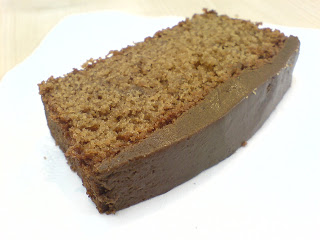
#135 Butterscotch Cake

I was a little bored on Tuesday evening so I thought I’d bake a nice cake for Cake Wednesday at work. I knew there had been no takers this week with it being close to Easter. Plus I’ve not made a normal cake for ages. This one is a variation on the pound cake – I’ve made them before (here is the blog entry) so I won’t go through it. The only difference is that caster sugar is substituted for soft dark brown sugar which gives it a richer, denser molasses flavour. The exciting thing being the butterscotch icing – I’d bought a sugar thermometer recently and not used it yet. I went a bit wrong with icing. Because I was in a rush, I heated it too rapidly before the sugar dissolved properly. Plus I accidentally heated it to the firm ball rather than the soft ball stage, which meant it went a bit too stiff. Hey-ho. If you try it, remember that slow and steady wins the race here. A little practise is required I feel. Any hints and tips are happily accepted!


For the icing (do as I say, not as I do…):

Slowly heat 6 ounces of soft dark brown sugar, an ounce of butter and two tablespoons of double cream until everything had dissolved. Now raise the heat and boil until the sugar reaches the soft ball stage using a sugar thermometer (turn the heat off as it approaches the temperature, as it keeps on a-rising!). Allow to cool until ‘tepid’ and beat. I’m not sure what it’s meant to turn into, but mine was a very stiff blob of sugar. I managed to spread it over the cake top with a wet palette knife and everything looked okay.

FYI: In case you were thinking that butterscotch doesn’t sound very English, but rather Scottish, you would be a fool (as I was). Scotch is a ye olde English word for score as proper butterscotch is hard and needs to be scored before it is broken.

#135 Butterscotch Cake – 6.5/10. I liked the cake as it was piled with dark brown sugar, so it could not be bad, but it was a little dry. I have a feeling that it was overcooked though – I still haven’t got to grips with the old fan oven and sponge cakes. I remember getting a handy hint from Anthea (a sometimes commenter on the blog) that you should put a some boiling water in a roasting tin and place it in the bottom of the oven to stop it drying the cake out. Needless to say, I forgot to. Oh well. The butterscotch topping was very sweet and very tasty, even though it didn’t quite turn out as expected…

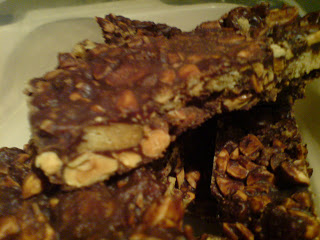
#120 Mr Frost’s Chocolate Cake

This one is a piece of piss to make and comes from a chap who owns (or, I presume owned now, as this book is quite old) a restaurant in Cirencester. Griggers likes it as it’s a nice classy version of chocolate cornflake or Rice Krispie cakes (though try my Mum’s recipe).

For this you need chocolate (plain or dark or a mixture), butter, nuts (any type – I used almonds and hazelnuts which are essential, you could use walnuts but peanuts are “right out”) and digestive biscuits. Weight out equal amounts of chocolate, butter and digestives and half the total weight of nuts. Roast the nuts for about 25 minutes in a low oven and remove any skins by rubbing them with a cloth, then chop roughly. Melt the butter and chocolate over a low heat. Keep an eye on them whilst you chop up the biscuits into small squares – don’t worry if there’s loads of crumbs, this is a good thing. Once the chocolate and butter have melted, mix in the nuts and biscuits. Pour into a lined tin so that it’s about a finger thick and cool in the fridge. Cut the cake into squares or fingers and keep cool.


#120 Mr Frost’s Chocolate Cake – 6/10. Good old Mr Frost. The Grigson was right in that this is much better than crappy old cornflake cakes. It could’ve been improved with a few sultanas, but the good thing about this is that you can add whatever you fancy – crystallised ginger would be good, or marshmallows maybe.

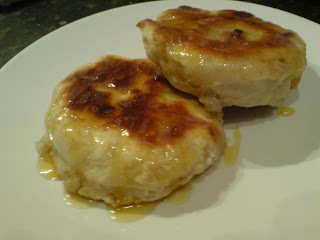
#119 Gloucester Pancakes

Yesterday was Shrove Tuesday and so to not repeat myself with common or garden crepe style pancakes, I thought I’d be controversial and try a different one. Gloucester pancakes don’t really resemble normal pancakes- they’re more like muffins. A point of note here – we know that Pancake Day exists to use up the fat ready for the onset of Lent, but bloody hell, these contain a LOT of fat – chopped beef and suet AND fried in lard. Oh well, you only live once…

This recipe makes around 8 pancakes:

In a bowl, mix together 6 ounces of flour, a pinch of salt and a teaspoon of baking powder. Then stir in 3 ounces of chopped suet and bind everything together with a beaten egg and some milk to produce a firm dough. Roll out the mixture so that it’s ½ an inch thick and use scone cutters (around 3 ½ inches wide) to cut them out. Fry the pancakes in a little lard on a lowish heat until golden brown – they should rise a little due to the baking powder. Serve hot with plenty of golden syrup.


#119 Gloucester Pancakes – 5/10. Nice, but I probably wouldn’t make them again. In order to turn this around, Charlotte made the Welsh light cakes that we did a few months ago (which I’m thinking about upping to a 10). Yep, I’d definitely rather be in Wales than Gloucester on Pancake Day…

#118 Banana Tea Loaf

It was my turn to make a cake for the Evolutionary Biology department’s Wednesday Cake Day, and as there are many a non-Briton in the department I thought I’d do something very English – a tea loaf. Tea loaves are great for several reasons; they taste nice and are lovely and moist, you can make them in advance (in fact they taste nicer if you do leave them); you put butter on the sliced loaf, and they are very easy to make. This one is particularly easy as there is no creaming of butter or anything like that to do.

First, sieve 8 ounces of self-raising flour, ¾ level teaspoon of mixed spice, ½ a teaspoon of salt and 4 ounces of caster sugar into a mixing bowl. Chop 4 ounces of butter into small pieces and add it to the flour along with one tablespoon of honey, 4 ounces of sultanas, 3 ounces of glace cherries, 3 ounces of blanched almonds or walnuts (or a mixture). Now the wet ingredients: 1 pound of mashed ripe bananas, 2 eggs and the juice of a lemon. Once mixed together nicely, turn the mixture out into a buttered 9 inch loaf tin and bake of an hour at 180ºC and then half an hour at 160ºC. Allow to cool on a wire rack and store in an air-tight container.


#118 Banana Tea Loaf – 8.5/10. Marvellous! This is quite a hefty tea loaf and I didn’t think our wee group would get through it, but we made light work of it. The addition of the cherries and nuts made it a little Seventies-looking and I thought would make it overly rich, but it wasn’t the case. Very, very good – thinking about when I’ll make the next one!

#117 Mrs Borthwick’s Yorkshire Teacakes

Been very busy with work and decorating folks, sorry for being a little slack of late. I have had the chance to do a couple of recipes – trying to do at least ten a month, but not sure if I’ll make it this February…

Being a Yorkshireman I thought I’d make these Yorkshire teacakes. The currant teacake reminds me of my Mum; she’s rather partial, though I didn’t really know that they were particularly Yorkshire, I glad they are. They’re a large sweetened teacake with mixed fruit in them and traditional way to eat them is to slice them crosswise and eat with butter and cheese, though I like them toasted with butter. Each to their own.

Now I’ve started to crack the art of yeast cookery, I’m enjoying bread-making and these are easy – the fruit and sugar hide a multitude of sins – and taste much better than bought stuff. Part of the reason behind this is the use of fresh yeast, which gives a much better flavour than the dried stuff, plus the bread rises much more rapidly I’ve noticed.

Oh, and Mrs Borthwick is some reader of one of Griggers’ columns and sent her this recipe. In case you were wondering.


Anyways, this makes eight large ones:

Sieve together 1 ¼ pounds of strong plain flour, 2 ounces of sugar and a pinch of salt into a big mixing bowl. Rub in an ounce of lard and stir in 3 ½ ounces total of currants and mixed peel (have the ratio according to your taste). Make a deep well in the centre of the flour and crumble in an ounce of fresh yeast and then grate plenty of nutmeg over the whole thing. Next, measure half a pint of room-temperature whole milk and add a quarter pint of boiling water to it. Pour the lot into the well. Do not worry that it looks a horrible mess, it is supposed to. Flick a little flour over the top, cover and leave to bubble in a warm place for 15-20 minutes, or whatever. Mix to form a dough, adding more flour if required, and knead for a few minutes. Divide the dough into eight pieces and knead each again, fold them inwards so they form little plump breadcakes. Put onto greased baking trays and allow to rise again for another 15 minutes. Bake at 220ºC for 30 minutes, turning them over in the final 5 minutes. When ready place on a wire rack and brush with milk to give them a shine.

#117 Mrs Borthwick’s Yorkshire Teacakes. 6.5/10. Really nice teacakes that require minimum effort for pretty good results, though I would add more currants than this recipe I think. I really loving the bread cookery – Hot Cross Buns are a-calling, me-thinks!

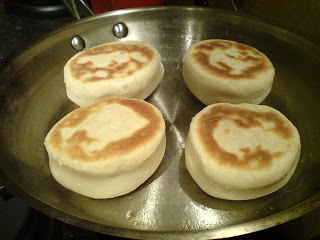
#113 Muffins

After the reasonable success of the crumpets, I thought I should carry on the bread theme and use up some more of the yeast. I didn’t even have to look through; I knew straight away that I wanted muffins – the second best breakfast carb after the crumpet… Don’t be confused between these muffins and American muffins – they are two very different beasts. I suppose in America our muffins are called English muffins, non?

Muffins are halfway between crumpets and bread – they are made with soft dough using strong flour and are cooked gently on the hob, rather than in the oven. They’re easy to do, but do require a bit of time and energy to knead them properly… It is worth putting in a bit of effort as it make the dough nice and elastic and therefore fluffier when cooked.

This recipe makes 12 muffins:

Start off by creaming ½ an ounce of yeast in 4 tablespoons of warm water, then warm ½ pint of whole milk and an ounce of butter in a pan until they reach blood heat. Meanwhile crack an egg into a bowl and give it a brief whisk, and pour in the warm milk into it, whisking thoroughly.

Weigh out a pound of strong plain white flour and empty it into a warm bowl (or better, warm the flour and bowl together on a low heat in the oven). Make a well in the centre and pour in the yeast and the milk-egg mixture, along with a teaspoon of salt. Mix together thoroughly, adding more flour or water if required. You want a soft dough, but not one that is sticky. Knead the dough for 5 to 10 minutes, place it, cover it and allow the dough to rise to at least double it’s volume.

Roll out the dough to ½ inch thickness and cut out rounds with large pastry cutters or whatever (I used crumpet rings). Knead the trimmings together and roll them out too, so you get as many muffins as possible from the mixture. Let them rise a little.

Put a heavy-based pan on a low heat and brush it lightly with lard or oil and fry them gently. Griggers says they should expand into something like a “puffball fungus”, and if you leave them to rise slightly they will. Turn them over after around 7 minutes and cook the other side.


Apparently, you should toast muffins whole – they should never be cut, but torn, adding butters as you go. Either way, eat them with lots of salted butter.

#113 Muffins – 7/10. I really liked these – it was easy to make them nice and light as the low heat made them almost impossible to overcook. The result is light and fluffy muffins that eat very well, very hard to get wrong, I think, and you should give them a go. They freeze well too…

#110 Elizabeth David’s Crumpets

Charlotte and I have been very excited about the prospect of making our own crumpets for a while – just how do you get all the hole in!? We were to find out. The recipe is actually one by Elizabeth David – a very influential food writer, who wrote a book on yeast cookery. It’s making recipes like this – really stoically English fayre that I would never have thought of cooking myself. They are very easy – you need to buy some rings to cook them in as the batter is reasonably runny. If you don’t have one / can’t be arsed buying one, don’t worry, as you can ladle mixture straight into the pan and let it spread out to produce a pikelet which you don’t seem to be able to buy anywhere other than Yorkshire.


This recipe made us a baker’s dozen of crumpets:

Start off by warming a pound of plain flour through in the oven. Whilst your waiting for that warm up a pint of whole milk, 2 tablespoons of flavourless oil and a teaspoon of sugar to blood heat. Take out 3 tablespoons of the warmed milk and fork it through half an ounce of fresh yeast and let it thicken and become creamy. Make a well in the centre of the flour and add the yeast mixture, a tablespoon of salt and the remaining milk and beat the mixture – 5 minutes by hand, or about 3 with an electric beater. Cover the mixture and allow to rise and double in bulk – this is quite rapid with fresh yeast. Knock the mixture back and add ¼ pint of warmed water that has had a very generous pinch of bicarbonate of soda dissolved in it. Beat the mixture well and let it sit a rise again for around half an hour.


Grease a griddle or heavy-based frying pan and the crumpet rings with lard. Place the rings in the pan and pour in mixture two-thirds of the way up. Allow to fry very gently until the top is covered with holes and the surface is no longer liquid. Turn the crumpets over so they cook and colour on the other side. Allow them to cool and toast them, serving them with plenty of melted butter.

#110 Elizabeth David’s Crumpets – 6.5/10. The score I’ve given these crumpets may be changed later. The reason for this is that their consistency was rather soft and doughy, however they were piping hot throughout with no raw flour taste, so I’m not whether they are mean to be like that or whether they are undercooked. Consistency aside, they did taste absolutely delicious, so when I get the chance, I’m going to try them again…