Tag: 8.3: Preserves and Randoms
#266 Concentrated Vanilla Sugar
Several recipes for cakes and other desserts require vanilla sugar. I have already made one of the two vanilla sugars in the book and this is the second. The best thing about this one is that not only is it concentrated, but it is also instant.
Whenever you are baking do try to use real vanilla pods, or at the very least the Madagascan vanilla extract. Don’t ever use the essence. If you do, I’ll come over to your house and smack your arse. Although Madagascar is the main producer of vanilla these days, it is actually a Mexican plant; an orchid in fact. Mexico had the monopoly on vanilla production because, although it is easy to grow the plants, fertilization of the flowers was only possible in Mexico itself. This is due to the symbiotic relationship between the vanilla plant and its pollinator; the Melipona bees of the area. It wasn’t until a 12 year-old slave discovered a way of artificially pollinating the flowers with a bamboo stick could vanilla farming leave Mexico. I wonder if the lad got a handsome reward. I doubt it….
Anyway, I have prattled on enough….
To make this vanilla sugar, cut two vanilla pods into one centimetre bits and put them into a blender along with four ounces of caster sugar. Whiz the mixture so that you get a grey-looking powder. Cut your vanilla sugar with eight ounces of caster sugar and keep it in an air-tight container. You’ll probably need to cut it further when you come to use it for recipes – this all depends on how much vanilla flavour you like. FYI it was thought of as an aphrodisiac, so don’t go crazy, unless you want your dinner party to turn into a scene from Eyes Wide Shut.
#266 Concentrated Vanilla Sugar. It’s hard to give this a mark really as it’s an ingredient rather than an actual food. We shall see when I come to use it in future recipes…
#255 Lemon Curd
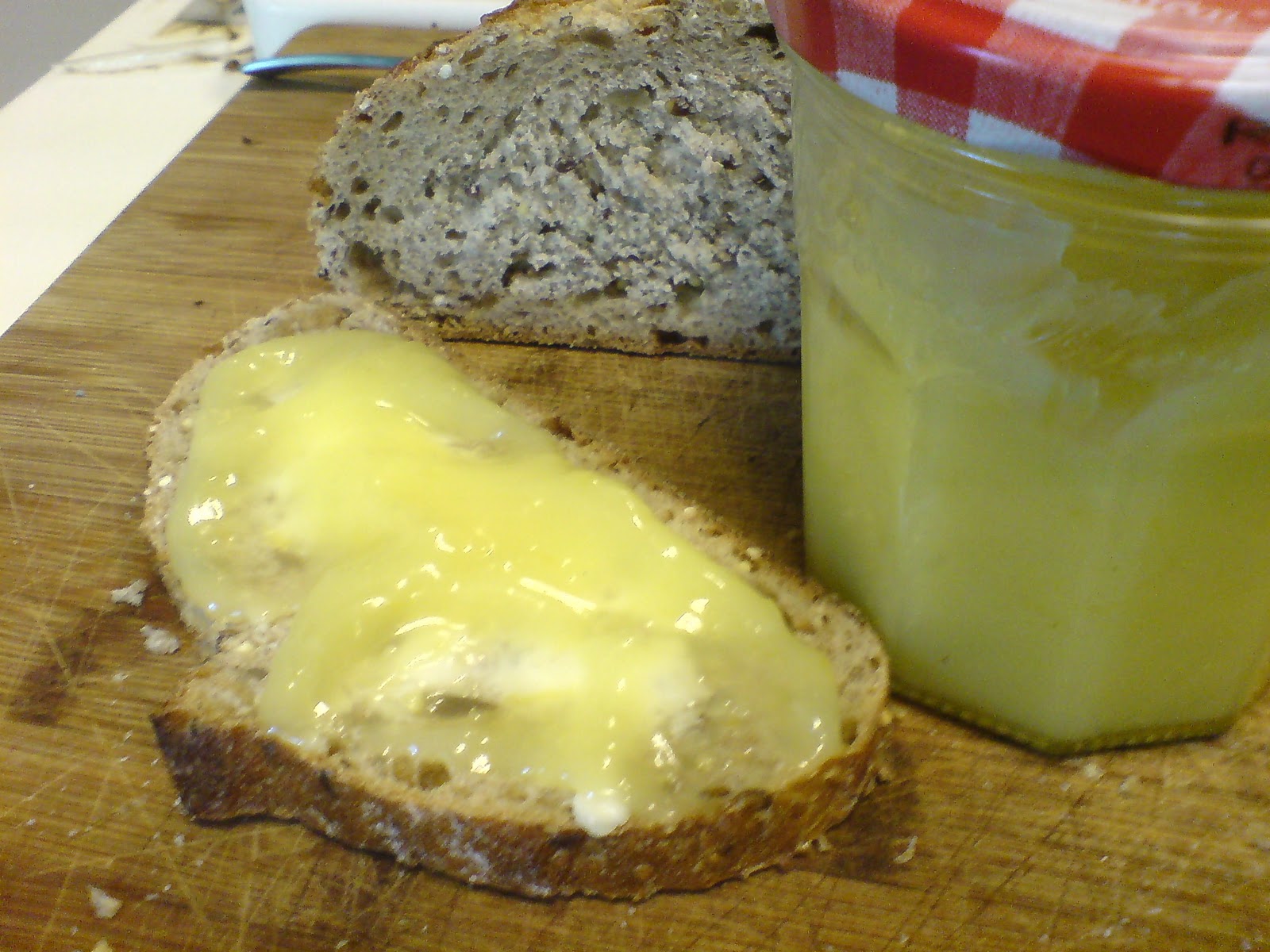
God, I love lemon curd. I once tried to make it a while ago and it was a complete disaster. Then, I was a mere amateur and these days I am a wee bit better at these more tricky recipes. The process for making lemon curd (or indeed any fruit curd) is to thicken lemon juice, sugar and butter with eggs. Any sauce that involves this process, like ice cream and custard can potentially end up in disaster, because over-heating scrambles the eggs and you end up with a horrible mess.
I haven’t found any lemon curd here in Houston and no one seems to know what I’m talking about at work, which surprises me for some reason. I don’t know why. So for those of you not in the know, lemon curd is essentially used like jam – use in sandwiches, to make tarts or as a cake filling. It has been popular since the mid-eighteenth century and is a kind of preserve, but doesn’t keep any where near as long as jam due to the butter and eggs. Therefore it is best made in small quantities, this is not a problem is it is much less of a rigmarole to make than jam. This recipe makes around two jars of lemon curd.
Grate the zest of two lemons into a glass bowl along with their juice, 3 ounces of butter and 7 ounces of sugar lumps (you could use granulated here too, I don’t know why sugar lumps are used here). Place the bowl over a pan of simmering water and stir until the butter has melted and the sugar dissolved. Whilst that is happening, crack 3 large eggs into another bowl and beat well. Sieve the eggs into the mixture (this prevents any lumps of white going in) and stir until the mixture thickens. This takes a while, and if you’re not used to thickening sauces with eggs it is best to be tentative and not have the heat to high. It will thicken quite alot, as long as the water is simmering beneath. Spoon the mixture into sterilised jars and allow to cool. Keep them in a cool place, but once open it’s probably best to keep the curd in the fridge, especially in this bloody Houston heat!
#255 Lemon Curd. This is a brilliant recipe for lemon curd. It isn’t too sweet and has a lot of zing; the inclusion of the zest really gives it some punch. It took me right back to England eating this! Delish. 8.5/10
#206 Orange Mincemeat Part 2; #211 Cumberland Rum Sauce
I have a few things up my sleeve for Christmas but for now I can only report on two things: the orange mincemeat I made last month and something to go on them (or your Christmas pud): Cumberland rum butter.
First up, the mincemeat. I have given the recipe for them already and also reported upon the Griggers way of making mince pies properly, which is how I make them now. All I have to do is give them a mark.
#206 Orange Mincemeat. Well, the orange mincemeat is ten times better than any bought stuff, the three types of booze must help. The mincemeat is not as orangey as I’d hoped, but still great. The best thing is, and it’s the same with the other recipe, is that it is not too sweet. Have a go, but the better is the Beeton. 6.5/10.

I have already made a brandy butter and it was good, but I thought I’d try this Cumberland rum butter – I had higher hopes for it as my favourite spirit is dark rum. Have a go at this, or the other brandy butter recipe, it’s very easy, just requiring some simple creaming and mixing.
Cream eight ounces of unsalted butter until pale and fluffy. Beat in six ounces of soft brown sugar, three tablespoons of rum and a good grate of nutmeg. That is it! Serve on mince pies or Christmas pudding, or even with warm oatcakes, which is how the folk of Cumberland served it, apparently.
#211 Cumberland Rum Butter. Really delicious. Not too sweet and sickly, the dark rum and dark sugar give it a bitter-sweet note. Great stuff. 7/10.
#127 Banana Chutney
Thus far I have enjoyed making the preserves in English Food and was very much in the mood to make a new one – the Banana Chutney was selected as I had all the ingredients other than the masses of bananas in already, plus it seemed like a no-brainer; no faffing about with pectin and sugar thermometers here!

Begin by slicing up 12 bananas and simmering them in ½ a pint of cider (or white wine) vinegar until the bananas are cooked and mushy. Stir in 8 ounces of sugar and allow to cool. Next stir in 2 medium onions that have been finely sliced, 4 ounces of finely chopped sultanas, an ounce of curry powder (whatever strength you like), ½ teaspoon of cinnamon, a pinch of Cayenne pepper, and salt – and salt well; chutneys should be salty, add up to 3 teaspoons. Cover the bowl or pan with Clingfilm and allow to stand for 12 hours. Taste and check for seasoning again before potting in sterilised jars and store somewhere cool.
#127 Banana Chutney – 5.5/10. Nice and sweet; Griggers says to serve with ham, salt pork and chicken, but I had it in a cheese sandwich and it was very nice, though it was quite dry – I prefer chutneys to have a bit of sauce to them. If I were to make itagain, I would add more vinegar and sugar and would also cook the curry powder out too in a little oil before adding the bananas and vinegar at the start (but what do I know).
#114 Quince, Medlar, Sorb or Crab Apple Jelly
The quinces I bought the other day were beginning to look a bit sad and I needed to use them up with something. I really like quince, so quince jelly was the obvious choice – making a few jars of this would mean I would still be eating them way beyond their season had ended.
By the way, this recipe can be followed as is but with medlars, sorbs or crab apples, so if you are lucky enough to know where their might be some growing near you try this jelly.

Quince jelly can be used like any fruit jelly, but is typically an accompaniment to cheeses, game and turkey.

#114 Quince Jelly – 6.5/10. A nice conserve, but I perhaps more apple than I should have, as the quince flavour is not super strong and is sweeter than I’m used to. That said, I used as jam and I think it’ll be a lot better with some game or cheese. Also, the recipe’s very good as I got four jars of jelly from just two quince!
#109 Quince Comfits
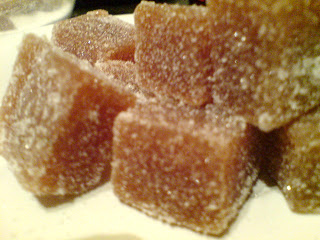
I went into Unicorn in Chorlton, Manchester to stock up on my favourite seasonal fruit and vegetables – this time of year they are quince, Jerusalem artichokes and Seville oranges. Once I’d bought them, it was a quick trawl through the book to see what I could do with them. The one recipe that didn’t require me to buy anything extra, other than was in my store cupboard, was quince comfits; all they need is water and sugar.

FYI: A comfit is a sugary sweet, rather like a pastille, that go way back In fact, quince comfits were made as part as Henry IV’s coronation banquet in 1399. This is a fact that I’m still in awe of. Get some made if you find some quinces and have a rare medieval treat!
Scrub the fluffy stuff that coats the quince’s skins, wash them thoroughly, and chop roughly. Put them in a pan with around an inch of water and simmer them, covered, until they are very soft. This takes a while as they are so hard, so keep a check on them and add extra water if need be to prevent them boiling dry. Once they are very soft, pass them through a sieve and weigh the pulp. Return it to the pan and add an equal weight of sugar. Bring it to the boil and allow to simmer, pop and bubble for up to half an hour. Make sure you stir it often to prevent it catching. It is ready when the mixture comes away from the sides as you stir. Pour the mixture into Swiss roll tins or sandwich tins that have been lined with greaseproof paper. Now you have to be patient – the mixture has to be dried slowly in a very low oven (less than 50ºC) or in the airing cupboard for a few days. Cut it into squares and shake the sweets in a tub of caster sugar to coat them. Hey Presto: Medieval sweets!
Griggers reckons they’re really good melted on grilled pork chops.

#109 Quince Comfits – 7/10. I love quince. I think they’re my second favourite fruit after the raspberry. Their wonderfully perfumed toffee flavour really does come across in these little sweets. I don’t really go for sweets like this usually, but these are good and have the added interest of being eaten by a medieval king!
#88 Christmas Pudding: Part 2, #102 Brandy Butter
The next most most exciting thing about Christmas dinner after the turkey, is probably the flaming Christmas Pudding. I had already made the puddings back in November, so now it was time to steam them for the big day. The pudding needs steaming for three hours, so you need to put it on in good time. However, that is the only thing you need to do, other than checking to see if the pan has boiled dry, so all is good. Turn the pudding out onto a serving dish and warm up some brandy either in a metal ladle or a small saucepan and light it (it won’t light unless you warm it first). Turn off the lights and pour it over the pudding. If this fails to impress the family, throw them out into the cold, cold winter street and tell them to come back when they’ve got some Christmas cheer. Serve with brandy butter, cream or custard.

To make brandy butter (or hard sauce, as it used to be called), cream 4 ounces of butter, when you’ve done that, beat in 4 ounces of icing sugar, 1 1/2 tablespoons of brandy, some freshly grated nutmeg and a squeeze of lemon juice, if you like. Allow to set in the fridge. Make this in advance – I made it a few days before the big day.
#88 Richard Boston’s Guinness Christmas Pudding – 3.5/10. Pretty disappointing this pudding was. It tasted really good, but was extremely stodgy and soft. I think I’ll use half breadcrumbs, half flour next time.
#102 Brandy Butter – 6.5/10. Nice, but very rich indeed. Think I prefer good old custard.
#46 Rich Orangeade
I have had a single Seville orange sat in my fruit bowl for about a month, Saturday was nice and sunny so I thought I’d make (#46) Rich Orangeade so that I could get Greg and Joff round and we can drink nice cool drinks and perhaps have some cake. In fact, have a proper Sunday high tea. It did of course piss it down all Sunday, natch.
The Seville orange was a little manky; it had done what fruit tend to do – go bad from the bottom up, but half of it was usable! To make the orangeade there was a three step process: thinly pare the zest from a Seville orange (in my case half, plus the peel of half a lemon to make up for it) and 6 normal sweet oranges. Put the peel in a litre of cold water and bring to a bare simmer for 5 minutes – the water shouldn’t boil properly because the bitter pithy flavour will be drawn out of the peel – then allow to cold. Meanwhile, do step two: boil 8 ounces of sugar with 3/4 pint of cold water for three minutes, then allow that to cool also. Step three: squeeze the juice from all the oranges, and when everything is cool, stir together. Finally add a little orange flower water (I added about 1/4 teaspoon and that was just right for me) and lemon juice – I used half a lemon. Allow to chill properly before being eaten.
Greg says:
The Orange-ade is simply Enid Blyton in a glass, if that doesn’t sound too graphic. Lashings and lashings say I! Once you taste that lovely floral kick that the blossom and lemon adds to it you can see the flavour that cheap cordial manufacturers have been harking after all this time, and failing to grasp. It’s lovely. Will be even better when the sun comes out. Come on . . . COME ON! 8/10
FYI: I noticed that the orangeade comes from a Victorian recipe and doesn’t require fizzy water. So what make an ‘ade’, I wondered…according to the Oxford English Dictionary, the suffix ‘-ade’ means: “The product of an action, and, by extension, that of any process or raw material; as in arcade, colonnade, masquerade, lemonade, marmalade, pomade.” So it seems that turning any fruit into a drink makes it an ‘ade’. Everyday’s a school day!
#46 Rich Orangeade. 8.5/10. A delicious summertime drink – the perfumed taste and aroma of the peel, the Seville orange and the orange flower water transforms it from just sweet orange juice into something pretty special!