#156 Cheshire Pork and Apple Pie

I bought a nice new pie dish last week, so I thought I’d Christen it with a nice big pie for Sunday dinner. I decided upon this Cheshire Pork and Apple Pie because it needed to be pretty quick to do (no cooking of the filling beforehand) as I had to be in the lab in the morning. Plus there was a load of Cox’s Pippins in Unicorn in Chorlton – apparently the last of the stored apples from the previous autumn.

This is a very traditional pie – essentially meat stewed in liquid (in this case cider) under a pastry crust, and comes from Hannah Glasse. It is a little odd in that it has a double crust; I’d have no problems with it if it was cooked in a thick sauce. Surely the pastry lining the pie dish will just turn into a soggy mess? To pre-empt this, I used a previous trick of The Grigson – to place a baking sheet in the oven as it heats, so that when the dish is placed on it, the underside quickly cooks.

First of all make some shortcrust pastry using 10 ounces of plain flour and use two-thirds of it to line a 2 ½ pint capacity pie dish.

To make the filling you need to prepare your pork – you need 2 pounds of boned pork loin. Cut off the rind and trim away the fat with a sharp knife, then slice the loin and chop into chunks. Next peel, core and slice around 12 ounces of Cox’s orange pippins. Then mix 8 ounces of chopped onion together with 4 chopped rashers of cured, unsmoked bacon. Now layer the ingredients in the pie dish: half of the pork, then half of the apples, scatter them with some brown sugar and then sprinkle over half of the onion-bacon mixture. Season each layer with salt and pepper plus some grated nutmeg. Repeat with the remainder in the same fashion. Dot the top with around 2 ounces of butter and then pour on ¼ pint of dry cider. Cover with the remaining pastry sealing and glazing it with beaten egg. Make some fancy pastry decorations if you fancy. Bake for 20 minutes at 220°C, and then turn the oven down to 160°C for a further 45 minutes. Jane doesn’t indicate what to serve with it, but I went with mustard mash and some asparagus.
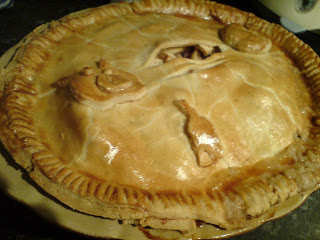
Check out the arts & crafts spectacular atop the pie!
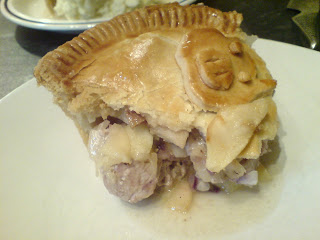
Oink!

#156 Cheshire Pork and Apple Pie – after much deliberation on this one, I give it 5/10. I think it was pretty average – I wasn’t sure about the amount of liquid in the pie, which after my efforts to prevent it, still made the pastry soggy. I think, it could be easily improved, however by making a roux with the butter and some extra flour and using the cider to make a sauce. I think it would have made this okay effort into a very hearty one that would stick to your ribs, as we say in Yorkshire!
#133 Welsh Supper Herrings

After the creamy and rich oyster loaves last night, I thought I’d go for something a little bit more fresh-tasting and the Welsh Supper Herrings seemed to fit the bill. I chose herring because, like oysters, I’d never knowingly tried them except, of course, in the form of kippers. Herring are quite cheap as are most of the other ingredients so it didn’t break the bank. The odd ingredient here is the Bramley apple, but apparently it’s a traditional thing, herring and apple. First I’d heard.

Gut, clean, descale, behead and fillet a pound of herring – ask your fishmonger to do this, I tried to fillet them myself and was reasonably successful but was a bit of a ballache. Now mix an ounce of softened butter with a tablespoon of mustard made up from mustard powder (Why? Because Griggers says so, that’s why). Spread the butter over the cut side of the fish fillets and roll them up.

Next get to work on peeling and then finely slicing a pound and a half of firm potatoes – Jane recommends using a mandolin for this. Please, please, please be very careful here – I managed to slice a piece of my thumb off doing this last night so watch out. You have been warned. Don’t go suing me if you open a vein… Plunge the potatoes into boiling salted water for a minute she says – though I would do them for 2 or maybe even three (see below). Then slice a large onion and two Bramley (or other cooking) apples that have been peeled and cored. No need for the mandolin for those. Use a little more softened butter to grease a pie dish and make a layer using half the potatoes, then half the apples and half the onions, seasoning as you go with salt and pepper. Next, the rolled up herring fillets and sprinkle them with half a teaspoon of dried sage (Why not fresh? Because Griggers says so, that’s why). Then add the remaining apple, onion and potato, adding a brief painting on of melted butter to the last layer of spuds. Pour boiling water so it comes around half way up the dish. Bake for around half an hour until the potatoes are cooked.


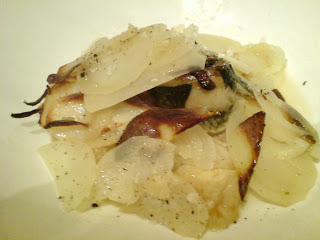
#133 Welsh Supper Herrings – 3.5/10. Not sure if this was a bad dish or a bad recipe for a good dish. The potatoes, apples and onions were very nice – the apples especially lifted it, but the potatoes were not cooked after half an hour even though I blanched them in the boiling water. They were done after an hour, but unfortunately this meant that the herrings had cooked down into a mush not unlike cat food. So pretty disappointing seeing as I almost sacrificed a digit for it. Hey-ho, such is the nature of this undertaking…

#116 Apple and Raisin Pie

A good honest hotpot deserved a good honest pudding. I wanted a desert-version of a hotpot and went for this apple and raisin pie. This, people, is no ordinary apple pie – it is a buttered apple pie, very popular in the Seventeenth Century. It’s very easy to do, especially if you use bought puff pastry.

Peel, core and quarter 3 ½ pounds of Cox’s Orange Pippin apples and quarters the quarters into six and place in a bowl. Sprinkle over 4 ounces of caster sugar and the grated zest of half a lemon and mix. Melt 4 ounces of unsalted butter in a pan and pour over the apples and lastly 4 ounces of raisins. Mix again and place the apples and buttery juices into a large pie dish. Roll out some puff pastry and cut out a shape large enough to cover the dish. With the trimmings, roll out a thin length of pastry and glue it to the rim with egg white. Then using more egg white glue on the pastry lid and glaze with more egg white. Sprinkle the top with a little sugar and make a slit in the pastry so the steam can escape. Bake in a hot oven – around 220ºC – for 15-20 minutes, and then turn down to 160-180ºC and bake for a further 30-45 minutes until the apples are tender. Serve with lightly whipped cream.


#116 Apple and Raisin Pie – 9.5/10. This is the best apple pie I’ve ever made. The apples were still tart but swimming in a lovely sweet, rich buttery liquor that was the perfect balance. The raisins were very juicy and plump and the pastry crisp. Total genius. Go and make this pie right now, people!

#114 Quince, Medlar, Sorb or Crab Apple Jelly

The quinces I bought the other day were beginning to look a bit sad and I needed to use them up with something. I really like quince, so quince jelly was the obvious choice – making a few jars of this would mean I would still be eating them way beyond their season had ended.

By the way, this recipe can be followed as is but with medlars, sorbs or crab apples, so if you are lucky enough to know where their might be some growing near you try this jelly.

Begin by scrubbing clean your quinces and chop them roughly along with the same weight in Bramley apples. Do not peel or core them – that is where the pectin resides that will set the jelly. Place the fruit in a pan and barely cover them with water. Simmer the fruit until they have become a pulp (I used a potato masher to help the quinces along).

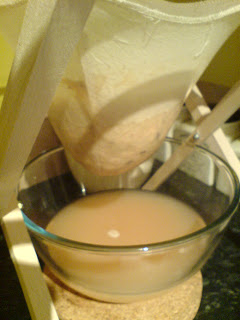
Place the pulp in a jelly bag suspended over a bowl – if you don’t have one, use a muslin-lined sieve instead. Leave the pulp to drip dry – this takes a while, a few hours at least, overnight if you’ve done loads. Measure the volume of liquid and pour into a heavy-based pan and add a pound of sugar for every pint of liquid. Boil this mixture until this has reached setting point (read the recipe for marmalade for more info on this) and pour into sterilised jars.

Quince jelly can be used like any fruit jelly, but is typically an accompaniment to cheeses, game and turkey.


#114 Quince Jelly – 6.5/10. A nice conserve, but I perhaps more apple than I should have, as the quince flavour is not super strong and is sweeter than I’m used to. That said, I used as jam and I think it’ll be a lot better with some game or cheese. Also, the recipe’s very good as I got four jars of jelly from just two quince!

#107 Chestnut and Apple Soup

I’m a chestnut fan, but I’ve not ever cooked with them, except for roasting. In fact I’ve only ever eaten them roasted or in a pork stuffing. I spotted some in the greengrocers and thought I’d have a go at this soup. The soups in English Food have been great (with the exception of the Mulligatawny Soup); and what I really like about them all so far is the simplicity – absolutely no faffing about. This one is no different. Give it a go if you see some chestnuts.

This makes enough for 6:

This soup requires a pound of chestnuts, and the first job is to pierce either end of each and every one with a sharp knife. Plunge them into boiling water for 10 minutes. Use a tea towel to grasp onto them with one hand and a sharp knife to remove their softened shells with the other and discard any bad ones; don’t worry if they are not whole. Keep them in the hot water as you peel them to keep the shells soft. Simmer the chestnuts along with one stick of celery in 3 ½ pints of light beef stock for 20 minutes. In the mean time, peel, core and slice two Cox’s Pippin apples. Simmer the apples in 2 ounces of butter until they soften, seasoning well with black pepper. Add the apple and juices to the stock and liquidise the whole thing until smooth. Return it to the pan, check for seasoning, and stir through 4 fluid ounces of single cream. Don’t let the soup boil if you are retuning it to the heat. Serve the soup with croutons fried in butter.


FYI: if you are lucky enough to know where there is a sweet chestnut tree, you can make shampoo from cooking up the leaves and peel.

#107 Chestnut and Apple Soup – 6.5/10. A very nice creamy-pale soup. Rich, yet light at the same time. I would certainly recommend this one; it would make a very good first course. Two apples didn’t really make it taste that much of apples, so it loses some marks for that – I would do three.

#96 Apple Pie

Oh I have been a bit slack with adding entries of late. I do apologise; I still have written about the food I made last weekend! The dessert that finished off the hare was a nice apple pie. Charlotte brought round some windfall apples so it was the obvious choice really. This is very simple to make – the apples aren’t stewed beforehand or anything and you could even buy your own pastry if you wanted. It’s an English pie, which means there’s only pastry on the top so you don’t have to faff about with blind-baking a pastry base either. It’s all good.


Start off by peeling, coring and slicing a pound of cooking apples and 8 ounces of Cox Orange Pippins. Arrange these in a pie dish, mounding it up in the centre, sprinkling sugar as you go. Try the apples before you add the sugar; you don’t want it too sweet. Roll out 8 ounces of shortcrust pastry. Cut a strip off pastry and glue it to around the edge of the dish with water. Brush this pastry with more water and press the rest of the rolled-out pastry onto it. Brush the lid with water, sprinkle with sugar and make a couple of slits in theb centre so that the steam can escape. Bake at 220ºC for 15 minutes, then lower the temperature to 190ºC for another 30 minutes. Check with a knife that the apples are soft before you take it out though. Serve with double cream.

#96 Apple Pie 7/10. I love pie! This one is super-quick and easy. I’ve had better in the past, but they also require a lot more work. This is deffo the best way if you want to make one quickly.

#85 Caramelised Cox’s Orange Pippins

I wanted to do a quick and easy dessert for when Paddy came round and didn’t really have time for baking or anything requiring too much time or effort, being the busy bee that I am. (#85) Caramelised Cox’s Orange Pippins fit the bill perfectly; a hot dessert that can be made in 5 minutes. That’s what we like.

I love Cox’s Orange Pippins; they’re my second favourite apple after the russet. You can’t beat an English apple in autumn. I don’t really buy them the rest of the year when they’re not in season and all you can buy are shipped over from France or whatever. I think they’ve had a resurgence over the last couple of years as I’ve spotted both varieties in supermarkets. If you can’t get hold of Cox’s Orange Pippins, I suppose you could use any eating apple, but these are the best eaters for cooking with.


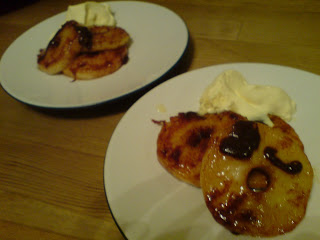
Peel and core one apple per person top and tail them and cut into three thickish rounds. Fry the apples on a low to medium heat in butter until they start picking up a faint golden colour. Whilst that’s happening make some cinnamon sugar; one tablespoon of sugar to one teaspoon of cinnamon. I found that this was enough for two apples, but you put on whatever amount you like. When the apples are ready, sprinkle over the sugar. Keep the apples turning over every 30 seconds or so and you should magically end up with a nice sweet glaze covering them. It’s important not to have the heat too high, so be careful. Serve them immediately with a dollop of clotted cream. Piece of piss!

#85 Caramelised Cox’s Orange Pippins: 8/10. Sweet, sticky, fattening and delicious. Also, it’s one of your five fresh fruit and veg portions for the day. It’s a no-lose situation. Bravo Griggers; you’ve done it again, lady!