#216 Orange Sauce for Duck and Game

This is a sauce for any game and requires two things from The Freezer of Delights that have been sat there for a while: game carcasses for a game stock (see here for recipe) and two Seville oranges. It is very important that you save and bones and carcasses from your meat for stock-making at a later date. It is, of course, even more important that actually used the bloody things once you’ve saved them. I served this with the Mallards of Death.

Melt 1 ½ ounces of butter in a small saucepan and stir in a rounded tablespoon of flour. Stir and cook until the roux becomes golden brown. Now whisk in ¾ of a pint of game stock, bring to a boil, and then simmer for around 20 minutes. Whilst it is cooking away gently, pare thinly the rinds of two Seville oranges and slice them as thinly as possible (you can use an orange and a lemon if you can’t get Seville oranges). Add the rind along with the juice of the oranges to the sauce and cook for a further 3 or 4 minutes. Add up to a tablespoon of sugar and four tablespoons of port, plus the skimmed roasting juices from the meat. That’s it! Easy.


#216 Orange Sauce for Duck and Game. A really good sauce this one; tangy, bitter, fruity, rich and a lovely red-brown colour with just the right amount of freshness and tang to cut through the very strong meat. If you don’t like bitter foods, use a normal orange and a lemon and perhaps less pared rind. 7/10.

#215 Mallard

As mentioned, the freezer is being emptied of its long-sequestered goodies. First up is this roast mallard. I also found a couple of Seville oranges in there too so I thought I’d do a classic orange sauce too (see the next post, when I get round to writing it!).

I had never tried mallard before but I love duck so I was looking forward to this, I have to say. I took them out of the freezer and allowed them to defrost overnight. On preparing them I found that they smelt pretty – er – ripe, which was a wee bit concerning, but I continued. The instructions are very straight forward if you want to tackle roast mallard: inside the bird, put in some butter, seasoning and herbs; outside, season with salt and pepper. You don’t need any butter or back fat to protect the birds as they have a layer of fat anyway. According to Jane, they should be roasted rare, so they only require 30 minutes at 200⁰C. When ready, allow to rest for fifteen minutes, carve and serve. I did game chips (see the entry on roast pheasant) and Savoy cabbage along with an orange sauce as suggested by the lady herself. You could make a gravy from the juices and a spoonful of bitter marmalade or an orange salad.

The fowl stench of death

#215 Mallard. These birds were definitely over-hung. They smelt and tasted of death and had gone well past the gamey stage. As I have frame of reference, I’m not sure if they naturally taste like that anyway. I doubt it though. Char and Clive seemed to find this okay, but it was rather too much for me and I couldn’t face a leg. That said, the hanging made the meat very tender and succulent. The next day the kitchen smelt like dead and rotting animals. 3.5/10.

FYI: the hanging of meat – in particular game – is required for the meat to become tender and tasty. Whether it is 28 days for beef, or just 2 to 3 days for small game. Pheasant, for example, is tough and pretty tasteless before hanging. However, people cross the line between well-hung and rotten. Brillat-Savarin – the Eighteenth century gastronome and lawyer – didn’t consider pheasant to be fit for consumption until it was “in a state of complete purification”, according to Larousse Gastronomique.

#178 Duck with Mint

Attempting the poultry section in English Food has been a paltry effort by me, but I intend to address this, people. I thought I’d start with one of the two duck recipes. This one, where the duck is stewed with a shed-load of mint seemed right up my summery alley. It also has the added bonus of a sauce paloise, which is very similar to a sauce béarnaise (except tarragon is substituted for mint) and uses a hollandaise sauce as its base. Now proficient in hollandaise sauce making, I was eager.

Apparently the French think it is hilarious that we have mint with our lamb, when blinking Johnny Foreigner goes around eating sauce paloise here there and everywhere with their duck! Only joking Frenchies, I loves ya really!

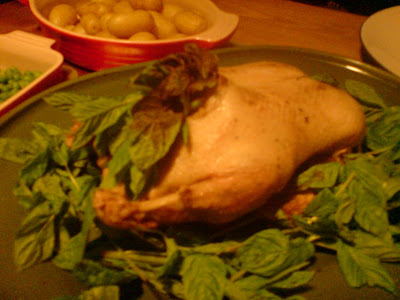
To make this, season a large duck inside and out with salt and pepper before stuffing its cavity with a whole bunch of mint. Next, wrap the duck in a large napkin or double-wrapped muslin. Half fill a large pot with water and add a large quartered carrot, a large onion studded with three cloves and a stick of celery. Bring it to the boil and then place the duck in and leave it to simmer, covered, for 2 ½ hours. When cooked, remove the napkin and place on a serving plate surrouded by mint leaves.

Start making the sauce around half an hour before the cooking time is up: Into a small saucepan add a tablespoon of chopped shallot, two tablespoons of chopped mint, a tablespoon of chopped chervil, a sprig of thyme, a quarter of a bay leaf and four tablespoons each of dry white wine and white wine vinegar, plus a good seasoning of salt and pepper. Boil down this mixture, until it has reduced by two-thirds. Allow to cool. Now place the mixture in a bowl and beat in three large egg yolks. Place the bowl over a pan of simmering water and beat in six ounces of unsalted butter bit by little bit. Season with lemon juice and more salt and pepper if required. Finally, stir through some freshly chopped mint leaves. Pour into a salad boat.

FYI: Chervil is tricky herb to get hold of, so instead of using it you can use the small yellow leaves from the inside of a bunch of celery, they provide a very similar flavour.

#178 Duck with Mint. If you don’t like mint, this is not the recipe for you. However, I love mint and it was just the thing for a summertime Sunday dinner. The duck was tasty, though a little dry, but the rich and tart sauce married with it perfectly well. In fact, the sauce paloise was the star of the show. I think it would go very well with lamb or even fish. The Medieval look of the birs with all the mint leave in and around it, was quite impressive too. Overall, I think this deserves 7.5/10 (though the sauce would be 9/10+ if I was marking it separately).

#152 Glazed Turnips

To go with the glazed ham, Lady Grigson suggests glazed vegetables – glazed onions or turnips. I thought I’d do turnips as it has a recipe in its own right in English Food. It’s very easy and will go with any roast meat. Grigson suggests eating it with duck as well as ham.

Peel 2 pounds of young summer turnips – don’t go for the big ones, they are fit only for cattle, apparently! Cut them into 1 centimetre dice (about 1/3 of an inch) and blanche them in boiling water for 5 minutes, after which they should be just tender. Once done, drain them and add them to a pan that already hot and contain 2 ounces of butter. Toss the turnips over in the butter and then add a tablespoon of sugar. Cook on a moderate heat until they begin to caramelise. Sprinkle in some chopped parsley, give them a final stir and serve. Couldn’t be easier.


#152 Glazed Turnips – 5.5/10. I find it hard to get too excited about turnips; I’m a swede man myself. That said, I think this is the best method for eating them as a vegetable in their own right, and they certainly went very well with the ham. So overall, good, but there are better vegetables out there that don’t need to be played around with to make nice!

#150 How to Cure Meat in Brine

Well here we are – 150 recipes in. I didn’t realise I was at this milestone until yesterday – unfortunately it’s not some magnificent feast, in fact it’s really a recipe as such, and I can’t really give it a rating (at least not yet).

Jane Grigson has quite a few recipes that require salting and brining, so I thought I’d better start to get to grips with this completely ignored section of the book, by making roast ham from start to finish as the best way for me to get started, though I’ll discuss that in a separate post – this one is just concerned with brining generally.

I’ve been doing a bit of reading on the subject of brining and it seems a bit of a lost art – there’s not much information about the history of it or how to do your own curing by the method. Obviously it’s gone out of favour to some degree because it is a method of preservation first and foremost, and now with frozen and refrigerated meats on tap these days we don’t have to do such things. However, brining also lends good flavour – we all like good ham, gammon or salt beef – so you would think it popular (seeing as it’s easy too). The thing is that it is time-consuming, and we can all just pick some up ready brined or ready roasted meat, but one thing I read was that for many wet-cured meats, the wet-cure part of the process is missed out! These days they are cured with nitrating bacteria – nitrates help preserve things – resulting a lack of flavour. I’m certainly not insinuating that this method is ubiquitous, but I reckon most supermarkets (and many butchers) use it.

Brine contains three magic ingredients that help preserve meat: salt, sugar and saltpetre. The first two do so because they are in huge quantities in the brine, and can affect the normal osmotic pressures of cells – both animal and microbe. Salts and sugar enter the cells, and water rushes out in an attempt to equal the concentrations inside and outside of the cells. This results in the death of the microbes and the preservation of the meat. Saltpetre (or potassium nitrate) is antibacterial and also gives the meat a pleasing pink colour (it is what makes corned beef so pink, for example). Aside from these three ingredients there are several herbs and spices that improve the flavour of the meat.

FYI: In days of yore, saltpetre was produced by pouring stale urine to huge haystacks where it would drain and crystallise. Yum!!

To make the brine, start off by cleaning a tub or bucket with a close-fitting lid and a plate that will comfortably fit inside with soda crystals. I used a six litre Tupperware tub with a handle. Do not use a metal tub as it may react with the salt or saltpetre. Allow them to drip dry. Whilst you’re waiting for that, make the brine: To a large stockpot or similar add 5 pints of water, 12 ounces each of sea salt and brown sugar and an ounce of saltpetre. This is the basic mixture, but now you need some aromatics (all of which are optional): 1 level teaspoon of juniper berries, a small piece of grated nutmeg, a bay leaf, 3 sprigs of thyme, a level teaspoon of black peppercorns and 4 cloves, Grigson says, but anything you like in that goes with the meat you are brining. Bring to a rapid boil and skim off any scum should there be any. Allow to cool in the pot. Once cool, strain it into your cleaned tub. Place in the joint of meat and keep it submerged in the brine with the plate you washed earlier. Place in a cool cupboard or pantry – though don’t allow it to go below 4°C. The length of time it sits there now depends upon the type of meat and the reason you are brining it (see your recipe, or below, for guidelines). When it is done remove with some clean tongs.

The brine won’t last indefinitely – it may grow mould on it’s surface, which some people say just to skim off. The reason is; the amount of salt depletes every time you use it. For a corrective dose, boil 1 ¾ pints of water with 7 ounces each of salt and sugar and a heaped dessertspoon of juniper berries. Let it cool and add it to the skimmed brine. You could of course just make more from scratch.

Pork leg joint magically being tranfomed into ham

Brining times:
To convert shoulder or leg of pork into ham, or for pork loin: 3 to 10 days
Pig trotters and halved heads: 24 hours
Small tongues (e.g. pig): 36-48 hours
Large tongues (e.g. ox): 5 days
Duck (minus giblets): 36-48 hours
Beef silverside or brisket: 7-10 days
Lamb or mutton shoulder, leg and loin: 7-10 days.

The meat needs to be cooked by boiling – check the cooking water is not too salty after about 5 minutes cooking. If it is change the water and start again. If it’s okay, then add your stock vegetables or whatever the recipe requires.

However, if you are making a roast joint for Sunday lunch, try popping the joint in brine overnight to season it.

So there you have it – hopefully all works out and it doesn’t taste completely foul. My fingers are crossed that it ends up being worth the effort.

#130 Boiled Wild Rabbit with Onion Sauce

Tis the end of the game season here in Old Blighty; though any game fans out there needn’t panic as rabbit is available all year round. This is due to the fact that they are evil vermin and should be ‘disappeared’. They were introduced by the Romans and by the Normans as farm animals, the little critters escaped and we were overrun. I am assuming they outcompeted the hares, causing their numbers to drop. So shoot away – even if you don’t want to eat them. You will be doing a service to the country.

FYI: Easter bunnies do not refer to rabbits, but hares, as it is they who display their ‘mad’ March behaviour. Rabbits are similar and much more common and so have been mis-named. If you spot anyone making this minor error, be annoying and pull them up on it and then do your best smug face to infuriate them further

Anyway, I’d never eaten wild rabbit and had had farmed only the once and totally cocked it up, but since I am loving the game thus far in English Food I knew I’d like this one. Only wild rabbit will do here, people, if you can’t get wild rabbit use duck instead. What also interested me was the huge amount of onions required for this recipe – it’s very rare that onions are used as a vegetable. It’s another Eighteenth Century dish. If you got your rabbit whole and intact, you should use the jaw bones and stick them in the rabbit’s eyes and fill its mouth with myrtle or barberries. Whatever they are.

Here goes…

For 4.

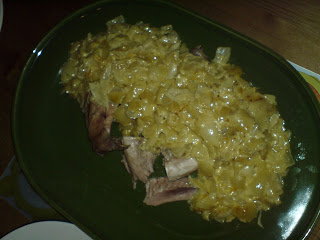
Truss your wild rabbit (or duck) with string, place it in a pan, cover with water, add a bouquet garni (I used parsley, bay, thyme, rosemary and some pared orange rind) and some salt and pepper then bring it to the boil and simmer ‘until done’. Having no frame of reference here, meant checking every now and again. Apparently, younger lithe rabbits cook quicker than old gnarly ones, so check every half an hour after the first hour is up. Once simmering, get to work on peeling 2 to 3 pounds of onions. Pop them in whole along with the rabbit after half an hour and take them out after another half an hour. Now chop them up – a boiled onion is a slippery customer, so be careful with them knife. Fry the onions in 4 ounces of butter until golden in colour, add 4 tablespoons of double cream and season with salt, pepper and nutmeg.

Remove the cooked rabbit and let it rest for a little while and then cut up into serving pieces – two rear legs, two fore legs and the saddle cut into 3 pieces. Arrange on a serving dish and smother with the sauce. Serve with spinach and potatoes as instructed by Griggers herself (I did mash).


#130 Boiled Wild Rabbit with Onion Sauce – 5/10. Not sure if I liked this. It wasn’t vile, as I finished my meal, but wild rabbit has an unusual flavour that is pungent and slightly unappetising. Butters said it tasted like sewage. Weirdly, he wasn’t far away with that description. In fact reading ahead to other rabbit recipes, Griggers herself says that rabbit needs strong flavours to balance its ‘rank flavour.’ This begs the question: if I don’t like it, should I cook the other recipes? They all ask for wild rabbit, however, it is only this recipe that absolutely requires wild, so maybe I should try farmed next time. Not sure. Slightly disappointed that I dislike something – I pride myself in not being a fussy eater. Anyways, the onion sauce was lovely and rich and creamy – loved that. Perhaps using a duck would have been better all round.