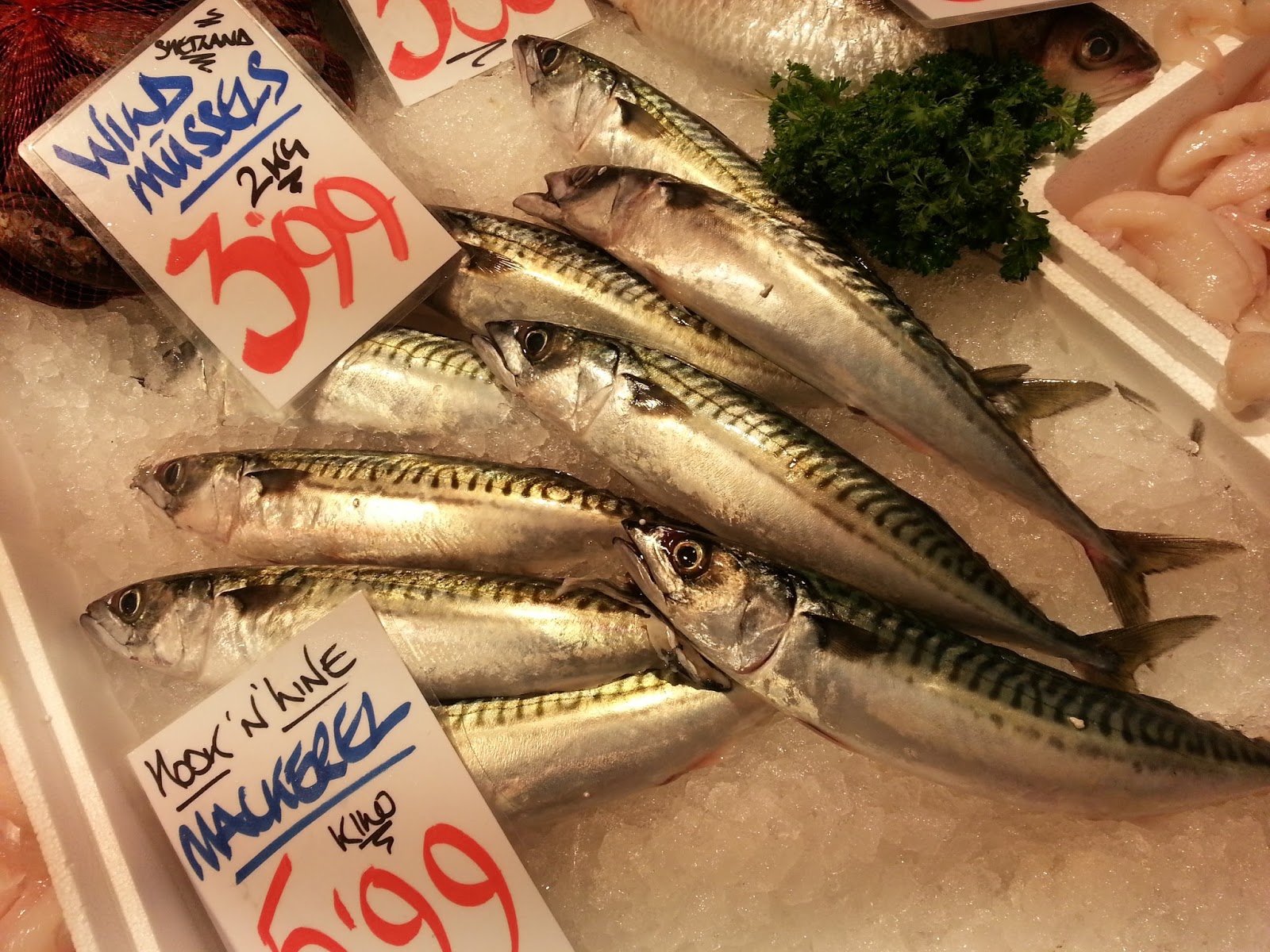
Herring in general are quite ignored, I think, though their relative the mackerel is increasing in popularity. It’s strange that in the middle of the last century they were over-fished. It’s a shame they’ve fallen out of favour, as they are very nutritious and very cheap.
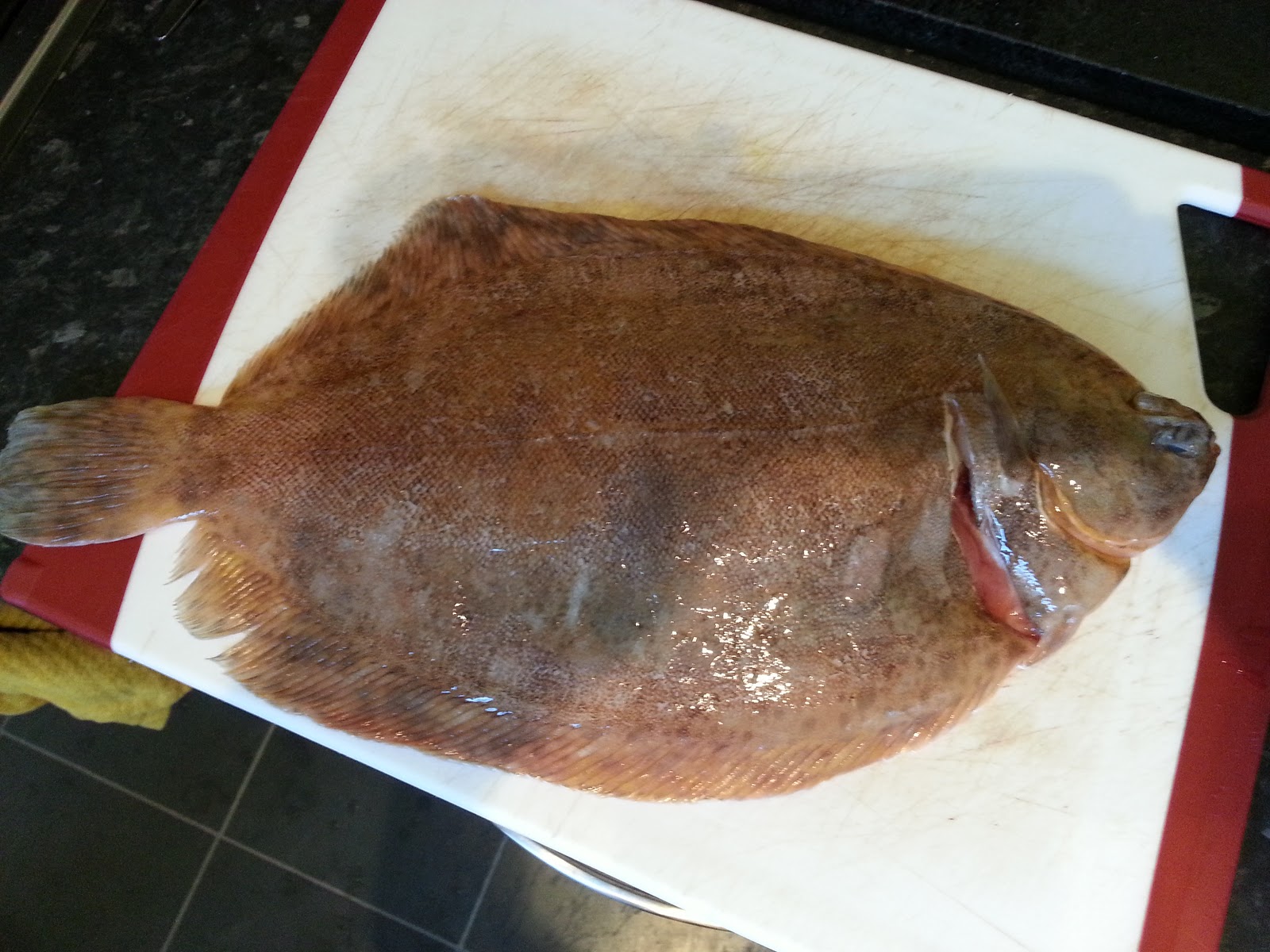
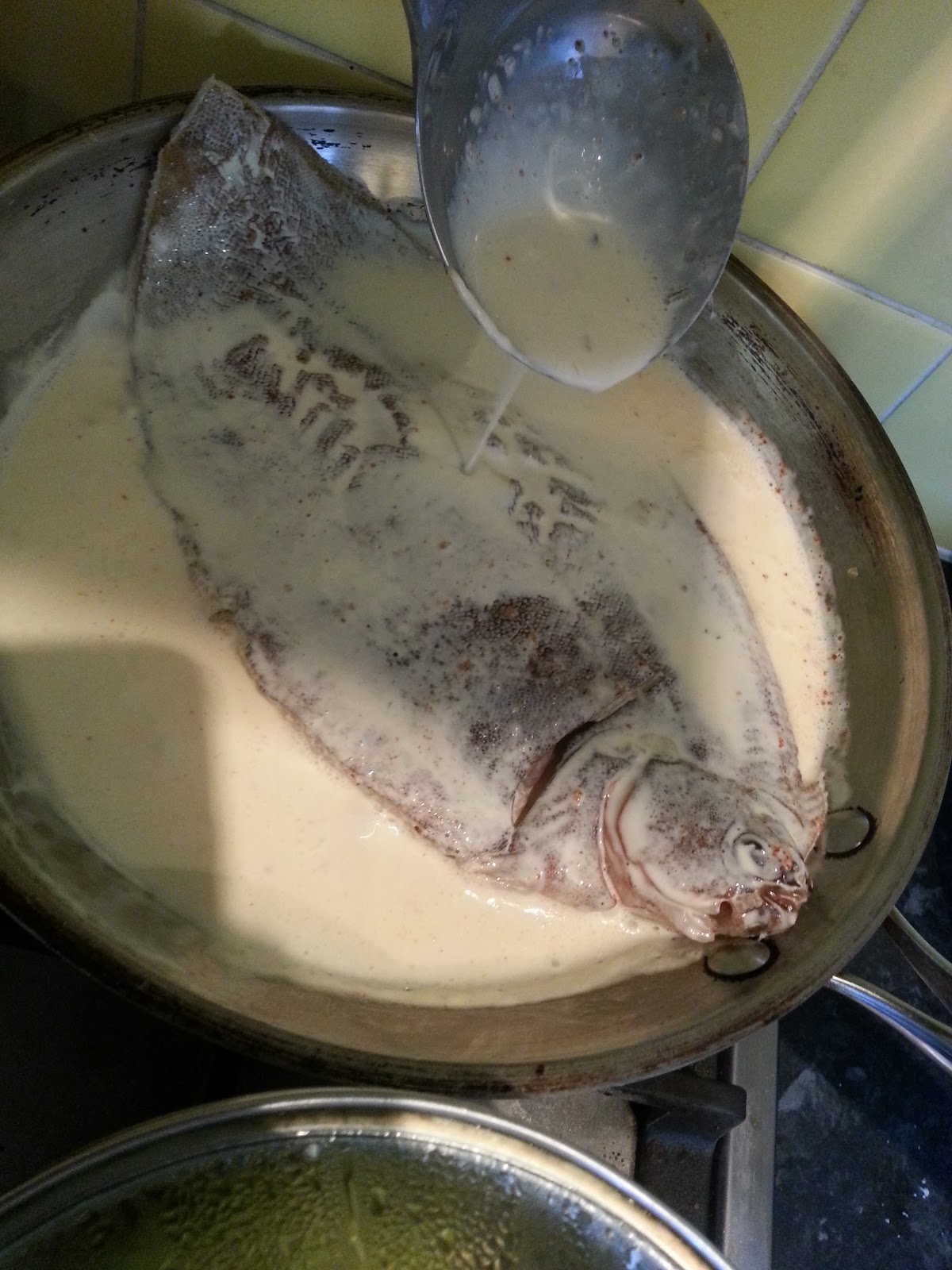
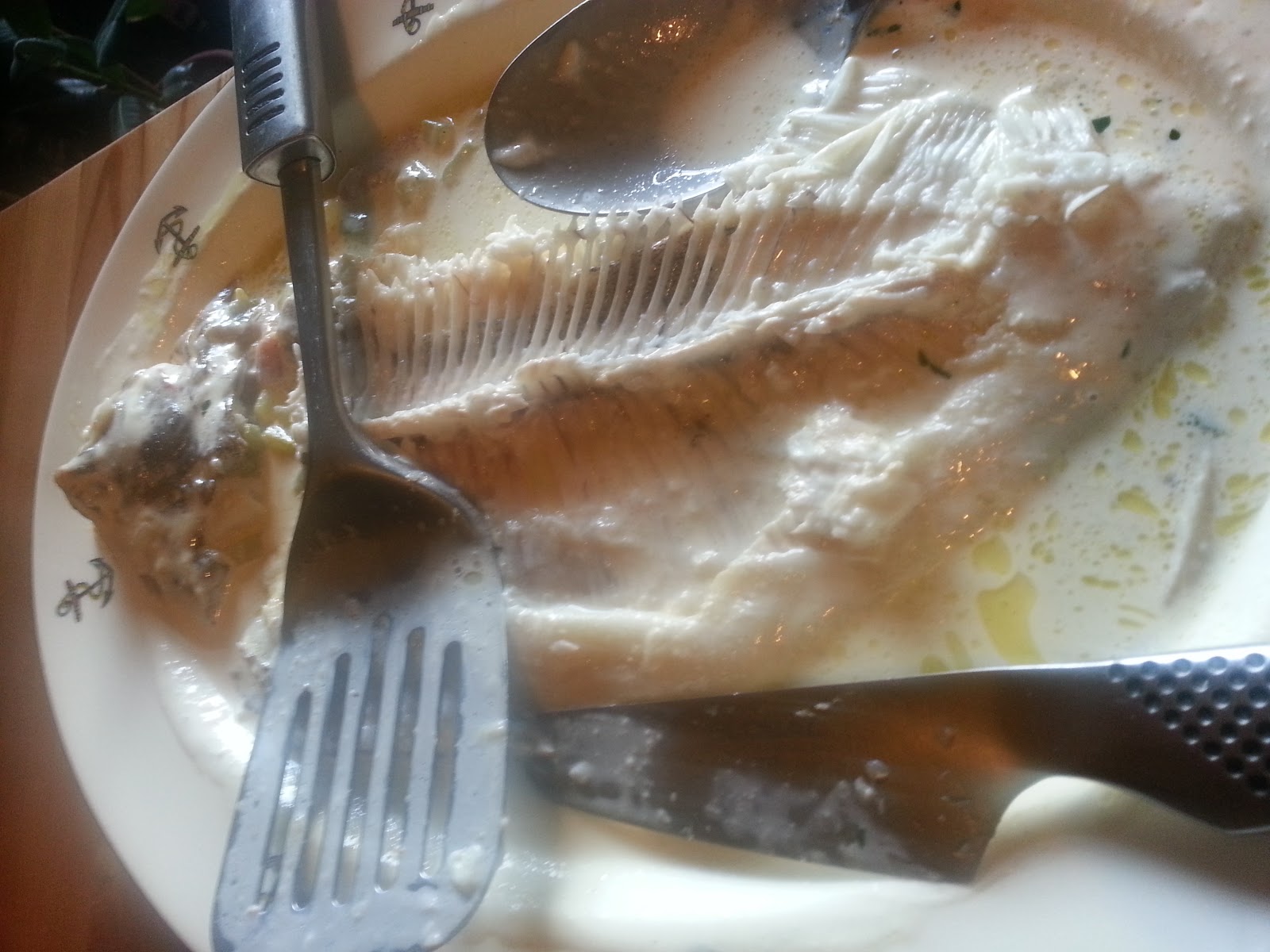
Ask the butcher to gut and scale a nice sole. At home, prepare it by trimming off the fins and place it in a close-fitting dish or pan. Pour around it boiling water that almost covers it, plus a teaspoon of salt, then let it simmer for just two minutes. Carefully pour away the water and pour in some cream so that it goes half way up the fish. Bring to a simmer and baste the fish with the hot cream until cooked through. This takes only four or five minutes, but if the cream thickens too much, let it down with some of the cooking liquid or some water.
It’s always nice to add an extra species of animal or plant to my list of foods I have eaten. Halibut is reasonably pricey so I have typically avoided them in the fishmonger’s shop. They are also beasts – the largest flatfish to be found in European waters. Check out this one caught off the west coast of Iceland in 2010:
It weighed an impressive 34 stones (that’s 476 pounds, or 220 kilos)!
This recipe is from the Polish novelist Joseph Conrad’s wife. She was and Englishwoman called Jessie George, who obviously had a flair for cookery. She wrote a book called A Handbook of Cookery for a Small House, and I assume (for Grigson doesn’t say) that it is this volume from which the recipe comes.
The recipe includes an unusual ingredient – Patum Peperium, otherwise known as Gentleman’s Relish. It is a highly spiced potted anchovy spread, and was a Victorian invention – click here for a link to the other blog for more information on this delicious savory.
This will serve 3 or 4 people, depending upon the size of your piece of halibut, which should weigh between 1 and 1 ½ pounds. Try and get hold of a steak, if you can only get fillets buy two pieces and sit them on top of each other. Make the spiced butter by mashing together 4 ounces of softened butter and a very generous heaped teaspoon of Patum Peperium and smear it over the halibut, including the underside. Sprinkle over 6 tablespoons of white breadcrumbs and bake in the oven for 30 minutes at 190⁰C (375⁰F) until the breadcrumbs have browned.
In the meantime make the tomato sauce that accompanies the fish. Peel 8 ounces of tomatoes by cutting through the skins in a cross shape on their undersides. Place in a jug and pour over boiling water. After 1 or 2 minutes, remove the tomatoes and the skin should be easy to peel away. Chop the tomatoes and cook them in a saucepan with a good sized knob of butter. Gently cook until the juices are reduced to just 3 or 4 tablespoons. Season with a teaspoon of Worcester sauce and some salt, pepper and sugar.
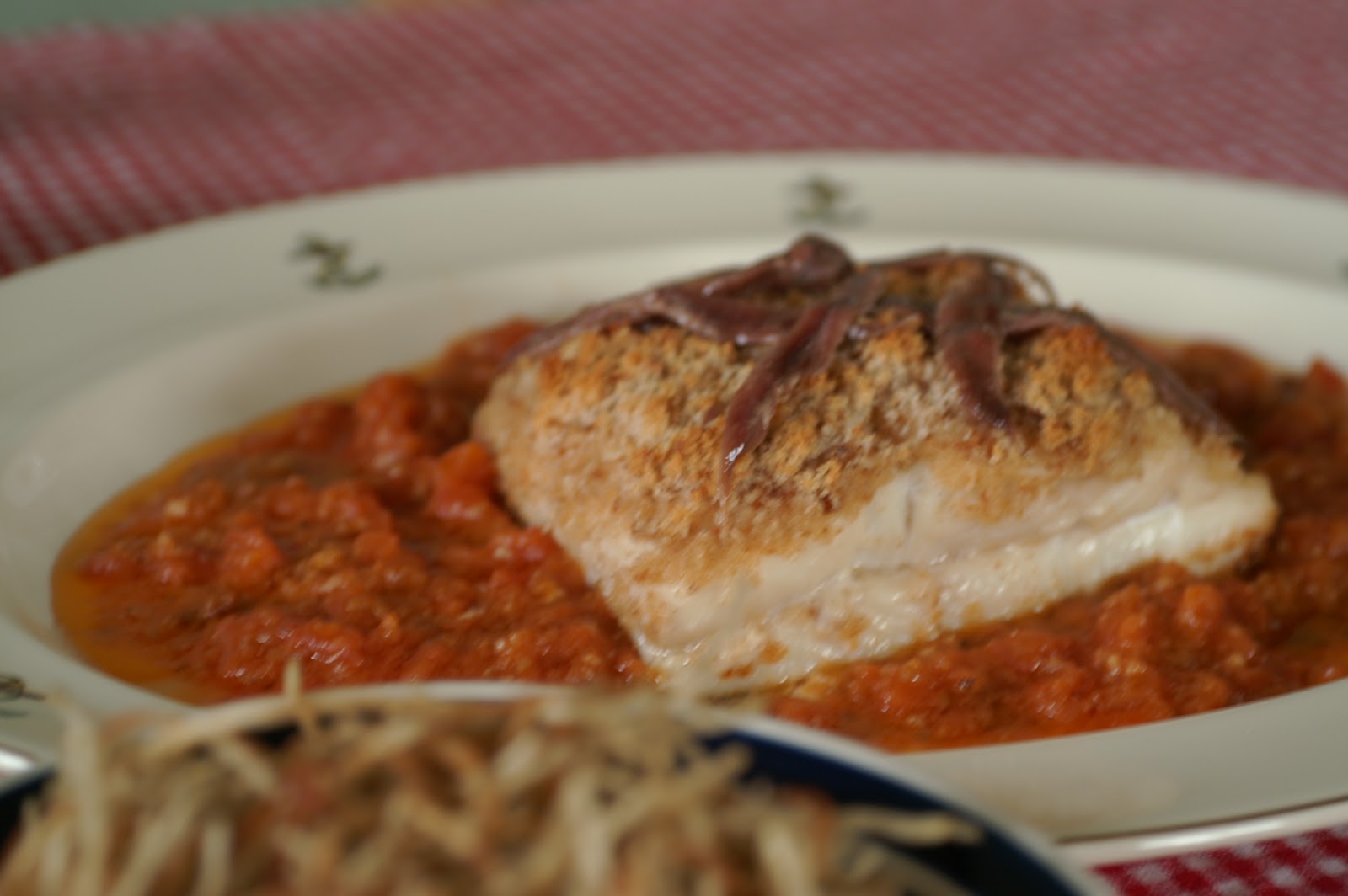
Remove the fish from the oven and place on a serving dish, pour the buttery juices into the sauce and spoon it around the fish. Finally, add 6 split anchovy fillets and place on top of the fish in a criss-cross pattern.
Jane suggests serving with matchstick potatoes. She does not let us know how to make them, but luckily I knew anyway: peel some potatoes and cut into 2 or 3 millimetre matchsticks – julienne as the French say – use a food processor or Chinese mandolin to do this (if you don’t have one, then don’t even bother and boil some potatoes in their skins instead). Plunge the potatoes into a roomy bowl of water so you can rinse away the start. Then drain them in a sieve.
Heat up some cooking oil such as sunflower or groundnut. When a piece of bread goes nice and brown in about 30 seconds, it is hot enough to add the potatoes in batches. Fry for 2 or 3 minutes until golden brown, around 180⁰C if you have an electric deep fat fryer or cooking thermometer, then drain on kitchen towels. Salt and serve.
#342 Halibut with Anchovies. What a delicious dish! The fish was firm, flaky and moist and the butter was seasoned with just the right amount of the Patum Peperium. The tomato sauce was rich yet fresh; a great meal for a summer’s evening. 8.5/10.
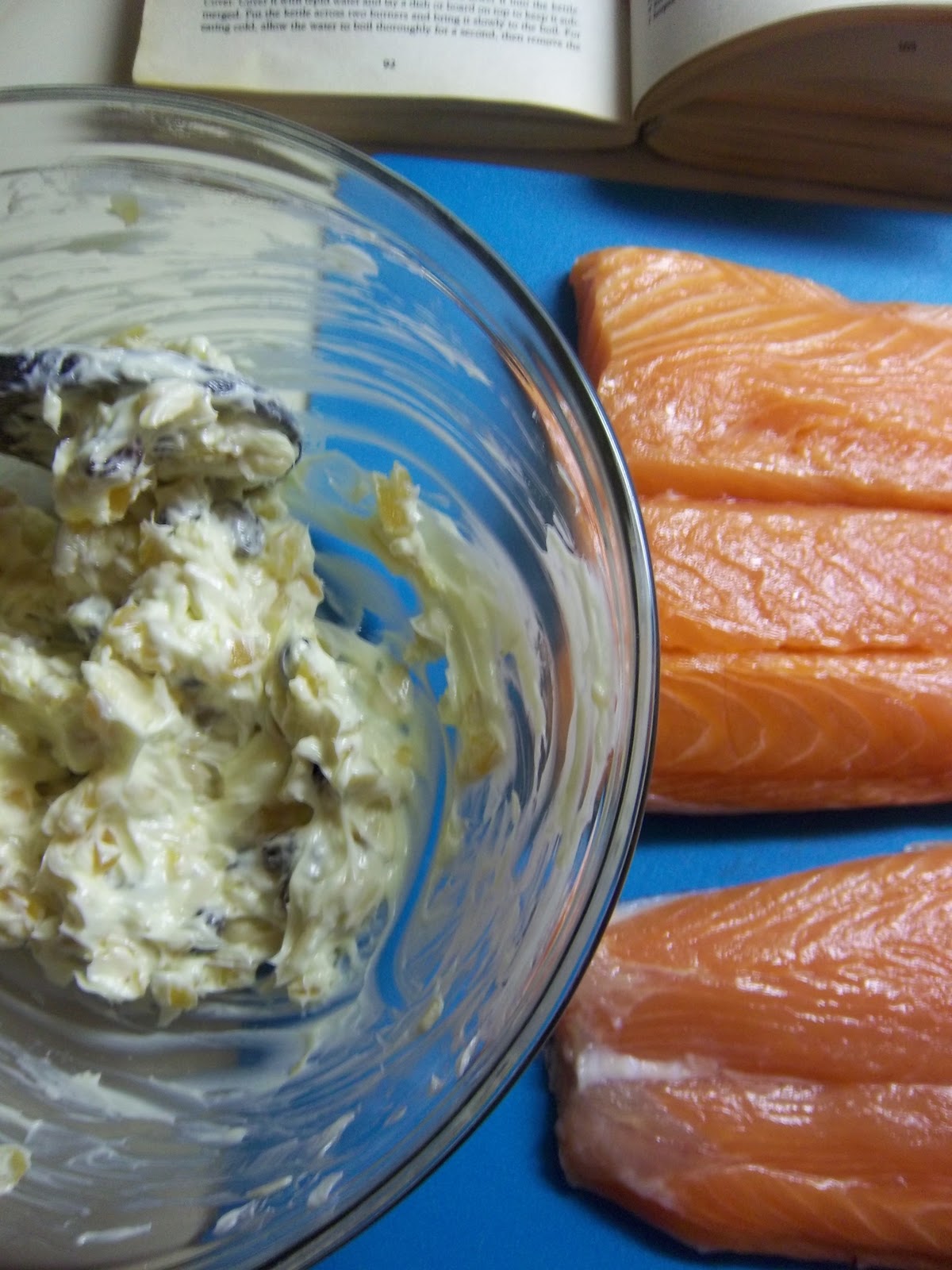
This is a recipe that is inspired by the medieval love of combining fish and candied sweetmeats. Griggers says it is a ‘brave, but entirely successful blend’. We’ll see. Large medieval banquets had to contain dishes with lots of spice; after all how else could you display your vast wealth other than to use that new and exciting new spice, sugar? When first brought to Europe from India, sugar was considered a spice like any other and therefore medicinal. It lost its rank as a spice once it gained popularity as a more general addition to the dinner table; albeit a giant banqueting table.
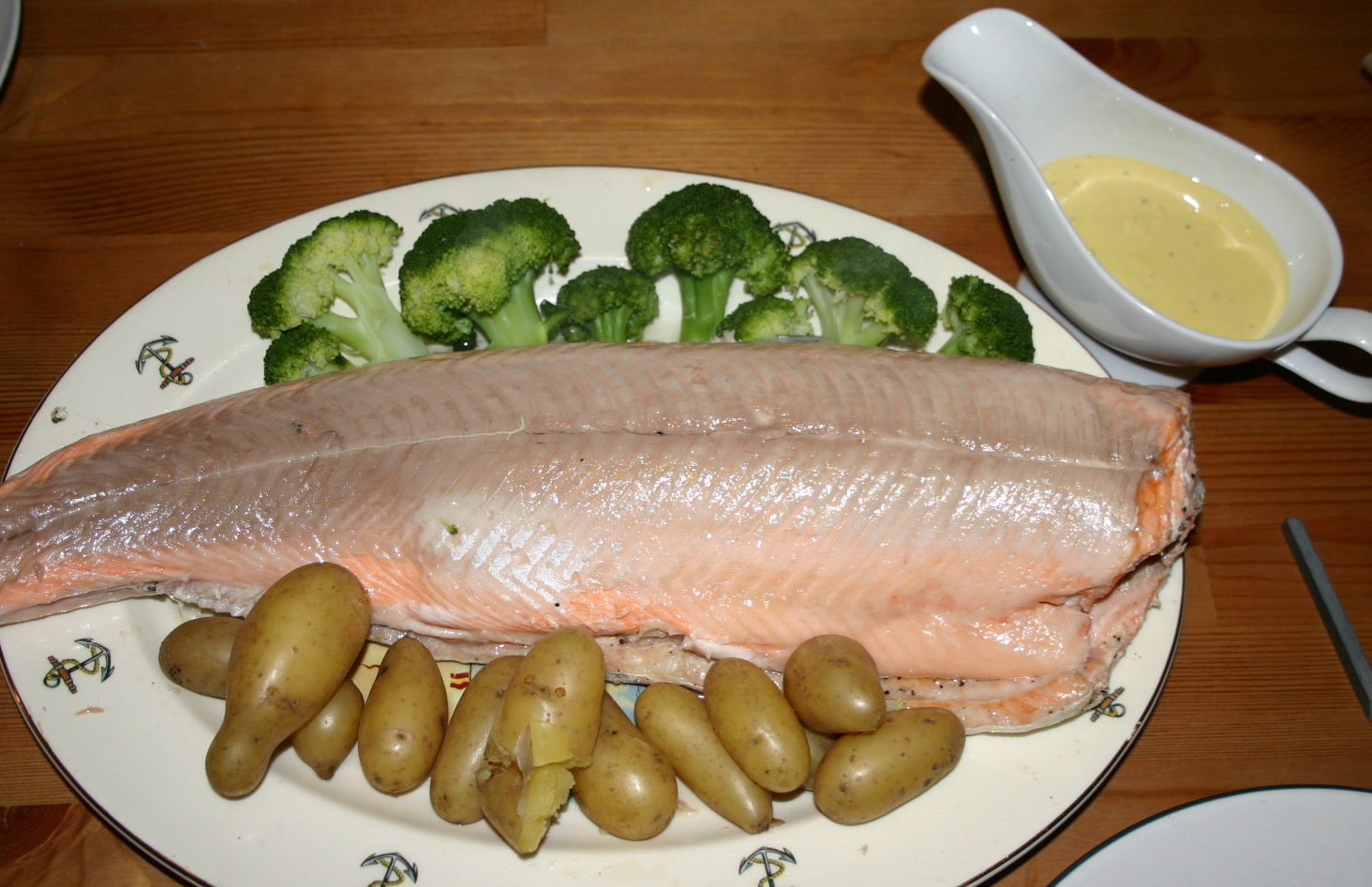
Whilst the salmon cooks, you can get on with the sauce. Gently fry 2 chopped shallots, a heaped teaspoon of chopped parsley and a teaspoon of mixed chopped tarragon and chervil in 2 ounces of butter. When the shallots have softened, stir in a teaspoon of flour, then ½ pint of single cream (or half single-half double; American readers: heavy whipping cream is the thing to use here). Simmer for around 10 minutes, then season with salt and pepper and a teaspoon of Dijon mustard. Whisk 2 egg yolks with a couple more tablespoons of cream, turn down the heat in the pan and pour in. The sauce will thicken as the yolks start to cook – do not let the sauce boil, or your yolks will scramble. Finally, lift the whole thing by adding a good squeeze of lemon juice.
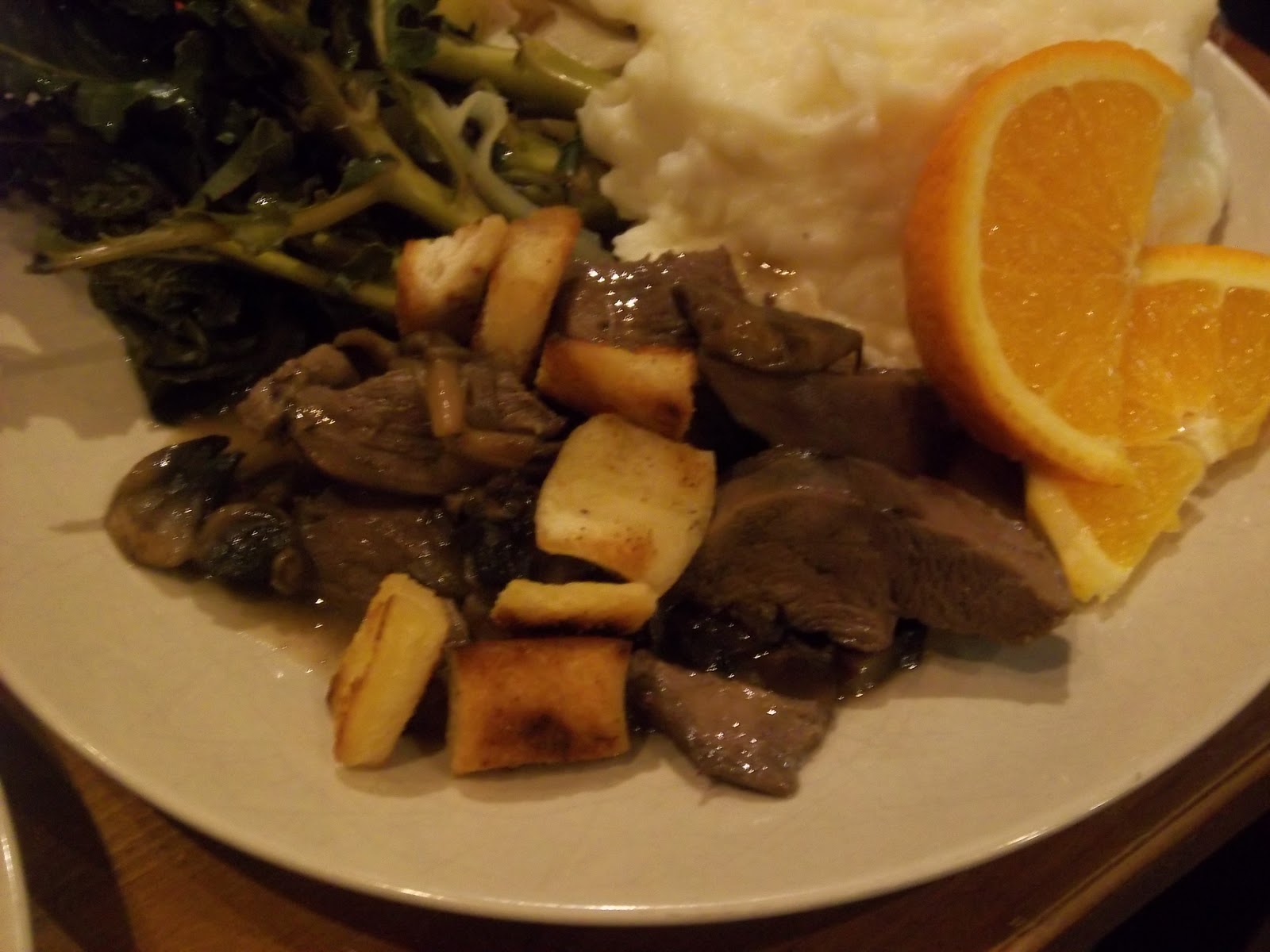
A salmi, also known as salmis, salomine and salomene is essentially a posh game stew and is an abbreviation of salmagundi which started life in France as a meat ragoût. A salmi, rather than being any meat, should be made using game birds that are partly-cooked, and then finished off in a rich sauce made from their bones, though domesticated birds like capon and Guinea fowl are commonly used. Jane Grigson complains that more often than not, salmi is made from leftover game meat and then offered at high prices in high-end restaurants. ‘Don’t be deceived’, she says, ‘[i]t is exactly what would have been eaten by Chaucer, or his son, at the court of Henry IV, or by that granddaughter of his, Alice, Duchess of Suffolk, at her manor at Ewelme.’ Grigson mentions the food eaten at the court of Henry IV a few times in English Food: giving recipes for quince comfits and ‘a coronation doucet’.
Cubebs are a type of pepper (latin name: Piper cubeba) that you can still buy from specialists, gilliflowers are a very fragrant species of carnation and ‘powder’ refers to a mixture of ground spices.
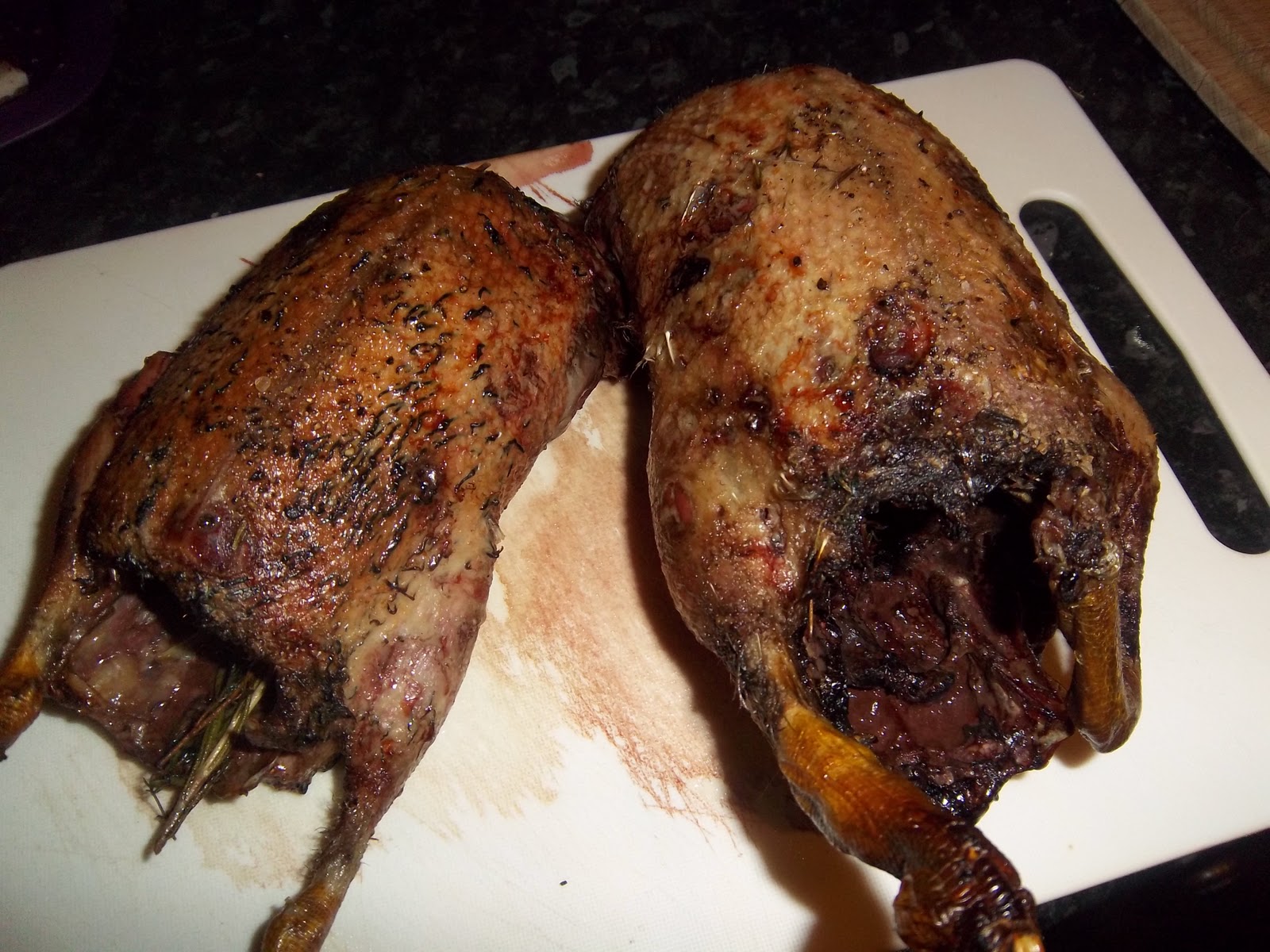
Roast your game birds rare, cut the meat from the carcass into neat ‘gobbets’.
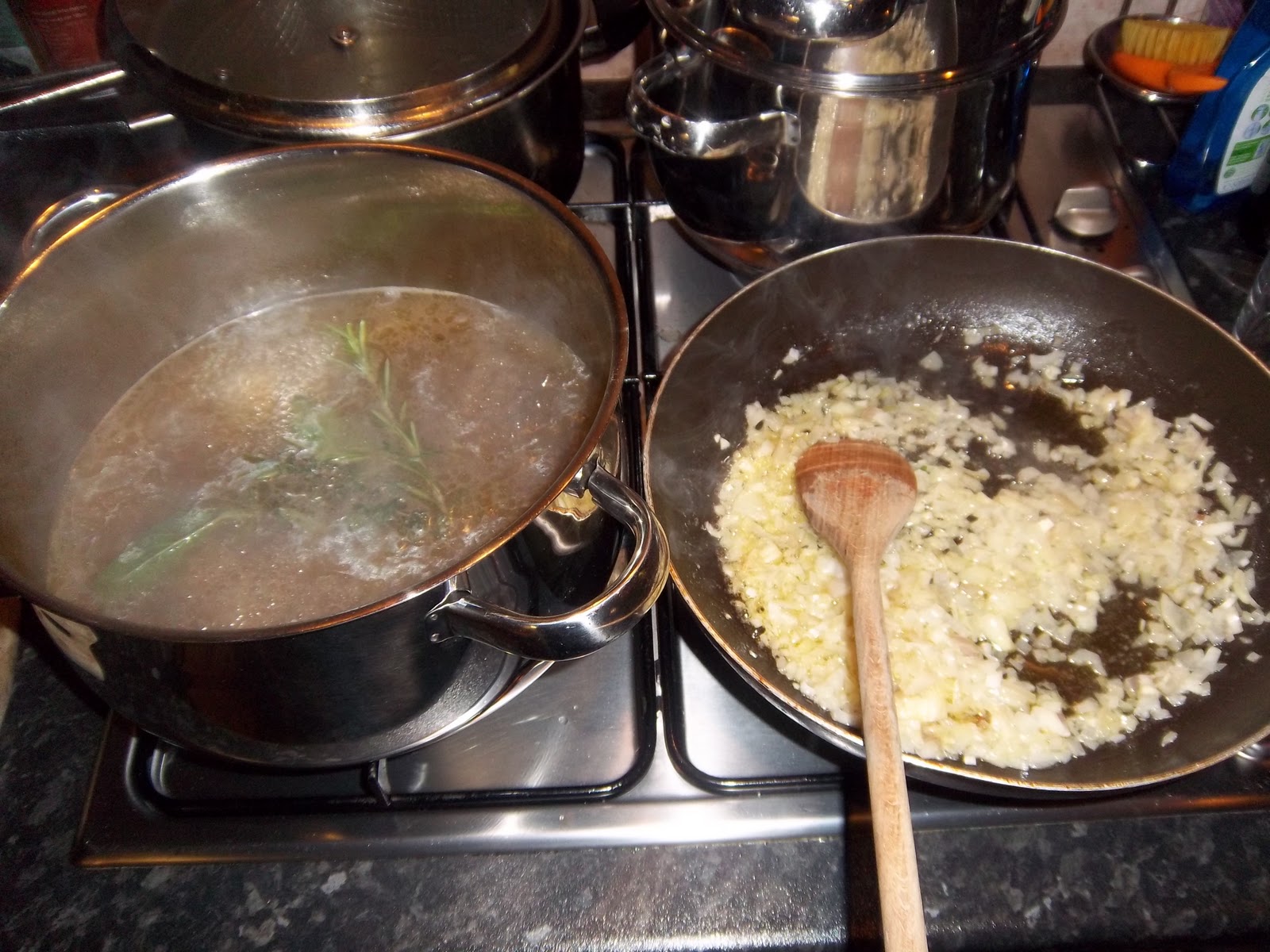
Use the carcasses to make ¾ pint of game stock. Melt 2 ounces of butter in a pan and cook 3 chopped shallots until soft and golden. Now stir in a heaped tablespoon of flour and whisk in the hot stock a third at a time to prevent lumps forming.
Add a bouquet garni and a pared strip of orange peel (Seville oranges would be great if you can get them) and simmer for 20 minutes, to make a thick sauce. Pass the sauce through a sieve and add ¼ pint of red or white wine and 4 ounces of mushrooms that have been fried in butter. Season with salt, pepper and lemon juice. Simmer for a further 5 minutes, then add the game and simmer very gently again for 10 more minutes. Add a little cayenne pepper. Serve with orange wedges and croûtons fried in butter.