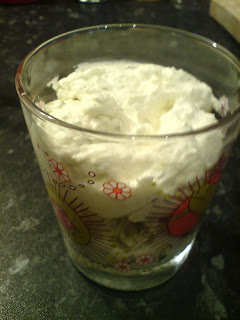
#354 Passion Fruit Curd

Well there goes the Great British Summertime, but don’t worry our Griggers is at hand to give us a little bit of tropical sunshine with this rather unusual fruit curd recipe. She must have been rather ahead her time with this one – I think the first time I ever saw a passion fruit in a greengrocer’s shop it was around 1990. I love fruit curd and am always on the lookout for new recipes – especially for the stall. Jane does suggest giving all sort of fruits a go; raspberries, gooseberries, apricots – knock yourselves out, she says (I paraphrase).

This curd is unusual in that it is made in the same way as custard:

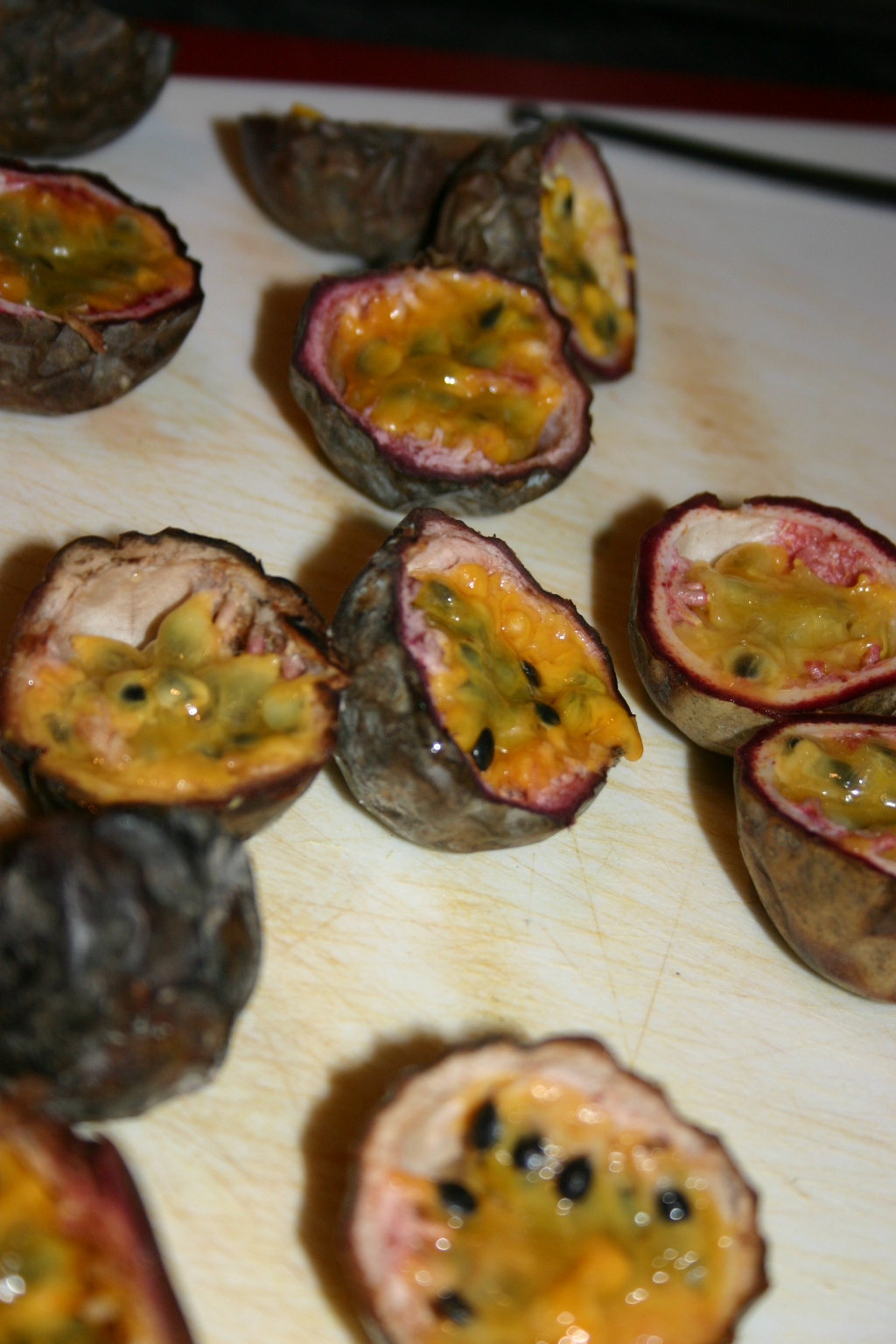
You will need 4 large, 6 medium, or – in my case – 8 small passion fruit. Halve them and scoop out the pulp, seeds and all, into a small saucepan. Stir in 4 ounces of sugar and 4 ounces of slightly salted butter that has been cut into cubes over a low heat. Meanwhile, beat 3 large eggs (or 2 large eggsand 2 egg yolks) well in a bowl. When the sugar has dissolved and the butter melted, turn up the heat until it boils then tip it into eggs , furiously whisking to prevent the egg from curdling. Pour the custardy mixture back into the pan and stir over a low heat until it becomes quite thick. If you want to err on the side of caution use a double boiler or a glass bowl over simmering water. I found you don’t need it for this recipe, though I did use a thermometer so that I could get the curd as thick as possible without it curdling – you want a temperature of 78C (though Jane gives a temperature of 80⁰C, but I always find this too high for curds).

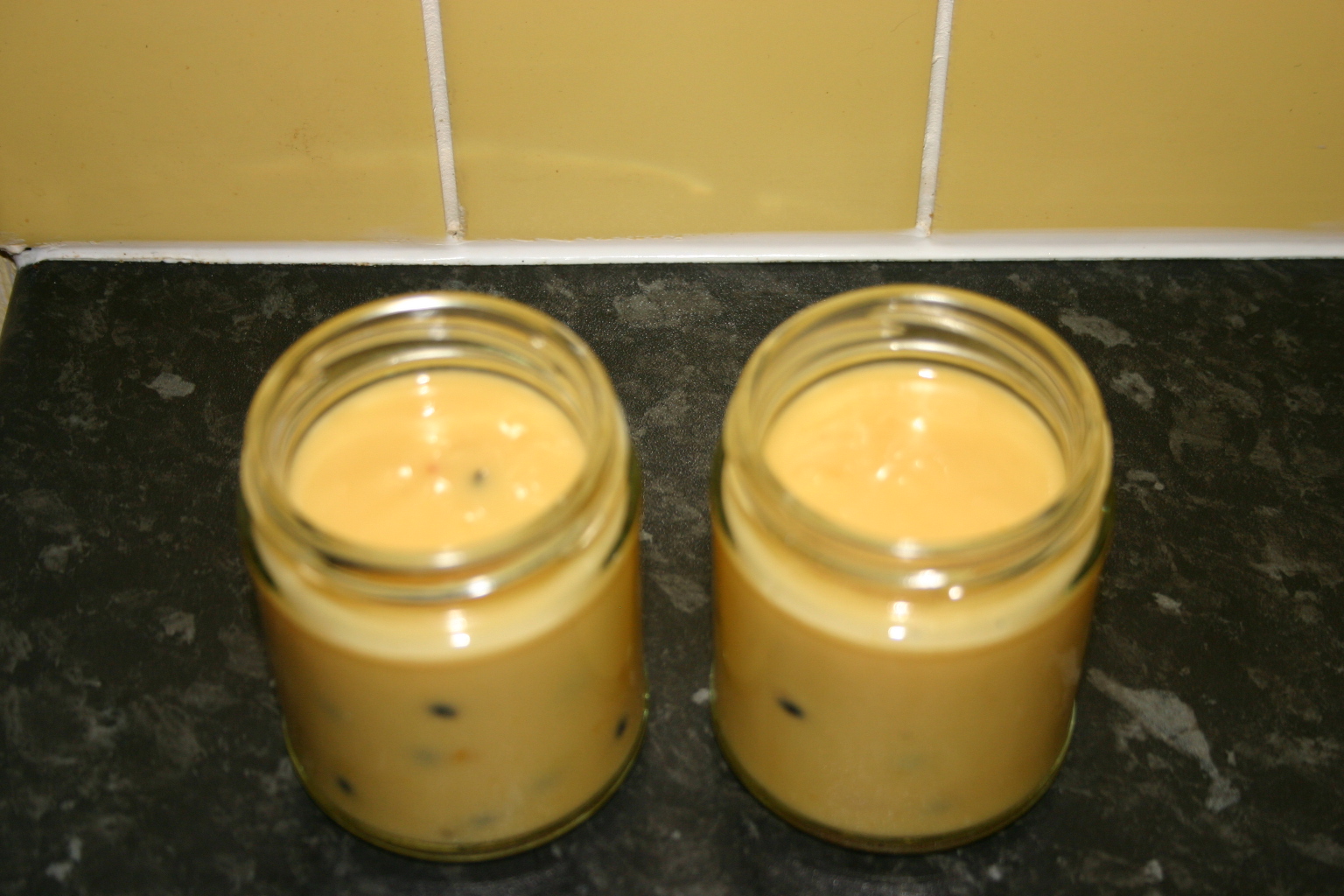
Remove from the heat, but mind you still keep on stirring it – the residual heat of the pan may still curdle it – then pass it through a sieve, making sure you work all of the curd out. Stir in a few of the seeds and add a tablespoon or so of lime juice to sharpen it a little. Pot into sterilised jars, let them cool then seal them. It will fill two 200 ml jars.

#354 Passion Fruit Curd. This was a strange one and no mistake. The flavour of cooked passion fruit is rather different to fresh – it’s weirdly not unlike fresh bread, and it took rather a while to get used to it. I ate it on toast, but I reckon it would have been a fantastic filling to a sponge cake. Also, they coordinated very well with my kitchen decor. 6.5/10.

#345 English Apricot Pie

Flowers and Apricots by Joseph Bidlingmeyer, 1850

I have been eyeing this recipe for a good while, but fresh apricots are so pricey I have always put it off. However, Soulard Farmers’ market came to save me from my apricot fast by selling them for just over a dollar a pound! They were delicious too.

The reason apricots are so expensive is manifold: they flower very early and suffer poorly from bad weather – they will die even if there’s a light frost or a high wind; they don’t take to grafting well; they are very particular about the soil they grow in, to the point where the amount of fertiliser dug into the soil needs to be calculated; they also do not travel well. They are delicate things and much prefer Eastern climbes as they originated in China, coming to Europe via India and the Middle East. It is for all these reasons that you usually find apricots dried rather than fresh.


As an aside, the reason the apricot doesn’t take to grafting is because they were mis-classified as a member of the plum family, Prunus, and were grafted onto other Prunus species, cherry is usually the grafters’ favourite. It is actually part of the rose family. Everyday’s a school day.


So what are the benefits of eating this temperamental and pricey fruit, other than that they are quite delicious? Well there is quite a long list of benefits to eating apricots. The 18th century French writer Bernard le Bovier Fontenelle, who was a member of the Royal Society, lived to 100 years old and the secret to his longevity was apricots, a tip he got from his grandma. ‘A royal fruit, she called it, saying that the scatterbrained folk of our days ought to make more use of it.’ Quite.

Fontenelle

As it happens, apricots are high in phosphorus and magnesium and can significantly increase mental ability. They are super-rich in beta-carotene (which gives the fruit its yellow colour); 4 ounces of apricots will give you 50% of your daily allowance. They are also good for the blood – they can even alleviate anaemia better than liver! They are also a significant source of fluoride. Amazing.


This pie was invented by the great chef Carême. He is very particular about the type of pie dish you should use; it must be very shallow, not much deeper than a plate.


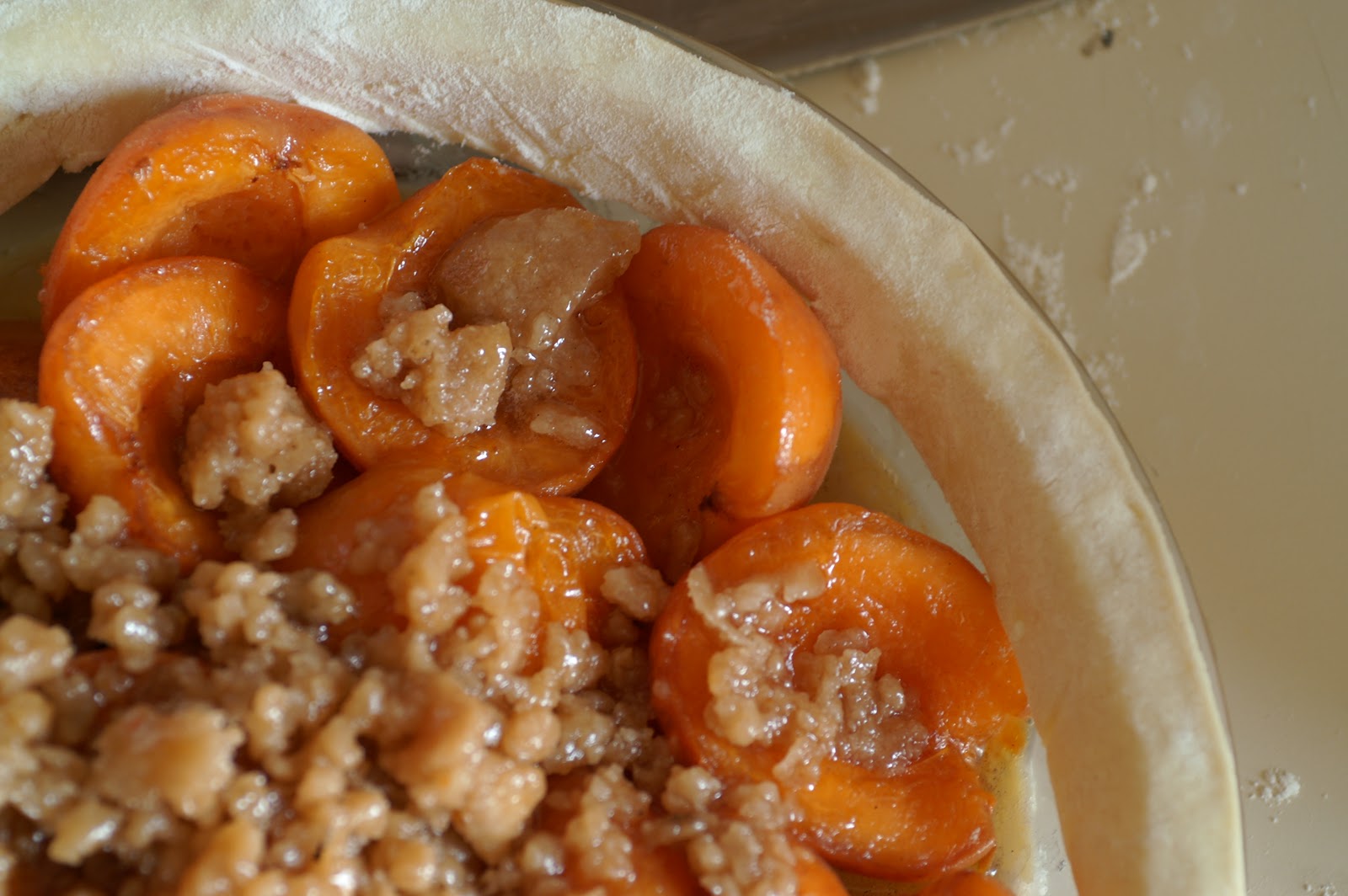
Halve 1 ½ pounds of fresh apricots and take out the stones. Next, melt 2 ounces of unsalted butter in a frying pan and stir in 8 ounces of caster sugar; this might seem alot but they really do need it. Over a moderate heat stir the sugar into the butter. After a few minutes it should start to melt. Add the apricots and coat in the butter-sugar mixture. Stir for a minute or two – you don’t want to cook the fruit, just get the apricot halves well covered.

Pile the fruit and butter and sugar, which should be toffee-like at this point, into a shallow pie dish.
Roll out some puff pastry. Cut strips around half and inch a glue them around the edge of the plate with beaten egg so that the strips ‘extend partway down the dish itself. This will create a good seal, preventing the apricots from escaping. Brush the strips with egg and cover.

Use a fork to seal the pastry lid then make a central hole so that any steam generated during cooking can escape. Brush with more egg and sprinkle some more caster sugar. Start the pie off in a hot oven – 230°C (450°F) – for 15 to 20 minutes so that the pastry can turn golden brown, then continue cooking at a lower heat of 160-180°C (325-375°F) for 15 minutes. ‘Serve hot or warm with plenty of cream.’

Sorry about the terrible pic.
I’m normally drunk by dessert…

#345 English Apricot Pie. What a delicious fruit pie! It occurred to me whilst I was eating it that I have never eaten apricots this way. Well it certainly won’t be the last time I do it; the sugar and butter became a deliciously sweet sauce and the cooked apricots softened and turned very tart. That Carême chap knew what he was talking about.

#332 Cherry, Plum or Damson Sauce

This is a piquant and rich sauce that is traditionally served with game, venison and tongue that seems very Victorian and English to me – there are many others like it such as Cumberland and venison sauce that came most likely from Germany via the kings (and a queen) of the House of Hanover (Georges I to IV, William IV and Victoria). We don’t really eat much of these sorts of sauces anymore, and we shall see if we should bring them back.
This recipe makes good use of seasonal European fruits: the morello or amarelle cherry (or sour cherry), plums and damsons.
Morello and amarelle cherry trees (Prunus cerasus)are easy to cultivate, and yet it is getting increasingly difficult to find fresh British ones sold at markets, though you can find them frozen or canned pretty easily. The English cherry orchard is a feature of the country declining greatly, mainly because of the competition from cheap imported ones from the Middle East and places like that. The morello cherry was introduced in Britain by the Romans around 50AD and were very popular in Tudor times. Will the English cherry ever return? Because they are so easy to grow and take up little space I shall grow some upon my return to Britain (once I have a garden of course!).

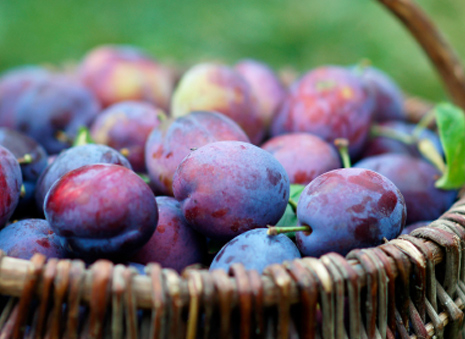
Plums, like the cherry, are of Genus Prunus and there are around 20 species used in several different ways, the species used in Britain is P domestica which is actually a hybrid of two other species. P domestica has been bred into several varieties including my favourite, the greengage.

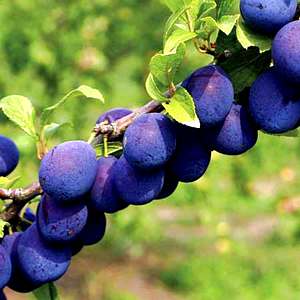
P domesticus also produced the damson, our third fruit for this recipe. Damsons to me are the most English of all three, though I have never tried them before. I shall have to rectify that.

Here is how to make the sauce, whichever Prunus you lay your hands on.

Stone 8 ounces of morello or amarelle cherries, plums or damsons. You can use canned cherries if you want, just make sure they are in water, not syrup. This is what I used. Put the fruit in a saucepan along with ¼ pint each of red wine and port, a tablespoon of sugar, 2 cloves and an inch-long piece of cinnamon. Bring to a boil and simmer for around 10 minutes until the fruit is nice and tender. If you want, you can sieve the damsons or plums if using, but I think it’s better to leave whole. Now add 2 good tablespoons of redcurrant jelly and the juice of 3 oranges and a lemon. Season with black pepper and, off the heat, stir in an ounce of butter. Taste and add more sugar if needed.

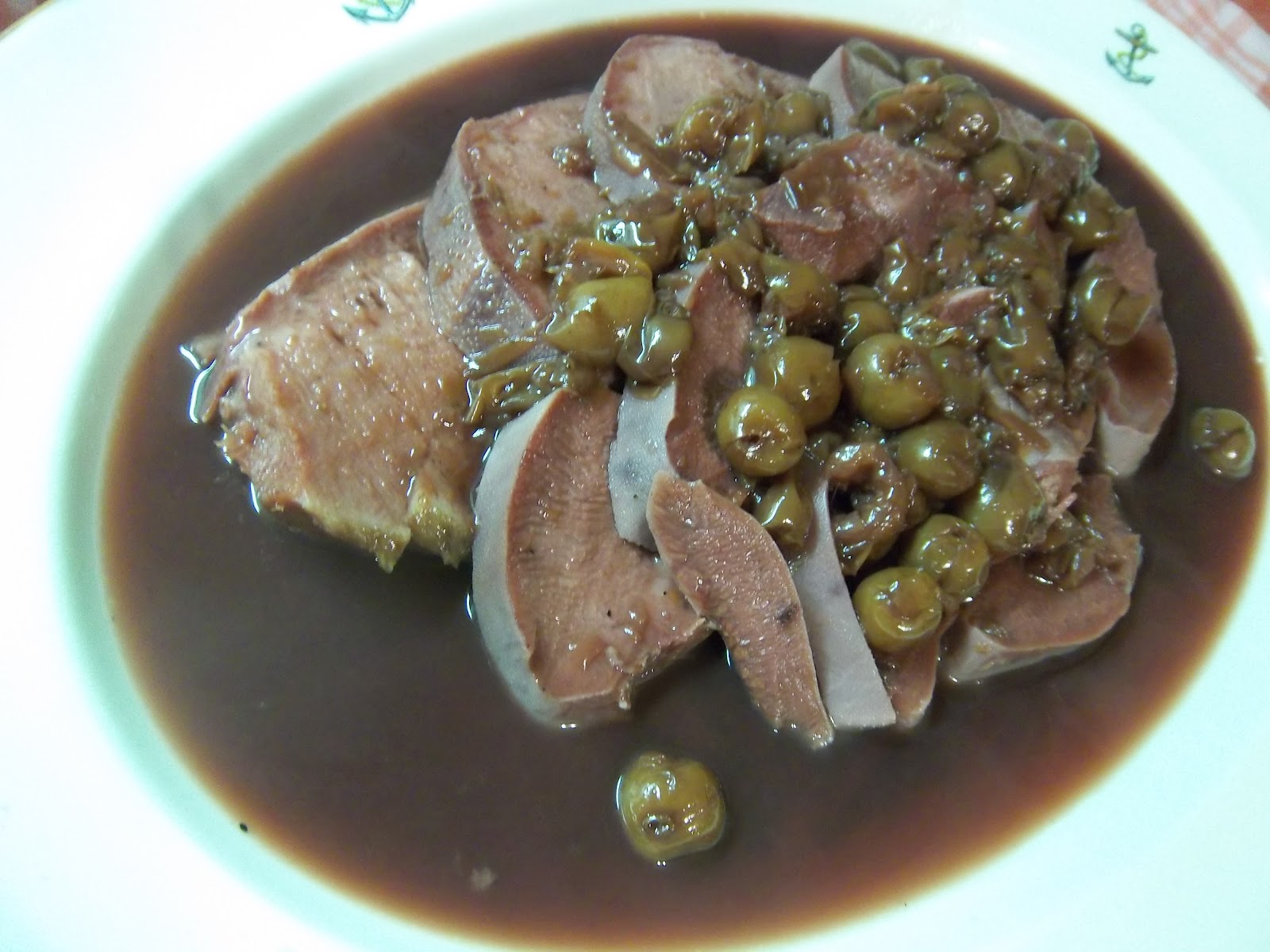
I made cherry sauce and served it with hot tongue.
#332 Cherry, Plum or Damson Sauce. I loved this sauce much more than Cumberland sauce. The rich wines and fruit were only just off-set with the sugar, fruit and spice. Very delicious, you could almost eat it on its own. We should certainly bring it back! 8.5/10.

#324 Grouse

I had heard this year was a good one for grouse, so as they were cheap I ordered a brace from Bentley’s, the local butcher in Pudsey, my home town. I had never cooked or eaten grouse before and was excited about adding yet another species to the list.
In Britain, game season begins on the ‘Glorious Twelfth’ of August, and it is the grouse that are shot from that day. Another bird joins them too – the tiny snipe. It is the grouse that is held the most highly among the game shooters however, for the game eaters consider it the best of all the game birds.
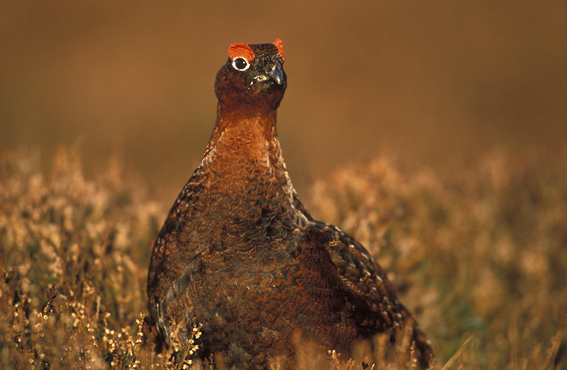
The grouse is not a single species; there are four in the British Isles. If you order grouse from your game butcher, then you will almost definitely be getting red grouse, the most common of the four.
The very beautiful red grouse
There are also the much rarer black grouse, ptarmigan and capercaillie. Of these, only the ptarmigan is still hunted, though in very small numbers, and there is a recipe for it in English Food, though I don’t expect to ever find one and cook it.
Male capercailles are rare, majestic and aggressive
and off the menu these days.
Grouse, like most game species, are very lean, which is great if you are wanting to cut down on your fat intake. The problem with this is that the meat can dry out very easily and so you need to protect the bird by encasing it in fat or bacon. You can also lard the bird with bacon fat or pork back fat. These measures are pretty easy to take, so cooking grouse is pretty straight-forward.
One grouse will serve one or two people.
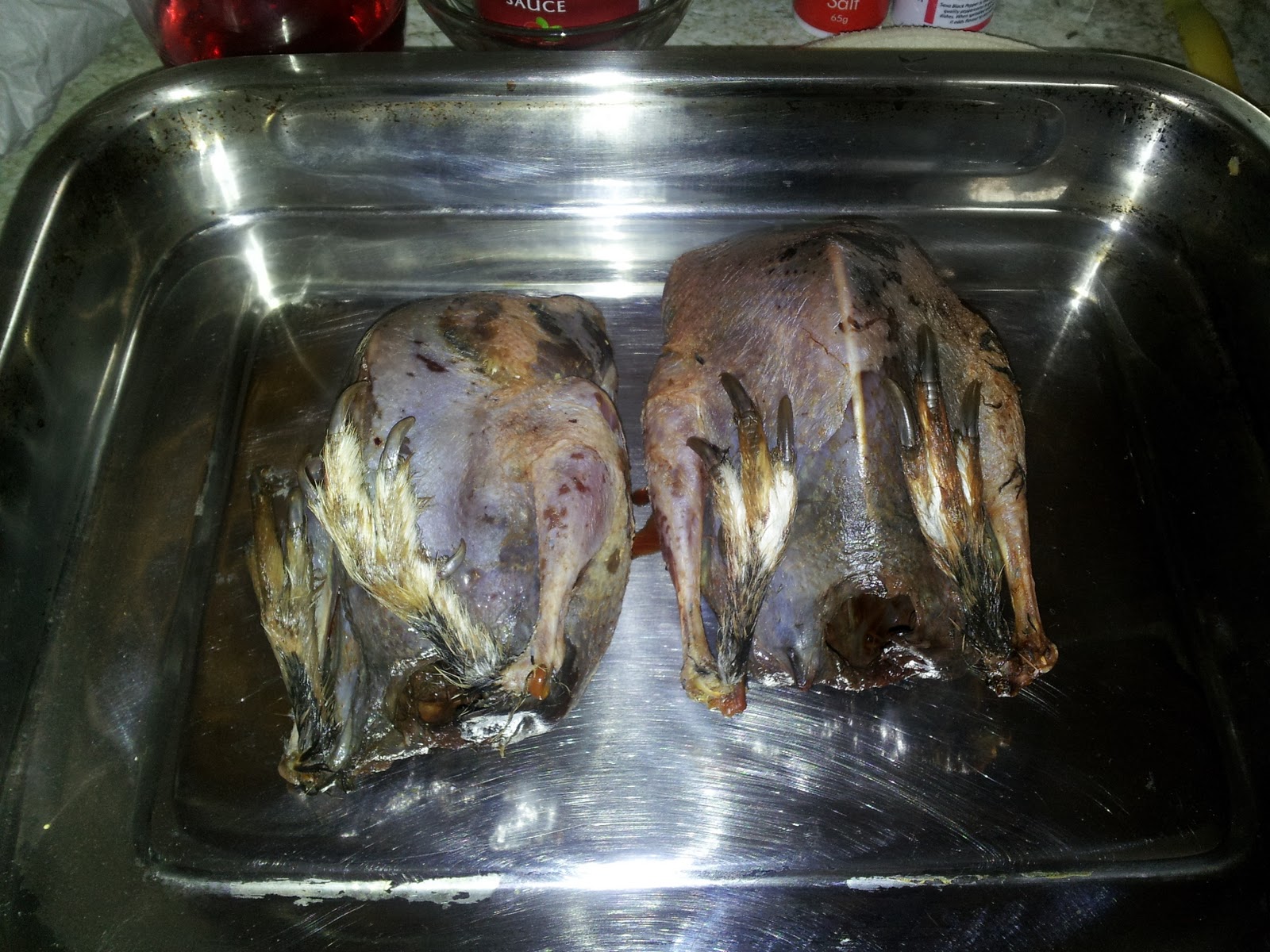
Preheat the oven to 190C (375F). Take your grouse and give them a rinse under some water and pat them dry. Season inside and out with salt and pepper and stuff the bird with some seasonal fruit. This depends upon the month you are eating the grouse; Griggers suggests bananas, wild raspberries, cranberries and peeled and seeded grapes. I went with banana.

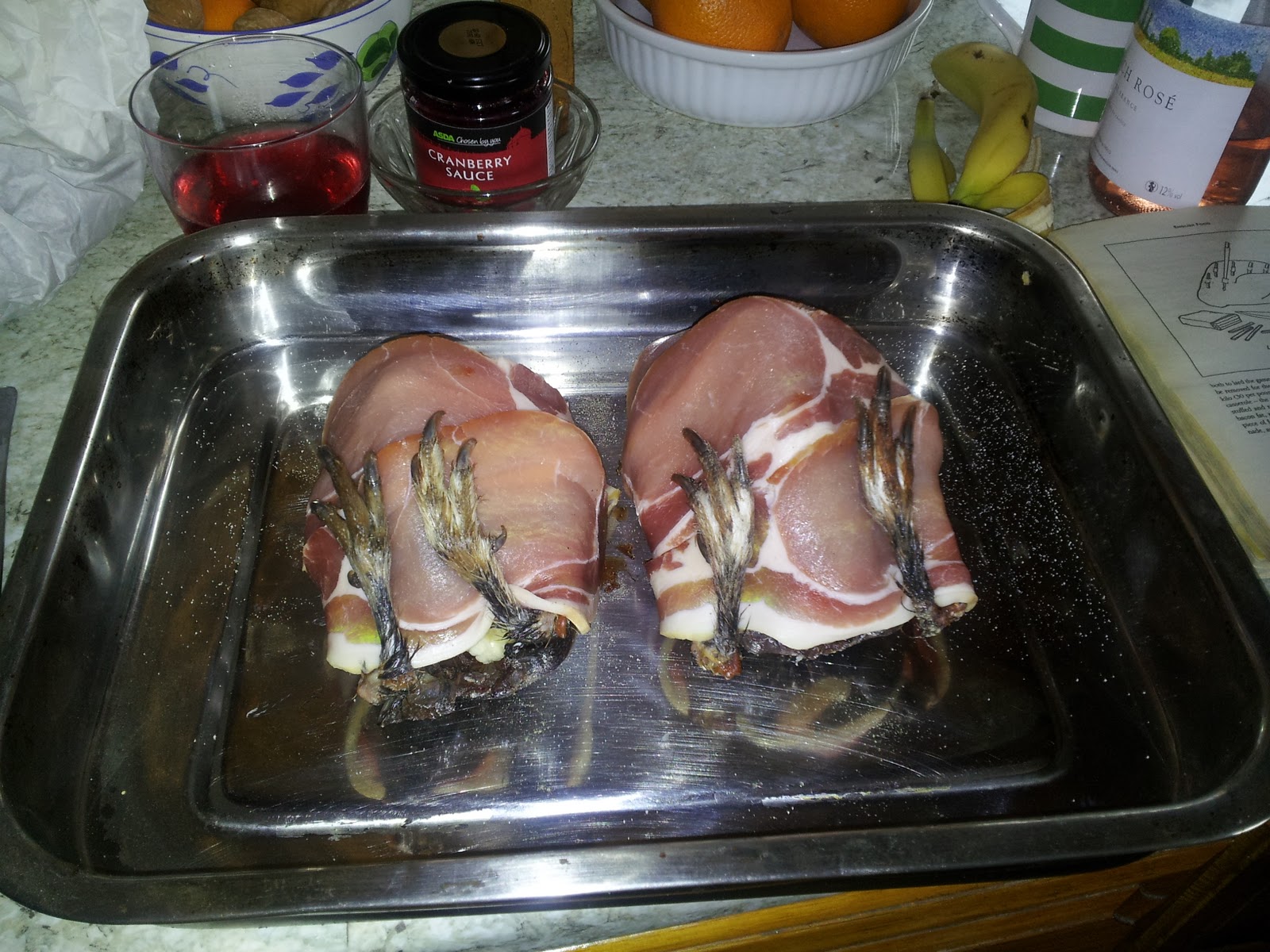
Cover the birds with vine leaves if you can get them. This is not necessary, so don’t worry if you can’t find any (I couldn’t). Next, cover the birds in jackets made of either bacon rashers or a sheet of pork back fat.

I went with bacon here as it could be served up alongside the grouse.

Roast for 35-45 minutes and allow to rest under some foil for around 20 minutes.

You can serve whatever you like with the grouse, but it is typically eaten with the typical game accompaniments like bread sauce, game chips and a tart jelly such as rowanberry. I went with some mashed potato and a couple of veg, myself.

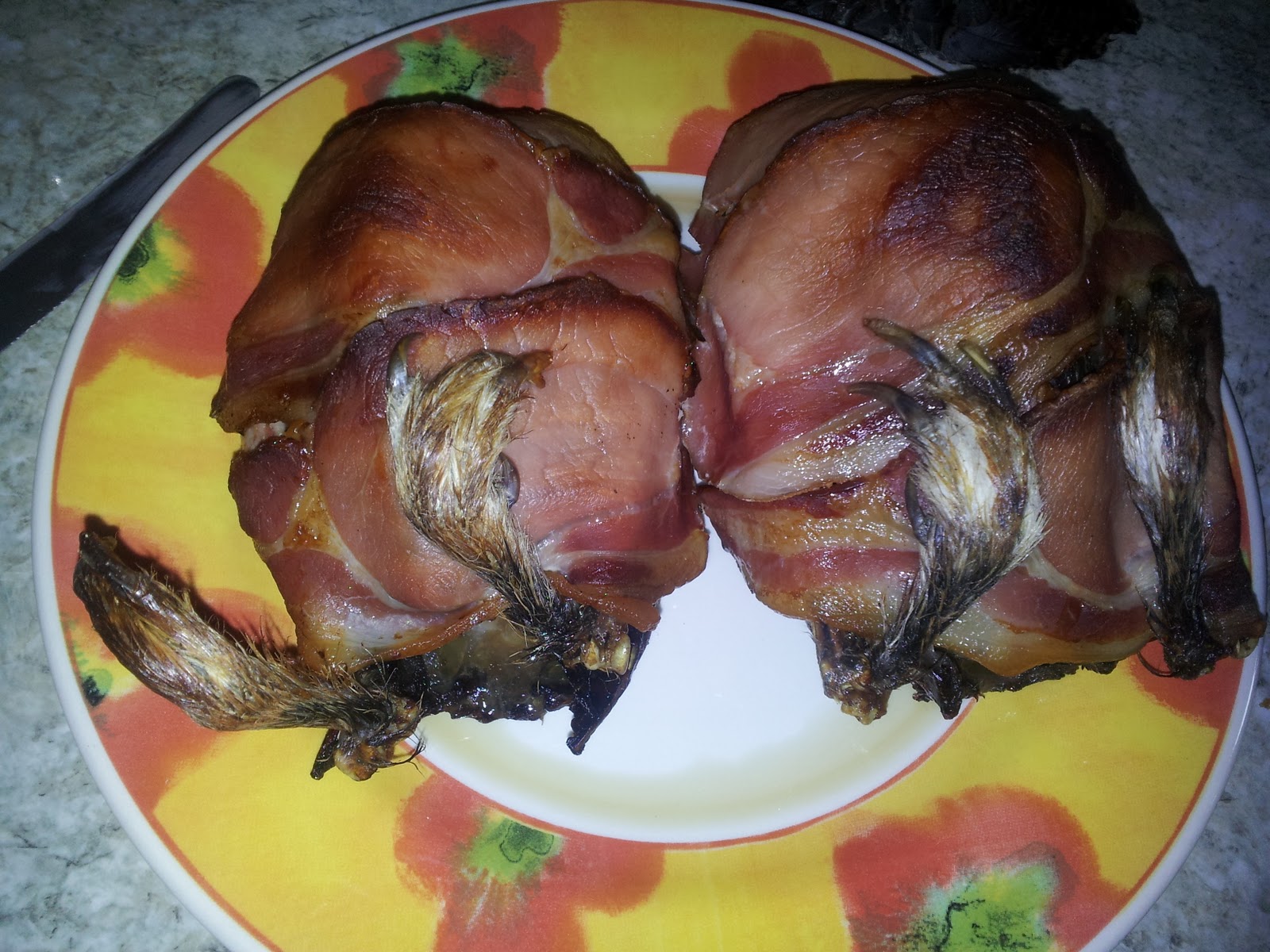
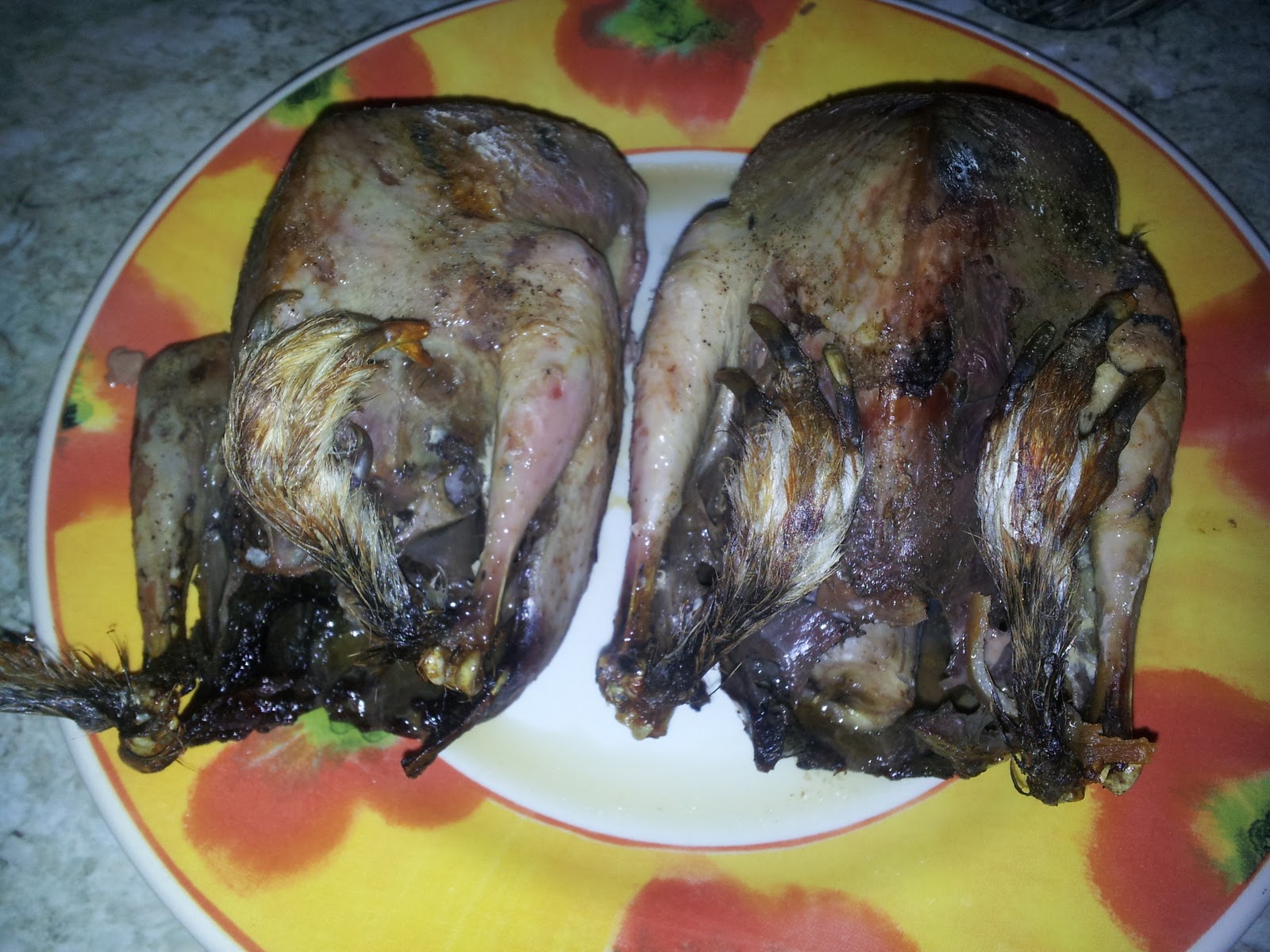
#324 Grouse. This was an extremely gamey bird that was almost overpowering for me. I am not sure if it had been overhung like the mallards from a few years ago as I have no frame of reference. However, if the meat was eaten with something relatively bland like the mash, then it was good. I would like to try it again whenever I can to see if was a little too ripe, as it were. They did look very impressive with their little hairy feet sticking up, though it seemed to freak some people out. As soon as the feet were removed, the legs suddenly became drumsticks and could be dealt by squeamish minds more easily. A difficult one to score as I don’t think I saw this game bird’s full potential, but I must go with what I had on the day: 3.5/10

#315 Cornel Cherry, Rowanberry, Bilberry or Cranberry Jelly

With Thanksgiving just around the corner, I thought I would have a stab at this jelly so we could have the traditional accompaniment to our Thanksgiving dinner. Even if it wasn’t Thanksgiving, it would have been the cranberry jelly I chose from the four possibilities; the other three not being available in the USA. It isn’t strange that the cranberry is on the list of fruits here: we Brits have been eating cranberry jelly with our turkey on Christmas Day for ages now – since the end of the nineteenth century. Prior to that, people either had goose (for Southerners) or beef (for Northerners), but they still may have had the jelly.

In America, of course, cranberries and turkey were two of the foods eaten at the first Thanksgiving dinner and they have become traditional and necessary fayre. They were not the only foods eaten on that day though; the feast also consisted of cod, eels, bass, clams, lobster, mussels, ducks, geese, swans and venison. I wonder why the turkey endured but the others did not. I’d quite happily tuck into some nice roast swan.

The four fruits that can be used in this recipe all have one thing in common: they are very tart and therefore great to go with fatty foods like roast turkey, goose, ham and the like.
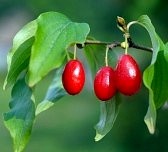
Cornel cherries are not cherries at all but the fruit of a dogwood tree. They are only really used to make jellies in Britain, though other countries use them to flavour spirits. You can buy dried ones in health food shops these days as a super-food, but are unlikely to find them fresh in shops. They are native to Europe so you might just find some growing wild. I am no botanist, but I will keep a look-out for them on my return to Britain. These seem to be Jane Grigson’s favourite out of the four as it’s the only one she actually mentions in her little introduction to the recipe.

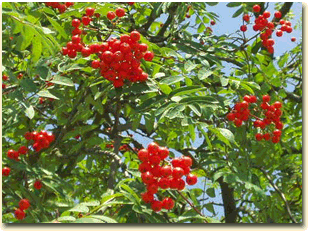
Rowanberries – the fruit of the rowan tree – on the other hand are very familiar. Rowans must be one of the most common trees in Britain; equally likely to be found in forests, parks and gardens alike. I envisioned making this jelly using rowanberries, who’d have thunk I’d end up in America? Rowanberry jelly is traditionally eaten with venison or lamb. It seems crazy with so much of it just growing wild everywhere it isn’t put it to good use. Next Autumn I will make some.

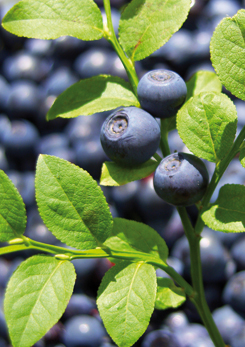
Bilberries are more common in Scotland and Ireland than England and Wales, though some are found in the northern climes. They are similar to the American blueberry, but they are much darker and have a very dark blue flesh. If you can’t find any bilberry bushes, you might be lucky to find the fruit at farmers’ markets, but they’ll probably cost you an arm and a leg; they spoil easily and the plant cannot be cultivated with much success. The bilberry is the only fruit of the four that can be eaten unsweetened.

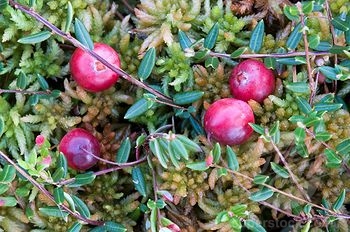
It might surprise you to learn that the cranberry is not a New World fruit (it surprised me!). There are several species of them around the globe. When we think of cranberries we think of the large plump ones from America, but two species are found in the UK and are smaller, paler and more tart that their American cousins; one is found across the whole of the country, and the other is just found in Northern Scotland. If you buy cranberries at a supermarket, however, they will be the American species.

Whichever fruit you choose make sure you give them a good wash and pick out any bits of twigs and leaves. Weigh them and then cut up the same weight of apples – don’t peel or core them though, just chop them up. Use a tart apple; Bramley or Cox if you are in Britain, Macintosh if in the USA. Put all the fruit in a large pot and cover with water.
Bring it up to the boil and simmer until the whole thing has become a nice mushy pulp. Whilst it is cooking, set up a jelly bag over a bowl. If you don’t have a jelly bag and stand, use a large piece of muslin or even a pillowcase. Ladle the mush into the muslin and let the clear juice drip through.
It is best to hang it on a cupboard door if you don’t have a stand. Be patient now: if you add any pressure to the pulp it will make your jelly cloudy. On the other hand, it will make it more flavourful, so it is a trade-off. Grigson goes for the squeeze. I did not, for these cranberries were not precious, but bilberries for examples are, so I would want as much flavour as possible.

When the juice has dripped through, measure the amount of juice you have, return it to a cleaned pan and add a pound of sugar for every pint of juice. Bring to a boil and then to ‘setting-point’. Setting point is when the natural pectin in the apples and berries forms a gel. To achieve this, you need to get the temperature to 104C (221F) and keep it there for a few minutes. If there was a lot of water in the juice, it will take a while to reach the correct temperature. If you don’t have a thermometer you can use a cold metal spoon – dip it in the boiling jelly and push with your finger, if it wrinkles, the juice is now a jelly. If you turn the heat down under the pan, you’ll also notice the surface trying to gel over. Skim off any scum that the jelly produced and pot into sterilised jars. To sterilise jars, put them and their lids on a tray in a cool oven for 35 minutes. Soak any rubber seals in boiling water.

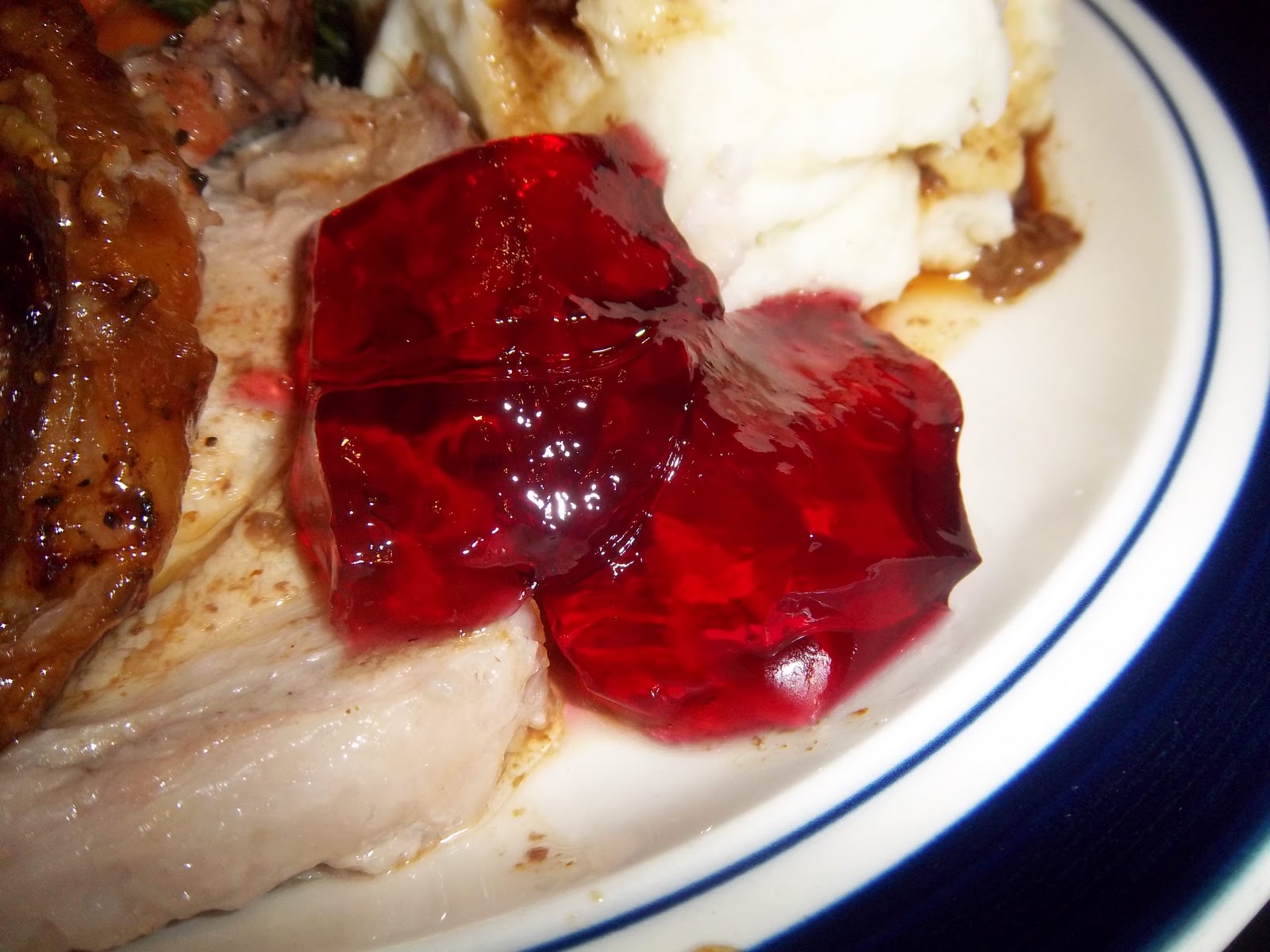
#315 Cornel Cherry, Rowanberry, Bilberry or Cranberry Jelly. This was a very good jelly – nice and tart and not overly-sweet like some of the bought ones are. It is a shame that I didn’t pick any from the wild, but never mind. It’ll be good with turkey for Thanksgiving and all the other meats and cheeses I’ll be eating on the lead up to it. There’s something very satisfying about making jams and jellies, I think it is because there are just three ingredients – fruit, sugar and water – and they magically become transformed into delicious, clear rubies shining away in their little jars. Pretty and delicious. 8/10

#297 Raspberry Pie


The tale of this pie is of personal pain and anguish. Let me tell you the tale…

It was my work-buddy Chandra’s PhD thesis defence yesterday and she requested that I made this pie rather a cake for when she came out. Great stuff, thought I, any excuse to make something out of the book, plus the raspberry is my favourite fruit so it has got to be a winner. This pie is an eighteenth century pie and requires the fruit to be cooked in the pastry casing and then in the last five minutes, a custard to be poured in through the hole in the pastry. This was the usual way to make a fruity pie in those days, apparently. Anyway, Griggers says to serve it hot or warm, so I nipped back to my apartment to make it. I popped the pie into the oven and got the custard – or caudle as it was called then – ready.

Unfortunately the raspberries were so juicy that there was no room for any caudle, so I ran over the road and bought some straws from the shop with the inspired idea that I would suck the spare juice out. Hoping the pie had cooled slightly I attempted to suck some out – I think because time was becoming an issue I didn’t notice the fact that this was 170°C fruit syrup too much, but then as I realized just how much syrup there was, my nervous system kicked in. Cue much wincing and swearing. After about 15 minutes of this, I had finally cleared enough space to pour the caudle in. Mouth pretty sore, but not major damage done. Popped the pie back in the over for its final five minutes and rushed it back to Rice University. It was only whilst driving down towards work that I noticed the skin of the roof of mouth sloughing off and dangling upon my red raw tongue. She had better bloody like this pie. Luckily it went down well. On returning home later that evening, I rinsed my mouth out with Listerine before bed. More agony. Then, in the morning, I thought I would clean my tongue as well as my teeth as it was burnt and may have had some nasty bacteria there trying to infect the poor thing. Bad idea. I left for work with bleeding tongue. Hopefully it won’t go gangrenous and I won’t have to have my face removed.

To make the pie, you need to start with the pastry. In the eighteenth century, puff pastry will have been used, but Griggers goes for the sweet rich shortcrust and gives an ingredients list for it. Sieve 12 ounces of plain flour along with 2 tablespoons of icing sugar and a pinch of salt into a large bowl. Next, add 8 ounces of cubed butter or a combination of butter and lard. Use a mixer or food processor, to rub the butter into the flour. If you like to keep it real, use your hands or one of those pastry cutters as I did. The important thing is to keep everything as cold as possible – use butter straight out of the fridge and turn that A/C as low as you can! Once the butter is rubbed in, add an egg yolk (keep the white) and two or three tablespoons of ice-cold water, enough to bring everything to a dough. Don’t worry if you add too much, you can add some more flour. Knead the dough briefly and then pop it in the fridge to rest and firm up again.

Preheat your oven to 190°C (425°F) and place a baking sheet on one of the shelves. Now roll out two-thirds of your dough and line your pie dish with it. If it is warm in the kitchen, roll it out on some cling film, this will stop it from breaking up. A top tip for you there. The dish needs to be 2 to 3 inches deep, Griggers doesn’t mention a diameter, but I went with an eight inch diameter one. Now arrange a pound of raspberries in a layer in the pie and sprinkle over 4 ounces of sugar (or less, if the raspberries are particularly sweet).

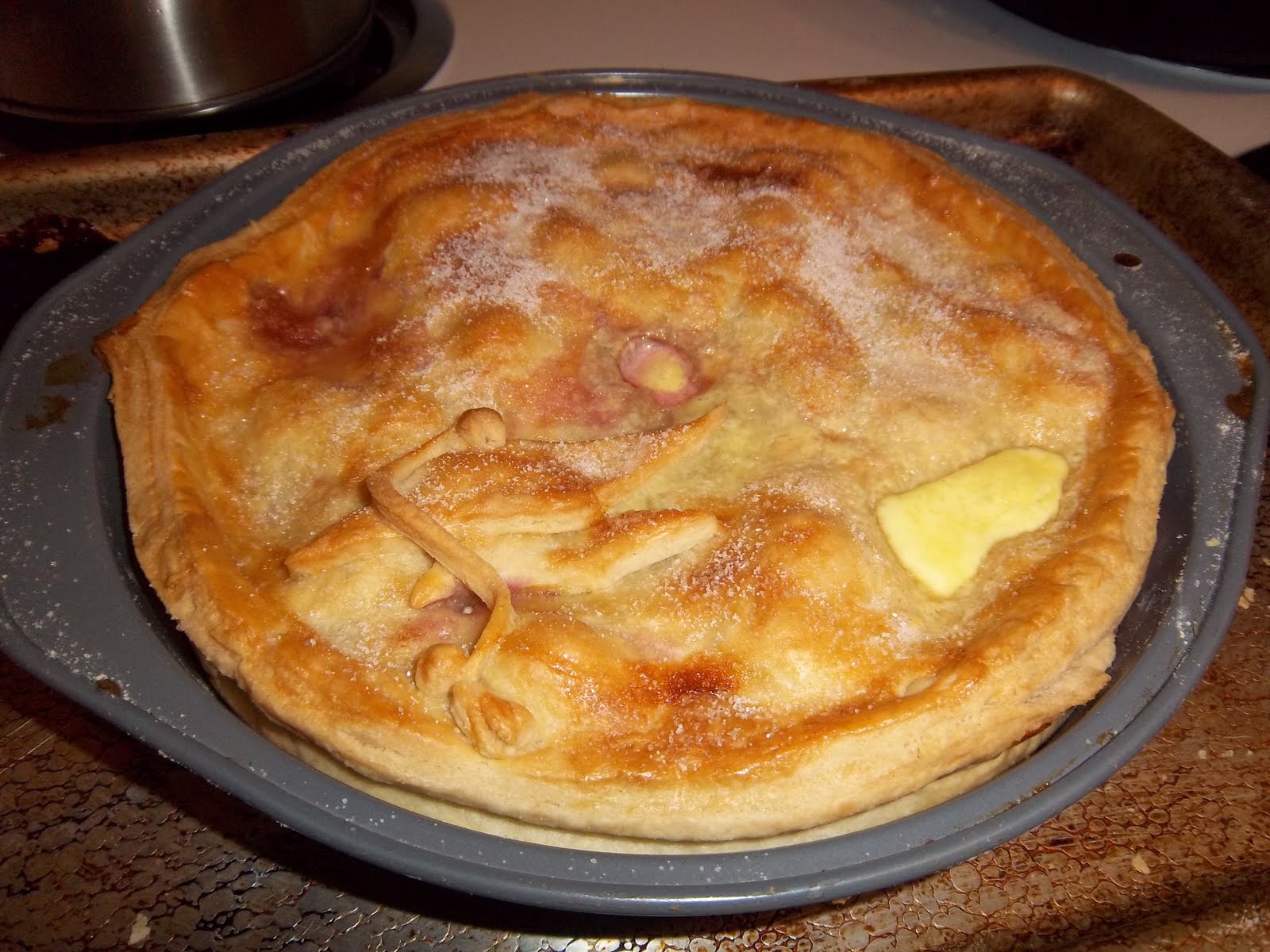
Roll out the remainder of the pastry to form a lid, gluing it on with a brushing of the reserved egg white. Trim the edges and decorate if you wish – I went with a mortar board motif, seeing as it was a PhD defence. Brush with more egg white and sprinkle with sugar. Make sure you leave a good-sized hole in the centre. Place in the oven on the hot baking tray and bake for 15 minutes before turning down the heat to 190°C (375°F). The point of the hot baking tray is so that the pastry bottom crisps up before the raspberries give up their juice, preventing a soggy pastry bottom to the pie. The pie should be cooked until the pastry is nicely browned and crisp, around 40 minutes.

Whilst it is cooking, prepare the caudle: bring 4 fluid ounces of single and 4 of double cream to a boil in a saucepan. As soon as boiling point is reached pour them over two egg yolks, whisking vigorously to prevent making scrambled eggs. In the final 5 minutes of cooking, take the pie out of the oven and slowly pour the caudle into the pie using a funnel and return to the oven so the caudle can thicken. Serve hot or warm. Oh, she makes it sound so easy. Looking back, it would have been better to pile the raspberries in the middle slightly so when it collapsed there would have been some space for the caudle. It was also suggested that instead of using a straw, I should have used a baster or a pipette or something. Retrospect is a wonderful thing.

#297 Raspberry Pie. Ah, the raspberry. There is nothing better than stumbling across some wild raspberries when walking in the woods. The pie itself was reminiscent of the French clafoutis, where fruit is cooked in custard in a pastry case, though without the lid. I love raspberries, I love custard and I love pastry, so this could not have been a disappointment. I have to say it was delicious, even though I my taste-buds were not working at their best at the time. The caudle had thickened up and mixed with the juice, and it wasn’t overly sweet either. Jane says that you can use any soft fruit for this pie – gooseberries work particularly well apparently – so I shall be definitely this again whenever there is a glut of soft fruits. Though without the second-degree burns this time. 8.5/10.

#221 Cherry Tarts

At the end of the summer, I bought a whole crate of cherries for just a few pounds toward the end of the season. Dutifully I stoned them all and froze them and then promptly forgot I ever had them. That was until I looked in the freezer and discovered them again, and since I am trying to use up everything in there, I thought I would make good use of them as a dessert.

Cherry season is pretty much a non-event in Britain these days, unless you live in cherry country – Kent. Almost all the cherries sold in markets and supermarkets are imported and finding home-grown cherries is nigh-on impossible. I certainly could find any here in Manchester.

Cherries have been enjoyed since the times of Ancient Greece, where they were considered only really worth eating raw, where they served as diuretic. In fact there is a detox diet that requires the poor dieter to put away a kilo of cherries a day; I like cherries, but not that much. Cherries did not become popular during – and therefore were only cultivated from – the Middle Ages. It was then that the cherry harvest became a part of European festival and a symbol of all that is good in summertime. Luckily in the day of the domestic deep freeze, we can save our cherries and enjoy them whenever we like, though they best eaten or cooked fresh really.

Anyways, that’s enough schpiel! Try these dainty little cherry tarts – they are essentially mini-clafoutis with a pastry base.

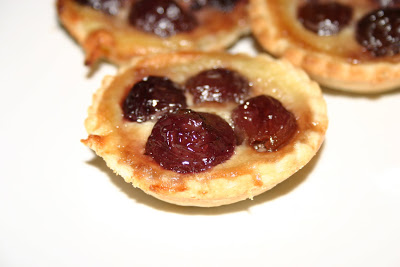
Start by making some sweet shortcrust pastry by rubbing three ounces of flour into five ounces of plain flour and two tablespoons of icing sugar. Bring the dough together with a large egg yolk and a tablespoon of lemon juice. If it is still a little dry, then add some cold water or milk. Allow to rest for at least 30 minutes in the fridge. Meanwhile, stone around a pound and a half cherries. Roll out the pastry thinly – as sweet pastry is very soft, it is worth rolling it out on some cling film of greaseproof paper – cut out 18 circles to line some small tart tins. Place a closely-packed layer of cherries in each little tart and then make the sweetened custard filling: whisk together a quarter of a pint of double cream, two eggs and three ounces of caster sugar. Pour a scant tablespoon of each of the cherry tarts and then bake for 15-20 minutes at 230⁰C until the custard browns and is set. Eat hot or warm.

#221 Cherry Tarts. A good and simple dessert to make, though the frozen cherries were perhaps not as good as fresh ones. Maybe the best to use would be morellos. Mine were a little insipid. That said you can’t go far wrong with the sweet pastry and custard elements to this pud. I’m sure you could use any fruit. I bet some lightly-stewed rhubarb pieces would be delicious. 5.5/10, though with good cherries, it would have been at least an 8/10, I reckon.

#179 Fruit Salad with Tea

I made this dessert to go after the duck with mint and sauce paloise as it was all very rich, the idea being that it would cleanse the palate and all that. Plus it’s a chance to use lots of the dark summer fruits now that they’re on the wane a bit. (That said, they are just coming through in the wild – when Butter and I went to Chatsworth House for a walk in the woods, we found wild raspberries, blackberries and strawberries.) I had mentioned making this fruit salad a few times, but people always opted for something else. This time, I just made it and didn’t tell anyone what they were having; a strategy I may use again. What seems to put folk off is the addition of the tea, of course, and think it’s just some weird post-war thing (I must admit, I thought that too), but Griggers says that it is delicious and that you would never guess the delicious sweet liquid is mainly Earl Grey.

You can any fruit you like and in any quantity, though it is best to stick to dark and red soft fruits. I stuck to what Jane suggests: 1 lb purple plums, stoned and chopped; 1 lb black cherries, stoned; ½ lb black grapes, halved; ½ lb strawberries, halved (or sliced if they are large) and 4 ounces of raspberries. Arrange the fruit in a glass bowl in layers, using sliced strawberries to line the bowl, and sprinkling sugar as you go. Cover and leave overnight. Next day, make a double strength brew of Earl Grey or orange pekoe tea and leave to cool. Pour it onto the bowl so that it almost comes to the top. Taste the tea and add more sugar if necessary. Decorate with mint leaves. There is no need to serve it with anything at all.

#179 Fruit Salad with Tea. Really, really good! A complete surprise and a taste sensation. The tea was light, sweet and delicious, and Jonty and Butters didn’t guess that there was tea in there. The fruit had gone soft and juicy, looking like little jewels. I didn’t think a fruit salad could be so good! I shall never make a fruit salad any other way again. 8/10

FYI: The Earl Grey referred to in Earl Grey tea is the second Earl Grey, who was a Prime Minister in the 1830s. He was sent some tea flavoured with bergamot oil as a gift from China, and so it was forever named after him

#173 Summer Pudding

The quintessential English pudding for, er, summertime. The summer pudding is one of my favourite desserts; I’d never made one before, but had eaten many. It is my favourite because it contains a massive load of summer berries, in particular, raspberries. For those of you that don’t know, a summer pudding contains lightly stewed summer berries encased in slightly stale bread. The ‘soggy’ bread seems to put many people off, but it doesn’t even seem like bread. Trust me. Apparently, the summer pudding arose in care homes of yore because many invalids couldn’t stomach the rich and heavy pastry or suet puddings.

Make this pudding whilst there is a glut of summer berries that are in season and therefore won’t cost a fortune. (The original recipe is for a huge one that serves eight to ten people, but I halved all the ingredients).

Place a pound of summer berries in a bowl with 4 ounces of caster sugar. Grigson says to use blackcurrants, or a mixture of raspberries, redcurrants and blackberries. The truth is, you can use whatever you want – chopped strawberries are a common addition, for example. Stir, cover and leave overnight. Add the fruit and the juices to a saucepan and bring to a boil and simmer for two minutes to lightly cook the fruit. Next, prepare the pudding basin – you’ll need a 2 ½ pint one for this amount of fruit. Cut a circle of slightly stale white bread for the bottom of the bowl, and then cut wide strips for the edges which should overlap as you place them inside the mould to produce a strong wall with no leaks – make sure you remove the crusts!. Once they are all arranged, pour in half the berry mixture, then add a slice of bread, then the rest of the mixture. Cut more bread make a lid and then fold over or trim any surplus bits. Put a plate on top and weight it down with a couple of food cans and place in the fridge overnight. Turn the pudding out onto a plate and serve with plenty of cream. (Grigson suggests making some extra berry sauce to cover any bread that has not become soaked, though you can get around this by dipping te bread in the berry juices before you place them in the pudding basin.)


#173 Summer Pudding – 9.5/10. It is jostling with Sussex Pond Pudding for first place in the pudding stakes for me. What is there not to like about a big load of tart berries and a dollop of cream? Anyone squeamish about the soggy bread really needn’t be – it is an English classic and everyone should try it (if not this one, then the Sussex Pond Pudding!).

#157 Gooseberry Fool

Technically the first of the British soft summer fruits, the gooseberry is one of my all-time favourites. It seems to have gone out of favour these days and quite tricky to track down. I suppose it’s because you have to top and tail them and cook them before you eat then. It’s big shame though. It seems that some people don’t even know what gooseberries are, seeing as one woman in the greengrocers told the lady on the till that there was “something wrong with your grapes, ‘cos they’re all hairy”. I despair sometimes, I really do. Oh well, if you come across some and don’t know what to do with them, start of by making a fool. If you don’t find any, you can substitute any soft fruit for the gooseberries and still have something delicious.

This was enough for three:

Top and tail 8 ounces of gooseberries, place them in a pan with an ounce of butter, cover and cook them gently. Once the gooseberries turn a yellow-ish colour and have softened – around 5 minutes – crush then with a wooden spoon and/or a fork. Try to avoid making them too pureed and mushy; you still want a bit of bite. Now add sugar, not too much as the fruit is supposed to remain a little tart, however, this is all down to personal preference. Allow to cool. Now whip ¼ pint of double cream and fold in the gooseberries and spoon into serving dishes. Grigson suggests serving with an almond biscuit (I didn’t)


#157 Gooseberry Fool – 8/10. This is my kind of pudding; small, yet perfectly-formed, I love stewed fruit and cream (or custard) of any type, but gooseberries especially and they are such a short-lived treat that you need to show them off as best – and as simply – as you can.