#219 Jugged Hare

I’d heard of jugged hare before and had always assumed that ‘jugging’ meant that some strange spices were added, but it simply means that it is cooked in the jug. The idea being that the hare can cook away in the jug that is, in turn, in a pan of simmering water. The way of cooking goes back to when people had to cook over their hearths. Jugged hare therefore has gone out of fashion because we make it into a casserole or stew (as in this recipe here) in the oven. I bought the hare from Shaw meats a few months ago and had had it stowed away in the freezer for quite a while, so it was perfect as the main course of my emptying-the-cupboards themed dinner party. Here’s how to jug a hare (or a large rabbit).

First joint your hare, and if you like lard it with some bacon fat or pork back fat. It is wise to do this if the hare is not a youngling. If any blood that drains off, keep it in a bowl (in fact, if you can get the butcher to keep the blood when hanging the hare, even better), rub the hare with salt, black pepper and Cayenne pepper and place the pieces in a large stoneware jug along with an onion that has been studded with three cloves, a bouquet garni (I used, parsley, bay, rosemary and pared lemon peel), and four ounces of butter. Cover with foil and tie securely and tightly with string. Place the jug in a roasting tin half-filled with boiling water, put it on the heat and bring to a simmer and then cook on the hob or in the oven for three hours.

When cooked, remove the pieces and allow them to rest while you make the gravy. Strain the juices (there will be a surprisingly large volume) in a sauce pan and add a quarter of a pint of red wine, a chopped anchovy and a pinch more of Cayenne pepper. Bring to a simmer and thicken: either with a beurre manié made from half an ounce of butter and a tablespoon of flour mashed together and added in knobs, or by adding the blood of the beast (don’t let the sauce boil though, otherwise it’ll will go like pink scrambled eggs). The blood I had reserved was only a small amount so I popped it in at the end. Lastly, add a squeeze of lemon juice. Griggers suggests serving it with fried bread, but I went with game chips (see here), forcemeat balls (see here) kale and ‘Carrots from 1599’ (see the next entry, when I get round to writing it).


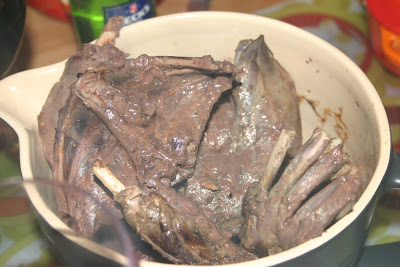
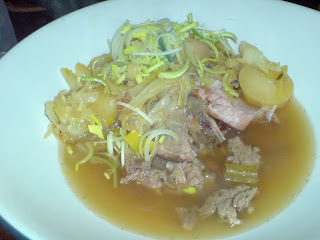
This pic makes the hare look rather unappetising, but it did look good in real life!

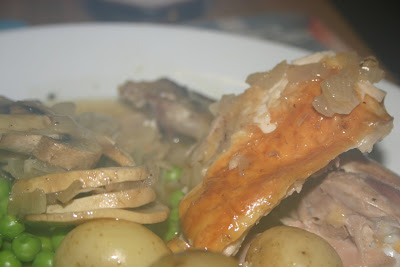
#219 Jugged Hare. A really good hearty winter stew this, the hare was very well-flavoured and gamey and the gravy was really delicious – very dark and very rich. Although it was good, it wasn’t as good as the hare stew I did last winter, which had a much more complex flavour. Still, it deserves an above average 6.5/10.

#214 Meat Souffle

A quickie. I knew that we would have plenty of leftover Bradenham ham from Christmas so I knocked this one up. Follow the recipe for the cheese soufflé but use half the amount of cheese and fold about 8 ounces of chopped ham into it. Alternatively, soften a couple of ounces of onions in butter and add 8 ounces of blanched, minced sweetbreads or cooked brains if you like your offal. You might not wish to include cheese though. Make sure you add some herbs too.


#214 Meat Soufflé. The best way to use up some leftover ham, I reckon. The cheese- ham combo is a classic. The salty-sweet ham and cheese and the creamy egg were perfect. If you’ve never made a soufflé before have a go, they are not as scary as people make out. 8.5/10.

#213 Boned Roast Sirloin

This Christmas – 2009 – was the year we did not have turkey. This was the first time ever, and I have to say it wasn’t missed (at least not by me, anyway). Instead it was roast pheasant and roast beef, not any roast beef though, but roast sirloin. Griggers says that if you cooking beef for a special occasion and you want to be sure of good beef, go for this cut. She suggests getting it from Harrods, but I didn’t go that far. Instead I went to a very good butcher’s shop in Pudsey, my home town, called Bentley’s. It’s won many an award so I thought I would mention them.

A roasting joint such as this needs little doing to it – place it in a roasting tin and season the fat with saltr and plenty of black pepper. Place in a very hot oven – turn the heat as high as possible and leave for 15 minutes, turn the oven down to 180⁰C and roast for 15 minutes a pound for rare meat. Serve with the usual horseradish etc.


FYI: I bought a meat thermometer so I could be absolutely sure of perfectly cooked meat. I did it medium, though I would have done it rare if it were just me eating it. If you have one then follow these temperatures: up to 60⁰C gives you rare beef, 60-70⁰C gives you medium and 70+⁰C gives you well-done beef.

FYI2: there is a common story about Henry VIII eating loin of beef at a banquet and thought it was so delicious that pronounced it ‘Sir Loin’. This is unfortunately a lot of nonsense, though I wish it were true. This cut of beef got its name is from the French sur loin, meaning above the loin.

#213 Boned Roast Sirloin. This was the best roast beef I’ve ever had in my life! It was as soft as butter and tasty and all the better for adding only salt and pepper. No messing about with extras here. It beat the rib of beef hands down. Absolutely gorgeous. Go cook some next time you have something special to celebrate – this is an order! 10/10

#207 Sussex Stewed Steak

Stewed steak is one of the things that remind me of being a kid back home in Pudsey, Leeds. My Mum used to do stewed steak with dumplings sometimes and it was delicious. It’s odd, however, that I’ve never had it anywhere other then my Mum’s; nobody else seems to eat it. I don’t what it has to do with Sussex either. This recipe is pretty much exactly what my Mum did, except for two main differences: this uses one big piece of steak and has additional flavourings. This is a very easy recipe and perfect for these times of filthy weather that seems to keep your socks permanently soggy and your mind on sunnier times. Give it a go.

Start off with a nice two to two-and-a-half pound slice of either top rump or chuck steak. Make sure it is well trimmed. Season both sides well with salt and pepper and coat with flour. Place it a well fitting ovenproof dish, and cover with sliced onion; use a large one. Now add six tablespoons each of stout and port and two tablespoons of either mushroom ketchup or wine vinegar. Cover tightly with foil and place in an oven preheated to 140⁰C for three hours. That’s it! Serve with mashed potato and field mushrooms, says Griggers.


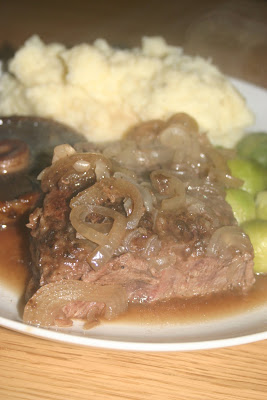
#207 Sussex Stewed Steak. This took me right back to my childhood. The delicious thin gravy with a hint of rich booze and wonderfully tender beef cooked slowly – it’s what rainy November evenings were made for. 8.5/10.

#156 Cheshire Pork and Apple Pie

I bought a nice new pie dish last week, so I thought I’d Christen it with a nice big pie for Sunday dinner. I decided upon this Cheshire Pork and Apple Pie because it needed to be pretty quick to do (no cooking of the filling beforehand) as I had to be in the lab in the morning. Plus there was a load of Cox’s Pippins in Unicorn in Chorlton – apparently the last of the stored apples from the previous autumn.

This is a very traditional pie – essentially meat stewed in liquid (in this case cider) under a pastry crust, and comes from Hannah Glasse. It is a little odd in that it has a double crust; I’d have no problems with it if it was cooked in a thick sauce. Surely the pastry lining the pie dish will just turn into a soggy mess? To pre-empt this, I used a previous trick of The Grigson – to place a baking sheet in the oven as it heats, so that when the dish is placed on it, the underside quickly cooks.

First of all make some shortcrust pastry using 10 ounces of plain flour and use two-thirds of it to line a 2 ½ pint capacity pie dish.

To make the filling you need to prepare your pork – you need 2 pounds of boned pork loin. Cut off the rind and trim away the fat with a sharp knife, then slice the loin and chop into chunks. Next peel, core and slice around 12 ounces of Cox’s orange pippins. Then mix 8 ounces of chopped onion together with 4 chopped rashers of cured, unsmoked bacon. Now layer the ingredients in the pie dish: half of the pork, then half of the apples, scatter them with some brown sugar and then sprinkle over half of the onion-bacon mixture. Season each layer with salt and pepper plus some grated nutmeg. Repeat with the remainder in the same fashion. Dot the top with around 2 ounces of butter and then pour on ¼ pint of dry cider. Cover with the remaining pastry sealing and glazing it with beaten egg. Make some fancy pastry decorations if you fancy. Bake for 20 minutes at 220°C, and then turn the oven down to 160°C for a further 45 minutes. Jane doesn’t indicate what to serve with it, but I went with mustard mash and some asparagus.

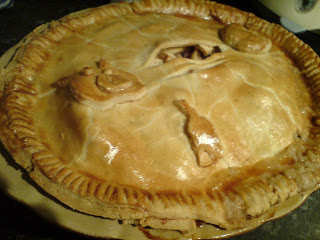
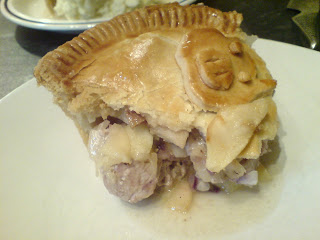
Check out the arts & crafts spectacular atop the pie!

Oink!

#156 Cheshire Pork and Apple Pie – after much deliberation on this one, I give it 5/10. I think it was pretty average – I wasn’t sure about the amount of liquid in the pie, which after my efforts to prevent it, still made the pastry soggy. I think, it could be easily improved, however by making a roux with the butter and some extra flour and using the cider to make a sauce. I think it would have made this okay effort into a very hearty one that would stick to your ribs, as we say in Yorkshire!

#150 How to Cure Meat in Brine

Well here we are – 150 recipes in. I didn’t realise I was at this milestone until yesterday – unfortunately it’s not some magnificent feast, in fact it’s really a recipe as such, and I can’t really give it a rating (at least not yet).

Jane Grigson has quite a few recipes that require salting and brining, so I thought I’d better start to get to grips with this completely ignored section of the book, by making roast ham from start to finish as the best way for me to get started, though I’ll discuss that in a separate post – this one is just concerned with brining generally.

I’ve been doing a bit of reading on the subject of brining and it seems a bit of a lost art – there’s not much information about the history of it or how to do your own curing by the method. Obviously it’s gone out of favour to some degree because it is a method of preservation first and foremost, and now with frozen and refrigerated meats on tap these days we don’t have to do such things. However, brining also lends good flavour – we all like good ham, gammon or salt beef – so you would think it popular (seeing as it’s easy too). The thing is that it is time-consuming, and we can all just pick some up ready brined or ready roasted meat, but one thing I read was that for many wet-cured meats, the wet-cure part of the process is missed out! These days they are cured with nitrating bacteria – nitrates help preserve things – resulting a lack of flavour. I’m certainly not insinuating that this method is ubiquitous, but I reckon most supermarkets (and many butchers) use it.

Brine contains three magic ingredients that help preserve meat: salt, sugar and saltpetre. The first two do so because they are in huge quantities in the brine, and can affect the normal osmotic pressures of cells – both animal and microbe. Salts and sugar enter the cells, and water rushes out in an attempt to equal the concentrations inside and outside of the cells. This results in the death of the microbes and the preservation of the meat. Saltpetre (or potassium nitrate) is antibacterial and also gives the meat a pleasing pink colour (it is what makes corned beef so pink, for example). Aside from these three ingredients there are several herbs and spices that improve the flavour of the meat.

FYI: In days of yore, saltpetre was produced by pouring stale urine to huge haystacks where it would drain and crystallise. Yum!!

To make the brine, start off by cleaning a tub or bucket with a close-fitting lid and a plate that will comfortably fit inside with soda crystals. I used a six litre Tupperware tub with a handle. Do not use a metal tub as it may react with the salt or saltpetre. Allow them to drip dry. Whilst you’re waiting for that, make the brine: To a large stockpot or similar add 5 pints of water, 12 ounces each of sea salt and brown sugar and an ounce of saltpetre. This is the basic mixture, but now you need some aromatics (all of which are optional): 1 level teaspoon of juniper berries, a small piece of grated nutmeg, a bay leaf, 3 sprigs of thyme, a level teaspoon of black peppercorns and 4 cloves, Grigson says, but anything you like in that goes with the meat you are brining. Bring to a rapid boil and skim off any scum should there be any. Allow to cool in the pot. Once cool, strain it into your cleaned tub. Place in the joint of meat and keep it submerged in the brine with the plate you washed earlier. Place in a cool cupboard or pantry – though don’t allow it to go below 4°C. The length of time it sits there now depends upon the type of meat and the reason you are brining it (see your recipe, or below, for guidelines). When it is done remove with some clean tongs.

The brine won’t last indefinitely – it may grow mould on it’s surface, which some people say just to skim off. The reason is; the amount of salt depletes every time you use it. For a corrective dose, boil 1 ¾ pints of water with 7 ounces each of salt and sugar and a heaped dessertspoon of juniper berries. Let it cool and add it to the skimmed brine. You could of course just make more from scratch.

Pork leg joint magically being tranfomed into ham

Brining times:
To convert shoulder or leg of pork into ham, or for pork loin: 3 to 10 days
Pig trotters and halved heads: 24 hours
Small tongues (e.g. pig): 36-48 hours
Large tongues (e.g. ox): 5 days
Duck (minus giblets): 36-48 hours
Beef silverside or brisket: 7-10 days
Lamb or mutton shoulder, leg and loin: 7-10 days.

The meat needs to be cooked by boiling – check the cooking water is not too salty after about 5 minutes cooking. If it is change the water and start again. If it’s okay, then add your stock vegetables or whatever the recipe requires.

However, if you are making a roast joint for Sunday lunch, try popping the joint in brine overnight to season it.

So there you have it – hopefully all works out and it doesn’t taste completely foul. My fingers are crossed that it ends up being worth the effort.

#98 Cawl

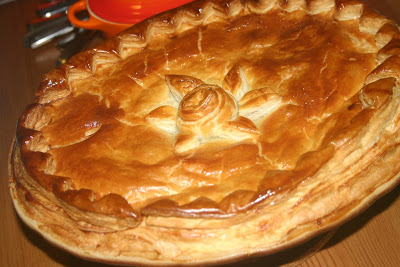
Butters and I went for a nice walk around Chorlton Water Park and the Mersey Valley. We lucky in that it wasn’t totally pissing it down with rain, as the weather has not been good of late. It was still pretty chilly though so I wanted to make something simple, nourishing and warming for when we got back. I plumped for the Welsh soup, Cawl (pronounced “cowl”, according to Griggers). Cawl is simply Welsh for soup, but it’s far from a light soup-starter; it’s a meal in one. I assume it’s a peasant dish; it is simple in its ingredients and methods, is cheap, and requires time to make it well. It’s basically the Welsh equivalent of Irish stew or Cock-a-leekie. What I like about this one is that the meat is cooked as a joint and sliced at the end and served with the vegetables and soup. To be really Welsh, marigold flowers can be added as a garnish, but I thought that was going a bit too far…

These measures make loads of Cawl – enough for 6 to 8 people.

Start off by browning your meat in some beef dripping; you need pounds altogether, either beef brisket of shin of beef, but best is to use one pound of beef and a pound of smoked hock, gammon or bacon. I went for brisket and a giant piece of smoked bacon. When browned, put in a large saucepan or stockpot. Next, brown 2 sliced onions and 3 carrots, parsnip, turnips or some swede cut into chunks; a mixture is best. Once they are browned, add them to the meat and cover with cold water, add salt and two stalks of chopped celery. Bring to the boil slowly, skimming off any scum that may rise to the surface. Add a bouquet garni (I used parsley, thyme and bay), sea salt and pepper to season, turn to a very low heat and simmer for at least three hours. I actually did all this the day before, so that we didn’t have to wait very long to eat when we got back.


About half an hour before you want to eat, add a pound of small potatoes (or larger ones cut up), and ten minutes before add a small white or green cabbage that has been sliced. When the potatoes are cooked the soup is ready. Finely slice 2 or 3 leeks and sprinkle them on top of the soup; the heat of the soup will cook them. Remove the joints and slice them up, putting some of each kind in each bowl, along with some of the veg and stock.

#98 Cawl – 7/10. A delicious, warming and beautifully clear soup. The meat was falling apart and the smoked bacon gave the whole thing a really delicious flavour. Definitely one of the best soups so far. This will become a staple winter dish, I think.

#11 Braised Beef with Carrots

Second course. This one couldn’t be simpler either – all you need is time…and thyme too.

I got a piece of brisket from Savin Hill Farm (http://www.savin-hill.co.uk/), who have a stall from the farmers’ market in Manchester. Brown it in lard and put it into a flameproof casserole. Add loads of sliced carrots, and inch or two’s depth of chicken stock and a big sprig of thyme. Cook on a very low heat, topping-up the stock and adding more carrots for about 2 hours. I served it, as the Grigson recommends, with boiled potatoes. I have to say, I’m going to have to give this one mixed reviews. The carrots cooked with the beef and in the thymey stock were beautifully tender. The beef itself was extremely tasty; really….er….beefy! When I bought it, it was a deep red colour with a little bit of marbling. I don’t think I’ve actually cooked brisket before, and tasty though it was, some of it was pretty tough. The Grigson did say you could use the more expensive cut, silverside. Perhaps I should’ve. I’m sure it wasn’t down to Savin Hill’s produce. FYI: rolled brisket is the strip of muscle from the breast of the cow rolled up. It is one of the 8 primal cuts of meat. I found out that apparently you’ve to cook it fat facing upwards to make it lovely and tender. Oh well – next time it’ll be better!

Simon says:
A main course of beef with carrots was greedily consumed. The carrots were outstanding, cooked in the meat stock and packed full of thyme flavour. The beef was tasty but rather tough in parts: questions were raised over Grigson’s suggested cut for the dish. Served with good peas and spuds. 6/10

I say:
#11 Braised Beef with Carrots: 6/10. I agree with Mr. Simon on this one. Have a feeling it may be my naive beef cookery!

A note on meat…

As well as trying to get to the bottom of what English Food actually is and perhaps discovering some lost foods, it’s also important that the food is as close to how it should be eaten. What do I mean by that? I mean the meat, eggs, etc. should come from good quality, healthy, free-range animals. This does of course mean that things are rather more expensive that if I’d go to the supermarket and buy those alarmingly white chicken breasts or surprisingly bright blood red pieces of meat in plastic boxes. However to do the English thing, animals will be eaten, so it is important that they were at least happy. Of course healthy animals with no stress hormones or antibiotics running through their veins are tastier. So I shall get meat, poultry and game from reputable butchers and farms (and fishmongers of course). I will give out their details, like websites, etc., as I go.