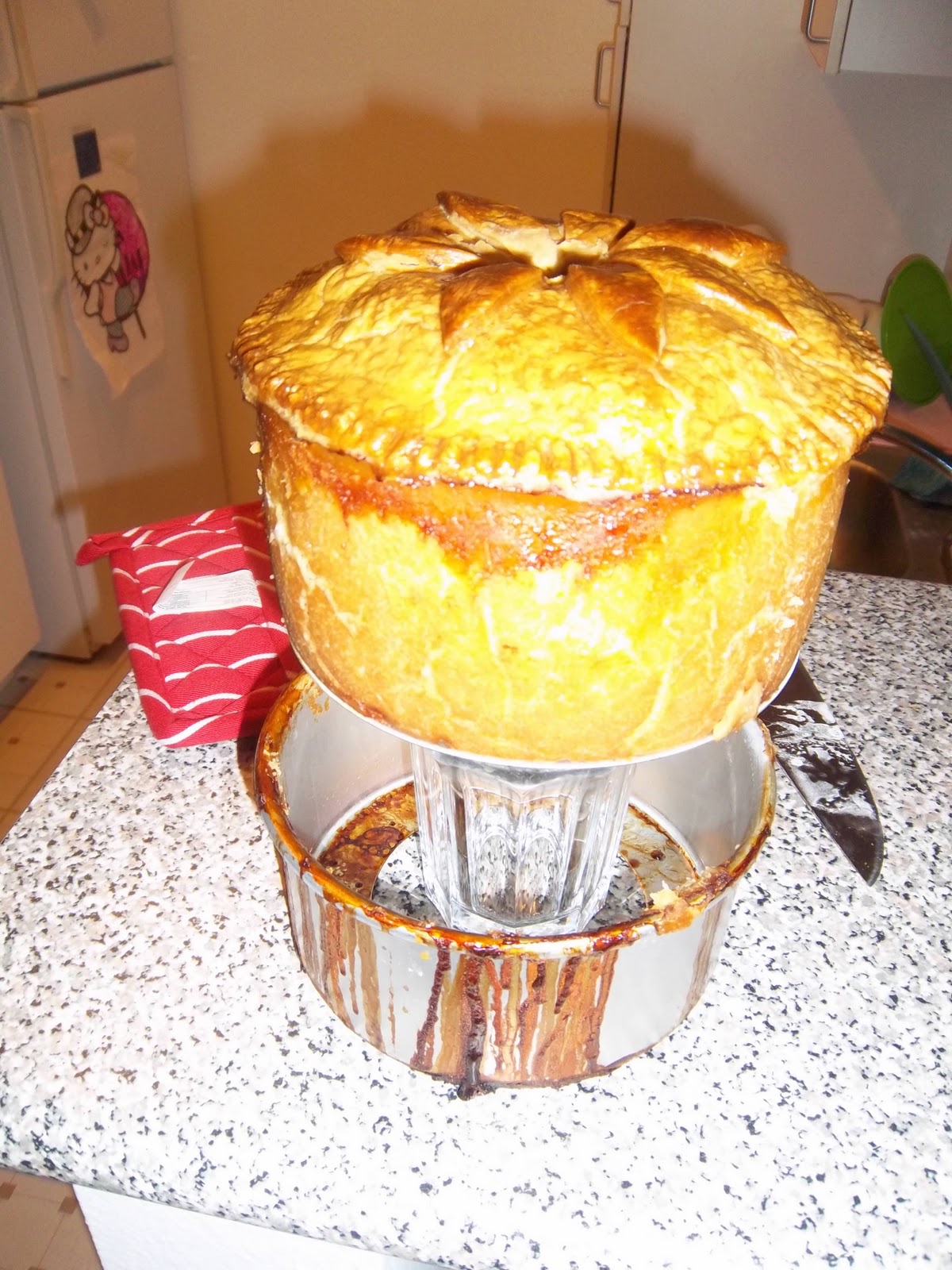
#322 To Make a Goose Pye

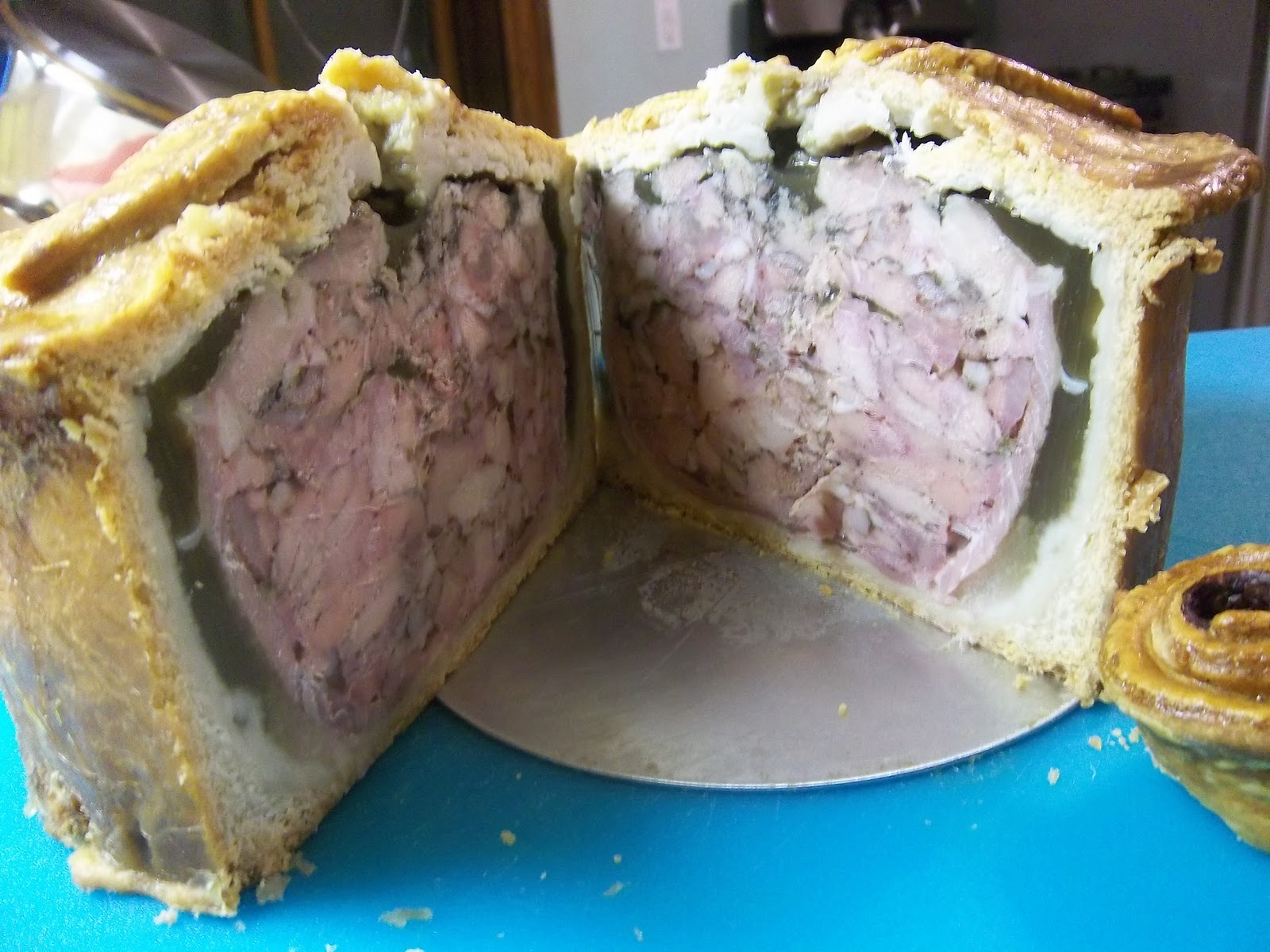
What do you get for the person who has everything at Christmas? A giant pie of course. This goose ‘pye’ consists of an ox tongue within a chicken within a goose within a hot-water crust, so it’s not for the faint-hearted.

Great big pies like this were often given as gifts at Christmas time. The many meats were covered in a nice thick crust, not just because it tastes good, but also to help preserve and protect them – after all, these pyes were travelling by horse and carriage! These days, it is best as ‘a splendid centre-piece for a party’. Indeed, that the was the reason why I made it – my bosses Dave and Joan were hosting a Christmas party, and my fellow workmates are quite enthusiastic about the blog so I knew they’d all be up for this pye. Personally, I have always wanted to do this recipe – these crazy recipes are the reason why I love doing this blog. It comes from Hannah Glasse’s classic 1774 book Art of Cookery:

Half a peck of flour will make the walls of a goose pie…Raise your crust just big enough to hold a large goose; first have a pickled dried tongue boiled tender enough to peel, cut off the root, bone a goose and a large fowl; take half a quarter of an ounce of mace beat fine, a large teaspoon of beaten pepper, three teaspoons of salt; mix all together, season your goose and fowl with it, then lay the fowl in the goose, and the tongue in the fowl, and the goose in the same form as if whole. Put half a pound of butter on the top, and lay on the lid. This pie is delicious, either hot or cold, and will keep a great while. A slice of this pie cut down across makes a pretty little side-dish for supper.
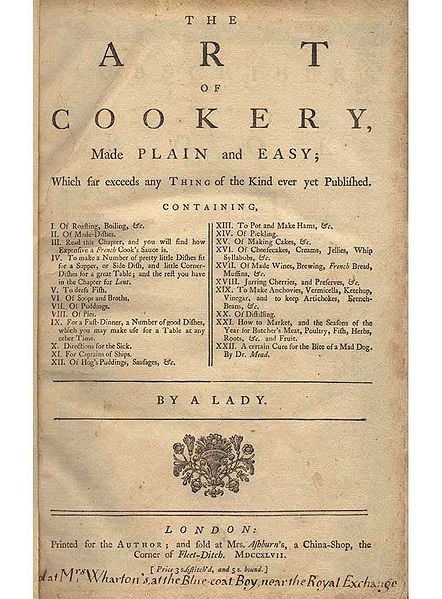
Griggers kindly converts all the quantities into modern-day terms – less flour can be used (unless you are having it sent somewhere by horse!) and birds are rather larger nowadays. Good old Griggers. It is certainly the most extravagant recipe I have done thus far and possibly the most complicated; the recipe itself is quite straight-forward, but it requires a boned goose and a boned chicken, something that I had to do myself. Would the effort be worth it..?

There is a certain amount of preparation required if you are to do this from scratch. The first thing is to pickle an ox tongue in brine (see here for instructions) and cook it (see the recipe here for making pressed tongue; there is no need to press it). You need 2 ½ pounds of cooked tongue, so start with one that weighs at least 3 pounds. Next is the birds: you need a 10 pound goose and a 5 pound chicken. If you can, ask the butcher to bone them for you, if that is not possible, try doing it yourself – all you need is a bit of patience and some good sharp knives. I followed the method on this website for boning a chicken, but had to change the instructions somewhat for the goose as it is much trickier than a little chicken. So here’s a little digression as I give you my version…

Boning a bird is actually quite easy – what you are essentially doing is undressing the meat from the skeleton of the fowl. As you can imagine, it is a little gory.
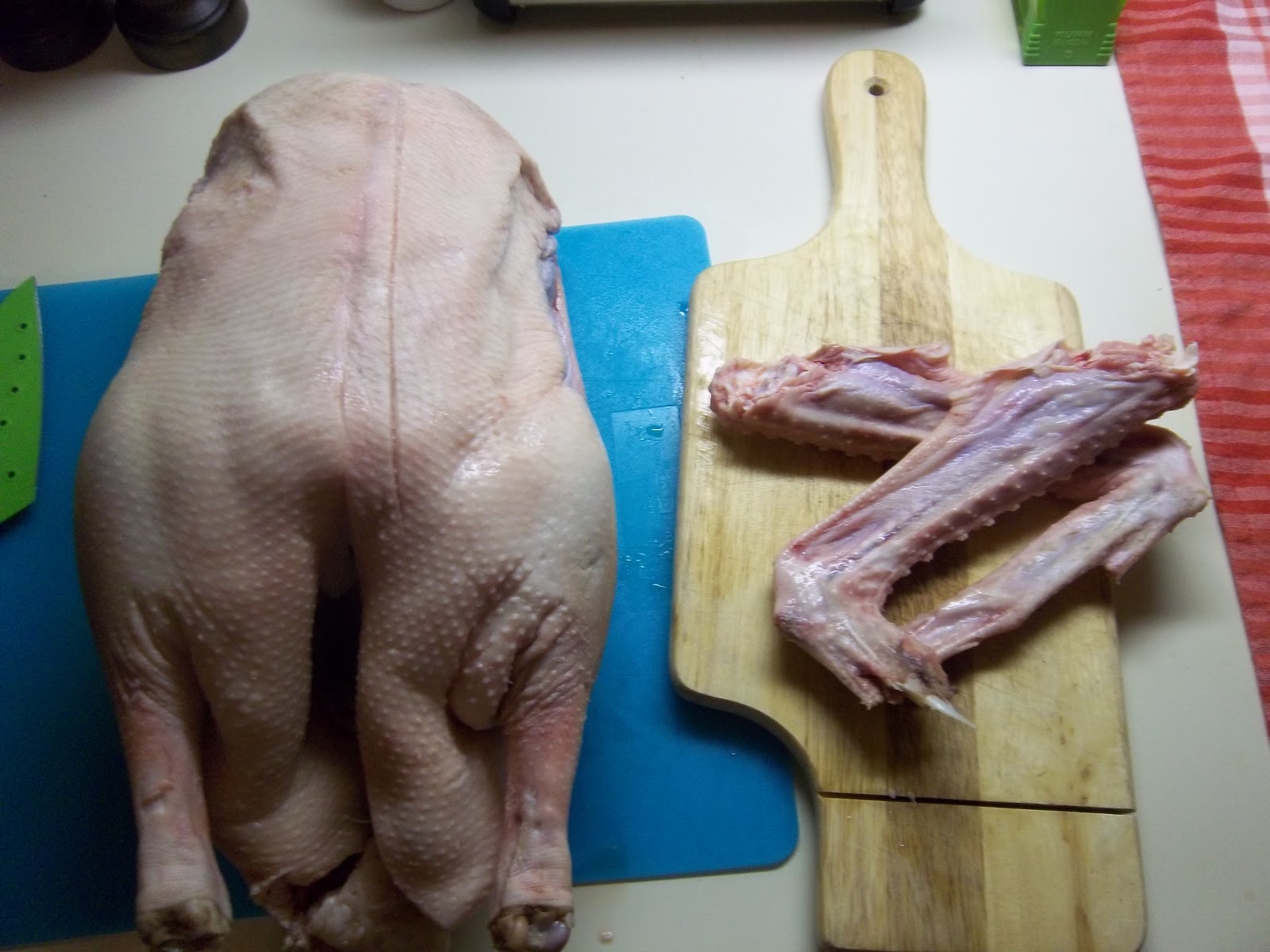
First thing to do is to cut off the wing-tips and then to peel the skin away from the shoulders and cut through the joints.
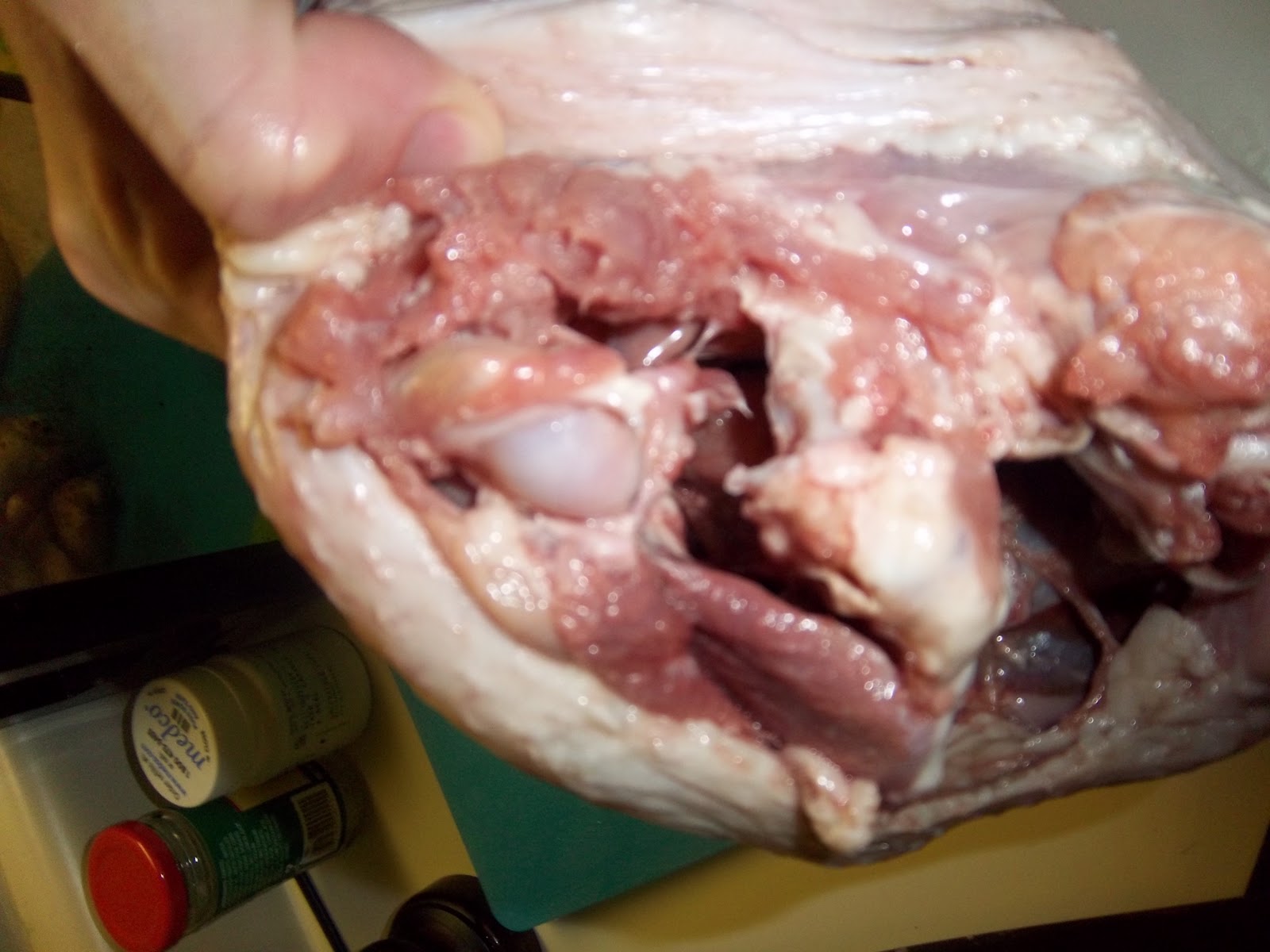
Next, pull on the wing bone and scrape the meat from it as you go, turning the wing inside out. Repeat with the other shoulder joint.
Now remove the wishbone from the top of the breasts and start cutting the meat away from the ribcage, pulling the meat back. Keep doing this around the whole of the body. When you are about half-way down, sit the bird up and let the meat hang down by its own weight. When you get to the hips, you need to pop the femur out of its socket, then continue until the whole of the carcass is removed from the bird. You can then remove the leg bones in very much the same way as the shoulder and wing bones. Getting through that socket is very tricky with a large bird like a goose because of the large joint and large amount of fat surrounding it – to get around this, I flexed the knee joint and cut through that so I could scrape the meat off the bones from the direction of the knee.
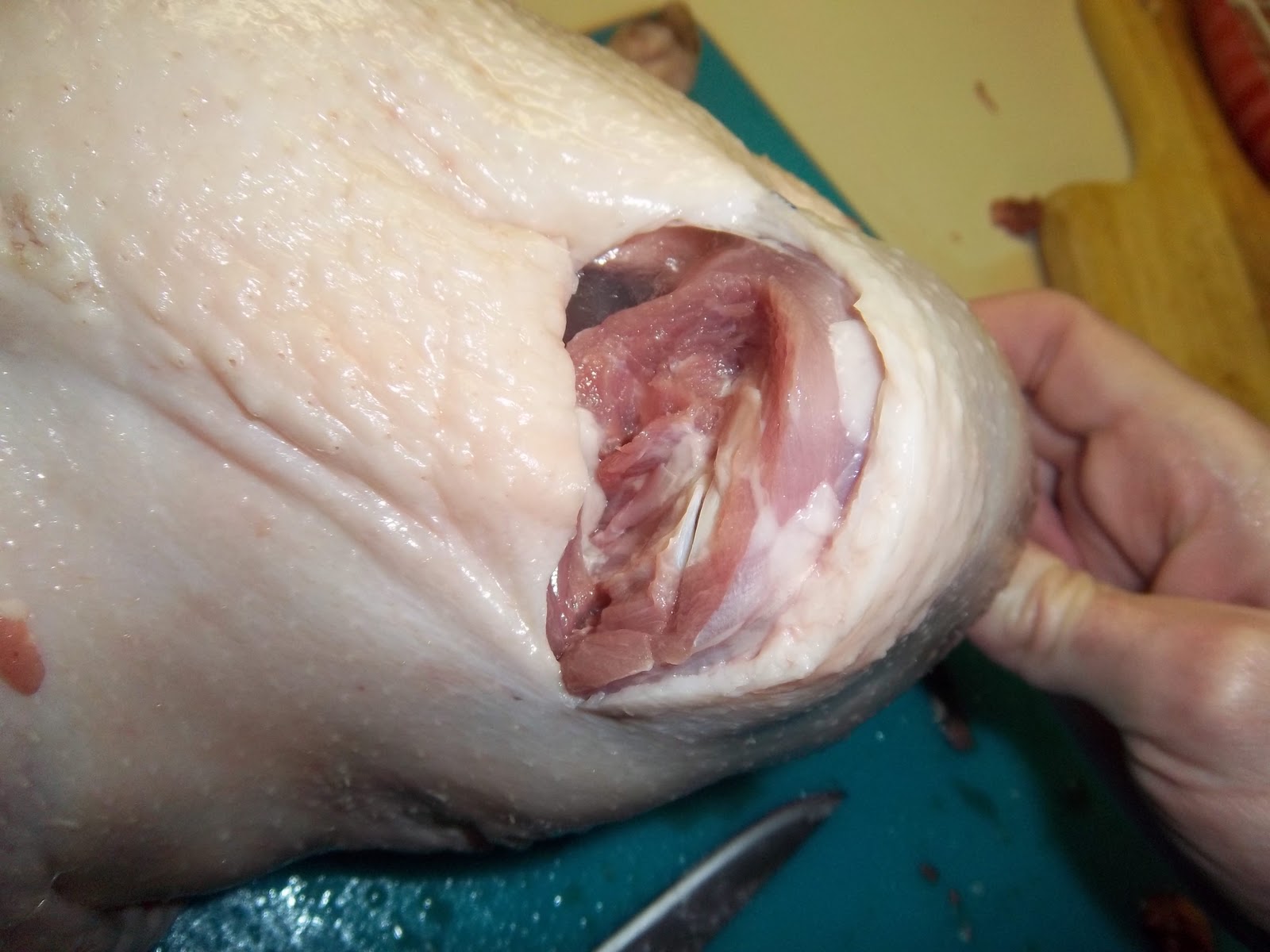
When the leg bones have been removed, all you have to do is turn the bird outside in. Don’t forget to turn the bones, trimmings and giblets into stock.

So, you have your tongue and you have your birds, next you need to get working on the hot-water crust. You need to make a crust using 3 pounds of flour. I’ve blogged about hot-water pastry before, so follow this link. I made it in 3 batches – the first I used to form the base. I made lots of smallish pastry balls to cover the inside of a glass roaster measuring about 12” x 9” x 2” and pressed them out to make a single layer that overlapped the edges of it.

Next, mix together ¼ ounce of ground mace, 2 heaped teaspoons of ground black pepper and 5 rounded teaspoons of sea salt.
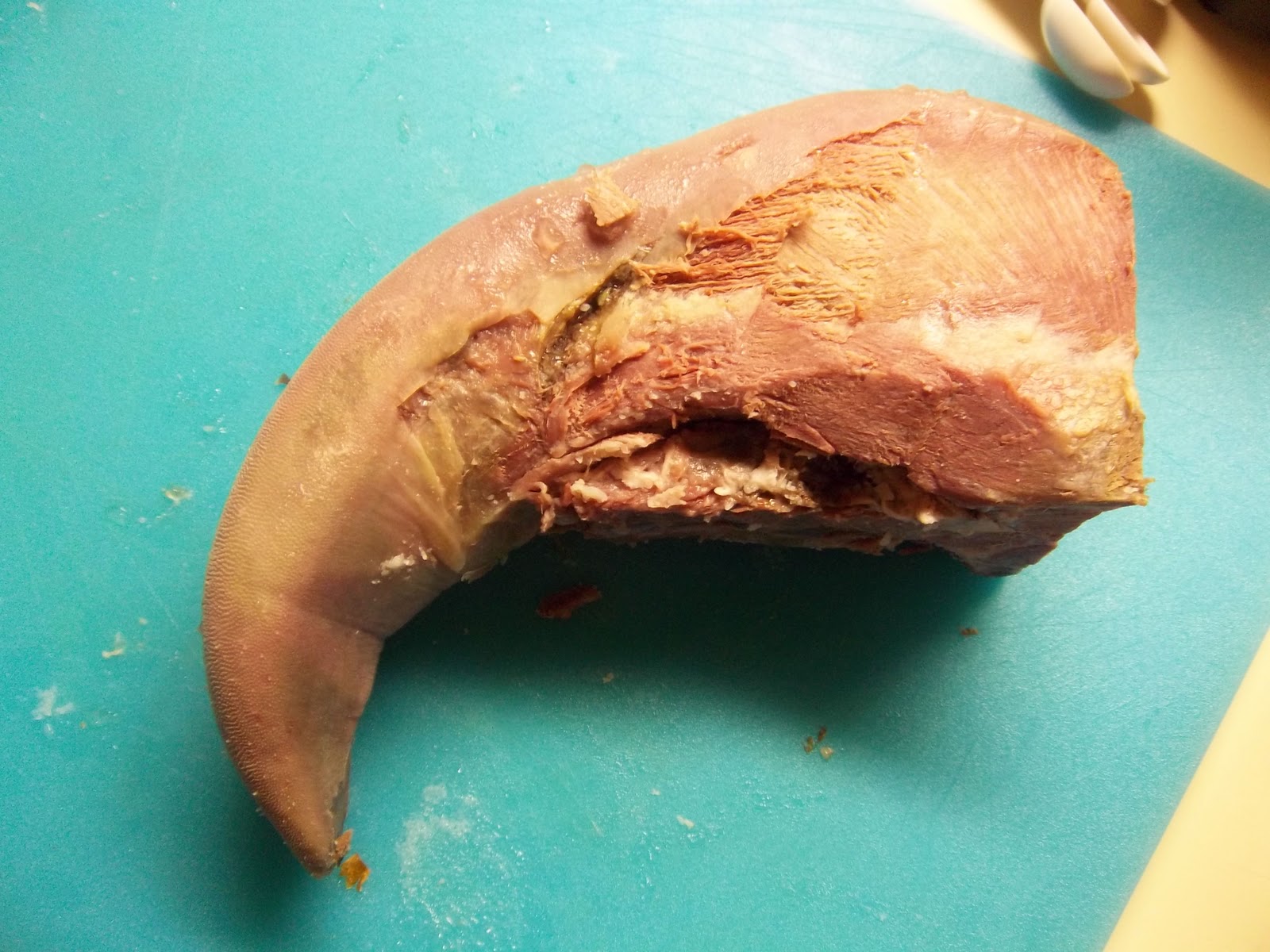
Now place the tongue in the chicken and rub in around a third of the spice mix into the chicken…
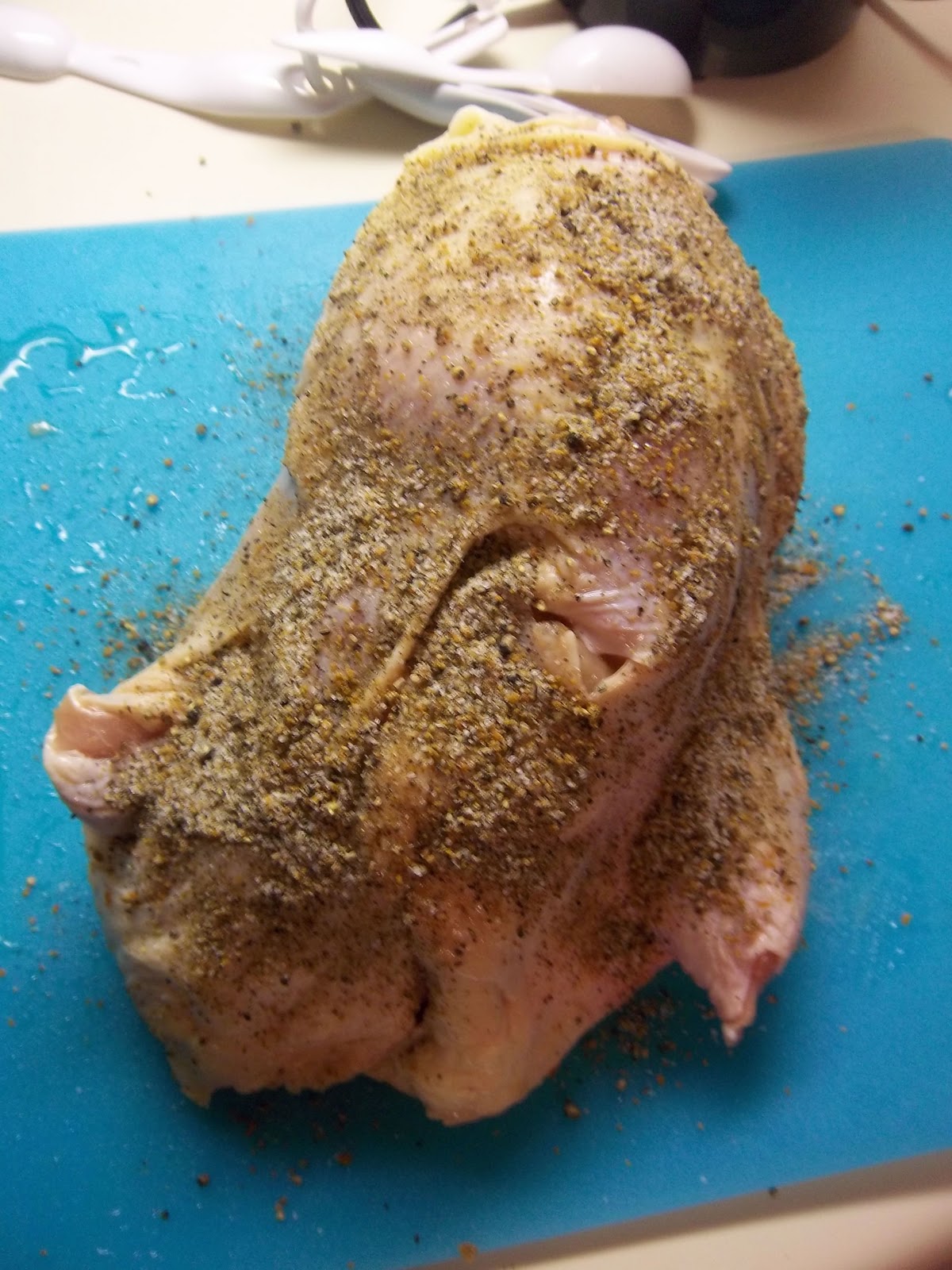
before gingerly wrapping fitting inside the goose. Place the goose in the pie and rub in the remainder of the spice and salt mix.
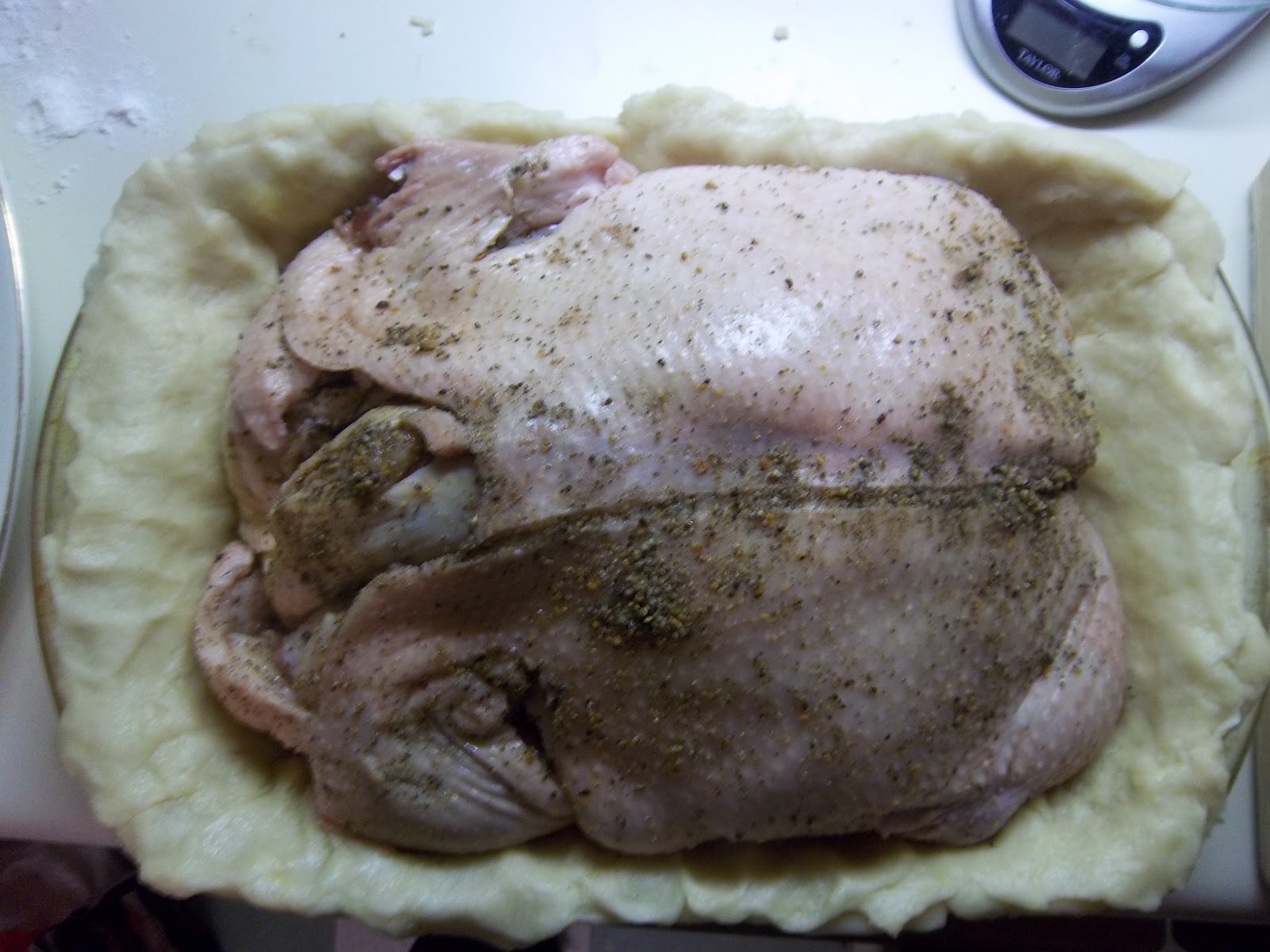
Lastly, smear two ounces of butter over the top of the goose.

Now roll out the rest of the pastry and cover the top of the pie, using some water as a glue. It is quite tricky to pick up such a large piece of pastry without it breaking – so use a rolling-pin and wrap it around it and unfurl it atop the pie. Crimp the edges, trim and decorate with the trimmings. Brush with beaten egg and make a central hole for the steam to escape.

Place it on a baking tray and bake the pie at 220°C (425°F) for 20 minutes and then turn the heat down to 180°C (350°F) and bake for another 2 hours. If the pie is browning too much, cover it with brown paper to protect it. If the pie bubbles ferociously, then turn down the heat again to 140-150°C (275-300°F). Loads of fat comes out the central hole, hence the precaution of the baking tray. I had to empty it twice during the whole process. I reserved it for making roast potatoes in the future, of course.

If you are wanting to serve it cold, then like most cold pies, it is best to make it a couple of days in advance so that the flavours can develop.

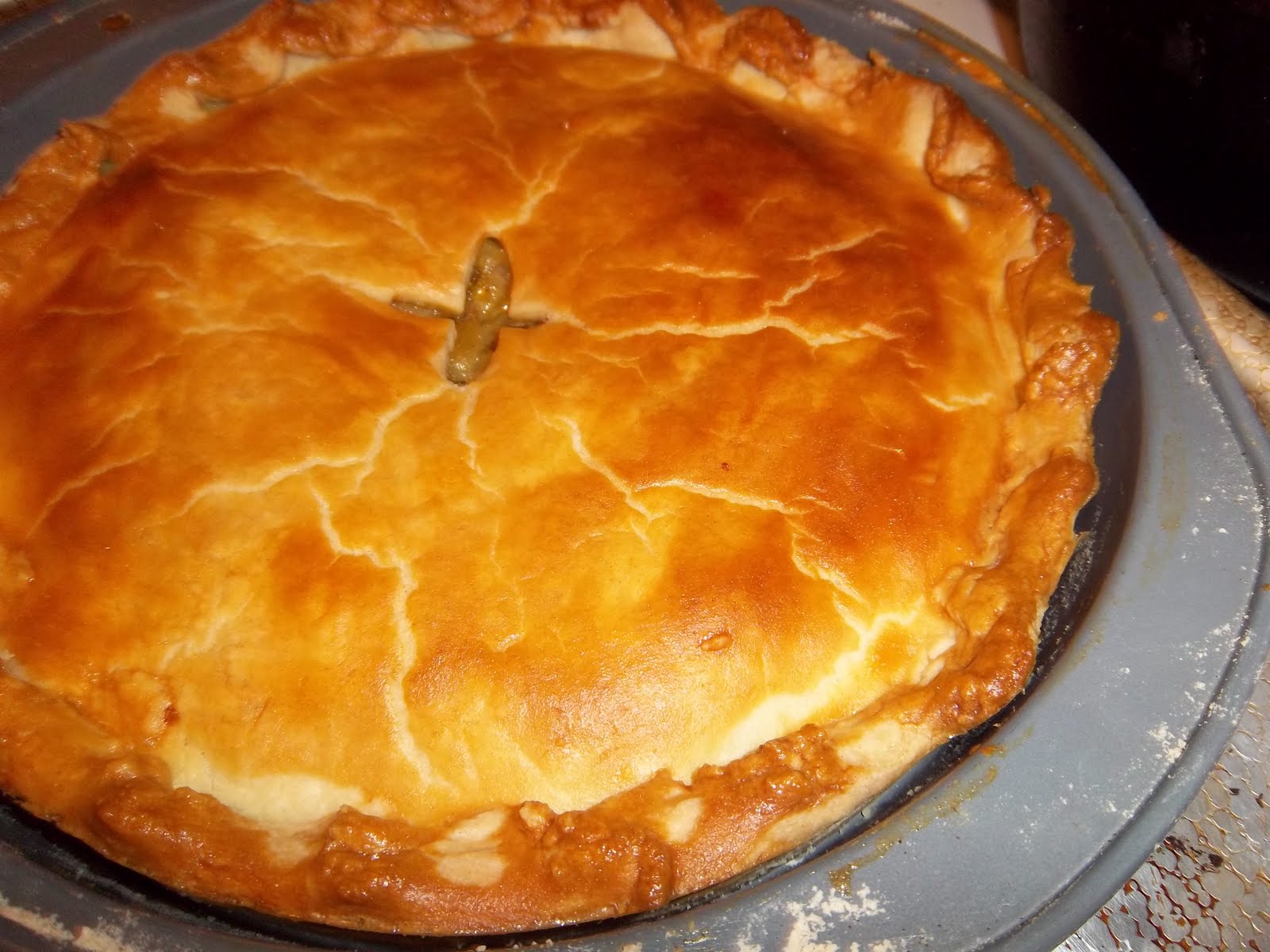
#322 To Make a Goose Pye. What a spectacle this pye was – especially when sliced up. I expected it to be rather macabre, but it wasn’t. It was indeed a ‘pretty little side dish’. The meat inside was wonderfully moist and a good jelly had formed inside without the need for jellied stock. Some people were a little suspicious of the tongue, but everyone seemed to like it. The only problem – though others disagreed – was that it was rather under-seasoned for me; with an extra 50 per cent salt, pepper and mace, this very, very good pye would have been excellent. 8.5/10
#320 Steak, Kidney and Oyster Pie

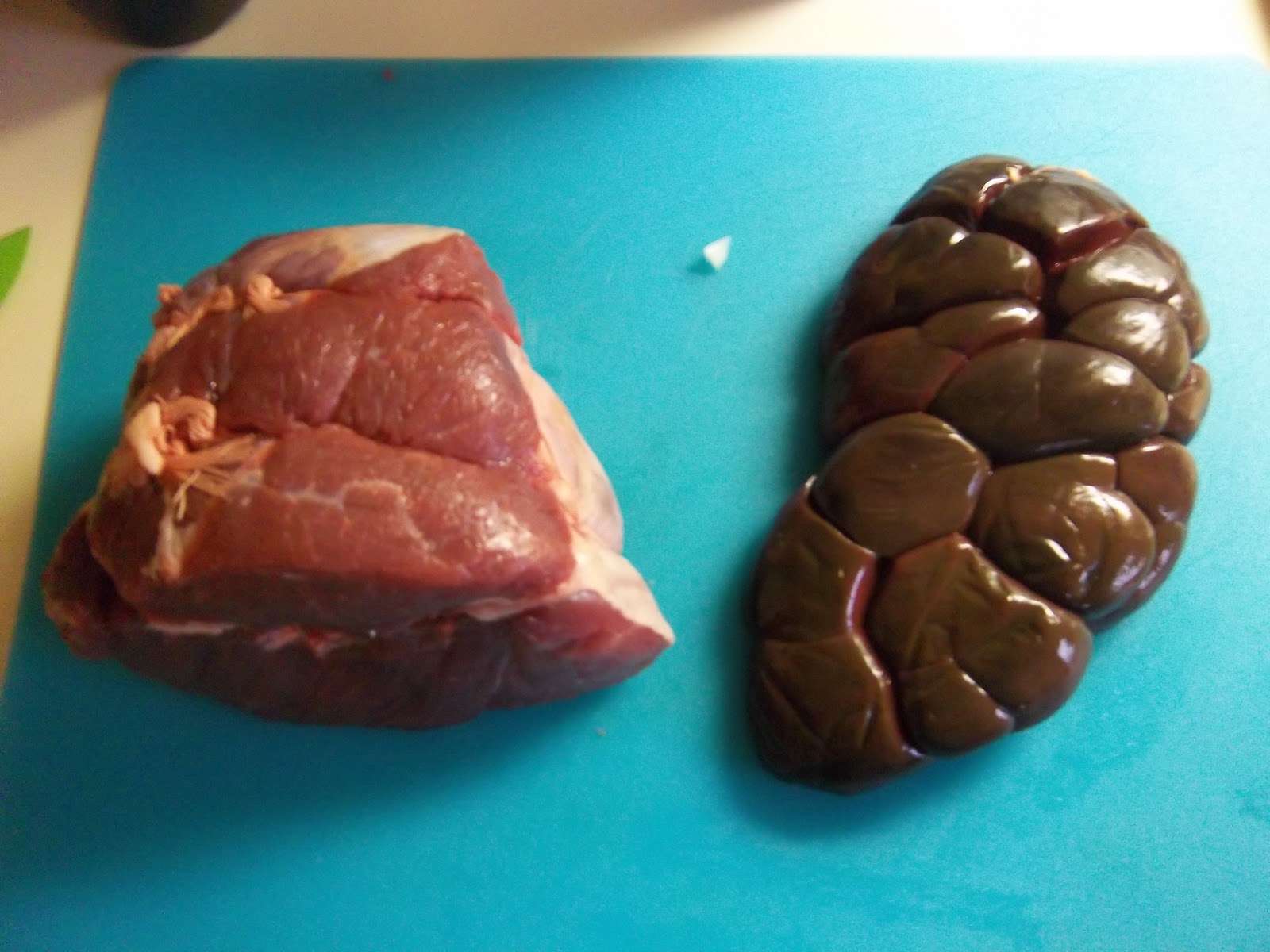
A while ago I made an extremely similar recipe – steak, kidney and oyster pudding. A seminal English dish that I had saved for the landmark 200th recipe. This pie essentially follows the same history (and recipe) as the pudding – the combination of the three main ingredients seems to start with Mrs Beeton. I have found similar recipes going back further like oyster pie, beef-steak and oyster pie, veal and oyster pie and calves’ foot and kidney pie. I could go on, but I shan’t, I think you get the message. The pudding was delicious so there was no way this could be a fail…

+
=
It is worth mentioning my supplier for the beef again – I got it from Missouri Grass Fed Beef, the boss, Jeremy, gave my the kidney for nothing as well! Good man.
This pie uses exactly the same filling as the pudding, so click the link here to find out how to make it; it’s pretty straight-forward stuff. The important thing to note is to check how much and how watery the gravy is before you add the oysters – if there is alot, strain the gravy and boil it down until it darkens and thickens. You need to make it thicker that you would think, because you add oyster liquor to it when it has cooled.
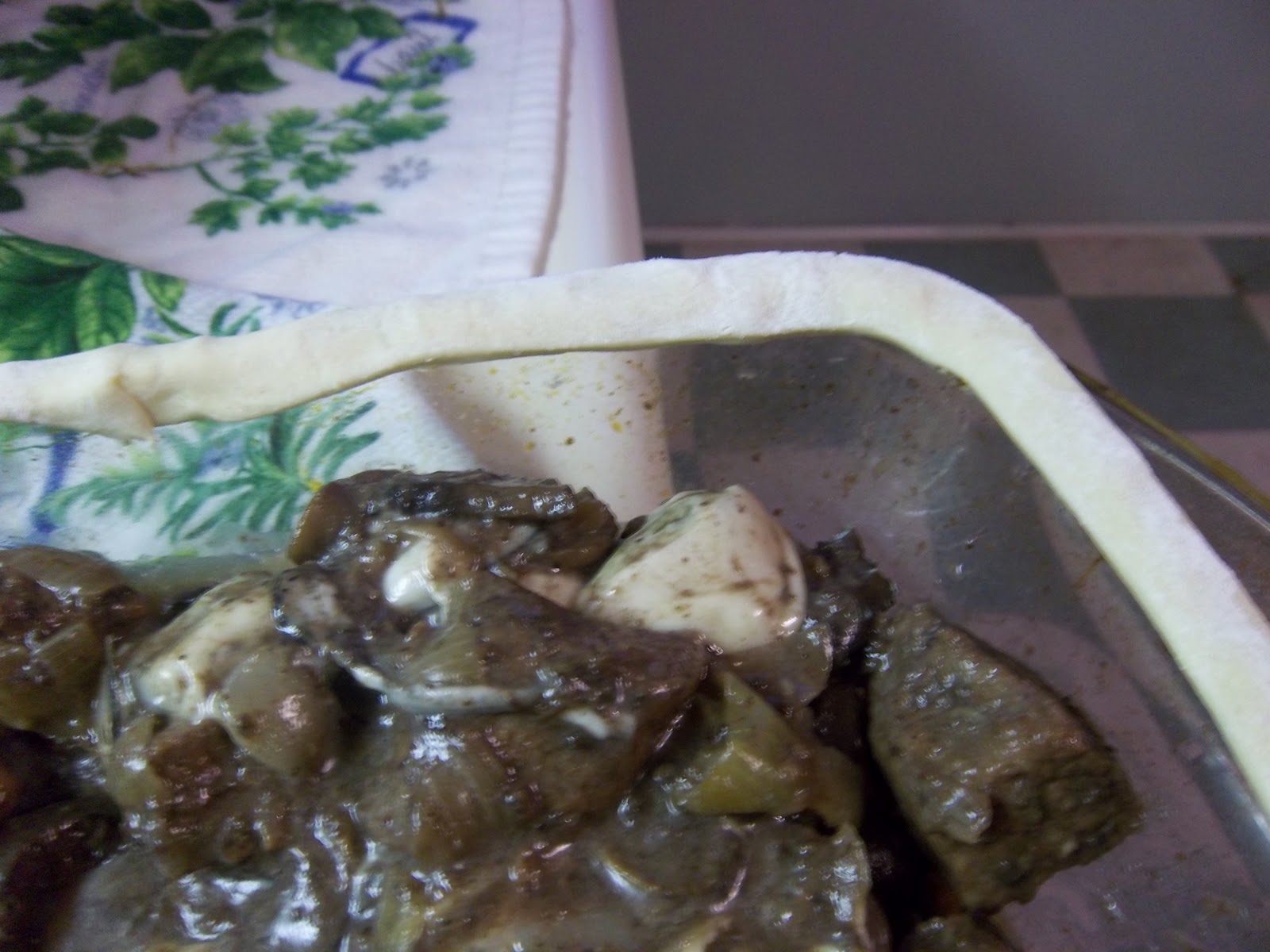
Put the cold filling in a pie dish and get the pastry ready. You can use either puff or shortcrust pastry for the pie. I went for puff. Roll the pastry out and cut strips of pastry about half an inch wide to cover the rim of the pie dish, using water as glue. Griggers says to let the strips hang inwards a little to prevent hot filling from leaking out.
Brush the pastry rim with more water and cover the pie. Crimp down the edges so that the pastry is well-secured. Then Jane says to scallop the edges if you have shortcrust pastry or nick the pastry if puff pastry, after that make a central hole and a leaf design from any trimmings. I hardly had any trimmings left as I didn’t really have enough pastry. Lastly, make a pastry rose with a stem and fit it loosely into the central hole, then give the whole thing an egg glaze.
Bake for around 45 minutes at 220-230⁰C (425-450⁰F).
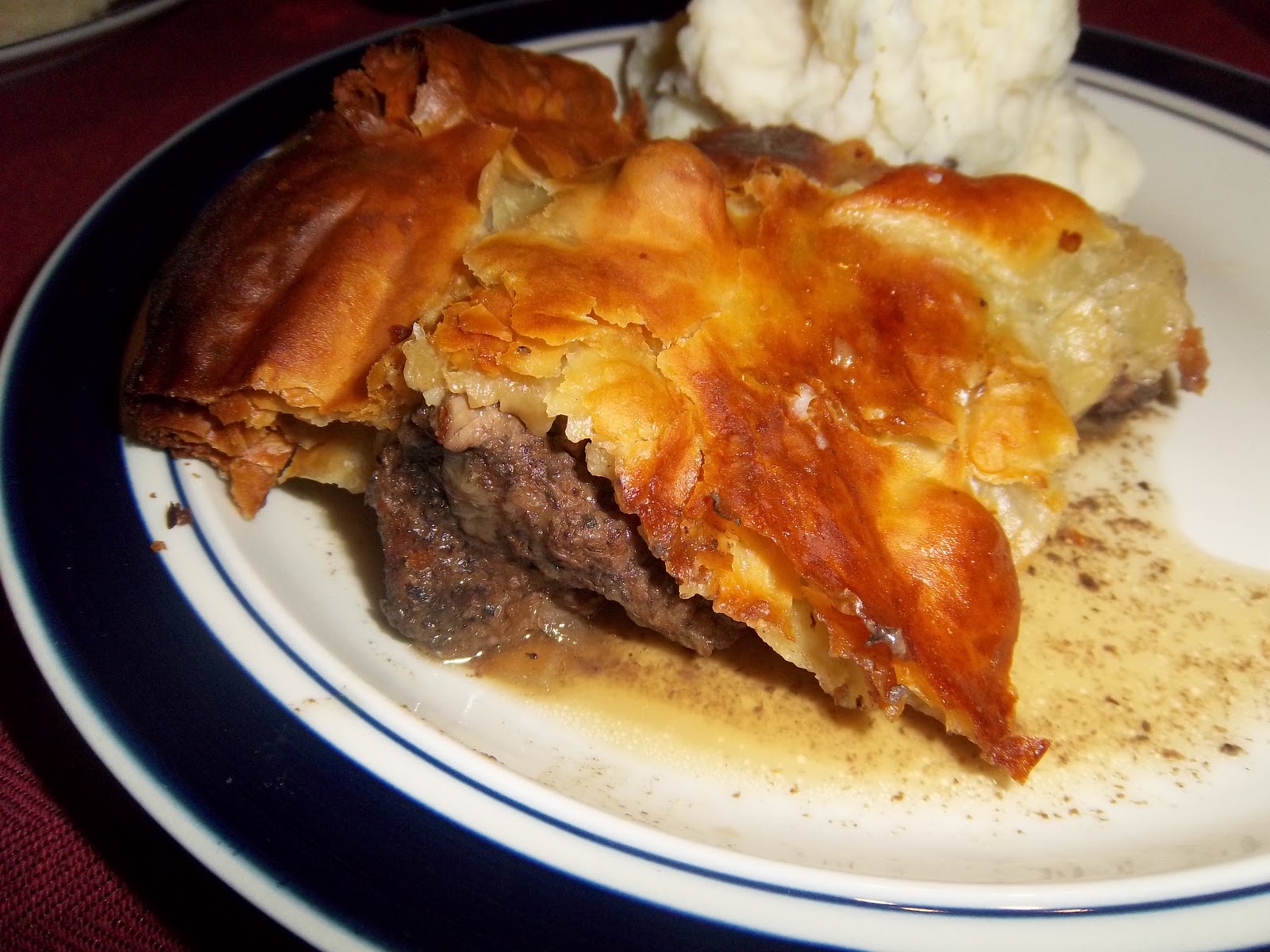
#320 Steak, Kidney and Oyster Pie – well I already knew this was going to be good seeing as I have essentially made this before, but just to reiterate: absolutely amazing. The combination of rich wine gravy, the metallic kidney and the creamy iodine finish of the oysters is fantastic. Mrs Beeton should be made a saint! 9/10.

#312 Pork Pie

Provocative of indigestion as that pie may seem to you, it was put together by a lovely cousin at Melton Mowbray, whose fair hands are equally skilful in rendering a sonata of Beethoven, or in compounding the gastronomic mysteries of the kitchen.”
Excerpt from Dialogues of the Living – Table Talk by J Hollingshead,
appearing in The Train magazine, 1857

The pork pie is the ultimate raised pie in England and the best come from Melton Mowbray in Leicestershire, a very old English town, founded around the 8th Century. The Melton Mowbray hand-raised pork pie attained Protected Geographical Indication status in 2008 – this means that only pies made within Melton Mowbray can proudly bare the town’s name. If you buy a pork pie that doesn’t bear the name, then it is not the real-deal. Unfortunately, Cornwall missed the boat in getting their pasties recognized by the EU, so a Cornish pasty can proudly bear the Cornish name, when it was actually baked in Milton Keynes or whatever.

The Olde Pork Pie Shoppe –
the best place to buy a proper Melton Mowbray pork pie

So what makes a Melton Mowbray pork pie special, other than the location it was made in? Well, first they should be hand-raised, second the pork inside should be uncured and the bacon unsmoked. There is also a secret ingredient: anchovy essence. Anchovy essence is not widely available these days, but it is possible to find it. In America, you’ll have to order some from Amazon. You could cheat of course by using some nam pla – Thai fish sauce. There is no difference between them at all. Don’t be put off by this, the sauce gives the meat a delicious seasoning. In fact it is quite common to use anchovies in this way with lamb, and oysters are great in a steak and kidney pudding. We have stopped combining our fish and meat these days, yet have no issue when we eat them together when we order dishes from a Far Eastern restaurant. Strange.

The main difficulty for anyone who may want to attempt this recipe in the USA is not finding the anchovy essence – oh no – it is the unsmoked bacon that is the tricky customer. I hunted high and low for it when I was in Houston, but I never found wet-cured, unsmoked back bacon. I assumed that if I wanted to make a pie whilst living in the States, I would simply have to wet cure my own. However, at a Farmer’s Market in Chicago, I happened upon a stall selling not only unsmoked back bacon, but also traditional British sausages. The stall is run by an English chap, who coincidentally comes from Leeds too, called Nicholas Spencer. Check out his website here. He said he’ll be doing mail order soon, so I am looking forward to that.


Anyways, if you want to have a go at making your own traditional pork pie you need to get planning! It is quite an effort, though very good fun. I’ve already posted about making raised pies. In brief (with links) you need to get three things ready: hot water pastry for the raised crust, a jellied stock, and the filling itself. I’ll provide you with the recipe for the pork pie filling here…

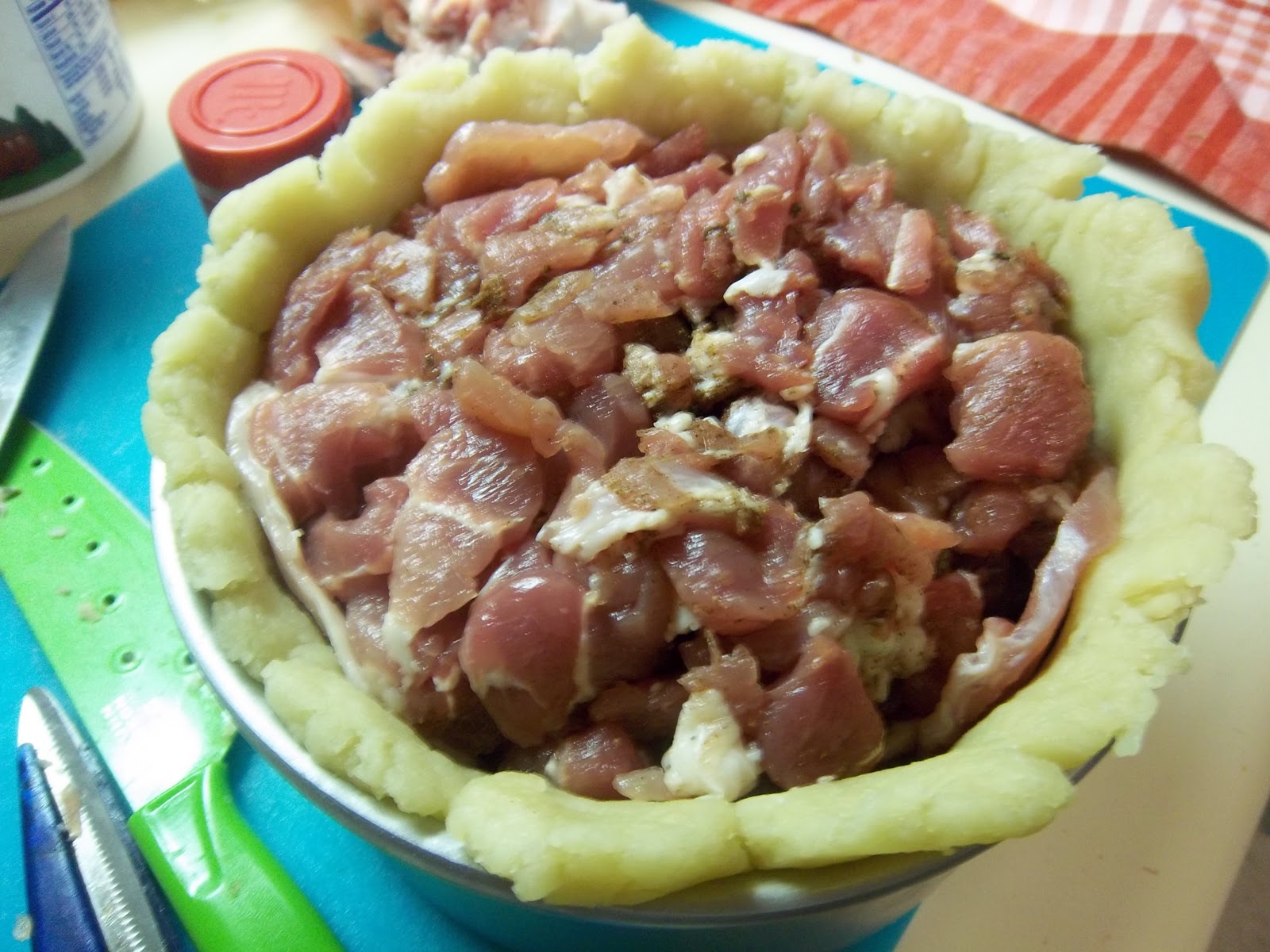
First of all prepare the pork. You will need two pounds altogether  – boned weight. You need a cut of pork that is around one-quarter fat, so go for shoulder, leg or ribs. Make sure you get the bones form the butcher so you can use them in your jellied stock. Also at the butchers, get yourself an eight ounce pack of unsmoked back bacon. When you get home, chop the meat. Keep the best bits chunky, in around a centimetre dice, the other bits, chop finely. This is a bit of an effort, but it is this chopping – rather than mincing – that gives you the proper texture. Also, chop up two rashers of the bacon. Into a bowl, put in your chopped meat and mix in the following: a teaspoon of chopped sage, a teaspoon of anchovy essence and half a teaspoon each of ground cinnamon, nutmeg and allspice. Lastly, season well with salt and pepper. If you want to check the seasoning is correct, take a small amount of the mixture and fry it. Taste and correct accordingly.
When it comes to putting the pie together, use the remaining bacon to line the raised pie crust, add the mixture, packing it in well.

Cover with a pastry lid and finish it off, following the method in the raised pies post.

What should one eat with a pork pie? These pies are great for buffets and picnics, so eat whatever you are serving at your buffet or picnic… Personally, I like some nice brown HP sauce or maybe tomato sauce. Some like to warm the pies and have them with mushy peas. I have been eating mine with the preserved spiced oranges I recently cracked open – a really good combination that.

#312 Pork Pie. It seems you can never be let down by these raised pies. This one was great: the mild herbs and spices gave  the meat a subtly complex flavour. The idea of a cold meat pie feaked a few people out at work, and  suppose the jelly is something you either love or hate. I have been eating the pie slowly over the last few days, and it seems to get better as it ages. Very good, not quite as delicious as the Veal, Ham and Egg Pie, but still pretty tasty. 8/10.

#303 Cornish Charter Pie


In Jane Grigson’s book Good Things, she quotes from the diary of a Parson Woodforde, a Norfolk clergyman who obviously liked his food. He wrote in his dairy on the 13th of July that “[we] had for Dinner some Pyke and fried Soals, a nice Piece of boiled Beef, Ham and a Couple of Fowls, Peas and Beans, a green Goose rosted, Gooseberry Pies, Currant Tarts, the Charter, hung Beef scraped &c…”. All recognisable as nice food typical of the British Isles at that time, except, that is, for The Charter. “Was it [a] sweet or [a] savoury? Was it in fact even food at all?” she asks. Then, apparently on another occasion at the Parson’s brother’s, an incident occurred where a very naughty dog snook into the cellar and snarfed down The Charter all to itself. It was, at least, food, but dogs will eat pretty much anything, so the type of food isn’t possible to deduce.

My friend Katie has a dog that ate an entire chocolate cake once – fully iced as well. What happened to that cheeky dog’s bowels is not fit for a description in a food blog.

Parson Woodforde 1740-1803

Anyways, the editor of the Parson’s diary assumed it was some kind of custard. It wasn’t until Griggers stumbled upon the book A few choice recipes by Sarah Lindsay (a Lady) from 1883, who gives a recipe for a Charter Pie, saying it is a Cornish recipe and the filling is of chicken in cream. It’s a shame that Jane had no internet in her time; it would have made her life so much easier as I found this little fact on GoogleBooks pretty quick-smart.
Upon doing a quick recipe search on the internet, I found a few versions of the recipe, but they didn’t really give any more background to the pie. I did notice that one website listed it as American cuisine, so it must’ve been taken over the Atlantic at some point and survived there for a good few generations.

Anyways, I thought this pie would go down for my dinner party-cum-buffet that I had last weekend. The Meat Pies & Puddings section of the book has been rather hit and miss, so I did worry that would be a bit crap. Jane does big it up, and it does appear also in Good Things, so for it to occur twice in her writing, it must be good…

The recipe asks for two three pound chickens that have been jointed, so you can imagine that it is a decent sized pie, so make sure that you make enough shortcrust pastry to cover a large, shallow pie dish. The recipe specifies a rich shortcrust pastry too, so make it with at least five ounces of salted butter (and therefore ten ounces of plain flour), an egg yolk and some ice-cold water to bind.

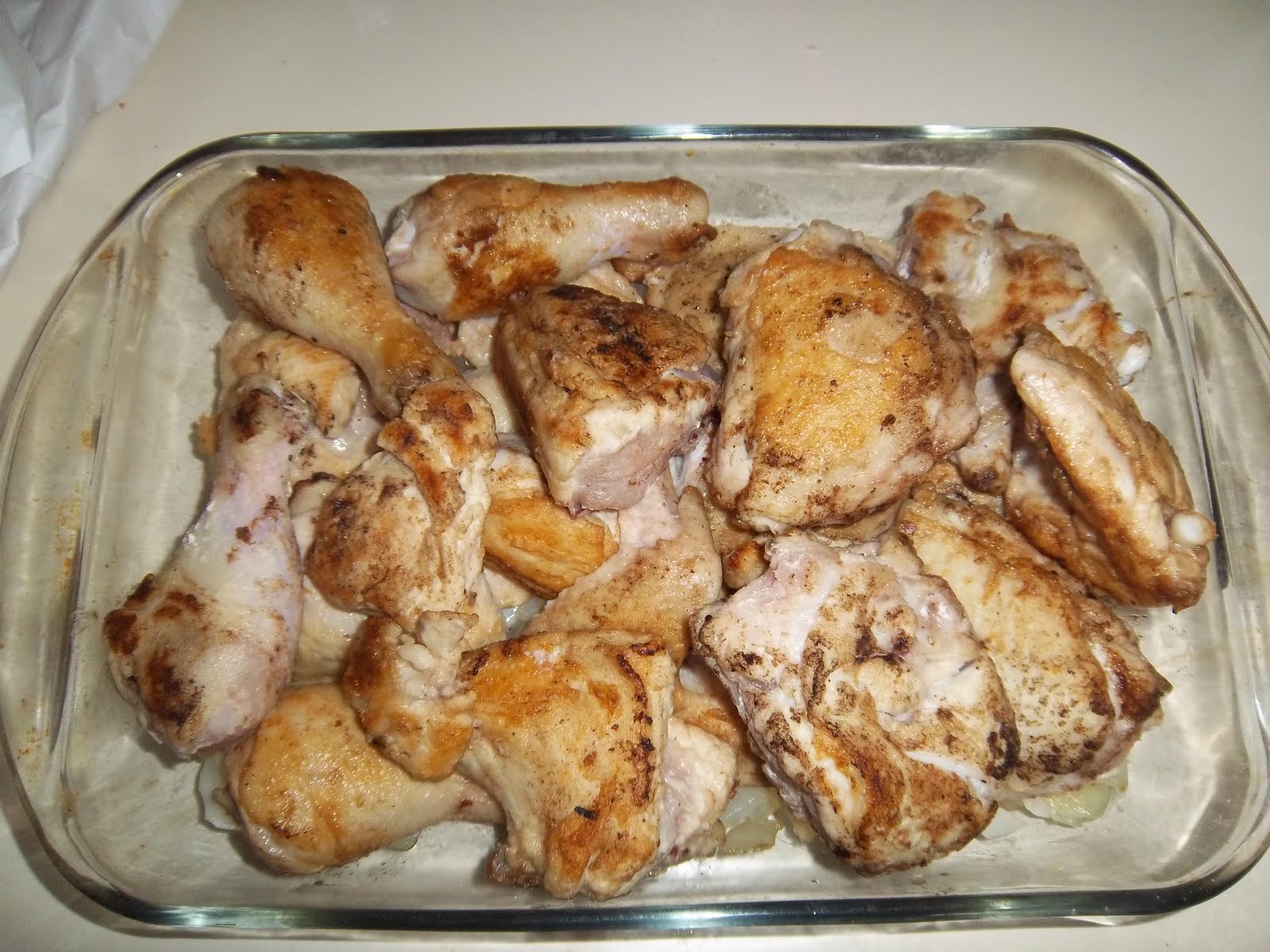
Whilst your pastry is resting in the fridge, chop a large onion and soften it in two ounces of butter. Remove the onions from the pan and spread them on the base of a wide, shallow pie dish or tray. Toss your chicken pieces in seasoned flour, turn up the heat in your pan, add a two more ounces of butter and fry the chicken pieces until they are a nice golden brown. Do not crowd the pan, so cook in two or three batches if you need to. Arrange the chicken pieces tightly together in a single layer on top of the onions.

Next, chop a leek or six spring onions alongside a nice large bunch of parsley. Place in a saucepan and cover with a quarter of a pint each of milk and single cream (that’s coffee cream for any Americans). Bring to a boil and simmer for two or three minutes. Pour this mixture over the chicken and season very, very well with salt and pepper.

Roll out your pastry and cover the pie, using some beaten egg as a seal. Make a hole in the centre of the pie large enough to fit a kitchen funnel. Jane then asks us to make a pastry rose to fit on top of it that also has a hole (so the steam can still escape). Decorate with more pastry if you like. Brush the pastry with more beaten egg. Bake at 220-230°C (425-450°F) for the first twenty minutes and then lower the heat to 180°C (350°F) for the remainder of the cooking time – an hour should do it.

Just before the pie is ready, bring half a pint of double cream to the boil, so that when it is cooked, you can take the pie from out of the oven, remove the pastry rose and pour in, with the aid of your funnel, the hot cream. Then replace your rose.

The pastry is good hot or cold, says Jane. It went for just warm so that the sauce would thicken almost becoming jelly (a benefit of using chicken on the bone, rather than just the meat cut into pieces).

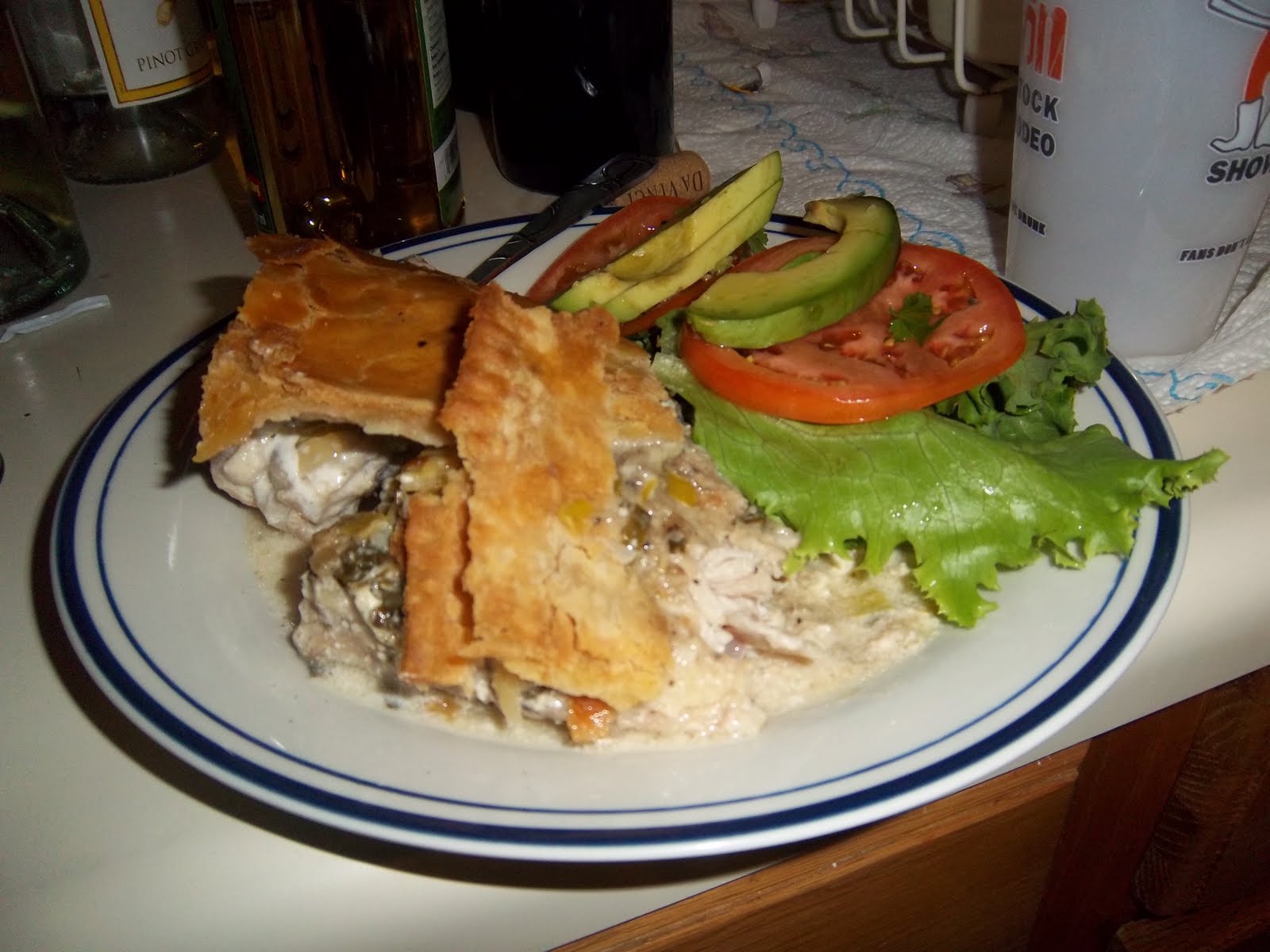
This is perhaps a good point to mention the proper English way of serving up a pie like this. Using a knife, cut away the piece of pastry you would like to serve and place it on the side of the pie. Next, spoon out the filling onto the plate and perch the pastry on top of it. Do not go digging straight in there with your spoon messing up the pastry and getting all mixed up with the filling. This is a deadly sin at the Buttery residence and you will be thrown out should you attempt it.

#303 Cornish Charter Pie. What a great pie! The ingredients made a thick creamy chicken soup that is delicious in itself and the chicken was wonderfully tender from being cooked in all that milk and cream. Much better than the last chicken pie from the book, which was insipid by comparison. This will be my staple recipe for chicken pie in the future (unless anyone has one that can beat it). 8.5/10.

#297 Raspberry Pie


The tale of this pie is of personal pain and anguish. Let me tell you the tale…

It was my work-buddy Chandra’s PhD thesis defence yesterday and she requested that I made this pie rather a cake for when she came out. Great stuff, thought I, any excuse to make something out of the book, plus the raspberry is my favourite fruit so it has got to be a winner. This pie is an eighteenth century pie and requires the fruit to be cooked in the pastry casing and then in the last five minutes, a custard to be poured in through the hole in the pastry. This was the usual way to make a fruity pie in those days, apparently. Anyway, Griggers says to serve it hot or warm, so I nipped back to my apartment to make it. I popped the pie into the oven and got the custard – or caudle as it was called then – ready.

Unfortunately the raspberries were so juicy that there was no room for any caudle, so I ran over the road and bought some straws from the shop with the inspired idea that I would suck the spare juice out. Hoping the pie had cooled slightly I attempted to suck some out – I think because time was becoming an issue I didn’t notice the fact that this was 170°C fruit syrup too much, but then as I realized just how much syrup there was, my nervous system kicked in. Cue much wincing and swearing. After about 15 minutes of this, I had finally cleared enough space to pour the caudle in. Mouth pretty sore, but not major damage done. Popped the pie back in the over for its final five minutes and rushed it back to Rice University. It was only whilst driving down towards work that I noticed the skin of the roof of mouth sloughing off and dangling upon my red raw tongue. She had better bloody like this pie. Luckily it went down well. On returning home later that evening, I rinsed my mouth out with Listerine before bed. More agony. Then, in the morning, I thought I would clean my tongue as well as my teeth as it was burnt and may have had some nasty bacteria there trying to infect the poor thing. Bad idea. I left for work with bleeding tongue. Hopefully it won’t go gangrenous and I won’t have to have my face removed.

To make the pie, you need to start with the pastry. In the eighteenth century, puff pastry will have been used, but Griggers goes for the sweet rich shortcrust and gives an ingredients list for it. Sieve 12 ounces of plain flour along with 2 tablespoons of icing sugar and a pinch of salt into a large bowl. Next, add 8 ounces of cubed butter or a combination of butter and lard. Use a mixer or food processor, to rub the butter into the flour. If you like to keep it real, use your hands or one of those pastry cutters as I did. The important thing is to keep everything as cold as possible – use butter straight out of the fridge and turn that A/C as low as you can! Once the butter is rubbed in, add an egg yolk (keep the white) and two or three tablespoons of ice-cold water, enough to bring everything to a dough. Don’t worry if you add too much, you can add some more flour. Knead the dough briefly and then pop it in the fridge to rest and firm up again.

Preheat your oven to 190°C (425°F) and place a baking sheet on one of the shelves. Now roll out two-thirds of your dough and line your pie dish with it. If it is warm in the kitchen, roll it out on some cling film, this will stop it from breaking up. A top tip for you there. The dish needs to be 2 to 3 inches deep, Griggers doesn’t mention a diameter, but I went with an eight inch diameter one. Now arrange a pound of raspberries in a layer in the pie and sprinkle over 4 ounces of sugar (or less, if the raspberries are particularly sweet).

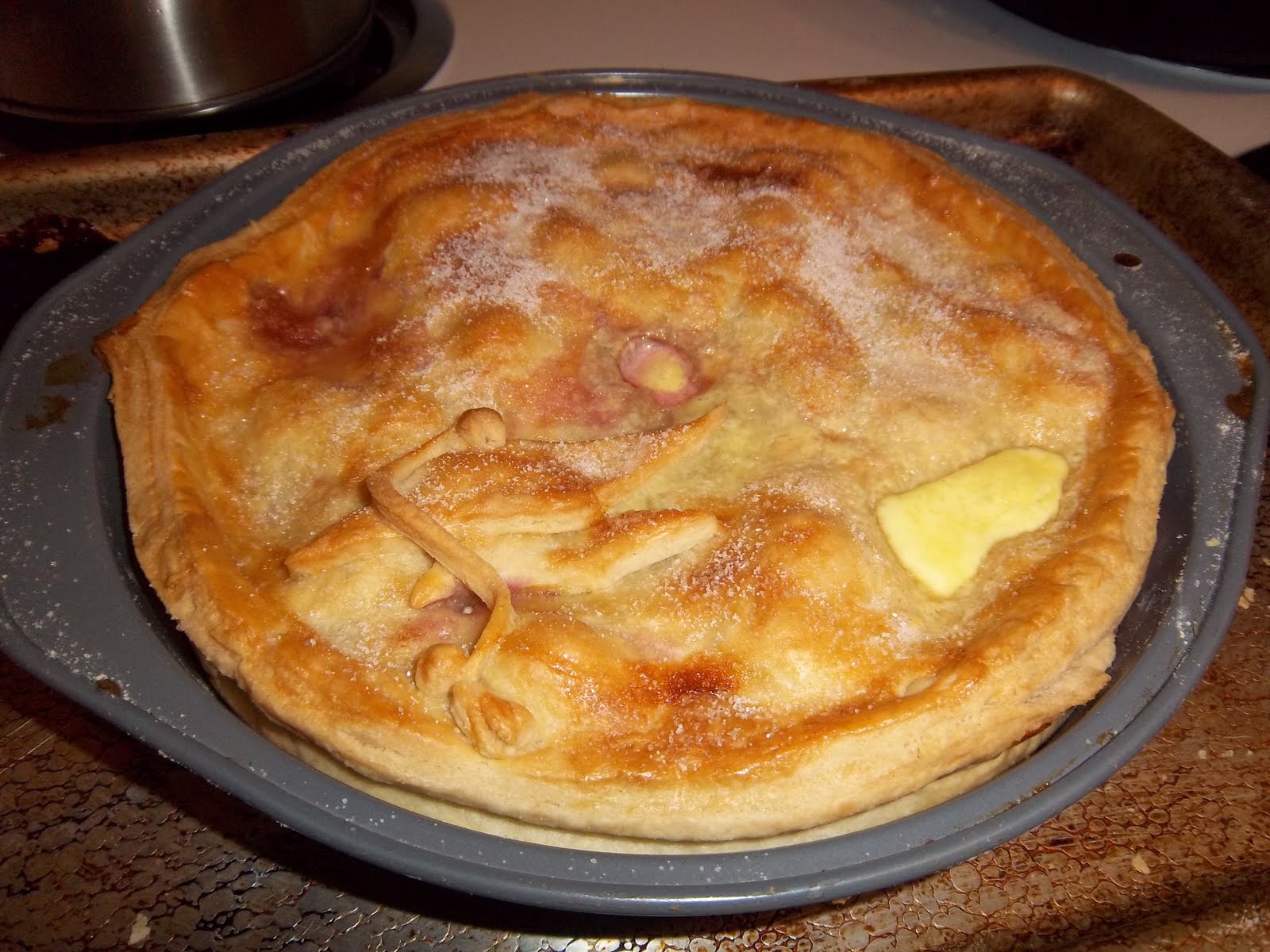
Roll out the remainder of the pastry to form a lid, gluing it on with a brushing of the reserved egg white. Trim the edges and decorate if you wish – I went with a mortar board motif, seeing as it was a PhD defence. Brush with more egg white and sprinkle with sugar. Make sure you leave a good-sized hole in the centre. Place in the oven on the hot baking tray and bake for 15 minutes before turning down the heat to 190°C (375°F). The point of the hot baking tray is so that the pastry bottom crisps up before the raspberries give up their juice, preventing a soggy pastry bottom to the pie. The pie should be cooked until the pastry is nicely browned and crisp, around 40 minutes.

Whilst it is cooking, prepare the caudle: bring 4 fluid ounces of single and 4 of double cream to a boil in a saucepan. As soon as boiling point is reached pour them over two egg yolks, whisking vigorously to prevent making scrambled eggs. In the final 5 minutes of cooking, take the pie out of the oven and slowly pour the caudle into the pie using a funnel and return to the oven so the caudle can thicken. Serve hot or warm. Oh, she makes it sound so easy. Looking back, it would have been better to pile the raspberries in the middle slightly so when it collapsed there would have been some space for the caudle. It was also suggested that instead of using a straw, I should have used a baster or a pipette or something. Retrospect is a wonderful thing.

#297 Raspberry Pie. Ah, the raspberry. There is nothing better than stumbling across some wild raspberries when walking in the woods. The pie itself was reminiscent of the French clafoutis, where fruit is cooked in custard in a pastry case, though without the lid. I love raspberries, I love custard and I love pastry, so this could not have been a disappointment. I have to say it was delicious, even though I my taste-buds were not working at their best at the time. The caudle had thickened up and mixed with the juice, and it wasn’t overly sweet either. Jane says that you can use any soft fruit for this pie – gooseberries work particularly well apparently – so I shall be definitely this again whenever there is a glut of soft fruits. Though without the second-degree burns this time. 8.5/10.

#288 Leek Pie

I beseech you heartily, scurvy, lousy knave, at my desires, and my requests, and my petitions, to eat, look you, this leek: because, look you, you do not love it, nor your affections and your appetites and your digestions doo’s not agree with it, I would desire you to eat it….if you can mock a leek, you can eat a leek.

William Shakespeare, Henry V

 I like to get a bit of Shakespeare in whenever I can.

There’ll be no mocking of leeks on this blog. They are one of my favourites, though I don’t really eat them that often. The main reason, I think, is that no matter how much I wash them before preparing them, there is always some grit – invisible to the naked eye – that ends up in the final dish. I’m always so thorough too. Hey-ho, a bit of dirt is fine. In fact there’s an old Yorkshire saying: tha’s got to eat a peck o’muck before you die. Indeed.

Here’s a pie that sounds great – leeks, cream and bacon in pastry. Nothing can be bad about this one, with or without grit.

I assumed that this recipe was a Welsh one, but no, variations of it are found across Britain and France. Grigson doesn’t say that much about it, other than in France onion and flour are added to the filling, so technically this is the French version, but let’s not split hairs.

To make the pie, you’ll need to buy or make some shortcrust or puff pastry. I made some shortcrust. You’ll need to make a shortcrust that uses 10 ounces of flour and five of fat; I did eight and four respectively and only just managed to get away with it.

To make the filling, chop and onion and cook it in an ounce of butter until soft and golden. Meanwhile, trim, wash and chop a pound of leeks. Slice the green part thinly, as it is quite tough and takes longer to cook than the white part. Add the leeks to the onions along with two ounces more of butter. Season with salt and pepper. It’s important to add the salt at this point as it draws the liquid from the leeks, concentrating their flavour.

When softened and mushy, turn off the heat and add four ounces of chopped back bacon. Now measure four ounces of double or clotted cream – weight, not volume – and beat in a teaspoon of flour. Pour this over the leeks and bacon and allow to cool.


Roll out two thirds of your pastry and line a nine inch tart tin. Add the filling and roll out a lid with the remaining pastry, using beaten egg as a glue. Crimp the edges and ‘decorate in restrained manner’. I just made some fluting around the edge. Brush with egg and make a hole in the centre so the steam can escape. Bake for 15 minutes at 220°C (425°F) or until the pastry is nice and brown, then turn the heat down to 180°C (350°F) for another twenty to thirty minutes.


#288 Leek Pie. What a great pie! The filling became a rich and delicious mush with subtle onion and leek flavour. The secret to this – as with so many of the best in English Food – is the that are just a few ingredients cooked slowly over a low heat with a good amount of seasoning. It was just as delicious cold as it was hot. One of the best recipes thus far I’d say. Go and cook it! 9.5/10.


#284 Veal, Ham and Egg Pie

Okie dokie, so the last two posts have all been on the subject of raised pies. The first one explained how to bake and construct one, and the second explain how to make the jellied stock. Now it is time for an actual filling to complete the full recipe.
This is the first of several fillings for raised pies from the book, and I must admit that I have been putting off making one in case it was a disaster. In the end it was a delight to make.
I chose this recipe because it seemed the most basic, with the easiest ingredients to get hold of; the nearby Central Market sells a range of veal cuts, which are usually tricky to get hold of. Strangely enough, the tricky item to get hold of was the unsmoked and raw ham, gammon or bacon. I searched high and low for it, but to no avail. Luckily, I am now pretty good in the kitchen these days and knew I could cure my own ham overnight in the brine tub I now have sitting at the back of the fridge ready to leap into action whenever I need an emergency curing. I bought a bit of pork loin as it is the leanest cut.
So, to make the filling you will need to hard boil and shell four eggs. Whilst they are bubbling away, get the meats ready: cut up 1 ½ pounds of ‘pie veal’ (I took this to mean cuts for casserole, like shoulder) along with 12 ounces of unsmoked bacon, ham or gammon. You want chunks around a centimetre in size. Add the grated rind of a lemon, a tablespoon of chopped fresh parsley, a teaspoon of dried thyme. Mix these together well with a decent  amount of seasoning. Pack half of the mixture in the pastry-lined mould. Place the eggs inside and then the remaining filling (see the raised pie post for pics of this). Then bake as described in the raised pie post.
#284 Veal, Ham and Egg Pie. Whew! This pie pretty much took me a whole Sunday to make. It was worth it though. The filling was wonderfully light and fresh tasting due to the herbs and lemon and the meat flavour was quite subtle, the whole thing kept moist by the jellied stock. The pastry was crisp and tasty too – hot water pastry is so easy, I can’t believe I put it off for so long. I brought it into work for people to try and it seemed to go down pretty well and I’ve been eating it through the week. There’s one slice left know, and I already miss it. Cannot wait to try the next one. I think i have found my calling as an artisan pie-maker extraordinaire! An excellent pie! 8.5/10 (I’m not marking it higher, in case the others are even more delicious!).

#283 Jellied Stock

If you are going to attempt to make a raised pie, then you need to make a jellied stock. The jelly in these pies is either loved or hated. Many people can’t stomach the thought of savoury jelly I think and either have to pick it out or avoid eating these delicious pies altogether. The jellied stock is very important though. The meat inside is cooked for a long time and can dry out a little – some water escapes through the hole in the top and some is absorbed by the pastry. The stock soaks into the meat, making it nice and juicy again and it fills any gaps made by the shrinking contents.
So here’s the recipe. You could, of course, just use some stock and gelatine, but that would be cheating!
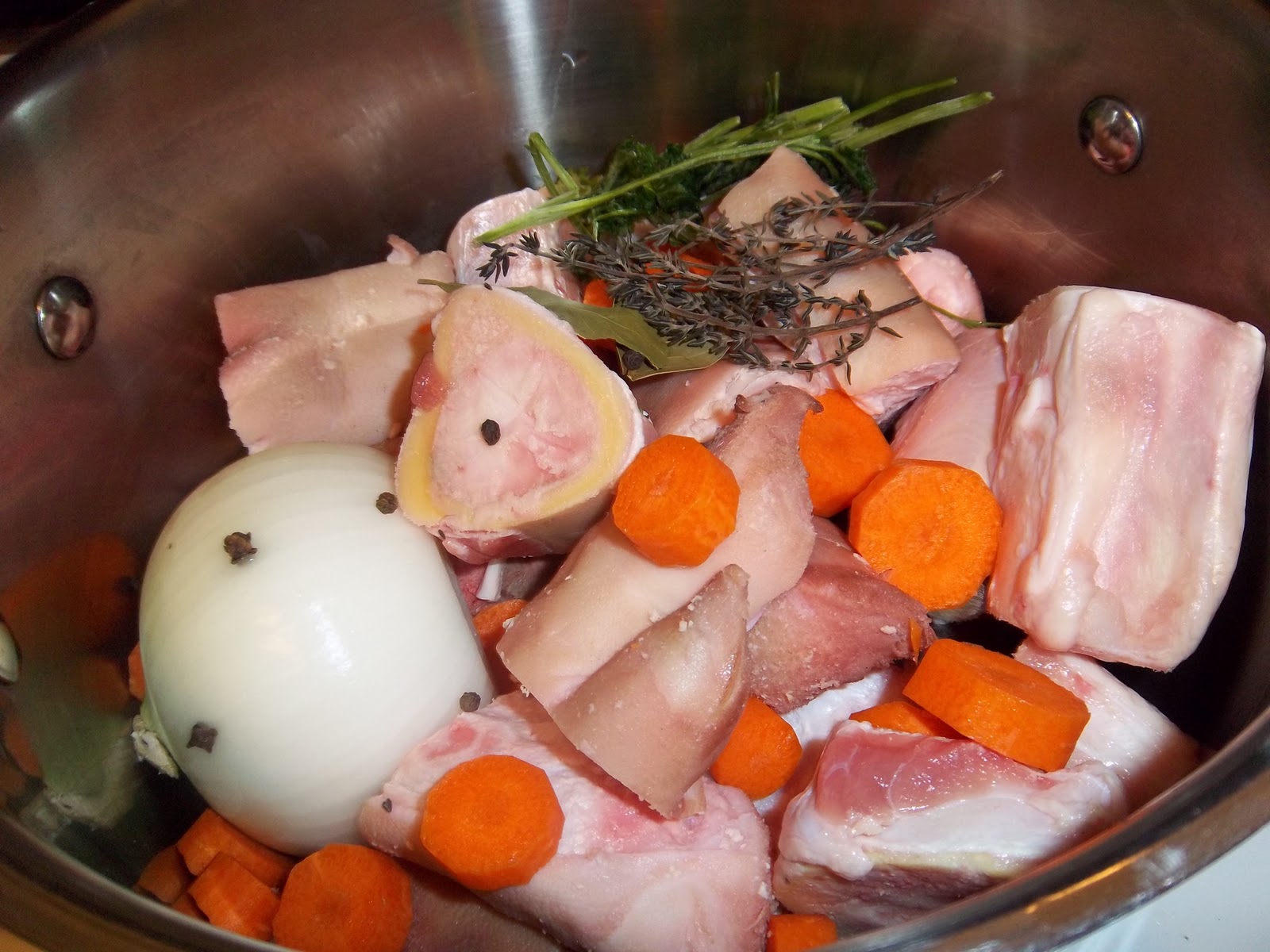
First you need some bones that will release alot of gelatine, so use either two pig’s trotters or a veal knuckle – ask the butcher to cut them into several pieces for you. To these, add any bones you may have left over when you prepared the fillings. You’ll also need a sliced large carrot, a medium onion studded with three cloves, a bouquet garni and twelve black peppercorns. Place all of these in a big stockpot.

From this…
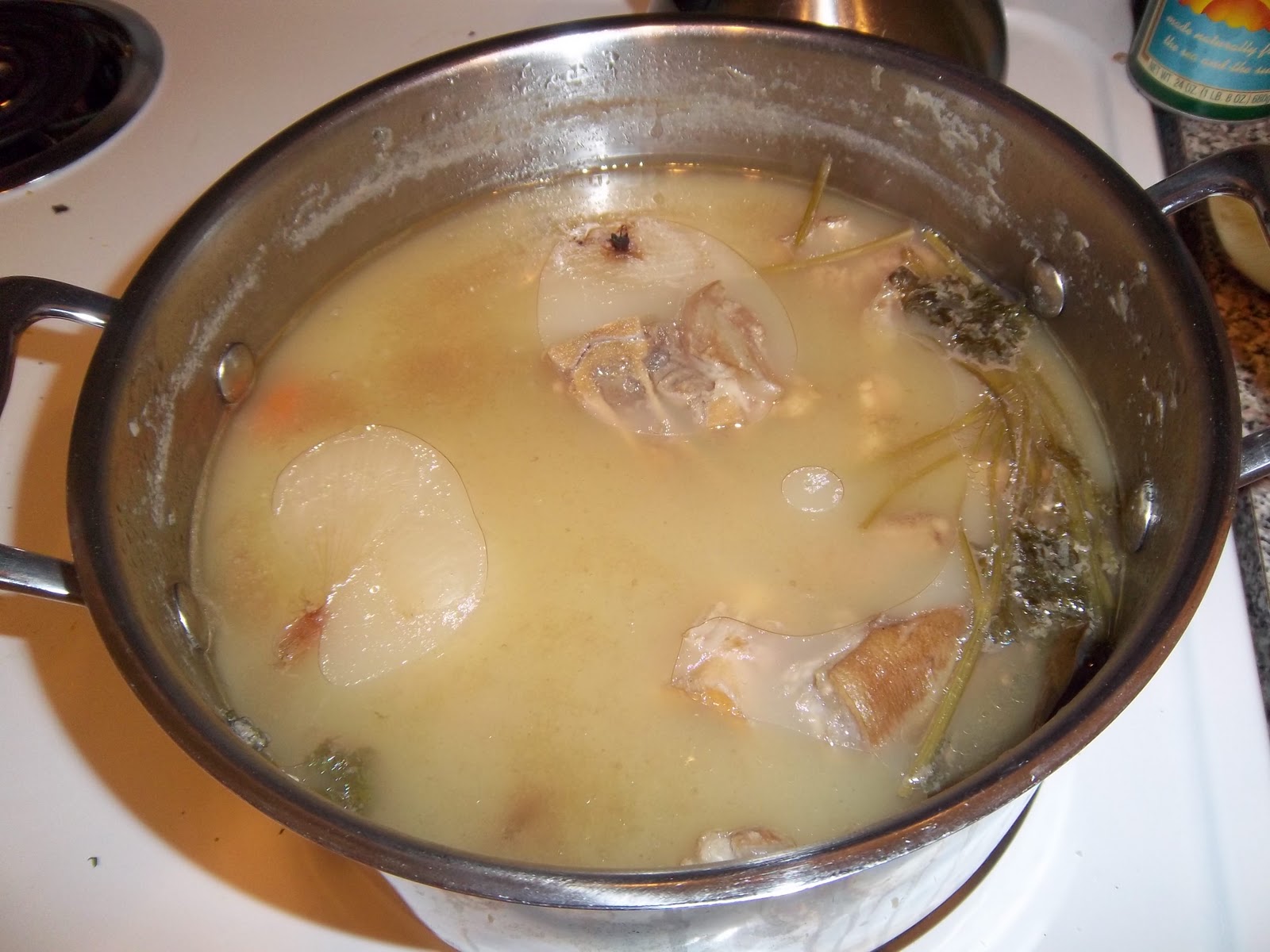
Now add four to five pints of water, bring to the boil, skim off any scum and cover and simmer for three to four hours.

…to this…
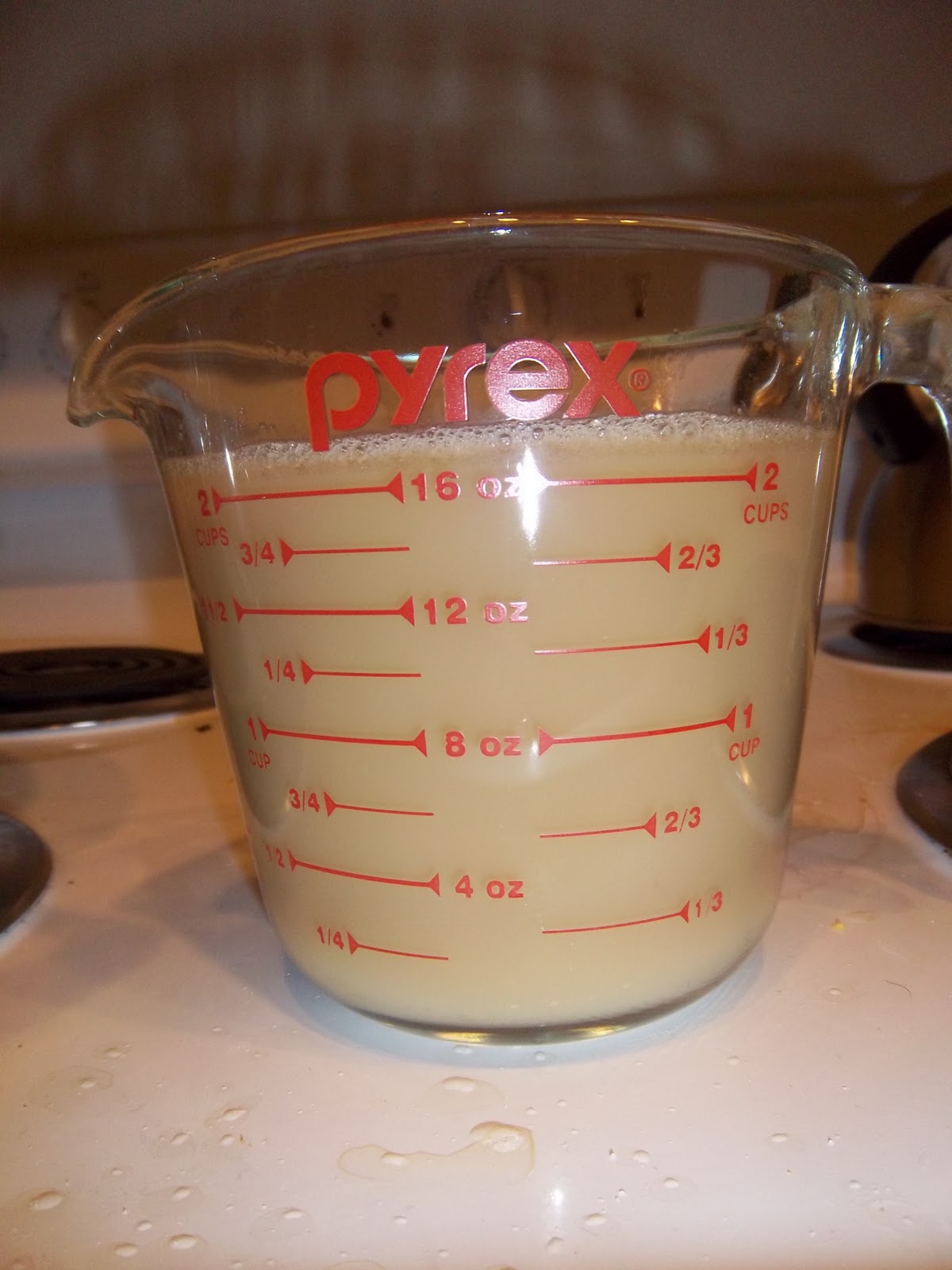
Strain the stock through some muslin into a clean pan and boil it down until it is a concentrated ¾ of a pint. Season it with some salt and more pepper if required. The stock is now ready to be funnelled or poured into the raised pie (see here for instructions).

…to this!

#283 Jellied Stock. I won’t write a review for this as it’s not a dish in itself, but I will say that it was a very satisfying process; condensing that big set of ingredients into the viscous well-flavoured stock. Made me feel like a real baker.

#282 Raised Pies

Is there anyone who doesn’t like a pie made with hot-water pastry? Everyone, I say, from the Mayor of Melton Mowbray to, er, Sweeney Todd. Oh, except for vegetarians. They’re so quintessentially English and I’ve not seen anything remotely close here in Texas. I must admit I’ve been putting off making these pies – I’d never made one before and I knew that it would take a lot of time, and presumably, effort. However, I felt I was ready – and so I should be because there are several to do in this book so I need the practice. Hopefully I’ll get it right first time.
So, for those of you not in the know, a raised pie is a pie made from pastry using boiling water and lard, unlike shortcrust pastry that is kept as cold as possible. Hot water pastry achieves a putty-like consistency that allows the pie mould or tin to be moulded and raised up the sides of the tin, rather than rolled. The hot water makes the pastry very absorbent too; you need this as the filling cooks and releases juices. Normal pastry that contains butter would just turn into a sloppy mess. Raised pies became crazily over-the-top in the seventeenth and eighteenth centuries. Elizabeth Raffald’s receipt for a Yorkshire Goose Pie gives the following instructions:
Take a large fat goose, split it down the back and take all the bones out. Bone a turkey and two ducks the same way, season them very well with pepper and salt, with six woodcocks
You don’t get pies like that in Yorkshire nowadays, I can tell you. Imagine the meat sweats you’d get from a slice of that!
The raised pie hasn’t quite fallen out of favour in Britain these days – I’m sure Melton Mowbray pork pies are as popular as ever, but that’s all you generally see now. The book proffers more, and I shall be adding them as I go. The basics are: Pork Pie; Veal, Ham and Egg Pie; Raised Mutton Pies; and Game, Chicken or Rabbit Pie. They all have the same basic parts: the pastry, the jellied stock and the filling itself.
It all seems a bit complicated, but it’s not really. In this post I’ll deal with the construction and baking of the pie. The jellied stock and the fillings can have their own posts (these are coming in the next day or two).
Begin by making the hot water pastry. Bring a third of a pint of water and six ounces of lard to the boil. In the meantime, weigh out a pound of flour and place in a bowl with half a teaspoon of salt. When boiling, tip the water and fat into the flour and mix quickly – electric beaters are the best for this, but don’t use a high speed as the pastry won’t bind properly. To enrich this pastry add an egg, or a tablespoon of icing sugar. Cover the dough and leave until it cools enough to handle, but don’t let it cool down completely. Take three-quarters of the pastry and put it in a six or seven inch cake tin with removable base. You can buy fancy hinged raised pie moulds – they are quite expensive though, but they are beautiful (see this link). Quickly, but carefully, mould the pie by gently pushing the pastry up the sides of the mould or tin until it overlaps the lip, making sure there are no holes or tears. If it just flops down, then it is too hot. Wait five minutes and try again.
If you want to make small pies, you can mould the pastry around the outside of a wide rolling pin or a jam jar. This method is required for the mutton pies. This is alot trickier apparently. So unless you can avoid it, do the big pie.
Now you can start on the jellied stock and prepare your pie filling. Pack the filling well into the raised crust.
…if it mounds up above the rim, so much the better.
Roll out a lid with the remaining pastry and fix in place with a little beaten egg, making a hole in the centre for steam to escape. Decorate the pie with leaves and roses using pastry trimmings. It’s strange that savoury pies have the ornate decorations in England and that the sweet ones are left plain. I don’t know why this is. Anyway…. Brush the lid with more egg (don’t throw unused egg away, you’ll need it later).
Bake in the oven for half an hour at 200°C (400°F) to colour the top, and then lower the temperature to 160°C (325°F) for two hours for large pies and just one hour for small pies – you need this time for the meat to cook and become tender. Watch the pie doesn’t brown too much though – if it needs a little protection, cover with some brown or wax paper. Remove it from the oven and leave it to cool for thirty minutes before removing it from its mould very carefully. Brush the sides with beaten egg and return it to the oven for a final half an hour to brown and crisp up.
Whilst the pie cooked, the meat shrank, so the gaps need filling with the jelled stock. This can be carefully poured through the hole in the lid, or better using a small funnel. Let the pie cool and eat the next day. The pie will keep for days wrapped in wax paper and kept somewhere cool.
Phew!
#282 Raised Pies. It won’t write a review for this recipe – I’ll save that for the fillings. However, it is worth saying that although making a pie like this is no mean feat, it is worth having a go. I had such fun pottering about the kitchen making my first riased pie (the Veal, Ham and Egg Pie). But then, I am a great big geek. Anyway, hopefully I have inspired you to give it a go, if not at least appreciate how much effort goes into these beautiful and delicious artisan pies.

#233 Devonshire Squab Pie

Here’s a slightly odd recipe, as a many from Devonshire appear to be. This squab pie contains no squabs (i.e. baby pigeons), but lamb instead. It is a mystery how it got its name – Griggers suggests that the meat has changed over the years, but the name has stuck. That’ll do for me. This is a simple enough pie to make, though the ingredients are odd: lamb, apples, prunes, spices all topped off with a dollop of clotted cream. Hmmm.

This is easy to make; a simple case of layering up ingredients in a deep pie dish. Start off by removing the meat from a whole best end of neck of lamb. If this seems too much of a chore, just buy about 1 ½ pounds of neck fillet from the butcher instead. Now peel, core and slice two pounds of dessert apples – Cox’s pippins are Jane’s suggestion, but russets and braeburns to well in these sorts of things too – slice two medium onions thinly and chop around 16 prunes. Next, mix a level teaspoon of ground allspice and cinnamon along with half a grated nutmeg in a ramekin or small cup. Layer up the meat, onions, apples and prunes, seasoning the layers with the spices and salt and black pepper as you go. Now pour over a quarter of a pint of lamb stock (use the bones from the best end of neck to make it, otherwise a stock cube!). Cover with a nice thick layer of shortcrust pastry, brush with egg and bake for 30 minutes at 200⁰C, and then turn down the oven to 160⁰C and bake for a further 45 minutes. Serve with clotted cream.


#233 Devonshire Squab Pie. This pie did not turn out to be as weird as expected. You could identify each ingredient in it, and they all stood out whilst complimenting each other very well. However, I think the pie would have been much improved had the lamb been coated in flour and browned a little first so that the flavour was more intense and a thick gravy produced. Several of these pies seem to have very runny sauces. Obviously tastes have changed. The big surprise was that the clotted cream went very well. Although it did make me feel like I was eating my main and pudding all at the same time. A good recipe that could be very easily improved. 6/10.