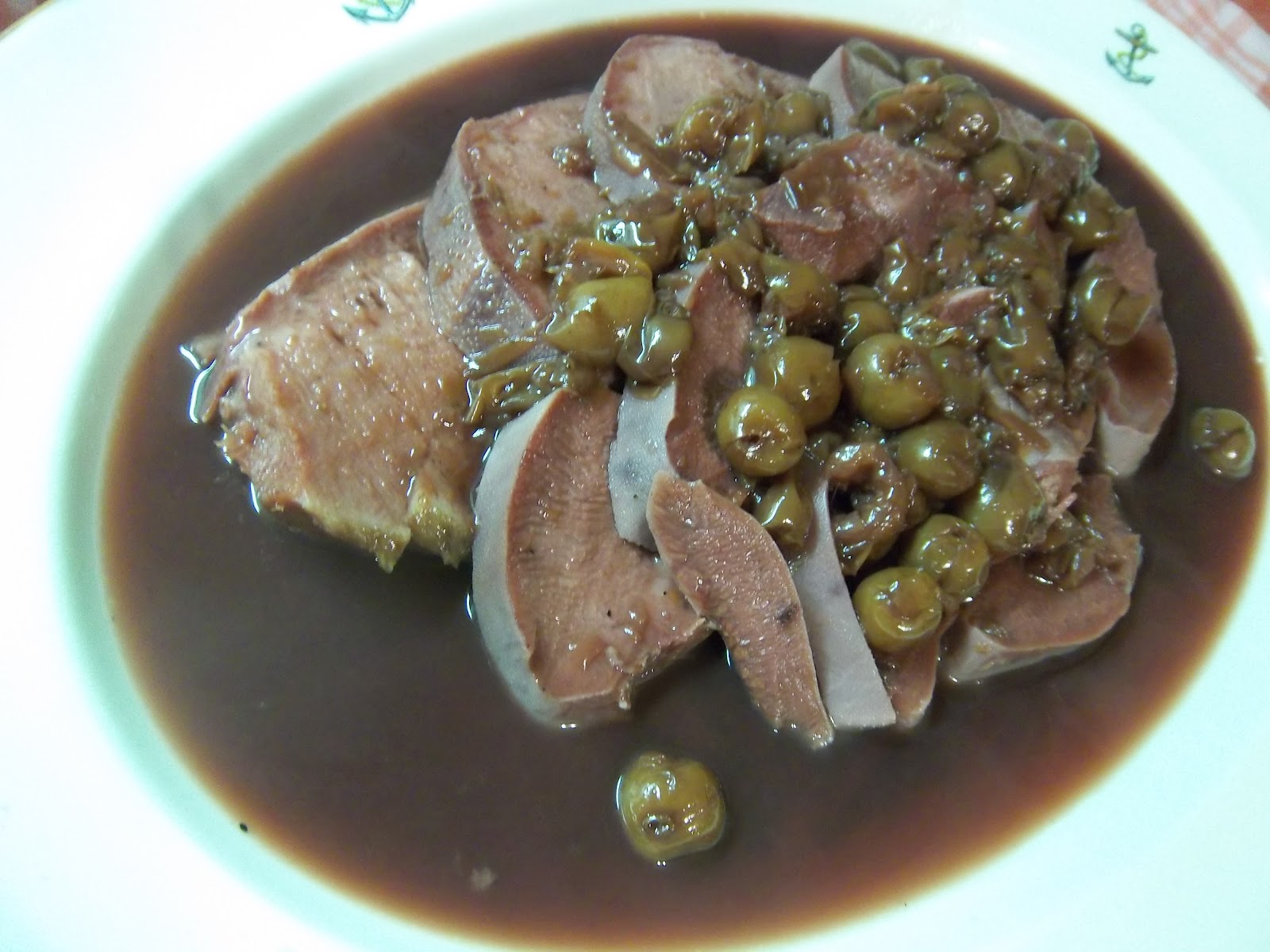
#365 Roast Venison with Norwegian Goat’s Cheese Sauce

Venison is, of course, the king of all game, though being a wild animal, you do get a lot of variation in the tenderness of meat; it can be wonderfully tender or tough as old boots. A good roasting joint for venison is haunch as it is a more tender cut. To tenderise further it is advised to marinade any joint for at least 24 hours.

Colonel Smith Grasping the Hind Legs of a Stag,
Unknown Artist c.1650
It may be the king of game, but many recoil in horror at the thought of eating deer, perhaps it is a little too noble; even when farmed meat was heavily rationed during World War II, many people still would not eat or buy it, even though game wasn’t rationed at all! Well it is important to know that we would still have to cull many hundreds every year as they decimate forests by eating away the bark from trees. Deer (fortunately for us, unfortunately for them) have to be managed; now what a waste it would be if they were just all incinerated! A similar thing goes on in some African countries where elephant conservation has been a little too effective.
I have eaten venison many times, but I had never roasted it myself, so I was very glad that Jane walks you through the whole process; she, in turn, taking advice from a lady called Anne Willan who wrote a book called The Complete Guide to Cookery.
That said, there seems to be a major typo or two in this recipe and I can’t work out for sure what it is supposed to say; apparently this serves up to 2, yet a 5 pound joint is required. Now I like my food, but even 5 pounds – or indeed 2 ½ pounds – of meat in a sitting is bit too much. Look closer and, according to the recipe, the metric equivalent of 5 pounds is ½ a kilo, which is approximately one pound. How many does it serve? Up to 2? 12? 20? what!? If anyone has an earlier reprint or edition, have a quick look and see what it says and then leave me a little comment. I thank you in advance.
I made this for Christmas dinner #2 in Manchester, and I took the recipe to mean 5 pounds and not half a kilogram. I managed to get a second dinner the next day as well as several rounds of venison sandwiches and 5 pies for the freezer – that beats turkey leftovers any day.
Well it is up to you to decide how many this serves, but reckon it’s about 10 people as venison is a rich meat (as is the sauce).
The first thing to do is marinade your five pounds of venison, the amount of time depends on the size of your joint and if your deer was truly wild or ‘farmed’. If truly wild and/or large, a cooked marinade is required, if small or farmed – and therefore already quite tender – an uncooked marinade. The joint can sit in the uncooked marinade for around 24 hours, and in the cooked marinade up to 3 days. For me, time was an issue so it went for the uncooked marinade.
To make the uncooked marinade slice up a carrot, two onions and a stick of celeryand place in a bowl or tub along with a bottle of red wine – ‘respectable and decent rather than glorious’ – four fluid ounces of red wine vinegar, a bouquet garni, a dozen of both peppercorns(lightly crushed) and allspice berries, and finally four fluid ounces of olive oil.
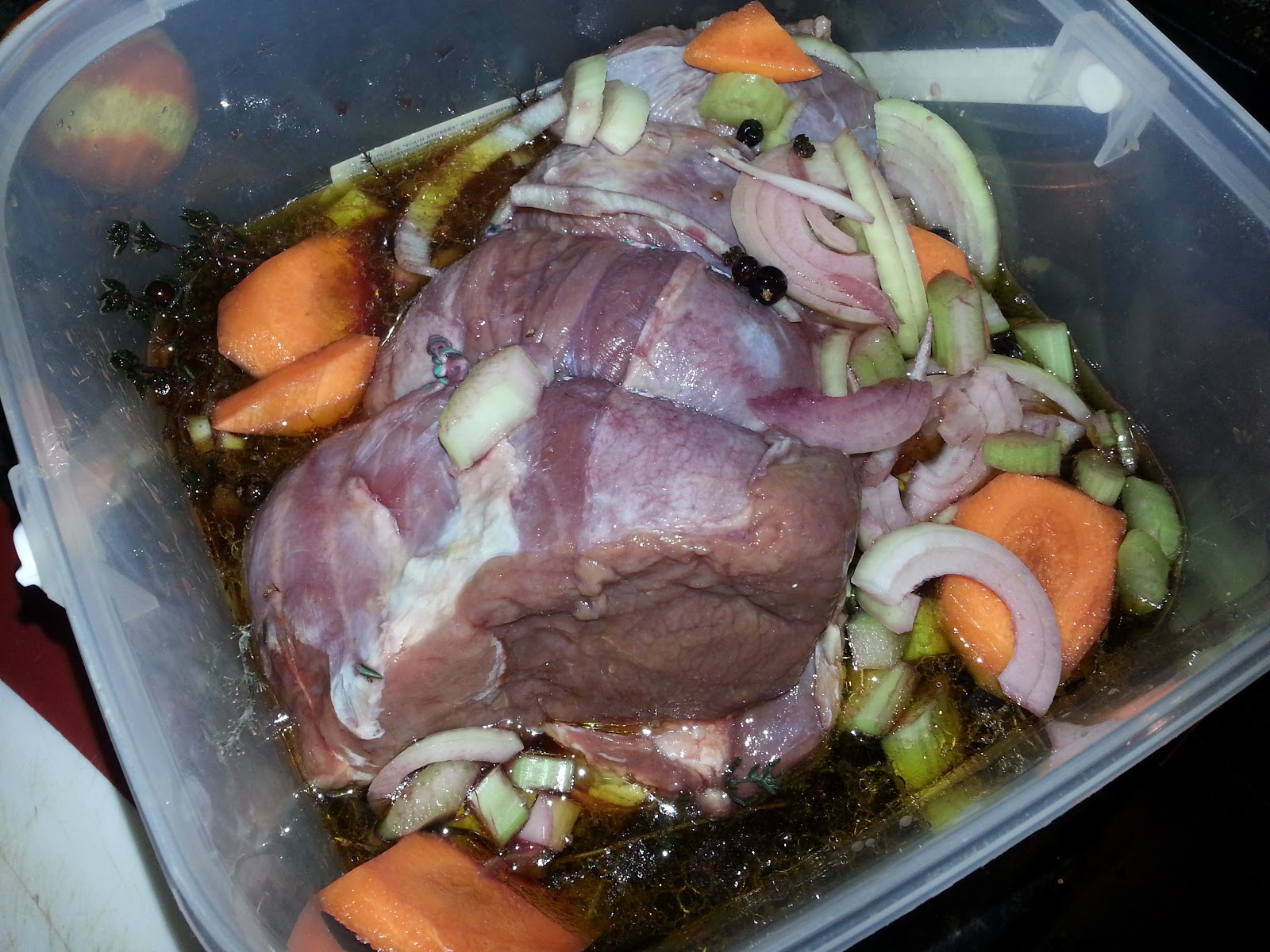
For the cooked marinade, stew the veg in half the olive oil and then add the rest of the ingredients mentioned above and then simmer for 20 minutes before stirring in the rest of the oil. Allow to cool.
After the meat has marinated in its marinade sufficiently, it’s time to roast it. First, preheat the oven to 220⁰C (425⁰F) then remove the meat from the marinade and pat it dry; the meat should feel wonderfully tender and it should have picked up a wonderful purple hue from its soaking in all that red wine. Don’t throw away the marinade.
Calculate the cooking time: you need to allow 10 to 15 minutes per pound for rare meat or 18 minutes per pound for pink medium meat. I won’t give you the time for well-done – you don’t deserve to eat this beast you are going to cremate it! Spread the joint liberally with butter; the lean meat needs all the help it can get to prevent it drying out. Indeed, I went a bit further by wrapping the buttered joint in caul fat. Place the meat on a rack over a roasting tin and pop it in the oven.
After 15 minutes, pour 8 fluid ounces of the marinade and 4 fluid ounces of beefor game stock into the roasting tin and turn down the heat to 180⁰C (350⁰F) for the remainder of the roasting time. Baste it regularly and add extra marinade or stock should the pan become dry. You can, if you fancy, spread 2 generous tablespoons of soured cream over the joint when the heat is turned down.
If you want to be precise about your cooking you can test the temperature with a thermometer: you want a temperature of 51⁰C (125⁰F) for rare and a temperature of 60⁰C for medium-cooked meat. When ready, keep the meat warm, covered in foil to rest for at least 30 minutes whilst you get on the making the cheese sauce.
When I first saw this recipe I thought that Lady Grigson had gone a little too far by including a Norwegian cheese in one of her recipes; however after tasting the cheese in question – gjetost – I was instantly converted. In short, to make it, goat’s cheese goes through a similar process that sweetened condensed milk goes through when it is boiled to produce caramel. The resulting cheese is a rich brown cheese that is a sweet as it is sharp. I got hold of some at Cheese Hamlet, Didsbury, Manchester, but you can get it on the internet very easily.
Carefully skim the roasting juices of their fat and pour them into a pan along with 8 fluid ounces of beef or game stock, boil and reduce to a good concentrated state, add more of the reserved marinade so that you really concentrate flavour – “it should be really strong” says Jane. Stir in 8 fluid ounces of crème fraîche or 4 fluid ounces each of double and soured cream and then season with the gjetost cheese and rowan jelly or peppered redcurrant jelly (or indeed normal redcurrant jelly well-seasoned with black pepper). Cut a little under an ounce of the cheese into thin slices and melt into the sauce, then the jelly. Taste and add more of either if you like and season with salt and pepper. You are left with a brown, sticky, richly-flavoured sauce.
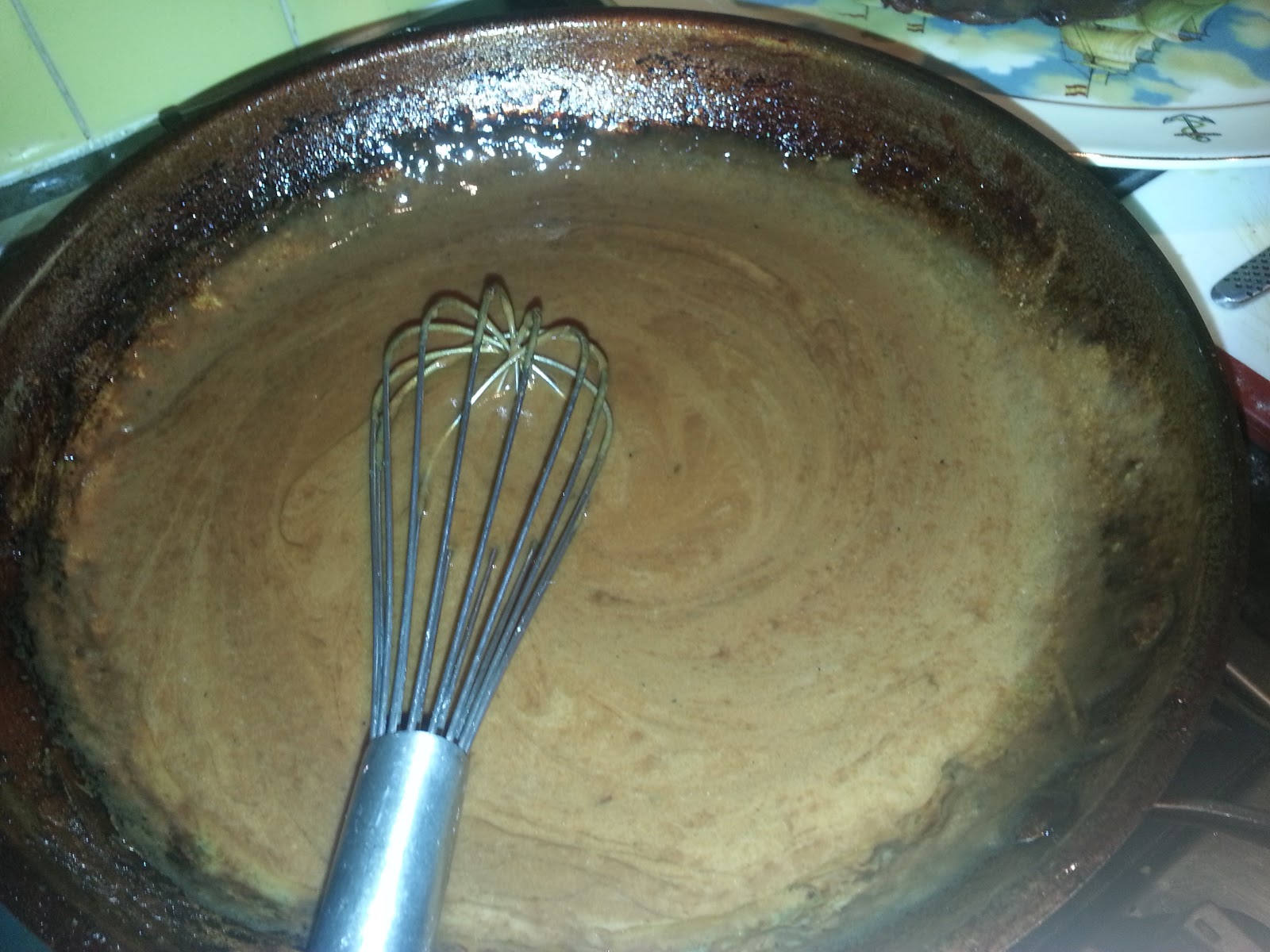
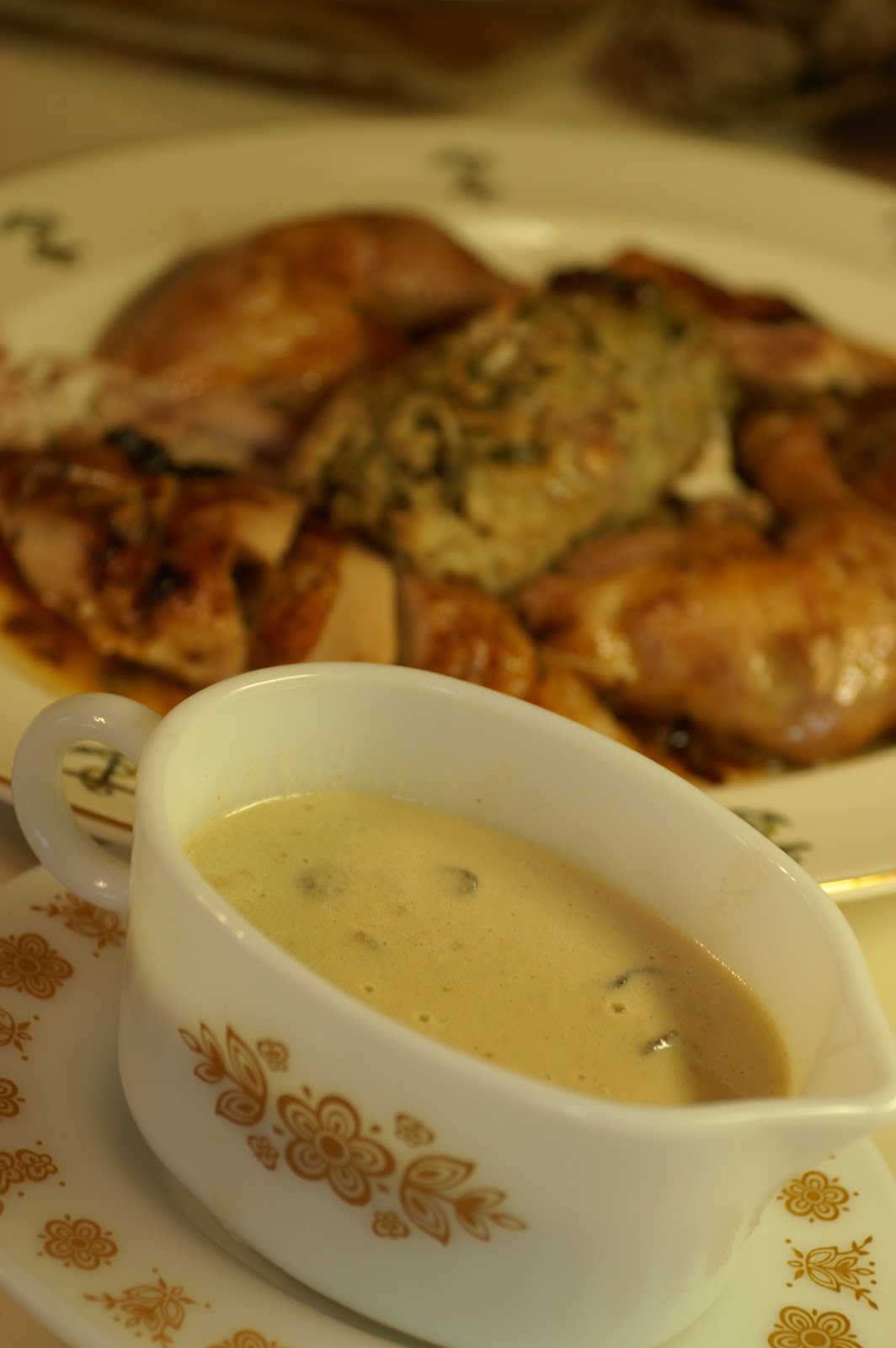
Put the joint on a serving dish and cover it with some sauce before carving it. Serve the rest of the sauce in a separate jug or sauceboat.
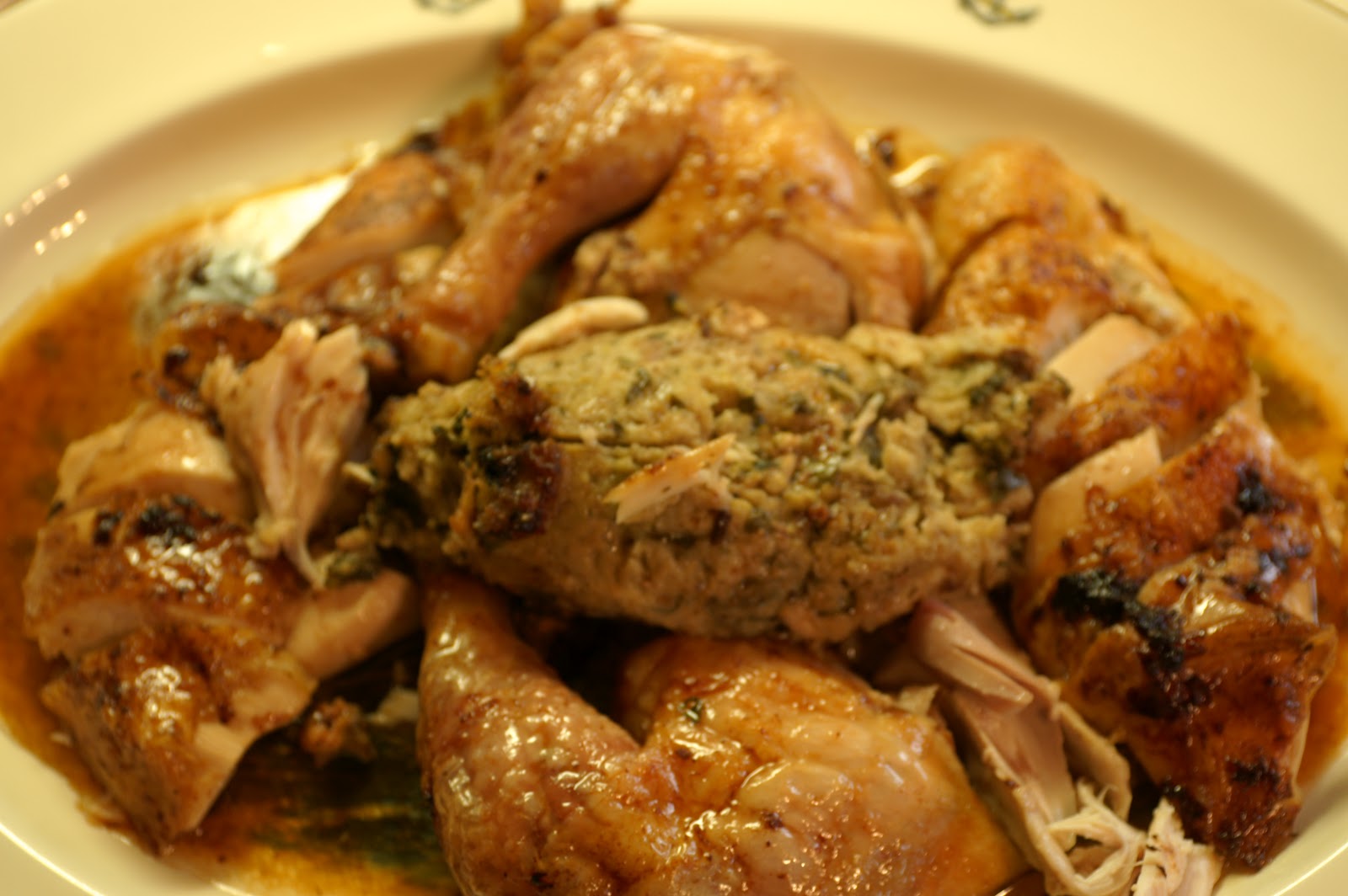
#365 Roast Venison with Norwegian Goat’s Cheese Sauce. This was a most delicious recipe – the haunch of venison was beautifully tender with just the right amount of gaminess; you can see that the marinade had really done its work. I was worried that the strong, thick, dark brown sauce would over-power things, but it went so, so well. Now large joints of venison are not exactly what you are likely to be roasting for Sunday dinner, but if you do happen upon one and buy it, then this is the one recipe to try! 9.5/10.
 

#364 Spiced Apple Sauce

Did you all have a lovely Christmas? I did – certainly when it came to the food. This one is just a quickie, the next post will be more exciting…
On the big day my family decided to go for a roast goose and #180 Roast Beef. Can you believe there is no recipe for roast goose in English Food? There is, however, a recipe for an apple sauce to go with it…
This apple recipe is the final one of four for apple sauce in English Food (for all four, click here), the others have been a little hit and miss; would it be the best? I had high hopes there’s robust spices, brown sugar and sharp Bramley apples and wine vinegar.
Aside from goose, this sauce goes well with salt pork and duck.
Start off by peeling, coring and roughly chopping a pound of Bramley apples. Melt an ounce of butter in a saucepan then add two tablespoons each of waterand white wine vinegar before tipping in the apples. Next add your spices; a quarter of a teaspoon each of grated nutmeg, cinnamon and black pepper. Simmer until the apples form a purée. Add more water if need be. Lastly, sweeten the sauce with about an ounce of soft dark brown sugar. Add more spices if you like (I found the amount suggested perfect).
 
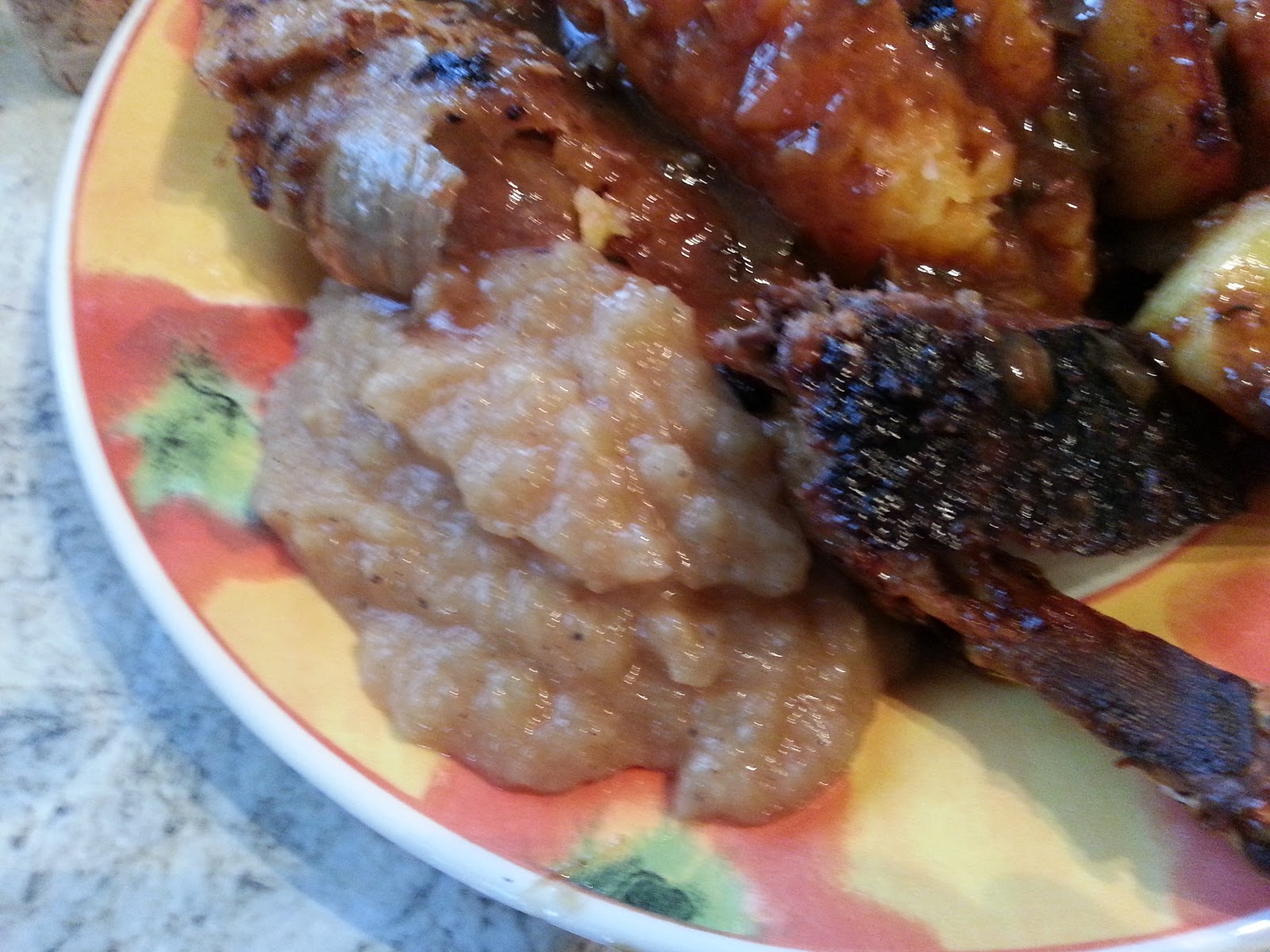
#364 Spiced Apple Sauce. This was, by far, the best of all the apple sauces. The sauce was a great mix of tart and sweet and there was such an interesting mix of spices that were warming yet totally savoury. The dash of vinegar enhanced the flavours and gave it a moreish tang that really complemented the rich goose. This will be the only recipe for apple sauce I will use from now on. 9.5/10.

#360 Apple Sauce I

This is the third of four different apple sauces in English Food. I have had to wait to cook this one as it requires a quince.

Quince are an ancient fruit, related to apples and pears, that is not seen around too much these days as they have fallen out of favour somewhat and also have a very short season. They have also suffered because of the terrible wet weather we’ve had this year.

Apple sauce should not be reserved just for roast pork, by the way, use it with sausages, black pudding, chicken, turkey, goose or game. It is a surprisingly versatile condiment.

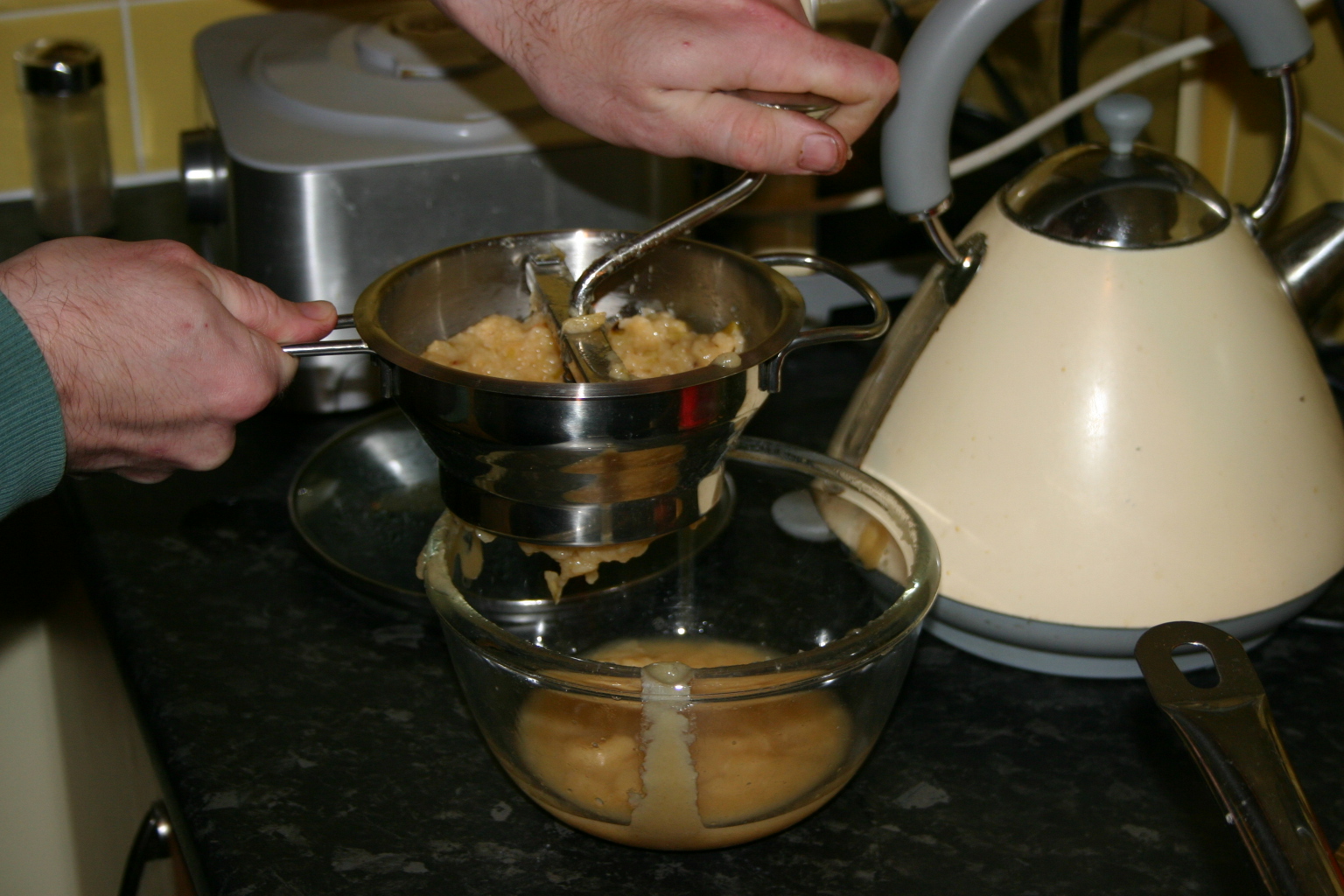
Chop up 8 ounces of Bramley’s seedling apples (those in North America, use Mackintosh apples) and slice one ‘small or moderate quince’. You don’t need to peel or core the fruit, but I would scrub off the naturally-occurring fluff from the skin of the quince, should it have some. Place in a pan along with ¼ pint of water, a heaped tablespoon of sugar (omit if using Mackintosh apples) and a pared strip of lemon peel. Cover and simmer until a puply, then pass through a sieve or mouli-legumes to remove peel &c.

Put back on the heat and stir until it thickens up; you don’t want it ‘sloppy and wet’ as Griggers says. Stir in one ounce of butter and give the finished sauce a healthy seasoning of black pepper.

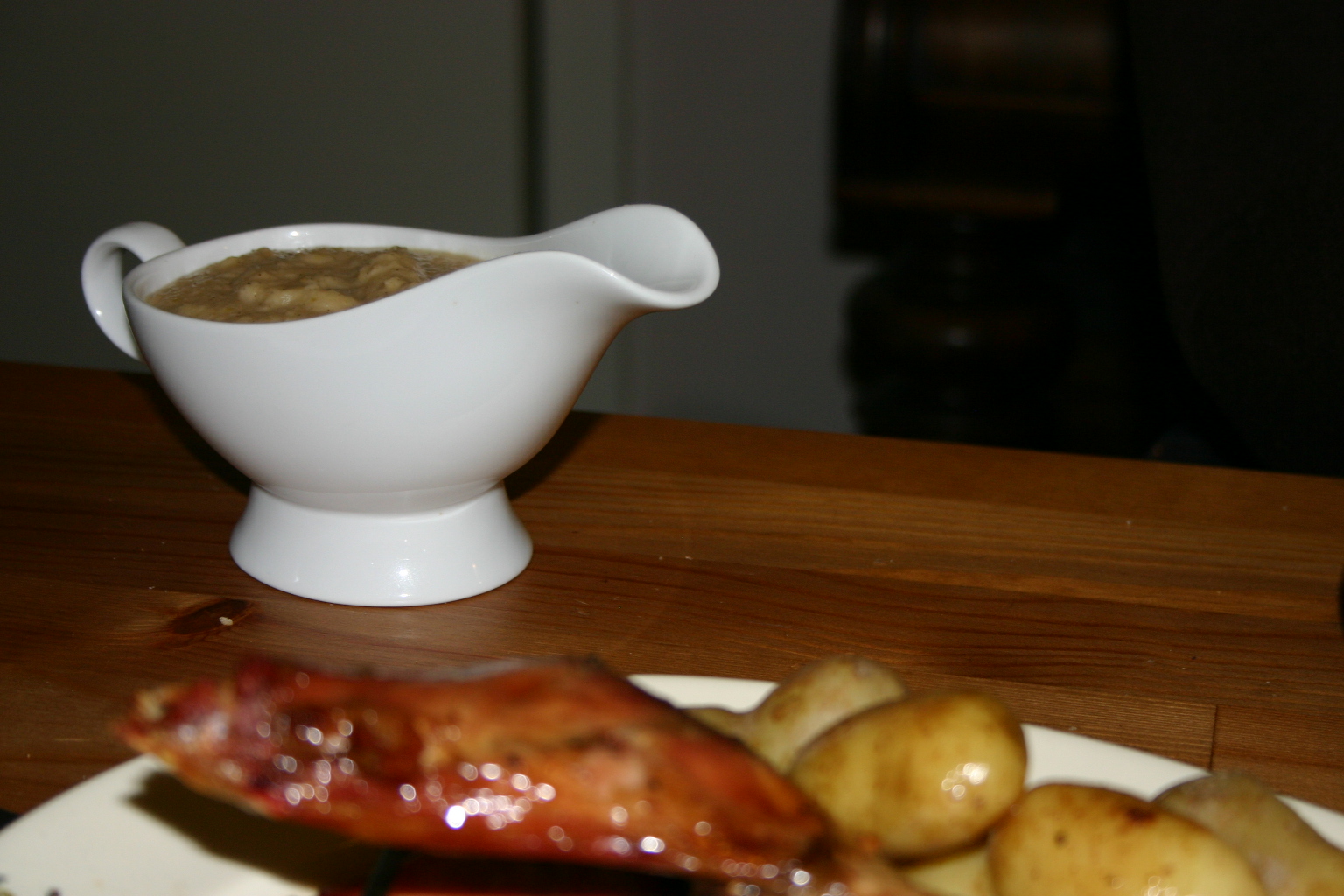
#360 Apple Sauce I. I liked this one very much and ate it with some rabbit which it complemented very well. The quince mellowed the Bramley’s, making them much less tart. Tres bon. 7.5/10.
 

#353 Roast Rack of Lamb with Laverbread

A second post involving the Welsh speciality laverbread; a deep green gelatinous sauce made from well-stewed seaweed known locally as laver (see the previous post). I still had some left over for this recipe which I made for my friend Charlotte – a veteran of my cooking, poor woman – as it was her birthday and luckily she requested lamb.

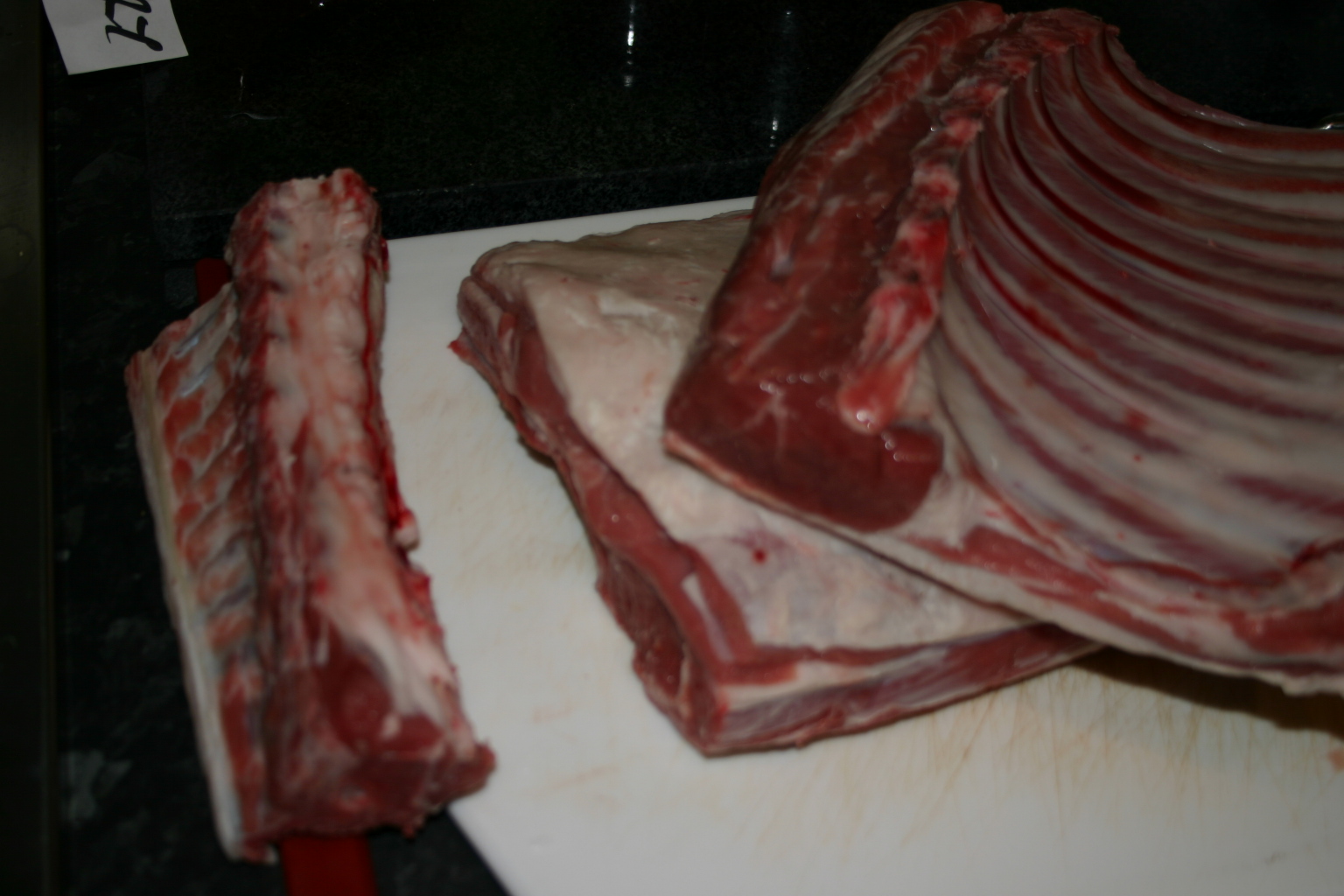
This is a recipe that I couldn’t do when I was in America because what you don’t want are nice pre-butchered racks, but a whole best end of neck. This is the upper part of the back and ribs that sequesters the beautifully tender lamb cutlets. If you can, wait until the lamb are a little older; these muscles don’t do much work so they don’t have as much flavour as, say, leg. Older animals have worked a bit longer so there is some make up in the flavour department. Also, they’re much bigger so you get more meat in your best end of neck.

Anyways, ask the butcher for one best end of neck, then ask him (or her) to split it down the centre, removing the backbone. Take the meat home, including the bones that he removed and you paid for!

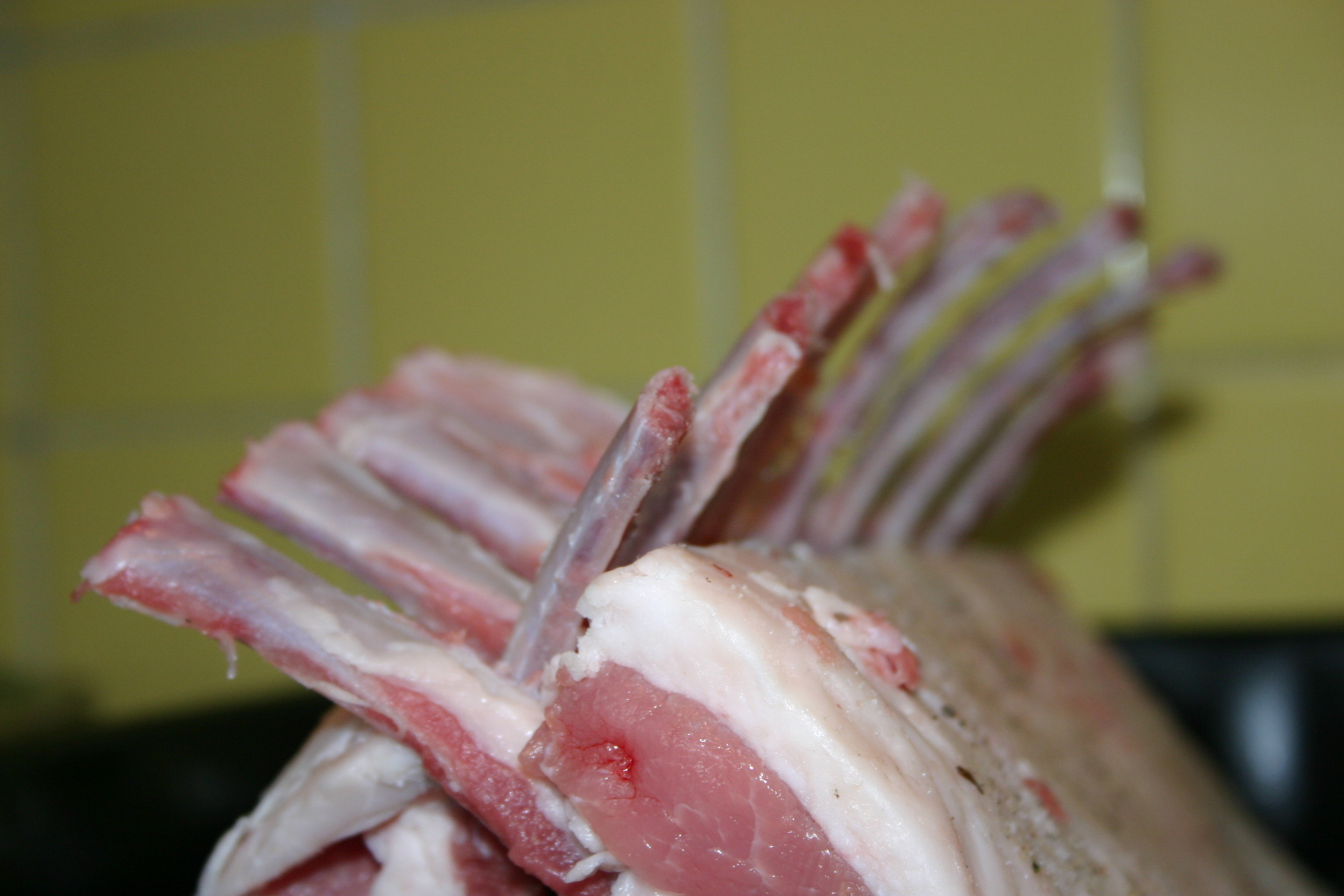
Now prepare the lamb ready for roasting by cutting away any fat and meat from the ribs, don’t go too far down – maybe and inch and a half at the wider end and an inch at the thin end.


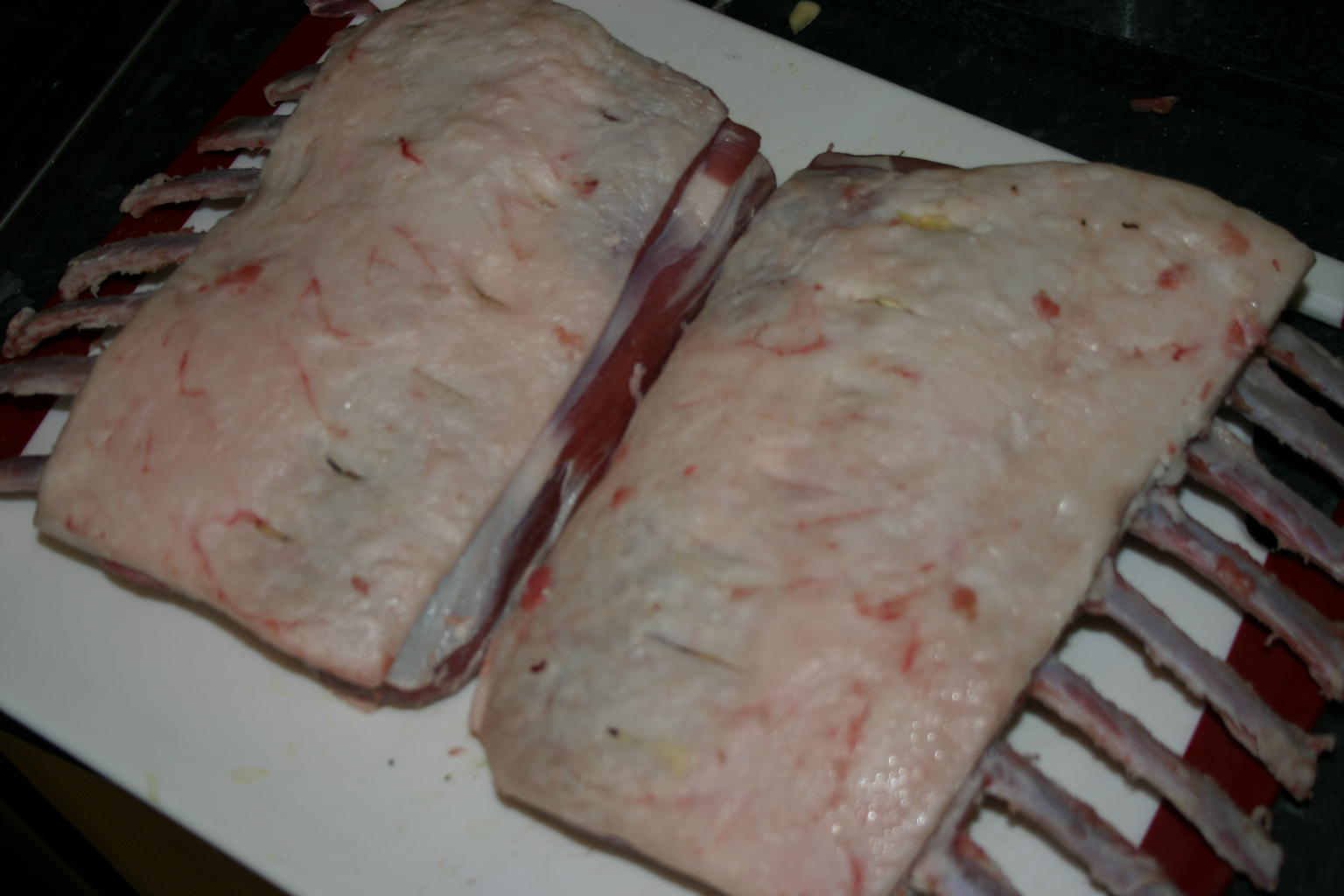
You should end up with two racks that can be propped up against each other with bones interlacing like fingers. Now take a clove of garlic and slice it thinly. Make holes down the fatty sides of the racks with a very sharp pointy knife and slot a sliver of garlic in each one. Season the lamb all over and put it in a roasting tin so that the ribs criss-cross.


Cover the exposed bones with a piece of foil so that they do not burn. Roast the lamb for 45 minutes at 220C (425F) for pink lamb, going up to 60 minutes for well-done (though cooking it well done would be a travesty in my humble opinion).

Next, make the gravy by first making a lamb stock from the bones and trimmings (this bit can be done well in advance). Add them to a saucepan with a carrot and a tomato both roughly chopped, a pint of beef stock and some salt and pepper. Bring to a simmer and let it tick away for a couple of hours or more if you can. Pass through a sieve and cool. Remove the floating fat and return to the pan with a glass of white wine or vermouth. Reduce until you get a well-flavoured stock. Lastly, slake a tablespoon of cornflour with a little cold water and stir into the stock to produce a nice gravy.

When the lamb is ready, take it out of the oven and cover with foil and let it rest whilst you make the laverbread sauce. Melt 3 ounces of butter in a saucepan and add a pound of laverbread. When hot, stir I the juice of 1 lemonand 2 oranges. Season with salt and pepper.

Place the lamb in the centre of a serving dish, pouring any juices in the gravy. Pour the sauce around the edges of the lamb and then decorate with thinly sliced oranges.

#353 Roast Rack of Lamb with Laverbread. Well the meat (which I cooked pink) was absolutely delicious, tender and well-flavoured. I wasn’t sure about the laverbread at first – it not being cut by the bland oatmeal like in the previous recipe – but I soon got used to it. The taste is very strong, but when eaten with the lamb you can see why they are eaten together so often. The gravy too was excellent; mild and not in the slightest bit greasy as lamb gravy can so often be. 9/10


#349 Poor Knights of Windsor (1937)

The Poor Knights of Windsor was a charity set up centuries ago by Edward III soon after he created the Order of the Garter in the mid-14th century to give alms to old and retired soldiers that had lived to protect the country. Quite ahead of his time, I think. How this dessert came to be called Poor Knights of Windsor I do not know. The earliest mention of this dessert I can find crops up in Elizabeth Cleland’s 1755 book A new and easy method of cookery.

Edward III creates the Order of the Garter

Almost 2 years ago I made the 1420 version of this dessert, also called pain perdu. This medieval recipe gave reasonably precise instructions to make it (see here for that post). Perhaps surprisingly, this more recent recipe from Ambrose Heath’s 1937 book Good Sweets, is rather scant on instruction:
Cut a French roll in slices and soak them in sherry. Then dip them in beaten yolks of eggs and fry them. Make a sauce of butter, sherry and sugar to serve with them.

Brevity is obviously his middle name. Here’s what I did…

First I took some of Jane’s advice and that was to use not just any old French roll, but a nice, rich brioche (like it wouldn’t be rich enough without!?). Although brioche wasn’t around much in the 1970s it is widely available these days.

I beat a couple of egg yolks with a little water just to make them easier to work with. I took a slice of brioche and sprinkled it liberally with dry sherry, then dipped it in the egg yolks and fried them on a moderate heat in a frying pan with butter. I kept the poor knights warm in a low oven whilst I got on with making the sherry sauce.

I melted 2 ounces of butter slowly in a small saucepan, then I turned up the heat and stirred in a tablespoon of sugar.  When it had dissolved and was bubbling away, I added 2 tablespoons of dry sherry and that was it! Very simple indeed.

I served up the poor knights with a little of the buttery sauce drizzled over them.

#349 Poor Knights of Windsor (1937). It’s not very often that I make a recipe from the book just for myself, but  this one I did. I thought it would be awful – I don’t usually like alcohol in desserts, but I was so, so wrong! It wasn’t as rich or as heady as I expected, the secret was to make the sauce very sweet and to liberally sprinkle the brioche with the sherry, rather than soak it. Very good 7/10.

#347 Sawce Noyre for Roast Capon

This recipe for black sauce was popular all over Europe in the Middle Ages with many variations and alternative names like sauce infernal. They all use fried and ground livers as a base. In England it was served up with roast meat; capon in this case was used as were various game birds. Other countries used other additional flurries such as Parma ham, dried ceps, onions or garlic and spread it on toast or bread.

A banquet in the Middle Ages – this is a French picture
though at the time French and English food was very similar

The recipe comes from a manuscript with the rather clinical name Ashmole MS. 1430, dating unsurprisingly from 1430. To put the year in context, Henry VI of the House of Lancaster is on the Throne; the political bubblings are beginning that led eventually to the War of the Roses around 20 years later. The original hand-scribed pages are kept in the British Museum, but the manuscript did appear in print along with some other 15th century cook books in the late 19th century.

Henry VI, the Child King

Jane doesn’t give the original recipe that she bases hers on, but I did find it online. It is written in Middle English and takes a little deciphering:

Black sauce for capouns y-rostyde.—Take þe Lyuer of̘ capouns, and roste hit wel; take anyse, and grynde parysgingere, and canel, and a litil cruste of̘ brede, and grynde hit̘ weƚƚ aƚƚ to-gedre; tempre hit up wiþ verious, and þe grece of the capon, þanne boile it̘ and serue forþe.

I translate it as:

Take the livers of capons, and roast them well; take aniseed, ground ginger, and cinnamon, and a little crust of bread, and grind it well all together; temper it up with verjuice and the fat of the capon, then boil and serve forth.

Going back even further in time to the very first known practical cook book – Forme of Cury – written around 1390 contains a recipe for mallard in black sauce.

I made it to go with roast chicken rather than roast capon and it is best made whilst it is resting so you can skim off the fat from the roasting tin and use it to fry the livers.

Pass a beady eye over a pound of chicken livers, making sure that there are no big gristly bits or little green bile ducts left on them. Heat some chicken fat in a frying pan and add the chicken livers. Make sure that the heat is really high so that the livers brown nicely whilst keeping the insides moist and pink. This should take about 4 minutes in all – though it might be worth poking one of the biggest livers with a slenderly-pointed knife to check that the liver is not still raw. Medium rare is good, but anything less than that could be risky, there are several cases every year of Campylobacter brought about by eating undercooked chicken livers.

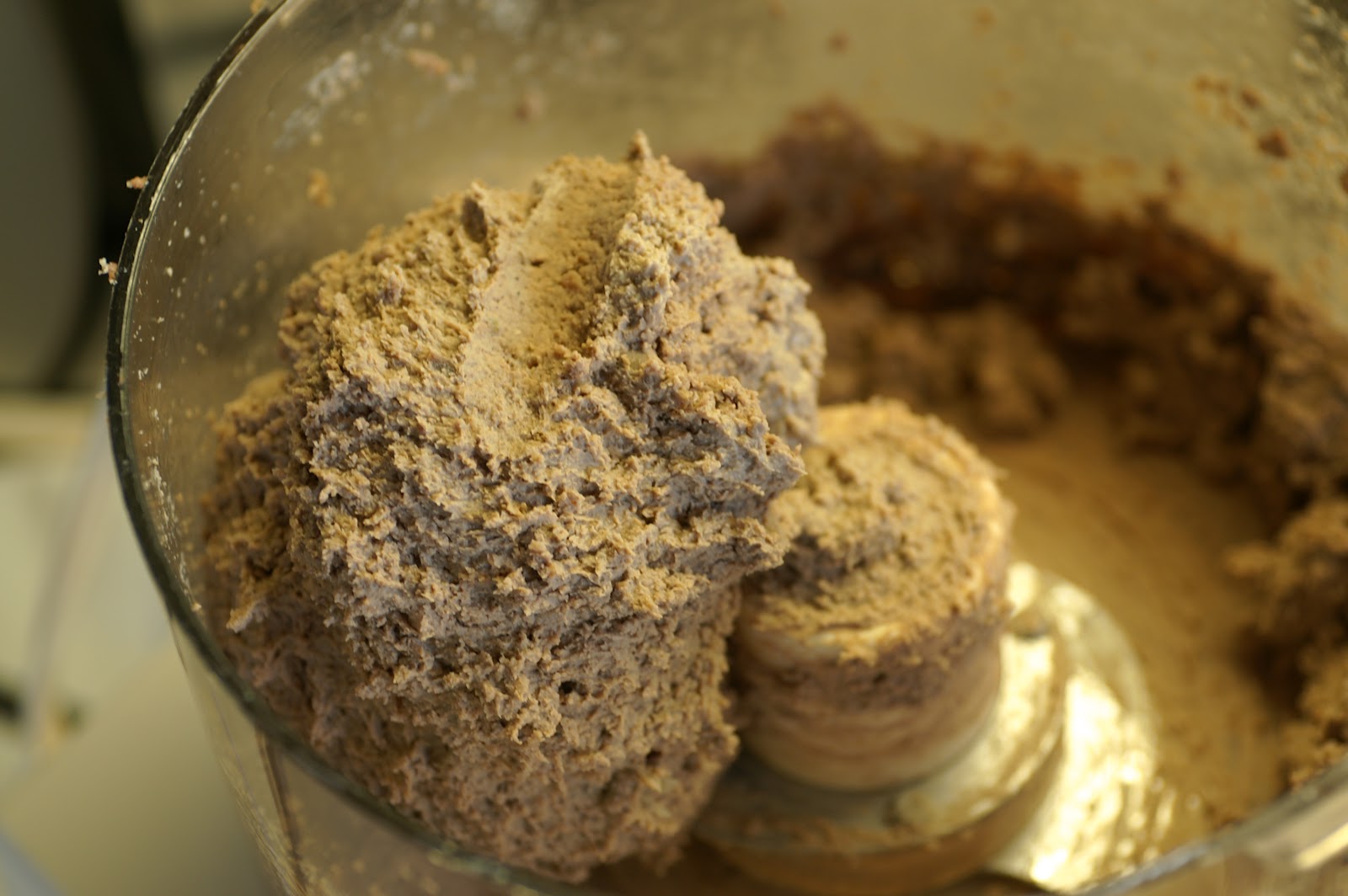
While the livers are frying, demolish a slice of bread, crusts removed, in a food processor; or if you want to keep it old school you can grate it.  Tip in the livers and whizz again – old-schoolers can pass them through a sieve or mincer. Season with the spices: I went with a quarter teaspoon each of ground aniseed (you could also use star anise), ginger and cinnamon. Don’t forget the salt and pepper. Give it a final spin in the food processor.  The sauce will be very thick indeed – it should be a spreadable consistency and not in the least pourable. It looked like a big scoop of liver ice cream – except that it was hot! Strange.

Reheat the sauce and add some cider vinegar or lemon juice to taste (or verjuice like in the original recipe – you can buy it online). If it is really thick, let it down with a little water.

#347 Sawce Noyre for Roast Capon. This was a strange one indeed – it was made up of pure liver and was therefore very rich, though when eaten with a big piece of relatively bland chicken it did balance out better. The best way to eat it, it turned out, was to spread it on some bread as those in mainland Europe did. I liked the spice combination a lot, especially the aniseed; I may use it in chicken liver pâté. Aside from that though, I think this one’s left in the history books! 4/10.

#343 Oyster Stuffing and #344 Oyster Sauce

Oysters are rather expensive in the UK and it can be a rather arduous task shucking them, though in the US, they are much cheaper and often come in tubs preshucked in their own liquor ready for cooking. It is for these reasons that I have been trying to finish all the recipes in English Food that include oysters before I return to England in a little over a month’s time. These two are the final oyster recipes. Not only that, by cooking these recipes I have completed the Stuffings section of the Stuffings, Sauces & Preserves chapter. This might sound impressive, but if you clicked on the link, you’ll have seen that there were only five in the section, and one of those was a sauce!

These are two recipes that were made very popular during the Victorian era that put together shellfish and meat. I have grown to love this combination and so I was looking forward to cooking these. Past recipes on this vein are Chicken with Mussels, Beefsteak Stewed with Oysters as well as the classic Steak, Kidney and Oyster Pudding (and pie!).

I’m not going to blog the two individually because they cannot really be made separately. The first is a light stuffing made with classic stuffing ingredients like breadcrumbs and suet. The second is a simple béchamel sauce flavoured with liquor collected from the oysters used for the stuffing.

The quantities in the recipe are for a large turkey and it requires rather a lot of oysters – 4 to 5 dozen! You can halve the number if you are using the big Atlantic ones; it’s the equivalent to 2 tubs of the preshucked ones you see in supermarkets in the US.

If you do have to shuck your own, I have heard of a method that takes the pain out of it, though I have never tested it myself. Apparently, if you put your cleaned oysters in the freezer flat side facing up, they should magically open their shells after 10 minutes or so. The reason for this is that they go to sleep and relax their strong adductor muscle which you usually have to fight against with the shucking knife when you open them manually.

#343 Oyster Stuffing for Turkey and Other Poultry

Grigson says you can halve the quantities if using a large chicken, which is what I did. Even then, I found I still had plenty left over so I cooked it separately in an ovenproof dish.

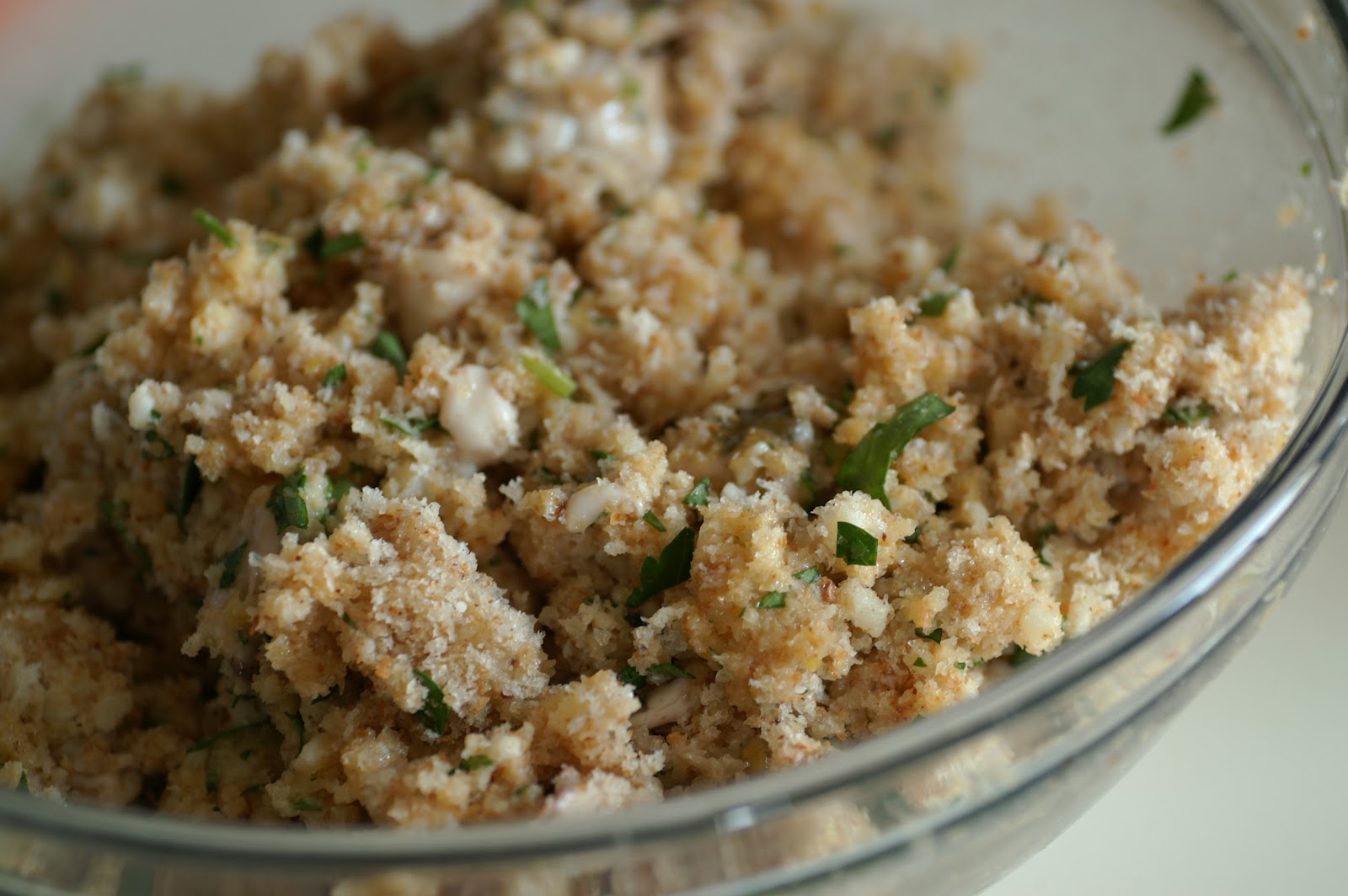
First of all shuck 2 or 3 dozen oysters should you need to; do it over a sieve in a bowl so you can save the liquor for the oyster sauce. Chop the oysters, keeping the pieces large. Mix them into the other stuffing ingredients: 10 ounces of white breadcrumbs made from stale bread, 5 ounces of suet, 2 heaped tablespoons of parsley, the grated rind of a lemon, 2 heaped teaspoons of thyme, ¼ teaspoon of both nutmeg and mace, a good pinch of Cayenne pepper, 2 large beaten eggs, salt and pepper. It is important to mix these together rather loosely; there should be no dry breadcrumbs but at the same time it should not be mixed into to big ball of stodge.

Stuff the cavity of your poultry rather loosely – it will expand as it cooks – and truss the legs with some string. Also stuff it into the neck end too, if the flap of neck skin has been left on your bird, securing it with a couple of short skewers (I have noticed that the neck skin is usually removed in America). Any left over can be baked for thirty minutes in an ovenproof dish.

Roast the bird as normal, taking the total weight including stuffing when calculating the roasting time.

#344 Oyster Sauce

Open 2 dozen oysters, saving the liquor. Make a béchamel sauce by melting 2 ounces of butter in a saucepan then stir in two tablespoons of flour. Mix together with a wooden spoon to make a roux and cook on a medium heat for a couple of minutes. This is a white roux, so don’t let it colour. Add ½ pint of milk in 3 or 4 parts, stirring until the milk is absorbed and the roux smooth before adding more, then stir in ¼ pint of double cream and the reserved oyster liquor from the sauce and stuffing. Simmer for 20 minutes, stirring everyone now and again. This part could be done in advance if you need – make sure you cover the pan with a lid because a thick skin will quickly grow. Chop the oysters into good sized pieces and add them to the sauce. Heat through then season with salt, white pepper, grated nutmeg, Cayenne pepper and lemon juice. The sauce should be the ‘consistency of double cream’, says Griggers.

FYI: Mrs Beeton suggests using left-over oyster sauce in a fish pie which I think is a marvellous idea.

#343 Oyster Stuffing for Turkey and Other Poultry. This was amazing – the oysters were tender and the stuffing was light, the flavour being lifted by the fresh herbs and the aromatic lemon zest.

#344 Oyster Sauce. This was a beautiful white and well-flavoured sauce mildly spiced with a wonderful iodine tang from all that oyster liquor. Absolutely delicious.

I can’t score these separately as they would never be made separately; that said this one is a no-brainer: 10/10.

#342 Halibut with Anchovies

It’s always nice to add an extra species of animal or plant to my list of foods I have eaten. Halibut is reasonably pricey so I have typically avoided them in the fishmonger’s shop. They are also beasts – the largest flatfish to be found in European waters. Check out this one caught off the west coast of Iceland in 2010:

It weighed an impressive 34 stones (that’s 476 pounds, or 220 kilos)!

This recipe is from the Polish novelist Joseph Conrad’s wife. She was and Englishwoman called Jessie George, who obviously had a flair for cookery. She wrote a book called A Handbook of Cookery for a Small House, and I assume (for Grigson doesn’t say) that it is this volume from which the recipe comes.

The recipe includes an unusual ingredient – Patum Peperium, otherwise known as Gentleman’s Relish. It is a highly spiced potted anchovy spread, and was a Victorian invention – click here for a link to the other blog for more information on this delicious savory.

This will serve 3 or 4 people, depending upon the size of your piece of halibut, which should weigh between 1 and 1 ½ pounds. Try and get hold of a steak, if you can only get fillets buy two pieces and sit them on top of each other. Make the spiced butter by mashing together 4 ounces of softened butter and a very generous heaped teaspoon of Patum Peperium and smear it over the halibut, including the underside. Sprinkle over 6 tablespoons of white breadcrumbs and bake in the oven for 30 minutes at 190⁰C (375⁰F) until the breadcrumbs have browned.

In the meantime make the tomato sauce that accompanies the fish. Peel 8 ounces of tomatoes by cutting through the skins in a cross shape on their undersides. Place in a jug and pour over boiling water. After 1 or 2 minutes, remove the tomatoes and the skin should be easy to peel away. Chop the tomatoes and cook them in a saucepan with a good sized knob of butter. Gently cook until the juices are reduced to just 3 or 4 tablespoons. Season with a teaspoon of Worcester sauce and some salt, pepper and sugar.

Remove the fish from the oven and place on a serving dish, pour the buttery juices into the sauce and spoon it around the fish. Finally, add 6 split anchovy fillets and place on top of the fish in a criss-cross pattern.

Jane suggests serving with matchstick potatoes. She does not let us know how to make them, but luckily I knew anyway: peel some potatoes and cut into 2 or 3 millimetre matchsticks – julienne as the French say – use a food processor or Chinese mandolin to do this (if you don’t have one, then don’t even bother and boil some potatoes in their skins instead). Plunge the potatoes into a roomy bowl of water so you can rinse away the start. Then drain them in a sieve.

Heat up some cooking oil such as sunflower or groundnut. When a piece of bread goes nice and brown in about 30 seconds, it is hot enough to add the potatoes in batches. Fry for 2 or 3 minutes until golden brown, around 180⁰C if you have an electric deep fat fryer or cooking thermometer, then drain on kitchen towels. Salt and serve.

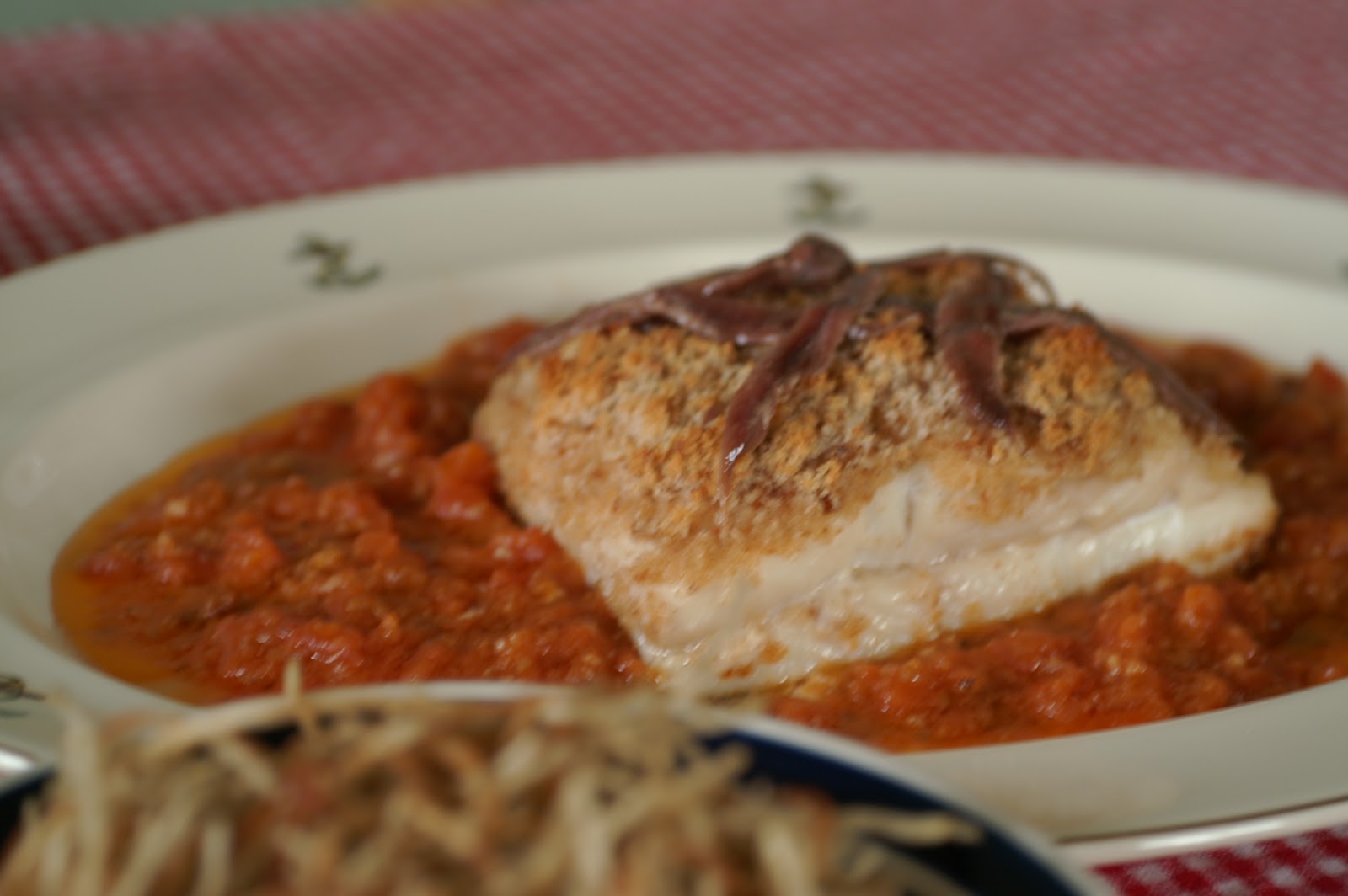
#342 Halibut with Anchovies. What a delicious dish! The fish was firm, flaky and moist and the butter was seasoned with just the right amount of the Patum Peperium. The tomato sauce was rich yet fresh; a great meal for a summer’s evening. 8.5/10.

#335 Boiled Capon with Sugar Peas

It is always interesting to try a new food, and this 1660 recipe from The Accomplisht Cook by Robert May contains two.

The first is a capon, which is a castrated cockerel. Castration causes the capon to grow fat and large and to develop a different flavour to chicken. There are two ways to castrate, or caponise your cock: the first is to remove the testicles surgically, the other is to do it hormonally using oestrogen implants. You don’t them around very often these days, but a good butcher should be able to order you one. I got mine from Straub’s – there was one just sat there in the freezer section, bold as you like. If you want to caponise your own cockerel, click here for instructions!

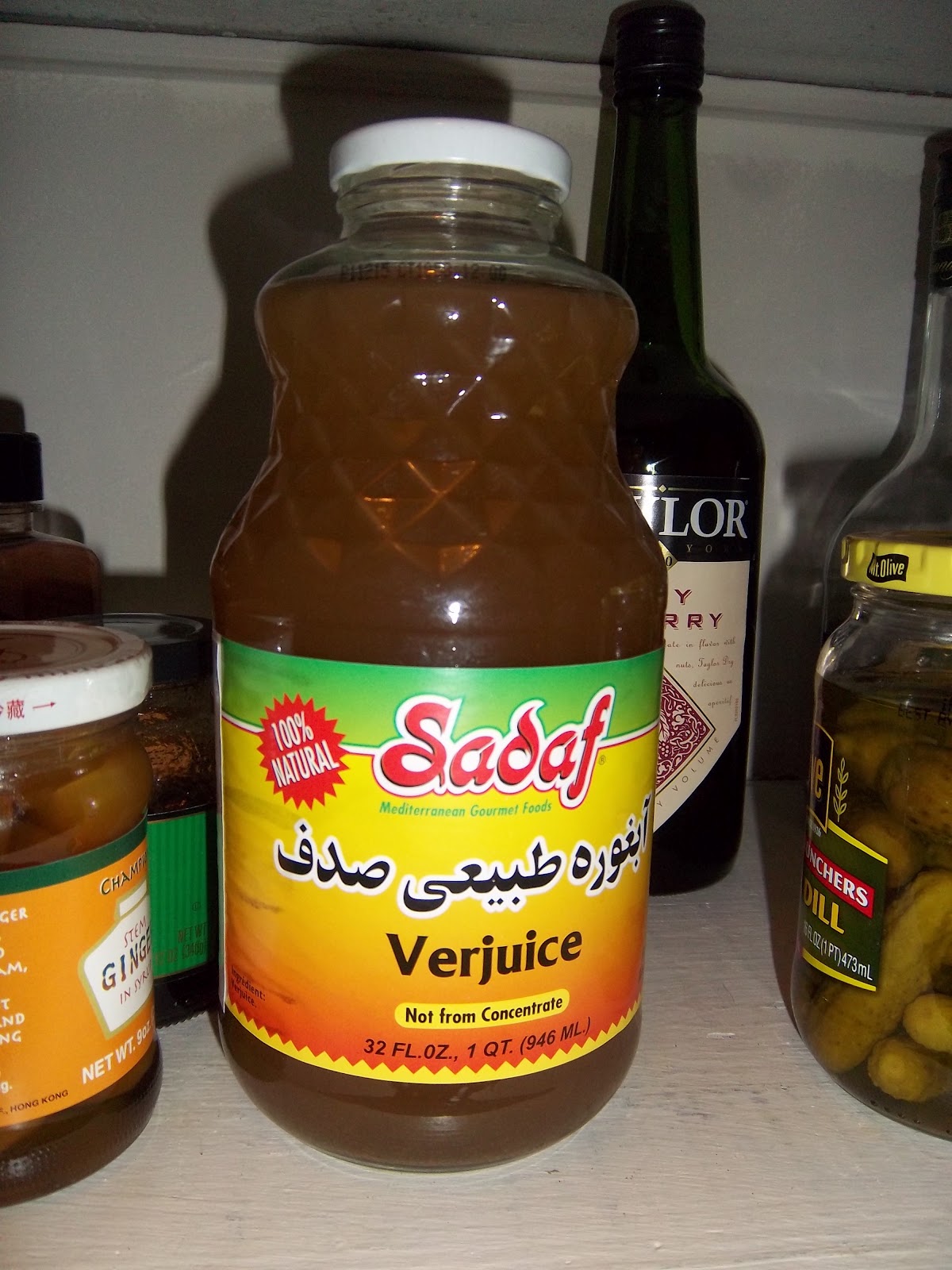
The second new foodstuff is verjuice which is certainly not something you see much these days. Verjuice is made of the juice of either sour apples or sour grapes and was used as an acidulater; lemons were very pricey then, but there was no problem growing sour grapes and apples in Britain! It was particularly popular in the 16th and 17th centuries. I found the verjuice another of my favourites St Louis haunts, Global Foods Market, but I see you can also buy it online.

This recipe asks for the capon to be gently simmered just like the turkey with celery sauce I made last November. It is served with a bread sauce that is seasoned with the verjuice and some oyster liquor, though no oysters are actually used in the recipes themselves. I was hoping I could buy some liquor in jars just as you see clam liquor in the supermarkets. I am sure clam juice would be a good substitution, but as I am cooking the recipes as given, I must use oyster. (It turned out well in the end, as it gave me the perfect excuse to make some angels on horseback – look here for my recipe.)
Also served are some crunchy sippets, made from bread, and sugar peas in a buttery sauce. I was quite surprised that sugar peas were even around in the 17th century, I’ve always considered them a recent addition to our grocer’s shops and allotments.

There are 4 elements to this recipe are not particularly complicated, but they do require a little thought…

The Capon
Place a capon, breast down, in a large stockpot with its giblets.
Add water to just about cover the bird and add the stock herbs: thyme, rosemary, parsley and fennel; then add 2 or 3 blades of mace and season well with salt and pepper. Bring to a boil and simmer exceedingly gently until cooked – my 7 pound capon took about 1 ½ hours – the best way to tell it’s done is to spear the thickest part of the thigh and look for pink juices just you would do for a roast turkey or chicken. Remove the capon to a plate, cover it with foil and let it rest for 20 to 30 minutes. On no account throw away the delicious fennel-scented stock. Freeze it in batches and use as needed for soups, &c.

The Bread Sauce
Start getting the sauce ready around 30 minutes before you think the capon will be ready.  Peel two onions and simmer them, covered, in water until they are tender and then blitz them in a processor or blender, or if you want to be old-school, pass them through a sieve or a mouli-legumes. Stir into the onions around four ounces of fresh breadcrumbs and a few ladlespoons of the capon stock so that you have a nice sauce. Use some oyster liquor and verjuice as well as some salt and pepper to season the sauce.

The Sippets
Sippets are fingers or triangles of bread either fried or baked and were very commonly served under meats to soak up the delicious juices. I made fingers with thickly sliced bread and baked them in a 180C (350F) oven until crisp and crunchy, around 20 minutes. These can be done in advance and warmed through in the oven if you like.

The Sugar Peas
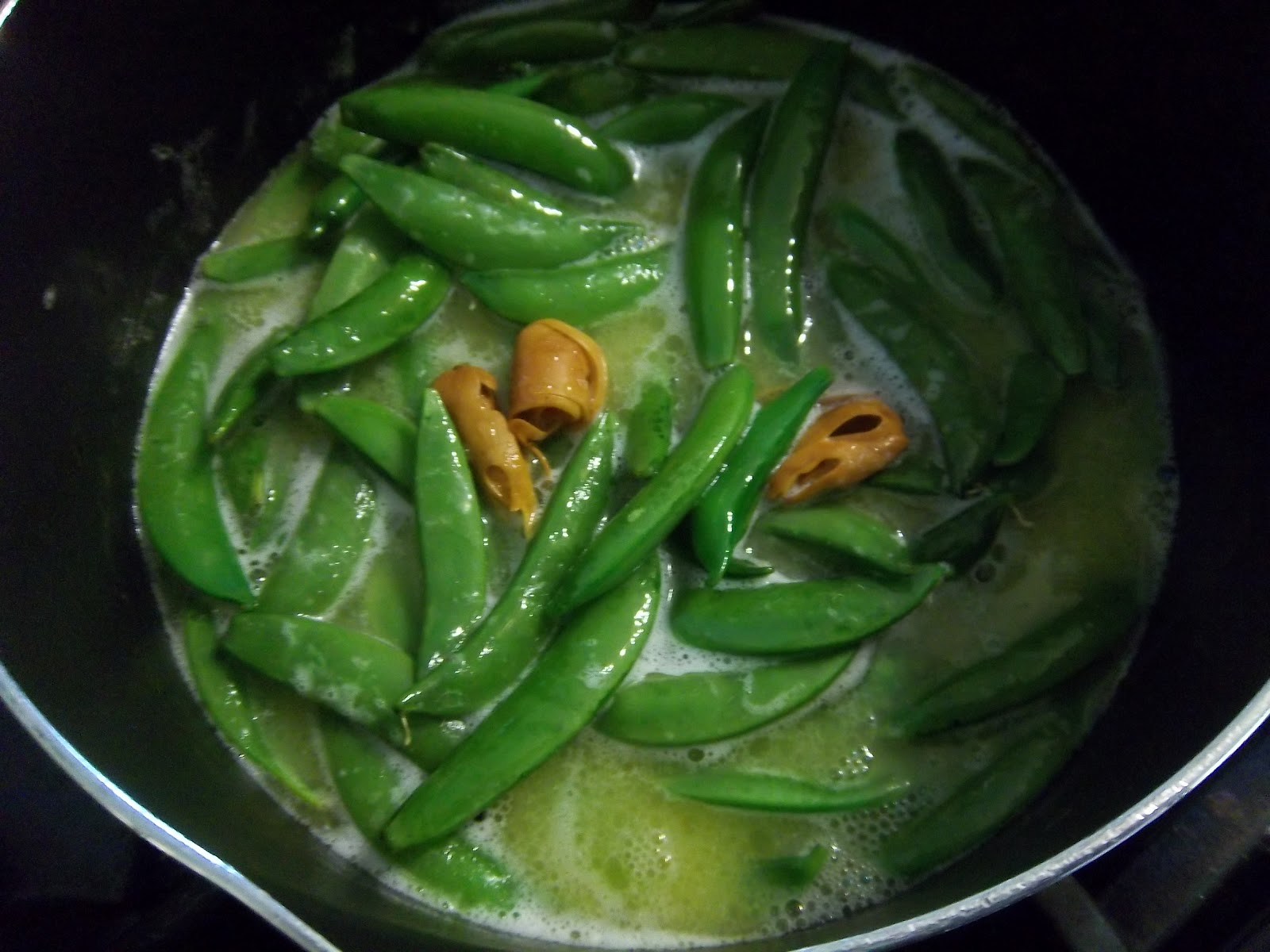
The sugar peas – ‘cods’ – can be prepared whilst the capon is resting. When the cods be but young, string them and pick off the husks. Take 2 or 3 handfuls and but with ½ sweet butter, ¼ pint of water [this equalled 4 fluid ounces back in the day, rather than 5 as it does today in the UK], gross [black] pepper, salt, mace and oil. I used olive oil. Heat all the ingredients aside from the pods in a saucepan, add the pods, cover and stew until tender but with a little bite left in them.
Next, thicken the sauce with 3 or 4 egg yolks that have been beaten with 6 tablespoons of dry sherry (this is one of Jane’s substitutions, the original recipe used sack, a type of sweet ale).

Joint the capon and serve it on the sippets with the peas and their sauce poured over. Serve the bread sauce in a separate bowl or jug.

#335 Boiled Capon with Sugar Peas. After the success of the boiled turkey, I was looking forward to trying this new meat. I was a little disappointed; the meat wasn’t particularly flavourful and it was a little tough. That cockerel must have been doing a lot of strutting around, even without its testicles. As I ate my leftovers over next day or two, I did notice that the flavour of the meat did develop more – it was very turkey-like.  The bread sauce and the peas were very nice however. I think if the capon was swapped for a chicken or turkey, this would be really good. 5.5/10.

#332 Cherry, Plum or Damson Sauce

This is a piquant and rich sauce that is traditionally served with game, venison and tongue that seems very Victorian and English to me – there are many others like it such as Cumberland and venison sauce that came most likely from Germany via the kings (and a queen) of the House of Hanover (Georges I to IV, William IV and Victoria). We don’t really eat much of these sorts of sauces anymore, and we shall see if we should bring them back.
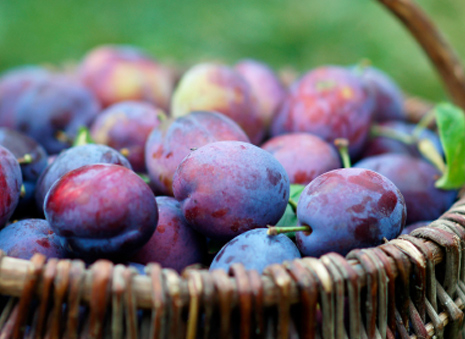
This recipe makes good use of seasonal European fruits: the morello or amarelle cherry (or sour cherry), plums and damsons.
Morello and amarelle cherry trees (Prunus cerasus)are easy to cultivate, and yet it is getting increasingly difficult to find fresh British ones sold at markets, though you can find them frozen or canned pretty easily. The English cherry orchard is a feature of the country declining greatly, mainly because of the competition from cheap imported ones from the Middle East and places like that. The morello cherry was introduced in Britain by the Romans around 50AD and were very popular in Tudor times. Will the English cherry ever return? Because they are so easy to grow and take up little space I shall grow some upon my return to Britain (once I have a garden of course!).

Plums, like the cherry, are of Genus Prunus and there are around 20 species used in several different ways, the species used in Britain is P domestica which is actually a hybrid of two other species. P domestica has been bred into several varieties including my favourite, the greengage.

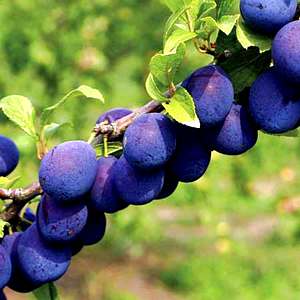
P domesticus also produced the damson, our third fruit for this recipe. Damsons to me are the most English of all three, though I have never tried them before. I shall have to rectify that.

Here is how to make the sauce, whichever Prunus you lay your hands on.

Stone 8 ounces of morello or amarelle cherries, plums or damsons. You can use canned cherries if you want, just make sure they are in water, not syrup. This is what I used. Put the fruit in a saucepan along with ¼ pint each of red wine and port, a tablespoon of sugar, 2 cloves and an inch-long piece of cinnamon. Bring to a boil and simmer for around 10 minutes until the fruit is nice and tender. If you want, you can sieve the damsons or plums if using, but I think it’s better to leave whole. Now add 2 good tablespoons of redcurrant jelly and the juice of 3 oranges and a lemon. Season with black pepper and, off the heat, stir in an ounce of butter. Taste and add more sugar if needed.

I made cherry sauce and served it with hot tongue.
#332 Cherry, Plum or Damson Sauce. I loved this sauce much more than Cumberland sauce. The rich wines and fruit were only just off-set with the sugar, fruit and spice. Very delicious, you could almost eat it on its own. We should certainly bring it back! 8.5/10.