Tag: 5: Meat Poultry and Game
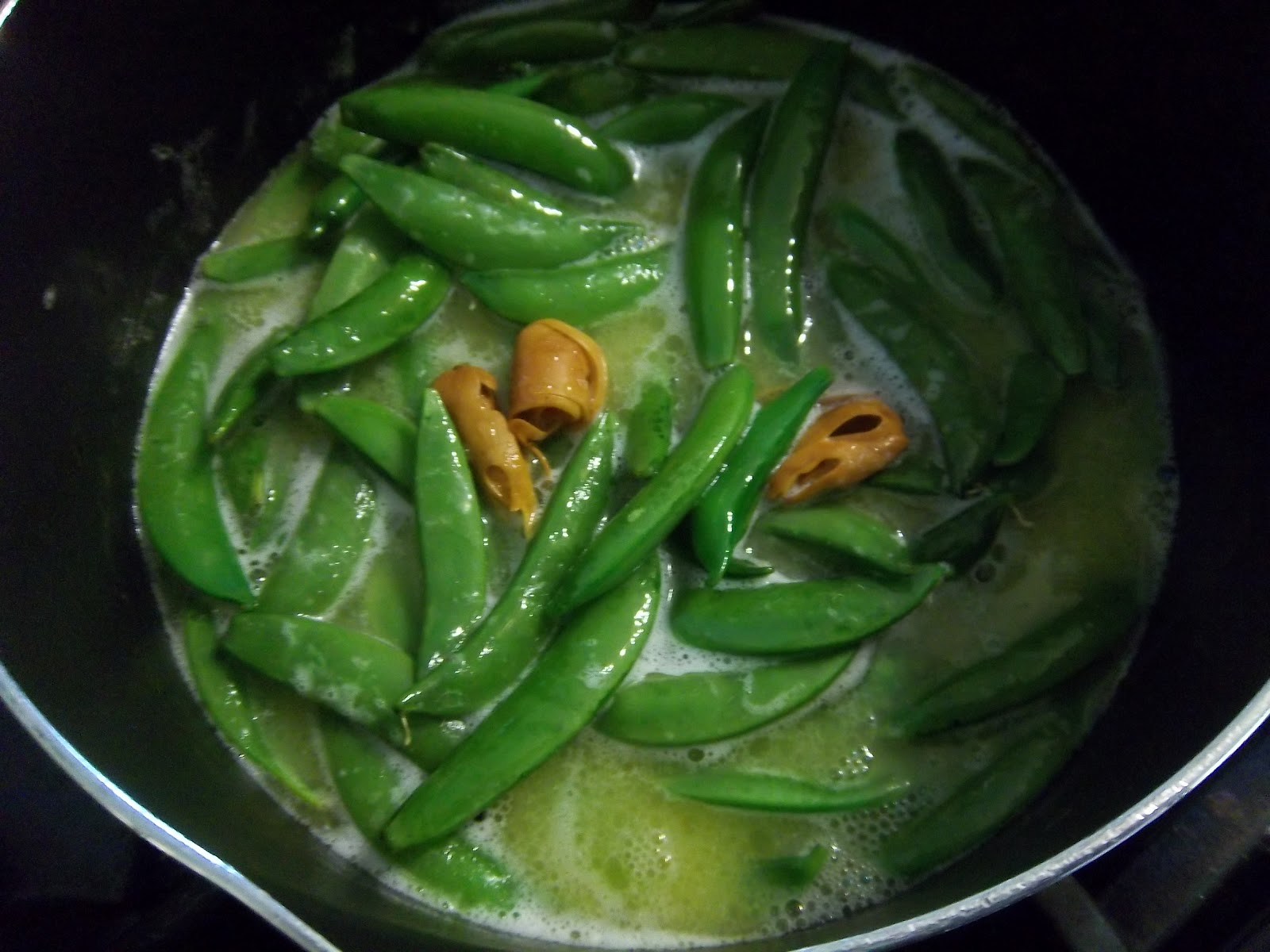
#335 Boiled Capon with Sugar Peas
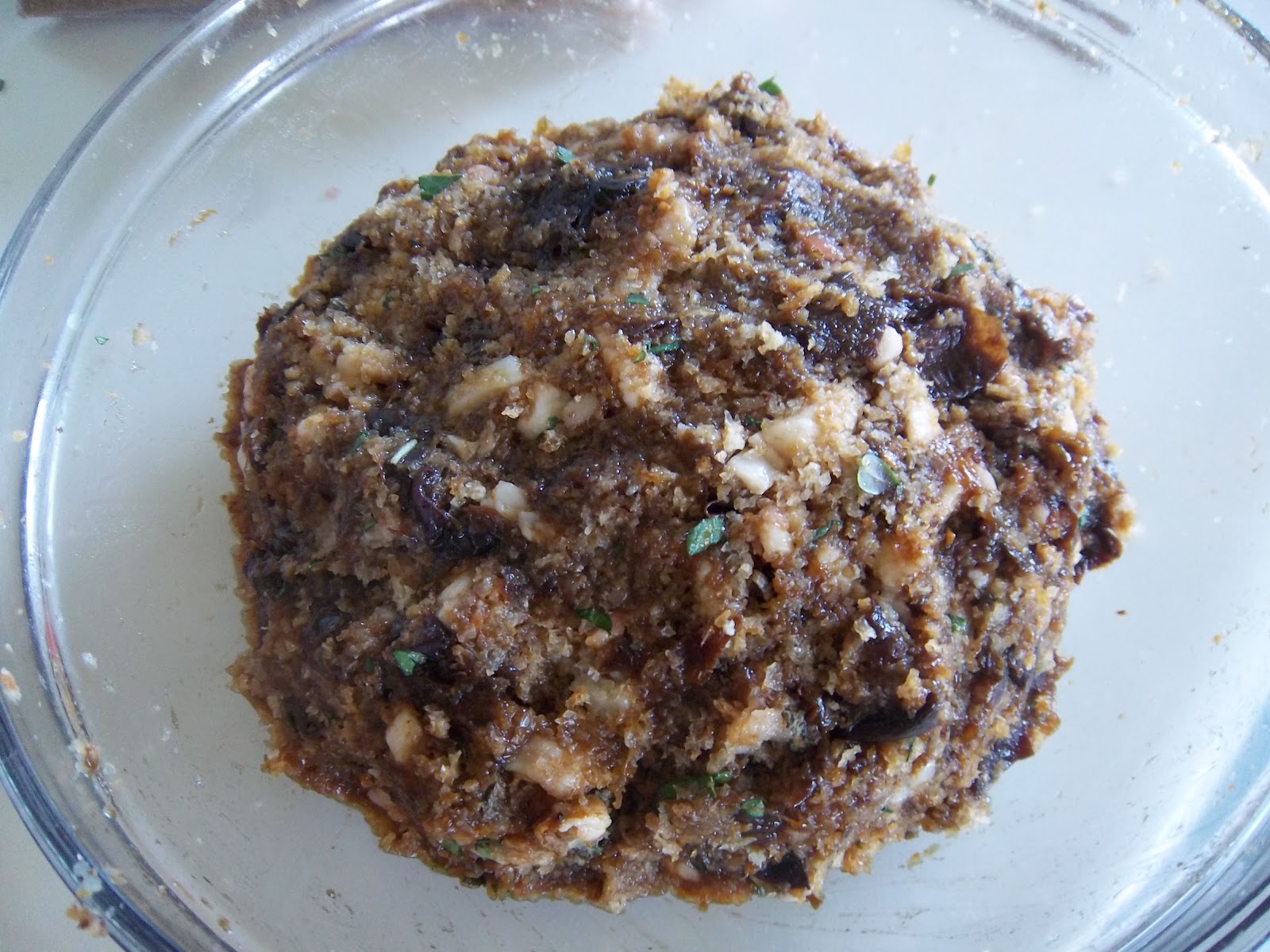
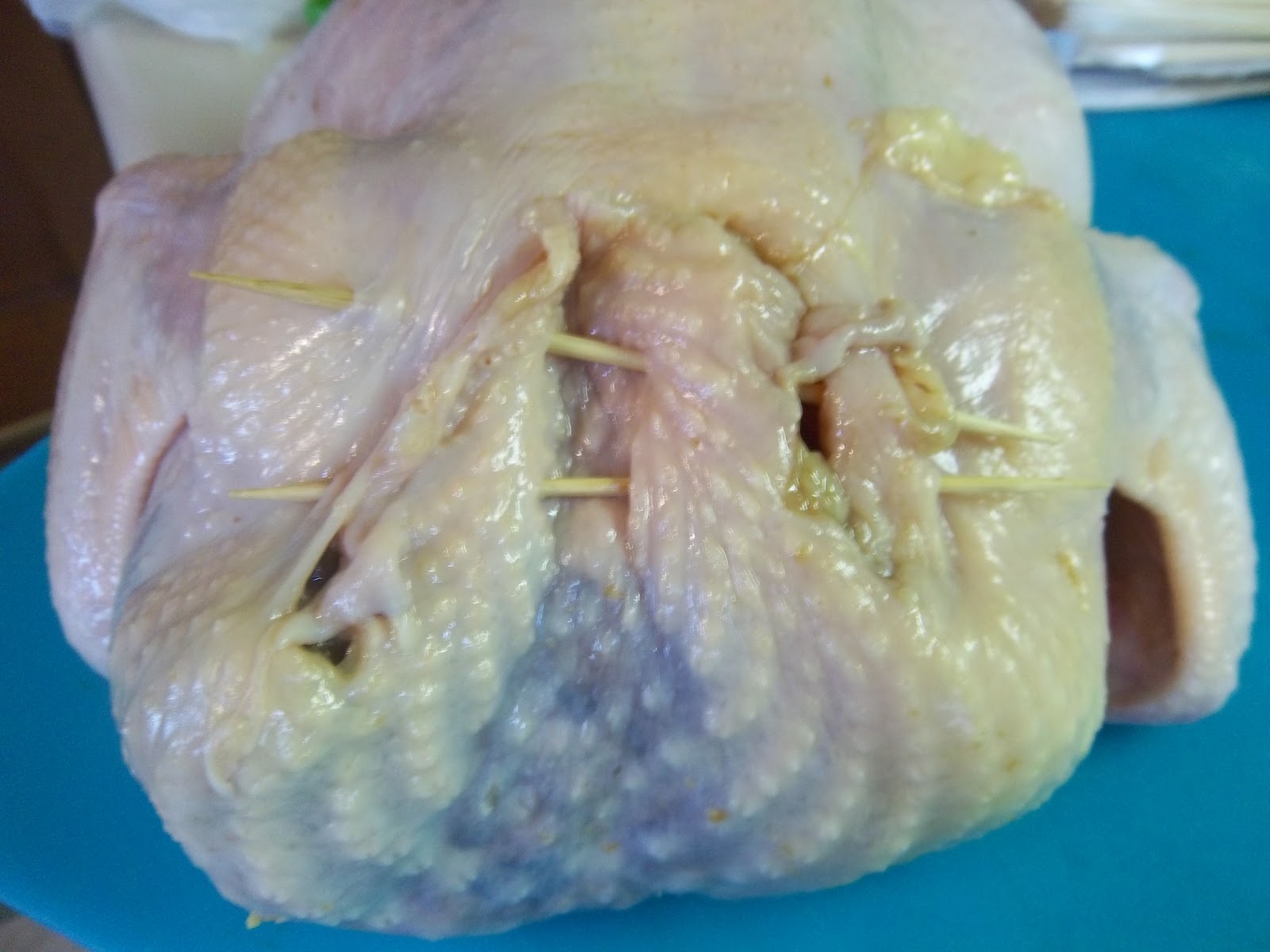
The first is a capon, which is a castrated cockerel. Castration causes the capon to grow fat and large and to develop a different flavour to chicken. There are two ways to castrate, or caponise your cock: the first is to remove the testicles surgically, the other is to do it hormonally using oestrogen implants. You don’t them around very often these days, but a good butcher should be able to order you one. I got mine from Straub’s – there was one just sat there in the freezer section, bold as you like. If you want to caponise your own cockerel, click here for instructions!
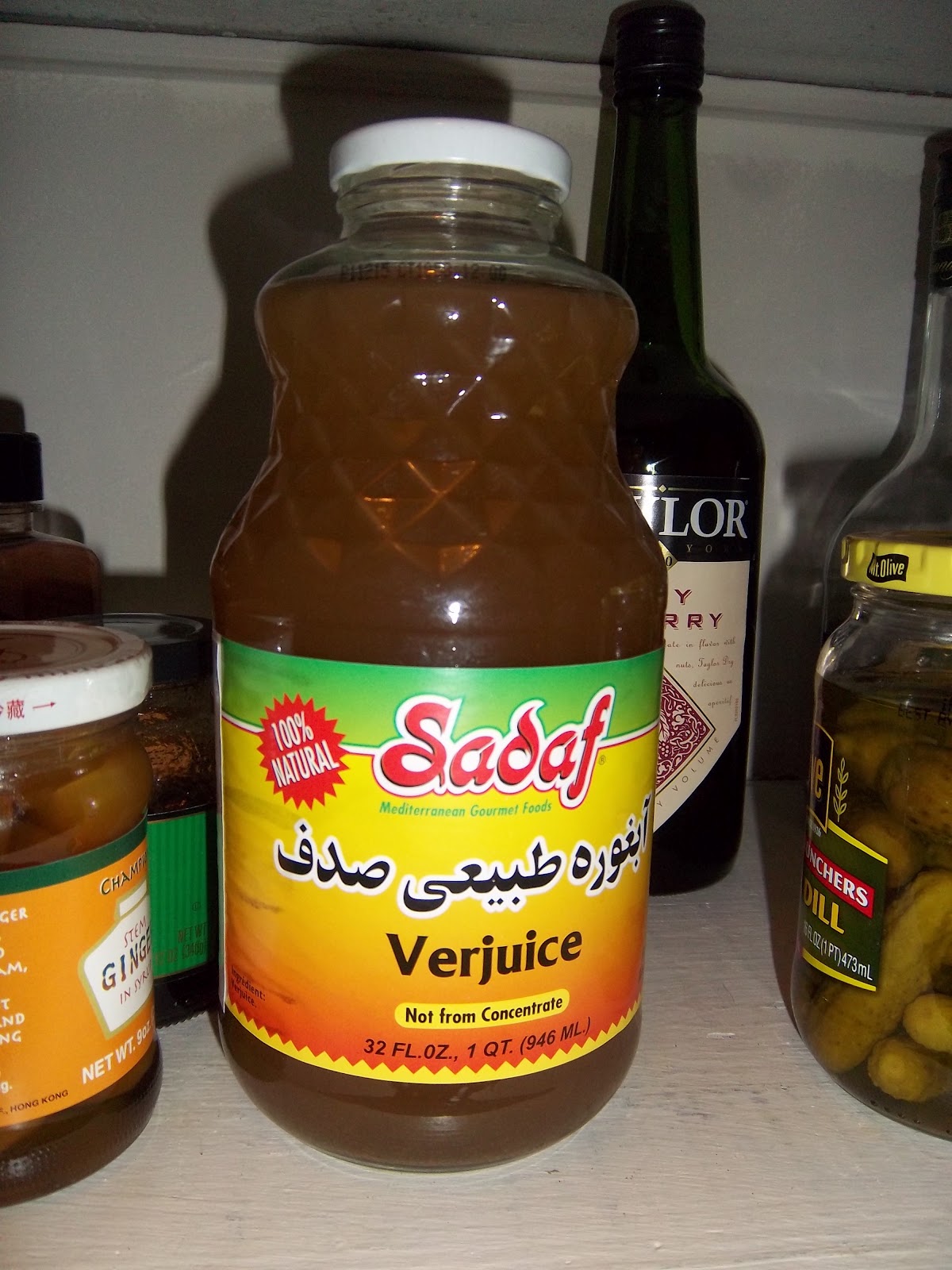
This recipe asks for the capon to be gently simmered just like the turkey with celery sauce I made last November. It is served with a bread sauce that is seasoned with the verjuice and some oyster liquor, though no oysters are actually used in the recipes themselves. I was hoping I could buy some liquor in jars just as you see clam liquor in the supermarkets. I am sure clam juice would be a good substitution, but as I am cooking the recipes as given, I must use oyster. (It turned out well in the end, as it gave me the perfect excuse to make some angels on horseback – look here for my recipe.)
Also served are some crunchy sippets, made from bread, and sugar peas in a buttery sauce. I was quite surprised that sugar peas were even around in the 17th century, I’ve always considered them a recent addition to our grocer’s shops and allotments.
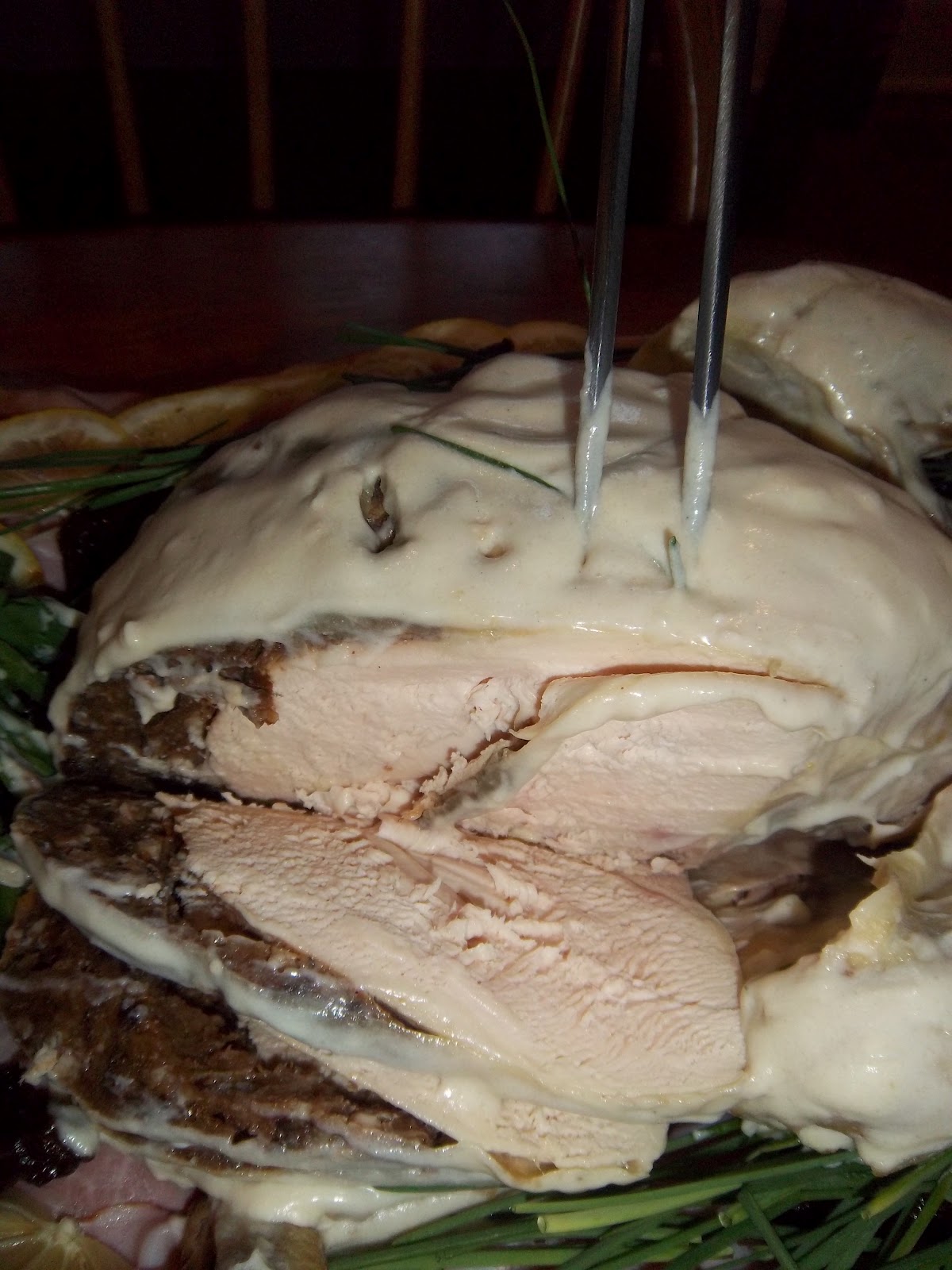
Joint the capon and serve it on the sippets with the peas and their sauce poured over. Serve the bread sauce in a separate bowl or jug.
#335 Boiled Capon with Sugar Peas. After the success of the boiled turkey, I was looking forward to trying this new meat. I was a little disappointed; the meat wasn’t particularly flavourful and it was a little tough. That cockerel must have been doing a lot of strutting around, even without its testicles. As I ate my leftovers over next day or two, I did notice that the flavour of the meat did develop more – it was very turkey-like. The bread sauce and the peas were very nice however. I think if the capon was swapped for a chicken or turkey, this would be really good. 5.5/10.
#334 Salmagundi for a Middle Dish at Supper
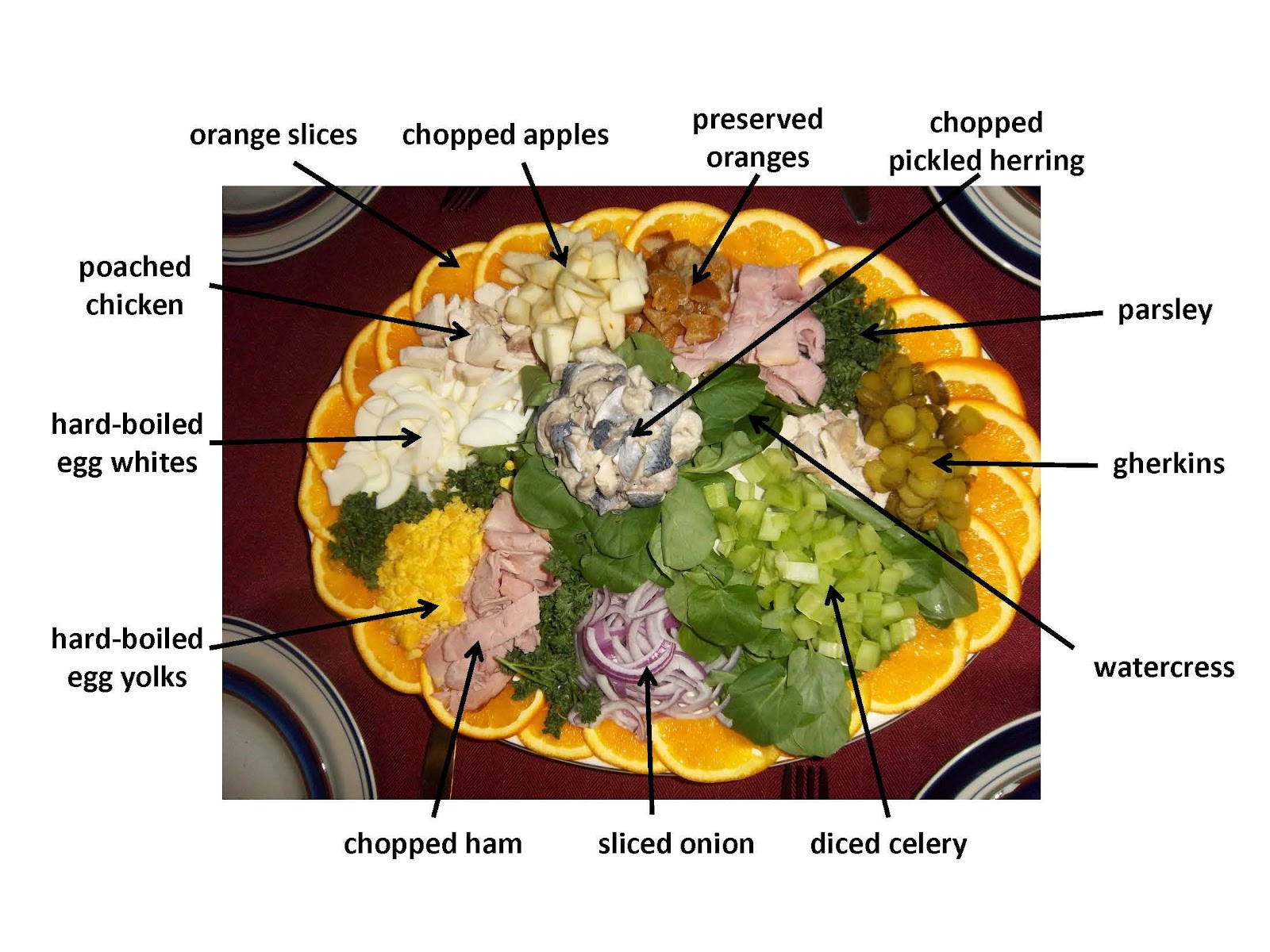
A salmagundi is essentially a rather grand salad which was popular in the 18th Century that has origins in the Elizabethan era. The idea being that the ingredients could be laid out for a ‘Middle Dish’ to produce a large sallet. The Salmagundi originated as a game dish called a salmi (click here for the recipe) popular since Medieval days.
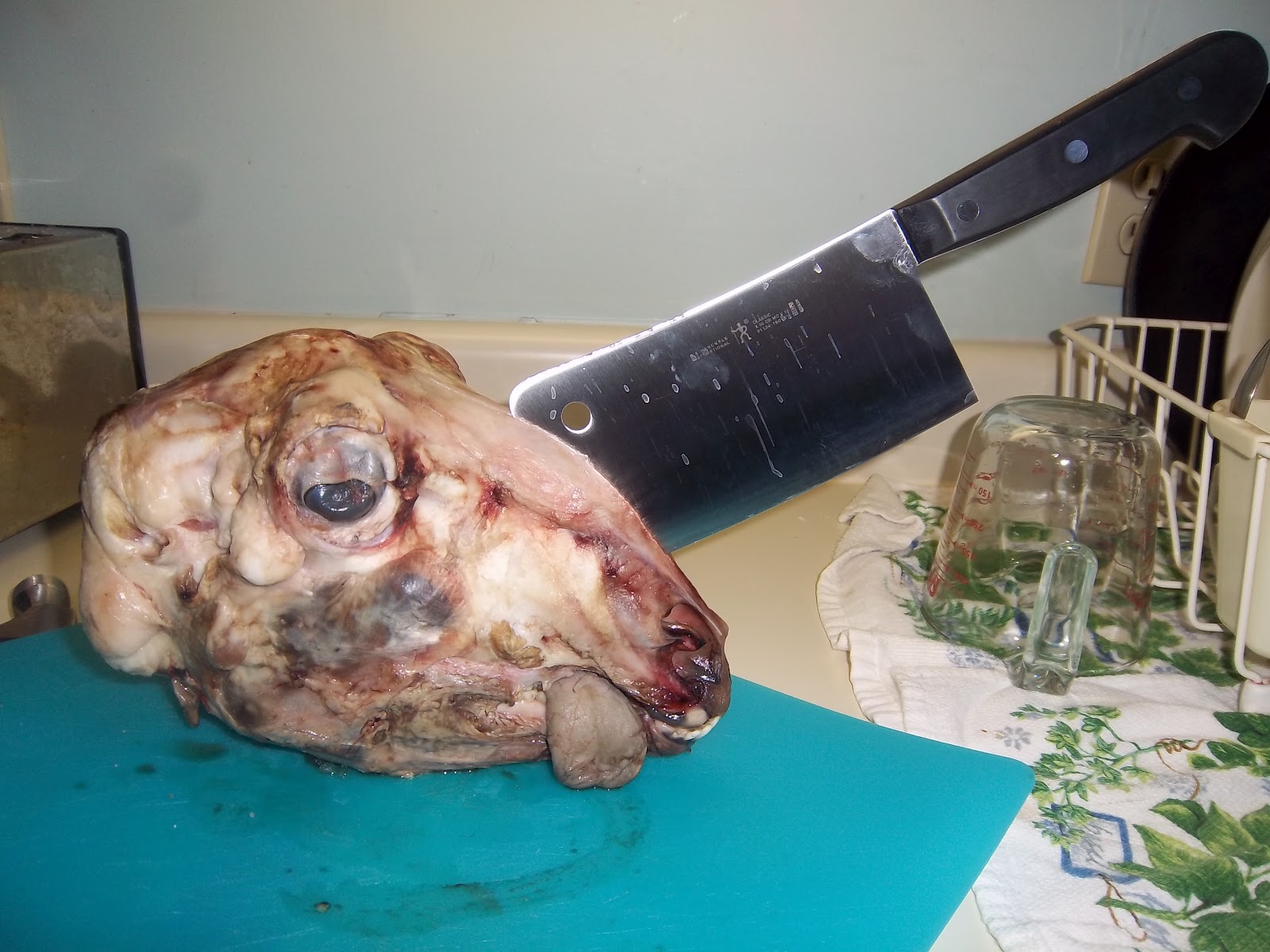
#333 Lamb’s Head and Barley, with Brain Sauce
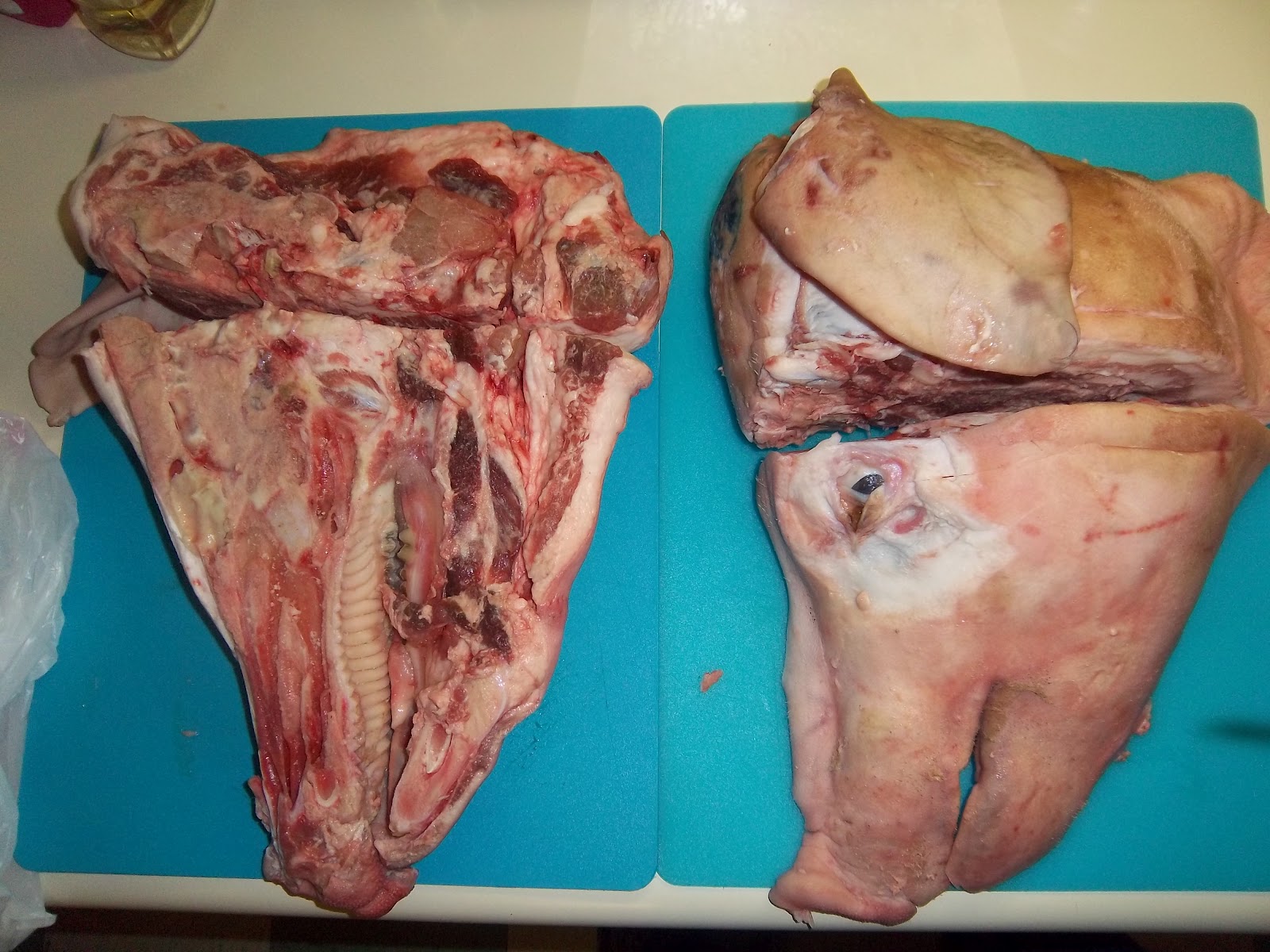
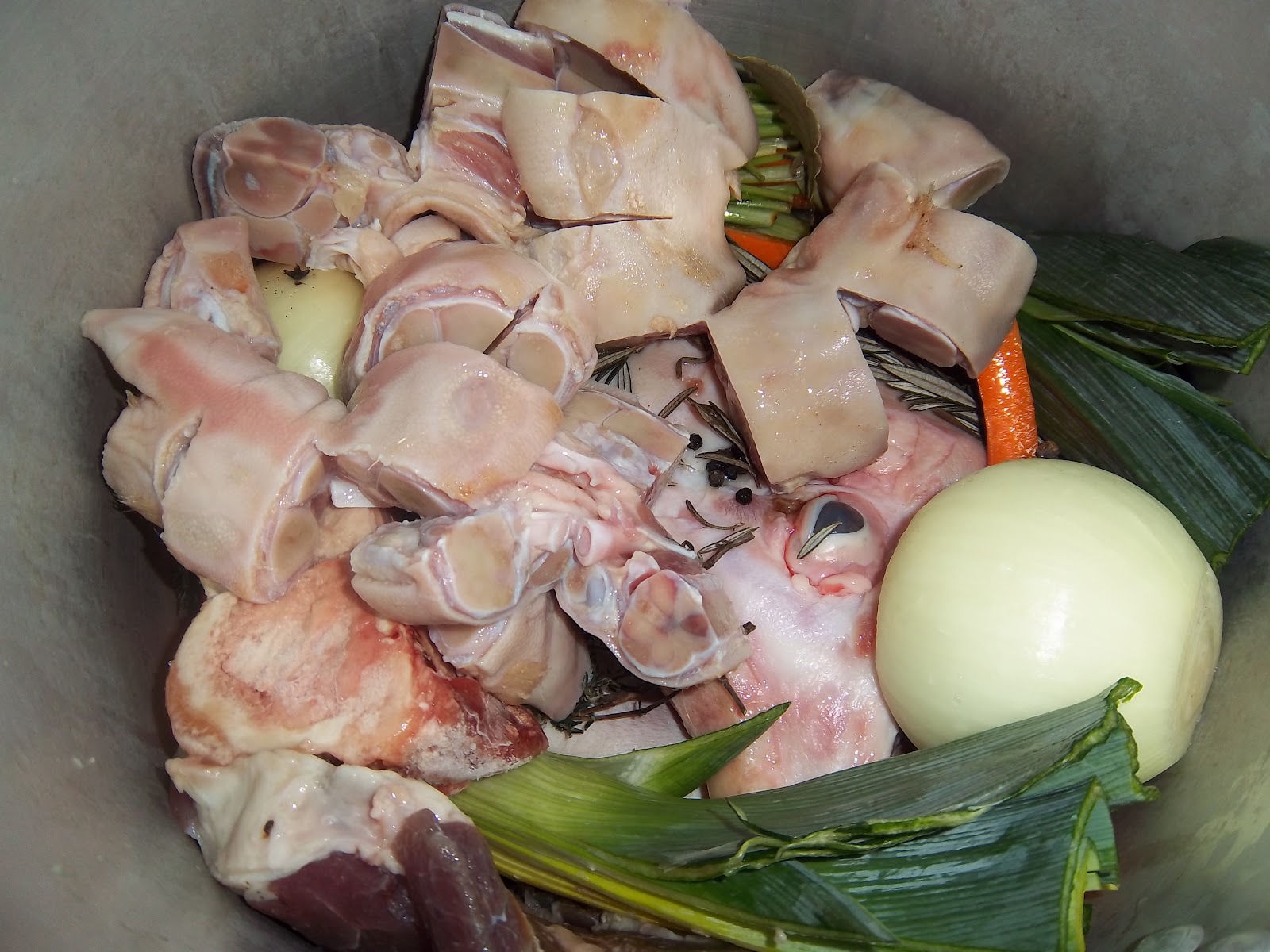
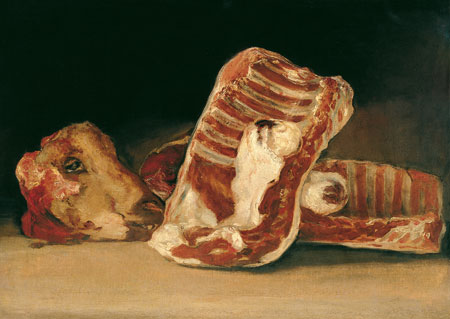
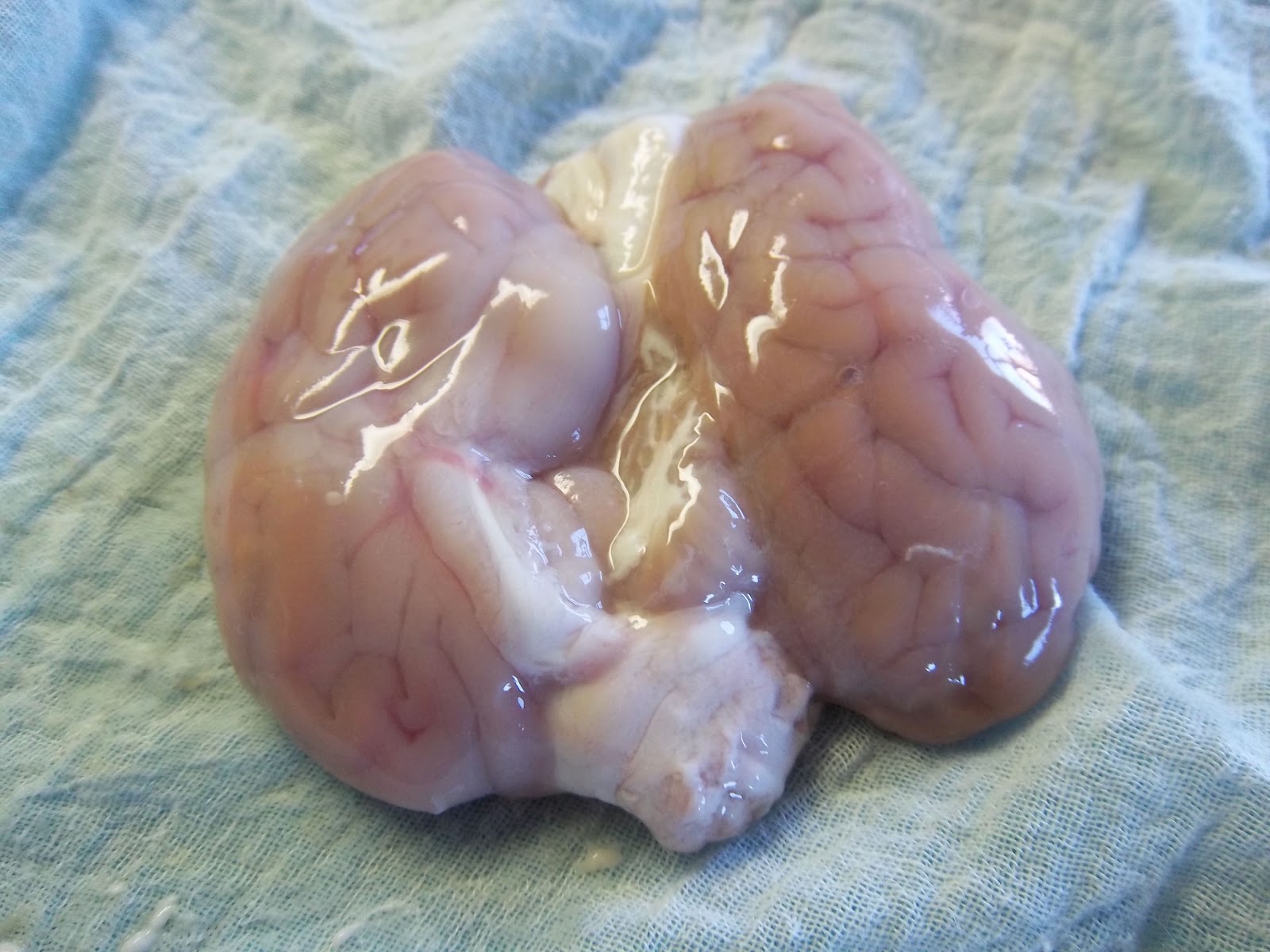
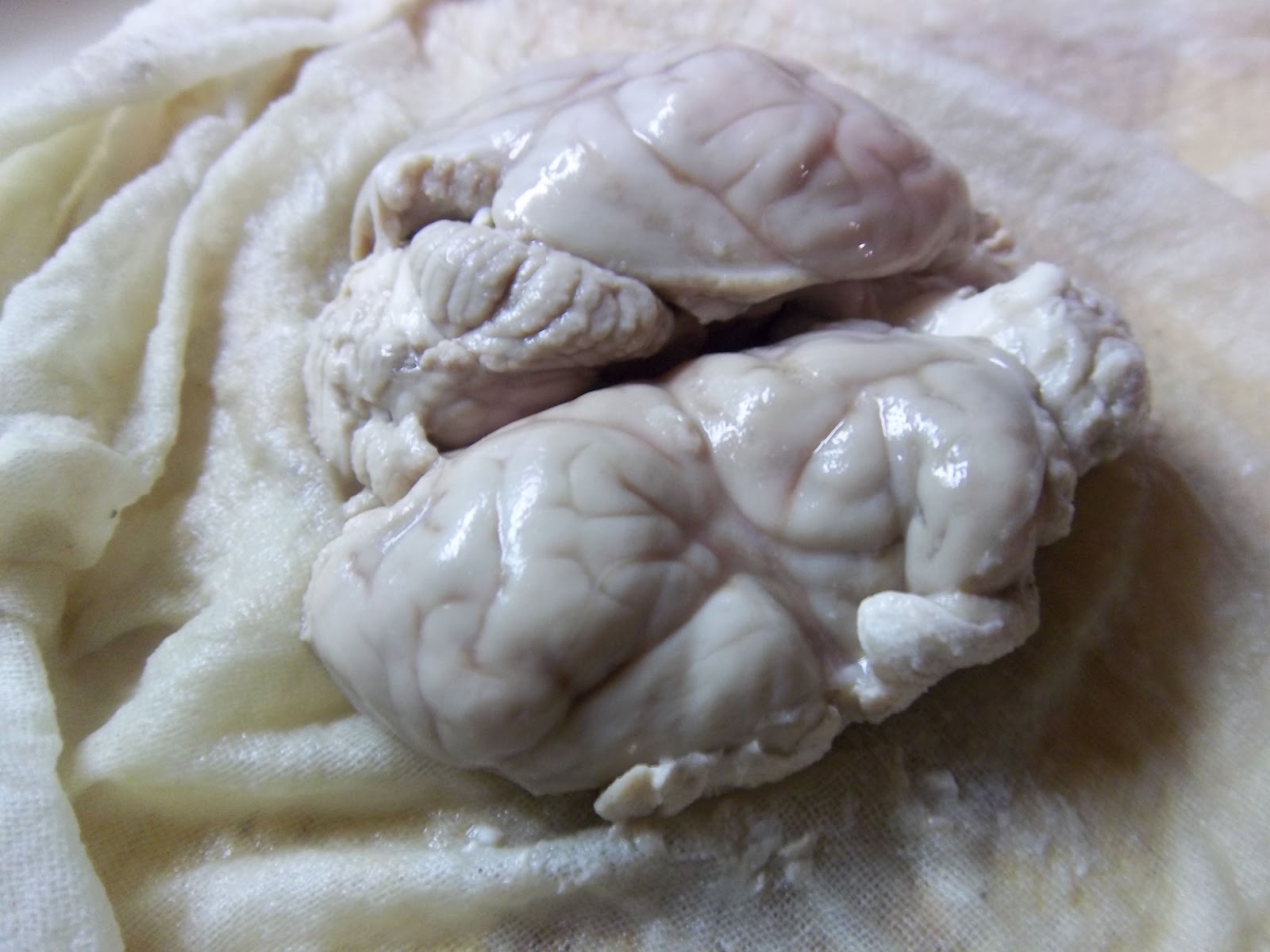
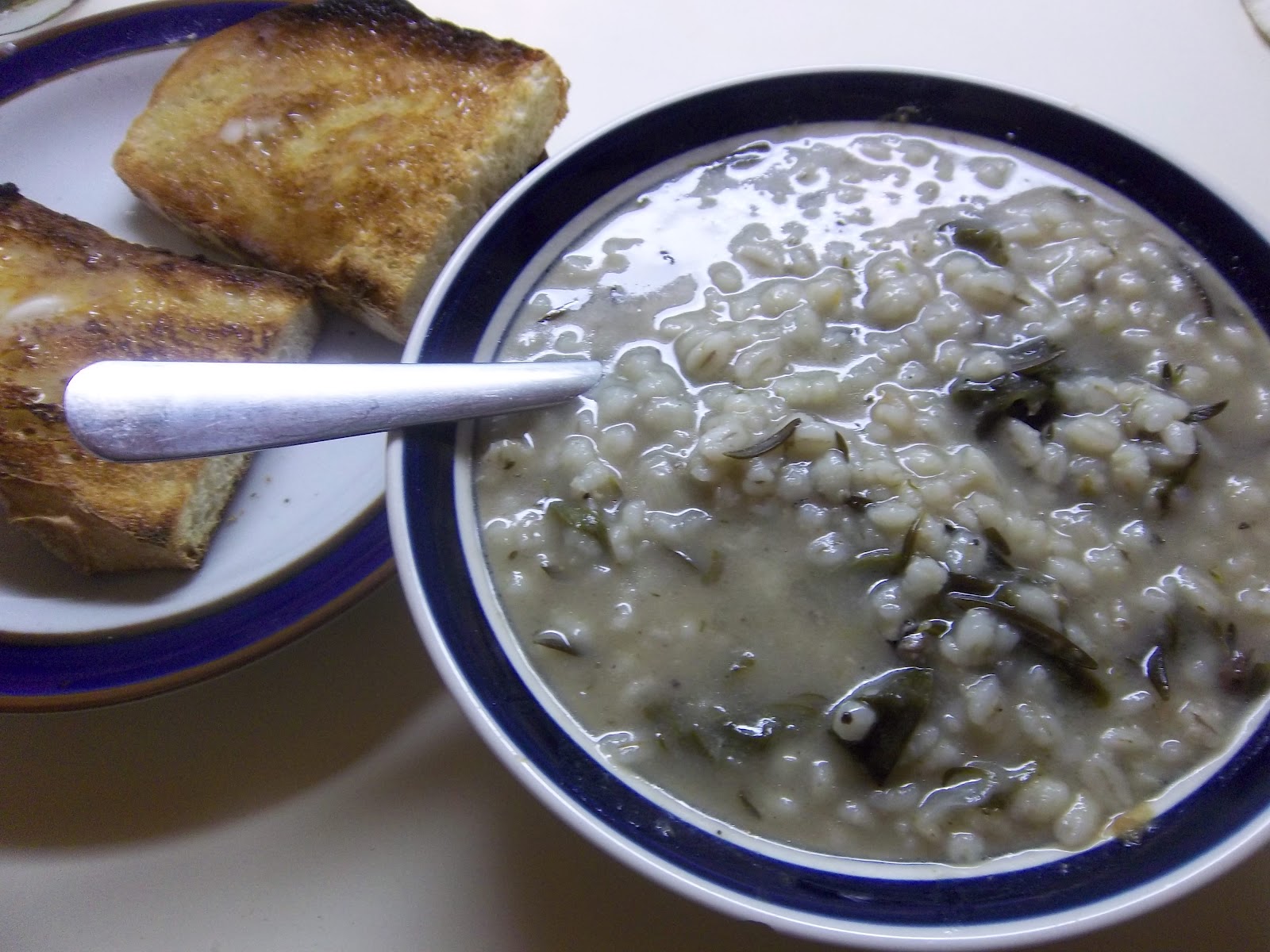
Mrs Beeton gives a recipe for leek soup that requires a sheep’s head and also describes how to “dress a sheep’s head” with a very similar recipe to Jane’s, though the barley is replaced with oats (as it is in the Scottish fashion). And if lamb’s head with brain sauce makes your stomach turn, I found a recipe in Elizabeth Raffald’s 1769 book The Experienced English Housekeeper for lamb’s head and purtenances, which, to you and I, are the innards. Calf’s head was also very popular; it was the main ingredient in mock turtle soup, for example. So the heads of sheep, calf and, of course, wild boar have been enjoyed for centuries in pretty well-to-do houses, so they can’t be that bad, can they..?
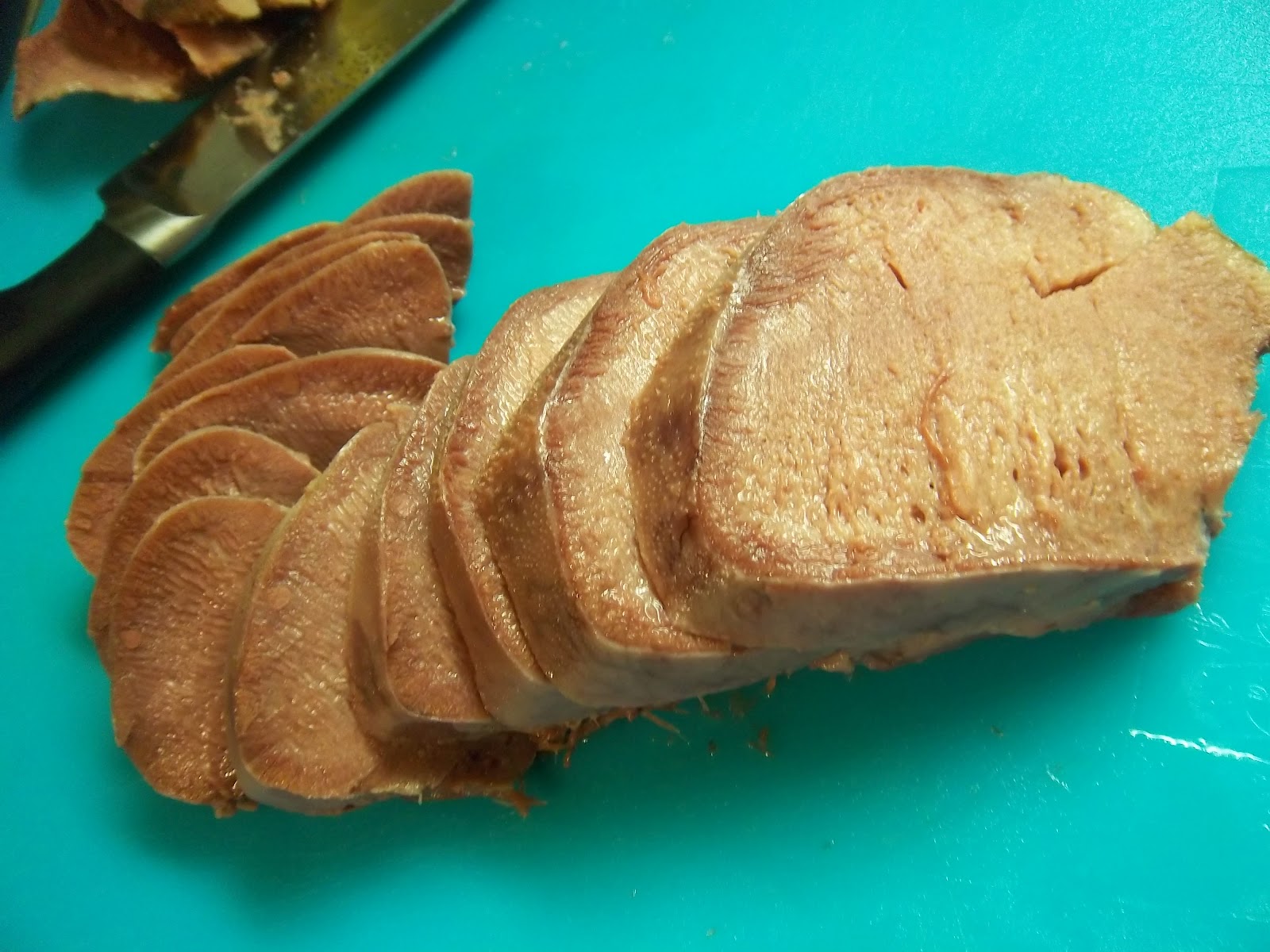
#331 Boiled Ox Tongue: to Serve Hot
#325 Rabbit Pie
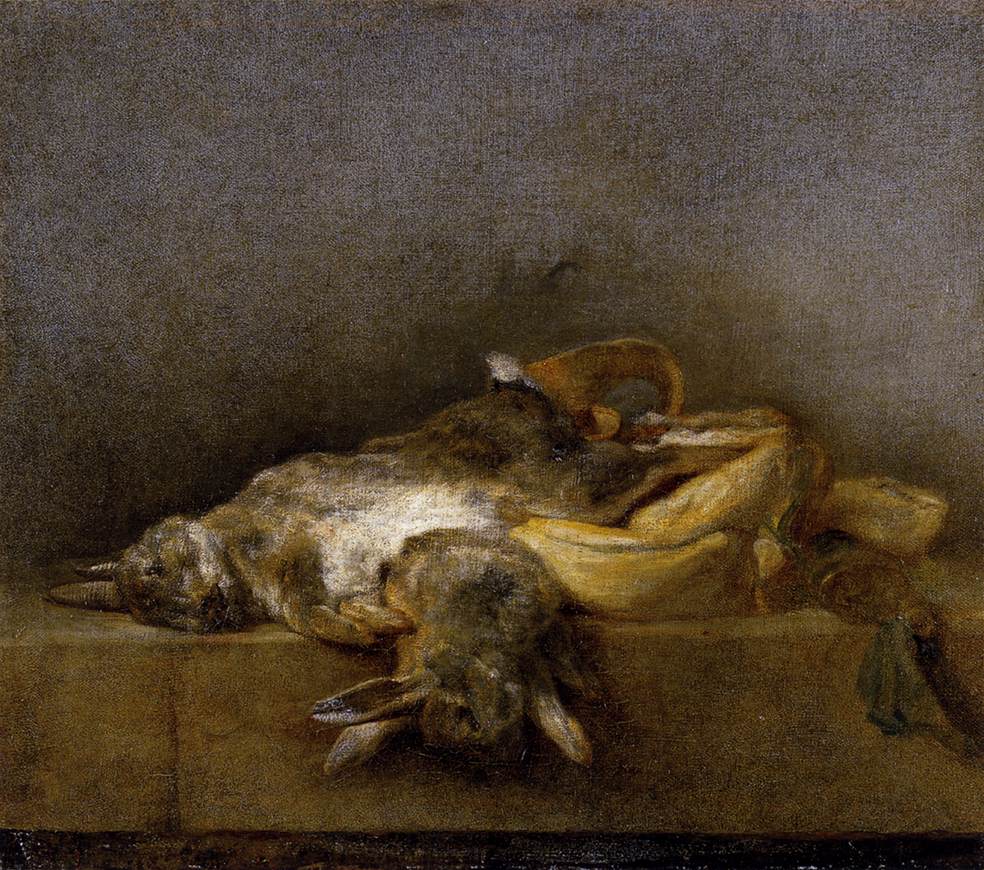
A British classic. It is rather difficult to say how far back the rabbit pie goes – as far back as pies themselves go, I would imagine. The rabbit pie is the archetypal hunter’s family meal and is certainly a cheap – or free – way of getting some good protein in you. These days of course people tend to get their rabbits from the butcher, including myself, but rabbit is getting popular again now that people are trying to cut back on their spending. I wonder if more people have taken up owning an air rifle to hunt their own. The idea strangely appeals. It is worth considering: rabbits are a pest and do not have a hunting season. The reason they are a pest is because they are an introduced species, just like the pesky grey squirrel, only these little blighters came not from America, but from France. The French have kept rabbit farms for a long time and so after William the Bastard/Conqueror came over with his Norman pals to take the English Crown, the later Plantagenet kings brought their farms over. The rabbits escaped and bred like billy-o and we have been stuck with them since.
What is strange is that the French did (and still do) love farmed rabbit and prefer it over wild. Griggers – in all her rabbit recipes – specifies that it must be wild; “[d]omestic rabbit by contrast is as insipid as a battery chicken, even nasty in texture and taste.”
Rabbits were very popular in Northern England as a pie filling in the eighteenth and nineteenth centuries and an alternative meat for a steak and oyster pie – back in the day when oysters were poor people’s food.
If you see a wild rabbit in the butcher’s shop try one – it’s cheaper than a chicken and is truly free-range and organic to boot!
Rabbit – like all game – is very lean so it needs a little helping hand with some additional fat, in this case streaky bacon which also helps the meat go a bit further. Forcemeat balls are often added to dishes like this – something stodgy that again increases bulk. I’m a big fan of forcemeat balls, so I was glad to see them appear in this recipe. Last and by no means least is the herb thyme which is essential in any rabbit dish. Don’t scrimp on it. Because it is used quite liberally, use fresh thyme.
This rabbit pie is the last in a trio of game recipes I cooked whilst I was in England over Christmas. It serves 6 to 8 people.
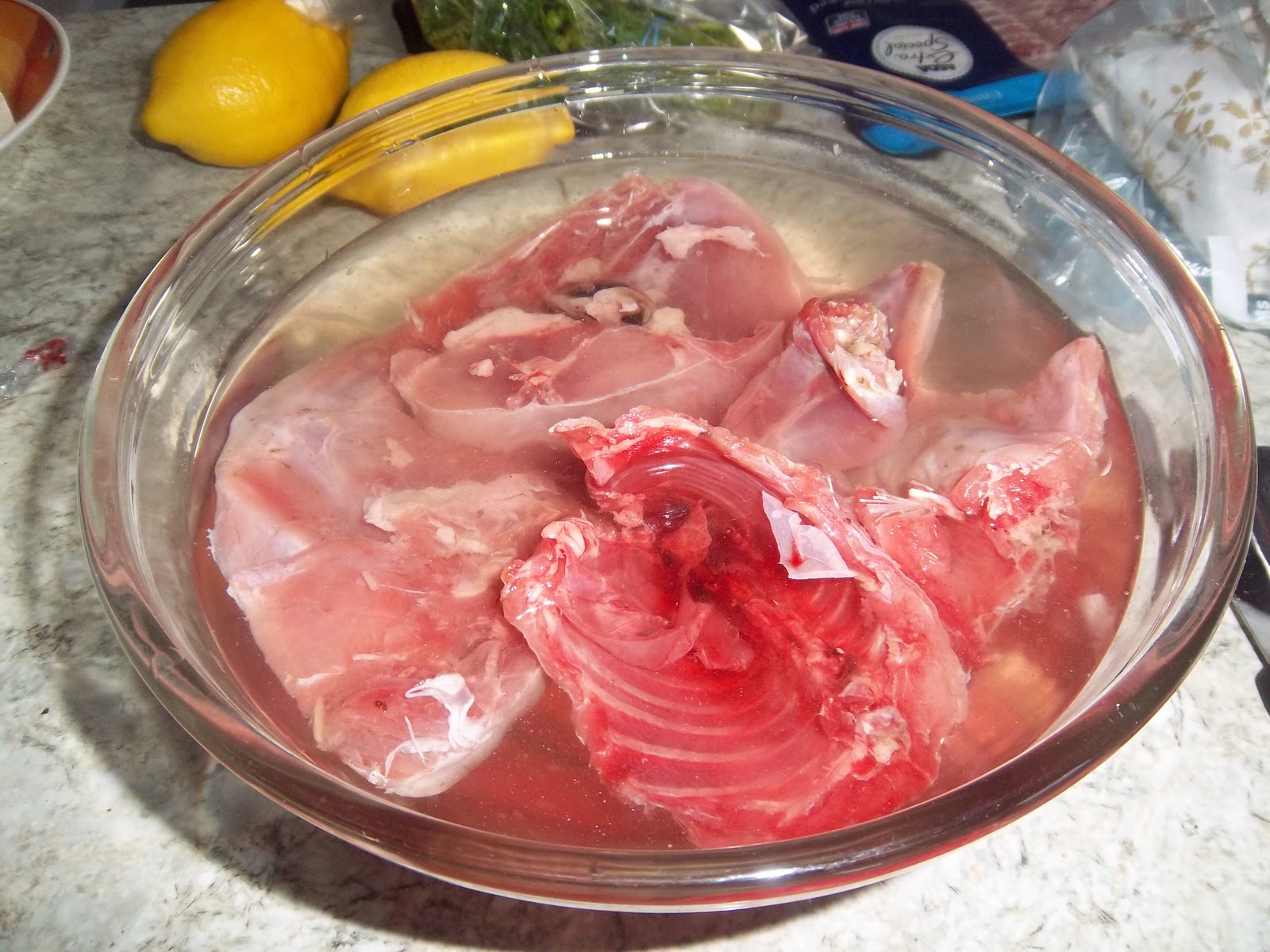
First of all joint a wild rabbit (or ask your butcher to do it) and soak it in salty cold water for around 1 ½ hours.
I am not quite sure why one needs to do this step. Perhaps it reduces the amount of water in the rabbit by osmosis for some reason? If you know, leave a comment, I’d be most grateful. Drain the rabbit and place it in a saucepan. Pour enough fresh water to cover the beast, bring the water to a boil and let it simmer for 3 or 4 minutes. Drain and dry it.
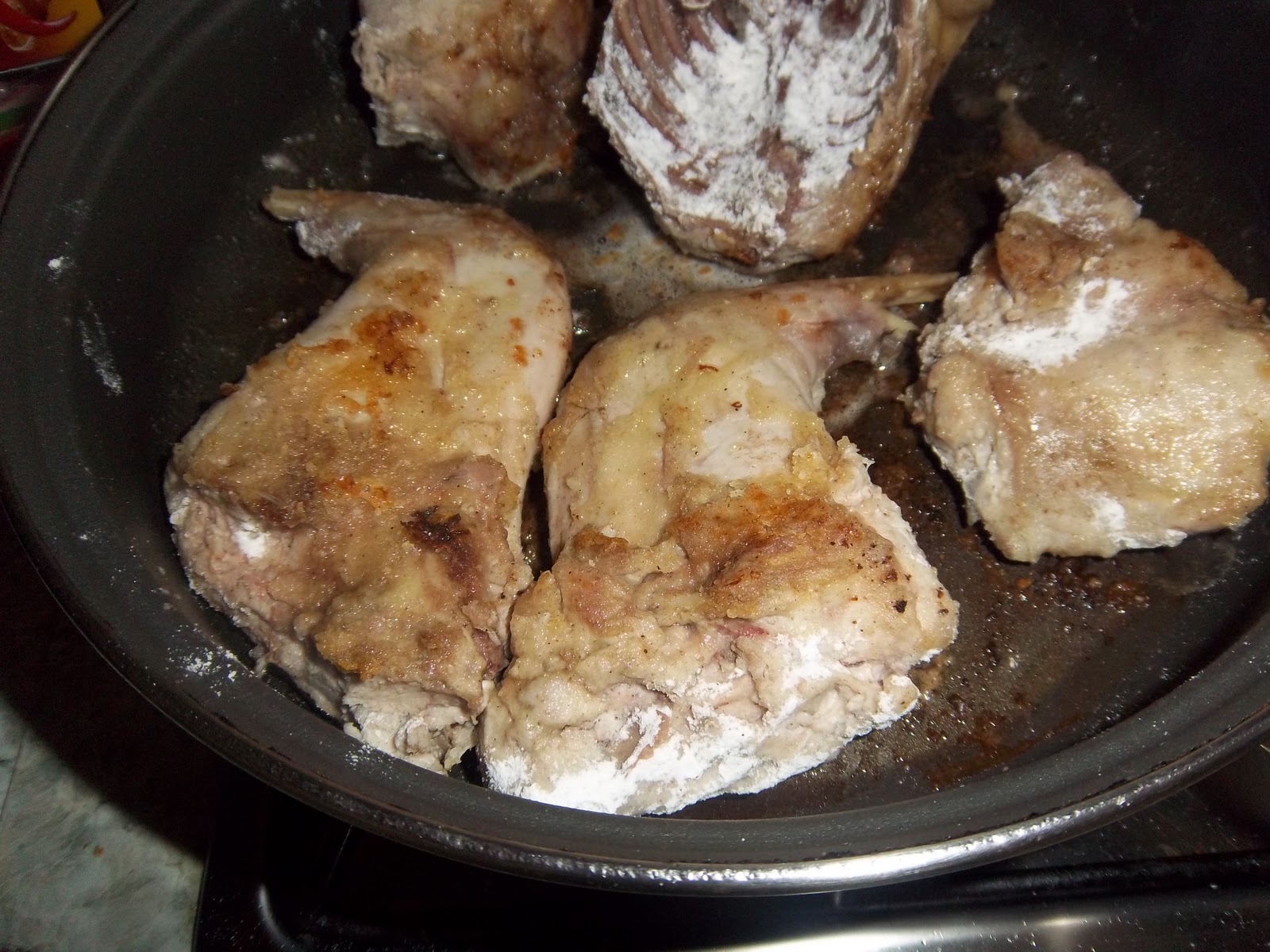
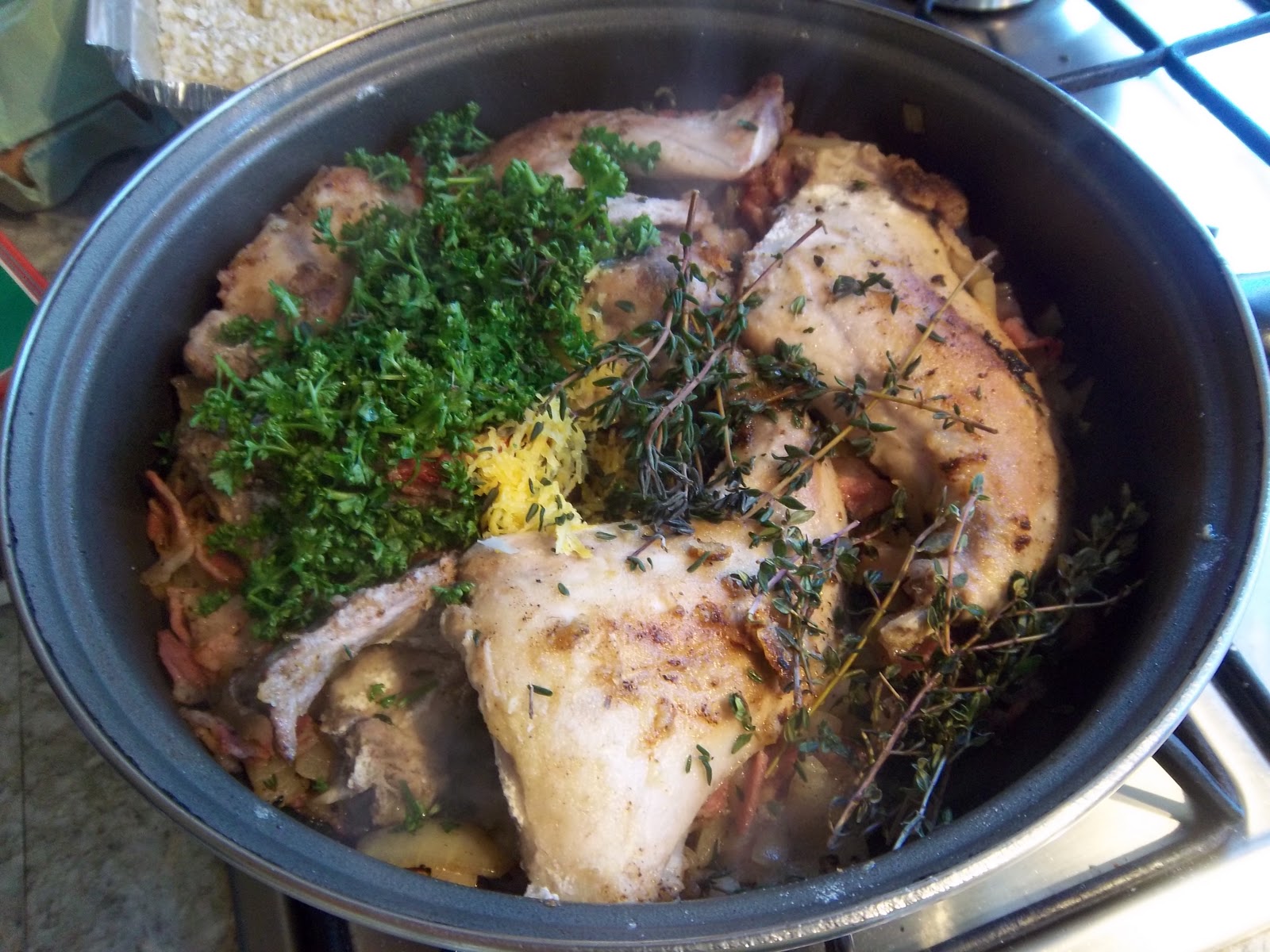
Roll the rabbit pieces in some seasoned flour and brown it in butter, lard, bacon fat or dripping in a large, deep sauté pan then fry a large chopped onion and 5 or 6 ounces of streaky bacon or salt pork. When lightly browned, add the grated rind of a lemon, a heaped tablespoon of parsley and four good sprigs of thyme.
Add enough light beef or veal stock to just cover. Cover and simmer until the rabbit is cooked. Jane doesn’t give a time here, but it will depend upon the age of the rabbit. Mine took about 1 ½ hours. To test it, I just sampled a bit of leg meat. Let the mixture cool and bone the rabbit if you want; I did because little ones were eating it.
Now the pie needs to be made. Place the mixture in a pie dish, piling it in the middle and scatter forcemeat balls around it (look here for the recipe). If you have a rather broad or long pie dish, it may be worth placing a pie funnel in the centre – I didn’t have one and the pie sank a little.
To cover the pie, roll out some shortcrust or puff pastry. Cut strips from the pastry and use it to line the rim of the dish, gluing it in place with some beaten egg. Next, cover the pie and trim any excess pastry and use it to decorate the top. Glaze with beaten egg.
Bake at 220⁰C (425⁰F) for 20-30 minutes and then turn the heat down to 160⁰C (325⁰F) for another 30 minutes. As usual, protect the pastry with some brown paper should it colour too much.
#325 Rabbit Pie. I am on a roll with the pies at the moment because this was another excellent one. The rabbit was very tender and not too rank tasting as the previous rabbit had been. I suppose it is the risk one takes with game. The very lean rabbit was ‘fattened’ up excellently with all the streaky bacon it was fried with. Plus it was complemented perfectly by the fresh thyme and the lemon zest. Really good – now that wild rabbit is getting more common meat in Britain’s butcher shops, there’s no excuse in giving it a try. 8/10
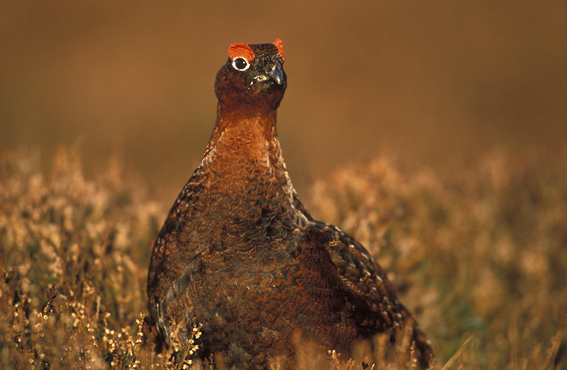
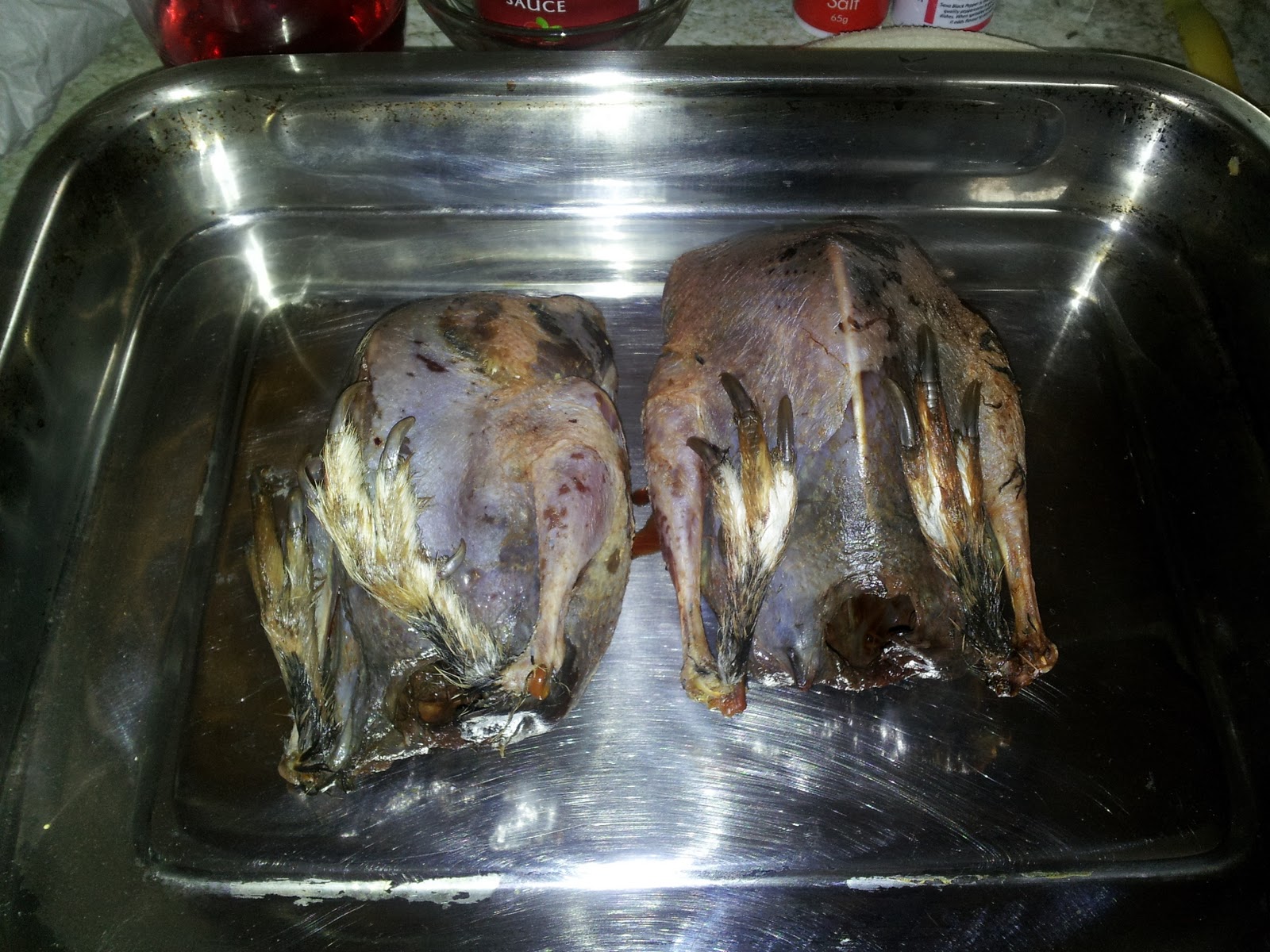
#324 Grouse
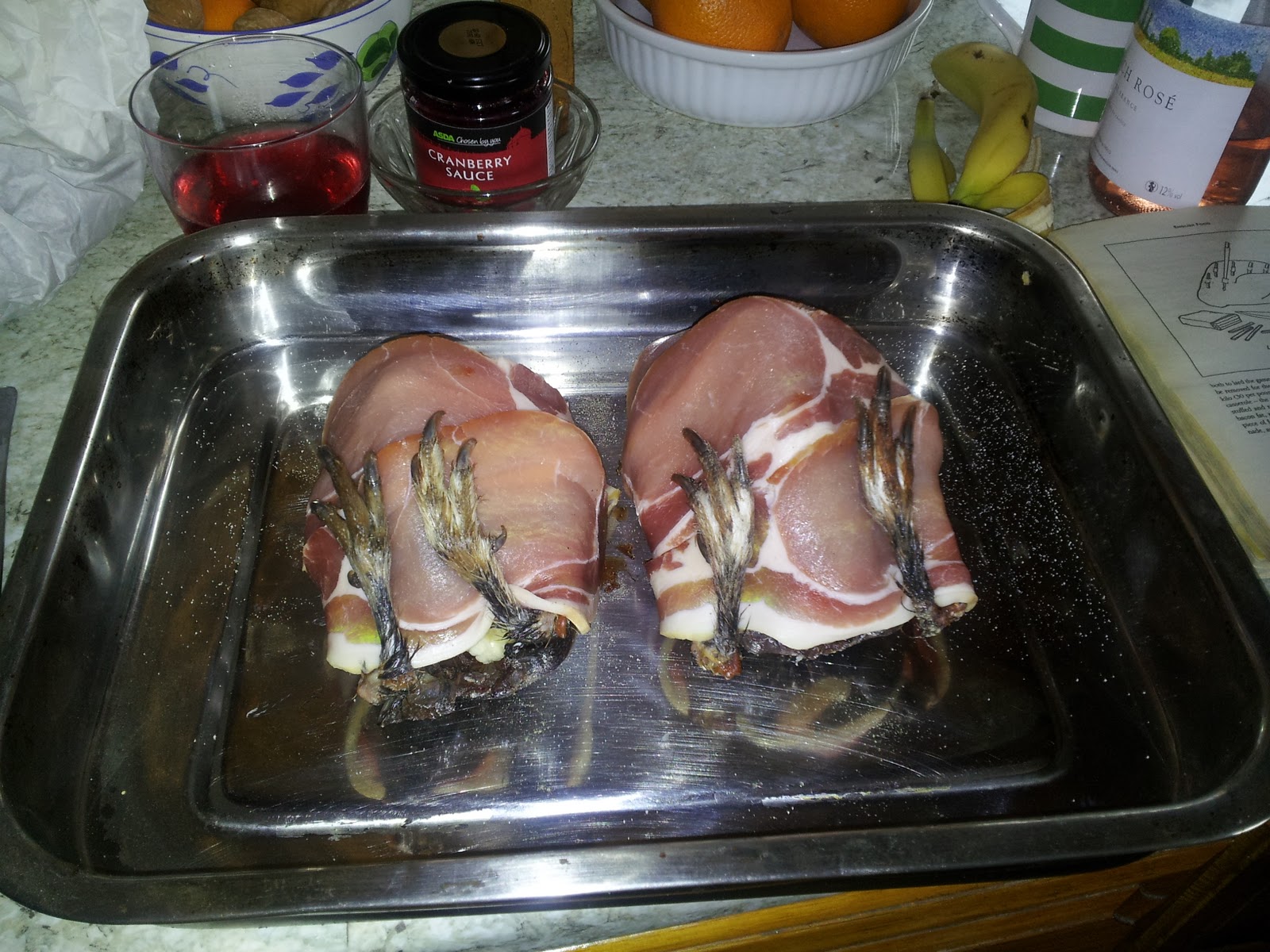
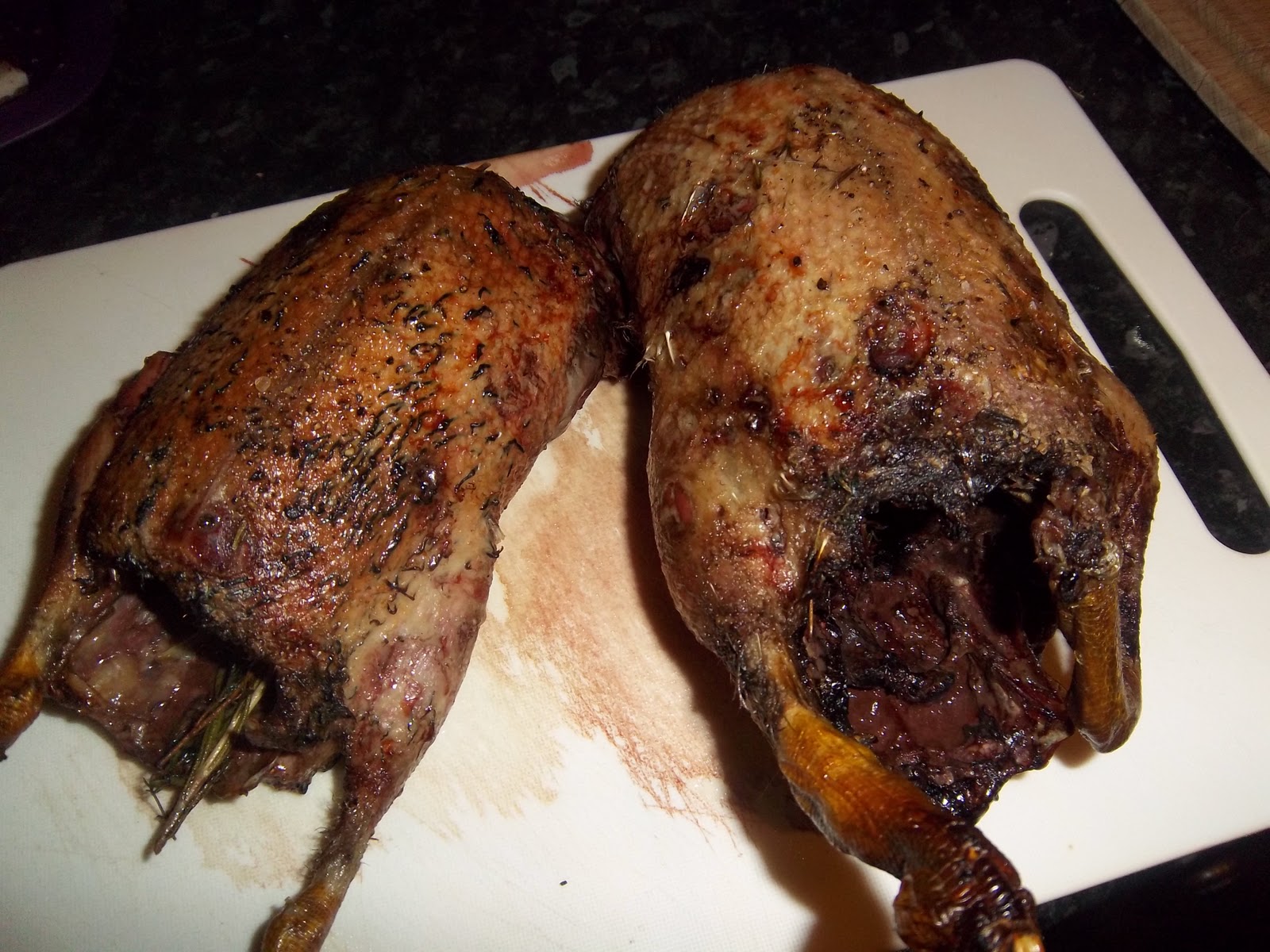
Cover the birds with vine leaves if you can get them. This is not necessary, so don’t worry if you can’t find any (I couldn’t). Next, cover the birds in jackets made of either bacon rashers or a sheet of pork back fat.
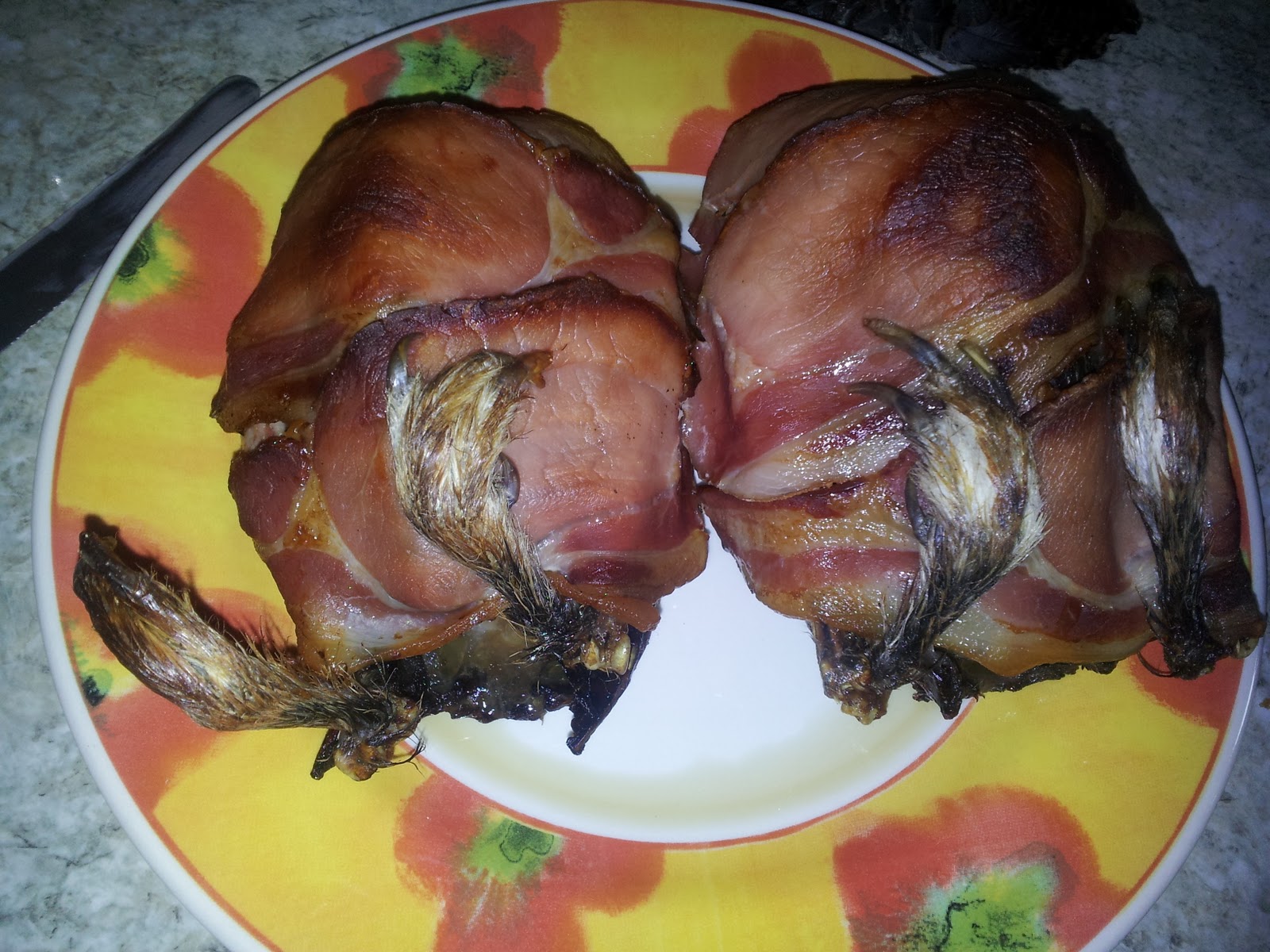
I went with bacon here as it could be served up alongside the grouse.
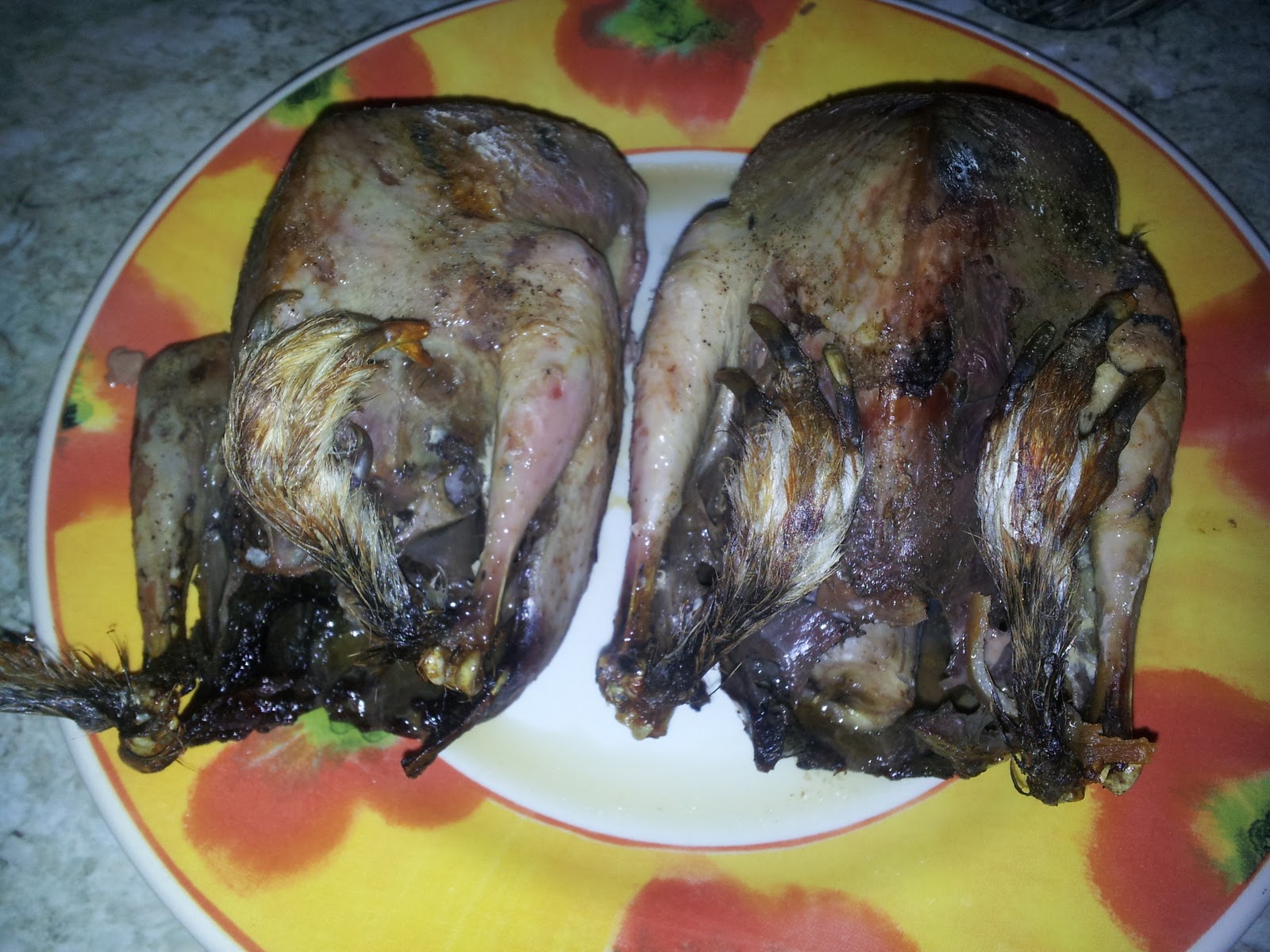
Roast for 35-45 minutes and allow to rest under some foil for around 20 minutes.
You can serve whatever you like with the grouse, but it is typically eaten with the typical game accompaniments like bread sauce, game chips and a tart jelly such as rowanberry. I went with some mashed potato and a couple of veg, myself.
#323 Salmi of Game (or Duck, or Fish)
A salmi, also known as salmis, salomine and salomene is essentially a posh game stew and is an abbreviation of salmagundi which started life in France as a meat ragoût. A salmi, rather than being any meat, should be made using game birds that are partly-cooked, and then finished off in a rich sauce made from their bones, though domesticated birds like capon and Guinea fowl are commonly used. Jane Grigson complains that more often than not, salmi is made from leftover game meat and then offered at high prices in high-end restaurants. ‘Don’t be deceived’, she says, ‘[i]t is exactly what would have been eaten by Chaucer, or his son, at the court of Henry IV, or by that granddaughter of his, Alice, Duchess of Suffolk, at her manor at Ewelme.’ Grigson mentions the food eaten at the court of Henry IV a few times in English Food: giving recipes for quince comfits and ‘a coronation doucet’.
Cubebs are a type of pepper (latin name: Piper cubeba) that you can still buy from specialists, gilliflowers are a very fragrant species of carnation and ‘powder’ refers to a mixture of ground spices.
Roast your game birds rare, cut the meat from the carcass into neat ‘gobbets’.
Use the carcasses to make ¾ pint of game stock. Melt 2 ounces of butter in a pan and cook 3 chopped shallots until soft and golden. Now stir in a heaped tablespoon of flour and whisk in the hot stock a third at a time to prevent lumps forming.
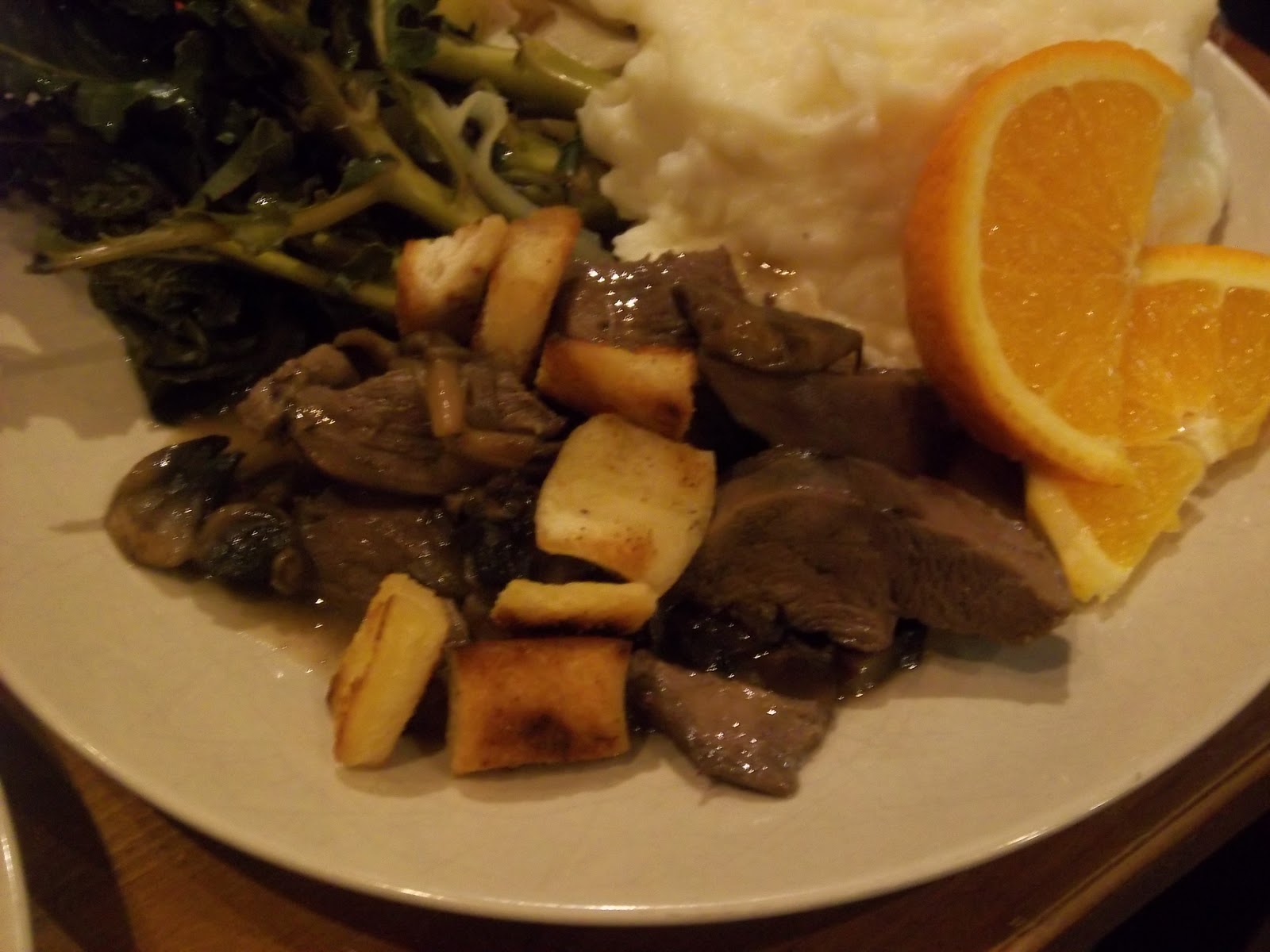
Add a bouquet garni and a pared strip of orange peel (Seville oranges would be great if you can get them) and simmer for 20 minutes, to make a thick sauce. Pass the sauce through a sieve and add ¼ pint of red or white wine and 4 ounces of mushrooms that have been fried in butter. Season with salt, pepper and lemon juice. Simmer for a further 5 minutes, then add the game and simmer very gently again for 10 more minutes. Add a little cayenne pepper. Serve with orange wedges and croûtons fried in butter.
#322 To Make a Goose Pye
What do you get for the person who has everything at Christmas? A giant pie of course. This goose ‘pye’ consists of an ox tongue within a chicken within a goose within a hot-water crust, so it’s not for the faint-hearted.
Great big pies like this were often given as gifts at Christmas time. The many meats were covered in a nice thick crust, not just because it tastes good, but also to help preserve and protect them – after all, these pyes were travelling by horse and carriage! These days, it is best as ‘a splendid centre-piece for a party’. Indeed, that the was the reason why I made it – my bosses Dave and Joan were hosting a Christmas party, and my fellow workmates are quite enthusiastic about the blog so I knew they’d all be up for this pye. Personally, I have always wanted to do this recipe – these crazy recipes are the reason why I love doing this blog. It comes from Hannah Glasse’s classic 1774 book Art of Cookery:
Half a peck of flour will make the walls of a goose pie…Raise your crust just big enough to hold a large goose; first have a pickled dried tongue boiled tender enough to peel, cut off the root, bone a goose and a large fowl; take half a quarter of an ounce of mace beat fine, a large teaspoon of beaten pepper, three teaspoons of salt; mix all together, season your goose and fowl with it, then lay the fowl in the goose, and the tongue in the fowl, and the goose in the same form as if whole. Put half a pound of butter on the top, and lay on the lid. This pie is delicious, either hot or cold, and will keep a great while. A slice of this pie cut down across makes a pretty little side-dish for supper.
Griggers kindly converts all the quantities into modern-day terms – less flour can be used (unless you are having it sent somewhere by horse!) and birds are rather larger nowadays. Good old Griggers. It is certainly the most extravagant recipe I have done thus far and possibly the most complicated; the recipe itself is quite straight-forward, but it requires a boned goose and a boned chicken, something that I had to do myself. Would the effort be worth it..?
There is a certain amount of preparation required if you are to do this from scratch. The first thing is to pickle an ox tongue in brine (see here for instructions) and cook it (see the recipe here for making pressed tongue; there is no need to press it). You need 2 ½ pounds of cooked tongue, so start with one that weighs at least 3 pounds. Next is the birds: you need a 10 pound goose and a 5 pound chicken. If you can, ask the butcher to bone them for you, if that is not possible, try doing it yourself – all you need is a bit of patience and some good sharp knives. I followed the method on this website for boning a chicken, but had to change the instructions somewhat for the goose as it is much trickier than a little chicken. So here’s a little digression as I give you my version…
Boning a bird is actually quite easy – what you are essentially doing is undressing the meat from the skeleton of the fowl. As you can imagine, it is a little gory.
First thing to do is to cut off the wing-tips and then to peel the skin away from the shoulders and cut through the joints.
Next, pull on the wing bone and scrape the meat from it as you go, turning the wing inside out. Repeat with the other shoulder joint.
Now remove the wishbone from the top of the breasts and start cutting the meat away from the ribcage, pulling the meat back. Keep doing this around the whole of the body. When you are about half-way down, sit the bird up and let the meat hang down by its own weight. When you get to the hips, you need to pop the femur out of its socket, then continue until the whole of the carcass is removed from the bird. You can then remove the leg bones in very much the same way as the shoulder and wing bones. Getting through that socket is very tricky with a large bird like a goose because of the large joint and large amount of fat surrounding it – to get around this, I flexed the knee joint and cut through that so I could scrape the meat off the bones from the direction of the knee.
When the leg bones have been removed, all you have to do is turn the bird outside in. Don’t forget to turn the bones, trimmings and giblets into stock.
So, you have your tongue and you have your birds, next you need to get working on the hot-water crust. You need to make a crust using 3 pounds of flour. I’ve blogged about hot-water pastry before, so follow this link. I made it in 3 batches – the first I used to form the base. I made lots of smallish pastry balls to cover the inside of a glass roaster measuring about 12” x 9” x 2” and pressed them out to make a single layer that overlapped the edges of it.
Next, mix together ¼ ounce of ground mace, 2 heaped teaspoons of ground black pepper and 5 rounded teaspoons of sea salt.
Now place the tongue in the chicken and rub in around a third of the spice mix into the chicken…
before gingerly wrapping fitting inside the goose. Place the goose in the pie and rub in the remainder of the spice and salt mix.
Lastly, smear two ounces of butter over the top of the goose.
Now roll out the rest of the pastry and cover the top of the pie, using some water as a glue. It is quite tricky to pick up such a large piece of pastry without it breaking – so use a rolling-pin and wrap it around it and unfurl it atop the pie. Crimp the edges, trim and decorate with the trimmings. Brush with beaten egg and make a central hole for the steam to escape.
Place it on a baking tray and bake the pie at 220°C (425°F) for 20 minutes and then turn the heat down to 180°C (350°F) and bake for another 2 hours. If the pie is browning too much, cover it with brown paper to protect it. If the pie bubbles ferociously, then turn down the heat again to 140-150°C (275-300°F). Loads of fat comes out the central hole, hence the precaution of the baking tray. I had to empty it twice during the whole process. I reserved it for making roast potatoes in the future, of course.
If you are wanting to serve it cold, then like most cold pies, it is best to make it a couple of days in advance so that the flavours can develop.
#322 To Make a Goose Pye. What a spectacle this pye was – especially when sliced up. I expected it to be rather macabre, but it wasn’t. It was indeed a ‘pretty little side dish’. The meat inside was wonderfully moist and a good jelly had formed inside without the need for jellied stock. Some people were a little suspicious of the tongue, but everyone seemed to like it. The only problem – though others disagreed – was that it was rather under-seasoned for me; with an extra 50 per cent salt, pepper and mace, this very, very good pye would have been excellent. 8.5/10
#320 Steak, Kidney and Oyster Pie
A while ago I made an extremely similar recipe – steak, kidney and oyster pudding. A seminal English dish that I had saved for the landmark 200th recipe. This pie essentially follows the same history (and recipe) as the pudding – the combination of the three main ingredients seems to start with Mrs Beeton. I have found similar recipes going back further like oyster pie, beef-steak and oyster pie, veal and oyster pie and calves’ foot and kidney pie. I could go on, but I shan’t, I think you get the message. The pudding was delicious so there was no way this could be a fail…