#360 Apple Sauce I

This is the third of four different apple sauces in English Food. I have had to wait to cook this one as it requires a quince.

Quince are an ancient fruit, related to apples and pears, that is not seen around too much these days as they have fallen out of favour somewhat and also have a very short season. They have also suffered because of the terrible wet weather we’ve had this year.

Apple sauce should not be reserved just for roast pork, by the way, use it with sausages, black pudding, chicken, turkey, goose or game. It is a surprisingly versatile condiment.

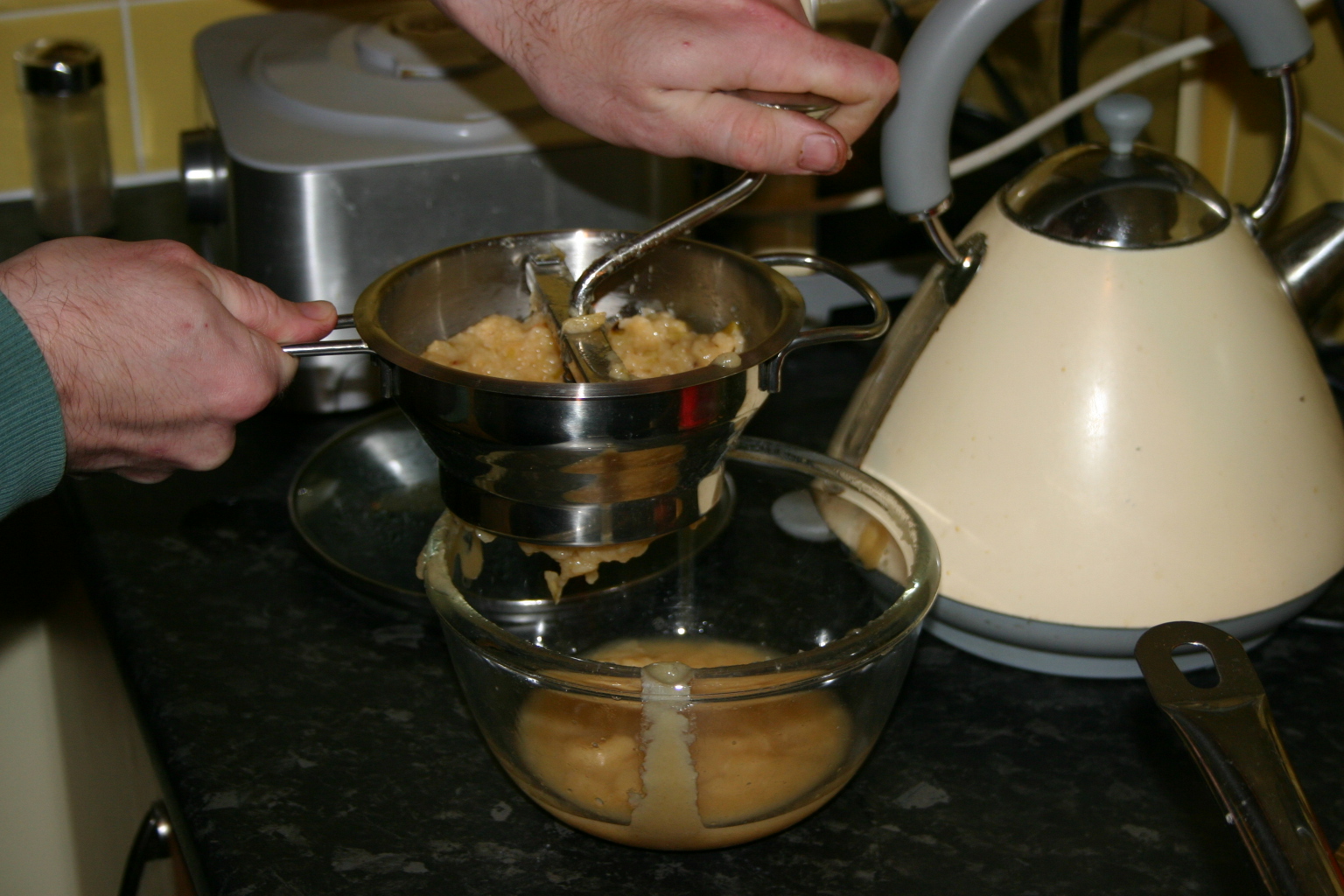
Chop up 8 ounces of Bramley’s seedling apples (those in North America, use Mackintosh apples) and slice one ‘small or moderate quince’. You don’t need to peel or core the fruit, but I would scrub off the naturally-occurring fluff from the skin of the quince, should it have some. Place in a pan along with ¼ pint of water, a heaped tablespoon of sugar (omit if using Mackintosh apples) and a pared strip of lemon peel. Cover and simmer until a puply, then pass through a sieve or mouli-legumes to remove peel &c.

Put back on the heat and stir until it thickens up; you don’t want it ‘sloppy and wet’ as Griggers says. Stir in one ounce of butter and give the finished sauce a healthy seasoning of black pepper.

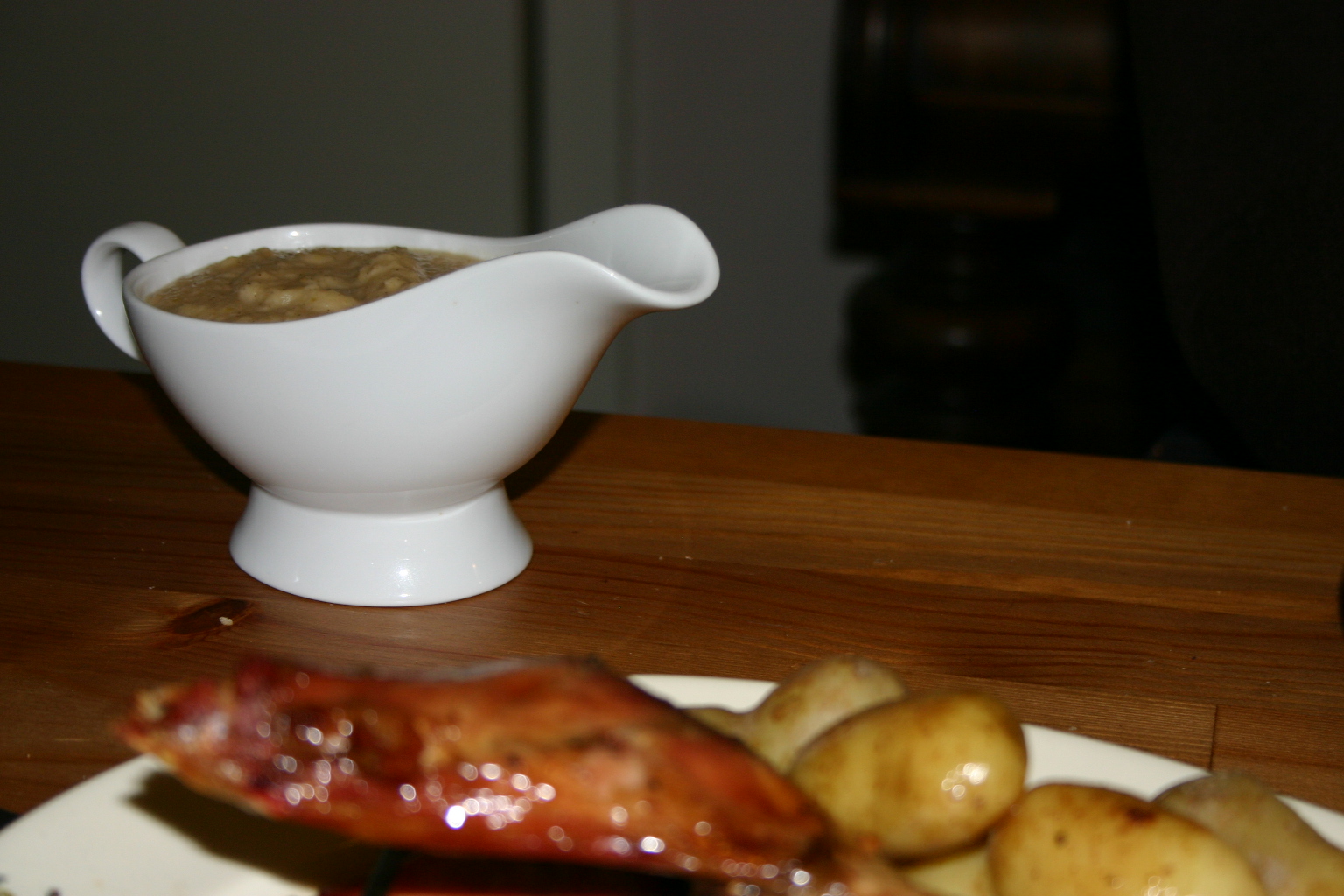
#360 Apple Sauce I. I liked this one very much and ate it with some rabbit which it complemented very well. The quince mellowed the Bramley’s, making them much less tart. Tres bon. 7.5/10.
 

#359 Rabbit

Clarrisa Dickson-Wright was on the telly yesterday as part of the BBC2 series The Great British Food Revival where various chefs and food writers highlight British foods that have fallen out of favour and are in danger of falling completely out of use. Needless to say, I approve. Ms Dickson-Wright’s food of choice was the humble rabbit.

Why has it fallen out of favour? There are two main reasons really – there’s the ‘Fluffy Bunny Brigade’ as Clarissa calls them that couldn’t possibly eat something fluffy and cute. This opinion is fine if you are vegetarian or vegan. Otherwise it’s a great double-standard. Another reason is the association with myxomatosis virus – a deadly bug that killed off 99% of them. It’s under control now, but mud sticks.

I think there are other reasons too: rabbit is thought of as poor people’s food, and people also have a problem with eating wild animals. Well the bottom line is that rabbits are a huge pest (they are not indigenous to the UK) and need to be controlled. In fact they are one of only two official game species, along with wood pigeon, that do not have a hunting season. We are over-run and they must be killed in order to manage the countryside efficiently.

It is for this reason that they are relatively cheap, and because they are wild they are truly organic and free-range and low fat too.

I coincidently cooked a rabbit recipe from English Food the other day. It’s less of a recipe and more of a suggestion really with very sparse instruction. Here’s the full entry:

Wild Rabbit

roast: 1 hour, mark 6, 200C (400⁰F)

serve with: see hare [redcurrant jelly, port wine sauces…]

Here’s what I did to roast the rabbit:

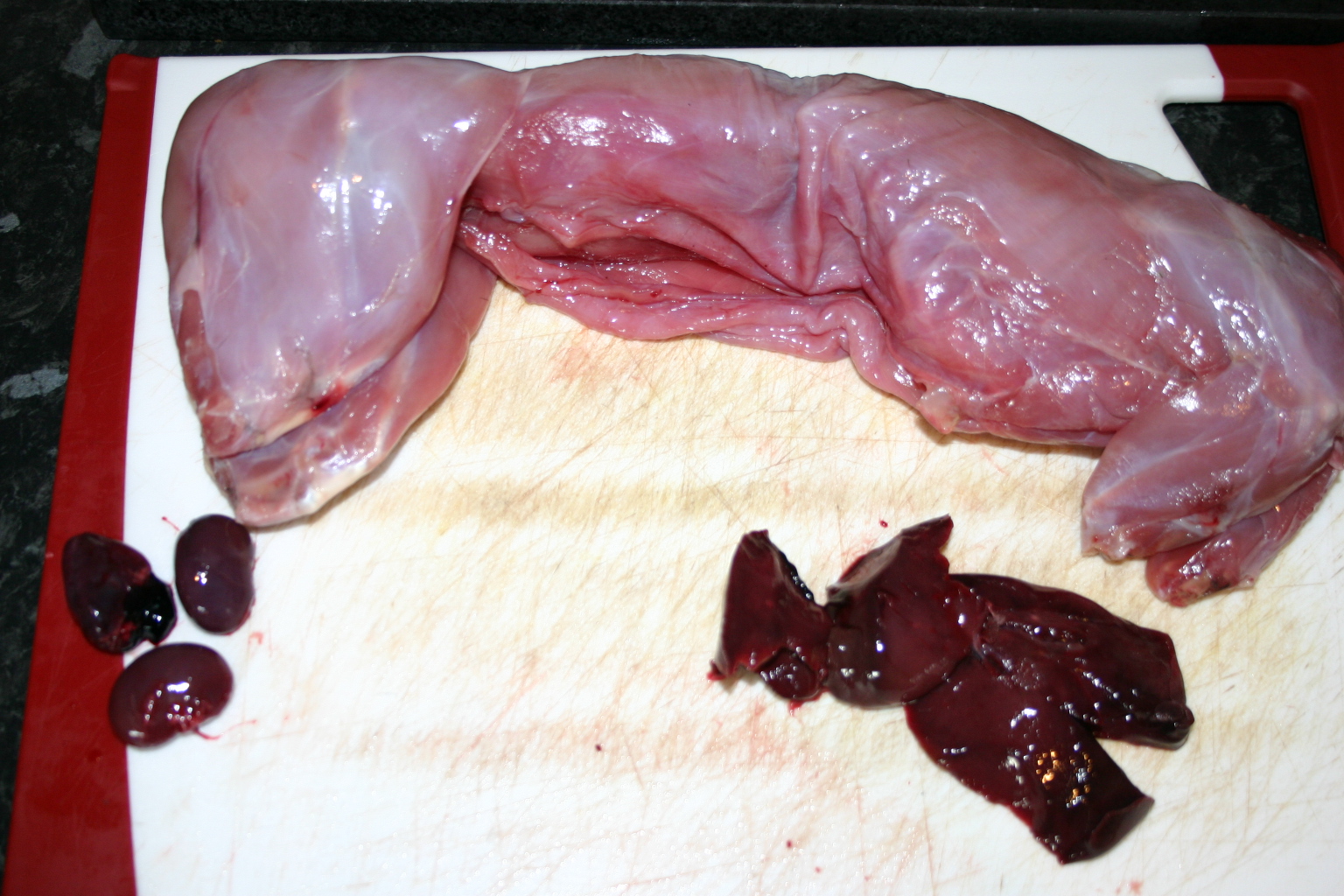
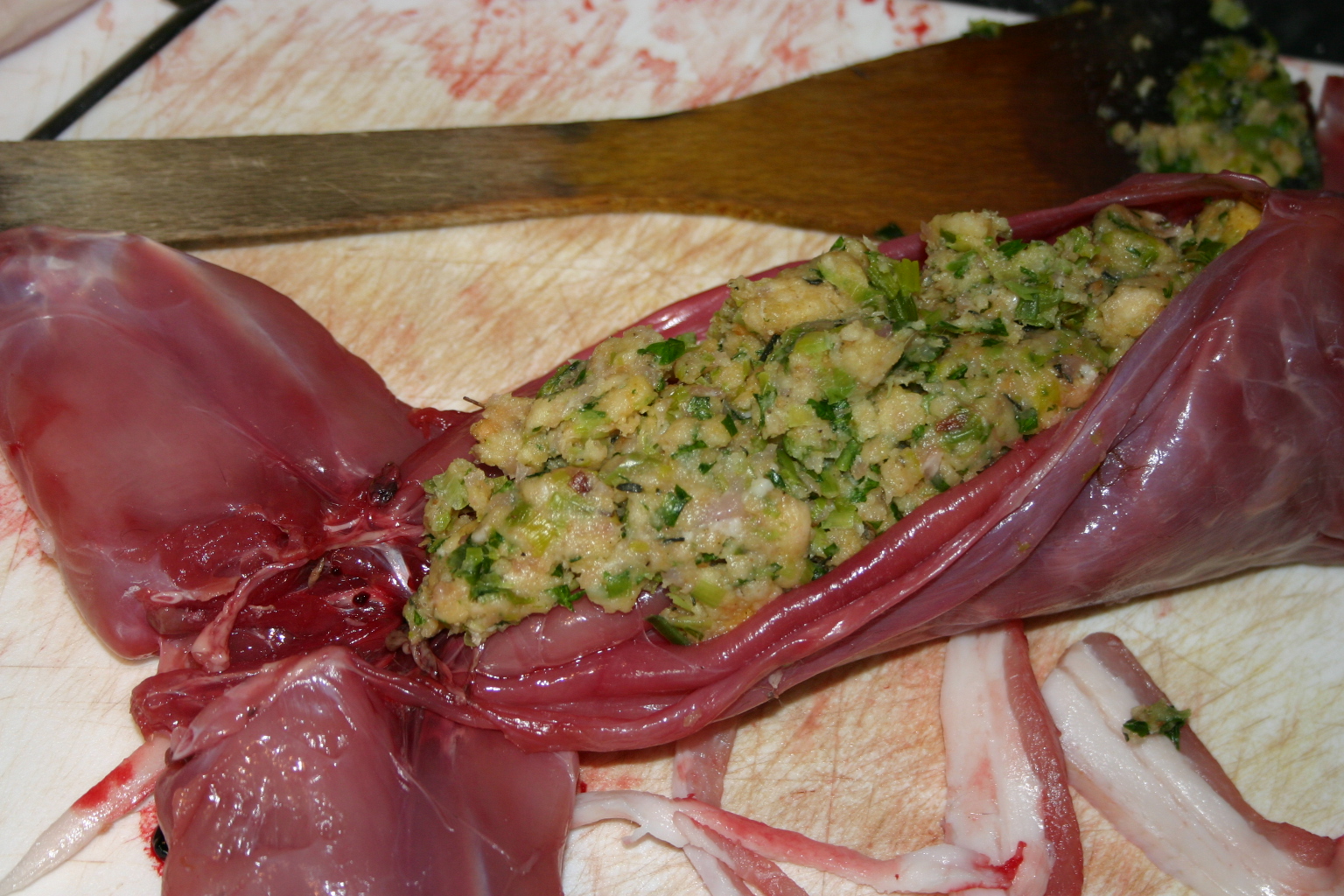
First up is to prepare your rabbit – you should find inside the kidneys, liver, heart and lungs. Remove those. If you like you can chop the liver and use in the stuffing. Instead, I made a little offal kebab from the heart, kidneys and liver. Then I larded the rabbit’s legs, loins and saddle with some thin slices of back fat. You can buy a special larding needle for this job but I used a skewer (it was a bit of a nightmare so I have bought myself a needle for next time). I then seasoned it inside and out and loosely stuffed it with the herb stuffing (see herefor the entry for that) before placing it in a roasting tin with a jacket of back fat. You could use streaky bacon if you’d prefer.

Then it was straight into the preheated oven for an hour.

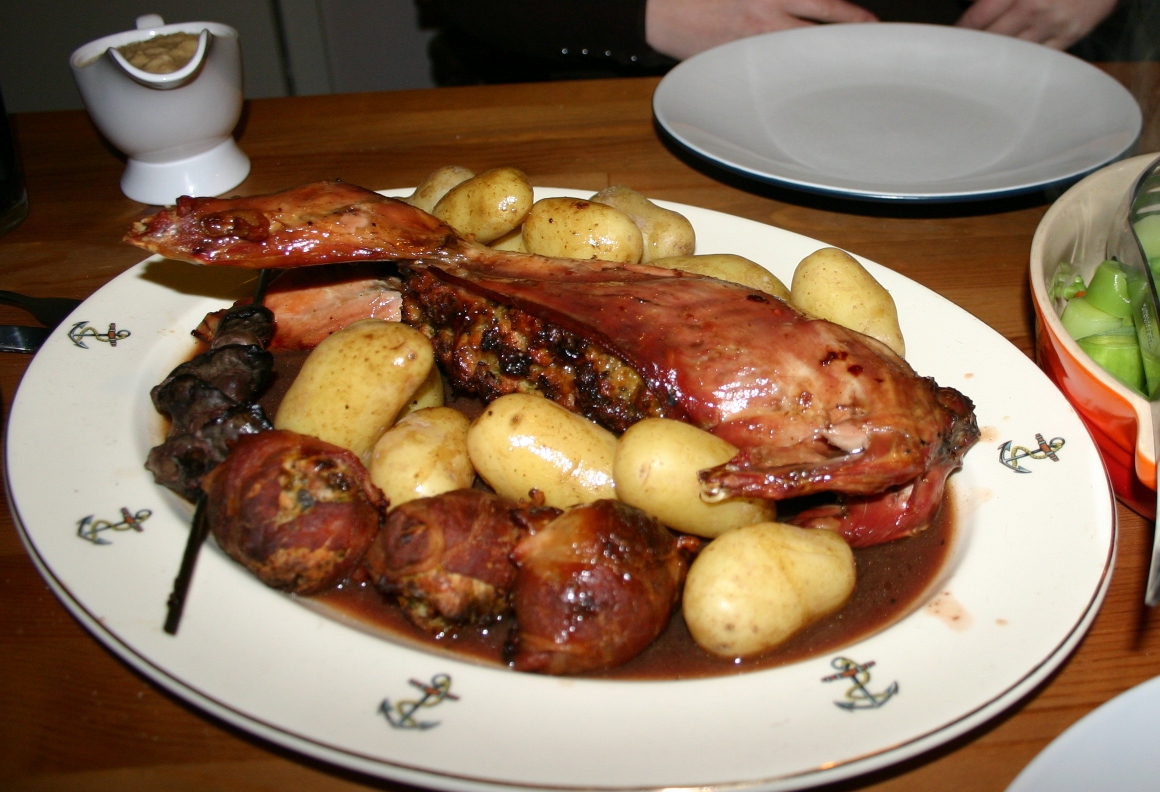
I had some stuffing left over so I rolled that into small balls and wrapped them in some smoked bacon. I popped those in for the final half hour until brown and crisp.

When the hour was up, I took the rabbit out of the oven and let it rest on a serving plate and covered it with foil. I then got to work on making some gravy. I put the roasting tin on the heat and deglazed it with a splash of red wine and then some chicken stock and a tablespoon of redcurrant jelly. After it reduced and started to thicken, I took it off the heat and whisked in a couple of knobs of butter to thicken it further and give the sauce a nice shine.

Hey-presto! A roast rabbit!

#359 Rabbit. Well I enjoyed preparing this one and it did look like something from a medieval feast when it was finished. The flavour was good, though it was on the dry side; my rabbit was a young one I think and perhaps could have done with 45 minutes. Nevertheless, a tasty and fun meal to eat, though not quite as good as the rabbit pie. It did make delicious soup the next day though! 6.5/10.

#332 Cherry, Plum or Damson Sauce

This is a piquant and rich sauce that is traditionally served with game, venison and tongue that seems very Victorian and English to me – there are many others like it such as Cumberland and venison sauce that came most likely from Germany via the kings (and a queen) of the House of Hanover (Georges I to IV, William IV and Victoria). We don’t really eat much of these sorts of sauces anymore, and we shall see if we should bring them back.
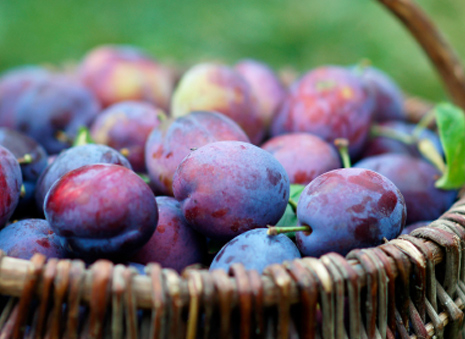
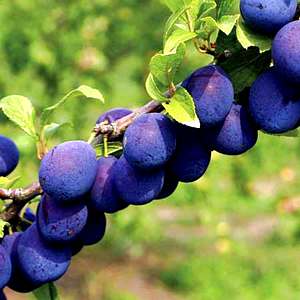
This recipe makes good use of seasonal European fruits: the morello or amarelle cherry (or sour cherry), plums and damsons.
Morello and amarelle cherry trees (Prunus cerasus)are easy to cultivate, and yet it is getting increasingly difficult to find fresh British ones sold at markets, though you can find them frozen or canned pretty easily. The English cherry orchard is a feature of the country declining greatly, mainly because of the competition from cheap imported ones from the Middle East and places like that. The morello cherry was introduced in Britain by the Romans around 50AD and were very popular in Tudor times. Will the English cherry ever return? Because they are so easy to grow and take up little space I shall grow some upon my return to Britain (once I have a garden of course!).

Plums, like the cherry, are of Genus Prunus and there are around 20 species used in several different ways, the species used in Britain is P domestica which is actually a hybrid of two other species. P domestica has been bred into several varieties including my favourite, the greengage.

P domesticus also produced the damson, our third fruit for this recipe. Damsons to me are the most English of all three, though I have never tried them before. I shall have to rectify that.

Here is how to make the sauce, whichever Prunus you lay your hands on.

Stone 8 ounces of morello or amarelle cherries, plums or damsons. You can use canned cherries if you want, just make sure they are in water, not syrup. This is what I used. Put the fruit in a saucepan along with ¼ pint each of red wine and port, a tablespoon of sugar, 2 cloves and an inch-long piece of cinnamon. Bring to a boil and simmer for around 10 minutes until the fruit is nice and tender. If you want, you can sieve the damsons or plums if using, but I think it’s better to leave whole. Now add 2 good tablespoons of redcurrant jelly and the juice of 3 oranges and a lemon. Season with black pepper and, off the heat, stir in an ounce of butter. Taste and add more sugar if needed.

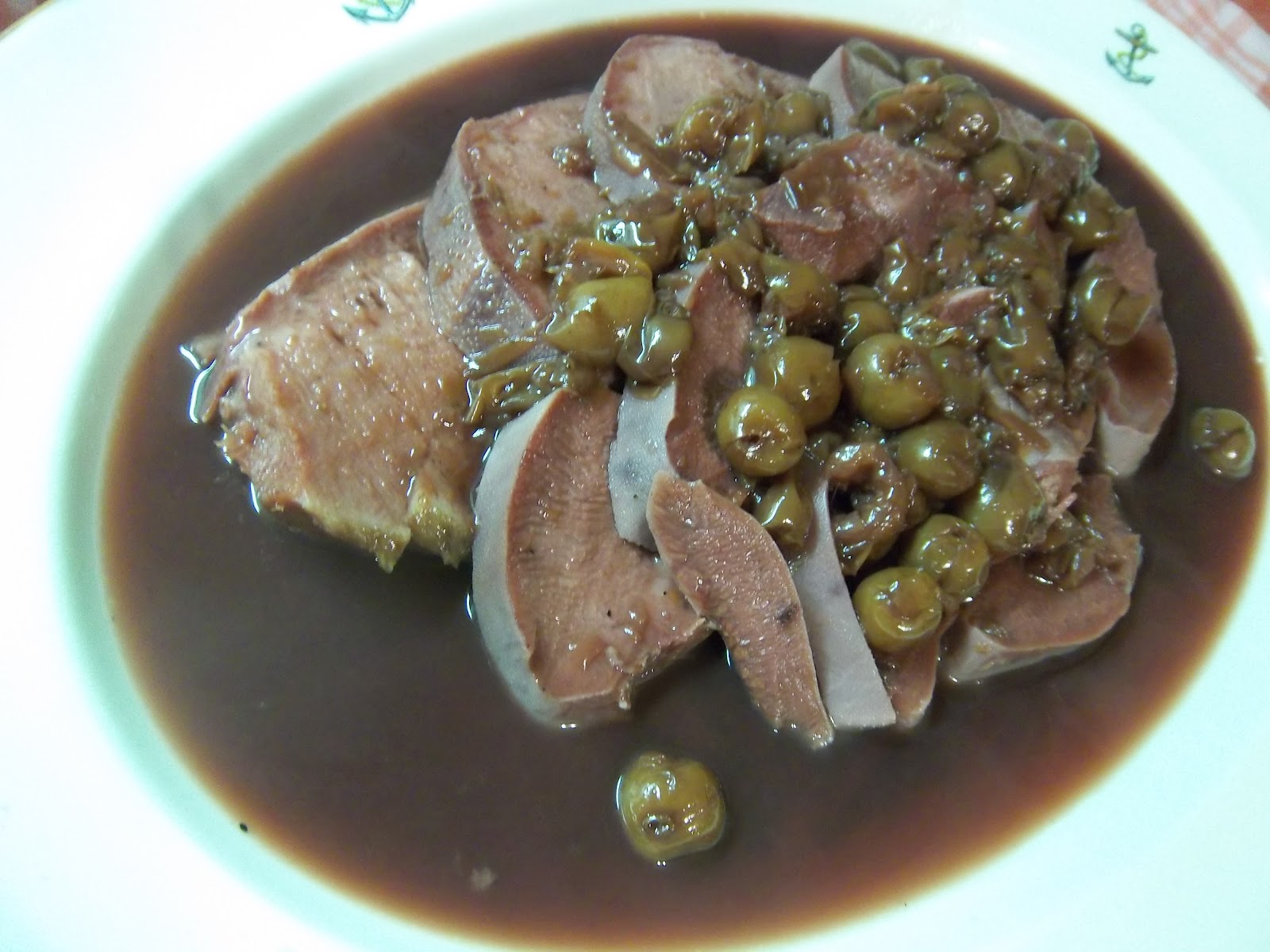
I made cherry sauce and served it with hot tongue.
#332 Cherry, Plum or Damson Sauce. I loved this sauce much more than Cumberland sauce. The rich wines and fruit were only just off-set with the sugar, fruit and spice. Very delicious, you could almost eat it on its own. We should certainly bring it back! 8.5/10.

#325 Rabbit Pie

A British classic. It is rather difficult to say how far back the rabbit pie goes – as far back as pies themselves go, I would imagine. The rabbit pie is the archetypal hunter’s family meal and is certainly a cheap – or free – way of getting some good protein in you. These days of course people tend to get their rabbits from the butcher, including myself, but rabbit is getting popular again now that people are trying to cut back on their spending. I wonder if more people have taken up owning an air rifle to hunt their own. The idea strangely appeals. It is worth considering: rabbits are a pest and do not have a hunting season. The reason they are a pest is because they are an introduced species, just like the pesky grey squirrel, only these little blighters came not from America, but from France. The French have kept rabbit farms for a long time and so after William the Bastard/Conqueror came over with his Norman pals to take the English Crown, the later Plantagenet kings brought their farms over. The rabbits escaped and bred like billy-o and we have been stuck with them since.
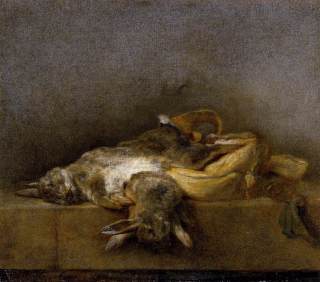
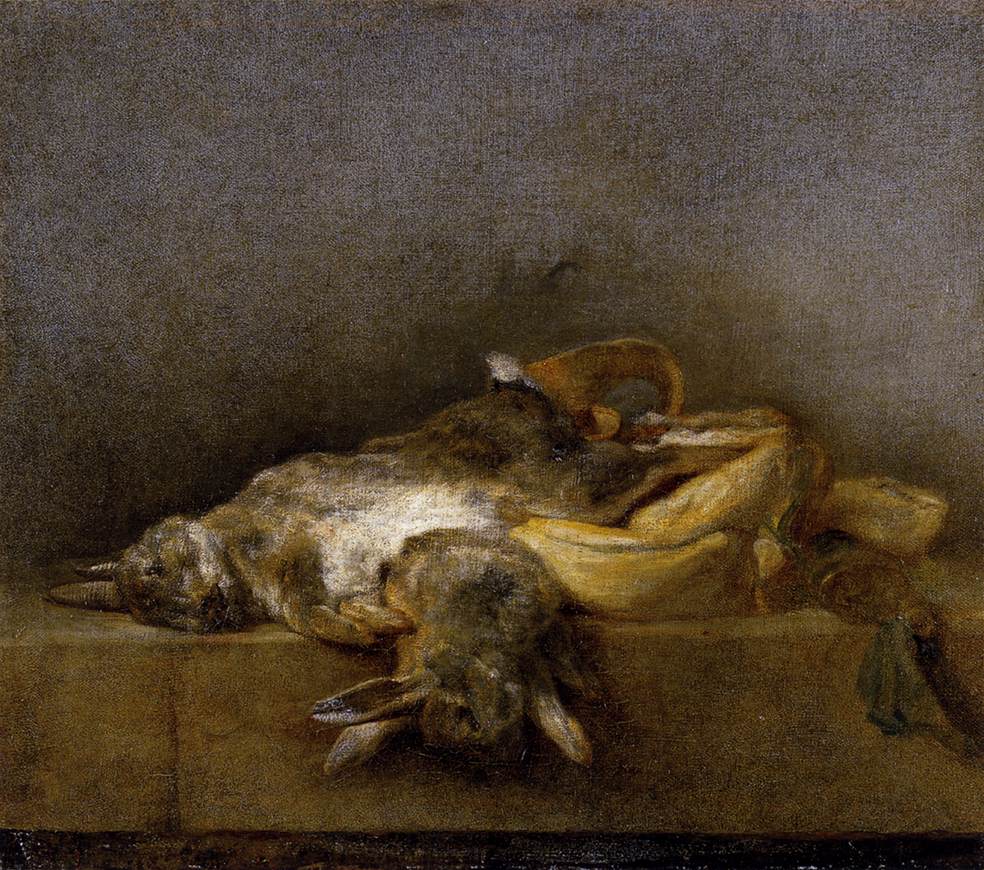
Still Life with Rabbits, a Game Bag and a Powder Horn
by Jean-Baptiste-Simeon Chardin, c1755

What is strange is that the French did (and still do) love farmed rabbit and prefer it over wild. Griggers – in all her rabbit recipes – specifies that it must be wild; “[d]omestic rabbit by contrast is as insipid as a battery chicken, even nasty in texture and taste.”

Rabbits were very popular in Northern England as a pie filling in the eighteenth and nineteenth centuries and an alternative meat for a steak and oyster pie – back in the day when oysters were poor people’s food.

If you see a wild rabbit in the butcher’s shop try one – it’s cheaper than a chicken and is truly free-range and organic to boot!

Rabbit – like all game – is very lean so it needs a little helping hand with some additional fat, in this case streaky bacon which also helps the meat go a bit further. Forcemeat balls are often added to dishes like this – something stodgy that again increases bulk. I’m a big fan of forcemeat balls, so I was glad to see them appear in this recipe. Last and by no means least is the herb thyme which is essential in any rabbit dish. Don’t scrimp on it. Because it is used quite liberally, use fresh thyme.

This rabbit pie is the last in a trio of game recipes I cooked whilst I was in England over Christmas. It serves 6 to 8 people.
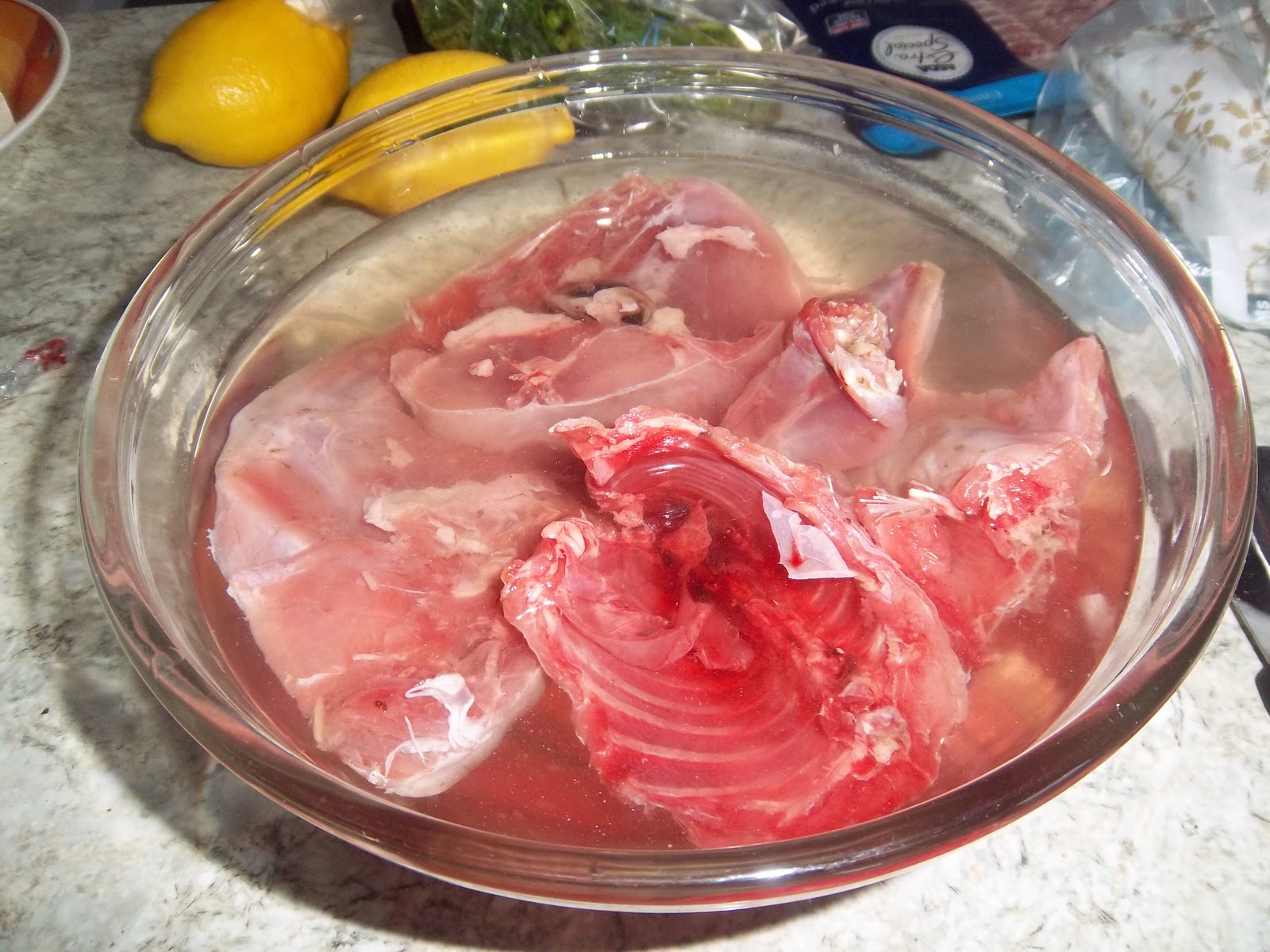
First of all joint a wild rabbit (or ask your butcher to do it) and soak it in salty cold water for around 1 ½ hours.

I am not quite sure why one needs to do this step. Perhaps it reduces the amount of water in the rabbit by osmosis for some reason? If you know, leave a comment, I’d be most grateful. Drain the rabbit and place it in a saucepan. Pour enough fresh water to cover the beast, bring the water to a boil and let it simmer for 3 or 4 minutes. Drain and dry it.

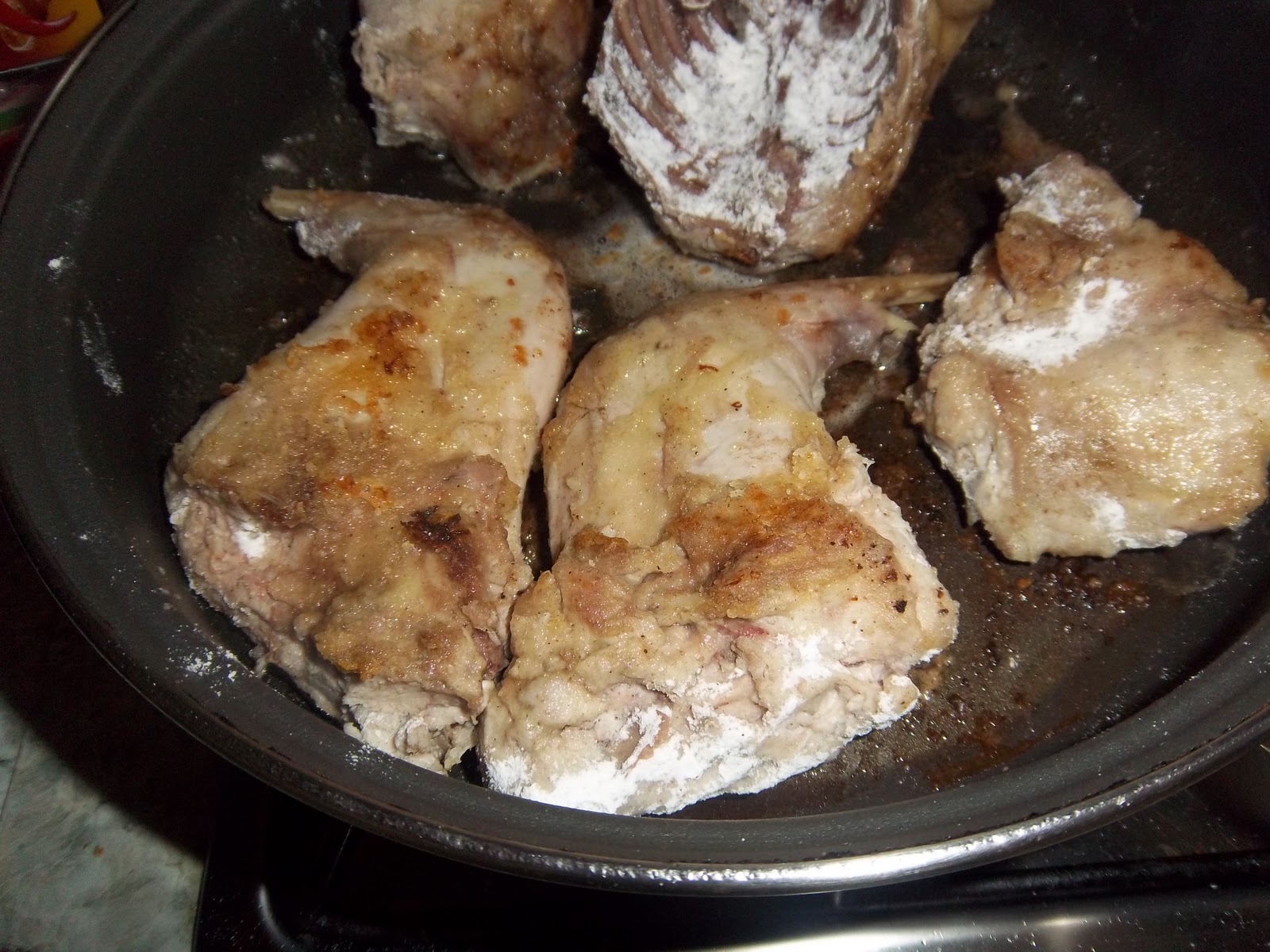
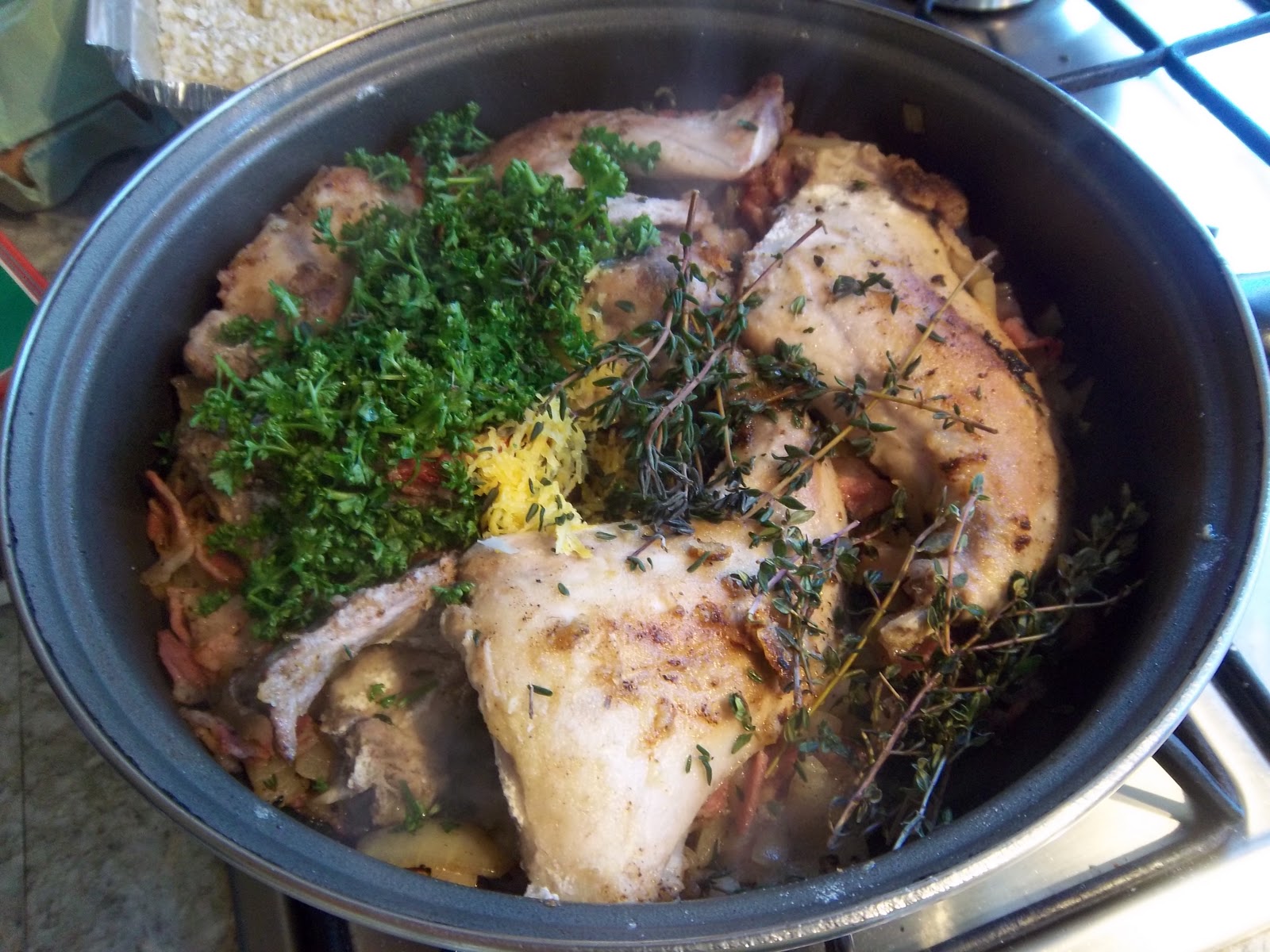
Roll the rabbit pieces in some seasoned flour and brown it in butter, lard, bacon fat or dripping in a large, deep sauté pan then fry a large chopped onion and 5 or 6 ounces of streaky bacon or salt pork. When lightly browned, add the grated rind of a lemon, a heaped tablespoon of parsley and four good sprigs of thyme.

Add enough light beef or veal stock to just cover. Cover and simmer until the rabbit is cooked. Jane doesn’t give a time here, but it will depend upon the age of the rabbit. Mine took about 1 ½ hours. To test it, I just sampled a bit of leg meat. Let the mixture cool and bone the rabbit if you want; I did because little ones were eating it.

Now the pie needs to be made. Place the mixture in a pie dish, piling it in the middle and scatter forcemeat balls around it (look here for the recipe). If you have a rather broad or long pie dish, it may be worth placing a pie funnel in the centre – I didn’t have one and the pie sank a little.

To cover the pie, roll out some shortcrust or puff pastry. Cut strips from the pastry and use it to line the rim of the dish, gluing it in place with some beaten egg. Next, cover the pie and trim any excess pastry and use it to decorate the top. Glaze with beaten egg.

My niece and nephew, Emma and Harry, expertly decorate the pie

Bake at 220⁰C (425⁰F) for 20-30 minutes and then turn the heat down to 160⁰C (325⁰F) for another 30 minutes. As usual, protect the pastry with some brown paper should it colour too much.

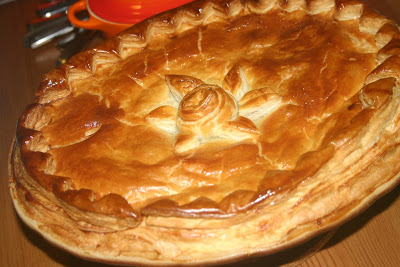
The best picture of the pie I could get –
it got gobbled up pretty fast!

#325 Rabbit Pie. I am on a roll with the pies at the moment because this was another excellent one. The rabbit was very tender and not too rank tasting as the previous rabbit had been. I suppose it is the risk one takes with game. The very lean rabbit was ‘fattened’ up excellently with all the streaky bacon it was fried with. Plus it was complemented perfectly by the fresh thyme and the lemon zest. Really good – now that wild rabbit is getting more common meat in Britain’s butcher shops, there’s no excuse in giving it a try. 8/10

#324 Grouse

I had heard this year was a good one for grouse, so as they were cheap I ordered a brace from Bentley’s, the local butcher in Pudsey, my home town. I had never cooked or eaten grouse before and was excited about adding yet another species to the list.
In Britain, game season begins on the ‘Glorious Twelfth’ of August, and it is the grouse that are shot from that day. Another bird joins them too – the tiny snipe. It is the grouse that is held the most highly among the game shooters however, for the game eaters consider it the best of all the game birds.
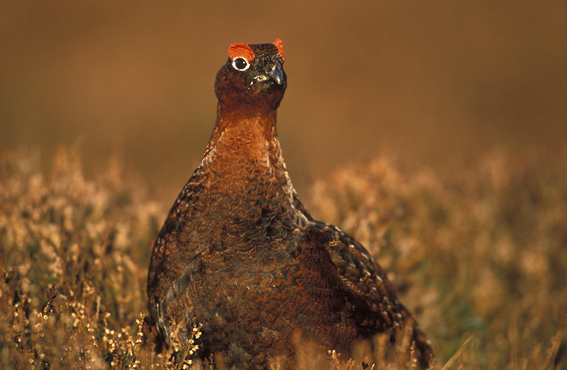
The grouse is not a single species; there are four in the British Isles. If you order grouse from your game butcher, then you will almost definitely be getting red grouse, the most common of the four.
The very beautiful red grouse
There are also the much rarer black grouse, ptarmigan and capercaillie. Of these, only the ptarmigan is still hunted, though in very small numbers, and there is a recipe for it in English Food, though I don’t expect to ever find one and cook it.
Male capercailles are rare, majestic and aggressive
and off the menu these days.
Grouse, like most game species, are very lean, which is great if you are wanting to cut down on your fat intake. The problem with this is that the meat can dry out very easily and so you need to protect the bird by encasing it in fat or bacon. You can also lard the bird with bacon fat or pork back fat. These measures are pretty easy to take, so cooking grouse is pretty straight-forward.
One grouse will serve one or two people.
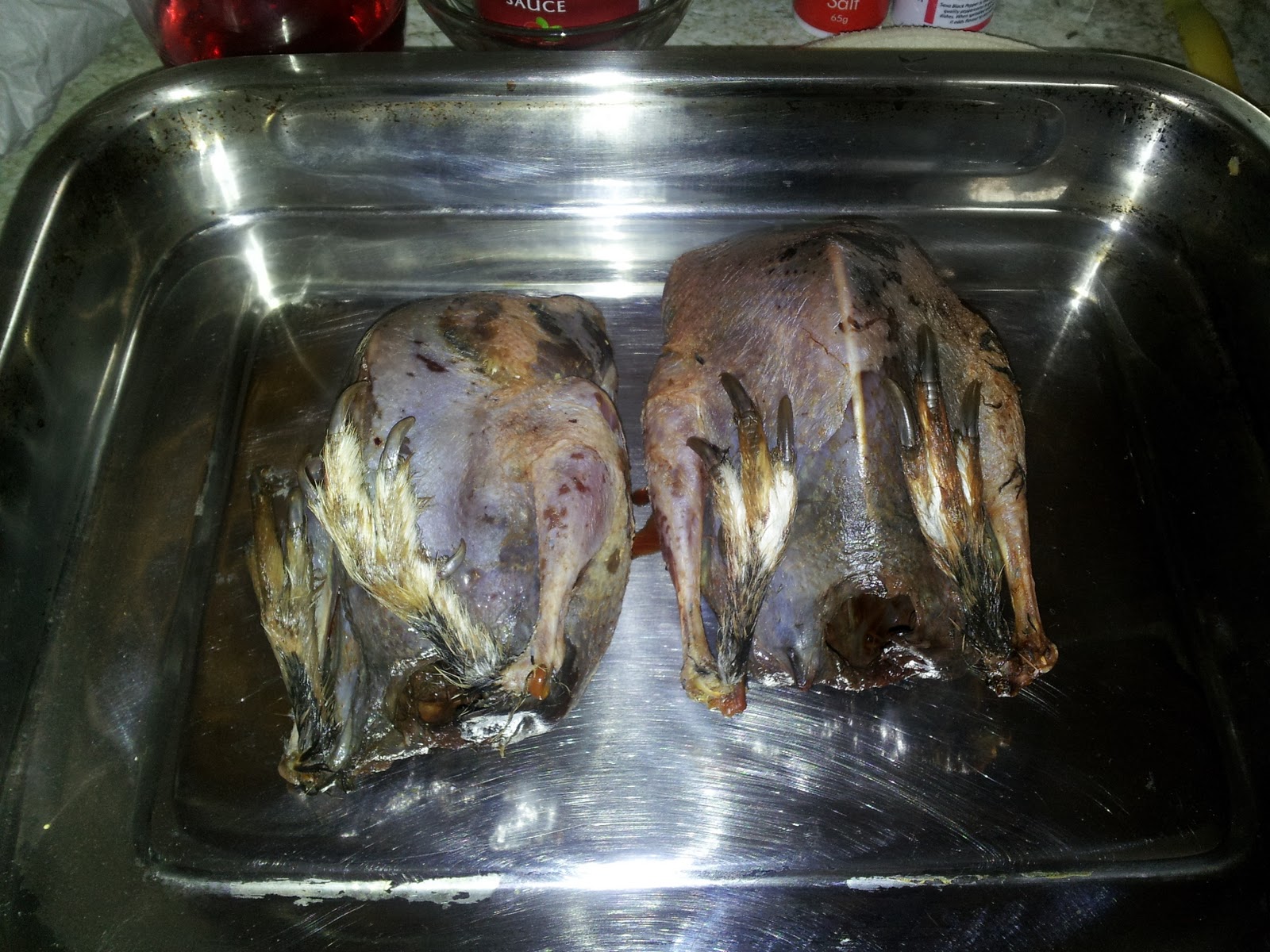
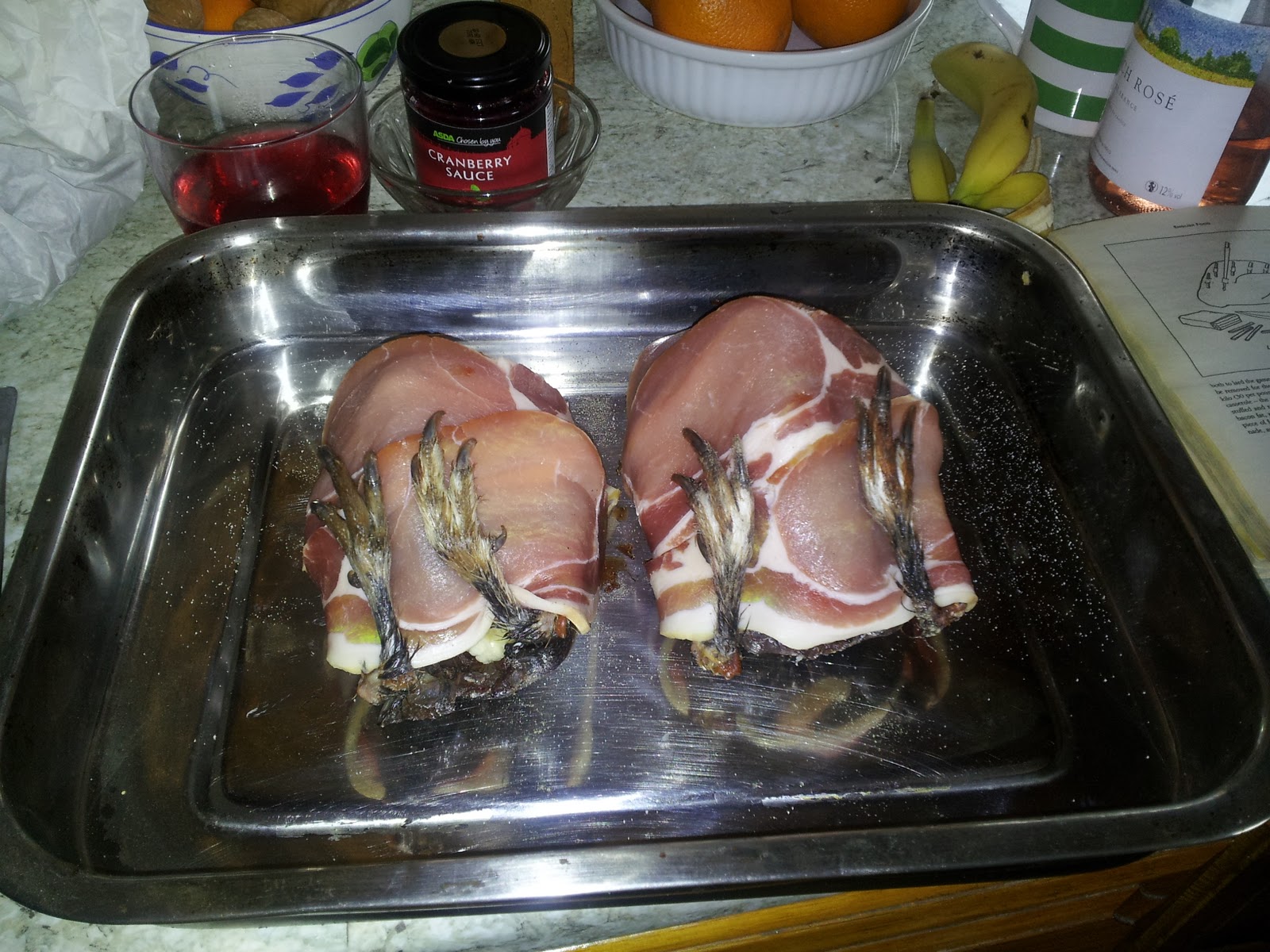
Preheat the oven to 190C (375F). Take your grouse and give them a rinse under some water and pat them dry. Season inside and out with salt and pepper and stuff the bird with some seasonal fruit. This depends upon the month you are eating the grouse; Griggers suggests bananas, wild raspberries, cranberries and peeled and seeded grapes. I went with banana.

Cover the birds with vine leaves if you can get them. This is not necessary, so don’t worry if you can’t find any (I couldn’t). Next, cover the birds in jackets made of either bacon rashers or a sheet of pork back fat.

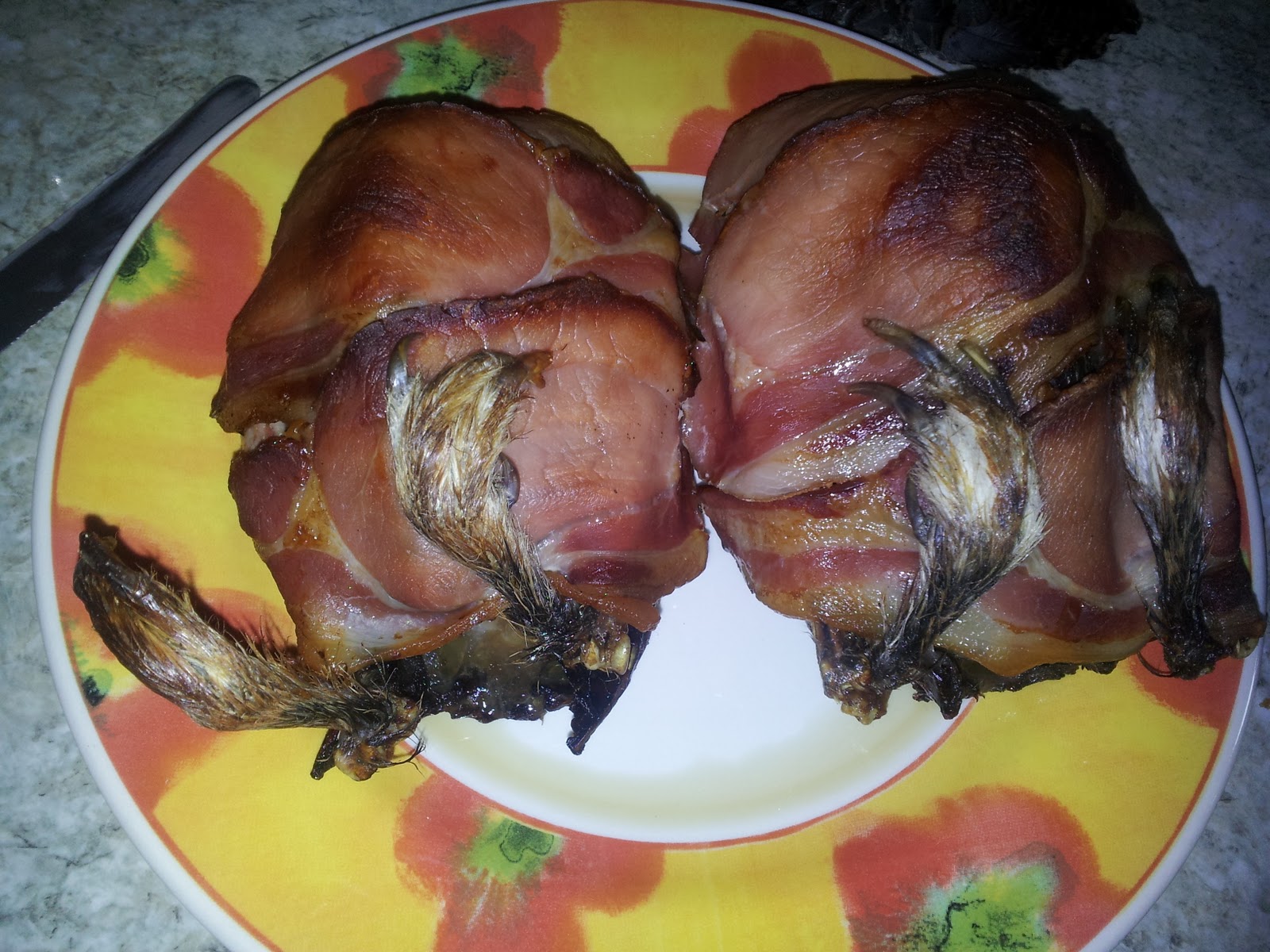
I went with bacon here as it could be served up alongside the grouse.

Roast for 35-45 minutes and allow to rest under some foil for around 20 minutes.

You can serve whatever you like with the grouse, but it is typically eaten with the typical game accompaniments like bread sauce, game chips and a tart jelly such as rowanberry. I went with some mashed potato and a couple of veg, myself.

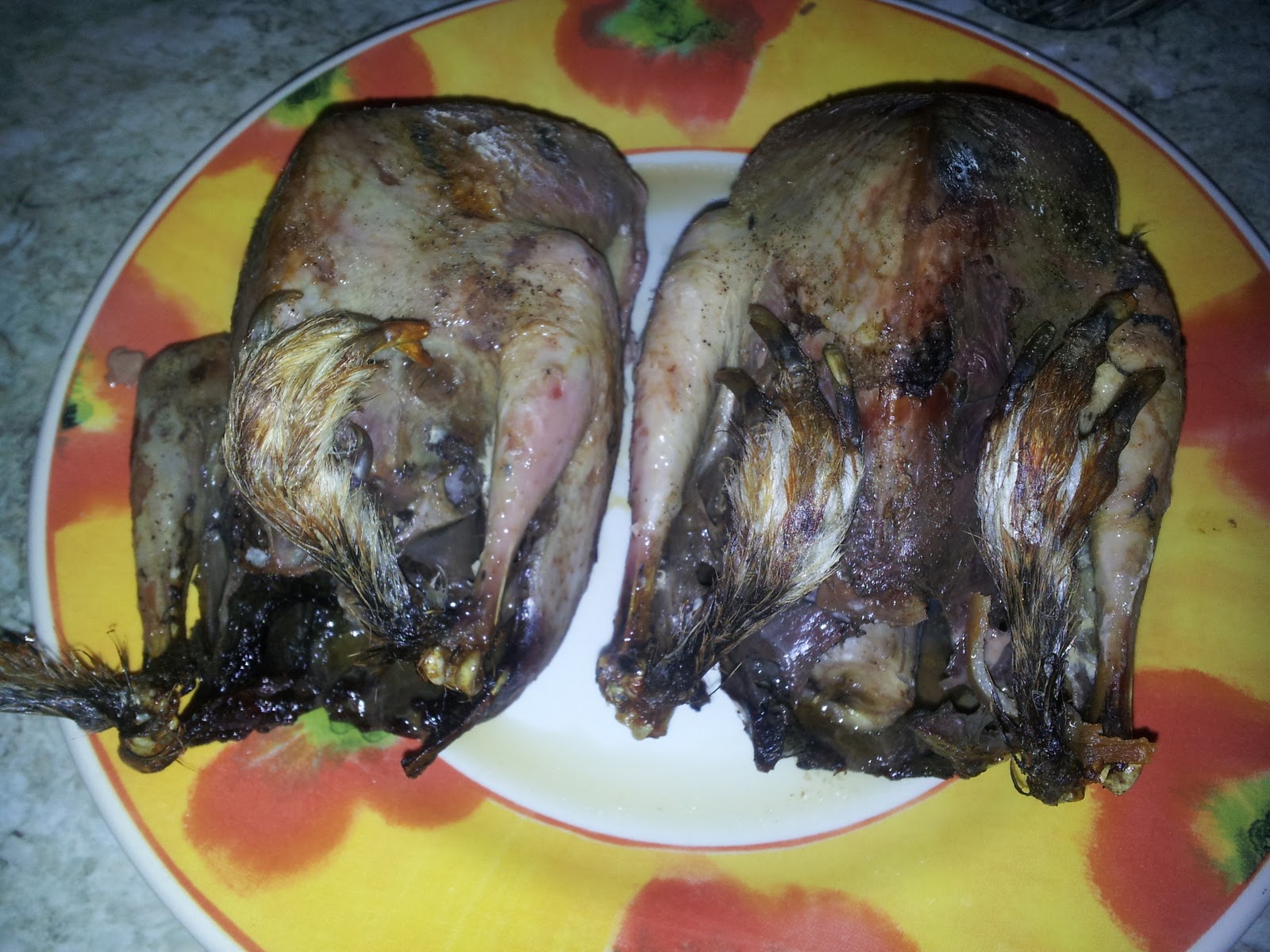
#324 Grouse. This was an extremely gamey bird that was almost overpowering for me. I am not sure if it had been overhung like the mallards from a few years ago as I have no frame of reference. However, if the meat was eaten with something relatively bland like the mash, then it was good. I would like to try it again whenever I can to see if was a little too ripe, as it were. They did look very impressive with their little hairy feet sticking up, though it seemed to freak some people out. As soon as the feet were removed, the legs suddenly became drumsticks and could be dealt by squeamish minds more easily. A difficult one to score as I don’t think I saw this game bird’s full potential, but I must go with what I had on the day: 3.5/10

#323 Salmi of Game (or Duck, or Fish)

A salmi, also known as salmis, salomine and salomene is essentially a posh game stew and is an abbreviation of salmagundi which started life in France as a meat ragoût. A salmi, rather than being any meat, should be made using game birds that are partly-cooked, and then finished off in a rich sauce made from their bones, though domesticated birds like capon and Guinea fowl are commonly used. Jane Grigson complains that more often than not, salmi is made from leftover game meat and then offered at high prices in high-end restaurants. ‘Don’t be deceived’, she says, ‘[i]t is exactly what would have been eaten by Chaucer, or his son, at the court of Henry IV, or by that granddaughter of his, Alice, Duchess of Suffolk, at her manor at Ewelme.’ Grigson mentions the food eaten at the court of Henry IV a few times in English Food: giving recipes for quince comfits and ‘a coronation doucet’.

The dish originally came from medieval France and game wasn’t necessary, as this recipe shows that Grigson found dating from 1430 that uses fish:
Salomene:
Take good wine, and good powder, and bread crumpled, and sugar and boil it together; then take trout, roach, perch, or carp, or all these together, and make them clean, and after roast them on a griddle; then hew them in gobbets [chunks]; when they be cooked, dry them in oil a little, then cast them in the bruet [the sauce] and when you dress it, take mace, cloves, cubebs, gilliflowers; and cast them on top, and serve forth.

Cubebs are a type of pepper (latin name: Piper cubeba) that you can still buy from specialists, gilliflowers are a very fragrant species of carnation and ‘powder’ refers to a mixture of ground spices.

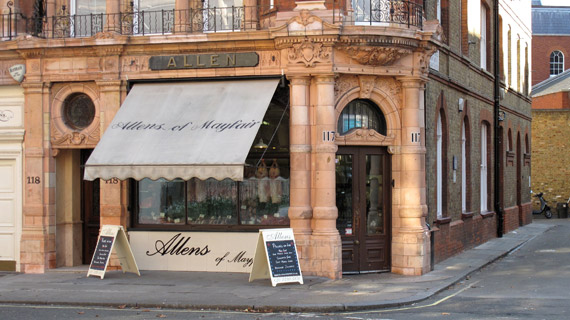
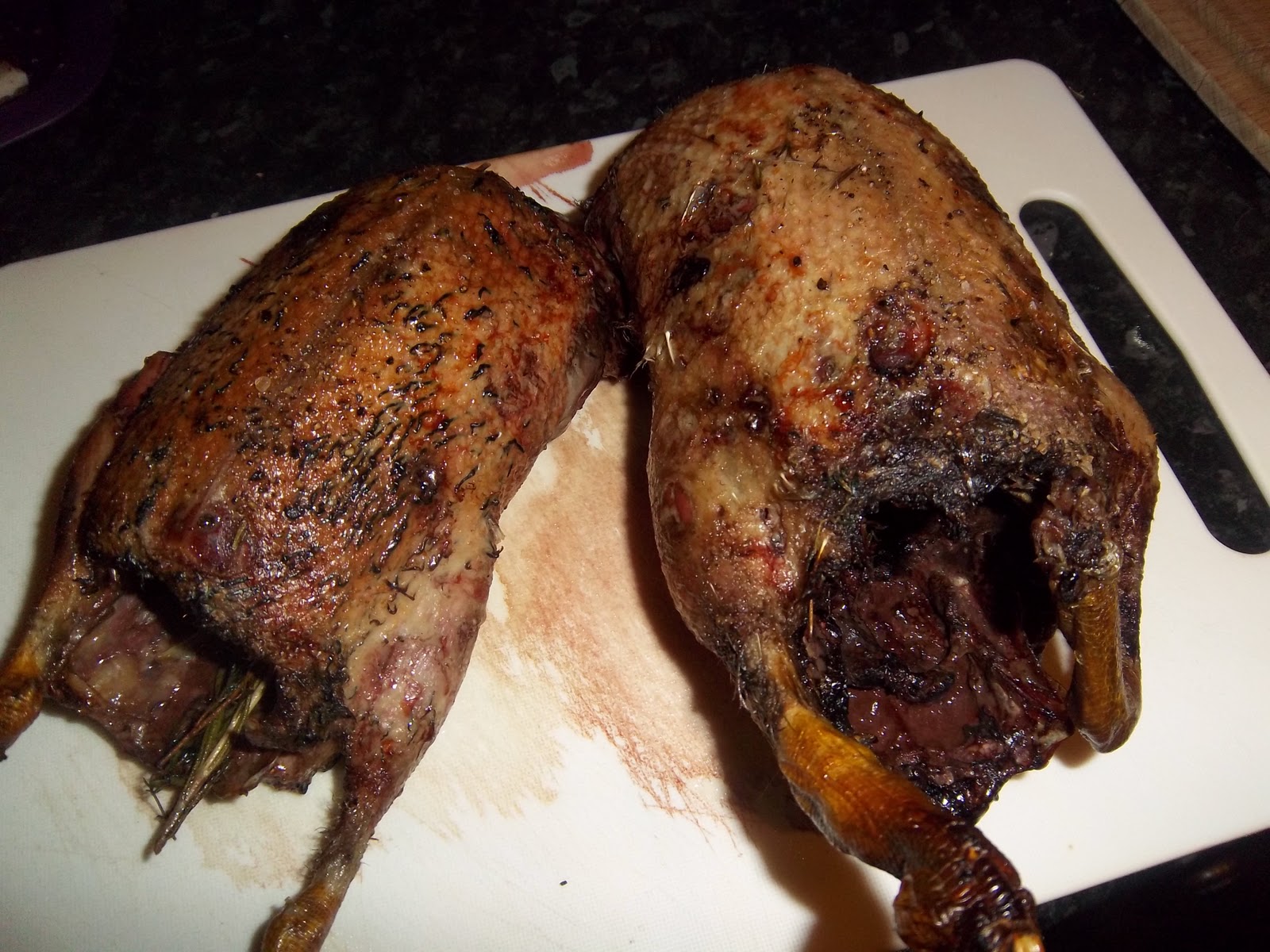
I have been eager to cook a couple of game recipes whilst I am over in England for Christmas, and seeing as I was in London, I thought I would visit the very excellent butcher Allen’s of Mayfair – an amazing place that consists of a central circular butcher’s block surrounded by the meat hanging up around it. I felt as though I had walked into a scene from a Dickens novel. I bought a couple of mallards and used those for the salmi.

Roast your game birds rare, cut the meat from the carcass into neat ‘gobbets’.

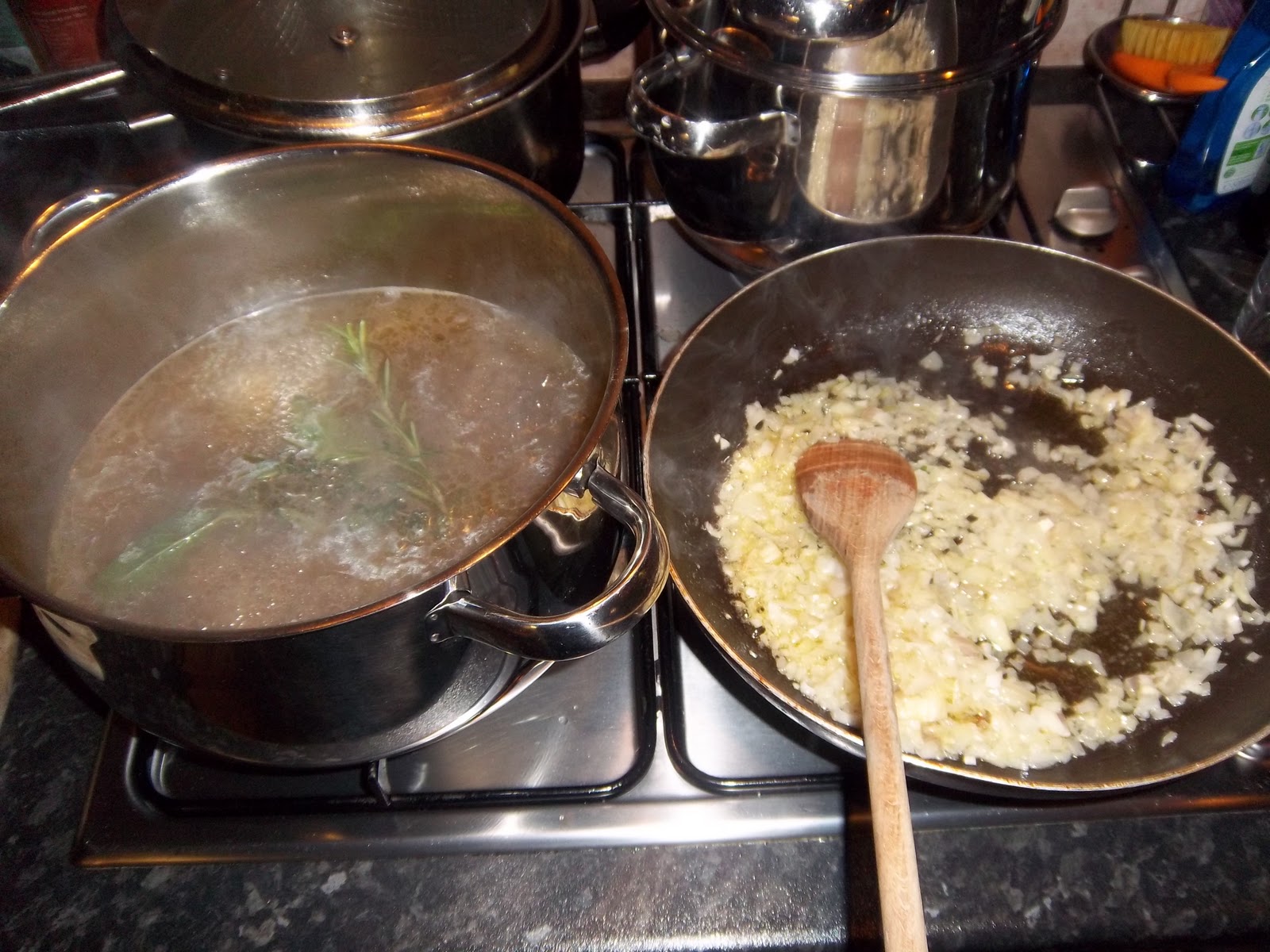
Use the carcasses to make ¾ pint of game stock. Melt 2 ounces of butter in a pan and cook 3 chopped shallots until soft and golden. Now stir in a heaped tablespoon of flour and whisk in the hot stock a third at a time to prevent lumps forming.

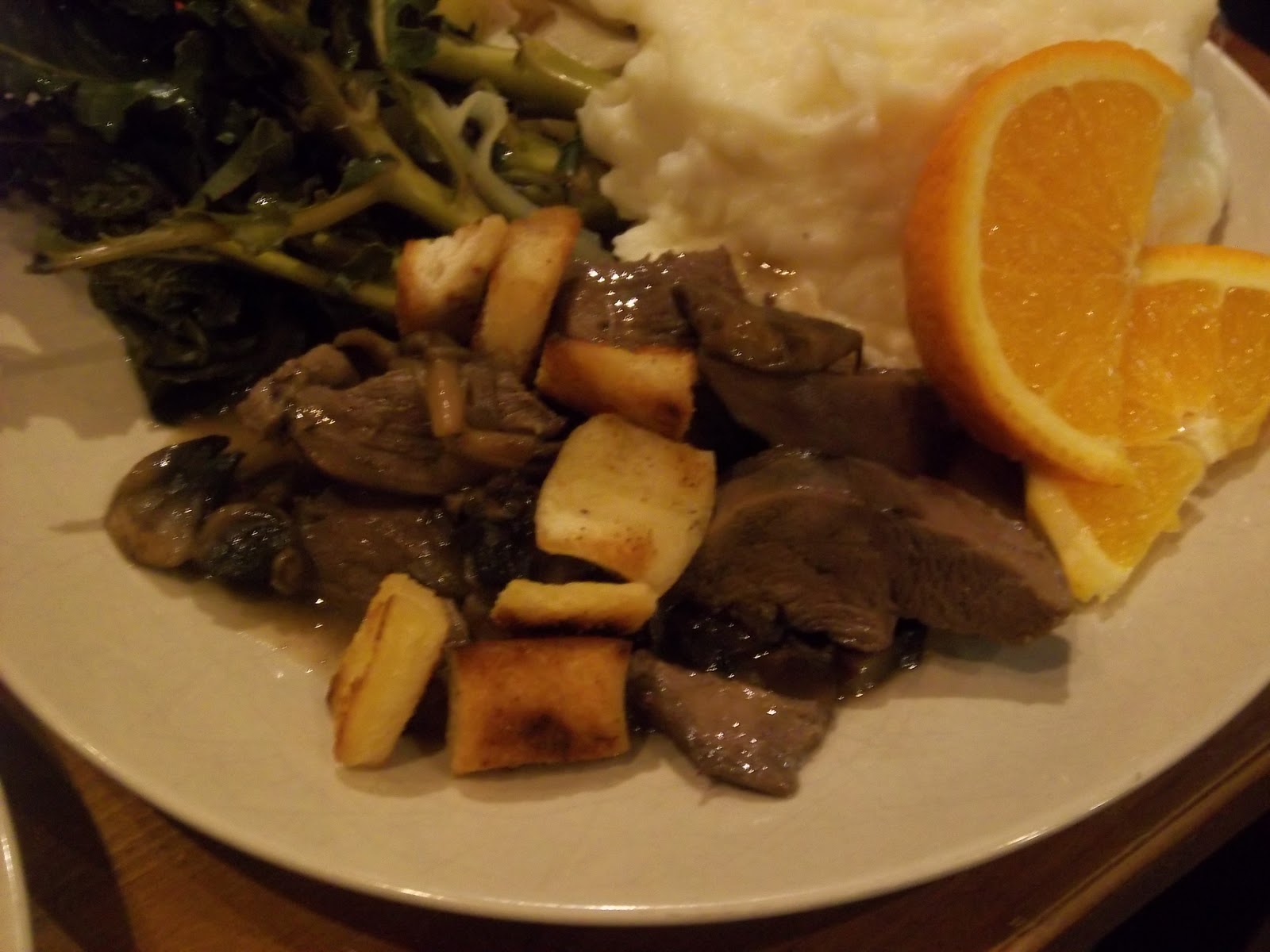
Add a bouquet garni and a pared strip of orange peel (Seville oranges would be great if you can get them) and simmer for 20 minutes, to make a thick sauce. Pass the sauce through a sieve and add ¼ pint of red or white wine and 4 ounces of mushrooms that have been fried in butter. Season with salt, pepper and lemon juice. Simmer for a further 5 minutes, then add the game and simmer very gently again for 10 more minutes. Add a little cayenne pepper. Serve with orange wedges and croûtons fried in butter.

#323 Salmi of Game (or Duck, or Fish). I must admit that I was a little worried about eating mallard – the last time I cooked them it was pretty grim (see here). I needn’t have worried though, it seems that the previous mallards had been overhung because this salmi of mallard was delicious. The meat was beautifully tender and surprisingly mild in its gaminess considering how dark the flesh was. The sauce too was wonderfully rich and silky. Plus the inclusion of orange wedges for squeezing was inspired. Tres bon! 9/10.

#298 Pulled and Devilled Turkey, Chicken or Pheasant

One of the most delicious dishes of eighteenth-century cooking, indeed one of the best of all English dishes“, says Griggers. That’s quite a statement. The idea behind this receipt is that it uses up that left-over Christmas or Thanksgiving turkey “with the glory it deserves“. It is nowhere near either of those two holidays, but in the receipt a roast or boiled chicken or a brace of roast pheasants can be used, and I must admit it does seem like a good dish for summertime as it is serve with bread and salad rather than stodgy potatoes and vegetables. Plus I was in the mood for some nice chicken. Perfect for hot, hot Houston eating, I reckoned. I made this for some friends to try – Danny, Eric and a Neil Cooks Grigson virgin, Jahnavi.

The turkey, chicken or pheasant is both pulled and devilled because the brown meat (i.e. leg and thigh) and the white meat (i.e. breast) are treated differently, with the brown getting a spicy marinade – the devil! – and the while meat being pulled apart into thready pieces the “thickness of a large quill” and cooked in a buttery-cream sauce presumably to temper the spicy devilled meat. Though this is an old recipe, I could find no information on it, though the inclusion of the mango chutney and the Cayenne pepper suggests an early Indian influence on English cuisine.

The actual devil, if you believe in that sort of thing.
Notice the devil is two-faced – quite literally –
one face in the usual place, the other on his arse

Although there is the big #300 coming up, this recipe marks the mid-way point through the leviathan of a chapter – the meat section. I’ve not done half as many of the strange or tricky ones that I have intended, but expect some when I move to St Louis later this month. I won’t have much of an option soon, as that’s all will be left to do!
Here’s what you do:
First prepare the appropriate fowl for the dish:
Roast turkey, you’ll need a leg (slightly underdone, if possible) and around a pound of cooked breast meat.
For chicken, you can use a boiled or roasted one, but try and undercook it. I did roast chicken and just missed off the final twenty minutes of cooking time.
For pheasants, a brace of either stewed or roasted ones will suffice!

Take the brown meat from the leg bones, keeping the pieces quite large and make some good, deep slashes in the meat. Now make a devil sauce by mixing together a rounded tablespoon each of Dijon mustard and mango chutney, a tablespoon of Worcester sauce or half a teaspoon of anchovy essence (I went with the former), a quarter teaspoon of Cayenne pepper, a little salt and two tablespoons of corn – or some other flavourless – oil. Pour this over the brown meat, making sure you work it into the slashes you made. The easiest way is to do all of this inside one of those zip-lock freezer bags. Let the meat marinade for a few hours, though I wouldn’t leave the chicken more than two as it is the most bland of the three birds here; pheasant or turkey could easily take four or five though, I reckon. Now lay the devilled meat on a baking tray and grill it under a high heat until it turns a delicious dark brown colour. Keep it warm.

Whilst the devil does its work, get on with the pulled part of the dish. Pull the breast meat apart with your fingers and set aside. For the pulled sauce, melt seven ounces of butter in a wide pan and then add half a pint of double cream. Bring to a boil and let it bubble for a couple of minutes before adding the breast meat plus any bits of jelly, then season with salt, pepper and lemon juice. Lastly, stir in some chopped parsley. Spoon into the centre of a serving dish or plate and place the devilled bits around the outside.
Eat with bread and a salad.

#298 Pulled and Devilled Turkey, Chicken or Pheasant. Griggers really built this one up, and I have to say that it more than lived up to expectations. The devilled bits were deliciously spicy and salty and were perfectly complimented by the creamy and surprisingly light pulled sauce. Definitely the best recipe from the Poultry section so far, but then what can be bad about spice, butter and cream? That’s the three major food groups, isn’t it? I can’t wait for Christmas now, I’m going to get an extra-large turkey just so this can be made the next day, and it is infinitely better than turkey a sandwich, that’s for sure! 9.5/10.

#289 Quail

And the LORD spake unto Moses, saying,
I have heard the murmurings of the children of Israel: speak unto them, saying, At even ye shall eat flesh, and in the morning ye shall be filled with bread; and ye shall know that I am the LORD your God.
And it came to pass, that at even the quails came up, and covered the camp: and in the morning the dew lay round about the host.

Exodus 16:11-13

As you can see, eating quail has gone back a good few years. You don’t see them very much in the UK these days; I’ve perhaps seen them twice at Farmers’ Markets. The USA, however, is chock-full of tricky-to-find ingredients to help me with this blinking blog project.

Although classified as a game bird, quails are farmed these days as they’re not very common, and it is now illegal to kill them, so if you hear one chirping away in a nearby field, let it be.

People in the Middle Ages certainly did not let them be, because they loved them. Actually they ate everything it seems. Here’s a list I found of their favourite game: quail (natch), partridge, pheasant, hare, rabbit….ok thus far, all Grigson recipes, but then… rook, crow, raven, lark, sparrow, capercaillie, peacock, stork, heron, swan, crane and bittern. Phew! A certain Alfred Gottschalk says on the matter: ‘It is wonderful that the stomach of man can profit by all manner of birds, and yet there are some of them that even starving dogs would not eat.’ Quite.

Griggers doesn’t give that much detail on how to cook them, in fact this is the whole recipe: ‘…they can be browned in butter and braised with a little stock, port wine and orange peel.’

So that is exactly what I did. They were browned in a cast-iron casserole and covered in a quarter of a pint of chicken stock and a good slug of port, along with some salt and pepper and some pared orange peel and popped them in a 160°C (325°F) for 20 minutes. I then took them out to rest and used a beurre manie (i.e equal weights and butter and flour mashed together) to thicken it. I served it not with the usual game accoutrements (bread sauce, game chips etc), but mashed potatoes and some wilted spinach.

#289 Quail. One of the mildest of the game birds, pale-fleshed and light to eat. It’s difficult to keep these tiny moist so quick cooking is required. The port wine and orange gravy was delicious and didn’t overpower the birds. These smaller game are good, but I think I prefer the stronger birds like pheasant and pigeon. I did enjoy feeling all medieval having an entire animal sat on my plate, so just for that it was worth cooking them. 6.5/10.

#241 Venison (or Game) Pie or Pasty

It’s pretty much the end of the game season now and so to see it off for another year, I thought a delicious venison pie was in order. I love venison, but for some reason have never cooked with it so I thought a pie would be the place to start. It’s a nice easy pie to make and the filling can be made well ahead of time. The really good thing about it was specific instruction of producing some ornate pastry work for the top. I don’t know why the name of the recipe is a pie or pasty, because there’s no instruction for making this into a pasty.

Start off by turning some pieces of shoulder venison or game in flour that has been seasoned with salt, pepper and mace. You’ll need three pounds of venison for other game for this. Brown the venison in two ounces of butter in a cast-iron casserole. Now add 4 ounces of chopped onion, ¼ pint of red wine plus enough beef or game stock to cover the meat. Bring to a simmer and cook gently until done, says Griggers. This might not be useful for those – like me – that have never cooked venison; I placed it in an oven heated to 150⁰C for two hours. In the case of game on the bone, it is cooked when you can take the meat easily from the bone. Melt two more ounces of butter in a saucepan and add a tablespoon of flour and cook to form a roux, strain some of the sauce into the pan and simmer for five minutes before mixing it back into the pie filling mixture. Check for seasoning. Pour the mixture into a pie dish and cover with puff pastry. Make a hole in the centre surrounded with a pastry rose plus some other nice ornate patterns, as is traditional, using egg to glue any bits on. Lastly brush to whole thing with more egg to make a nice glaze. Delicious hot or cold, says Jane.


#241 Venison Pie. This was a great pie! The meat was deliciously tender and gamey and the gravy dark and rich; a pie to warm your cockles. However, it was not delicious cold as the gravy was all congealed and it was a bit like dog food. Doing the pastry was great fun too (if you are a massive geek, like me) 7.5/10.

#219 Jugged Hare

I’d heard of jugged hare before and had always assumed that ‘jugging’ meant that some strange spices were added, but it simply means that it is cooked in the jug. The idea being that the hare can cook away in the jug that is, in turn, in a pan of simmering water. The way of cooking goes back to when people had to cook over their hearths. Jugged hare therefore has gone out of fashion because we make it into a casserole or stew (as in this recipe here) in the oven. I bought the hare from Shaw meats a few months ago and had had it stowed away in the freezer for quite a while, so it was perfect as the main course of my emptying-the-cupboards themed dinner party. Here’s how to jug a hare (or a large rabbit).

First joint your hare, and if you like lard it with some bacon fat or pork back fat. It is wise to do this if the hare is not a youngling. If any blood that drains off, keep it in a bowl (in fact, if you can get the butcher to keep the blood when hanging the hare, even better), rub the hare with salt, black pepper and Cayenne pepper and place the pieces in a large stoneware jug along with an onion that has been studded with three cloves, a bouquet garni (I used, parsley, bay, rosemary and pared lemon peel), and four ounces of butter. Cover with foil and tie securely and tightly with string. Place the jug in a roasting tin half-filled with boiling water, put it on the heat and bring to a simmer and then cook on the hob or in the oven for three hours.

When cooked, remove the pieces and allow them to rest while you make the gravy. Strain the juices (there will be a surprisingly large volume) in a sauce pan and add a quarter of a pint of red wine, a chopped anchovy and a pinch more of Cayenne pepper. Bring to a simmer and thicken: either with a beurre manié made from half an ounce of butter and a tablespoon of flour mashed together and added in knobs, or by adding the blood of the beast (don’t let the sauce boil though, otherwise it’ll will go like pink scrambled eggs). The blood I had reserved was only a small amount so I popped it in at the end. Lastly, add a squeeze of lemon juice. Griggers suggests serving it with fried bread, but I went with game chips (see here), forcemeat balls (see here) kale and ‘Carrots from 1599’ (see the next entry, when I get round to writing it).


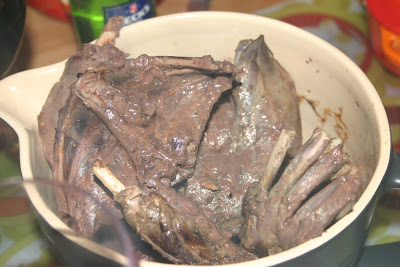
This pic makes the hare look rather unappetising, but it did look good in real life!

#219 Jugged Hare. A really good hearty winter stew this, the hare was very well-flavoured and gamey and the gravy was really delicious – very dark and very rich. Although it was good, it wasn’t as good as the hare stew I did last winter, which had a much more complex flavour. Still, it deserves an above average 6.5/10.