#351 Potted Cheese

Sorry for the quiet blog folks, I am still organising my life after my recent move back to Manchester. The dust has settled enough however, for me to do this recipe for potted cheese that I have had my eye on for a good while; I couldn’t make it in America as I couldn’t get hold of the required Cheshire cheese for love nor money (and if I could it would have cost a pretty penny, let me tell you).
Potted cheese was very popular from the mid-18thcentury as a way to use up left-over dry cheese and rinds and pep them up a little and make them edible and delicious once more. The cheese is potted just like potted meat or fish: mixed with butter and seasoned with alcohol and spices.
Any cheese can be used: Cheshire, Stilton, Gloucester, Wensleydale, Gorgonzola, Roquefort, whatever you have available. It then needs to be moistened and seasoned. Jane makes some suggestions as do many 18th century books: white wine, sherry, port, Worcester sauce, chili vinegar, black pepper, chives, mustard, Cayenne pepper, ground mace. The list goes on. Jane uses any leftover cheeses and combines them to make a single that is ‘a far more rewarding result than any cook deserves’, we mix our grapes to make blended wines, so why not cheese? Hannah Glasse says ‘a slice of [potted cheese] exceeds all the cream cheeses than can be made’. This is all high praise indeed. The recipe that Jane specifies uses Cheshire cheese, port or sherry, Cayenne pepper and walnuts.
Take 3 ounces of butter out of the fridge in good time so that it can soften. Next prepare 8 ounces of Cheshire cheese – cut into cubes and reduce to a crumble in a food processor or grate if doing by hand.  Add the butter and two tablespoons of port or brown sherry to form a paste. Add a good pinch of Cayenne pepper. Jane now tells us to either form into small cheese truckles and roll them in chopped walnuts, or to put in pots and cover with clarified butter if the potted cheese is to be kept for a while. I found the cheese truckles easier to make after the mixture was allowed to sit in the fridge overnight.
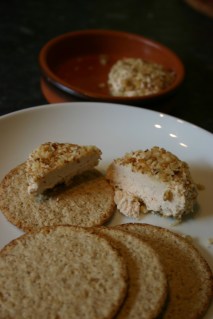
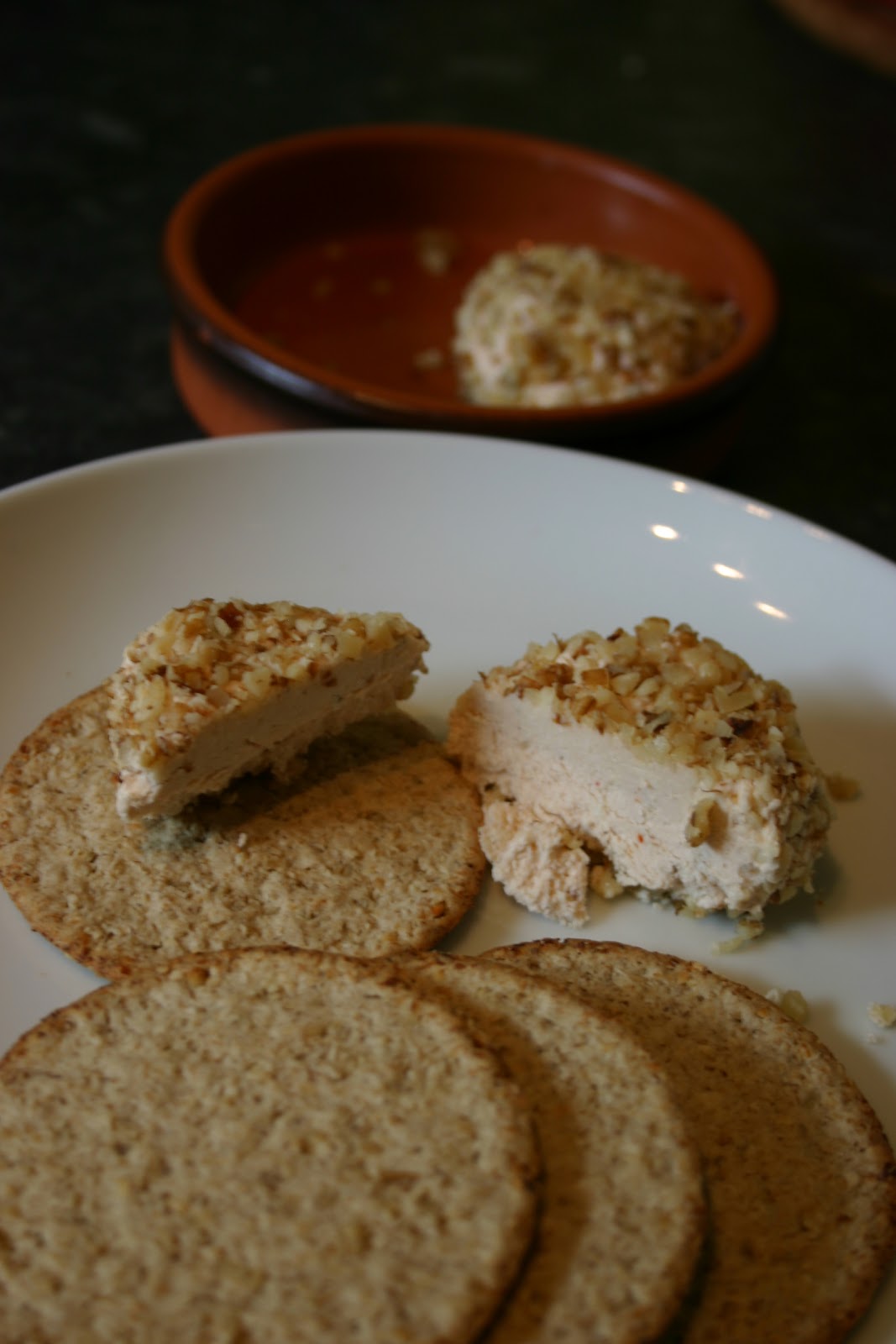
 

#351 Potted Cheese. I was very much looking forward to making this recipe, mainly because Jane is so enthusiastic about it. When I first made it I wasn’t too sure, I found it grainy and thought the alcohol didn’t quite work. However, I tried it again after a night in the fridge and it had transformed – the port had soaked into the grains of cheese to produce a creamy homogenous cheese truckle. It’s very good on an oatcake. On the strength of this, I’ve gone out and bought a few different cheeses so I can try a few combinations myself. 7/10.

#315 Cornel Cherry, Rowanberry, Bilberry or Cranberry Jelly

With Thanksgiving just around the corner, I thought I would have a stab at this jelly so we could have the traditional accompaniment to our Thanksgiving dinner. Even if it wasn’t Thanksgiving, it would have been the cranberry jelly I chose from the four possibilities; the other three not being available in the USA. It isn’t strange that the cranberry is on the list of fruits here: we Brits have been eating cranberry jelly with our turkey on Christmas Day for ages now – since the end of the nineteenth century. Prior to that, people either had goose (for Southerners) or beef (for Northerners), but they still may have had the jelly.

In America, of course, cranberries and turkey were two of the foods eaten at the first Thanksgiving dinner and they have become traditional and necessary fayre. They were not the only foods eaten on that day though; the feast also consisted of cod, eels, bass, clams, lobster, mussels, ducks, geese, swans and venison. I wonder why the turkey endured but the others did not. I’d quite happily tuck into some nice roast swan.

The four fruits that can be used in this recipe all have one thing in common: they are very tart and therefore great to go with fatty foods like roast turkey, goose, ham and the like.

Cornel cherries are not cherries at all but the fruit of a dogwood tree. They are only really used to make jellies in Britain, though other countries use them to flavour spirits. You can buy dried ones in health food shops these days as a super-food, but are unlikely to find them fresh in shops. They are native to Europe so you might just find some growing wild. I am no botanist, but I will keep a look-out for them on my return to Britain. These seem to be Jane Grigson’s favourite out of the four as it’s the only one she actually mentions in her little introduction to the recipe.

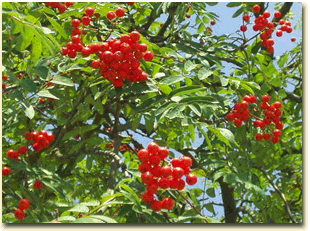
Rowanberries – the fruit of the rowan tree – on the other hand are very familiar. Rowans must be one of the most common trees in Britain; equally likely to be found in forests, parks and gardens alike. I envisioned making this jelly using rowanberries, who’d have thunk I’d end up in America? Rowanberry jelly is traditionally eaten with venison or lamb. It seems crazy with so much of it just growing wild everywhere it isn’t put it to good use. Next Autumn I will make some.

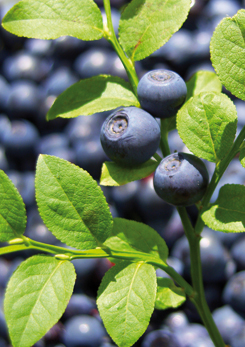
Bilberries are more common in Scotland and Ireland than England and Wales, though some are found in the northern climes. They are similar to the American blueberry, but they are much darker and have a very dark blue flesh. If you can’t find any bilberry bushes, you might be lucky to find the fruit at farmers’ markets, but they’ll probably cost you an arm and a leg; they spoil easily and the plant cannot be cultivated with much success. The bilberry is the only fruit of the four that can be eaten unsweetened.

It might surprise you to learn that the cranberry is not a New World fruit (it surprised me!). There are several species of them around the globe. When we think of cranberries we think of the large plump ones from America, but two species are found in the UK and are smaller, paler and more tart that their American cousins; one is found across the whole of the country, and the other is just found in Northern Scotland. If you buy cranberries at a supermarket, however, they will be the American species.

Whichever fruit you choose make sure you give them a good wash and pick out any bits of twigs and leaves. Weigh them and then cut up the same weight of apples – don’t peel or core them though, just chop them up. Use a tart apple; Bramley or Cox if you are in Britain, Macintosh if in the USA. Put all the fruit in a large pot and cover with water.
Bring it up to the boil and simmer until the whole thing has become a nice mushy pulp. Whilst it is cooking, set up a jelly bag over a bowl. If you don’t have a jelly bag and stand, use a large piece of muslin or even a pillowcase. Ladle the mush into the muslin and let the clear juice drip through.
It is best to hang it on a cupboard door if you don’t have a stand. Be patient now: if you add any pressure to the pulp it will make your jelly cloudy. On the other hand, it will make it more flavourful, so it is a trade-off. Grigson goes for the squeeze. I did not, for these cranberries were not precious, but bilberries for examples are, so I would want as much flavour as possible.

When the juice has dripped through, measure the amount of juice you have, return it to a cleaned pan and add a pound of sugar for every pint of juice. Bring to a boil and then to ‘setting-point’. Setting point is when the natural pectin in the apples and berries forms a gel. To achieve this, you need to get the temperature to 104C (221F) and keep it there for a few minutes. If there was a lot of water in the juice, it will take a while to reach the correct temperature. If you don’t have a thermometer you can use a cold metal spoon – dip it in the boiling jelly and push with your finger, if it wrinkles, the juice is now a jelly. If you turn the heat down under the pan, you’ll also notice the surface trying to gel over. Skim off any scum that the jelly produced and pot into sterilised jars. To sterilise jars, put them and their lids on a tray in a cool oven for 35 minutes. Soak any rubber seals in boiling water.

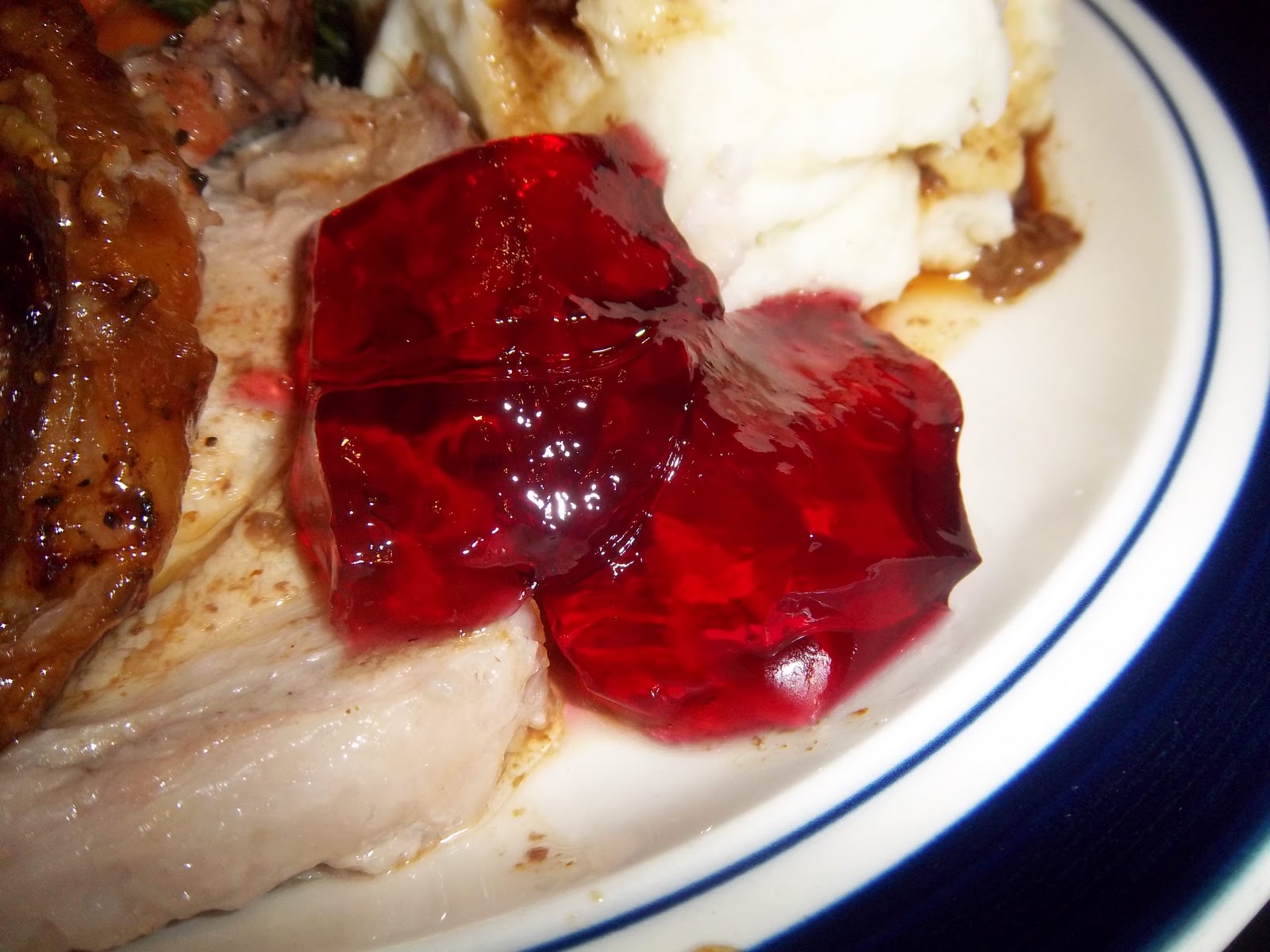
#315 Cornel Cherry, Rowanberry, Bilberry or Cranberry Jelly. This was a very good jelly – nice and tart and not overly-sweet like some of the bought ones are. It is a shame that I didn’t pick any from the wild, but never mind. It’ll be good with turkey for Thanksgiving and all the other meats and cheeses I’ll be eating on the lead up to it. There’s something very satisfying about making jams and jellies, I think it is because there are just three ingredients – fruit, sugar and water – and they magically become transformed into delicious, clear rubies shining away in their little jars. Pretty and delicious. 8/10

#294 Preserved Spiced Oranges (Part II)

Do you remember that time I lived in Texas? It seems like an age away, but it was only three months ago that I packed up my stuff and headed for Missouri. I remember gingerly packing my tins and bottles of various foods, hoping they wouldn’t get broken in the move. Amongst them were the jars of the Preserved Spiced Oranges I made in Maytime. I decided it was about time to try them. I admit I was putting them off rather – the last orange-based recipe was Soyer’s Orange Salad, which basically slices of raw orange sat in brandy, and it shall not be made again.
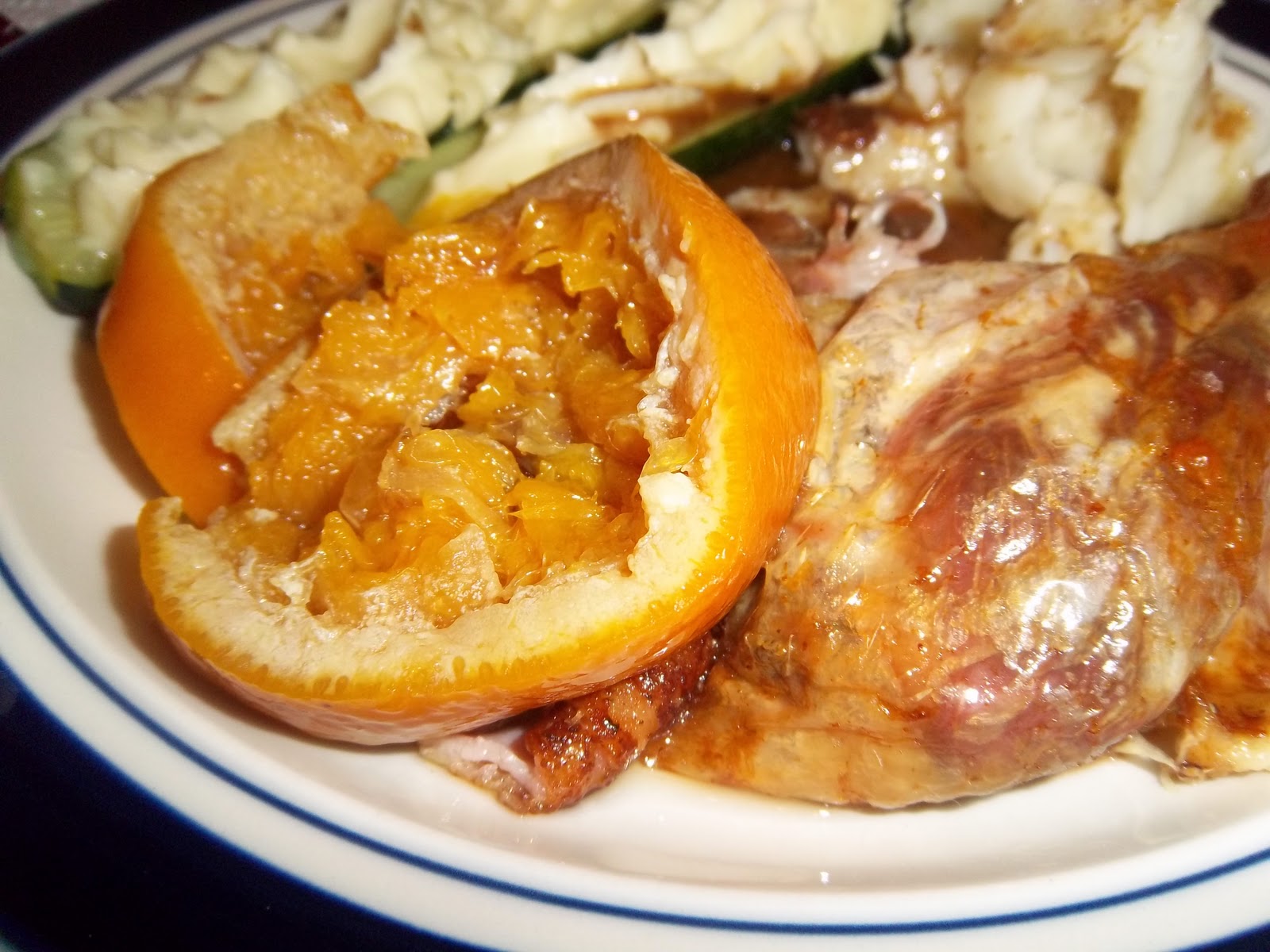
Anyways, these orange slices are to be served with hot or cold pork, duck, ham – I expect goose too. I decided roast a duck to mark the occasion of opening up a jar of these oranges. Oddly, there is no recipe for roast duck in English Food. Therefore, as it is an omission, I shall be adding my own recipe to the other blog (and here is the link). Though it is worth mentioning that I used a bit of the syrup from the jar to flavour my gravy. Grigson also mentions that the leftover syrup makes a great sauce for duck.
#294 Preserved Orange Slices. Well I do wish I hadn’t left trying these for so long, for they were delicious! The oranges had become very tender, without any bitterness at all. They were wonderfully warmingly sweet with the now well-infused cinnamon, cloves and mace. All that sugar and spice was cut beautifully by the white wine vinegar. Good work, Griggers! 8.5/10.

#302 Caveach of Sole

I decided that I needed to get back into doing some proper cooking now that I have a new stove in my new apartment. I invited some people around from work and their various spouses and kids. It is pretty hot here in St Louis at the moment so I needed to choose a recipe that was nice and summery and not all hot and stodgy. It needed to be buffet-style as there would be eight of us in all and I can only fit four around my little table. It also needed to be one that is prepared in advance so I wouldn’t be rushing around in the 35°C heat on the day. I don’t ask for much do I? Oh, and it also couldn’t be weird. My options for this kind of food are rather limited in the book now, but I happily found this one that seemed fresh and clean and rather Mediterranean in style.

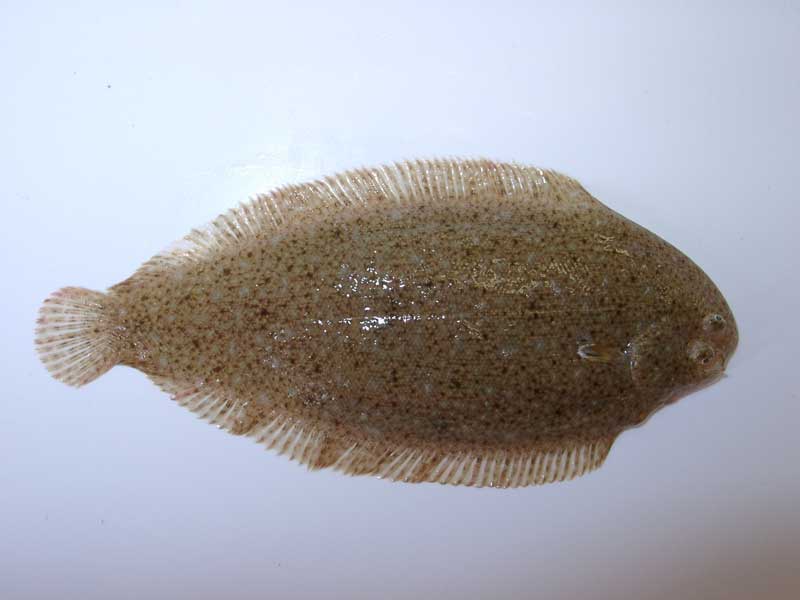
The sole lies on its side on the sea bed to camouflage itself.
Over time, natural selection has reacted to this by moving one eye
so that they both sit on one side of the head.

The word caveach refers to a method of preserving fish by cooking and then pickling it and comes from the Spanish escabeche. I did a little research on the preservation method and could only find books from the early-to-mid nineteenth century that mention it in any detail; though it seemed popular in both Britain and America at that time. The recipe below is more of a dinner party adaptation where the fish is only left for a few hours to pickle and isn’t intended as a preservation method at all. You can caveach any fish you like – the most popular seemed to be mackerel, herring and sardine, presumable because they were the cheapest and most common seafish at that time.

It is also nice to cook a receipt from the Seawater Fish section of the book – options are limited in America because there are different species of fish found commonly in their waters compared to European waters. However there is some common ground and the newly-discovered and very excellent grocery store Straub’s has a great selection of fish and meat as well as some other tricky-to-find ingredients, so I’ll be using them quite frequently during my time here in Missouri.

First of all prepare your sole fillets – you’ll need eight in all. Flatten them a little with a rolling pin, season with salt and pepper and fry them quickly in a little olive oil so that they brown a little. Cut them into thirds and arrange the pieces on a serving dish. Slice a medium red onion thinly and scatter over the fish along with the thinly sliced pared rind of a lemon and a couple of bay leaves cut in two. Next mix together seven fluid ounces of olive oil with three tablespoons of white wine vinegar and pour over the fish. Season again with salt, pepper and some Cayenne pepper too. Cover and refrigerate for at least a few hours, but preferable over night. When it is time to serve, scatter over some chopped herbsparsley, coriander or chervil are suggested by Griggers. I went with coriander. Serve with bread and butter and a salad.

#302 Caveach of Sole. This was everything I had hoped it would be – fresh, clean and slightly piquant. The delicately flavoured sole was not overwhelmed at all by the onions and the mild seasoning. A very good recipe this one – and simple too. I think I am going to try it with other, cheaper fish in the USA like tilapia or catfish. Any fish would work I reckon. A dinner-party stalwart this one will be, I feel. 8/10.

#294 Preserved Orange Slices (part 1)

These oranges are flavoured with a heady mix of cinnamon, mace and cloves; quite a wintery combination, I suppose. In Victorian times, the orange was the most prized Christmas gift and British children would have waited with baited breath to get their hands on them. This did not apply to Irish children though – a little earlier in history, William of Orange’s extreme anti-Catholic laws were so unpopular that the Irish people made a declaration that no orange tree would ever be planted in Irish soil.

William III of Orange (aka ‘King Billy’ by Irish Protestants)
In Europe, the best oranges have always come from Spain, and so it is no surprise that the first orange plantation in America was also Spanish. It was, of course, in Florida and it was built in 1579. After a few years of settlement, orange trees were discovered all over the forests, causing the surprised Spanish settlers to conclude that the orange must have been native to America! It turned out to not be the case – Native Americans had been stealing oranges and spitting the pips as they ate them.

I had been planning on doing these preserved oranges for a while as they are an accompaniment to pork and duck, my two new favourite meats, thanks to recent recipes here in the blog. I’ve only just gotten round to making them because a spice required for the recipe is mace – in the form of blades. Tricky, as supermarkets don’t stock them. However, now I have a car I could pop to The Heights area of Houston and visit Penzey’s spices. What a great shop! Every spice and spice blend you could ever need. Luckily, there is a store in St Louis, so I can keep myself stocked up when I move there. My favourite bit was Granny’s Kitchen which had all the baking spices.

Anyway, enough waffle. Here’s the recipe…

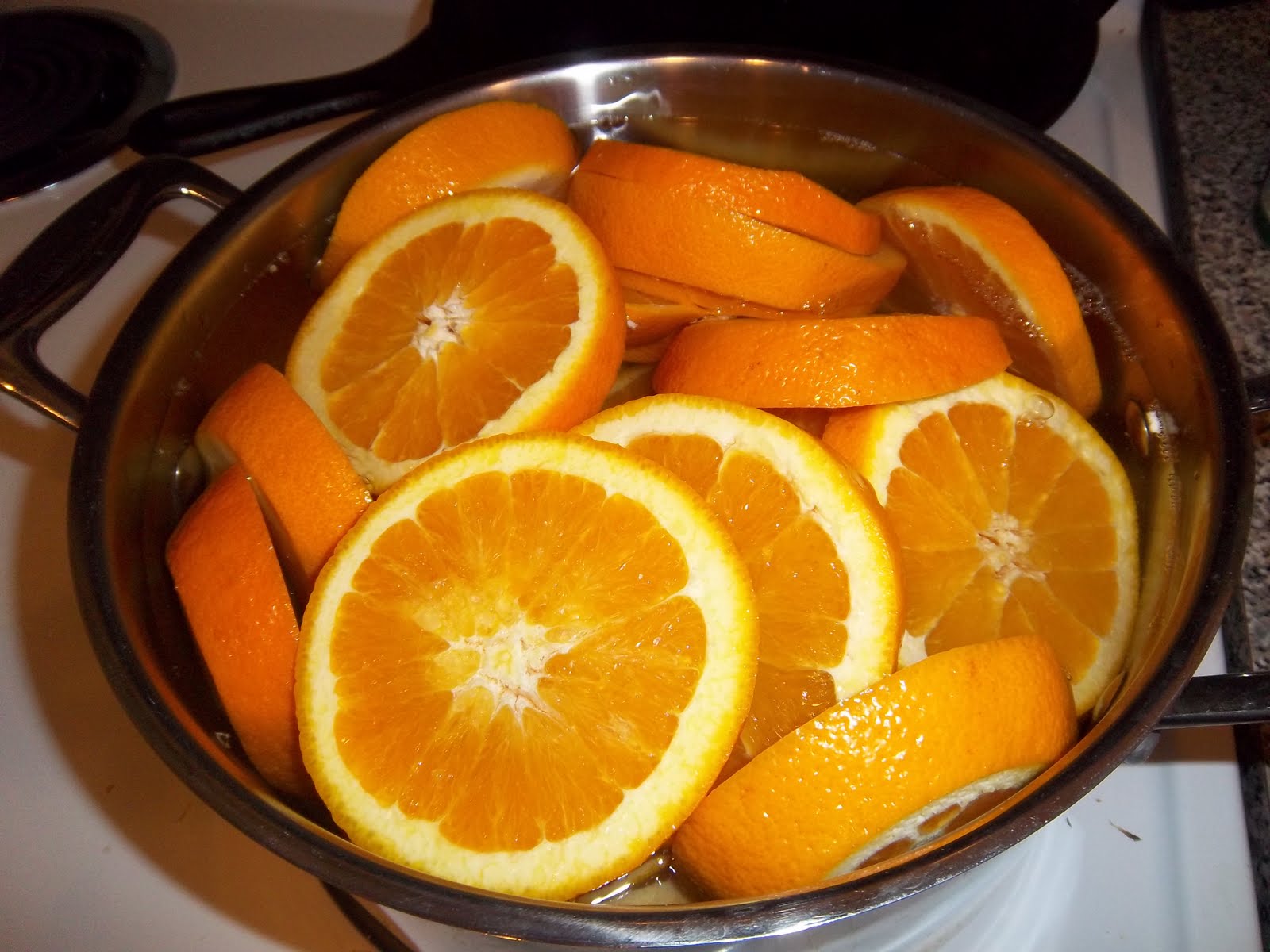
Begin by slicing 10 large oranges – keep them thick, about a centimetre is good – place them in a large pan and cover them with water.

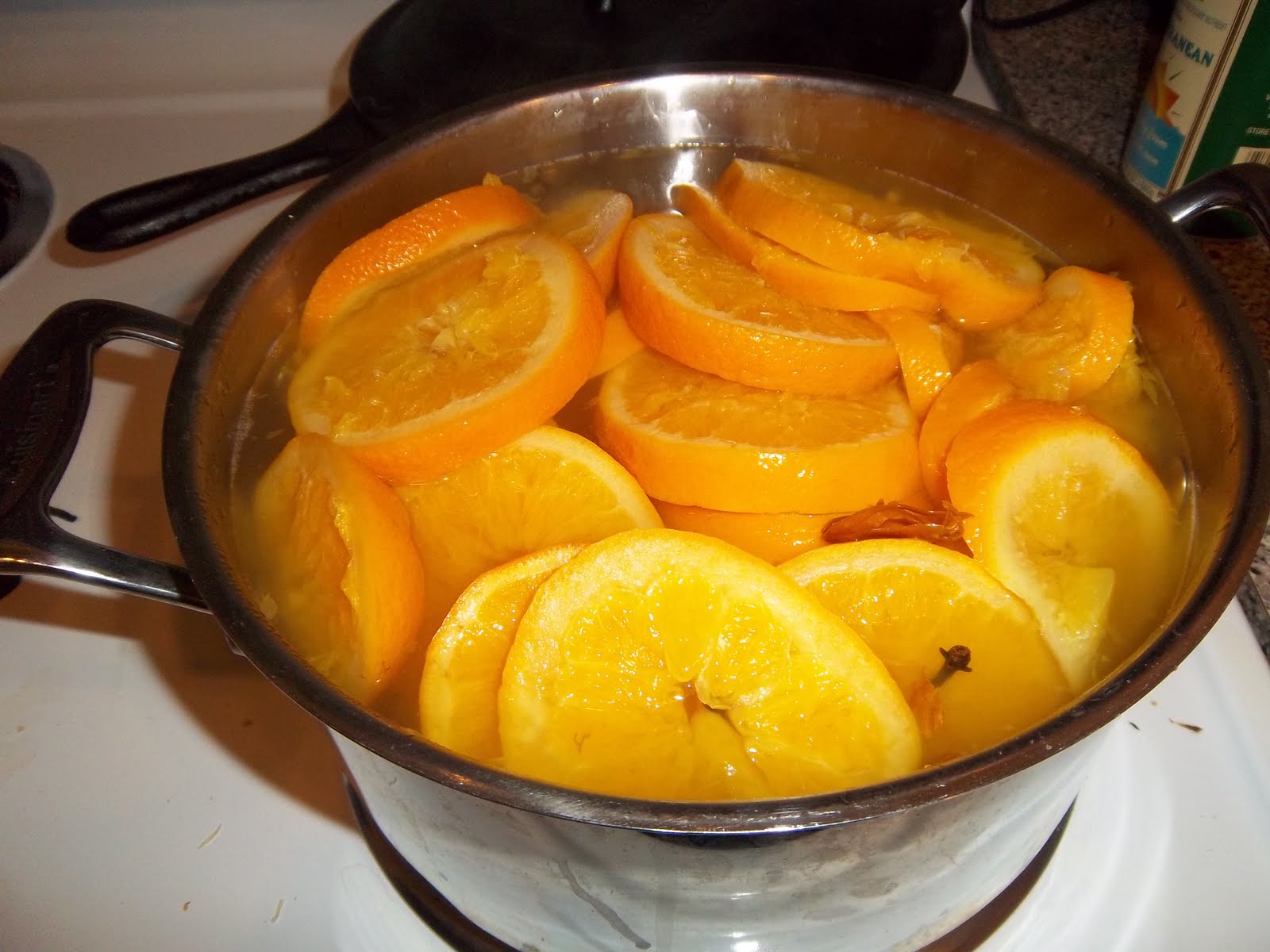
Bring to a boil, cover and simmer gently for 30 to 40 minutes until the peel has softened. Don’t stir the oranges around as they will break up. Meanwhile, in another pan, dissolve 2 ½ pounds of granulated sugar in a pint of white wine vinegar. Add 1 ½ sticks cinnamon, a heaped teaspoon of cloves and 6 blades of mace to the vinegar syrup and boil for a total of 3 or 4 minutes.

When the oranges are done, drain them, reserving the orange liquor. Return the oranges to their pan and pour over the syrup to cover – if there isn’t enough, use some of the orange liquor. Cover, bring to simmering point and cook gently for a further 25 to 30 minutes.

Take off the heat and leave for 24 hours. Next day, pot in sterilised jars. Top up with syrup over the next or two, should they need to be. Here’s the catch though folks: you now have to leave them for at least 6 weeks to mature! When the time is up, they can be served with hot or cold pork, ham or duck. The syrup also makes a good sauce for duck too. Apparently.

#294 Preserved Orange Slices. Well we shall have to have a bit of patience over these. It’s strange to think that when they are ready, I’ll be living in St Louis. I can say that the syrup is delicious though. Look here for the results.

#268 Potted Shrimps

Hugh and I invited our mates Maartin and Ninja around for some food so I thought it would be the perfect excuse to do a couple of Grigsons. Poor things. For a starter Hugh made some mackerel pate (I should get the recipe from him and put it on here) and I did these potted shrimps. I wanted to cook a recipe that I couldn’t do in America and this is one. I so far haven’t found anywhere in Texas that sells brown shrimp.
For those of you that don’t know, potted shrimps are a Lancastrian delicacy – they are going out of favour as many traditional foods are these days and, as far as I know, the only place that makes them is a small fishery in Morcambe Bay. They used to be very popular across the whole of the country after Young’s opened a shop selling them in London. The shrimps are fished and boiled on the boat before being dunked in the sea to cool off quickly. As the boat returned to land with its catch, the women and children of the town would be waiting to pot the shrimps.  If you happen upon some brown shrimps, try making them yourself because they are pretty easy to do.
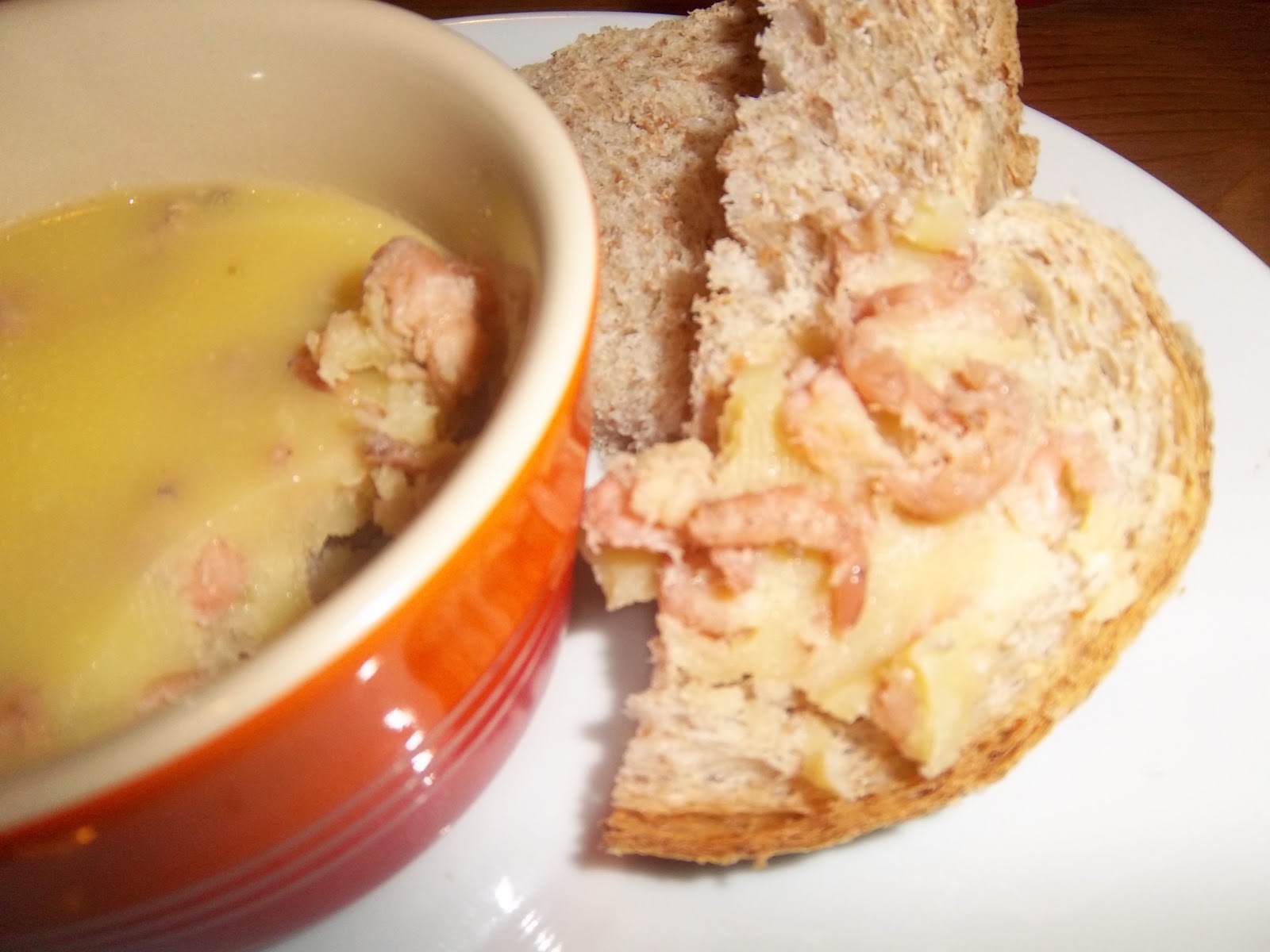
For every pint of shelled shrimps you will need to melt 4 ounces of melted Danish butter along with ¼ teaspoon of powdered mace, a pinch of Cayenne pepper and a grating of nutmeg. Once melted, mix in the shrimps and let them heat through. Pack into pots and cover with clarified butter and then some foil or cling film. Allow to set. Serve spread on brown bread or toast. Piece of piss.
#268 Potted Shrimps. I loved these. The shrimps are sweet and well-flavored and the traditional spices such as mace really complimented them. It’s a shame that mace isn’t used more often these days as it goes so well with fish. 7.5/10.

#255 Lemon Curd

God, I love lemon curd. I once tried to make it a while ago and it was a complete disaster. Then, I was a mere amateur and these days I am a wee bit better at these more tricky recipes. The process for making lemon curd (or indeed any fruit curd) is to thicken lemon juice, sugar and butter with eggs. Any sauce that involves this process, like ice cream and custard can potentially end up in disaster, because over-heating scrambles the eggs and you end up with a horrible mess.

I haven’t found any lemon curd here in Houston and no one seems to know what I’m talking about at work, which surprises me for some reason. I don’t know why. So for those of you not in the know, lemon curd is essentially used like jam – use in sandwiches, to make tarts or as a cake filling. It has been popular since the mid-eighteenth century and is a kind of preserve, but doesn’t keep any where near as long as jam due to the butter and eggs. Therefore it is best made in small quantities, this is not a problem is it is much less of a rigmarole to make than jam. This recipe makes around two jars of lemon curd.

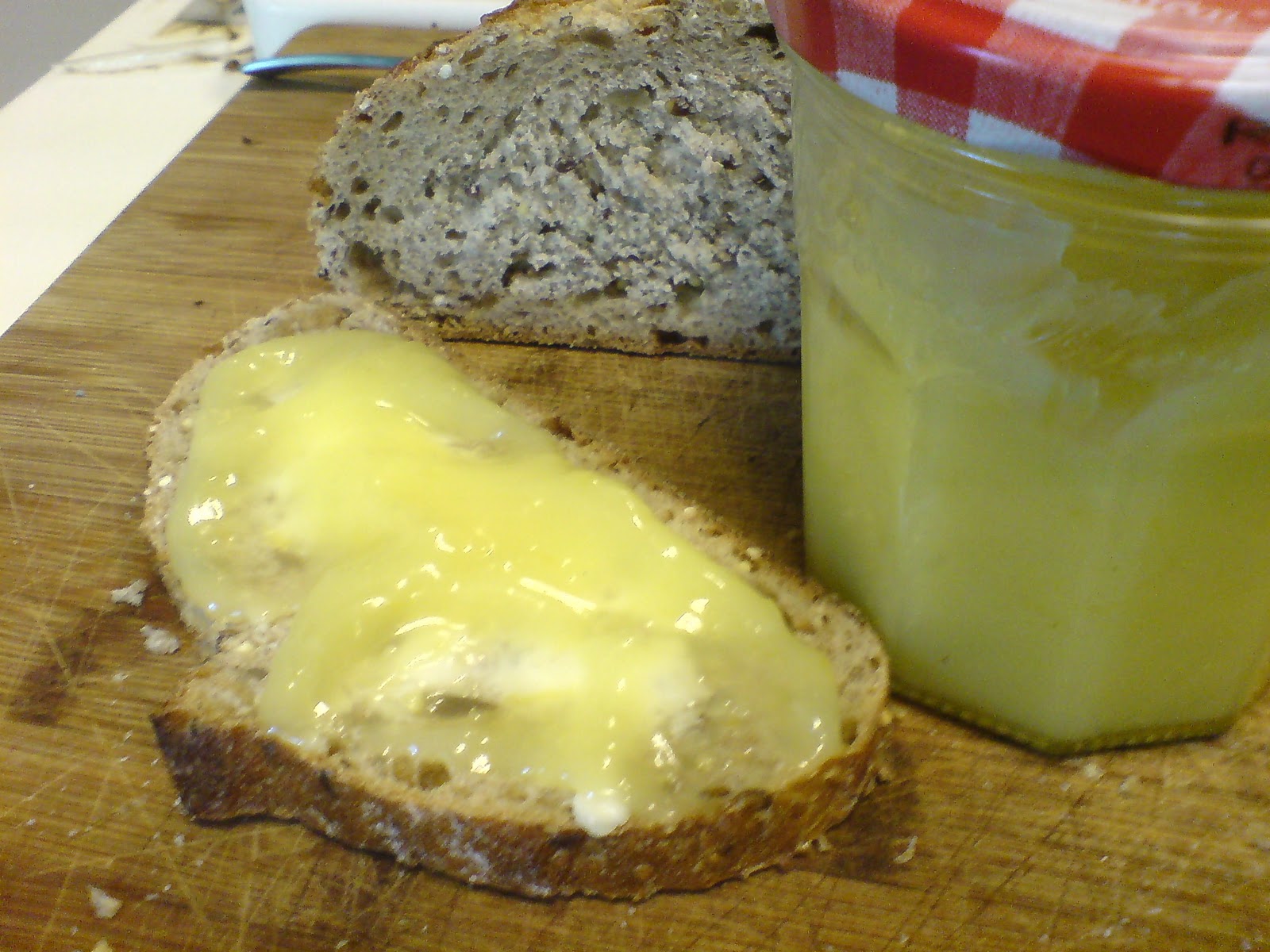
Grate the zest of two lemons into a glass bowl along with their juice, 3 ounces of butter and 7 ounces of sugar lumps (you could use granulated here too, I don’t know why sugar lumps are used here). Place the bowl over a pan of simmering water and stir until the butter has melted and the sugar dissolved. Whilst that is happening, crack 3 large eggs into another bowl and beat well. Sieve the eggs into the mixture (this prevents any lumps of white going in) and stir until the mixture thickens. This takes a while, and if you’re not used to thickening sauces with eggs it is best to be tentative and not have the heat to high. It will thicken quite alot, as long as the water is simmering beneath. Spoon the mixture into sterilised jars and allow to cool. Keep them in a cool place, but once open it’s probably best to keep the curd in the fridge, especially in this bloody Houston heat!

#255 Lemon Curd. This is a brilliant recipe for lemon curd. It isn’t too sweet and has a lot of zing; the inclusion of the zest really gives it some punch. It took me right back to England eating this! Delish. 8.5/10

#240 Smoked Sprats (and #232 Pickled Eggs revisited)

‘An inexpensive luxury’, says Jane Grigson of smoked sprats. That sentence should be now changed to: ‘An expensive luxury’. How times have changed. I’m not sure why smoked sprats aren’t more widely available because fresh sprats certainly are, so it’s not like they are hard to come by. The only place I’ve seen them is The Fish Society’s website. You eat smoked sprats whole, rather like whitebait, the difference of course, is that they are quite a lot bigger than tiny whitebait.

Anyways, my friends Simon and Rachel came over to visit after their super-amazing trip around South America. They blogged it, natch, have a look-see at it here. I thought smoked sprats would make a great starter. Because my friend Stuart – a staunch vegetarian – came along too so I served some pickled eggs, remember them? Have a look here to see they were made.

To cook the sprats, simply grill them and serve them with lemon wedges and brown bread and butter. To eat them, pull off their heads and tails and eat. If that seems a little too much, you can remove the fillets from each side with your thumb.


#240 Smoked Sprats. I really liked these alot. The problem of bones/guts was, in the end, a non-issue. The bones were just the right side of not being too crunchy or sharp. They were quite strongly smoked, but also sweet in flavour and not over-powering like some cured fishes can be. If you see some, be sure to give them a go. 8.5/10

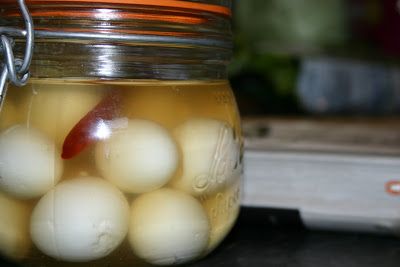
#232 Pickled Eggs. These were also very good – they required a little wait for the viengar to work its pickling magic, but were worth it. If you’ve had vile pub pickled eggs, don’t be put off by these. the white wine vinegar made them very subltly sharp and the chillies in the pickling liquor lent a decent spicy-punch to them. 7/10.

#232 Pickled Eggs

Ah, the pickled egg, one of England’s most traditional and bizarre delicacies; and they are certainly not to everyone’s tastes. Usually to be found in the fish and chip shop or the pub, they are strange creatures; like little biological specimens bobbing about in their brown malt vinegar jars. I reckon that people automatically expect to dislike them, and they probably would do; however, this recipe in English Food seems very good. The main reason why a pub pickled egg is snubbed that they are pickled in pure malt vinegar which makes them far too harsh. This recipe uses white wine vinegar and quail’s eggs over hen’s eggs, which means they are tiny and bite-sized rather than a great big chore. You can use hen’s eggs for this recipe though as the spiced vinegar seems so much more subtle and sweet. In fact if you ever do get a load of hen’s eggs, this would be a good way to store them. They take two weeks to pickle, so I don’t actually know what they taste like yet; we shall have to wait and see (see here how they were).


First of all, you need to make your pickling vinegar and the amount you required will depend upon the number of eggs you want to pickle. I had dozen quail’s eggs and so only needed half a pint to fill one large jar. I’ll give you the amounts for two pints of pickling vinegar as provide by Griggers herself, you can alter amount as required. Pour two pints of white wine vinegar into a pan along with half an ounce each of fresh peeled ginger, mustard seeds and white peppercorns plus three small dried chillies. Bring to the boil and simmer for five minutes. Strain the vinegar and allow to cool. Meanwhile, place the eggs in another pan and cover with cold water. Bring to a boil and allow to simmer for two minutes for quail’s eggs and ten minutes for hen’s eggs. You would do well to time the simmering, you don’t want to guess the times and have over-cooked black-ringed yolks. Let the eggs cool also. Shell the eggs and arrange them tightly in a sterilised jar – if hen’s eggs arrange them upright; if quail’s don’t bother as they are far too fiddly. Pour over the spiced vinegar, tuck in the dried chillies and seal tightly. Make sure you use non-metal lids as the metal will be corroded by the acidic vinegar. Leave for two weeks before using in salads or as an hors d’oeuvre, says the Grigson. I might use them as an excuse to have fish and chips.

#150 How to Cure Meat in Brine

Well here we are – 150 recipes in. I didn’t realise I was at this milestone until yesterday – unfortunately it’s not some magnificent feast, in fact it’s really a recipe as such, and I can’t really give it a rating (at least not yet).

Jane Grigson has quite a few recipes that require salting and brining, so I thought I’d better start to get to grips with this completely ignored section of the book, by making roast ham from start to finish as the best way for me to get started, though I’ll discuss that in a separate post – this one is just concerned with brining generally.

I’ve been doing a bit of reading on the subject of brining and it seems a bit of a lost art – there’s not much information about the history of it or how to do your own curing by the method. Obviously it’s gone out of favour to some degree because it is a method of preservation first and foremost, and now with frozen and refrigerated meats on tap these days we don’t have to do such things. However, brining also lends good flavour – we all like good ham, gammon or salt beef – so you would think it popular (seeing as it’s easy too). The thing is that it is time-consuming, and we can all just pick some up ready brined or ready roasted meat, but one thing I read was that for many wet-cured meats, the wet-cure part of the process is missed out! These days they are cured with nitrating bacteria – nitrates help preserve things – resulting a lack of flavour. I’m certainly not insinuating that this method is ubiquitous, but I reckon most supermarkets (and many butchers) use it.

Brine contains three magic ingredients that help preserve meat: salt, sugar and saltpetre. The first two do so because they are in huge quantities in the brine, and can affect the normal osmotic pressures of cells – both animal and microbe. Salts and sugar enter the cells, and water rushes out in an attempt to equal the concentrations inside and outside of the cells. This results in the death of the microbes and the preservation of the meat. Saltpetre (or potassium nitrate) is antibacterial and also gives the meat a pleasing pink colour (it is what makes corned beef so pink, for example). Aside from these three ingredients there are several herbs and spices that improve the flavour of the meat.

FYI: In days of yore, saltpetre was produced by pouring stale urine to huge haystacks where it would drain and crystallise. Yum!!

To make the brine, start off by cleaning a tub or bucket with a close-fitting lid and a plate that will comfortably fit inside with soda crystals. I used a six litre Tupperware tub with a handle. Do not use a metal tub as it may react with the salt or saltpetre. Allow them to drip dry. Whilst you’re waiting for that, make the brine: To a large stockpot or similar add 5 pints of water, 12 ounces each of sea salt and brown sugar and an ounce of saltpetre. This is the basic mixture, but now you need some aromatics (all of which are optional): 1 level teaspoon of juniper berries, a small piece of grated nutmeg, a bay leaf, 3 sprigs of thyme, a level teaspoon of black peppercorns and 4 cloves, Grigson says, but anything you like in that goes with the meat you are brining. Bring to a rapid boil and skim off any scum should there be any. Allow to cool in the pot. Once cool, strain it into your cleaned tub. Place in the joint of meat and keep it submerged in the brine with the plate you washed earlier. Place in a cool cupboard or pantry – though don’t allow it to go below 4°C. The length of time it sits there now depends upon the type of meat and the reason you are brining it (see your recipe, or below, for guidelines). When it is done remove with some clean tongs.

The brine won’t last indefinitely – it may grow mould on it’s surface, which some people say just to skim off. The reason is; the amount of salt depletes every time you use it. For a corrective dose, boil 1 ¾ pints of water with 7 ounces each of salt and sugar and a heaped dessertspoon of juniper berries. Let it cool and add it to the skimmed brine. You could of course just make more from scratch.

Pork leg joint magically being tranfomed into ham

Brining times:
To convert shoulder or leg of pork into ham, or for pork loin: 3 to 10 days
Pig trotters and halved heads: 24 hours
Small tongues (e.g. pig): 36-48 hours
Large tongues (e.g. ox): 5 days
Duck (minus giblets): 36-48 hours
Beef silverside or brisket: 7-10 days
Lamb or mutton shoulder, leg and loin: 7-10 days.

The meat needs to be cooked by boiling – check the cooking water is not too salty after about 5 minutes cooking. If it is change the water and start again. If it’s okay, then add your stock vegetables or whatever the recipe requires.

However, if you are making a roast joint for Sunday lunch, try popping the joint in brine overnight to season it.

So there you have it – hopefully all works out and it doesn’t taste completely foul. My fingers are crossed that it ends up being worth the effort.