#324 Grouse

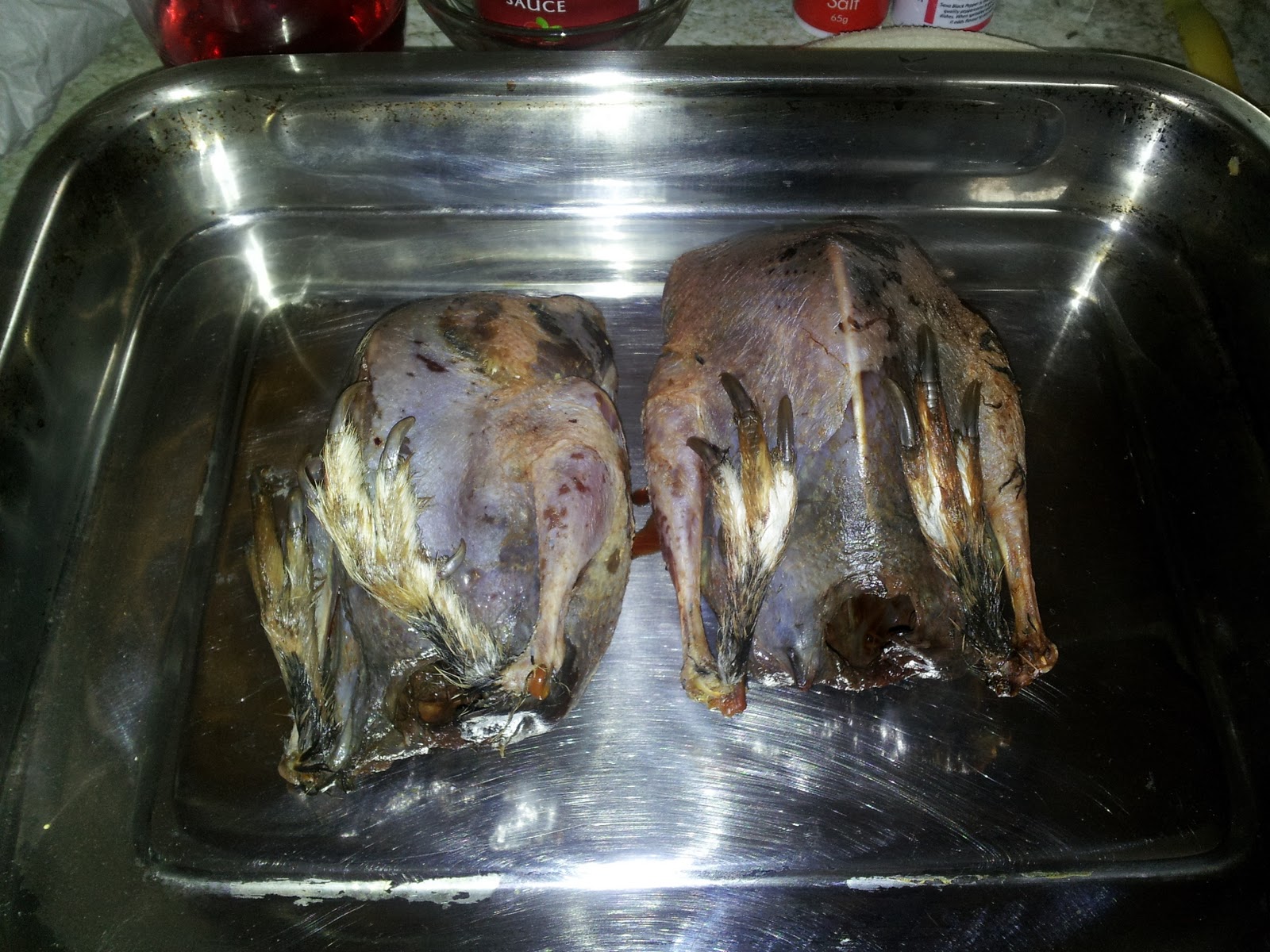
I had heard this year was a good one for grouse, so as they were cheap I ordered a brace from Bentley’s, the local butcher in Pudsey, my home town. I had never cooked or eaten grouse before and was excited about adding yet another species to the list.
In Britain, game season begins on the ‘Glorious Twelfth’ of August, and it is the grouse that are shot from that day. Another bird joins them too – the tiny snipe. It is the grouse that is held the most highly among the game shooters however, for the game eaters consider it the best of all the game birds.
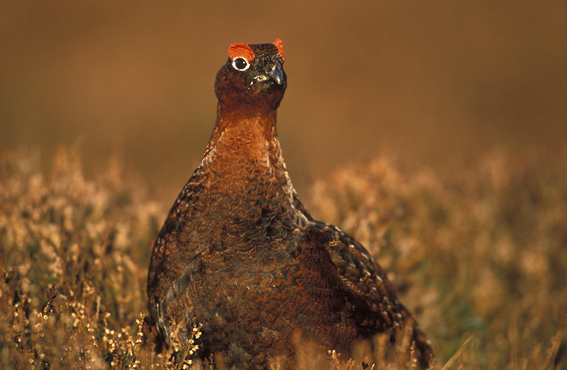
The grouse is not a single species; there are four in the British Isles. If you order grouse from your game butcher, then you will almost definitely be getting red grouse, the most common of the four.
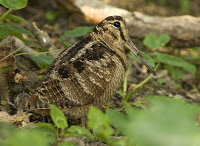
The very beautiful red grouse
There are also the much rarer black grouse, ptarmigan and capercaillie. Of these, only the ptarmigan is still hunted, though in very small numbers, and there is a recipe for it in English Food, though I don’t expect to ever find one and cook it.
Male capercailles are rare, majestic and aggressive
and off the menu these days.
Grouse, like most game species, are very lean, which is great if you are wanting to cut down on your fat intake. The problem with this is that the meat can dry out very easily and so you need to protect the bird by encasing it in fat or bacon. You can also lard the bird with bacon fat or pork back fat. These measures are pretty easy to take, so cooking grouse is pretty straight-forward.
One grouse will serve one or two people.
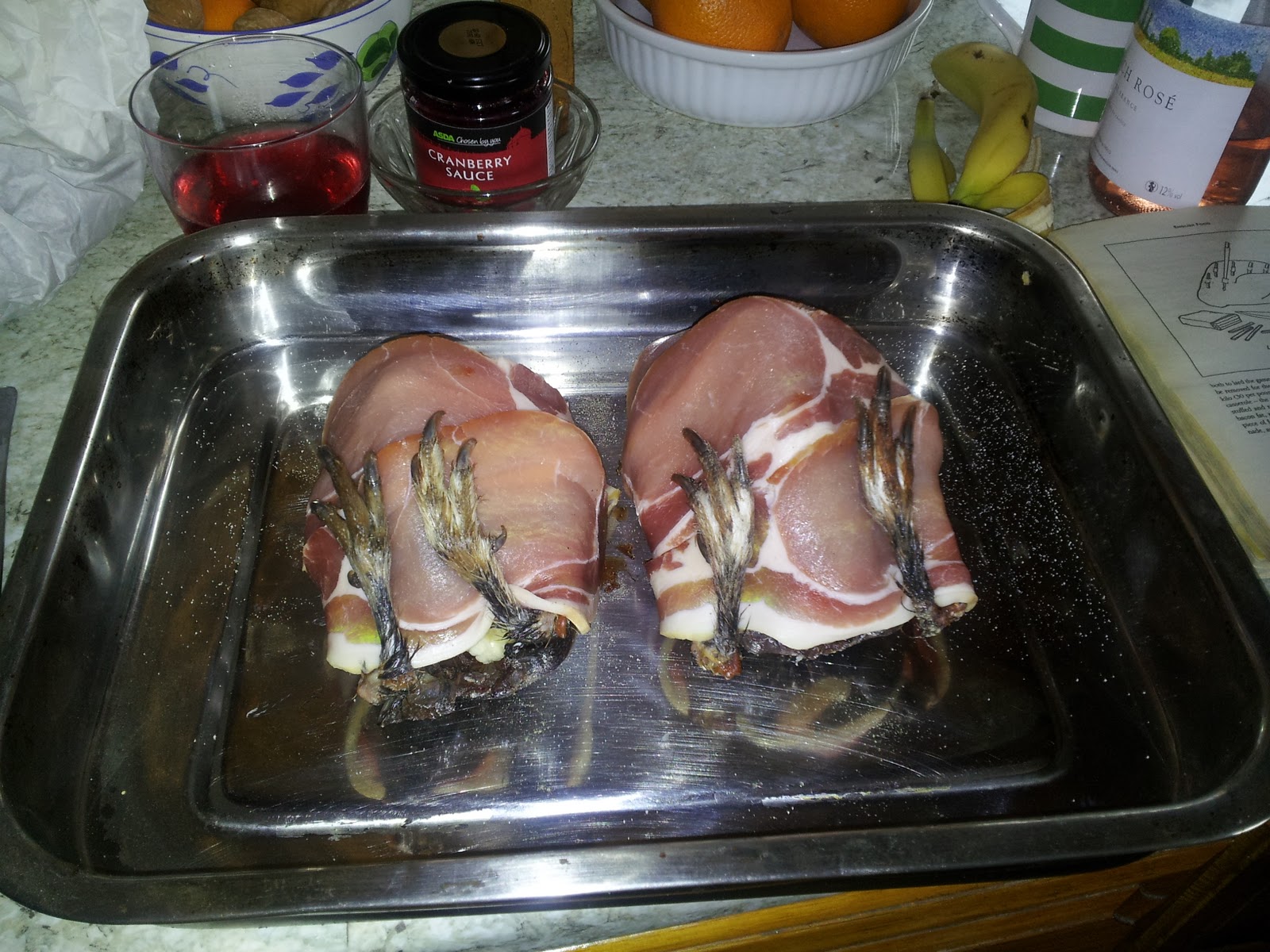
Preheat the oven to 190C (375F). Take your grouse and give them a rinse under some water and pat them dry. Season inside and out with salt and pepper and stuff the bird with some seasonal fruit. This depends upon the month you are eating the grouse; Griggers suggests bananas, wild raspberries, cranberries and peeled and seeded grapes. I went with banana.

Cover the birds with vine leaves if you can get them. This is not necessary, so don’t worry if you can’t find any (I couldn’t). Next, cover the birds in jackets made of either bacon rashers or a sheet of pork back fat.

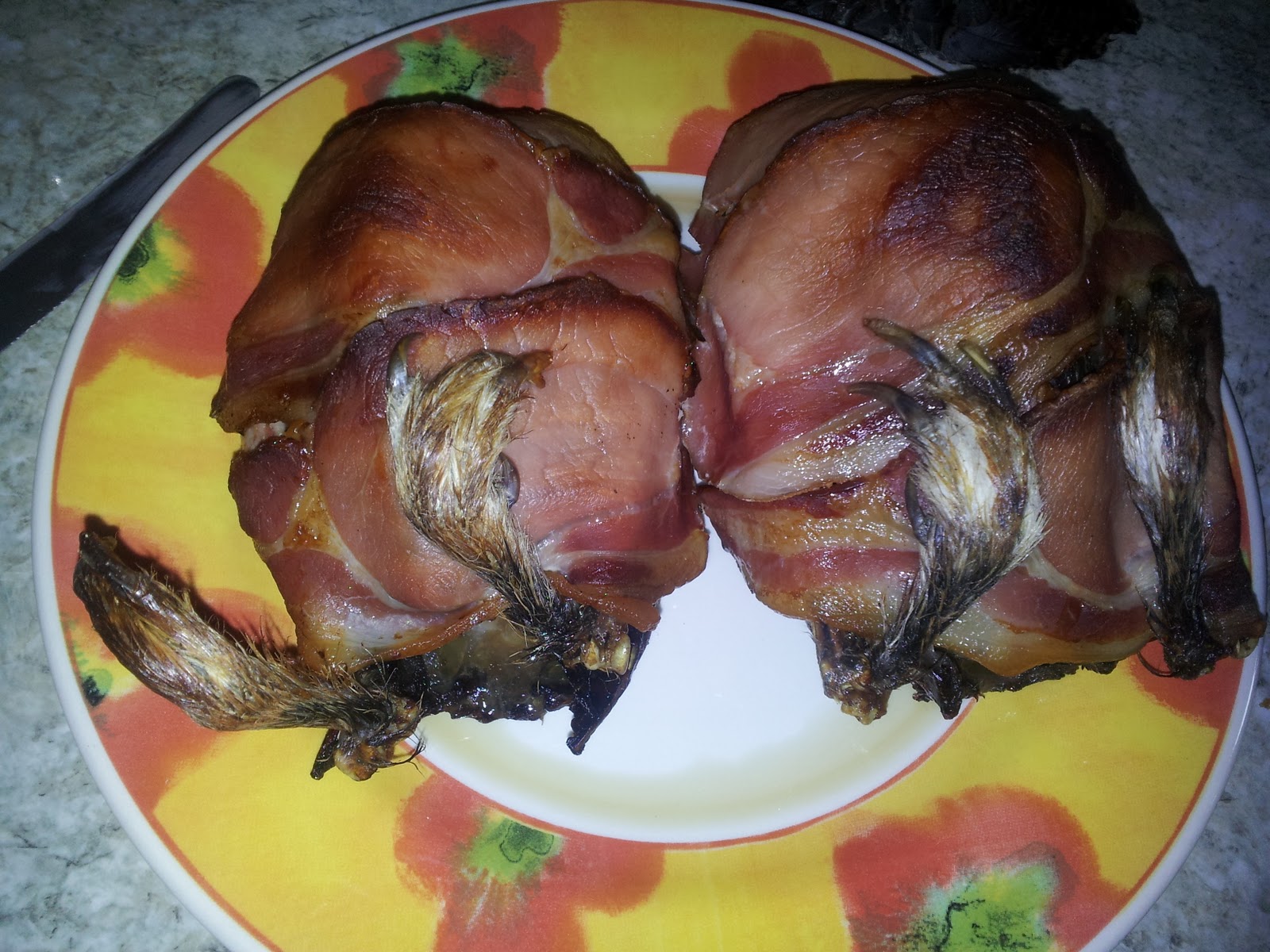
I went with bacon here as it could be served up alongside the grouse.

Roast for 35-45 minutes and allow to rest under some foil for around 20 minutes.

You can serve whatever you like with the grouse, but it is typically eaten with the typical game accompaniments like bread sauce, game chips and a tart jelly such as rowanberry. I went with some mashed potato and a couple of veg, myself.

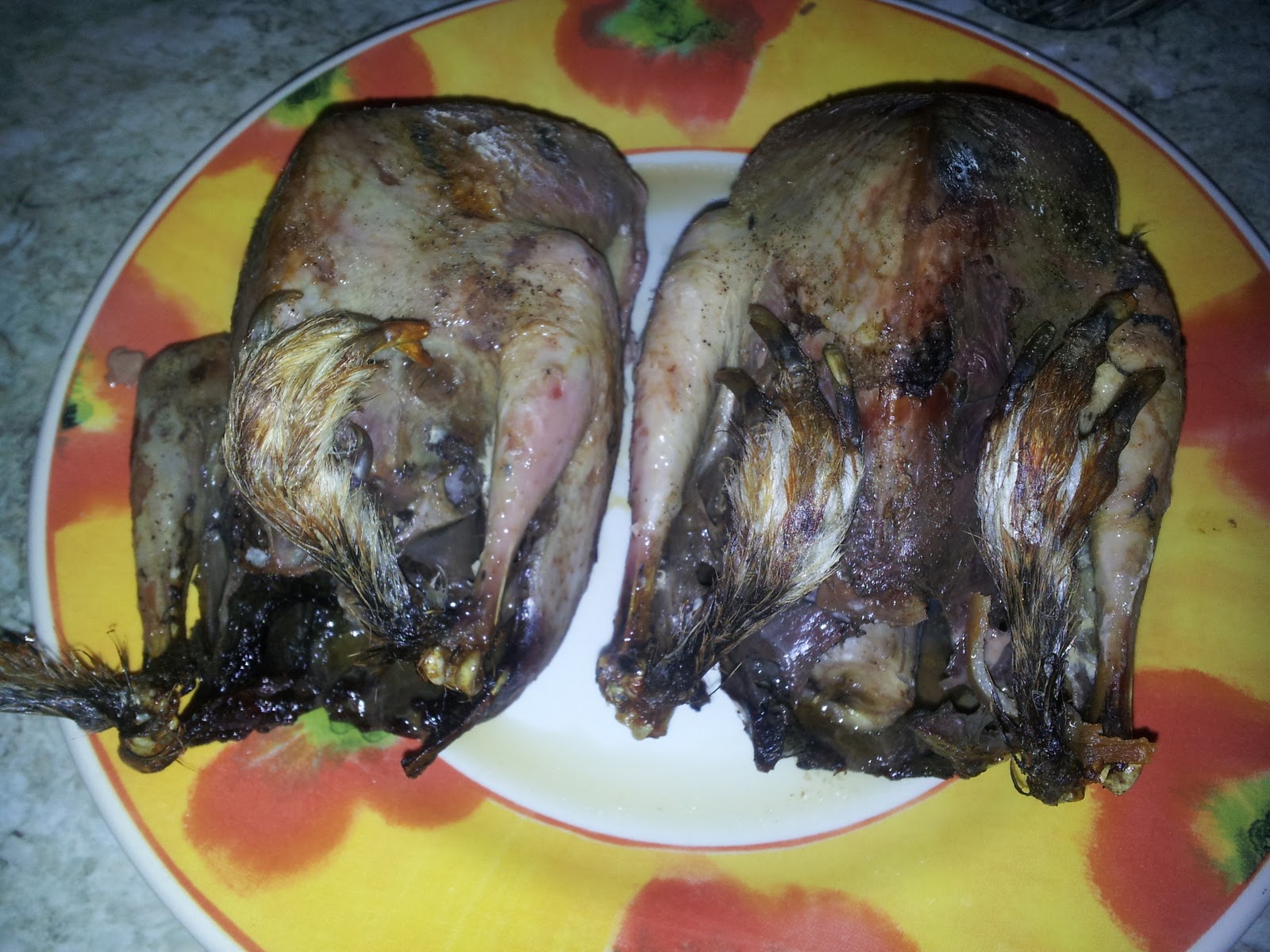
#324 Grouse. This was an extremely gamey bird that was almost overpowering for me. I am not sure if it had been overhung like the mallards from a few years ago as I have no frame of reference. However, if the meat was eaten with something relatively bland like the mash, then it was good. I would like to try it again whenever I can to see if was a little too ripe, as it were. They did look very impressive with their little hairy feet sticking up, though it seemed to freak some people out. As soon as the feet were removed, the legs suddenly became drumsticks and could be dealt by squeamish minds more easily. A difficult one to score as I don’t think I saw this game bird’s full potential, but I must go with what I had on the day: 3.5/10

#290 Roast Pork with Crackling and Baked Apples


Man’s relationship with pigs goes back several thousand years. Acorn-eating wild boar were slowly tamed in European forests to become the slightly tamer proto-pig utilized by the Spanish, French and Greece. Swineherds had the unlucky job of attempting manage the unruly pigs. Modern pigs are not quite as wild as their forbearers, but do apparently revert to their feral behaviour quite readily. So beware.

Galen, the medical pioneer of the Roman era, enjoyed a bit of pork like his fellow Romans. What is odd is that he thought it tasted of human flesh. Whether this was a hunch or whether it was knowledge from experience, I do not know. He is correct though, the cannibals of the South Sea Islands, called the various explorers and pioneers they caught and ate longpigs due to their flavour.

The pig is famed for it versatility and pretty much all the animal can be used, and it is the pig that is the focal animal in Fergus Henderson’s wonderful nose-to-tail restaurant, St John in London (check out the blog here). I’ve never managed to get there unfortunately, but one day I shall! For any nose-to-tail fans out there, the ultimate delicacy must be Pliny’s personal favourite, the vulva of a sow who had aborted her first litter, according to Maguelonne Toussaint-Samat in her amazing book A History of Food.

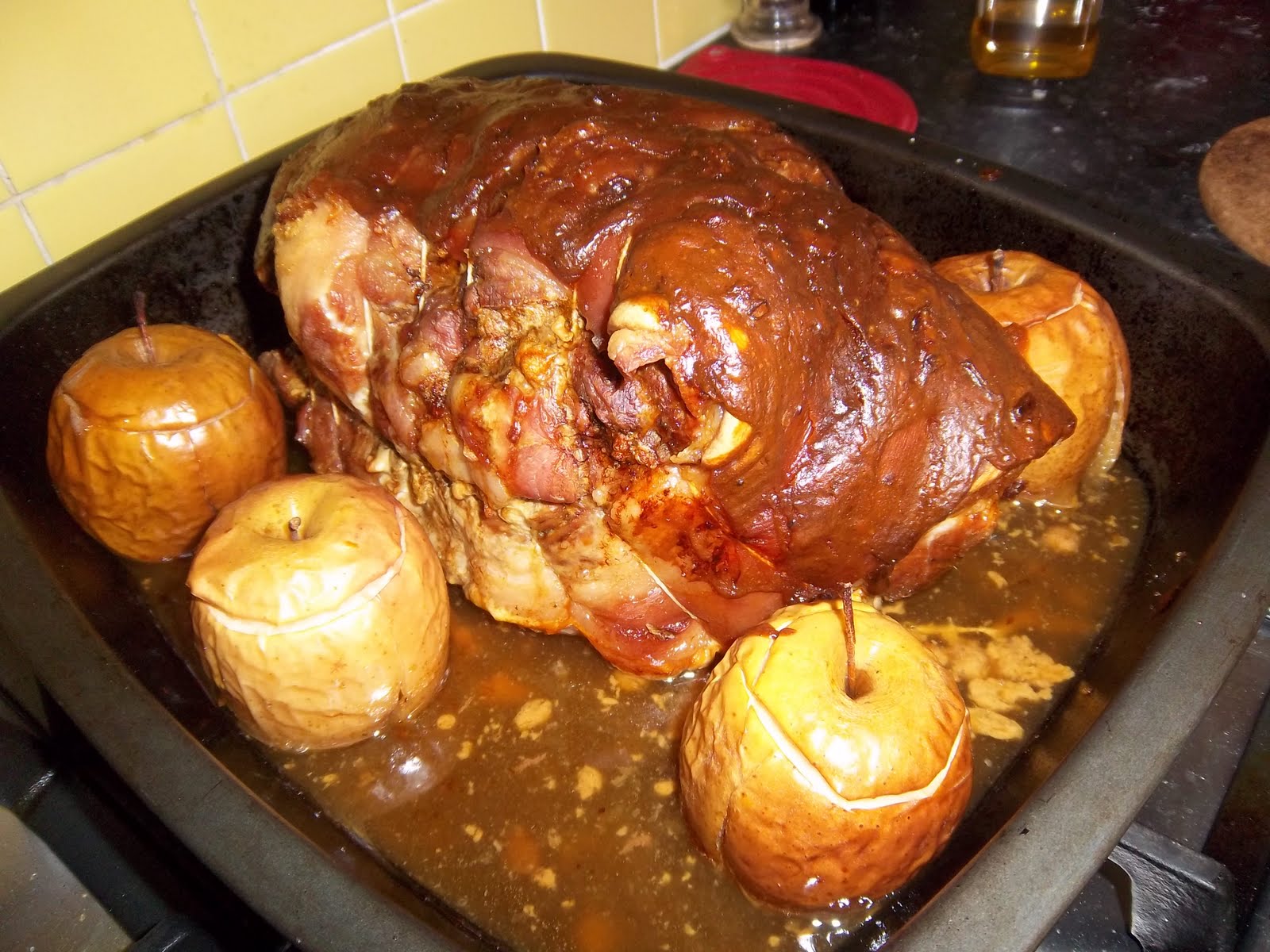
This dish was cooked on my recent trip to England, where Hugh somehow managed to buy a massive shoulder of pork for £1.50. Absolute bargain. He’s a good bargain-hunter; in fact, he’s known for it! I pounced upon the opportunity to roast it the Grigson way which includes baked apples as well as a glaze to go over the crackling. I imagine a sweet glaze would go down well with Texans going by this sign I spotted at the rodeo:

It’s worth mentioning that it is best to buy the largest joint you can afford, the meat will be much more moist and tender in a large joint than a small one. This particularly applies to pork that benefits from a good blast of heat and then a slower roast on a lower hear than say, beef.

As mentioned I used shoulder here, but you can use leg or loin. If the meat has a bone in it, ask the butcher to remove it but ask to keep it. Also ask him to score the rind, every centimetre or so. You can do it yourself with a razor-blade. Make sure that the rind is nice and dry and season the joint all over. You can, leave it overnight in the brine tub, but if you do this, you won’t get the crackling. Seeing that the crackling is the best bit, I wouldn’t recommend it. If you have bones, pop them in a saucepan with a chopped carrot, a peeled onion studded with three cloves and a bouquet garni. Cover with water and allow it to simmer for three or four hours. Strain and reduce to ¾ of a pint. If there was no bone, use some pork or vegetable stock and simmer for just an hour.

Heat the oven to 220°C (425°F) and rub the skin of the joint with some oil and sprinkle with some salt. Cook for 35 minutes to the pound (1 ¼ hours to the kilo). Place in the oven and turn the temperature down after 20 minutes to 160°C (325°F). An hour before the end of the cooking time, prepare the apples. You need one per person, and use Cox’s Orange Pippins if in season. If not, use Braeburn or Mackintosh. Score a circle close to the tops of the apples, to prevent the skins bursting and nestle them around the joint. If you don’t want baked apples make an apple sauce.

Next prepare the glaze. Melt a tablespoon of redcurrant jelly in a pan and mix in a tablespoon of French mustard as well as half a tablespoon each of cream and soft brown sugar. Paint the glaze all over the crackling in the final half hour of cooking.

When ready, remove the joint from the oven and let it rest for at least 20 minutes. While you are waiting, make the gravy. Melt an ounce of butter in a pan and when it goes a nutty brown colour, stir in a tablespoon of flour. Whisk in the stock and add any meat juices from the roasting pan.

Voila!

#290 Roast Pork with Crackling and Baked Apples. I have eaten roast pork many times, but never actually cooked, but I can honestly say that this was the best roast pork I’ve ever had from a domestic oven. It was so tender, it took no effort to slice and the glazed crackling was half crispy, half chewy and almost toffee-like. The baked apples were a revelation. An absolutely fantastic roast dinner! 9/10.

#215 Mallard

As mentioned, the freezer is being emptied of its long-sequestered goodies. First up is this roast mallard. I also found a couple of Seville oranges in there too so I thought I’d do a classic orange sauce too (see the next post, when I get round to writing it!).

I had never tried mallard before but I love duck so I was looking forward to this, I have to say. I took them out of the freezer and allowed them to defrost overnight. On preparing them I found that they smelt pretty – er – ripe, which was a wee bit concerning, but I continued. The instructions are very straight forward if you want to tackle roast mallard: inside the bird, put in some butter, seasoning and herbs; outside, season with salt and pepper. You don’t need any butter or back fat to protect the birds as they have a layer of fat anyway. According to Jane, they should be roasted rare, so they only require 30 minutes at 200⁰C. When ready, allow to rest for fifteen minutes, carve and serve. I did game chips (see the entry on roast pheasant) and Savoy cabbage along with an orange sauce as suggested by the lady herself. You could make a gravy from the juices and a spoonful of bitter marmalade or an orange salad.

The fowl stench of death

#215 Mallard. These birds were definitely over-hung. They smelt and tasted of death and had gone well past the gamey stage. As I have frame of reference, I’m not sure if they naturally taste like that anyway. I doubt it though. Char and Clive seemed to find this okay, but it was rather too much for me and I couldn’t face a leg. That said, the hanging made the meat very tender and succulent. The next day the kitchen smelt like dead and rotting animals. 3.5/10.

FYI: the hanging of meat – in particular game – is required for the meat to become tender and tasty. Whether it is 28 days for beef, or just 2 to 3 days for small game. Pheasant, for example, is tough and pretty tasteless before hanging. However, people cross the line between well-hung and rotten. Brillat-Savarin – the Eighteenth century gastronome and lawyer – didn’t consider pheasant to be fit for consumption until it was “in a state of complete purification”, according to Larousse Gastronomique.

#213 Boned Roast Sirloin

This Christmas – 2009 – was the year we did not have turkey. This was the first time ever, and I have to say it wasn’t missed (at least not by me, anyway). Instead it was roast pheasant and roast beef, not any roast beef though, but roast sirloin. Griggers says that if you cooking beef for a special occasion and you want to be sure of good beef, go for this cut. She suggests getting it from Harrods, but I didn’t go that far. Instead I went to a very good butcher’s shop in Pudsey, my home town, called Bentley’s. It’s won many an award so I thought I would mention them.

A roasting joint such as this needs little doing to it – place it in a roasting tin and season the fat with saltr and plenty of black pepper. Place in a very hot oven – turn the heat as high as possible and leave for 15 minutes, turn the oven down to 180⁰C and roast for 15 minutes a pound for rare meat. Serve with the usual horseradish etc.


FYI: I bought a meat thermometer so I could be absolutely sure of perfectly cooked meat. I did it medium, though I would have done it rare if it were just me eating it. If you have one then follow these temperatures: up to 60⁰C gives you rare beef, 60-70⁰C gives you medium and 70+⁰C gives you well-done beef.

FYI2: there is a common story about Henry VIII eating loin of beef at a banquet and thought it was so delicious that pronounced it ‘Sir Loin’. This is unfortunately a lot of nonsense, though I wish it were true. This cut of beef got its name is from the French sur loin, meaning above the loin.

#213 Boned Roast Sirloin. This was the best roast beef I’ve ever had in my life! It was as soft as butter and tasty and all the better for adding only salt and pepper. No messing about with extras here. It beat the rib of beef hands down. Absolutely gorgeous. Go cook some next time you have something special to celebrate – this is an order! 10/10

#203 Partridge

One of the good things about my favourite fishmonger, Out of the Blue, is that – like any good fishmonger – they supply game during the season. It’s very well priced there and I picked up a couple of partridges for just £2.50 each. Great stuff. I’ve already done a stewed partridge recipe from the book. As well as specific recipes, Griggers goes through each game species with some advice on how to cook them. Here is what she says about partridge:

Roast: 30 minutes, 220⁰C;
Inside: chopped liver, chopped onion and butter, mushrooms chopped and stewed in butter;
Serve with: bread sauce, etc as for pheasant (see this recipe);
Braised: with chestnuts and cabbage and white wine (see this recipe).

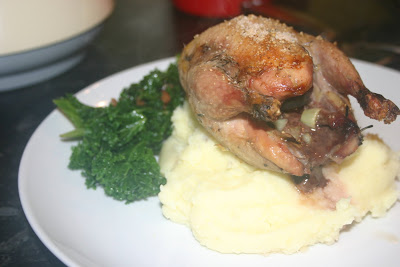
So roast them I did. I filled them with onion and butter (the fillings used for game are there more to prevent them drying out than anything else, really). Before roasting I did make sure they were well-seasoned. To serve I thought I’d add some mashed potatoes – the bland creaminess goes well with strong metallic-scented game – and some kale with fried bacon lardons stirred through them. Lastly I made a sweet rich sauce from half a pint of strongly-flavoured game stock made from a woodcock carcass (see next entry, if I pull my finger out and write it!), a tablespoon of redcurrant jelly and the deglazed juices from the roasting pan (I used some port do to the deglazing).


#203 Partridge – 6/10. I liked the partridge, the leg meat was very gamey and the breast meat milder; a good combination. I am assuming that they were our own indigenous grey partridges because of their small size and strong flavour (there are two species in the UK, the other being the slightly larger and introduced red-legged partridge). There was a surprisingly large amount of meat on these little birds and one was certainly enough per one person. I would certainly recommend trying them if you haven’t before, though I’d go for the braised recipe rather than this roasted one.

#180 Roast Beef

It was Charlotte’s birthday last Sunday, so she got to choose a birthday meal. She chose well – in fact she chose the most British meal you could possibly imagine – Roast Beef and Yorkshire pudding. We British love our roast beef, and were very good at cooking it; the French called us rosbif, not to be rude, but out of respect, as we had the roasting of meat down to a fine art. In fact French chefs would come to Britain to learn the art of roasting on the spit. These days of course, we used our conventional oven to roast our meat, so technically we are making baked beef, not roast beef.

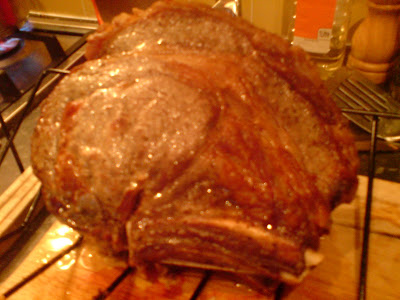
Roasting beef (or any other meat, in fact) is not hard as long as three simple rules are followed: buy good quality beef that has been hung for at least 21 days, season it well (especially if you are crispy fat fan), and roast it from room temperature – don’t go straight from fridge to oven. I bought a rib of beef from my new favourite butcher – Axon’s of Didsbury. A six pound monster that came to £30 – you may think this is expensive, but you get what you pay for and is enough to provide for six or seven people. Also, I have been making good meals from the leftovers: beef and oyster mushrooms in oyster sauce (I picked the mushrooms myself whilst walking in the woods!) and an oriental beef and noodle soup. So in the end, it actually pays to spend a bit more, as you get more out of it. Lecture over.

For roast beef, Griggers suggests either rib or sirloin on the bone with undercut. You need at least 5 pounds in weight. The first thing to do is to season you meat well with salt and pepper the night before. Keep in the fridge overnight by all means, but make sure you remove it from the fridge in plenty of time for it to get to room temperature. Preheat the oven to 200°C. Weight the meat and calculate the cooking time: 15 minutes per pound for rare, add an extra 20 minutes at the end for medium-well done. The joint needs to be able to sit on a rack inside the roasting tray in the oven, but first place the tray on its own with enough beef dripping to cover the bottom for five minutes before adding the joint and rack. If you are making Yorkshire puddings, you could make them in the traditional way of pouring the mixture into the roasting tin, or pour batter into trays if you prefer. Either way put them in 40 minutes before the end of cooking. When the time is up, remove the beef (keep the Yorkshires in, if need be) and allow it to rest for at least 20 minutes before serving and slicing. Place on a serving dish surrounded by cut-up pieces of Yorkshire pudding.


Whilst the beef is cooking, make the gravy by frying a sliced onion in some beef dripping with a teaspoon of sugar until it turns a deep brown. Add half a pint of beef stock and simmer for at least 20 minutes. Season and serve, or if you like a smooth sauce, strain it. Serve with roast parsnips, roast potatoes and horseradish sauce, plus some seasonal green veg.

#180 Roast Beef. I cooked my beef rare because it shows off the quality and taste of good meat, and very good it was too. The outside fat was crispy, and the inside was pink, juicy and tender – proper melt-in-the-mouth stuff. I give it 8.5/10 – as far as beef goes it’s just excellent, but roast lamb in the winner when it comes to red meat.

#175 Shoulder of Lamb with Rice and Apricot Stuffing

A dish with a Middle Eastern or North African influence, it seems like a very tame version of a lamb tagine with its spices, nuts and dried fruit, that has been very Anglicised. These days, we don’t need our food tempered down to suit our bland tastes; we like our foreign foods to taste traditional. However, as always new foods get invented, reinvented or modified dependent upon the country you are in and it is certainly no bad thing (think, chicken tikka masala and spaghetti Bolognese). This is a simple recipe that is excellent for a Sunday roast in the summertime – it required very little attention as you can make the stuffing, stuff the lamb and bung it in the oven whilst you go out for a nice walk or sit in the sun.

Also: I bought the lamb from Axon’s of Didsbury, South Manchester – it was of very good quality indeed, as was the pork ribs and sausages we bought too. If you are ever in the area, make sure you visit. They make their own sausages and also butcher veal – very rare these days. The man was very friendly and even gave us some extra pork ribs free. I think they may be my new favourite butcher.

To begin with, you need to make the stuffing. Boil 8 ounces of long grain rice in salted water until cooked. Drain it and put it in a bowl. Mix in 4 ounces of dried apricots ( you may need to soak them first), 2 tablespoons of seedless raisins, 2 tablespoons of slivered almonds, half a teaspoon each of ground coriander, cinnamon and ground ginger, plus plenty of salt and black pepper.

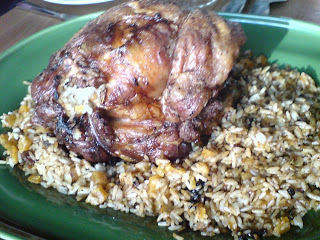
Now get the lamb ready – you will need a boned unrolled shoulder of lamb. Lay it out, season it, and then stuff it with some of the rice mixture. The best way to do this is to put the stuffing where the bones used to be. Grigson says to sew up the pocket where the bones were, but I found that I didn’t need to. Roll up the shoulder and secure it well with two or three pieces of twine. Weigh the lamb and place it in a roasting tin and brush it with melted butter. Season it well. Roast at 190°C for 30 minutes per pound plus an extra twenty minutes. When cooked, remove from the roasting tin and let it rest on a serving dish. Put the tin over the hob and add the remainder of the rice stuffing. Turn it around in the juices and let it reheat. Spoon it around the lamb and serve. We had it with a green salad dressed with a simple vinaigrette.


#175 Shoulder of Lamb with Rice and Apricot Stuffing – 9/10. Although I slightly mocked the dumbing down of flavour for the English palette, I found this recipe brilliant – it was simple, yet there were massive returns. The lamb fat was crispy on the outside and the meat beautifully tender within and the rice gave a sweet-sour flavour that cut through the rich lamb very well. It’s very difficult to knock this – especially when you have bought it from such a reputable butcher as Axon’s.

#128 Woodcock

Here’s something I wasn’t sure I’d ever actually get to cook! The woodcock is Britain’s smallest game bird – it’s very well camouflaged and hides away in scrub and hedgerows, and is quite uncommon. All this adds up to a meat you don’t see everyday. However, I was the Frost the Butcher in Chorlton buying some mutton for a pie, when I saw a huge standing freezer full of game saw the typical stuff – venison, rabbit, pigeon and there – tucked away on the bottom shelf – a brace of woodcock. Obviously I snapped them up, only to find they were 15 quid each! I bought just the one, natch.


Finding the woodcock was exciting, as I am now officially a food geek – however I was feeling a little trepidation; this is definitely the first really extreme thing I’ve made from the cook book. Woodcock is considered a delicacy not just because it’s so hard to get hold of, but also because pretty much the whole thing is eaten. Essentially, the bird is roasted rare, whole and completely intact (except the eyes are removed and it is plucked) and trussed with its own beak. The trail of the bird (i.e. the guts, liver etc) is spread on fried bread and the head is split in two so that you can use the beak of one half to prize out the brain from the other.

Woodcock trussed with its own beak

Here’s what to do if you happen upon this little birdie:

Preheat your oven to 220°C. Start off by trussing the bird with it’s beak by spearing the thighs to keep them closed up together. Season the breasts and cover liberally with butter so it doesn’t dry out. Place on a small roasting tin and cook for 18-20 minutes. Whilst that is happening, fry one slice of white bread per bird gently in butter, placing it under the woodcock(s) for the final 5 minutes of cooking. When the time is up, remove the bread and place on a warmed plate and allow the bird to rest for 5 or 10 minutes in the pan. Next, using a knife and/or spoon scoop out the trail (everything except the gizzard – which is actually hard to get to, so it’s unlikely you’ll accidently scoop it out). Spread the trail on the toast. Cut off the head and cut it in half lengthways so that you can use the beak to remove the brain from the halves. You can serve the bird whole or remove the breasts if you like.

The final dish

#128 Woodcock. How on Earth am I going to score this one!? Eating the innards of a bird wasn’t something I was going to relish – but I did relish the idea of eating something very traditional but very out-of-favour. From that point of view – an excitement rating – 10/10. Flavour-wise, the breast meat was very gamey indeed – the smaller the bird, the stronger the flavour – it was so rich that it would have been more than enough for one person. The thigh meat was horrible though – just tasted of dead animal. Bizarrely, the best bit was the trail on toast. The intestines were very soft and there was nothing chewy, though it took some courage to make the first bite. Turns out it tastes a bit like Marmite. Very nice. The brain didn’t really taste as strong as the trail, but was soft and slightly greasy in texture; it appealed to my sudden manly bloodlust though. So overall, it is a high scorer, but not too high – I don’t want to give it loads of marks because of the novelty, so on flavour alone, I reckon it’s worthy of 6/10.

#122 Roast Pheasant

The Roast Pheasant was obviously the star of the meal – not just because it is a meat we don’t eat enough of, but also from my point of view because to tick it off I had to do lots of accompanying dishes, so some organisation was required. If you want to have a go, you can have as many of the elements as you wish, though try to do as many as possible as they do go so very well together as a dish. The trickiest part was getting hold of pheasant giblets – however, the nice game butcher at the Farmers’ Market got me them when I asked. Make a point of ordering them as they are routinely thrown away. So, the roast pheasant is made up of five individual parts:

1. The pheasants themselves
2. The game chips
3. The giblet gravy
4. The browned crumbs
5. The bread sauce (dealt with separately as #123).


Most of this can be made in advance and reheated, that which is not, is easy and quick to prepare and will not keep you from your guests for very long.

To prepare the brace of pheasants, begin by removing the giblets and setting them aside for later on. Stuff each bird with 2 ounces of butter, plus the liver (make sure you remove the green bitter gall bladder) and a good seasoning with salt and pepper, then lay a thin sheet of back pork fat over them that is large enough to cover the beasts and legs. Secure the back fat by tying string around the pheasants. Place them in a roasting tin and set aside for when you want to roast them – they should be roasted at 190°C for 20 minutes per pound plus an extra 10 minutes. You calculate this for the heaviest bird; in my case 2 pounds, so 50 minutes in all. For the final 10 minutes of cooking, remove the back fat and dust the breasts lightly with seasoned flour. Remove from the oven and allow to rest. I did this just before the guests arrived so that the birds could rest as the leek tarts were cooking. To serve it, I removed the legs, then sliced the breast meat and placed on a bed of watercress.

When the birds were prepared, I started on the gravy: first place the giblets (minus livers) in a saucepan along with a sliced carrot, a sliced onion and a bouquet garni and enough light beef stock to cover everything generously. This was simmered gently for two hours before being finished off later (see below). Next job was to get the game chips sorted. Game chips are basically crisps cut very thinly on a Chinese mandolin using the ridged blade to produce a lattice, or gaufrette, pattern. Peel 1 ½ pounds of firm potatoes. Put the mandolin at its thinnest setting and slice downwards, turning the potato a quarter-turn as you bring it back up to make the next slice to get the lattice effect. Put the chips into a large bowl of water to remove starch and then dry thoroughly. Deep fry in batches at 200°C until golden brown, and drain on kitchen paper and salt them well. This can be re-heated in the oven whenever you need to use them.

Once the starters had been eaten, I put the game chips in the oven and got to work on the buttered crumbs and rest of the giblet gravy. For the crumbs, 3 ounces of stale white breadcrumbs were fried gently for 5 or 10 minutes in 1 ½ ounces of butter until golden. They were placed in a serving dish and kept warm with the game chips. For the gravy, the stock with all the lovely the giblet flavours poured into the roasting tin. The stock was boiled hard and all the nice sticky bits that were found on the bottom of the pan were scraped off. When reduced, a glass of port was added, there was a quick seasoning, and the gravy was strained into a sauce boat.

So that there was a bit of green, also served some peas and green peas, but also Bread Sauce (as instructed) and (#124) Creamed Celery – Grigson says that either celery or mushrooms should be eaten with roast pheasant.

#122 Roast Pheasant – 9.5/10. What a brilliant meal! It was well worth the effort, I cannot fault it in any way really, and will definitely make it again, though maybe not with all the required elements. The pheasant was juicy and just-cooked, the gravy was beautifully rich and luscious, the breadcrumbs provided a nice crunchy texture and the game chips were tasty, some crunchy and some soggy in the gravy and bread sauce. For me, pheasant is the king of the game birds, and after this, it is going to be very difficult to knock it off the top spot.

FYI: to be a bit thrifty, I made soup from the carcasses and left over veg and trimmed celery etc and it was lovely – I’ll put a recipe up for it. I am never chucking out a carcass again!

Tatties wi’ their hats on

Ok. Another of my own recipes. Actually it’s one my uncle used to do. He passed away about 12 years ago, but I went to visit my Auntie last weekend and she made this dish. Tatties wi‘ their hats on has to be pronounced in a Yorkshire accent. Next time you cook a roast dinner make these brilliant potatoes, they’re genius! You roast them in the oven in a tray filled part way up with vegetable stock and sliced onions. The tops have a coating of bought, dry sage and onion stuffing straight out of the packet. If you are doing roast pork or chicken pop the meat in and nestle the potatoes around it. It may all sound slightly naff, but it is one of the bast ways to do tatties! I goes particularly well with a roast shoulder of pork (with crackling, of course) and apple sauce.

You will need:
Medium-sized potatoes, peeled (I do 2 per person)
3 medium-sized onions, sliced
Vegetable stock
Sage and onion stuffing
Salt and pepper

What to do…

  1. Preheat the oven to 108 degrees Celsius (or if having with meat, follow instructions for the meat you are roasting).
  2. Spread the sliced onions evenly on the bottom of a roasting tin
  3. Cut the base of each potato so that they can stand up longways (like large eggs!). Dunk the top of each potato in some stuffing and season well.
  4. Nestle these amongst the onions, or around the joint of meat. Sprinkle extra stuffing on top
  5. Pour enough stock so that it is around 1/2 inch deep.
  6. Roast for around 1 1/2 hours until cooked.
  7. If you’re doing meat – make sure it’s a cut that take at least 1 1/2 hours to cook, otherwise it’ll dry out