#282 Raised Pies

Is there anyone who doesn’t like a pie made with hot-water pastry? Everyone, I say, from the Mayor of Melton Mowbray to, er, Sweeney Todd. Oh, except for vegetarians. They’re so quintessentially English and I’ve not seen anything remotely close here in Texas. I must admit I’ve been putting off making these pies – I’d never made one before and I knew that it would take a lot of time, and presumably, effort. However, I felt I was ready – and so I should be because there are several to do in this book so I need the practice. Hopefully I’ll get it right first time.
So, for those of you not in the know, a raised pie is a pie made from pastry using boiling water and lard, unlike shortcrust pastry that is kept as cold as possible. Hot water pastry achieves a putty-like consistency that allows the pie mould or tin to be moulded and raised up the sides of the tin, rather than rolled. The hot water makes the pastry very absorbent too; you need this as the filling cooks and releases juices. Normal pastry that contains butter would just turn into a sloppy mess. Raised pies became crazily over-the-top in the seventeenth and eighteenth centuries. Elizabeth Raffald’s receipt for a Yorkshire Goose Pie gives the following instructions:
Take a large fat goose, split it down the back and take all the bones out. Bone a turkey and two ducks the same way, season them very well with pepper and salt, with six woodcocks
You don’t get pies like that in Yorkshire nowadays, I can tell you. Imagine the meat sweats you’d get from a slice of that!
The raised pie hasn’t quite fallen out of favour in Britain these days – I’m sure Melton Mowbray pork pies are as popular as ever, but that’s all you generally see now. The book proffers more, and I shall be adding them as I go. The basics are: Pork Pie; Veal, Ham and Egg Pie; Raised Mutton Pies; and Game, Chicken or Rabbit Pie. They all have the same basic parts: the pastry, the jellied stock and the filling itself.
It all seems a bit complicated, but it’s not really. In this post I’ll deal with the construction and baking of the pie. The jellied stock and the fillings can have their own posts (these are coming in the next day or two).
Begin by making the hot water pastry. Bring a third of a pint of water and six ounces of lard to the boil. In the meantime, weigh out a pound of flour and place in a bowl with half a teaspoon of salt. When boiling, tip the water and fat into the flour and mix quickly – electric beaters are the best for this, but don’t use a high speed as the pastry won’t bind properly. To enrich this pastry add an egg, or a tablespoon of icing sugar. Cover the dough and leave until it cools enough to handle, but don’t let it cool down completely. Take three-quarters of the pastry and put it in a six or seven inch cake tin with removable base. You can buy fancy hinged raised pie moulds – they are quite expensive though, but they are beautiful (see this link). Quickly, but carefully, mould the pie by gently pushing the pastry up the sides of the mould or tin until it overlaps the lip, making sure there are no holes or tears. If it just flops down, then it is too hot. Wait five minutes and try again.
If you want to make small pies, you can mould the pastry around the outside of a wide rolling pin or a jam jar. This method is required for the mutton pies. This is alot trickier apparently. So unless you can avoid it, do the big pie.
Now you can start on the jellied stock and prepare your pie filling. Pack the filling well into the raised crust.
…if it mounds up above the rim, so much the better.
Roll out a lid with the remaining pastry and fix in place with a little beaten egg, making a hole in the centre for steam to escape. Decorate the pie with leaves and roses using pastry trimmings. It’s strange that savoury pies have the ornate decorations in England and that the sweet ones are left plain. I don’t know why this is. Anyway…. Brush the lid with more egg (don’t throw unused egg away, you’ll need it later).
Bake in the oven for half an hour at 200°C (400°F) to colour the top, and then lower the temperature to 160°C (325°F) for two hours for large pies and just one hour for small pies – you need this time for the meat to cook and become tender. Watch the pie doesn’t brown too much though – if it needs a little protection, cover with some brown or wax paper. Remove it from the oven and leave it to cool for thirty minutes before removing it from its mould very carefully. Brush the sides with beaten egg and return it to the oven for a final half an hour to brown and crisp up.
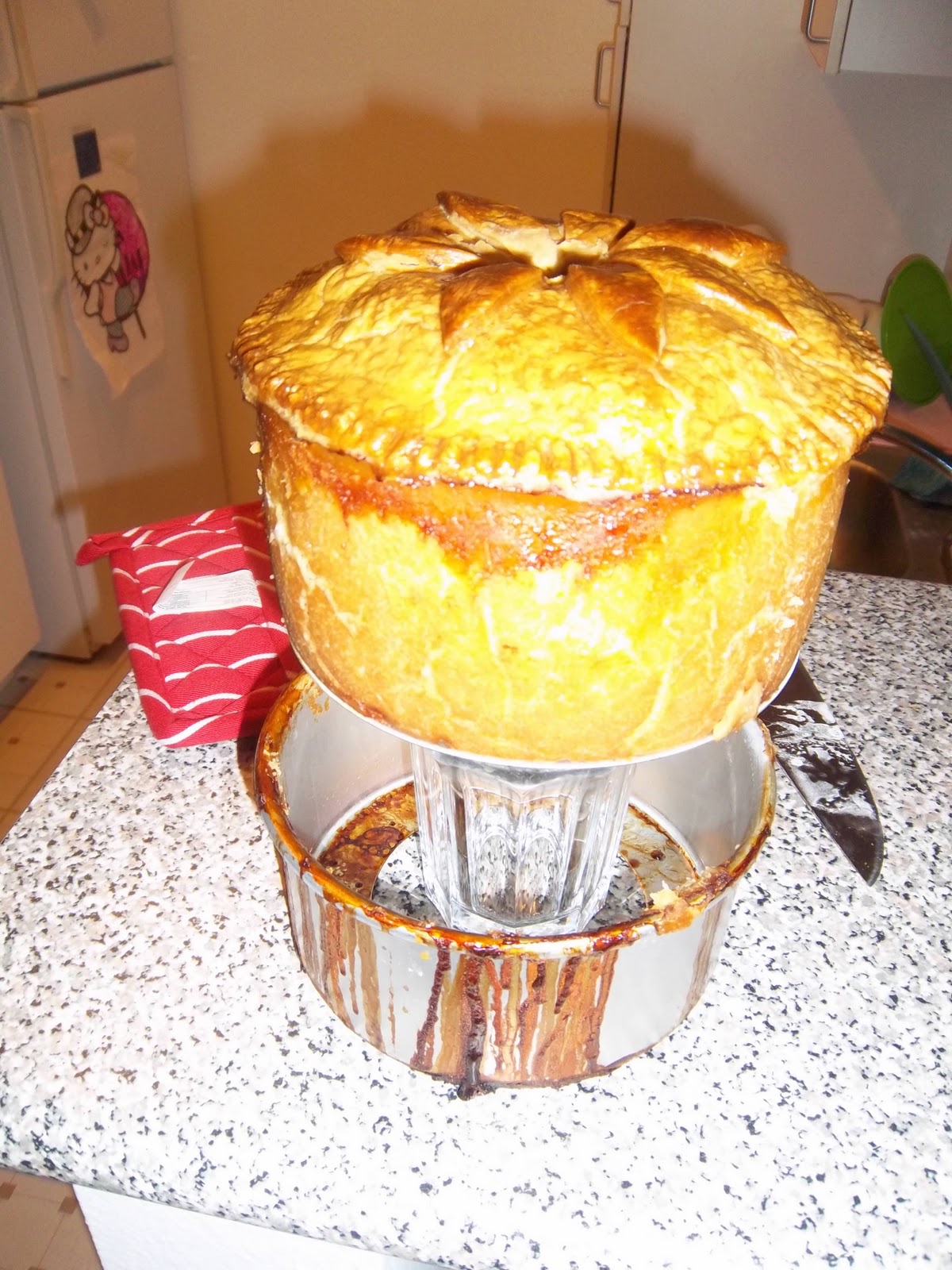
Whilst the pie cooked, the meat shrank, so the gaps need filling with the jelled stock. This can be carefully poured through the hole in the lid, or better using a small funnel. Let the pie cool and eat the next day. The pie will keep for days wrapped in wax paper and kept somewhere cool.
Phew!
#282 Raised Pies. It won’t write a review for this recipe – I’ll save that for the fillings. However, it is worth saying that although making a pie like this is no mean feat, it is worth having a go. I had such fun pottering about the kitchen making my first riased pie (the Veal, Ham and Egg Pie). But then, I am a great big geek. Anyway, hopefully I have inspired you to give it a go, if not at least appreciate how much effort goes into these beautiful and delicious artisan pies.

#281 Scallops with White Wine and Jerusalem Artichokes

If I am going anywhere that is likely to have lots of nice food, I take my copy of now dog-eared English Food along with me in case there is something I don’t expect to see but is required for a recipe. Central Market, the place where I seem to get most of my ingredients from here in Houston, almost always has something unexpected I can use. Today was no exception: I was shopping for some pie ingredients, but also came across some nice Jerusalem artichokes. A quick flick through the book and I found this recipe that combines them with one of my favorite items of seafood, scallops. I was in the mood for treating myself, so I thought this would be a great late lunch dish prefect for these warm days in Houston.
This recipe isn’t one of Jane Grigson’s herself, but from one of her contemporaries and friends Joyce Molyneux, who owned a restaurant called The Carved Angel in Dartmouth. Ms Molyneux adapted the recipe from a recipe she saw for scallop and Jerusalem soup in a book called Four Seasons Cookery Book by a certain Margaret Costa. It’s funny how recipes get changed and passed around, constantly evolving into different dishes.
To make a lunch for four you will need eight large scallops. Remove the corals (should they still be on) and reserve them and cut each scallop into five or six discs. Now trim about twelve ounces of Jerusalem artichokes and cut them into thin matchsticks (keeping trimmings for soup, Griggers says). Fry them gently in two ounces of butter and when nearly tender – about ten minutes – add the scallop discs and four tablespoons of dry white wine. Season with a little salt and pepper. After a minute, add the corals and cook for another two minutes. Don’t overcook – they will become like rubber. Arrange the scallops and artichokes on a warm plate and concentrate any remaining juices, seasoning with more salt and pepper if you like plus some lemon juice. Finally, stir in some chopped parsley and pour over the scallops. I served them with some nice buttered sourdough bread, thinly sliced.
#281 Scallops with White Wine and Jerusalem Artichokes. I loved this. One of the best recipes I’ve done in a while. The earthy artichokes worked so well with the sweet scallops, plus the wine, lemon and parsley really made the whole thing wonderfully fresh tasting. Mopping up the sauce with the bread was the perfect finish. Excellent. 9.5/10.

#280 Welsh Cinnamon Cake

Known as Teisen Sinamon in Welsh, this is a mysterious cake. Griggers doesn’t really give any history behind it in the book. She says that the recipe is by Mrs Bobby Freeman (who has written a book of Welsh cakes and buns). She also says that it’s bit of a pity that chefs don’t make traditional dishes enough in their restaurants anymore. I did find after a little research that is a Victorian recipe – thanks Victorian Recipes of Wales teatowel! I’m not actually sure if it is a cake – it’s more like a giant biscuit with some meringue on top. Quite American really.
I made this cake on request for my mate Chandra’s birthday the other day. I think it went down quite well at work.
Cream four ounces each of butter and sugar in a mixing bowl and then beat in two egg yolks (reserve the whites!). Sift eight ounces of plain flour, a rounded teaspoon of cinnamon and half a teaspoon of baking powder and mix them in stages into the creamed butter and sugar. Knead this mixture together and roll it out to line a nine inch flan tin with a removable base. Actually rolling it out is a total pain in the arse because it breaks up very easily. Instead spread it out over the base of the tin using your knuckles, pushing the dough up the edges and make it neat using the edge of a measuring cup. Bake for 20 minutes at 200°C (that’s 400°F). Remove from the tin and cool on a wire rack. Heat some apricot jam with a little water to make a glaze and paint it thinly over the cake. Remember those two egg whites? Add another one and whisk until the stiff-peak stage. Then add three tablespoons of caster sugar and whisk again until the meringue becomes silky and creamy. Pile into the centre of the cake and make decorative swirls and spikes. Bake again at 180°C (350°C) until the meringue is a nice golden brown – about 10 or 15 minutes. Take out and cool on the rack again.
#280 Welsh Cinnamon Cake. Is it a cake? Is it a cookie? We just don’t know. It was very nice though – plenty of warm cinnamon spice. It was a bit stodgy too, but in a good way. I’m not sure about the meringue topping though. Not a bad one, by any means. 6.5/10.

#279 Apple Sauce II

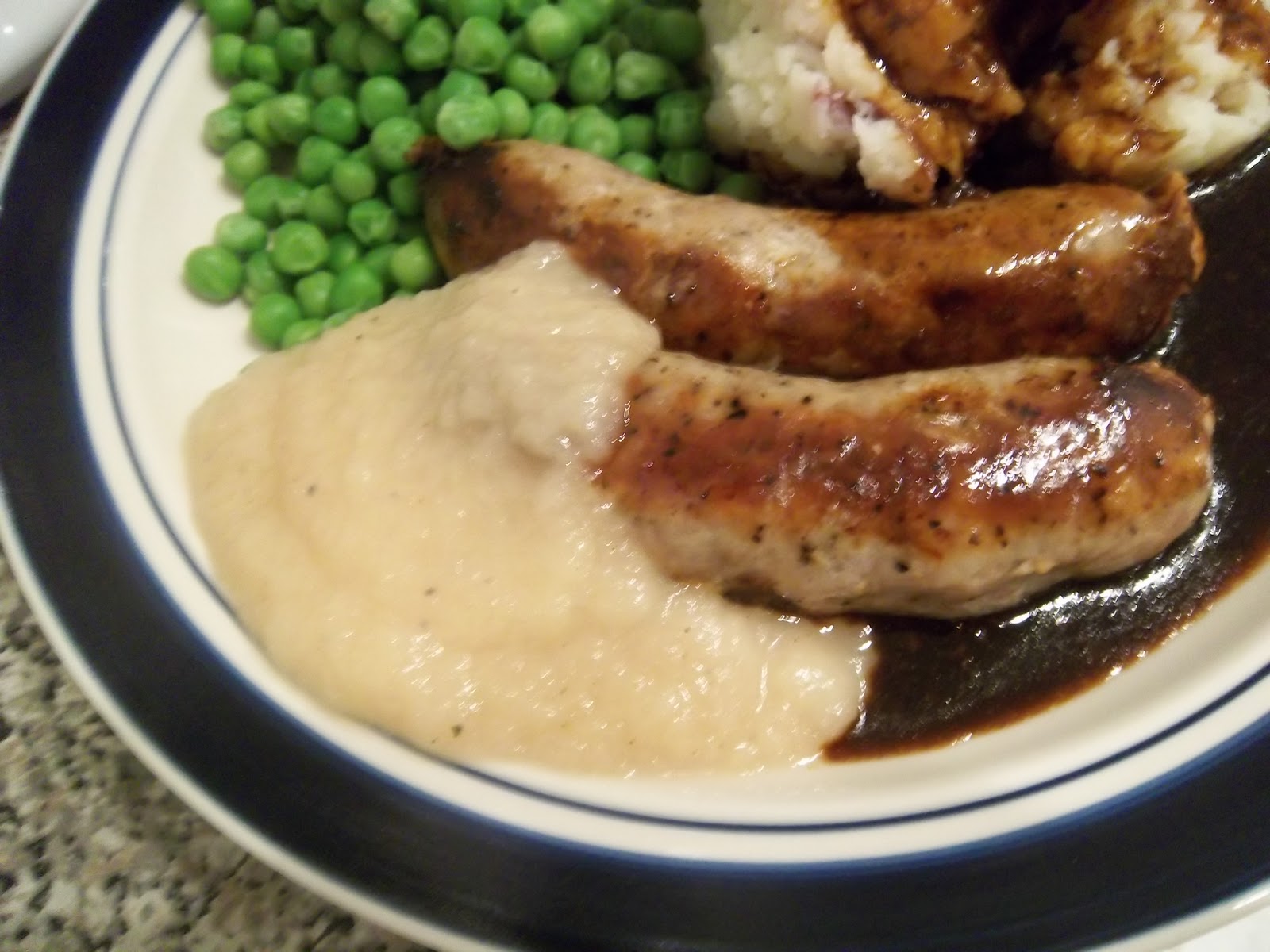
I still had sausages left over from Harrison Hog Farm – I ate half of them with Crempog Las and wanted to the give the rest the Grigson treatment. I could have gone with toad-in-the-hole or something, but I’d done that already. Luckily I spotted this apple sauce recipe which can be served with sausages (as well as pork, salt pork, duck and goose). What made me want to do this recipe is that allows one use sausage as the meat in a Sunday dinner rather than a roast meat which can be a pain to do if there is a lot going on in the day. So it’s good old sausage and mash for dinner.
The recipe asks for Cox’s Orange Pippins, Laxtons or James Grieve apples. These are not available in America (as far as I know), and so for any Northern Americans amongst us (and I know there are several), go for Mackintosh apples instead – they have the tart mealiness of a Cox’s Pippin.
There are several apple sauce recipes in English Food and I have now hit a bit of a brick wall – the remaining recipes all use Bramley’s seedlings which can’t be found in the USA, and I haven’t been able to find an appropriate alternative. If anyone has any suggestions, let me know!
Roughly chop 12 ounces of apples – no need to peel or core them. Add them to a saucepan along with a strip of lemon peel and 3 ounces of water (by weight!). Cover and simmer until soft. Pass them through a sieve into a bowl, forcing the apple flesh through to produce a smooth puree. Return to the saucepan and simmer quite briskly until the puree thickens and starts to spit and bubble a little. Stir in an ounce of butter and season with pepper and a little salt, but only if the butter was unsalted.

#279 Apple Sauce II. A slightly strange sauce this. I liked the fact it was unsweetened – bought apple sauces are far too sweet I think and they don’t always do a good job of cutting through the rich, greasy meat it’s usually served with. The butter enriched it but didn’t make the whole thing sickly like I expected. A good sauce, but nothing to write home home about! 5.5/10.

#278 Crempog Las

Well Shrove Tuesday is almost here, so I thought I’d provide a pancake recipe from English Food. This one is perhaps a more alternative recipe as it is most definitely savoury rather than sweet, and best served up with sausages, bacon and eggs as a breakfast dish rather than for a Pancake Day evening pig-out. In America, people seem to be having much more fun with their Mardi Gras celebrations…
The Welsh seem much more adept at pancakes than the English and I suppose that’s why there are so many Welsh recipes in the Pancakes and Griddle Cakes section of the Teatime chapter of the book. If they weren’t counted, there would be slim pickings. Crempog Las, by the way, translates as green pancakes in Welsh (check out this site for more information on this dish and other Welsh dishes). I didn’t have high hopes as there has been a bad run of recipes from this section…
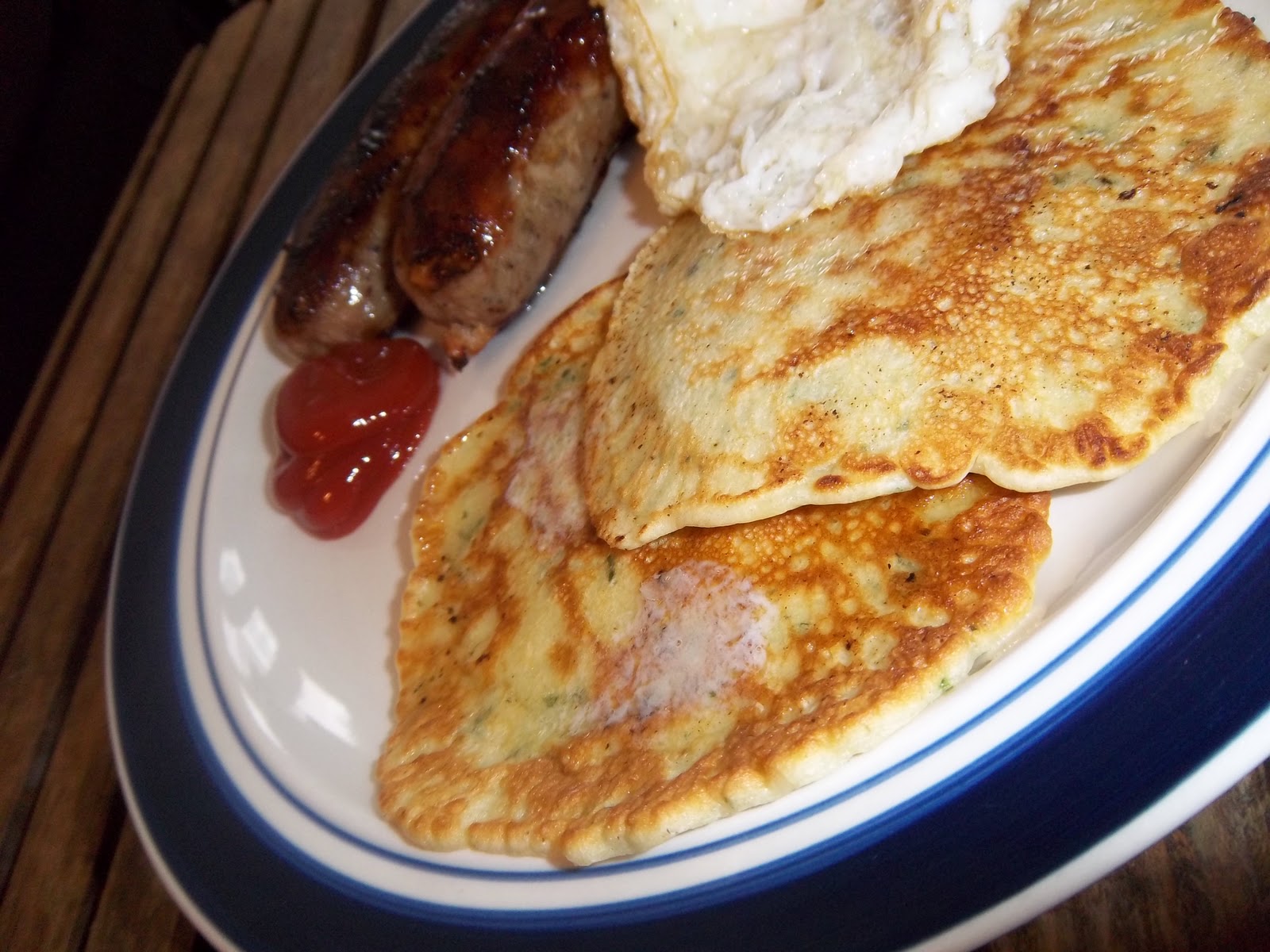
The other reason why I wanted to cook these pancakes is that I found a pack of sausages that I bought from Harrison Hog Farms. They have a stall at the Rice University Farmers’ Market and breed pigs that look suspiciously like Gloucester Old Spots; a fine old English breed, so I thought they can’t be bad. Naturally, I put in them in the freezer and promptly forgot about them. Even though I have only been in my Texan apartment for five months, I have managed to almost fill my freezer with bits that I see in shops and left overs like wine, egg whites, breadcrumbs and what-not that I expect one day will come in useful. I decided that it needs emptying. It is for the same reason that later on this week I will be doing oxtail soup.
Anyways, I have wittered on far too much:
Using a whisk, mix together four ounces of plain flour, a large egg, a dessertspoon of finely chopped parsley, a heaped teaspoon of finely chopped shallot and enough milk to make a thick batter. Season with salt and pepper. Fry the pancakes in some oil or grease  over a moderately-high heat until golden brown – two or three minutes a side should do it. That’s it. Serve with butter or as part of a fried breakfast.
#278 Crempog Las. These were delicious! A subtle savouriness from the slightly sweet-acrid shallot and the grassy freshness of parsley made them very morish. I am definitely adding these to my breakfast arsenal. Give them a try, they are so very, very easy. 7.5/10.

#277 Hazelnut Stuffing for Poultry and Lamb

I mentioned in the last post that people don’t make their own gravy anymore, well the same goes for stuffing. I have to admit, I don’t often make stuffing for roast poultry normally, though I have for the blog before. Every time I do, it comes out delicious and is always better than even the poshest pre-made supermarket pap. So I thought I was well overdue making some (which I think is also called dressing in the USA, non..?).
This one, I thought looked interesting – with its earthy hazelnuts and piquant-sweet preserved ginger; just the thing for a climate that is never really wintry. After all, the main reason that I haven’t cooked more food like this in Houston is because it is so bloody hot all the time and I don’t necessarily want roast meats. Anyways, this one seemed good and light and reasonably summery.
Griggers makes a point of highlighting the quality of hazelnut required for the recipe – pre-roasted and chopped hazelnuts are fine, she says, but you really want some slow roasted whole Italian ones from Avellino near Vesuvius, where they have been grown since Roman times. I’ll just pop over and fetch some. I couldn’t get those of course, but I did get Roman ones, so that pretty good I reckon, bearing in mind where I am!

Julian of Norwich with Hazelnut. For some reason.
If you want to be truly old-school, you can use cobnuts, which can still be found growing around the southern counties of England, in particular Kent. FYI: cobnuts were the original nut used in the game of conkers before the horse chestnut was introduced into Britain.
Stuffing is the easiest thing in the world to make. To start chop a large onions and soften it in two ounces of butter – keep it on a medium heat with a lid to prevent to browning. Once cooked, add the following ingredients in the following order: four ounces of fresh breadcrumbs; two ounces of toasted, chopped hazelnuts; four knobs of preserved ginger*, chopped; grated rind of half a lemon; the juice of a lemon; one large beaten egg; salt and pepper; and two tablespoons of chopped parsley. Now you can use the stuffing for whatever you like. If this is for turkey, you may need to double, or even treble the amounts given here.
If you are using it to stuff a bird, make sure you weigh it after it has been stuffed so you can include the extra weight in the cooking time.  Also, it is best to stuff the neck end rather than the cavity, as the stuffing doesn’t go stodgy; just loosen the skin and stuff it in, securing it all by folding the neck skin under the bird. Any left can go into the cavity – but only pack it loosely.

*If you can’t get preserved ginger then use ginger preserve (i.e. ginger jam), or miss it out entirely and replace it with the chopped liver of the bird(s) and a heaped teaspoon of thyme.

#277 Hazelnut Stuffing for Poultry and Lamb. Absolutely delicious and definitely the best stuffing so far in the book! It was sweet and earthy and the nuts had gone wonderfully soft and translucent, giving out their flavours into the rest of the mixture. The lemon and ginger lifted it all very well and stopped it from being too heavy. This is going into my everyday repertoire. 9/10.

#276 Giblet Gravy

It’s such a shame that the art of gravy making has been lost. This gravy is rather posh, containing things like veal and vermouth. You don’t need to add these sorts of things every time you make it, but even basic gravy is so much more delicious than any from a packet. I know it takes more planning and time, but it’s not that difficult really – mainly a bit of simming. I haven’t used gravy granules for a good couple of years now…
I’ve been meaning to do this recipe for ages – but finding chickens with giblets these days is difficult in Britain. The reason being, apparently, that people would keep forgetting to remove the giblets in their little plastic bag from the carcass before roasting it. Idiots ruining things for the rest of us, as per usual! It is also difficult finding veal in Britain too. In America however, it is pretty common. However both chickens with giblets and veal are everywhere. So I invited my friend Danny round for a roast dinner – the first I’ve made since the move over here. I don’t know why I put it off, the heat I suppose. Roast chicken and stuffing (see the next post, when I write it!) with Yorkshire puddings (my recipe here, Grigger’s here) and mashed potatoes are as manna from the Gods as far as I’m concerned. Danny had never had Yorkshire pudding before. What is that about!?
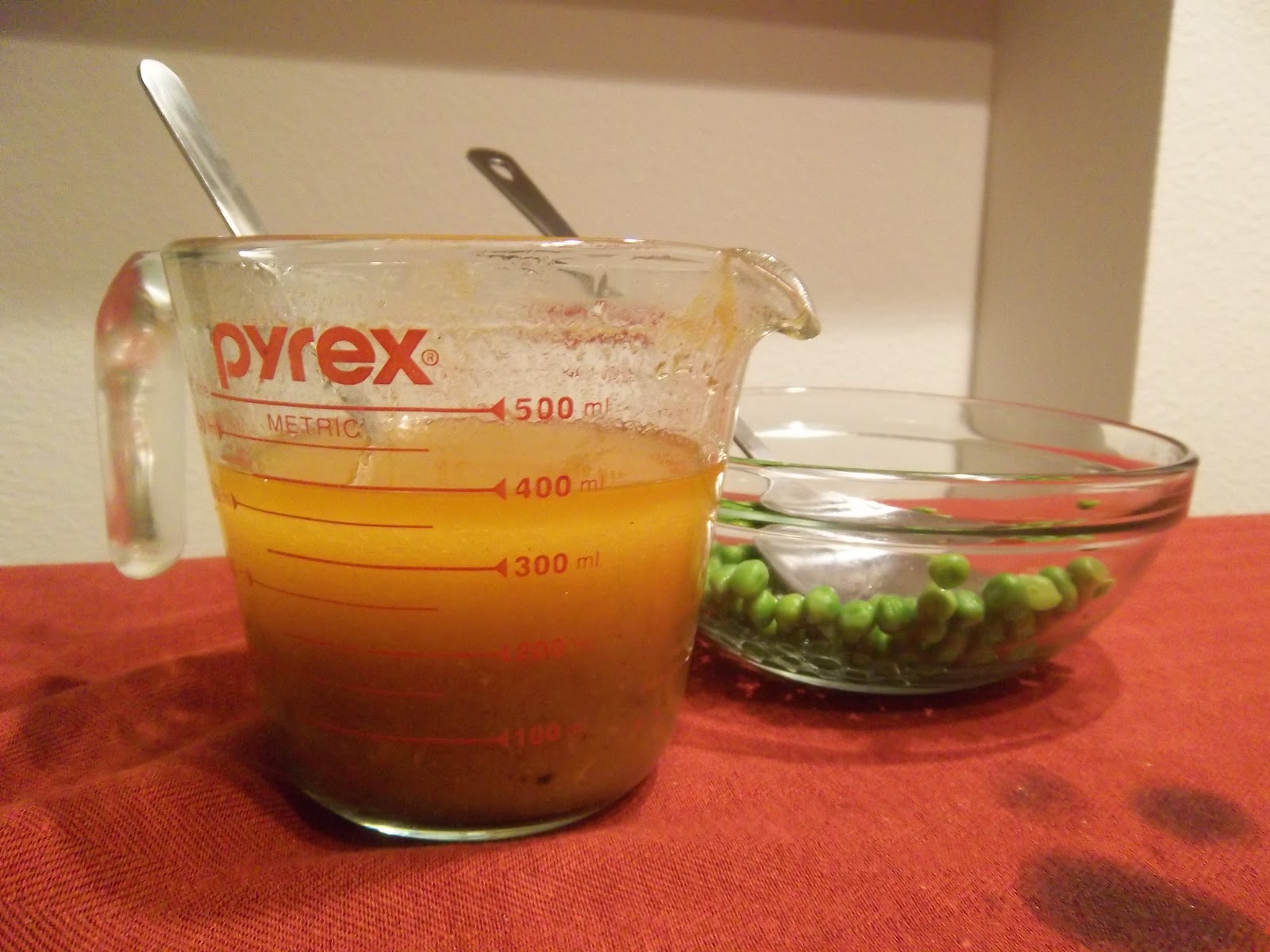
To make the gravy you’ll need a set of turkey giblets or two sets of chicken giblets – Grigson says to not include the liver, but my Mum always used it for hers and it’s good gravy that she makes! – two quartered carrots, one halved onion, either a quarter of a pint of dry white wine or 90 mls of dry white vermouth (I went with the former), a bouquet garni (see here for a post on what should go in a bouquet garni), and eight ounces of casserole veal that has been cut into pieces. Put all these ingredients into a saucepan over a high heat. When the alcohol has boiled up and the giblets and veal has changed colour, add two tomatoes that have been halved plus enough water to just cover things. Season with salt and pepper. Cover and simmer for two hours. Strain the stock.
In another pan, melt and ounce and-a-half of butter and let it cook until it turns a golden brown – a noisette brown as it is called in the trade, a good name because it does change its aroma as well as its colour and a definite nutty smell emanates. This change happens quite quickly so don’t take your eye off it. Now stir in a level tablespoon of plain flour (you can add more if you like a thick, thick gravy). Pour over the hot stock and allow to simmer covered quietly for a further half an hour. Check the seasoning.
If you are making a chicken gravy, add the juices from the roasting pan (as I did). For turkey, pour the fat away and add a glass of Madeira wine to it. Boil it up and serve it separately from the giblet gravy.
Check out that layer of butter settling out there!
I can’t believe I had no gravy boat; how embarrassing.
#276 Giblet Gravy. This was a long time coming, and it was certainly worth the wait. Rich and satisfying with a good herby flavor from the thyme I added. The best gravy I have ever made that for sure – and definitely the most indulgent. The veal, by the way, didn’t go to waste, I fished them out and serve the chunks with the meal. Waste not, want not! Anyways, an excellent recipe – 9/10.

#275 Pears in Syrup

“Your old virginity is like one of our French withered pears: it looks ill, it eats dryly.” Bertram, As You Like It


What a great quote. Shakespeare was such a bitch.

This is an old, old recipe that Griggers herself has updated rather. In Medieval times a variety of pear called Wardens were used that were rock hard and required an hour’s cooking beforehand. These days, we use eating pears so it’s a lot quicker to make. It is best though to use unripe pears for this, though it doesn’t really matter what kind.

I chose to do this recipe as the dessert to a vegan meal I cooked with my good friends Danny and Eric. I was quite surprised that there was anything vegan in the book! In fact, of the remaining desserts this was the only one.

A some of you may know, one of my gripes is picky eaters. Vegetarianism and veganism don’t come under that term ofr me though. I think making a moral stance against eating animals or using the products of animals certainly has a lots of merit. Not eating honey is a bit stupid though. Anyway, what IS annoying is veggies who ARE picky. I mean, what is the point of restricting your diet if you don’t like most stuff anyway. Luckily noone fell into that category this night!

It’s an easy recipe that can be done well in advance.
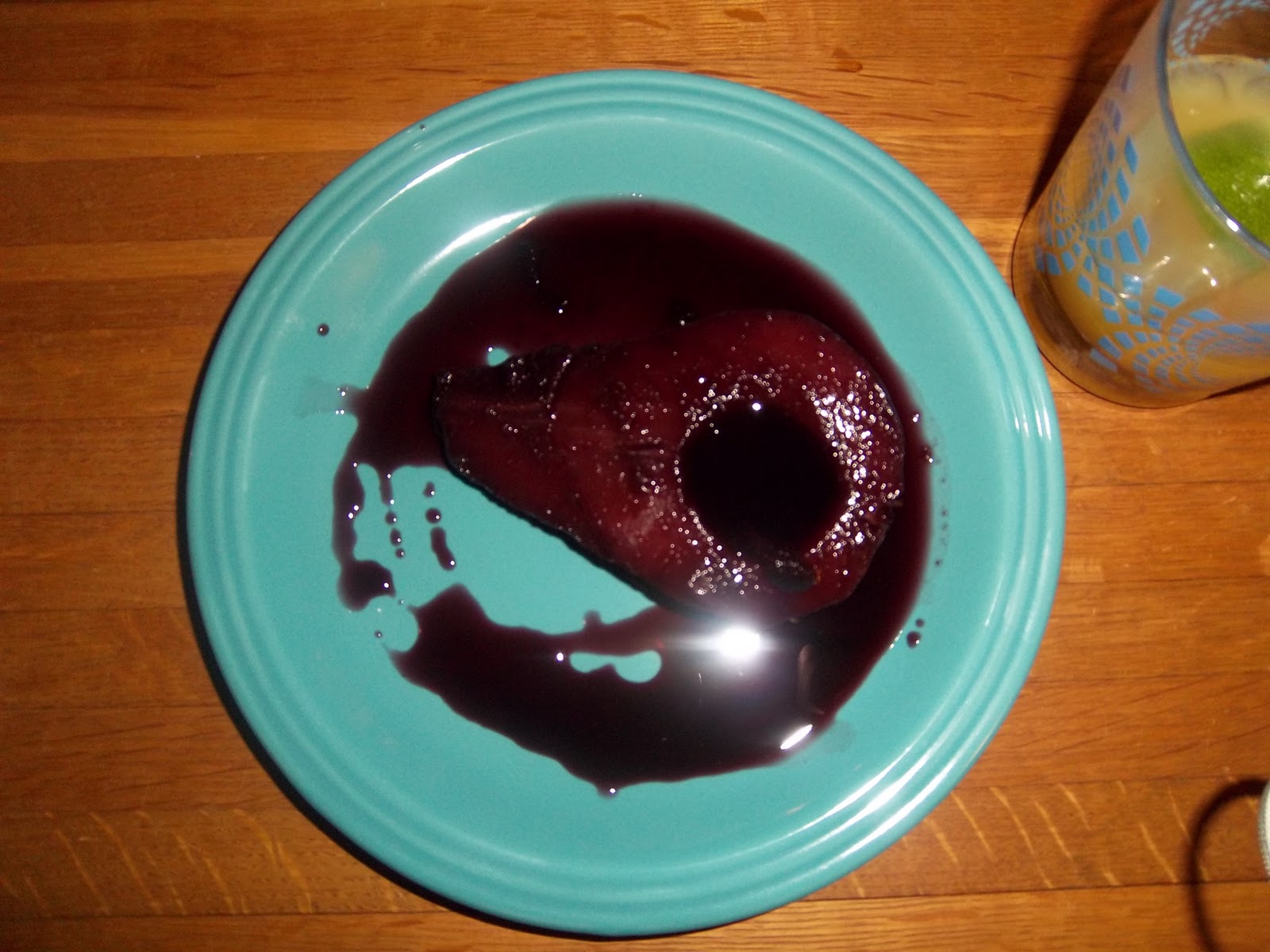
Start by peeling, halving and coring the pears – you will need one per person according to Jane. Pop them in a pan in a single layer and pour over enough red wine to cover them. Add too, two tablespoons of sugar, a cinnamon stick and a good pinch of ground ginger. Cover them and bring to a simmer until they are nice and tender. This takes a good 25 minutes, but the time will depend on the variety and ripeness of the pears used. Remove the pears with a slotted spoon and keep warm whilst you boil down the wine until you get a nice slightly syrupy sauce. Add more sugar if you like. Pour over the pears and allow to cool. No need to serve anything else with them.

[If you don’t want to use wine, it can be adapted – swap the wine for water and the cinnamon for a split vanilla pod and add one sliced quince for every two pears cooked. Cook the fruit slowly to achieve a honey scented deep red sauce.]
#275 Pears in Syrup. This was a really good dessert. I’d actually put this one off because I expected to dislike it, but was totally wrong. The concentrated red wine sauce wasn’t heavy or sickly like I thought it would be, but light and refreshing. It must have been the pears and the spices that lightened the whole affair. That said, we could only manage half a pear each. The pudding looked quite impressive too with the dark, almost indigo sauce and the creamy-white pear flesh inside. Great stuff. 8/10.

#274 Saffron Cake from Cornwall

A man who is stingy with saffron is capable of seducing his own grandmother.” Norman Douglas, 1848-1952
It goes without saying that saffron is a wee bit pricey. Only three tiny stigmas are plucked from each autumn crocus which means that a pound of saffron strands requires up to 75 000 flowers and can cost up to £2500 per pound in the UK and $5000 per pound in the USA. Lucky for us it is very pungent and is only needed in very small amounts. I bought a small packet for about $10 which I have used in a few dishes already like the Fifteenth Century Apple Fritters and the Coronation Doucet. In days of yore, if you wanted to impress your guests and flash your cash a bit, you couldn’t go far wrong by sprinkling some saffron your pottage or whatever. The long-distance trade in saffron goes all the way back to the second millennium BC at least and there has even been a war over it. It was also thought to cure the black plague. For this recipe it takes centre stage, and so it should, I love the stuff though it wouldn’t necessarily lead me to fisticuffs…

The saffron flower
For some reason saffron isn’t used that often in English cuisine – I only really see it pop up in Asian food and in fishy things like paella. However, it has hung on in the form of this bread from Cornwall. I’d not heard of it myself, but it is interesting in that this recipe predates the invention of raising agents such as baking powder, so to make it light, yeast is used. Because it’s fermented, it appears in the bread section of the book rather than the cake section.
The evening before you want to make the cake (actually cakes, as this recipe makes two) put a generous pinch of saffron strands into a few tablespoons of warm water. It will steep and infuse to make a stunning orange-coloured scented water.
Weigh out two pounds of plain flour and eight ounces of sugar then make the leaven. For the leaven, crumble an ounce of fresh yeast into a small bowl. Pour over a quarter of a pint of warm water along with 2 heaped tablespoons from the flour and a heaped teaspoon from the sugar. Whisk everything together and leave to rise and froth up for around half an hour. Mix the sugar and flour together in a bowl and place it in the warming oven for 10 minutes or so. Remove from the oven and mix in half a teaspoon each of nutmeg and cinnamon and a pinch of salt. Now rub in six ounces each of lard and butter. This is quite easy as the flour is warm.
By now the yeast should be metabolising like a crazy thing, so make a well in the centre of the flour and pour it in alongside the saffron liquid and strands plus half a pint of warmed milk. Using your hands, mix everything together to form a dough. Cover with a damp cloth or cling film and allow to rise and double in bulk. The time this takes depends on the temperature of your kitchen.
Knock-back the dough and mix in 8 ounces of mixed dried fruit and 2 ounces of chopped, candied lemon peel and place in two greased loaf tins. Cover again and allow to prove until they have puffed up. Bake in the oven for 40 minutes at 220°C (425°F). Let them cool for a few minutes before taking them out of the tins and placing them on a wire rack.
Jane doesn’t suggest a way to eat the cake but I ate it with some cream cheese and honey.
#274 Saffron Cake From Cornwall – this was rather unusual. The cake was leavened with yeast (was that a tautology?) rather than baking powder which made it rather dense; more a cross between a tea loaf and a scone than a cake. I wasn’t sure about it at first, but it grew on me rather. The saffron flavour came through and I thought it gave the cake slightly anaesthetic properties. I expect if you ate enough you could have a root canal without wincing no problem. I brought it into work where it seemed to go down quite well, which is always nice. People scored it quite highly, but I’m a right stingy marker – 5.5/10.


#273 Fifteenth-Century Apple Fritters (Fretoure owt of Lente)

I do so love the old, old recipes within English Food. I do so also love anything deep-fried, so I knew I’d like this one. A tricky thing about doing some of the apple receipts in this book is that most of them ask for Cox’s Orange Pippins which are not freely available here in Texas. However, I have found an excellent replacement for those sour and slightly soft little darlings; the Macintosh apple. So from now on any American Grigsoners can do the recipes almost as Jane intended. In fact they are so similar that I think they might have been selectively bred from Cox’s.
Although just a simple recipe to us now, this must have been a pretty expensive dessert to make because of the addition of black pepper and saffron. However, these old recipes don’t exactly reflect what commoners ate in the fifteenth century – the only recipes that were written down were those chefs that could read, and that meant chefs to the King and the like. Commoners couldn’t read or write and so those sorts of recipes are much more difficult to get hold of!
I imagine Richard III probably tucked into these the day before the Battle of Bosworth Field, well actually, Henry Tudor, since he was the one that won the thing…
Peel and core six Orange Pippins and slice them thickly. Place in a bowl with a liqueur glass of brandy and a good sprinkling of sugar. Let them steep for a few hours, making sure they all get turned in the sweet brandy. Meanwhile, make the batter. Start by pouring three tablespoons of nearly-boiling water over a pinch of saffron and let it steep. Measure out four ounces of flour and mix in one whole egg and the yolk of another (save the white for later on) along with a tablespoon of oil or clarified butter. Measure out half a pint of milk and mix around half of that in too. Strain the saffron liquid into the batter and add more milk if it’s too thick along with a three gratings from the black pepper mill. Lastly, whisk the egg whites and fold that into the batter. Dip the apples in the batter and fry in oil until nice and golden brown. Serve it forth with some sugar sprinkled over it. I plopped on some lightly whipped double cream too.
#273 Fifteenth-Century Apple Fritters (Fretoure owt of Lente). These were a great end to the lobster that Danny and I cooked. The dessert was very easy too –good if people are round; you don’t want anything complex. The batter was really nice and light due to the egg white, though I couldn’t really taste the spices. No matter, because it was still a great pud! 7/10.