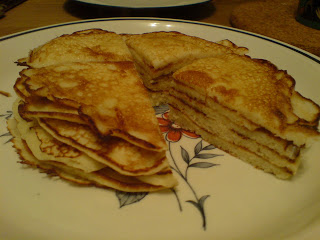
#113 Muffins

After the reasonable success of the crumpets, I thought I should carry on the bread theme and use up some more of the yeast. I didn’t even have to look through; I knew straight away that I wanted muffins – the second best breakfast carb after the crumpet… Don’t be confused between these muffins and American muffins – they are two very different beasts. I suppose in America our muffins are called English muffins, non?

Muffins are halfway between crumpets and bread – they are made with soft dough using strong flour and are cooked gently on the hob, rather than in the oven. They’re easy to do, but do require a bit of time and energy to knead them properly… It is worth putting in a bit of effort as it make the dough nice and elastic and therefore fluffier when cooked.

This recipe makes 12 muffins:

Start off by creaming ½ an ounce of yeast in 4 tablespoons of warm water, then warm ½ pint of whole milk and an ounce of butter in a pan until they reach blood heat. Meanwhile crack an egg into a bowl and give it a brief whisk, and pour in the warm milk into it, whisking thoroughly.

Weigh out a pound of strong plain white flour and empty it into a warm bowl (or better, warm the flour and bowl together on a low heat in the oven). Make a well in the centre and pour in the yeast and the milk-egg mixture, along with a teaspoon of salt. Mix together thoroughly, adding more flour or water if required. You want a soft dough, but not one that is sticky. Knead the dough for 5 to 10 minutes, place it, cover it and allow the dough to rise to at least double it’s volume.

Roll out the dough to ½ inch thickness and cut out rounds with large pastry cutters or whatever (I used crumpet rings). Knead the trimmings together and roll them out too, so you get as many muffins as possible from the mixture. Let them rise a little.

Put a heavy-based pan on a low heat and brush it lightly with lard or oil and fry them gently. Griggers says they should expand into something like a “puffball fungus”, and if you leave them to rise slightly they will. Turn them over after around 7 minutes and cook the other side.
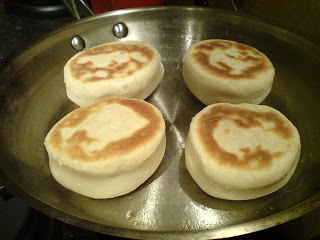

Apparently, you should toast muffins whole – they should never be cut, but torn, adding butters as you go. Either way, eat them with lots of salted butter.
#113 Muffins – 7/10. I really liked these – it was easy to make them nice and light as the low heat made them almost impossible to overcook. The result is light and fluffy muffins that eat very well, very hard to get wrong, I think, and you should give them a go. They freeze well too…

#110 Elizabeth David’s Crumpets

Charlotte and I have been very excited about the prospect of making our own crumpets for a while – just how do you get all the hole in!? We were to find out. The recipe is actually one by Elizabeth David – a very influential food writer, who wrote a book on yeast cookery. It’s making recipes like this – really stoically English fayre that I would never have thought of cooking myself. They are very easy – you need to buy some rings to cook them in as the batter is reasonably runny. If you don’t have one / can’t be arsed buying one, don’t worry, as you can ladle mixture straight into the pan and let it spread out to produce a pikelet which you don’t seem to be able to buy anywhere other than Yorkshire.


This recipe made us a baker’s dozen of crumpets:

Start off by warming a pound of plain flour through in the oven. Whilst your waiting for that warm up a pint of whole milk, 2 tablespoons of flavourless oil and a teaspoon of sugar to blood heat. Take out 3 tablespoons of the warmed milk and fork it through half an ounce of fresh yeast and let it thicken and become creamy. Make a well in the centre of the flour and add the yeast mixture, a tablespoon of salt and the remaining milk and beat the mixture – 5 minutes by hand, or about 3 with an electric beater. Cover the mixture and allow to rise and double in bulk – this is quite rapid with fresh yeast. Knock the mixture back and add ¼ pint of warmed water that has had a very generous pinch of bicarbonate of soda dissolved in it. Beat the mixture well and let it sit a rise again for around half an hour.


Grease a griddle or heavy-based frying pan and the crumpet rings with lard. Place the rings in the pan and pour in mixture two-thirds of the way up. Allow to fry very gently until the top is covered with holes and the surface is no longer liquid. Turn the crumpets over so they cook and colour on the other side. Allow them to cool and toast them, serving them with plenty of melted butter.

#110 Elizabeth David’s Crumpets – 6.5/10. The score I’ve given these crumpets may be changed later. The reason for this is that their consistency was rather soft and doughy, however they were piping hot throughout with no raw flour taste, so I’m not whether they are mean to be like that or whether they are undercooked. Consistency aside, they did taste absolutely delicious, so when I get the chance, I’m going to try them again…

#97 Welsh Light Cakes

For breakfast the next day, Charlotte and I wanted something hot and homely and went down the pancake route. I spotted this one as Charlotte is half-Welsh so I thought it befitting. These are great they’re made from a thickish bubbly batter that contains cream of tartare and soured cream – two secret ingredients. They’re served in quite an American fashion – piled up high with slices takes out of them. Get the made – they’re easy, so you get back much more than you put in!

Beat together 6 rounded tablespoons of plain flour, 2 of sugar and 3 of soured cream along with a pinch of salt and 3 eggs until smooth. Next, mix together ½ teaspoon of bicarbonate of soda and a rounded tablespoon of cream of tartare with 4 tablespoons of water. Quickly add it to the batter and stir in enough milk or buttermilk to make a batter that’s “not too thick” – a tricky one when you’ve no frame of reference; I think the consistency of thick double cream.


Now heat up a frying pan or griddle and add a little oil. Coat the pan and pour off any excess. Ladle a small amount in the centre of the pan to make small pancakes. Don’t swirl them around like crepes, they should be thick. After a minute or two flip it over and cook for another minute. Pile them up on a plate, spreading each one with butter. Serve in wedges with something nice and sweet – maple syrup or, as we used, golden syrup.

#97 Welsh Light Cakes or Pancakes – 9/10. Officially my favourite pancake. I know you can make crepes with normal average store-cupboard ingredients, but these are something special. Light, fluffy and slightly sour in taste, they went perfectly with the sweet golden syrup. Whenever anyone stays over, these will be made for breakfast every time. Me and Charlotte liked them so much we made seconds! Oink!

#25 Harvest Pancakes for the Poor

I did Pancakes for the Rich a while ago, and so as it was Pancake Day or Shrove Tuesday yesterday. I thought I’d do the Grigson’s recipe for (#25) Harvest Pancakes for the Poor. [I don’t know why the pancakes were meant to be for harvest time, seeing as that’s in September…] Jane Grigson’s recipe is pretty much the same as everyone else, except she puts in ground ginger into hers; which was quite pointless since as you couldn’t taste it! Hey-ho. Anyways, many different fillings were made by me and Greg – some English, some not so English. No matter what fillings I try, nothing beats my two favorites: lemon and sugar, or butter and sugar. Yum!
For the pancakes, make a batter by whisking together 5 ounces of flour with half a pint of either milk or mild ale (!) and an egg plus half a teaspoon of ground ginger. Fry over a high-ish heat using lard or cooking oil to lightly grease the pan (pour off any excess and re-grease for each pancake).

FYI: Shrove Tuesday is the last day of Shrovetide which was a long festival that built up to the forty days of fasting in the lead up until Easter. I wonder if the 40 day fast thing is also a Pagan thing taken over by the early Roman Christians like Easter was? Anyone know??

Also I tried to make ice-cream to go with it, but my ice-cream maker is broken – what a crock of shit. I have had soooo much bad luck lately I’m beginning to think I’m cursed…

#25 Harvest Pancakes for the Poor – 8/10. A very good recipe, though I prefer using some water as well as milk, but that’s what I’m used to. Why-oh-why is there ginger in it?

#13 Pancakes for the Rich

Greg and I thought we needed to stuff our faces with animal fat and sugar so (#13) Pancakes for the Rich (or a Quire of Paper; whatever that means!) was called for. It made 10 pancakes – which were very difficult to fry:

To make the batter beat together 3 ounces of flour, four ounces of melted butter, half a pint of single cream and a large egg along with two tablespoons of brown sherry, a teaspoon of rose or orange-flower water and half a grated nutmeg. Coat a skillet or pan in a very thin layer of oil and fry on both sides until brown. They didn’t go firm like normal pancakes, but squidgy and caramelised because of the butter and the very little egg. After wrestling with them – in order to turn one we had to slide it onto a plate, and upturn it back onto the pan, otherwise they ended up a sad blob of batter. We served some up with sugar; as Grigson suggests, but also had some with lemon juice too.

Was it worth it? Not sure; i think I might prefer poor-man’s pancakes. I think I’ll try her recipe for them soon. But Pancakes for the rich were interesting, particularly for the addition of the beautifully fragrant orange-flower water.

Greg says:
#13 Pancakes for the Rich – Pretty much ditto what he said, they’re nice but really not a patch on pov pancakes which may say more about our working class palate than anything else. Mostly though they’re a bitch to turn, I am the king of tossing pancakes and these buggers weren’t for flippng. But they are tasty and if you’re attempting to put on a lot of weight in a very short time, whcih we apparently are, these are for you. 6.5/10.

#13 Pancakes for the Rich: 6.5/10. Delicious, but a big old faff and a bit too rich – even for me!