#227 Wigs

Wigs go right back to the Middle Ages when a ‘wig’ meant a ‘wedge’. Bakers would make a sweetened cake using yeast as a raising agent, making cuts so that wedge shapes were made. This recipe is from Elizabeth David’s book, English Bread and Yeast Cookery – a classic work that I do not own yet! – and is a Seventeenth Century recipe. Eating sweet cakes really took off in that period of history as people realised that sweet cakes and breads went really nice with morning or afternoon tea. It was during this time that Teatime or High Tea came into being and a whole chapter of English Food is devoted to it. This is a good recipe to try if you’ve never made bread before as there is no kneading, er, needed!

To make your own wigs start off by creaming half an ounce of yeast in six fluid ounces of warmed milk. Beat in 12 ounces of plain flour (not strong white flour – this is more of a cake than a bread) to form a loose dough before mixing in four ounces of softened butter. Next, mix in 4 ounces of caster sugar and ½ teaspoon each of mixed spice and ground ginger along with two or three teaspoons of caraway seeds. Cover with cling film and allow to rise – a couple of hours should do it. Knock back the dough and divide it between two greased 9 inch sandwich tins, making four cuts (i.e. eight wedges). If the dough is too soft to pick up and handle, add some more flour. Cover the sandwich tins with large billowing polythene bags – you don’t want bag to touch dough – and let the wigs prove for 20 – 40 minutes. Bake in the oven for 15-20 minutes at 200⁰C. Eat warm.


#227 Wigs. I liked these – not too sweet, and great hot with plenty of butter on them. The genius thing was the addition of caraway seeds. The fragrant nutty taste may not be for everyone, but I really like it. It is a shame they have gone out of favour. These are definitely worth a go, particularly because they are a real little bit of English history. 6/10
#226 Eccles Cakes

This time of year there is no seasonal fruit, except for champagne rhubarb, and so we have to turn to stored apples and pears or dried fruits. Some people don’t like dried fruits, but I am a definite fan, and thought an attempt at the classic Eccles cake was well overdue. There has been a bit of a disagreement in the house as to whether the recipe in English Food is actually a true Eccles cake or not – Charlotte reckons it should be made with puff pastry and Griggers (and me!) reckons a lard shortcrust pastry. A quick look in the Dairy Book of British Food gives an extra point to Charlotte. Does anyone know the true answer? Give me your opinions on this one please! I’d hope it is a lard-based answer as that seems more Northern English to me. Griggers says that if it made with puff pastry, you have a Banbury cake, which is Southern English. Oh well, we may never know.

Makes 10-12 cakes.

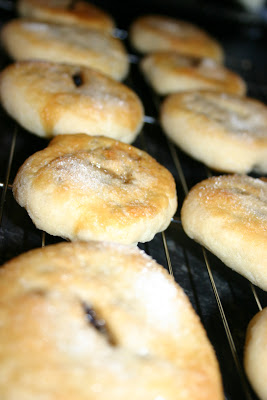
First of all, make some pastry using 4 ounces of lard and 8 ounces of plain flour. While it rests in the fridge make the filling: melt together an ounce of butter with 2 ounces of caster sugar, then stir in 4 ounces of currants, an ounce of candied peel, plus half a teaspoon each of ground nutmeg and allspice. Leave to cool. Roll out the pastry and cut out circles around four inches in diameter. Place a spoon of the currant mixture in the centre and bring in the pastry by its edges so that you can pinch them together. Turn the cake over and gently roll them to flatten them slightly. Make a hole in the centre, brush with a little egg white and sprinkle with caster sugar. Bake at 220⁰C for about 15 minutes. Cool on a rack.


#226 Eccles Cakes. Whether they are true Eccles cakes or not, these were delicious. The filling was rich, but wasn’t too sweet and I liked the spice element (which I thought wasn’t in an Eccles cake). It also reminded me how good lard shortcrust pastry is. If you’ve never tried one – give it a go. 7/10.

#224 Basic Bun Dough

One of Griggers’ main bugbears in the 1970s was the massive decline in the quality of all things bready. There are of course artisan bakers that do make excellent bread – Barbakan in Chorlton, Manchester is the one near me – but generally it is the supermarket bread we seem to buy and endure. Of course, nowadays, supermarkets have in-store bakeries in supermarkets, so there are improvements, but it is still bread done in the cheap with additives. I think the point that Jane is getting at is we don’t know how good bread can be because we don’t bother to bake it ourselves. This is a shame, because artisan bread can be easily gotten hold of at a fraction of the price of a supermarket loaf, if you bake it yourself. I am trying my best at this concept and am getting better. This recipe is one that Griggers hails the most as it can be used as a base for hot cross buns and Chelsea buns; the supermarket ones are “dull” and this is because the ingredients that make them so good are omitted, such as sugar, eggs, butter and milk.

This recipe can be used as a base, but I wanted to see what the simple rich basic bread buns tasted like, partly through interest, but mainly because I wanted to do a practise one before I do the hot cross buns on the run up to Easter.

Begin by mixing together a pound of strong white bread flour with a quarter of a teaspoon of salt in a warmed mixing bowl. Measure out 2 ounces of caster sugar, and place one spoonful of the sugar into a pudding bowl along with an ounce of crumbled fresh yeast into a pudding bowl and four ounces of flour from the mixing bowl. In a jug, mix together a quarter of a pint each of milk and boiling water straight from the kettle. Whisk this into the yeast mix to form a smooth batter and leave to rise for around 15 minutes until the whole thing has become a satisfying yeasty cushion. Whilst you are waiting for it to rise, stir the remainder of the sugar into the flour and rub 3 ounces of butter into it. Make a well in the centre and pour in a lightly beaten egg and the foaming yeast mixture and mix together with a wooden spoon to form a dough. Turn the dough out onto a floured surface and knead for a good 10-15 minutes adding flour as you go so that the dough is slightly rubbery and “a moderately tacky, but not sticky, texture”. The mixing bowl should then be washed and greased so that the dough can sit inside and rise and double in bulk – make sure you cover it with some cling film or a damp tea towel. Fresh yeast rises much quicker than dried, so it’s great if you are an impatient bread-baker.


The bread can be used for whatever purpose you like, but if you want them au naturale, then roll the dough into a long sausage shape and divide into 12 pieces and form them into round buns. Place on a baking tray lined with baking paper, leaving gaps for when they rise. Cover them and prove for at least 30 minutes. Bake for 10-15 minutes at 230⁰C, remove and brush them with some milk to make them shiny when they cool.

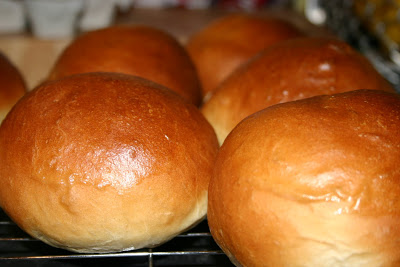
#224 Basic Bun Dough. This bread was delicious! Slightly sweet, rich and very fluffy. I can’t wait to do the hot cross buns – they must be divine because these basic buns are a 7.5/10.

#217 Granary Bread with Walnuts

It’s been a while since I’ve done a bread recipe, and I’m definitely out of practise. I chose this one because it seemed suitably wintery, plus it used up flour that has been sat in the cupboard for a while now and I am trying to clear them, as I’ve mentioned previously. (As an aside, does anyone have a recipe that uses rice flour? It’s been sat there since that rubbish rice cake.) The main ingredient is granary flour, though I’m sure you could use wholewheat instead; I used a little stoneground flour left over from the Northumbrian Wholemeal Scones and Doris Grant’s Loaf from yonks ago. Grigson calls granary flour ‘Granary’ flour, because it’s a proprietary blend of malted flour and other nice things from one particular miller, though she doesn’t say who.

Don’t be put off by bread-making, Grigsoners, I really like doing it, and did start to get good at it, and even if it is a bit on the heavy-side, it will taste so much better than bought stuff. I think that it is the yeast flavour. Supermarket bakeries cannot compete – even with your worst effort!
Sift together a pound of ‘Granary’ flour, 4 ounces of strong white bread flour and 2 teaspoons of fine sea salt in the bowl of a food mixer. Add a packet of dried fast-action yeast (I reckon that’s about 2 level teaspoons) and mix well. Using the dough hook, stir in around ½ pint of warm water so that a soft, rough dough forms around the hook. Add two tablespoons of walnut oil and briefly knead, add more flour to make it smooth before placing in an oiled bowl. Cover with clingfilm and allow to ferment in a warm place until it has doubled in bulk. The time could be anywhere between an hour and several hours, depending on where you do this. As I don’t have an airing cupboard, I pop the bowl over the radiator. Knock back the dough (i.e. punch the air out of it) and knead in 4 ounces of roughly chopped walnuts. Now either place in an oiled loaf tin (or tins) or make it into a shape. I decided on a nice big round rustic loaf (i.e. the easiest). Use a very sharp knife and make some slashes on the top of the loaf and, bake in a very hot oven – 230⁰C – until cooked; this will depend upon the shape and size of your loaf, mine took 25 minutes. The way to tell is to tap the bottom – if it sounds hollow, it is done. Cool on a wire rack and eat with cheese, a winter stew or warm with butter and honey, I reckon.


#217 Granary Bread with Walnuts. Definitely the best bread so far – dense and with a good crumb, but not heavy. The flavour of the walnuts and the oil come through well, but are relatively neutral so that it would go equally well with sweet or savoury food. It’s very easy to make, all you need is some patience. Great stuff – a really nice, country loaf that is a little different, yet very classically English. 7.5/10.

#206 Orange Mincemeat Part 2; #211 Cumberland Rum Sauce

I have a few things up my sleeve for Christmas but for now I can only report on two things: the orange mincemeat I made last month and something to go on them (or your Christmas pud): Cumberland rum butter.

First up, the mincemeat. I have given the recipe for them already and also reported upon the Griggers way of making mince pies properly, which is how I make them now. All I have to do is give them a mark.

#206 Orange Mincemeat. Well, the orange mincemeat is ten times better than any bought stuff, the three types of booze must help. The mincemeat is not as orangey as I’d hoped, but still great. The best thing is, and it’s the same with the other recipe, is that it is not too sweet. Have a go, but the better is the Beeton. 6.5/10.


I have already made a brandy butter and it was good, but I thought I’d try this Cumberland rum butter – I had higher hopes for it as my favourite spirit is dark rum. Have a go at this, or the other brandy butter recipe, it’s very easy, just requiring some simple creaming and mixing.

Cream eight ounces of unsalted butter until pale and fluffy. Beat in six ounces of soft brown sugar, three tablespoons of rum and a good grate of nutmeg. That is it! Serve on mince pies or Christmas pudding, or even with warm oatcakes, which is how the folk of Cumberland served it, apparently.

#211 Cumberland Rum Butter. Really delicious. Not too sweet and sickly, the dark rum and dark sugar give it a bitter-sweet note. Great stuff. 7/10.

#208 Cumberland Plate Tart

It seems that the further north you go in England, the more desserts and teatime treats using currants and raisins there are: Eccles cakes and Chorley cakes are the ones that spring to mind. I’ve never heard of one from Cumberland before; funny, since there are actually two recipes from there in English Food.

I think these things were popular because they are very comforting and definitely a wintertime food, and it is grim Up North, as we know. It has been particularly grim at the minute – particularly around the Cumberland area – so I thought I’d give one a go. The best thing about the recipe is that it is a very good store-cupboard pud – I didn’t have to buy anything, I had it all in! Tiny things please tiny minds.

First make some shrtcrust pastry using 2 ounces each of butter and lard, 8 ounces of plain flour and some milk. Roll out half and line a deep oven-proof plate. Now make the filling: weigh out 3 ½ ounces of golden syrup. To do this, put a saucepan on your scales and tare them before adding the syrup. Add an ounce of butter to the pan and warm though gently so that the butter melts and the syrup becomes runny. Now stir in 5 ounces of either raisins or currants (or a mixture, you devil), an ounce of chopped peel, an ounce of ground almonds, ¼ teaspoon each of ground nutmeg, allspice and salt and finally 2 teaspoons of lemon juice. Use some egg white to brush around the edges of the pastry, roll out the last of the pastry and cover it. Crimp the edges, make a hole in the centre and then brush with more egg white and sprinkle with some caster sugar. Bake for 15 minutes at 220⁰C, then turn the oven down to 190⁰C and bake for a further 30 minutes. She don’t say, but serve it with some cream, innit.


#208 Cumberland Plate Tart. Just what the doctor ordered! I really like this sort of dessert, but many can’t abide currants and raisins and things like that these days, so they are going out of fashion which is a big shame. What can be bad about sweet fruit, moist almonds and good old golden syrup? Bring ‘em back I say. 6.5/10

#206 Orange Mincemeat

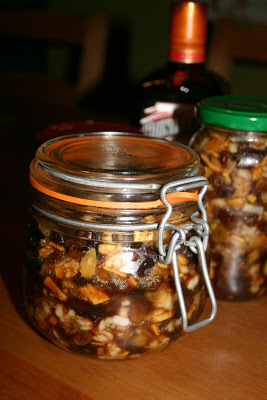
Christmas is a-coming! The consumerist nightmare has begun and there’s nothing like it to kill the Christmas spirit. The best way to counteract this is to make some lovely Christmas fayre. The Christmas cake is done and the only other necessity for the encroaching festivities is (in my opinion) mincemeat. I made Mrs Beeton’s recipe last year and gave a potted history of the foodstuff (see this post). This year I’m making orange mincemeat; it better be nice because I really liked Beeton’s. It should be good though; there’s plenty of orange juice and one of my favourite boozy drinks ever – Cointreau. Of course, we shall have to wait a while before I review them (although I’m sure I’ll crack a jar open well before Christmas).

If you want to make your own mincemeat, make sure that you make it at least two weeks before you want to use it as it needs that long to mature. If you’ve never made it, have a go, it really is very easy – there is no cooking involved, just some chopping, measuring and mixing.


This recipe makes absolutely loads of mincemeat – around ten jars – so reduce the quantities if you want to make less. To make it, simply mix together the following ingredients together in the following order in a huge bowl:

8 ounces of candied orange and lemon peel
2 pounds of apples, peeled, cored and chopped
One pound of chopped suet (use fresh, if you can)
One pounds each of raisins, currants and sultanas
One pound of dark brown sugar
1 freshly grated nutmeg
4 ounces of blanched slivered almonds
The juice and grated rind of two oranges
Four tablespoons of brandy
Eight tablespoons of orange liqueur (e.g. Cointreau)

Pack the mincemeat well into sterilised jars and leave for at least two weeks. (FYI to sterilise the jars, put them along with their lids on trays in an oven set to 110⁰C for 25 minutes, pot whilst they are still warm.)

#186 Cheese and Oat Biscuits

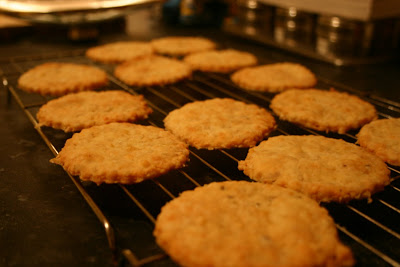
To go with the vegetable soup I made yesterday, Old Griggers recommends these cheese and oat biscuits to help pad it out into a main meal. Indeed, they go well with most soups, she says. She also says that they are good piled high with cream cheese, finely chopped onion and Cayenne pepper. I’ve never made my own savoury biscuits, so I was interested in seeing how these turned out. They are also cheap to make; a prerequisite these days.


Mix together 3 ounces of rolled oats with 5 ounces of plain flour and rub in 3 ½ ounces of salted butter. Next stir in 4 ounces of grated cheese – a mixture of grated strong Cheddar and Parmesan (I did a ratio of about 3:1) and form it into a dough with two egg yolks. Use a little cold water to bring it together if need be. Season the dough well with salt and pepper. Now roll out thinly and cut our rounds with a scone cutter, place them on a greased baking tray and bake at 200⁰C for around 10 minutes until golden. Cool on a wire rack.

#186 Cheese and Oat Biscuits. I was really impressed by these. So impressed, in fact, that I managed to scoff them all over the course of the evening. Both the use of strong cheeses and a good seasoning is very important, and that is what makes them so much better than any cheese biscuit you could buy. The fact that they’re a piece of piss to make is an added bonus! 8/10.

#174 Grasmere Gingerbread I

Gingerbread is of course, not bread but a biscuit. According to Griggers, the biscuity gingerbread that we know and love, and (I assume we use for gingerbread men) is in fact Grasmere gingerbread, and although you can buy it and make it, the original recipe is a secret. Apparently, it is still sold in Grasmere from the local church (William Wordsworth is buried in its grounds). There’s another Grasmere Gingerbread recipe in English Food as well as a Medieval Gingerbread – gingerbread has a long and chequered past, but I’ll save that story for that entry.

One weird thing though – there’s no other gingerbread-type things in the book; where the heck is the Yorkshire Parkin? I shall add it to ever-increasing list of glaring omissions from the book.

Melt 5 ounces of slightly salted butter over a low heat and allow it to go tepid. Meanwhile mix 8 ounces of plain flour (or fine oatmeal, or half-and-half) with 4 ounces of pale soft brown sugar, a teaspoon of ground ginger (though I misread and added three, it was fine and suggest adding three instead of one) and a quarter teaspoon of baking powder, then add the butter and mix well. Press the mix down well with your hands in a baking tray that has been lined with baking paper and bake at 180°C for 30 minutes. Remove from the oven and cut into oblongs, but allow to cool in the tin.


#174 Grasmere Gingerbread I. I’ve not done many of the biscuit recipes from the book, as I don’t really get that excited about them, but these were delicious and very easy to make. I’ll never do cartwheels, however, so I’ll give them a stoic 7.5/10.

#160 Rice Cake

Every Wednesday at work, one of us tries to make a cake and bring it in so we can all get together for a chat; something we rarely get to do. We have been a bit slack as a department recently, so I thought I’d make one. This seemed perfect, I had all the ingredients in, it seemed a little unusual, but basically a normal cake mixture, so great stuff… I expected this cake to be a real hidden gem – Jane Grigson write quite a lengthy entry on this cake and she says that she was easily converted from the ‘traditional’ flour-based cake.

Here’s how to make a rice cake:

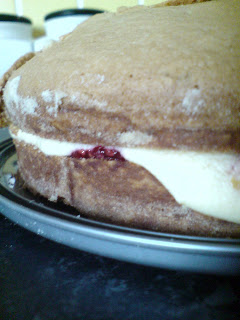
Cream 4 ounces of butter with 8 ounces of caster sugar and beat in three eggs one at a time. Stir in 8 ounces of rice flour and the grated zest of a lemon. Pour the mixture into a greased and floured 7 inch cake tin and bake at 180⁰C for anywhere between 50 minutes and an hour and a half. Jane doesn’t say to fill it with anything, so I used raspberry jam and Butter Cream I.

The world’s most boring cake:

you saw it here first!

#160 Rice Cake – 2/10. Totally crap! It was so bad I didn’t even bother taking it into work. The cake was so hard and dry, there was no spongy texture as there was no raising agent or gluten there. Also, because of the lack of gluten, the grains of flour remained granular. Bad, bad, bad! Its only saving grace was the jam and butter cream, and I did the butter cream wrong!!